On the history of Mattersdorf

[Please note that much of this was written for a non Jewish audience. It is the copyright of R’ Meir Deutsch, a learned reader and commentator on the pitputim blog. We thank Meir for giving his permission to republish]

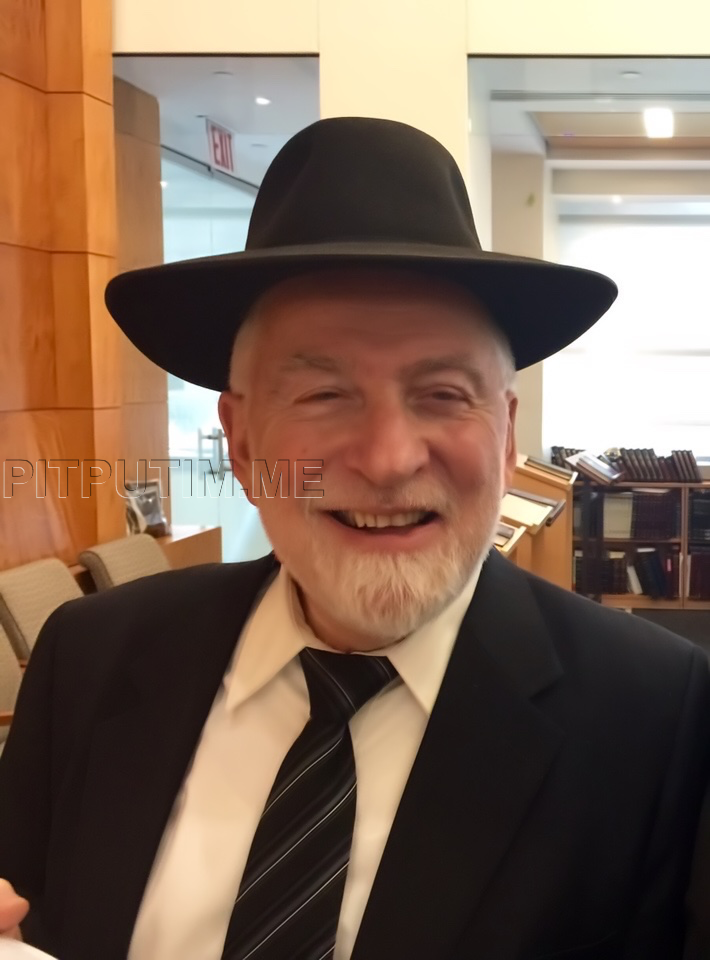
Rabbi Akiva Ehrenfeld on left with R' Meir Deutsch
Rabbi Akiva Ehrenfeld on left with R’ Meir Deutsch

Meir Deutsch, of Jerusalem, Israel, is the first to provide such a list… and an unusual list it is! He had a copy of the Mattersdorf Jewish court ruling dividing up, among the Jewish households of Mattersdorf, the “Tolerance Tax” to be paid to Prince Esterházy for the year 1880. You might ask why Meir has such a document… the answer is that Mattersdorf is where his father, Josef, was born, and the Jewish judge who signed the ruling was his great-grandfather, Gottlieb Deutsch.

Mattersdorf now goes by name Mattersburg but, Meir tells me, it consisted of two independent townships in 1880, the Markt and the Judenstadt. It would not be until 1902 that the townships were officially merged and 1924 before the name was changed to Mattersburg.

As for the “Tolerance Tax,” it totaled 2,800 Florins and was levied on Jews only. Meir tells me that it was not a per capita tax; instead, the well-off paid more and the poor paid less. Some property-owners in the Judenstadtactually paid nothing, as the list indicates they were not Jewish and were therefore exempt from the tax. Meir presumes that some Gentiles had businesses located in the Judenstadt, as the Judengasse (the Broadway of Mattersdorf) was the main shopping street in Mattersdorf/Mattersburg. Almost all shops and services for the Markt and the Judenstadt were located there.

My thanks to Meir for sharing the list and the history behind it; we will add it to the House list page after it is fully transcribed.

I’ll also note that Meir had graciously agreed to write an article about Jewish Mattersdorf based on a chapter in his 2008 book, “Yalde Shabat” (see here for an English abstract of the book). That article is scheduled for the next newsletter.

2) JEWISH MATTERSDORF (by Meir Deutsch)

Excerpts from book “Yalde Shabat” (= Shabbat Children), Jerusalem 2008, by Meir Deutsch (the book is in Hebrew)

The township of Mattersdorf (Nagy Marton, in Hungarian) was part of Hungary in the Dual Monarchy. Up to 1902, there were actually two administrations, the Marktand the Judenstadt (= Jewish Town). Each of the two administrations had its own Municipality, Police, Court, Jail and Fire Brigade. The Jewish Fire Brigade continued to function after the union of the two townships, until the Jews were expelled in 1938.

The Jewish community is an old one. On the synagogue, it mentions that it was first built in 1354. In 1496, the Jews were expelled from Mattersdorf but rebuilt the community again in 1527, after they were expelled from Ödenburg. The growth of the community started in 1670, after Leopold I expelled the Jews from Vienna, but this was very short-lived. Just a year later, in 1671, they were expelled again and settled in Moravia. The Jews returned to Mattersdorf in 1678 and had to repurchase their own homes. At the end of the 17th century, they got the protection of the Esterházy, but they had to pay high taxes levied on them for this protection.
The Judenstadt of Mattersdorf, on the lower-left of a 1798 map

Mattersdorf was a member the seven Jewish communities in Burgenland: Kittsee, Eisenstadt, Mattersburg, Frauenkirchen, Kobersdorf, Lackenbach and Deutschkreutz (known as Zelem by the Jews). These seven communities were joined later by another three in the South Burgenland: Stadtschlaining, Rechnitz and Güssing.

The Synagogue was the center of Jewish life of the Jewish community. From the street there were two entrances to the Synagogue, one for ladies and a second one for men. In the entrance hall there were a cupboard for the use of the shames (= caretaker) and the chair of Elyahu, better known as “the big chair of the Mohel.” The synagogue’s treasury was rich with valuable antique objects: Goblets, Torah shields and Torah crowns, all from the 16th and 17th century, and two Holy Ark curtains from the 17th century, both woven with gold threads, and one from the 13th or 14th century, woven with silver threads.

Next to the Synagogue was the Town Hall of the Jewish community. In this building, the meetings of the community took place, the communal laws were adopted and the court had its sittings. In one of its wings was the “Hekdesh” that served the poor and the sick. In the town’s registry, the building was described as “the Town Hall and Hospital.”

As said, Mattersdorf was a twin township, a Christian one and a Jewish one. Both congregations had complete independence but co-operated with each other. The Gentiles saw the “Eruv”, a three meters high wire that defined the “private domain” wherein carrying of objects by Jews was allowed on Sabbathand Yom Kippur, as the line that separated the two municipalities. As most of the Christian inhabitants were farmers and fruit growers, and the Jews mostly shopkeepers and small manufacturers, the Jewish fire brigade was usually the first to get to the fire in town and even in the neighboring villages. They got many commendations for their work and dedication. According to the law, if a Gentile or a Jew had a claim against a Jew, the case was brought before the Jewish Judge and vice versa. Up to the year 1848 the Jewish community minted its own coin, called a “fleischkreutzer.” Because of lack of funds of the Jewish community, this dual township ceased in 1903 and the two municipalities were united.

The Jewish population grew up to the middle of the nineteenth century; afterwards, many families settled in neighboring communities and, in the twentieth century, many moved to the larger cities.

The census of 1569 of Mattersdorf recorded 62 Jews who dwelled in 11 houses.
In 1857 – 954 Jews out of a total population of 3265 (29.2%).
In 1923 – 450 Jews out of a total population of 3706 (12.1%).
In 1934 – 511 Jews out of a total population of 5112 (10.0%).

The distribution of the Jewish male population in 1811 was as follows:
Ages 1 to 17: 183
Ages 17 to 40: 127 (Married: 97; Single: 30)
Over Age 40: 118

In the nineteenth century, there were censuses that reported the proportion of German-speaking population. Mattersdorf was part of the Hungarian Kingdom of the Habsburg Empire with Ödenburg (Sopron in Hungarian) as the county’s capital. In the majority of schools, both languages were used. From those censuses, the proportion of German-speaking Jewish people in Ödenburg County were:
In 1830 – Males 84.1%; Females: 45.9%.
In 1850 – Males 99.3%; Females: 91.6%.
What we see here is that, although the county was part of Hungary, nearly all the Jewish inhabitants spoke German.

The Jewish population of Mattersdorf was restricted in building new dwellings beyond the fifty houses they owned (thirty-eight existed in 1816 and twelve were built in 1819). Up to 1819, they were also forbidden to rent houses from the Christian population. On the other hand, a person could marry only if he owned a dwelling. As said, in 1819 the Jews were permitted to build the additional houses, outside the ghetto, and they were calledNeuhausel (new houses). Just for comparison, in 1845, in the whole of Mattersdorf, there were only 283 houses.

Because of these restrictions, the Jewish population suffered from overcrowding. We can see that, in 1724, there were twenty-four owners of a whole house, twelve owners of half a house and nine owners of one third of a house. The total number of houses owned by Jews was thirty-two. Fourteen years later, in 1738, there were twenty-five owners of a whole house, nine owners of half a house, and ten owners of a quarter of a house. In total, the Jews inhabited thirty-two houses. Just six years later, in 1744, we find only seventeen owners of a whole house, two owners of three-quarters of a house, twenty-one owners of half a house, twelve owners of a quarter of a house and two owners of one-sixth of a house. In total, they lived in thirty-three houses. As the time passed, the crowding increased. In 1760, we find only seven who owned a whole house, one owner of seven-eighths of a house, two owners of three-quarters of a house, thirteen owners of half a house, two owners of two-fifth of a house, and others with much smaller parts, amongst them two that owned only one-sixteenth of a house.

The problem of overcrowding can be seen from the will of Elyakim ben Avraham Leib that was signed on the 2nd of February 1817 before Salomon Rosenfeld as witness and Simon Deutsch as Notary, which includes the following paragraph: “If the kitchen has to be divided, it will be divided in a way that each part could put in it a baking oven.”

The distribution by profession of the Jews was, in 1754, as follows: 6 tailors, 16 merchants, 2 furriers, 15 shopkeepers, 8 teachers, 16 winemakers, 3 beer brewers, one musician, 6 grocers, one shoemaker, one barber, one waiter, one singer, one locksmith and one bookbinder.

As there was no building for a school, the lessons were given in the Synagogue and, later, in private houses. The first school building was built only in 1883. Beside the school there was also a College of Talmud (Yeshiva), whose majority of students came from out of town. The records show that, already in the reign of Empress Maria Theresa (1717-1780), there was a state Jewish school in Mattersdorf with many students. Maria Theresa had launched plans for compulsory primary education in Austria-Hungary, whereby all children of both genders from the ages of six to twelve had to attend school.

There was much attention given to education in Jewish Mattersdorf. In 1873, there were, in the Jewish school in Mattersdorf, a hundred and thirty students aged six to twelve in three classes, out of them, seventy-six boys and fifty-four girls. There were three teachers who taught them. If we compare the ratio of students to teachers, we find a ratio of forty-three pupils to one teacher in the Jewish school as against ninety-three pupils to one teacher in the Christian school. We can deduce from it that the education in the Jewish school was superior to the Christian one. In addition to the elementary school, there were also higher grades in the Jewish school, which included eleven boys and six girls aged twelve to fifteen. We can see from the pupils attending the Jewish school that the education of girls was an integral part of the education system in Jewish Mattersdorf already in the nineteenth century. The number of female pupils in the Jewish school in Mattersdorf was nearly as great as that of the males.

The Talmud College (Yeshiva) was known as one of the best in the Habsburg Empire. The Chatam Sofer(Rabbi Moses Schreiber, a former Chief Rabbi of Mattersdorf and later in Pressburg) used to say: “Rabbinical studies are to be learned in Mattersdorf.” Not everybody was accepted to the College. Anyone who wanted to be accepted had to prove his ability to master the learning.

The two communities, the Christian and the Jewish lived together in harmony. There was not much competition between them as the Christian community members were usually farmers and wine and fruit growers and the Jews were manufacturers and shopkeepers. It was said that the priest delivered a speech one day in which he accused that: “the Mattersdorf Jews have killed our savior.” The head of the Christian community came to see the head of the Jewish community and asked him: “Dear friend, what can you say in defense of the priest’s accusation?” The head of the Jewish community replied calmly: “It was not us; they were from Kobersdorf (a nearby township).” The head of the Christian community, who knew that the Mattersdorf Jews were not violent, was satisfied with the answer, and peace between the two communities was restored again.

As Jews do not play musical instruments on their holy days, the music was taken over by the Gentile population. On Simchat Tora, a Jewish holy day, as the community escorted the Rabbi from the synagogue to his home, the Gentile community joined the procession and played the music.

But not everything went smoothly in Mattersdorf. During the first half of the eighteenth century there were many calamities in the congregation. In 1831, there was a cholera epidemic in the Jewish township. It was brought in, probably, by a Jewish family of eight people that came from Baden, and that despite them being in isolation for eight days. On the 27th of September 1831, when the epidemic started, about one hundred and fifty people got infected and twenty-seven died. The Jewish township was put under isolation up to the 14th of October. The Christian population raised money to supply the Jews with bread, flour, potatoes, wood for heating and money.

In 1810, after the burning down of fifty-six houses in the Christian township, the Jewish population donated money to help their neighbors.

There were also other large fires which caused heavy damage. The fire of 1802 burned down thirty-two Christian houses and thirty-two Jewish houses. Another fire, that started out in the Christian Township in 1837, spread to the Jewish Township and destroyed many houses. Yet another fire, on the night between the 7th and 8th of July 1853 at the house of Abraham Koppel, burned down thirty-five houses in the Judengasse and affected seventy-seven families.

Running a business needed capital. The capital had to be raised and repaid. From a document of 1817 we see one such transaction:
On 19 May 1817, the couple, Mandel Deutsch and his wife, took a loan from Albin Pfaller, a noble citizen of Wr. Neustadt, a capital of 21,700 fl. Vienna currency, bearing interest of 5%, for a period of six months. The note was guaranteed by the signatures of Simon Deutsch and Lowy Hirshel on 27 May 1817.
The amount of 21,700 fl. was a very large sum. Just for comparison: in 1812, the price of a sheep was 2 fl. and the price of a milk-giving cow was 15 fl.

Many of the Jewish men of Mattersdorf joined the Austro-Hungarian Army in World War I. Just as an example, my father had 4 brothers (i.e., five boys in the family). Four of them served in the K. u. K. army. As a minor, born in 1906, their younger brother was the only boy that stayed at home.

Doing business in Mattersdorf was quite harsh. As said, the Christian population was mostly agrarian and dependent on the harvest and fruit picking for obtaining their cash. As the Christian community lacked available money, it affected also the Jewish shopkeepers. They got paid after the harvest season. Dr. Berczeller, the Jewish doctor, has a story in his book, “Time Was,” that depicts the situation. He writes:
On New Year’s Day, around five in the morning, my doorbell rang, then rang again, and again. I looked out of my window and saw, in the light of the street lamp a man with a red beard. It was Schwartz the Seltzer (every merchant had a nickname).

‘Herr Doktor, hurry,’ he shouted. ‘My wife is in labor, she’s bleeding, and Frau Handler says she is going to die.’

A few minutes later Schwartz the Seltzer and I were running towards the Judengasse. Frau Handler, the old midwife, received me with gloomy face.

‘The baby doesn’t move down, only blood comes out.’ She shrugged, ‘she will probably die.’

[Here the Doctor describes what he did, and then continues:]

The midwife’s thousand deep wrinkles spread outward and made her old face bigger as she smiled. With a quick maneuver, I extricated the baby. Frau Schwartz’s face slowly regained its color. I washed my hands and was ready to leave.

‘Herr Doktor,’ Schwartz the Seltzer said, ‘how can I thank you?’

‘A hundred schillings,’ I said. Even in Mattersburg standards, this was a modest fee.

He shook my hand but, needless to say, did not produce any money.

The next night when I came home from a call, I saw by Maria’s face that something dramatic happened.

‘What is it?’ I asked.

‘Come and see.’

As I climbed the stairs my right foot caught. I looked down and saw the lever of a seltzer bottle.

‘What is a seltzer bottle doing here?’ I asked Maria, but she did not reply. She opened the door to the corridor connecting my office with the rest of the apartment.

‘There you are,’ she said!

The corridor was filled with seltzer bottles. They stood neatly arranged in rows, like soldiers. Their rank extended to the kitchen floor and even to the dining room.

‘This afternoon,’ Maria said, ‘Herr Schwartz arrived. He blessed your name for what happened. Then he went to his horse and cart and began to take out seltzer bottles. I couldn’t stop him, not even when he passed the hundred mark. Finally he mopped his brow and said, “Two hundred seltzer bottles at fifty groschen each make one hundred schilling. Tell Herr Doktor that I don’t like to owe money.”‘
Dr. Richard Berczeller was the Jewish Medical Doctor in Mattersburg. He studied medicine at the University of Vienna and was a resident physician there. When the Jewish Doctor of Mattersburg, Dr. Max, died, the community approached Dr. Berczeller to take his place. Dr. Berczeller took a leave of absence from the Viennese Hospital and moved temporarily to Mattersburg. The times were hard for him. He had a few clients from the Christian population, but only one Jewish patient, Mrs. Zonnenstein. One day a Talmud student came to his clinic and asked him to come and pay a visit to the house of Rabbi Zobelman, the head of the Rabbinical College. When they arrived at his home, Dr. Berczeller asked the Rabbi: “What is wrong and why was I called?” The Rabbi said: “You are the physician; you tell me what is wrong with me.” After a thorough examination the doctor could find nothing wrong with the Rabbi, except that he had “flat feet.” After the doctor’s findings, the Rabbi told him that he agreed — but told the young doctor that the population was used to Dr. Max, who served for over fifty years, and could not yet absorb the fact that there was a young new doctor. The story that the physician visited the Rabbi spread around the city and the Jewish population started visiting the clinic of Dr. Berczeller.

On the 12th of March, 1938, Austria was incorporated into Germany. The local Nazis went to the Jewish quarter and started breaking the windows of the Jewish houses. Neighbors that were known as friends of the Jewish population came out against them. Dr. Berczeller, himself, was arrested by one of his patients. The Jewish bank accounts were confiscated and the shops, as well as the Jewish houses, were looted. To save theTorah scrolls, they were taken from the synagogue and brought to the Shiff-Shul in Vienna, where they later were destroyed when the Shiff-Shul synagogue was burned down onKristallnacht (= the night of broken glass).

The Jews were driven out of Mattersburg and, in September 1938, Mayor Geising declared that Mattersburg was “Judenfrei”, hoisting a white flag over the synagogue.

The Jewish houses were demolished and the synagogue, after being plundered, was blown up.

That was the end of a Jewish community that dwelled in harmony with its Christian neighbors for hundreds of years. Beside the expulsions, about 100 Mattersburg Jews, men, women and children, were sent to the death camps and killed there.

Today there are no Jews in Mattersburg. There is no synagogue, not even a graveyard. The tombstones in the Jewish cemetery were broken down. Some were used to cover the Wulka River, others, mostly in bits and pieces, are plastered on a wall without any order. The cemetery is now filled by new identical gravestones, bearing no names just a Star of David. They were put up by a Mr. Pagler, who wanted to prevent the place from being used as a soccer field or an ice ring.

The municipality honored Dr. Berczeller, naming a street after him, and recently they also named a lane in the name of the last Chief Rabbi, Samuel Ehrenfeld. The Judengasse is still there, but there are no Jews.

 

Manipulation of elderly Rabbis

Thanks to the Internet we have all witnessed the disgraceful use and abuse of holy Rabbis who sit all day learning and can barely walk or talk while being cajoled to make statements which are blown out of all proportion by those who seek their approbation.These Rabbis often have no idea what they are getting into. They are being used.

We saw this with Rav Elyashiv. We see this with Rav Kanievsky.

Hagaon Rav Kanievsky Shlita One of the Tzadikei HaDor

We saw this with Rav Steinman, although despite his age, the latter has seen through the political chutzpah of many who have tried to manipulate his words.

His words of

Ga’avah, Ga’avah, Ga’avah

Were very powerful and showed he was a compassionate man who understood that those who had come to him were not the real McCoy but haughty people with Hats and  Peyos.

Be very wary when the best someone can do is quote an elderly Rabbi far removed from the world, but someone who can quote every saying of Chazal. As Rav Schachter says:

when you are in Yeshivah, your Posek may be your Rosh Yeshiva.

When you leave the Yeshivah, find a Posek who lives in your world and understands it,  so he can Pasken realistically and not in the world of a Beis Midrash


R’ Meir Rabi, Ben Pekuah Commercial Kashrus Venture and Mori V’Rabbi Rav Schachter

I am not here to discuss the laws of a Ben Pekuah. Look in Shulchan Aruch. Those who do not know about it (I’ve found it rather gross personally), let alone a commercialised farm of these, should discuss a commercialisation venture directly with their Rav who I expect will likely speak to a world-renowned kashrus expert.

I have mentioned R’ Rabi’s trips to various Rabbonim around the world, where he seeks their agreement to commercial projects he and his investors are involved in.

I have mentioned that the renowned world posek Mori V’Rabbi R’ Hershel Schachter, Chief Posek of the OU (with Rav Belsky) was displeased when I showed him a picture of himself and R’ Rabi from the day before, disbursed via the internet, as he had asked this not to be distributed via the net.

There is a danger that people would conclude that Rav Schachter was endorsing in any way R’ Rabi’s commercial kashrus projects or his stature. Rav Schachter is too nice a man to refuse a picture.

In that vein, I issue the following.

I have been in direct contact with Mori V’Rabbi Rav Schachter Shlita today, and he indicated that R’ Rabi had approached him about R’ Rabi’s plans for a commercial Ben Pekuah farm. Rav Schachter advised R’ Rabi clearly that in no way can Rav Schachter be involved or seen to be involved in such a venture, nor should anyone conclude such involvement by virtue of Rav Schachter’s picture appearing on web pages (without permission) or otherwise. The same applies to future communication that may be published by R’ Rabi with any pointer implied or otherwise regarding Rav Schachter.

Mori V’Rabbi advised R’ Rabi that he was in no way giving a Hechsher or even implied Haskomo to the concept. Nobody should conclude, therefore, that Mori V’Rabbi R’ Schachter is in anyway involved or has given approval to R’ Rabi’s commercial Ben Pekuah venture. There are many intricate and complex concerns about such a commercial project and these need very close and careful hands-on supervision by a knowledgeable expert, world-renowned Rav, who agrees specifically with each and all the details of R’ Rabi’s methodologies and particular supervision regime.

Rav Schachter does not endorse in any way, Rabbi  Rabi’s commercial Ben Pekuah farm, and encourages those who do wish to avail themselves of produce from such a farm, to discuss that issue directly with a world-renowned expert Posek who is fully across all the details of the commercial farm.

The exact above words were read to Rav Schachter and he thanked me for ensuring that people would not be misled in any way.

HaGaon Rav Hershel Schachter and Chabad

I learned a little story this week. Mori V’Rabbi R’ Schachter is known to be prolific. His shiurim are an endless daily stream of wisdom and he is clear and wonderful to listen to (in my biased opinion of course). He was the youngest ever Rosh Kollel appointed at YU, and was and is known as a genius. Greater than his genius, are his Middos, as I’ve personally experienced. HaGaon Rav  Hershel Schachter שליט’’אHe is a humble, straight, man who has no tickets on himself. I’d say that the art of politics cum diplomacy are not his strengths, but that’s often a result of not having a level of English oratory, even though he speaks English fluently, having graduated from University.

When Rav Schachter was five years old, his parents, including his well-known father Rav Melech Schachter ז’’ל, were upset and most disturbed. Any parent would be. Their little son Hershel, did not speak a single word. He was silent. He wasn’t stupid, but he would not talk. He knew exactly what was going on, but wouldn’t say a thing.

The Schachters are not Chassidim. Rav Schachter is far closer to the Brisker Derech, having learned assiduously a Mesorah from the giant Rav Yosef Dov Halevi Soltoveitchik ז’’ל, the genius Yoresh of Rav Chaim Brisker.

For reasons I do not know, the parents decided to take the young Rav Schachter to see the Rayatz נ’’ע, the second last Rebbe of Chabad, who had escaped Russia via Poland, as has been well documented, and was now residing in New York. The Rayatz wasn’t blessed with great health. His visage, with the spodik, always gave me the feeling of Midas HaYiroh (fear). He spookily looked like his father the Rashab נ’’ע (in my opinion).

The senior Schachters walked into a Yechidus (private audience) with the Rayatz and asked for a blessing for their son, who still couldn’t speak at the age of five. Immediately, the Rayyatz dismissed them with a wave of his hand. exclaiming that they had no idea how many words, and words of Torah would come out of this child’s mouth, when he was ready. They should not worry, and could leave with confidence.

And so it was. Rav Schachter is the most prolific shiur giver at YU and the highly revered Posek of the OU (with Rav Belsky).

Our Mechutan, Rabbi Yossi Goldman, Senior Rabbi of Sydenham Shule in JoBerg, related a story.

Rav Schachter was invited by the Rabonim in South Africa to discuss and help with a myriad of current and difficult halachic matters and to speak on various topics. One day, they hired a bus, full of the cream of South Africa’s Rabonim, and wanted to show Rav Schachter the wonderous Ma’aseh Breishis in the famed wild life parks. Alas, the bus broke down and was stranded for an hour or two. Apparently, one by one, the Rabbonim stood in line, and each asked questions of Torah from one edge to the the other edge of Torah. For two hours it was a Kolo D’Lo Posik (a voice that didn’t stop). With each Rav, he quoted the entire tracts, with Rishonim and relevant acharonim, and explained how he would deal with the question at hand. There seemed to be no topic that wasn’t in his hip pocket. At the end, the Rabonim discussed what they had personally discussed among each other, and were simply blown away, that someone could sit at the end of the bus, with no Seforim, and had the entire Torah at his finger tips and was able to articulate his sensible views, in a Kolo D’Lo Posik Mideorayso. This wasn’t a photographic memory. It was the memory of someone simply across all the Torah.

Even though Rav Schachter states clearly that using Igros of the last Rebbe is not halachic, and meshichisten are rather Narish, he has a soft spot for Chabad, which largely emanated from that meeting with the Rayatz (and no doubt stories he heard from his Rebbe Muvhak, Rav Yosef Dov Halevi Soltoveitchik ז’’ל, which are well documented) 

Honour to Rabonim

One of the things that has struck me between the generation of holocaust survivors, most of whom are in עולם האמת and the generation today is the distinct lack of כבוד for a Rav.

Now, I can hear you saying, ah, but the Rabonim of today are not the Rabonim of yesteryear. I agree. It is also true of the generation before that and the generation before that. This is amplified to the extent that Babylonian Scholars of Talmudic academies were not referred to as Rabbi XYZ but Rav XYZ. Why? there was no Semicha in Bavel/Babylonia.

Yet, we are also asked to make for ourselves a Rav. Even though someone become a Rav, he should still have his own Rav Hamuvhak (mentor Rabbi). There are many stories. Even someone as great as Rav Lichtenstein ז’’ל and Rav Nevenzahl used to look up to Rav Shlomo Zalman as their decisor on matters on the razor’s edge. There is a cute story that Rav Lichtenstein’s daughter wanted one more piercing than her father was comfortable with. Of course, they learned the relevant halachos, and then it was proposed that they will go to Rav Shlomo Zalman, and let him decide. They both agreed to be bound by his Psak. Rav Shlomo Zalman, being more than a Posek par excellence, also had the “feel of the nation” at his fingertips. He turned to Rav Aharon, and basically told him to leave his daughter alone. There was ample precedent for it, and much more important issues to worry about. Rav Lichtenstein was worried about Chabolo.

In our day, there is certainly a mix of good, great, not so good and downright embarrassing clergy. Some can learn, some can’t. Some can speak, other cannot. Some have sensitivity to politics and diplomacy and others hide behind it or don’t realise how their words can be interpreted and hurt. The Torah doesn’t have a concept called “Daas Torah”. That’s a new term post holocaust, largely invented by Hungarians who politically infiltrated the Yishuv in Israel, and then subsequently spread to the States.

One should have a Rav HaMuvhak, a special mentor. Some Chassidic types may call it the spiritual mentor without the halachic clout. Whatever. There are people who have both.

I’ve complained about this elsewhere, but I think one of the biggest Chillulei Hashem is when one chooses to daven at a particular shule AND partake of the Kiddush and then chatter incessantly throughout the Rav’s few words. Maybe what he is saying isn’t startling. Maybe he’s not even your Rav, but you can’t explain why you daven and eat there. It matters not. When someone knows much more than you, you should shut your mouth and listen for the ten minutes so that the “speech” isn’t a shouting match of the wild and wooly versus versus those without Kavod Rabonim and Kavod Habriyos.

I watched for decades as holocaust survivors, who had driven to shule would hide their driving from the Rabbi. They had Kavod, they had a sense of חרפה because this is the mimetic tradition they received from their own fathers. They had reason not to believe. I don’t know what they believed. These are the types of people who, if they saw a Rabbi in the distance on shabbos while smoking, would quickly hide around the corner and butt it out. Hypocritical? I will leave that to God. Lurking underneath though was a sense of Kavod. Don’t like your Shule or your Rabbi? There are many alternatives. You can even lie on a bean bag and pay nothing in some meditative Orthodox minyanim.

Find who and what jives with you, but please, do not come to the Kiddush each week and fail to wait for the Rabbi to make Kiddush first? Why? I don’t eat cake before breakfast (as per halacha) and I’m quite comfortable waiting 5 minutes till the Rabbi has finished dealing with congregants on his way out of Shule. I find it offensive to watch people who are not paupers or hunger stricken by any stretch, shovelling food down their mouths well before the Rabbi arrives. It makes no sense to me. The words Zolel V’Sova come to mind.

Each of the Holocaust survivors who had lots of reasons not to believe, climbed wearily up the stairs (and it was often not easy) just to shake the Rov’s hand and say Good Shabbos. Their kids would have seen this. I saw it. Alas, our generation doesn’t see much of this. They see little. We are creating a new sick tradition of

I am for me, and I couldn’t care about any hierarchy, God ordained or otherwise, because the world is imperfect.

When did you last see someone stand up for an older man in Shule as they passed? That happens to be a Din D’Orayso.

Are we full of Am Horatzim or is it just selfish Davkaniks with an overinflated ego of their less than fulsome achievements. I forgive Am Horatzim. I don’t understand inflated egos that over-ride Kavod HaTorah, even if the Rav isn’t your favourite. Again, no one forces you to come, do they?

Why do I write about it? Because it bothers me. If we don’t set any example, what will our children and grandchildren see and do. Yes, brothers and sisters, the future is in our hands. Can you overcome your need to chatter or to eat 5 minutes earlier? Is it that hard?

Can you also shut up at a Simcha during a speech, or do you contribute to the constant murmuring so that the speaker has to yell? It’s a sick malady. I see it when the speaker talks for 5 minutes, so don’t tell me “it’s because he’s been rambling for 20”. These are unholy excuses. Given Neshamos come down for the Simcha, who are you to disturb a Simcha while they are there?

Meir Gershon Rabi has a huge GALL (and ego?)

Someone sent me a link about web surveillance of milk. On that link is a picture of Mori V’Rabbi R’ Hershel Schachter, Posek of the OU.

Rav Schachter told me personally after meeting Meir Gershon the day before that he told Meir Gershon explicitly NOT to put his picture on Meir Gershon’s websites or the internet. I also have pictures with Rav Schachter. I just follow his instructions.

Meir Gershon refuses to remove the pictures. Shades of the Dayan Abraham fiasco? The difference is that Rav Schachter is too big and respected to take any action against halachic ants, by comparison.

What a disgrace and d’var sheker.

Meir Gershon Rabi’s latest venture: From Flesh to Milk

I heard about this probably a year ago or longer. The concept is far from new and has appeared in many halachic issues. For example: Dinei Yichud (being alone with someone of the opposite gender (or indeed same gender for someone who is Gay!).

First, an admission. In our family, we only drink mashgiach supervised Chalav Yisrael. Ditto for milk products, with the exception of a chocolate bar that is known to be from Milk powder (see Rav Frank in Har Tzvi, which is also accepted as normative in Israel by the Rabbinate).

The reason my family does this now is because I did it for about 7 years before I got married. Why did it I do it then? It wasn’t because I was a frumak who had returned from learning overseas and overturned his parent’s house and insisted on them making a range of changes because things weren’t “up to scratch”.

Absolutely not. I had and have no doubt so ever about any aspect of Kashrus in my parents’ home, where standard Australian Milk is and was used. Rather, in those days, in the early eighties, there were a group of people who did not accept the permission of the famed Chazon Ish*, R’ Moshe Feinstein, and others, that Milk in the US, and countries like Australia can be assumed as “supervised” as a non-Jew would be loath to breach Government regulations and introduce non cow’s milk. In Australia, they are particularly strict, as any visitor to this country trying to bring in an apple will know. Accordingly, I approached my mother, and asked permission if she minded that we have one bottle of milk that is humanly supervised by an assumed reputable Mashgiach in the house. I told her that my motive was to be another person who bought such products, so that the nascent business which was trying to produce traditional Chalav Yisrael would survive. I was somewhat altruistic, and even agreed to support Hungarians 🙂 so that an alternative view could also exist from a business perspective by my small gesture. My mother accepted, and would make things Chalav Yisrael as she wanted me to be able to eat them, after I mentioned this.

What started as an altruistic notion, was also expressed explicitly at the time, and even now, in terms of the fact that I do not consider, based on reliable world-renowned Poskim, the Government milk (Chalav HaCompanies) as any less Kosher. I did not take a blanket Neder (vow). As such, I never had or have a question of Keilim (vessels). I simply do not consider such vessels Treyf in any way or form.

Unfortunately, come companies, such as Cadbury’s do use real milk, so the milk powder view mentioned above loses much value! In Israel the Rabbinate notes when overseas chocolates are made with Milk Powder.

Enter Meir Gershon Rabi (MGR). He wants to produce Chalav that is supervised, using a web cam style supervision. The supposition is that in addition to Government regulation, one could “see” (although technically that can be faked easily enough) that its real milk from a Cow. Now, of course, as is well-known, MGR, runs a private BUSINESS  from his Kashrus together with other investors. I would call them business entrepreneurs who use kashrut as their commodity. I have no doubt that MGR and his family did not rely on the Chazon Ish or R’ Moshe Feinstein, and instead bought the fresh Chalav Yisrael from Adass or the long life version.

So, MGR announces that he has put into place a series of cameras for surveillance of a farm or two so that “more” confidence in the source of the milk can be ascertained. I assume he either considers this as more Mirtas or real Hashgocho. Whatever.

I don’t understand the business model. People who are quite comfortable with the Chazon Ish and R’ Moshe Feinstein can buy any milk on the Kosher Australia app or web sites or publications. These are Kosher. They are not mehadrin according to those who don’t follow the Chazon Ish or R’ Moshe. Those who know, make their mind up.

Presumably, MGR wants to increase the “confidence” in the mehadrin status of the milk through cameras. My prediction is that those who need a physical set of eyes via a Yotzeh V’Nichnas (surprise occasional visit from Mashgichim) or a full-time Mashgiach (who also examined the cans before milking—ask whether MGR’s web cams do that). Those people, and there are many, will not engage in MGR’s supervision of anything. They don’t eat from his Hashgacha anyway, and I’d love to know if MGR will now bring this new milk (which is used in this way in Israel but not accepted as mehadrin by the OU and others) into his own house for his own wife and children and grandchildren.

The others who are happy with milk as listed in Kosher Australia don’t need to be bothered with his innovation. The milk in the Kosher Australia list is already deemed Kosher Milk. Why do they need MGR’s Camera Milk suddenly? Did he tell them they needed traditional Chalav Yisroel before his got his surveillance by video working?

At the end of the day I am puzzled by this from a business perspective (although there is an initial outlay). Who are the potential buyers of such milk? MGR and his business partners must feel there is a new market?  At the end of the day MGR’s business is a private company, and they will not allow the community to see their books or the money made from his Kashrus “innovations”.

I just don’t get it. There seems to be no money in it!

A much more pressing issue is the Kashrus of cows in general! One must ascertain that they haven’t had their lungs punctured because of stomach problems, by veterinarians, because their Milk would be Treyf even with human eyes. Perhaps MGR also uses web cams to scrutinise the veterinary procedures and records. [I’m told that in Australia these procedures are less likely than in the USA due to the quality and type of feed]

What have I missed?

* There have been revisionists who claim the Chazon Ish wasn’t serious about his view. He most definitely was. The rest is the type of revisionism beautifully described by Marc Shapiro in his “Changing the Immutable” and documented with great precision by HaGaon R’ Dovid Segal.

From Greenberg Art


More on Same Gender issues

There is an interesting piece in Tablet Magazine where Rabbi Benny Lau, considered a moderate by many, makes a powerful speech.

Like many, I am horrified that anyone should seek to murder another over this (or indeed any other reason except for self-defence). I wonder, though, what his speech would have been had nobody been murdered. He would have needed to “tip toe through the tulips”. Indeed, one wonders whether he would directly answer the question of whether such marches are appropriate in the Holiest City of Jerusalem? Would he approve of these at the Kotel or Har Habayis? Would he speak at a March there?

Make no mistake. I do not conjure hatred or invoke enmity against those with disposition towards the same gender. At the same time, I am completely bound to the Torah prohibition regarding the actualisation of such a disposition. That is inescapable for any Orthodox Jew. Though Rabbi Benny Lau certainly agrees with that, I think he would choose not to mention it. He would have halachic precedent to not mention it. The command to admonish is not in effect:

  1. Where one will definitely not be listened to; and
  2. Unless someone knows “the way” to admonish.

On the second point, many Acharonim say that we do not know the way to admonish any longer. That should not be equated with silence. This post is not silence. In any democracy, the only way to foster love of Torah is to teach authentic Torah according to one’s audience’s level. This is inescapable.

Ironically, Religious Zionists in Israel as opposed to Centrist/Modern Zionists around the world, are far less equipped to deal with the new generation. I have witnessed a profound lack of sophistication in their educational approach. The preponderance of attention to land over people is only partially to blame. The other part is the feeling that they need to strive to be “like” Charedim. There is no need to do so and there never has. One ought not be concerned by what cloistered enclaves choose to do or not do. That is their approach.

One does as the Torah commands, and speaks בדרכי נועם.

As Chacham Ovadya Yosef taught:

אין טעם כלל לזעוק בקריאות כל שהן כלפי מחללי שבת בפרהסיא, הנוסעים במכוניתם בשבת, שהרי בקריאות “שבת! שבת!” כנגדם לא מתקיימת מצות תוכחה, אם מפני שאינם מבינים כלל את דברי הזועק, ואם מפני שחונכו בדרך לא טובה, ועל כן לא השכילו להבין את חומרת הדבר של חילול שבת. וכל שכן אם הם אנשים יודעי תורה, ואף על פי כן הם מרשיעים ונוסעים בשבת, שבודאי אין חיוב כלל להוכיחם

It’s a girl!

With thanks to Hashem we are happy to announce on Chai Av*, the birth of our new granddaughter to Rabbi Zalman and Talya Bassin (née Balbin), a sister to brother Jackie (יעקב מאיר נ״י ).

Grandparents:

Isaac & Leonie Balbin;

Vicki Bassin (Sydney); and

Pinchas Bassin 

Great Grandparents

Elka Balbin;

Ivan & Ursula Cher;

Trudy Schneider (Sydney); and

Nora Bassin (Sydney)

  • יום הילולא של מורי ורבי הרה”ג איש החסד מו״ר הרב ברוך אברנוק זצ״ל

John Kerry and Iran

see this revealing gem Here

(Hat tip AN)

Same gender group in the Jewish Community Council of Victoria

I am implacably against anyone hurling vitriol or discriminating against someone because of sexual proclivity/preference, but my take on such a council as the Jewish Community Council of Victoria (JCCV) is that groups with sub-philosophies within Judaism are members representing a given approach within a broader philosophic cum cultural definition of Judaism. For example, Bund, Orthodox, Sephardim, Conservative, Reform, Secular Zionist etc

I don’t know how sexual preference defines a sub culture or philosophy of Jews or Judaism per se given it crosses all groups anyway.

They should be afforded full support by the JCCV and indeed the Council of Orthodox Synagogues of Victoria (COSV) in the face of issues which they face, and pastoral/other assistance but their membership extends across the existing sub groups, I would have thought. Services to assist I fully understand and support, but I don’t understand a grouping that defines itself by its sexual preference.

For this reason I don’t understand why they need or want a formal membership separate from existing groups.

As far as Orthodox Shules are concerned, I’ve personally not encountered anyone being called out or excluded or insulted because of a sexual preference. Of course, I stand to be corrected if that has occurred especially in the last ten years.

It comes therefore as a surprise to me that apparently  Caulfield, Brighton, Blake Street, North Eastern, East Melbourne and Kew Shules will all be voting in favor. I imagine the others will either not be present or abstain or go on ‘walk about’. The COSV is pretty much a toothless tiger, and on a matter such as this, they should consult the Rabbinic Council of Victoria as well.

For an Orthodox group(s) I would express disdain for acts which highlight someone’s sexuality and/or take action verbally or otherwise against such people. I think that’s a given in our society. Is it not?

That being said same gender KIDDUSHIN cannot and will not ever be supported by Orthodoxy. That also needs to be made clear, and certainly by Sam Tatarka, Danny Lamm and other orthodox members of the JCCV. There can be no hiding or diplomatic sweeping under the carpet of this axiom  by simply not mentioning it.