Jewish Arbitration?

Here is a suggestion from Dov Silberman, as originally appeared in the Australian Jewish News in letters to the Editor.

” I would like to bring to your readers’ attention a set of draft rules that I have created for general public discussion regarding a Jewish form of arbitration.

The arbitrator must be Jewish and of good repute.

Nevertheless, the arbitrator is expected to act according to the Commercial Arbitration Act (Victoria) 2011 so as to produce an enforceable award.

I believe that these draft rules satisfy halachic and civil legal criteria. They are designed to publicly demonstrate a transparent and fair process, and to restore the confidence and trust in the Torah method of solving disputes.

It is based on a purely voluntary agreement between the parties, and therefore does not deal with many issues that I believe would confront attempts to create a commercial Beis Din with coercive powers to summons people to it.

I commend the rabbis for attempting that herculean task, and trust that they will be able to achieve that end in the near future.

In the meantime, I would like to start a truly communal and constructive debate about what people actually want.

You can read my introduction at http://www.dovsilberman.biz/arbitration/jewish-arbitration/ and the actual rules at http://www.dovsilberman.biz/arbitration/jewish-arbitration-rules/

DOV SILBERMAN
Lawyer and Nationally Accredited Mediator
Associate ACICA (Australian Centre for
International Commercial Arbitration)
Email: mail@dovsilberman.biz

The Ba’alei Din–we–are also to blame

Sometimes I randomly call people when my phone is quickly inserted in my pocket (yes, I’m a tad overweight at the moment). My kids have a humorous name for this phenomenon, but I won’t mention it here 🙂

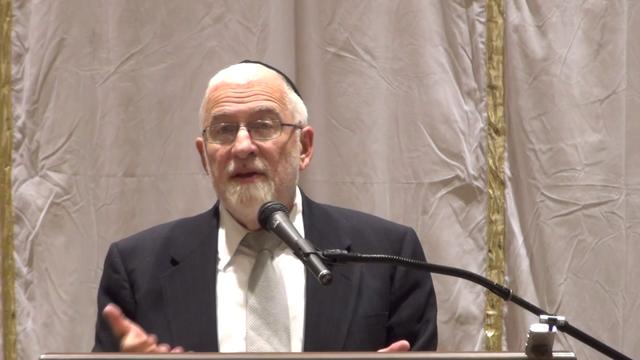
Yesterday, before I got in the car to drive home, instead of me unwittingly ringing someone, I suddenly heard a voice, the voice of Mori V’Rabi Rav Schachter. Realising that iTunes had been activated in my pocket, a random Shiur had commenced. I paused the playback, got into the car, and listened on the way home to daven Mincha.

The topic of the Shiur was the Beis Din process for דיני ממונות financial disputes. Ironic? Hashgacha? Whatever. Rav Schachter went through the Machlokes of the Tannoim in the first chapter of Sanhedrin regarding the concept of Peshara פשרה. If you look this word up in a dictionary it is

nf. compromise, arbitrement, conciliation

Rav Schachter quoted  the Rav who said that it was wrong to define פשרה as “compromise”.  For example, one person claims “you owe me one million dollars” and the other claims “I owe you nothing”, and so the Dayan says let’s split it 50/50 as a פשרה compromise. That’s definitely not the definition of פשרה. Halacha did not recognise such a class of judgement. Rather, quoting, the Mesora passed from R’ Chaim Brisker through to the Rav, R’ Schachter explained that פשרה means ישרות, Yashrus, which the dictionary defines as

nf. straightness; directness; honesty

Furthermore, it is a positive command, a מצוה that a Rav/Dayan pursue פשרה over Din (Halacha). פשרה is a concept wherein you “know in your heart of hearts that this is the right thing to do”. The concept is perplexing, especially in today’s world where the message that “Strict Clean Halacha” so to speak is the only way to go ahead and the highest level to strive for. How can a different process, which may result in פשרה based on ישרות ever supersede unadulterated Halacha, so to speak?

R’ Schachter gave two examples, one from R’ Chaim Brisker (Soloveitchik) and one from the Rav. In R’ Chaim Brisker’s case, a housewife had asked to borrow some jewellery from her maid for a Simcha. The maid had worked faithfully and it was a beautiful piece and the only one she owned. The maid was only too happy to lend it to housewife (boss). Alas, at the wedding, the jewellery disappeared/was lost. Technically, the housewife is known as a שאול a borrower, and is not required to recompense for an accident such as this אונס. The housewife and maid went to R’ Chaim, and he suggested that he settle the dispute based on פשרה. Both the Ba’alei Din, the boss and the maid agreed (technically both sides have to agree to פשרה, it can’t be forced on them). R’ Chaim paskened that according to Din, the housewife didn’t have to pay back the value of the jewellery because the maid was in her employment (בעליו עמו) however based on פשרה the housewife needed to pay the full amount of the jewellery to the maid. This is Yashrus. This is the right thing, so to speak, and that’s what happened.

Sometimes, R’ Schachter explained one knows that they could technically win a Din Torah but equally, in one’s heart of hearts one also knows that it’s a Chutzpa (ie lack of Yashrus) to take the case to a Din Torah.

R’ Schachter described a fascinating mode of Psak that they employed in RIETS (YU Kollel). There was one incident where two people had a dispute over property ownership. Their Rabbi did not want to get involved because he knew them both. Instead, he took them to the Kollel. Randomly, they pulled out three unknown Kollel Rabbis (all of whom had Yoreh/Yoreh and Yadin/Yadin, ie they were qualified) and went into a side room with the two litigants. They asked that the litigants agree to פשרה as well as normative Psak Din, and this was accepted. The three judges heard the case (in quick time as it turned out) and unanimously decided in favour of one person both from a Halachic and a פשרה point of view. The litigants shook hands, accepted the judgement, and went their own way.

How many of us, have the יראת שמים to be involved in such a process as בעלי דין? It’s true that we wiggle the finger at Rabbis, and often deservedly so, but at the same time, where is our own Yashrus.

I’m not involved in business per se, but I do run a band and a few times in my career, I have definitely been diddled by some people. Each time, I decided that I would not pursue them. My reason? Those people didn’t care about Halacha or Yashrus, so what was the point. Thank God, in 99.9% of cases I’ve had, people have been true to their word.

Yet another Zablo fails the test

In what is now breaking news, a judge has ruled that there was likely bias on the part of some Dayonim in a recent case between Amzalak and Koncepolski. It makes for very sad reading. One of the Borerim, unfortunately has form, having been named in quite a few controversies over the years.

I call on the Rabbinical Council of Victoria in concert with the Melbourne Beth Din to ensure that

  • there is an accreditation process for Borerim. In my opinion, that should be set up under the aegis of the Beth Din of America. Accreditation should include formal Shimush. If that means someone sits in on cases for six months in a Western country, then so be it.
  • further professional development (as opposed to an external Dayan coming to Melbourne to deal with the “odd” commercial dispute) must be instituted. My advice is to invite Rav Yona Reiss who is on the Beth Din of America (and who is also an attorney) to review the last ten-fifteen years of involvement between Batei Din/Zablo and the courts and together with Jewish members of the legal profession, conduct a week-long formal course to develop the expertise of Rabbonim and potential Borerim vis-a-vis the process of Secular Law and its intersection with the constraints of Jewish Law.
  • an open heter arkaos be issued such that litigants should go to a secular court to resolve their differences until such time that the Rabbinate develops the expertise to handle cases in a professional and respected manner.

As a Jew, I do not want to read criticism of Rabbonim about bias and procedure. This is an unmitigated חילול שם שמים that far outweighs (in my unlearned opinion) the permission required to proceed to secular court before attempting to use a local Rabbinic arbitration/zablo/formal beth din process.

We have a long way to go before some כבוד התורה is restored after the damage of such proceedings.

To be fair, the secular system can sometimes be stupefying. See, for example this case where feather-fine technicalities were used at a huge cost to attempt to find fault in one line of a fair ruling by a respected former Jewish judge with a clean and universally respected reputation. No system is perfect, but what we currently have (or should I say don’t have) is terrible.

Disclaimer: My opinions are mine alone. They are not in any way linked to any entity with which I have a formal or informal relationship or employment.

Batei Din today

This week, we have heard of a case in Sydney was heard by a Beth din of three melbourne Rabbis. One of the Dayanim of that Beth Din, ruled that since the Sydney person who lost the case should be marginalised for not following the ruling. Apparently, as part of putting this marginalisation it was decreed that the Sydney litigant’s offspring should be denied access to a Jewish School. I’m assuming this is all true and accurate (it came from the Australian Jewish News, so I don’t know how correct it is, of course).

Next, there is the Cherem published by the Sydney Beth Din on a well known Melbourne Toen (halachic advocate) because the Toen is alleged to have besmirched (according to the Sydney Beth Din) one of their Dayanim. Toanim are paid. They can be quite aggressive and often lack the correct demeanour to make sure the process is calm, and properly dealt with, in an atmosphere of heat reduction.

Now, I’m not getting into the rights and wrongs of either case.

What has been clear to me, though, for a long time, is that if people truly want to have a Beth Din deal with a civil matter, they need to

  1. Use Dayanim outside of Australia (it’s too politicised here already)
  2. Use Dayanim who live or have lived in the western world in a real sense (eg American Dayanim, such as the Beth Din of America)
  3. Ensure that it’s an Australian court approved arbitration process so that both litigants sign that they will adhere to this form of arbitration
  4. Don’t allow any Toanim. Have it so that both litigants (and any witnesses) alone, interact with the Beth Din. If they want to have a private meeting with a Toen before the Din Torah that’s fine, but they need to keep the Toanim as simply an advisory service. In the end, the Dayanim should know what to ask and see through any halachically unsound claims.
  5. Or agree on a lone judge with impeccable halachic standing, such as Rav Hershel Schachter or Rav Usher Weiss (both of who know and interact with the western world)

At the moment, we have an unedifying situation where the honour of Rabonim in Melbourne and Sydney is besmirched. Halachic Judaism is besmirched. Public campaigns to show that some Rabbis disapprove are needed to smooth the waters in the press. It’s not what we are about. We need to restore Kavod HaTorah.

Rav Hershel Schachter
Dayan Usher Weiss, the Minchas Asher