An education revolution?

[Hat tip to Dovid]

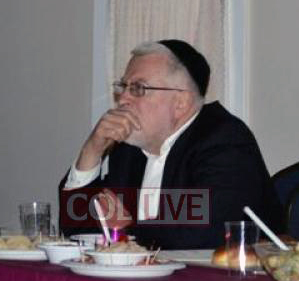
The following, is my free translation of a statement issued by Rabbi Yosef Avrohom Heller, Rosh Kollel of Crown Heights and one of the most prominent (if not the most prominent) Poskim in Chabad today. (His views on other matters, such as “Who is Moshiach” are well known).

Rabbi Yosef Avrohom Heller

There are dozens of children wandering and lost, and thank God we are blessed with many institutions established to bring them back through Torah.

But these are not only the only misguided ones: many young people in Yeshivos are perplexed and in danger of dropping out.

This is not only dangerous, but the simple fact that they are lost and confused – is itself a great loss, as we must expend all our powers to keep them and guide them. Because everyone should succeed in Torah study and Mitzvos, and we should not be focussed only on those who are already in a proverbial deep hole.

We should give them our full attention and show them the beauty and wondrous taste of Torah.

There are still many students who ostensibly behave as they should, but since we are not in reality educating them in a proper way and do not give them the necessary tailored spiritual needs, they may turn down the road and become lost, and the debt is imposed on each of us to pay attention to their suffering and help them.

How is this done?

Each child is different

The first rule is that every child is different, each has a potentially different learning path and outcome from the other, and our expectation is different from child to child. This applies to both learning Torah and and serving God.

If we can show each child what they can achieve on a personal level, the child will feel a hundred percent successful in their achievements.

But if the child gains the feeling that they were “unsuccessful” or feel they have to live up to an unreasonable expectation, then in addition to the grief that the child is suffering, there is a danger that because they are not seen to be successful, they will seek success elsewhere.

The truth is that it is hard to expect institutions to look after and devote themselves personally to each student according to their  value, since this is nearly impossible. So, the responsibility is on the parents, neighbors and friends, to see that each achieves their individual potential.

Gemorah? Is not for everyone!

Previously there was no concept of people learning all day. Only very few people did this, and others set time for Torah and the rest of the day they were at work.

Today there is a new concept that has no source in the Torah that everyone should specifically learn Gemara. One who studies Mishnayos is considered a lesser individual!

There was never anything like this in the past:  one studied Talmud, another Mishnayos. Is it conceivable to say that the latter is less of a Talmid Chacham than the former?

A third studied Chumash with Rashi and also had a place of honour in the Beit Midrash.

It is the same with the study of Talmud itself: the first is studying the first Sugya in Pesachim and another is learning the last chapter. Is the latter therefore considered to be less than the first? We can not all learn the same thing, because God did not create everyone as clones of each other.

For every student to succeed, according to their ability, they must  feel their success according to their potential ability. If this is the case, they will feel satisfaction and pleasure in learning. They need not aspire to be a great “genius”.

But if they learn matters which are more complex than their innate ability or matters which do not challenge them adequately they will not feel satisfaction in the classroom.

For example, for one student it may be grossly inadequate to painstakingly teach them one Mishna a day, explaining each part with examples and illustrations. For another student, this may be exactly the approach that is required and they will feel fulfilled and not lacking in self-esteem.

The mathematician, philosopher and technician

Therefore, an entire class cannot assume a one size fits all approach. It does not work.

As an example: the mathematician, philosopher and engineer, are three types all of whom can excel. They each have different ways of thinking. Is one less wise than the other? This is the way God created the world. Two heads are not identical. Every person is wise within their God-given boundaries.

So when learning a complex issue involving a dispute between two Tanaim, the Gemara brings about a dispute between two Amoraim on their interpretation Now we have four views. Then the Gemara brings a different interpretation of the Amoraim and we now have eight approaches.  Then there is a dispute between Rashi and Tosfos – and we have 16 opinions. This can then extend to different understanding in Rashi and Tosfos which leads to 32 approaches.

A student who can understand all these methods is mathematically gifted, but how many are born with this ability?

However another student could resolve a conflict between two different Gemoras because they had a more philosophical (abstract learning) ability. And others may have practical more applied sense, and can apply the principles to conclude practical halachic ramifications in our daily lives.

So when Yeshivos deliver complex shiurim with hair-splitting logical minutiae, many students do not have the tools to deal with this approach. But if you were studying with them issues of Jewish law  tracing the Gemora through Tanaim and Amoraim and Rishonim and Acharonim until they could see and understand the conclusions in Shulchan Aruch they would feel experts in that field, and they will importantly derive much satisfaction and fulfilment.

Different children’s institutions

The conclusion is that there must be different departments in each Yeshivah. For example, children of the same age will have one group studying Gemorah, a second group learning Mishnayos and a third group learning Halacha.

The institution itself must have a framework and provide options so that students select what is suitable for them and is fulfilling.

If you do not give him the opportunity – it’s like the philosopher being forced to become a mathematician, and instead of becoming successful in their chosen field, they end up not being successful at all.

We need to open many types of such institutions, and there are a lot of donors willing to support it, since they were disappointed that they had suffered and were not successful in their own learning.

We need to explain to people that this is a real life-death situation, and if we lack money, then by Halacha we have to sell all the scrolls in the synagogue so that each synagogue will only have one, and thus finance the costs.

There is a recent great awakening to write Torah scrolls, and almost every month in our neighborhood there is one more new Torah Scroll. So certainly they would be willing to donate money for new institutions. This is more important than the new Torah scrolls.

One story tells of a woman who wrote to the Lubavitcher Rebbe that they wish to contribute a Torah in loving memory of her relatives, and the Rebbe responded (אגרות קודש ח”ל ע’ צב)  that if she will support a yeshiva student who studies Torah, then the souls will be raised more than through buying a Torah scroll. And how much more so in regard to save the lives of children in Israel.

So parents need to know that if their child is not succeeding in a given Yeshivah no matter how hard they try, they should take the child out of that Yeshivah. This is פיקוח נפש.
Different gender homophile marriages

There has been recent news and commentary about the organisation known as “כמוך”. This organisation seeks to provide a range of support mechanisms for those with a proclivity towards homophillia. The group advertises itself as belonging to Orthodox Judaism. R’ Haskel Lookstein wrote:

“I can’t change Jewish law, but the way one thinks about it has to change. There is something very sensitising about hearing from Jews who are shomrei mitsvot in just about every way, except for conformity to the halakha of sexual behavior, and are struggling with that tension. I wasn’t aware of the depth of the struggle before”
(cited in Debra Nussbaum Cohen, “The ‘Trembling’ Phenomenon,” The Jewish Week, November 9, 2001 )

כמוך have sought Rabbinic approbation for marriage between males and females both of whom have homophile tendencies. It would seem that, reading between the lines, those Rabbis who have expressed support for this association, would prefer to do so on a case-by-case basis, as opposed to a blanket פסק דין permitting or forbidding this practice.

Not having any idea whether such marriages of “accommodation” (I can’t think of a different way of describing them) can help change orientation, I’m not sure what the halachic basis for permitting יחוד of this variety between two people who don’t actually love each other. Technically, though, they are married, and I guess one only needs to separate from another person if one doesn’t like the person, so I guess the reasoning is “sound”. Love would does not seem to be a precondition for enabling יחוד let alone קידושין?

Either way, the innovation sits uncomfortably with me even if on a pure techno-halachic scale, it’s not forbidden. It sits uncomfortably because I can’t see it as part of the halachic norm. I can’t see קידושין as being constituted by such. I can’t imagine this to be the familial structure mandated and encouraged by the תורה. It’s not a פלגש; even from a more urbane lusty level. In the end, though, at least there is an attempt to deal with the issue and not sweep it under the proverbial carpet.

One assumes that the motivation of a Rabbi who would permit this is:

  • to lessen the chance that a forbidden act is committed
  • to induce, if possible, a reorientation of gender attraction

It is interesting that it’s mainly the Religious Zionist Poskim who are involved in this. I surmise that this is because they are the Israeli quasi equivalent to a Centrist Orthodoxy that doesn’t recoil from the world.

Rabbi Chaim Rapoport, who wrote a book on the general topic, states

[E]ven proponents of conversion and reparative therapy acknowledge that in many cases such therapy can, at the very most, help the individual in his pursuit of celibacy, but would not enable him to embark upon a potentially viable marital union. Furthermore, even one of the greatest optimists about the success of sexual reorientation therapies, (Orthodox) Dr. Joseph Berger, acknowledges that “even under the best of circum- stances, with highly motivated, suitable patients, the success rate is between 30 and 50 percent”. Consequently, we may conclude that it is almost universally recognized that people of exclusive and apparently unalterable orientation do exist in a significant number (p. 24).

See also the Tradition article which quotes R’ Aharon Feldman of Ner Yisrael:

Judaism looks negatively at homosexual activity, but not at the homosexual nature. Whatever the source of this nature, whether it is genetic or acquired (the Torah does not express any view on the matter), is immaterial. . . . Accordingly, a Jewish homosexual has to make a commitment to embark on a course where he will ultimately rid himself of homosexual activity. It is not necessary that he change his sexual orientation (if this is at all possible), but that he cease this activity. It is obvious that for many people this [cessation of homosexual activity] will be difficult, and will have to be accomplished over a period of time. But it must be done and it can be done.

One can only hope that Halachic life and life in general becomes easier for those facing these difficult challenges.

Charity In a Changed Economy: An Interview with Rabbi Hershel Schachter

The following is copied from an interview in Jewish Action.

RHS: is Rav Hershel Schachter, JA: is R’ Gil Student

R' Schachter


JA: How much money should one give to tzedakah?

RHS: If one can afford it, the recommended amount is one-tenth of one’s annual earnings, which includes salary and interest earned. There are different opinions as to whether the one-tenth is applied to the total earned [aside from withheld taxes] or to the remainder after essential living expenses. I think the general practice follows the first opinion. Of course, this applies only if one can afford it. If one cannot afford to give one-tenth of his income to tzedakah then he should not.

The Gemara (Ketubot 50a), quoted by the Rambam (Hilchot Arachim 8:13), seems to say that the maximum one may give is 20 percent, because if one gives too much, one may become poor and dependent on the charity of others. In another place (Hilchot Matnot Aniyim 7:5), the Rambam sets the recommended amount, rather than the maximum, as 20 percent. Yaakov Avinu said (Bereishit 28:22) that from everything he will earn “aser a’asrenu lach,” he will give one tenth and then another tenth. The Chofetz Chaim (Ahavat Chesed II 50:2) resolves this contradiction regarding whether 20 percent is the maximum or the recommended amount. According to the Chofetz Chaim, if poor people are knocking at one’s door asking for donations, if one can afford it, then one should give up to 20 percent. But if people are not asking for that much then the recommended level of giving is 10 percent.

JA: When giving tzedakah, can people decide entirely on their own whom to give?

RHS: A person does have some tovat hana’ah, the right to decide whom to give the money, but not that much. The mishnah in Pirkei Avot (3:8) tells us that we are only trustees of HaKadosh Baruch Hu’s money. We shouldn’t act as if it is ours. “Ten lo mishelo she’atah veshelcha mishelo, Give to Him what is His because you and yours are His.” Everything belongs to the Ribbono Shel Olam—our bodies, our souls, our wisdom and our property. We should act as if we are just trustees giving out His money. That is why we must follow the instructions of the Chumash (Devarim 15:7), quoted in the Shulchan Aruch (Yoreh Deah 251:3), regarding priorities for whom to give more and whom less.

The Rambam (Hilchot Matnot Aniyim 7:7) quotes Tehillim (75:21) “Al yashuv dach nichlam, Do not send a poor man away embarrassed.” If a poor

We are only trustees of HaKadosh Baruch Hu’s money. We shouldn’t act as if it is ours.

person asks fortzedakah for himself, you must give him something. But you do not have to give him a hundred dollars; you can give him just one dollar. You have a little tovat hana’ah. You have the right to choose whom to give a lot and whom to give a little.

This rule does not apply to a person collecting for an institution. You can choose not to give tzedakah to an institution because you want to donate elsewhere. Some people respond with a check to every solicitation letter they receive. I don’t. I throw out most of these letters. I’m not obligated to send money to an institution or to a person I’ve never heard of. If a poor person is standing in front of you, then you have to give him something. If a person is collecting for someone else or for an institution, or if he or even a famous rav sends a letter rather than comes himself, then the rule does not apply, and you are not obligated to give anything.

JA: What are the priorities for determining whom to give more?

RHS: The Shulchan Aruch (Yoreh Deah 251:3), based on Biblical and Talmudic sources, states that poor relatives come first, next come neighbors, then people in the same city [aniyei ircha], and then the poor in Israel [aniyei Eretz Yisrael]. The Chatam Sofer (VI:27) gives precedence to the poor of Yerushalayim over those from elsewhere in Eretz Yisrael, and then the poor people who live in other parts of the world.

The question is what does “precedence” mean? Does it mean you give everything to the poor people in your family? The commentaries assume that this is not the case. The Chatam Sofer (II: 233-234) writes that you give half of your tzedakahmoney to family and divide the other half among other poor people. Others think that you have to give more than half to those who take precedence.

For many years, the American community was supporting its own yeshivot and sending its surplus tzedakah money to Eretz Yisrael. Now we realize that there is no surplus money and yeshivot in America are closing.

The Aruch HaShulchan (Yoreh Deah 251:4) says a little more than half—51 percent. The Pitchei Teshuvah (251:2) quotes an opinion that states you should give three-quarters to those with precedence and one-quarter to the rest. The Chachmat Adam (145:5) and Rabbi Moshe Feinstein say that the split is two-thirds/one-third.

Here is an example following this last opinion: Assuming I have $1,000 to give totzedakah, if I have a relative who needs $667, I give it to him. The maximum is $667; but if he needs less, I give him less. Once my relatives are taken care of within the amount of $667, I give up to two-thirds of the remaining money to needy neighbors. And of the remaining money, I similarly give up to two-thirds to aniyei ircha. And so on, through the list of priorities.

However, aniyei ircha does not refer to the poor people of your city literally. I live in Manhattan. Are all the poor people in New York considered my aniyei ircha? I don’t think so. Years ago, the cities were small and aniyei ircha were the people you knew. Today, aniyei ircha are the people with whom you associate, with whom you have a kesher. There are so many shuls in New York, but I don’t davenin all of them. There are so many mikvaot in this city, but my family only uses one. The shuls and mikvah from which my family benefits are considered aniyei ircha. The yeshivot where I, my children and my grandchildren learned, even in distant cities or countries, are considered aniyei ircha. The institutions with which I have a connection are aniyei ircha, and those with which I have no link are aniyei ir acheret [the poor of another city].

JA: Is it better to give to poor people far away so they can eat or to a local yeshivah so it does not close down?

RHS: That is a very serious question. For many years, the American community was supporting its own yeshivot and sending its surplus tzedakah money to Eretz Yisrael. Now we realize that there is no surplus money and yeshivot in America are closing. I think that our local yeshivot take precedence over aniyim in another city. Let other people take care of the aniyim in the other city until we can support ourselves and educate our children.

JA: Should someone who receives tuition assistance give tzedakah priority to those yeshivot?

RHS: Definitely. One who is receiving a tuition scholarship should certainly givetzedakah money, if he has any to give, to the institution offering him the discounted tuition. He should give his own money or raise funds from others to try to return the amount of the tuition break.

JA: Is it tzedakah to give to a yeshivah that pays higher wages than was standard in the past?

RHS: I think it is considered tzedakah. Years ago, many yeshivot and day schools had under-qualified teachers. Those teachers knew how to speak Hebrew and read a little Chumash, but they were lacking in knowledge and often observance. Many of them were not even shomer Shabbat. What kind of a positive religious influence can such teachers have on children? We would prefer to have observant and learned teachers but such people can go into many other fields. We expect a little mesirut nefesh [sacrifice] on the part of Jewish educators, but we can’t expect that much. Since they can go into other professions and make more money, we have to make chinuch appealing. If we do not pay decent salaries, we are not going to get good teachers.

JA: Is it considered tzedakah to give money to people who can work but choose not to?

RHS: There is absolutely no mitzvah of tzedakah in this case. The mitzvah oftzedakah is to give to a poor person. Someone who has the ability to earn a living is not considered poor. I am not obligated to give him tzedakah just because he decided to retire at the age of twenty.

Biographies and autobiographies

A clear difference between chassidic and non chassidic groups used to be the importance attached by the former to stories. Whether these were ‘Ba’al Shemsker’ Mayses or ‘Booba’ Mayses, the promulgation of stories about the wondrous acts and מופסים accredited to Rebbes was and remains a powerful ingredient in the glue known as אמונת חכמים

In the other extreme, due to the unreliable nature of many stories, anti chassidic groups often conclude a לא היה ולא נברא approach to any story; they don’t believe any of them.

The Rav used to treat chassidic stories with a large grain of salt. He would even assume a mirthful tone about these. In Brisk, there was a general feeling of derision towards describing the mundane. There was no room to read about someone’s יחוס or similar. They disdained the concept of biographies or תולדות אנשי שם. If there was something to learn about another person this was achieved through learning Torah. If they had not published Torah, then learn Torah. In Brisk, Torah was everything. Torah subsumed Mussar, and there was not even a Mussar Seder as part of the curriculum (let alone Chassidus).

Ultimately, Briskers would say למאי נפקא מינה, why do you need to know? If you seek inspiration, derive this from Torah itself.

Times have changed. Whereas once upon a time, תולדות אנשי שם was the purview of Chassidim, this is no longer the case. Stories and Biographies of Gedolim are no longer limited to Chassidic Rebbes. The emergence of Artscroll and Feldheim (in response to the needs of the masses) has meant that the non and anti chassidic student can now derive similar חיזוק from stories about the life of an arch Misnaged. Gone are the days that מופסים only happened among Rebbes. Now we have stories which are “moredik” among the misnagdim and non chassidim. We read about R’ Aryeh Levin ז’ל and are inspired. He wasn’t a Rebbe. We read about R’ Kook ז’ל and are inspired, and he was derided by anti Zionist elements common to Chassidim and Misnagdim. Books about R’ Shlomo Zalman ז’ל and others abound. Do they do any harm? I doubt it; as long as they tell the whole truth and only the truth.

Ironically, large volumes are written about people like R׳ Velveler Brisker ז’ל, the Rav’s own uncle, a scion and paragon of Brisk. It is difficult to see R’ Velvel approving of volume 1, let alone a volume 2, about him.

There have also been the so-called controversial books, such as ״the making of a gadol” by the now maligned Rosh Yeshivah, R’ Noson Kaminetzky. From the episode of banning his book, we see the opposite effect: as long as books never ever show a gadol in a human or fallible way, they are kosher. If they also tell the whole truth, this can mislead or deflate readers and the book then gets shelved in the Apikorsus Cabinet or burned.

Applying the yardstick used in our day and age towards the Torah itself, one might well imagine many sections would be banned. Who would publish the story of Moshe Rabbeinu and the rock, or the pilegesh B’Givah or indeed Shir HaShirim? Luckily, these were authored through Ruach HaKodesh and stay unimpeachable and impervious to bans.

This brings me to my point. It is one thing for the students or followers of a Rabbi or Rebbe to write a biography about him (or her, as was the case with Nechama Leibovitz and ‘Tales of Nechama‘) but what about an auto biography? Biographies, especially today, are sanitised and homogenised so that the subject of the biography is painted in only a positive (and often unrealistic) light.

Autobiographies are much rarer (see “Jewish Autobiography: The Elusive Subject,” Jewish Quarterly Review 95:1 (Winter 2005): 16-59 by Mosely). There is the well researched edition of R’ Yehuda Aryeh of Modena‘s auto biography, Chayei Yehuda. More recently, there was the scandal surrounding the editing of the second edition of R’ Kook’s (first) father in law, the Aderes‘s autobiography, Seder Eliyahu. Questioning the “real audience” of the auto biography, family members contrived to edit and remove crucial elements of the auto biography.

Recently, I finished reading R’ Ya’akov Emden‘s autobiography of 1896, Megilas Sefer. My copy was the new translation.

R' Ya'akov Emden

Some have claimed that this wasn’t an autobiography written by R’ Emden, as seen in this book. Serious researchers, however, pay no credence to that attempted besmirching.  Indeed, as I understand it noted historian, R’ J. J. Schacter (not to be confused with R’ Hershel) is completing a scholarly work on Megilas Sefer in the not too distant future. The Ya’avetz, as he was commonly known, was a famous son of the equally famous Chacham Tzvi. R’ Emden is known for his fierce opposition to the alleged neo-sabbatean R’ Yonasan Eybeshutz. What struck me, though, about the autobiography was how human R’ Emden was and yet, how much of a Tzadik and upright example he was despite the revelation that he was a fallible human being, albeit a Rabbinical Giant. To give you a feel for what I mean, I’ve copied a few random pages from the translated version. Ask yourself when the last time you read a biography from Artscroll or Feldheim which basically told the whole truth. Does our generation need only sanitised versions of human beings? Are we likely to have less יראת שמים if we read that someone was angry, jealous, sad, moaning, groaning, in pain, in fear or the like? Our generation is crying out for more אמונת חכמים. We do ourselves a great disservice if we don’t tell the whole truth and instead portray them all as מלאכים.

 כי אדם אין צדיק בארץ אשר יעשה טוב ולא יחטא

is not a statement of weakness! It is a statement of human condition.

A humbling lesson of perspicacity and divine providence

I know Judy.
This is an amazing story.

On the road from Yerushalayim to Tel Aviv

We are all accustomed to the difference in feeling between the two cities. ירושלים is not just the holiest city in the world, but one feels the holiness. Holiness is often associated with difference—המבדיל בין קודש לחול—and this idea is consonant with either the Kabbalistic doctrine of recognising the spark of holiness within even inanimate objects and raising these to a higher appreciation, or the more ascetic misnagdic notion of dissociation with all things that are profane.

The highways between these two cities highlighted a transition that I was aware of from a earlier trip, but sensitised to on this trip. As one meanders through the challenging highways and approaches Tel Aviv, the visage of signs, mostly in yellow, on successive lamp posts, declaring the last Lubavitcher Rebbe as the משיח increases. In otherwise barren highways, sometimes punctuated by Arab Villages and cities on the side, the signs start to pop up in a seemingly ubiquitous fashion.

I felt sadness. It is so many years after the פטירה of the last Rebbe זי’ע and I wondered why his holy face needed to be plastered everywhere among the otherwise profane and colourless lamp posts. Would these signs encourage people to do more מצוות? It is a brave person who is able to make that conclusion. Would these signs encourage people to be inspired? I doubt it, given that they are everywhere as one approaches. להבדיל I work near the Trade Union at the top of the City near Carlton. There are always signs hanging from the building façade. They are provocative, and designed to be this way. Nevertheless, like the signs on the billboards across RMIT, one rarely gives them a second glance because they have become rote. Indeed, on this trip I noticed a series of poles which had signs of what looked like the רש”ב. R’ Shalom Dov Ber זי’ע, a previous Rebbe. The car was travelling too quickly for me to notice the wording below the picture. I noticeד these signs because they were different.

Have we reached a point where any semblance of usefulness of these signs has evaporated? Perhaps.

I interviewed a number of students in Ramat Efal, and when we spoke about University life in Melbourne at RMIT, I stressed the need to live relatively close to the Jewish community. After informing a very bright student that there was also Chabad on campus, I noticed the student resile. He went onto explain that he didn’t want anything to do with Chabad and their משיחיות. He wasn’t a visibly religious Jew, but I was still surprised nonetheless. After all, even the yellow flag waiving fringe of Chabad should still come across as warm and non-judgemental? Why would he be so turned off?

As I drove back from Ra’anana to Jerusalem that evening, I asked myself whether יצא שכרם בהפסידם. The Meshichist type, in my experience, are more pushy; they are more single-minded; they often do not display the type of understanding or social etiquette or intelligence required to influence the intellectual or materialistic élite that live in Tel Aviv. I couldn’t help but feel that the rarer old style, externally simple yet intrinsically sophisticated real McCoy Lubavitcher would be far more successful in increasing קדושה in this environment; especially in places like Tel Aviv.

I was left feeling quite sad. I felt sorry that such a great man was being promoted through posters and one liners. His legacy was surely much more significant and profound than that. The Israel-cum-Tel Aviv style approach to קירוב is very different to that outside of Israel. Does it need to be? I think not. Israelis need better than just “in your face” and shallow Meshichisten. Ironically, the Israeli who leaves Israel is more likely to be exposed to this type of Chabadnik and respond more positively. It need not be that way.

The Meshichist movement really needs to just go away and get back to first principles. I’m not sure the Breslovers even have first principles. That movement is almost as confounding.

Some people still don’t seem to get it

Last night, in conversation with two sensible people, I was flummoxed to find the arcane view expressed that in theory someone accused of non-consensual sodomy should not face justice as

  1. it was “many years ago”
  2. they may have done T’shuva
  3. they haven’t been involved in such things for the last few years

Now, before anyone gets too quizzical or Machiavellian, we were not speaking about Australians. Indeed, we were focussed on principles.

I asked my two interlocutors

  1. what the meaning of ובערת הרע מקרבך meant in the context. Does it mean that if the person has allegedly done תשובה that there is no חיוב?
  2. how they defined תשובה in the context of the רמבם?
  3. what הלכה said about the recidivism attributed to perpetrators by experts
  4. whether expert advice needed to be heeded
  5. what their reaction would be if a victim was one of their children “many years ago”
  6. what if בית דין find out that someone bashed another person, but the bashing occurred 5 years earlier and the basher had done תשובה so to speak. Would the case not be heard? Would the דין not be meted out? Would a בית דין act in a way less than a western court of law?
  7. what are the responsibilities of a person who is aware of a past injustice. Do they have a דין of לא תעמוד על דם רעך?

I opined that there was a world-wide awakening, across religions, groups within religions, and elsewhere, with the strong view that society needed to be more open and change. Society had now not only drawn a red line, but was now ready, especially through new media, to protect beyond that red line and do all that was in their power to see that

  1. justice is served
  2. the future social environment is safer
  3. those affected are counselled and supported and not marginalised via internal ructions throughout their life
  4. see that education across the board is enhanced through the realisation that there is no room for the proverbial “carpet sweep”

As R’ Schachter explained to me, Yidden may not be in a situation where the ethical and moral standards of general society are, and are seen to be, more virtuous than ours. We are enjoined not to allow such a situation to exist via the positive Torah command of קדושים תהיו as per the רמבן and others.

We need to carry out a significant change in our thinking and actions. Issues regrettably continue to emerge. This one is another indicating we have learned precious little. In response to an apparently dangerous person stalking children in Ganei Geulah, Rabbinic authorities are using the papers etc to warn people to watch their children, but suggest that the police not be informed because it’s לשון הרע.

שומו שמים = “the mind boggles”

Alternative piety, Holistic medicine and all that jazz

It is my custom, when I am fortunate enough to be in Israel, to spend half a day at the כותל in the covered alcove to the left. I sit in the same place, and simply say תהילים. I’m not a תהילים זאגער but I’m drawn to it at the כותל. Some years are more inspirational than others. I surmise that lack of inspiration is due to my shortcomings.

On Monday, as I said תהילים, a gentleman who looked to be about 45 years of age, came up behind me with four American tourists in tow. He carefully asked each of them their names and the name of their fathers, after which he began making a special מי שברך for each. As he finished, he informed them that his own son was becoming בר מצווה and that given that he needed to buy two sets of תפילין, would they be kind enough to help out with some financial assistance. An awkward silence ensued. Two of the guys wandered away and one of them must have obliged. I resumed my תהילים and after a few moments he returned with another set of dewy-eyed tourists.

The scene troubled me. Even assuming he needed the money for his son, I felt uneasy. At a time when each religious Jew needs to stand and be counted, and try to counteract negative images, this scene came across as opportunistic.

Do one’s prayers get answered more readily at the כותל than 10 miles away from that spot? We have no tradition that this is the case today. Is a מי שברך from a gentleman with Payos, long black coat and hat more likely to find favour in Hashem’s eyes than if these tourists had personally felt inspired enough to issue their own prayer from the heart?

I’m tired of the fiscal opportunism. Can we leave our religion pure and holy? Are we able to refocus on a less predatory approach? The commercialisation of religion is disturbing. The booming business of the red kabbala string is void of meaning. Being addressed as ‘צדיק’ as a method of getting one’s attention and inflating their ego is self-defeating; if anything, I found it annoying. Why all this focus on paying someone to pray for you? Call me a cynic, but will a set of kabbalists davening at Amuka for shiduchim help?

Jews have a direct line to God. If we are sincere, we improve our chances of being heard. On Erev Shabbos, there was a group of about 60 individuals all chanting some Kabbalistic prayer for removing this and the other. I had never seen the prayer. I do know though that it wasn’t authored by the אנשי כנסת הגדולה. If someone took the trouble to compile all these special prayers and varying segulos (which the spell checker wanted to correct as “seagulls”), they could probably fill an Airbus A380. אם כן אין לדבר סוף

Can we get back to basics perhaps?

This phenomenon is not restricted to Jews or orthodoxy. In desperately seeking non standard or scientific solutions to health problems, alternatives are being pursued more and more radically. Some Rabbis, as pointed out in this article, have begun warning about the possibly עבודה זרה based “holistic/alternative” approaches to  health care. Perhaps there is a parallel here, להבדילֹ. It is natural (sic) for people to try something different when all the normal possibilities have been exhausted:

  1. If you weren’t listened to after 3 Yom Kippur’s of solemn davening and תשובה why not try going to the Oomba Poomba and tie a green thread on your little toe while reciting a passage of a fragment of a תפילה found in the Cairo Geniza
  2. If conventional medicine isn’t working, and the doctors have “given up”, why not mix some partick thistle and cats paw and cook it in a bunsen burner, smearing the mixture on your forehead as a רפואה.

More seriously, when people become desperate, they use desperate measures, but we are in trouble when we ignore and avoid the standard approaches, be they basic, Torah and Mitzvos, or להבדיל basic Medical Science and supplant them with hip alternatives that often do much more harm than good.

Israel can never do anything right!

The protests.

Are you comfortable with these segulos projects?

See this.

I just can’t feel comfortable with this. Wouldn’t it be nice to establish a free shadchan network where the shadchanim had psychology and counselling degrees and were always at arm’s length both personally and financially from those seeking the service? Utopian? Perhaps. Would it serve many communities better than the circus that this seems to have become? I think so.

Surely it’s about putting people in touch with each other, with somewhat confidence that they aren’t polar opposites and tick some boxes of compatibility.

from Frumsatire

I’m dreaming again.

What a pleasure to be here

I have to thank my students. They allowed me to change my lecturing schedule through Sunday lectures so that I could dash off to the Holy Land for my cousins daughter’s wedding. My cousin Jackie z”l after whom our grandson is also named, passed away a year ago and I had promised to attend a wedding should it eventuate: and here I am. It was weird yet comforting to stand in line to board an El Al flight. It’s not Singapore Airlines, but the food is better, even the Hamasbia (I’m frumer than you) meals.

The airline crew work with what I can best describe as “ruthless efficiency”. It’s almost like a military operation. They are quick to serve, and before you can say boo, the tea and coffee is coming. I mucked up my flight plans (typical) and ended up in Hong Kong for the fast, and boarded a few hours before the fast finished. At least on EL Al, without asking, the hostess offered to give me my meal at the end of the fast. I should have asked her to Pasken for me 🙂

There were two other frumaks on the flight, wearing green crocs, and one tried to give me a knowing smile. I don’t know why, but I prefer that people don’t see me as “Charedi”. How could I be. I listen to Jazz (there were billboards today in Meah Shearim saying that it was forbidden to go to frum concerts let alone listen to Jazz); I am a University lecturer; I am comfortable with all manner of people, and don’t see the world in terms of us vs them. Indeed, my refrain since arriving has been to stop people using the word “Chiloni”. It’s a pejorative. I dislike it. The only person who is בוחן לב האדם is Hashem. Sounds cliched but that’s how I view things.

Rav Kook z”l had a famous observation. The Gemara   בבא מציעא נז ע”ב says:

בונים בחול ואחר כך  מקדישים

You don’t use the money from Hekdesh for the building blocks of the Beis Hamikdash, otherwise the builders may come to do aveyros (Meilah). Instead, you use normal building blocks bought from non holy money. Rav Kook said that during the time of building, even the least holy person could stand in the Kodesh Kodoshim! Where are we now? Are we built or are we building? We are building, surely? Even anti or non Zionists would say we are far from built. Based on this insight, which I took to heart many years ago, I look at everyone, including myself, as potential. If we see the potential, we might have a chance to spread kedusha. If we only see the negatives, what’s the point? We create division and hatred. Didn’t Yishmael do Teshuva even though Hashem said to look at him באשר הוא שם?

I feel at home here. It’s surreal and utopian. Yes, I’m only in a Hotel and a typical  tourist. I don’t struggle like the builders who live here; but I feel at home. No place on earth fills me with the feelings that I experience in this Holy Land, in the Holiest city on Earth, Hashem’s chosen place.

Yes, I know, some people, even great people, think that you can make Eretz Yisrael “here”. All that you can hope for is that at the time of Binyan Beis Hamikdash borders will expand and holiness will spread like the proverbial tsunami. In the meanwhile, we live in a second best infrastructure. We may have Kedushas HaTorah and we can seek out Kedushas Yisrael, but we do not have Kedushas Ha’aretz. Combine the three, and you have that winning elusive formula?

Regards from the hypocrite who lives in Melbourne.

Clarification of R’ Aviner’s פסקי הלכה on abuse

R’ Aviner posted the following פסקי הלכה

Based on the recent discussions by Rabbinic organization in the US and Canada
regarding reporting child abuse, we saw fit to reprint this article:
One’s Duty to Immediately Report Child Abuse, at all Costs

When children are battered, whether sexually or “just” physically, anyone who knows about it has to report it to the authorities. The child, after all, is helpless and has no defenses. According to Jewish law, the primary loyalty of anyone who knows what is happening must be to the battered child, and this duty is absolute. Allow me to add that from a legal standpoint, if the person who knows about it is a professional in an associated field, for example a social worker or psychologist, and he does not report it, he is liable to go to prison for half a year.

Cruelly hitting children is alien to the world of Jewish law. Our halachic authorities viewed the matter so gravely that Ha-Rav Ha-Gaon Yosef Shalom Elyashiv ruled that outside of Israel in the case of a battered child, one must assist the authorities to remove him from his home – even if the child will be moved to a non-Jewish family. The reason is that such treatment could threaten the child’s life (see Shut Tzitz Eliezer 19:52 who discusses abused children in Israel and considers the abuser a “Rodef – pursuer” who must be stopped).

The desire not to report it in order to spare the perpetrator may derive from sincere motives, but one must first take pity on the helpless child. His fate comes before all else. In the Crisis Center for Religious Women, it is reported that there are more children who suffer from beatings and sexual abuse among the religious public than among the secular public. This is not because the religious are more violent, but because more often the religious public avoids reporting such incidents, and they make reports only when the matter go to extremes. Until then, the battered child suffers terrible harm.

It is important to note that there is only one situation in which one is exempt from reporting. If the perpetrator is aware of his problem, is willing to go for appropriate treatment, steadfastly shows up for treatment sessions, and the responsible authorities supervise this process, then the perpetrator is doing what he would be ordered to do anyway. In all other instances, without exception, there is an obligation to report abuse, and quickly. The child’s fate depends on us.

I recall a story in which I was personally involved. Someone saw his neighbor kick his small daughter in the head when she was lying on the floor. The man hesitated about whether or not to report what had occurred, when it was clear that he would pay for his deed with a fight with the neighbor. I ruled that he was obligated to report it, and immediately. During the talk it became clear to me that the person asking the question was a social worker. I had trouble believing this and I asked him, “How can it be that you, as a social worker, would ask me such a question?”

He did report what he had seen, and as he feared, he got into a fight with his neighbor, as well as with much of the neighborhood in which he lived, since the violent father incited them against him. I heard about that and I talked to him. I told him, “It will all be worth it. Think about the fact that you saved a Jewish life.”

Subsequent to that Psak, I asked him a number of questions. I reproduce the questions and answers below. Q is me, A is R’ Aviner.

Q: On what basis does one assume that the process outlined above, is indeed the process required by the law? Which law? In Australia there is a law of mandatory reporting which requires that professionals and para professionals, including teachers and Rabbis report alleged abuse to the police. Is R’ Aviner saying that in the case of someone who has previously committed a crime and is now under the care of a psychologist, as above, that one should ignore the law of the land and not report them to the authorities?
A: Good point.  This is according to the law in Israel.  One should follow the law if it is other wise.
Q: If we report someone to the authorities and they are convicted, and we know that there is every chance that the the abuser will be assaulted in the prison by fellow inmates (because inmates tend to target those who have abused children) is there a problem with doing so?
A: No.  We do not allow a child to be abused to save the abuser!
Q: Does a Rabbi have any more knowledge/authority on deciding whether a person is likely to abuse again, despite having treatment, given that all the research shows that offenders offend and re-offend, despite knowing that what they did was wrong?
A: Rabbis are generally in contact with specialists who guide them.
Q: Is it permissible for a community to effectively send away an offender to another country, and “warn” people in the other country that the person has offended, in order to protect the offender from a local prison sentence?
A: No.  Same as number 2.