Are you going to be a criminal?

The following article about the research of Adam Raine  which looks at biological predisposition and responsibility is fascinating. Based on the Rambam, I think that Judaism has always recognised that people are born with tendencies. Depending on the spectrum, one either douses the tendency as a life long struggle, or, where it’s stronger, is meant to divert the latent urge to something that is permitted. Lurking in the background, though, is public safety. Where that is an issue, as we know, one must do everything to protect the innocent.

ADRIAN RAINE SAYS HE CAN PREDICT IF YOU’LL BE A CRIMINAL

The future that psychologist Dr Adrian Raine predicts—from a civil liberties perspective, at least—falls somewhere between Philip K. Dick’s most outlandish speculations and a genuinely serious cause for alarm. Here are the basics: come 2034, with the economic cost of crime spiraling and the public sick of murder headlines, the US government introduces a program of mandatory brain scanning for 18-year-old men and women.

The scan cross-references every young person against a database of criminal genetics. It looks out for matches in three areas: violent assault, sexual assault, and murder. A score above 79 percent in the first category, 82 percent in the second, and 51 percent in the third will, in Raine’s dystopia, see the so-far-innocent 18-year-olds locked up in luxurious preventative “prisons.” Indefinitely. Until some kind of therapy reduces their score or they’ve been subjected to a Ludovico technique so many times that they flick their own kill switch.

Perhaps the strangest thing about all this is that Raine isn’t an Infowars-addled conspiracy theorist, but a tenured professor, working at Pennsylvania State University with 35 years’ experience studying the biological roots of crime. I met Dr .Raine a few weeks after the publication of his new book The Anatomy of Violence: The Biological Roots of Crime, and not long after some important new research, to talk about his theory.

VICE: Hi, Adrian. What’s happening in your field at the moment?

Adrian Raine: These two studies have just come out. One, I’m a co-author on. Both of them are very similar. The first focuses on the anterior cingulate cortex, a part of the brain that’s involved in emotion and decision making. What the researchers were doing was brain scanning a group of offenders about to be released. They found that if offenders had lower functioning in the anterior cingulate, they were twice as likely to reoffend in the next three years.

What was the second study?

That study was done by my group. What we documented there was that males with a smaller volume of the amygdala—which is the emotion part of the brain and generates feelings like conscience, remorse, and guilt—those individuals are four times as likely to commit an offence in the next three years. That’s over and above social background and a past history of violence—which we controlled for. Both studies are showing us that brain imaging can give added value in the ability to predict future criminal offending. A word of caution, of course—these are just the first two. They need replication and extension.

Isn’t it a bit morally dubious to keep someone in jail just because of their brain chemistry?

Well, take a step back. Every single day in England and America—and all countries throughout the world—we make probation and parole decisions. Which prisoners do we let out early because we don’t think they’re at risk of future offending, and which ones do we keep in? Every day we make decisions on their future behavior.

In California, for example, they take 20 indicators to try to predict dangerousness. They’re social and behavioral things. They’ll look at questions like what’s your age? At age 20, you know, that’s the peak age for violence. Age 60? You’re far less likely to be an offender. What’s your gender? Males are far more likely to offend. Do you have a job?

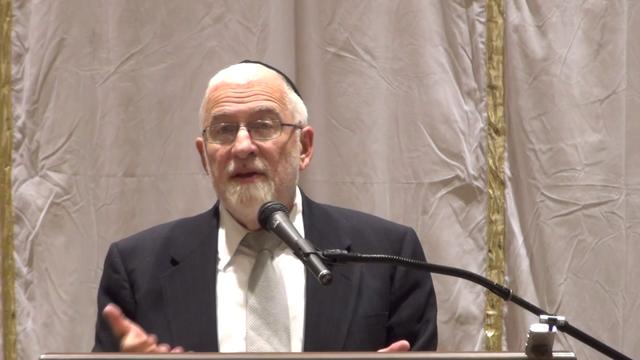
Dr Raine conducting a lecture on the intersection of neuroscience and crime.

OK, I see.

Imagine 20 indicators like that. But none of them are genetic or biological. What these studies I’ve just mentioned are showing us is that we could be adding in biological factors to enhance the parole and probation decisions we have to make on a day-by-day basis right now. If that research can be proven to be useful, isn’t it wrong not to use that information?

It’s a controversial area, though.

I’ve always been on the fringe of things. Back in the 1970s, when I started my research, the whole perspective on crime was exclusively social—bad homes, bad neighborhoods, that’s the cause. At that time, there was a controversy on IQ: is it partly genetic? That was really heated. But I thought, Well, if intelligent behavior could be partly genetic, then what about anti-social behavior?’

And the controversy followed you around?

Yes. In 1994, I was showing that babies with birth complications, combined with a bad home environment, triples the rate of violent offending in those children 20 years later. I was publicly called a racist. The paradox is that I did that study in Denmark, where the population is largely white. I was at a panel discussion when one commentator called me racist. I objected, then they called my research racist. Five minutes after that, protesters broke into the conference claiming it was all racist. This conference was on genetic links to crime—the protesters thought it would target ethnic minorities unfairly.

There is a history of genetics being used for racist means.

Yeah, there’s a danger here. Biology has been misused in eugenics, by Nazi Germany and others. So the work I do isn’t popular with everyone. The right wing doesn’t like it because they think it’s going to let violent offenders off the hook: “They’re not responsible, it’s bad brains and bad biology that cause them to become violent.” The liberals don’t like it either, because they’re concerned we might use neuroscience to start brain-scanning people—and what about the civil liberties implications of this? So you can’t win, really.

Dr. Raine conducting a lecture about predicting antisocial behaviour.

Do you think the right wing have a point? If people’s brains make them likely to commit crime, are they still responsible?

I’m a Dr. Jekyll and Mr. Hyde on this issue. The scientist in me says, for some kids, they’re cast a bad hand, even aside from genes—and I say 50 percent of violence is genetic. Moms who smoke during pregnancy, that raises the odds of violence; drink caffeine, that raises the odds of violence; bad nutrition, that raises the odds of violence. A baby who has fetal alcohol syndrome—that baby is 19 times more likely to be convicted in later life. Dr. Jekyll says we can’t ignore that. Dr. Jekyll says we can’t ignore poverty and social factors. And when we combine them with biological factors, it’s almost like some kids are walking time bombs waiting to explode.

What about Mr. Hyde?

The Mr. Hyde in me rants and rages. Where is the responsibility here? Isn’t this a slippery slope to Armageddon, where there’s no responsibility and everyone’s going to have some excuse? I had my throat cut in Turkey on holiday in 1989, after a burglar invaded my room. That changed me. That changed my perspective on retribution. And that’s nothing compared to what other victims go through—rapes, homicide, pedophilia—so that really made me think about the victims. I felt the instinctive desire for an eye for an eye. I began to really recognize that we want people to be protected.

Which side, Jekyll or Hyde, is more powerful in you?

On balance, after 35 years of research, I’m more the Dr. Jekyll.

You talk about free will in your book. Doesn’t a biological basis for crime undermine the very idea of free will?

I think our legal system, which makes this assumption of free will, has got it completely wrong. Because, as I said, for some people the dice are loaded in life, even if we buy into the assumption of free will. OK, there’s free will, but some people have more free will than others.

I think it’s a spectrum. There’s a spectrum of free will, a spectrum of responsibility. Some of us are more responsible than others. Others are less responsible for their actions because of a conspiracy between genes, biology, and the early environment, including child abuse and poverty. It doesn’t make them destined to become a criminal felon, but it sure as heck raises the odds.

So how would you recommend our justice system changes to adapt?

I don’t know. I’ve talked about indefinite detention before in my book. One of the problems I have is that I can give the science, but I can’t make a decision for society. This is a question of, do we want to protect society? Or do we want to protect civil liberties? And what’s the balance going to be? From all the research I’ve seen, the best investment society can make in stopping crime and violence is investing in the early years of the child. The problem is that we have to wait 20 years for the payoff. And, in the lifespan of politics, that’s too long.

Thanks Adrian.

The Ba’alei Din–we–are also to blame

Sometimes I randomly call people when my phone is quickly inserted in my pocket (yes, I’m a tad overweight at the moment). My kids have a humorous name for this phenomenon, but I won’t mention it here 🙂

Yesterday, before I got in the car to drive home, instead of me unwittingly ringing someone, I suddenly heard a voice, the voice of Mori V’Rabi Rav Schachter. Realising that iTunes had been activated in my pocket, a random Shiur had commenced. I paused the playback, got into the car, and listened on the way home to daven Mincha.

The topic of the Shiur was the Beis Din process for דיני ממונות financial disputes. Ironic? Hashgacha? Whatever. Rav Schachter went through the Machlokes of the Tannoim in the first chapter of Sanhedrin regarding the concept of Peshara פשרה. If you look this word up in a dictionary it is

nf. compromise, arbitrement, conciliation

Rav Schachter quoted  the Rav who said that it was wrong to define פשרה as “compromise”.  For example, one person claims “you owe me one million dollars” and the other claims “I owe you nothing”, and so the Dayan says let’s split it 50/50 as a פשרה compromise. That’s definitely not the definition of פשרה. Halacha did not recognise such a class of judgement. Rather, quoting, the Mesora passed from R’ Chaim Brisker through to the Rav, R’ Schachter explained that פשרה means ישרות, Yashrus, which the dictionary defines as

nf. straightness; directness; honesty

Furthermore, it is a positive command, a מצוה that a Rav/Dayan pursue פשרה over Din (Halacha). פשרה is a concept wherein you “know in your heart of hearts that this is the right thing to do”. The concept is perplexing, especially in today’s world where the message that “Strict Clean Halacha” so to speak is the only way to go ahead and the highest level to strive for. How can a different process, which may result in פשרה based on ישרות ever supersede unadulterated Halacha, so to speak?

R’ Schachter gave two examples, one from R’ Chaim Brisker (Soloveitchik) and one from the Rav. In R’ Chaim Brisker’s case, a housewife had asked to borrow some jewellery from her maid for a Simcha. The maid had worked faithfully and it was a beautiful piece and the only one she owned. The maid was only too happy to lend it to housewife (boss). Alas, at the wedding, the jewellery disappeared/was lost. Technically, the housewife is known as a שאול a borrower, and is not required to recompense for an accident such as this אונס. The housewife and maid went to R’ Chaim, and he suggested that he settle the dispute based on פשרה. Both the Ba’alei Din, the boss and the maid agreed (technically both sides have to agree to פשרה, it can’t be forced on them). R’ Chaim paskened that according to Din, the housewife didn’t have to pay back the value of the jewellery because the maid was in her employment (בעליו עמו) however based on פשרה the housewife needed to pay the full amount of the jewellery to the maid. This is Yashrus. This is the right thing, so to speak, and that’s what happened.

Sometimes, R’ Schachter explained one knows that they could technically win a Din Torah but equally, in one’s heart of hearts one also knows that it’s a Chutzpa (ie lack of Yashrus) to take the case to a Din Torah.

R’ Schachter described a fascinating mode of Psak that they employed in RIETS (YU Kollel). There was one incident where two people had a dispute over property ownership. Their Rabbi did not want to get involved because he knew them both. Instead, he took them to the Kollel. Randomly, they pulled out three unknown Kollel Rabbis (all of whom had Yoreh/Yoreh and Yadin/Yadin, ie they were qualified) and went into a side room with the two litigants. They asked that the litigants agree to פשרה as well as normative Psak Din, and this was accepted. The three judges heard the case (in quick time as it turned out) and unanimously decided in favour of one person both from a Halachic and a פשרה point of view. The litigants shook hands, accepted the judgement, and went their own way.

How many of us, have the יראת שמים to be involved in such a process as בעלי דין? It’s true that we wiggle the finger at Rabbis, and often deservedly so, but at the same time, where is our own Yashrus.

I’m not involved in business per se, but I do run a band and a few times in my career, I have definitely been diddled by some people. Each time, I decided that I would not pursue them. My reason? Those people didn’t care about Halacha or Yashrus, so what was the point. Thank God, in 99.9% of cases I’ve had, people have been true to their word.

On the dangers of being a singer at weddings

I’m not sure if I could be insured for this type of situation, but it happens all to often. Maybe playing in a cage would be safer.

Hat tip to frusk

You can picture the scene. Benny Friedman was invited to do a guest spot by both Mechutonim/Chosson-Kalla. It’s not cheap. He starts, together with the existing singer, and all of a sudden an overweight “holy man” who can’t cope with the “modernishe” sound of the song, keeps approaching and eventually takes the microphones away.

מי שמך לראש?

Who gave him the right. No, he wasn’t a Mechutan. He was a guest from Israel who felt that, like many extremist Charedim he had the right to dictate what could or could not be played.

It is a very horrible situation to be in. In my case, it’s even worse, because my band are Nochrim and they see it as grossly unacceptable and unprofessional—read, חילול השם ברבים

I have had my share of these “situations”. The most infamous one was where I met with Chasan and Kallah and one Mechutan and went through what should/should not be played. I followed it to the letter. I have always done so. I proffer advice, but at the end of the day, it is the client who chooses. Suddenly, while playing a Shwekey Mizrachi style song, I was approached by a group of angry zealots, who turned out to be the Mechutan from overseas (a highly extreme and opinionated Rosh Yeshivah, and his Hefty holy sons). They tried to pull out the electrical chords. I asked them to confer with the other Mechutan and to come back, but he was having nothing of it.

I don’t know how I stayed cool, but I gracefully stopped the bracket, and tried to explain later that Shwekey was far from a Goy, but nothing helped.

Ah, for the old days. Holocaust survivors had another approach. They used to come up to the band stage waving $100 bills and asking whether we could play a particular song next. Suffice it to say that I never took the money, and always played within the rules provided to me. I told them to speak to the Mechutanim first.

Indeed, I played at a wedding last week, and someone wanted me to do something extra and brandished some $100 bills. I told him to give them to Tzedaka, but I’d do as I was professionally bound to do.

What should that Ferd (horse) who attacked Benny Friedman have done? If he was a mentch and didn’t like the song, he should have gone to the foyer, eaten a few more knishes and come back.

You might be giggling, but I can tell you, it’s a horrible scene. Everyone has an opinion. Only one opinion counts, however, and that is the Mechutanim in concert with Chosson Kallah.

One of my acquaintances in New York, has gone as far as specifying a contract which states that nobody is permitted to approach the band stage with their narishe requests except through the Mechutonim. I’m not sure if that helps, but it’s another approach.

Tzedek Tzedek Tirdof

The report below by Jeane Macintosh,  from the New York Post, may result in an exoneration. If so, it will send shock waves throughout the (Jewish) world. I can’t get my head around it. While we must pursue each and every abuser and encourage the abused to speak up, it seems beyond belief that so many people would seemingly “gang up” to put someone away without any truth to the accusations. Everyone has rights, and at the same time, it is equally not acceptable to issue a guilty plea (bargain) if/when one knows they have been set up.

If someone knows more about this case and can explain to me what the heck happened, please let us know. It’s a potential shrek, really. Fourteen people?

‘Capturing the Friedmans’ convict Jesse Friedman awaits DA’s report that could expose wrongful conviction – 25 years later

Twenty-five years after his controversial Long Island child-molestation conviction, the subject of an Oscar-nominated movie about the controversial case may get an apology from prosecutors.

Nassau County DA Kathleen Rice will soon release a report that could exonerate Jesse Friedman, who spent 13 years in prison after pleading guilty in 1998 to abusing 14 kids in his father’s home-computer class.

The case was chronicled in the 2003 documentary “Capturing the Friedmans.”

The convict has contended all along that he was railroaded into a bogus confession by overzealous cops and prosecutors, and nearly all of the alleged victims have backed him up.

“When we really win this thing, it will hopefully inspire a lot more people,” Friedman told The Village Voice in an interview posted online yesterday.

Friedman has been out of jail since 2001.

Rice ordered the review three years ago — after previously refusing to do so — because new evidence emerged.

Last month, another critical witness broke a quarter-century of silence, walked into Rice’s offices and recanted his accusations.

“I know how much exonerating evidence has been presented to the DA’s office,” Friedman said.

Friedman and his father, Arnold, who taught the classes from the family’s Great Neck home, were charged with the abuse after cops found that kiddie porn was delivered to Arnold at the house.

Additional reporting by Kieran Crowley

jeane.macintosh@nypost.com

What? Palestinian Coke isn’t acceptable?

See the article below from Yediot.

Surely, but surely, there is a wonderfully opportunistic business opportunity for a Rabbi to do a quick fly over and declare that it’s kosher, importing and then selling to those who want to save money and “need” that stamp of approval?

Just think, they could then serve it at Limud Oz as a sign of solidarity with the downtrodden and give it out for free when that imported BDS lecturer vituperates.

Tikun Olam at its best.

Rabbinate: Palestinian Coke not kosher

The Chief Rabbinate released an urgent statement this week, warning the Israeli public against Coca-Cola manufactured in the West Bank town of Beitunia, near Ramallah, which is marketed alongside the strictly kosher beverage that has been manufactured in the Israeli city of Bnei Brak for the past decades.

According to the statement, written by Rabbi Yaakov Sabag, director of the Chief Rabbinates Kashrut Department, and Rabbi Rafi Yochai, head of the Kashrut Fraud Division, “We have recently discovered the marketing of a four-pack Coca-Cola, in which each bottle carries a caption in Arabic with no kashrut mark.


“This product is being sold for a reduced price and has created confusion among the population, as the brand is known to be kosher in Israel. An inquiry has revealed that the product is manufactured in the village of Beitunia, near Jerusalem, without any kosher supervision.”

Businesses supervised by the Rabbinate were asked in the letter to avoid selling the Coke bottles from Beitunia, even if there is allegedly no fear that the beverage is not kosher. Moreover, many kashrut observers around the world buy the brand in local stores even without a kosher mark, and it is perceived as kosher.

Nonetheless, the Rabbinate wrote in its warning, businesses must avoid selling the Palestinian drink “due to the educational aspect, so as not to get the public used to purchasing products without a kosher mark.”
Rabbinate’s statement on Palestinian Coke

Chief Rabbinate Spokesman Ziv Maor says that Coca-Cola is made in Israel and abroad according to the company’s secret and accurate formula, yet there is no way of knowing whether a factory which is not supervised by the Rabbinate uses the machine that produces the Coke to pack other drinks which are not kosher, such as camel milk.

The warning, he adds, is aimed at making it clear to be public that it must only consume beverages manufactured in a factory supervised by the Rabbinate.

Leave Haredi enlistees alone!

Picture the scene. Terrorists are at loose in an area of Israel. The Army is conducting searches, door-to-door. The door of an apartment opens and some of the soldiers have dangling payos and scraggly beards. They are frum; they are Haredim who chose to enlist. The owners of the apartment themselves are Haredim. Would they protest? Would they tell the soldiers to go to the Beis Hamedrash instead, and leave it to the “chiloni” or “druze” enlistees to conduct the search and/or protect the apartment block from an incursion? I’d hope not. Why must they conclude that anyone with Peyos is רך הלבב? I’d say the opposite, these are גיבורי חיל.

Ah, but that’s at a time when people are thinking clearly. They can feel the palpable danger around them. In fact, I’ll bet they actually feel proud that Frum soldiers are performing a Kiddush Hashem by acting to protect the lives of their fellow Yidden.

What happens before that? These soldiers can’t just jump out of a Ketzos HaShulchan, with little to no training and assume an important protective or attacking role. There is training. It takes years. The training has been catered to be sensitive towards Haredi requirements. Haredim want the outcome, the protection, but they don’t want the training? Who learns a Ketzos before knowing Shulchan Aruch and the Gemora behind it? Do you introduce R’ Chaim Naeh to year three students? No, of course not. There is a period of preparation. In Torah it does take longer, but in the military, you also need an acceptable period of training, unless Haredim want to see keystone cops, so to speak, acting on their behalf?

I see this current period as one of re-alignment. It is no different to the current phenomenon of frum kids who are doing University courses on-line. Yes, University was not allowed for various reasons, but you can now do a program on-line if you can’t or won’t go to University and are not going to be a business person (IDB=In Dad’s Business). Not everyone is cut out, let alone has the acumen to become a Dayan, or Magid Shiur, or Rav of a Kehilla, let alone a great Melamed. How many people have we seen cause a Chillul Hashem, despite their long years in Yeshivos, because innately, they are simply not leaders suited to their jobs, and should be pursuing a different style of work, albeit remaining an ehrliche yid.

The shoemaker, R’ Yochanan HaSandler, wasn’t considered any less a giant because he was engaged in Olom Hazeh in an honourable way. We are meant to follow such Tanoim. He was R’ Akiva’s student, no less, and a contemporary of Rashbi.

This is why I find reports such as this one, utterly repugnant. Will Haredi incitement and pressure  solve any problems? Will that create more Torah more love between Jew and Jew? Just leave these boys alone. חנוך על פי דרכו is ever so critical and perhaps our failure to do so is part of why some leave the fold? Respect them!

I don’t see an Israeli government specifying that students study Spinoza or Amos Oz. They are specifying  studying the basics, and the basics  constitute a study of the Borei Olom and his Beriah. That’s what Science and Math are.

As Rav Kook said: on its own the basic sciences etc are just that. However, when coupled with Kodesh, they transform Kodesh to Kodesh Kodoshim, because they complete and enhance our understanding of the world. You wouldn’t make a Birkas HaTorah on them alone, but when coupled with  Kodesh, they lift Kodesh to Kodesh Kodoshim. I believe this idea is expressed by many in different ways. Mekubalim would probably refer to it as breaking down klipos, but I’m an ignoramus in the field of Kabbalah and Chassidus.

In a State, yes, it is a State, despite the reticense of so many to utter such a word,  you need garbage collectors, and police officer and nurses, as well as accountants and doctors and social workers, journalists with ethics, and psychologists. Especially when you are surrounded on all four sides by people who are literally an embodiment of

עומדים עלינו לכלותינו

It is only the foolish person who doesn’t learn from history (wasn’t yesterday Chaf Sivan?) who thinks they can hide under a rock or in a cave like Rashbi and make Yahadus thrive.

I have every confidence that Torah learning will continue to grow in quality levels and in measure. Those who want to fund institutions that won’t enforce the three R’s, go right ahead. It’s your right. I inclined to help a place that actually realises that it “lives in this world” both BeGashmius and BeRuchnius.

What would her sentence have been if she had not pleaded guilty?

Consider the article below reprinted in the age newspaper. She has apparently shown contrition and has undergone extensive rehabilitation. Had she pleaded not guilty, I’d suggest she may have found herself behind bars? Given the evidence was apparently damning, at least she undertook some rehabilitative action.

Sex abuse teacher walks from court

A Melbourne teacher who sexually assaulted a teenage student after using shared religious beliefs to win her family’s trust has walked free from court.

Victorian County Court Judge Christopher Ryan said Yolanda Lyons had undertaken a long-running rehabilitation as she continued to teach in the years after her crimes, committed over a year in the 1980s.

Judge Ryan on Wednesday sentenced Lyons, 58, to three years in jail but suspended the sentence.

Lyons, of Rowville, pleaded guilty to two counts of gross indecency and two counts of indecent assault on a person under the age of 16.

Judge Ryan said the mother of two had manipulated and committed grave offences against a vulnerable victim.

“You breached the trust of the complainant, who was a child in your care,” he said.

“The harm done to the complainant by your offending is serious and long lasting.”

He said Lyons had exploited the religious beliefs she shared with the victim and her family to gain their trust and take the girl away on holiday with her own family, where she sexually abused her.

But he said Lyons had gone on to work as a dedicated teacher at a special school.

Lyons stood down from her role at the school when she was charged with the offences in 2011.

Judge Ryan said the school where Lyons had been teaching at the time of her offending was informed of the crimes but did not report them to police.

The victim contacted police in 2011.

Judge Ryan read character references from Lyons’ former colleagues who described her as an “exceptional educator” and “a person who put other people’s needs before her own”.

“Since the offences you have not only led a blameless life … but contributed greatly to the lives of others,” Judge Ryan told Lyons.

“By your work and care for others, you have undertaken a lengthy process of rehabilitation.”

Lyons’ three-year prison term was wholly suspended for 36 months.

AAP

Yet another Zablo fails the test

In what is now breaking news, a judge has ruled that there was likely bias on the part of some Dayonim in a recent case between Amzalak and Koncepolski. It makes for very sad reading. One of the Borerim, unfortunately has form, having been named in quite a few controversies over the years.

I call on the Rabbinical Council of Victoria in concert with the Melbourne Beth Din to ensure that

  • there is an accreditation process for Borerim. In my opinion, that should be set up under the aegis of the Beth Din of America. Accreditation should include formal Shimush. If that means someone sits in on cases for six months in a Western country, then so be it.
  • further professional development (as opposed to an external Dayan coming to Melbourne to deal with the “odd” commercial dispute) must be instituted. My advice is to invite Rav Yona Reiss who is on the Beth Din of America (and who is also an attorney) to review the last ten-fifteen years of involvement between Batei Din/Zablo and the courts and together with Jewish members of the legal profession, conduct a week-long formal course to develop the expertise of Rabbonim and potential Borerim vis-a-vis the process of Secular Law and its intersection with the constraints of Jewish Law.
  • an open heter arkaos be issued such that litigants should go to a secular court to resolve their differences until such time that the Rabbinate develops the expertise to handle cases in a professional and respected manner.

As a Jew, I do not want to read criticism of Rabbonim about bias and procedure. This is an unmitigated חילול שם שמים that far outweighs (in my unlearned opinion) the permission required to proceed to secular court before attempting to use a local Rabbinic arbitration/zablo/formal beth din process.

We have a long way to go before some כבוד התורה is restored after the damage of such proceedings.

To be fair, the secular system can sometimes be stupefying. See, for example this case where feather-fine technicalities were used at a huge cost to attempt to find fault in one line of a fair ruling by a respected former Jewish judge with a clean and universally respected reputation. No system is perfect, but what we currently have (or should I say don’t have) is terrible.

Disclaimer: My opinions are mine alone. They are not in any way linked to any entity with which I have a formal or informal relationship or employment.

Why do people sanitise history?

It doesn’t diminish in the slightest that the Lubavitcher Rebbe זי’’ע had a brother who became secular. What does one have to do with the other? I was accustomed to Artscroll being the kings of whitewashing history.

This last Shabbos, I had 20 minutes before Mincha. My wife wasn’t well and a kindred soul had passed her some magazines to read. The magazines seemed to be oriented towards the N’Shei Chabad. I saw one article was about R’ Yisroel Aryeh Leib Schneersohn. Everyone knows that he, for reasons best known by himself and probably his illustrious brother, became secular. Yet, when I finished reading the article, there wasn’t a single word mentioned about that, let alone all the other facts that are known.

To be sure, I am not in the business of speaking ill of the dead, and what R’ Yisroel Aryeh Leib decided to do or not do was his own business, and none of mine. But why, oh why, do people need to be brainwashed through the method of simply omitting fundamental facts. Sure, his father Reb Levik said that he had inherited the brain of the Tzemach Tzedek. By all means, mention such things, as well as his obviously great intellect, but where was the directive that the Rebbe told his Chassidim to “leave him alone” and not to try and be Mekarev him, so to speak? Why should a child of Chabad, male or female, not read the truth? Will it cause them to go off the derech?

When you tell half-truths, you create more problems than you solve?

Thinking of flying Delta?

Check out this video. Hat tip to Mat.

So whether you like it or not you are a Zionist in Saudi eyes. I hope someone smart sues Delta.

Is this how we should relate to a Ben Noach?

I have a colleague. He is a homosexual. I didn’t know for over 15 years. I wasn’t close to him. He was about 10 years younger than me. Several years ago, he “came out of the closet”. I had just merited having our first grandson born, and there were pictures all over my office. He popped his head in one day, and said (like most staff)

“Don’t tell me you’ve had another kid, how many is that now?”

After explaining that despite my youthful countenance, I wasn’t engaged in that particular pursuit any longer, he suddenly volunteered that he had just had a baby as well. I congratulated him. Asking how the birth had been,  mentioning that I had no prior inkling that he was expecting a child (so to speak). He nonchalantly stated that he and his husband  were ecstatic. Obviously I showed no untoward outward reaction. He was comfortable enough in my responses. After further questioning he seemed happy to engage me in conversation about this personal topic. I even went as far as to ask him how he and his boyfriend/partner decided on which sperm was to be used with the donor egg (that was then carried by a different mother). Did they toss a coin?

Time went by. Pictures of my grandson, and then baruch hashem another grandson were updated on my office wall. He’d pop his head in, and we’d chat about kids, and colds and tempers etc

At no time did I sense that he was uncomfortable with me, despite him knowing that I was visibly Orthodox and (hopefully) acted that way.

Oh, if you are thinking, this is a “you are so special, isaac” story; keep reading.

Recently, he and his so-called husband had another child. He cheekily told me that he was taking maternity leave! I giggled and said that our current boss (very conservative) wouldn’t know what to do with the application, and would probably gag.

Last week he returned from leave, said hi, and as he left my office I started to wonder, whether I was doing the right thing? He told me he had been at a place full of Israelis who were also obtaining babies (not necessarily homosexuals) through this surrogate method, and they had invited him for Pesach, and that he didn’t think much of Maror …

Should a Ben Noach feel that comfortable talking about such things with a frum Yid? Should I feel comfortable simply being civil and non-judgemental? I certainly had nothing against him on a personal level. On the other hand, the act of homosexual sex is abhorrent in the extreme, and I recoil innately  at the very thought. There is also the modernistic view which goes hand in hand with the fakers who call themselves “Jewish Tikun Olamniks” that one should never be judgemental.

Perhaps I’ve become too soft cuddly and socially left in my older age, I don’t know. I guess it’s also a symptom of living in two worlds that should be one.

I wonder if I have any Halachic obligation to behave in a particular way here? Is זניפה going to achieve anything?

It couldn’t happen could it?

Could you imagine the poor city of Melbourne, where Nebach, you “can’t” find a kosher place to eat breakfast on a Sunday morning using a Gangnam-style Rabbi who will give a “hechsher” for breakfast only in a Treyf restaurant?

Come right in. Would you like bacon on your egg, then go to that table, if you want a kosher knish, go to the other table. You can have Glick’s bagels or Haymishe.

I’m hoping it isn’t true. [Hat tip anonymous]

Then again, I’m sure there is a very “sound” non judgemental purist approach being taken here, to make sure that our boichen aren’t deprived? Or perhaps it will be cheaper?

Let’s hope this rumour isn’t true. Then again, if it is true, mainly those who also eat Treyf out anyway would go there. More senseless corruption of our religion.

Gotta say, this is funny

Gangnam Style in Melbourne: a post-holocaust appraisal [Hat tip Toba]

It’s official: thanks to Stephen Hawking’s Israel boycott, anti-Semitism is no more. The Independent

The following [hat tip Anton] is from the independent by Howard Jacobson.

Gather round, everybody. I bear important news. Anti-Semitism no longer exists! Ring out, ye bells, the longest hatred has ceased to be. It’s kaput, kicked the bucket, shuffled off its mortal coil, joined the bleedin’ choir invisible. It’s a stiff, ladies and gentlemen. An EX-PREJUDICE!

I first heard the news in a motion passed by the University and College Union declaring that criticism of Israel can “never” be anti-Semitic which, if “never” means “never”, is a guarantee that Jew-hating is over, because … Well, because it’s impossible to believe that an active anti-Semite wouldn’t – if only opportunistically – seek out somewhere to nestle in the manifold pleats of Israel-bashing, whether in generally diffuse anti-Zionism, or in more specific Boycott and Divestment Campaigns, Israeli Apartheid Weeks, End the Occupation movements and the like. Of course, you don’t have to hate Jews to hate Israel, but tell me that not a single Jew-hater finds the activity congenial, that criticising Israel can “never” be an expression of Jew-hating, not even when it takes the form of accusing Israeli soldiers of harvesting organs, then it follows that there’s no Jew-hating left.

These tidings would seem to be confirmed by Judge Anthony Snelson who, investigating a complaint that the Union was institutionally anti-Semitic, encountered not a trace of any such beast, no suggestion it had lurked or was lurking, not the faintest rustle of its cerements, not so much as a frozen shadow on a wall. Indeed, so squeaky-clean was the union in all its anti-Israel motions and redefinitions of anti-Semitism to suit itself, that Judge Snelson berated the Jewish complainants, a) for wasting his time with evidence, b) for irresponsibly raiding the public purse, and c) for trying to silence debate, which is, of course, the rightful province of the Boycott and Divestment movement.

It was this same Judge Snelson, reader, who ruled in favour of a Muslim woman claiming the cocktail dress she was expected to wear, while working as a cocktail waitress in Mayfair, “violated her dignity”. Not for him the cheap shot of wondering what in that case she was doing working as a cocktail waitress in a cocktail bar in Mayfair. If she felt she was working in a “hostile environment”, then she was working in a “hostile environment”, which is not to be confused with a Jew feeling he is working in a hostile environment since with the abolition of anti-Semitism there is no such thing as an environment that’s hostile to a Jew. My point being that Judge Snelson’s credentials as a man who knows a bigot from a barmcake are impeccable.

And now, with Stephen Hawking announcing, by means of an Israeli-made device, that he no longer wants to talk to the scientists who invented it, or to Israeli scientists who invented or might invent anything else, or indeed to Israeli historians, critics, biologists, physicists of any complexion, no matter what their relations to Palestinian scholars whom he does want to talk to, we are reminded that the cultural boycott with which he has suddenly decided to throw in his lot is entirely unJew-related, which is more good news. “Peace”, that is all Professor Hawking seeks, a word that was left out of his statement as reproduced on the Palestine Solidarity Campaign website, presumably on the grounds that everyone already knows that peace is all the PSC has ever wanted too.

To those who ask why Israel alone of all offending countries is to be boycotted, the answer comes back loud and clear from boycotters that because they cannot change the whole world, that is no reason not to try to change some small part of it, in this case the part where they feel they have the most chance of success, which also just happens to be the part that’s Jewish. That this is, in fact, a “back-handed compliment” to Jews, John MacGabhann, general secretary of the pro-boycott Teachers’ Union of Ireland, made clear when he talked of “expecting more of the Israeli government, precisely because we would anticipate that Israeli governments would act in all instances and ways to better uphold the rights of other”, which implies that he expects less of other governments, and does not anticipate them to act in all instances and ways better to uphold the rights of others. And why? He can only mean, reader, because those other governments are not Jewish.

I’d call this implicit racism if I were a citizen of those circumambient Muslim countries that aren’t being boycotted – a tacit assumption that nothing can ever be done, say, about the persecution of women, the bombing of minorities, discrimination against Christians, the hanging of adulterers and homosexuals, and so on, because such things are intrinsic to their cultures – but at least now that we have got rid of anti-Semitism, tackling Islamophobia should not be slow to follow.

It’s heartening, anyway, after so many years of hearing Israel described as intractable and pitiless, to learn that activists feel it’s worth pushing at Israel’s door because there is a good chance of its giving way. It’s further proof of our new abrogation of anti-Semitism that we should now see Israel as a soft touch, the one country in the world which, despite its annihilationist ambitions, will feel the pain when actors, musicians, and secretaries of Irish Teachers’ Unions stop exchanging views with it. All we need to do now is recognise that those who would isolate Israel, silence it and maybe even persuade it to accept its own illegitimacy intend nothing more by it than love.

Can the day be far away when Israel no longer exists, when the remaining rights-upholding, peace-loving countries of the region come together in tolerance and amity, and it won’t even be necessary to speak of anti-Semitism’s demise because we will have forgotten it ever existed? That’s when Jews will know they’re finally safe. Ring out, ye bells!

Rabbi Brackman’s arguments are not convincing

Rabbi Levi Brackman, in an article in Yediot (reproduced below) is at best attempting to be Melamed Zechus (find some merit) in the alleged misrepresentations by Rabbi Broyde, and Rabbi Metzger. Using the argument that authors such as the Rambam or the Ba’al HaTanya didn’t cite their sources is not convincing. There is a world of difference between Halachic excursus and philosophical writing. An argument could be mounted that Rabbis could have listed each of their sources in a bibliography, even without referencing them in the text. It was not the norm then, though, to do so. Rather, one either quoted directly, or in the introduction, listed the main sources. It might well be true that the ideas expressed may have been devalued if all sources were explicitly footnoted. Not withstanding that, I don’t see the parallel to Rabbi Broyde’s case.

Could one imagine the Rambam extolling the virtues of his Moreh Nevuchim by falsifying a letter from a non-existent Rabbi? Could one imagine the Ba’al HaTanya justifying his ideas by penning a letter under a pseudonym, praising his work and providing additional proof of his ideas? I’m not sure I could imagine that.

I do understand that Jews in particular have a terrible habit of looking at who is saying something as opposed to the veracity of their argument. Ultimately, it is this phenomenon, which has given rise to the practices of the Broydes of this world. Rabbi Metzger’s case is entirely different. Although it is a work where he collects halachic opinions, I do think that in the cases where he quotes someone word for word, that he should footnote each such case. I have his Miyam HaHalacha at home. He was never considered a Posek of note, and I bought it some 20 years ago for two reasons:

a) He sat near me at Kerem B’Yavneh

b) It was a nice compendium, especially before the world of the internet.

I think that Rabbi Brackman has made a contribution in his article, but he has failed to defend Rabbi Broyde in any shape or form, in my opinion.

Here is the article. What do you think? I once wanted to prepare a shiur on this topic based on האומר דבר בשם אומרו מביא גאולה לעולם … and ask what about the גניבה … alas, like many things buzzing around in my head, they don’t see the light of day (yet) while I’m gainfully employed as a University academic and find myself neuronally spent by nightfall.

Rabbinic plagiarism and scholarly integrity

There have been a number of serious scandals recently involving rabbis who have been less than honest when it comes to their scholarly work. First, Chief Rabbi of France Gilles Bernheim was forced to resign because he plagiarized work from multiple authors, including famous post-modern philosopher Jean-François Lyotard.

Hot on the heels of that controversy, we in America had the scandal involving Rabbi Michael Broyde, a senior rabbi and rabbinic judge on one of America’s top rabbinical courts. Rabbi Broyde misrepresented himself in order to gain entry to a rival rabbinic organization, the International Rabbinic Fellowship (of which I am a member). He also used fake names to write letters and comments to bolster ideas he was disseminating. Broyde, like Bernheim, was forced to resign from his position as rabbinic judge at the Beth Din of America.

Stolen Literature?

Even more recently, an article in Israeli daily newspaper Maariv accused Rabbi Yona Metzger, the chief rabbi of Israel, of plagiarism in his book “Mayim HaHalacha.” Metzger maintains his position as chief rabbi of Israel.

So what is it with rabbinic plagiarism and scholarly integrity?

Being truthful about the origins of any idea is a Jewish value. The sages tell us that “whenever something is repeated in the name of the person who originally said it redemption is brought into the world” (Avot, 6:6, Nida, 19b). Yet citing a source for an idea is not seen as obligatory within Jewish tradition.

Hidden ideas

The great medieval Jewish codifier and philosopher Maimonides, for example, is somewhat loose with quoting his sources. In fact Maimonides himself admits that many of the ideas he brings are not his own, yet he balks at giving the proper attribution to the original sources of the ideas. In explaining this position Maimonides says that “there is no evil in this, and I am not glorifying myself for what a previous person said because I have already admitted to it” (Introduction to Shmona Perakim).

Maimonides goes on to give the main reason he does not reveal the names of the sources he brings. “It is possible that, had I brought the name of this person (who originally said the given idea, the reader) who does not find (that name) palatable, will lose the (entire idea and will see) negativity in it and will therefore not understand (the larger concept). And since my intention is to benefit the reader, to clarify for him hidden ideas within this tractate, I saw it fit not to cite my sources.”

Not all medieval Jewish scholars believed that this was the correct thing to do. One prominent example of this is Jacob Anatoli (1194–1256) who disagrees with Maimonides. In the introduction to his book “Malamad HaTalmidim,” he says that he will even cite non-Jews, specifically Michael Scot (1175–1232), from whom he heard “words of wisdom.”

His reasons for citing all his sources are as follows. First, he does not want to bring glory to himself by using “borrowed vessels.” Second, he says it is important for a wise person to see wisdom for what it is and not write it off just because it originated from a source they don’t like. He adds that if Moses saw it fit to quote a gentile, Jethro, in the Torah, he should follow that example in his books. Finally he says that he follows the way of the Torah which is to always give attribution to his sources.

Yet, many authors have followed Maimonides lead. Here are two prominent examples of this, both books that have had a large impact on modern-day Judaism. The classic Chassidic text “Tanya,” written by Shneur Zalman of Liadi (1745–1812), borrows heavily from the ideas of medieval Jewish philosophers, specifically Maimonides’ “Guide to the Perplexed,” but from many others as well. He writes on the opening page that the book “has been gathered from holy books and authors,” yet he does not cite or credit the actual “holy books and authors” he takes ideas from.

The classic Mussar movement text “Chesbon HaNefesh” by Menahem Mendel Levin (1749–1826) seems to have taken entire concepts from Benjamin Franklin without any acknowledgement or citations whatsoever. I surmise that both of these authors, Shneur Zalman of Liadi and Menahem Mendel Levin, shared Maimonides’ concern that if they divulged their sources, the ideas would be devalued in the eyes of their very conservative religious readers. They therefore intentionally kept the sources of their ideas a secret.

In fact Jacob Anatoli, who insisted on citing all of his sources including those that came from non-Jews, had his worked banned by prominent medieval Jewish scholar and Talmudist Shlomo ben Aderet, also known as The Rashba (1235–1310). It is possible that other later scholars took note of this and decided that it was better if they hid their sources rather than have their work potentially banned and derided by the masses.

In the final analysis we have two competing values here. Concern that the idea be accepted to the reader and academic and scholarly integrity that insists on citing every source. When academic integrity causes the reader to become prejudiced towards the ideas presented, Maimonides is willing to compromise and not cite his sources. Jacob Anatoli, conversely, would like to educate the reader to see past the person saying the ideas and judge the ideas for what they are. He is not willing to compromise academic and scholarly integrity because readers may be too shallow to do this.

Literary tactics

It seems that the view of Maimonides dominated over time. We therefore have books like the “Tanya” and “Chesbon HaNefesh” by Menahem Mendel Levin which obscure the sources of the ideas they contain, and have thereby obtained a much wider ranging readership and influence. Is this dishonest? Maimonides would argue that because a book is written for the benefit of the reader, as long as hiding the source of the ideas is positive for the reader it is acceptable. Others disagree.

There is however, another element to all of this which is pseudepigrapha, where a book is attributed by its author to a more prominent figure from the past. A classic example of this is the Kabbalistic work known as Sefer Yetzirah which was attributed to the Patriarch Abraham. Although it is clear that Abraham did not write the book. In addition, many argue, in my view convincingly, that the magnum opus of the Kabbalah “The Zohar” is pseudepigraphical and was not actually written by the Talmudic scholar Rabbi Shimon bar Yochia in 70 EC. There are many other examples, like the commentary on Tractate Nidarim that is attributed to Rashi (1040–1104) but is known to have been written by someone else. Yet the importance of these works and their respectability has not been diminished in the eyes of most people.

One may argue that the reason pseudepigrapha was an acceptable literary tactic in previous eras was similar to why it was permissible to quote ideas without citing sources. Authors of important works used these tactics as a way to get readers to take their ideas seriously. They would either hide their own authorship or hide the sources of the ideas they presented, whichever worked better for the particular text and subject matter, in order to get the reader to take the ideas seriously. It was then up to the reader to either accept or reject the ideas based on their own merit. In other words, the value of disseminating ideas was seen as paramount, and scholarly integrity was secondary in importance.

All this brings us back to the recent scandals. It is first important that I make it clear that I am personally strongly opposed to any type of plagiarism or scholarly forgery in all its forms. In this sense I side with Jacob Anatoli. However, when taken from a historical perspective, the matter is far from clear.

If Rabbis Broyde, Bernheim and Metzger employed unorthodox literary strategies as a means to disseminate ideas that would otherwise not be accepted by their audience, they are standing on strong ground in doing so. Whilst I do not like it, if such a crime truly warranted their firing from their positions of prominence, there are bookshelves full of classical works we should be throwing out with them.

Rabbi Levi Brackman is co-founder and executive director of Youth Directions , a non-profit organization that helps youth find and succeed at their unique positive purpose in life

Finally, American-style Haredism makes incursions into Israel

I’ve been impressed with what I’ve read about and from Rabbi Dov Lipman (an alumnus of Ner Yisrael in Baltimore) and a member of the Yesh Atid party. Watching the back and forth between him and members of Aguda and the like in the Knesset has been interesting. Recently, he was condemned by his Rosh Yeshivah in Baltimore. Here is Lipman’s letter in response (from the Baltimore Jewish Life).

To the Baltimore Jewish Community:

I owe so much to Ner Yisrael and want to be clear from the outset that my words are not against the yeshiva. Tremendous damage for me and the yeshiva has been caused by an audio tape in which I am quoted as saying something which I never said and anyone who knows me knows I would never say. I was quoted as saying that “all yeshiva ketanos in Israel should be closed” and then for all intents and purposes I was called a rasha and equated with Amalek and Haman. The following is what I actually have said and what my political party Yesh Atid is working for:

1) The Israeli government should not fund institutions which don’t teach basic math and English. Yeshivos which don’t do so will not be closed down but they won’t receive government funding. It should be pointed out that there are numerous yeshivos which already take zero government money and continue to flourish. Adina Bar Shalom, Rav Ovadiah Yosef’s daughter appeared before the Knesset task force to help Haredim enter the work force which I founded and begged us to implement math and English because 50 percent of the boys in her chareidi college drop out due to their lack of math and English. I meet regularly with chareidi young men who are still completely in the chareidi world and they tell me that the one thing which is necessary is some basic math and English. I believe it is a sound decision for a government to make and look forward to seeing the yeshiva ketanos flourish and continue producing gedolei Torah while teaching basic math and English. Ironically, the basis for my supporting this plan knowing that gedolei Torah can still be produced if general studies are taught is actually Ner Yisrael which produces.

2) Comparing me or anyone in my party to Amalek and Haman who wanted to kill all Jews including “children and women” is simply incomprehensible. We are going to help Chareidim sustain their families – literally feed their children – and we are compared to murderers??? On the spiritual level, we are proposing that 1,800 elite Torah scholars per year be recognized as serving the state and the Jewish people through their Torah study (the first time in history that a government will pay Jewish boys for their learning from a fundamental which says they are providing us with a service), the rest can study Torah uninterrupted until age 21 and then serve in military or national service geared specifically to chareidim and their lifestyle – and we are compared to Amalek and Haman?

3) I would have never joined this party without meeting its leaders first and really understanding who they are and their intentions. The ministers and Knesset members in my party have no hate towards anyone and are not hoping that anyone becomes less religious. Yair Lapid openly declared that the religious side in Israel has shown the secular side that our basis to be in this land is G-d and our Tanach. The driving force behind our policies regarding the Chareidim is to generate unity and most importantly to get Chareidim to the work force. Money will be flowing to programs to help Chareidim get to work. My dream is to see the hi-tech corridors of Raanana, law and accounting firms in Tel Aviv, and government offices in Yerushalayim filled with Chareidim. Most young Chareidi young men are not cut out to learn Torah day and night for their entire lives and this will empower them to be Talmidei Chachamim, Bnei Torah, and also supporting their families with dignity. This will also have an immensely positive effect on Israeli society which will finally see the beautiful values and people in the Chareidi world. My e-mail in-box is filled with letters of support from Chareidim who say they finally see a future for their children – they will remain Chareidi but also not be impoverished. I must also note that our party started the first ever Beis Midrash for Knesset members in the history of the Knesset. Every Tuesday at 3:00p.m. we stop our busy schedules and sit in a committee room and learn Torah together – religious and secular MK’s. Is this a group of people who deserve to be called reshayim, Haman, and Amalek?

I certainly hope the misquote will be acknowledged and that the comparison to Amalek and Haman will be taken back. Misunderstandings happen and can always be corrected.

Let us all learn the lesson of the dangers of the rumor mill and misquotes and let’s work together to strengthen Torah study, the spreading of Torah values, and unity amongst the Jewish people.

Dov Lipman

‘Fill the Void’ A movie directed by Rama Burshtein

[Hat tip Moshe]


Rama Burshtein’s new film, “Fill the Void,” takes place in a setting that will be unfamiliar to most viewers: the confined world of the ultra-Orthodox in Israel. In this sphere, gender roles are strictly defined and every aspect of life, from the spiritual to the mundane, is governed by a complex array of laws and customs designed to emphasize the perceived needs of the community over individual desires.

Marriages are arranged. Social interaction between men and women is limited and regulated. Fathers are the authority figures in families, and the rabbi is the authority figure in the community. And yet, under Ms. Burshtein’s direction, “Fill the Void,” which opens on May 24, is a love story in which an 18-year-old girl is largely able to determine her destiny.

That such a film, Ms. Burshtein’s first feature, was made by a female Orthodox director is evidence of the growing maturity of Israeli cinema.

“Not for a moment is she trying to be someone else,” Isaac Zablocki, director of the Israel Film Center at the JCC Manhattan, an Upper West Side community center, said of Ms. Burshtein. “It’s a sign that Israeli culture is coming into its own. Filmmakers like Rama Burshtein are confident enough to tell a story from within and know it will have an audience. For Israelis to understand their own experiences — this is a revolution in Israeli cinema.”

Ms. Burshtein, who is 45, hardly comes across as a revolutionary; on the contrary, at least by outward appearance, she could easily pass as a character in her own film. Following the custom among married women in devoutly religious Jewish communities, she covers her hair, a coiled scarf framing her round face and concealing every strand. She wears long sleeves, and with her soft voice and frequent small smiles, her manner is a study in modesty.

See more here.

Article: “My father, the good Nazi”

I came across an article by Philippe Sands, the first section of which is reproduced below.

Philippe Sands is a writer and barrister who teaches international law at University College London. This article is drawn from research for a book on the origins of international crime, to be published by Alfred A. Knopf

Horst von Wächter: ‘I must find the good in my father. My father was a good man, a liberal who did his best. Others would have been worse’

Haggenberg

Schloss Haggenberg is an imposing 17th-century baroque castle about an hour’s drive north of Vienna and a little short of Austria’s border with Slovakia. Built around an enclosed courtyard, it stands four storeys high, a foreboding stone structure that appears impenetrable aside from the large, double wooden doors at its front. It has seen better days.

For the last quarter century the schloss has been the home of Horst von Wächter and his wife Jacqueline, who live in a few of its many sparsely furnished rooms. Without central heating, the bitter cold is staved off by wood-burning fires and the odd electric heater, improbable under crumbling baroque cornice-work and the fading paint of its walls.

In one room, under the rafters that support a great roof, Horst has kept his father’s library. He has invited me to look around the collection. I extricate a book at random from a tightly stacked shelf. The first page contains a handwritten dedication in a neat German script. To SS-Gruppenführer Dr Otto Wächter “with my best wishes on your birthday”. The deep blue signature beneath, slightly smudged, is unforgiving. “H. Himmler, 8 July 1944”.

The signature’s power to shock is heightened by its context. The book is a family heirloom, not a museum artefact. It was offered to Horst’s father as a token of appreciation, for services rendered. It draws a direct line between Horst’s family and the Nazi leadership.

One floor down, in the main room used by Horst as his study, he has gathered some family photo albums. Horst is equally generous and open with these. They contain the stuff of normal family life: images of children and grandparents, skiing holidays, boating trips, birthday parties. Yet among these unsurprising images, other kinds of photographs are interspersed.

A single page offers the following: August 1931, an unknown man is chiselling around a swastika carved into a wall. Above this is an undated photograph of a man leaving a building under a line of arms raised in Nazi salute. The caption reads “Dr Goebbels” – Hitler’s propaganda minister. Another image records three men in conversation in a covered railway yard or perhaps a market. Under this undated photo are the initials “A.H.”. I look more closely. The man at the centre is Hitler, and next to him I recognise his photographer, Heinrich Hoffmann, who introduced Hitler to Eva Braun. The third man I don’t know.

Read the rest here.

On advertisements

I don’t see any advertisements when I visit pitputim. A few months ago, I was advised that some “chosen” advertisements would be included by wordpress. I had assumed they would be reasonable, although I wasn’t expecting they would pass through a hechsher. Two readers alerted me to the occasional advertisement which haven’t been anything like what I’d like to see. I will contact wordpress and see what can be done.

Change your default search engine

According to this article, the omniscient Google has decided that Palestinian Territories will henceforth be referred to as Palestine.

I long ago changed my default search engine to Microsoft’s Bing. There are others, such as blekko or duckduckgo. Whatever tickles your fancy.

I say, stick it up google and use a different search engine.

By the way, I also recommend that everyone use the incredibly useful DoNotTrack me extension available for most browsers. Install it from here

For those of you whose Universities have adopted Google as their mail engine, write to your Vice Chancellor and ask whether service providers should be dabbling in grave and divisive political determination.

Frankly, to hell with Google and its financially-driven political escapade into grave issues.

And this, a company that is owned and operated by Yidden. We read the Tochacha today. Is that a coincidence?


Populist revisionist excursions into Jewish ritual

As per the web page of “Uri Letzedek”,

Rabbi Ari Hart is a co-founder of Uri L’Tzedek and rabbinical student at Yeshivat Chovevei Torah. A leader of several initiatives that bring together Orthodoxy, the Jewish community, and the world at large to make positive change, Ari launched Or Tzedek, the Teen Institute for Social Justice, served on multiple community boards and social justice organizations, and has taught at schools, synagogues, and summer camps around the country. He also served as a Nadiv Social Justice Fellow for the Jewish Council on Urban Affairs and as Court Appointed Special Advocate for neglected and abused children in Cook County. Ari was recently selected by the Jewish Week as one of the 36 under 36, a list of “forward-thinking young people who are helping to remake the Jewish community,” and his work bringing the Hispanic and Jewish communities of Northern Manhattan together was profiled by the Jerusalem Post. Ari learned at Yeshivat HaKotel, Machon Pardes, and graduated from Grinnell College in 2004 with a bachelor’s degree in music theory and composition.

The controversial figure, Rabbi Avi Weiss, stated

Yeshivat Chovevei Torah Rabbinical School, as an Orthodox institution, requires that its students daven only in synagogues with mechitzot [partitions for the separation of men and women]. The phenomenon of women receiving aliyot in a mechitza minyan is currently being debated on both a halachic and communal level within the Modern Orthodox community. YCT Rabbinical School does not currently take a position on this issue.”

Well excuse me Rabbi Weiss, why don’t you take a position. You are either for it halachically or against it. You may qualify your response if you wish, but in Halacha, Shtika KeHoda’a, silence is acquiesence.

It is little wonder then that YCT alumni are refused membership of the Rabbinic Council of America (the RCA). The history of Rabbi Weiss’s on again, off again Rabbinic ordination of a woman by any other name, is well documented. He is entitled to his opinion, but his opinion is not in accord with Rov Binyan and Rov Minyan of the Gedolay HaTorah of even the RCA (who the Aguda consider to be too left wing and accord no status).

As Rav Soloveitchik expressed so eloquently many times, there is an existential truth and a halachic boundary within the sinaitic transcendental framework which can not and may not be discarded or dislodged. Although one may find meaning through the prism of modern thought, and the catch phrase of “Social Justice” aka “Or LaGoyim”, these are not Halachic terms, and the meaning one finds cannot rerospectively metamorphose fundamentals of Halacha. In particular, on matters of  most enormous ramification, one must have exceedingly broad Halachic shoulders, to assume a new solitary position. We are not beholden to some quasi Daas Torah, but we are beholden to a hierarchy in the reputation of a Posek and their arguments.

Another example is the Nuevo Shira Chadasha style service. In my observation, the frumkeit exhibited through the gymnastic attempts to equalise female participation in davening one day each week, is contraindicated. This is the opinion of Gedolay HaPoskim, including the head of Nishmat, HaRav Yehuda Herzl Henkin (whom nobody would describe as misogynist artefact of yesteryear)

So, it comes as no surprise that the Huffington Post of all places, has a piece from Rabbi Ari Hart [Hat tip to RYL]. I will copy Ari’s short huff and puff, and intersperse my own quick reaction.

“Blessed are you, Lord our God, Ruler of the Universe, who has not made me a woman.” — Morning Blessings, Artscroll Siddur, p. 12.

I’m supposed to say that each morning. If I were a woman, I would recite this instead: “Blessed are you, Lord our God, Ruler of the Universe, who has made me according to Your will.”

These difficult, even painful blessings are a part of a series of otherwise beautiful meditations thanking God for the everyday gifts of sight, clothes and freedom.

Difficult? Painful? So the Anshei Knesses Hagdola instituted difficult pain and “supposed” us to recite it each morning? Would Ari have been happier if they had formulated it as “thank you for making me a man?” Nope. He wouldn’t have been happier. Ari would only be happy if the blessing was couched in the neo-humanistic style of “Blessed are you good for having created me a Human who is equal to all other Humans, Jewish or otherwise”.

Well, clearly they chose not to do so. Why? To use Ari’s subsequent logic, perhaps one could bless Hashem that one was chosen for their particular role, which is to be the prayer spokesperson for their family in a daily minyan?

Does he want a new prayer added “Asher Kideshanu BeMitzvosav VeTzivany Lihyos Or LaGoyim“.

It’s all fine. The Reform movement would probably do that for the infinitesimally few days that they frequent their temples.

Those other blessings roll easily off my tongue, the praise genuine and sincere. But for years I’ve struggled with praising God for not making me a woman. And I’m not the only Orthodox rabbi who struggles with it.

And if you were the only Orthodox rabbi who struggled with it, would your remarks be any less valid? If you use that logic, then the vast majority of Rabbis do not struggle with it, so perhaps there is something deficient in your understanding of this Bracha. But no, there can’t be anything deficient in one’s own logic, it must be that there is some misogynist agenda at play here. What else could it be? (And yes, I am aware of different versions of the  Brachos)

As a committed Orthodox Jew, I have accepted the entirety of halacha — the Jewish path of law and tradition — upon myself. This includes guidelines on rituals, holidays, charity, legal matters, sex and, yes, prayers. Not only do I accept it on myself, but as a rabbi, I teach it to others.

There are parts of halacha that I love, and parts that I struggle with. This blessing though, this blessing is really tough. Written by male rabbis nearly 2,000 years ago,

There you go: the argument of age. Funny, when it suits us we are ancient, and when we don’t like something ancient is an evil word. It was written 2000 years ago. Forget the fact that  other parts codified 2000 years ago roll nicely off Ari’s tongue. Forget the fact that they were also written by males, that’s okay. What would Ari do if it was written by a committee of males and females 30 years ago, and they decided that it was appropriate for the male who was “encumbered” with a myriad of different responsibilities to never ever show disdain for the fact that he happened to be born into his gender and associated role and bless God in a similar vein to blessing God with Dayan HaEmes when God forbid someone passes away. Oh yeah, Ari, don’t forget this same group of men, 2000 years ago, also agreed universally that if God forbid a little girl or little boy was murdered in some anti-semitic attack while trying to distribute charity to a group of homeless refugees from Africa, that the parents have to bless God with Dayan HaEmes. Should we do away with that blessing? Should we come up with some new interpretation? Or is the correct approach to study the metaphysical meaning behind such statements if and when we have trouble rolling such off our tongues.

I didn’t want my father הכ’’מ to pass away. I could not understand why he “deserved” to leave this world in the quick and sudden way that he did, thereby causing so many of us to grieve in the most painful of ways. Yet, I knew, that I was in a chain, a continuing chain, and that although I am by definition limited, I must recite and bless a truthful and righteous God and find the strength and meaning therein. How more misplaced can that prayer be to the fragile human motif?

these words evoke for me the sexism too prevalent in the Orthodox world and beyond.

That’s your problem Ari. You’ve understood that the Anshei Knesses Hagedola were a set of “men” who caused you through this blessing to think about sexism. Wanton discrimination on the basis of gender, race and colour is not permitted, though. To be sure, discrimination is most definitely part of the Jewish religion. A King who witnesses a murder cannot testify. A woman cannot be Moshiach. Are you comfortable with the 12th Ani Maamin Ari? Perhaps they should be rewritten. Maybe the Cohen Gadol’s wife should share turns in entering the Kodesh Kodashim? If they had an operation which caused Ari to menstruate through his genitals would he feel more equal by also being Tameh for seven days and decree it incumbent on males to do so in the name of equality? If and when Medicine makes it possible for men to carry a fetus in a sterile implanted bag, will people do so in order to feel the pain of Eve? What about justice for the snake? After all, he did us all a great favour by causing us to have free choice. Shouldn’t he get his legs back so he doesn’t slither like some criminal in the night?

These words have echoes of the religious misogynists who throw chairs at a woman for praying at the Western Wall or force women to sit at the back of Israeli buses.

You can do a whole lot better than that Ari. What about the Satmar maniacs who kiss Ahmadinajad? I guess your esteemed colleagues at YU don’t count. Are they a pack of bigots? But wait, what argument would you use if the women prayed at the wall, and throwing chairs was outlawed. Where would you run to in order to try and make us feel guilty for being a male Orthodox adherent?

This blessing helps enable the religious sexism that silences women’s voices, keeps them from positions of communal leadership, and denies them study of our sacred texts.

Oh Ari, such lines are really poor. Women’s voices where I come from are most certainly never silent. Yes, I’m not meant to hear them sing individually in public. Are you? Or has that changed? Yes, there is the Din of Serara which we can debate. But, I know many boards which have female representation, even in 50/50 divisions, and you know, I don’t know how many men are part of the Woman’s Mikvah Committee.

Do I want any part of that sexism? No.

Judaism isn’t. What religion are you railing against?

So do I say the blessing? Yes.

Here’s why:

Sadly, there are some excellent reasons to be grateful for not being a woman in this world. For example:
As a man, I will most likely make more money working at a job than if I were a woman. And as an Orthodox rabbi, I couldn’t have my job if I were woman.

Great, but where I work, my boss is a female who makes almost ten times as much as me. Shall I stop saying the blessing?

Being a Rabbi is not a job. It is a role. Understand the difference.

So long as I stay out of jail, the odds that I will be raped are very low.

Not if you are in prison, kiddo. You will be attacked from the rear in ways you wouldn’t believe. Maybe men should take drugs so that they are no longer physically stronger than women. Would you take them if available?

If I were raped, I probably wouldn’t be blamed for it.

We need Rabbis to continue to ensure that Jews never attempt such that modern defence.

I can be ambitious professionally and no one will question my gender.

They may well question your religion. Why not abandon it?

Most political, religious and cultural leaders are guys, just like me!

Then quit? There will be one less. Give your wife? a go?

In most prayerbooks and Bibles, God and I share a gender.

Don’t read those Bibles. Read the ones which tell you God has no gender.

There aren’t billions of dollars spent every year trying to make me feel bad about how I look and selling me things to change my appearance.

That’s business. You think the hair restoration folk for males and the viagra peddlers are doing things for equalities sake, or some religious imperative. Get real.

I get to be a hero if I change a diaper or spend time with my kids, and most people won’t look down on me if I don’t.

Really? You should read about the number of people who send their kids off to childcare at an early age so as to enable both parents to earn enough to get by. I know a few Mr Mums. They often get snickered at. Funnily Mrs Mums don’t. Fix that.

Saying this blessing every day challenges me to face these and other difficult facts about men and women in today’s world. It forces me to remember that work as a spiritual leader in the Orthodox community would not be possible if I were a woman (though that is changing thanks to the pioneering work of Yeshivat Maharat, but not without a fight).

Nonsense. My cousin is a spiritual leader. She is a woman. She learns Shas and Poskim better than I do, is a Yoetzet Halacha and graduated from Nishmat. Difference is, she isn’t a feminist. She wouldn’t even be bothered with these meaningless titles. She isn’t there for “equality”. She is there because she has a spiritual role to play, entirely within the gamut of Halacha, and what is more she is more than comfortable in her own skin. Oh, and her husband changes nappies.

This blessing calls me to recommit to building a world where inequality and oppression do not exist.

What about male oppression? How do you recommit to that. Yes, it does exist. What about introducing a special additional prayer for the homosexual? What about the handicapped man? What should he say? What about the Cohen who cannot duchen? That’s not fair. What about Orei Miklat? Surely, harmless criminals should be repatriated within the same society? We can go on and on and on.

It calls me to recommit each day to building a world where saying “thank you God for not making me a woman” will disappear, not because it is offensive, but because it is meaningless.

If it is meaningless, then you have simply not understood the axiological basis of Orthodox Judaism which is founded on differing roles. Why not call yourself conservative? Why bother with affiliation with the RCA.

On intellectual fraud and prison

The concept of prison and Halacha is an interesting one. Certainly, their purpose is different to that of some Western systems. That’s not to say Halacha doesn’t recognise prison systems. Ultimately, the Law of the Land is the determinant (provided the prison isn’t some racially motivated institution as it has sadly been throughout our History.


In the context of the Broyde scandal, some commenters have been firm that those who commit a “large” intellectual fraud should serve time. In the end, that is a matter for judges and a particular set of laws. One thing is certain: if one’s actions result in or potentially would result in harm to another person, there can be no lessening of the seriousness of the misguided action: do the crime, suffer the consequences.

I thought this article, reproduced from University World News would be of interest.

And no, this is not a plague, nor is it a rod for those who don’t want to send their children to University to use as justification that University is an Olom HaSheker. Humans are humans are humans.

Scientists sent to prison for fraudulent conduct

Geoff Maslen

Every year around the world, scientists and other researchers are found to have committed various acts of fraud, often after they were discovered to have manipulated research findings. But rarely do they suffer any more severe punishment than being dismissed and, occasionally, having their reputations irreparably damaged in the media.

Sometimes, though, a fraudster is actually sent to jail – as happened last month when a British scientist was convicted of scientific fraud after falsifying research data. Steven Eaton became the first person to serve time under the UK’s 1999 Good Laboratory Practice Regulations and was sentenced to three months in jail.

Eaton had tampered with data from pre-clinical trials of an anti-cancer drug while working at the now-closed Edinburgh branch of US pharmaceutical company Aptuit.

The BBC reported that in handing down the sentence, Sheriff Michael O’Grady said had the fraud not been discovered, Eaton could have caused cancer patients “unquestionable harm”.

The case began in 2009 when the pharmaceutical company noticed irregularities in Eaton’s data while conducting quality control procedures.

The company notified the UK Medicines and Healthcare Products Regulatory Agency which, after conducting an investigation, found Eaton had been falsifying results of experiments to make them appear successful as far back as 2003.

Ivan Oransky, a clinical assistant professor at New York University and co-author of the blog Retraction Watch, which collates notices of retractions and scientific fraud, said it was unusual to see researchers jailed for professional misconduct.

Oransky said that in the past five years, the US Office of Research Integrity had found more than 40 researchers guilty of misconduct but only two had served any time in prison.

One was Eric T Poehlman, a scientist in the field of human obesity and ageing, who was jailed for six months for falsifying data in a grant application. He also published fraudulent research alleging that hormone replacement injections could serve as a therapy for menopause when it had no proven medical benefits at all.

Another researcher to face a term in jail was Luk van Parijs, an associate professor of biology at MIT’s centre for cancer research. He was sacked for misconduct after fabricating and falsifying research data in a paper, several unpublished manuscripts, and grant applications.

In March 2011, Van Parijs pleaded guilty in a US court to making a false statement on a federal grant application. The government called for a six-month jail term because of the seriousness of the fraud, which involved a US$2-million government grant.

After several prominent scientists, including Van Parijs’ former post-doc supervisor, pleaded for clemency, Van Parijs was sentenced to six months of home detention with electronic monitoring, plus 400 hours of community service and a payment to MIT of US$61,117 – restitution for the already-spent grant money that MIT had to return to the National Institutes of Health.

In another instance, in 2010, an anesthesiologist named Scott Reuben was sentenced to six months in prison for healthcare fraud. This followed the revelation that he had fabricated data and had committed “related misdeeds” in six drug trials.

Reuben, a former chief of the acute pain clinic at a medical clinic in Springfield, Massachusetts, was also ordered to pay a $5,000 fine, to pay $361,932 in restitution to the drug companies that funded his research and to forfeit $50,000 in assets. After serving time in prison, Reuben had to undergo three years of supervised release, the Justice Department said.

These researchers, however, remain among the few of an undoubtedly large number of crooked scientists to face a court and be punished for their crimes.

Updated free translation of Pirkei Avos

The indefatigable Reuven Brauner has updated his Pirkei Avos translation here. I should have published this earlier, just after Pesach but … it’s never too late. More can be found on halacha.com

In his words:

I am pleased to inform you of the availability of my new updated, revised version of Pirkei Avos wherein I have included the complete Hebrew text of the Perek and my translation thereof. Although the “synthesized” Perush is about the same as in the earlier version, I have now added important footnotes based on the commentary of Prof. Hanoch Albeck in his commentary on Mishna, which I found to be to succinct and enlightening, very much in step with the rest of this work.

The new Pirkei Avos is now more useful and user-friendly, and looks wonderful when printed out. If anyone wants the Word version, I will be happy to send it to you. It has a very nice page background which is aesthetically pleasing on the screen, and in print. I hope you like what I have done.

This is really right for these days between Pesach and Shavuous, too. Great to read to the kids at the Shabbos table.

Anyway, enjoy and let me know what you think of it. – and please pass this email on to your friends…………

Kol Tuv and B’hatzlocha,

Reuven

Rabbi Broyde saga appears to have gone from bad to worse

My defence of Rabbi Broyde in the context of understanding why some people assume pseudonymous identities may be misplaced. Time and evidence will tell.

See the article (reproduced below) by Steven I. Weiss at the Jewish Channel.

A new investigation by The Jewish Channel suggests a deception related to Rabbi Michael Broyde’s academic work that academic ethics experts say would represent a much greater breach of academic ethics than the revelations from a previous investigation published by The Jewish Channel on April 12.

The Jewish Channel has previously revealed that Rabbi Michael Broyde — a prominent rabbi who was reportedly on the shortlist to be chief rabbi of England and is a law professor at U.S. News & World Report’s 23rd-ranked law school at Emory University — created a fake professional identity, Rabbi Hershel Goldwasser, that Broyde used over the course of nearly 20 years. The Goldwasser character joined a rival rabbinic group and gained access to its members-only communications, to argue with other members of that group under the fake identity, to submit letters to scholarly journals that in some cases touted his own work, and engage in other scholarly deceptions.

But a second identity uncovered by The Jewish Channel might have gone farther down the road of academic misconduct than did the Goldwasser character. The second identity, claiming to be an 80-something Ivy League graduate and Talmud scholar in 2010, alleged he’d had conversations with now long-dead sages in the late 1940s or early 1950s. The alleged conversations were used to produce a manufactured history of statements from long-dead scholars that buttressed an argument that Broyde had made in a highly-touted article published in a peer-reviewed scholarly journal. Broyde, in a later publication, subsequently quoted this second identity’s alleged findings as further proof of his original argument.

The consequences for Broyde in creating the Goldwasser character have been greater in his role as rabbi than in his role as a law professor. Broyde has already taken an “indefinite leave of absence” from his position as a judge on the largest rabbinical court in the United States, as well as from his role as a member in the rabbinic professional association with which it is affiliated. The president of that rabbinical group, the Rabbinical Council of America, has called Broyde’s conduct “extremely disturbing.”

But whereas numerous rabbis have explained to The Jewish Channel that the requirements of a rabbinical court judge include having a reputation for unquestioned integrity and honesty, several academic ethics experts have explained that the standards for university professors are different. Broyde’s conduct revealed in The Jewish Channel’s previous reporting thus far is less clear as a violation of academic standards for professors, these experts say.

However, if Broyde created this second identity and alleged historical evidence, that would “clearly be false scholarship” and “clearly require disciplinary review,” according to Professor Celia Fisher of Fordham University, where she is director of the Center for Ethics Education.

Broyde’s conduct as Hershel Goldwasser could be “defensible” if it was used “to stimulate discussion or even controversy,” said the director of the Center for Academic Integrity at Clemson University, Professor Teddi Fishman, but “Making up a supposedly real person to prop up one’s own positions does just the opposite and undermines scholarly integrity.”

Broyde did not reply to multiples e-mails or to multiple voicemails at both his office and mobile phone numbers requesting comment for this story.

Another Character

This second identity involves a 179-page article by Broyde published as a special supplement of the scholarly journal Tradition in the fall of 2009. A prefatory note to special supplement expresses thanks from the editors of Tradition to two entities, one of which is Broyde’s employer, the Center for the Study of Law and Religion at Emory University, where Broyde is a senior fellow. The two entities “funded this special supplement, thereby enabling Tradition to publish a worthy article that we would not otherwise have been able to print because of considerations of space,” the editors write.

Broyde’s article generated significant controversy within the Orthodox rabbinate and in Jewish scholarly circles for its detailed historical argument suggesting that the dominant view of past rabbinic sages was that married women might not need to cover their hair in public in order to conform to Orthodox Jewish law.

Tradition received multiple letters in response to the article, both supporting and opposing Broyde’s argument. Two of the letters supporting Broyde’s argument aroused editors’ suspicions about their authenticity.

Someone claiming to be David Tzvi Keter wrote one of those letters to Tradition from a Gmail account, establishing a biography in which he claimed he had “moved to Israel in 1949 after graduating from Columbia,” and that he then went on to learn at one of the most prestigious yeshivas in the world at the time, Jerusalem’s Etz Chaim yeshiva, under a major sage of the time, Rabbi Isser Zalman Meltzer.

The Keter character then goes on to provide a history in which he gathered the oral testimony of several prominent sages of the mid-20th-century on the topic of women’s hair covering. His letter provides their comments 60 years later to add them to the historical record Broyde had been analyzing in the Tradition article.

After Tradition declined to publish the letter, Broyde succeeded in getting the letter published on the Orthodox Jewish scholarship website Hirhurim. Broyde then wrote a follow-up to his Tradition article at Hirhurim, in which he responded to critics and cited the Keter letter as one of three “additional sources that support my position which have come to light since my article came out.”

Finding David Keter

The Jewish Channel has been unable to find any evidence of David Keter’s existence.

Columbia University has no records of a student named David Keter in the 1940s, nor does it have a record for any student having an English version of that name, David Crown, in that era.

The Association of Americans & Canadians in Israel, founded in 1951, as “the primary support organization for immigrants to Israel from North America,” has no record of David Keter in its database. According to a director of the organization, Josie Arbel, “in the early years [membership] was very inexpensive & automatic,” and “all olim [immigrants] arrival info from the Jewish Agency went into our database.” However, it’s possible that someone from 1949 never made contact with the organization, despite the relatively few such immigrants who were in Israel at the time of the organization’s founding.

All but one of the four men named David Keter listed in Israeli phone directories going back to 2003 told The Jewish Channel that they were born in Israel. The family of the David Keter who could not be reached told The Jewish Channel that he died more than 8 years ago, and was also born in Israel.

The only public record The Jewish Channel could find of a David Keter who was not born in Israel was a 1961 Hebrew newspaper article about a lawyer and yoga aficionado who had just emigrated to the country from the United States. The article said that the David Keter who was a subject of their article had changed his name from Isaac Dowd. Columbia University has no records of an Isaac Dowd attending Columbia University in the 1940s, either.

Brandeis University Professor Jonathan Sarna told The Jewish Channel that new immigrants to Israel were frequently featured in the English-language Jerusalem newspaper of the time, The Palestine Post. A search of the online archive for the newspaper produced no mentions of anyone with the last name of Keter.

The Jewish Channel was unsuccessful in trying to get government sources to determine whether David Keter ever received a national identity card, which Israeli law requires every resident of Israel over the age of 16 to carry at all times. Without more identifying information about Keter, the sources said, a search could not be completed.

No One Home

The Keter character provided a fake home address to Tradition editors when they sought to engage him in follow-up correspondence to his original letter.

After Tradition editors initially became suspicious of the Keter letter, they reached out to Keter on January 11, 2010, asking for an address and phone number to contact him. The Keter character wrote back eight days later, apologizing for the delay in response, which he said was because “I had what they tell me is a mini-stroke and I am only now able to read email at all.”

Keter responded with an address and phone number, but Tradition’s editor, Professor Shalom Carmy of Yeshiva University, did not recall doing anything with this information.

The Jewish Channel investigated Keter’s phone number and mailing address in 2013.

The phone number Keter provided to Tradition in 2010 today leads to a message that it is a non-working phone number. The Jewish Channel has been unable to obtain records for the phone number going back to 2010 to determine who, if anyone, once held that number.

Regarding Keter’s alleged address, while the Keter character’s letter claimed to have lived in Jerusalem in the mid-20th-century, he responded to Tradition’s 2010 e-mail inquiry by saying “I live in Maalot Tarshisha now, all the way up north, in 16 Shlomo Hamelech.”

That address the Keter character provided to Tradition consists of two lots. According to property records obtained by The Jewish Channel, the current owners of the two lots have owned those properties since 2002 and 2007. Owners of both properties told The Jewish Channel that they have resided there since their purchases and have never met anyone named David Keter, nor any man living in the area who was Orthodox or born in the United States. A next-door neighbor who told The Jewish Channel she has lived in her home since 1996 said that for as long as she has lived in her home, no one named David Keter, nor anyone born in the United States or who is an Orthodox Jew has lived nearby.

The small town of Maalot Tarshisha, population 20,000, consists mostly of secular Jewish Russian immigrants, with an additional 20% of the population being Arab. The head of the local religious committee for the time period Keter claimed to have lived there, Michael Hazan, told The Jewish Channel that he’d never heard of a David Keter.

Connections With Broyde

Unlike the Hershel Goldwasser character revealed by The Jewish Channel in an earlier investigation, the David Keter character does not claim to know Broyde — but Broyde did claim to have spoken to Keter.

In the months after Tradition chose not to run the Keter letter in January 2010, various outlets were publishing responses to Broyde’s controversial article.

In September 2010, the Jerusalem-based Rabbi Yehuda Herzl Henkin sent a response to the proprietor of the Orthodox Jewish scholarship website Hirhurim, Gil Student, that was critical of Broyde’s article, declaring in part that “Rabbi Broyde’s core position…is untenable.” Henkin told Student that he had originally sent the letter to Tradition, and that the journal had not published it.

Student forwarded Henkin’s letter to Broyde before publishing, and Broyde replied “I have no problem with this — just make sure he knows that Tradition will certainly not publish it if you do.” Broyde then brought up the Keter letter, asking “Can I send you in a more favorable letter to the editor that Tradition declined to publish? Can you publish that also under some section of letters tradition [sic] did not publish?”

Upon Student’s assent, Broyde then forwarded the Keter letter to Student, explaining that he had obtained it when the editor of Tradition “sent it to me as an FYI.” Broyde then requested, “Please do publish it.” The Tradition editor, Carmy, told The Jewish Channel that he has no record of sending Broyde the letter from Keter, but that he regularly deletes old e-mails and that “I had no reason to keep it from Broyde.”

Student wrote to Keter’s e-mail address asking for permission to publish the letter, and Keter replied less than two hours later, writing “That is fine with me. It is an incident that is more than 50 years old now.”

In the days after The Jewish Channel’s investigation of Broyde was published on April 12th of this year, Student specifically asked Broyde whether Keter was a real person. Broyde responded that Keter is real, as Broyde had personally spoken to him by phone.

In a later conversation, Broyde told Student that Keter had given Broyde access to Keter’s Gmail account, and that Broyde had edited Keter’s original letter before sending it to Tradition.

Gmail accounts, unlike the Hotmail account used by the Goldwasser character, do not include the Internet Protocol, or IP, addresses of those sending messages from Gmail in their metadata.

How Could Keter Exist?

Student published Keter’s letter on Hirhurim in September 2010, and soon thereafter heard from readers, including editors at Tradition, about the factual concerns regarding Keter’s letter.

The overall biography for Keter is extraordinary. He claims to have graduated Columbia University in the 1940s, an era when being an Orthodox Jew in an Ivy League school was extremely rare, according to Brandeis University Professor Jonathan Sarna. “You still had quotas in the 1940s,” Sarna said in a phone interview, where rules existed such that “Jews are not more than 10 percent [of those enrolled as students], usually less, at top universities, and of those Jews, the vast majority tended to be non-Orthodox, since it was especially difficult to be an Orthodox Jew on most Ivy League campuses.”

Keter then claims to have moved to Israel in 1949, just after Israel’s war of independence and before many of the basic government services — including immigrant absorption — had been established in the Jewish State. “Back in 1949, aliyah [immigration to Israel] from America was highly unusual,” Sarna wrote in an e-mail to The Jewish Channel, adding “Orthodox American college students were no exception to that rule.” Sarna noted that “many of whose who did make aliyah returned after a few years,” because “Israel was a third-world country in 1949, and Americans did not find living there easy.” Sarna concluded that, “I am not aware of any precise figures concerning American Orthodox olim with college educations, but I suspect that you could count their numbers on your fingers and toes.”

Once in Israel, Keter claims to have studied at one of the most prestigious yeshivas of its era, which would usually require years of high-level Talmud study instead of schooling on secular subjects at an Ivy League University. While Meltzer’s yeshiva “certainly had taken American students” in the first half of the twentieth century, “they would tend to be people who went to Yeshiva Etz Chaim in America or another yeshiva, and then gone off,” instead of having gone to university.

Asked about the possibility of an Orthodox Jew doing all of these things — attending Columbia University in the 1940s or earlier, then moving to Israel in 1949, and studying in Meltzer’s yeshiva — Sarna answered in the phone interview, “Whoa, that’s unusual.” Sarna added, “I’m not going to say the facts are impossible,” but “I would ask a lot of questions.”

That such an exceptional figure would then never be heard from in the field of Jewish scholarship, until he wrote a single letter 60 years later, struck many scholars contacted by The Jewish Channel as extremely odd.

Presenting a New Narrative

The story Keter relayed also struck editors at Tradition as odd. The premise of the Keter letter as a response to Broyde’s article is that, while learning at the exclusive Jerusalem yeshiva under the sage Rabbi Isser Zalman Meltzer, “I was engaged to a woman who would not cover her hair and I spoke to the Rav Meltzer about this matter at some length.”

Keter relates that Meltzer was initially dismissive of Keter’s inquiry: “He told me that it was better not to marry someone who would not cover her hair.” But Keter was able to get the sage to refer the question elsewhere by citing the power of love: “After I told him that I really loved this woman and wanted to marry, he graciously gave me permission to speak to three of his students, Rabbi Yehuda Gershuni, Rabbi Elazar Shach and Rabbi Shlomo Zalman Auerbach.”

“So off I went” to meet those rabbis, Keter declares.

Keter’s letter then cites responses from Gershuni and Auerbach that are broadly consistent with what the historical record reveals.

Where Keter’s letter goes into completely new territory, and the portion which Broyde cited in a later publication, is in Keter’s testimony about Shach. “[I]t was Rav Shach who startled me with his halachic [rabbinic legal] view,” Keter wrote. After discussing the issue in detail, “Rav Shach told me that it was better to be strict on this matter, but one who was makil [lenient], yesh al ma lismoch [he has what to rely upon].”

It is this paragraph about Shach’s attitudes that Broyde cites in an article on Hirhurim, declaring that “a recollection by David Keter of a conversation he had with Rav Shach,” is one of three “additional sources that support my position which have come to light since my article came out.”

A Story That Couldn’t Have Happened

As improbable as scholars find the overall narrative of the man named David Tzvi Keter, the letter itself contains a false detail that suggests Keter’s story is untrue.

Scholars suggest it was extremely unusual that an Orthodox Jew would have attended Columbia University in the 1940s, and indeed Columbia University has no records of this man. They also find it extremely unlikely that a man who was so well-versed in secular learning that he could attend Columbia could also develop the Talmudic skills to be immediately accepted into an exclusive yeshiva just after graduating college.

But the stories about the new history provided by Keter raised questions, as well. Scholars questioned whether the chronology suggested by the letter was consistent with recorded history, and whether the historical statements Keter provided were reflective of the long-dead rabbis’ actual attitudes — especially those regarding Shach.

And indeed, in one detail in the letter, Keter includes a historical inaccuracy that reveals his narrative could not have happened as Keter claims it did. The author says he “moved to Israel in 1949″ before his rabbinic adventure began. All four rabbis Keter claims to have spoken to were in Israel then, but Gershuni left Israel for the United States shortly thereafter, in 1950, according to a 2005 memorial book edited by Itamar Warhaftig, Afikei Yehuda.

However, the conversation with Shach that Keter relates could not have happened until 1952, two years after Gershuni left Israel.

Keter tells of Shach saying that “his wife had not covered her hair in Europe or while he was learning at Etz Chaim,” but that things changed for Shach when he became an instructor at a different yeshiva. “Now that he was at Ponevitch she certainly did cover her hair,” Keter claims Shach said. Shach only started teaching at the Ponevitch yeshiva in 1952, according to a 1989 biography of the rabbi by Moshe Horovitz, HaRav Shach Shehamaphteach Beyado.

Gone

In October 2010, Student, the Hirhurim editor, gathered various of the factual objection to Keter’s letter and asked Keter about them in an e-mail. Student also mentioned in the e-mail a result of Student’s correspondence with editors of Tradition after he published the letter, that a nephew of a Tradition editor then studying in Israel wanted to meet Keter.

Student, trying not to appear accusatory, concluded, “I apologize if these request [sic] offends you. You have already been generous with sharing your experience and any further information you give is at your discretion.”

Keter never replied.

Why do some people assume false identities?

One of the by products of the internet, is that it is easier to hide behind a screen and comment. This presents a challenge. I doubt there is anyone who hasn’t succumbed on rare or not so rare occasion to issuing an “Anonymous” comment, or a comment from “Yogi Bear”. That is one level. A lower level is when you imitate somebody else’s identity, and the someone else actually exists. This is clearly far more insidious, because not only is one hiding their true identity, or assuming a fictitious identity, they are pretending to be someone else. This is clearly universally unacceptable.

Academics, in particular, face perhaps more pressure to hide behind a screen. Gone are the days when an academic was free to express their opinion on any matter, especially those in which they have expertise, without fear of repercussions. Furthermore, the newly focussed environment of publish or perish has created its own unnatural Yetzer Hora for academics.

I vividly recall a fellow PhD student who had managed to publish about ten academic papers by the time he was ready to hand in his PhD. I had published 2 Journal papers and 2 Conference papers, and I thought I had been doing well. I recall looking at some drafts on his desk, and perusing these. What I saw was the “one” result, recast in different and deceptive ways, and sent to different forums, where neither forum would be aware of the other, let alone previous papers ostensibly in that area. I thought he was engaging in an academic fraud. My view was shared by other PhD students, but we didn’t say anything.

Bravely, when he went to submit his PhD, the checks and balances were applied, the University refused to allow him to submit his PhD, despite that he had ten publications to his name. His supervisor was oblivious and also at fault, no doubt.

Pressure builds on intelligent people. They have important things that they want to say, and they await reaction with a sharpened pen to defend themselves or their standpoint. They often find it more difficult to remain silent. The bubbling of the intellect is a force that sometimes forces its way through.

I am reminded of the story about R’ Chaim Brisker ז’ל, which was repeated in real life again by his Yoresh in genius and chesed, the Rav ז’ל. Both were profoundly attached to Emes in the purest sense. Their egos and academic genius were a clear second to Emes, truth. When they had both given a profound shiur that was roundly commended, they both had the integrity to front the same crowd, and declare

“What I said yesterday was wrong (faulty)”

This is an ethical value derived from an attachment to Torah. That’s not to say, of course, that others are unable to be similarly ethical without having learned Torah, but for the Soloveitchik family, abhorrence any  of falsehood was in their DNA. At the end of the day, one could argue, what would it have mattered. Unless someone proved that there were errors in the R’ Chaim or the Rav’s logical analysis  one might be tempted to “let it go” and take the attitude “It doesn’t matter, it doesn’t change anything”.

Academic life has changed enormously. While once we could pursue what was of interest to us, and do so with all the tenacity (and sometimes vitriol) we could muster because we believed in what we had written, today, elements of government ineptitude have imposed themselves on many academics. These budgetary pseudo-justifications are premised on dubious metrics and so-called “quality” outcomes, most of which are simply untrue.

Academics will now often not speak out, for fear of upsetting their line manager, or someone higher up.  They may accept papers that they should not have accepted for ulterior motives. They often adopt the attitude of “you do me a favour and give me a glowing reference, and I’ll do likewise”. This has happened because they are now under the same KPI-driven system which in essence is anathema to a free intellect that finds expression best when they are unencumbered. An obsession with metrics and management layers has introduced an unnecessary bureaucratic yoke.

Witness the growth of a metric system designed to measure one University against another, and one academic against another. Frankly, in most cases, I and most others find these metrics faulty, inconclusive and game-playing. There are academics I know who have written a seminal paper that appears as a standard reference in every text book, and are otherwise not considered “influential”. Yet, there are others who have published hundreds of papers, and if one tried to summarise in one paragraph what they had contributed to the field, it is too hard because it can’t be written down.

I have met and had dinner with Rabbi Professor Michael Broyde. He is a  quiet and unassuming gentlemen who portrays almost no ego. I found and find him to be committed to Torah-learning in a profound way. Yet, he was identified in a recent imbroglio and caught sock-puppeting over a number of years by using the alias of “Rabbi Hershel Goldstein”. The part of his sock-puppeting that disturbed me was the alleged praise by Hershel of Broyde’s essays or comments. This aspect reveals a man who either  has a low self-esteem or is full of himself. I suspect the former based on my observation.

That he has been suspended from the Beth Din of America is appropriate. I would like to think, though, that in time, he will return there, after Teshuva. If HKBH accepts Teshuva when it comes from the heart via action, then so should we.

I hope his University doesn’t come out too viciously in dealing with his actions. Yes, he did the wrong thing, and yes, he should be counselled.

I do not, however, want to see the disappearance of Rabbi Broyde from the landscape of Torah learning and academia over these issues.

He hasn’t stolen from or abused anyone. He made some very poor errors of judgement. This can be corrected. He isn’t the first or the last. Consider: John Locke, Voltaire, Lawrence Sterne, Benjamin Franklin and many more. Raphael Golb is a more recent example.

מו’’ר Harav Boruch Abaranok ז’ל

As per my about page and a previous post, Rav Abaranok, played a significant role in my Jewish development, especially after I returned from Israel after learning at KBY. I used to call him “Der Rov”. He was a wonderful role model with impeccable middos tovos.

Please enjoy this video from February, 1998 [Hat tip Graeme]

Fascinating find in Beit Yerach

Mysterious rock pile structure found beneath Sea of Galilee off Israeli coast

from the Sun

Sea of Galilee Israel

An Israeli couple relax on the shore of the Sea of Galilee. Archaeologists have discovered a massive rock structure they believe could be more than 4000 years old beneath the waves. Picture: AFP

ARCHAELOLOGISTS have discovered a mysterious, ancient monumental stone structure in the waters of the Sea of Galilee.

The giant structure is cone-shaped, made of “unhewn basalt cobbles and boulders,” and weighs around 54,400 tonnes, researchers wrote in the International Journal of Nautical Archaeology.

The mysterious rock pile is 10 metres high and 70 metres in diameter – about twice the diameter of Stonehenge. The basalt boulders weigh a total of about 60,000 tons.

Researchers believe the structure is a giant cairn, or rock pile that is often used to mark burials.

But its age and purpose are are not yet certain.

“The shape and composition of the submerged structure does not resemble any natural feature. We therefore conclude that it is a man-made and might be termed a cairn,” researchers wrote.

They speculated it was either built under water to attract fish, or was built on dry land that has since been covered by rising sea levels.

Galilee structure

Cairns exist around the world, marking ancient burial sites.

The structure was first spotted during a sonar scan of the Sea of Galilee in 2003, prompting researchers to don scuba gear for a closer look. The structure is made up of large boulders around 1-metre long. There appear to be no walls, divisions or construction pattern.

The “effort invested in such an enterprise is indicative of a complex, well-organised society, with planning skills and economic ability,” researchers wrote in their paper.

“Close inspection by scuba diving revealed that the structure is made of basalt boulders up to 1 meter long with no apparent construction pattern,” the researchers write in their journal article.

“The boulders have natural faces with no signs of cutting or chiselling. Similarly, we did not find any sign of arrangement or walls that delineate this structure.”

Galilee

A sonar survey (top) shows the circular nature of the structure while the height diagram shows its cone shape. Pictures: Shmuel Marco

One of the researchers, Ben-Gurion University’s Israel Antiquity Authority Yitzhak Paz said the structure could be 4000 years old, similar to other ancient structures found nearby.

“The more logical possibility is that it belongs to the third millennium B.C., because there are other megalithic phenomena [from that time] that are found close by,” Mr Paz told LiveScience.

The ancient Khirbet Beteiha, which is made up of three concentric stone circles and dates to the Bronze Age, is 30 km north east of the underwater discovery.

The Sea of Galilee find is also just north of the site of ancient city Khirbet Kerak, which was one of Israel’s largest and most heavily guarded cities in third millennium BC, researchers said.

Paz said a new expedition to examine the site was being organised.

The search will focus on finding artifacts and organic material in order to accurately date the site.

Excavation was also a possibility, he said: “We will try to do it in the near future, I hope, but it depends on a lot of factors.”

Cairn

One of the Two Grey Cairns of Camster in the United Kingdom. Archaeologists have discovered a massive rock structure they believe could be more than 4000 years old beneath the waves.

Kosher LePesach Eggs

Some are concerned that the ink stamps, when boiled, will permeate the pot, and the allegedly chametz part of the ink will make the food Chametz.

Is this a scam?

The international beis din lohoroh notes:

The Shulchan Aruch (442:10) writes that there is no problem in using ink made from chametz, and the Mishnah Berurah (44) explains that the ink is inedible and that there is therefore no problem in using it.

The Mishnah Berurah writes that one must not intentionally eat the ink, but eggs that are stamped will not be considered “intentionally eating ink” even if they are cooked with the ink (see also Shulchan Aruch HaRav 442:34).

The London Beth Din notes:

The ink used to print on eggs is made from two components, a colouring agent and the solvent. The colouring agent is purely synthetic and does not present a problem for Passover.

The solvents most commonly employed are isopropanol, ethanol or a combination of both. The solvent is of such nature, that within a fraction of a second after applying the stamp, it completely evaporates. A moist stamp would lead to unwanted smudges.
It is therefore very safe to assume, that not a trace of solvent remains within a short time of application to the egg. To sum up:
It is not certain if ethanol is used in stamping eggs. Even if ethanol is used, it is not certain that it is wheat derived.
Even if wheat derived ethanol was used, none of it remains after the ink has dried and it no longer constitutes part of the ink.

The OU have paskened:

Q. Is there a problem to use eggs that have a stamp on them on Pesach?

A. One can use eggs with a stamp on them on Pesach without concern.

And yet, we hear about people looking for unstamped eggs, or in Israel, eggs made with KLP ink and a Mashgiach watching each stamp occur, thereby raising the price. Why? Is this an example of a Shtus Chumra?

What should we be doing during the lifting of the Torah (Part 3)

לעילוי נשמת אבי מורי הכ’’מ ר’ שאול זעליג בן יהודה הכהן

There is a Gemora in Kiddushin 33B, after discussing the laws of standing up for an Talmid Chacham asks whether one needs to stand up for a Sefer Torah. The Gemora answers (with incredulity) that it’s obvious one stands for a Sefer Torah, a fortiori. If one stands for those who learn Torah, surely one must stand for the Torah itself!

The Shiltei Hagiborim (1500’s) has a commentary on the Rif (14B) on this Gemora where he quotes the Riaz, ריא’’ז, a Rishon from the (1200’s). The Riaz states that the Gemora is giving license to stand before a Sefer Torah, but not to prostrate oneself (להשתחוות) in front of the Sefer Torah. He goes onto further state that we have not seen anywhere in Torah that we prostrate ourselves, except in front of the Aron HaKodesh. Prostrating is the act of going down completely and extending one’s feet and hands (as we do on Yom Kippur during certain parts of Musaf) as opposed to לכרוע to bow (eg one’s head or head and back)

The Riaz, seeing that he is a Rishon, could also possibly be interpreted to imply that is not be comfortable with bowing either. If so, then this might be a source to prohibit bowing during Hagbah and perhaps explains why we don’t seem to see bowing at Hagbah much.

The Riaz is discussed at length in the Chida’s (1700’s) Birkei Yosef, Orach Chaim 144:3 who quotes the Knesses Hagedola in Yoreh Deah רפ’’ב. One implication from that discussion is that we don’t follow the Riaz, and people do prostrate themselves (I mentioned the Maharil in the earlier post, as an example). The Birkei Yosef states that it’s impossible: even if we follow the Riaz, that the Halacha should be interpreted as also forbidding mere bowing, this contradicts the Gemora in Sofrim (as quoted in Shulchan Aruch) where it clearly states that we do bow.

Normally, we don’t pay halachic attention to the Ramban on Chumash (as this is his Drush) and defer to his Sifrei Halacha (eg תורת האדם) for Halacha, but on Parshas Ki Savo on the words “אשר לא יקום” the Ramban explicitly quotes Sofrim that one does a bow to a Sefer Torah during Hagba and says וכן נוהגין … and this is the Minhag. Accordingly, the Chida states that the Riaz is not at all discussing the issue of bowing during Hagba when the Sefer Torah is open, rather, the Riaz refers to a situation where the Torah is closed and clothed and someone wishes to fully prostrate themselves.

In his own Sefer לדוד עבדו on Hilchos Krias Shma, the Chida states 4:3 this clearly להלכה

אין לכרוע ולומר וזאת התורה אלא כשהספר תורה פתוח נגדו ואז יכרע נגד הכתב ויאמר וזאת התורה

One should not bow and say Vezos HaTorah until the Sefer Torah has been opened up in front of him and then he should bow towards the lettering and say Vzos HaTorah

In the Sefer Chesed Loalofim (135:4) the author, R’ Eliezer Papo, (late 1700’s) who is famous for his Sefer Pele Yoetz, states that the Mitzvah to bow as per the Chida, is for both men and women, and

ומצווה לנשק הספר תורה

It’s a Mitzvah to kiss the Sefer Torah.

So where are we? Most communities that I have seen rush to the Sefer Torah and kiss it when it is brought out, and yet, despite all the evidence and opinions, I haven’t seen anyone bow during Hagba.

Rav Tzvi Pesach Frank also wrote in his commentary on the Tur (134)

I have seen many people are not careful about this (bowing during Hagba) and I do not know on what basis they are not bowing until I saw the Shiltei Hagiborim (ad loc) This, however, contradicts the Shulchan Aruch as stated, and isn’t how others have understood the Riaz. Furthermore, based on the Zohar, those who say Brich Shmei explicitly say דסגידנא קמיה which means that we definitely do bow to the Torah.

Now, I haven’t done a comprehensive search on the Bar Ilan CD and there may be much more to this. After all, it seems that in Ashkenazi Shules people don’t bow. If people don’t do something there is likely to be a good reason. Jews have a habit of doing the right thing. There are at least two possibilities to explain this conundrum:

  • the halacha is like the Kitzur Shulchan Aruch, as I mentioned in the earlier post, where he would Pasken like the Siddur Derech HaChaim from the Chavas Daas or
  • the halacha remains that one does need to bow, but people have become lax

I’d like to suggest, though, a different reason why this practice isn’t seen much now. I believe that it centers on how one reads the words of the authoritative Siddur Derech Hachaim who writes in 134

שמצווה על כל האנשים לראות הכתב, ויש מדקדקים לראות האותיות עד שיכול לקרותם ולכרוע

It is a mitzvah to see the lettering (of the Sefer Torah during Hagbah) and there are those who are careful to see the letters to the extent that they can (actually) read the words and bow

In my opinion, the simple meaning is that it’s not those who are careful who bow (period), rather it’s those who are careful to get close enough to read the letters who should bow. I believe that this was natural at the time of the Gemora when they did Hagba before Layning, and like the Sephardim either carried an open Sefer Torah around the Shule pointing to the spot where they were going to begin the layning, or stood up close to the people in front of the Aron with the Sefer Torah open as everyone filed past and approached. I certainly saw this happening in Sephardi shules where I davened. I didn’t notice the bowing, but I did notice the better accessibility that everyone had to actually seeing the lettering of the Sefer Torah, and as per my reading of the Siddur Derech Chaim, would be obliged to bow as per the Shulchan Aruch based on Maseches Sofrim.

Ashkenazim, however, do Hagbah now differently. The Torah is lifted up in a fairly brisk manner and rotated 360 degrees after leyning. Unless you are on the Bima, or very close, it’s nigh on impossible to make out the actual lettering from one’s seat, and perhaps in such a situation one does not bow. My understanding is that bowing is intrinsically linked to seeing the words, which Holy Seforim tell us emit their own special light.

The Kitzur Shulchan Aruch, however, perhaps read the Siddur Derech Chaim differently. I assume that he held that מדקדקין was a general statement that the concept of bowing was only for the punctilious, and his Kitzur Shulchan Aruch wasn’t in the business of noting down anything other than the mainstream. For this reason, he perhaps omitted the need to bow.

That’s my understanding. I’d be interested in hearing other opinions, or practices in other Shules around the world. I’m told that R’ Chaim Kanievsky and others treat it as a דבר פשוט that one should bow. When I asked R’ Schachter, he also said that it’s a דין in Shulchan Aruch and should be kept, and people simply aren’t aware.

PS. Related to Hagbah, if you perform it in a Chabad Shule, where you are meant to lift, rotate and then place the Torah back on the Bima and roll it up before sitting down, the person who dresses the Torah is not doing Gelila, and in my opinion shouldn’t be described as such in the Misheberach. Using the Chabad method, the person who does Hagba also does Gelila! The second honour, is “dressing the Torah”. Does anyone know the source for this variation of Hagba, by the way?

PPS. While looking at the Shiltei Hagiborim, I noticed that he suggests that an Avel should not write (הריני כפרת משכבו (הכ’’מ after their father and instead should write ז’ל because one’s writing lasts longer than a year of Aveylus. Instead, one should only say it in speech. Ce la vie. I’ve written it now three times for this post.

What should we be doing during the lifting of the Torah (Part 2)

לעילוי נשמת אבי מורי הכ’’מ ר’ שאול זעליג בן יהודה הכהן

As we stated in the previous post, from the language of Maseches Sofrim, which is quoted by the Mechaber in Shulchan Aruch verbatim, it would seem that the proper action of the congregation would be to bow one’s head during Hagba—לכרוע. Rabbi Moshe Isserles, (1500’s) otherwise known as the Ramoh, doesn’t make any comment and one might ask, if it was not the Minhag in Ashkenaz to bow one’s head during הגבה he may have mentioned this in his addenda to the Mechaber. Perhaps the opposite is true. The Ramo also authored the דרכי משה on the טור and in 147:4 the Ramo is happy to mention the minhag recorded by the Maharil (mid 1300’s) which was not just to bow, but also to prostrate oneself at the time of הגבה (and to follow the Torah back to its Aron). The Maharil was the celebrated and authoritative recorder of Ashkenazi Minhagim. It would seem, possibly, that the Ramo in quoting the Maharil, had no issue with the more sedate suggestion of the Mechaber to simply bow during הגבה. The Ramo begins that section ad loc. by noting that

In the Mordechai, at the end of Hilchos Tefilin, page 98b, he quotes that the Maharam used to lift the Torah in order to show it to all the people, and this was the opinion of the Kol Bo who stated “in Masechta Sofrim, when the Chazan was on on the Bima he opened the Sefer Torah and showed the text to both men and women, and then they said “Vzos HaTorah” etc. And from this is a source for why women would commonly push themselves forward at that time, although they (the women) often didn’t know why they were doing so. And from Maseches Sofrim it appears that this occurred before layning (as per the times of the Gemora and Minhag HaSefardim) but we (the Ashkenazim, notes the Ramo) perform Hagba after layning.

The Ramo in Darkei Moshe goes also notes that a community is entitled to sell the Kavod of passing the Torah cover to the Golel (the one who rolls the Torah back from the unwound Hagba) and the person who was given the honour of Gelila, cannot complain, as he only purchased the right to rewind the Torah. Someone else can purchase the right to pass on the Torah’s clothing to the Golel.

I looked up the Kol Bo and, as quoted by the Darkei Moshe and he is quoted accurately by the Ramo. Importantly, although he purports to be quoting Maseches Sofrim he doesn’t use the word ולכרוע—that the people should bow. Was that intentional?

The “plot” thickens when we examine the language of the קיצור שלחן ערוך. Again, the author, Rav Shlomo Ganzfried, intentionally appears to omit the word ולכרוע—that the people should bow.

לאחר קריאת התורה, אומרים חצי קדיש, ומגביהין את הספר-תורה. המגביה פותח את הספר-תורה שיהיו שלושה עמודיט מן הכתב גלוי, ומראהו לימינו ולשמאלו, לפניו ולאחריו, כי מצווה על כל האנשים לראות את הכתב, ואומרים “וזאת התורה” וכו’.

Why? In his introduction to the קיצור Rav Ganzfried

R’ Shlomo Ganzfried ז’ל (wikipedia)

explains the primary sources upon which he bases his decisions. I haven’t got an edition of the Kitzur with that introduction (nor could I find one), however, R’ Shea Hecht told me that the Kitzur bases himself on three other Seforim and sides with the majority if there is a dispute between. The three are:

  1. Shulchan Aruch HoRav (from the Ba’al HaTanya)
  2. Siddur Derech Hachaim (the Chavas Daas)
  3. Chayei Adam

Sadly, there is no existing Shulchan Aruch HoRav on this section, as it was lost or burnt. Incredibly, the Chayei Adam says absolutely nothing about Hilchos Hagba. That means, the Chayei Adam doesn’t even present a Seif about Hilchos Hagba. This in of itself is very strange.

In the authoritative Siddur Derech Hachaim by R’ Ya’akov MiLissa (late 1700’s) who is well-known as the author of the Chavas Daas on Yoreh Deah and the Nesivos HaMishpat on Choshen Mishpat, writes

When he lifts up the Sefer Torah he should show the lettering to the people and say וזאת התורה …

It could be argued that the Kitzur is therefore just copying the words of the Siddur Derech Hachaim. On the other hand, the directions at that point in the Siddur are for the person lifting the Torah, that is to say, the notes are directed at the person performing Hagba as opposed to the people who are witnessing the Hagba. He doesn’t, for example, say that the people should say וזאת התורה. It is not conclusive, perhaps, then to draw a conclusion from these words of the Chavas Daas. In point of fact, in the Halacha section, the Derech Hachaim explicitly says:

ויש מדקדקים לראות האותיות עד שיוכל לקרותם ולכרוע ולומר וזאת התורה

The Maharikash, R. Ya’akov Kastro (mid 1500’s) in his Tshuvos  אהלי יעקב, 57 states

Whoever doesn’t bow, because he thinks (bowing) is forbidden, should be put in Cherem!

The Siddur of the Shulchan Aruch HoRav makes no comment about the need to bow during Hagba. This point bothered the Ketzos HaShulchan, HaRav Avraham Chaim Naeh ז’ל

Rav Chaim Naeh ז’ל (wikipedia)

who wrote in his בדי השלחן, אות נ’ה in סימן כה

Why didn’t the Admor (Ba’al HaTanya) mention the imperative to bow in his Siddur? Furthermore, it isn’t mentioned in the Kitzur Shulchan Aruch either. We (Chabad?) also don’t have a custom to bow …. I haven’t seen anyone raise this issue. Later on, I saw that in R’ Ya’akov Emden’s Siddur (Yaavetz) on the word לכרוע, R’ Emden refers us to the Shyorei Knesses HaGedola, but I (R’ Chaim Naeh) don’t have that Sefer with me to look into the matter.

To be continued.

What should we be doing during the lifting of the Torah (Part 1)

לעילוי נשמת אבי מורי הכ’’מ ר’ שאול זעליג בן יהודה הכהן

The lifting of the Torah is known as Hagba, הגבהת התורה. It has become quite accepted, in Ashkenzi circles to point one’s little finger at the sight of the Torah’s lettering; some kiss their little finger afterward. This custom of pointing at the lettering of the Torah, is of Sephardic origin (Meam Loez (Ki Savo, 27:26)). Lifting the Torah is different to rolling the Torah גלילה. The rolling occurs twice: once when the Torah is rolled open to at least three columns, before it is swung around for all to see by the מגביה, and then rolled closed, when the Torah is re-dressed, with its covering mantle and any other adorning silverware.

An early source describing this process is found in Maseches Sofrim. This tractate forms one of the minor tractates of the Talmud (another Minor Tractate is Avos D’ Rabi Noson) and is considered to contain the laws as per the Yerushalmi (as opposed to Babylonian) tradition. Although it is a minor tractate, some Halachos, such as making a Bracha before reading the Megilla, are only found there, and are considered accepted Halacha. It is widely held that this tractate was written between the 6th and 8th centuries by the Geonim, that is, prior to the period of the Rishonim. An example of an early Rishon, is Dunash Ben Labrat, who apparently studied under R’ Saadya Gaon and who is quoted by Rashi (himself a Rishon). In other words, these minor tractates were edited based on practical halachos following soon after the time of the Amoraim and Savoraim. Savoraim are mentioned in the Talmud Bavli (for example Rav Achai) and some contend that the Savoraim put together the final touches of the Talmud, as we know it today. Either way, Minor Tractates such as Sofrim were compiled very soon after and are therefore re-printed at the back of many editions of the Talmud. They have a more halachic feel to them, and are more “ordered” than a standard Masechta of the Bavli.

There is another smaller minor tractate dealing with the same laws of a Sefer Torah, known as Masechta Sefer Torah. The Gaon R’ Shmaryahu Yosef Chaim Kanievski (nephew of the Chazon Ish, son of the Steipler Gaon, and son-in-law of R’ Elyashiv) completes a siyum on the entire Torah, including Tanach, Shas Bavli and Yerushalmi, Midrash, Shulchan Aruch, and Rambam each year on Erev Pesach, claims that the Minor Masechta of Sefer Torah preceded Maseches Sofrim, and the latter is simply an expanded version of the former.

In general, Sefardim and the original Chassidim of Israel, perform Hagbah before the reading of the Torah. The Torah is, in the case of Sefardim, a type of enclosing box, and is opened up and sometimes taken around the entire Shule. Everyone approached to see the letters of the Torah. The Aruch Hashulchan claims that there is a special light that emanates from the letters of the Torah (for those who are worthy of receiving such light). Often a Yad, a pointer is used to show the start point from which the Baal Koreh will read the portion of the week. The Aruch Hashulchan claimed ad loc. that in the times of the Gemora this was also the prevalent custom: to perform Hagba before Layning. Ashkenazim, who have a different enclosure for the Sefer Torah, two Amudim/Atzei Chaim (wooden rollers) and a material “coat”, now perform the Hagbah after layning. Some sephardim do another Hagba after layning, but the Sefer Torah is not taken around at that time and is merely lifted and rotated. I saw this practice in the Sefardi Shule in Singapore, for example.

The description of Maseches Sofrim )14:7 (the edited version from Kisvei Yad by Dr Michael Higer) for Hagba is as follows:

 מיד גולל ספר תורה עד שלשה תפין, ומגביהו ומראה פני כתיבתו לעם העומדים לימינו ולשמאלו, ומחזירו לפניו ולאחריו. שמצוה על כל אנשים ונשים לראות הכתב ולכרוע

Immediately he rolls open the Sefer Torah until three columns are visible, and he reveals/shows the lettering to the people who stand to his left and right, and then he swivels to show it to those behind and in front of him, because there is a Mitzvah for both men and women to see the lettering and to bow.

The wording in the Maseches Sofrim is repeated almost verbatim by the Mechaber (R’ Yosef Karo) in Shulchan Aruch Orach Chaim 137.

מראה פני כתיבת ספר תורה לעם העומדים לימינו ולשמאלו ומחזירו לפניו ולאחריו שמצוה על כל אנשים ונשים לראות הכתב ולכרוע ולומר וזאת התורה וגו’ תורת ה’ תמימה וגו’.
הגה: ונהגו לעשות כן אחר שקראו בתורה אבל כשמוציאין אותו אומר השליח ציבור גדלו והקהל אומרים רוממו כו’ אב הרחמים הוא ירחם עם עמוסים וכו’ ויש אומרים לומר על הכל יתגדל (מסכת סופרים פרק י”ג וטור ומהרי”ל) וכן נוהגים ביום טוב ובשבת ויש להחזיק התורה בימין (מהרי”ל). וכשעולה הראשון לקרות אומרים ברוך שנתן תורה כו’ (כל בו)
הלכות קריאת ספר תורה

Now, I don’t recall seeing anybody bow during Hagba, whether they be Sefardim or Ashkenazim. Have you? The Ramo on the spot, does not mention, for example, “and it is not our custom to bow” or anything of that sort.

The question is now obvious: what has happened to the custom of bowing, as recorded in the earliest source of Maseches Sofrim and brought LeHalacha in Shulchan Aruch by the Mechaber?

To be continued in Part 2.

or in Chabad Style (where the person dressing the Torah is described as performing Gelila (which I believe is incorrect, but more on that later)

Shiurim for a K’Zayis

At Shule on Friday night, I read most of the pamphlet put out by Rav Moshe Donenbaum, a Talmid Chacham of note. At the back of the pamphlet there are a series of charts which are meant to simplify the determination of how much Matzah one should consume: related to the size of a Zayis—olive. Expectedly, and it is his right, Rav Donenbaum focusses on the Shiur of the Chazon Ish (the largest) and notes that this is the “best, or most mehudar”. That may well be the case, we aren’t in a position to argue with the great Chazon Ish, let alone any of the other well-known shiurim of R’ Chaim Naeh or the Igros Moshe etc

What does strike me about these pamphlets though is that they seem to completely ignore newer insights into what a Zayis is, based on evidence. There are some incredibly compelling arguments of late which suggest that a Zayis was a lot smaller than what Ashkenazi Poskim (who likely never saw an olive) surmised.

As R’ Bar Chaim put it

Rashi almost certainly never saw an olive. The same goes for other medieval authorities in Ashk’naz (Germany-Northern France). This little-known but indisputable fact should matter to you. It has everything to do with the following question: Is Halakhic Judaism rational and rooted in reality, or is it a hypothetical construct unconducive to engaging the real world?

It is a simple matter to ascertain, or describe to another, the volume of an average olive, a ‘k’zayit’…provided you have olives. But what if you have never seen an olive? How would you understand the concept? How would you describe it to someone unfamiliar with olives?

This was the reality in Ashk’naz in the Middle Ages, and there is no mystery as to why. The olive tree is native to the Mediterranean basin, from Israel in the East to Spain in the west; it does not naturally grow elsewhere. In Roman times, due to the trade routes which crisscrossed the Empire, olives may have made their way to Germany and beyond. The collapse of Rome, however, led to a breakdown of law and order, and therefore trade.

Medieval Ashk’nazim were unfamiliar with olives, a fact confirmed by R. Eliezer b. Yoel’s (d. circa 1225) discussion of the minimal amount required for a b’rakha aharona: “Wherever a k’zayith is required, one needs a sizeable amount of food, because we are unfamiliar with the size of an olive…” (Ra’avya, B’rakhoth 107).

Some Ashk’nazi authorities concluded that an olive was half the volume of an egg, while others demonstrated, based on Talmudic sources, that it must be less than one third of an egg. How much less they could not say. The truth, of course, is different, as was clearly perceived by one 14th century authority who actually made it to Eretz Yisrael. Responding to the proposition that a person could swallow three k’zaytim at once (which is quite impossible if one assumes a k’zayit to be half of an egg in volume) he wrote: “As for me, the matter is plain, for I saw olives in Eretz Yisrael and Yerushalayim, and even six were not equal to an egg.” S’pharadi authorities, on the other hand, had no such difficulties. One wrote that an olive is “much less” than a quarter of an egg (Rashba), while another mentions in passing that a dried fig is equal to “several olives” (Rittba). The last three statements, made by sages who saw olives, are entirely accurate.

In present day Halakhic practice, predicated on opinions rooted in the aforementioned lack of knowledge and experience, a k’zayit is often said to be 30 cc, while others say 60 cc. These figures bear no relation to the real world olives of Eretz Yisrael which average 3-5 cc. It is claimed by some that once upon a time olives were much larger. This claim is false. Olives and olive trees have not changed, as evidenced by the fact that there are over 70 olive trees in Israel ranging between 1,700-2000 years old, and 7 are approximately 3000 years old. These trees continue to produce fruit identical to the olives of younger trees. Halakhic responsa from the G’onic period echo these facts, stating plainly that olives do not change. Some would have you believe that there are two kinds of olives: real olives and ‘Halakhic’ olives. In their view, Halakha need not reflect reality; it exists in an alternate reality of its own. This is a tragedy because it paints Judaism as divorced from reality and irrelevant to a rational person. This is a lie because Torah was intended by Hashem as our handbook for operating in the real world.

An even better analysis, is provided by the unnecessarily derided R’ Natan Slifkin in his excellent article here. I recommend you read it.

Now, I’m aware of the hierarchy of Poskim, and I am aware that one has to have “Breite Pleytzes” but when we are dealing with facts on the ground, we need to re-examine things according the clear scientific knowledge unearthed in our time. This isn’t evolution and a challenge to Ma’aseh B’reishis. It is simply about the humble olive. Was it bigger and did it shrink of late?

Is this any different from the Gemaros in Horayos quoted in Shmiras HaGuf VeHanefesh and Kitzur Shulchan Aruch, which list foods that are claimed to make one forget things, as well as foods which harm other parts of one’s body. If not for the Ari Zal, we wouldn’t even be permitted to eat Chopped Liver! What are the Tannoim telling is in these Gemoras? Are they telling us that this is Halacha L’Moshe MiSinai and avoiding these foods is immutable? No! Perhaps they are actually doing us a great service by informing us what the best medical knowledge of that time was, and it’s our duty to ignore the parts which are discredited and follow the best medical practice of our time? This is certainly R’ Schachter’s strong view. Do we follow the Rambam’s medicine? Decidedly not. If it contradicts evidence-based current medical advice, it might even be forbidden to do so!

So, in our age of the somewhat cryogenic halachic process, where disagreement might be seen tosignal that someone doesn’t have Emunas Chachomim, I wouldn’t expect the types of publications put out by certain institutions to even bother to examine and respond to the cogent arguments suggesting that an olive is an olive is an olive and they simply haven’t changed, given the archeological evidence. We owe it to the pursuit of Emes, though, to be part of our world and also interact with Poskim who are brave enough to put their views on paper for open scrutiny. By all means, disagree, but bring proofs. Simply putting up only a  traditional view derived from sefekos and chumros on the matter without even spilling one ounce of ink on refuting the powerful contrary views, frustrates me. Some would even call it a style of indoctrination which creates a new Mesorah based on Safek cum Chumrah.

On the contrary, perhaps those who follow the approach to sizing an olive based on what we can see, are the ones who follow the original Mesorah, while the others are working in a vaccum of Safek and being Machmir accordingly, given it is D’Orayso?

PS. I was baffled to find a quote attributed to R’ Elyashiv that we don’t need to check the inside of our pockets using a candle during bedikas chametz. Is there a Hava Amina that Chazal would want us to potentially cause fires in our houses, or am I missing something?

More on R’ Schachter’s views on Mesirah and Dina D’Malchuso

At the suggestion of מו’ר R’ Schachter’s מקורבים, readers who seek more than a 10 minute grab, would do well to read his written word on these topics, well before the scourge of hidden child abuse arose.

Firstly, there is a brief note on Torah Web here from 2007.

A more expansive and learned paper can be read here from RJJ Volume one which I believe is from 1981.

Enjoy.

Come and hear a Gaon in Torah give shiurim

He is somewhat alternate, enigmatic and at times phlegmatic. He always calls it as he sees it, although at times, I’d some would prefer if he was somewhat a little more diplomatic with his comments about those who are clearly less-learned than he.

Whenever I bump into him, I am enthralled by his ריתחה דאורייתא and his very carefully researched contributions on the internet under a pseudonym. I speak about HaGaon R’ Dovid Segal, a child prodigy at Kfar Chabad whose chavrusa used to be the more well-known, but certainly no less a genius:.

If I am stuck in a סוגיא and/or seek to find the true Mekor for certain Dinim and Hanhagos, Dovid will disappear for a few moments, and come back with Seforim Hakdoshim, opened at the points that I should be looking at. He is a מעיין הנובע albeit a quirky one.

R’  Dovid doesn’t just learn יומם ולילה, he also possesses a strand of chessed which materialises in his התנדבות towards organisations such as the Montefiore Homes and Jewish Care where he makes himself available of his own free will and initiative.

If you have the time to set aside, this shiur will be well worth it. Just make sure he speaks slowly 🙂

I remember when he first came to Yeshivah, and was known as “Kagan’s Eidem”. He was widely proclaimed as a גאון אדיר.

The link to the shiur is here. CORRECTION. It is here

A fantastic shiur

I guess people might have time during Chol Hamoed to listen. It’s well worth it. It’s given by Rabbi Wallerstein, on the topic of Shovavim, but is intriguing as he recounts his own interactions with an addictive vice. A refreshingly honest shiur. He sounds like a great teacher.

Make sure you have an hour to listen. I heard it in the car, on the way to work and then back home.

Download it here

Raglayim LeDavar (i.e. prima facie case to answer)

In an amongst a previous post, I received the following comment (which I have slightly edited) … and no, there was nothing at all wrong with the comment, which is why I am not ignoring it (I’ve just been incredibly busy).

Rabbi Hershel Shachter provoked a storm of criticism for using the word shvartze. As far as I am concerned that is the least of it. The much bigger problem is that he propounded several insidious arguments for not dealing with sex abuse. He gave with one hand and took away with the other. He said there is no issue of mesirah (snitching) per se in reporting a known molester. Great. But then he said it is takah (actually) mesirah if the offender will be sent to state prisons where wardens could harm you by placing you in a cell with a member of Farakkan’s Nation of Islam. Yes I think that is racism. Why does he believe a Jew should fear a Black Muslim more than a member of the Aryan Nation? But never mind.

It’s important to note that R’ Schachter has given many Shiurim on this topic, and I’ve heard some of them well before the sound bite you refer to. In fact, the shiurim on mesirah were also well before the issue of child abuse became the grave topic of concern for all of us. His view, has not changed. He speaks Halacha, as he sees it. He is a Posek.

Whilst you acknowledge that R’ Schachter is strongly against those who hide behind Mesira and is in fact concerned with the safety of a community and ובערת הרע מקרבך, and yes, I have heard him say both of these things explicitly over and over, he is also concerned about safety in jails for those who are incarcerated. Halachically, R’ Schachter contends that nobody should be in a type of jail where they are beaten and/or gang raped (and all the horrible things that we hear). In a previous shiur, R’ Schachter described different types of prisons in the USA, and said he was concerned about one type as opposed to the other. If we are to be true to Halacha and indeed true to the country we live in, what we should also be doing is ensuring that those who are incarcerated go to a “normal” prison or a system where such things are very unlikely to happen. All over the world, we have read many times of the “mysterious” death of an inmate. Chazal most certainly would never approve of such a thing in their own prison systems.

R’ Schachter often interludes with urbane language. In a number of shiurim, he called the reasonable prisons “Glatt Kosher/Daf HaYomi style prisons”. People giggled when he said that. Perhaps Daf HaYomi learners or Glatt Kosher eaters might take umbrage; I doubt it. When R’ Schachter said a shvartze, he immediately expanded on that, and anyone listening knew he was giving an example, that is, of one of those Army of Farrakhan types who might be sharing a cell with a Yid (albeit a sinning Yid). Criticising him for this is unfair.

The real issue is that almost all sex abuse prosecutions are in the state courts. So he has now precluded virtually all prosecutions.

No he doesn’t. He actually says that (Frum) Lawyers and Law Makers should try to influence the powers that be to make sure that all those incarcerated are put in a situation where their rights are actually protected and they aren’t subject to jail abuse.

He also insists on vetting by a mental health professional who is also a talmid chacham (rabbinical scholar).

Knowing what he has said elsewhere, let me explain. He strongly encourages that any educational institution should not just have Rabbonim on staff, but also Rabbonim who are trained professionals. As opposed to a teacher/Rabbi who hasn’t lived in the real world, and is fresh-faced out of Yeshivah/Kollel and is confronted by an allegation, he would insist that the professionally trained Rabbi/teacher be one to hear the allegation and then pass it onto the authorities as the case almost always is (now). What you don’t know, is that R’ Schachter was very upset about a respected Rav/Teacher whose life was destroyed when it turned out that their pictures was published as a molester and in fact it was a complete case of mistaken identity. The teacher wasn’t even remotely connected to the allegation. Apologies were made, and the incorrect picture was removed, but, and I’ve heard R’ Schachter speak about it, that teacher’s life had been ruined. They are depressed, unable to work when in fact they had nothing what to do with the incident. They weren’t even in the same institution if I remember correctly. It was a case of “man with a beard who looks like this” but it was the wrong person whose picture was put up. I surmise that this also concerned R’ Schachter.

There definitely is such thing as a recidivist liar, who as a student has a reputation for lying on all manner of issues in the past (I’ve known such people and I suggest we all have) . It is best that a trained psychologist be on staff and ensure that a proper process is followed. That means, the person who makes the allegation makes it in front of someone who is skilled and trained, not someone who knows Shas and Poskim.

He obsesses about the terrible damage of a false allegation. I too find a false allegation a terrible thing. But the professionals most capable of such an evaluation are the ones inside the criminal justice system.

I’ve explained what worried him, based on cases he had known. I’m sure that the professionals in the criminal justice system will do a good job. Having a professional on staff to hear an allegation, is a good idea. Remember, this is not at all the Aguda proposal that a board of Rabonim examine each case and decide. R’ Schachter is not only part of the RCA, he is probably their venerated Posek, and as such, you really need to understand his point of view from the RCA stand point.

If I can make it a bit clearer. Where I work, and where many/most of us work, we have line managers. However, we also have HR (Human Resources). If a line manager or staff have issues with each other, HR (who have trained professionals) do get involved, before actions arising. Sometimes those actions are indeed a referral to the police! For example, if someone alleges they were sexually harassed or racially vilified. In the context of R’ Schachter, I believe he is suggesting that Schools and similar, davka need to have a quasi-HR through having professionals as he suggested and not just people with Yoreh Yoreh and a Yeshivah Teaching certificate.

Prior interrogations contaminate evidence and alert suspects who can then hoof it. More than that, most such prior screenings end up discouraging reporting.

Picture the scene. A student makes an allegation. They go the headmaster. The headmaster  immediately calls in Rabbi Dr So and So, who is a psychologist on staff. What’s wrong with that?

It is true that if the Headmaster is corrupt and/or the psychologist is a psycho then we are in trouble. But, we would have been in trouble anyway, in that situation. No system can help here, unless a kid goes directly to the police or tells their parents and the parents are not indoctrinated to keep shtum. On the contrary, there isn’t a culture of “run away from Mesira” with R’ Schachter. We need to also ensure that the kid is not fobbed off and the issue buried (as it has been tragically, and in some places still will be).

I recognize that false allegations do happen, usually in the context of divorce custody battles. Folks in the criminal justice system are quite adept at recognizing them and screening them out.In the end, the decision to support reporting involves balancing the danger to children versus the danger to someone falsely accused. In a situation of uncertainty I would rather leave an adult with the problem of undoing damage to his reputation then subject children to damaging abuse. It is much harder for children to recover. Children need more protection than adults. But that is me. Rabbi Shachter thinks in terms of adult and institutional interests.

He is talking to Rabbonim and this is a grab from a speech he gave. He cares greatly about children, and that is why he is advising the Rabbonim to change things so that they have staff who are also skilled and are professionally qualified to deal with abuse allegations and related matters that arise (eg bullying and harassment). This is my understanding based on more than the particular 10 minute sound bite I heard.

I could be wrong, of course, and will stand corrected if that is the case.

[ R’ Schachter is incredibly busy at the moment. I waited for 1 month before I could get an answer to some questions I asked repeatedly. I expect that he will make his views clearer in the near future, given the thoughts you expressed and which no doubt others have also expressed or thought. Let’s wait and see. ]

What happened to that post?

My blog is not and was not designed to attract the type of comment that my last blog post about a critique of some of the approaches of otherwise well-meaning people to the issue of abuse, did. Unfortunately, many of the comments were not on the level that I want or need to digest. There is clearly a tit for tat mentality that has invaded people’s head spaces to the extent that they seem unable to take a backward step and re-look at things.

When I saw myself having to respond to those who started ad hominem attacks, I decided that it’s best not to waste my time responding to such a level of commentary or spending my time responding via email to get “sanitised (sic) versions” of the comments.

I could have turned comments off, but that wouldn’t have stopped some people commenting about it on other blogs, and I have better things to do with my time than deal with unedifying froth. Indeed, I shouldn’t have responded either. Perhaps, I should have listened to my father’s הכ’’מ advice—Nyerusz Guvno Bo Szmerji.

My post ended with a fervent call to increase education on this issue as the prime method to prevent (God forbid) future events. I can only hope this will continue to happen in the positive ways that have already begun, and that together with helping those who have and are still in need of therapy, becomes the challenge for this community; a challenge I am confident it will handle in a professional and proper manner.

I won’t be taking comments on this blog post, so don’t waste your time by trying to send them.

* One person wrote a dreadful comment which I did not publish. The comment not only was grossly and demonstrably untrue, but contradicted everything he knows about me. He will need to apologise personally and earnestly if I am to forgive him before Yom Kippur. I expect he has the integrity and menchlichkeit to do so.

Remembering Rav Menachem Froman ז’ל

Recently, I learned of the tragic petirah of HaRav Menachem Froman. He was well-known in the press over many years. Ironically, a founder of Gush Emunim, and described with the pejorative title of “settler”, Rav Froman was the driving force behind the city of Tekoa.

Rav Froman was a thinker, who worked outside the box. He had his own controversial views on how to relate to the Palestinian Arabs (and even known terrorists ימח שמם וזכרם) and many if not most like-minded souls who also moved, with מסירות נפש to far-flung corners of our Holy land, disagreed with his approach.

In his own words:

“My premise is that for Jews to live in all of Eretz Yisrael, they have to create a network of life with the Arabs”, says Rav Froman. “In the Holy Land, you can’t make peace without attending to the issue of holiness”.

“Isn’t it only fitting that Jerusalem be the seat of the United Nations’ cultural bodies, human rights organizations, scholarly forums? Isn’t it only proper that Jerusalem be the place where members of all faiths convene to renounce their breeding of prejudice, hostility, and war?”

Rav Froman truly believed that conciliation and peace lay only through the spreading of Kedusha through faith-based meetings and respect for adherents of Islam. If I’m not mistaken, Tekoa doesn’t have one of those security fences surrounding it. He wanted Tekoa and its residents to feel comfortable with their neighbours. When some Jewish crazies attacked a mosque and set fire, he came to the village and brought replacement texts of the Koran as a gesture of regret and respect.

My cousin, Effrat (née Balbin) (that’s how she spells her first name) and her husband Rabbi David Fialkoff are idealists who live in a caravan in Tekoa. The caravan now houses their bevy of children. They are inspiring and selfless people. David is also a big chassid of Rav Steinsaltz and has impeccable midos tovos. On Shabbos, I used to sing Chabad Nigunim especially for David, who participated with Dveykus.

In 2006, I had the Zchus to attend their wedding. It was then that I first laid eyes on Rav Froman. He was one of those people whose eyes were alive, and who had this aura surrounding him. You could just feel his presence. He had such a peaceful and happy demeanour. I remember he sporadically began a dance before the Chuppa with my Uncle Hershel Balter. He personified Ahavas Yisroel and a love for others. I tried to talk to him and engage him on some of his views, and he simply wasn’t interested. He undoubtedly felt that I was attempting to cajole him into a controversial discussion. He wasn’t having a bar of it. We were at a wedding, and he probably sensed that I wasn’t really at the level of having a meaningful conversation on the topic. After all, I was from Melbourne, Australia. What business of mine was there in talking to someone who was an inspiration to the entire community of Tekoa.

You couldn’t help liking him. If he had worn a Rebbishe Spodik he would have fit the part of a  Jew who had this burning attraction to another Yid’s Neshoma Elokis, and who was attracted to them like a magnet.

I’m told that Tekoa is in severe grief and mourning. It is very difficult for the to cope with the loss of their inspirational leader. In the picture below, which I took back then, Rav Froman is reading the Kesuba while Rav Shteinsaltz looks on.

I liked the man, lots.

יהי זכרו ברוך

Rav Froman (on the right) and Rav Steinsaltz on the left.

Quinoa on Pesach (again)

I have pitputed about this in the past. At the OU, the two senior Poskim are Rav Hershel Schachter and Rav Yisroel Belsky. They agree on most things. Let me state first, that my personal posek (on matters that are complex and/or not clear in Shulchan Aruch etc) is Rav Schachter, so I do have a bias. On very rare occasions, I have not “understood” the reasoning of a Psak, but I am not a Posek, and he is, and so I listen. That’s our Mesora. That’s what we are meant to do.

As the article from the JTA below shows, they disagree on Quinoa. My earlier views on this matter happily are consonant with Rav Schachter’s Psak. The OU however as a policy will follow the stricter opinion of the two Rabonim disagree. There is in fact a private kuntres, in the spirit of Milchamto Shel Torah, where the two give formal Psokim and their reasoning, for the occasions where they disagree. I haven’t seen it. The kuntres is only available to recognised Rabonim who are formally or informally affiliated with the OU standards.

Kosher Australia (correctly in my opinion) advises people to check with their own Rabbi about Kitniyos, and notes that it doesn’t approve/use Quinoa in any of its own supervised products for Pesach.

Personally, if someone in Melbourne, brought in supervised Quinoa (eg from the Star K), I’d have absolutely no problem consuming it.

By Chavie Lieber · March 11, 2013

NEW YORK (JTA) — On any given day, a wind might blow through the farmlands of South America, pick up an errant grain of barley and deposit it nearby among the vast rows of cultivated quinoa. If that barley manages to make its way into a sifted batch of quinoa, and avoid detection during repackaging, it could wind up gracing your seder table on Passover night.

However dubious it might seem, the scenario is among the reasons that the world’s largest kosher certification agency is refusing to sanction quinoa for Passover consumption, potentially depriving Jewish consumers of a high-fiber, protein-rich staple that many have come to rely on during the weeklong holiday.

The Orthodox Union announced last year that it would not certify quinoa as kosher for Passover out of concern that quinoa falls into the category of kitniyot, a group of legumes forbidden because they look similar to grains proscribed on the holiday.

Menachem Genack, the CEO of O.U. Kosher, also cited the danger of quinoa crops grown in close proximity to wheat and barley fields.

Star-K, a rival kosher certification company based in Baltimore, has been certifying quinoa as Passover-friendly for years and dismisses what it sees as an outlandish prohibition.

“Rav Moshe Feinstein said we weren’t to add on to the rules of kitniyot, so I don’t know why anyone would,” said Rabbi Tzvi Rosen of Star-K, referring to the esteemed decisor of Jewish religious law who died in 1986. “And what’s more telling of this ridiculous debate is that quinoa is a seed, not a legume.”

Long a staple of the Andean diet, quinoa has earned a reputation as “the mother of all grains,” celebrated for its high nutrient quality and as an alternative for those following a gluten-free diet. But quinoa is not a grain at all. It’s a member of the goosefoot family, and closely related to spinach and beets.

On Passover — when wheat, oats, rye, spelt and barley are all prohibited — quinoa has emerged as a popular substitute.

That could change, however, with the world’s major kosher certifier refusing to give quinoa its Passover seal of approval.

“We can’t certify quinoa because it looks like a grain and people might get confused,” Genack said. “It’s a disputed food, so we can’t hold an opinion, and we don’t certify it. Those who rely on the O.U. for a kashrut just won’t have quinoa on Passover.”

The O.U.’s non-endorsement is the result of a debate within the organization’s own ranks.

Rabbi Yisroel Belsky, the head of Brooklyn’s Yeshiva Torah Vodaas and a consulting rabbi for the O.U., maintains that quinoa qualifies as kitniyot because it’s used in a manner similar to forbidden grains. Rabbi Hershel Schachter, one of the heads of Yeshiva University’s rabbinical school and also an O.U. consultant, agrees with Rosen that the category of kitniyot should not be expanded.

Rosen said the Star-K certifies only the quinoa that has no other grains growing nearby. This year, for the first time, the company sent supervisors to South America to supervise the harvesting, sifting and packaging of the product.

“Whenever there’s a new age food, there’s always a fight between kosher factions,” Rosen said. “But we should be worrying about other things, like all the cookies, pizzas and noodles that are Passover certified but appear to be chametz. Quinoa is the least of our problems.”

The O.U. is recommending that kosher consumers look to their local rabbis for guidance on the quinoa question. But for Eve Becker, risking a rabbinic prohibition on a staple food probably won’t sit too well in her house. A Jewish food blogger who maintains a strictly gluten-free kitchen because her daughter has Celiac disease, Becker said quinoa is one of the most important foods.

“It’s a tiny powerhouse packed with protein, vitamins and minerals, and it’s an important grain alternative, especially on Passover,” Becker said. “It’s great to have it on Passover instead of the usual potatoes, potatoes, potatoes. Most of the Passover foods just end up tasting like Passover, so we rely on quinoa to be that side staple.”

Ilana S., a mother of two who lives on Manhattan’s Upper West Side, said she trusts the O.U. and will refrain, begrudingly, from buying quinoa this Passover.

“These rabbis are always changing their minds, so I’m confident they’ll have a new statement next year,” she said. “Until then, its only eight days.”

New Science and Prophecy

“If the New Science brags that it has been liberated from Theology, it must know that by the same token, Theology has been freed of Science, which bound her in human chains. However, certainly a new name is required for the sublime subject, not a name coined by men, but a new name given by God.

Theology freed of the fetters of Science is Prophecy, the treasure of Israel, which will be revealed to us soon”

Rav Avraham Yitzchak HaCohen Kook ז’ל, ‘Arpiley Tohar’, page 40.

The Honeymoon is over (part 2)

HaRav Chaim Drukman, who was awarded the Israel Prize for Lifetime Achievement in 2012, was interviewed regarding his reaction to the boycott I pitputed about yesterday. He was in charge of the Israel Conversion Authority, and was the subject of a now maligned opinion from Rabbi Avraham Sherman regarding his conversions, where Rabbi Sherman had attempted to anul conversions on the basis that the Beth Din members were not “kosher”.

Rav Drukman is a holocaust survivor who was part of the establishment of Gush Emunim. He is known as an Ish HaChesed. As Rav Aviner wrote

By contrast, “if the Torah scholar scrupulously makes sure to greet all people gently, humbly and graciously, and he suffers insult without insulting in return, if he treats others with respect, even those that treat him lightly, and if he radiates integrity in his business dealings… until everyone praises him and loves him and appreciates his deeds, then he has sanctified G-d’s name. Of him it says, ‘You are My servant, Israel in whom I glory’ (Yeshayahu 49:3).”

Indeed, Rav Druckman is amongst those who suffer insult without insulting in return.

He really does get insulted and hurt a great deal. It is impossible to describe just how much, and it really does hurt him, but he never returns an insult.

Such is the humble person under discussion. He is an open saint, but a secret saint as well. In other words, his personality is so open, it radiates so fully, it has such a great influence, that one could think that what we see is all there is. Yet that is not the case. There is to his modesty much more than what we see. Don’t ask me what. I don’t know. Because Rav Chaim is a humble, modest person, who doesn’t often reveal what’s inside of him.

Watch the video interview with Rav Druckman. Turn on the English captions if you can’t understand Ivrit too well. He accurately notes the disdain that Charedim have held Religious Zionists in, as a matter of perpetuity. You see, for Charedim, Rav Druckman isn’t “frum enough”. Period.

The Honeymoon is over

Let’s face it. Charedim have never considered any religious zionists—Mizrachisten) “frum enough”. That’s a generalisation, of course. Notable exceptions, such as Rav Shlomo Zalman Auerbach ז’ל or indeed his son-in-law, Rav Zalman Nechemia Goldberg שליט’’א never saw things in black and white (sic). Rav Shlomo Zalman’s son, Rabbi Shmuel Auerbach, however, is most extreme in his views.

The Charedim were considered “black” (in keeping with their attire) and the religious zionists (with their white crocheted Shabbos Yarmulkes were the white ones). In truth, the right-wing of religious zionists, such as those from Yeshivat Mercaz HaRav, are easily “as frum” as the frummest Charedim, across the board, although they didn’t wear the uniform of hats and jackets or follow the dictates of Agudisten or “Daas Torah”. It’s no different in Melbourne.

We have four kollelim:

  1. The Chabad Kollel
  2. The Lakewood Kollel (Litvishe Misnagdim)
  3. The Adass Kollel (various Hungarian and other Chassidim)
  4. The Mizrachi Kollel MiTziyon (Religious Zionists)

The Chabad Kollel is an arm of the general Chabad movement. People learn there for a couple of years and then go into Chinuch, the Rabbinate, or the general work force. It’s not a life time job to sit in Kollel. The Kollel is interested in people outside of Chabad, in the same way that Chabad is interested in anyone (with the exception of farbrente Misnagdim with whom they share no love).

The Lakewood Kollel was split asunder by a massive disagreement between its own constituents which saw one Rosh Kollel go back to the USA and the other remain in his position. Many important Ba’aley Batim left the Lakewood Kollel, never to return. For many of the full timers, it’s a lifetime job, to “sit in Kollel”. The Lakewood Kollel isn’t really interested in Religious Zionists. It is mainly a common ruse to attract such people to attract funding to support their activities. Behind the scenes, religious zionists are not considered “frum enough”. This is no different to any other such institution around the world.  It is not unique to Melbourne.

The Adass Kollel keeps completely to itself. It is made up of people who have retired as well as young and not so young marrieds. It isn’t interested in the wider melbourne jewish world outside of its own hermetically sealed group and it certainly has no time for Religious Zionist types from a Torah perspective.

Kollel Mitziyon, isn’t really a Kollel. It’s a quasi yeshivah and does a good job continuing the type of learning program that those who studied at religious zionist style yeshivas experienced before returning to Australia. It normally imports a Rosh Kollel and Israeli Hesder Bachurim; their Rabonim though are simply not treated with any respect by the other Kollelim or their constituents.

So what honeymoon is over? Has there ever been a marriage? There has been a “quiet peace” between Charedim and Religious Zionists. While the latter learned in Yeshivos and went to the army, the former generally avoid the army at all costs because they see their torah learning as protecting Jews, and many also see it as a full time, life-long vocation.

Until now.

The new style Mizrachi party, Habayit HaYehudi no longer supports a carte blanche arrangement where significant numbers of Charedim are able to avoid going to the army and sit in Kollel for the rest if their lives. The retribution has been swift. Incredibly, joining the anti-semites and anti-zionists of the world, the Charedi parties have decided to no longer support produce from the “settlements” beyond the green line!

I find this disgraceful. That they could give strength to the types of boycotts imposed by both Jewish and non-Jewish anti-semitic anti-zionists is simply breathtaking, but not surprising. They will stop at nothing to make sure that their sole vocation remains Torah study. To put it in other words, it would be akin to the Lakewood and Kollel Beis Yosef deciding that they would no longer use any businesses associated with the Mizrachi (religious zionists), here in Melbourne. Chabad, of course supports settlement activity given that the last Rebbe was staunchly against returning land for peace.

Idle threats aside: I do not understand why the Charedim do not institute a Hesder system like the Mizrachi did so many years ago. Let them have a ten year Hesder program, where they do 3 years of army interspersed with an extra 7 years of Torah study. What would be so bad? But to boycott any place over the green line in the way they are proposing makes me sick in the gut, and convinces me even more that it was only ever a platonic “marriage”, and the honeymoon is now well and truly over.

Rationality and Imagination

I love this quote from the Rambam in Moreh Nevuchim, “guide for the perplexed”, Chapter 2, No. 37

The intellectual influx, flowing on the rational faculty alone, and not in the imaginative faculty—this is the condition of the class of men of science engaged in philosophical speculation.

On the other hand, the influx impinging on both the rational and imaginative faculties—is characteristic of the class of the prophets.

And again, the flow reaching the imaginative faculty alone, while the rational is deficient—characterises the class of politicians, legislators, magicians, soothsayers, clairvoyants, and wonder workers. Seeing as they are not men of science, they all belong to the third class

The Rambam was criticised, among other things, for writing this Guide, and it is not permitted to be read in many “enlightened” Yeshivos today. My view is that each generation needs a new edition of the Guide for the Perplexed.

Haredim addressing pedophilia issues

This interesting post is from the Jerusalem Post. [emphases are mine] by Melanie Lidman.

It is refreshing to hear about Rabbi Cohen, who seems to work diplomatically behind the scenes, and yet seemingly doing so effectively.

But there is a long way to go on other issues, especially the moronic mechalelei hashem who attack women and the low-life (who should get a real beating) who has avoided giving his wife a divorce.

Those of us who don’t consider ourselves as card carrying Haredim, also have a job to perform. Whenever possible, speak to them, don’t avoid them. Engage them respectfully and ask them what they are doing about issues. I think this is a very useful approach to take. I have been doing it of late, and have been astounded to find that so many are completely oblivious. When you tell them, they are in a state of shock.

It seems like a weekly occurrence – bold headlines splayed across the pages of newspapers: “Haredi man arrested for sexually abusing daughter”; “Haredi bus driver molested children for 6 years”; “Haredi community attempted to cover up serial pedophile.”

Despite the prevalence of these stories, Rabbi Avinoam Cohen, the director of the Welfare and Social Services Ministry’s Torah-Observant Prisoner Rehabilitation Program, believes the haredi community is doing a better job of dealing with the issue of pedophilia.

“Slowly they’re starting to understand, there’s a type of movement,” said Cohen, who deals with around 60 ultra- Orthodox prisoners at a time who have agreed to go through a personalized rehabilitation process. “It’s not like it was five or eight years ago. They’re not going to leave their children with someone like this [who is known to have a problem], or they will go to the police.”

While the more extreme sects, including Toldot Aharon or Natorei Karta, refuse to deal with police or any secular authorities, awareness of the issue and the proper response is getting better among mainstream haredim, said Cohen in a recent interview.

“The victims [of sexual abuse] caused this movement,” he said. “They feel it in their bones that it’s getting better. The awareness has increased because of the publicity about the incidents, and the children who are failing out of school and no one understands why.”

Cohen works to implement successful rehabilitation programs for pedophiles to ensure they don’t re-offend, a difficult struggle given the large numbers of unsupervised children in haredi neighborhoods.

T., 38, says he sexually abused over 20 children in Jerusalem during a six-year period. T., who has mild developmental disabilities, tried to tell his family what was going on, but they dismissed it as “total fantasy.” It was the same response they gave him when, as a nine-year-old boy, he told them that an older man from another haredi sect had tried to rape him on the way to an evening study session.

“[My father] said it’s my imagination. They never believed me at home. I had no one to talk to,” he said during an interview in Cohen’s Jerusalem office.

According to Cohen, more than 70 percent of men who sexually abuse children were victims of sexual assault themselves.

The haredi community’s refusal to deal with the problem in the past has created generations of victims.

T. said he had been confused after the attack, and had no guidance.

“If an older person is allowed to do this to me, then maybe I can do this to others,” he said.

“I didn’t know if it was forbidden or not. But someone did it to me, so I thought I could do it to someone else.”

Cohen, who was raised secular but has been haredi for over 20 years, explained that some haredi parents are so overwhelmed by the number of children they have that they can’t adequately deal with the needs of each one, especially if one requires special assistance following abuse.

Additionally the fact that a child has been sexually abused can sometimes harm the matchmaking chances of other siblings.

“People say, ‘Maybe the family isn’t modest, and this kid was doing something immodest, and that’s why this child was abused,’” Cohen explained.

But a trusted adult or parent ignoring a child who says they were sexually abused, or, as in T.’s case, trying to convince him it didn’t happen, “is worse than the original abuse,” the rabbi continued.

That attitude, at least among the less extremist haredi communities, is changing. Cohen spares no words in his anger over rabbis who allow known sex offenders to move to another community, rather than deal with police.

“They need to put rabbis who don’t go to police in prison,” he said. “I can think of at least 20 religious commandments that they’re breaking.”

Another remaining challenge is dealing with convicted offenders who have served jail time and then return to the community. Even if they don’t return to their own community, they will still likely be in a neighborhood with many children.

“Now I’ve been out [of prison] for a year, and I have supervision,” said Y., 43, who was convicted for abusing two girls over a number of months.

“Every day the struggle is renewed. Especially in the haredi areas, there’s small girls and teenage girls everywhere. You can’t get away from this. And you need to know how to be a human being and walk among the community,” he said.

“Sometimes I have no control over it – I’m going through an alleyway and suddenly a bus lets off, like, 100 girls,” he continued. “Every day is a test. Every hour of the morning and night. I have to deal with this all the time.”

Cohen explained that this was the part where a religious upbringing could actually assist offenders in their rehabilitation.

In halfway houses and private or group therapy, convicted sex offenders learn both tools to overcome their inclinations, and religious texts that promote the ideas of inner strength, not harming others, willpower and asking for forgiveness. Often, the former prisoners are able to relate strongly to the idea of text study, something with which they grew up, and find it the most influential part of their therapy.

Y., who lost custody of his five children after he was convicted, said that haredim also strongly subscribe to the idea of teshuva, or repentance and subsequent forgiveness.

“There’s compassion in our community, even for people who did things in the past,” he said.

Not all prisoners receive rehabilitation. Prison rabbis must recommend a prisoner as a good candidate for rehabilitation in the last third of their prison sentence. Cohen, along with another three staff members, is responsible for coordinating a personalized program for each prisoner, which can include stays in halfway houses, therapy or drugs – including monthly injections known as chemical castration, which work to remove any sexual inclinations. Most sexual offenders have regular supervision for a year, but afterward have no assistance.

Also, a limited budget from the Welfare and Social Services Ministry means that Cohen only has enough staff to deal with around 60 prisoners or ex-prisoners at a time – a small percentage of the number of people who could use the services.

Jerusalem police don’t keep statistics about haredi sex offenders versus non-haredi sex offenders. But in 2012, there were 823 complaints of sexual abuse across the capital – a 23.6% increase from 666 incidents in 2011. Part of the dramatic increase could be due to more people reporting incidents to the police that they would previously have hidden within their communities, though it is difficult to tell.

“There is an improvement with the reactions to the incidents,” said Cohen.

“They’re saying, ‘We won’t allow this here.’ It’s the start. We’re still far from breaking the cycle, but we’re starting to break it.”

Remembering Les Erdi ז’ל

Les Erdi passed away a little over a week after my father, הכ’’מ.

I knew Les Erdi as a little boy in Elwood Shule, over 40 years ago. He was different. The Shule was basically made up of Polish holocaust survivors, and he was one of a handful of Hungarians. There was and remains some antipathy between Hungarian and Polish Jews. The Poilishe Yidden were essentially snobby to the Hungarians and vice versa. In Elwood, the Poles held the upper hand. They were culturally apart. Polish Jews never spoke anything but Yiddish in Shule whereas Hungarians seemed to converse in Magyaro.

The so-called “frumer Hungarians” immigrated to Melbourne and settled in Adass and Ripponlea. The founding fathers were moderate, but their grandchildren are fundamentalist charedim, and often rabidly anti-zionist. My father complained that they wouldn’t greet him in his street, let alone say Good Shabbos. Sydney, however, absorbed the “other” Hungarians, some of whom came from traditional homes, but most of whom were more remote from practical observance. On the other hand, the Sydney variety were staunchly Zionist. I know I am generalising. There are very special exceptions.

Les was somewhat like a Sydney-style Hungarian residing in Melbourne.

Les wasn’t just a typical Hungarian, though. Until the last day I spoke to him, he presented a thick and broad Hungarian accent which seemed immovable, and like Les, refused to moderate over time. Despite being a busy businessman, Les never lost that severe Magyar twang. His wife, Eva, may she live healthily until 120, also exhibits that strong accent.

I wanted to visit Les when he became rather ill, but was advised that he didn’t want visitors. You must respect the wishes of a sick man, and so I stayed away. I also understood his reasons, knowing the man. He was a powerhouse, and that’s how he wanted to be remembered.

Yet, despite the HungarianPolish divide Les was a landsman. How so? Les was a Cohen, and as long as I can recall, when the President and Vice President of the Shule descended the Bima immediately before Bircas Cohanim, Les would walk up the stairs to the Bima and stand alongside my father, both leaning their siddurim on the little table vacated by the President and Vice president.

2004-10-17_10-29-02

As a little boy, I used to sneak in between them. Les was always short, and it didn’t take long for even my modest height to exceed his. Eventually, I stood behind them both. Elwood Shule, a love of Rabbi Chaim Gutnick ז’ל, Chazan Avraham Adler ז’ל, Reb Chaim Yaffe ז’ל, the shared experience of being a survivor: all these elements cut a swathe through the cultural differences of Polish and Hungarian Mispallelim. Les and Dad הכ’’מ often had an arm around each other. They would joke together and there would always be a predictable joke about who should go up first to the Duchan (after Mr Blass, of course, who was always considered and called the “Cohen Goodoil”. Mr Blass passed away at the age of 99, and had all his faculties till the last day I visited him in hospital, just days before he passed away. His last words to me were “thank you, I will never forget you”.)

2002-02-25_20-27-03
My father הכ’’מ on the left, and Mr Yisroel Tovya Blass ז’ל, the “Cohen Gadol” whose Yohr Tzeit was this week, and who came from an important Gerrer family

I was a young man, then newly married, and at that time didn’t serve as Chazan for Rosh Hashono and Yom Kippur. I was enveloped in my own davening, and would commonly daven Shmoneh Esreh on Rosh Hashono/Yom Kippur for 40 minutes or more. I was remote by nature, intentionally oblivious to the surrounding and somewhat of an intolerant “frumak”. I didn’t engage much. It could have been seen as haughtiness, but that wasn’t what it was. I recall that upon returning from learning in Yeshivah in Israel, I approached the then President, Mr Mottel Roth, and in front of others on Yom Kippur between Musaph and Mincha (much to my father’s shock and horror) asked Mr Roth how he could conceivably remain the president of an Orthodox Shule when he drove every Shabbos. I suggested Roth should resign on the spot. I was young, very black and white (perhaps more black than white), and didn’t engage my mind before my mouth.

I mellowed over time, and continue to do so. I grew to love each and every one of those “Poshei Yisroel” (“sinners”) after I came to the stark realisation that I was not ever even remotely in a position to understand their life experience. I had enjoyed a closeted, altruistic, and somewhat untroubled life full of opportunity. These Poles and Magyars eventually ceased to be Poshei Yisrael in my blinkered view. Each one of them morphed into a precious jewel, a Kadosh, a holy person. Rabbi Chaim Gutnick was right: anyone who walked into a Shule after emerging from the furnace of the Holocaust was someone about whom one should treat with awe and derive inspiration.

Over time, my sons, first Tzvi Yehuda and then Yossi, came up to Duchan with me and my father. Yossi used to stand next to his “mate” Mr Hoppe ז’ל but Tzvi Yehuda stood with me, right behind Mr Erdi and my father, הריני כפרת משכבו. Some of my more sensitive and charitable feelings rubbed off on my sons, and I’m pleased that they never developed my Charifus, and only had kind, meaningful and friendly interaction with this special brand of Jew.

Les surprised me. He would always engage in philosophical discussion. He knew I was an academic and that I was religious, and loved to lecture me that he had a unique one on one relationship with God. He felt privileged and blessed that he had survived, and wore the responsibility to proudly behave like a Mench in keeping with the (obviously traditional religious) education he had received in Hungary. Les truly believed that he had a personal and unique dialogue with God, and that any success he enjoyed was because of his partnership. His partner was God! Yet, despite these clearly religious undertones, he wasn’t what you’d call a dramatically practicing Jew.

Who can forget when Les’s loving wife Eva was seriously ill. Les was due to receive an Aliyah as Cohen on Rosh Hashono so that he could make a special Misheberach for her. Les was late. We had just put away the Torah. Panting, he ran to Rabbi Mottel Gutnick, and asked if there was a way to still make a Misheberach for Eva. Of course there was a way, and we readily obliged. Les was relieved. Despite wondering why God had hidden his countenance during the Holocaust and failed to personally interfere with the Nazi scourge, Les knew that God was now with him, and that God still had a say over his wife’s health, and not just his own business success.

We don’t need to extol Les’s incredible sense of charity. If he believed in a cause or a venture, he was there. He had deep pockets, and was acutely aware that he had to leave a legacy and make a difference.

I noticed a strange array of people at his Shloshim, and it was suddenly clear to me, that Les must have supported some of their causes. He took a micro interest in every aspect of his Tzedaka projects. He wasn’t simply an observer who wrote out a cheque for the inevitable plaque or honour. He had a keen and ongoing interest in what transpired and was achieved.

Les was a mench. I am sure this came from his home, parents and education. His desire as a survivor was to have an honest relationship with God. Les felt he has been spared, and must have been spared for good reasons.

In one of his early business ventures as a migrant, Les manufactured suits together with his then partner. Managing to lay the golden goose, Les procured an order for those suits from the coveted “Myers” company. I remember my father also gloating when he got orders from Myers. It was always seen as a major achievement: the competition was ferocious amongst the Shmatte industry. The Myers family was an older pre-war Jewish family.

Les visited the Myers store and noticed that the suits he had supplied didn’t contain the requisite component of wool that he had promised as part of the order. Les apologised to Mr Myers, and offered to replace the suits. Mr Myers responded that the suits were just fine, and that he had already sold most of the stock, and that he was sure that Les’s next batch of suits would have the correct wool content. Les argued. He was not averse to arguing. and said that he had not done the right thing, and would like to reimburse Myers for the difference. Mr Myers again dismissed Les’s entreaties, and suggested Les forget it.

Les was not one to take no for an answer—ever. Returning to his partner, Les suggested that they pay Myers the difference. Les’s partner was taken aback, arguing that the buyer was Mochel (happy to forgo the difference) and there was no good reason to pay money for “nothing”. Les did not react kindly to this suggestion and promptly dissolved the partnership, and paid Myers the outstanding amount. I’m told that Les then went on to succeed and his ex-partner languished in comparison.

Who would behave with such moral virtue? Even more: in those days, when every cent counted, as new migrants tried to rebuild their lives, who would have blamed someone for not returning the money? Les Erdi was a bastion of charity and business ethics who refused to adopt a lesser ethic, irrespective of his circumstance.

I found it difficult to engage Les meaningfully in our philosophical discussions. This was not because I was stuck for words. Rather, with Les, one couldn’t get a word in edge-wise. Furthermore, Les “just knew”—everything. He was sure that his relationship with God was something special and his job was to tell people about it, and not to ask for their comments or critique.

As a benefactor to Elwood, Les and Eva were notably giving but I think the aspect I will miss the most is that heavenly scene on Kol Nidrei night.

I customarily stand nervously and with trepidation on the middle of the Bima, ready to intone the ancient “Al Daas HaMakom”. Before that happens the elderly Cohanim are given the honour of each taking a Sefer Torah up to the said Bimah, standing on my left and right. As they got even older, I was careful to make sure that people like Les and my father הכ’’מ were always close enough so that they could lean on the Bima with their Toras, given their now waning strength. Alas, this year, neither Les nor my father will be near me in that physical sense. There will be a palpable vacuüm. I don’t want to think about it now.

Les didn’t have a good voice, but I can still hear him accompanying me to “Venislach Lechol Adass, B’Nei Yisroel” in the time-old Nusach of my teacher Chazan Adler, albeit with that distinctive Hungarian accent.

It won’t be easy. May he be a מליץ טוב for all of us.

Frum and the not yet frum: Separate or Join?

A powerful set of questions are raised in an article titled “Maybe the Secular Are Right?” that was published this winter in the Haredi Kikar Hashabbat, Rabbi Bloch (who is the Head of Nachal Charedi, and a Ram and Rosh Kollel) asks: “Why is it so common for Haredi pundits and public figures to pin the motives for secular hatred against Haredim only on the formers’ bad qualities, their emptiness, anti-Semitism and the ignorant man’s hatred for the scholar? And another question we should ask ourselves is whether, sometimes, the value benefits from this conduct or another are worth the consequent heavy price of hilul Hashem (desecration of the Holy Name).

1. We’ve chosen, for understandable educational reasons, to withdraw and live in exclusively Haredi cities and neighborhoods, avoiding as much as possible any social contact with the secular.

This is legitimate and understandable, but as a result they don’t really know us, amd so they naturally view us as bizarre, in our manner of dress, our behavior, and our language. This creates aversion and alienation. Why, then, we are angry at them for treating us this way?

2. We chose, for educational reasons—although some of us really believe it—to teach our children that all secular Israelis are sinners, vacuous, with no values, and corrupt.

This could possibly be a legitimate view, but, then, why are we shocked when the secular, in return, teach their own children that the Haredim are all primitive, with outdated and despicable values?

3. We have chosen, for the sake of the preservation of Torah in Israel, to prevent our sons from participating in carrying the heavy burden of security, and instead tasked them with learning Torah.

Of course we could not give that up, but why are we outraged and offended when the secular, who do not recognize nor understand this need—or rather most of them are familiar with the issue, but argue that there should be quotas—see us as immoral, and some despise us as a result?

4. We chose for our sons who do not belong, by their personal inclination or learning skills to the group of Torah scholars (Yeshiva bums and worse), to also evade enlistment—including into perfectly kosher army units. And when it comes to the individuals who have joined the Haredi Nahal, we do not praise them, but despise them instead, and we certainly show them no gratitude, while the Haredi press ignores them—in the best case.

Why, then, are we outraged when the secular don’t believe our argument, that the purpose of keeping yeshiva students from enlisting, is to maintain Torah study and not simply the Haredim’s unwillingness to bear the burden?

5. We chose to teach our children not to work for a living, and to devote all their time to Torah study. Clear enough, but, then, why are we shocked when the secular—who do not consider Torah study an all encompassing value—feel that we are an economic burden on their necks, as a mere 38% of us take part in the labor force, and they hate us for it.

6. We chose not to teach our children any labor skills, and we condemn those who do pursue a profession. As a result our kolelim include all of those who do not belong among the scholars and still prefer not to work for a living.

Why, then, do we complain when the secular feel, and say so with an increasing volume, that we are parasites, living off of their efforts?

7. We chose (for educational considerations?) not to educate our children to show gratitude to the soldiers who risked their lives and were killed or injured for our sake, too. So we do not mention them in any way by any special day or prayer or special Mishna learning that’s dedicated to their memory. Moreover, not a single Mashgiach or Rosh Yeshiva ever talks about it in a Mussar Schmooze, and you’ll find no mention of it in the Haredi press.

Why, then, are we surprised that the secular feel that we are ungrateful and despicable, and that the reason for our not enlisting is simply because we are parasites, living off the sacrifices of others in society?

8. When extremist, delusional groups behave in ways that besmirch the name of God—e.g. the spitting in Beit Shemesh, dancing during the memorial siren, burning the national flag—our rabbis chose not to condemn them, clearly and consistently ( except for a few faint statements here and there). Why, then, are we explaining away the fact that the secular believe we all support those terrible acts? Why do we insist that their hostility stems from their hatred of the scholars?

9. We’ve opted to allow our public officials and pundits to curse out all the secular all the time. Why, then, when the secular media treat us the same way, are we offended and cry out that they’re persecuting us?

10. The Haredi press will never offer any praise of or express support for secular Israelis who perform good deeds. Why, then, do we jump up and down when we are rewarded equally? And, in fact, while Haredi spokespersons rarely point anything positive about secular society, the secular media often gives positive coverage to Haredi organizations like Yad Sara, Hatzala, Zaka, etc.

11. We would not agree, under any condition, that secular Israelis turn up in our schools to teach our children heresy, and we would have kept them from putting up stands with books of heresy in our areas. Why, then, do we not understand when the secular do not agree that we seduce her children into denying their parents’ heresy?

12. We do not agree—in my view, rightfully so—that secular people move into Haredi neighborhoods. So where do we get the arrogance and audacity to call anti-Semites those secular who don’t agree that Haredim move near their homes, in secular neighborhoods?

Parshas Ki Sisa and the Golden Calf

[לעילוי נשמת אבי מורי הריני כפרת משכבו, ר ‘ שאול זעליג בן ר’ יהודה הכהן]

According to the Ramban, no less, it is a Mitzvah MiDeorayso to read the section from the Torah once a year. All compilers of the list of 613 Mitzvos, don’t agree with each other, and this is one of those (there are about 18) where the Ramban has a different Mitzvah to the Rambam. The Gemora says that the sin of the golden calf is important to be remembered because it teaches us that the jews as a whole, even when they have sinned in a terrible way, Avoda Zara (idol worship) have a formula for Tshuva which includes specific special words, which we use in our davening.

Everyone asks the obvious question, how could the Jews however go from such a lofty state after receiving the Torah and commit such a grievous sin. There are a myriad of answers, and as in all things Torah, some of them click more than others depending on the individual.

I was walking back from Elwood Shule today, feeling rather alone and lonely, because I always walked with my father; it used to take him 40 minutes because his knee was bone on bone, and he had heart issues. He did it, though, rain, hail or heat wave. As I walked, I was thinking about this question, and the following thought materialised.

It is not a big gap between praying directly to Hashem versus praying through an Idol. Man innately has a need for Mamoshus (some physical manifestation). The Jews had just seen and heard stuff which was “out of this world.” Does it mean that in using an Idol, they repudiated what they had seen and heard? I now don’t think so. I think they took a small, but very dangerous step in seeking some level of Mamoshus. It’s a grave sin, but perhaps it’s really a small step and not necessarily one which means they abandoned fundamentals. Perhaps that’s why some leaders (incorrectly) cast a blind eye. Probably, someone says this, and even more probably I may have even read it some time, but what do you think?

I know, for example, that many/most? Hindus believe there is still one God, yet they use these getchkes to “help them” focus. We aren’t meant to do that. It’s a grave sin, even if the intentions are honourable.

Batei Din today

This week, we have heard of a case in Sydney was heard by a Beth din of three melbourne Rabbis. One of the Dayanim of that Beth Din, ruled that since the Sydney person who lost the case should be marginalised for not following the ruling. Apparently, as part of putting this marginalisation it was decreed that the Sydney litigant’s offspring should be denied access to a Jewish School. I’m assuming this is all true and accurate (it came from the Australian Jewish News, so I don’t know how correct it is, of course).

Next, there is the Cherem published by the Sydney Beth Din on a well known Melbourne Toen (halachic advocate) because the Toen is alleged to have besmirched (according to the Sydney Beth Din) one of their Dayanim. Toanim are paid. They can be quite aggressive and often lack the correct demeanour to make sure the process is calm, and properly dealt with, in an atmosphere of heat reduction.

Now, I’m not getting into the rights and wrongs of either case.

What has been clear to me, though, for a long time, is that if people truly want to have a Beth Din deal with a civil matter, they need to

  1. Use Dayanim outside of Australia (it’s too politicised here already)
  2. Use Dayanim who live or have lived in the western world in a real sense (eg American Dayanim, such as the Beth Din of America)
  3. Ensure that it’s an Australian court approved arbitration process so that both litigants sign that they will adhere to this form of arbitration
  4. Don’t allow any Toanim. Have it so that both litigants (and any witnesses) alone, interact with the Beth Din. If they want to have a private meeting with a Toen before the Din Torah that’s fine, but they need to keep the Toanim as simply an advisory service. In the end, the Dayanim should know what to ask and see through any halachically unsound claims.
  5. Or agree on a lone judge with impeccable halachic standing, such as Rav Hershel Schachter or Rav Usher Weiss (both of who know and interact with the western world)

At the moment, we have an unedifying situation where the honour of Rabonim in Melbourne and Sydney is besmirched. Halachic Judaism is besmirched. Public campaigns to show that some Rabbis disapprove are needed to smooth the waters in the press. It’s not what we are about. We need to restore Kavod HaTorah.

Rav Hershel Schachter
Dayan Usher Weiss, the Minchas Asher

Mishloach Manos and Aveylus

As everyone knows, an Avel (mourner) is still required to give Mishloach Manos, but is not meant to be given Mishloach Manos. What is the essential difference? Clearly, an Avel is still someone who must do good deeds, including Chesed (kindness) and acts of goodness. This is claimed to not only be good for the Avel, so to speak, but is something the Neshama (my father, הכ”מ) gets an Aliya/Nachas from. So far so good.

We can understand why someone should not be involved in giving to an Avel. Likely, the Mishloach Manos is (meant to be) a contribution to the Avel’s Purim Seuda. The Avel’s Purim Seuda, though, in a year of Aveylus, isn’t what it normally is. One isn’t supposed to go (based on the Ramoh) to someone else’s Seuda. Rather, it should be a relatively “quiet” and home-bound one, much like the rest of Aveylus of the 12 months, which is characterised by an avoidance of more public modes of enjoyment and celebration.

An interesting question arises in regards to a family Seuda. What is the Halacha, if customarily, the wider family, including siblings, who are also Aveylim, get together each year for Purim Seuda under normal circumstances. Should they also get together in a year of Aveylus? You can always argue that the “Niftar would prefer that”, but it’s not that simple. Like many laws of Aveylus, one may well get two different answers from two Rabonim. We also say that הלכה כמיקל באבילות. There is also a fair amount of grey area. If you open up a Nitei Gavriel you can probably find every type of a הנהגה under the sun, but that doesn’t really help when you seek direction and clear Psak. Telling me that in the community of “bochunovich” they did XYZ doesn’t offer Psak. Nitei Gavriel is a wonderful “encyclopedia”. It’s often difficult to “pasken” from unless of course one is from “bochunovich”.

So, I was pretty convinced that it should be okay: Aveylim with Aveylim at a Purim Seuda, without the usual dancing and banter, what could be wrong. I asked the question to מו’’ר Rav Hershel Schachter, and he replied that it is better during the year of Aveylus, that the Aveylim have their seudos individually in their own homes.

Purim, being a Yom Tov from the Rabbis, somehow places itself in this Halachic “no man’s land”. It’s not a Torah Yom Tov, nor is it a normal Yom Chol. You are meant to drink, be merry, etc to a level of עד דלא ידע. This means that although it’s a happy day with certain Mitzvos it’s perhaps not quite as important enough in terms of Toraitic שמחה. It’s a day of perhaps “wanton” happiness for want of a better word. This isn’t the natural domain of the Avel. Instead, they should partake of this סעודה meal at their own home with one’s direct family, in the first instance.

Ironically, as I delivered some Mishloach Manos today, I was pleased in a macabre way that some people could not give me Mishloach Manos in return. You know the scene, you give, and then they scurry out the back and give you one “in return”. This time, I had pure giving. I was the initiator. I didn’t need anything in return (thank God). It might sound weird, but that’s how I felt. I actually got some strange comfort out of it.

I can’t stomach this attitude

Is it any wonder that people are so sensitised and seem to have more of a propensity to abuse? The Rambam advocated a middle road. This is an extreme position, largely influenced by the influx of Hungarian Charedim to our Holy Land. It needs to be seen for what it is, a crazy chumra which serves no halachic purpose and if anything is an abuse of Halacha in the sense that it places a (future) stumbling block before the “blind”. The day somebody gets excited or over-refreshed by such “brazen imagery” is the day they need to see a psychiatrist.

I don’t see it as some attitude against women. I see it as a complete and wanton abuse of men.

From yediot:

PurimNonsense

No Queen Esther in Purim costume ads

What does one do in order to avoid blurring the faces of little girls in Purim costume ads? Very simple: Show boys only.

After being criticized in recent years for concealing girls’ faces for “modesty reasons” or replacing them with dolls, this year some Israeli toy stores have decided to completely remove pictures of girls from their advertisements.

Ads published by some chains in ultra-Orthodox newspapers in recent weeks are surprisingly missing costumes which were included in their ads in the past, although these costumes are still on sale.

For example, the biblical matriarch Rachel and even Queen Esther are absent from the ads this year, as part of an ongoing trend in the haredi media not to publish pictures of women or feminine clothing items

Last year, girls were blurred (upper photo) – this year, they’re gone

Religious Jews belonging to moderate factions are protesting the haredi press’ radicalization, which they say has reached the “exclusion of four-year-old girls,” but are also criticizing ads showing young girls in revealing costumes in the general press, which they say “border on pornography.”

Religious-Zionist movement Ne’emanei Torah Va’Avodah, for example, responded cynically to the two extreme phenomena: “It appears that there are those who prefer to read only the parts related to Ahasuerus’ feasts in the Book of Esther, while on the other hand there are those who completely hide Esther.

“The despicable treatment of women, on both sides, strengthens extremism and creates a public domain which ranges between over-conservatism and over-permissiveness. The public is responsible for designing a road in the middle, which respects human beings and does not see them as an object.”