Exploring Birkas Kohanim: Insights Customs and Halakha

The month of Shevat is, for me, perennially a difficult one. My father, alav ha-shalom, has his yahrzeit on the 3rd, and my mother, aleha ha-shalom, has hers in the coming week on the 29th. I am sure there is nothing unique about feeling somewhat alone in their absence.

Barukh Hashem, my father has seven great-grandchildren who carry his name, as does my mother. Perhaps obsessively, even when their English names vary slightly, I insist on calling them all by their Jewish names. It can be confusing with my own grandchildren: when I say “Shaul Zelig,” three boys turn to me.

My mother’s name was Elka, which is a little easier, because the girls often have a middle name, so I can distinguish between Elka X and Elka Y. There is probably a minor thesis in this for anyone inclined to psychoanalyse my obsession, but in simple terms, I take comfort—indeed, I luxuriate—in being able to say their names every day.

Though time moves forward in its measured, ever-changing way, I find that certain constants remain firmly anchored throughout that continuum. Subconsciously, I feel that, where possible, I seek to emulate their values and the way they approached life.

It may be seen as an obsession, as might my tendency towards melancholy when a special occasion—a simcha—takes place. That is simply who I am. I do not apologise for it, and I do not regret these tendencies for a moment.

To honour their memory, I have written an essay—quite a long one—on the topic of Birkas Kohanim. After reviewing various parameters of this mitzvah, I delve into the question of Birkas Kohanim outside the context of shul and formal davening.

The essay is too lengthy for a blog post, so I will attach it here as a PDF, which can be printed. It is certainly not the final word on the subject, and I would greatly value any comments, corrections, or feedback. If you know Kohanim who may be interested in this topic and who don’t subscribe to my blog, please feel free to send them a link to this post.

I will borrow a paragraph from the essay as a way of introducing what first piqued my interest..

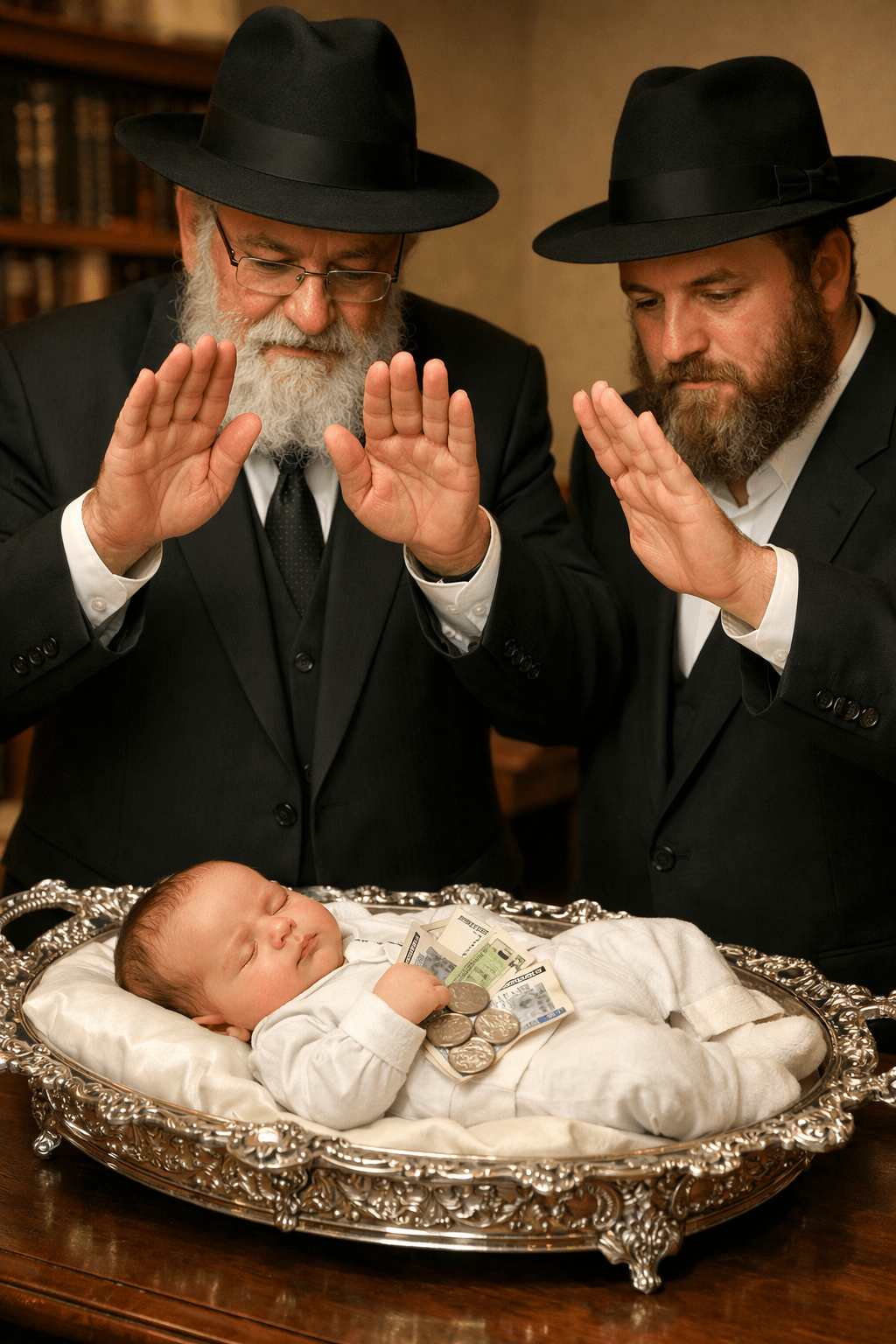
One impetus for composing this essay stems from personal experience at a Pidyon HaBen ceremony. Following the conclusion, the officiating Rabbi—who was also the Kohen that performed the redemption—invited any other Kohanim present to join in bestowing Birkas Kohanim upon the infant. There were two Kohanim present: the Rabbi and me. As we recited the pesukim of Birkas Kohanim, I observed that the Rabbi raised both his hands over the head of the baby, while I, following my customary practice in such informal contexts, extended only one hand. This practice was consistent with how I have traditionally conducted such berakhos outside of the formal dukhening that occurs during Musaf on Yom Tov in the Diaspora or daily in Eretz Yisrael.
Afterwards, I inquired why he had chosen to use both hands. He responded that while he was unsure of the halakhic reasoning, he was simply following the custom of his father, who was a respected Posek. In contrast, my own practice—what might be termed “halakhic intuition”—led me to use a single hand. Although I could not recall the exact source or rationale at that moment, I had evidently internalised a precedent or explanation that once guided this choice. This essay, then, charts a journey leading to that choice.

Israel and Soldiers

[Hat tip to DM]

Mirrer Rosh Yeshiva Rav Yerucham Levovitz: “..regarding those who currently sacrifice their lives so we can be saved, no one in the entire world can stand in their presence…and our obligation to pray on their behalf is limitless…”

Nothing is to be achieved from the negative messages, prevalent in the hareidi/hassidic world about Israel. It is time for a change in approach so that new generations learn about what Israel is and not what it is not. Then the madim (uniform) and kelei ha’mikdash, the sanctified vessels and tools used daily to rebuild our Promised Land and safeguard all of its citizens, will be seen in a proper light..

The revered Mirrer Rosh Yeshiva Rav Yerucham Levovitz, who commented in his Sichos Mussar regarding those who were killed in Lod in Talmudic times [ha’rugei Lod ein kol briya yechola la’amod be’mechitzatan]. “No mortal can be in their presence” because they have sacrificed their life on behalf of Israel. Likewise,“regarding those who currently sacrifice their lives so we can be saved, no one in the entire world can stand in their presence [no one can measure up to their level]. And our obligation to pray on their behalf is limitless…”

Rav Aharon Lichtenstein, head of Har Etzion hesder yeshiva, related that once, when he returned to America and was visiting with his father in law, Rav Yosef Dov Soloveitchik, he posed a series of questions he had received from students serving in the IDF. One student worked in the tanks division and his job was cleaning out and maintaining the tanks. Often his uniform got covered in oil and grime and he wanted to know if he needed to change before afternoon prayer,davening Mincha, something that would be terribly inconvenient and difficult. The Rav looked at Rav Lichtenstein and wondered out loud, “why would he need to change? He is wearing bigdei kodesh, holy garments.

These sacred garments have restored Jewish pride, faith and fortitude… these bigdei kodesh safeguard and secure all that is holy and worthwhile in G-d’s Promised Land and throughout the world.

No lesser voice than HaRav Tzvi Yehuda Hacohen Kook shared the regard and reverence for Israel’s soldiers and the uniform they wear. In Sichot Rabbenu, Yom Ha’atzmaut 5727, he wrote:

“A student of our Yeshiva approached me. I said to him: ‘At first I did not recognize you.’ He was wearing the army uniform. You know that I relate to this uniform in holiness. A lovely and precious man, full of G-d-fearing and holiness was approaching, and he was wearing an army uniform. At that occurrence I mentioned what I said at one wedding [of Ha-Rav She’ar Yashuv Cohen, chief rabbi of Haifa], when the groom came dressed in an army uniform.

There were some who were pointing out that it is inappropriate for a groom to stand under the chuppah with an army uniform. In Yerushalayim, the Holy City, it was customary that they came with Shabbat clothing, holy clothing, like a streimel (fur hat worn by hassidim on the Sabbath, ed.).

” I will tell you the truth. The holiness of the streimel – I do not know if it is one-hundred percent clear. It was made holy after the fact. Many righteous and holy Geonim (great rabbis) certainly wore it. There is certainly so much trembling of holiness before them, and we are dirt under the souls of their feet, and on account of this fact, the streimel was made holy.

“Also Yiddish, the language of Exile, was made holy because of its great use in words of holiness. But from the outset – it is not so certain. In comparison, the holiness of the army uniform in Israel is fundamental, inherent holiness. This is the holiness of accessories of a mitzvah, from every perspective…”

Rabbi Yehoshua Zuckerman relates [inIturei Yerushalaim] about Rav Tzvi Yehuda “teaching a class and a student, who was on leave from the army, was standing next to him. During the entire time, our Rabbi rested his hand on the student’s arm. At the end of the shiur, another student asked about this. Our Rabbi explained,“It is simple. He was wearing a Tzahal uniform and I was touching holiness the entire time.”

Thankfully, there are also those in the hareidi community willing to speak out against the angry and misguided radicalism that would diminish the glory of the IDF. Writing on Behadrey Hareidim,Rabbi David Bloch, founder of Nahal Hareidi, expressed his resentment at Rabbi Tzaurger’s words.

“We have been told by our ancestors: ‘Anyone who opposes the good in his friend may end up opposing the good of Hashem’, anyone who is not grateful towards the soldier for his defense of the Jews in Israel, so he can live here in relative peace, is an ingrate.” Rabbi Bloch continues: “There is no connection between the Zionist ideology and gratitude to those who physically make it possible with God’s help so each resident can live here, and manage his life as he sees fit. Even if we were living in exile and there are enemies who want to destroy us – we must be grateful to those who are working to save lives. One could be anti-Zionist and still be grateful to those who risked saving lives. Such a call is a serious failure of values.”

The most basic Jewish value is that of expressing Hakarat ha’tov, gratitude, to anyone and everyone who does anything which is of benefit for me and certainly for society at large.

Every Orthodoxy has radical elements. To be radical in one’s love of Torah and of God is not a sin. However, when one’s embrace of Torah is expressed as hatefulness towards IDF soldiers and a damning of the bigdei kodesh that they wear, then it is a radicalism that has lost sight of true Torah.