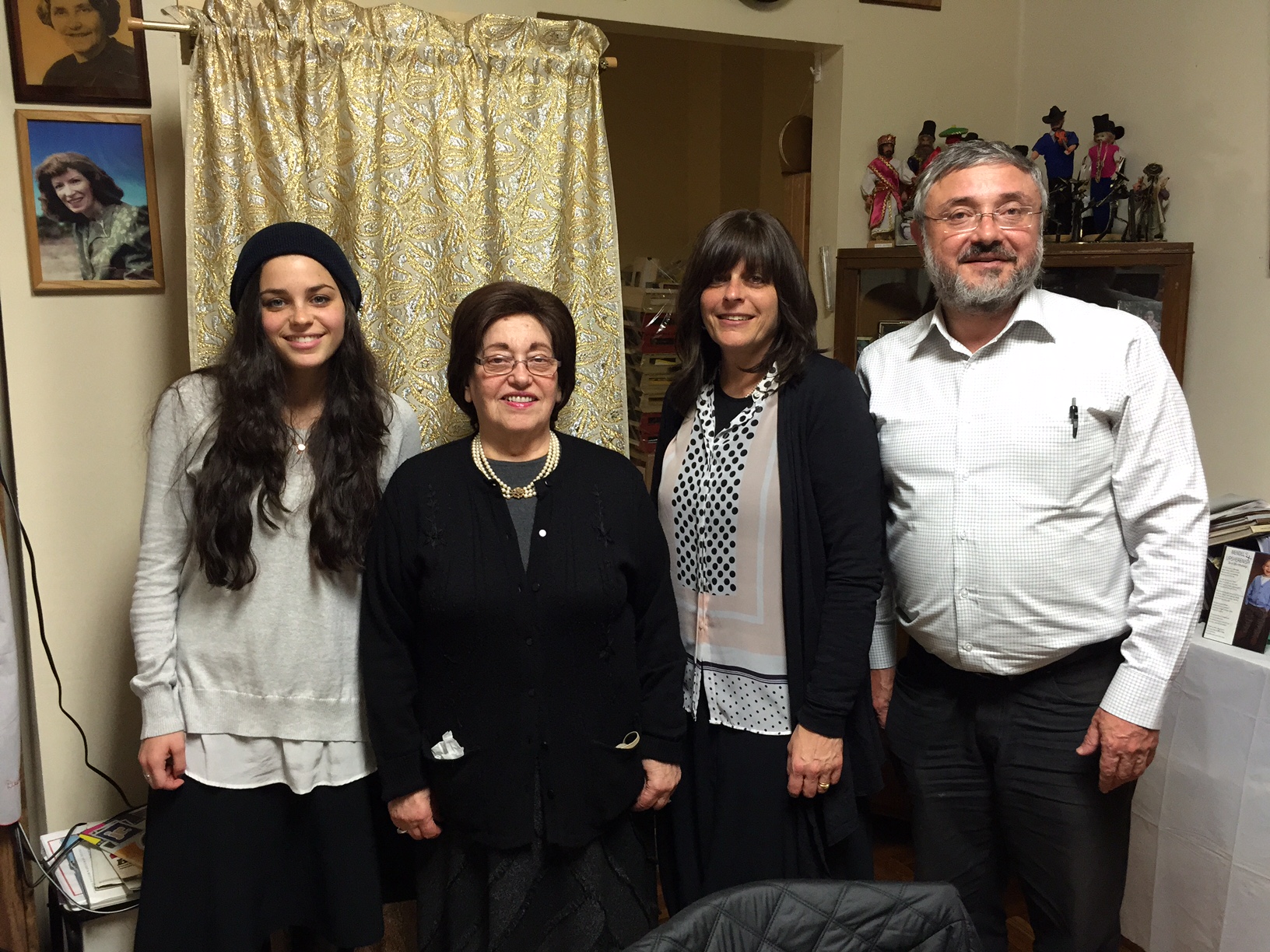
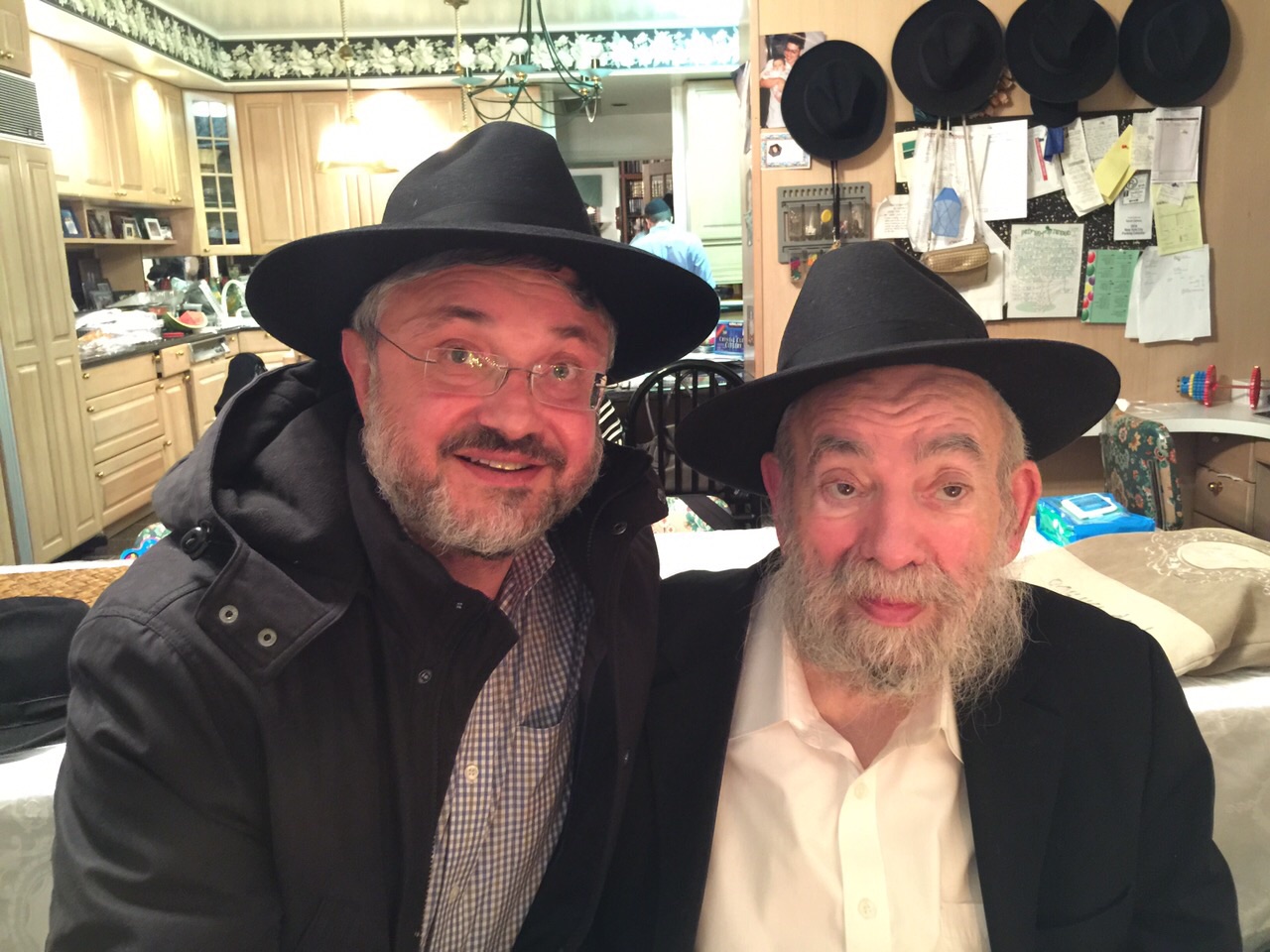
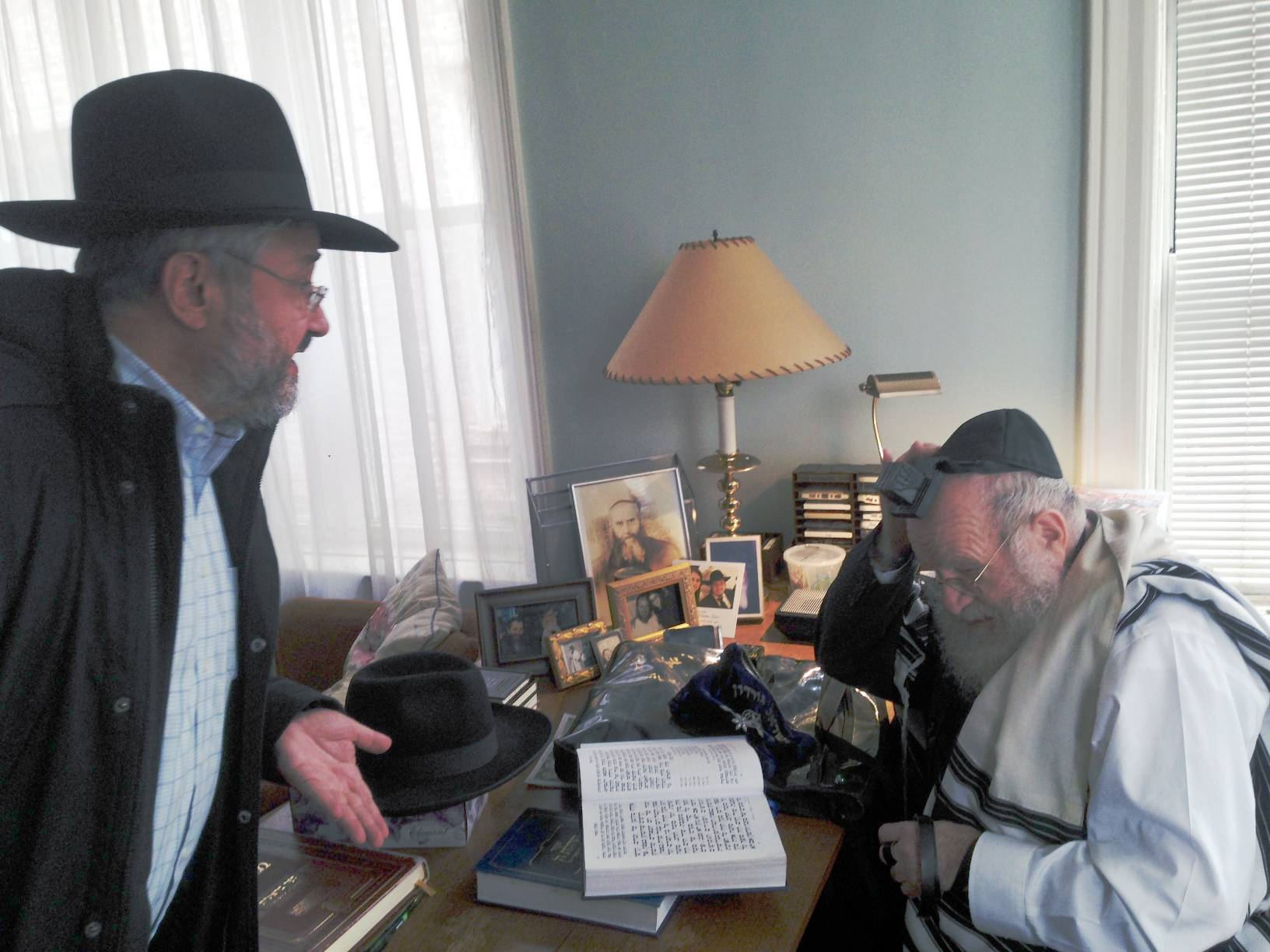
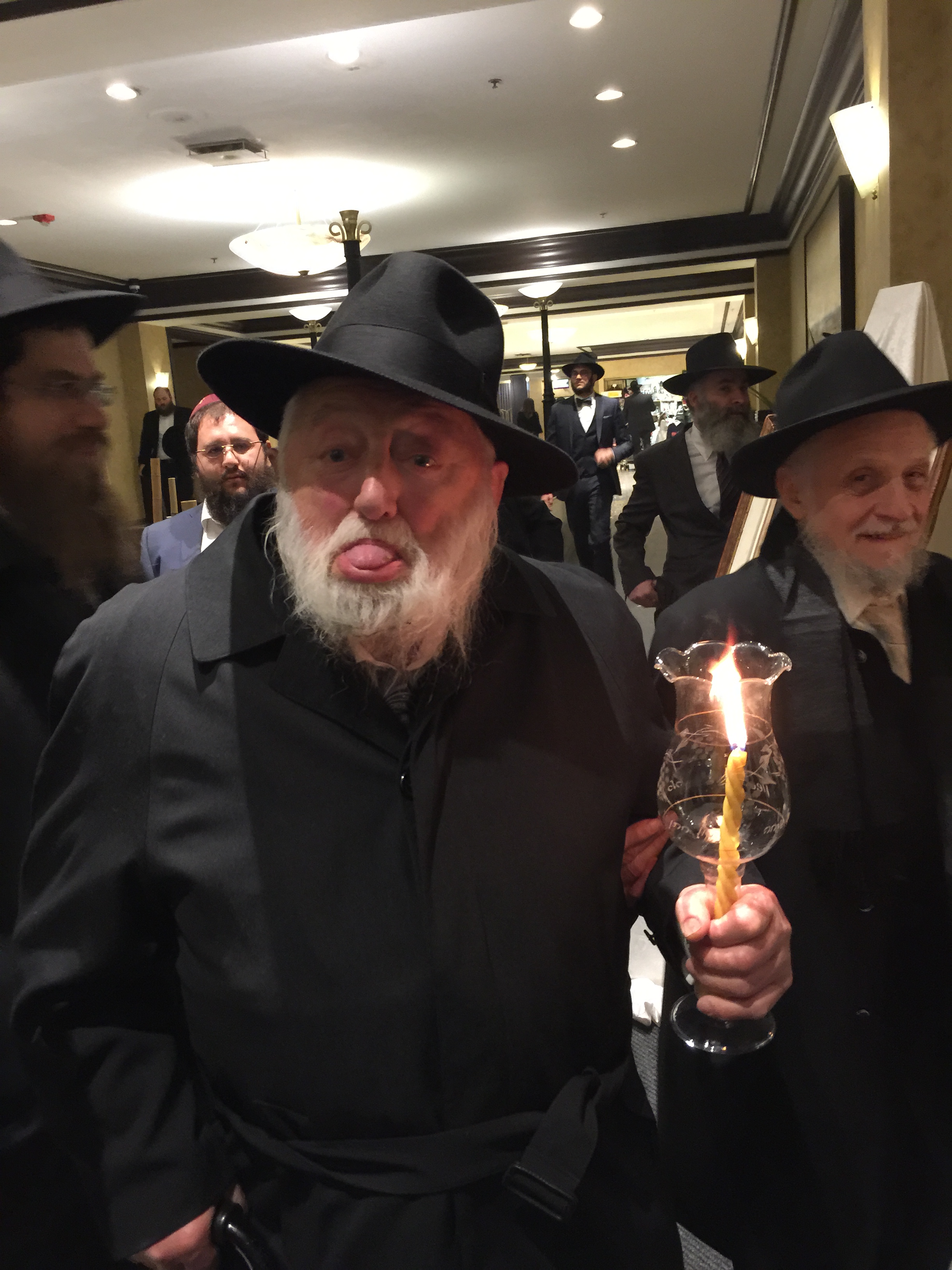
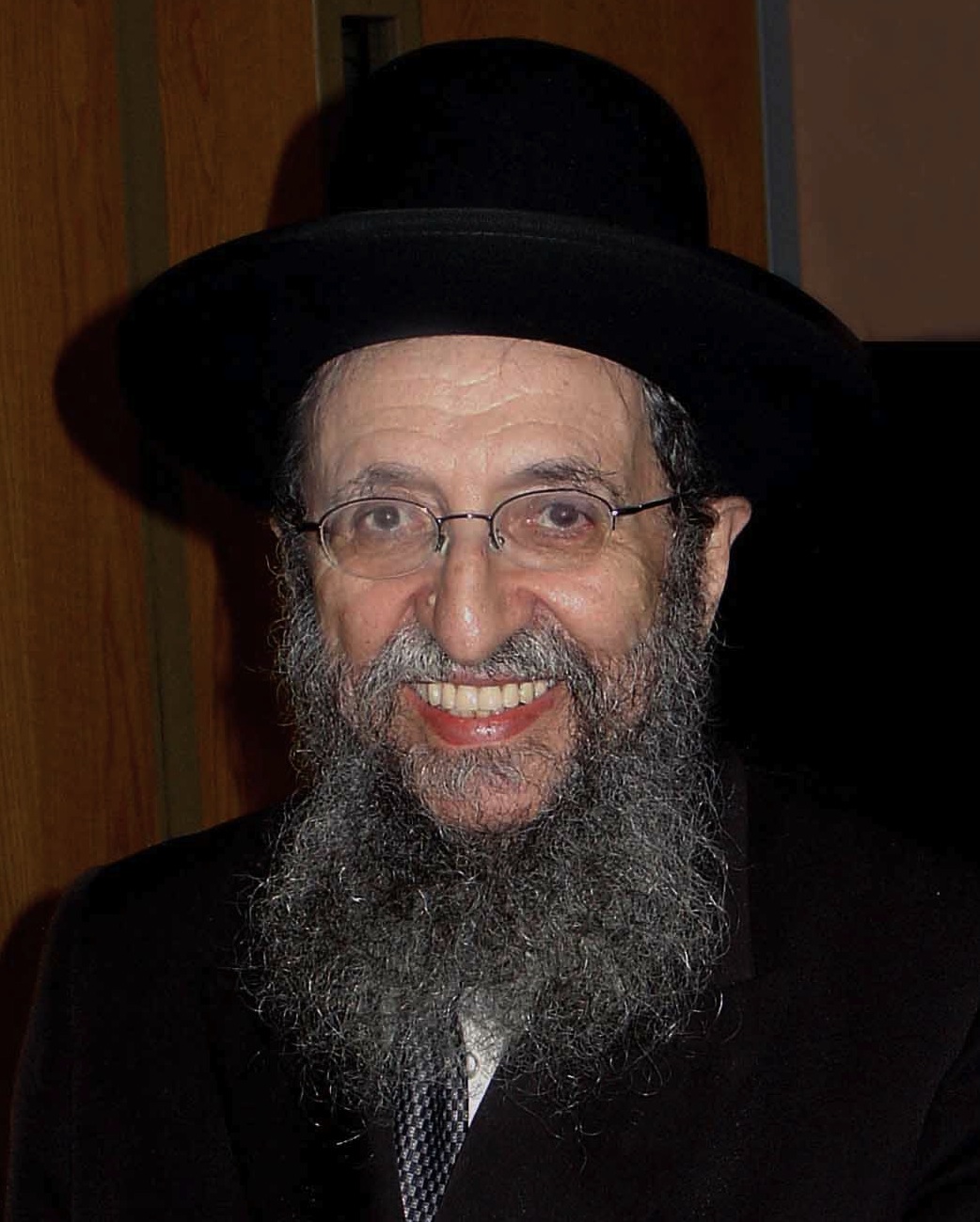
Shimon Allen ז’ל on his first yahrzeit

My father ע׳׳ה used to daven at Yeshivah on Friday nights and the evening of Yom Tovim. Very early on, when my Zeida Yidel still lived in Alexandra Road, he maintained a seat at Yeshivah and sat next to Mr Polonsky. My father used to sit in my Zaida’s seat and took over the seat when my Zaida passed away. I sat next to my father all those years.

Adjacent to us, on our left, was a gentleman named Shimon Allen. Prior to this connection, I had not known him. Shimon, a tall figure adorned with a lustrous beard and a broad hat. Despite being a Lubavitcher Chasid, he chose not to wear a Kapote, prompting my occasional teasing. “Nu, when are you going to wear a Kapote? A Chosid of Reb Zalman doesn’t wear a Kapote? Every Joe and Shmoe here wears one

While aware of the playful nature of my remarks, Shimon would respond with a serious expression, “Yitzchok, there are plenty of things that I need to do before even considering a Kapote. I’m far from it.

He consistently addressed me as Yitzchok, never employing my secular name, Isaac. Both Shimon and the late Rabbi Groner shared this distinctive practice of eschewing my secular name. In return, I affectionately referred to Shimon as “Reverend Allen.”

In truth, donning a Kapote would have given Shimon the appearance of a typical, card-carrying Chasid, a common sight at that time. Though he was a Lubavitcher Chasid, he never viewed himself that way on the account of his feeling that he was “too far away” from that level. In those days, it was common in Melbourne for seriously sincere Chassidim, like Rabbi Groner and Reb Nochum Gurewicz to only wear a Kapote on Shabbos. A Kapote was also an external symbol. Being a Pnimi, a sincere Chasid without some of the external trappings was more important to Shimon than the “kneitch” of the Borsalino. Additionally, I sensed that Shimon was reluctant to be narrowly defined or confined within a particular label. He had a genuine appreciation for Rabbis and friends beyond the confines of Chabad. To me, Shimon embodied a universalist spirit, transcending boundaries while still rooted in the philosophy of Chabad. Perhaps this streak of individualism was subtly inherited from his revered teacher, Reb Zalman Serebryanski. After all, in those times, Reb Zalman wore his signature mid-grey Kapote during the week, demonstrating his autonomy and refusal to conform solely to black attire—truly his own man.

Over the passing years, the seating arrangement evolved to include Shimon with two seats for his sons, my father’s seat, and ultimately mine at the end of the row. Behind us formed a community of worshippers, with Mr. Klein and his son Yossi, Mr. Raitman and his son, Mr. Bierenkrant, Mr Paneth, Emmanuel Althaus, the Feiglin brothers, and more, creating a mosaic of prayerful camaraderie.

During a certain period, I extended my presence to Shabbos day at the Yeshivah. In this expanded setting, my son Tzvi Yehuda joined us, securing a place between Shimon and me. Later, my other son, Yossi, became part of the assembly, although he was often lured away by Mr. Bierenkrant, who generously plied him with an open Shtender filled with sweets. The sense of community and shared experiences continued to flourish, making our gatherings at the Yeshivah with Shimon a cherished and dynamic part of our journey.

Shimon exuded a warmth that endeared him to my children, effortlessly bridging the gap between generations. As a father, I held a firm and structured approach, seldom allowing my sons to leave their seats except for a brief interval before Musaf. My parenting style was unequivocally black and white, an authoritarian stance that Shimon astutely sensed, though he never vocalised it. Instead, he skillfully eased the atmosphere by discovering a shared language to connect with my sons, making them laugh and acting as an antidote to my stern demeanor.

Both my sons found joy in Shimon’s company, appreciating his unique ability to relate to younger children—a skill I admittedly lacked. Shimon, in his “ordinary” ways, carried a Tallis bag that housed unusually large tissues, which he humorously attributed to his purportedly significant nose. He would playfully share with my kids that such oversized tissues were necessary for his distinctive nasal needs.

Shimon demonstrated a genuine interest in each of my sons’ pursuits and their academic progress. Our shared status as Kohanim further solidified our connection, creating a unique dimension of camaraderie. In Shimon, my children found not only a friend but also a compassionate and understanding figure who enriched our shared experiences at the Yeshivah with his warmth and lighthearted approach.

While I often found myself immersed in my own world, absorbed in a Sefer and generally unsocial, Shimon stood out as a refreshing oasis of normal social interaction. His repertoire included a joke or engaging comment laced with sarcastic humor for everyone present. Yet, Shimon was more than just a sociable presence; he seamlessly blended these characteristics with a profound sense of Yiras Shomayim, a true reverence for the Almighty.

His admiration extended to pure Torah personalities, and tears would well in his eyes when recounting the impactful influence of individuals such as Reb Zalman, the heartfelt davening of Reb Nochem, his awe for Rav Perlow and Reb Betzalel, among others. Shimon had a deep appreciation for the fire and brimstone qualities of brilliant Talmidei Chachomim. He couldn’t fathom why Yeshivah had not found a means to channel the Lomdus of R’ Dovid Segal, seeing Dovid as deserving of much greater Kavod HaTorah and relishing in his penetrating insights.

During our interactions between Aliyos, Dovid and I would engage in discussions, a fact that piqued Shimon’s curiosity. He would consistently inquire, “What did you and Dovid discuss?” This curiosity reflected his genuine interest in the intellectual exchange of Torah ideas. Later, Shimon shared a deep affection for R’ Shea Hecht, their friendship serving as a testament to their shared love of Torah and camaraderie. In essence, Shimon emerged not just as a social beacon but as a person with a profound spiritual depth and a sincere appreciation for Talmidei Chachamim.

Shimon’s unwavering commitment to Emes, the truth, was a defining aspect of his character. In the face of falsehood, he eschewed tolerance and silence, viewing them as non-options. Eventually, Shimon chose to part ways with Yeshivah, opting to purchase seats at Ohel Devorah. His decision stemmed from frustration with what he perceived as a reluctance among Rabbonim to act promptly and decisively in the name of Hashem.

Recognising Shimon’s concerns, he appealed to me for assistance in bringing various issues to the attention of Rabbonim. Despite presenting substantial evidence over several years, our efforts behind the scenes proved unsuccessful in raising awareness. Alongside a third party, I found myself in the challenging position of convincing Shimon that we had encountered a formidable obstacle. Shimon’s fierce protection of the truth and his insistence on acting with unwavering integrity and Temimus remained steadfast throughout this process.

Shimon’s aversion to falsehood extended beyond personal principles and infiltrated various projects in which he was involved. In Melbourne, a city with a substantial Jewish community, the presence of charity collectors was inevitable. Amidst the genuinely needy individuals seeking support, a troubling concentration of deceitful charlatans exploited the generosity of well-meaning donors. Unwilling to stand idly by, Shimon, a significant contributor to charitable causes, was determined to ensure that his Tzedaka reached deserving recipients.

Drawing inspiration from a successful model in England, Shimon collaborated with others to garner support from Melbourne’s Rabonim for the establishment of a local agency. This agency aimed to issue a certificate of authenticity to genuine collectors, thus providing a means for donors to identify legitimate causes. The initiative required substantial communal support, as collectors without the certification were to be directed to a committee responsible for background checks and the issuance of formal certificates.

Debate ensued within the community. Some argued against imposing an authenticity process on those already struggling, asserting that donors should retain the autonomy to give as they saw fit. They contended that the risk of being deceived by unscrupulous individuals was a price worth paying to spare others the potential indignity of background checks. In response, I adopted a middle-ground approach, providing assistance to anyone at my doorstep but limiting the amount for those without certificates. Shimon, however, envisioned a broader scope, motivated by the pursuit of truth and a desire to ensure that the most vulnerable received adequate funds without falling victim to charlatans.

Unfortunately, the scheme eventually collapsed due to the reluctance of some Rabonim to enforce the rules in the unyielding manner Shimon envisioned. This outcome deeply troubled Shimon, who believed that Melbourne lacked fearless and pure Rabbinic leadership. He yearned for Rabonim who would lead without being swayed by politics or self-preservation. Shimon, in times of uncertainty, sought counsel from the late Bostoner Rebbe, speaking of him with a sense of awe, highlighting his unwavering commitment to seeking guidance from spiritual leaders of uncompromising integrity.

I sent this picture of R’ Dovid Segal and R’ Shea Hecht to Shimon in 2014

Shimon was driven by an unwavering commitment to kindness (Chesed). My thoughts often return to a significant moment when our first child was preparing for marriage. In the midst of the extensive preparations, I found myself expressing concerns about the considerable expenses associated with hosting a beautiful wedding. Unsure whether my expressions of frustration were excessive, I openly pondered how individuals with a salary like mine, as a University academic, could manage to fund such an event.

A few weeks before the wedding, to my shock and deep embarrassment, I discovered an envelope containing a cheque for tens of thousands of dollars. The funds were offered as a loan that could be repaid over time. Overwhelmed and moved by this extraordinary act of Chesed, I initially kept the gesture to myself. Eventually, I confided in my wife and my father about the unexpected financial support. Naturally, I chose to return the cheque, but the experience left me with two valuable lessons.

Firstly, I learned the importance of avoiding excessive complaints about material concerns. Secondly, and more significantly, Shimon’s act taught me a profound lesson in sincere kindness. It was a demonstration of someone who not only talked the talk but genuinely walked the walk, exemplifying the true essence of selfless giving.

As if by some unspoken connection, I eventually chose to discontinue attending Yeshivah on Shabbos and sought a different setting. Ohel Devorah, the nearest Shule to our house, conveniently became my new place of davening. True to my preference, I selected a seat at the back of the Shule, nestled in a quiet corner, with the added benefit of two unoccupied seats adjacent to mine. It appeared to be an ideal arrangement, allowing me to (attempt to) mind my own business without being entangled in the inevitable politics often found in larger Shules.

Ironically, sitting in the row directly in front of me, at the end of the aisle, was none other than Shimon! Once again, we found ourselves in proximity, only this time, we were treated to the captivating wisdom of Rabbi Shea Hecht. Although davening at Ohel Devorah tends to be somewhat drawn out, and Shimon was not particularly fond of derashos in general, this Shule became the last one he attended.

When illness struck Shimon, his familiar seat remained vacant. Rabbi Hecht and I would exchange updates on his condition. As his health deteriorated, I joined a Friday night minyan held in his home.

Shimon and his wife Adina collaborated in the establishment of the remarkably successful Beit Rafael when Shimon retired. What might not be widely known, however, is Shimon’s unwavering commitment to the welfare of individuals beyond the realms of Beit Rafael. At one point, my wife faced a serious illness from which, thank God, she fully recovered. Throughout the extended process of recovery, Shimon consistently sent her thoughtful messages, inquiring about health and progress. Even after her recovery, Shimon remained connected in a meaningful way, displaying a genuine concern for her well-being. Despite being a private individual who shied away from seeking attention for his actions, Shimon’s sincerity consistently shone through. This sincere care also influenced my daughter-in-law, who actively participated in Beit Rafael fundraising efforts whenever possible.

Whenever we inquired about the possibility of visiting, Shimon always made time for us. Throughout the ups and downs of his health journey, my wife and I had the privilege of visiting him. Remarkably, our conversations seldom revolved around his illness; rather, Shimon consistently focused on others, displaying a selfless concern for their well-being.

Even during periods of significant illness, Shimon dedicated himself to a pet project aligned with the needs of those facing health challenges. His endeavor involved creating a document that adhered to both Halacha and secular Australian law, addressing the “Advance Healthcare Directive for Adults.” My brother-in-law assisted in the secular law component. While the inherent morbidity of the topic made me instinctively recoil, Shimon insisted that one can never predict when such directives might be needed. In his characteristic manner, he managed to discreetly provide me with a copy of the document.

Seeking the best Halachic approbation for his creation, Shimon asked me to connect him with Mori VeRabbi HaRav Schachter. Aware of Rav Schachter’s direct and concise approach to Halachic inquiries, I cautioned Shimon about the potential responses he might receive. Although I did not delve into the specifics of his questions for Rav Schachter, I knew they hadn’t connected for a few weeks. Shimon, ever reluctant to “disturb” Rav Schachter, was particularly sensitive about not inconveniencing him! I assured him that it was acceptable, and I facilitated their direct communication. While I never probed into the details, I am aware that they interacted, underscoring Shimon’s determination when he embarked on a mission.

Shimon was an Ish HaChesed.

If I had to associate a phrase with him, it might be

יושר דברי אמת

יהי זכרו ברוך
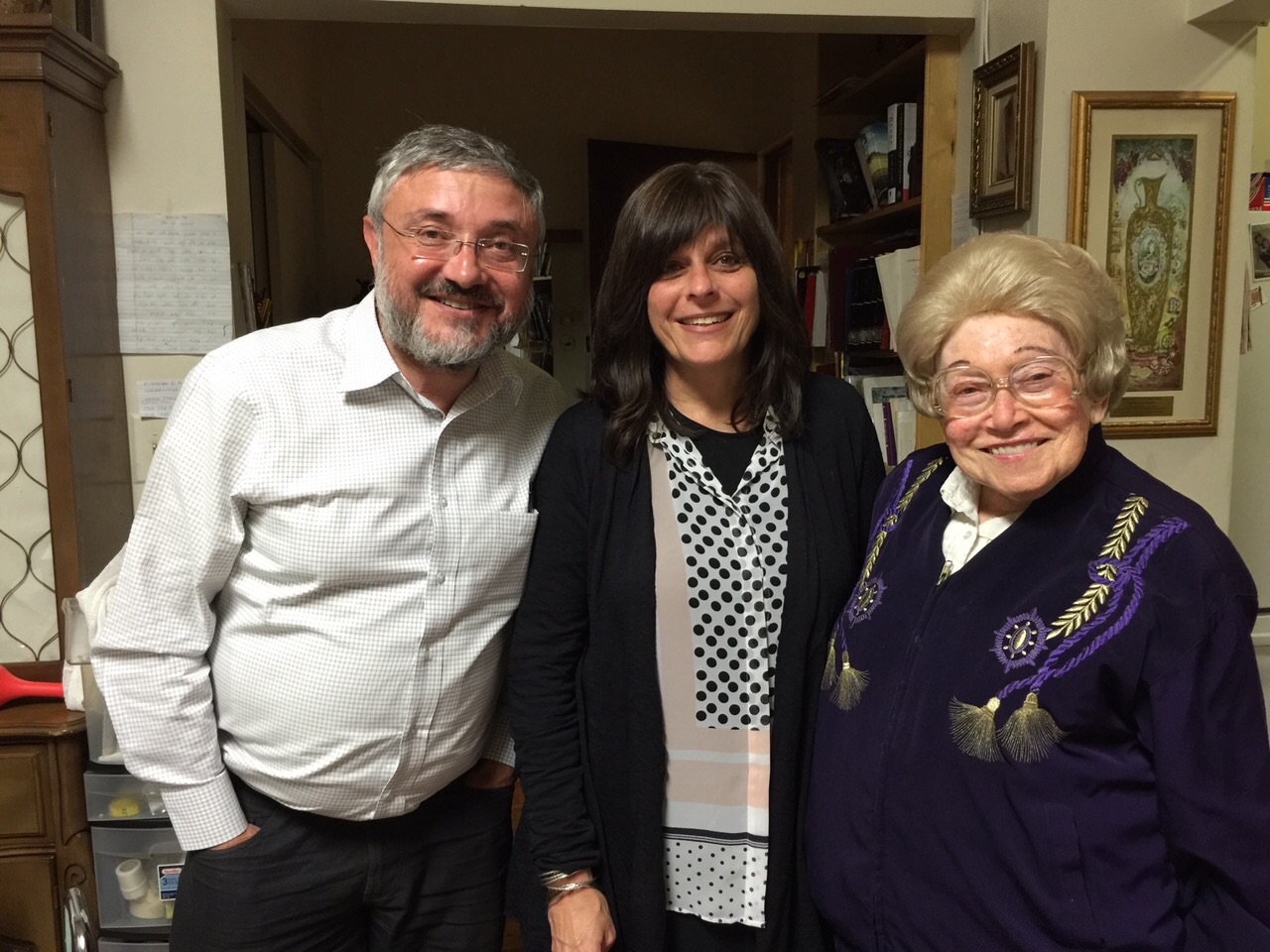
Beit Raphael in Melbourne

Adina and Shimon Allen are amazing with this triple chesed. I’m in awe of their tzedoko.

Efraim Finch: he’s also a living treasure

On the Taskforce against family violence

I was interested to read it was over 20 years old and people with a bee up their bonnet should remember that and support their activities. They should not be trying to beat up frum women who have joined the taskforce with the excuse that their husbands are or were associated with organisations which had not dealt with problems properly especially at a time when people really didn’t appreciate the gravity of illness some perpetrators have.

I call on MORE women to join, and here I include women from Adass too. Anyone who thinks that there is no familial violence in the frum or ultra frum sector is a horse with blinkers. There is. Period.

Our holiday. Part 1: 770 Eastern Parkway, Brooklyn New York

Dear Readers,

I’m starting with some (self-indulgent) prose, as this will more fully inlay context.

As ought to be inferred from blog postings on pitputim, my tendency is to inspirationally respond to more rationalistic approaches of Judaism. I recognise of course that one size does not fit all.

This predilection isn’t for pre-conceived ulterior motives or להכעיס. It is perhaps a natural inclination of my id as opposed to some super-ego. Perhaps a PhD, based on formal logic and a grounding in science affected (or infected) a tendency to align myself with certain of the 70 faces of Torah. At the same time, I have always had a love for פשוטו של מקרא and that is a natural follow on.

I am certainly not the first or last to procure a comprehension and meaning through this particular prism. In some ways, it is the prism of Brisk, where my grandparents on one side were married and lived close by. Undoubtedly this is a reason for a veritable love affair with more halachic aspects, and a disdain for pilpul. I have modified my approach after realising that this isn’t the taste of Torah my kids want to hear at the table 🙂 Indeed neither do most unless one happens to know of a specific היתר. For example, I held for 30 years that showering on Yom Tov is permitted. Now many Poskim agree with that. I am far from a Posek, but I can detect when there is a hungarian-style inertia stopping the obvious 🙂

I am technically a תמים although in reality פסול is evident. Being classified a תמים means one learned in a Chabad Yeshivah. Chabad made Melbourne, irrespective of what Adass or Mizrachi or Johnny-come-latelys may claim or dream. The previous two groups have made enormous contributions, but these have been upon the shoulders and foundation of people sent by the Rayatz and last Lubavitcher Rebbe זי’’ע whose foresight was as prophetic as one can be, limited by the clouds of today’s גלות.

Many of us gained from the simple presence and הנהגות, primarily from the likes of (In no particular order) R’ Shmuel Betzalel Althaus, R’ Nochum Zalman Gurevitch, R’ Zalman Serebryanski, R’ Betzalel Wilshansky. Rav Perlov, R’ Isser Kluwgant (I never met R’ Abba Pliskin) and of course the late and great Rabbi Yitzchok Dovid Groner זכרונם לברכה. Although I didn’t notice it in an active learning sense (except with Rabbi Groner) most of the דמות תבניתם passively infused my soul and the lessons are indelibly etched. Understandably, I didn’t understand or realise much or most of this phenomenon until I was older and less of a one minded חריף. Indeed, the older I become, the more I miss “the real McCoy”.

One of the lessons passively learned over time is an extreme disinclination towards those who speak or act in a degrading way concerning another Jew because of a perceived lowly position that other Jew seems to occupy in the ladder of Torah and Mitzvos. Unfortunately this is a hallmark of some and their philosophy. I understand it, but I vociferously disagree with it.

Chabad are masters at seeing and seeking the good and never being judgemental. I have a spine chilling aversion to the word חילוני or even בעל תשובה. Neither of these words rest easily with me. I actually abhor them. When one truly does a דין וחשבון over oneself, I don’t understand how those words can enter anyones vernacular.

While I admit that when I was fresh out of Yeshivat Kerem B’Yavneh, a Yeshivah which I will forever be indebted because it imbued me with a sense of genuine התמדה and יגיעת התורה, I tended to be much more of a black and white person, a real loner. I would have no problem in those days sitting for three hours by myself on two lines of a Tosfos. I refused short cuts. Life and its experiences have taught me that the approach of compartmentalising people as  “Chofshi” or “Yeshiva Leit” or “Nisht Frim” make me uneasy.

I was super sensitised when I returned from Kerem B’Yavneh to the extent that I literally hid in my car between lectures so that I would not be amongst the אומות העולם. Upon returning home from University, I used to lie on the couch in a semi-state of depressive stupor and did little homework. My mother confided years later that she and my father ע’’ה wondered and worried greatly whether they had made the right decision asking me to come home when I wanted another period to advance my learning. I listened to my parents, however, not for halachic reasons but because they are and were giants in my eyes. In all honesty this was happening subconsciously. I was sensitised to an extreme level.

Life is hard enough for any of us to climb up the ladder, and the higher one manages, the bigger even a little fall can potentially cascade one downwards into a spiral. We’ve all seen this sadly.

I discovered a love of Israel while at Kerem B’Yavneh and being in ארץ אשר עיני ה בה מראשית השנה עד אחרית השנה was super special. This was not something that was imparted to me in Chabad in Melbourne. The “Medina” wasn’t a word that was used. ארץ ישראל was mentioned scantily and mainly in the context of גאולה. In Chabad there was basically 770 (or as they call it בית רבינו שבבבל). This was their epicentre until משיח took them out.

I was a lad when the technology of live Sichos beamed through the Shule, and our Torah classes were suspended. Although there was a live translation, I didn’t understand much, and frankly, for most of us, we saw it as an indulgence for our teachers and an opportunity to “wag” or play ball. In hindsight, the teachers could have listened to a recording, but I digress.

This year we not only wanted to go on holidays we needed to. My wife and I were exhausted physically and mentally. The mortal body and the soul need  some rest and relaxation (although I ironically heard the Lubavitcher Rebbe speak against this concept 40 years later when I entered a room leading to his קבר. There was a recording playing when one entered the ante-room, and this was part of his topic.) Was he telling me I didn’t need a holiday? I don’t think so. My understanding was that Torah could not stop because one was on holidays, and it didn’t for me anyway. I found myself in many discussions of interesting issues. The Lubavitcher Rebbe himself was somewhat supernatural in that respect. He was tied to his room and his Chassidim, except for the daily beautiful visit to his loving soul mate to enjoy a cup of tea and a chat. Medically, both my wife and I needed a holiday.

When my father ע’’ה was in this world he wanted us around him in Surfers Paradise, his favourite holiday destination. I didn’t go the beach or walk around bare-chested like those, for whom holidays affords an opportunity to be a little lax. For me, I strolled around mainly sharing “love and other bruises” with my father. I cherish those days and our nightly “farbrengens” which were catered in a way that superseded usual holiday-based epicure-centred  compromises. We danced, we sang, we shared special moments and we were light-headed through the addition of ubiquitous Tamdhu whisky. These moments are vividly captured in pictures and videos and cherished by the extended Balbin family.

The body, soul and brain do need a rest. My wonderful wife and I hadn’t been in a position to have a holiday for seven years. After my band Schnapps performed magnificently and professionally at Rabbi Yossel Gutnick’s magnanimous yearly “Chanukah in the Park” and once I knew all was well from a medical perspective, we booked to leave the very next morning.

770 was really not my destination of choice, to be honest, I had been in the States only once before, when presenting a paper in Texas and spent some days in Manhattan. I loved listening to Jazz late into the night. The quality was stupendous, and I knew some Jazz players, who used to play in my band Schnapps before they moved to live in the States. I could easily have stayed in Manhattan again and wiled my evenings at good fress outlets followed by Jazz; the latter being something my wife shares with me. However, things changed. Through our exuberant Mechutonim and our children and children-in-law there was a familial connection to Chabad now. There were now a range of people whom I now knew and knew of who lived there and importantly, my wife enjoyed the ambience and vibrancy she experienced the year before when she dashed there (while I was an Avel) to be at the engagement of our daughter Batsheva to Yisroel Goldman (aka izzinism) the son of well-known and Choshuve Chabad families. I had spoken to to Yisroel’s maternal grandmother, the well-known Mrs Shula Kazen,IMG_1097

IMG_1193
Batsheva, Rabbi Levin’s mother, my wife and Iwhose son

whose son Yosef Yitzchok ז’ל was curiously one of the first frum Jews I “met” on the internet back in the days of soc.culture.jewish and Aarnet. We developed a long distance relationship and neither he nor I could ever imagine that my daughter would marry his nephew. Shula, with her ultra clear head, is a true foot soldier of the last Rebbe and she continues what she understands to be her Shlichus into her 90’s. She has no holiday! She spoke with me many a time in Melbourne from the USA, apologising that she could not come to the wedding. At her house, I also met her sister, who is the mother of the acclaimed Gaon, R’ Feitel HaLevi Levin.

I wanted to also meet the famous Rabbi Shimon Goldman,IMG_1094 may he have a Refuah Shelemah, having read his book on Shedlitz. He shared that town with Professor Louis Waller, whose family were rooted in Shedlitz, and whose son Ian, president of Mizrachi Melbourne married my sister Adina.

I have a natural affinity for older people; they project Tachlis and חכמה with real stories that resonate. Accordingly, I promised Rebbetzin Shula that on my first opportunity I would visit her in her apartment and chat face-to-face. I wanted to meet Rabbi Goldman and at least give him Bircas Cohanim as well as Rebbetzin Rivka Groner’s father (Rabbi Gordon) who isn’t as well as he should be.

Rabbi Gordon
Rabbi Gordon

Our friends,Avremi andRifka Raskin’s son Ari, was getting married at that time in freezing Montreal. We watched Ari grow up from a babe, and Rabbi andRebbetzin Raskin, as I like to refer to them, had always been more than magnanimous when it came to our children’s weddings. Their home was and remains open for the entire community. Their hospitality is infectious.

IMG_1320


Over the last few years, we also had the Zechus to farbreng in our Succah with R’ Michel

R' Michel Raskin in vainglorious style
R’ Michel Raskin in vainglorious style

and Danya Raskin. Michel was very sick at one stage, and I could see it was affecting Avremy in a major way. I did what I could to cajole the Aybishter to give R’ Michel a lease of life. Thankfully Hashem had his plans for R’ Michel and these included a recovery and his famous crushing handshake. R’ Michel (and a line of traditionalists) love my wife’s Galeh (he calls it Pecha) and I love to hear his stories about Russia. It’s a natural extension of my life-long love of talking to older people. I found his stories and history much more interesting than the Booba Mayses and simple Shikrus that now pervades the Yeshivah Succa on Shemini Atzeres. Oh, for the times when Rabbi Groner farbrenged on Shmini Atzeres-I stayed the entire time.

In truth, from a halachic perspective I would move inside the house if it was cold or pitter pattering with rain on Shemini Atzeres, but out of respect for R’ Michel and other guests, I couldn’t do that, despite the Halacha being clear (to me). There is also the concept of כבוד הבריות and there was a certain romantic feeling about the rain pattering while being regaled with stories of awe.

So, logically, my wife suggested we spend a few days in Crown Heights before heading for a few days to Ari’s wedding and eventually enjoying a holiday in Miami on the way home (as it was the closest warm place where one could be Maaleh Gerah with gluttonous and fiscal abandon)

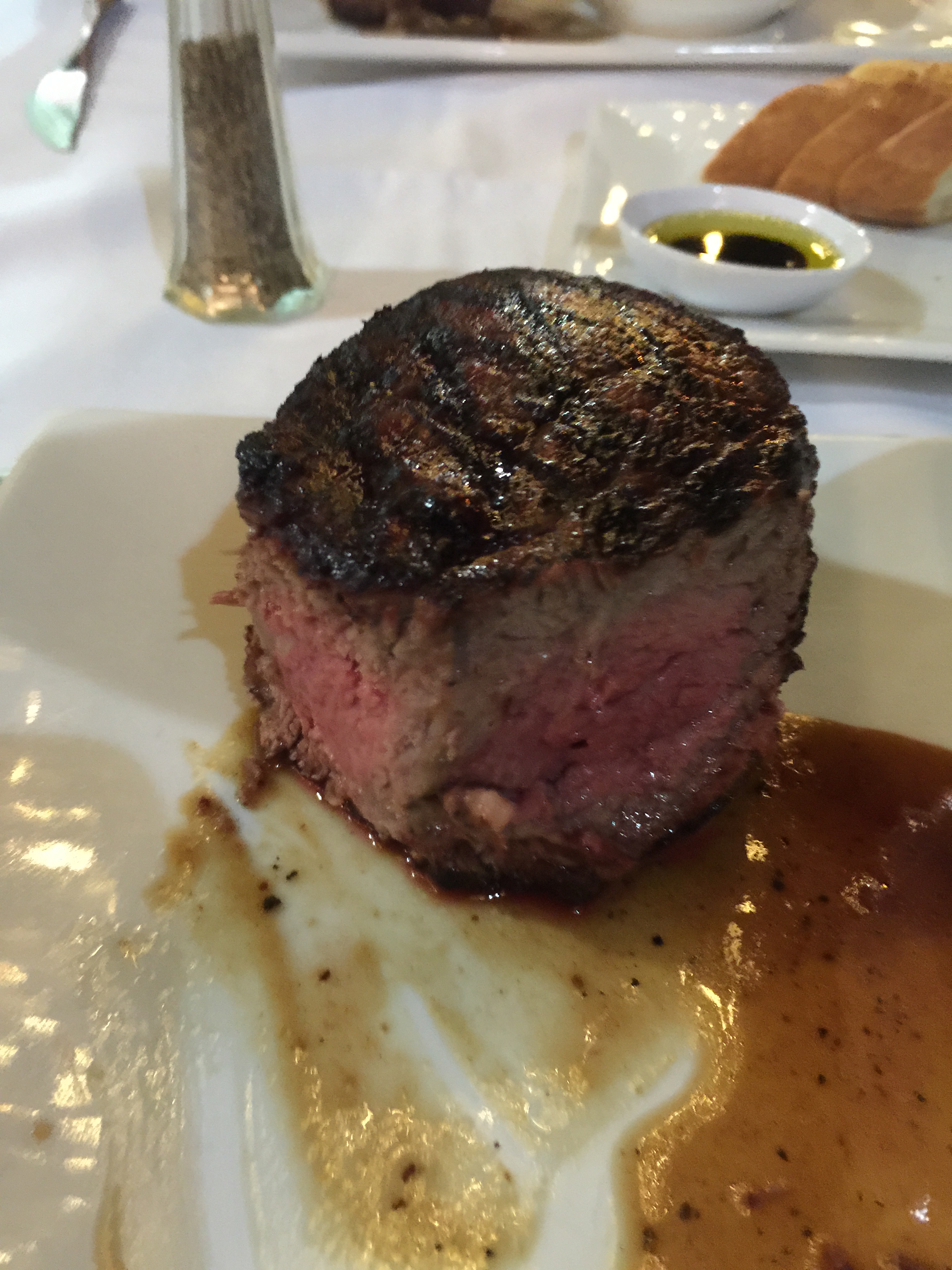
A three inch high fat free medium rare steak. Who could resist that!
A three-inch high fat-free medium rare steak. Who could resist that!

[to be continued]

חמירא סכנתא מאיסורא

I was alerted to this post (hat tib NB) from the brilliant Rabbi Slifkin. Mori V’Rabbi R’ Hershel Schachter contends that there is a חיוב to consult the experts in healthcare before even attempting to make halachic pronouncements on issues. One can see this partially in the evolution of R’ Moshe’s Psakim on Cigarette Smoking. They progressed from a lack of direct evidence to שומר פתאים השם to a full blown איסור to commence or continue as agreed by modern Poskim today based on current scientifically proven medical knowledge. There is, in my estimation an anarchist element in the attempts to discredit inoculation. It beggars belief that גדולים as mentioned by Rabbi Slifkin should take a dangerous and scientifically dubious lax view toward inoculation. I do not begin to understand it. In addition to being plainly against רוב מנין and רוב בנין of expert medical advice, it is at least a מסייע לדבר עבירה to wantonly expose other children to disease. I simply do not understand these alleged Psokim. I say, alleged, because there is a tendency to misquote Rabonim. Why R’ Shmuel Kaminetsky would say such a thing is something I do not begin to understand. I hope he is being badly misunderstood and/or misquoted.

Here is the piece from Rabbi Slifkin.

Following the previous discussion of how some people deny the potentially fatal risks involved in metzizah b’peh, I was sad to see a new report about another way in which certain frum people endanger the wellbeing and lives of their (and our) children. The Baltimore Jewish Times reports (p. 1, 2) on the phenomenon of people who refuse to vaccinate their children. It was depressing to see that no less a figure than Rav Shmuel Kamenetzky, the most moderate and least anti-rationalist Gadol B’Torah in the charedi world, is supporting these people:
According to Dr. Linda Grossman, bureau director for clinical services at the Baltimore County Department of Health, independent schools that operate under Maryland laws have the same policy. She says that some Jewish day school parents claim religious exemptions to avoid vaccinating their children.
“I’m not aware though of any religious reasons not to vaccinate in Judaism,” she said. Beginning this fall, two additional vaccines are being phased in statewide. Kindergarteners will now be required to receive an additional dose of the chicken pox vaccine, and seventh-grade students must receive the vaccine against diphtheria, tetanus and pertussis as well as one dose of a vaccine against meningitis.

“There are far worse consequences to not vaccinating as compared with vaccinating,” said Grossman, reiterating her hope that parents do not claim religious exemptions to avoid vaccinating their children.
R.B. encountered significant difficulties when she claimed a religious exemption at a local boys’ day school. Before her son began school, she contacted someone at the state Department of Health and Mental Hygiene, as well as the state attorney general’s office, to inquire about Maryland’s laws regarding religious exemptions.
“They said that the school could not refuse to accept a religious exemption,” she related. “But then school started and the nurse called. She said the school didn’t accept religious exemptions. I told her they had to accept them so she said I would have to speak with the principal.”
R.B. reached out to Rabbi Shmuel Kamenetzky, founder and dean of the Talmudical Academy of Philadelphia, whose wife, Temi, speaks out against vaccinating children. The rabbi wrote a letter on R.B.’s behalf, leading to her son’s principal relenting and apologizing.
When reached by phone, both Kamenetzkys confirmed their belief that vaccinations, not the diseases they prevent, are harmful.
“There is a doctor in Chicago who doesn’t vaccinate any of his patients and they have no problem at all,” said the rabbi. “I see vaccinations as the problem. It’s a hoax. Even the Salk vaccine [against polio] is a hoax. It is just big business.”
Kamenetzky says he follows the lead of Israeli Rabbi Shmaryahu Yosef Chaim Kanievsky, who rules that schools “have no right to prevent unvaccinated kids from coming to school.”

Normally, I don’t mind if people have views that run counter to modern science. It doesn’t really affect or bother me that Rav Chaim Kanievsky says that Jews and non-Jews have a different number of teeth. But in the case of inoculation, it’s everyone else’s children who are put at risk.

Well it bothers me because they do have the same number of teeth, and it does bother me that established Science is discarded by “a doctor in Chicago”. I’m clearly not smart enough or knowledgeable enough to understand these views. The Worlds health organisations are enough of a Sanhedrin on such matters for some Rabbinic leaders, allegedly.

Rabbi Shmuel Kaminetsky

מי כעמך ישראל גוי אחד בארץ

I don’t know where Thisbe from, my daughter in law sent it. Uplifting!

A soldier on the border writes:

What’s happening here in the staging area [area where soldiers prepare to enter Gaza] is beyond comprehension, not rationally, not emotionally and begs the imagination.

Almost every hour a car shows up overflowing with food, snacks, cold drinks, socks, underwear, undershirts, hygiene supplies, wipes, cigarettes, v backgammon and more. They’re coming from the North and the Center, from manufacturers, from companies and private businesses, from prisons, Chareidim and Settlers, from Tel Aviv and even Saviyon.

Every intersection on they way down here we get stopped, not by the police, but be residents giving out food. What is amazing is that the entire situation b organized and everyone is coming on their own without coordination between the folks coming.

They’re writing letters and blessings, how they’re thinking of us all the time. There are those who spent hours making sandwiches, so they’re as perfect and comforting as possible.

Of course representatives of Chabad are here to help soldiers put on Tefillin and distributing Cha’Ta’Ts (Chumash, Tehillim, Tanya) for every troop transport and Breslov are showing up to the border and dancing with the soldiers with great joy.

The Chareidim are coming from their yeshivot to ask the names of the soldiers with their mothers’ names so that the whole yeshiva can pray for them. It should be mentioned that all of this is done under the threat of the terrorist tunnels and rockets in the area.
Soroka Hospital (in Be’er Sheva) today looks like a 5 star hotel. A wounded friend who was recently discharged told us how the MasterChef truck is parked outside and is preparing food for the wounded.

It goes without saying the amount of prayer services that are going on. On the religious front as well, there are lectures and Torah classes, all the food is obviously Kosher. Shachrit, Mincha, and Maariv with Sifrei Torah. They’re giving out tzitzit and Tehilim by the hundreds. It’s become the new fashion! The Rabbi of Maglan [Special Forces unit] told me that almost the entire unit has started wearing them, because the Army Rabbinate has been giving out tzitzit that wick away sweat. They’re gaining both a Mitzva and a high quality undershirt. We’ve started calling them “Shachpatzitzti” (a portmanteau of the Hebrew term for body armor and tzitzit). We’re having deep conversations late into the night without arguments, without fights and we find ourselves agreeing on most stuff.

We’re making lots of jokes at Hamas’s expensive and without politics. There’s lots more to add but my battery is running low and the staff has been requesting someonekm give a class on Likutei MoharaN (Breslov).

How happy is the nation that is like this.

And one more thing …

Anyone who doubts the childishness and the lack of ethics and decency of Scott Rosenberg’s blog, should note (as I was advised last night by my children) that this person purposefully wrote my surname as Baalbin.

Ho Ho Ho.

Don’t think this was an innocent mistake.

Why? Because Scott thinks he is being clever by referring to the “prophets” of Baal.

Well, Scott, this isn’t clever, and it is indecent, and if I could be bothered, I’d report you to some journalistic ethics board. This is why your blog, especially the unfettered disgraceful comments you purposefully allow (and disallow) is considered contemptible.

But, you will get hits using these little tricks, and make money from this activity. I guess it pays your bills, Scott?

I have a day job (and night job).

Beit Raphael: An act of Chessed from Adina and R’ Shimon Allen

I sit next to Shimon Allen at Yeshivah Shule, in Melbourne Australia. I have done so for many years, as has my father. We’ve developed a rapport and he teases me about the fact that my wife doesn’t offer Griven (a heart attack causing, cholesterol laden morass of congealed and fried chicken fat, which happens to be delicious (think of it as real chicken bisli). I’ve mentioned it before. I point out that whilst he has herring on occasion, his isn’t the real McCoy because there aren’t copious lashings of Tzibelle (onion). We also share our “delight” that when invited to modernishe houses, they serve copious amounts of rabbit food, and one is expected to force a smile through the mountains of lettuce leaves, broccoli, pine nuts and every meshugass they find at the vegetable shop. Yes, they are “healthy for you” but when was the last time that you felt “full” one hour after such a meal? Why do our bodies require this gas-forming roughage. Is this Oneg Shabbos, let alone Kavod Shabbos? Sometimes I feel the right response is “Moo” while eating, as opposed to a hearty greps after a good choolent, washed down by some Bromfen, and followed by an antacid (pareve of course) and two cholesterol tablets.

Enough of the mirth.

Erev Shabbos, and my father took gravely ill due to a series of life threatening blood infections. I rushed from work to be at his bed side, as were my siblings and all our children. I was still in my work clothes, and asked many to say Tehillim, while I did so myself. We rang R’ Shimon and his wife, and immediately the key to their apartment across the road was made available to us. After davening Mincha and then Kabolas Shabbos, my stomache reminded me that I had not had anything all day other than a single cup of coffee. Baruch Hashem, I asked my incredible wife to organise 24 Vurst Sandwiches so that team Balbin, Leibler and Waller would not go hungry. Diana and Yirmi Loebenstein, for whom my parents are like a second set of parents (they live across the road and are very close) brought a stack of Schnitzels and some Challah etc. My own incredible wife even managed to buy little electric incandescent lights and relying on (at least) R’ Chaim Ozer, we made brachos over the licht.

Words cannot describe the effort that Adina and R’ Shimon have put into the unit directly across the road from Cabrini. Every last thing was available. The fridge was stocked a plenty. There was wurst, and drinks, and beer and nash, you name it, it was there. It was on the bottom floor. The key had already been made into a shabbos belt. There was a Shabbos light next to the beds. I can go on and on. None of us should ever need to use such a facility, but it gave us a dose of menuchas hanefesh and meant my father had more support than he could ever have dreamed about. It was also a rather hot day, and yet we didn’t feel any heat. We only felt true warmth.

Baruch Hashem, my father is slowly but surely improving, albeit slightly, each day.

Shaul Zelig HaCohen Ben Toba Frimet, may he have a Refuah Shelema B’Karov.

All the grandchildren brought sleeping bags, and were able to sleep in the lounge room. It was amazing, really. I’ll stop here because Shimon and Adina will be angry that I have written the above anyway and mentioned them explicitly.

That they are able to use their financial resources and care for the community in such a way is simply inspirational. I’m sure that in Gan Eden, their teacher and mentor, R’ Zalman Serbryansky is alerting HaKadosh Baruch Hu to their Mitzvah and is lobbying for appropriate Brachos to come their way.

Shimon and Adina Allen are pleased to advise of the opening of Malvern Beit Rafael Hospital Accommodation.

All members of the community are welcome to avail themselves of this fully furnished apartment which is situated close to Cabrini Hospital, whilst they have family members receiving treatment at the hospital.

A pantry stocked with kosher non-perishables and a fridge/ freezer containing kosher meals will be at your disposal.

Beit Rafael continues to offer accommodation at North Melbourne assisting families with loved ones receiving treatment at the Royal Children’s Hospital,

Royal Melbourne Hospital and the Royal Women’s Hospital.

Please enter the contact numbers into your telephone:

0421 408 522 – Shabbat: 0421 327 859

Beit Raphael

Beit Rafael Bikur Cholim

R’ Shimon Allen and his wife Adina are to be commended for this incredible gesture of Gemilas Chesed on behalf of the community. Shimon sits near me at Shule, and I know of many examples of his generosity. He would not want me to highlight it, however, I am doing so as an expression of הכרת הטוב—acknowledging good deeds.

Of course, it would be far better if there were no sick children and this facility was not needed. Unfortunately, the reality is otherwise.

A bikur cholim home is now available in North Melbourne to assist Jewish parents who have children receiving treatment at the Royal Children’s Hospital. Beit Rafael Bikur Cholim is a non profit organisation dedicated to easing the physical and emotional challenges endured by parents whilst their child is hospitalised.

Established in 2011, by Shimon and Adina Allen, Beit Rafael offers a quiet place where family members can relax and recover their emotions in a private setting, by providing accommodation, at no charge, directly across the road from the hospital.

A fully furnished and serviced, two bedroom apartment will be at your disposal to enable you to be close to your child, and will remove the need for you to commute back and forth to your home. A pantry stocked with kosher non perishables and a freezer containing kosher meals will be in the apartment.

The challenges of remaining with your hospitalised child during the week and over Shabbat and Yom Tov will be minimised.

Beit Rafael will be available to all members of the Jewish community, and parents will be welcome to stay at Beit Rafael for the duration of the child’s treatment, at any given day or time. When a child is hospitalised their greatest comfort is the presence of family.

It is suggested you enter the telephone number for Beit Rafael in to your telephone – emergencies do not give us warning.

Beit Rafael appreciates and respects your need for privacy and confidentiality is assured.

Please call the number below to verify availability and to arrange access to this apartment. You will be given the address and security code to enter the Beit Rafael apartment.

Telephone:  0421 408 522

On Shabbat  or Yom Tov please call:  0421 327 859