There is zero tolerance for the Leifers of this world. There is great sympathy for those who have suffered under the hands of the Leifers of this world. Who would not like to see each Leifer prosecuted in a fair trial? I have blogged exasperatingly about Leifer and the situation which led up to her perpetrating and leaving, from day one.
Notwithstanding all the above, is it reasonable to imply that the Israeli Court System and its Judges are in any way inferior to the Australian Court System? Can one rule that Israeli psychiatrists are in any way less able to make an informed judgement on Leifer’s state of mind and ability to take part in a fair trial than Australian psychiatrists? Is not any nuanced comment that ultimately reflects negatively on the Israeli judicial or medical system misplaced, and when stated by someone who was not a victim, offensive?
It is very important, for many reasons, that Leifer stand trial as soon as possible. The decision rendering her unfit, should be revisited regularly without an expiry date. Reading about ‘pressure’ on Israel over this issue leaves me with a bad taste. This is not a decision of Government. There is no Charedi judiciary, and the psychiatrists are not (all) Charedi either (seemingly).
As horrible as it is for victims and more, the pursuit must not be given up, but the notion of “applying pressure” needs to be retired. Is it really proper for Dan Andrews, a Premier of Victoria to pressure Israel? Is it right that Malcolm Turnbull or Mark Dreyfus make guarded comments?
We have full faith in the Israeli Judiciary and Medical Fraternity and look forward to Leifer facing the music, sooner than later. Politics has no place in this domain, and should be rejected.
I was surprised and then annoyed with myself for not adequately appreciating the differences between Charedi Orthodoxy and Centrist (or Modern) Orthodoxy, in practical terms. Often, we try to understand the difference between these groups through slogans: eg. תורה לשמה and תורה עם דרך ארץ and תורה ומדע. In particular, when one identifies with Centrist Orthodox, unless they also have a deeper understanding of its approach to Yahadus, it can easily become a club or vehicle for those who promote left-wing, more compromising, approaches to Halacha, or regrettably, boundaries outside of accepted Halacha.
Sadly, first steps are often after the fact. Individuals first assume an approach to Jewish Life and then identify themselves as Centrist (or Modern) Orthodox because they perceive more opportunity to mould that philosophy to accommodate their behaviours. Subsequent attempts to study Hirschian תורה עם דרך ארץ (a virulently anti-Zionist approach) or תורה ומדע (as described by Rabbi Dr Norman Lamm) are forays seeking to ascribe post facto legitimacy to existing behaviours and beliefs, some of which may well fall outside the Orthodox boundaries. There is much more to Centrist Orthodoxy than that, however. A failure to respect the solid foundations upon which Centrist Orthodoxy stands, is also an unfortunate, regrettable, hallmark of those who are identified with the right-wing.
It’s often easy to lose track of the importance of Centrist Orthodoxy because of the complex Weltanschauung it weaves and the friction it must deal with due to Centrist Orthodoxy not being an isolationist approach. Indeed, as a result, many who were Centrist become more Charedi, because the latter is actually simpler on the surface and perceived to be ‘more religious’. A seriously grounded and informed Centrist Orthodox Jew, however, is just as likely to have more fidelity to Halacha than a Charedi Jew! I won’t expand on this point in general terms; it’s pointless. Instead, I will reflect on a burning issue which is being actively discussed. Through this issue, it is possible to discern an important difference in approach of Centrist versus Charedi, and, in my view, the superiority of the Centrist view is clearly manifest.
The Charedi community, influenced by a פסק from Rav Moshe Feinstein ז׳ל about testing for genetic markers, gave birth to the laudable and groundbreaking organisation Dor Yeshorim. The premise of Dor Yeshorim is not medical. Its aim is to
construct and maintain a panel of genetic tests such that, based on Rabbinical advice, if two people are recessive carriers of a gene on that panel, they would be advised not to court each other.
test two people, each of whom is identified by a secret unique number, and give a binary answer of yes or no, in respect of whether they may court each other (as defined by the particular panel of tests).
There have been two great achievements by Dor Yeshorim.
Dor Yeshorim have been almost singularly responsible for removing certain genetic diseases from Jewish people. An example that is cited is Tay Sachs disease. I do believe this is true of the USA, however, in Israel there were and perhaps still are people who are ready to “roll the dice” and go out without knowing if they carry a deadly disease (this could be described as a misdirected exercise in תמים תהיה עם ה׳ אלוקך. [In this vein, when Rav Gavriel Holtzberg הי׳׳ד confided that his first son had Tay Sachs, I asked him whether he and his wife had been tested prior to marriage. Unfortunately, they had not. Their two eldest boys passed away miserably רחמנא ליצלן in a home for terminally ill children in Israel. The third son, the highly celebrated miracle Moshe Holtzberg, is a story in of itself and this post isn’t the place to discuss it. The point being though that (in my estimation) the more Charedi a couple is (unless they are Chassidim and their Rebbe has made a גזירה) the more likely they are to be חסידים שוטים and rely on תמים תהיה עם ה׳ אלקיך and שומר פתאים ה׳ and take easily avoidable and unecessary mortal risks, as Dor Yeshorim has demonstrated to date.
Dor Yeshorim has managed to protect the privacy of couples, one or both of whom are carriers, and in this way engineered a much safer Shidduch environment. Indeed, if one loses their identification number, they will need be re-tested all over again. Since the testing regime is entirely anonymous, Dor Yeshorim cannot connect a person with their test results, were they to misplace their identification number.
How does Dor Yeshorim decide what to test? Their website claims
Dor Yeshorim’s panel of tests therefore currently screens for debilitating and recessive genetic diseases most commonly occurring within the Jewish community. These specific tests have been painstakingly researched and chosen based on their frequency and severity of symptoms. The decision to add a disease to the Dor Yeshorim panel of tests is not a simple one. We are forever mindful of our mission to ensure healthy families. At the same time, we must employ a balanced approach to adding a test to the panel; just because a test exists for the disease, does not mean it warrants screening.
The issue of what can and should be tested has hotted up, of late. There are apparently some 39 life-threatening Ashkenazic diseases, (the number 39 and its connected to מלקות is chilling) made up of hundreds of mutations. Dor Yeshorim has chosen to focus on some 14 diseases. Since the diseases are life-threatening, one might assume that Dor Yeshorim has made the halachic call to screen for all 39. It should be noted, and this is important, that it is no more expensive for a testing laboratory to scan and report on 200 versus 39 versus 14. Therefore, there ought be no argument of cost vis-à-vis less prevalent carriers of disease. In the Dor Yeshorim system, nobody knows which of the two (or both) is positive for any particular marker. In addition, the set of tests is determined by Dor Yeshorim in consultation with its Poskim. The reality is that Dor Yeshorim has not extended to many more markers even though this ought be cost neutral. A result of Dor Yeshorim’s stance is that there is a new agency, known as JScreen.
JScreen looks at some 200+ diseases. The list is here.
The question now becomes, should one prefer JScreen as this is medically and scientifically a more expansive panel that will show up less prevalent diseases? Note, even if a disease is very rare, for example there is only a 1/10000 probability that a person is carrying the disease, then, for both the male and female to both be carriers, the chance of that occurring is, therefore, 1/100000000 (= 1/10000 squared=0.0001), nevertheless, it is a 25% chance! that the couple’s offspringwill have the disease! This probability is constant and does not relate to the prevalence of the disease, and importantly does not impinge on the “Shidduch Crisis” because the chance of both people being carriers is 0.0001! I fear that some Poskim are simply not aware of the statistics and have an arcane notion that the more one tests the greater the effect on the Shidduch Crisis. This is not the case. Indeed, if a disease is incredibly remote (say one in a million probablity), but horribly destructive, then
the chance of a prospective couple going on a Shidduch date both carrying this rare gene, is 0.000000000001 !!!
Should anyone be afraid that this will cut them out of Shidduchim? Not in my mind.
With the above in mind, I was listening to a fascinating podcast hosted by the impressive Rabbi Dovid Lichtenstein on this exact topic.
Rabbi Lichtenstein invited two world-famous Poskim to be live on his podcast. The first was מורי ורבי HaRav Hershel Schachter שליט׳׳א and the second was HaRav Binyamin Forst שליט׳׳א. Rav Schachter was gently firm and stated that there really ought to be no reason we aren’t finding out whatever we can to prevent a calumny. (It should be noted that it is estimated that couples who have a seriously ill child, have a 50% divorce rate, due to the incredible and inevitable pressure on a marriage). In Rav Schachter’s eyes, it is the plain Halacha in Shulchan Aruch אבן העזר, סימן ב which determines practice:
A man shouldn’t marry a women from a leprous family nor from a nekafim. If a family has three instances the next children will have the presumption of being this way.
Rav Hershel Schachter שליט׳׳א
Seemingly, the only counter-argument is that we should be careful not to ‘play God’ and if we use medical research to such an extent, it could be viewed as “interfering” with creation. (We do interfere with creation though—we’ve basically eradicated Polio … is that a bad thing!?)
Rav Forst, who is a widely accepted Charedi Posek in the United States, was not happy about using JScreen over Dor Yeshorim, and advised that he cannot understand why one should look for such uncommon diseases, and that we should have more faith in Hashem. He goes as far as stating (I assume that he didn’t know Rav Schachter had been on before him) that no respectable Posek would suggest that couples undertake a larger panel of tests, per JScreen. Indeed, not only Rav Schachter but also Rav Dr. J. David Bleich are strongly in favour of wider testing. It could be argued that R’ Moshe Feinstein ז׳ל would also have agreed with that stance. Critically, I am not sure whether Rabbi Forst knew the מציאות that if the male and female carry the remote disease, that there is always a constant 25% chance (one in four!) that a child will inherit it.
This is a poignant example which amplifies a difference between Centrist Orthodoxy and Charedi Judaism. The Charedi approach appears to be reluctantly using Science as an ingredient in a kosher Jewish existence. When they do engage with Science, they are careful to limit this so that uncommon cases are not tested. There is a latent Charedi feeling (הרגש) that too much science implies that God is lessened in the equation of השגחה. Accordingly, they quote the verse of תמים תהיה עם ה׳ אלוקיך. It is important to be über pure in one’s relationship with God, and testing for “remote” diseases expresses a lack of faith in God’s choices and a lack of Bitachon!
Rav Binyamin Forst שליט׳׳א
Rav Schachter, however, uses the poignant example of a blind person who is playing near the seashore and is easily swept into the water. If we can see: that is, Science is able to help us, then there is no excuse to make oneself ‘blind’ and ignore what is easily found out. Rav Schachter is not challenged by Science. In his worldview, the Doctor has been given the Torah right to heal. Yes, they do interfere with the progression of illness! Furthermore, a Doctor who does not use the best medicine of his or her time is grossly negligent. Rav Schachter sees the advice of Tannaim in the Gemora in respect of Medicine, and the same applies to the Rambam, as being the best medicine of that time. We don’t follow that today! We also continue to follow the best medicine of our time. That is the Halachic imperative.
This chasm between the reality of medical-cum-scientific endeavour and the feeling that it is external to our Torah mandated Halacha (because its source is secular) is an important and critical distinction between Centrist (or Modern) Orthodoxy and Charedi versions of Orthodoxy.
Reb Moshe, himself, was never a predictable “all is forbidden” style Posek. This is one of the things that made him so very great. Reb Moshe would often rule in a lenient way and buttress his argument with prime sources, as opposed to later Acharonim. He is described as having ‘broad shoulders’. Consider this: even though Reb Moshe, for example, was stringent on himself not to use milk which was produced under the regulation of a Government, he had such milk at home, and his family partook of it. Indeed, his son Reb Dovid, who is a prominent Posek, still does. Reb Moshe was certainly not a ‘standard’ Charedi Posek. On this matter, Reb Moshe in a responsum on Tay Sachs balances these opposing concepts in his discussion about genetic testing before marriage (Igros Moshe EH 4:10). First, he writes, since the probability of both spouses being carriers is minute it may be included in the precept of “תמים תהיה” according to Rashi, which instructs us not to delve into the future. However, he then writes, since the test is easily available and if an inflicted child is born it is devastating, the public should be educated about their options! Reb Moshe was the real deal, a truly great Posek, without fear or favour, and with a sensitive social understanding.
We close noting that Rabbi Forst advocates that women not test themselves for the BRCA gene, a gene associated רחמנא ליצלן to breast and ovarian cancer, until they are 40+. The illness is not dependent on a husband. Rabbi Forst argues that the knowledge serves no real purpose since the women can have surgery at 40+ and remove the chances of cancer. I am not sure I understand. The surgery is radical and not at all easy for a woman. Rabbi Forst comes across as if it’s another (routine) surgery (Tonsilectomy?). Secondly, I would have thought that if we can aid medical and scientific research by attempting treatments on people before they are 40 (after finding out through a test) then we should do so! Imagine if they come up with a simpler treatment via some injection of specially designed stem cells. Would we not be involved in that from day 1? As I understand it, there is a higher incidence of problematic BRCA genes in Jewish people. Indeed, Rabbi Bleich suggests that we should, if possible, find out as much as we can by testing at birth. Of course, we do now test at birth, but only for those illnesses that can be treated.
In summary: one in four ought never be שומר פתאים ה׳ and the importance of Halacha engaging with the quality Science we have available, is critical!
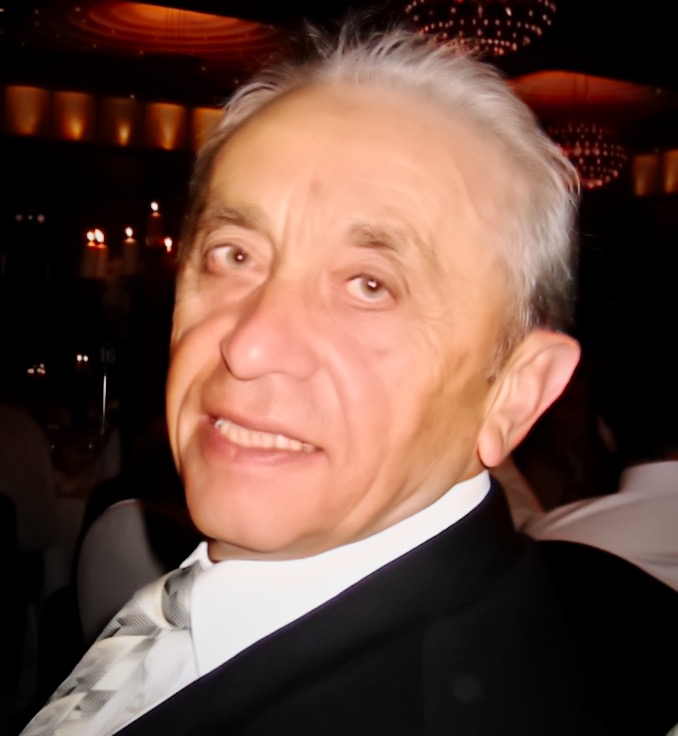
לעלוי נשמת אבי מורי ר’ שאול זעליג בר׳ יהודה הכהן בלבין נפטר ג’ שבט תשע״ג
In memory of the fifth Yohr Tzeit of my dear father,
R’ Shaul Zelig HaCohen Balbin ז׳ל
בְּרָב עָם הַדְרַת מֶלֶךְ “The splendour of a King (God) is manifest through fulsome participation“
This phrase appears in Tanach, Mishlei (14:28). שלמה המלך notes that the quality of a מצווה is enhanced when that מצווה is performed in the context of a bigger group of people. The commentary מצודת דוד supports this plain understanding, which is also the simple meaning implied in the גמרא Pesachim 64B.
What are the parameters of this phrase? What is bigger? Is three enough? ten? As many as possible? Is such a larger participatory group to be understood as a הידור מצווה, a better way to do a מצווה or is it intrinsic to the required quality of said מצווה to the extent that it is required. For example—and this example motivated this essay—assume a person is davening in a Shule which has twenty people for Maariv. Of those twenty people, two are חיובים (such as one may be a mourner in the 11 months and the other may have Yohr Tzeit on that night). Assume that both have a custom to lead the davening and say קדיש. There is now a choice:
either split the מנין into two groups of ten and daven in two separate rooms;
or one בר חיובא leads Maariv for twenty, and the other בר חיובא leads Mincha for twenty on the next day.
Assuming the interpretation that בְּרָב עָם הַדְרַת מֶלֶךְ is a הידור מצווה one may rationalise splitting the מנין on the grounds that a person affects a הידור only once the fundamental מצווה has been established. Given that two people consider it their fundamentalneed to lead the davening (because they wish to give נחת to the נפטר so that they will have an עלית נשמה), perhaps one could argue that every group of two additional people who may subsequently arrive, ought to be split evenly between the two מנינים, so that each has ‘maximised’ its size vis-à-vis בְּרָב עָם. The other approach, which perhaps sits a little easier?, is that a-priori, when one has a מצווה to fulfill, one should do that מצווה with as many people as possible לכתחילה. Of course, if there aren’t many people then the basic מצווה is still achieved. Its beauty, however, is enhanced, like the beauty of an אתרוג, when it is possible to meet the “A grade” version of the מצווה through a bigger crowd or participation.
Consider this example. The Midrash (תורת כהנים (9:2 describes the process of קמיצה, where the כהן takes some fine flour for the קרבן מנחה and with three of his fingers holds onto a blob of flour, while the top and bottom fingers (index and pinky) are used to ‘smooth off’ any protruding flour. In that process, it is possible that the one כהן performs all the actions of קמיצה. That כהן happens to be on scheduled guard duty. There are, however, other כהנים who potentially can help. Consequently, the Midrash quotes בְּרָב עָם הַדְרַת מֶלֶךְ and suggests that each step of the process be performed by a different כהן, and in this way, since more people are involved in the real מצווה of קמיצה, God’s majesty is enhanced. (One כהן passes the flour, another holds the special vessel and another performs the rounding off the flour. Alternatively, where oil is mixed with the flour, one measures, another kneads with the oil, and the third rounds off the flour, see (תוספות ר’’ש משאנץ שם). The Midrash derives this approach from the פסוק which states והביאה אל בני אהרן הכהנים. The plural indicates a Torah preference for more people to be involved.
The plural is used to increase the number involved in the מצווה. It seems that the preference to have more people involved in a מצווה is more than a qualitative improvement. Since the תורה explicitly advises that more כהנים are required, we might learn from this that in all cases “the more the merrier” is a fundamental aspect of the מצווה. On the other hand, one could argue the opposite. The תורה had to tell us to use more כהנים here (as per גמרא Menachos 7a) because בְּרָב עָם on its own, is not an imperative in general, but rather a better way to do things.
An example involving the sprinkling of the blood: the משנה in Pesachim (5:6) states explicitly that once the blood of a קרבן was collected and passed from one כהן to another, this is performed through a chain of Cohanim until the last Cohen nearest to the מזבח performs the זריקה sprinkling. The גמרא Pesachim 64B states that the reason many כהנים are involved is to make sure as many people are taking part in the מצווה as per the פסוק of בְּרָב עָם הַדְרַת מֶלֶךְ .
Indeed the אור זרוע: קטח is of the view that for every מצווה that can be broken up into parts (eg תפילה בציבור) it is better if partial honours are undertaken by different people, as opposed to one person doing all the davening, layning, and then saying haftora.
Another example is brought by the רמב’’ם in (הלכות בכורים (4:16, where the רמב’’ם notes that as the farmers approach ירושלים to present their first fruits, they pause and gather together in the central town of the regional area and then march en masse in the morning to ירושלים עיר הקודש to offer their first fruits. Why don’t they go up in the order that they happen to arrive? Why do they gather in a central town first and arrive in a block? The רמב’’ם explicitly states that it is required that they come as a larger block and not as individuals. Again, we see the importance of involving a crowd in the performance of a מצווה. One might argue that the רמב’’ם needed to tell us this law because we would not have done so in a large group otherwise. Alternatively, one could argue that בְּרָב עָם is always a requirement. However, sometimes we are directed in the method through which many people can indeed be involved.
An unrelated but similarly qualitative approach to a מצווה is the concept of זריזים מקדימין למצוות—those who are punctilious observe a מצווה at the earliest opportunity. A well-known example is that of ברית מילה which is done first thing in the morning, even though it might be easier for people wishing to attend an accompanying סעודה to have the ברית in the evening. We learn this from אברהם אבינו and וישכם אברהם בבקר.
What do we do when זריזים מקדימין למצוות clashes with בְּרָב עָם? For example, if there is a small crowd on time for מעריב during the week, should they wait a little longer as there would certainly be a bigger מנין? On the other hand, since the gazetted time has been reached and there is a מנין there is excitement to daven מעריב (yes I know it’s a רשות) so perhaps one should Daven immediately at the first opportunity. The חיי אדם in הלכות זהירות מצווה 58:7 states that זריזים מקדימין למצוות has preference overבְּרָב עָם based on the גמרא Rosh Hashana 32B. The גמרא asks about the place for the saying of הלל in שחרית. If we do so at the first opportunity then it is immediately after שחרית, and is an example of זריזים מקדימים. On the other hand we could have delayed הלל to מוסף where there would be more people and בְּרָב עָם. We see from this משנה and גמרא that we prefer זריזים over בְּרָב עָם.
Another example of בְּרָב עָם occurs when one wishes to bless the Moon after ראש חדש. We know that one is able to do so until the 10th of the month. Imagine it is day 8, and one observes a clear moon. In such a case a person is able to say the blessing over the moon without any crowd, on his own. Should he wait until מוצאי שבת that is approaching where, if the moon is visible, there will be a nice crowd of people => בְּרָב עָם הַדְרַת מֶלֶךְ saying it together? The ביאור הלכה on הלכות ראש חדש ס’ תכו:ב states explicitly that לכתחילה, in the first instance, it is better to say it בְּרָב עָם. In other words, wait until מוצאי שבת (if it is before the 10th) and do away with זריזים מקדימים!
We could argue that the limits for בְּרָב עָם are that the מצווה itself is not a private מצווה. Therefore, for ברית מילה there would be no בְּרָב עָם whereas for a מצווה which is done for a ציבור or by the ציבור we do have בְּרָב עָם. An example of the ציבור would be saying בורא מאורי האש for many people as opposed to few. Others say that בְּרָב עָם doesn’t apply to ברכות הנאה (like בורא מאורי האש) and only to ברכת המצווה. That is a separate topic.
One more example is in the שולחן ערוך Orach Chaim (90:9) where the מחבר recommends that a person should try to daven with a מנין in Shule. The משנה ברורה 28 (ibid) notes that if one has two Shules nearby and one Shule has a bigger מנין, and otherwise both מנינים are decorous, then one should daven in the מנין that has the bigger crowd because of בְּרָב עָם. (This also finds its way in Halacha where people make Minyanim in their houses, say, on Friday Night instead of davening in a nearby Shule. One should ask their Local Orthodox Rabbi. From where I stand, it would appear to be a practice that is contraindicated according to Halacha. This is also similar to layning the Megilla privately when it could be done בְּרָב עָם at Shule)
I have not in any way exhausted the different considerations with respect to this notion. The topic certainly isn’t done justice by this short essay. That being said, let us now return to the example mentioned initially:
where there are twenty people and two are חיובים, and as a result the twenty is split into two מנינים of ten, should one split the מנין or is it better to split the service itself where possible between two חזנים!
It could be argued that the חיובים of a mourner are not a true Halachic imperative. Rather, they are מנהגים that have been adopted with the single aim of giving נחת to the departed, so that the נפטר will attain an עלית נשמה. Accordingly, if the מנין is split, and there is (apparently) no הדרת מלך, we need to ask ourselves if in fact the נפטר would draw נחת from an act which ignores the הדרת מלך of הקב”ה and creates small adjacent minyanim?
There is an interesting text in גמרא Succa 51B. The Gemora describes an enormous Basilica Synagogue in Alexandria, Egypt, which could hold six hundred thousand people, or even twice that. That number may be an exaggeration; I don’t know. Either way, the Synagogue held very many people to the extent that there was no way to actually hear the חזן and know when to answer the חזן’s קדיש. The solution to this problem was to use flags, which acted as a semaphore, so that the people knew when to say אמן. A raised flag might have meant “time to say אמן”. Mori V’Rabbi Rav Hershel Schachter שליט”א informed me of the פירוש of the חיד”א in his פתח עינים on עין יעקב, in reference to that גמרא in Succa 51B. The חיד”א asks a good question. Surely, if there were so many people in that Alexandrian Basilica Shule, the solution to the problem of the חזן being inaccessible would be to split the מנינים into smaller parts such that each חזן was heard and there would be no need for flags. I don’t know how that would work logistically, but it’s certainly a logical approach to ameliorating the problem. Answers the חיד”א, this solution was not permitted, that is,they were not permitted to split the large מנין. Why? Because a large מנין personified the majesty of a great and large crowd, all davening at the same time. That is, it would have been prohibited to split given בְּרָב עָם הַדְרַת מֶלֶךְ!
Whatever the case, it is somewhat difficult to understand why some split מנינים. This is especially so when one can hear parts of the davening from a split מנין that is within ear shot.
After I finished this essay, I came across a talk from Dayan Osher Weiss on this topic. If your hebrew is reasonable, you should be able to understand. (At the time of writing, I haven’t yet listened to the Shiur). I also found that the נטאי גבריאל brings two Responsa which give permission to split the minyan. Alas, I haven’t yet looked into these via hebrewbooks.org)
There is a new definition of moral hypocrisy. This is (especially an egalitarian neo orthodox minyan) a Shule, Minyan, Temple or women’s service that still utilises Shlomo Carlebach’s tunes.
His daughter clearly knows of her fathers misdeeds and suffered herself as a victim.
His tunes are stained and belong in oblivion. They cannot conjure spirituality. The analog of a person dipping in a Mikva while holding something impure, readily comes to mind.





 pitputim
You must be logged in to post a comment.