Exploring Birkas Kohanim: Insights Customs and Halakha

The month of Shevat is, for me, perennially a difficult one. My father, alav ha-shalom, has his yahrzeit on the 3rd, and my mother, aleha ha-shalom, has hers in the coming week on the 29th. I am sure there is nothing unique about feeling somewhat alone in their absence.

Barukh Hashem, my father has seven great-grandchildren who carry his name, as does my mother. Perhaps obsessively, even when their English names vary slightly, I insist on calling them all by their Jewish names. It can be confusing with my own grandchildren: when I say “Shaul Zelig,” three boys turn to me.

My mother’s name was Elka, which is a little easier, because the girls often have a middle name, so I can distinguish between Elka X and Elka Y. There is probably a minor thesis in this for anyone inclined to psychoanalyse my obsession, but in simple terms, I take comfort—indeed, I luxuriate—in being able to say their names every day.

Though time moves forward in its measured, ever-changing way, I find that certain constants remain firmly anchored throughout that continuum. Subconsciously, I feel that, where possible, I seek to emulate their values and the way they approached life.

It may be seen as an obsession, as might my tendency towards melancholy when a special occasion—a simcha—takes place. That is simply who I am. I do not apologise for it, and I do not regret these tendencies for a moment.

To honour their memory, I have written an essay—quite a long one—on the topic of Birkas Kohanim. After reviewing various parameters of this mitzvah, I delve into the question of Birkas Kohanim outside the context of shul and formal davening.

The essay is too lengthy for a blog post, so I will attach it here as a PDF, which can be printed. It is certainly not the final word on the subject, and I would greatly value any comments, corrections, or feedback. If you know Kohanim who may be interested in this topic and who don’t subscribe to my blog, please feel free to send them a link to this post.

I will borrow a paragraph from the essay as a way of introducing what first piqued my interest..

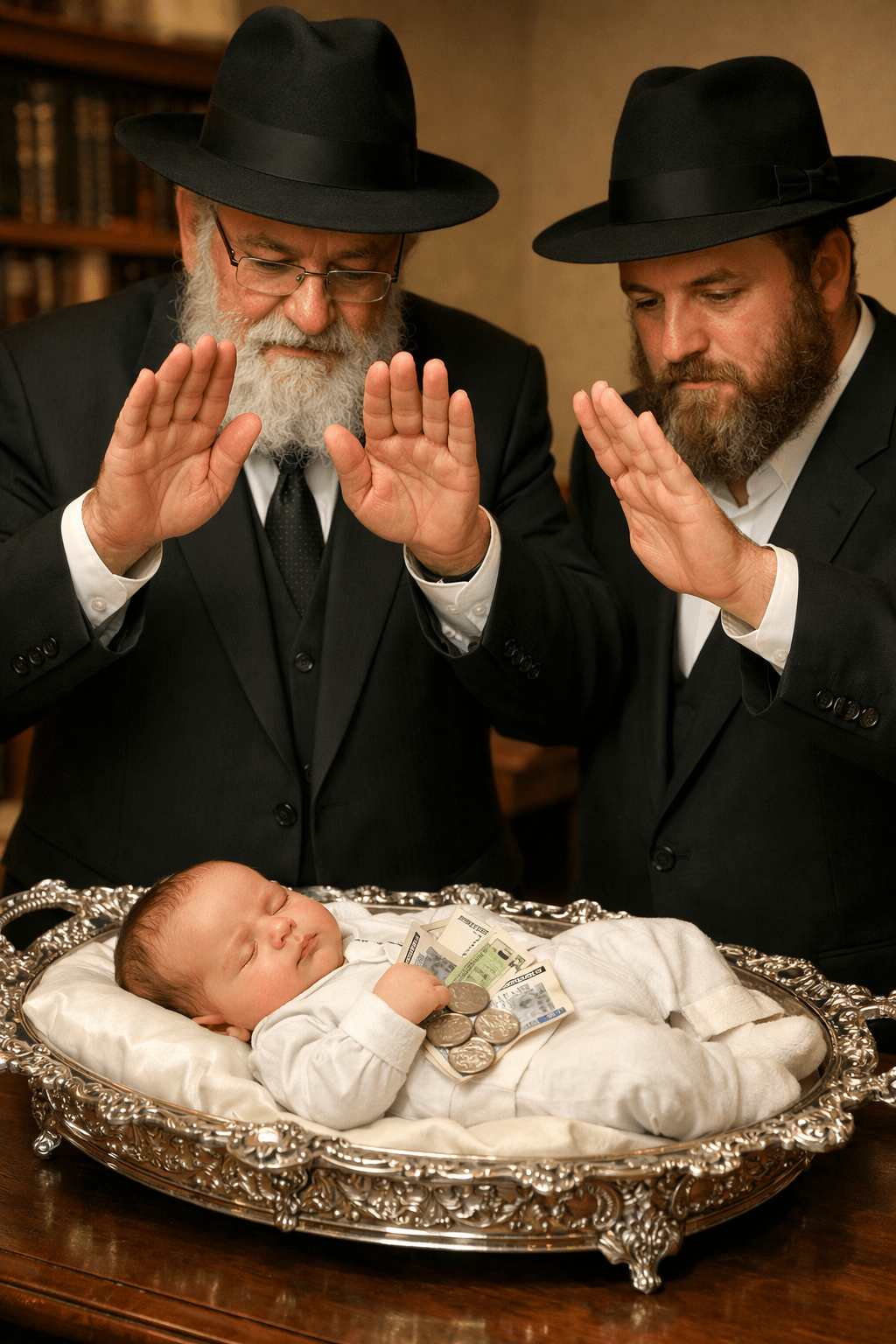
One impetus for composing this essay stems from personal experience at a Pidyon HaBen ceremony. Following the conclusion, the officiating Rabbi—who was also the Kohen that performed the redemption—invited any other Kohanim present to join in bestowing Birkas Kohanim upon the infant. There were two Kohanim present: the Rabbi and me. As we recited the pesukim of Birkas Kohanim, I observed that the Rabbi raised both his hands over the head of the baby, while I, following my customary practice in such informal contexts, extended only one hand. This practice was consistent with how I have traditionally conducted such berakhos outside of the formal dukhening that occurs during Musaf on Yom Tov in the Diaspora or daily in Eretz Yisrael.
Afterwards, I inquired why he had chosen to use both hands. He responded that while he was unsure of the halakhic reasoning, he was simply following the custom of his father, who was a respected Posek. In contrast, my own practice—what might be termed “halakhic intuition”—led me to use a single hand. Although I could not recall the exact source or rationale at that moment, I had evidently internalised a precedent or explanation that once guided this choice. This essay, then, charts a journey leading to that choice.

Can or should an Avel perform Bircas Cohanim (Part 4)

Context:

Part 1, Part 2, Part 3.

Minhag Chassidim in general, and Minhag Chabad in particular.

Dayan Telsner, who is a good Yedid of mine, wrote a number of articles where he responded to my points in the local Chabad publications הערות התמימים ואנ’’ש

I am not challenging his right to pasken according to the minhag brought by the Ramoh, which he conflates as some universal practice throughout the Ashkenazic world, and for which he uses the ultra-strong words of מנהג עוקר הלכה,I believe out of context.

I will just post this excerpt from Chabad’s own התקשרות magazine, which is referred to religiously by Rabbonim and Chassidim in respect of how to behave על פי מנהג חב’’ד.

My translation follows:

It is written in the Shulchan Aruch HoRav (Ba’al Hatanya), “in our regions, where mourning extends until 12 months on a mother of father, and 30 days after another relative, the Cohen [Avel] does not Duchen, even if he is the only Cohen, and even on Yom Yov…”

But, in practice [despite the listing of the Ramoh by the Shulchan Oruch HoRav] I heard from many [important] Poskim in Chabad, and these include The Gaon and Chosid, R Osher Lemil HaCohen, of Beitar, and the Gaon and Chosid R’ Yisrael Yosef Hendel of Migdal Haemek, they they never saw [in Chabad] even outside Israel that an Avel would avoid Duchening.

They referred to the Nitei Gavriel [of R’ Gavriel Tzinner, who is the Rav HaMachshir of the Melbourne Eruv], who wrote that that the Custom of Chassidim is in accord with the Shulchan Aruch [and not the Ramoh] according to the practice of the Sephardim. He brings as support the view of the Kaf HaChaim, that according to mystical [kabbalistic] line of Judaic practice, one must Duchen even if he is a mourner. An in the responsa Mishnas Shlomo [R’ Shlomoeleh Vilna, the Dayan of Vilna] he brings that according to the Ari Zal, we are especially careful not to show any mourning on Shabbos and Yom Tov, and certainly no Cohen should refrain from Duchening because they are an Avel.

The Kaf HaChaim also quotes the [famous] Mekubal R’ Shalom Sharabi, that Duchening is from the “Great Lights”, and just like an Avel is permitted to wear the Tefillin of Rabenu Tam, which is also permitted because of the same concept as the “Great lights—מוחין דאבא’ a Cohen who is a mourner must also Duchen. He goes on further to write that that one should not even cause Duchening to be displaced during the Shiva itself, because Duchening is an integral part of Davening to the extent that if there is no Cohen, we use a different Nusach as said by the Shaliach Tzibbur.

Notwithstanding this opinion, during Shiva itself, Chassidim do not follow the practice of Duchening of an Avel, and neither do the Sephardim [despite the Kabalistic justification]

It is possible that the reason we do Duchen as an Avel, even in Chutz La’aretz, is because it becomes a very clear expression of public mourning if/when a Cohen who is an Avel purposefully avoids doing so. This is especially so in Chutz La’aratez where it is most noticeable because they (Ashkenazim) only duchen on Yom Tov.

I spoke about this with Dayan Telsner’s brother-in-law, Rav Sholom Ber Groner, and he told me that he would be lenient himself based on this Nitei Gavriel. Interestingly, on a number of issues where I mentioned to Rav Sholom Ber, that his father had a seemingly different opinion, that did not seem to worry him to the extent that he was ossified. He said, in fact, that some of his own opinions changed according to time and circumstance, and that was the way to Pasken.

I will close with two words which are ubiquitous in halacha נתפשט המנהג—the Minhag spread (or became established). These simple words imply as everyone know that despite the fact that there may well be competing MINHAGIM on a RANGE of item, an equilibrium often [but not always] emerges as the “prevalent minhag”.

I’m not here to change anything. I didn’t Duchen once Rabbi Telsner paskened that way in his Shule. I mention it one last time, because I disagree completely with the concept of ossification of quoted ancient minhagim when those are known not to be universally adopted!

Finally, if someone can actually point me to MINHAG CHABAD on this, I’d be obliged. I do not think it exists formally in the sense that it was ever enunciated. This lends more credence to my argument, I’d suggest!

Let me also note to anyone who had observed my exchanges with Rabbi Telsner, that this was ריתחה דאורייתא and God forbid that anyone should think that “bad blood” or “beleidung” would ever enter my head over such matters. I can’t think of a better way to spend time that talking and shouting Torah!