I have never met Rabbi Chaim Steinmetz, aka the Happiness Warrior. In the following article republished in the Jewish Week, Rabbi Steinmetz shows an alarming level of imprudence. In Melbourne we face concerns over Shechitah, Shechitah was just banned by the Danes. Now we have Steinmetz quoting Russell Crowe. If I was on his board, I’d seek to have him cautioned. Yes, עד כדי כך.
Consider these snippets
Circumcision is unsettling. As the actor Russell Crowe wrote on Twitter: “I love my Jewish friends, I love the apples and the honey and the funny little hats but stop cutting yr babies.” Despite the politically incorrect tone, Crowe reminds us why the anti-circumcision movement is here to stay: circumcisions are bloody and make babies cry. Even the committed among us are uncomfortable, and we look down nervously when the mohel begins the ceremony. It’s painful to enter the Covenant of Abraham.
Yes Rabbi. Do you think that stating the obvious and being “one of us” will make your views more palatable or do you think that the anti-Semite, tree hugger, or militant vegan will clasp your every word and mangle it to fit their cause?
I’m a Modern Orthodox rabbi who talks a great deal about the place of Judaism in the 21st century. But increasingly I’ve come to realize that circumcision is incompatible with the times, as is much of Judaism.
Your “honesty” is breathtaking Rabbi, but what do you hope to achieve by acceding to moralistic arguments of the world by effectively saying “you are right. It is a barbaric act, but I’m Jewish, and because of that please let me continue perform barbaric acts. I’m inspired by them.”
I know the Rabbi means well, but he has little idea how to frame his prose effectively. He seems to also not know how to confront modernity in anything but a left-wing apologetic manner which gives strength to those who don’t enjoy his level of commitment to acts of “barbarism” in the name of an ancient religion.
My experience has been that the older I get, the easier I find it to listen to my parents. It’s paradoxical in one sense. When you are younger and less mature, you might expect to be more in need of the sage counsel of parents. At the same time, while one develops their own firm views of life, there is a tendency to perhaps discount alternate suggestions. After marriage, one ought to learn the art of joint decision-making. Someone who ignores the views of their spouse, may also ignore the requests from their parents. There are pathological extremes, but they aren’t in my purview. When one is more “independent” that doesn’t mean they don’t show כבוד or יראה to their parents. There is perhaps something missing: the element of being able to be מבטל one’s approach and adopt the (sensible) wishes of one’s parents. Graphically, I’d present it like this. Your mileage may vary. The cosine coefficient varies for different people of course.
Interestingly, I’ve found that as I get older, and perhaps finds it easier to be מקיים this מצווה, at least as far as minimising personal views on a given matter, the level of inherent joy in following a missive is enhanced. It’s a cause to celebrate even though it is ironically a voir dire. I find that the older I become, the more joy I derive from quashing my own predilections and views and submitting to those of a well-meaning (and sensible) parent. You might say this is all so obvious and no חידוש. Perhaps so, but my blog isn’t about חידושים per se; it’s about giving expression to those things that temporally invade my head space.
Within יהדות there are probably four major groups:
Chassidim
Misnagdim
Sefardim
Centrist
Each of these groups are broad and have sub-groups with their own nuanced approach.
Chassidim
Originally, Chassidism was an approach that courageously and creatively enfranchised the high numbers of uneducated and simple folk through a growing set of charismatic, often brilliant leaders, who had ostensibly embraced a more metaphysical understanding of תורה and מצוות laced with שמחה. The hierarchical strata existent in other groups, was disposed of. There was only a binary system: the Rebbe and Chassidim. Chassidim were guided by their Rebbe and he acted as a chosen mediator between them and הקדוש ברוך הוא on matters of grave importance and direction. Within Chassidism there were different approaches: from the uplifting שמחה of Breslav, to the admirable concentration on חסד from Satmar, the focus on תפילה by a range of groups, to the intellectual, inclusivist and non judgemental approach of חבד.
Misnagdim
Probably an outgrowth of Ashkenazi ascetic Chassidim (not to be confused with commonly understood Chassidim) this group focussed on the study of Ethical texts (מוסר). There are many approaches within this group ranging from the ‘you are just a nothing’ to ‘the world was created just for you’ psychology. The texts are supported by Torah verses and sayings of חז”ל. The percentage of מוסר studied during a day depended on the sub-group. Led by charismatic mentors, the Mussar Shmuess became an important session where chosen students were cajoled into refining their moral and ethical behaviour. Unlike Chassidism, this group was mainly located amongst the intellectual élite, although its Charismatic leaders had a wider universal impact.
Sefaradim
They share at least one common element with Chassidim in that they were greatly influenced by the Zohar, Kabbala and the Ari. The so-called man in the street wasn’t necessarily a Talmudic Scholar but knew much more Torah than his or her common Ashkenazi counterpart: they could often recite Nach by heart. Reverence for the Chacham (Chief Rabbi) was, and remains, indelibly strong. With a proud heritage of luminaries such as the Rambam, they are a dignified group who have now embraced Western Society, for better and, sometimes, for worse.
Centrist
This is a group which had roots in German Orthodoxy where Torah and the modern western world were not seen as antithetical. It has been called Torah Im Derech Eretz or Torah uMaddah. Having a stronger link with more rationalist approaches to Judaism, this group were not aligned with Kabbala or Mussar. Ostensibly they was ready to face the changing requirements of the world front on through Torah and Halacha without viewing the world as an evil force that is to be distanced from at all times. It is perhaps the most free of the groups in that individualism and personal choice is not contraindicated. As such, it also presents perhaps the most risk. Adherents can sometimes become over-influenced by non Halachic values and as a result other groups triumphally decry this approach as too dangerous.
Being a Mentch
Whatever approach is taken, ultimately they all endeavour to grow people in the צלם אלוקים. A person for whom שויתי ה’ לנגדי תמיד is more than a fleeting moment, is motivated and empowered to act like a Mentch. Theologically, and consonant with the human psyche, most groups tend to not only follow their path but also delegitimise the approach of other groups. This notion presents a constant challenge to Jewish unity. It can be constructive and sometimes destructive.
My mantra has always been “nobody has a mortgage on the truth”. Call it שבעים פנים לתורה or י’ב שערים. I have always felt that we ought to learn from each group. At the same time, especially over the last 20 years, I’m probably most aligned with Centrist Orthodoxy, as reflected particularly through the Brisker cum Halachic Man tinge of the Rav ז’ל.
Yet despite the differences in syllabi amongst each group, and their insistence that this syllabus or approach will transform people into Mentchen, we find that within each group whilst there are many who are fulfilling the syllabus, yet they are far from being considered Mentchen. How can this be? We could conclude that only the real adherents of a given approach are reflective of the efficacy of that approach. While this may be true, for an approach to יהדות to be considered as effective, my point in this post is that at least today, there is something over-arching and even more important than the nuanced differences of the various approaches loosely outlined above. In a word, that is the דוגמה חיה, the living personification of any of the above approaches. We need, yes each of us, to strive to become the personification of imitatio dei, a concept whose roots are in the מצווה of והלכת בדרכיו and something the Rav stressed over and over. It is why the חסיד who has a Rebbe, a Rebbe they respect not for social for familial reasons, but for genuine spiritual reasons, is inspired to be a better person—a mentch—a צלם דמות תבניתו. It is this, in my opinion, which precedes and is the motivating factor before a syllabus or weltanschauung. It is why the מתנגד who may say they reject the potentially antinomian tendencies displayed by some Chassidim, now also attach themselves to the ’פוסק הדור’ or the ‘זקן ראשי הישיבות’ or to their ראש כולל. It is why the Sefardim revered the Baba Sali and other מקובלים and drank every spoken and unspoken word. It is why many Centrists, after the passing of the Rav, are searching and seeking senior figures after whom they can model their lives. In my life, on a more personal level, Rav Abaranok ז’ל was a person I could only describe by the abstraction that ‘the שכינה reflected from his forehead’ in a way that we know Moshe Rabbenu appeared after he came down from Har Sinai.
We lead busy lives. We have incessant interruption. It’s harder to know what our children do and what they don’t do without proverbially locking them up. The cocoon is not a long-term or viable approach for many of us. What we can do, is seek out the real Mentchen, be inspired by them, whether they are female or male, and try to harness that inspiration so that we can also become Mentchen.
Use your particular syllabus or pathway by all means. My main contention is that the particular syllabus is not as important as the true and real motivation behind its manifestation in how we play out our lives, and that motivation must only be והלכת בדרכיו, to go in His ways.
Ignoring Kabbalistic considerations for the moment, we know that the laws about proper clothing for davening are relative. In simple terms, one is meant to wear clothes which are “appropriate” when having a meeting with an important personage. Clearly, the style of clothing changes from place to place, and indeed from climate to climate. It has also changed over time. The idea that שלא שינו את לבושם that Jews didn’t change their clothing from the time they were exiled in Egypt cannot be taken literally.
One can look at a Chassid who wears medieval clothes, especially on Shabbos and Yom Tov with a positive twist: namely, that they are
yearning for the days of yore,
exhibiting a fidelity to their tradition,
expressing disdain for a modern world they consider tainted
aligning themselves to their mentors (התקשרות) in all aspects including dress
teaching their children that one can live in this world and be part of a chain of tradition
I don’t wear a Shtreimel or Spodik or white stockings. At the same time, if somebody chooses to do so, it doesn’t bother me.
I don’t know why I thought about this over שבת, but it occurred to me as I was davening שחרית that perhaps it presents a halachic conundrum. How so? Imagine Chasid X, who wears a particular uniform on שבת. Let’s say that Chasid X does some exemplary work for the community, for example, they might be an icon of charity or community service or Hatzalah, or whatever. Chasid X is then invited to receive an award from the Queen’s representative, the Governor General, or the Prime Minister, or the Premier. After consulting with his Rav, the Chasid is advised that it would be קידוש השם ברבים to accept the award as it would highlight the achievements of the community at large. The Chasid comes to receive his award, makes a nice humble speech, and all is good. My question is, how does he dress to receive the award? My lay understanding of Halacha (and I’m by no means a Posek) is that the Chasid should consider appearing in his Shtreimel, Bekeche, white stockings etc. But would he? I doubt it. This begs the question: If the best שבת and יום טוב finery is deemed inappropriate to wear in front of an important non-Jew on an important occasion, why would one be allowed to wear it for Davening in general? (Does any one know how Maharam Shapira dressed in the Polish parliament?)
To put it simply, in some countries you wouldn’t appear in sandals without socks in front of an important person. In Israel and other countries, it’s commonplace. However, if nobody did this, it is questionable whether one is permitted to daven in this way. Why would a Spodik etc be any different?
I’ve seen a similar example. Some adhere to the Kabbalistic notion that one should always have two head coverings. Yet, if they find themselves in a situation where they have to daven, and they don’t have the second head covering, I’ve seen them put on the hood from a hoodie! Is a hoodie considered acceptable clothing in front of a dignitary? What about an ordinary peaked cap? Is that acceptable? Would anyone wear that in front of a dignitary?
I wear a hat on Shabbos. I do so, because
I like it
I think it looks good with a suit
My father and grandfather wear and wore it
It’s part of my shabbos and yom tov clothing
In point of fact, my grandfather hated me walking in the street in a simple yarmulka, but I think that had more to do with trauma from the war. I have been in a meeting with the Premier, and I wore a suit, but I didn’t wear my hat. Perhaps I am not different to the Chasid who wouldn’t wear his Spodik in such a situation. Is the simple answer that I reserve my best clothing for Shabbos, but that I wear acceptable clothing otherwise? Perhaps.
There are two things at play here:
acceptable garb
quasi-uniform
Does a quasi-uniform over-ride the requirement to wear acceptable garb?
I’m reminded of R’ Schachter’s observation that someone who normally wears a Gartel but doesn’t have one, and resorts to using their tie as their Gartel, is perhaps completely missing the point. Am I missing the point?
The Rav ז’ל wouldn’t perform חופה וקידושין if the חתן wasn’t wearing a hat. He argued that the חתן had a דין of מלך and a מלך wears a crown at important occasions, and the proverbial Jewish crown of the King (today) is the hat. He didn’t even accept a straw hat as a substitute.
The following is an email I received, via a second party, from Dr AriehEldad, who is now a member of the Knesset. He is a secular right-wing politician. Dr Eldad is world-renowned as a Burns Physician having won the Evans Award from the American Burns Treatment Association.
Dr Arieh Eldad
“I was instrumental in establishing the Israeli National Skin Bank, which is the largest in the world. The National Skin Bank stores skin for every day needs as well as for war time or mass casualty situations.
This skin bank is hosted at the Hadassah Ein Kerem University hospital in Jerusalem where I was the Chairman of plastic surgery. This is how I was asked to supply skin for an Arab woman from Gaza, who was hospitalized in Soroka Hospital in Beersheva, after her family burned her.
Usually, such atrocities happen among Arab families when the women are suspected of having an affair. We supplied all the needed Homografts for her treatment. She was successfully treated by my friend and colleague, Prof. Lior Rosenberg and discharged to return to Gaza. She was invited for regular follow-up visits to the outpatient clinic in Beersheva.
One day she was caught at a border crossing wearing a suicide belt. She meant to explode herself in the outpatient clinic of the hospital where they saved her life. It seems that her family promised her that if she did that, they would forgive her.
This is only one example of the war between Jews and Muslims in the Land of Israel. It is not a territorial conflict. This is a civilizational conflict, or rather a war between civilization and barbarism.
Bibi (Netanyahu) gets it, Obama does not.
I have never written before asking to please forward onwards, so that as many as possible can understand radical Islam and what awaits the world if it is not stopped.”
Eldad is a professor and head of the plastic surgery and burns unit at the Hadassah Medical Center hospital in Jerusalem. He studied medicine at Tel Aviv University, where he earned his doctorate. He served as the chief medical officer and was the senior commander of the Israeli Defense Forces medical corps for 25 years, and reached a rank of Tat Aluf (Brigadier General). He is renowned worldwide for his treatment of burns and won the Evans Award from the American Burns Treatment Association. He also lives in Kfar Adumim a settlement on the West Bank.
Pass this link on, please. You can use the Share via Email button below.
This question occupied the minds of some in England in 1890. You might wish to look at this beautifully entertaining post, which I hope you will enjoy as much as I did.
אין חדש תחת השמש
PS. I’ve always known (from my father) that a Peruke (Peh-roo-keh) is another name for a wig, although I’ve only ever heard him use it in the context of a toupee for a male.
Finally some good news. Remember the poor fellow who sustained 50% burns to his body? Well he has been released from hospital, thank God. Recall that Matzav.com had taken a while to publish the story and then in a tepid manner. Consider how they reported the release:
Aharon Rottenberg of Rockland County has been released from the hospital. Aharon suffered burns over 50 percent of his body last month when he tried to stop an attacker from fire-bombing his house.
Aharon’s attorney says his client hasn’t returned home, but is staying in an undisclosed location in the area.
On May 22, Aharon was burned when an incendiary device exploded as he wrestled with an 18-year-old who had come to burn down the Rottenberg home.
Rottenberg has filed an $36 million lawsuit. Rottenberg claims a campaign of intimidation was orchestrated that led to the arson attack that burned half of his body. He says he was targeted.
Rottenberg is being represented by civil-rights attorney Michael Sussman.
The 18-year-old has been charged with arson and attempted murder.
Rottenberg had been recovering at Westchester Medical Center. He suffered third-degree burns over half his body
שומו שמים
Where do these guys get off? Did you notice that there isn’t a single word about Skver? Did you notice that they even went as far as saying he’s from Rockland County as opposed to honing in on his more accurate location (New Square)? Notice they tell us nothing about the attacker! From the article you wouldn’t know he is Jewish let alone a Skverer Chasid, and let alone someone from the home of the Rebbe himself! Notice that they say that “He claims that he was targeted”. Hello! Who is claiming he wasn’t targeted! Even the Rebbe acknowledges something bad had happened. What do they want us to believe, the 18 year old was some delinquent who happened to walk past the house and randomly chose to throw an “incendiary device” at that home. The attacker was also a Skverer of course.
Are the readers of matzav that stupid or gullible?
At best, this is another insult to intelligence. At worst it is yet another indication of the reprehensible approach taken by Charedi newspapers to the truth. Feh!
But maybe the readers are from another planet. One self-named “Ben Torah” wrote in the comments section:
I hope Matzav continues to report good news. I hope Matzav reports every time a Yid is discharged from a hospital! (Otherwise I’m not sure why it is reporting this Yid in particular.)
Sheesh! He probably makes a bracha each time he breathes air.
In studying the laws of דינא דמלכותא, I heard a shiur from R’ Schachter. In one of his comments he stated that if the law of the land meted out a form of judgement that far exceeded the expected outcome of a prosecution under a formal פסק דין from a סנהדרין, this implied a situation where there is a clear conflict between Torah Law and the Law of the Land, and creates Halachic tension.
We are limited in what we can do in such a situation since we live under שלומה של מלכות and, in the main, are very appreciative of the system of laws enacted, even if they aren’t completely motivated by satisfying the requirements of the דין of a בן נח.
Accordingly, in this case, based on what I have read, there may have been a miscarriage of justice in that (amongst other things) the presiding Judge exercised irregular behaviour. This would then imply a new court case after which, presumably, justice would take its course. Given that Rubashkin is widely known as an איש צדקה it seems to me that his efforts for a new trial should be supported in any way that people are able: either through דורון or תפילה.
In summary: until the judicial process is fully exhausted, he is the proverbial חצי עבד וחצי בן חורין in my eyes. There is a ספק and in the case of a ספק we help someone seek a just outcome. At the end of the day, he may well be found guilty in a new trial, or may receive a lesser/larger sentence, or may get off on a technicality. Que Sera Sera.
Until and if that happens, those who are uncomfortable with supporting the effort—and I understand their viewpoint—should simply adopt שתיקה. There is no חיוב to protest against your fellow Jew until the process has ended and something else unfolds.
The entire assembly raised up and issued its voice; the people wept that night.”
And Rashi writes:
כל העדה – סנהדראות
The entire assembly – the Sanhedrins
This pasuk, like many other verses in the Torah and the rest of Tanach, does not draw much attention. However, our Holy Torah – which is a Torah of Truth, written from a pure and holy source – does not write letters or words, and definitely not verses, for no purpose. Every pasuk contains a hidden treasure – a treasure with seventy facets of the Torah’s “Pardess,” and we our obligated to plumb its depths.
When the ten tribal leaders, great Torah scholars, present the Holy Land as
“A land that devours its inhabitants” (Bamidbar 13:32) ארץ אוכלת יושביה
without getting into the reason for this perception, it is clear that only a special person or fool would be unafraid to enter the land after this observation. Even when Moshe and Aharon try to stem the tide of fear by tearing their clothes in protest, this action has no effect. The nation knows that seeing is believing and despite the great Moshe Rabeinu giving them assurances they are afraid; very afraid.
Even after Yehoshua and Calev, “the spies of the Land” (14:6), who also saw with their own eyes, speak in praise of the Land – there is no significant success. The people remain unconvinced. Stop for a minute and think about that. We have incredible leaders: Moshe, Aharon, Yehoshua and Calev exhorting the people to trust them and fear not. Given all that they have gone through together, we still find that כָּל-הָעֵדָה, the heads of the Sanhedrins, are fearful and engulfed with trepidation.
What psychology is playing out here? Human beings, as great as they may be, are still human, and external fears can envelope and overpower even the greatest people. Seeds of hopelessness and despair can be seen. The impact of these seeds, which eventually develop into a mature tree of the deepest despair, ultimately caused the destruction of the First and Second Temples, which has yet to be rebuilt.
This notion of despair is encompassed in one word, which has deep meaning: “ויבכו – The people wept.”
Melancholia is a serious affliction. When sadness overtakes a person, they tend to despair of life. They feel empty and rudderless. There is no point in studying Torah and performing mitzvos, and logical reasoning will often not transpose the person in deep depression to resume a more regular routine.
In contrast, this is not the case when a person is happy with a mitzvah, happy for being alive, happy for being healthy and whole. Even if the person is not completely healthy they know that: “Whatever Hashem does, it is for the best,” כל דעביד רחמנא לטב עביד and: “It can always be worse.”
Within a backdrop of despair and melancholia, it can be understood why the nation said: “Let us appoint a leader and let us return to Egypt.” (14:4) This is seemingly, total foolishness. Would anyone in their right mind consider going back to a life of slavery and persecution? Furthermore, it says in Shemos: “Bnei Yisrael were Chamushim.” (lit., armed) וחמושים עלו מצרימה. Chazal teach us that only a chamishis (fifth of the nation) departed Egypt. They were the ones who believed in Hashem, Who split the sea for them, and gave them the Torah. They were the spiritually enlightened generation; even the lowliest among them witnessed things that the prophet Yechezkel never merited. Did they really wish to give all this up? Moreover, for what? To return to the place from where they escaped, the place where they were empirically hated – Egypt?!
However, based on what was previously said, the nation’s desire to return to Egypt can be understood. Sadness עצבות that causes despair will ultimately cause a person to lose hope and not see the light at the end of the tunnel. The person becomes blinded by the darkness. This is true even when it is clear and obvious that Hashem is with him and helping him each step of the way. Sadness conceals light. In that moment of despair everything is uncertain. Disrepair sets in and logic is a remote consideration.
Egypt represented a continuum of עצבות—the place where they wallowed and subsequently descended into the forty-nine levels of impurity. The fiftieth level is the level of despair, as R. Moshe Chaim Luzzato writes. There is seemingly no reason for a person who has reached the forty-ninth level to attempt to climb up and out. He has fallen to the lowest levels; giving up is no longer a conscious activity, is it an inevitability? He has already reached the proverbial bottom and is unable to discern the harm that one more level can achieve.
A fundamental teaching of the Jewish nation, and the secret of our survival is that even when we have hit rock bottom, we should still remember: “There is no positive outcome if you continue to despair.” There is virtue in not allowing a descent to the fiftieth bottom level; the level of no return.
A great rabbi once said: Sadness is not a sin, but where sadness can lead – no sin could ever possibly lead!
A state of Happiness is not a mitzvah per se, but where happiness can lead – no mitzvah could ever possibly lead!
I’m often jealous of people who otherwise seem “simple” or “non intellectual” and yet despite clear hardship and set backs, remain mainly בשמחה. Perhaps that’s the message. Get over yourself. Get over your set backs. Find the positives. Don’t dwell on the negatives, and make your time in this world a productive one. The opposite, will lead to despair, and despair will lead to a situation where even Moshe Rabeinu can’t convince you that a direct promise from Hashem has significance to your life. If this happened to the Sanhedrins, it could certainly happen to all of us.
On the eve of a שמחה in our family, with the impending bris, on Sunday אי’’ה, of our grandson, I wish all readers שבת שלום, and weeks and weeks and years of only שמחה.
The extreme charedim, such as Satmar and their ilk do not support the State of Israel. They do not want to take a cent from the Government. After all, this is not a Government made up of Shomer Shabbos people, and in addition, they consider the State as undermining and stopping the progress of the Geula. So what do they do? They prefer to quietly live amongst non-Jews. They don’t, however, just live in a spread out manner. They prefer homogenous enclaves within the non-Jewish States. As they get bigger, they also want to control those cities. They ask that other don’t ride on their bikes in an immodest manner while passing through their neighbourhoods and they take people to task for offending their principles whilst in what they term their neighbourhood.
How much longer can this last? A recent report suggests that Kiryas Yoel, may well be experiencing some fireworks in the not too distant future. Ironically, they might have been better off in the State of Israel.
Dissident leaders from Kiryas Joel filed a federal lawsuit Monday accusing the Satmar Hasidic community’s majority faction of abusing its control over municipal affairs and demanding the 34-year-old village be dissolved.
The 59-page complaint catalogs grievances dating back a decade and depicts a religious faction exercising uncontested power in the secular realm. The case, brought by Goshen attorney Michael Sussman, calls Kiryas Joel a “theocracy” that violates the First Amendment’s prohibition against the establishment of religion.
“Religion is wonderful,” Sussman said at a press conference in his office Monday, seated beside Joseph Waldman, a plaintiff and longtime dissident leader. “But it cannot dominate the state. And that is what is happening in Kiryas Joel.”
The case alleges discrimination against dissidents — estimated in court papers to comprise 40 percent of the village’s roughly 20,000 residents — in various facets of public life, from tax exemptions for synagogues to election improprieties to selective enforcement of village noise ordinances.
Among the most serious allegations is that Kiryas Joel’s Public Safety Department, a quasi-police agency, has acted as enforcers for the main congregation and tolerated acts of violence and intimidation against dissidents by unruly crowds of young supporters of Satmar Grand Rebbe Aron Teitelbaum, the leader of Kiryas Joel’s majority faction.
In one incident in August 2010, a mob of screaming boys — angry about a marriage held in a dissident wedding hall — allegedly hounded relatives of one of the newlyweds as they walked home from a synagogue after midnight. The complaint says the boys punched, kicked and threw bottles and eggs at the family, which included a pregnant woman.
The suit alleges that public safety officers passed by during the harassment and did nothing. Later, when the family members approached their destination, an officer parked nearby allegedly refused to escort them home.
The plaintiffs are asking a federal judge to dissolve the Village of Kiryas Joel, which would effectively remove its leaders, lift its laws and place it under the governance of the surrounding Town of Monroe. The village was incorporated in 1977 as a satellite of the Brooklyn-based Satmar sect.
If the judge won’t do that, the suit asks for the removal of the current village leaders, including the mayor, trustees and administrator.
The lawsuit comes in the wake of a much-publicized attack against a dissident in New Square, a Hasidic community in Rockland County roiled by the same sort of internal rift as the Satmar Hasidim. In that May 22 incident, a 43-year-old man suffered severe burns fighting off a young man who tried to burn down his home.
Sussman, who’s also representing the burn victim, Aron Rottenberg, announced Monday that he had filed a $36 million lawsuit in state court against New Square’s grand rebbe, David Twersky, and the 18-year-old aide suspected of starting the fire.
By now, everyone will have read about the court case involving Sholom Mordechai Rubashkin. In the worst case scenario that he committed a crime under US Law, there is no moral or ethical justification for the extreme punishment that is being exacted on him. I am not here to comment or decide on what he is alleged to have done; that topic has been done to death by others. Be that as it may, it is simply not acceptable for any legal system to mete out a judgement (27 years) which is more than harsh; it is downright cruel in its exorbitant length.
You may wish to download or watch a video tracing the history of this case. An alternative site for the video is here.
The lawyer for Aron Rottenberg, the New Square man seriously burned in an arson attack on his home, said this afternoon that he will file a lawsuit tomorrow contending that New Square’s grand rebbe is responsible for a campaign of intimidation against Rottenberg that sparked the attack.
Lawyer Michael Sussman said that Rottenberg is committed to breaking Grand Rebbe David Twersky’s hold on power over everything that happens in the ultra-insular Hasidic village.
“That control, if it is going to be exerted as it has been, has to end,” Sussman said.
I guess it must have been about 20 years ago, when I sat at the Seudas Bris of a baby who had just been named Avrohom. For some reason, I can vividly remember the scene, including the exact table and seat where I was sitting. I don’t normally remember such things in this way. Rabbi Groner ז’ל was speaking in his renowned powerful and emotive manner; a style which many of his students have naturally if not genetically assumed in their own delivery.
“Let me tell you about R’ Avrohom Mayor” he thundered. “In Melbourne, you don’t know who he was nor are you aware of his greatness. R’ Avrohom was an עובד who learned Chassidus for many hours before davening only to then daven for another 4 hours each day. You could see him at lunchtime in 770, draped in Tallis and Tefillin, in deep contemplation while still davening שחרית. But one thing I will tell you, despite his עבודת התפילה, R’ Avrohom would never peform his daily עבודה before he had made sure each of his children had had their breakfast, and food was on the table. R’ Avrohom was completely בטל to the זולת. First it was somebody else, and only then was it R’ Avrohom Mayor.”
I do not know why, but I remember these words with remarkable clarity. The little baby was a great-grandson born through R’ Avrohom’s daughter’s family (Rubin). We were and remain close friends of the then little Avrohom’s parents and family. Subsequently, I saw a large photo of R’ Avrohom Mayor and was awe-struck by the holy הדרת פנים of his countenance. That was then.
Recently, I read that a book had been published by his grandson (Moshe Yosef Rubin) which could be described as a biography of R’ Avrohom. Lately, I have been caught up buying lots of books, and wanted to add this one to the long list of books I intended to read. Not finding the book at bookdespository.com or amazon.com made the purchase less than automatic, so I expedited the process by borrowing a copy.
Over Shavuos, I finished reading the book and it left me feeling both inspired and inadequate. The book is nicely referenced and footnoted, and even allowing for the natural license of a grandson to possibly exalt his Zeyde or omit the odd narrative, it was inescapable that I had read about an impressive and incredible human being.
In my travels, I have been to the USA several times, but only twice to New York. Despite my school years in Chabad, I felt no specific desire to visit 770 Eastern Parkway, and, in point of fact, I have never been there. I am not a Chosid, and have never been in Yechidus with any Rebbe, let alone the Lubavitcher Rebbe ז’ל. I never felt I had anything meaningful to say, and all that I asked for, I tried to achieve through my poor but personal davening. For reasons of familial nostalgia, I did want to visit the Amshinover Rebbe, if only to tell him that I was attending on behalf of my late namesake, who was an Amshinover Chasid, but alas, each time I attempted to see him, it didn’t work out. Maybe that’s the way it was meant to be. After reading this book, however, at this stage of my life, I would have liked to have spent a weekend participating in one of R’ Avrohom Mayorer’s apparently intimate and uniquely inspiring farbrengens.
Elderly Russian Chassidim were not a new phenomenon to me. Rav Perlov ז’ל and Rav Betzalel Wilshansky ז’ל were originally Chassidim of the Rashab ז’ל and even a young non conforming and fiercely individualised lad like me could not help but be intrigued by their הנהגות, demeanour and countenance.
Rav Perlov seemed to be ancient. We were davening שחרית at the school’s 7am minyan, and he seemed to have been there from the crack of dawn. Watching him slowly removing his Rashi Tefillin and don Rabeinu Tam’s tefillin was like a slow motion movie. The world seemed remotely removed from Rav Perlov. Time was an irrelevance. He was seemingly hovering above time. His קריאת שמע took an eternity. R’ Perlov’s wife was no less daunting. I can still vividly see her face, as she walked across the school yard while we played football. She held up her hands, shielding her face, slowly shuffling across the yard, concerned that a ball might hit her. We, of course, froze, and halted our sport until she had safely passed.
Rav Betzalel, with his rounded enormous hat and greyish kapote, was a picture of יראה. I feared looking at him. He seemed thoroughly gripped and enveloped by דע לפני מי אתה עומד. It was as if he was acutely aware of אלקות at each moment, while we were remotely meandering through a confused sea of גשמיות with the odd sprinkle of רוחניות. One Tisha B’Av stands out. R’ Betzalel was called up to say the Haftora of אסוף אסיפם and his loud wailing and sincere crying left me speechless and in awe that someone could so acutely feel the words of the נביא. It is also one of those moments where I can vividly remember exactly where I was standing, as I watched R’ Betzalel literally go to pieces.
R’ Zalman Serebryanski ז’ל was the warm and smiling, intellectual, Rosh Yeshivah and R’ Isser Kluwgant ז’ל carried himself with the dignity of מלכות. R’ Betzalel Althaus ז’ל epitomised שירה וזמרה and התעוררות, but it was R’ Nochum Zalman Gurewicz ז’ל who was the master story-teller. It was R’ Nochum, who interrupted our Gemora classes to tell us about the NKVD and his time in the army. It was he who attempted to regale us with stories of near escapes from the clutches of the evil Soviet empire. But I, and many others, were the sons of Holocaust survivors.
As second generation survivors, stories of Soviet persecution didn’t leave me with the type of indelible tattooed watermark of the שארית הפליטה. This was not the archetypical definition of death and destruction: the evil Amalekite Nazi regime. Put in simple terms, I was brought up surrounded by Holocaust survivors and their harrowing tales. I could not make room to digest the stories of Soviet Jewry, despite being surrounded by the aforementioned respected, impressive and honourable older Chassidim.
Fast forward to this new book. I have a new-found understanding. To put it simply, the stories in this book captured important elements of the attempted destruction of Judaism in the Soviet archipelago, whereas the Holocaust was about the attempted destruction of the Jewish Nation. The Nazis didn’t care if one was frum, half-jewish, a bundist or fascist. If you were Jewish, you were to be exterminated: end of story. The Soviets, however, would leave you alone, and indeed embrace you, if you cast off your Judaism and adopted the communist oath of allegiance to Stalin ימח שמו and his evil socialist ideology.
Enter R’ Avrohom Mayorer and others of his kind. These were Chabad Chassidim who fought with all their might to stave off the attempt to kill Judaism. Story after story of immense bravery, courage and conviction is retold expertly and one is left in wonderment and disbelief. How much easier would it have been to stay alive, unpersecuted, and in comparative safety, simply by compromising and exclaiming יעבור ואל יהרג?
The inspiration for this struggle against the Soviets was the fulfilment of the direction from the Rashab and the Rayatz ז’ל. These Rebbes loomed large in the hearts of the Chassidim who risked their lives, daily, to make sure that the נכשלים אחריך didn’t give up their souls to Godless Soviet atheism. But this was not just a story about the Soviet Union.
R’ Avrohom continued with the same fervour to build up Chabad institutions in the new State of Israel. Whether it was Lod or Kfar Chabad or Tel Aviv, R’ Avrohom Mayorer was devoted to his task of ensuring that Torah (and Chassidus Chabad) flourished in the most difficult and challenging times during the formation of the Yishuv. Life was physically challenging and these were a different style of pioneer in the newly growing, but constantly challenged State.
In his later years, R’ Avrohom finally moved to New York where he was united with the family he so dearly loved. It would seem from all accounts that the last Rebbe ז’ל preferred that R’ Avrohom spend all his days in Israel. R’ Avrohom, was R’ Avrohom. You could take the man out of any country, but you couldn’t take his care and support for Chabad and indeed any Jew, out of the man. You could transplant him into Uganda, and he would find a way to spread Yiddishkeit בכלל and Chabad חסידות בפרט. The issue of R’ Avrohom not remaining in Israel isn’t covered in the book, nor would one expect such a private issue to be discussed in the context of a book written by his great-grandson. Notwithstanding this fact, in my view, it can only be the small-minded, gratuitous, simplistic and ignorant חסיד who failed and fails to see the wood from the trees and appreciate the immense impact and personality of this major תלמיד חכם. It is not a matter of chance that arguably the Rebbe’s greatest חסיד, R’ Yoel Kahn, spent many long hours in deep conversation with R’ Avrohom. Like the Chassidim I encountered in my youth, this book vividly painted the picture of a man who was larger than life.
R' Avrohom with his partner in life R'n Sarah.
On Rosh Hashono and Yom Kippur, I am emotionally exhausted and distraught when I sing the chilling words:
כי לא תחפוץ במות המת
What does it mean? Hashem doesn’t want the death of a dead person? If he doesn’t want it, then why let man die? And so what if כי אם בשובו מדרכו וחיה—even after תשובה man dies. R’ Avrohom Mayorer explained this in a brilliant way. What Hashem doesn’t want, is במות המת. When we leave this world after 120 years, Hashem doesn’t want us to leave as a מת, someone whose time was already up; someone who was retired and no longer active; someone whose strengths and abilities were no longer manifest; someone who was physically there but who had effectively ceased their living task. No, on the contrary, we are exhorted to work and live until our last breath and try to bring more קדושה into this world through the מצווה of והלכת בדרכיו. This also epitomised the עבודה of R’ Avrohom Mayorer.
For this vort alone, the book was well worth reading. I will always remember this vort. May his memory be a blessing.
But wait, there’s more. In noting the continued campaign of obstructing the truth and blackwashing what really happens, I can advise that Yated Ne’eman has moved from the sublime to the ridiculous. Yated Ne’eman is a mouthpiece of the Litvishe Misnagdic world. Originally created by R’ Schach ז’ל and the Steipler Gaon ז’ל, the paper is now under the editorial control of R’ Elyashiv, R’ Shteinman and R’ Karelitz.
One popular magazine, entitled Mishpacha, has recently been embroiled in controversy because it dared to publish articles that didn’t simply cover the singular life which starts at Cheder, moves to Yeshivah, and then to Kollel for each and every male Jew. Women, of course, can’t be mentioned in papers with or without pictures, unless they have just passed away. For more on the ban, see here, for example.
Mishpacha is quite popular, especially amongst Western style Agudisten and Right Wing Modern Orthodox. It even had the guts to pubish stories that mentioned R’ Hershel Schachter, the esteemed Rosh Kollel at YU. That is a big no-no. Never mind that R’ Schachter is one of the most respected Poskim today. Yated Ne’eman, however, was apparently losing readers. It needed to muzzle Mishpacha. Fast forward and Mishpacha was banned. The magazine was considered outside the pale of normative (thus used) Charedi Judaism. I’ve seen a few copies of Mishpacha Magazine and it didn’t strike me as being heresy, but what do I know.
So, what happens when a group of people go to visit the famed Yeshivah of Radin, of the Chafetz Chaim ז’ל? Well, of course, Yated publishes a picture of the group outside the Beis Hamedrash. There’s only one problem with the picture. You see, the editor of Mishpacha magazine was present, so what does one do. Doesn’t the Torah say
and thou shalt photoshop evil from your midst … ובערת הרע מקרבך
And so it came to pass. Exhibit one is the Yated picture, with the editor of Mishpacha photoshopped from the picture so that the Yated readers remain blackwashed. Exhibit two is the original. Hat tip to R’ Segal and the report in Chadrei Charedim.
Exhibit 1: Yated Doctored ImageExhibit two: Original picture. Where has the man with the multi colored lines gone?
How will the apologists explain this latest nonsense? Whose little world is going to be infected if the editor of Mishpacha remains in the picture?
What group do you belong to? Are you a Chasid or a Misnaged? Are you Chassidic Lite or a Snag? Are you Satmar or Belz? Are you a Meshichist or anti? Are you Dati Leumi or Charedi Dati Leumi? Are you Zionist or anti-Zionist? Do you support the left or the right? Do you wear a hat and jacket for davening or don’t you? Do you wear a Tichel or Sheitel? Do you wear thick stockings or normal stockings? Do you wear open toes or only closed shoes? Do you drink Chalav Yisrael or is Chalav HaCompanies your Chalav Yisrael? Will you send your children to University or will they only do courses via correspondence?
Some of these questions, if not all of them, are used by potential Shadchonim to match people up. If it is indeed necessary to have a one to one match between the answers to these questions before a meeting takes place, then I wonder how many of those issues are really fundamental? This is a deeper question which I am not dealing with in this post.
Societal pressure to conform has negative and positive aspects. The positive aspect is that people feel part of a community. The negative aspect is that a level of individuality or existing family minhag is lanced.
On Shavuos, there is an Ashkenazi custom to sing Akdamus. In my youth, there were probably only two occasions each year when I heard Rabbi Chaim Gutnick ז’ל lead the davening in some form. One was Neilah, where his authentic Nusach was no doubt the one he heard in Telz as a Yeshivah Student, and elsewhere in Poland and London. I will never forget him reciting “Enkas Mesaldecha”. (As an aside, I can’t grok the “man made, popular hit songs” approach to Nusach. How can one sing Enkas Mesaldecha to “a little bird is crying!?!) . The other time I heard Rabbi Chaim Gutnick lead, was on Shavuos when he was called up for the first Aliya, and before commencing, he sang the ancient Akdamus Milin to its authentic tune.
In the main Shule at the Yeshiva, for many years, R” Hershel Klein ז’ל used to say the Akdamus. Those were the days when there were a significant number of Baal HaBatim who davened in the Shule who were not Chabad Chasidim. The Shule had no problem accommodating these customs and didn’t feel it had to follow the practice at 770. When R’ Hershel Klein was ill, he asked me to say it on his behalf. These days, R’ George Marcus has taken on the role but he passes the baton to me because I have a louder voice.
Interestingly, I read that the last Lubavitcher Rebbe ז’ל did say Akdamus, but he did so in between the Aliyos. Apparently, his father, R’ Levik ז’ל had the custom to say Akdamus as in normative minhag ashkenaz (as did other branches of Chabad) but his father-in-law, the Rayatz z”l did not say Akdamus loudly in a responsive manner as per minhag Ashkenaz. In order to somehow satisfy both practices, the last Rebbe said Akdamus quietly. This is reported in the name of people who stood close enough to hear it.
Why did he do so? Was it because of respect for his father or was it because it was a minhag and we are enjoined אל תטוש תורת אמך and לא תגדודדו? I suspect that the last Rebbe was not ready to completely cancel his own father’s Minhag even if it was not the Minhag of his father-in-law the previous Rebbe, whom he revered, all his life.
In trying to become “accepted” by a particular group or feel like a card-carrying member of that group, how many family minhagim are discarded in the process? Does membership of a particular group mean you have to throw away all or most family minhagim which are not known by that particular group?
We have a Minhag to only eat Milchig on Shavuos. Yes, there is such a Minhag, and no, it’s not in contradiction to שמחת יום טוב. I guarantee that my wife or mother’s milchig dishes will leave you completely בשמחה. To me, as a second generation holocaust survivors’ child, I feel that it is even more important to ensure that what Hitler ימ’ש didn’t manage to destroy, doesn’t get erased in the process of “becoming part of something”.
For almost five years, the Gilad Shalit has been held captive illegally, in isolation, in unknown conditions. Hamas has forbidden him contact with the outside world, communication with his family, and basic humanitarian access from the Red Cross. These are clear violations of International Law, the Geneva Conventions and common human decency.
As we approach the five year anniversary of his capture, the Palestinians are seeking approval from the United Nations to establish a state of their own. It is time for us to remind the world that no state should be established upon such crimes. We must exert pressure on the international community for Gilad’s immediate release. Any further legitimization of the Palestinian push for statehood will only serve to allow the continuation of Shalit’s unlawful detainment and encourage other such terrorist acts.
Let’s put this billboard up to remind the U.N. that they cannot continue to ignore these terrorist actions, bypass the peace process, and legitimize Hamas.
Please donate to help erect this billboard near the U.N. headquarters: link
Jerusalem Post article about the project: link
Website about Gilad: link
Our haftara notes at both its beginning and conclusion that Shimshon was from Shevet Dan: “There was a man from Tzira from a family of Dan (Shoftim 13:2); “And the spirit of Hashem began to beat within him in the camp of Dan” (13:25). The shevet origin is not stressed regarding many other Shoftim,[1] indicating that the connection between Shimshon and his shevet is important. The fruit reflects the tree on which it grew; Shimshon’s tests somehow reflect the essence of Shevet Dan.
Chazal say some rather uncomplimentary things about Shevet Dan: “There is no shevet as great asShevet Yehuda, and none as lowly as Shevet Dan.”[2] In their interpretation of the pasuk, “And they trailed the weak ones behind you” (Devarim 25:18), Chazal explain: “[This refers to] Shevet Dan, who were expelled from the cloud because they were all idol worshipers.”[3] Rav Dessler explained, “The fact that the cloud had expelled them was not obvious from the outside, but rather within their hearts; for th ey lacked the sense of distinction from the ways of the nations, the ways of the material world.”[4] The Midrash further explains: “‘Lest there is among you a man…or family or shevet[5] whose heart turns today away from Hashem our God…to go and serve the gods of the nations’ (Devarim 29:17) – this refers to Shevet Dan, in which the idol of Micha stood.”[6]
The fact that Shevet Dan travelled at the back of the camp was interpreted both to its credit and against it. In the same spirit as the quotes cited above, the Ba’al Ha-Turim writes on the pasuk, “They shall travel last (le-achrona)” (Bamidbar 2:31): “The word le-achrona appears twice [in Tanach] – “They shall travel le-achrona” and “There will be no remembrance of them, though they be le-achrona” (Kohelet 1:11). For Amalek cut off the place of their milah due to the sin of Micha’s idol that was among them.”[7]
Rashi, on the other hand, interprets the place of Shevet Dan’s camp as a credit to them: “The Talmud Yerushalmi teaches that because Shevet Dan was very large, they would travel last, and if anyone lost an object, the member of this shevet would return it to him.”[8]Chazal further interpret: “‘The children of Dan – Chushim’ – They were industrious and sharp, as they were involved in digging up (chorsha) of nests.”[9] The Targum Yonatan adds, “And there is no end to their number”[10] – they were chosen to be the “me’asef le-chol ha-machanot” because of their large size.
The Chasidic literature explains that the “lost objects” that Shevet Dan would return were not material things. It is related in the name of Rav Nachman of Breslov:
What were these lost objects? These were the lost and souls who no one cares about, as the pasuk says, “My nation was like lost sheep” (Yirmiyahu 50:6) and “O, shepherds of Israel… the wandering you have not returned and the lost you have not sought… and they wander without a shepherd” (Yechezkel 34:2-5). But Shevet Dan would take care of them and return them to the good… And behold, this is the way of the world – those who occupy themselves with connecting to evildoers in the attempt to return them to the right path are often suspected themselves. Abominations are attributed to them and they are ostracized by the nation.”[11]
Rav Dessler writes similarly about Shevet Dan:
They are called the “me’asef le-chol ha-machanot” because they would occupied themselves with returning those who had been expelled back into the protection of the cloud, bringing them back to the high level of holiness… This reveals a deep insight. It was precisely because Shevet Dan possessed some small element of downfall (and is thus termed “the lowliest of shevatim”) that it was able to save those expelled by the cloud. As is well-known, in order for the tzaddik to raise the impure souls from their casks, he must lower himself to them, but this entails great danger to one who is not entirely pure. The fact that Ha-Kadosh Baruch Hu gave this task to Shevet Dan reveals their greatness.[12]
On this basis, we can understand the statements of Chazal that elaborate on Shimshon’s holiness:
“Dan will judge his nation like one (ke-echad) of the tribes of Yisrael” (Bereishit 49:16) – this refers to Shimshon ben Manoach, who was comparable to the Unique One. Just as the Unique One requires no assistance, so Shimshon ben Manoach required no assistance… For Yaakov Avinu saw him and assumed that he was Mashiach. When he saw that he died, he declared, “He also died! For your salvation I hope,Hashem.”[13]
Rav Dessler adds:
Shimshon repaired the sin of the snake, as Yaakov said in his blessing: “Dan is like a snake on the path.”… He is like a holy snake, who will change even the evil into good… Due to his great holiness, Shimshon was able to leave the element of “the cloud” – protection – and descend to the weak ones and the places of impurity without stumbling…
This further explains the connection of Shimshon and Shevet Dan to Shevet Yehuda. Despite the difference between the two Shevatim, which was noted above, Chazal stress that the two are joined together in the building of the Mishkan and Mikdash.[14] Moreover,
“Dan will judge his nation like one of the tribes of Yisrael” – like the most special tribe, Yehuda. “From the family of Dan” – it does not say “from the tribe.” This teaches that Manoach’s father was from Dan, but his mother was from Yehuda. Similarly, Manoach was from Dan, but his wife was from Yehuda.[15]
Shimshon was capable, apparently, of descending to the depths, just as Mashiach descends to raise up the sparks of holiness. It was only when Shimshon became haughty as a result of his greatness that he fell. “Shimshon was punished through what he became arrogant about. He said, ‘Take her for me, for she is proper in my eyes’ – they therefore gauged out his eyes.”[16] Involvement in impurity requires such a high degree of holiness and complete lack of personal identification that the role was too difficult even for Shimshon. “The pasuksays, ‘And Shimshon went down to Timna’ and it says [regarding Yehuda], ‘Behold, your father-in-law is going up to Timna.’ Rabbi Elazar said: By Shimshon, who became haughty there, it uses the language of descent. By Yehuda, who was raised there, it uses the language of ascent.”[17]
On the path to Mashiach, Yehuda ascends and Shimshon descends.
—————————
[1] See, for example, Shamgar ben Anat (3:31), Devora (4:4), and Yiftach (11:1).
[4]Michtav Mei-Eliyahu, vol. 2, p. 267. Further quotes regarding the low stature of Shevet Dan, and particularly its attachment to idolatry, can be found there and in the book of Rav Shlomo Fisher, shlita, Beit Yishai, vol. 1, p. 243.
[5] The only shevet that contained a single family was Shevet Dan – “And the sons of Dan – Chushim” (Bereishit 46:23). This is why our haftara writes that Manoach was “from the family of Dan,” and not “from Shevet Dan.” Similarly, the midrash interprets the Torah’s reference to “a family or shevet” as implying Shevet Dan.
[7] The Ba’al Ha-Turim relates to an idea quoted in the name of the Ari: “‘They trailed the weak ones (ha-necheshalim) behind you’ – the letters of ha-necheshalim spell ‘nachash-mila.’ For Dan was compared to a snake, and they are they were the ones who were trailed (va-yezanev becha) – they were hit by the ‘tail,’ as Amalek cut off their mila.” (See Beit Yishai, ibid.) The Ba’al Ha-Turim writes a similar idea on the pasuk, “The flag of the camp of Dan travelled as the gatherer (me’asef)of all of the camps” (Bamidbar10:25) – “The word me’asef appears three times [in Tanach] – here; ‘And no one brought them home (me’asef otam)’ in the context of the story of the Pilegesh ba-Giva; ‘Like the bundle that falls behind the harvester and no one gathers it in (ve-ein me’asef),’ referring to Shevet Dan because the idol of Micha was among them. As a result, no one gathered them in, for the cloud expelled them and Amalek killed them; they fell like the bundles behind the harvester, and no one gathered them in.”
[8] Rashi, Bamidbar 10:25. Shevet Dan was the second largest shevet after Yehuda, numbering 62,700. The camp of Dan was similarly the second largest. Given that the entire shevet was made up of only one family (Chushim), it was the largest family in the entire nation.
[14] The Mishkan was built by Betzalel, of Yehuda, and Ohaliav, of Dan. See Rashi, Shemot 35:34: “Ohaliav was from Shevet Dan, one of the lowliest tribes of the sons of the maidservants, and he was placed on equal footing with Betzalel, who was from the one of the greatest tribes.” The Mikdash was built by Shlomo, of Shevet Yehuda, and “Chiram, the son of a woman of Dan” (Divrei Ha-Yamim II 2:13).
[15]Bamidbar Rabba 10:5. Rav Dessler emphasizes: “He was thus ¾ from Yehuda, the tribe of Mashiach.”
On theologically Jewish issues, especially those that pertain to matters of faith, there are two diametrically opposed positions. At one end, let’s call it the rationalist end, Jews seek to understand the meaning of life and the answers to questions using their intellect and through the study of Seforim that take this approach. The Rambam’s Moreh Nevuchim and Rav Yosef Albo’s Sefer HaIkkarim are examples. The approach is known in some circles as חקירה. Others call it an intellectual approach to Judaism. That does not mean other approaches are lacking intelligence. of course.
At the other end is the approach of simple faith, אמונה פשוטה. This approach realises the limitations of man’s intellect and seeks a distance from the pursuit of the purely rational. That’s not to imply that there is no use of intellect, but the intellect is only used to buttress an existing unqualified acceptance of sublime submission through metaphysical or mystical notions.
What path should a student of יהדות choose? Is one preferred over another? Is one guaranteed of a successful outcome in terms of meaningful adherence to Torah and Mitzvos while the other is contraindicated?
Rabbi Dr. Benny Lau, who is considered by some as a religious left winger/moderate and an independent thinker, is reported in the paper as slamming “blind obedience to Rabbis”. Rabbi Lau, a nephew of ex-Chief Rabbi Yisrael Lau, was speaking at a symposium held at the Sha’arei Mishpat College where he apparently expressed the view that blind obedience to Rabbis—which I see as an extension to אמונה פשוטה—can result in problems because many who need to ask are not able to. In order to ask, they have to leave the fold, because asking—the sense of intellectual or rationalist enquiry—is considered anathema. In that environment, questions connote doubt/ ספקות באמונה and doubt is diametrically opposed to אמונה פשוטה . Without being at Rabbi Benny Lau’s talk, I surmise that he was also referring to the growing tendency to ask one’s Rabbi everything—even things which a mature human being ought to work out for themselves, albeit in a Jewish context.
My own view has always been that prescriptive formulae are problematic. They focus on a נשמה but at the expense of the individuality of the שכל. We are different. We have different intellects, modes of appreciation, and more. Two children from the same parents have potentially differing intellectual outlooks and needs. I’ve always felt that for every person for whom אמונה פשוטה and all that goes with it, there is another for whom עבודת השכל is the hot button.
I do not understand why Rabbi Lau has seemingly advised the national religious movement, as if that is some structured body walking in a single direction with only one mind. I would have thought that movement has matured to include a congruence of different approaches under an amorphous umbrella of trying to support the State of Israel through a meaningful engagement with Torah and Mitzvos.
There are people of high intelligence and great skill who choose to leave many if not most major decisions in their life to a Rabbi/Rebbe/Rav/Manhig. They may also choose not to engage in understanding rationalist explanations on the meaning of conundrums and leave their brains “in park”. Some call this self-effacement ביטול, while others call it a cop-out. Pejoratives are contraindicated. It’s a personal choice, surely. Does the Torah not give us this choice?
Equally there are people of different intelligence who choose to struggle with the questions of life, through the prism of יהדות. Often, the struggle is life-long and may not reap much fruit despite unending effort. Rabbis in such a world are consulted for questions for which a known answer isn’t easily reachable. Herman Cohen or Aristotle don’t scare. They are opportunities to synthesise or be rejected.
My mantra is “each to their own”. If a type A person achieves meaning in life through one approach, then the alternative approach is contraindicated. It is only when we assume that everyone needs to follow one approach, that we are proverbially enchained. Ironically, the approach that Rabbi Lau is suggesting to the national religious group is one approach and yet he seems to be supporting one size fits all. I don’t see his view as more emancipated than the alternative approach which relies on ביטול and a more extreme leaning on Rabbis to make day-to-day life choices.
I’m happy if Rabbi Lau reminds people that there is a valid path where people choose to engage and deal with the secular and that this doesn’t mean a doomsday descent. At the same time, if he is implying that confronting the world through questions and fronting the secular is the only way, then I humbly disagree.
Disclaimer: My blog post is based on a newspaper report. That’s always a tendentious proposition 🙂
On this day, many Jews refrain from saying תחנון and replace this with psalms of הלל, some with a ברכה and others without. On this day, those Jews who have no problem with praising ה’ יתברך for the ניסים he afforded עם ישראל do so. On this day, those Jews who are capable of “forgiving” the fact that הקב’ה wrought his ניסים despite the fact that some of his שלוחים were מחללי שבת and members of secular Zionist groups, do so, and praise Him for this wonderful step towards our pregnant גאולה. On this day, those Jews who can rise above petty politics and pent-up hangups over historical maskilic Zionists do so, and visually touch the יד ה’ extant on this wonderful day. On this day, those who not only crow about not giving back territories, but actually go out there and live in those territories, celebrate the feeling of immense קדושה which emanates from the Holiest city in the world. On this day, those Jews who are able to feel that even under exile, ירושלים is מקודשת from all other cities, increase in their Tefilla, and exclaim הודו לה’ כי טוב.
On this day, Rav Kook ז’ל also arrived in Israel to take up his position as Chief Rabbi of Tel Aviv-Jaffa. The press (Ha-Hashkafah) described it thus:
“On Friday, the 28th of Iyar, our new rabbi made his appearance in our town. … He was received with great honor by residents of the community from all sections of the population. Messengers came from Jerusalem, to welcome him in the name of Rabbi Shmuel Salant and the Aderet. Delegates also came from the villages of Rishon Letzion, Petach Tikvah, and so on, to receive their new rabbi.”
“Important representatives from the Sephardic community also arrived, and he spoke with them in pure Hebrew. It is rare to find an (Ashkenazic) rabbi who can speak such a pure, flowing Hebrew. On the Sabbath morning, the rabbi spoke well with a clear, unadulterated Hebrew, and the Sephardic Jews also understood his words and enjoyed the sermon.”
“Even the Chabad Chasidim expressed their opinion that they consider the new rabbi to be the best possible choice. They concluded that such a rabbi was on par with the rabbis of the greatest cities of the world, due to his great wisdom and erudition…. They also consoled themselves, that even though the new rabbi was educated in non-Chasidic yeshivas, on his mother’s side he is descended from Chabad Chasidim, and is endowed with several Chasidic qualities.”
On this day, I attended the communal יום ירושלים evening service, as I do each year. Personally, I do not think that this day belongs to the Mizrachi Organisation. I would like to see the service rotated among the mainstream Shules of Melbourne. I would like each Shule to ensure that when the service is hosted in their Shule, that they enfranchise their membership to attend. I don’t subscribe to the particular נוסח currently used. We never did anything like that at כרם ביבנה and I know that the Rav was against additions to the נוסח unless they were after עלינו and were simply couched in terms of הלל והודיה.
On this day, we see most of the Chabad Rabbis attend each year (with the exception of the Yeshivah Centre itself) despite there being a tension between such a service and the view of successive Lubavitcher Rebbes. I was personally very impressed that for the first time, on this day, not only was the Principal of Beth Rivkah in attendance, but the new Principal of Yeshivah College was also in attendance. This, to me, is an expression of real participation in a communal sense, something that the previous principal would never have entertained. Congratulations on this initiative.

 In the following article republished in the Jewish Week, Rabbi Steinmetz shows an alarming level of imprudence. In Melbourne we face concerns over Shechitah, Shechitah was just banned by the Danes. Now we have Steinmetz quoting Russell Crowe. If I was on his board, I’d seek to have him cautioned. Yes, עד כדי כך.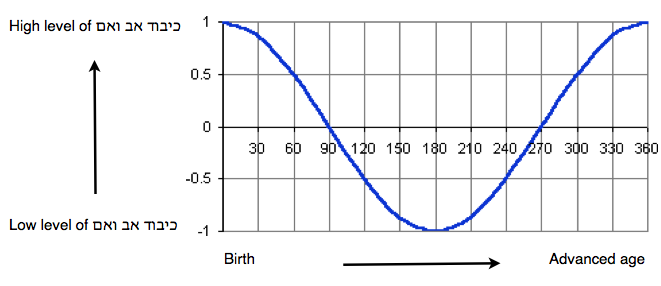








 pitputim
You must be logged in to post a comment.