You are a teacher. You are now teaching a (mainly) frum class of students who are 17 years of age. You are teaching Halacha. In and among your lesson you ask someone “What is Halacha” and you get the ubiquitous answer “It’s Jewish Law”. Fine. One student then says
it’s not really Law because unlike non-Jewish Law where there is no choice and every body must follow the Law, Halacha is couched within a system of free choice and it is the person who chooses to accept the yoke of heaven for whom Halacha becomes Law (albeit Divine Law)”.
Some teachers would be taken aback with this answer.
Sounds fine to me. Shabbos is not like a speeding law. You choose to keep Shabbos and we hope you do, and we try to educate you to appreciate Shabbos so that you do, but it isn’t like a speeding law which must be kept whether you agree or not. Indeed, one of the oft quoted answers to the question “Why is God invisible” has always been “because if he was visible, you’d have no choice but to keep His Laws (Halacha)”. Put simply, if He was visible, it would be like the proverbial policeman standing there with the speed gun wherever you were driving; you’d be hard pressed deciding to speed. Where would בחירה חפשית free choice be? Without בחירה חפשית there is no reward system and we may as well be מלאכים.
Sadly, I think that many teachers lack the basic sophistry to use the aforementioned non standard answer as a pick up point to actually engage the students into a deeper discussion that also expound on the actual term הלכה and what this means vis-a-vis the journey and way of life.
I’d suggest many teachers when faced with such an answer would exclaim
“ה’ ירחם, God have mercy on us all! I thought you came from a religious house, how could you possibly present a view which implied that Halacha was anything but mandatory Law”.
It’s lamentable. We need teachers who understand our youth and have enough sophistication to capture any moment or insight and make it a positive educational experience. What we often have instead is outmoded fossils who can only yell and condemn in response and thereby actually turn more people off than they turn on.
If you have never noticed, there are two traditions about how to pronounce לזמן at the end of the Bracha of Shecheyanu. Most Ashkenzic Jews in my experience pronounce it as Lazman with a patach under the Lamed (ל). This is also what you will find in most standard Nusach Ashkenaz Siddurim today. The other pronunciation, which is supported by the משנה ברורה and the ערוך השלחן based on the opinion of the רמ”א and מגן אברהם is to pronounce it as Lizman with a chirik under the Lamed. Apparently, this latter form is more grammatically correct. The same is apparently true of Bazman and Bizman.
I am no grammarian. I know almost nothing about grammar. I do harbour a trenchant fidelity towards Mesorah/Tradition, however. This is one of the rare cases where the אחרונים say one thing and the Minhag (Ashkenaz) is not to follow these אחרונים and to follow the סידור אוצרות התפילה
Chabad, amongst others, say Lizman and Bizman.
Picture the scene. It’s an Ashkenazi Shule, always has been. It uses an Ashkenazi Siddur (these days Artsroll but in times gone by Singer). The Rabbi of the Shule is a Chabadnik. He decides to direct the reader of the מגילה on Purim to say Lizman Hazeh and not Lazman Hazeh. When challenged, he says “innocently” that this is the opinion of the מגן אברהם etc.
Will the Lizman vs Lazman kill me? No. Will it make a huge difference in עולם האמת … I doubt it. But it works both ways. If it won’t make that much of a difference, why insist on a מנהג which clearly seems to not be מנהג אשכנז and use the paradox of אחרונים who are Ashkenazim as support? After all, for a Chabadnik, when there is a contradiction between their Siddur and the שולחן ערוך הגרש’’ז they follow the Siddur 🙂
It’s the thin edge of the wedge; that’s what bothers me. You just don’t go about lancing an established Mesorah with a chirik.
Disclaimer: I don’t daven Nusach Ashkenaz myself. I have always said Lazman, but I’ve noticed lately that my father seems to say Lizman, so I may well have to change to Lizman myself.
“To distinguish between the ritually impure and the pure” [Vayikra 11:47]. The Natziv writes, “Separating between the impure and the pure is a positive mitzva. Thus, if there are any doubts that can be analyzed in order to decide whether to permit something or prohibit it, the Beit Din is obligated by a positive mitzva to clarify the matter. Just as it is wrong to be lenient in a case where it is proper to be stringent… so it is forbidden to be stringent in a case where it is possible to be lenient.” [Haamek Davar].
Rabbi Shlomo Wolbe, the sage of moral teaching in our generation, wrote an entire chapter about this subject in his book “Alei Shur.” He writes that “frumkeit” (exaggerated stringency) is an egotistical urge which is not related at all to surrender to a higher power and that it does not lead to a closer approach to the Holy One, Blessed be He. This is because it is clear that the holy Shechina will not be revealed through selfishness, and anybody who bases his or her service of G-d on “frumkeit” is acting selfish. And even if he piles on himself many stringent actions — he will not become a pious person, and he will never reach a level of doing things for the sake of heaven.
The subject of stringency appears in the Talmud. For example, “Mar Ukva said: With respect to the following matter I can be compared to vinegar that was made from wine. When my father ate cheese he would not eat meat for the next twenty-four hours, while I do not eat meat during the same meal but I will eat it in the next meal.” [Chulin 105a]. The conclusion is that a person who is not at as high a level as his father was should not be as stringent as his father was.
This issue is discussed in “Pitchei Teshuva” where the author quotes from a book named “Solet LeMincha,” that one who wants to be stringent and take on a prohibition that was not accepted by the Amora’im, the rabbis of the Talmud, such as ignoring something prohibited if it is less than one-sixtieth of the total amount of food, is “like an apostate, and his loss outweighs any possible reward for this action” [Yoreh Dei’ah 116:10].
In “Chiku Mamtakim,” a book published in memory of Rabbi S.Z. Auerbach, a story is told of a student who asked if he was allowed to use a material for a succah that was permitted by the rabbis of Jerusalem but which was not approved by the Chazon Ish. Rabbi Auerbach replied that it is permitted, and he added: How can you be stringent? You are only a young student, you are not allowed to be stringent using your parents’ money, and you should also not cause extra expenses for your wife by being especially stringent. Rabbi Auerbach taught his students that if they wanted to be stringent they must first study the matter in depth. And they should be stringent only if they reached a conclusion that it was a halachic necessity, but they should never simply imitate somebody else. He said that the GRA was surprised to be considered to be pious. It is true that a pious man burns his fingernails after they are cut (Nidda 17a), but not everybody who burns his fingernails (as the GRA did) is necessarily pious.
Rabbi Amital said that a student once asked him why he was not stringent in a certain matter about which the Mishna Berura writes that a G-d-fearing person should be careful. Rabbi Amital replied that it is indeed written that a G-d-fearing man should be stringent in this matter, but that it is not written that stringency will lead to a greater fear of G-d.
In a letter to the ultra-religious Badatz organization in Jerusalem, Rabbi A.Y. Kook wrote, “It is important to note how careful we must be when we try to be stringent in matters for which we can be lenient according to the law, so that we will not incur a greater loss than what we gain.”
In respect of my earlier post on this topic, I spoke with Rav Schachter and he suggested that as long as it wasn’t a מתנת חינם for the gentile, as per the תוספתא quoted by the מאירי, then a ברכה should be okay. He told me that a gentile had asked them to pray for her husband who was ill. She gave them $100 towards this end. This was permitted, because there was no מתנת חינם. Rav Schachter then told me a cute story about R’ Grossman from Migdal HaEmek when R’ Grossman was asked by an Indian Swamy for a ברכה.
Rav Schachter said that one side to be מתיר was possibly as a result of the ברכה the student will speak highly about me and I’ll get some benefit from that down the track. In addition, if I used a לשון which also blessed the student “to become a good בן נח” then this was definitely מותר and was a better proposition thaנ wishing he would not stay an idol worshipper 🙂
Over the years, in professional University life, I am exposed to an interesting Hindu ritual, known in Sanskrit as Upasangrahan. An informal survey of alumni suggests that most Indians don’t know it by name, but they all know what it is. They rarely perform the ritual, and most do not perform it in Australia. I would estimate that in Australia it’s only 1 out of every 100 Indians who have the “guts” or להבדיל frumkeit to act it out. Here is one nice description:
“Indians prostrate before their parents, elders, teachers and noble souls by touching their feet. The elder in turn blesses us by placing his or her hand on or over our heads. Prostration is done daily, when we meet elders and particularly on important occasions like the beginning of a new task, birthdays, festivals etc. In certain traditional circles, prostration is accompanied by abhivaadana, which serves to introduce one-self, announce one’s family and social stature.
Man stands on his feet. Touching the feet in prostration is a sign of respect for the age, maturity, nobility and divinity that our elders personify. It symbolizes our recognition of their selfless love for us and the sacrifices they have done for our welfare. It is a way of humbly acknowledging the greatness of another. This tradition reflects the strong family ties, which has been one of India’s enduring strengths.
The good wishes (Sankalpa) and blessings (aashirvaada) of elders are highly valued in India. We prostrate to seek them. Good thoughts create positive vibrations. Good wishes springing from a heart full of love, divinity and nobility have a tremendous strength. When we prostrate with humility and respect, we invoke the good wishes and blessings of elders, which flow in the form of positive energy to envelop us. This is why the posture assumed whether it is in the standing or prone position, enables the entire body to receive the energy thus received.
The different forms of showing respect are :
Pratuthana: Rising to welcome a person.
Namaskaara: Paying homage in the form of namaste
Upasangrahan: Touching the feet of elders or teachers.
Shaashtaanga: Prostrating fully with the feet, knees, stomach, chest, forehead and arms touching the ground in front of the elder.
Pratyabivaadana: Returning a greeting.
Rules are prescribed in our scriptures as to who should prostrate to whom. Wealth, family name, age, moral strength and spiritual knowledge in ascending order of importance qualified men to receive respect. This is why a king though the ruler of the land, would prostrate before a spiritual master. Epics like the Ramayana and Mahabharata have many stories highlighting this aspect.”
Upasangrahan: Touching the feet of a revered person
Picture the scene if you will. An Indian (Hindu) student has arrived in Melbourne and enrols in RMIT’s Masters of Computer Science degree. It’s likely I interviewed and selected the student on one of my trips. After discussing various electives that suit the student’s background and ability, the session is over. As the student rises to leave my office, he asks if he can touch my shoes and receive a blessing. The first time it happened, I was taken aback and the process felt unnatural. After gently exhorting the student that there was no need to touch my shoes as I was not to be seen in any way as exceptional, it was easy to sense that the student was deflated. The student associated this ritual as a natural pathway before embarking on their two-year study at RMIT.
Having been born a כהן, conferring ברכות is second nature to me. This time, the נוסח needed to be somewhat more “free form” or avant-garde.
It never occurred to me that this episode might be part of a Hindu ritual. I always assumed that it was simply a sign of respect more akin to a stylised cultural handshake. The ברכה which I give is always a simple one wishing them הצלחה with their studies. Okay, I try to make it sound a bit more meaningful than that 🙂
These days I don’t proffer much enrolment advice; I tend to handle the more difficult cases where more questioning to ascertain the student’s level is required. One such student saw me last week. I had seen him in Bombay two years earlier. He had just landed after his Visa had been approved. It had been a struggle for him to show his finances. He seemed to be on cloud nine and had a dreamy smile etched on his face. We discussed his study plan, had a short chat, and then as he got up, he asked for a blessing. I knew the scene, so I stood up to give him a blessing. He placed his hands on my shoes and I tried to muster some meaningful words. After he left, I wondered if there was any halachic issue involved in what I had just done.
The מגן אברהם in אורח חיים סימן קפט:א writes:
כשיש עכו”ם בבית נוהגין לומר כלנו יחד בני ברית, וכתב הט”ז ביו”ד שאינו נכון דכיון שאומר כולנו יחד הכל בכלל אלא יאמר אותנו בני ברית כולנו יחד, והטעם לפי שאסור לברך עכו”ם דכתי’ לא תחנם
In other words, if there is a non-jew at one’s table during Benching (ברכת המזון) when we reach to the section of הרחמן, how should the הרחמן be phrased? This section of benching is about us blessing all those around the table. To take into account the non-jew, the words “he should bless all of us together, the children of the covenant” is suggested. The Taz writes that this is not an acceptable alternative wording because as soon as we say “all of us” that includes the non-jew and non-jews are not “children of the covenant”. Instead, the Taz suggests, “he should bless all the children of the covenant; all of us” and thereby this would exclude the non-jew from that ברכה!
Now, I can almost hear you say “hold on, what’s the problem here. Why can’t we bless a non jew at the same time as we are blessing jews. What’s the harm in giving a ברכה to a non jew!” The Magen Avraham quotes the Kol Bo and Mateh Moshe that giving “favour” or חן is part of the biblical prohibition of לא תחנם as mentioned in דברים פרק ז and described in עבודה זרה כ
When the Lord, your God, brings you into the land to to which you are coming to possess it, He will cast away many nations from before you: the Hittites, the Girgashites, the Amorites, the Canaanites, the Perizzites, the Hivvites, and the Jebusites, seven nations more numerous and powerful that you. And the Lord, your God, will deliver them to you, and you shall smite them. You shall utterly destroy them; neither shall you make a covenant with them, nor be gracious to them.
Other sources for this include: מחזור ויטרי סימן פג וסימן תצו, and ארחות חיים, הל’ ברכת המזון סי’ נז.
The שולחן ערוך הרב who generally follows the Psakim of the מגן אברהם writes this explicitly (ibid)
כשיש נכרי בבית נוהגים לומר ‘כולנו יחד בני ברית’ – להוציא הנכרי מכלל הברכה, שאסור לברך הנכרים שנאמר ‘ולא תחנם’. ויותר נכון לומר ‘בני ברית כולנו יחד’, שלא יהי’ בכלל הברכה אפילו רגע
See also Kitzur Shulchan Aruch 44:18.
Based on the ruling above, it would seem that I should not have blessed the student. Even according to those ראשונים who say that this prohibition only applies to idol worshippers, given that Hindus are arguably idol worshippers, for a Jew to perform a blessing as part of upasangrahan would seem to be forbidden because of ולא תחנם. Tosfos in ‘עבודה זרה כ also adds fuel to the fire by explaining that although there are really three prohibitions that evolve from וְלֹא תְחָנֵּם:
Not to sell land in Israel to a non jew
Not to give gifts to a non jew
Not to be gracious (e.g. to give a blessing)
Only the first one is limited to the שבעת העמים the seven nations mentioned in that Pasuk. The latter two—not giving gifts or being gracious— according to Tosfos apply to all non jews. The בית יוסף in חושן משפט סימן רמט paskens that the only exclusions are a גר תושב—someone who not only keeps the שבע מצוות בני נח but does so because they are commanded to by Hashem! In effect, if we follow the Psak of the Beis Yosef, בפשטות one would be forbidden to give gifts to a non-Jew, and would be forbidden to be gracious through praise, blessings etc. Now, if one lives in the State of Israel, you could perhaps find a way to live your life without ever confronting the latter two איסורים. A Jew who lives in the Diaspora, and who rubs shoulders with fine and upstanding non jews on an almost daily basis, either is doing the wrong thing or needs another Rishon to disagree with the בית יוסף and for their own Posek to decide to pasken like this Rishon against the Beis Yosef. There are other opinions such as the ספר החינוך, מצווה תכו who opine that the last two dinim of לא תחנם only apply to עובדי עבודה זרה which presumably includes Roman Catholics, Buddhists and Hindus.
It seems that a way to navigate the parameters of this difficult situation may be the interesting and somewhat controversial opinion of the מאירי on ‘דף כ in עבודה זרה. It’s worth quoting the Meiri in full:
כבר ידעת כמה החמירה תורה להרחיק עובדי האלילים מארצנו ומגבולנו ומבינותינו ובכמה מקומוח האריכה להזהירנו להתרחק ממעשיהם מכאן אמרו לא החנם, לא תתן להם חן, ר’ל לשבח ענינם ומעשיהם ואפילו יופי צורתם ותבניתם, וכן דרשו מכאן שלא נתן להם חנייה בקרקע, כדי שלא להתמיד ישיבתם בינותינו, וכן דרשו ממנו שלא ליתן להם מתנת חנם, שלא לגזלה למי שאנו חייבים לה ביותר כגון נר תושב והוא בן נח הגמור לקיים שבע מצות כמו שאמרה תורה לגר אשר בשעריך תתננה ואכלה או מכור לנכרי, ומכל מקום פרשו בתוספתא דוקא לגוי שאין מכירו או שהיה עובר ממקום למקום אבל אם היה שכנו או חברו מותר שהוא כמוכרן לו, כל שהוא מן האומות הגדורות בדרכי הדתות ושמודות באלהות אין ספק שאף בשאין מכירו מותר וראוי, וכבר אמרו שולח אדם ירך לנכרי
In simple terms the Meiri is saying that the reason we can’t give them gifts is because this is tantamount to stealing the gift from the Ger Toshav who is the one who is meant to get such gifts. In other words, instead of giving to the Ger Toshav, as the Torah commands us, we choose to give to סתם a non jew (who is not a בן נח/גר תושב) and this is not correct according to the Meiri’s understanding of the prohibition of לא תחנם. This is a controversial view because the מאירי brings no source for this insight, and to the best of my knowledge there isn’t another ראשון who shares this explanation. Meiri amplifies his view by further stating that even if the non jew is not a גר תושב but he is someone you know, as opposed to סתם a gentile, then you may also give them gifts. Why? Because it’s not a gift when you know the person. Normally, when you give something to someone whom you know then that person will reciprocate as time goes by. This is especially true in business relationships. Since they reciprocate, the (other) גר תושב doesn’t really miss out on anything because your financial situation has stayed neutral during this episode with סתם a gentile.
The מאירי continues and says that if we are wanting to praise a gentile, then it’s how we praise, that is the נוסח that we employ is the key to whether it is permitted or forbidden. If we see nature and praise the nature by showing nature’s connection to God , this is the desired approach and the particular blessings which חז’ל provided for us to use, do employ words which link back to God. In practical terms, if one was at a music concert and was overawed by the jazz piano of Keith Jarrett, then as long as one praised Jarrett and sought to link his ability as a blessing from Hashem, then this would seem to be permitted. However, to somehow imply that Jarrett alone, without any connection to The Creator had some Darwinian ability to play jazz piano, would be questionable according to הלכה. Poskim raise questions about the מאירי and his source (a Tosefta) and it would seem that nobody has the נוסח that the מאירי had. Others question the מאירי based on a ירושלמי but I’ll not get into that.
An interesting question was posted to Rav Waldenberg ז’ל, the previous Posek for שערי צדק hospital and one of the great Poskim of the previous generation, whose Tshuvos are always beautifully constructed. In 16:47 Rav Waldenberg was asked how the Rambam could praise Aristotle in the way that he did and at the same time rule that one is forbidden to praise a gentile! Rav Waldenberg finds a number of ways to permit praising, including the one we mentioned above: limiting the prohibition to those who are idol worshippers; having it only apply when you say it and like the person, and more.
I’m left with considerable feelings going both ways on this issue and I’d probably need to spend two solid weeks studying it in some detail in the hope that I can understand the various views with a deeper clarity. Even then, at the end of the day, I think it’s not a straightforward issue, and I’ll look to ask a renowned posek (e.g. Rav Hershel Schachter) whether I am indeed allowed to give a bracha assuming a wording נוסח along the lines of:
“May God, the only God, the King of the World, shine His countenance as you recognise Him and thereby grant you continued success in your studies, health and life.”
There are clear effects on a Jewish soul. The effects, both positive and negative, stem from actions and environment. We normally understand actions as constituting the performance of Mitzvos and good deeds (מעשים טובים). Mitzvos include the principal Mitzvah of Talmud Torah that underpins all Mitzvos and leads one to action (ideally).
Kabbalistically inclined Jews amplify claims that there are effects on the spiritual Neshama (טמטום הלב) stemming from the physical food we put into our mouths. Jews who are inclined towards rational interpretations of Judaism, are less likely to be concerned about meta side-effects to a soul from a physical item. Let’s take a concrete example. These days we mostly eat Glatt meat. Glatt means that the internal membranes of the animal are “cleaner” and, therefore, don’t attract attendant questions about whether a particular type of faulty membrane renders the animal Treyf. So called pious Jews prefer not to confront the question in the first place. If the animal is Glatt, then it is squeaky clean, there is no question about its kashrus, and one can be 100% sure that it’s Kosher לכל הדעות. Continuing this theme, the pious Jew may also contend that even if there is a questionable membrane that is considered kosher by 99% of Poskim, since 1% of Poskim consider the animal Treyf, then there is a 1% likelihood that it’s not kosher and one ought not take the 1% risk of damaging one’s soul by ingesting Treyf.
Rationalists or Halachic purists will dismiss such pious concerns. They may argue that the Torah presented a divine mandate for a Posek to decide Halacha. If a Posek then determines that the animal is kosher, then it is 100% kosher. This is a binary system; it’s either kosher or it’s not. There is no statistical likelihood of a soul being damaged by opinions which the Posek has determined do not influence his Halachic decision.
To put it a different way: the more kabbalistically inclined Jew considers that there is an empirical truth about the kashrus of each item we put in our mouths. Rabbis determining Halacha are mortal and do their best to decide whether that food item is kosher or otherwise. They “get it right” some times and they may “get it wrong” other times perhaps because they dismissed a minority opinion which may well represent the empirical kashrus status of the item. The more rationally inclined Jew will contend that this line of reasoning is baloney (sic). Food with a questionable status isn’t empirically kosher or otherwise. It is rendered Kosher by the decision of the Posek. The Halacha is famously not in heaven: לא בשמים היא and once food has the halachic kashrus imprimatur of a Posek, eat it gezindt aheit.
Machmirim milk products (yes, it's real) with 4 Hechsherim.
In keeping with Brisker Lomdus, there is another way to view this conundrum. The kabbalistically inclined may consider that Kosher is only ever about the food item itself (the חפצא). Even if a Posek (a גברא) declares that the food is Kosher, as long as a solitary opinion of note contends it is not Kosher, the חפצא cannot be transformed into Kosher by the Halachic determination of a גברא, and remains on the outer. On the other hand, those who adopt a solely rational approach to Halacha may argue that the חפצא has no independent status. The גברא imparts a status to the חפצא through determining Halacha according to the tradition, learning and shimush (apprenticeship) of the Posek. Once the גברא decides, the חפצא takes on an identity. It cannot have a dual identity vis-a-vis the single Posek.
The Ramo writes in יו”ד סי` פ”א ס”ז that when a baby ingests unquestionably non-kosher food, the food has a negative effect on the spiritual development and character traits of the child (See the Shach ס”ק כו). This is also mentioned in Shulchan Aruch but only in the context of a baby drinking milk of a nursing woman who has consumed non-kosher food. The Vilna Gaon (ibid) teaches that we learn this from baby Moshe who refused to nurse from a non-Jewish source (שמות רבה א, כה). The Yerushalmi at the beginning of the second perek of חגיגה relates that Elisha ben Abuye (Acher) went off the derech because Elisha’s mother had once succumbed to a sweet smell from Avoda Zara and this had permeated Elisha’s body and tainted his character traits. I just found a nice summary of the issue of the after effects from eating Treyf, on page 3 and onwards here.
A question arises on the Pasuk in Parshas Ekev, “על כל מוצא פי ה’ יחיה האדם” where the implication is that through the spiritual emission of Hashem, man lives. How does man live from spirit? Man lives from food. The Ari ז’ל explains that all things physical also have a spiritual component. Therefore, when a human ingests Treyf, the spiritual aspect of that food is also ingested by the Neshama of the person. As the Pasuk in Parshas Ekev goes on to say “כי לא על הלחם לבדו יחיה האדם” Man does not live just from bread alone. That is, man is not only sustained by the physical aspect of bread. After ingestion, Treyf will also nurture the soul.
What motivated me to blog on this topic, was a story I read last night about R’ Shlomo Zalman Auerbach ז’ל (as an aside the disgraceful revisionist artscrollesque wikipedia article about R’ Shlomo Zalman carefully avoids mentioning Rav Kook even though R’ Shlomo Zalman said, “When I say Maran or Der Rav, you should know that I only use this term to describe R’ Kook”. It is useful to compare the Hebrew wikipedia article which prominently mentions R’ Kook!)
Someone approached R’ Shlomo Zalman with a question on behalf of Seminary girls who are commonly invited to various houses for meals, especially over Shabbos and Yom Tov. Should the girls seek out houses which they know only rely on chosen Hechsherim? It is known that some houses will use Hechsherim which some will not touch with a barge pole. R’ Shlomo Zalman replied that God forbid we should suspect that Yidden are eating Treyf. As long as these are Frum people who use a Hechsher from a Rav who is a Yirei Shomayim, the girls should eat there. The questioner went on to ask, “but some people will not eat from some of the out-of-town Rabanut Hechsherim”?. R’ Shlomo Zalman replied in the same way: as long as the Rav Hamachshir is a Yirei Shomayim, the girls should eat from such Hechsherim. The questioner persisted and with more than a touch of Chutzpah asked, would you eat from such Hechsherim? At this point, R’ Shlomo Zalman became agitated and said
“definitely yes. If I go to a Bris or other Simcha and there is a Rav Hamachshir who is a Yorei Shomayim, even though I don’t personally use that Hechsher in my own home, I will even eat chicken from this Rav Hamachshir at the Simcha. חס ושלום to publicly cast aspersions on the kashrus of food being eaten at a Simcha let alone insult the בעלי שמחה. I know that even R’ Yosef Chaim Sonenfeld ז’ל ate meat from Sefardim at a Bris even though this was not his Ashkenazic tradition.”
This was R’ Shlomo Zalman. This was why he was one of few universally acclaimed personalities of the previous generation, despite the fact that he issued some controversial and innovative Piskei Din.
I asked myself after reading the story, wasn’t R’ Shlomo Zalman worried about the effect on his Neshama (טמטום הלב) after eating under the authority of a Hechsher that he didn’t normally use? The Kabbalistically inclined would perhaps have to agree with the more rationally inclined and answer that the food was Kosher מעיקר הדין so there could not be any damage to the Neshomo?
Perhaps the only danger would be to human beings who might be hurt by the implication that they were damaging their Neshomos after they see a Rav refusing to eat at their Simcha?
To understand the connection between the מצווה of צדקה and specifically the Yom Tov of Purim, we need to to understand the general מצווה of צדקה. The Rambam in the beginning of the tenth chapter of הלכות מתנות עניים exhorts us to be more careful in the degree of our observance of the מצווה of צדקה than all other positive commands. This is because צדקה—vis a vis the propensity to give—is an identifying trait of Avraham Avinu. As the Pasuk in בראשית יח יט states:
“For I have known him, that he commands his children, and his house after him and they have kept the way of Hashem, to do Tzedaka and judgment, that Hashem may bring on Abraham that which He had spoken concerning him.”
The Rambam’s statement is extraordinary. We could be forgiven for thinking that the defining characteristics of a Jew is seen through the Mezuza on their door, or through their observance of the Mitzvah of Tzitzis, Tefillin, Kashrus, and similar. Giving Tzedaka, however, is a universal humanistic value that is not just the domain of Jews, so why did the Rambam specifically choose Tzedaka as the characterising hallmark of the Jew?
In the second סעיף the Rambam goes on to say that if someone exhibits cruel or uncaring characteristics, then we might suspect that persons יחוס (intrinsic DNA) as a Jew. As is well known (and more recently popularised in Avraham Frieds’ ביישנים song) , the Gemara (יבמות מט) says
“סימני ישראל האומה הקדושה: בישנים, רחמנים וגומלי חסדים”
“The signs of the holy nation of Israel are that they are milquetoast, pitying, and bestowers of kindness.”
The Rambam stresses that all Jews are siblings and if one sibling does not look out for another, who will?
In this regard, the Megillah states the inspiring words:
וירא המן–כי אין מרדכי, כרע ומשתחוה לו; וימלא המן, חמה. ויבז בעיניו, לשלח יד במרדכי לבדו–כי הגידו לו, את עם מרדכי; ויבקש המן, להשמיד את כל היהודים
that Mordechai refused to cow tow to Haman. Haman was enraged, and whilst he would ordinarily have materialised his rage solely through punishing Mordechai, once he realised that (consistent with the Rambam’s view) Mordechai was an iconic symbol conjoined with Jews, כי הגידו לו, את עם מרדכי as a unified whole, then ויבז בעיניו he despised Mordechai more, and decided that he’d take it out on all Jews—להשמיד את כל היהודים.
This is also what Mordechai reminded Esther of when he said:
״אל תדמי בנפשך להמלט בית המלך מכל היהודים כי אם החרש תחרישי בעת הזאת ריוח והצלה יעמוד ליהודים ממקום אחר ואת ובית אביך תאבדו
“Do not imagine that you in the king’s palace can escape any more than all the Jews. For if you remain silent at this time, relief and deliverance will arise for the Jews from another place and you and your father’s house will perish.’’
Mordechai was stressing to Esther that Jews are responsible for each other; they are a singleton. It cannot be that a Jew’s fate is detached from other Jews anymore than a Jew can absolve themselves from their responsibility to another Jew. This theme, of the unity of the proverbial Jewish body is also channeled to a prospective גר. After detaching themselves from any prior nation or peoplehood, the גר is informed that they will now face anti-Semitism in the same way as any born Jew. The proverbial Jewish body has absorbed the גר and they are now a vital component.
This message—the importance of perpetuating the unity of the Jewish nation—as echoed by the מגילה and מרדכי and המן himself, motivated the Rabbinic enactment of the מצווה of מתנות לאביונים. Enveloped with this theme, the מצווה is not simply one of צדקה but is now the materialistic expression of a unifying act which by its purpose is consistent with not checking the credentials of the person one is giving the money to. On the contrary, the body is in tact, knows no difference, discerns no hierarchy and for this—the theme of כל ישראל עריבים זה לזה and אחדות—it is consistent to give to any Jew and not to question their bona fides.
I’ve always wanted to do something like this in real life, but my wife has vetoed it on each occasion. Probably a good idea too. So, a virtual מחאה is presented below.
The three weeks and nine days, during the months of Tamuz and Av respectively, are popular in Melbourne. The days are short, it is winter, and as a result we attract many Meshulachim, Hunters and Collectors (MHC). If you spend Tisha B’Av in Melbourne it’s certainly an easier fast than in Yerusholayim or להבדיל Monsey or New Square. The community in Melbourne is relatively small and tends to live in proximate enclaves. MHCs are generally ferried from house to house by local drivers equipped with potential donor lists made available (sometimes for a fee) to those MHCs who haven’t formulated their own list. Local drivers levy a percentage of the takings and tend to be exclusively from the Hungarian Charedi community of Adass because most MHCs seem to be of the Charedi persuasion. The local vans are generally strategically stationed 2 or 3 houses down from the house the MHC is visiting so that the home owner won’t see the local driver. During the high seasons, one can easily have 2-6 MHCs in an evening.
Meshulach
There are different approaches employed when dealing with an MHC.
Some good-hearted souls make time and sit down and listen to the MHC’s story and read their recommendation letters, offer a drink, give a donation from their M’aaser allocation for Tzedaka and then send them on their way, with or without a receipt, sometimes with cash and other times via a cheque
Some will do the same as 1., but do it quickly by not listening to the particular MHC
A new system has evolved in Melbourne whereby MHCs are able to get Chesed certificates which attest to their legitimacy. Many will now only give to MHCs who make the modest effort to obtain a Chesed certificate. Such systems exist in many other countries in the world and are designed to lessen the chances of fraudulent crooks masquerading as MHCs.
Some only donate to people or causes with whom they can identify. For example, they will not give to an anti-zionist kollel or to someone from Toldos Aaron or a Meshichist etc
Some will tell the MHC to “go and work for a living like I do”. After a while, they no longer get MHC visitors. These people can also be seen running out to the driver warning him not to bring such MHCs to their house again.
Others choose to pre-allocate their Maaser to chosen charities and have little left for casual MHCs.
I know of one Jew (wasn’t frum at that time) who used to have a large nude painting at the doorway of their home. Their clientel dropped dramatically after that expose.
I know of another Jew who suggests that the MHC “sing Hatikvah” as a precondition to his donation.
The last two approaches, and variations on such themes, are not recommended, despite their effectiveness 🙂
MHCs themselves can be convivial. Sometimes they are rude and uncultivated. We all have stories about the MHC who abused us or our wives because we didn’t “give enough”; or we “gave more last year”; or we refused to answer the door after the MHC woke up the family, pressing the doorbell after 10pm.
Most MHCs are “he”, although I have struck the odd (sic) “she”. In my case, I’m pretty sure she was fraudulent.
For over two decades, my personal approach was to
rarely listen to what they were collecting for (I didn’t need the justification)
never let someone leave empty-handed
give everyone a modest sum.
When the Chesed certification was mooted, I was opposed to the concept; I didn’t need to know anything about an MHC. Even if they were involved in chicanery or deceit, I concluded that they were a Nebech since they felt compelled to travel from door to door collecting. Most Melbourne Rabbis signed on to support Chesed, with the notable exception of some Charedi Rabonim. Those Charedi Rabonim provide their own letters it would seem which makes their behaviour incongruent unless their policy was to support “anybody”.
After some time, and after hearing stories about MHCs who had fleeced members of the community of many thousands of dollars, I began to slowly come around to the concept of giving exclusively to those who had allowed themselves to be scrutinised by the Rabbis of Chesed. I do make exceptions for those whom I know personally, of course, but will encourage them to obtain the certification nonetheless.
With Purim approaching there is a well-known מצווה of מתנות לאביונים. This is derived from the פסוק in the מגילה
What is the nature of this מצווה? Does it have the same strictures as the מצווה of צדקה? Is it different מצווה functioning under its own rules? The Aruch Hashulchan in סימן תרצד סעיף א notes, based on the Rambam in the second perek of Hilchos Megila and Chanuka:
ואין מדקדקין במעות פורים, לומר “זה ישר” ו”זה רמאי ואין צריך ליתן לו”. אלא כל הפושט יד ליטול – נותנין לו, ואינן צריכין לדקדק אחריו
We don’t exercise due diligence with our Purim Gelt.
We don’t scrutinise so that whoever stretches out a hand, we do give them something.
Why is Purim different? Is it so difficult to find two people who are genuinely in need of the monetary equivalent of two portions of food (the Gemara learns this out from the use of plural מתנות and then the plural אביונים) in the פסוק.
Note that for מתנות לאביונים a husband and wife or family is considered one unit for this purpose. A man is able to fulfill the מצווה through the prior donation of his wife, and vice-versa. On the other hand, if one gives two portions to a single husband and wife unit, then one has not fulfilled the מצווה because it is as if it was given to one entity.
The מצווה of מתנות לאביונים is considered more important than משלוח מנות in that if one is wondering whether to put more into their סעודה or more into משלוח מנות as a הידור then the הלכה states that it is preferable to spend more on מתנות לאביונים.
There is a cute apocryphal story about two Brisker בחורים who, as is well-known, are punctilious with the precise mode of discharging of each מצווה. As Brisker they are accustomed to subjecting minutiae to considerable scrutiny. In their zeal to fulfil the מצווה of מתנות לאביונים they proceeded to scour the local village to find a truly poor person (אביון). Unhappy with one couple because that couple’s house seemed to be not shabby enough to be qualified as “poor”, they searched on. They were unhappy with another couple who did live in a suitably decrepit tent of a house but seemed to have a couch that was too “nice” and hence under Brisker standards there was a question of the degree of their impecuniosity. Finally, at the very edge of the town, they chanced upon an old and sick couple living in a ramshackle abode, with the plainest of accoutrements. Now this was a “real” poor couple with all the הידורים according to כל הדיעות. With great joy, they informed the couple that they would present them with their money so as to perform the מצווה. Upon leaving, they were careful to also inform the couple:
“Please make sure that during the year, you don’t accept any money or help from anyone else so that next year we can come back and fulful the מצווה again through you!”
On Purim, there is a long-standing custom to give money to so-called כלי קודש: Rabonim, Chazonim, Shamoshim and the like (I wonder if that includes Kolel Yungerleit or not so Yungerleit these days!). Interestingly, the Aruch Hashulchan suggests that one does not fulfil מתנות לאביונים when passing on the envelope to this category of person because it is considered more of a חוב. There is an expectation as opposed to the more care-free and unpredictable mode of making somebody happy on Purim by providing them with enough money to make their Purim a happy one.
What if I want to use the money I have set aside for Tzedaka each year? Can one use their מעשר money, the money they have set aside for צדקה, and use this to fulfil מתנות לאביונים? This is an interesting question discussed by the מהריל. The מהריל concludes that one may not use מעשר money for this purpose. מתנות לאביונים needs to come from a different proverbial pocket. This separation of מתנות לאביונים from צדקה is perhaps consistent with the other הלכה of not performing due diligence in ascertaining who is genuinely poor for מתנות לאביונים.
What about poor people themselves? Do poor people have to perform מתנות לאביונים? If we say they do have to perform מתנות לאביונים then we can infer that מתנות לאביונים is like any other מצווה and just like a poor person must perform any other מצווה they must also perform the specific מצווה of מתנות לאביונים. This is the opinion of the ט”ז in או”ח סימן תרצ”ד. On the other hand the פרי חדש opines that a poor person does not have to perform מתנות לאביונים because מתנות לאביונים is really just a special class of צדקה for the day of Purim, and just like a poor person doesn’t have to give צדקה they also don’t have to give מתנות לאביונים.
צדקה
Another הלכה is also germane in respect of whether מתנות לאביונים is its own מצווה or is really a specialisation of צדקה on the day of Purim. Is one able to fulfil מתנות לאביונים by giving the money to a non-Jew? The Tur paskens that one can fulfil מתנות לאביונים by giving to a non-Jew. The Beis Yosef supports this with a quote from Gitin 61A where the מצווה of צדקה can be fulfilled by giving to a non-Jew. We observe then that the Tur holds that מתנות לאביונים is another example of the מצווה of צדקה and therefore מתנות לאביונים enjoys the same details in the halachic effectuation of the מצווה. Many argue with the Tur, and opine that one can not fulfil מתנות לאביונים by giving the money to a non-Jew because מתנות לאביונים is a separate מצווה for Purim which is tied to the word רעיהו in the Pasuk, which means רעיהו במצוות.
Of course, I am not a Posek by any stretch of the imagination, but I am pretty certain that on Purim those of us who do submit to a determination of a poor person’s bona fides through a Chesed certificate, should suspend such considerations on Purim day itself.
Ask your own Local Orthodox Rabbi, of course (perhaps when you slip him an envelope on Purim 🙂
Okay, so I’ve received a short essay that researches the origins of the Mezinke. I’m advised that the essay is available in some libraries. It is entitled “Mizhinke” and is by R’ Levi Cooper (ex-Australian, ironically). I’ll summarise some new information gleaned therein.
The custom appears to not be mentioned in any Jewish sources (as we surmised)
The song appeared in a compendium of songs by Warshavsky in 1900 under the yiddish title “Notes to the Jewish folksongs of M.M. Warshawsky”.
It is alleged that the song became well-known through Theodor Bikel’s recordings (Click here if you want to listen to a preview through iTunes)
It would seem that Warshavsky intended the song to be performed at the Bedeken. The song was originally known as “Di Rod” (The circle). Indeed, the phrase “Di Rod Di Rod macht gresser” is part of the first verse (that I sing) although it is the third verse in the original. I only sing two verses (those that mention Hashem) not that any of the other verses are “wild” in anyway. My own feeling is that it was moved from the Bedeken to the wedding party itself because the Bedeken is an halachic religious ritual (indeed, I think the Rav would sometimes announce the Eidim for the Bedeken to be sensitive to the position of the מרדכי as brought by the ט’ז who held that the Bedeken was actually the נישאוין, the wedding proper!) and this tune really didn’t fit in at the Bedeken.
I understand that R’ Cooper hopes to further update his booklet at some stage.
In conclusion, I stand by what I wrote in the first part, namely, that I can see no reason halachically why this practice may not be performed and indeed continued. As some have pointed out, they see it as one of the more beautiful parts of a wedding party and they hope to be healthy and do it at their own simcha. That being said, there is, so far, no evidence to suggest it was some ancient מנהג ישראל. In all likelihood it was (as Joel Rich put it) an acculturation, like the practice of Rabbis giving drashos every Shabbos.
If I get a chance to ask Rav Hershel Schachter, I will do so, but in the meanwhile, I will happily continue doing it, although I won’t call it a מנהג ישראל. What will I call it? Stay tuned to that next Simcha.
I’d like a dollar (Tzedaka of course) for each time I’ve been asked to perform the Mezinke. For those who haven’t come across the Mezinke, it comprises of a special tune, lyrics, and little ceremony performed when the youngest daughter is married (די מיזינקע אויסגעגעבן).
It is generally presumed that children, especially girls, are married in order of age, and when that last girl has “flown the coop,” it is a happy occasion signalling a milestone for parents and any grandparents. The custom has evolved so that some also perform this dance when the youngest male is married. In that case, the same dance and little ceremony takes place, except that the word Mezinig instead of Mezinke is used in the lyrics.
Musicians of yesteryear
Recently, I performed at a nice Chabad wedding. Of course, in keeping with their הנהגה the wedding was segregated in respect of both dancing and seating. At the commencement of the 3rd dance bracket (yes in Australia we even have a 4th dance bracket), I announced (in keeping with a request from the בעלי שמחה) that the Mezinig ceremony would now take place. I announced that it was a מנהג ישראל in some places to perform this dance. The parents of the חתן sat down on the women’s side of the dance floor and the children performed the traditional dance around their parents. Normally the dance is accompanied by brooms signifying that the youngest is now proverbially swept out of the house. Some put garlands on the head of the parents, although that is rare.
At the end of the evening, as I was packing up, a respected Rav approached me and informed me that I was gravely mistaken. Not only wasn’t it a מנהג ישראל the practice was likely derived from עבודה זרה. In the least it was a מנהג הגוים and in this Rav’s opinion it was אסור to host the dance/ceremony because of חוקת העכום. Taken aback by this sudden cause célèbre, I asked the Rav how he knew it wasn’t a מנהג ישראל. He responded that his own מחותן had researched the matter and discovered that the Mezinke had no source in יהדות and was derived from גוים. I was somewhat shocked. I hadn’t heard this in over two decades! I responded meekly that this is something that was done for many years and I had simply assumed that it was a מנהג ישראל or at least מנהג from Ashkenazim. I don’t recall ever doing it for Sephardim, and there is no Ladino equivalent 🙂
An internet search proved to be interesting but somewhat inconclusive. The well-known mendele group which revels in the yiddish language, had various contributions:
“Martin Stern [Mendele 14.039] asks about “mezinke” and “mezinik.” His Belzer neighbor had it sort of correct, and I cannot weigh in on local pronunciations there, particularly in Ukrainian. But Harkavy refers “mezinke” to “mizinke” and “mezinik” to “Mezinietz”, and that gives us the origin.. “Mezinietz” is the littlest finger or the littlest toe”
or
“One probably needs to first go to the masculine form, which is muzhinyik. This appears to be “The little(est) man” from the Russian, moozh, for a man. This is the root for muzhik, which is a peasant. It was probably feminized in Yiddish by the usual mechanism of attaching a German suffix to a male noun.”
or the perhaps more stretched explanation
“I always thought ‘mezinek’ to be a corruption of the posik, ‘ki ven zkinim hi loy’. It is in berayshis (Genesis) where it tells the story of Yosef and his brothers. It says that Yankev liked Yosef more than his other sons because he was a child born to him in old age. The keyword here is ‘zekinim’ which has its root in ‘zokayn’, Hebrew for ‘old’. I always took it for granted that ‘mezinek’ is a corruption of the above with the ‘n’ changing places with ‘k’. Is this normal in language development? And is it possible that the Ukrainian and Russian words cited in connection with ‘mezinek’ have their roots in the Hebrew? I also think that the image of the mezinek may have its origin in the above biblical story. Yosef and Binyomin, two children born to their old father, are given special treatment. Yosef gets a special shirt while Binyomin is never allowed out of sight. The whole story is built around Yosef being punished for behaving like a spoilt kid, a trait of a mezinek, Yankev’s reluctance to let Binyomin go and Yehuda’s intercession on behalf of his youngest brother. As regards the tradition of dancing with a broom, mentioned by Fay Lipshitz [6.223], the minheg is alive and dancing all over the world in frim communities. As the weddings have a mekhitse I only see the father dancing with the broom.”
Then there is this archived post from the respected hirhurim blog:
“According to Hankus Netsky, founder of the Klezmer Conservatory Band and professor of Jewish music at the New England Conservatory, the dance is a Ukrainian custom, brought to America by Ukrainian Jews“
and which went on further to note that
“And yet there is one puzzling thing about this, which is that while the mezinke tantz is said to be a traditional one, the lyrics and music of “Di Mezinke Oysgegebn” were written in the second half of the 19th century by the songwriter Mark Varshavsky, who also composed the much-beloved “Oyfn Pripetshik.” Is the dance not as old as it is thought to be? Or was it (as is more likely) performed to different music before “Di Mezinke Oysgegebn” was written? I would be curious to know.“
Let’s assume the “worst” scenario, namely, that it’s really derived from the Ukrainian Krenzel (Crown) dance, and that the words were Judaised by Mark Warshawsky. Interestingly, we see that despite the seeming secular origin, one of the correspondents on mendele gave testimony that the Mezinke was indeed practiced among “frim communities.”
I have played at all manner of wedding: from the most extreme chassidic to the most extreme secular. I don’t recall performing the Mezinke at a Chassidic wedding of any variety so it’s likely that it’s not part of the Chasidic panoply for weddings. That’s only a Melbournian observation though. The Chassidic weddings I play at are either the Hungarian variety where חדש אסור מן התורה or Chabad. I don’t have any reference to the Mezinke taking hold in Hungary. There are, of course, unique quirks belonging to Melbourne that are indeed derived from Poland, such as the singing of “Lo Mir Aleh”
although we don’t do it with the pomp or groove in the youtube above 🙂
Certainly the idea of a father and mother being seated on either the men’s or women’s side with the children (men and/or women) dancing around them and kissing their parents as they circumlocute is not something I’d expect to see at a Chassidic wedding, Chabad or otherwise. If anything, Chabad are stricter in that they don’t even have a tradition to do the controversial Mitzvah Tantz at the end of the evening, where the Rav and others dance with the כלה via a connecting Gartel, carefully avoiding a furtive glance at the כלה.
On the other hand, Litvaks or Misnagdim often encourage the bride to be brought into the men’s side so that the men may dance around her and be able to fulfill כיצד מרקדים לפני הכלה. My understanding is that Litvaks insist on this practice to be sure that they are מקיים a מצווה to be משמח the כלה and not just the חתן. Chabad doesn’t practice either of these two מנהגים. The most I have seen is the lifting of the כלה on a chair or table above the Mechitza at some stage.
Over the weekend I discussed this with a few people, and they affirmed that they had seen the Mezinke performed at frum weddings in the USA. Of course, I have seen this at centrist orthodox style weddings. I don’t have the time to conduct a proper exhaustive academic search revolving around the origins of the Mezinke, beyond what I quickly found and presented above. I have, however, emailed a number of world-renowned academics who I expect might know. At this stage, I think it is fair to say that there is no evidence to suggest that it is a(n old) Jewish מנהג.
What about the allegation that dancing the מיזינקע constitutes an act of חוקות העכום and is therefore prohibited? My feeling is that unless there is an explicit link between the מיזינקע and a ritual of עבודה זרה it is difficult for me to understand how this could be construed as חוקות העכום.
Tosfos in עובדה זרה י’א contend that one of two conditions need to hold in order for a custom to constitute חוקות העכום:
The custom has a link with idolatry
The custom has no link with idolatry but is foolish (eg the Ukrainian Wedding Custom of abducting the bride!).
We don’t pasken like Tosfos, however, even if we did, one would need to illustrate that there is a link with perhaps Roman Catholicism or Pagan rite given a derivation from the Ukraine, or other form of idolatry if not these. I don’t think anyone considers the מיזינקע ceremony “foolish” with the possible exception of some Hungarian Charedim who consider anything derived from Goyim as foolish (unless one can make a dollar from it).
The רמ’א in יורה דעה קעח:א paskens like the מהרי’ק that as long as a custom
has no link with idolatry
has a reasonable explanation
it does not constitute חוקות העכום. Again, unless a link between the מיזינקע and idolatry is found, I cannot see how it can be considered חוקות העכום.
It is known that the Vilna Gaon יורה דעה קעח:ז is extreme with his definition of חוקות העכום to the extent that he argues with the רמ’א. According to the Gra one must show that a מנהג has explicit Jewish roots, otherwise it is always considered to be חוקות העכום (by default) and prohibited. I think I saw in the name of Rav Menashe Klein in his משנה הלכות that the Gra’s reasoning was that in the absence of alternative information, the Gra is concerned that there might be an etymology from idolatry and so the Gra is always prudent to be מחמיר. Rav Y. Y. Weinberg in the celebrated שרידי אש ג:צג lists those who disagree with the Gra. According to the Vilna Gaon the מיזינקע would seem to be אסור as we have no evidence that it was a מנהג ישראל מדור דור. From my experience, however, we don’t follow this opinion of the Gra in normative halachic practice.
There is perhaps one more consideration. What is the הלכה if there is a ceremony that is no longer in use by גוים? In other words, even if we assume or are concerned that a practice used to be performed as part of some idolatrous service (and there is no evidence to suggest this is the case with the מיזינקע) what does the הלכה say about such a practice in our day and age, when the practice is no longer performed by גוים. In other words, how can something be considered חוקות העכום if the practice no longer has anything to do with גוים! Additionally, the widely held opinion seems to be that the פסוק of ובחוקותיהם לא תלכו is parametrised around both space and time: if we live in a different time or different place where a מנהג or חוק is no longer practiced then the איסור doesn’t apply (see מנחת חינוך, רנא:א). It could well be argued that perhaps the only people in the world who now practice the מיזינקע are Jews, and as such, it should be considered completely מותר?
Disclaimer: I am not a Posek. All of this is simply me thinking out loud. Ask your posek, for an authoritative Psak.
In an article reprinted in Matzav.com, Rabbi Aryeh Ginzberg admirably goes to lengths to show how comments on articles on the internet can be so horribly insensitive. He is right. He then calls them “digital murder”. Rabbi Ginzberg is on the money when he notes that comments can be off and grossly insensitive. So what do I object to? After all, he’s urging people to be more sensitive and nice?
I don’t disagree with the notion of people displaying a more civil and generous tone when they address topics, but what has this to do with being “digital?”. I discern the spectre of a new ogre. Yes, that big bad internet is responsible for all this digital loshon hora and digital rechilus and proverbial digital murder.
Hello? This has little to do with the internet. If people make these comments on blogs they make them at home, at school, in the yeshivah or in the alley way. Is this the first time we have met people making snide remarks behind other people’s backs? It’s really about poor chinuch, fake chinuch, corrupt chinuch found in our “holy” schools and our “holy” homes. If we or our children are making insensitive remarks then it is deflective to focus on the vehicle that enables the promulgation of those remarks, as if in some way the vehicle might be (partly) responsible. The vehicle changes from generation to generation. The problem is ubiquitous.
Pen and Paper. Yes, they can be used to write chidushei torah but they can also be used to promulgate insensitive remarks and yes, even pornography. Ban the pen, ban the paper?
Telephones. Yes, they can be used to carry nice messages and blessings and Torah and all things good. They can also carry the worst loshon horah that can destroy someone’s life. Ban the phone?
And now we have the Internet. Well, the internet can be used as a kiddush hashem. Will we ever read about an askan or gadol praising the incredible harbotzas hatorah that has occurred because of the internet? I doubt it. People will just concentrate on the negative side and seek to ban it. This “digital murder” is another attempt to put a nail in the internet coffin. It won’t work.
The web is here to stay. We should worry about our children making such comments, not the type of paper they use.
PS. Starting a chabura in mussar is not the answer to this general problem. It’s about חינוך at an early stage and an example at home.
People do not agree. This is a fact of life. There are, and always will be, emotive issues which evoke strong disagreement. Sometimes the disagreement can result in feelings of aggression even hate between antagonists. Jews are no different. If anything, because there are many issues of substance lingering around our Daled Amos, there is perhaps more opportunity, perhaps even propensity, to viscerally agree to disagree.
Rav Dov Lior, Chief Rabbi of Kiryat Arba and Hevron
Two recent examples of differing approaches to courage and expressing the truth of one’s convictions confronted me this week. The first involved Rav Dov Lior, Chief Rabbi of Kiryat Arba and Hevron, and Rosh Yeshiva and head of the Rabbinic Council for Judea and Samaria. Rav Lior is considered to be a star pupil of Rav Tzvi Yehuda HaCohen Kook, z”l, and one of the brightest among Gush Emunim style adherents of the concept of a greater Israel. Born into a Belzer family and subsequently orphaned, Rav Lior was touted as an Illuy even amongst the Charedi population of the State of Israel. Rav Lior and others gave their Haskama to a book which was considered to be “inciting” by the police and other authorities. Refusing to back down, Rav Lior is now likely to be arrested. Rav Lior claims that the arrest warrant interferes with his right to offer religious approbation to a book related to Torah thoughts and principles.
You can agree or disagree with Rav Lior, but you will never die wondering what his views are on a particular topic. He says it like it is, and his views are like he says. There is no diplomatic licence employed to bury his thoughts or camouflage his principles for fear of a physical or financial backlash. Rav Lior, his supporters and students, do not cower underneath rocks like proverbial green moss, afraid of the consequential glare of sunlight. Rav Lior subscribes to a philosophy that sees the hand of God in the creation of the State of Israel.
Diametrically opposed to his views are those who endorse the position of the late Rebbe of Satmer, Rav Yoel Teitelbaum z”l. Rav Teitelbaum held that the primary (perhaps only) reason for the Holocaust was God’s “retribution” against the actions of zionists who dared transgress the 3 oaths. These views, largely held by the Hungarian charedi population, are considered utterly abhorrent by many. It is simply beyond comprehension to fathom the concept of 6 million Jews murdered, gassed and burned and amongst them תנוקות של בית רבן who were hurled against walls to have their skulls fractured, all because God was angry that they dared defy British anti-semites and seek to re-inhabit ארץ אבותינו. Whatever the case may be, we know where the Satmer Rebbe stood on this issue in the same way that we know the views of people like the Neturei Karta’s R’ Moshe Beck.
In summary, one will not die wondering what Rav Dov Lior or להבדיל R’ Moshe Beck’s views on issues are. They have the courage of their convictions to openly state their opinions. Fast forward now to the following video of a local identity, the brother of R’ Moshe Beck, Rav A. Z. Beck, the Hungarian Rabbinic leader of a separatist Haredi group in Melbourne.
STOP PRESS:
It seems the video above was removed from youtube. In some sense that says plenty. Those of you who wish to see the video, may download it
What are their views? Do they think Hitler and the SS were sent by Hashem because of the Zionists and their rebellion against the Shalosh Shavuos? Is this the view of that community as a whole? To be sure, there are exceptions, but is this the mainstream view? Do they contend that since most Jews in Melbourne consider themselves Zionist or pro State of Israel that these Jews are all Kofrim (apostates)? Is it permitted to engage in business with regular Jews in Melbourne, or is there some blanket overarching permission when it comes to making money? It is alleged that the Melbourne Rav Beck distanced himself from his brother. To what extent? Is it only the fact that the brother openly states his opinions and demonstrates the courage of his convictions? Is it only because the Monsey brother kissed Ahmadinajad ימח שמו? Is what is said in private also said in public?
Some of you would have read that there has been calamitous flooding in parts of Northern Australia (Queensland). The tail end of some of that activity reached Melbourne on Friday. Of course, such events always occur either on Shabbos or 2 minutes before Shabbos comes in. It’s like the injuries that people seem to find; those last-minute emergencies couldn’t have occurred 2 hours before Shabbos, they have a way of happening 2 nanosecondsinto Shabbos. Hakadosh Baruch Hu seems to have an unnatural sense of humour כביכול and wants to make sure the Torah is always relevant and that we have to wrestle with Hilchos Shabbos together with all its consequent complexity.
Torrential Rain in Melbourne
We had an honoured guest on Friday Night, and as Shabbos dared impose itself on the torrential downpour, we realised we’d be sitting under the sole illumination of the Shabbos licht, once the electricity flickered and departed.
The electricity returned about 1.5 hours into the meal. My wife usually transfers the soup pot from the flame into the oven just before shabbos. This meant that given the “ovenly” insulation, her delicious lockshen mit yoech were not cold.
We started to wonder about food that would subsequently be “warmed up” once the electricity came back on when I was informed of an incident that had occurred the previous week. At a family lunch after the Aufruf of my cousin, a fuse decided to fail thereby endangering the obligatory Glezele Teh following lunch. At worst there would be no glezele and at best it would be rendered a tepid taciturn excuse for a hot drink. The lunch was formally catered under the supervision of the hungarian charedi establishment in Melbourne. There were ample goyim to enlist should that have been deemed appropriate. The mashgiach was a young unmarried man, no doubt a Yorei Shomayim, but I am not sure whether he had come across or been trained to address this situation before. I had already gone home, so I don’t know if the caterer himself was still there. The caterer would undoubtedly have come across this issue in the past and would have discussed it with the Rav Hamachshir of the Hungarian Charedim, Rabbi A. Z. Beck, Shlita.
It seems (I haven’t been able to ascertain whether this is precisely what happened) that a goy was enlisted to save the urn by flicking the fuse switch. Subsequently, it was ruled (I assume through the authority of the mashgiach), much to the chagrin of those pining for a Gloos Tay, that the Urn could no longer be used, and that no tea of coffee would be available.
I had a few simchas to perform for during the week (ברוך השם) and coupled to my day job, you can well imagine that by the time our Friday Night Seuda was over, I was snoozing ever so comfortably with my Neshoma Yeseira. On Shabbos morning I began looking to see if the urn sheyla had been addressed in the halacha seforim. Eventually, I did find it in ספר מאור השבת in חלק א at the back in the letters to R’ Shlomo Zalman Auerbach z”lwhere the author, Rav Yadler, had asked a similar question to R’ Shlomo Zalman.
In a short response, R’ Shlomo Zalman wrote that if a Goy was asked about the fuse and he understood to flick the switch so that (in the Goy’s mind) a range of appliances (eg lights) would come on, then as long as the Goy was not specifically doing it for the purposes of the urn (food) and the re-ignition of the urn was simply a side-effect, it would be permitted to benefit from the hot water of the urn. On the other hand, if the fuse was tripped and panic set in and the goy was effectively asked to fix the fuse so that the urn would go back on (very likely if the goy was in the room hearing all the commotion) then according to R’ Shlomo Zalman, in the latter case it would then be forbidden to benefit from the Melacha of the Goy.
Of course, this doesn’t factor in if we say יש בישול אחר בישול with a דבר לח even if נצטנן לגמרי for which there are some Rishonim who are lenient but whose Halacha we don’t follow. It also doesn’t factor in if there was a need for hot water for a חולה שיש בו סכנה in the form of a young baby, etc.
Anyway, I thought it was interesting. Your thoughts? Mekoros?
Like me, I’d imagine that many readers have found themselves at a Simcha of some sort, where the בעל שמחה directs that a letter conveying blessings (מכתב ברכה) is read at a pre-determined moment. I’ve only seen this at Chabad Simchas; perhaps it happens elsewhere. Of course, the so called letter, today, is not real in the sense that it was written to the בעל שמחה by a living person, כמלא המובן. That is not the issue, however, that I’d like to discuss here. Let’s rewind the clock to the days when the Lubavitcher Rebbe ז’ל was in good health and the בעל שמחה had received a personal מכתב ברכה.
What happens, in my experience, is that all those present at the Simcha are requested to stand as a measure of respect. Someone is then chosen (it is considered a כיבוד) to read the letter and (usually) translate it. The person who reads the letter will generally don a hat and jacket, and will often gird himself with a Gartel. I surmise that this is because they see the ברכה from a Rebbe as being on par with the formal utterance of a תפילה, for which they would also normally be attired with hat, jacket and (once married) gartel.
What about the rest of us? How should we relate to this phenomenon? Is it like להבדיל when people are asked to stand for the national anthem at a Simcha? What occurs when we hear the audio of the Torah/Bracha of a great Rav, or even see the video of the same? Do we also stand? In my experience, we do not stand. Indeed, after the last Rebbe of Chabad passed away,many Chabad Shules play videos of the Lubavitcher Rebbe, immediately after Havdala. I am happy to stand corrected, but I haven’t seen too many people standing at attention throughout the presentation of such videos. So, it can’t be the mere fact that a Bracha is heard or a Rebbe is seen. There is more to it than that. Why is it different at a Simcha?
I postulate that the person reading the letter is a quasi-shaliach of the (Lubavitcher) Rebbe, and, as such, since שלוחו של אדם כמותו, they perceive a level of holiness in delivering a message and dress appropriately. Those who hear the message imagine that the (Lubavitcher) Rebbe himself is standing there and delivering the ברכה to the בעל שמחה.
Sephardim have a custom to kiss the hands of a Talmid Chacham
It might then be considered rude then for others to choose not to stand at such a time if they are specifically requested to stand. One could, of course, argue that now that things have changed, and the ברכה is no longer explicitly written for the purposes of the particular שמחה and בעל שמחה that by standing one is perpetuating denial, at best. Some might argue that one should davka sit to make this point and attempt to cajole people into accepting a reality that they are understandably uncomfortable with.
I have always had a different issue. Not for any reason of present צדקות but simply because it’s a הנהגה that I accepted בימי חרפי when I was learning in Israel, I stand during קריאת התורה. Yes, it’s a חומרה and doesn’t match what I’ve become since those days, but I digress. I wonder, then, how could it be that those people who don’t stand during קריאת התורה do stand during the reading of a מכתב ברכה?
The גמרא in :מכות כב says אמר רבא כמה טפשאי שאר אינשי דקיימי מקמי ספר תורה ולא קיימי מקמי גברא רבה. The message from that Gemora is that there are silly people who stand for a Sefer Torah but don’t stand for a great person (Talmid Chacham). The Beis Halevi in his introduction to his Tshuvos, הקדמה לשו”ת בית הלוי states דהת”ח לא הוי בבחינת תשמיש קדושה רק בבחינת עצם הקדושה
In the words of the Beis Halevi, certainly not a Chassid, the Talmid Chacham is to be considered Kedusha personified. I imagine that this perhaps explains why there is a specific mitzvah to stand in the presence of a Talmid Chacham in the same way that one would stand in front of a Sefer Torah. It is true that a Talmid Chacham can be Mochel on that Kavod and tell you not to stand for him, and there is no such concept of Mechila for the honour of a Sefer Torah, but that is parenthetical.
An explanation then is perhaps that when a Chassid reads/hears a letter and then “sees” his Rebbe, he or she stands in the “presence” of their Rebbe, כביכול.
I wonder then whether it might also be proper to stand for קריאת התורה on this basis. At least one should be able to see (the original) Moshe Rabenu in front of one’s eyes, transmitting Hashem’s word, and standing thereby accordingly?
Melbourne, Australia became home to many Polish Jews after World War 2. According to some, the number of Polish Jewish refugees who landed on Melbourne’s shores, was second only to the State of Israel. What נוסח did they or their parents daven at home? Regrettably, it’s probably too late to answer this question accurately. To be sure, most such Jews were religiously estranged and caught between feelings of disbelief that Hashem’s world did co-exist with a devastating Holocaust designed to wipe out our and their loved ones, and feelings of benign thanks for the fact that they had been spared and survived. In among these competing and contradictory feelings, the Polish Jewish survivor, in the main, maintained their connection with organised Jewish prayer. In the least this was manifested by attendance at Yizkor services, Yom Kippur and Rosh Hashana.
For most of my formative years, I sat among this harrowed and harrowing older generation of Polish Jews at Elwood Shule in Melbourne. Rabbi Chaim Gutnick
Rabbi Chaim Gutnick
was the shepherd to that flock of Holocaust survivors. This is etched indelibly into my psyche and looms as a pervasive shadow tracking many of my thoughts and actions.
After returning from learning in Israel, I became accustomed to engaging in conversation with many of the survivors. They, of course, were only too happy to regale with stories of their Yichus—how holy their Zeyda/Booba or Tatte/Mama was.
Melbourne’s established Shules, derived from Anglo communities all davened נוסח אשכנז. I had suspected that many, if not the majority, of the survivors, however, had davened נוסח ספרד at home. Yet, they had seemingly quietly accepted נוסח אשכנז as “close enough” and didn’t make a fuss. There were one or two shules that were exceptions to this rule and there were “celebrated” splits or machlokesin over the choice of נוסח. For example, Mizrachi Shule, under Rav Abaranok z”l, used to allow either נוסח depending on who occupied (forcefully or otherwise) the Amud. This was based on a personal psak to Rav Abaranok by R’ Moshe Feinstein z”l. I remember Rav Abaranok telling me that Reb Moshe had told him that it was better that there were no fights and a mixed up נוסח, rather than ongoing fighting and an unaccepted נוסח. Rav Abaranok, of course, was Eidel. A Musmach of the Chafetz Chaim was never going to co-exist with Machlokes. It was anathema to Rav Abaranok, which is why his legacy and his memory is universally acclaimed across Melbourne, by all types, to this day.
Rav Baruch Abaranok
Returning to Elwood Shule, I used to approach the different mispallelim and ask a simple question (in Yiddish)
“what did you say at home “כתר or נעריצך?”
I found that probably 7 out of 10 said כתר. My father also said כתר in his home town of Rawa Mazowiecka, but at Elwood Shule he just davened the נוסח of the Shule. Many children mistakenly assumed that their family tradition was to actually daven אשכנז. In reality, my experience based on the Elwood microcosm (which may well also be a statistically sound sample) was that the majority actually derived from families that davened נוסח ספרד. This was yet another example (at least in my mind) of the peripheral damage to Mesorah that had been caused largely by the dislocation due to the Holocaust. I wasn’t ever going to buy into it, as it would be a capitulation to the damage caused by the tyrant, yimach shemo vezichro. שמע בני מוסר אביך ואל תיטוש תורת אימך
As an aside, I sometimes played a little game during Kedusha. If I started saying כתר audibly, I found many of the older survivors around me automatically said כתר as well. It was an exercise in pavlovian reactivity, as if to prove to myself that I had discovered some recessed mesora and was responsible for bringing it out to the open once more. But what is the Halacha? What should you say in קדושה if you daven a different נוסח to the ציבור?
We know that if one is the Chazan in a Shule that davens a different נוסח to one’s own, that you should adopt the נוסח of the Shule. During the year after the Rav lost his father Reb Moshe Soloveitchik z”l, the Rav paid one visit to the Rayatz z”l of Lubavitch. After they had completed their meeting, they went into the Lubavitch Beis Medrash to daven Mincha. The Rav, being a chiyuv, went to the Amud to act as שליח ציבור. Just prior, the Rayatz “reminded” the Rav that even though the Rav followed the customs of the Vilna Gaon, that he had to say the loud Shmoneh Esre, Al pi Nusach Ari (the version of Ari that Chabad uses). The Rav immediately replied that the Gaon’s talmidim, such as the Peas Hashulchan and R’ Chaim Volozhiner testified that this was also the Psak of the Vilna Gaon, and so the Rayatz had nothing to worry about 🙂
So, if you find yourself in, say, an אשכנז Shule, and you daven נוסח ספרד, are you permitted to audibly answer כתר in Musaf Kedusha and not נעריצך? Should you say נעריצך like the ציבור? Should you say כתר but do so quietly? May you blurt out כתר even though everyone is saying נעריצך? This question was addressed by Reb Moshe Feinstein in Igros Moshe (Orach Chaim 2:23) where he paskened that one should say exactly what the Chazan says, in responsive Kedusha. So that if the Chazan/ציבור says נעריצך it would be wrong to blurt out כתר. Reb Moshe’s reasoning is that since it is a Davar Shebikdusha that has to be said with a minyan, and since the minyan or the ציבור daven נוסח אשכנז, the real Chiyuv to say the Kedusha only comes about because of the ציבור entity and since the ציבור is effectively formed or composed of נוסח אשכנז, he should also only say his Kedusha in the same נוסח as the enabling entity. If he said it in נוסח ספרד, for instance, then according to Reb Moshe, he would not be entitled Lechatchila to say that version of Kedusha because that version of Kedusha didn’t derive from the ציבור entity, and is therefore illegitimately assumed to have been “born” into existence as a manifestation of that ציבור. This opinion of Reb Moshe was preceded by the שבילי דוד (Siman 125) in a Pirush on Orach Chaim (cited by Rav Ovadya Yosef) from the 19th Century, whose opinion is identical to Reb Moshe.
On the other hand, Rav Ovadya Yosef, in Yechave Daas (3:6) in discussing a question about נוסח אחיד in the long footnote on page 22 (in my edition) agrees that it is not proper to say a different קדושה to that of the ציבור. However, Rav Ovadya parameterises קדושה into two components: its textual essence and its pre-amble. According to Rav Ovadya, the essence of Kedusha is the same across all נוסחאות. It comprises of the פסוקים of קדוש and ברוך (and according to some, also ימלוך). Accordingly, he argues that only the essence is enabled by the ציבור and the pre-ambles are just that—a pre-amble. Rav Ovadya adduces proof for this argument by observing that someone who has to interrupt his Tefilla (eg during ברכות קריאת שמע) to answer קדושה is only permitted to interrupt using the bare minimum of קדושה. That is, he is permitted to recite the essence (as above) but not the pre-amble. Why? Because the pre-amble (such as כתר or נקדישך) is exactly that. It isn’t really the קדושה per se. Therefore, according to Rav Ovadya, one is entitled to feel free to say כתר while the rest of the קהל are saying נקדישך because the pre-amble doesn’t derive its legitimacy from the ציבור
Rav Moshe in his Tshuva (cited above) also notes the difference between the pre-amble and the actual קדושה but he is of the opinion that the pre-amble is linked to the real קדושה and is only said because of the קדושה and is what we answer (albeit prior) to what the Chazan says. Accordingly, it isn’t “שייך” to use a different נוסח to the ציבור.
In Divrei Harav, Rav Schachter Shlita relates in the name of Rabbi N. Turk of Miami (who was an aide to the Rav for many years) that the Rav did not agree with Reb Moshe and that the Rav felt that one was entitled to say the pre-amble in whatever נוסח was the Mesorah. I do not know, however, if the Rav’s reasoning was like that of Rav Ovadya.
In a post at Matzav.com, Rabbi Adlerstein seemingly bemoans a new trend whereby Rabbis seek to garner support for their opinion on brain stem death vis-a-vis organ transplants. He argues, cogently, that rather than seeking to gain popular votes for their views, those Rabbis who oppose the RCA’s published position would do better if they presented a learned halakhic discourse to counter the views of the RCA (and indeed other Poskim).
Whilst his point is well made, I can’t help but ask why Rabbi Adlerstein doesn’t equally speak out against all those who keep advising us that we have to follow a Psak on item X, because the “Gedolim” follow that Psak and it alone is Daas Torah.
Let me take a recent example: that of fish worms. Whilst Rabbi Adlerstein has noted elsewhere that this issue is indeed a matter of halakhic debate, I have not seen him or others emerge and criticise the myriad of posters and opinion-machers who decry those who follow the so-called lenient view (eg that of Rabbi Belsky) that such worms pose no problem. Despite Rabbi Belsky satisfying the criteria of Rabbi Adlerstein in publishing his views in a halakhic discourse, we don’t find Rabbi Adlerstein condemn the populist pressure applied by the right which seeks to disenfranchise and delegitimise all those who follow so-called lenient views, irrespective of whether those views do include and are buttressed by a published halakhic stance.
What is the difference between so-called left-wing Rabbis suggesting that people follow the views of say Rabbi Tendler, an approach that Rabbi Adlerstein decries, and that of right-wing Rabbis and Askonim who seek to actively squash all opinions which are to the left of theirs (as in Anisakis worms) despite the fact that יש להם על מה לסמוך?
Why is this populist style pressure bad if it emanates from left wing Rabbis, but it’s perfectly okay if it comes from right wing Rabbis?
The ready-made access to Sforim means that a student of Torah is able to muster sources which are relevant to a particular Halachic issue at will. Whether it is through Bar Ilan’s excellent resource, hebrewbooks.org, or plain google/bing searches, those who have the will may well find a way through the halachic maze. There are many “ask the Rabbi” style websites, ranging from the askmoses variety, through to wesbsites featuring personalities such as Rav Aviner and Rav Ovadya, to kollelim with a halachic branch whose members are ready and able to respond to curly questions. There are a range of online mailing lists, of open and closed variety that one can approach and thereby interact with people , past psokim and mekoros related to the question at hand. There are also the encyclopaedic style Nitei Gavriel seforim or specialist seforim devoted to just one area of halacha in a compendium.
Clearly, the concept of “your local orthodox Rabbi” is important. To answer a halachic question, the context of the questioner is often critical. A Posek may issue a different answer to the same question depending on who the questioner is and their particular context. This aspect is often lost on those who read quotes ascribed to various Poskim.
Whereas in the past, Psokim have exclusively been published L’Halacha and U’LeMa’aseh, in learned responsa, we now have exposure, in both English and Hebrew, to what I would call halachic surveys. Rabbi Bleich of YU may have been one of the earliest to publish regular quality reviews of recent halachic responsa. The Rabanut also has publications devoted to this purpose. Everyone is acquainted with articles in Tradition of a halachic variety and the RJJ journal and more.
It seems to me that whilst ready made access is a great thing, it may also induce a dangerous sciolism where para-students convince themselves that they can research and pasken. They may feel that they can use such resources to be Medameh Milsa LeMilsa or to ascribe a Mesora or find a Tana D’M’Sayeyah.
To be sure, aspects of pure ritual, even complex ones, may be dealt with in this way. Matters which are clear in Shulchan Aruch don’t need a Posek. They need a Talmid! For example, one can research where it is permitted to interrupt prayer. Other issues, even seemingly mundane, are more complex. For example, may one wear sunglasses on Shabbos? This question itself depends on various factors: the health needs of the questioner, the scientific data on the risks of exposure to the sun in a particular locale, the determination of what is considered “clothing” and what is considered an appendage, the style of sunglasses in respect of whether they are commonly removed outdoors or whether they are commonly perched on the head when not in use, and indeed whether giving a permissive ruling for one locale or person may cause others to be Moreh Hetter for themselves. This last point cannot be stressed enough.
I remember reading about the question of giving a Hetter to an establishment to remain open on Shabbos through the device of shutfus with a Goy. This issue came up recently and one Rabbi allegedly said words that “it’s done everywhere”. Rav Soloveitchik, however, did not permit it under any circumstances. The reason given by the Rav was that whilst one may be able to ensure that the current owner’s quality of Shabbos and adherence to Shabbos will be unaffected, who can decide whether such a practice will have an effect on the children and grand children? The credentialed Posek must make a determination that transcends the particular question and examine, perhaps with a value judgement, the effect of such a Psak on future generations. These are not lightweight matters and they are not the domain of the “ordinary” Rabbi.
More recently, we have witnessed certain practices and innovations that can be considered as חדש according to any definition. Two examples include the ordination of women to a quasi-rabbinatic position and the emergence of Shira Chadasha style services that push the envelope of acceptable Tfilla B’Tzibur to, or beyond, a limit. What type of Posek is qualified to deal with such issues? The issues are discussed online, of course, and survey-style articles have been written discussing various aspects, but these articles in of themselves do not qualify as Psak. At best, they can be L’Halacha but certainly not L’Maaseh. The careful author will always state this. A professional with Smicha for whom Toroso is not Umanoso, and who seemingly has little credentials heretofore in Psak across all 4 Chelkei Shulchan Aruch is not someone who can simply parachute down into an issue and render a binding decision or a Psak that should be relied on, both LeHatir or LeIssur on matters of such gravity. Similarly, an halachic academic who may well be brilliant and has Smicha, but who does not devote their time to Psak across the 4 Chelkei Shulchan Aruch, is possibly also not the type of person who should render momentous and critical Piskei Din.
I am an academic, albeit not in the sphere of Judaism. A Posek learns how to pasken especially through the shimush he undertakes which is a continuation of a Mesora. At University, there is no Mesora by definition. We can and should choose an argument because it makes most logical sense as long as we can justify it to (some) peers. The study of halacha is an intellectual exercise, but the determination of halacha by a Yid transcends the intellectual exercise. It must envelop a fealty to a Mesora that began from Moshe Rabeinu. It must be brave enough on Pesach to say that although one can’t see a reason to be Machmir on item X, since that is the Mesora of one’s family, that family is choshesh to this chumra and on Pesach, Yidden have a specific Mesora to be Machmir.
On the other hand, one cannot also be frozen by so called Daas Torah. The Rav notes that in pre-war Europe there was no such concept of Daas Torah. This is a new innovation, ironically, which some, like Rav Nachum Rabinowicz have said is also ill-defined. A Rav HaMuvhak, however, is a concept which is explicit in Shulchan Aruch in Yoreh Deah Hilchos Kvod Talmidei Chachomim (see the Aruch Hashulchan for example).
There are three categories of Rabbi.
The Rav Hamuvhak
Rav Yosef Eliyahu Henkin: a leading posek in America before R' Moshe Feinstein
who one normally (but not necessarily) has learned most of one’s Torah from
A Rav, Talmid Chacham who has taught you.
A Rav, Talmid Chacham who hasn’t taught you.
In general, our local Rav is not category 1. Indeed, in our day, there is not a single person in category 1; rather a range of Rabbi’s who are Muvhakim, and who are now called Gedolim. Who can say that Rav X is greater than Rav Y? The bottom line is that your Rav, or local orthodox Rabbi will consult a Rav in category 1 on a needs basis. Indeed, knowing when one needs to consult is one of the primary reasons R’ Moshe Feinstein apparently directed his Smicha program towards.
So where does it leave us, the lonely man in the street? I can’t speak for anyone else but myself, of course. Innately, when I read or speak or hear a Rav who seems to be category 1, I just know they are. How? You can ask them a question and they don’t just blurt out a set of Tshuvos and then inform you that on the balance of matters, one should act like this. This a category 2 Rabbi in my mind. A category 1 Rabbi immediately sees Gemoras. He sees how those Gemoras interrelate to the question. He has to reconcile Gemoras and then Rishonim and Achronim. He is able to do that at will. He will develop his thoughts, often out loud . He may well change his mind between the bottom of a stair case until he reaches the top of the stair case (as was alleged by Rav Tendler about R’ Moshe). He has access to primary sources. He isn’t a prisoner to Acharonim. He considers himself an Acharon (albeit humbly in most cases). As an example, consider the case of brushing one’s teeth on Shabbos with tooth paste. Some will tell you straight away that it’s a machlokes between the Shmiras Shabbos Kehilchoso and others. Fine. You can read that in an English compendium of Hilchos Shabbos today. Rav Soloveitchik however, was Mattir toothpaste on Shabbos. Why? Because he said that toothpaste didn’t qualitatively constitute the Melacha defined in the Gemora and later codified in Shulchan Aruch. Some call this “Breyte Playtzes” or “wide shoulders”. That is true, but you have to be able to back it up. Peer review and analysis has to be something that a Rav can stand up to and argue his way through.
On the other hand, when a talmid of Rav Soloveitchik, came to ask whether he could invite a Mechallel Shabbos to his house, even though there was a high likelihood that the guest would drive, the Rav would not budge. He said it was absolutely Assur. The Talmid tried to explain there was a chance of Kiruv etc. The Rav didn’t budge. The Talmid then told the Rav that the Shoel U’Meyshiv was lenient in such a situation (as is R’ Shlomo Zalman, apparently). The Rav’s reply was educational: “Nu, the Shoel U’Meyshiv is an Acharon and I am an Acharon. I say it’s Assur”.


 I am no grammarian. I know almost nothing about grammar. I do harbour a trenchant fidelity towards Mesorah/Tradition, however. This is one of the rare cases where the אחרונים say one thing and the Minhag (Ashkenaz) is not to follow these אחרונים and to follow the סידור אוצרות התפילה



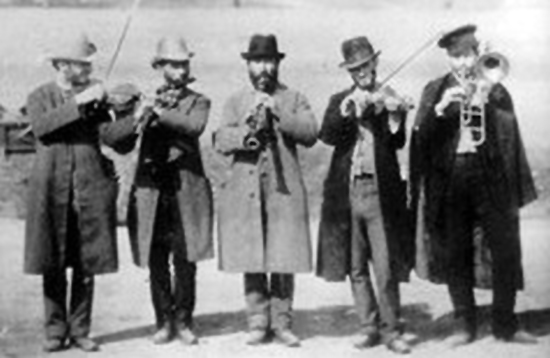
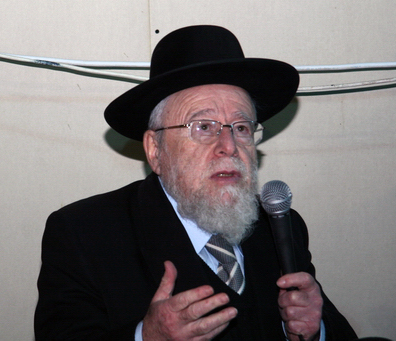

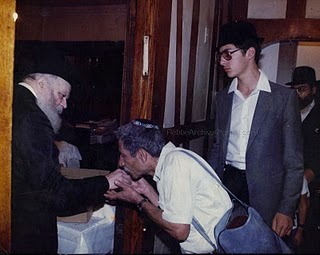

 pitputim
You must be logged in to post a comment.