may Hashem avenge his murder by the Nazis, I suggest you borrow or buy a copy of אם הבנים שמחה Eim Habanim Semecha (EHS) which has also been translated into English. Rav Teichtal is known throughout the world of Halacha, as the famous Posek and author of Responsa שאלות ותשובות משנה שכיר. In fact, I’d venture to say that many Rabbis, save the centrist or religious zionist, would only know of him because of his שאלות ותשובות משנה שכיר. Most certainly, when I was a lad, most people, including centrist and religious Zionist Rabbis hadn’t heard of אם הבנים שמחה because the Charedi anti Zionist world banned the book and exerted extreme pressure on the family not to republish it.
When I was learning in Israel, there was never a time that I went into a bookshop without asking whether they had a copy. The closest I got, was just before I left, when someone gave me the address of a family member, and suggested I might try knocking at their door. I didn’t have the guts to do that. How pleased I was, some twenty years later, when it was republished. When it appeared in English, I was both surprised and not surprised. I was surprised that something I couldn’t lay my hands on appeared in English, but given the compelling nature of the Sefer, I was not surprised that others sought fit to translate it with haste.
Rav Teichtal was the long term Av Beis Din and Rav of Piešťany, in Western Slovakia.
On the 10th of Shvat 1945, as Rav Teichtal was transported to the concentration camp in Mathhausen. Rav Teichtal’s son related (see introduction to EHS)
After starving their victims for a number of days, the oppressors tossed each of them a meager crust of bread, with the evil intent of having them fight pathetically for their paltry allotment. Indeed, one of the Ukrainians grabbed the portion of a Jew – my father’s neighbor – who was desperate for this crust of bread. This angered my father, who demanded the return of the theft. The other travelers begged my father not to get involved, since it might cost him his life. But he said “How can I stand by when the wronged man’s life depends on this food?” Indeed he insisted on taking a stand, and the Ukrainians, with the cooperation of the Nazi soldiers, rose against him and killed him, after torturing him mercilessly.
Prior to the the outbreak of World War 2, Rav Teichtal was as anti-zionist as his mentor, the Minchas Elazar of Muncasz. Rav Teichtal had written anti-zionist polemics like the majority of his Hungarian Charedi colleagues. Describing the views of the Muncazer, Rav Teichtal wrote (EHS):
“The Minchas Elazar opposed resettling and rebuilding the Land [and] based his entire opposition on the idea that salvation must happen with miracles and wonders. In his opinion, anyone who tries to [bring salvation naturally] denies the redemption which will occur miraculously.”
Rav Teichtal הי''ד later in life
During the war, while hiding in Budapest, he wrote (EHS):
“A large portion of our Israelite [European Jewish] brethren who
were killed would have been saved if they had already been in Eretz
Yisrael. And now, who will accept the responsibility for the pure
blood which has been spilled in our time? Similarly, all those who
deterred the Israelites from going to Eretz Yisrael and participating
with those building [the land] cannot purify themselves and say:
‘Our hands have not shed this blood.’
“Those [anti-Zionists] who have a predisposition on this matter
[fleeing to Palestine] will not see the truth and will not concede to
our words. All of the evidence in the world will not affect them, for
they are smitten with blindness, and their inner biases cause them
to deny even things which are as clear as day. Who amongst us is
greater than the [twelve] spies [meraglim]? The Torah testifies that
they were distinguished, righteous individuals. Nonetheless, since
they were influenced by their desire for authority, they rejected the
desirable Land, and led others astray, causing this bitter exile…
[These] spies were prejudiced by hidden motives. The same holds
true in our times, even among rabbis, rebbes, and Chassidim. This
one has a good rabbinical position; this one is an established Admor,
and this one has a profitable business or factory, or a prestigious
job which provides great satisfaction. They are afraid that their
status will decline if they go to Eretz Yisrael. People of this sort are
influenced by their deep-rooted, selfish motives to such an extent
that they themselves do not realize that their prejudice speaks on
their behalf. People of this sort will not be convinced to accept the
truth, even if they are shown thousands of proofs from the Torah…
The holy kabbalist [Rabbi Eliyahu of Greidetz] who resembles
an angel of the Lord of Hosts states explicitly that the reason
there are tzadikim who oppose [aliyah] is because the kelipot [evil
forces] have become strong within them. It entices them to nullify
this great matter for which the Holy One Blessed Be He constantly
longs. He longs for us to return to our forefathers’ inheritance, for
every Jew has an obligation to strive to return to our Holy Land, as
I will prove unequivocally from the words of our Sages.
The מקובל Rav Eliyahu Greidez, mentioned above, was none other than Rav Eliyahu Gutmacher, ז’ל to whom many Jews in Poland flocked, to receive ברכות and advice, and in whose memory Kibbutz Sde Eliyahu was named.
The Kabbalist, Rav Eliyahu Guttmacher ז’ל, one of the theological founders of Religious Zionism
Perhaps the most heart-rending story that served to motivate Rav Teichtal to be transformed from an anti-Zionist into a religious Zionist was (see here) :
“What can we say; how can we speak, and how shall we justify ourselves? God has found the sin of your servant.” I shall tell you a story.
In a small town there was a shamash (sexton) of a synagogue who died, leaving behind a widow. The people of the community thought about how they could provide her some financial support, for at that time there was no pension for widows. Perhaps it would be possible to allow her to continue the work of her late husband. On the other hand – it is not proper for a woman to serve as the shamash of a synagogue. Eventually it was decided that she would carry out those activities that could be performed outside the synagogue, while the tasks of the shamash during prayer times would be filled by the worshippers themselves, on a voluntary basis. Thus the woman would be able to continue earning the salary that her husband had received.
It came time for “selichot,” and as part of her job the woman had to get up and go about from house to house in the village, waking the people for selichot. She took the special “selichot stick” in her hand and headed for the most distant house in the village – the home of Weiss Shendor. When she knocked on the door, Weiss Shendor awoke, alarmed at the disturbance at such an unusual hour. When he opened the door and saw the wife of the shamash, he asked what she wanted. She explained that as part of her duties she had to go from house to house, waking everyone for selichot. When Weiss Shendor heard this, he tried to persuade her that it was not seemly for a woman to go about outside so early in the morning, in such cold and wet weather, and that it would be better if he did the job in her stead. The woman accepted the offer and handed him the “selichot stick,” and Weiss Shendor set off to waken the people.
Upon knocking at the first house he was asked to identify himself. He answered, “I am Weiss Shendor, and I have taken it upon myself to waken the people for selichot.”
The house owner was incensed. “Weiss Shendor? A pork-eater like you isn’t going to wake me forselichot!” With that he slammed the door and went back to sleep.
He went off to the second house and again came the question, “Who is it?” Again he gave the same reply, and again the same response: “Weiss Shendor? A Shabbat desecrator like you will not come and wake me for selichot!” Again a door was slammed in his face.
The same thing happened at the next house: “A swindler and gambler like you will not wake me forselichot!” – and so on, at every house throughout the entire village. The wake-up round ended with nothing more to show for itself than a trail of scorn and disdain. Not a single person got up for selichot.
When the congregation was gathered for the morning prayers, the rabbi asked: “What happened this year, that no one came to the synagogue for selichot?” The people started justifying themselves and explaining that it was all Weiss Shendor’s fault. He was a shady character who was notorious throughout the village; it was he who had come to awaken them for selichot, and that was why none of them had come.
“Fools!” responded the rabbi. “It’s true that Weiss Shendor is guilty of everything that you’ve accused him of, but this time he was waking you for selichot; he wasn’t doing any of the bad things that he’s known for. So why didn’t you get up?”
[Here Rabbi Teichtal burst into tears and shouted:] It’s true that the Zionists desecrate Shabbat and so forth, but it was they who awakened the nation and shouted, “Get out of the rubble; the gentiles hate us, there is no place for us except in Eretz Yisrael” – and we didn’t listen!
Let us only hope to be worthy of correcting the distortion and having God accept us in the promised land”
These days, alas, not much has changed in respect of the Hungarian ultra-Charedi establishment and the State of Israel, as seen by the following Pashkevil (click to enlarge), appearing now in Jerusalem.
I have just returned from Monash University where the Melbourne Jewish Community commemorated Yom Hashoa, remembering the 6 million Jews who were murdered by the Nazis, may their names be blotted. Many families were seen attending together with a parent or grandparent, who are holocaust survivors. What person would not join their parent or grandparent on such an occasion? Sadly, I witnessed some families attend, as they always did, only this time without the Holocaust survivor in tow. Alas, the survivor had gone to meet their maker.
When I was a boy, attending this event was almost a punishment. It used to be held at Dallas Brooks Hall and maybe even Festival Hall before that. It tarried for what seemed an eternity. One could barely hear a non-Yiddish phrase. The evening was full of long speeches by people who spoke only the Queen’s Yiddish—the Litvishe style Yiddish so consummately enunciated by Bundists. I used to pray for the choir of old men and heaving women to emerge, for I knew that when they plodded onto the stage, it was time to sing the famous Partisan Song, that haunting melody forever etched in my mind. The lyrics were composed by Hirsh Glick, and tonight in Melbourne, we heard from Glick’s friend, Phil Maisel, formerly incarcerated in the Vilna Ghetto, who personally related the scene when Glick wrote the poem, thereafter describing how Glick was murdered by Estonian prison guards after trying to escape with a group of 40 inmates.
The Rav said that every time a Jew stops and remembers the Holocaust he fulfills the positive Torah command of remembering Amalek, זכור את אשר עשה לך עמלק. Times have changed. We no longer endure the long and winding speeches mainly from members of the Bund. We have also lost the heart-rending and eloquent speech from Rav Chaim Gutnick ז’ל who captivated every heart on these occasions, often on the theme of the dry bones coming to life, the עצמות היבישות of the נביא יחזקאל. Instead, the devices of multi-media are intermeshed with chosen personal testimony, interesting narrative, and soulful choirs. The commemoration does not take long, is usually very powerful, and serves the purpose of transporting many of us, back in time, amongst the Nazi killing fields.
The traditional universal day of mourning to remember and mourn Jewish tragedy is Tisha B’Av. The Rav strongly felt that Tisha B’Av should also be the day when the Holocaust is remembered. When Menachem Begin, then Prime Minister of the State of Israel, visited the Rav, one of the topics they discussed was contemporary modes of Holocaust commemoration. The Begin and Soloveitchik families were very close in Brisk, with Menachem Begin’s father being R’ Chaim Brisker’s Gabay. The Rav reportedly convinced Begin to press the Knesset to adopt Tisha B’Av as the (correct) day to also commemorate the Holocaust. A young Rabbi Shlomo Riskin, was also present at the Rav’s house at that meeting, as he describes in his wonderful collection of essays entitled “Listening to God” (I highly recommend his book). Upon returning to Israel, Begin, however, faced oppostion to this concept on practical grounds, because Israeli school children would be on holidays on Tisha B’Av and Ministers felt that the commemoration would be largely uneventful with the secular public.
Ironically, whilst the Kinos on Tisha B’Av are literally crying out for a Kina related to the Holocaust, and I have been personally moved by the Kina authored by the Bobover Rebbe ז’ל, the Rav (like his Uncle R’ Velvel ז’ל but for a different reason) was opposed to us adding new Kinos since we don’t have the ability to write with the requisite authority and style. The Chassidic genre, like the Bobover Rebbe, had no trouble adding a Kina and neither did the German-derived Rabbi Schwab ז’ל of Breuer’s Shule.
An interesting question can be asked: during the time of the second beis hamikdash, did the Jews fast on Tisha B’Av? On the one hand, the first temple was destroyed, and the level of miracles was lower in the second beis hamikdash. On the other hand, is it not anachronistic to mourn the destruction of the Beis Hamikdash whilst the second Beis Hamikdash is standing and in use? It appears that both Rashi and the Ritva in Gemora Rosh Hashono 18B held that during the second beis hamikdash they did not fast on Tisha B’Av. On the other hand, the Rambam in his Pirush Hamishnayos to the first perek of Rosh Hashono, in the third Mishna, opines that the Jews did observe Tisha B’Av even during the time of the second Beis Hamikdash. The reason would seem to be, that although we regained the right to bring Korbanos (sacrifices) in the second Beish Hamikdash, after the destruction of the first Beis Hamikdash, there has been and there is no end to the tragedies that befell and continued to befall our people. The Rambam held that until the Redemption, there is a direct link beginning from the destruction of the first Beis Hamikdash extending until our times. Tisha B’Av essentially commemorates the beginning of, and the continuation of, Jewish suffering. The second beis hamikdash was a temporary hiatus; it did not signal an end to Jewish suffering and so the Jews, according to the Rambam continued to fast.
The Rav, perhaps following the Rambam, felt that no new mournful days should be added and that Tisha B’Av was more than just the destruction of the Temple. Tisha B’Av signified both the beginning and the continued suffering of the Jewish nations, reaching the contemporary unfathomable holocaust of our generation.
The Gemora in Avoda Zara 17A relates the famous story of R’ Elazar Ben Durdaya. R’ Elazar performed an intense level of repentance after an encounter with a famous harlot. This lady had indicated that R’ Elazar’s Teshuva would never be accepted in Heaven. R’ Elazar tried to summon all manner of help to effect T’shuva, after which he finally came to the realisation that the only way he could do T’shuva would be through his own efforts. With that cognisance, he sat down on top of a mountain and cried until his soul left him. A Heavenly voice proclaimed that Rav Elazar Ben Durdaya had entered Olam Habo –the World to Come. When Rebbi heard this story, he began crying and remarked,
“There are some who acquire their share of Olom Habo in just a moment.”
יש קונה עולמו בשעה אחת
Many ask why Rebbi cried. Surely he should have been happy that R’ Elazar Ben Durdaya had been accepted to Heaven with a “clean slate”. Reb Chaim Shmulevitz ז’ל explains that Rebbi cried in recognition of universal human frailty. Each one of us potentially experiences a gripping moment in our lives that is capable of transforming our thoughts and deeds. Rebbi cried because so few of us are able to recognise or “seize the moment”. Our generation lives with that moment. It’s in our blood.
In terms of the Mitzvah to remember and not forget Amalek, our generation was cursed through the cataclysmic and inhuman tragedy of the Holocaust. If this remembrance though means that some, especially in our generation, choose a different date to remember, or different devices to remember, so be it. I will live with their choice, and join them.
Over Pesach I heard this story directly from the Levi.
He had travelled to receive Brachos from the Lubavitcher Rebbe ז’ל and to bring his son around the time of his Bar Mitzvah. He is a Levi and was called up as a Levi in 770. The next Aliyah, Shlishi, went to the Lubavitcher Rebbe. The Rebbe faltered and instead of starting with ברכו he began the ברכה of אשר בחר בנו. Nobody said anything to correct or interrupt the ברכה. At the end of the Aliyah, after the Rebbe said the second ברכה of אשר נתן לנו, he then said ברכו. Of course, one can say ברכו at any time and have ten people answering.
Upon returning to Melbourne, the Levi mentioned this story to members of the Chabad Kollel. The reaction was
“You’ve misunderstood. The Rebbe did it on purpose. He wanted to teach people what the Halacha was”
Unfortunately, these were also very high quality אבריכים from the USA (from several years ago). It’s somewhat sad that they couldn’t see the Rebbe as a human being, as well as a great צדיק and מנהיג ישראל (or נשיא)
On the issue of child abuse, I recently read an excerpt from notes formally approved by Rabbi Moshe Shternbuch of the Eida Charedis in Jerusalem.
One frequently encountered problem is when there is clear evidence of child abuse and yet the rabbi consulted says not to go to the police. He might say that the molester promised never to do it again or that the molester’s family or community or yeshiva might suffer significant financial losses or embarrassment. In other words if the rabbi is saying to sacrifice children for the sake of money or embarrassment or the disgrace to the community, it is clear however that this view has no basis in Jewish law. We don’t sacrifice innocent people for the sake of negative consequences to others. Rav Moshe Sternbuch commented that any rav who would say such a thing is not practicing as a rav. A rabbi has an obligation to provide protection to the victim. By definition it seems it is an unjust ruling. Any rabbi who makes such a ruling may be ignorant of either the halacha or he doesn’t understand what the molesting or wife abuse causes. Therefore if there is time – another rabbi should be consulted.
However an alternative reason that a rabbi might say not to report the molester is that he feels he can guarantee protection for children against the molester. For example he might threaten the molester with a severe beating or provides supervision or he claims the molester has repented and won’t abuse again. He might also claim he can provide therapy equal or better to a psychologist. While these seem to be logically equivalent to the police, the likelihood that they will be effective is not very high. Therefore one should find a competent rabbi who agrees that the police should be informed in the case of actual abuse. Rav Sternbuch commented that only a known talmid chachom posek can posken these problems.
After reading these comments, (with which some Rabonim disagree and consider too lenient) my mind wandered back to the unresolved case of Malka Leifer
In short, there were strong allegations that Mrs Malka Leifer, a then principal of the Charedi Adass Israel School, sexually molested her female pupils. It was further alleged that two Charedi communal Rabbis knew about the allegations for some time.
Molestation and Pedophilia know no boundaries and are not restricted to Charedi circles, although it would appear that Charedim are more likely to cover up such incidents. In my opinion, the reason Charedim may be more likely to suppress such incidents has little to do with the laws of Mesira and Halacha. Rather, the process of washing one’s linen behind sealed doors is more likely to be a syndrome of a closed society, where everyone lives in each other’s proverbial pocket and nobody wants any remote smell of “a stain” (פגם) to waft from their house (even if they are an actual victim). There would be concerns that knowledge of any allegation will diminish the dignity of a family in the eyes of Shadchonim and the community.
We noted that in the Leifer case, strong indications are that two Melbourne Charedi Rabbis are alleged to have known about the allegations for quite some time. In the well-known YU Lanner case, the Beis Din that had protected Lanner initially, finally apologised and announced that they were wrong. Rabbi Blau, in particular, has been so profoundly affected by the Lanner error that he is now an active campaigner against Rabbinic cover-ups and a profound supporter of alleged victims.
Has anyone in Melbourne ever apologised in respect of the Leifer case? Is anyone seriously still pretending that “nothing happened?” Even if Leifer cannot be prosecuted, given that two well known Rabbis were allegedly privy to complaints for some time (almost a year according to some sources), and now know, in retrospect, that they ought to have acted promptly, why do they not admit their error of judgement in the same way that the Beth Din in the Lanner case did? Yes, Lanner was convicted and Leifer ran away, but whose fault is that?
Where is Leifer now? Do people around her know the allegations against her? I shudder to think if she is involved in Chinuch in any way.
Thankfully, the Rabbinic Council in Victoria and others, notably the Jewish Taskforce against Family Violence, have taken on the general issue in a serious and responsible way, liaising with the Melbourne Rabbinate including the Charedi Rabbinate, schools, victims and authorities respectively, with education being a critical focus.
One can only pray that any Rabbis who were allegedly “in the know” in respect of the Leifer case, have attained the wisdom to realise that they are decidedly not experts and that the authorities are the correct point of contact when an allegation of molestation arises and the victim, or their parent/s, come forth.
It is well-known that in Melbourne, Beth Rivkah College, the sister School to the boy’s Yeshivah College is more moderate. It does not seek to distance itself from the State of Israel; it has no problem engendering feelings for the love of Israel, appreciating the חיילים who risk their lives for their State and their people. This traditional, more moderate, attitude of Beth Rivkah has meant that non-Chabad families, who are otherwise traditional or even frum, feel comfortable sending their daughters to Beth Rivkah. Much of the credit for this lies at the feet of earlier principals of Beth Rivkah, including the current principal, Mr Gurewicz, who was a soldier in the Israeli Army and whose wife is an Israeli who also exudes a love of the land. Mr Gurewicz isn’t going to be principal for ever, and if Beth Rivkah goes down the track of Yeshivah, latent, triumphalist hard-line Meshichist elements may well take over Beth Rivkah. They have begun chipping away at Sepharadit as their first effort.
Beth Rivkah, unlike its brother school Yeshivah College, would not allow Meshichist chanting or signs of this variety that appear in the Mesivtah room at the Yeshivah. Indeed, in a possibly significant or unrelated move, Rabbi Gurewicz just resigned from the Va’ad Ruchni of Chabad in Melbourne (the Vaad was devised to replace Rabbi Groner ז’ל as the source of spiritual direction) for what has been described as “personal reasons”.
It is with this backdrop that I feel compelled to describe a recent incident involving my young niece. She’s not from a Chabad home. Her mother attended Beth Rivkah, as did her sister and Aunties and cousins. She’s very bright and a respectful if not precocious little girl; she is also very perceptive.
Just before Pesach, one of her teachers suggested that girls who wanted to write a note that would be personally delivered to the grave site of the last Rebbe, ז’ל could do so by writing their names and any message or request they might have. It is not my intention in this post to enter a halachic excursus about אין דורשים על המתים. Let’s assume that what the girls were asked to do is acceptable from a Halachic ground (yes, we are well aware that the Rambam is opposed to such practices).
One would expect that an intelligent and sensitive teacher would realise that there is some tension about this practice. I’m not sure how clever one has to be in order to be aware that there are those who do not feel that it is appropriate to make requests of a holy person who now resides in Gan Eden. There are others who are comfortable with such requests, provided that the request is cast in language which beseeches the dead person to make a representation to Hashem, using their proximity to Hashem and their exalted status in Hashem’s eyes in Gan Eden. Finally, there are others, who are simply not comfortable sending letters to a grave, period. Some such people are uncomfortable sending letters to Hashem via the Kosel.
What about the teacher? She is both an educator and a chasid. Do the two roles clash? Is there a tension between these two roles? I do not think that there need ever be a clash between the two roles. In my estimation it is a primitive Chasid or an unsophisticated Teacher whose involvement will inevitably cause a tension between the two roles.
In the case at hand, in the spirit of positive criticism, here is what I would have done, if I was the teacher in a Chabad School (also marketed ostensibly as a community School—Beth Rivkah College).
I would have explained the מצווה of visiting the dead at their graves (using simple sources)
I would explain the opinions of those who lie on grave sites cry and moan versus the opinion of those who consider it wrong to even visit a grave site because it is a place of Tumah (using simple sources)
I would explain what the position of Chabad was, in the context of the two aforementioned opposing views, and then enunciate the different practices of Rebbes up to and including the last Rebbe who spent long periods at the gravesite of his father-in-law, the Rayatz ז’ל (I’d use some audio visual support if available)
I would then suggest that those who felt inclined to pass on written requests to be read at the grave of the last Rebbe ז’ל that they could do so by filling out a form. (I’d show some examples of things that are appropriate or inappropriate)
I would suggest that those who wanted to pass on a written request to a different Rebbe or indeed to Hashem via the Kosel, could do so.
Finally, I would ask the girls who did not feel inclined to write any request, to say some Tehillim while other girls filled their forms. I’d explain that Tehillim is an equally acceptable way to beseech Hashem.
I would try to discern if I was successful in encapsulating the language of tolerance and if there was any latent tension, I’d deal with it.
If a teacher did the above, I think it is appropriate, and I am not sure one could say this teacher is a bad or failed chasid if a few girls choose not to fill in a form and say Tehillim instead!
Alas, before Pesach, at least one educator at Beth Rivkah decided that she was not going to be considered a good Chasid unless each girl filled out a form. So, how did she get around the issue of some girls feeling uncomfortable writing anything? She simply advised them that they didn’t have to write a specific request. Instead, all they needed to do was write their name and their mother’s name on the form.
The teacher thought she was clever. She wasn’t. She thought she was now a perfect 100% chasid because she got a 100% hit-rate and was able to go to the Kever and tell her Rebbe that she managed to achieve 100%. Does she think that Hashem is a fool? What she didn’t realise is that each and every girl who was cajoled into filling out a blank form has potentially experienced a negative educational experience. They have gone home and told their parents. They have felt forced. They have felt distance from the Rebbe ז’ל and their likelihood to have a positive attitude to Chabad down the track, is diminished by every such incident.
It’s an asinine approach, but what would I know. I’m just an educator, I’m not a Chabadnik.
I have to acknowledge credit, where credit is due. chabad.org has a calendar which describes auspicious days. I was taken aback to see this entry
Passing of Rabbi Joseph Ber Soloveichik (1993)
On the 18th of Nissan, 5753 (April 9, 1993), Rabbi Joseph Ber Soloveichik, a scion of the illustrious Volozhin-Brisk rabbinic dynasty, passed away at the age of 90.
Rabbi Soloveichik, known to many as “The Rav,” was the Rosh Yeshivah (dean) of the Rabbi Isaac Elchanan Theological Seminary at Yeshiva University in New York City. He was a great thinker who authored many volumes on Jewish thought and law, and a great Talmudic scholar and educator.
His regular classes were attended by hundreds, and many thousands still enjoy their recordings. He inspired many students to delve into the study of the Talmud and Jewish law.
Whatever the motive, I was pleasantly surprised and pleased to see someone whose name wasn’t Schneersohn make it into the Chabad calendar. I am happy to be wrong!
My only regret is that I didn’t have an evening of learning in my house on the Rav’s Yohr Tzeit. Next year, God willing, I will organise it and have some guest speakers.
I received the following loose transcript of an oral shiur given by the Rav on the 31st March 1999. It isn’t clear when the Rav actually delivered this shiur.
Sippur, as in Sippur Yetzias Mitzrayim, comes from the word Saper, the same root that includes Sofer, which is Hebrew for scribe. A scribe is not the same as a simple writer. Throughout Tanach the word Sofer is used to indicate that the position of scribe was one of importance, for example Sofrei Hamelech in Megilas Esther. In Talmudic parlance, Sofer means a Talmid Chacham, a scholar. In contrast to Divray Torah we have the term Divrei Sofrim, which are the teachings of the scholars. There are many examples in the Talmud where the word Sofer refers to the scholar. Apparently the Hebrew language scribe or scholar is distinguished by his ability to write. A Talmid Chacham must be capable of writing. Historically, when a Jew showed the ability to write, he was accepted as a scholar. The statements of the transmitters of learning, the Maatikay Hashemuah, are referred to as Divray Sofrim.
The definition of Sippur goes beyond simple oral story telling, but it includes the ability to tell a story through writing it down. The word Sefer, book, derives from the same root, L’Saper, to tell a story. In Hebrew, writing and oral communication are both included in the framework of the root word Saper. The Gemara says that Megilas Esther refers to itself first as an Igeres, letter, and later as a Sefer, a book. There are significant differences between these 2 forms of writing. A letter is written for a short term purpose. It does not need to be written on parchment; it can be missing letters and may not be complete yet it still conveys the gist of the story. In contrast, a Sefer is intended to transmit the story to future generations. It requires parchment and if even one little letter is missing it is halachically voided. For example, the prophet commanded the people to write contracts on their land in a Sefer and place them in earthen vessels so that they may last a long time. Sefer documents an event for present and future generations. Another example: Hashem commanded Moshe to document the eternal conflict between God and Amalek in the Sefer and transmit it to Joshua. This message could only be transmitted through a Sefer.
Chazal note that a major Kabbalah principle is that Hashem created the world through acts of Kesiva, writing. For example, the notion of writing is found by the 10 commandments that were written Betzba Elokim, K’vayachol, by the finger of God. The Sefer Hayetzira maintains that the world was created through 3 Seforim (forms of the word Saper): B’sfor, B’sippur U’Bsefer, through counting, relating a story and through the book. We know from the Torah that Hashem wrote the Luchos, but how does the Sefer Yetzira know that the world was created through these 3 forms of the word Saper? According to the Kuzari, when the Torah repeatedly mentions Vayomer Elokim, it is referring to the act of Sippur by Hashem. The result of this Sippur was the Sefer, all of creation. It was the word of God that created the world and is embedded in nature and continues to drive it. At the same time, nature must obey the will of Hashem. If the flowers bloom, the birds fly, man walks and the heavenly bodies remain in motion it is because this is the Ratzon Hashem, the will of God. The manifestation of the will of God was inscribed into every function of nature. According to the Baal Shem Tov, the word of God, the Vayomer Elokim, that created everything is as real and ongoing today as it was at the time of creation, Udvarcha Emes Vkayam Load, and Your words are true and everlasting.
Chazal valued very highly of the ability to write. Chazal say that Ksav Vmichtav were among the miraculous things that were created at twilight of the sixth day prior to the onset of the Shabbos. Chazal recognized the amazing gift in the ability of man to to record events that happened thousands of years ago in such a way as to allow subsequent generations to identify with, understand and appreciate the thoughts and feelings that moved the author so many years before. The events of past generations are alive for us today. For example, when we read in the Torah the stories of the patriarchs and the 12 tribes, we feel as if we are part of the actual events that are unfolding before us. We cry with Joseph when he is sold into slavery by the brothers and we rejoice with him when he is elevated to the position of Viceroy of Egypt. We travel with Abraham as he leaves Charan for the unknown land of Canaan and our hearts skip a beat as Yaakov narrowly departs with the blessings before Esau enters his father’s room. Reading the written word allows us to span generations in an instant and to identify with our ancestors. Educators today must make the stories of the Torah come alive for their students and make them feel as if they are part of the story and not some impartial bystander.
In contrast, the Rav noted that today, unfortunately, parents and children can’t communicate across a gap of a single generation. Children of today can’t understand or relate to the experiences of their parents. To many Jews today, the Lech Lecha of their parents, their life experiences and their Judaism, means nothing to them. In order for us to inject meaning into the stories that we write during our lives, we must do more than simply put words on paper. We have to create a climate through which we appreciate all the events that shaped Jewish history, for example to feel the pain of the destruction of the Beis Hamikdash or to understand other events in Jewish history. Today we have many aids to study, unprecedented numbers of translations of the various texts are readily available to the masses to assist them in study. However in too many cases, we have words written on paper, but we lack the atmosphere of involvement and participation in the events we study. The greatest Sofer, scribe, is not one who can write on parchment or paper, but rather the one who can write on the hearts of living beings and influence their lives. The great scribe is the one that can transmit a living Torah that passes on the Torah world of Rabbi Akiva, the Rambam and the Vilna Gaon to the next generation. This is Torah Shbeal Peh, which is dependant on the ability of each generation to make these experiences come alive for the subsequent generation to ensure that the flame of Torah burns for eternity. The scholars were called Sofrim because they were the transmitters of the tradition between generations. Their greatest accomplishment was not the writing of Torah on paper, but rather etching Torah into the hearts and souls of their students to keep it alive for subsequent generations, creating living Seforim.
One need not write tomes during his life to earn the title of Sofer. For example, we have no recorded writings from the Baal Shem Tov. Yet his vast Torah was spread throughout the world by his living Seforim, the many students that he taught during his life. Moshe Rabbeinu was called Safra Rabba D’Yisrael, the great scribe of Israel. Did Moshe spend his time as a scribe of Sifrei Torah, Tefilin and Mezuzos (STAM)? We find that Moshe wrote a Sefer Torah towards the end of his life. Yet he earned the title as the great scribe in Israel because of the Torah he taught all Bnay Yisrael and how he inscribed it into the parchment of their hearts and souls so that they might act as the scribes that would teach the next generation. Just as the original word of God continues to drive nature, so to the Torah that Moshe gave Bnay Yisrael in the desert is as alive for us today as it was thousands of years ago. It is the ability to transmit from generation to generation, despite great difficulties, without diluting the message that makes Bnay Yisrael unique.
Sippur Yetzias Mitzrayim is more than telling a story. Vhigadta L’Bincha means that the father must write the book that will become his son. It is the obligation of the father to view his son as a Sefer to be carefully written and not as an Igeres. The obligation to be the scribe of this book extends well beyond the Seder night to encompass all of life. Bchal Dor V’dor Chayav Adam Liros Es Atzmo K’ilu Hu Yataza M’Mitzrayim, in every generation the Jew must view himself as if he has just left Egypt. Man must feel that he has participated in the entire, collective Jewish experience and he must inscribe this knowledge into the book that is his child. Sippur Yetzias Mitzrayim is the book of Jewish existence. The greatest accomplishment is when a father carefully transmits his experiences so that he may pass it on intact to his child before he passes on.
There were many great scholars who were not able to permanently inscribe themselves into the Sefer that was their children. They were only able to write an Igeres, a short term note, that their children quickly erased when they left home. Yet there are simple parents who succeeded in making a permanent inscription into their children’s personality. They were able to write on the hearts of their children their Seder, their feelings on Tisha Bav, the beauty of their Shabbos, the solemnity of their Yom Kippur and their blessing of their children before Kol Nidrei in a way that made a lasting impression on the child, an impression that stayed with him throughout many years of separation and struggle. The Rav asked why should the scholar fail where the simple person succeeds?
Chazal say that there are 10 synonyms for prophecy, one of which is the word Masa. There are 2 explanations why Masa refers to prophecy. The first is that the prophet would raise his voice when presenting the message of God to the people. The second is the Rambam in the Guide (Moreh Nvuchim) who explains that Masa is used to indicate that prophecy was a heavy load for the prophet to bear. The essence of prophecy is that it is a truth entrusted only to the specific prophet. He is the only one privileged to know this truth communicated to him by Hashem. The vision is a burden that does not let him rest. He has a need to spurt forth spontaneously and a desire to share it with others. For example, when someone is entrusted with a secret they have a difficult time maintaining the confidence. They find themself constantly struggling to refrain from blurting it out. The prophet seeks to unburden himself by telling the message of God to others.
When it comes to a prophecy or to Torah that a Jew knows, the only relief from his load comes through sharing it with others. The Rambam says that the prophet is required to tell his prophecy to others even when he knows that his intended audience is not interested in the message and may seek to harm him as a result of it, even if it costs him his life. Jeremiah was an example of a prophet who wanted to hold back his prophecy when the scoffers opposed him but he could not hold it back. When the Jew has a prophecy or Torah to transmit, he must view it as a Masa, a heavy burden, that in order to endure must be transmitted with great care and exactness as a Sefer to the next generation and not as an Igeres.
The ability of the Jewish parent to sacrifice themself for their child is so great that it approaches the point of self negation. How can such a person refrain from transmitting to his child the beauty of Shabbos, Yom Tov, Tanach or Torah Shebal Peh and the great Jewish personalities? Like the prophet of old, he can’t control himself, he must blurt out the message. If he does not transmit it to his child, the reason must be because he himself is lacking the feeling for these things. In order to be a successful scribe, you yourself must feel the burden of prophecy, the Masa Dvar Hashem.
In essence, this is the Mitzvah of Sippur Yetzias Mitzrayim, V’Higadta L’Bincha, and you shall instruct your children. A Jew must present his child with a Sefer and not an Igeres. Inscribing such a Sefer for the next generation is the way for every Jew to attain the level of prophecy in his lifetime. If you would ask what is the greatest characteristic of Knesses Yisrael, it is the great wonder of Jewish History, the ability to engage in Sippur Yetzias Mitzrayim not just on Pesach night. It is the ability for one generation to turn the subsequent generation into its carefully written Sefer.
The Rav noted that the night of Pesach is a symbol for this inter-generational transmission process. We are all familiar with the story of the great rabbis that were assembled in Bnay Brak and were involved in Sippur Yetzias Mitzrayim all that night till dawn. The Rav asked which night was it? The Rav interpreted the night as extending beyond that immediate night of Pesach. The “Night” refers to the long and dark exile period that we have endured for 2 thousand years. It is the long night of pogroms and blood libels and crusades and inquisitions and holocaust that we have endured. Not only were Rabbi Eliezer, Rabbi Akiva, Rabbi Tarfon and Rabbi Yehoshua at that table, but Gedolei Rishonim and Achronim who lived through the rain of Jewish blood and misery throughout the ages were there as well. Yet despite all these difficulties, Gedolei Yisrael recognized that they had a mission to be the scribes of the their generation, not in terms of writing books but as scribes that engrave a love of Torah in the heart of each Jew. Gedolei Yisrael carried the burden, the Masa Hashem, and transmitted their Torah as an inter-generational Sefer and not as a fleeting Igeres. They seized on the method Hashem uses, the Sippur Bsefer, writing on the book of creation, to ensure the continuity of faith in Hashem and the eternity of the Jewish people. The Torah remains alive to us today because of them. If not for their efforts, we would not be able to sit at our Seder table and discuss the exodus on the night of Pesach. Jews are called the Am Hasefer, the people of the book, not because they are avid readers, but because each and every Jew is a living book that has been authored by the previous generations.
How long must we function as Sofrim, as scribes? When does the Jew complete his assignment of studying Torah? How long must we emulate the ways that Hashem created the world, through Sfor, Sippur and Sefer? Until we see that the next generation is ready to shoulder the load and assume its role in this never ending chain. Until the students knock on their teachers’ door and say “Our Teachers, the time to recite the morning Shema has arrived”, that they are now ready to assume the leadership role. The essence of Sippur Yetzias Mitzrayim is to create the living books, the Seforim, that will ensure the continuity of Torah and Judaism, is not limited to the night of Pesach. It is an eternal mission.
Copyright 1999, Josh Rapps and Israel Rivkin, Edison, NJ. Permission to reprint this Shiur, with this notice, is granted.
Rav Elyashiv is considered by many to be the most important current Posek. Israeli Litvaks and Misnagdim certainly follow his Piskei Halacha to the letter. Sefardim turn to Chacham Ovadya Yosef, whereas Chassidim have an array of Poskim they consult. The most important Posek for the so-called Centrist Orthodox is Rav Hershel Schachter.
I have one volume of R’ Elyashiv’s פסקי תשובות at home. Apparently, many are in fact תשובות for cases R’ Elyashiv was involved with when he was a member of the Rabbanut of the State of Israel. Those who know much more than I, advise that many of the תשובות are drawn from פסקי-דין של בתי הדין הרבניים האיזוריים בישראל.
R' Shlomo Elyashiv ז’ל
The מסדר קידושין at R’ Elyashiv’s own wedding was none other than R’ Kook ז’ל who was also the שדכן. R’ Elyashiv’s grandfather, R’ Shlomo Elyashiv ז’ל was the בעל לשם שבו ואחלמה a very famous מקובל (of all things). When Rav Kook became Rav of Yerushalayim, R’ Shlomo Elyashiv wrote:
To my dear, long-time friend, the brilliant rabbi, the great luminary whose name is renowned for praise and glory, our venerable master and teacher, R. Avraham Yitzchak HaKohen Kook shlita…
I was [just] informed that Your Eminence has been appointed Chief Rabbi of Jerusalem, and I was very happy to hear this. Let me, therefore, have the honor of blessing Your Eminence: May you hold this rabbinic post for a long time, and may your good name reach [near and] far, and may you go higher and higher. Amen, so may it be G-d’s will.
It is clear that both R’ Elyashiv and his father had a very close connection to Rav Kook. R’ Elyashiv also worked for the State of Israel’s Rabanut. He can be seen here fourth from the right on the top row at the opening of Heichal Shlomo (click to enlarge).
R' Yosef Sholom Elyashiv שליט’’א at the inauguration of Heichal Shlomo
It has been widely reported that R’ Elyashiv issued a Psak as follows:
until now the public, as well as seminaries and other educational institutions, had been instructed not to visit places that desecrate Shabbos, but now that the chareidi public has grown and unfortunately the major sites in the country desecrate Shabbos while those that do keep Shabbos cannot accommodate the larger groups. Thus if they stand firm in not going to places that desecrate Shabbos, trips and weekends of the major schools may have to be canceled, despite their vital importance in maintaining a proper framework for students during the summer.
When presented with the dilemma, HaRav Eliashiv said, “Since a directive not to visit places that desecrate Shabbos has been established and it is widely known that this is to keep a distance from ugly and unseemly things, this wall should not be breached by contravening the takonoh in any way.”
The rabbonim then pointed out that having schools and seminaries arrange summer programs to safeguard girls is also an important takonoh and if they are not in these programs they could spend their time at other, unsuitable places. “Since we are in a state of war against those who breach the walls of Shabbos,” replied Maran, “we must continue with the battle, which is more important than this concern, and not allow breaches in a time of war to uphold the sanctity of Shabbos.”
“Even in the case of a place that is not publicly known to be a Shabbos desecrater,” he continued, “if we know that Shabbos desecration takes place there, `ein tevunoh ve’ein chochmoh’ – and it should not be patronized.”
To be sure, R’ Elyashiv is often misquoted. I know some people who do not listen to anything said in R’ Elyashiv’s name. Instead, they seek to see things in writing only. Be that as it may, I read the above, and was somewhat נבוך—perplexed. R’ Elyashiv was perhaps suggesting that for בני and בנות ישיבות it was fitting that they not only not be מסייע לדבר עבירה (help someone indirectly commit a sin) but also that they not תומך עוברי עבירה (support those who sin) and thereby distance themselves from non conducive environments. What of Israeli society? R’ Elyashiv’s alleged view could perhaps be summarised by the command to נח that he should enter the ark and separate himself and his family from the sinners around him. The isolationist approach is certainly self-preserving. It’s a pretty safe approach.
I feel that ironically, Rav Kook’s approach was diametrically opposed. R’ Kook would have echoed the command of צא מן התיבה go forth from the ark. Is it a sin to visit an establishment whose owners don’t keep Shabbos? That is the salient question. R’ Hershel Schachter in his shiurim explains that a Cohen who is a Shabbos desecrator is (these days) commanded to Duchan (ברכת כהנים), even though Shulchan Aruch states that such a Cohen isn’t eligible to perform this Mitzvah. The reasoning is that unless the congregation is repulsed by the fact that someone desecrated Shabbos, the Shabbos desecrator is no longer the classical מחלל שבת בפרהסיא and it is better that he keeps one more Mitzvah (to bless the people with love) than to sit on the sidelines and be estranged and do nothing.
Certainly, the environment addressed by R’ Elyashiv is nothing like the environment addressed by R’ Schachter. The type of people R’ Elyashiv is talking to are indeed repulsed by and revile those who commit Shabbos desecration.
How does one classify the people who live and God forbid die for the State of Israel and their people? R’ Kook had, I would suggest, a different approach. Let’s use just one well-known and hugely controversial example. This example was used by the opponents of R’ Kook to suggest that he associated with sinners and promoted secular studies.
Just imagine. The fledgling Yishuv in Israel was opening up the Hebrew University. Who would attend such a University? Surely, the Shabbos desecrators and those who do not sit in Yeshivos. Based on the sentiments attributed to R’ Elyashiv, the very thought of an important Rabbi, let alone a Chief Rabbi, attending and speaking at such a ceremony would be anathema. Surely, הלא משנאיך ה’ אשנא—ascribe scorn and hate to the sinner! R’ Kook saw the light among the darkness. R’ Kook, ironically, in contrast to R’ Elyashiv, took a different view (admittedly at a different time).
R’ Kook perceived opportunity in these Jews and the institution. R’ Kook discerned the sliver of light, as encapsulated by their adherence to קדושת הארץ, to attempt to influence them in a way that would be for the good. Did R’ Kook delude himself to the extent that he thought that after his speech, they would listen to him? I doubt it. Did he expect that Hashem would shine his countenance on the people and aid them to stay loyal to our מסורה despite the fact that they were immersing themselves in the Weltanschauung of the modern world? I would say he definitely did.
I can’t express the sentiments anywhere nearly as beautifully as R’ Kook did. Accordingly, I present a translated excerpt from his speech at the opening of the Hebrew University. After you’ve read it, ask yourself whether R’ Kook should have been condemned by the Charedim? After that, ask yourself whether R’ Kook would have wanted religious Jews in Israel to avoid the establishments of those who transgress and miss the opportunity to also create a kiddush hashem, as opposed to locking oneself up in the proverbial Ark of Noah.
Rav Kook speaking at the opening of the Hebrew University
There are two paths to the spirit of Israel.
One path goes inward, entirely holy, serving in its entirety to deepen its spirit and shine the light of its Torah deep within. This was the function of all of the Torah institutions that ever existed, the spiritual fortresses of Israel, the yeshivas of the past, present and future, serving amongst us to magnify and glorify the Torah, in the full meaning, greatness and richness of this holy yearning of the Jews in every generation. This path of the spirit is entirely confident-“great peace to those who love Your Torah and they will never stumble.” Yet, even with all of this confidence, Rabbi Nechunia ben Hakaneh would pray when entering the beit medrash that no error may come about through him.
The second path of the spirit in the nation serves not only to deepen the holiness of the Torah within deep within, but also serves as a path for a two-way traffic: to bring concepts and values of Judaism from our private domain to the public domain of the world in general, since it is for this that we stand as a light to the nations; and to bring in the general sciences from the breadth of humanity, and adapt that which is good and elevated to the treasure of our life in its purity; for ultimately doing so makes it possible for us to bring forth a logical and lovely expression from our world to the world at large.
To this end, this university can serve as a great and elevated tool.
But here, my friends, is the place for fear.
We had experience in previous days when our most valued and holy concepts were exported from our realm to the public domain. That is what occurred with the translation of the Torah into Greek. At that time, two paths in Judaism grew clear in regard to this issue. The Judaism of the land of Israel was afraid, and its world grew dark (Masechet Sofrim). But the Judaism of the Greek world experienced a happiness of heart and greeted this work with great joy.
We have also had the experience of importing streams of various cultures, Greek wisdom and other cultures of the nations of the world that we have encountered in the course of our history, which penetrated deeply into us. And this absorption has also been met with fear in many circles and with happiness of heart in others.
When now, after these eras have passed, we come to evaluate them, we see that the fear was not without cause-even though the happiness of heart was also not without cause. Although we gained from those streams in some ways, we also forfeited a great deal.
And it is clear that of those who exported the streams of [our culture] and imported those of [gentile culture] without any fear but solely with an optimistic, banal joy and happiness of heart only, very few of their grandchildren are partners at this time with us in our difficult and holy work of building our land and supporting the renaissance of our nation, for most of them were assimilated amongst the nations and swept away by the “richness of the nations.”
Only those who sat confidently in our inner fortresses, in the tents of Torah, in the holiness of the mitzvot and divine decrees, and those who, while exchanging values and concepts via the spiritual pathway linking Israel to the nations, maintained an attitude not only of happiness of heart but also of a fear that accompanied the happiness of heart and joy of the spirit which came from the power of that great vision of oncoming “richness of the nations” brought forth all of those faithful powers of creativity that are being applied to our great building [of the Holy Land] with our entire heart and soul, and the entire great bloc of the Jewish nation that is faithful to the banner [of this movement].
And so the prophet justifiably said, “Then you will see and be radiant, and fear, and your heart will be happy, for the wealth from the west will be will cast upon you, the richness of nations shall come to you.”
But how can we silence the fear? How do we assure the that the Jewish people will withstand that great current [of gentile influence]?
In regard to this, sirs, I stand as an representative of the public on this honorable stage, and transmit to you the expression of the heart of faithful Judaism, as expressed by many of its parts, which are its finest parts.
We must know that this university will not, by itself, encapsulate all that is necessary for our national life. That comes, first and foremost, from the great and strong yeshivas of Torah, those that exist and those that are yet to be created (amongst them the Central Yeshiva-Merkaz Harav-which we are struggling to establish, with the help of God, may He be blessed, in Jerusalem, to act as a shining light in the light of the Torah of Israel in all of its topics, in halachah and aggadah, in wisdom of deeds and wisdom of mind), yeshivas that, as their name implies, that now, as they did in the past, will establish the spirit of the nation in its full confidence.
And alongside that, this university must function at a level where it will cause God, the Jewish people and the land of Israel to be publicly sanctified and not profaned in any manner-whether by the administration, the teachers, or students. And this applies in particular to those who will teach Judaic studies-from the book of books, Tanach (the light of our life) to the breadth of the Babylonian and Jerusalem Talmud and all of their branches, as well as the wisdom of Israel and its history. These must be people who, in addition to their great knowledge in their respective fields, will be completely committed to the faith of Israel in their views, in their feelings and in the way that they conduct their lives. This will indicate a “happiness of heart” and the greatness of the purified expression of the intellectual disciplines. Then our fear, together with our great sight of the “glorious” vision of this day, and together with the illumination shining upon our souls from the radiance of the lights of the various and multi-hued currents of spirit that pass over us, will bring us to that very “happiness of heart” that we seek, and which contains a blessing within itself.
And we hope that this institution, which is crowned today in the glory of Israel, will take on that character, as it receives the “wealth of the gentiles,” and that we may be assured that, as Rabbi Nechuniah ben Hakaneh prayed, “that no error will come about because of me.”
“My nation will sit in the field of peace and in tranquil resting places and in secure homes” (Isaiah 32:18). And may we merit to see the joy of our nation, and the building of our Temple and its beauty, to which all the nations will stream to take Torah from Zion and the word of Hashem from Jerusalem. Amen.
I have always felt that in learning Torah, once a person starts to earn a living and engage with wife and family, enjoying what you learn is paramount. There is one invariant; Halacha. Each person must have a working knowledge of basic Halacha and should aim to revise this every now and again; yes, 30 days before a Chag.
Personally, I have always been captivated by study of the Halachic process. I am roused when reading שאלות ותשובות especially when the Posek takes the trouble to map out his thoughts from fundamental sources through to his final decision. Pilpul and conjecture aka תורה לשמה—for the sake of it—was also gripping. some 30 years ago. Nowadays, unless it leads to Halachic import, I tend to look at it as an exercise in עמלה של תורה more akin to an intellectual odyssey that may not lead to any change or understanding in Halacha.
During my school years, I was exposed to rudimentary Chassidus. I don’t think I was mature enough, emotionally or intellectually, to properly engage. The study of a Jewish metaphysical realm was parenthetical to my “needs” at that time. Perhaps it’s different and more meaningful for others, even during those early and teenage years. I feel strongly, however, that it ought not be compartmentalised as compulsory curriculum unless one wants to engage—it could be a case of יצא שכרו בהפסדו. Similarly, we have a tradition that Zohar and Kabbalah should not be studied until one has reached 40—the age of attaining בינה. I imagine there are people who have “reached” 40 when they are 20, and other who will not have reached 40 even though they are 70. To each his or her own (are women allowed to learn Zohar, I don’t mean bits of Tzena U’Rena … I imagine they would be, if they were at the level of spiritual nourishment that requires it?)
I had never learned Mussar until I studied in Yeshivat Kerem B’Yavneh. I tried. The first thing I noticed about it was that it was an intensely personal introspection. One had to psyche oneself to be in the proper mood. I couldn’t understand why one would learn Mussar with a Chavrusa, a learning partner. To me, Mussar or Jewish Ethics was almost the type of study where the entire Beis Medrash should be enveloped in an eery silence.
Mussar was studied for half an hour a day, just before Ma’ariv and Dinner, except for Shabbos. There are many different styles of Mussar Seforim. There are those that take the severe admonishment line (which never appealed to me) and are others which were written by Rishonim themselves. More recent varieties, such as the quasi mussar approach of Michtav Me’Eliyahu were really a cross between Mussar and Jewish thought. I did enjoy studying כוכבי אור (not the sefer by R’ Nachman MiBratslav) by R’ Itzele Blaser (a famed student of R’ Yisroel Salanter) during Tishrei but I think this was because it was more of a Lomdishe Mussar Sefer where there was a great question and answer leading to a mussar message. Others had a different approach, like Daas Tevunos from the Ramchal. I liked those, but didn’t feel they were hard-core Mussar seforim. Brisk had no place for Mussar. It felt that Mussar was unnecessary. If you needed to study ethics, it meant that your study of Shas was not proper.
I ended up abandoning Mussar after 6 months (I did gravitate to another Sefer called Ma’alos HaMidos) and started learning Sefer HaKuzari on my own. I know this raised eyebrows, but the Yeshivah were clever and one day an Israeli Chavrusa “appeared” and told me that he’d like to learn it with me. I appreciated that in as much as it helped me with vocabulary and I knew that the Yeshivah was tolerating my nuanced needs. I think that’s important in any Yeshivah. Too often Seder becomes an indoctrination of sorts.
Kuzari was good for my general knowledge, but I didn’t really feel confident with some of the answers in the sense that I could use them in the 21st Century. That was probably my fault. It was fascinating trying to get my head around Sechel HaPoel and Sechel HaNifal. I later discovered Maharal, and fell in love. It was written in a way which I could understand and all the hidden messages, such as 8 being higher than 7 and what that meant across Shas and Halacha was intriguing.
We have a link to Amshinov back in time, but they don’t write many Seforim. A few years ago a friend in Israel saw a short booklet put together by the Rebbe in Borough Park (not widely seen as THE Rebbe as distinct from the well known and renowned Amshinover Tzadik in Bayit Vegan). I read it, and I was astonished to see that the Amshinover Rebbeim, starting from the first Rebbe, R’ Ya’akov Dovid ז’ל said words that
There is only one book for Chassidus, and that is Sefer HaTanya. If there was only one Sefer left in my house it would be Sefer HaTanya. Everything else is subsumed by it
They were powerful words. I gave the book to R’ Groner ז’ל as he was very excited to read it. R’ Groner, whom I miss greatly, was a walking encyclopaedia. He told me everything I wanted to know about Amshinov through to a vivid description of the size of R’ Shimon’s Shulem’s nose ז’ל 🙂 Subsequently, I told R’ Groner to keep the book, and I’m glad I did.
Fast forward. My soul became inexorably attached to the Rav. I don’t know why. Perhaps it was my head that became intertwined. I discovered early on that the Rav knew Tanya like the proverbial back of his hand, as well as Likutei Torah from the Alter Rebbe. The Rav was a romantic (not personally, but in respect of his life memories). He was also unique in that he actually wrote and told you about his feelings and struggles. I love that candour. It only makes me pine to interact with him even more. It is one of my regrets. I remember when the first group of students from the YU Kollel came to Kerem B’Yavneh. The Rosh Yeshivah immediately began interrogating them so that they could relate the latest Chidushim from the Rav. One of the Rav’s best Talmidim (certainlywith respect to Psak as opposed to Philosophy) is R’ Hershel Schachter, the Posek of OU. I have downloaded and listened to many of R’ Hershel’s shiurim, and he is literally like a sprouting fountain that gushes forth with an enormous ידיעת התורה. I noticed that he too had studied Tanya and would quote it.
I don’t know any Tanya. I know some of the basics of Chassidus—very very basics—and it’s safe to say I’m an ignoramus. The Gaon’s prime Talmid also wrote a critically important and widely read Sefer, akin to Tanya, and apparently written as the Misnagdic equivalent, called Nefesh HaChaim. I have this at home, and read Rabbi Norman Lamm’s PhD thesis comparing the Tanya and Nefesh HaChaim.
My beautiful, much beloved, and much missed cousin, R’ Ya’acov Yitzchak HaCohen Balbin ז’ל, whose soul was as pure and holy as I have ever come across, and to whom I dedicate this post less than a year after his sudden Petirah that he should have an Aliyos Neshoma and a Lichtige Gan Eden, was a Chosid of R’ Zalman Serebryanski ז’ל and despite having gone to live in the State of Israel some 30 years ago, still asked his difficult questions to R’ Groner ז’ל. I well remember my father, myself and Ya’acov visiting R’ Groner, literally less than 48 hours before his Petirah and Ya’akov asking R’ Groner what was to be R’ Groner’s last Halachic question in this world. One year, Ya’acov bought me a copy of the Steinsaltz Tanya. Ya’acov’s son-in-law, somewhat of a Chabakooknik, is a Chosid of R’ Steinsaltz who was Mesader Kidushin at his wedding (I attended).
Yet, despite all of this, I can’t open Sefer HaTanya and I remain ignorant. Why?
Because there is this big sign at the back of the Shule at Yeshivah in Melbourne which (rightly or wrongly) bothers me to the depth of my soul. If it has a place, that sign should be in the Chasid’s heart. Having such a sign in a Shule (and in the Mesivta in the School my sons attended) let alone bellowing this out daily, simply turns me off.
Call it irrational, call me full of myself, call me whatever you want. I’m sure I’ve been called worse. But, these are the facts. I feel it, and I feel it deeply. I’d like to learn, as I feel it has become an important and accepted sefer.
I can’t. I feel negativity which I cannot erase. The marketing has gone mad and it is pervasive in the extreme.
Even though I have seen this type of thing before, I watched with incredulity and astonishment. The images of these young kids passing the table is an utter nonsense. It is no less than cultic brainwash. Undoubtedly, there are some who will say
“if we protest they will get more press than they deserve”
I don’t buy that argument. After watching this video, I am flummoxed. How can people who are supposedly intelligent beings get involved in such a foolish, unavailing and ignominious enterprise? Don’t people understand that davening with a sign such as these at the back of a shule only conjures up images of absurd behaviour? Why would anyone want to be under a banner that conjures anything remotely like the video above?
I know that at Yeshiva College in Melbourne, it is very much hip and trendy for boys to travel to 770 for Tishrei for inspiration; I sure hope the school also has a policy that no boy is permitted attend such circuses or derive “inspiration” therefrom. There is at least one teacher in the School who proudly wears a yarmulke with yechi emblazoned in vibrant living lettering.
The Lubavitcher Rebbe ז’ל did not deserve demeaning and vacuous chassidim besmirching his holy memory.
I received an email from a reader who asked if all that stuff mentioned in a comment by Yisroel was true. We need to understand the times. The difference between the secular zionists and the haskolo was miniscule, except that the latter were not nationalistic. Accordingly, they removed themselves from the yoke of heaven, tried to assimilate and removed themselves from their land. Rav Kook was wise and spiritual enough to understand that the secular zionists, by virtue of still being associated with the land, were associating with Kedusha. Once a Neshama is touched by such Kedusha there is every chance it can be further stirred and influenced. Rav Kook, accordingly, never turned his back on secular zionists. Many other Gedolim, and here it spans most groups including Chabad via the Rashab, thought that the secular zionists were a dead loss and one had to fight them with polemics and protestation.
Rav Kook fought them with love; he overcame many of them with unadulterated אהבת ישראל (and that is not because his mother was from kapust 🙂
Yisroel would know that the Rayatz came to Rav Kook soon after he arrived in Israel and before leaving Rav Kook visited the Rayatz.
Here is a collection of material from other web sites and blogs (mainly via R’ Aviner).
“R. Yitzchak Gerstenkorn, the founder of B’nei Brak, told this story: In 5694 (1934), the Rav [i.e., Rav Avraham Yitzchak Kook] was invited to the groundbreaking ceremony of the Beit Yosef (Novardok) Yeshiva in B’nei Brak…At the ceremony, which the Chazon Ish also attended, Rav Kook spoke at length…Throughout the Rav’s address, the large crowd sat quietly in their seats–everyone but the Chazon Ish. He remained standing throughout the speech, listening attentively to every word. He only sat down when the Rav finished speaking and took his own seat.”
“R. Tzvi Kagan, who was present at the event, added this revealing piece of information: When the Rav’s address began to draw out, people approached the Chazon Ish and suggested that he sit down. The revered rabbi refused, however, saying, ‘The Torah is standing!’”
from An Angel Among Men, by Simcha Raz, p.375; translated by Rav Moshe D. Lichtman
It’s worth noting that, in his review of this work, Rav Berel Wein stated, “There is so much about Rav Kook that is misunderstood and misportrayed in the Jewish world, that a book that portrays him accurately is invaluable and necessary. This is such a book.”
In a letter from the Chazon Ish to Rav Kook that is seen on p. 374 of this work, we see that the Chazon Ish opened by saying, “HaRav HaRoshi HaGaon Rav Avraham Yitzchak HaKohen Kook, Hod K’vod Maran Shlita.” (“The Chief Rabbi, the consummate Torah-scholar, Rav Avraham Yitzchak HaKohen Kook, the glory of the honor of our Master, may he live a long and good life.”)
“Rav Shlomo Zalman, in his earlier years, enjoyed a warm relationship with Rav Avraham Yitzchak [HaKohen] Kook, the first [Ashkenazi] Chief Rabbi of Israel. He would visit with him, observe his actions, and learn from him. Their relationship was so close, in fact, that Rav Kook officiated at Reb Shlomo Zalman’s wedding… Reb Shlomo Zalman’s respect for Rav Kook was evident from the numerous stories he would tell which highlighted the brilliant and charismatic attributes of the Chief Rabbi… Reb Shlomo Zalman never ceased to speak of him with the very highest admiration.”
“Reb Shlomo Zalman’s classic work Me’orei Esh contains approbations from Rav Abba Yaakov Borochov, Rav Isser Zalman Meltzer, and Rav Avraham Yitzchak Kook. The approbation which appears first is that of Rav Kook.”
“Considering Reb Shlomo Zalman’s aversion to matters of a political nature, it was startlingly unusual when he intervened in the internal affairs of a particular organization. Needless to say, the Gaon’s advice was always sought and welcomed, but in the area of organization politics, no one had ever succeeded in eliciting his response in the past. The issue at hand was whether to accept a certain candidate for a key position in this Torah organization. Reb Shlomo Zalman had recommended not to accept the nominee. His unprecedented intervention was triggered by the fact that the candidate in question always referred to Rav Kook as simply ‘Kook.’”
“Once the Gaon was riding in a taxi with one of the rabbanim from Kol Torah. His companion began to relate that he had found the explanation of a complex subject under examination at the yeshiva, in a particular book. But when he mentioned the name of the sefer, Reb Shlomo Zalman stopped him and refused to hear the explanation, saying that the book contained denigrating remarks about Rav Kook.”
from “And From Jerusalem, His Word,” by Rav Hanoch Teller, pp.196-198
I take issue with what Rapoport writes on p. 92, that when R. Kook passed away, R. Abraham Isaiah Karelitz, the Hazon Ish, declared that he would have no portion in the World to Come. The source for this is Aharon Rosenberg, Mishkenot ha-Ro’im (New York, 1997), vol. 3, pp. 1120-1121, who cites a well-known London anti-Zionist. This is hardly an unimpeachable reference. (This same source also claims that the Hazon Ish insisted that R. Ben Zion Uziel’s Mishpetei Uziel be left on the floor, since it is muktseh mei-hamat mi’us. See ibid., p. 1198; Elyakim Schlesinger’s haskamah to Aharon Rosenberg, Torat Emet [Monsey, 1992]). The truth is that while the Hazon Ish asserted that R. Kook’s philosophical works should not be read, he saw nothing objectionable about his halakhic writings and certainly did not regard as R. Kook as a heretic. See Shelomo Kohen, Pe’er ha-Dor (Jerusalem, 1969), vol. 2, p. 34. Indeed, one of the first things the Hazon Ish did when he arrived in the Land of Israel was to write R. Kook a letter, asking him to decide a halakhic problem he was confronted with. See R. Ben Zion Shapiro, ed., Iggerot ha-Reiyah (Jerusalem, 1990), pp. 448-449. Even with regard to R. Kook’s philosophical writings, the Hazon Ish sometimes expressed a more positive view, depending on whom he was speaking to. See Binyamin Efrati, “Shenei Bikurim Etsel ha-Hazon Ish ZT”L,” Morashah 6 (1974): 62-63.
from “Of Books and Bans” by Prof. Marc Shapiro
The Netziv – Rosh Yeshiva of the Volozhin Yeshiva – said about Maran Ha-Rav Kook: “He is equal to everyone else [in the Volozhin Yeshiva]”, “There was never a student like this in Volozhin” and “If the Volozhin Yeshiva was established only for this great student – it would have been enough.” Ha-Rav Reuven Bengis – Av Beit Din of the Edah Charedit – similarly said that the most important [student] in the Yeshiva is the son-in-law of the Rav of Ponevezh (Ha-Rav Eliyahu David Rabinowitz-Te’omim, Ha-Aderet – Maran Ha-Rav Kook’s father-in-law).
[Tal Ha-Re’eiyah pp. 59-60, Shivchei Ha-Re’eiyah p. 45 and Be-Derech Ha-Torah Ha-Goelet p. 189]
The Chafetz Chaim: Know that he is holy and pure and anyone who impinges on his honor will not go unpunished.
The Chafetz Chaim once came to Ponovezh in his effort to organize Torah scholars who were Cohanim to learn matters relating to “Kodashim” (the sacrifices in the Temple), since the Temple would soon be built and therefore there would be a need to know the practical Halachah. He turned to Maran Ha-Rav, who was a Cohain (and who was stayed in his father-in-law’s house), and asked him to focus on the laws relating to the Temple and sacrifices. A few days later, Maran Ha-Rav visited the Chafetz Chaim in the place where he was staying. The Chafetz Chaim said to him: “I have a request of you, but promise me from the outset that you will fulfill it.” Maran Ha-Rav responded: “Since I trust that his honor will not request anything which is inappropriate from me, I promise to fulfill your request.” “This is my request” – said the Chafetz Chaim – “When a Rabbinic offer comes before you do not refuse to accept it.” Maran Ha-Rav, who had decided not to involve himself with the Rabbinate, found himself in a difficult position, and wanted to free himself and said: “In order to accept a Rabbinic position I would have to involve myself with the halachic authorities who discuss the issues involved, and I already promised his honor to involve myself with ‘Kodashim.'” Chafetz Chaim thought hard and said: “I give up on your first promise, your Rabbinate is more important”…
[Bisdeh Ha-Re’eiyah p. 218, Sichot Ha-Re’eiyah p. 122, Tal Ha-Re’eiyah p. 90, Moadei Ha-Re’eiyah p. 231 and 550, Bein Shenei Cohanim Gedolim pp. 32-33 and mentioned in Bishelosha Be-Elul vol. 1 p. 35]
After Maran Ha-Rav Kook had served a while in the Rabbinate in one of the holy communities in the Exile, he received an invitation from the Chafetz Chaim to help him prepare a work on the service of the Cohanim when the Temple is standing. Maran Ha-Rav replied: If his honor permits me to remove the yoke of the Rabbinate which is upon me, I can fulfill the request which is extremely dear to me. The Chafetz Chaim answered: I have not found an individual as talented as you in administering a Rabbinate in Israel!…
[Ha-Re’eiyah Kook ztzvk”l of Ha-Rav Shmuel Baruch Shulman p. 36]
At a huge Rabbinical Conference in Vienna in 5683, one of the Rabbis made disparaging remarks about Maran Ha-Rav, the Chafetz Chaim (who was sitting at the dais) stood up shocked and said: “You insulted the Mara De-Atra (Rabbinic authority) of Eretz Yisrael.” He left the conference and decided not to return to it. The Chafetz Chaim waited in his hotel to return to his city, and many people came to visit him or receive a blessing. When the members of delegation from Eretz Yisrael wanted to enter, he said: “I will not say ‘Shalom’ to those who caused dispute with the Rav of Yerushalayim (Maran Ha-Rav)!” And he added: “Know that he is holy and pure and anyone who impinges on his honor will not go unpunished.”
[Bisdeh Ha-Re’eiyah p. 225-228, Sichot Ha-Re’eiyah p. 26-127, Malachim Bivnei Adam p. 211 and for additional information on the subject see Sichot Ha-Re’eiyah chap. 11 and Bein Shenei Cohanim Gedolim chap. 4]
In the year 5681, our Rabbi, Ha-Rav Tzvi Yehudah Ha-Cohain Kook (Maran Ha-Rav’s son) traveled to Poland to meet with Rabbis and Chasidic Rebbes to convince them to join the “Degel Yerushalayim” movement which Maran Ha-Rav established to infuse the Zionist movement with Torah and holiness. At that time, the Chafetz Chaim came to Warsaw, and our Rabbi, who yearned to see the splendor of the most righteous person of the generation, went to where he was staying. He found him surrounded by people. After over an hour, our Rabbi approached to take leave from him. The Chafetz Chaim asked: “Are you a local?” Our Rabbi responded: “No, from Jerusalem,” and he added: “Your honor was close with Reb Eliyahu David (the Aderet), father-in-law of my father.” When the Chafetz Chaim heard whose son was standing before him, his face lit up and he joyfully said: “Your honor is the son of the Rav of Zimel, the Rav of Boisk, the Rav of Yafo, the Rav of Jerusalem? Then why does he speak about his grandfather? Tell me about your father! How is he? We are long-time, dear friends.”
[Bisdei Ha-Re’eiyah p. 221, Sichot Ha-Re’eiyah p. 126, Shivchei Ha-Re’eiyah pp. 157-158, Be-Derech Ha-Torah Ha-Goelet p. 97, Tzvi Kodesh p. 146 and Bein Shenei Cohanim Gedolim pp. 36-37]
See Bisdei Ha-Re’eiyah pp. 217-231, Sichot Ha-Re’eiyah pp. 120-133 and the book “Bein Shenei Cohanim Gedolim” which discuss the special relationship between the Chafetz Chaim and Maran Ha-Rav Kook
On Shavuot morning after davening Vatikin, Maran Ha-Rav Kook was walking in one of the alleyways near the Kotel and met Ha-Rav Yosef Chaim Sonenfeld. Ha-Rav Sonenfeld blessed him that he should merit serving as the Cohain Gadol in the Temple.
[Moadei Ha-Re’eiyah pp. 303-304 and see another blessing of Ha-Rav Sonenfeld to Maran Ha-Rav ibid.]
It once happened that Ha-Sonenfeld was honored to be a Mohel at a Brit Milah and Maran Ha-Rav was honored to act as the Sandak. The two Rabbis met at the door of the apartment where the Brit Milah would occur. After they exchanged friendly greetings, a problem arose: Who would enter the house first? Maran Ha-Rav respectfully suggested that Ha-Rav Sonenfeld enter first. But he responded: “His honor is a Cohain and the Chief Rabbi [of Jerusalem] – and the basic halachah is that he should enter first.” Maran Ha-Rav humbly answered: “But his honor is greater in Torah than I am.” They stood at the door without a decision as to who should enter first. The older houses in Jerusalem were built in such a way that there were two doors in each doorway – the left one was bolted closed and the right one opened and closed, allowing one person to pass through it. Maran Ha-Rav approached the opened door, struck his arm through it and unbolted the left door – and both of them entered at once!
[Melachim Kivnei Adam p. 64]
When the Chazon Ish left Vilna to make aliyah, Rav Chaim Ozer sent a letter to Maran Ha-Rav requesting his assistance. He began the letter: “The Glory of Honor, My Dear Friend, Ha-Rav Ha-Gaon, Ha-Gadol, the Famous One… The Prince of Torah, Our Teacher, Ha-Rav Avraham Yitzchak Ha-Cohain Kook Shlit”a…”
[Bisdeh Ha-Re’eiyah p. 236, Chayei Ha-Re’eiyah pp. 388-389, Igrot Le-Re’eiyah #316 and Melachim Kivnei Adam pp. 106-107. Maran Ha-Rav’s response is found in Shut Da’at Cohain #223]
There was a wedding in Elul 5696 in which Rav Chaim Ozer, Ha-Rav Shimon Shkop and many other great Rabbis attended. When news arrived that Maran Ha-Rav had died, Rav Chaim Ozer instructed Ha-Rav Shmuel Markowitz, Av Beit Din of Turatz to eulogize him. And this is what was done.
[This is quoted by Ha-Rav Tzvi Markowitz in Kovetz “Achiezer” #2 from the year 5628 and Davar Le-Dor – Kovetz Hespedim Al Rav Kook ztz”l p. 89]
See Igrot Le-Re’eiyah where there are tens of letters by Rav Chaim Ozer to Maran Ha-Rav with great respect and honor, and where it is possible to see the close relationship which existed between them.
Ha-Rav Isser Zalman Meltzer: We are Gedolim until we reach his doorknob
Ha-Rav Isser Zalman Meltzer, Rosh Yeshiva of Eitz Chaim in Jerusalem, said: “I was young when I arrived in Volozhin, and I looked with great respect at the greater students who sat on the eastern wall, and among them were prodigies who would become Gedolei Yisrael. But I remember well that looking at him [Maran Ha-Rav Kook] was completely different – even among the special he was distinguished by his uniqueness!”
[Tal Ha-Re’eiyah p. 71, Shivchei Ha-Re’eiyah p. 101 and the booklet “Az Nebabru Yirei Hashem” p. 13]
Ha-Rav Meltzer once visited Ha-Rav Chaim Ozer Grodzinski, and Ha-Rav Meltzer said about Maran Ha-Rav: “We are Gedolim until we reach his doorknob.”
[Mi-Toch Ha-Torah Ha-Goelet vol. 2 p. 170, Le-Shelosha Be-Elul vol. 2 p. 101, Shivchei Ha-Re’eiah p. 202, Bisadeh Ha-Re’eiyah vol. 274, Malachim Kivnei Adam p. 430 and the booklet “Az Nebabru Yirei Hashem” p. 22]
Ha-Rav Meltzer said many times: “If only I could daven during Ne’eilah on Yom Kippur, with awe of holiness and feeling, like Ha-Rav [Kook] davens during weekday Minchah.”
[Sichot Ha-Rav Tzvi Yehudah #51, Le-Shelosha Be-Elul vol. 2 p. 102, Orot Ha-Tefillah of Ha-Rav Y. Epstein (student of Ha-Rav Meltzer) p. 26, Shivchei Ha-Re’eiyah p. 200, Malachim Kivnei Adam p. 256 and the booklet “Az Nebabru Yirei Hashem” p. 29]
In the eulogy which Ha-Rav Meltzer delivered for Maran Ha-Rav in the Churva Synagogue in the Old City of Jerusalem, he said: “The True Torah was in his mouth” and “With the passing of Ha-Rav – the spine of Klal Yisrael is broken.”
[Moadei Ha-Re’eiyah vol. 12, Le-Shelosha Be-Elul vol 2 p. 101, Shivchei Ha-Re’eiyah p. 15, Bisadeh Ha-Re’eiyah vol. 275 and Malachim Kivnei Adam p. 430]
Ha-Rav Shabatai Rapaport, Ha-Rav Feinstein’s grandson, related that in the year 5739, during Sukkot in Monsey, NY, Ha-Rav Feinstein was involved with writing a contrary view to a responsa of Ha-Rav Eliezer Waldenberg (Tzitz Eliezer). Ha-Rav Rapaport showed his grandfather a statement from Maran Ha-Rav Kook (relating to the issue) which Ha-Rav Rapaport found amazing. Ha-Rav Feinstein responded: “What is surprising, he was the Gaon of Geonim!”
[Likutei Ha-Re’eiyah p. 59]
Ha-Rav Nisan Alpert, Rosh Yeshiva at Yeshiva University, Rabbi of Agudat Yisrael, author of “Limudei Nisan” and Ha-Rav Feinstein’s student for forty years, was one of those who eulogized his Rav in New York. He also spoke at a memorial evening for Ha-Rav Kook, on the 50th anniversary of his passing. When he was asked about the connection between his Rav and Ha-Rav Kook, he answered that Ha-Rav Feinstein was a “Chasid” of Ha-Rav Kook. Ha-Rav Feinstein said to learn his books and one will find great things. He also added, rhetorically, that he did not understand what people wanted from Ha-Rav Kook ztz”l.
[Likutei Ha-Re’eiyah p. 60]
Maran Ha-Rav Kook was the Mesader Kiddushin at the wedding of Ha-Rav Shlomo Zalman Auerbach. Ha-Rav Auerbach’s brother-in-law, R’ Shemuel Zelig, recalls how Maran Ha-Rav was honored with officiating at the wedding in the Jerusalem neighborhood of “Sha’arei Chesed.” Although there were zealots who did not look upon this kindly, the groom’s father – Ha-Rav Chaim Leib Auerbach – did not give in, because of the close relationship and deep respect between them.
[Ha-Torah Ha-Mesamachat p. 41 and Sefer Rabbenu p. 140 from the newspaper “Ha-Tzofeh”]
Ha-Rav S.Z. Auerbach said: If I say to you ‘Maran’ in Yiddish [Der Rov – Ha-Rav], know that I am referring to Ha-Rav Kook zt”l. I only use the term ‘Der Rov’, Maran, for Ha-Rav Kook.
[Sefer Rabbenu ibid. and the booklet “Or Shlomo” p. 24 and see note 34 where various testimonies to this fact are quoted]
Ha-Rav Auerbach honored Maran Ha-Rav with being the Sandek at the Brit Milah of his eldest son, R’ Shmuel, who today serves as the Rosh Yeshiva of “Maalot Ha-Torah” in Jerusalem.
[The booklet “Or Shlomo” p. 21]
Maran Ha-Rav’s picture hung together with pictures of other Gedolei Yisrael in Ha-Rav Auerbach’s sukkah.
[The booklet “Or Shlomo” p. 28]
Ha-Rav Chaim Shteiner related that someone once published a book about Ha-Rav Yitzchak Elchanan Spector which also included disgraceful words about Ha-Rav Kook. Ha-Rav Auerbach said that it is forbidden to buy this book until it is corrected, and he also wrote a letter to the author asking him to fix it. He also met the author a few times and would always ask if the book was being fixed.
Ha-Rav Avigdor Neventzal related that Ha-Rav Auerbach would not hear the rulings of a particular Torah scholar because he besmirched Ha-Rav Kook’s honor.
[Ha-Torah Ha-Mesamachat p. 308 and the booklet “Or Shlomo” p. 30]
Ha-Rav A. Yehoshua Zuckerman related that when someone mentioned in a talk about the horrible behavior of certain individuals against Maran Ha-Rav Kook, Ha-Rav Auerbach responded with great distress: I recommend that those who were brazen and dishonored Ha-Rav should go to his grave and ask forgiveness.
[Ve-Alehu Lo Vibol vol. 1 p. 83 and the booklet “Or Shlomo” p. 30]
And see further in the booklet “Or Shlomo” by Amichai Kinerati for the close relationship between Ha-Rav Auerbach and Maran Ha-Rav.
R’ Aryeh Levin, who often visited Ha-Rav Shlomo Eliyashuv, the author of “Leshem Shevo Ve-Achlama,” met the latter’s young grandson there – R’ Yosef Shalom. Even then, R’ Areyh recognized the unique greatness of R’ Yosef Shalom. R’ Aryeh once spoke with Maran Ha-Rav Kook about his sorrow that there was a wonderful, righteous, young Torah scholar who would a great match for his (R’ Aryeh’s) daughter, but the young man did not respond favorably to his suggestion (either because he thought he had better options or he was not ready to marry). Maran Ha-Rav asked for the identity of the young man, and told that is was R’ Yosef Shalom Elyashiv. Maran Ha-Rav called for the young man and spoke to him. The younger R. Eliyashuv then accepted the proposal and the couple married. Maran Ha-Rav Kook served as the Mesader Kiddushin. When Maran Ha-Rav’s name comes up, Ha-Rav Elyashiv often said that he was honored that Maran Ha-Rav performed his wedding.
[Parashah Sheet “Shevet Ha-Re’eiyah #31]
Ha-Rav Yosef Buxbaum, the director of the journal “Moriah” and student of Ha-Rav Shlomo Zalman Auerbach related:
It once happened that one of the editors of the “Otzar Mefarshei Ha-Talmud” (Treasury of Talmudic Commentators) included a ruling of Maran Ha-Rav Kook, but another editor removed it. I asked him why he removed the ruling: was it because he raised a difficultly with it and it required further study? He answered: “I didn’t even look into the issue. I just think that a ruling of Ha-Rav Kook is not appropriate for ‘Otzar Mefarsehi Ha-Talmud.'” I said to him: “From this moment, you are fired!” The editor did not accept his decision, and they went to Ha-Gaon Ha-Rav Yosef Shalom Elyashiv. Ha-Rav Elyashiv was shocked and said to the editor: “Did you know Ha-Rav Kook?! You should know – he was holy. He did not belong to our generation, and in his generation, they did not properly understand him. Reb Yosef was certainly permitted to fire you. I would have done the same thing.”
[Weekly parashah sheet “Shevet Ha-Re’eiyah #31 and #50]
It is related that Rabbanit Elyashiv once heard words which impinged upon Maran Ha-Rav’s honor, and it caused her so much pain that she physically suffered from it for many days.
[Tzadik Yesod Olam p. 232 and Parashah Sheet “Shevet Ha-Re’eiyah #50]
Ha-Rav Elyashiv once wrote a halachic ruling, and after he finished someone showed him a different opinion which Maran Ha-Rav had written on the subject. Ha-Rav Elyashiv immediately ripped up his ruling and changed his opinion to that of Maran Ha-Rav.
[Parashah Sheet “Shevet Ha-Re’eiyah #50]
Ha-Rav Elyashiv once mentioned a particular teaching of Maran Ha-Rav. Someone who was present said that Rabbi so-and-so, one of the greatest Rabbis of the generation, sayid otherwise. Ha-Rav Elyashiv simply responded: Ha-Rav Kook was greater than us!
[Parashah Sheet “Shevet Ha-Re’eiyah #50]
I highly recommend Simcha Raz’s book. Things have changed, but people’s understanding of history and the present is in a time warp. As the Rav used to say, history has a way of paskening for us. I submit that history has paskened quite clearly that those who considered R’ Kook outside of the pale, were simply wrong.
This never ceases to shake me up. I did a nice wedding last night. There were a number of members of the local Adass Israel congregation present. Most were the modern/litvish type but a number were your run of the mill hungarian chassidim from Adass. They are unmistakeable because they stare. They stare and stare at you. Their kids stare at you. Only their wives don’t stare, but that’s because you can’t see 🙂
I went outside to have a breather during the main course (and to hear the cricket score) and two young guys, probably abut 25 years of age were standing nearby. I asked them what type of chassidim they were: the first was Satmar and the second was Munkacz. I asked the Satmar guy if he had read any of the rejoinders to ויואל משה the well-known critique of Zionism by the first Satmar Rebbe, R’ Yoel ז’ל. He said he had heard of them but hadn’t looked. I asked him why would he not engage in Torah and delve into the item from the point of view of someone who had an alternative view, if only to make sure that one had a rounded perspective. Looking at me uncomfortably, his offsider from Muncaz, who was much more aggressive, decided to chime in and interrupt my comments.
Rav Avraham Yitzchak HaCohen Kook ז'ל
We spoke about a number of things. I told him some stories and then he told me some. He was more widely read than his Satmar friend. Our discussion though was about to face an abrupt end. He acquainted me with a story about “Kook”. I said,
“I beg your pardon, are you referring to Rav Kook”.
At which point he said “who gave him Smicha.” I had a mental blank and could not recall, but I told him that he should read what the Netziv said about him in Volozhin and ask himself why the Aderes chose him for an Eidem. He persisted and said, do you want to hear the story about “Kook” or not. I looked at him and said,
“you can disagree with someone, you can even completely disagree with someone, but don’t ever drop a title from a Rav who so many held and hold in the greatest esteem. This is not Kavod HaTorah. Do I call your Rebbes, “Yoel or Eloozer? God forbid. Don’t you have any simple manners. Can you just talk like a Mench?”
His response: “You either hear it the way I say it or ” … I walked off.
I was sad, very sad. Here you have 2 guys who have been fed a one tracked line all their lives. Fine. It’s their business. They have an intense feeling of Yiras Shomayim which they define as following the path of their Rebbe without deviating even one micrometer.
Rav Kook was consumed by an incredible level of אהבה. Everyone knows that Rav Kook’s love for the Holy Land of Israel was passionate in the extreme. He saw it bound up with אהבת התורה in a vigorous symbiotic relationship. What many forget, however, is that Rav Kook’s simple love of every Jew was extraordinarily vehement. His love of Yidden stemmed from his acute spiritual sensitivity to Elokus. Rav Kook felt the Tzelem Elokim reflected in every Yid whom he saw. It wasn’t a campaign or some hachlata (decision) or a daily utterance that inspired him. His was an innate automatic attachment to anything exuding spirituality. Rav Kook would have loved those two Mevinim. He would have been Mochel his Kavod. He would never have been offended by them. He would have seen them, and their Rebbes as items of Kedusha. Yet, these miniscule proverbial warts have the temerity to show a level of disrespect that is offensive to me, in the extreme.
Imagine Hakadosh Baruch Hu looking down and observing. The estrangement of so many shpitz yidden from kedusha is astonishing. If they had any semblance of kedusha they could not ever speak in the way they did about an איש אלקי, a Gaon and Tzaddik, Rav Kook z”l? Why should he send Eliyahu HaNovi to come and announce ובה לציון גואל to us? If we continue in this path of שנאה the only way we will be redeemed is through Yisurin God forbid and through בעתה as opposed to אחישנה.
You know, when the Earthquake hit Japan killing thousands of innocent people I had this horrible thought that someone would come up with an apparent reason—the arrest and imprisonment of the Jewish drug mules in Japan. And so it has passed, here is the article.
?מעשי ידי טובעים בים ואתם אומרים שירה
My interaction with the Twersky Chernobyler Dynasty has always found them to be brilliant people. I don’t understand the Rachmastrivka Rebbe R’ Dovid Twersky from Yerusholayim. I know one person who is a Chassid of his. I could never be.
The Rebbe felt that the Rav was wishy-washy because he was susceptible to changing his mind on issues based on political or societal pressure. As such, he felt the Rav could not be relied upon.
This is not the type of statement one makes without some type of evidence. Suffice it to say, that I wouldn’t simply write something like this unless I had seen evidence supporting it. In truth, I had the evidence for over a year. However, the person who gave it to me did so on the condition that I not disclose the evidence. Recently, I obtained the snippet from a new source. This source didn’t restrict distribution in any way.
Here it is (click in the image to enlarge):
Letter from the Lubavitcher Rebbe ז'ל mentioning the Rav ז'ל
In summary, the Lubavitcher Rebbe asserts that:
In important matters of halacha/politics, if “they” warn the Rav that his opinion will not be appreciated, then the Rav will refrain from making his opinion publically known. The Rav will also find ways to interpret the halacha leniently in such cases. For example, there were a few years when the Rav allowed microphones to be used on Shabbos and Yom Tov and then the Rav changed his mind.
The Rav is “wishy-washy/susceptible to changing his mind” when put under pressure, except in respect of his own personal Yiras Shomayim and his own adherence to Halacha
The Rav is a person who changes his mind by nature.
There are those who would argue that the Lubavitcher Rebbe has at best oversimplified his understanding of the Rav’s personality as the iconic Ish HaHalacha and at worst ignored the complexity therein.
“Rabbi Soloveitchik once spoke at an RCA convention, and dealt with the issue of shuls that permitted the use of a microphone on Shabbos. He said that, with regard to those who permitted the use of a microphone, he wondered whether they understood the Halakha well enough to permit this; with regard to those who prohibited the use of a microphone, he wondered whether they understood physics well enough to prohibit this.”
My impression from a number of rabbis who asked the Rav about taking shul positions with microphones was that the Rav was against their use on Shabbat, but felt that the mekil position was legitimate, and could be relied upon in cases of need. This is consistent with the fact that he refused to comment [my emphasis] on Rabbi Unterman’s heter for the Shabbat microphone developed by Prof. Zev Lev, as documented by Julius Berman in Mentor of Generations, p. 141. This is in contrast with Rav Moshe Feinstein, who concluded his teshuva on microphones (Igrot Moshe OC 4:84) by prohibiting a rabbi from taking a position in such a shul.”
Clearly, what the Lubavitcher Rebbe attributed to weakness under pressure or an inability to decide was more complex. The Rav navigated through a gordian path of conservative temples many of which were run or being taken over by ostensibly modern orthodox Rabbis. The Rav’s aim was, and he largely succeeded, to move those temples to the halachic right (sic). There were some innovations, despite the so called societal pressures, that did not affect the Rav’s public and unwavering Halachic opinion (e.g. Mechitzos). The Rav submitted himself to the altar of Halacha at all times. On matters about which there was some interpetation, the Rav encouraged his Talmidim to get to a stage where they could decide what should be done. He was never shy to give his opinion when asked but would rarely force his own opinion on his Talmidim. The Rav gave his Talmidim some freedom and encouraged them to think and decide, whilst bound by the limits of Mesorah.
In my opinion, it is a simplification to assume that this was some character flaw. On the contrary, this was the Rav’s pedagogy through active learning.
There are clear effects on a Jewish soul. The effects, both positive and negative, stem from actions and environment. We normally understand actions as constituting the performance of Mitzvos and good deeds (מעשים טובים). Mitzvos include the principal Mitzvah of Talmud Torah that underpins all Mitzvos and leads one to action (ideally).
Kabbalistically inclined Jews amplify claims that there are effects on the spiritual Neshama (טמטום הלב) stemming from the physical food we put into our mouths. Jews who are inclined towards rational interpretations of Judaism, are less likely to be concerned about meta side-effects to a soul from a physical item. Let’s take a concrete example. These days we mostly eat Glatt meat. Glatt means that the internal membranes of the animal are “cleaner” and, therefore, don’t attract attendant questions about whether a particular type of faulty membrane renders the animal Treyf. So called pious Jews prefer not to confront the question in the first place. If the animal is Glatt, then it is squeaky clean, there is no question about its kashrus, and one can be 100% sure that it’s Kosher לכל הדעות. Continuing this theme, the pious Jew may also contend that even if there is a questionable membrane that is considered kosher by 99% of Poskim, since 1% of Poskim consider the animal Treyf, then there is a 1% likelihood that it’s not kosher and one ought not take the 1% risk of damaging one’s soul by ingesting Treyf.
Rationalists or Halachic purists will dismiss such pious concerns. They may argue that the Torah presented a divine mandate for a Posek to decide Halacha. If a Posek then determines that the animal is kosher, then it is 100% kosher. This is a binary system; it’s either kosher or it’s not. There is no statistical likelihood of a soul being damaged by opinions which the Posek has determined do not influence his Halachic decision.
To put it a different way: the more kabbalistically inclined Jew considers that there is an empirical truth about the kashrus of each item we put in our mouths. Rabbis determining Halacha are mortal and do their best to decide whether that food item is kosher or otherwise. They “get it right” some times and they may “get it wrong” other times perhaps because they dismissed a minority opinion which may well represent the empirical kashrus status of the item. The more rationally inclined Jew will contend that this line of reasoning is baloney (sic). Food with a questionable status isn’t empirically kosher or otherwise. It is rendered Kosher by the decision of the Posek. The Halacha is famously not in heaven: לא בשמים היא and once food has the halachic kashrus imprimatur of a Posek, eat it gezindt aheit.
Machmirim milk products (yes, it's real) with 4 Hechsherim.
In keeping with Brisker Lomdus, there is another way to view this conundrum. The kabbalistically inclined may consider that Kosher is only ever about the food item itself (the חפצא). Even if a Posek (a גברא) declares that the food is Kosher, as long as a solitary opinion of note contends it is not Kosher, the חפצא cannot be transformed into Kosher by the Halachic determination of a גברא, and remains on the outer. On the other hand, those who adopt a solely rational approach to Halacha may argue that the חפצא has no independent status. The גברא imparts a status to the חפצא through determining Halacha according to the tradition, learning and shimush (apprenticeship) of the Posek. Once the גברא decides, the חפצא takes on an identity. It cannot have a dual identity vis-a-vis the single Posek.
The Ramo writes in יו”ד סי` פ”א ס”ז that when a baby ingests unquestionably non-kosher food, the food has a negative effect on the spiritual development and character traits of the child (See the Shach ס”ק כו). This is also mentioned in Shulchan Aruch but only in the context of a baby drinking milk of a nursing woman who has consumed non-kosher food. The Vilna Gaon (ibid) teaches that we learn this from baby Moshe who refused to nurse from a non-Jewish source (שמות רבה א, כה). The Yerushalmi at the beginning of the second perek of חגיגה relates that Elisha ben Abuye (Acher) went off the derech because Elisha’s mother had once succumbed to a sweet smell from Avoda Zara and this had permeated Elisha’s body and tainted his character traits. I just found a nice summary of the issue of the after effects from eating Treyf, on page 3 and onwards here.
A question arises on the Pasuk in Parshas Ekev, “על כל מוצא פי ה’ יחיה האדם” where the implication is that through the spiritual emission of Hashem, man lives. How does man live from spirit? Man lives from food. The Ari ז’ל explains that all things physical also have a spiritual component. Therefore, when a human ingests Treyf, the spiritual aspect of that food is also ingested by the Neshama of the person. As the Pasuk in Parshas Ekev goes on to say “כי לא על הלחם לבדו יחיה האדם” Man does not live just from bread alone. That is, man is not only sustained by the physical aspect of bread. After ingestion, Treyf will also nurture the soul.
What motivated me to blog on this topic, was a story I read last night about R’ Shlomo Zalman Auerbach ז’ל (as an aside the disgraceful revisionist artscrollesque wikipedia article about R’ Shlomo Zalman carefully avoids mentioning Rav Kook even though R’ Shlomo Zalman said, “When I say Maran or Der Rav, you should know that I only use this term to describe R’ Kook”. It is useful to compare the Hebrew wikipedia article which prominently mentions R’ Kook!)
Someone approached R’ Shlomo Zalman with a question on behalf of Seminary girls who are commonly invited to various houses for meals, especially over Shabbos and Yom Tov. Should the girls seek out houses which they know only rely on chosen Hechsherim? It is known that some houses will use Hechsherim which some will not touch with a barge pole. R’ Shlomo Zalman replied that God forbid we should suspect that Yidden are eating Treyf. As long as these are Frum people who use a Hechsher from a Rav who is a Yirei Shomayim, the girls should eat there. The questioner went on to ask, “but some people will not eat from some of the out-of-town Rabanut Hechsherim”?. R’ Shlomo Zalman replied in the same way: as long as the Rav Hamachshir is a Yirei Shomayim, the girls should eat from such Hechsherim. The questioner persisted and with more than a touch of Chutzpah asked, would you eat from such Hechsherim? At this point, R’ Shlomo Zalman became agitated and said
“definitely yes. If I go to a Bris or other Simcha and there is a Rav Hamachshir who is a Yorei Shomayim, even though I don’t personally use that Hechsher in my own home, I will even eat chicken from this Rav Hamachshir at the Simcha. חס ושלום to publicly cast aspersions on the kashrus of food being eaten at a Simcha let alone insult the בעלי שמחה. I know that even R’ Yosef Chaim Sonenfeld ז’ל ate meat from Sefardim at a Bris even though this was not his Ashkenazic tradition.”
This was R’ Shlomo Zalman. This was why he was one of few universally acclaimed personalities of the previous generation, despite the fact that he issued some controversial and innovative Piskei Din.
I asked myself after reading the story, wasn’t R’ Shlomo Zalman worried about the effect on his Neshama (טמטום הלב) after eating under the authority of a Hechsher that he didn’t normally use? The Kabbalistically inclined would perhaps have to agree with the more rationally inclined and answer that the food was Kosher מעיקר הדין so there could not be any damage to the Neshomo?
Perhaps the only danger would be to human beings who might be hurt by the implication that they were damaging their Neshomos after they see a Rav refusing to eat at their Simcha?
In his youth, the Rav lived in Khaslavich, White Russia, where his father R’ Moshe was Rav.
R' Moshe Soloveichik ז’ל
Most of the inhabitants of the town were impoverished Hassidim of Habad. There is a well-known story about the Rav and his Melamed, the (Habad) Hasid Reb Baruch Yaakov Reisberg ז’ל. The Melamed should have taught the Rav, Baba Metzia. Instead, the melamed was secretly teaching the Rav and other תנוקות של בית רבן, Sefer HaTanya, by the Alter Rebbe of Habad. Consequently, the Rav apparently could recite pages of Tanya by heart. When R’ Moshe brought the Rav to visit his illustrious grandfather, R’ Chaim in Brisk, R’ Chaim noticed that his grandson wasn’t as knowledgeable as he ought to have been in Talmudic studies. To quote the prose of the Rav’s eloquent son-in-law, Rav Aaron Lichtenstein שליט’א (see Tradition 30:4, p. 194)
“For the better part of a year, young Soloveitchik’s Talmudic progress was impeded while the study of Tanya accompanied by enthralling stories of Hasidic lore proceeded merrily apace. While Rav Moshe was somewhat slow to detect the tre state of affairs, his wife — herself the learned daughter of an outstanding rabbinic scholar — was more perceptive. Detecting the slow rate of growth in her son’s Talmudic knowledge, she prodded Rav Moshe to remedy the situation. Failng to obtain proper satisfaction, she finally complained to Rav Haym and upon the family’s next visit to Brisk, the budding scholar was duly examined and found wanting. The result was that Rav Haym recommended that Rav Moshe henceforth take personal charge of his son’s Talmudic education, and it was from that day that the period of rigorous mutual study dated.”
I have read and re-read this story many times in different books. On Motzei Shabbos, I was alerted to an article commemorating the 70th Yahr Tzeit of R’ Moshe Soloveitchik. The article appeared in shturem.net an Israeli Chabad news website. In among the article the story above is retold only this time it is a new version of the same story:
מהעורך, הרה”ח ר’ אהרון דב הלפרין שי’, שמעתי בזמנו סיפור מעניין שסיפר לו הרב חדקוב ע”ה, בשם בנו הגדול, ממלא מקומו, הגרי”ד סולוביצ’יק מבוסטון זצ”ל; סיפור אשר היו מעורבים בו גם הסבא ר’ חיים מבריסק, גם האבא ר’ משה, וגם הנכד עצמו, כמובן, מספר הסיפור. היה זה בחודש טבת תשכ”ז, כשנפטרה אמו של הגרי”ד סולוביצ’יק מבוסטון, והרבי זי”ע שלח משלחת נכבדה לנחמו, כשבראש המשלחת עמד המזכיר הנודע החסיד הרב חיים-מרדכי-אייזיק חדקוב ע”ה.
המשלחת ישבה אצל הגרי”ד סולובייצ’יק שעה ארוכה, ותוך כדי הדברים הוא סיפר להם כדלהלן: “כשהייתי ילד, אבי כיהן כרבה של חאסלאוויטש שהיתה ברובה עיירה חב”דית. באחת השנים, המלמד בחדר היה יהודי נכבד חסיד חב”ד, תלמיד-חכם. המלמד, ‘גנב’ מפעם לפעם מהזמן שהיה עליו ללמד גמרא ולימד תניא וגם סיפר סיפורים חסידיים. איך שהוא הדבר נודע לאבי, והוא לא שבע רצון מכך. בהזדמנות, כשביקרנו בבריסק אצל הסבא [ר’ חיים], סיפר לו אבא את אשר אירע. הסבא גער בי ואמר שזה לא טוב מה שאני עושה וכי צריך ללמוד כל הזמן עם המלמד רק גמרא. אחר-כך רמז הסבא לאבי שהוא רוצה להישאר בחדר לבד רק איתי.
כשאבא יצא מהחדר, אמר לי הסבא ר’ חיים: “תשמע טוב מה שאני אומר לך: תמשיך ללמוד עם המלמד שלך תניא. אתה עוד תזדקק לזה מאוד!”…
“כעת אתם מבינים” – אמר הגרי”ד בחיוך לחברי המשלחת בראשות הרב חדקוב – “מה זה ‘חכם עדיף מנביא’?”…
In summary, some Hasidei Habad were sent to the Rav represent the Rebbe and perform the Mitzvah of Nichum Avelim, after the Rav’s mother passed away. The Hassidim were with the Rav for an hour. The head of the group was the Rebbe’s secretary, Rabbi Hodakov. Rabbi Hodakov allegedly retold a version of the story that the Rav had allegedly said to Rabbi Hodakov at the Shiva. This version was relayed from Rabbi Hodakov by R’ Aaron Dov Halperin ‘שי. In this new version, R’ Chaim Brisker privately told the Rav that he should continue learning Tanya since he (the Rav) would need to draw from the Tanya later on his life. The Rav apparently used this story to illustrate that חכם (R’ Chaim Brisker) עדיף מנביא.
I have to say that I was surprised to read this allegedly new version. I do not understand how or why this version, if true, didn’t come to light while both the Rav and the Rebbe were still בעלמא הדיין. If this version is true, surely Habad would have wanted this particular version to be known. Would the Rav have been embarrassed by it? I doubt it. The Rav was seemingly never embarrassed by his past connection with Habad. Indeed, he gave a shiur in the Alter Rebbe’s לקוטי תורה in Boston for some time. One would have to also conclude that the Rav never told anyone in his own family about this version of the story or that he did tell them and they concealed it; most unlikely.
This new version smells fishy to me. Can anyone shed some light?
My sweeping and largely postulating interpretations are that:
The Rav appreciated the emotional and warm element of old-time and simple chassidim, the emotional part of which was missing from his own upbringing and its purely intellectual approach to Yahadus
Chabad chassidus is an intellectual branch (Tanya in particular) and the Rav could more likely associate with some elements.
The Rav had no time for “incredulous” chassidic stories of mofsim and pilei ploim. The Rav thought that most were exaggerated at best.
Alter Rebbe
The Rav was closer to the Rayatz than he was to the last Rebbe.
The Rayatz respected the Rav greatly.
The Rav had a great appreciation of the Ba’al HaTanya and thought that the Alter Rebbe was the equal of the Gaon and the greatest of all the Chabad Rebbes.
The Rav felt that the Rebbe thought he was Mashiach and was delusional in this regard.
The Rav felt that much of the so called machlokes between the Gaon and the Alter Rebbe and others was due to “askonim” on both sides who were basically clueless and had an agenda (what has changed?)
The Rav felt that the Rebbe wasn’t able to be as effective as he could have been because he simply lacked enough quality chassidim and had failed to produce these.
The Rav felt that many if not most chasidim didn’t really understand Tanya let alone were in a position to teach it to the masses
The Rebbe felt that the Rav was wishy-washy because he was susceptible to changing his mind on issues based on political or societal pressure. As such, he felt the Rav could not be relied upon.
The Rebbe had a very high regard for the Rav’s intellect and personal yiras shomayim
The Rav held that the Rebbe had a Geonishe Kop and was the icon of a manhig
The Rav was a follower of elements of both the Vilna Gaon and the Alter Rebbe, but in the end was his own man.
Vilna Gaon
The Rav felt the differences between the Nefesh HaChaim and Tanya were not significant, and most people didn’t have the acumen to properly understand the differences.
The Rebbe was implacably against the concept of a “State” of Israel vis-a-vis any religious connotation. For the Rebbe, any part of the world could be transformed into “Israel”.
The Rav was against the State being seen as the “beginning” of the redemption, but was a strong supporter of the State as a religious entity embodying the “psak” of hakadosh baruch hu.
The Rav and Rebbe had wives who were both strong and unique people in their own right.
Both the Rav and the Rebbe were severely affected after their wives passed away.
One of my beloved Rebbes, Rav Baruch Abaranok z”l, was a talmid and musmach of the Chafetz Chaim. Rav Abaranok was a pioneer in the Melbourne Jewish Rabbinate, and possessed Midos and an Adinus HaNefesh which made me feel that I was in the midst of a real Radin personality.
I am currently reading Rav Hershel Schachter’s new sefer, “Divrei Harav”. I was somewhat surprised to read the following episode.
During the time when there was consideration given to the closing of the Volozhiner Yeshiva, a special meeting of many Rabbonim was called by the Ohr Sameach.
The Ohr Sameach
The Chafetz Chaim was not invited to this momentous meeting, but travelled nonetheless to attend. When the Chafetz Chaim reached the Ohr Sameach, he announced to the Chafetz Chaim that he had only invited “great Rabonim from large cities” and that since the Chafetz Chaim was a “small time Rabbi from a small town”, the Chafetz Chaim should not attend the meeting!
Apparently feeling rejected, the Chafetz Chaim turned to R’ Chaim Brisker (who was invited to the meeting) and expressed his angst at the searing words of the Ohr Sameach, while also expressing the Chafetz Chaim’s personal view that the Volozhiner Yeshivah should not be closed. R’ Chaim (according to the Rav) advised the Chafetz Chaim that he agreed with the Chafetz Chaim’s view about the non closure of the Yeshivah and advised him to “gate-crash” the meeting and express his view, despite the Ohr Sameach’s express opposition to the Chafetz Chaim’s attendance.
Rav Schachter believes that the meeting commenced with a pilpul from the Ohr Sameach on the question of whether a person who finds a lost item and is in possession of the said item, has a din of Shomer with all the concomitant responsibilities. When the Ohr Sameach had completed his pilpul on this topic, Rav Chaim asked his son, Reb Moshe, who was then a lad, to answer the Ohr Sameach. Reb Moshe pointed out that the person who found the lost item could not be considered a Shomer with responsibility of such to the person who had lost the item, because normally a Shomer effectively takes over looking after an item from the hands of the owner, because he takes it out of the hands of the owner. The same applies to a Gazlan who also (forcibly) takes it out of the hands of an owner and therefore must also assume the responsibility to the owner (as a Shomer) in having to guard the item appropriately. However, in the case of someone who finds a lost item, since they have not taken the item out of the hands of the owner (willingly or unwillingly) then, based on Sevara, he can’t be expected halachically to look after the item in place of the original owners (since the owners themselves were in no place to look after the lost item at the particular time the person found it).
Apparently, R’ Chaim asked his son Reb Moshe to respond, to show that even a lad could answer the ‘so called’ pilpul of the Ohr Sameach. Rav Chaim wanted to “show up” the Ohr Sameach, and thereby show that the Ohr Sameach was also not right in refusing to allow someone of the calibre of the Chafetz Chaim to the meeting of Rabonim.
Ad Kan.
I found this snippet fascinating. Even if the Ohr Sameach had an opposing view to both R’ Chaim and the Chafetz Chaim, why did he deny the Chafetz Chaim entry to the meeting? R’ Chaim it would seem was most aware of the Chafetz Chaim’s stature. Certainly it is true that in those days, the Aruch Hashulchan was considered the Posek Acharon, but that ought not diminish the stature of the Chafetz Chaim? Also, given the gravity of the decision that was to be made, how could a so-called “Daas Torah” be achieved without the Chafetz Chaim’s advice?
If the stature of the Chafetz Chaim grew much later, what changed? Surely it could not all be because of the Aruch Hashulchan’s comments about davening in front of a woman with her hair uncovered or his comments (possibly censored) on Dina D’Malchuso? Every Posek has their more controversial positions. Even the Chafetz Chaim was criticised for his definition of Shok as the knee area (and not lower down the leg).


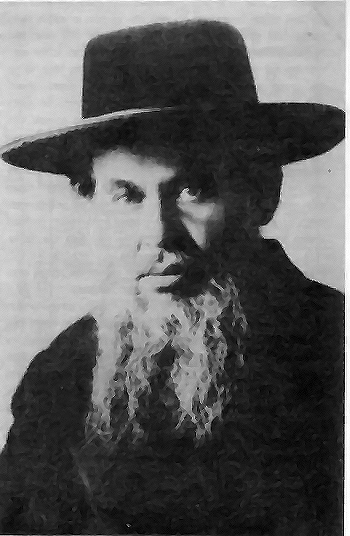

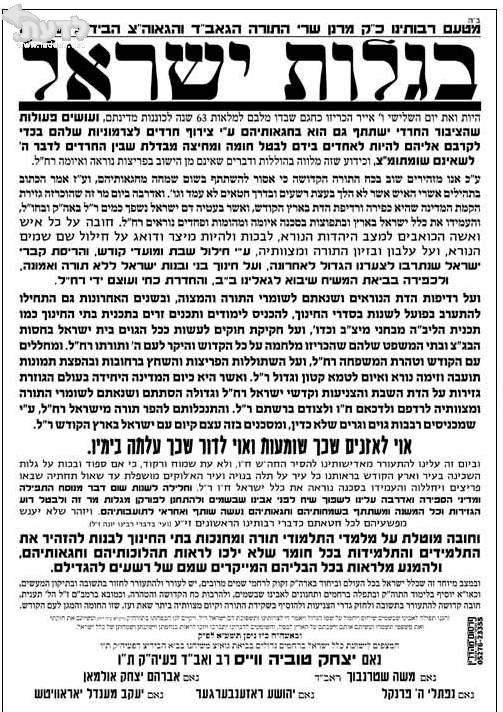


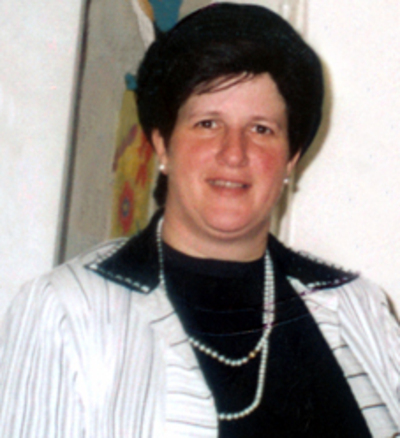
 could do so by writing their names and any message or request they might have. It is not my intention in this post to enter a halachic excursus about אין דורשים על המתים. Let’s assume that what the girls were asked to do is acceptable from a Halachic ground (yes, we are well aware that the Rambam is opposed to such practices).

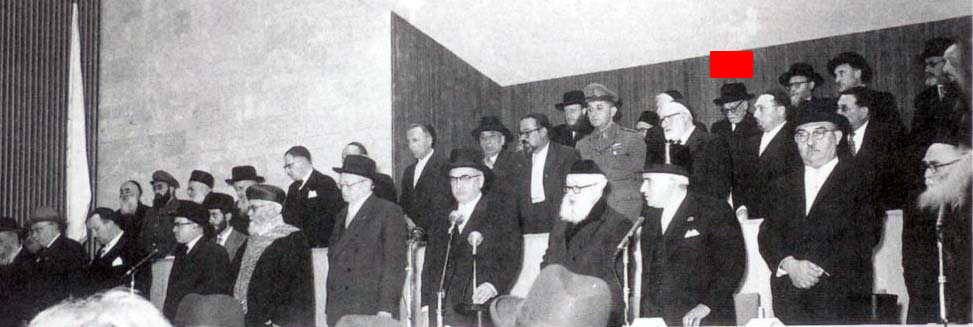
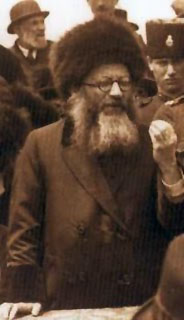
 They were powerful words. I gave the book to R’ Groner ז’ל as he was very excited to read it. R’ Groner, whom I miss greatly, was a walking encyclopaedia. He told me everything I wanted to know about Amshinov through to a vivid description of the size of R’ Shimon’s Shulem’s nose ז’ל 🙂 Subsequently, I told R’ Groner to keep the book, and I’m glad I did.





 pitputim
You must be logged in to post a comment.