My Mother’s Legacy: A Journey in Israel

Recently, my wife and I returned from an enriching five-week trip to the Holy Land. During our final days, we spent time with friends in Alon Shvut. After sharing our experiences, they asked, “What was the highlight of your trip?”

My response was immediate: the verse:

עיני ה׳ אלקיך בה מראשית השנה ועד אחרית שנה
“The eyes of Hashem are always upon it, from the beginning of the year to the end of the year”

I didn’t recite this verse lightly; I truly felt it. It was as if a comforting presence had been with us every single day of the trip.

It was a coincidence—or perhaps not—that my mother’s fifth yahrzeit was two weeks after our return from Israel. I hadn’t consciously been thinking about it, especially since my father’s yahrzeit occurred while we were in Israel. We visited his parents’ graves on Har HaMenuchot, but I felt stressed about not being in Melbourne. As is customary, I needed to find a synagogue where I could comfortably receive maftir on Shabbos and serve as chazzan for the yahrzeit, which also fell on Shabbos.

This proved challenging. I wasn’t keen on attending any of the numerous “minyan factories” near our accommodation, nor was I drawn to larger synagogues like Yeshurun in Jerusalem, although I’m sure they would have accommodated me.

By chance, while wandering near Machane Yehuda, I came across a quaint, albeit somewhat dilapidated, synagogue. It wasn’t Eidot HaMizrach, and they followed Ashkenazi traditions, which was close enough to the Nusach Sefard I’m accustomed to. Their Shabbos service started at 8 a.m., perfect for me.

While I might have been concerned about commemorating my father’s yahrzeit, it was my mother’s “presence” in Israel that was astounding and pervasive.

Family Roots

My mother’s parents came from two towns near Brisk (Brest-Litovsk): Terespol and Kodeń.

Before World War II, Terespol had a Jewish population of approximately 1,000–1,500, a significant portion of the town’s residents. The community had synagogues, schools, and actively participated in local trade and crafts. Terespol is just 3–5 kilometers from Brisk, separated by the Bug River, which now forms the border between Poland and Belarus. A bridge connects the two towns, making them essentially neighbors.

Kodeń, a nearby village, also had a Jewish community before the war, though smaller, estimated at a few hundred Jews.

My maternal grandparents were married in Brisk before moving to Warsaw, where my mother was born.

Unexpected Connections

The sense of connection deepened on the Friday night before our departure from Melbourne. During synagogue announcements, the gabbai mentioned various simchas. The last was an engagement between a family from São Paulo, Brazil, and a family from Melbourne. The bride’s father, whose surname was Flaksberg, was present.

I remembered my mother mentioning a cousin from Brazil named Shmiel Leib Flaksberg, though they hadn’t been in contact for over 40 years. I approached the bride’s father and asked if he was related to Shmiel Leib. He looked at me, astonished, and replied that Shmiel Leib was his grandfather.

When I explained that we were related, we were both stunned.

After World War II, my mother’s parents immigrated to the nascent State of Israel and established a small dairy farm in Yafo, Tel Aviv. My mother completed her schooling in Israel and spoke fluent Hebrew. Shmiel Leib and his family were frequent visitors to the farm. He even assisted my grandparents in transferring funds to Australia when they emigrated in the late 1950s.

I later discovered that Shmiel Leib’s son, Marek (Meir), now lives in Ra’anana. I got his contact information and reached out. Marek was visiting Jerusalem with his grandson, so we arranged to meet for coffee at Mamilla Mall.

Although Marek vividly remembered accompanying his father on Motzei Shabbos trips to my grandparents’ farm—apparently to purchase cows for Shechita and later sale—he wasn’t sure how we were related. Like many in his generation, he hadn’t spoken much with his father about family connections.

I’m now trying to piece that puzzle together. A possible clue is that his family hailed from Sławatycze, a nearby town with many people sharing my grandfather’s surname.

The Gershenzon Connection

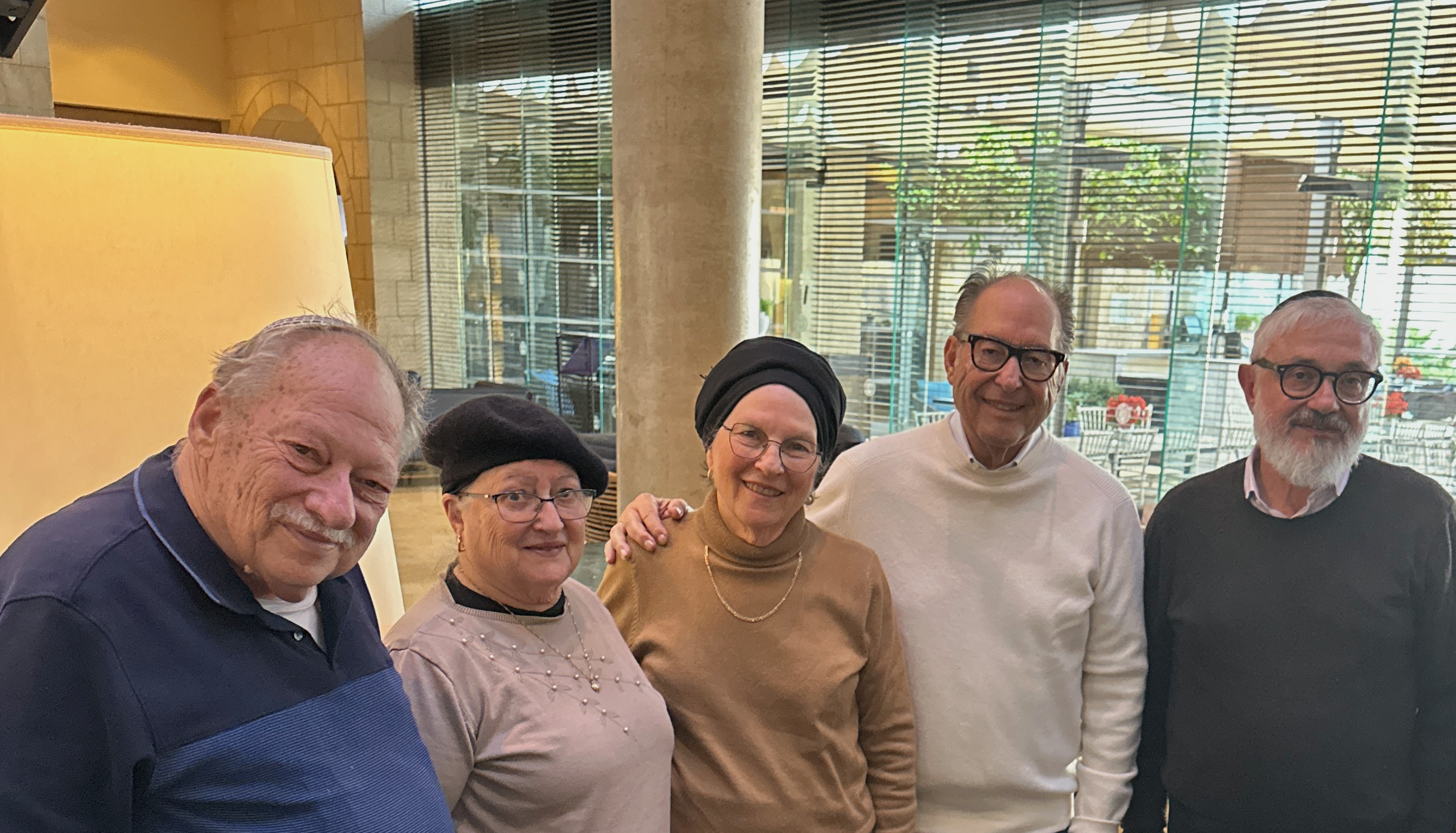
My grandmother’s maiden name was Gershenzon. The family had a presence in nearby Brisk and are, unsurprisingly, Leviim — Mishpachas HaGershuni. About 15 years ago, I discovered a Gershensohn cousin named Rachel in Ra’anana, though when her family emigrated to the USA, their name became “Samson.” I’ve been in touch with Rachel over the years. I had met one brother, Hershel. During this trip, I learned that her brother Lee was visiting from LA and her sister Shari was now in Jerusalem. I hadn’t met Shari or Lee before.

Shari lived in Kiryat Shemone. Her husband, Rav Tzefania Drori, was the Chief Rabbi of Kiryat Shmona and the rosh yeshiva of the Kiryat Shmona Hesder Yeshiva from 1977. Kiryat Shmona has been devastated during the current war with Hezbollah1.
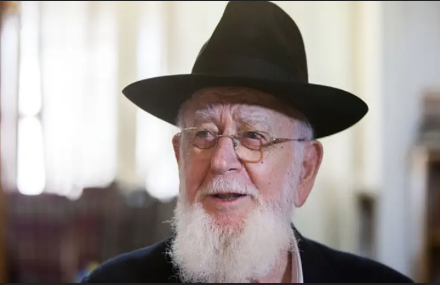
Rav Tzefania Drori

Lee Samson is a very well known business man and philanthropist in LA. He is a member of the International Board of Trustees of the Simon Wiesenthal Center and serves on the Board of Governors of Cedars Sinai Medical Center and the Board of Directors of the Orthodox Union2.

We shared a lovely lunch at the King David, and I had a warm feeling connecting with members of my mother’s family.
The Legacy of Elka

My mother’s name was Elka. Baruch Hashem, in the wider family, we now have four little girls named Elka and a boy named Elkana. Unsurprisingly, there were many Elkas in the Gershensohn family tree. One of these was a cousin of my mother’s named Elka Lowenstein, although she was known as “Ella.” (It wasn’t uncommon for secular Zionists to suggest that names like Elka were Yiddish and passé—my mother became known as Elisheva in school, and Elka Lowenstein became Ella.)

For about seven years, the Lowensteins moved from Israel to Melbourne, Australia, because they had been promised that “there was money growing on the trees.” They lived in Elizabeth Street in Ripponlea, and we used to pick up Ella and her two daughters, Tzippi and Rinat, each morning to take them to school (Beth Rivkah, where Ella worked in the kindergarten). The Lowensteins moved back to Israel, and though we shared many memorable years, including joint holidays and excursions, we lost touch. I hadn’t seen Tzippi or Rinat in over 40 years. I reached out to them, and to our great excitement, my wife and I took two trains to Kiryat Motzkin to meet them and Ella’s sister Rachel. We shared a very warm day reminiscing and committing to filling in some gaps in the family tree.

Ella was also related to the Bigon family (also spelled Begin). My mother had often spoken about Rav Dov Begun and his brother. They, too, were frequent visitors to my grandparents’ farm in Yafo. I had visited HaRav Begon on previous visits, and one of my sons spent the summer break in his Yeshivah.
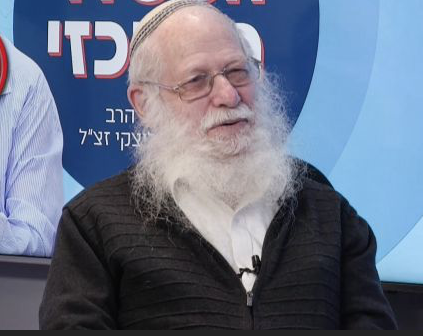
Rav Dov Begon

Rav Dov Begon was educated in the secular kibbutz movement yet was drawn to explore his Jewish heritage. His journey led him to Merkaz HaRav Kook Yeshiva in Jerusalem, where he studied for ten years, becoming one of the foremost students of Rabbi Zvi Yehuda Kook3. During the Six-Day War, HaRav served as a commander in the Israeli Defence Forces and participated in the liberation of Jerusalem. He forged a new path in the field of kiruv (outreach) and teshuva (repentance), helping Jews of all backgrounds reconnect with their heritage, uniquely based in the Religious Zionist community in Israel.

Connections in Shiloh

We spent a day in Shiloh, part of which was at the wonderful Gva’ot winery, where we enjoyed eight delectable wines paired with excellent cheese. Looking at the signage, I was again struck by the name “Drori”—another connection to my mother’s family. Gvaot is a boutique, family winery founded in 2005 by entrepreneur Amnon Weiss and Chief Winemaker Prof. Shivi Drori, an agronomist and researcher in viticulture and oenology at Ariel University. A research study led by Prof. Drori revealed approximately 60 ancient varieties of wine grapes from the Land of Israel in general, and Samaria in particular, from which wines have been produced for thousands of years. Shivi is a son of Sharri and Rav Tzefania Drori.

By now, I felt completely enveloped. Would a day pass without another gentle cosmic nudge from my mother?

As we were about to leave Shiloh, our friend suggested I pray Mincha in the main synagogue, architected to resemble parts of the Mishkan (which had been in Shiloh). At the end of prayer, a member of my wife’s family who lives in Shiloh suggested I meet the new Rabbi of Shiloh, Rabbi Yehonadav Drori, who had replaced Rabbi Elchanan Bin Nun after his 30-year tenure. Again, a family connection through my mother. I introduced myself and mentioned that we were family. We exchanged emails, and I will send him a family tree link.

Acts of Chesed

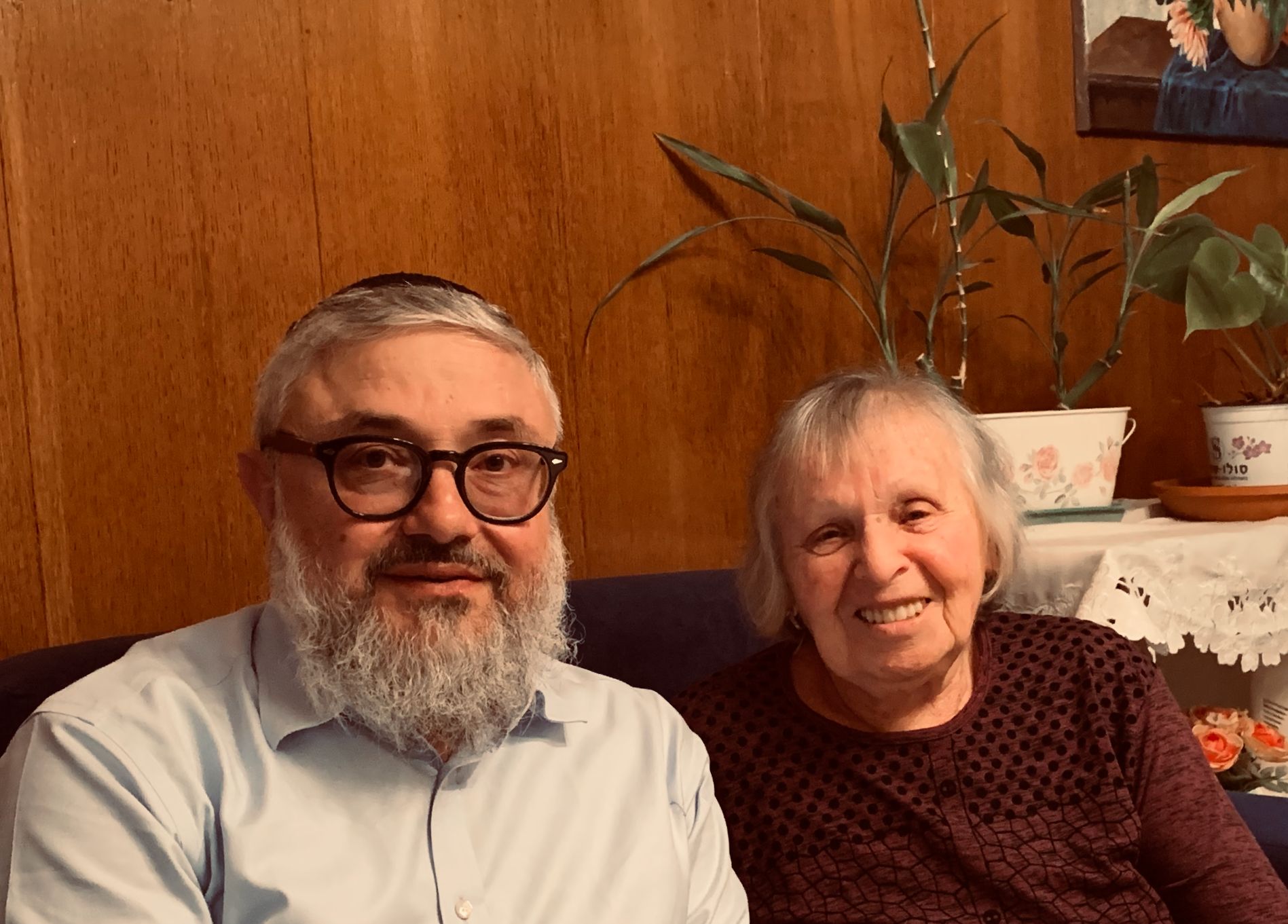
My mother was always involved in acts of Chesed (kindness). She had spent her formative school years in Israel but never forgot her closest friends. One of these was her lifelong friend Chava, who lives in a modest flat in Bat Yam. My mother wrote to Chava regularly, sending her clothes, money, and gifts for her family. They had a wonderful bond, and their love for each other was always palpable whenever they spoke on the phone.

Every trip I took to Israel included a visit to Chava. On this trip, our visit was towards the end. As we sat in her flat, especially after all the previous events, I wondered whether I was visiting her or visiting her on behalf of my mother! Was I a Shaliach (messenger) during this trip?
The Concept of Shlichus

The Gemara in the second chapter of Kiddushin asks what the source of the concept of Shlichus is. How do we know that one person can substitute for another according to the Halacha?

In respect of a Get, the Torah uses the root (Devarim 24) “v’shalach” which implies that a Get can be sent (by an appointee). Regarding the separation of Teruma from Chulin, the Torah states (Bamidbar 18) “ken tarimu gam atem,” and from the words “gam atem” we derive that someone else can separate Teruma on one’s behalf. We can conclude that from these verses there is authorisation to appoint someone to perform an act or mitzvah on one’s behalf.

At the same time, we have a concept that a Shaliach doesn’t just perform a transaction on behalf of the sender, but it is as if the Shaliach is the sender. That is, “shelucho shel adam k’moso” (one’s messenger is like oneself). The Gemara learns this from the Korban Pesach. Each person is enjoined to slaughter a Korban Pesach. Yet, we find that one person does so for a group of people. How can that be, given that each person needs to perform Shechita?

“Rabbi Yehoshua ben Korcha said: How do we know that one’s messenger is like oneself? As it says, ‘The entire assembly of the congregation of Israel shall slaughter it toward evening’ (Exodus 12:6). Does the entire congregation slaughter? Surely only one person slaughters! From here we learn that one’s messenger is like oneself” (Kiddushin 41b).

The Gemara learns from here that the Shaliach not only effects an act of Shechita but, in addition, it is considered as if the very person who appointed the Shaliach did the Shechita. That is, it is “mamash k’moso” (truly like oneself).

Are there in fact two perspectives through which Shelichus is viewed by the Torah? This question has occupied many Acharonim, ranging from Rabbi Shimon Shkop, Rabbi Chaim Brisker, and Rabbi Itzele Volozhiner as cited by Rabbi Baruch Ber, the Rogachover Gaon as cited by Rabbi Menachem Mendel Kasher, the Ohr Sameach, Rabbi Yosef Engel and more.

I’m not intending here to present their somewhat similar approaches to explaining the phenomenon. Rather, for the purposes of this essay, we can explain that when an act that is being performed causes some transactional change, then the Shaliach is acting with the authority and on behalf of the sender. We do not assume, however, that the Shaliach is “like” the sender in all cases.

For example, a Kohen cannot ask a Yisrael to perform the Avodah in the Beis HaMikdash by stating that the Yisrael assumes “the body” of the Kohen. In such a case, where the Shaliach’s action isn’t valid as an act in itself, the terms of the Shlichus do not even begin, and it is an invalid Shelichus.

On the other hand, a man can appoint a Shaliach to divorce his wife. We might think that this also makes no sense since the Shaliach isn’t married to the woman, so what is the meaning of the Get? In essence, though, there is nothing preventing a man from giving a Get (unlike a Yisrael doing the Avodah). Therefore, a Shaliach can be appointed in such a case.

This leads us to an interesting case where a man appoints a Shaliach to divorce his wife. This is valid because men have the ability in general to divorce a woman. But what happens if, after sending the Shaliach and before the Get took place, the sender suffered a mental breakdown and was no longer compos mentis?

If we say that the Shaliach is the embodiment of the sender, then the Shaliach ought to be considered mentally affected and unable to complete the Shlichus (the Ohr Sameach explains that this is the view of the Tur in Even HaEzer 128). On the other hand, if he is acting on behalf of the sender and the sender was perfectly normal and cognisant at the time of appointment, then the transaction could take place, at least on a Torah level (the Ohr Sameach contends that this is the view of the Rambam, Gerushin 2:15).

These considerations occupied my mind when I wondered about the nature of my interactions in Israel. When, for example, I was visiting my mother’s friend, I was doing a mitzvah, but was it as if I was the embodiment of my mother at that time in the sense of “Shelucho Shel Adam K’moso,” or was it a regular style Shelichus where I was performing the act on behalf of my mother?

Though, as I have outlined above, I had felt cosmically that my mother was hovering around all the interactions, given that she had passed away and was in a higher abode, perhaps the way to understand it was that she had passed on life tasks which, though they were on her behalf when she was alive, now assumed a continued valid Shelichus (also) on her behalf even after she has left this world.

The lesson to me is clear. Parents impart values and heritage. Some overtly tell their children what they ought to do. Other parents are less overt but achieve the same effect through their actions and personal example. I recognise that in our day and age, parenting has assumed a less overtly prescriptive approach, but even in my time, I feel less that I was told to do something and more that I sensed this was the right thing to do, and it was therefore my duty to do so.

On this day, my mother’s 5th yahrzeit, I feel the imperative of emulating her values and passing these onto my own children and grandchildren as acutely as I did when she was in this world and I was younger. When children are able to follow their parents’ upright morals and ethics, then though it is perhaps no longer “mamash k’moso” in the physical sense, the original Shlichus continues and works through the prism of a momentum that we often call the Mesorah.

May the Neshama of אמי מורתי Elka bas Tzvi עליה השלום have an Aliya

Footnotes

  1. Rav Drori also headed the Aguda LeHitnadvut and served as Av Beit Din of the northern conversion court. Rav Drori is considered a leading scholar of the Religious Zionist movement. He first studied at the Bnei Akiva Kfar HaRoeh high school yeshiva when Rabbi Moshe-Zvi Neria served as rosh yeshiva. Later, he helped establish Yeshivat Kerem B’Yavneh and then studied at Mercaz haRav yeshiva. Ironically, Yeshivat Kerem B’Yavneh was my alma mater, though I didn’t know of Rav Drori’s connection. He became an important student of Rabbi Zvi Yehuda Kook. ↩︎
  2. He is Chairman of the Board of Young Israel of North Beverly Hills, and he recently dedicated the Samson Center at Yeshiva University of Los Angeles High School. Additionally, he serves on the Los Angeles Philharmonic Board of Trustees. His philanthropy also centers on many institutions in Israel, including NCSY’s Anne Samson Jerusalem Journey, Shaare Zedek Hospital’s Lee and Anne Samson Interventional Neuro‐Radiology Unit in Jerusalem, The Museum of Tolerance Jerusalem, The Samson Family Wine Research Center at Ariel University, and more. ↩︎
  3. During the Six-Day War, HaRav served as a commander in the Israeli Defence Forces and participated in the liberation of Jerusalem. He forged a new path in the field of kiruv (outreach) and teshuva (repentance), helping Jews of all backgrounds reconnect with their heritage, uniquely based in the Religious Zionist community in Israel. ↩︎

Why did Donald Trump win?

This question will fill many pages of publications in the coming months. I have my own opinions, but I don’t think they’re worth sharing in a blog post.

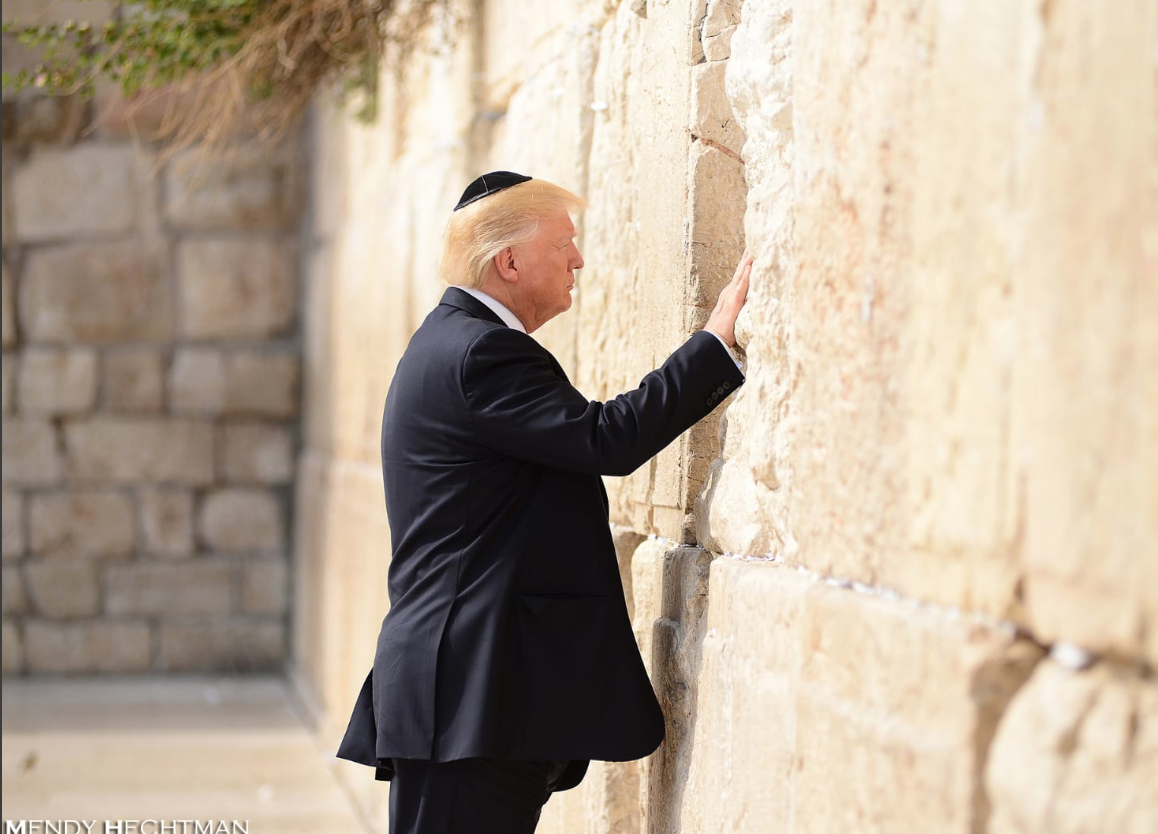
Circulating widely, however, is the well-known photo of Trump at the grave of the Lubavitcher Rebbe, זכותו יגן עלינו, alongside Ben Shapiro. Many comments have suggested this moment played a role in Trump’s victory.

In an approach that, perhaps ironically, aligns them closely with the religious Zionist camp, the Meshichisten —those badge-wearing individuals known for loudly proclaiming “Yechi Adonenu…,” waving yellow flags, sporting large yarmulkes with “Yechi” emblazoned on them, decorating their cars with oversized images of the Lubavitcher Rebbe, and even illegally carving niches into the walls of 770 Eastern Parkway—found the picture at the gravesite deeply troubling. The reason is simple: the image suggests, and indeed affirms, that the Lubavitcher Rebbe has actually passed away, a notion they struggle to accept.

As a result, if you chance upon their websites, this alternative picture is used.

Nothing quite compares to the unlikely alignment between the yellow-flag-waving Meshichisten and the Religious Zionists—and it took Trump and the Lubavitcher Rebbe to bring them together.

Fiddling with the Seder

It’s remarkable how, since its compilation during the time of the Mishna, the text of the Haggada has remained largely intact throughout Jewish history. While some additional poems were introduced in the 1500s, they are typically sung with great enthusiasm at the conclusion of the Seder.

Pesach is a celebration of joy, a time imbued with happiness. It serves as a commemoration not only of the miraculous redemption from ancient Egypt but as an annual opportunity for us to relive that experience. How? By cultivating a profound sense of belief and anticipation that, just as in the past, Hashem will redeem us—perhaps even today.

It’s quite a challenge to attend a Seder and expect to suddenly grasp this feeling solely through reading the Haggada. Even with the inclusion of the symbolic elements of the night—Pesach, Matzo, Marror and more—while they may enhance the educational aspect of the evening, they alone, in my opinion, won’t likely suffice. It’s no wonder, then, that educators have tried to introduce new activities into the Seder, albeit perhaps mistakenly believing that these will solve the issue

I’ve heard of individuals who carry a brick during the Seder to symbolize the experience of servitude endured by our ancestors! Others have placed an orange on the Seder plate to signal inclusivity. The proponents of deviating from the traditional Mesora are often found within the Reform/Liberal communities. With their approach of fluidity, mostly at the expense of the Masoretic tradition, one can only speculate what innovations might emerge at the Seder each year. For instance, an old schoolmate of mine (who is Orthodox) mentioned planning to include olive branches at his Seder to emphasise messages of peace amidst a diverse group of guests. (I advised him against altering the Seder Plate or the Haggada and suggested integrating the branches into discussions relevant to specific sections of the Haggada text.)

I believe the motive behind these additions is well-intentioned but often stems from a lack of comprehensive Jewish knowledge. How much effort is put into studying the various texts of the Haggada before the Seder? With a growing abundance of Haggadas published annually, each with its own unique style and approach, it seems that in many cases, there is little to no preparation. While those who lead a traditional Seder without the allure of a ‘Seder Getaway’ to an exotic location may indeed find themselves exhausted—some more than others—the Seder and the Haggada benefit from a year-round regimen of Jewish learning. Engaging with Torah study, even if it’s just an hour a week, can significantly deepen one’s understanding of the text and bring them closer to the assurance that God has promised to redeem us swiftly in our time.

The disparity between those who can more readily experience the joy of Pesach and those facing greater challenges is accentuated during times of hardship. How can we cultivate happiness amidst suffering? How do we overcome feelings of despair?

Irving J. Rosenbaum wrote:

“Observance of Passover, the “Festival of Freedom,” by the Jews enslaved in the ghettos and concentration camps of Nazi Europe would appear, at first glance, to be anomalous, if not actually blasphemous. Yet upon reflection it becomes evident that this was the festival in the Jewish religious calendar which spoke most directly to their condition. The familiar phrases of the Haggadah took on new and immediate significance.

This is the bread of affliction… now we are slaves—next year we shall be free men. … and also that nation whom they shall serve, will I judge; and afterward they shall come out with great substance.

This is the bread of affliction… now we are slaves—next year we shall be free men. … and also that nation whom they shall serve, will I judge; and afterward they shall come out with great substance. It is this divine pledge that hath stood by our fathers and by us also. Not only one hath risen against us to destroy us, but in every generation have men risen against us to destroy us-but the Holy One, blessed be He, delivereth us always from their hand… Pour out thy wrath upon the nations that have not known thee, and upon the kingdoms that have not called upon thy name: for they have devoured Jacob and laid waste his dwelling place… Pour out thy indignation upon them, and let thy wrathful anger pursue them. Pursue and destroy them in anger from under the Heavens of God

“The Holocaust and Halacha” by Irving J. Rosenbaum, Ktav 1976

After the Holocaust, there was indeed a push to integrate the tragedy of the Holocaust into the Passover Seder. However, this idea was vehemently rejected by Rabbi Yosef Dov Halevi Soloveitchik, known as the Rav. In a letter to Rabbi Theodore Adams in 1953, the Rav expressed (my emphasis below):

As to the suggested addition to the Seder service in the form of a memorial for our brethren lost in the Nazi Holocaust, I strongly disapprove both of the idea itself and of the text.

Jewish tradition has introduced a separate memorial service for the deceased on the three pilgrim festivals and on Yom Kippur, which in its initial phase was probably confined to the commemoration of those who incurred a martyr’s death. (It apparently came into existence in the period following the Crusades. The recital of the Av ha-Rahamim prayer as a continuation of the memorial service and its place in the regular Sabbath service corroborate this point). There is no reason why we should add a new memorial for the martyrs of the most recent catastrophe as a part of the Seder service, which has been dedicated to the great miracle of Jewish redemption and survival. The superhuman historical experience of Jewish martyrdom has found other media of expression and manifestation not connected with the epic of the exodus. Neither the scholars who survived the Bar Kokhba debacle nor the generation of the Crusades nor the contemporaries of the Spanish Inquisition nor those at the time of the horrible Cossack pogroms of 1648 found it necessary to mar the joyous spirit of the holy night by commemorating the sad experiences they lived through.

The Halakhah has always looked askance upon any attempt to introduce a note of sadness into the festive and joyous mood of a holiday. Even the memorial service was designated whenever possible (on Pesah and Shavuot) on the last day of the holiday (yom tov sheni shel galuyot). In my opinion, the few sentences of shefokh hamatkha, great and awe-inspiring in their simplicity, serve the purpose far better than any “synthetic” product prepared by modern rabbis and secularists. Let us instead request all congregations to say the traditional prayer of El Male Rahamim for the millions of martyrs on the last day of Passover as a part of the conventional memorial service.

Community and Covenant, Selected Letters and Communications, Edited by N. Helfgot, Ktav 2005.

This year, we face another challenge, this time due to the terrible calamity of the hostages seized by Hamas terrorists. Can we truly embrace feelings of joy at the Seder while our brothers and sisters are in severe anguish? There’s no need for elaboration. Not a single home in Israel remains untouched by direct or indirect tragedy. As the Rav wrote, ‘Shefokh Hamaskha’ certainly encapsulates our collective hope.

So, what about the Seder? Should we solely focus on the parts that recount the suffering of the Jews and resonate with that narrative? Yes, indeed, we can and should. However, the real challenge, as mentioned earlier, lies in maintaining faith that Hashem has a plan—a plan that surpasses human understanding. His plan instills joy because it promises redemption. We must hold onto this belief. It’s the underlying message that has upheld Jews and Judaism throughout history. Without it, we would have assimilated and vanished long ago. This is the essence of the joy of Pesach—the miraculous and supernatural endurance and redemption of the Jewish people.

Some have advocated a special prayer to be said before Vehi Sheamda. The Ashkenazi Chief Rabbi David Lau published a special prayer

יְהִי רָצוֹן מִלִּפְנֵי אָבִינוּ שֶׁבַּשָּׁמַיִם
אֲשֶׁר הוֹצִיא אֶת עַמּוֹ יִשְׂרָאֵל מִתַּחַת סִבְלוֹת מִצְרַיִם
הוּא יְבָרֵךְ וְיִנְצֹר אֶת אַחֵינוּ וְאַחְיוֹתֵינוּ הַחֲטוּפִים
הָאֲסוּרִים בְּכַבְלֵי בַּרְזֶל
יְחַזֵּק נַפְשָׁם וֶאֱמוּנָתָם
יִשְׁמְרֵם מִכָּל נֶגַע וּמַחֲלָה
יַחְמֹל עַל בָּנָיו וּבְנוֹתָיו הַמְּצַפִּים לִישׁוּעָתוֹ
יְבַטֵּל מֵעֲלֵיהֶם כָּל גְּזֵרוֹת אַכְזָרִיּוֹת
בְּחַסְדּוֹ הַגָּדוֹל יָחִישׁ פְּדוּתָם וְיֵצְאוּ מְהֵרָה מֵאֲפֵלָה לְאוֹרָה
וּמִבּוֹר הַשְּׁבִי לְחֵרוּת עוֹלָם
וְיָשׁוּבוּ לְשָׁלוֹם אֶל מִשְׁפְּחוֹתֵיהֶם וְאֶל בָּתֵּיהֶם
אָנָּא, נֶטַע אַחֲוָה שָׁלוֹם וְרֵעוּת בְּלֵב כֻּלָּם
הָסֵר קִנְאָה וְשִׂנְאַת חִנָּם וּפְרֹס עָלֵינוּ סֻכַּת שְׁלוֹמֶךָ
וְנִזְכֶּה בְּקָרוֹב לוֹמַר לְפָנֶיךָ שִׁירָה חֲדָשָׁה.

a loose translation of which is

May it be favourable before our Father in heaven

Who brought out His people Israel from the crushing burdens of Pharaoh’s Egypt,

That He bless and protect all our brothers and sisters who are hostages and in captivity

Incarcerated in iron chains.

May he strengthen their souls and faith,

Guard them from all distress and injury.

May He have compassion on his children who eagerly yearn for His deliverance.

May He annul every cruel decree issued against them.

In his great mercy, may He redeem them rapidly, so they go out with haste from darkness to light

From the pit of the dungeon to perpetual freedom.

And may He return them in peace to their families and homes.

Please, plant fraternity, peace and kinship in the hearts of them all.

Remove envy and causeless hatred and spread out the canopy of Your peace.

And may we merit very soon to utter before you a new song [of joy and praise]

I heard that Rav Yosef Tzvi Rimon also published a prayer though I haven’t seen it. I will update this post when I get a copy.

Some suggestions have been less than sensible. For instance, one individual apparently proposed reducing the number of matzos from three to two (as was the general practice of the Rambam and others) to symbolise the grief we are experiencing. However, in a lecture by Rabbi Shay Schachter, a compelling argument is made that those seeking to express their grief symbolically through food should refrain from altering the matzos. We adhere to our Masoretic tradition of three matzos. Instead, someone wishing to utilise food symbolism might consider (based on the Gemara) reducing the variety of appetisers, skipping dessert, or forgoing kneidlach (for those who don’t avoid Gebrokts), among other options.

In a similar vein, I heard that someone approached the Lubavitcher Rebbe and proposed keeping an empty chair to symbolise those who cannot participate in a Seder. While this suggestion may seem reasonable, the Rebbe’s response was characteristically incisive, offering a better and more consistent approach in line with what I have previously written.

“Instead of having an empty chair, have an extra chair, and invite another Jew who might not have come to the seder”

I don’t have a citation for this comment at present.

Yes, it will be challenging. Yes, we vividly feel the suffering, but the Haggada offers enough, especially if we prepare adequately, to help us recognise that the suffering will come to an end and pave the way for the promised Redemption. Simcha must be the aim of our state of mind.

A reaction to same gender marriage vote in Australia

Unsurprisingly the majority of voters decided that they were in favour of homosexual marriage. Perhaps thirty years ago the vote would have been different, but lots of things were different then.

So, how should the Jew react. I do not address myself to those whose religions are based on Orthodox Judaism. They aren’t interested in my opinion, and I feel sorry that they harbour certain beliefs that they do.

I ask the question of Orthodox, practicing or otherwise, Jews. I believe the answer to this question will be addressed from the pulpit by the Orthodox Rabbis of our Shules; at least most of them (especially those who speak more about the goings on in the world than the weekly portion of the Torah).

I predict there will be (at least) the following five approaches:

The safe option: Say nothing. Congregants who are against it will remain so, and those who are for it, may come to dislike the Rabbi and/or Judaism and move to greener pastures. This is halachically שב ואל תעשה. It has a place and is an approach with some basis.

The bold option: Say that we live in a democracy and this allows us our freedoms, including our freedom to practice our own religion. That society (and yes, the ‘Jewish’ seats of Melbourne Ports and Wentworth were very strong supporters of homosexual marriage) chose this new path means that we should hold on ever so much more forcefully to the unambiguous Torah Law, and never allow these arrangements in a Jewish (Orthodox) setting.

A variation of the bold option, is the populist option. It is akin to the Rabbi who is more of a friend than a spiritual mentor who is friendly. They will talk about democracy as above and free choice, but will stop short of making statements which unambiguously present the view that the choice itself is not in accordance with Halacha, be it Jewish or Noachide.

The delusional option: these will be words along the lines of the populist option but without any whiff of negativity. Remember, a child “doesn’t get dirty at school”, rather, “one part of their clothes comes home clean”. The delusional ones oversee a void of suitable educational programs. Their congregants come only three times (now it’s two, and yizkor is all but forgotten) a year. Every manner of schtick is used to herd them to an event. In the end though, congregants cannot navigate the basics of a siddur, the true spiritual transmission from the well-intentioned Rabbi approaches zero and the role occupies a cross between a popularity contest and a feel good eloquent sermon.

The marginal option: this one is seemingly akin to the delusional approach but falls outside that boundary. It is known as Open Orthodoxy. They actually announce Mazel Tovs and the like for such unions. This is beyond the Orthodox pale.

Where will your Shule/Synagogue/Shtiebel/Temple align itself?

[There is a sixth approach of ‘fire and brimstone’ but I consider that approach a waste of time]

Free Choice is a critical component of Judaism. Without free choice, there is no notion of reward and punishment. However, free choice does not mean that the actual choice taken must be supported or considered in keeping with a God-defined morality. As such, a choice antithetical to Torah must be respectfully disagreed with as being incongruent with Torah.

[ Ironically, it wasn’t long ago that people were downplaying the importance of the marriage institution and strongly promoting the “partnership”/”de facto” model.  Even today’s society wouldn’t say that one must get married, would it?]

We don’t have marriage anyway. We have Kiddushin. We also respect those created in the image of God, but we do not have to agree with all that they propose or practice.

That’s THEIR choice

If it ever got to a point where a religious functionary had to carry out a homosexual marriage according to secular law, then it would be ייהרג ואל יעבור and pack your bags and hop onto a flight to ארץ הקודש sooner.

Missing the point about Jews, Judaism and Zionism

We are used to worrying about the BDS boycott, and various academic boycotts and the like. There has been no talk of boycotts in my University. If the National Tertiary Education Union went down those stairs and/or the University, there would be mayhem.

What attracted my attention today is a statement we hear over and over, in various guises and contexts. The statement is attributed in the Jerusalem to former Chief Rabbi Sacks, a brilliant speaker and writer. He is alleged to have said

Speaking to The Jerusalem Post, Sacks said that some politicians in the British Labour Party had courted the Muslim vote and had adopted anti-Israel attitudes which have morphed into anti-Semitism.

I could not DISagree more. Where is the clear thinking. Anti-Israel attitudes expressed in the context of ‘we must solve the problem of Palestinian Arabs’ is nothing more than anti-Semitism. This is not anti-Zionism. The logic is exceedingly simple. There is no body, none, that will agree that Jews deserve a homeland, and that homeland is Israel. This narrative is elided too often. Some will quibble over the definition of borders and security provisions and so forth. They are issues that should be discussed. However, since 1948 and before that, there is still no recognition that Jews need a homeland. In this I include the entire spectrum of Jews in Israel except for the hand full of lunatics led by Moshe Ber Beck, the Iranian nuzzler. He is welcome to live there, and be happy. They are not religious Jews. They have seen that all their sycophantic activities amount to nothing but Bitul Torah while protesting and travel.

No, Rabbi Sacks. Nothing has “morphed“. This is classic fallacy filled British diplomacy . The anti-Semitic Ken Livingstone types of this world should be dethroned, but to allow the semblance of thought that Jews are not entitled to their homeland, as above, and call this entitlement Zionism, is bizarre, I find it difficult to comprehend. Nay, this is an attack on Judaism 101. We assert our right to live in peaceful boundaries. Those who seek to deny this right, whether emanating from explicit charter, whispering, obfuscation or diplobabble (the French Connection) are anti-Semites.

As Rav Kook so eloquently put it:

“It is only the anticipation of redemption that preserves Judaism in Exile, while Judaism in the Land of Israel is the redemption itself.”

This redemption is what we aspire to.

[ Only an ignorant would interpret this to mean Rav Kook’s Judaism in Exile was not infused with Torah. ]


Same gender group in the Jewish Community Council of Victoria

I am implacably against anyone hurling vitriol or discriminating against someone because of sexual proclivity/preference, but my take on such a council as the Jewish Community Council of Victoria (JCCV) is that groups with sub-philosophies within Judaism are members representing a given approach within a broader philosophic cum cultural definition of Judaism. For example, Bund, Orthodox, Sephardim, Conservative, Reform, Secular Zionist etc

I don’t know how sexual preference defines a sub culture or philosophy of Jews or Judaism per se given it crosses all groups anyway.

They should be afforded full support by the JCCV and indeed the Council of Orthodox Synagogues of Victoria (COSV) in the face of issues which they face, and pastoral/other assistance but their membership extends across the existing sub groups, I would have thought. Services to assist I fully understand and support, but I don’t understand a grouping that defines itself by its sexual preference.

For this reason I don’t understand why they need or want a formal membership separate from existing groups.

As far as Orthodox Shules are concerned, I’ve personally not encountered anyone being called out or excluded or insulted because of a sexual preference. Of course, I stand to be corrected if that has occurred especially in the last ten years.

It comes therefore as a surprise to me that apparently  Caulfield, Brighton, Blake Street, North Eastern, East Melbourne and Kew Shules will all be voting in favor. I imagine the others will either not be present or abstain or go on ‘walk about’. The COSV is pretty much a toothless tiger, and on a matter such as this, they should consult the Rabbinic Council of Victoria as well.

For an Orthodox group(s) I would express disdain for acts which highlight someone’s sexuality and/or take action verbally or otherwise against such people. I think that’s a given in our society. Is it not?

That being said same gender KIDDUSHIN cannot and will not ever be supported by Orthodoxy. That also needs to be made clear, and certainly by Sam Tatarka, Danny Lamm and other orthodox members of the JCCV. There can be no hiding or diplomatic sweeping under the carpet of this axiom  by simply not mentioning it.

Mixed Gender Functions

[Hat tip MD]

Recently, a question was asked of the Charedi Leumi Posek, Rav Aviner, about a 50 year reunion of a group of couples who had been part of a youth group 50 years prior. They would be attending, were frum, all with their wives, and the idea was that they would recollect memories and have an enjoyable evening. The question asked to him was

Is such a reunion permitted according to Halacha

I guess the mere fact that they asked Rav Aviner the question before going ahead with their reunion is testament to their frumkeit and fidelity to Halacha. Those who are not so beholden to their Rabbi, would not even ask a question.

At any rate, Rav Aviner’s answer was

“חלילה. זו מכבסת מילים לפעילות מעורבת. זה איסור חמור גם אם אלו יראי שמים. ולצערנו יש פעמים רבות פעילות המשך

In other words, definitely not permitted and is a serious halachic infraction even if the participants are frum! Rav Aviner opines that unfortunately, there are sometimes serious outcomes from such events.

In other words, age makes no difference, and one would assume, a fortiori, that this would be forbidden for younger couples. I won’t extrapolate to mixed tables of singles at a wedding who are looking for Shidduchim. Rav Aviner may have the same opinion as R’ Aron Soltoveitchik that this isn’t just permitted but desirable. It is dangerous to extrapolate in Halacha.

Upon hearing of this Psak, respected Rav Amnon Bazak (whose writings I am acquainted with and if I am not mistaken he may have visited Melbourne) of Har Etzyon, disagreed with Rav Aviner on three grounds.

  1. The attitude of the Rishonim and Acharonim on issues such as this, was and is tightly connected with the practices in such communities. In other words, if it was common place for men and women to meet, then Poskim such as the Bach, opined that it is permitted (if you want to read more about this examine the issue of whether to say שהשמחה במעונו at a mixed Sheva Brachos. If my memory serves me correctly, the Kitzur Shulchan Aruch is Machmir and says no). The point of Rav Bazak was that this is something which may well change from community to community. I wouldn’t expect this to happen in Satmar, or Belz, where the women aren’t even allowed to drive cars, of course.
  2. If one wants to say “those who are stringent will get a blessing”, this leaves is a sour taste because the idea that they get a blessing on account of people who really are not doing anything wrong according to plain Halacha.
  3. What’s the point in putting out words like ‘absolutely forbidden’ when this happens all the time, at tables, which involve Chachomim and Roshei Yeshivah at their meals?

There is also the question of when you have two long tables at a Sheva Brachos one with men and the other with women without a Mechitza. Some will still say this is “mixed” other will not, even according to those who argue with the Bach.

Mori V’Rabbi, R’ Hershel Schachter relates that R’ Moshe Feinstein ז’ל and R’ Yaakov Kaminetzy ז’ל  and others made weddings and there were mixed tables. He does however caution that times have changed somewhat to those days. He doesn’t use Rav Bazak’s arguments but notes that

  1. Women tend not to wear the ornate thick dresses that they wore in yesteryear, and sometimes, perhaps too often, are on the boundary of Tzniyus with flimsy clothing which leaves little to the imagination
  2. The music in those days was much slower and it was rare to find a women or man return to the table shvitzing with all that comes from that phenomenon and fine cloth.

Accordingly, he suggests caution at weddings.

Your views? I believe this is societal and something according to הרגלם and will change from group to group to the extent that a blanket opinion is elusive and probably not advised.

There is a lot of “Ess Past Nisht” and I’m not arguing. I’m just quoting and adding to this article

בענין סתירת הרמבם שלא יתערבו או שלא יסתכלו זה את זה,  כבר דשו ביה רבים

Same gender marriage

My first point is a Jewish one. Marriage does not equal Kiddushin. It is a civil concept. Were it not a civil requirement for certain privileges, many Jews would simply not be involved in secular marriage.

Kiddushin is well defined. It is JEWISH marriage. On that front, there is no compromise and there can not be a change. The Torah is explicit. Those who find an opening can call it what they like, but it’s not KIDDUSHIN, and anyone who calls it Kiddushin belongs to the Reform movement and is not considered part of mainstream Judaism.

How should Jews then react to the Civil contract of Marriage? I look at these issues through the eyes of Halacha. The Halacha which is germane, is that of B’nei Noach. The reality is that we cannot be seen to be supporting something contrary to the Noachide laws. Those people, however, have free choice. When they live in a union, which they already do, without the civil contract, they are technically in breach, although one wonders whether Tinok Shenishba applies 🙂 I do not think the Jewish vote classifies as Mesayea Lidvar Aveyra or that this even applies because they already do it without the contract.

So, what would I say if asked? I would say that Judaism does not support same gender  marriage contracts. Judaism doesn’t proselytise, and whilst we have our views we recognise that the non Judaic world are governed by the laws of that land. We adhere to the laws of the land, but our personal stance as a religion is that there should be no change. At the same time, we do not support making someone an outcast because of their proclivities. Those are personal matters. We also feel that should the civil concept be legalised, all groupings based on gender preference should dissipate as this only causes animosity.

On the Age of 20 in Judaism

One of my readers commented (with his usual vitriolic language) about this age in the context of halachic maturity (which was the essence I was discussing in that original article in respect of Yossi Feldman focussing on age 13 at the Royal Commission as being the transition from a minor to something else). I felt this was disingenuous, but be that as it may, another reader sent me the following which I present as of interest. If I find some time over Shabbos, I may add to this from the Tzitz Eliezer as I had mentioned in the comments section.

גיל הבגרות המלאה 

אף שהבגרות ההלכתית לזכרים הוא גיל 13, מצאנו במקורות רבים שגיל הבגרות המלאה הוא 20. 

בתנ”ך מצאנו במספר מקומות את גיל עשרים שנה כגיל הבגרות המלאה:

בתרומת מחצית השקל: שמות פרק ל פסוק יד, וכן בפרק לח פסוק כו.

בערכים: ויקרא פרק כז פסוקים ג, ה.

במפקדים: במדבר א, פסוקים ג-מה, פרק כו, ב, ד, דברי הימים א כז,כג, ב כה, ה.

בחטא המרגלים: במדבר פרק יד, כט, פרק לב, יא.

בגיל הלויים לעבודת המקדש: עזרא ג, ח, דברי הימים א כ, כד-כז, ב לא, יז, אך ראו במדבר ח פסוק כד: “זאת אשר ללוים מבן חמש ועשרים שנה ומעלה יבא לצבא צבא בעבודת אהל מועד”, חולין דף כד עמוד א, ורמב”ם כלי המקדש פרק ג הלכה ז.

ביוצאי מצרים מצאנו מחלוקת בין הפרשנים בגילם של ה”גברים” וה”טף” יוצאי מצרים:

“ויסעו בני ישראל מרעמסס סכתה כשש מאות אלף רגלי הגברים לבד מטף”. (שמות פרק יב פסוק לז). 

מה היה גילם של הגברים, ומה היה גילם של הטף?

בעוד האבן עזרא (בפירושיו הארוך והקצר) מתייחס לגילם של הטף:

“לבד מטף שהוא פחות מכ’ שנה”. 

הרי רש”י בפירושו מתייחס לגילם של הגברים:

“הגברים – מבן עשרים שנה ומעלה”. 

לדעת הרב מנחם כשר, (תורה שלמה חלק יב, הערה תקפ”ב), מקורם הוא במכילתא דרבי שמעון בר יוחאי פרק יב פסוק (לז) ויסעו:

“מטף מלמד שעשו עמהן פחות מבן [עשרים שנה]”. 

בשיר השירים רבה (וילנא) פרשה ג ד”ה ד ורבנן פתרי:

“ששים גבורים, אלו ששים רבוא שיצאו ממצרים מבן עשרים שנה ולמעלה. מגבורי ישראל, אלו ששים רבוא שיצאו ממצרים מבן עשרים שנה ולמטה”. 

הרמב”ן כתב, (שמות פרק ל פסוק יב):

“והנה ישראל כשיצאו ממצרים היו כשש מאות אלף רגלי (שמות יב לז), לא שש מאות, ומתו מהם עד המנין ההוא, ונתרבו במשלימים שנותיהם. ואולי “הגברים” אינם בני עשרים, אבל כל הנקרא איש מבן שלש עשרה שנה ומעלה בכלל, כי הוא להוציא הנשים והקטנים בלבד, כאשר אמר לבד מטף”. 

[בספרות החיצונית מצאנו שבהקרבת קרבן הפסח חייבים רק בני עשרים שנה ומעלה.

במגילת המקדש (יז, ח), נאמר:

“מבן עשרים שנה ומעלה יעשו אותו ואכלוהו בלילה”.

בספר היובלים (מט, א, יז) נאמר:

“בדבר הפסח לעשותו בעתו בארבעה עשר לחודש הראשון… כל איש אשר בא ביומו יאכלוהו בבית המקדש אלהיכם לפני ה’ מבן עשרים שנה ומעלה”].

בתלמוד מצאנו במספר מקומות איסור למלא תפקיד ציבורי על מי שאינו “בן עשרים”:

בעבודה במקדש:

מאימתי כשר לעבודה? משיביא שתי שערות, רבי אומר, אומר אני עד שיהיה בן עשרים … ת”ר: מאימתי כשר לעבודה, משיביא שתי שערות, אבל אחיו הכהנים אין מניחים לו לעבוד עד שיהא בן עשרים”. (ספרא אמור פרשה ג, חולין דף כד עמוד ב), וראו רמב”ם הלכות כלי המקדש פרק ה הט”ו.

כשליח-ציבור ועלייה לדוכן: 

“… אינו עובר לפני התיבה, ואינו נושא את כפיו, ואינו עומד על הדוכן עד שימלא זקנו. רבי אומר: וכולהם מבן עשרים שנה ומעלה, שנאמר ויעמידו את הלויים מבן עשרים שנה ומעלה”. (ירושלמי סוכה פ”ג הי”ב, וראו תוספתא כפשוטה (ליברמן), חגיגה פרק א הלכה ג, חולין דף כד ע”ב, מסכת סופרים פרק יד הלכה יג).

לדון דיני נפשות: 

לדברי רבי אבהו בשם ר’ יוחנן, מי שהוא פחות מגיל עשרים פסול לדון דיני נפשות (ירושלמי סנהדרין פ”ד ה”ז), וראו שו”ת הרשב”א חלק ו סימן קע”ט: “… לפי שעדיין אינו בשלימות דעתו … “.

אף אדם וחוה “כבן עשרים שנה נבראו”. (ב”ר פרשה יד ד”ה ז, שהש”ר פרשה ג),

אלא שמצאנו שאף שמשה היה בהגדרת “גדול” באותה עת, הוא לא היה “איש”.

על הפסוק “ויגדל משה ויצא אל אחיו” (שמות ב, יא), נאמר במדרש:

ויגדלבן עשרים שנה היה. (שמו”ר ( א, ד”ה כז).

את הפסוק (שמות פרק ב פסוק יד): “ויאמר מי שמך לאיש שר ושפט עלינו הלהרגני אתה אמר כאשר הרגת את המצרי …”, מפרש רש”י: “מי שמך לאיש – והרי עודך נער”.

במדרש תנחומא, (ורשא) שמות סימן ח:

” … א”ל אחד מהם מי שמך לאיש ועדיין אין אתה איש מלמד שהיה פחות מבן עשרים”.

במדרש שכל טוב, (שמות פ”ד):

“ומסורת בידינו שבן עשרים שנה היה משה כשהרג את הנפש … שדתן הרשע אמר לו מי שמך לאיש … כלומר עדיין לא הגעת להיות איש …”. 

לדברי המדרש שמות רבה (וילנא) פרשה א ד”ה ל, היה אז או בן עשרים ואיש הוא במשמעות מבוגר, או בן ארבעים, ואיש משמעותו שליט:

“ויאמר מי שמך לאיש שר וגו’, ר’ יהודה אומר בן כ’ שנה היה משה באותה שעה אמרו לו עדיין אין אתה ראוי להיות שר ושופט עלינו לפי שבן ארבעים שנה לבינה, ור’ נחמיה אמר בן ארבעים שנה היה, אמרו לו ודאי שאתה איש אלא שאי אתה ראוי להיות שר ושופט עלינו”. 

בילקוט שמעוני, (שמות רמז קסז, מקורו מדרש אבכיר) נאמר, שגיל הבגרות להקרא איש הוא 25:

“… שבאותה שעה לא היה כי אם בן עשרים שנה … ואמרו מי שמך לאיש, שאין אדם נקרא איש עד כ”ה שנים, כלומר עדיין לא הגעת לאיש …”.

הרב מנחם כשר מביא בתורה שלמה (שמות פ”ב סוף הערה פ”א) 9שיטות לגילו של משה באותה עת: בן 12, 18, 20, 21, 29, 32, 40, 50. 60.

ר”י אבן שועיב כותב בדרשותיו, (פרשת ויחי בד”ה בישישים חכמה), שגיל הבגרות הוא עשרים:

“… והילדות הוא מעט משנולד אדם עד עשרים שנה, ובזה הזמן יש בו גידול תמיד”.

Are you going to be a criminal?

The following article about the research of Adam Raine  which looks at biological predisposition and responsibility is fascinating. Based on the Rambam, I think that Judaism has always recognised that people are born with tendencies. Depending on the spectrum, one either douses the tendency as a life long struggle, or, where it’s stronger, is meant to divert the latent urge to something that is permitted. Lurking in the background, though, is public safety. Where that is an issue, as we know, one must do everything to protect the innocent.

ADRIAN RAINE SAYS HE CAN PREDICT IF YOU’LL BE A CRIMINAL

The future that psychologist Dr Adrian Raine predicts—from a civil liberties perspective, at least—falls somewhere between Philip K. Dick’s most outlandish speculations and a genuinely serious cause for alarm. Here are the basics: come 2034, with the economic cost of crime spiraling and the public sick of murder headlines, the US government introduces a program of mandatory brain scanning for 18-year-old men and women.

The scan cross-references every young person against a database of criminal genetics. It looks out for matches in three areas: violent assault, sexual assault, and murder. A score above 79 percent in the first category, 82 percent in the second, and 51 percent in the third will, in Raine’s dystopia, see the so-far-innocent 18-year-olds locked up in luxurious preventative “prisons.” Indefinitely. Until some kind of therapy reduces their score or they’ve been subjected to a Ludovico technique so many times that they flick their own kill switch.

Perhaps the strangest thing about all this is that Raine isn’t an Infowars-addled conspiracy theorist, but a tenured professor, working at Pennsylvania State University with 35 years’ experience studying the biological roots of crime. I met Dr .Raine a few weeks after the publication of his new book The Anatomy of Violence: The Biological Roots of Crime, and not long after some important new research, to talk about his theory.

VICE: Hi, Adrian. What’s happening in your field at the moment?

Adrian Raine: These two studies have just come out. One, I’m a co-author on. Both of them are very similar. The first focuses on the anterior cingulate cortex, a part of the brain that’s involved in emotion and decision making. What the researchers were doing was brain scanning a group of offenders about to be released. They found that if offenders had lower functioning in the anterior cingulate, they were twice as likely to reoffend in the next three years.

What was the second study?

That study was done by my group. What we documented there was that males with a smaller volume of the amygdala—which is the emotion part of the brain and generates feelings like conscience, remorse, and guilt—those individuals are four times as likely to commit an offence in the next three years. That’s over and above social background and a past history of violence—which we controlled for. Both studies are showing us that brain imaging can give added value in the ability to predict future criminal offending. A word of caution, of course—these are just the first two. They need replication and extension.

Isn’t it a bit morally dubious to keep someone in jail just because of their brain chemistry?

Well, take a step back. Every single day in England and America—and all countries throughout the world—we make probation and parole decisions. Which prisoners do we let out early because we don’t think they’re at risk of future offending, and which ones do we keep in? Every day we make decisions on their future behavior.

In California, for example, they take 20 indicators to try to predict dangerousness. They’re social and behavioral things. They’ll look at questions like what’s your age? At age 20, you know, that’s the peak age for violence. Age 60? You’re far less likely to be an offender. What’s your gender? Males are far more likely to offend. Do you have a job?

Dr Raine conducting a lecture on the intersection of neuroscience and crime.

OK, I see.

Imagine 20 indicators like that. But none of them are genetic or biological. What these studies I’ve just mentioned are showing us is that we could be adding in biological factors to enhance the parole and probation decisions we have to make on a day-by-day basis right now. If that research can be proven to be useful, isn’t it wrong not to use that information?

It’s a controversial area, though.

I’ve always been on the fringe of things. Back in the 1970s, when I started my research, the whole perspective on crime was exclusively social—bad homes, bad neighborhoods, that’s the cause. At that time, there was a controversy on IQ: is it partly genetic? That was really heated. But I thought, Well, if intelligent behavior could be partly genetic, then what about anti-social behavior?’

And the controversy followed you around?

Yes. In 1994, I was showing that babies with birth complications, combined with a bad home environment, triples the rate of violent offending in those children 20 years later. I was publicly called a racist. The paradox is that I did that study in Denmark, where the population is largely white. I was at a panel discussion when one commentator called me racist. I objected, then they called my research racist. Five minutes after that, protesters broke into the conference claiming it was all racist. This conference was on genetic links to crime—the protesters thought it would target ethnic minorities unfairly.

There is a history of genetics being used for racist means.

Yeah, there’s a danger here. Biology has been misused in eugenics, by Nazi Germany and others. So the work I do isn’t popular with everyone. The right wing doesn’t like it because they think it’s going to let violent offenders off the hook: “They’re not responsible, it’s bad brains and bad biology that cause them to become violent.” The liberals don’t like it either, because they’re concerned we might use neuroscience to start brain-scanning people—and what about the civil liberties implications of this? So you can’t win, really.

Dr. Raine conducting a lecture about predicting antisocial behaviour.

Do you think the right wing have a point? If people’s brains make them likely to commit crime, are they still responsible?

I’m a Dr. Jekyll and Mr. Hyde on this issue. The scientist in me says, for some kids, they’re cast a bad hand, even aside from genes—and I say 50 percent of violence is genetic. Moms who smoke during pregnancy, that raises the odds of violence; drink caffeine, that raises the odds of violence; bad nutrition, that raises the odds of violence. A baby who has fetal alcohol syndrome—that baby is 19 times more likely to be convicted in later life. Dr. Jekyll says we can’t ignore that. Dr. Jekyll says we can’t ignore poverty and social factors. And when we combine them with biological factors, it’s almost like some kids are walking time bombs waiting to explode.

What about Mr. Hyde?

The Mr. Hyde in me rants and rages. Where is the responsibility here? Isn’t this a slippery slope to Armageddon, where there’s no responsibility and everyone’s going to have some excuse? I had my throat cut in Turkey on holiday in 1989, after a burglar invaded my room. That changed me. That changed my perspective on retribution. And that’s nothing compared to what other victims go through—rapes, homicide, pedophilia—so that really made me think about the victims. I felt the instinctive desire for an eye for an eye. I began to really recognize that we want people to be protected.

Which side, Jekyll or Hyde, is more powerful in you?

On balance, after 35 years of research, I’m more the Dr. Jekyll.

You talk about free will in your book. Doesn’t a biological basis for crime undermine the very idea of free will?

I think our legal system, which makes this assumption of free will, has got it completely wrong. Because, as I said, for some people the dice are loaded in life, even if we buy into the assumption of free will. OK, there’s free will, but some people have more free will than others.

I think it’s a spectrum. There’s a spectrum of free will, a spectrum of responsibility. Some of us are more responsible than others. Others are less responsible for their actions because of a conspiracy between genes, biology, and the early environment, including child abuse and poverty. It doesn’t make them destined to become a criminal felon, but it sure as heck raises the odds.

So how would you recommend our justice system changes to adapt?

I don’t know. I’ve talked about indefinite detention before in my book. One of the problems I have is that I can give the science, but I can’t make a decision for society. This is a question of, do we want to protect society? Or do we want to protect civil liberties? And what’s the balance going to be? From all the research I’ve seen, the best investment society can make in stopping crime and violence is investing in the early years of the child. The problem is that we have to wait 20 years for the payoff. And, in the lifespan of politics, that’s too long.

Thanks Adrian.