[Disclaimer: everything I write is not להלכה and not למעשה. In this case, my knowledge of food science is also, at best, cursory. Do discuss this issue with your Rabbi and don’t be influenced in practice by my pitputim]
In Halacha, legumes which have been traditionally not used over Pesach for a number of well-known reasons, are forbidden. This is the Ashkenazi prohibition of Kitniyos. Some, like Rabbi David Bar Chaim (who I remember as David Mandel when he was in Melbourne many moons ago, and who went to study at BMT/Hakotel at around the same time that I went to KBY 🙂 asserts that it’s not a blanket Ashkenazi prohibition, but rather one that is an Ashkenazi prohibition outside of Israel. His view is that Minhag Eretz Yisrael was never to adopt the minhag not to eat Kitniyos. I would assume, that Rabbi Bar Chaim, should he find himself in Chutz La’aretz over Pesach, would adopt the Minhag of Ashkenazim in Chutz La’aretz and not partake of Kitniyos. My assumption may not be true, of course, as he would appear to have a renaissance-style agenda for reinstating what he sees as Minhag Eretz Yisrael, even prior to Mashiach coming, rejecting any imported Minhagim from those who have made Aliya over the last 3-400 years.
What is the הלכה if Kitniyos is an admixture of a food stuff? Do we assume that it is Batel B’Rov, nullified by the majority of the ingredients which are fine, and bought before Pesach? This is a disagreement amongst the Poskim, however, where there is any semblance of a medical need, given that the issue of mixtures isn’t black and white, Poskim are certainly lenient across the board.
What about the derivatives of Kitniyos? This is known as מי קטניות? Famously, Rav Kook ז’ל declared that they were completely acceptable, because Ashkenazim never had a Minhag not to consume this, and the process negated all the issues that Kitniyos came to protect in the first place. Rav Kook’s permissive ruling is halachically sound, however, Charedim rejected it and as such it has become a default “not to rely on this Hetter”. Having said that, I well recall that even in Melbourne, as the outsiders “infiltrated” our midst, certain Kitniyos or questionably Kitniyos derived oils (מי קטניות) were definitely used by almost everyone. Peanut oil is a good example. It is highly unlikely (as per R’ Moshe ז’ל) that peanuts were ever included in the ban on Kitniyos. If we couple that doubt together with the fact that we aren’t dealing with peanuts per se, but rather a product derived from peanuts, and prepared before Pesach with a Hechsher, it can cogently be argued that there should be absolutely no problem. However, we have a long-standing custom to choose something with zero doubt over Pesach: that is, we are Machmir. Being Machmir (stringent) seems to be a long-standing Minhag. In a similar way, during Aseres Yemei T’Shuva we have a custom to be Machmir on Pas Palter and perhaps Chalav Stam even though we aren’t Machmir a whole year around.
Enter the Diet Drink. Our society loves their Diet Coke, Diet Pepsi, Diet Prigat etc. When you pick up a bottle of these at your local Kosher greengrocer, you will see that the Coke has at least one “Charedi” Hashgacha, such as from the Chug Chasam Sofer, or Rav Lande from B’nei Brak. Yet, the diet version has a Hashgacha from the Rabanut. What gives? Artificial sweeteners are often derived from Kitniyos. They are another level away from מי קטניות. Why? Because they have been chemically altered/processed. This is known as קטניות שנשתנו, Kitniyos that have undergone a process (chemical) change/development. Again, the Poskim are divided on this issue. Unlike Kitniyos derived oils, however, on this issue even Charedi Poskim stand on either side of the debate. One cannot just dismiss it because it emanated from the “Zionist” Rav Kook (did you know, by the way, that Rav Kook refused to join a religious zionist political party). On this issue, we have very respected Kashrus authorities who permit it: such as Rav Belski (senior Posek of the OU and a Charedi Rosh Yeshiva) and Rav Gedalya Dov Schwartz of cRc—not to be confused with the anti-zionist CRC—(who I was fortunate to meet and speak with when he came for a wedding I played at in Melbourne) and others. Rav Schwartz is well-balanced and respected by all. The model of co-operation in Chicago is an icon for the rest of the world.
With this in mind, I’d like to quibble with the wording that was sent out by our own Kosher Australia recently. Yankel Wajsbort, who does a fantastic job, and is partly responsible for bringing our lists to the modern world of communication wrote:
A reminder that all the Diet drinks (Coke, Pepsi, Prigat) available in Australia use kitniyos sweeteners (a check of the label will show that the regular Kosher certification does not cover Pesach).
I have three problems with this statement, especially in the context of the later comments about Hommous and Techina products being Kitniyos for Ashkenazim.
This is not, in the main, Kitniyos. Rather it is Kitniyos that has undergone a process change, as above.
It is not true that the label will show that the “regular” certification doesn’t cover Pesach. There is a different certifying body that approves of Diet drinks, as above. At least, that is true for Prigat. I haven’t looked at Coke.
Kosher Australia has three ways of issuing a pronouncement on the issue of Kitniyos that has undergone change: It either takes its own stand on the issue, which I assume would be accompanied by a formal Tshuva, or it decides to follow one group of opinions on the matter (the strict one) given that it is a body that needs to certify for a range of groups across Melbourne, or it lists the two sides of the coin and suggests that people check with their local orthodox Rabbi (LOR).
My preference, similar to what I wrote about Quinoa, is that Kosher Australia briefly list the major Kashrus organisations on both sides of this halachic divide, and then suggest that one should consult with their LOR. The approach taken in the communication above is just too black and white for my tastes (sic).
Kosher Australia acknowledged that the wording could have been better, and their consistent policy is to follow R’ Lande on these matters. They prefer, apparently, not to get into the intricacies, as above, as this may confuse. Fair enough.
Disclaimer: I don’t use Diet drinks on Pesach, only because I’m somewhat of a Machmir over Pesach, and if I ever want to be lenient, my wife steps in and puts a halt to it 🙂
PS. I discovered that Georgio Armani products seems also not to have Chametzdik alcohol in their liquid perfumes/after shaves. I saw this on one of the major hechsher websites. Anyone checked on it? Seems that the American one is fine. Not sure if Armani produce it anywhere else and/or differently.
PPS. Does anyone know why Chabadniks who avoid all processed food on Pesach, seem to rely on Hechsherim for wine these days (but not, for example, Vodka)
Rav Kook gave the following Dvar Torah in his Siddur, עולת ראי’’ה :
The Talmud in Megillah 12a states that the near destruction of the Jews in the time of Ahasuerus was a punishment for participating in the royal banquet and bowing down to the Persian idols. What led them to perform these disloyal acts?
The Jews of that era thought that the root cause of anti-Semitism was due to xenophobic hatred of their distinct culture and religion. As Haman explained his rationale for destroying them:
“There is a certain people scattered and dispersed among the peoples in all the provinces of your kingdom. Their laws are different from those of every other people; neither do they keep the king’s laws.” (Esther 3:8)
In order to overcome this hatred, the Jews decided it would be prudent to adopt the customs of their idolatrous neighbors. They demonstrated their allegiance as loyal Persian subjects by attending the royal banquet and bowing down to the Persian idols.
However, the Jews soon discovered that their efforts were futile. They were dismayed to learn of Haman’s plot to annihilate them, despite their best attempts at integrating into the local culture.
Accepting the Torah Again
With the realization that assimilation was not the answer, and that their only true protection from enemies is God’s providence, the Jewish people reaffirmed their commitment to keep the Torah and its laws.
“‘They confirmed and took upon themselves’ (Esther 9:27) — they confirmed what they had accepted long before” (Shabbat 88a).
The Talmud teaches that the renewed commitment to Torah at Shushan complemented and completed the original acceptance of Torah at Sinai. What was missing at Sinai? The dramatic revelation at Mount Sinai contained an element of coercion. Alone and helpless in the desert, the Jewish people could hardly refuse. The Midrash portrays this limited free choice with the threat of burial beneath the mountain, had they refused to accept the Torah. In the days of Ahasuerus, however, they voluntarily accepted the Torah, in a spirit of love and pure free will, thus completing the acceptance of Torah at Sinai.
Effusion of Good Will
This appears to be the explanation for the unusual rabbinic requirement to become inebriated on Purim (Megilah 7b). It is ordinarily forbidden to become drunk, since without the intellect to guide us, our uncontrolled desires may turn to immoral and destructive acts.
But on Purim, the entire Jewish people was blessed with an outburst of good will to accept the Torah. On this special day, every Jew who respects the Torah finds within himself a sincere yearning to embrace the Torah and its ways. For this reason, we demonstrate on Purim that even when intoxicated, we do not stray from the path of Torah, since our inner desires are naturally predisposed to goodness and closeness to God. Even in a drunken state, we are confident that we will not be shamed or humiliated with the exposure of our innermost desires. As we say in the “Shoshanat Ya’akov” prayer on Purim,
“To make known: that all who place their hope in You will not be shamed; and all who take refuge in You will never be humiliated.”
We can ask a few questions here. It is understandable that drink and merriment caused the Jews of that time to try to become more like the Nochrim of that generation. We understand this. That attitude, or mistaken belief, was at the root cause of the enlightenment in Germany and elsewhere. Jews thought that they could behave like Nochrim in the street, and like Yidden at home. They falsely relived what the Jews of Persia already found out. A Jew is a Jew is a Jew. You cannot escape from that. Your pin tele Yid will shine somewhere, sometime. There will be a descendant of Amalek who will resent that countenance. That descendant will threaten your physical and/or spiritual existence.
What is the response? One response is that of extremes. Chassidim have decided that they will adopt measures which go beyond Halacha. Halacha does not mandate that Jews are forbidden to wear the same style clothes as non-Jews. A male Jew fulfils a positive command if he wears Tzitzis, and according to some Acharonim, fulfils a Rabbinic command if he wears a Yarmulke. Both males and females should guard the laws of Tzniyus in their attire (and demeanour). Some Chassidim, however, don’t consider this enough. They would like to look “like Jews” (as in a Uniform) in the street. This is an extreme reaction in the same vein as those who take the opposite extreme and dress to look specifically like Nochrim.
What does drinking achieve? Far be it from me to claim that I don’t know. Drinking is a poisoned chalice. It can be liberating, in that it removes inhibition. It can be liberating, in that it unburdens one’s stress and worries. It is an artificial time-bound expediency. How much does one drink? Unlike all other Mitzvos, we are specifically not given an amount. Why? Is it a Reviis, is it ten Reviis? It is neither. The amount one drinks is subjective. It is precisely the amount that leaves a person free to the extent that they are unstressed by the fact that they are not troubled by the concept of a blessed Haman. How can a person not be troubled by that? Surely, the thought of God looking favourably upon the Hamans of this world is distressing in the extreme?
That depends on where one’s feet are. If one is sober, one’s feet are planted in this Earth at this time, in the Golus leading to Geula state that we are in. Inebriated, one is able to rise above that sunken reality and levitate, albeit for only a short period, into a Utopian reality where וראו כל עמי הארץ כי שם השם נקרא עליך … that even the Nochrim will see that God’s name is inscribed on our foreheads.
How though do we understand the idea that we can confuse Mordechai as being cursed? My understanding of this is that it is only in our sober state that we mistakenly only see our perfection, only occasionally focussing on those cursed areas of our free will which cause us to stray off the Holy path. We know only too well, that once a person has their veneer lifted, when they have had a few shots, they often become very willing to introspect and describe their failings and indeed seek to consider them afresh.
I feel that this is a meaning of עד דלא ידע in the context. But, like everything in our world, שם שמברכים על הטוב, כך מברכים על הרע, in the same way that one can bless over good things, one blesses over bad things. Alcohol can also be abused. If a person is already in a state where they do not appreciate the difference between a blessed Mordechai and a cursed Mordechai, because they have diluted Mordechai, or they already don’t understand the difference between a cursed Haman or a blessed Haman, then that person will gain nothing by drinking the Alcohol except a headache and an unwanted expectoration. Alas, these types of people need to have a Purim party, but only when they understand the Purim in the party. If there is no Purim, it’s just another party; a Goyishe party. ודו’’ק
Saw this one over at Daas Torah. It’s not a Purim joke. Some crazies have suggested cleaning out ears before hearing the Megila so that you “catch every word”. Perhaps they will advertise cut-rate GPs or Ear, Nose and Throat Surgeons, who will syringe the embedded wax for those who are Machmir for the opinion of the Chazon Ish.
I'm afraid this is realTechnique approved by Badatz Shochtim
What’s next? The Hungarian decreeing that one should only listen to the Megilla this way, because חדש אסור מן התורה and מנהג אבותינו בידינו?
and our conservative types suggesting that it can be done remotely via a live podcast
But wait, there is more. I’m going to suggest to these wise litvaks (is that an oxymoron?) that immediately after the megilla they replenish their wax supply so that חס ושלום no distant לשון הרע find its way into the canals. The Poskim have ruled that the following product may be used without a hechsher
\Not Kosher Certified
For two reasons:
It’s not ראוי לאכילת כלב
It’s נותן טעם לפגם
However, if there is a חשש that the לשון הרע is fresh, and not בן יומו, it is best to be Machmir.
On Erev Pesach, one should be מבער the wax or sell it to a Ben Noach. Those who want to be מחמיר should either
Use a dropper, and insert a רביעית of kerosine into the ear canal (be careful not to do this near a flame), or
to be safe, insert (micro-organism free) boiling water, that is יד סולדת according to all opinions into the ear canal.
Some entrepreneurial Avreichim are working with the company to develop a Kitniyos free, Glatt (gelatine free) Vegan alternative with a Hechsher for Pesach from a number of reputable Authorities.
Yes, it’s a time when we are all enjoined to be happy. It’s not just that we have to be happy. There are even curious leniencies that the Rabbis permitted. Duchening at Shachris is a concession. Chazal clearly realised that תפסת מרובה לא תפסת and that if they didn’t set ברכת כהנים in the morning, there would unlikely be any proper Duchening at Mussaf. Why didn’t Chazal stick to their guns, so to speak? Why didn’t they simply say that drinking to a point of שכרות (not עד דלא ידע) was strictly forbidden and instead encourage a nice kiddush/seuda after davening albeit with more alcohol than usual?
Furthermore, according to non Chassidic Poskim, clapping (and even dancing) are forbidden on Shabbos and Yom Tov. Clapping in particular is permitted on Simchas Torah? Why? It seems this is for the כבוד התורה? It was enacted at the time of the Geonim. Again, I don’t understand. If clapping on Yom Tov is forbidden, why permit it on Simchas Torah? It makes no sense to me. I’d be more than pleased to understand the limits under which halachic considerations seem to be allowed to be relaxed as a result of the dictum of והיית אך שמח.
I have been reading a wonderful set of essays about the Yomim Tovim from Rabbi Dr Norman Lamm. His delicious prose and profound insights never cease to regale me. This year, I read an essay on Shmini Atzeres. I mentioned it briefly at our table on Shmini Atzeres evening. Rabbi Lamm asks why specifically this Yom Tov had the notion of unadulterated Simcha, such that אך connotes an increase of Simcha as opposed to the usual meaning of אך which is a reduction.
He goes onto quote an insightful Gemora in Yoma 21a where as soon as Shmini Atzeres/Simchas Torah had concluded, everyone was petrified. They were worried about the גשמים. Rain signified פרנסה, the ability for someone to make a living and keep the proverbial clock ticking at home. All eyes were on the smoke of the מערכה; the smoke from the wood which would burn the sacrifices. The particular direction of the wind at the end of Shmini Atzeres/Simchas Torah, signified the גשמיות fortunes that were to be ushered in. Would they be good for the poor or the rich? Would it be bad for everyone or good for everyone?
According to Rabbi Lamm, the effective culmination of Tishrei, where we immersed ourselves so deeply in עבודת התפילה and in תשובה and fasting was suddenly if not hesitatingly upon us. Hashem had said “stick around for another day … but on one condition, you must be happy“. With the winds soon to advise us whether our prayers had been answered, who could be happy? Every human mind would be worried. What will happen? Was I listened to or have I been consigned to some other non descript path. Would I have נחת and good health, or would things God forbid not seem to be so great. The fear of the unknown is a palpable one.
I. Holtz (from the alexander gallery)
When I daven for the Amud, I have always been wracked with guilt. Will I be an adequate Shliach Tzibbur? On Shmini Atzeres, it’s all over. The deed is done. We’ve all passed כבני מרון. The downturn potentially begins. ויעקב הלך לדרכו. Hashem says ’No’. He says, be happy. Delight in my Torah. Make my Torah happy through your enacting its commands.
Ah, but would it be so easy.
This year, I quixotically watched people circumvolve while brandishing a Torah. Smiles on some faces, while others robotically gyrated, occasionally exalting in niggun. Were they happy? Truly happy? Were they going through the motions, or was it just me? Perhaps it was indeed me who was thinking too deeply and allowing myself not to let go. Was I in a state of spiritual suspension? Why wasn’t I jumping out of my skin to dance? Sure, when I was younger I danced like there was no tomorrow. No doubt, I learned more Torah than I do now, both qualitatively and quantitatively. I still learn, though. I still like nothing more than to grab a Sefer and immerse myself in an ענין of Torah. I love it. I always will. So, what has changed. Life’s good!
Rabbi Lamm notes that if the Torah commands happiness, then this must mean that happiness is not at all dependent on the direction of the smoke. It is an inner state. It doesn’t matter whether the extrinsic reality will turn out to be good. It must be, that happiness is an internal state of achievement, something that one can reach by somehow locking out and extinguishing the portion of one’s state of mind that seems utterly subservient to the external; to the existential reality of our existence and all that goes with it.
Society recognises this internal friction and electricity. It calls it stress. Stress comes from something external (unless it’s a chemically induced condition). Stress is treated in at least two ways. One way is ingest a medically indicated dulling agent. By dulling our reaction to stress, we are able to refocus on what matters and deal with the here and now. Another method in vogue is known as mindfulness. It borrows ideas of buddhist relaxation and seeks to find a cognitive dissonance from negative (stressful) thoughts and then suffusing these with positive notions. Again, the idea is to somehow remove the negative barriers. In a Jewish context, the source and meaning behind positive notions is more natural and substantial.
Having a few לחיים’ס on Simchas Torah has always helped me to divest myself of every bit of hindrance that could envelop my neurones and prevent me from watching the dancing in a mechanistic manner or participating in gratuitous robotic gyrations together with a plastic grin. Is that why Chazal told me to Duchen at Shachris and allowed me to clap? That’s not to say that I, nor anyone else, countenances wanton drunkenness or alcohol abuse. Nor am I saying that this is for everyone, or even for the majority of people. For me, however, it’s a release. It frees me to not focus on externals. It allows me to not pivot on the “direction of the wind” at the conclusion of Simchas Torah. It’s a crescendo; the last movement of the symphony, if you will, a spiritual journey of uplifting, that started at Slichos, through Rosh Hashono, Yom Kippur, Hoshana Raba, concluding with Succos.
To the rest of you who can divest yourselves of worldly stress without any agent and reach אך שמח on your own, well done!
It’s Erev Yom Kippur. I’m at work. I’m finding it difficult to focus on work. It’s my Elter Zeyde and namesake, R’ Yitzchak Amzel’s ז’ל (Bogushitzer) Yohr Tzeit. Tonight, on Yom Kippur, is my Zeyde, R’ Yehuda Balbin’s ז’ל Yohr Tzeit. Elwood Shule will be pretty much full. Just before כל נדרי I’ll be sitting on the Bima saying תפילה זכה. Only this time, it will be different.
In times gone by, people pass and shake my hand, wishing a גמר חתימה טובה and a גוט יום טוב. Some would peer into my מחזור to see what I was saying, and nod their head in acknowledgment. Then in Yiddish they would say
“Oy, תפילה זכה. I remember my father and zeyde saying this, with tears streaming down their foreheads. You can’t imagine the scene in Poland. The shule was overflowing and stifling. The air was electric and you could hear a pin drop. When the חזן started אור זרוע לצדיק we all trembled: man, woman and child.”
My father sang in the choir in the Chassidishe Shtiebl in Rawa. The בעל תפילה (not a חזן wearing a pointy white hat not intoning an operatic performance) was R’ Zishe Shoichet. הי’ד. Earlier that morning, the town was literally a mess after כפרות. Everyone rushed to R’ Zishe who would then Shecht the chickens, ostensibly for the poor. But who wasn’t poor? When a tired and awe-struck R’ Zishe cried out אור זרוע לצדיק the walls evinced shock and awe. Even the Maskil or Bundist would be at Shule, and they too would tremble before מלך מלכי המלכים.
Over the years, the remnants of that generation were liberally sprinkled among the pews. I remember when there were 40 or 50 people standing in aisles and at the door. I remember when there was even an overflow. This was the home of the survivor. This was a peek into their past. Yes, they drove to Shule (although those who had the strength avoided it on Yom Kippur or parked a distance away so that nobody would see that they were driving) but there they were, bedecked in a Tallis, and a tattered old Kapeloosh (fedora). Who wouldn’t come to Shule wearing a Kapeloosh? Comically, they would drive home wearing the Kapeloosh. But they were fasting. They were davening. It was Yom Kippur.
Someone always fainted (G’Chalished). They knew how to navigate a Machzor. They didn’t need Rabbi Artscroll’s English guide to tell them when to start, when to stop, when to sing or when to cry. It was imbued indelibly. There was nobody announcing page numbers. There wasn’t even a need to standardise on a single Machzor. You wouldn’t see one of those “new” fangled English Machzorim issued by the British Empire. There was Tabik (snuff) and smelling salts. By the afternoon, bad breath was the order of the day. Just before Yizkor, the Shule seemed to double in number. The air was electric. R’ Chaim Gutnick ז’ל mesmerised and enfranchised everyone: young and old, sick and healthy, man and woman. After Yizkor, when, as a boy, I’d return to the Shule proper to see men and women with red weeping eyes. Like a time warp, it looked as though they had travelled back into the bosom of their departed loved ones, and been touched on their foreheads.
The year after we were married, I was employed to daven in Wellington, New Zealand. It was a very English Shule (Routledge Machzor and all). No Piyutim were skipped. I had to say a separate Kel Moleh for each name on the Shule list. I can’t forget, though, the face of what seemed to be the only Poilishe Yid in the crowd. As I came down the steps exhausted from davening a Mussaf which finished at 5pm (they didn’t want a break because people might leave) an old yid, Mr Ryzman, in a tattered kapeloosh, smiled broadly revealing a motley set of teeth, and loudly said “Shekoyech”. I was later told that he rarely smiled, and had told others that he felt “in der heim”.
I didn’t think much of all this at the time. It just seemed so normal and expected. Fast forward. Tonight, I will do exactly what I have always done. Regrettably, there will be very few Yidden in a Kapeloosh. Instead, we will have a more modern array of psychedelic yarmulkes perched on coiffured heads bearing testament to attendance at a flashy Bar Mitzvah or the like. There will be page announcements and new innovative speeches designed to make sure that people remain interested. Woman somehow will have forgotten that it is customary to have a head covering; even those who didn’t have a fancy hat wore a white scarf.
But they are here. They have come. They have identified with their people.
ועמך כולם צדיקים
אנו מתירים להתפלל עם העברינים
Davening will be lonely. The singing won’t be spine tinglingly inclusive. I will wait for the עולם to say their bits in response to mine. Alas, there will be comparative silence and an eery feeling of emptiness will envelop me.
I’ve learned to cope emotionally somewhat, despite my perhaps extreme nostalgia, only by trying to daven in a more dispassionate way.
But it’s Yom Kippur. That doesn’t seem right, does it?
What group do you belong to? Are you a Chasid or a Misnaged? Are you Chassidic Lite or a Snag? Are you Satmar or Belz? Are you a Meshichist or anti? Are you Dati Leumi or Charedi Dati Leumi? Are you Zionist or anti-Zionist? Do you support the left or the right? Do you wear a hat and jacket for davening or don’t you? Do you wear a Tichel or Sheitel? Do you wear thick stockings or normal stockings? Do you wear open toes or only closed shoes? Do you drink Chalav Yisrael or is Chalav HaCompanies your Chalav Yisrael? Will you send your children to University or will they only do courses via correspondence?
Some of these questions, if not all of them, are used by potential Shadchonim to match people up. If it is indeed necessary to have a one to one match between the answers to these questions before a meeting takes place, then I wonder how many of those issues are really fundamental? This is a deeper question which I am not dealing with in this post.
Societal pressure to conform has negative and positive aspects. The positive aspect is that people feel part of a community. The negative aspect is that a level of individuality or existing family minhag is lanced.
On Shavuos, there is an Ashkenazi custom to sing Akdamus. In my youth, there were probably only two occasions each year when I heard Rabbi Chaim Gutnick ז’ל lead the davening in some form. One was Neilah, where his authentic Nusach was no doubt the one he heard in Telz as a Yeshivah Student, and elsewhere in Poland and London. I will never forget him reciting “Enkas Mesaldecha”. (As an aside, I can’t grok the “man made, popular hit songs” approach to Nusach. How can one sing Enkas Mesaldecha to “a little bird is crying!?!) . The other time I heard Rabbi Chaim Gutnick lead, was on Shavuos when he was called up for the first Aliya, and before commencing, he sang the ancient Akdamus Milin to its authentic tune.
In the main Shule at the Yeshiva, for many years, R” Hershel Klein ז’ל used to say the Akdamus. Those were the days when there were a significant number of Baal HaBatim who davened in the Shule who were not Chabad Chasidim. The Shule had no problem accommodating these customs and didn’t feel it had to follow the practice at 770. When R’ Hershel Klein was ill, he asked me to say it on his behalf. These days, R’ George Marcus has taken on the role but he passes the baton to me because I have a louder voice.
Interestingly, I read that the last Lubavitcher Rebbe ז’ל did say Akdamus, but he did so in between the Aliyos. Apparently, his father, R’ Levik ז’ל had the custom to say Akdamus as in normative minhag ashkenaz (as did other branches of Chabad) but his father-in-law, the Rayatz z”l did not say Akdamus loudly in a responsive manner as per minhag Ashkenaz. In order to somehow satisfy both practices, the last Rebbe said Akdamus quietly. This is reported in the name of people who stood close enough to hear it.
Why did he do so? Was it because of respect for his father or was it because it was a minhag and we are enjoined אל תטוש תורת אמך and לא תגדודדו? I suspect that the last Rebbe was not ready to completely cancel his own father’s Minhag even if it was not the Minhag of his father-in-law the previous Rebbe, whom he revered, all his life.
In trying to become “accepted” by a particular group or feel like a card-carrying member of that group, how many family minhagim are discarded in the process? Does membership of a particular group mean you have to throw away all or most family minhagim which are not known by that particular group?
We have a Minhag to only eat Milchig on Shavuos. Yes, there is such a Minhag, and no, it’s not in contradiction to שמחת יום טוב. I guarantee that my wife or mother’s milchig dishes will leave you completely בשמחה. To me, as a second generation holocaust survivors’ child, I feel that it is even more important to ensure that what Hitler ימ’ש didn’t manage to destroy, doesn’t get erased in the process of “becoming part of something”.
On this day, many Jews refrain from saying תחנון and replace this with psalms of הלל, some with a ברכה and others without. On this day, those Jews who have no problem with praising ה’ יתברך for the ניסים he afforded עם ישראל do so. On this day, those Jews who are capable of “forgiving” the fact that הקב’ה wrought his ניסים despite the fact that some of his שלוחים were מחללי שבת and members of secular Zionist groups, do so, and praise Him for this wonderful step towards our pregnant גאולה. On this day, those Jews who can rise above petty politics and pent-up hangups over historical maskilic Zionists do so, and visually touch the יד ה’ extant on this wonderful day. On this day, those who not only crow about not giving back territories, but actually go out there and live in those territories, celebrate the feeling of immense קדושה which emanates from the Holiest city in the world. On this day, those Jews who are able to feel that even under exile, ירושלים is מקודשת from all other cities, increase in their Tefilla, and exclaim הודו לה’ כי טוב.
On this day, Rav Kook ז’ל also arrived in Israel to take up his position as Chief Rabbi of Tel Aviv-Jaffa. The press (Ha-Hashkafah) described it thus:
“On Friday, the 28th of Iyar, our new rabbi made his appearance in our town. … He was received with great honor by residents of the community from all sections of the population. Messengers came from Jerusalem, to welcome him in the name of Rabbi Shmuel Salant and the Aderet. Delegates also came from the villages of Rishon Letzion, Petach Tikvah, and so on, to receive their new rabbi.”
“Important representatives from the Sephardic community also arrived, and he spoke with them in pure Hebrew. It is rare to find an (Ashkenazic) rabbi who can speak such a pure, flowing Hebrew. On the Sabbath morning, the rabbi spoke well with a clear, unadulterated Hebrew, and the Sephardic Jews also understood his words and enjoyed the sermon.”
“Even the Chabad Chasidim expressed their opinion that they consider the new rabbi to be the best possible choice. They concluded that such a rabbi was on par with the rabbis of the greatest cities of the world, due to his great wisdom and erudition…. They also consoled themselves, that even though the new rabbi was educated in non-Chasidic yeshivas, on his mother’s side he is descended from Chabad Chasidim, and is endowed with several Chasidic qualities.”
On this day, I attended the communal יום ירושלים evening service, as I do each year. Personally, I do not think that this day belongs to the Mizrachi Organisation. I would like to see the service rotated among the mainstream Shules of Melbourne. I would like each Shule to ensure that when the service is hosted in their Shule, that they enfranchise their membership to attend. I don’t subscribe to the particular נוסח currently used. We never did anything like that at כרם ביבנה and I know that the Rav was against additions to the נוסח unless they were after עלינו and were simply couched in terms of הלל והודיה.
On this day, we see most of the Chabad Rabbis attend each year (with the exception of the Yeshivah Centre itself) despite there being a tension between such a service and the view of successive Lubavitcher Rebbes. I was personally very impressed that for the first time, on this day, not only was the Principal of Beth Rivkah in attendance, but the new Principal of Yeshivah College was also in attendance. This, to me, is an expression of real participation in a communal sense, something that the previous principal would never have entertained. Congratulations on this initiative.
may Hashem avenge his murder by the Nazis, I suggest you borrow or buy a copy of אם הבנים שמחה Eim Habanim Semecha (EHS) which has also been translated into English. Rav Teichtal is known throughout the world of Halacha, as the famous Posek and author of Responsa שאלות ותשובות משנה שכיר. In fact, I’d venture to say that many Rabbis, save the centrist or religious zionist, would only know of him because of his שאלות ותשובות משנה שכיר. Most certainly, when I was a lad, most people, including centrist and religious Zionist Rabbis hadn’t heard of אם הבנים שמחה because the Charedi anti Zionist world banned the book and exerted extreme pressure on the family not to republish it.
When I was learning in Israel, there was never a time that I went into a bookshop without asking whether they had a copy. The closest I got, was just before I left, when someone gave me the address of a family member, and suggested I might try knocking at their door. I didn’t have the guts to do that. How pleased I was, some twenty years later, when it was republished. When it appeared in English, I was both surprised and not surprised. I was surprised that something I couldn’t lay my hands on appeared in English, but given the compelling nature of the Sefer, I was not surprised that others sought fit to translate it with haste.
Rav Teichtal was the long term Av Beis Din and Rav of Piešťany, in Western Slovakia.
On the 10th of Shvat 1945, as Rav Teichtal was transported to the concentration camp in Mathhausen. Rav Teichtal’s son related (see introduction to EHS)
After starving their victims for a number of days, the oppressors tossed each of them a meager crust of bread, with the evil intent of having them fight pathetically for their paltry allotment. Indeed, one of the Ukrainians grabbed the portion of a Jew – my father’s neighbor – who was desperate for this crust of bread. This angered my father, who demanded the return of the theft. The other travelers begged my father not to get involved, since it might cost him his life. But he said “How can I stand by when the wronged man’s life depends on this food?” Indeed he insisted on taking a stand, and the Ukrainians, with the cooperation of the Nazi soldiers, rose against him and killed him, after torturing him mercilessly.
Prior to the the outbreak of World War 2, Rav Teichtal was as anti-zionist as his mentor, the Minchas Elazar of Muncasz. Rav Teichtal had written anti-zionist polemics like the majority of his Hungarian Charedi colleagues. Describing the views of the Muncazer, Rav Teichtal wrote (EHS):
“The Minchas Elazar opposed resettling and rebuilding the Land [and] based his entire opposition on the idea that salvation must happen with miracles and wonders. In his opinion, anyone who tries to [bring salvation naturally] denies the redemption which will occur miraculously.”
Rav Teichtal הי''ד later in life
During the war, while hiding in Budapest, he wrote (EHS):
“A large portion of our Israelite [European Jewish] brethren who
were killed would have been saved if they had already been in Eretz
Yisrael. And now, who will accept the responsibility for the pure
blood which has been spilled in our time? Similarly, all those who
deterred the Israelites from going to Eretz Yisrael and participating
with those building [the land] cannot purify themselves and say:
‘Our hands have not shed this blood.’
“Those [anti-Zionists] who have a predisposition on this matter
[fleeing to Palestine] will not see the truth and will not concede to
our words. All of the evidence in the world will not affect them, for
they are smitten with blindness, and their inner biases cause them
to deny even things which are as clear as day. Who amongst us is
greater than the [twelve] spies [meraglim]? The Torah testifies that
they were distinguished, righteous individuals. Nonetheless, since
they were influenced by their desire for authority, they rejected the
desirable Land, and led others astray, causing this bitter exile…
[These] spies were prejudiced by hidden motives. The same holds
true in our times, even among rabbis, rebbes, and Chassidim. This
one has a good rabbinical position; this one is an established Admor,
and this one has a profitable business or factory, or a prestigious
job which provides great satisfaction. They are afraid that their
status will decline if they go to Eretz Yisrael. People of this sort are
influenced by their deep-rooted, selfish motives to such an extent
that they themselves do not realize that their prejudice speaks on
their behalf. People of this sort will not be convinced to accept the
truth, even if they are shown thousands of proofs from the Torah…
The holy kabbalist [Rabbi Eliyahu of Greidetz] who resembles
an angel of the Lord of Hosts states explicitly that the reason
there are tzadikim who oppose [aliyah] is because the kelipot [evil
forces] have become strong within them. It entices them to nullify
this great matter for which the Holy One Blessed Be He constantly
longs. He longs for us to return to our forefathers’ inheritance, for
every Jew has an obligation to strive to return to our Holy Land, as
I will prove unequivocally from the words of our Sages.
The מקובל Rav Eliyahu Greidez, mentioned above, was none other than Rav Eliyahu Gutmacher, ז’ל to whom many Jews in Poland flocked, to receive ברכות and advice, and in whose memory Kibbutz Sde Eliyahu was named.
The Kabbalist, Rav Eliyahu Guttmacher ז’ל, one of the theological founders of Religious Zionism
Perhaps the most heart-rending story that served to motivate Rav Teichtal to be transformed from an anti-Zionist into a religious Zionist was (see here) :
“What can we say; how can we speak, and how shall we justify ourselves? God has found the sin of your servant.” I shall tell you a story.
In a small town there was a shamash (sexton) of a synagogue who died, leaving behind a widow. The people of the community thought about how they could provide her some financial support, for at that time there was no pension for widows. Perhaps it would be possible to allow her to continue the work of her late husband. On the other hand – it is not proper for a woman to serve as the shamash of a synagogue. Eventually it was decided that she would carry out those activities that could be performed outside the synagogue, while the tasks of the shamash during prayer times would be filled by the worshippers themselves, on a voluntary basis. Thus the woman would be able to continue earning the salary that her husband had received.
It came time for “selichot,” and as part of her job the woman had to get up and go about from house to house in the village, waking the people for selichot. She took the special “selichot stick” in her hand and headed for the most distant house in the village – the home of Weiss Shendor. When she knocked on the door, Weiss Shendor awoke, alarmed at the disturbance at such an unusual hour. When he opened the door and saw the wife of the shamash, he asked what she wanted. She explained that as part of her duties she had to go from house to house, waking everyone for selichot. When Weiss Shendor heard this, he tried to persuade her that it was not seemly for a woman to go about outside so early in the morning, in such cold and wet weather, and that it would be better if he did the job in her stead. The woman accepted the offer and handed him the “selichot stick,” and Weiss Shendor set off to waken the people.
Upon knocking at the first house he was asked to identify himself. He answered, “I am Weiss Shendor, and I have taken it upon myself to waken the people for selichot.”
The house owner was incensed. “Weiss Shendor? A pork-eater like you isn’t going to wake me forselichot!” With that he slammed the door and went back to sleep.
He went off to the second house and again came the question, “Who is it?” Again he gave the same reply, and again the same response: “Weiss Shendor? A Shabbat desecrator like you will not come and wake me for selichot!” Again a door was slammed in his face.
The same thing happened at the next house: “A swindler and gambler like you will not wake me forselichot!” – and so on, at every house throughout the entire village. The wake-up round ended with nothing more to show for itself than a trail of scorn and disdain. Not a single person got up for selichot.
When the congregation was gathered for the morning prayers, the rabbi asked: “What happened this year, that no one came to the synagogue for selichot?” The people started justifying themselves and explaining that it was all Weiss Shendor’s fault. He was a shady character who was notorious throughout the village; it was he who had come to awaken them for selichot, and that was why none of them had come.
“Fools!” responded the rabbi. “It’s true that Weiss Shendor is guilty of everything that you’ve accused him of, but this time he was waking you for selichot; he wasn’t doing any of the bad things that he’s known for. So why didn’t you get up?”
[Here Rabbi Teichtal burst into tears and shouted:] It’s true that the Zionists desecrate Shabbat and so forth, but it was they who awakened the nation and shouted, “Get out of the rubble; the gentiles hate us, there is no place for us except in Eretz Yisrael” – and we didn’t listen!
Let us only hope to be worthy of correcting the distortion and having God accept us in the promised land”
These days, alas, not much has changed in respect of the Hungarian ultra-Charedi establishment and the State of Israel, as seen by the following Pashkevil (click to enlarge), appearing now in Jerusalem.
This story originally appeared in שבת בשבתו in 2001 in a weekly Parsha sheet put out by מכון צומת and was retold by Rav Aviner.
During the 1929 riots, on Friday, the 17th of Av, rioters ran wild throughout the country, cruelly ransacking and murdering. In the afternoon, thousands of inflamed Arabs stormed out of the Mosque of Omar after being saturated with the hateful incitement of the Mufti, Haj Amin Al-Huseini, and marched forward, armed with knives and clubs. Most of them advanced towards the neighborhoods of Meah Shearim and Beit Yisrael, with cries of “Slaughter the Jews.” At the head of the inflamed throng marched an Arab sheik, waving a long sword and firing up the rioters not to have pity on men, women or children, since it was a holy war — a jihad.
Jaffa Gate
When the rioters reached the Italian hospital, two Charedi youths emerged from the flour mill at the southern edge of Meah Shearim and advanced towards the rioters. One of them, who had curly side-locks flowing from under his hat, pulled out a pistol and shot straight into the mouth of the sheik walking in front, and he died on the spot. The inflamed masses were seized with fright and they began to flee in the direction of Damascus Gate, while the two youths chased after them, throwing a hand grenade which killed three more rioters. Moreover, the rioters trampled one another to death during their escape.
That same bearded youth who fired the pistol was the saintly Rabbi Aharon Fisher, father of the illustrious Rabbi Yisrael Ya’akov Fisher,
Rav Yisrael Ya'akov Fisher ז'ל
Chief Rabbinic Justice of Edah HaCharedit in our own times [now ז’ל, this was correct in 2001].
The next day, the great Rabbi Yosef Chaim Sonnenfeld,
Rav Yosef Chaim Sonnenfeld ז'ל
who lived in the Old City, had to go to Meah Shearim as a Mohel [circumciser]. His family and friends were terribly worried about him, and they begged him not to go, but he insisted. He would not forego the mitzvah.
The eighty-year-old rabbi, clad in his tallit, walked to Meah Shearim not by way of Jaffa Gate, but by way of Damascus Gate, a troublesome spot even in normal times. He walked calmly along the same route where thousands of murderers had walked, in order to fulfill the mitzvah of circumcision, and he returned by way of Jaffa Gate. When he was later asked why he went precisely by way of Damascus Gate, he responded, “So that the Arabs would not think that they had succeeded in banishing the Jews from even one corner or street in Jerusalem.” And why had he returned by way of Jaffa Gate? “Such is my regular custom, in order to fulfill the words, “Walk around Zion. Circle her” (Psalm 48:13) (BeDor Tahapuchot, Rabbi Shlomo Zalmen Sonnenfeld, pages 226-229;393-396).
It is well-known that the illustrious Rabbi Yosef Chaim Sonnenfeld was not a Zionist. Quite the contrary, he ascribed to the opposite view. He was the most Charedi of Charedim, and an opponent of Rabbi Abraham Isaac Kook.
To say that the Charedim did not sacrifice themselves for this land is a severe libel.
Meah Shearim was established on a spot where people were afraid of bandits.
The Charedim sacrificed themselves for the Land, or more precisely, for the word of G-d, who commanded us to settle the Land.
I have just returned from Monash University where the Melbourne Jewish Community commemorated Yom Hashoa, remembering the 6 million Jews who were murdered by the Nazis, may their names be blotted. Many families were seen attending together with a parent or grandparent, who are holocaust survivors. What person would not join their parent or grandparent on such an occasion? Sadly, I witnessed some families attend, as they always did, only this time without the Holocaust survivor in tow. Alas, the survivor had gone to meet their maker.
When I was a boy, attending this event was almost a punishment. It used to be held at Dallas Brooks Hall and maybe even Festival Hall before that. It tarried for what seemed an eternity. One could barely hear a non-Yiddish phrase. The evening was full of long speeches by people who spoke only the Queen’s Yiddish—the Litvishe style Yiddish so consummately enunciated by Bundists. I used to pray for the choir of old men and heaving women to emerge, for I knew that when they plodded onto the stage, it was time to sing the famous Partisan Song, that haunting melody forever etched in my mind. The lyrics were composed by Hirsh Glick, and tonight in Melbourne, we heard from Glick’s friend, Phil Maisel, formerly incarcerated in the Vilna Ghetto, who personally related the scene when Glick wrote the poem, thereafter describing how Glick was murdered by Estonian prison guards after trying to escape with a group of 40 inmates.
The Rav said that every time a Jew stops and remembers the Holocaust he fulfills the positive Torah command of remembering Amalek, זכור את אשר עשה לך עמלק. Times have changed. We no longer endure the long and winding speeches mainly from members of the Bund. We have also lost the heart-rending and eloquent speech from Rav Chaim Gutnick ז’ל who captivated every heart on these occasions, often on the theme of the dry bones coming to life, the עצמות היבישות of the נביא יחזקאל. Instead, the devices of multi-media are intermeshed with chosen personal testimony, interesting narrative, and soulful choirs. The commemoration does not take long, is usually very powerful, and serves the purpose of transporting many of us, back in time, amongst the Nazi killing fields.
The traditional universal day of mourning to remember and mourn Jewish tragedy is Tisha B’Av. The Rav strongly felt that Tisha B’Av should also be the day when the Holocaust is remembered. When Menachem Begin, then Prime Minister of the State of Israel, visited the Rav, one of the topics they discussed was contemporary modes of Holocaust commemoration. The Begin and Soloveitchik families were very close in Brisk, with Menachem Begin’s father being R’ Chaim Brisker’s Gabay. The Rav reportedly convinced Begin to press the Knesset to adopt Tisha B’Av as the (correct) day to also commemorate the Holocaust. A young Rabbi Shlomo Riskin, was also present at the Rav’s house at that meeting, as he describes in his wonderful collection of essays entitled “Listening to God” (I highly recommend his book). Upon returning to Israel, Begin, however, faced oppostion to this concept on practical grounds, because Israeli school children would be on holidays on Tisha B’Av and Ministers felt that the commemoration would be largely uneventful with the secular public.
Ironically, whilst the Kinos on Tisha B’Av are literally crying out for a Kina related to the Holocaust, and I have been personally moved by the Kina authored by the Bobover Rebbe ז’ל, the Rav (like his Uncle R’ Velvel ז’ל but for a different reason) was opposed to us adding new Kinos since we don’t have the ability to write with the requisite authority and style. The Chassidic genre, like the Bobover Rebbe, had no trouble adding a Kina and neither did the German-derived Rabbi Schwab ז’ל of Breuer’s Shule.
An interesting question can be asked: during the time of the second beis hamikdash, did the Jews fast on Tisha B’Av? On the one hand, the first temple was destroyed, and the level of miracles was lower in the second beis hamikdash. On the other hand, is it not anachronistic to mourn the destruction of the Beis Hamikdash whilst the second Beis Hamikdash is standing and in use? It appears that both Rashi and the Ritva in Gemora Rosh Hashono 18B held that during the second beis hamikdash they did not fast on Tisha B’Av. On the other hand, the Rambam in his Pirush Hamishnayos to the first perek of Rosh Hashono, in the third Mishna, opines that the Jews did observe Tisha B’Av even during the time of the second Beis Hamikdash. The reason would seem to be, that although we regained the right to bring Korbanos (sacrifices) in the second Beish Hamikdash, after the destruction of the first Beis Hamikdash, there has been and there is no end to the tragedies that befell and continued to befall our people. The Rambam held that until the Redemption, there is a direct link beginning from the destruction of the first Beis Hamikdash extending until our times. Tisha B’Av essentially commemorates the beginning of, and the continuation of, Jewish suffering. The second beis hamikdash was a temporary hiatus; it did not signal an end to Jewish suffering and so the Jews, according to the Rambam continued to fast.
The Rav, perhaps following the Rambam, felt that no new mournful days should be added and that Tisha B’Av was more than just the destruction of the Temple. Tisha B’Av signified both the beginning and the continued suffering of the Jewish nations, reaching the contemporary unfathomable holocaust of our generation.
The Gemora in Avoda Zara 17A relates the famous story of R’ Elazar Ben Durdaya. R’ Elazar performed an intense level of repentance after an encounter with a famous harlot. This lady had indicated that R’ Elazar’s Teshuva would never be accepted in Heaven. R’ Elazar tried to summon all manner of help to effect T’shuva, after which he finally came to the realisation that the only way he could do T’shuva would be through his own efforts. With that cognisance, he sat down on top of a mountain and cried until his soul left him. A Heavenly voice proclaimed that Rav Elazar Ben Durdaya had entered Olam Habo –the World to Come. When Rebbi heard this story, he began crying and remarked,
“There are some who acquire their share of Olom Habo in just a moment.”
יש קונה עולמו בשעה אחת
Many ask why Rebbi cried. Surely he should have been happy that R’ Elazar Ben Durdaya had been accepted to Heaven with a “clean slate”. Reb Chaim Shmulevitz ז’ל explains that Rebbi cried in recognition of universal human frailty. Each one of us potentially experiences a gripping moment in our lives that is capable of transforming our thoughts and deeds. Rebbi cried because so few of us are able to recognise or “seize the moment”. Our generation lives with that moment. It’s in our blood.
In terms of the Mitzvah to remember and not forget Amalek, our generation was cursed through the cataclysmic and inhuman tragedy of the Holocaust. If this remembrance though means that some, especially in our generation, choose a different date to remember, or different devices to remember, so be it. I will live with their choice, and join them.
Hat tip to Anon who sent me the picture below. It’s outrageous. They were afraid it would be a breach of Tzniyus to call these things Lady Fingers, which is what they are. What next, a podgy version of these called Rebbishe Fingers made by a company called Shirayim?
Removing the Lady from the Finger
Interestingly, even the Wikipedia entry for Lady Fingers mentions Pesach. I’m just waiting for the Charedipedia—pasteurised and homogenised at boiling point, with multiple hechsherim and plombes on each page. Some pages may get through only as gebrochts, but that would be configurable in the options section.
I received the following loose transcript of an oral shiur given by the Rav on the 31st March 1999. It isn’t clear when the Rav actually delivered this shiur.
Sippur, as in Sippur Yetzias Mitzrayim, comes from the word Saper, the same root that includes Sofer, which is Hebrew for scribe. A scribe is not the same as a simple writer. Throughout Tanach the word Sofer is used to indicate that the position of scribe was one of importance, for example Sofrei Hamelech in Megilas Esther. In Talmudic parlance, Sofer means a Talmid Chacham, a scholar. In contrast to Divray Torah we have the term Divrei Sofrim, which are the teachings of the scholars. There are many examples in the Talmud where the word Sofer refers to the scholar. Apparently the Hebrew language scribe or scholar is distinguished by his ability to write. A Talmid Chacham must be capable of writing. Historically, when a Jew showed the ability to write, he was accepted as a scholar. The statements of the transmitters of learning, the Maatikay Hashemuah, are referred to as Divray Sofrim.
The definition of Sippur goes beyond simple oral story telling, but it includes the ability to tell a story through writing it down. The word Sefer, book, derives from the same root, L’Saper, to tell a story. In Hebrew, writing and oral communication are both included in the framework of the root word Saper. The Gemara says that Megilas Esther refers to itself first as an Igeres, letter, and later as a Sefer, a book. There are significant differences between these 2 forms of writing. A letter is written for a short term purpose. It does not need to be written on parchment; it can be missing letters and may not be complete yet it still conveys the gist of the story. In contrast, a Sefer is intended to transmit the story to future generations. It requires parchment and if even one little letter is missing it is halachically voided. For example, the prophet commanded the people to write contracts on their land in a Sefer and place them in earthen vessels so that they may last a long time. Sefer documents an event for present and future generations. Another example: Hashem commanded Moshe to document the eternal conflict between God and Amalek in the Sefer and transmit it to Joshua. This message could only be transmitted through a Sefer.
Chazal note that a major Kabbalah principle is that Hashem created the world through acts of Kesiva, writing. For example, the notion of writing is found by the 10 commandments that were written Betzba Elokim, K’vayachol, by the finger of God. The Sefer Hayetzira maintains that the world was created through 3 Seforim (forms of the word Saper): B’sfor, B’sippur U’Bsefer, through counting, relating a story and through the book. We know from the Torah that Hashem wrote the Luchos, but how does the Sefer Yetzira know that the world was created through these 3 forms of the word Saper? According to the Kuzari, when the Torah repeatedly mentions Vayomer Elokim, it is referring to the act of Sippur by Hashem. The result of this Sippur was the Sefer, all of creation. It was the word of God that created the world and is embedded in nature and continues to drive it. At the same time, nature must obey the will of Hashem. If the flowers bloom, the birds fly, man walks and the heavenly bodies remain in motion it is because this is the Ratzon Hashem, the will of God. The manifestation of the will of God was inscribed into every function of nature. According to the Baal Shem Tov, the word of God, the Vayomer Elokim, that created everything is as real and ongoing today as it was at the time of creation, Udvarcha Emes Vkayam Load, and Your words are true and everlasting.
Chazal valued very highly of the ability to write. Chazal say that Ksav Vmichtav were among the miraculous things that were created at twilight of the sixth day prior to the onset of the Shabbos. Chazal recognized the amazing gift in the ability of man to to record events that happened thousands of years ago in such a way as to allow subsequent generations to identify with, understand and appreciate the thoughts and feelings that moved the author so many years before. The events of past generations are alive for us today. For example, when we read in the Torah the stories of the patriarchs and the 12 tribes, we feel as if we are part of the actual events that are unfolding before us. We cry with Joseph when he is sold into slavery by the brothers and we rejoice with him when he is elevated to the position of Viceroy of Egypt. We travel with Abraham as he leaves Charan for the unknown land of Canaan and our hearts skip a beat as Yaakov narrowly departs with the blessings before Esau enters his father’s room. Reading the written word allows us to span generations in an instant and to identify with our ancestors. Educators today must make the stories of the Torah come alive for their students and make them feel as if they are part of the story and not some impartial bystander.
In contrast, the Rav noted that today, unfortunately, parents and children can’t communicate across a gap of a single generation. Children of today can’t understand or relate to the experiences of their parents. To many Jews today, the Lech Lecha of their parents, their life experiences and their Judaism, means nothing to them. In order for us to inject meaning into the stories that we write during our lives, we must do more than simply put words on paper. We have to create a climate through which we appreciate all the events that shaped Jewish history, for example to feel the pain of the destruction of the Beis Hamikdash or to understand other events in Jewish history. Today we have many aids to study, unprecedented numbers of translations of the various texts are readily available to the masses to assist them in study. However in too many cases, we have words written on paper, but we lack the atmosphere of involvement and participation in the events we study. The greatest Sofer, scribe, is not one who can write on parchment or paper, but rather the one who can write on the hearts of living beings and influence their lives. The great scribe is the one that can transmit a living Torah that passes on the Torah world of Rabbi Akiva, the Rambam and the Vilna Gaon to the next generation. This is Torah Shbeal Peh, which is dependant on the ability of each generation to make these experiences come alive for the subsequent generation to ensure that the flame of Torah burns for eternity. The scholars were called Sofrim because they were the transmitters of the tradition between generations. Their greatest accomplishment was not the writing of Torah on paper, but rather etching Torah into the hearts and souls of their students to keep it alive for subsequent generations, creating living Seforim.
One need not write tomes during his life to earn the title of Sofer. For example, we have no recorded writings from the Baal Shem Tov. Yet his vast Torah was spread throughout the world by his living Seforim, the many students that he taught during his life. Moshe Rabbeinu was called Safra Rabba D’Yisrael, the great scribe of Israel. Did Moshe spend his time as a scribe of Sifrei Torah, Tefilin and Mezuzos (STAM)? We find that Moshe wrote a Sefer Torah towards the end of his life. Yet he earned the title as the great scribe in Israel because of the Torah he taught all Bnay Yisrael and how he inscribed it into the parchment of their hearts and souls so that they might act as the scribes that would teach the next generation. Just as the original word of God continues to drive nature, so to the Torah that Moshe gave Bnay Yisrael in the desert is as alive for us today as it was thousands of years ago. It is the ability to transmit from generation to generation, despite great difficulties, without diluting the message that makes Bnay Yisrael unique.
Sippur Yetzias Mitzrayim is more than telling a story. Vhigadta L’Bincha means that the father must write the book that will become his son. It is the obligation of the father to view his son as a Sefer to be carefully written and not as an Igeres. The obligation to be the scribe of this book extends well beyond the Seder night to encompass all of life. Bchal Dor V’dor Chayav Adam Liros Es Atzmo K’ilu Hu Yataza M’Mitzrayim, in every generation the Jew must view himself as if he has just left Egypt. Man must feel that he has participated in the entire, collective Jewish experience and he must inscribe this knowledge into the book that is his child. Sippur Yetzias Mitzrayim is the book of Jewish existence. The greatest accomplishment is when a father carefully transmits his experiences so that he may pass it on intact to his child before he passes on.
There were many great scholars who were not able to permanently inscribe themselves into the Sefer that was their children. They were only able to write an Igeres, a short term note, that their children quickly erased when they left home. Yet there are simple parents who succeeded in making a permanent inscription into their children’s personality. They were able to write on the hearts of their children their Seder, their feelings on Tisha Bav, the beauty of their Shabbos, the solemnity of their Yom Kippur and their blessing of their children before Kol Nidrei in a way that made a lasting impression on the child, an impression that stayed with him throughout many years of separation and struggle. The Rav asked why should the scholar fail where the simple person succeeds?
Chazal say that there are 10 synonyms for prophecy, one of which is the word Masa. There are 2 explanations why Masa refers to prophecy. The first is that the prophet would raise his voice when presenting the message of God to the people. The second is the Rambam in the Guide (Moreh Nvuchim) who explains that Masa is used to indicate that prophecy was a heavy load for the prophet to bear. The essence of prophecy is that it is a truth entrusted only to the specific prophet. He is the only one privileged to know this truth communicated to him by Hashem. The vision is a burden that does not let him rest. He has a need to spurt forth spontaneously and a desire to share it with others. For example, when someone is entrusted with a secret they have a difficult time maintaining the confidence. They find themself constantly struggling to refrain from blurting it out. The prophet seeks to unburden himself by telling the message of God to others.
When it comes to a prophecy or to Torah that a Jew knows, the only relief from his load comes through sharing it with others. The Rambam says that the prophet is required to tell his prophecy to others even when he knows that his intended audience is not interested in the message and may seek to harm him as a result of it, even if it costs him his life. Jeremiah was an example of a prophet who wanted to hold back his prophecy when the scoffers opposed him but he could not hold it back. When the Jew has a prophecy or Torah to transmit, he must view it as a Masa, a heavy burden, that in order to endure must be transmitted with great care and exactness as a Sefer to the next generation and not as an Igeres.
The ability of the Jewish parent to sacrifice themself for their child is so great that it approaches the point of self negation. How can such a person refrain from transmitting to his child the beauty of Shabbos, Yom Tov, Tanach or Torah Shebal Peh and the great Jewish personalities? Like the prophet of old, he can’t control himself, he must blurt out the message. If he does not transmit it to his child, the reason must be because he himself is lacking the feeling for these things. In order to be a successful scribe, you yourself must feel the burden of prophecy, the Masa Dvar Hashem.
In essence, this is the Mitzvah of Sippur Yetzias Mitzrayim, V’Higadta L’Bincha, and you shall instruct your children. A Jew must present his child with a Sefer and not an Igeres. Inscribing such a Sefer for the next generation is the way for every Jew to attain the level of prophecy in his lifetime. If you would ask what is the greatest characteristic of Knesses Yisrael, it is the great wonder of Jewish History, the ability to engage in Sippur Yetzias Mitzrayim not just on Pesach night. It is the ability for one generation to turn the subsequent generation into its carefully written Sefer.
The Rav noted that the night of Pesach is a symbol for this inter-generational transmission process. We are all familiar with the story of the great rabbis that were assembled in Bnay Brak and were involved in Sippur Yetzias Mitzrayim all that night till dawn. The Rav asked which night was it? The Rav interpreted the night as extending beyond that immediate night of Pesach. The “Night” refers to the long and dark exile period that we have endured for 2 thousand years. It is the long night of pogroms and blood libels and crusades and inquisitions and holocaust that we have endured. Not only were Rabbi Eliezer, Rabbi Akiva, Rabbi Tarfon and Rabbi Yehoshua at that table, but Gedolei Rishonim and Achronim who lived through the rain of Jewish blood and misery throughout the ages were there as well. Yet despite all these difficulties, Gedolei Yisrael recognized that they had a mission to be the scribes of the their generation, not in terms of writing books but as scribes that engrave a love of Torah in the heart of each Jew. Gedolei Yisrael carried the burden, the Masa Hashem, and transmitted their Torah as an inter-generational Sefer and not as a fleeting Igeres. They seized on the method Hashem uses, the Sippur Bsefer, writing on the book of creation, to ensure the continuity of faith in Hashem and the eternity of the Jewish people. The Torah remains alive to us today because of them. If not for their efforts, we would not be able to sit at our Seder table and discuss the exodus on the night of Pesach. Jews are called the Am Hasefer, the people of the book, not because they are avid readers, but because each and every Jew is a living book that has been authored by the previous generations.
How long must we function as Sofrim, as scribes? When does the Jew complete his assignment of studying Torah? How long must we emulate the ways that Hashem created the world, through Sfor, Sippur and Sefer? Until we see that the next generation is ready to shoulder the load and assume its role in this never ending chain. Until the students knock on their teachers’ door and say “Our Teachers, the time to recite the morning Shema has arrived”, that they are now ready to assume the leadership role. The essence of Sippur Yetzias Mitzrayim is to create the living books, the Seforim, that will ensure the continuity of Torah and Judaism, is not limited to the night of Pesach. It is an eternal mission.
Copyright 1999, Josh Rapps and Israel Rivkin, Edison, NJ. Permission to reprint this Shiur, with this notice, is granted.
Seek out that fine “Americanishe” vaybel, or the Yisroo-ldike vaybel or indeed the second or third generation Oystralishe vaybel. Ask them if there is a Minhag to eat certain types of food at lunchtime prior to the Seder. I’m betting that apart from some hungarian charedi circles the Minhag is in a grave (sic) state of decline bordering on extinction. More people know about the connection between Quinoa and Pesach than Gribbenes and Oylom Habo let alone its holy role in our Pesachdike folklore.
Minhag Avosaynu needs to be re-established, re-publicised, re-JEWvinated, and re-envigorated. If you speak to today’s urban, upwardly mobile, modernishe husband, he is so far gone, he isn’t even aware there are specific delicacies gracing culinary Jewish tables from the days of the snake, that he is missing out on.
Yes, it’s a very busy time—the proverbial calm before the storm. The women are exhausted. The men are buying the Yom Tov gift for their wives and heading off to the Mikvah. All is ready for the Seder, or it should be by now. Breakfast had been a quick gulp and greps, any itinerant kids are carefully corralled so they don’t bring or spread chametz into the house. The last bit of unsold chametz is burnt.
You look at your 2011 “new” Haggada with a “Moiredik” set of new pirushim that will finally have you acknowledged (by ignorant guests) as the true genius of the Pesach Seder, worthy of the mantle of the חכם פון דער מה נשתנה.
Lunchtime approaches. It’s been a hectic day. You won’t be eating till after מגיד, and if those pesky know it alls start showing off, and the Ba’al HaSeder loses control of time or is himself a know it all, you’ll be tipsy and famished by the time that coveted salt water and hard-boiled egg dish makes its annual academy award appearance from the bowels of the kitchen.
But what did you eat for lunch on Erev Pesach?
There is no מצה and normally your wife isn’t going to cook any special פלייש … so let me guess, you were given this anemic bowl of green rabbit food carefully checked to make sure that worms or quasi kitniyos were nuked. Maybe you were lucky and were thrown a shtickle fish (you know, the piece that looks a bit “off” or anorexic and shouldn’t be served to the guests at the seder)
Rabosay! That’s not the way it was, nor was it the way it’s meant to be. Let’s return to our roots. Begin the revolution.
שמע בני מוסר אביך ואל תיטוש תורת אימך
The minhag is easy, nutricious, filling and is common across all different groups: chassidic, misnagdic, sefardic, centric, and I-Don’t-Know-nic. All Major Poskim have re-approved the Minhag, and even has a tick from the Heart Foundation as long as you begin with a cholesterol pill and finish with another cholesterol pill (yes, to be sure even your neighbours meshigenneh dog won’t eat the pills, wrap them in kosher lepesach glad wrap, as approved by the gastroenterological guild of gubernia)
Note: Some modernishe houses have now invested in chip making machines (Rachmono Litzlan). Please note that this was never allowed in Europe as it didn’t exist, and חדש אסור מן התורה and in any case, it’s questionable whether such devices can fry in a way that allows the Nefesh Elokis to puff with real Ruchniyus. Rumour has it that the Nefesh HaBehamis, the Yetzer Hora, is strengthened by these chip machines. To be safe and keep up fealty use a simple cooked Kartofle, with lashings of fried onion and schmaltz.
Borscht
Roiten Borscht
Listed by the Gemora to be good for pimples, there are some who prefer the greeny/white schuv borscht extracted from lip-smacking sorrel leaves. Me? I vomit after a mere glimpse of schuv borscht as it reminds me of my first ever enema. Well, I didn’t know it was an enema until my Booba cajoled it past my epiglottis using the same wristy technique employed to stuff the gizzard of the gantz.
Commendably, Kosher Australia has revised its earlier information and now tells us:
Subsequent to the printing of the 2011 KAPG, we noted that both the OU and the Star-K have altered their respective positions regarding the acceptability of quinoa. The OU now recommend consulting with one’s Rav and the Star-K now require formal Pesach supervision due to the concern of likely contamination from chometz. However, the London Beth Din and the Eidah Charedis, among others, maintain that quinoa is kitniyos. Based on information from the OK, those people who use quinoa on Pesach may purchase Eden brand quinoa which we have confirmed is free of cross-contamination with Chometz.
This is good. The Eidah Charedis’ stance isn’t surprising. For them, חדש אסור מן התורה and so there is no need to even find out what Quinoa is.
I still take issue with Kosher Australia’s wording in respect of the Star K position. The Star K did not state that Quinoa is likely to be contaminated by Chametz! What they did say, was that it was possible that Quinoa came into contact with Chametz. That’s true. Guess what, though, that applies to just about everything we buy because of the nature of food lines and cross contamination. In particular, we also get Potato flour with a Hechsher! The salient point is that the Star K do NOT consider Quinoa to be Chametz. Here is what they do say:
Tired of potatoes, potatoes, potatoes for Pesach? Try quinoa (“Keen-Wa”), a sesame-seed-sized kernel first brought to the United States from Chile nineteen years ago, according to Rebecca Theurer Wood. Quinoa has been cultivated in the Andes Mountains for thousands of years, growing three to six feet tall despite high altitudes, intense heat, freezing temperatures, and as little as four inches of annual rainfall. Peru and Bolivia maintain seed banks with 1,800 types of quinoa.
Quinoa was determined to be Kosher L’Pesach. It is not related to the chameishes minei dagan-five types of grain products, nor to millet or rice. Quinoa is a member of the “goose foot” family, which includes sugar beets and beet root. The Star-K tested quinoa to see if it would rise. The result was as Chazal termed, sirchon; the quinoa decayed – it did not rise. However, recent investigations have found that there is a possibility that Quinoa grows in proximity to certain grains and processed in facilities that compromise Quinoa kosher for Passover status. Therefore, Quinoa should only be accepted with reliable Kosher for Passover supervision
The Psak from the Star K mirrors the Psak from my wife 🙂 Although, I had noted, as per the advice from OK, that Eden Quinoa has no Chashash of Chametz because it is an organic company that has nothing to do with wheat as per the OK checking including the milling.
The bottom line is that it’s best to either have a Hechsher on any ground Quinoa. Then again, some of you also boil your sugar 🙂
For Chabad I’d say no Rebbe ever found grains in their Quinoa, but since none except for perhaps the last Rebbe z’l, was exposed to Quinoa you’d better not use it 🙂 I wonder what Chabad would say about someone who washed Quinoa before Pesach and checked there was no inadvertent grain therein?
R’ Moshe Feinstein ז’ל unlike the Edah Charedis, held that we do not create new types of Kitniyos.
I hasten to add that in my opinion, which is not להלכה nor למעשה (ask your Rabbi), it is desirable to use (certified or at least Eden) Quinoa for babies and little children who have a hard time eating on Pesach, let alone the unfortunate ones who are gluten intolerant and elderly people who have issues with their digestion and stomach.
Regards from Kuala Lumpur where I haven’t seen any Quinoa as yet 🙂
To understand the connection between the מצווה of צדקה and specifically the Yom Tov of Purim, we need to to understand the general מצווה of צדקה. The Rambam in the beginning of the tenth chapter of הלכות מתנות עניים exhorts us to be more careful in the degree of our observance of the מצווה of צדקה than all other positive commands. This is because צדקה—vis a vis the propensity to give—is an identifying trait of Avraham Avinu. As the Pasuk in בראשית יח יט states:
“For I have known him, that he commands his children, and his house after him and they have kept the way of Hashem, to do Tzedaka and judgment, that Hashem may bring on Abraham that which He had spoken concerning him.”
The Rambam’s statement is extraordinary. We could be forgiven for thinking that the defining characteristics of a Jew is seen through the Mezuza on their door, or through their observance of the Mitzvah of Tzitzis, Tefillin, Kashrus, and similar. Giving Tzedaka, however, is a universal humanistic value that is not just the domain of Jews, so why did the Rambam specifically choose Tzedaka as the characterising hallmark of the Jew?
In the second סעיף the Rambam goes on to say that if someone exhibits cruel or uncaring characteristics, then we might suspect that persons יחוס (intrinsic DNA) as a Jew. As is well known (and more recently popularised in Avraham Frieds’ ביישנים song) , the Gemara (יבמות מט) says
“סימני ישראל האומה הקדושה: בישנים, רחמנים וגומלי חסדים”
“The signs of the holy nation of Israel are that they are milquetoast, pitying, and bestowers of kindness.”
The Rambam stresses that all Jews are siblings and if one sibling does not look out for another, who will?
In this regard, the Megillah states the inspiring words:
וירא המן–כי אין מרדכי, כרע ומשתחוה לו; וימלא המן, חמה. ויבז בעיניו, לשלח יד במרדכי לבדו–כי הגידו לו, את עם מרדכי; ויבקש המן, להשמיד את כל היהודים
that Mordechai refused to cow tow to Haman. Haman was enraged, and whilst he would ordinarily have materialised his rage solely through punishing Mordechai, once he realised that (consistent with the Rambam’s view) Mordechai was an iconic symbol conjoined with Jews, כי הגידו לו, את עם מרדכי as a unified whole, then ויבז בעיניו he despised Mordechai more, and decided that he’d take it out on all Jews—להשמיד את כל היהודים.
This is also what Mordechai reminded Esther of when he said:
״אל תדמי בנפשך להמלט בית המלך מכל היהודים כי אם החרש תחרישי בעת הזאת ריוח והצלה יעמוד ליהודים ממקום אחר ואת ובית אביך תאבדו
“Do not imagine that you in the king’s palace can escape any more than all the Jews. For if you remain silent at this time, relief and deliverance will arise for the Jews from another place and you and your father’s house will perish.’’
Mordechai was stressing to Esther that Jews are responsible for each other; they are a singleton. It cannot be that a Jew’s fate is detached from other Jews anymore than a Jew can absolve themselves from their responsibility to another Jew. This theme, of the unity of the proverbial Jewish body is also channeled to a prospective גר. After detaching themselves from any prior nation or peoplehood, the גר is informed that they will now face anti-Semitism in the same way as any born Jew. The proverbial Jewish body has absorbed the גר and they are now a vital component.
This message—the importance of perpetuating the unity of the Jewish nation—as echoed by the מגילה and מרדכי and המן himself, motivated the Rabbinic enactment of the מצווה of מתנות לאביונים. Enveloped with this theme, the מצווה is not simply one of צדקה but is now the materialistic expression of a unifying act which by its purpose is consistent with not checking the credentials of the person one is giving the money to. On the contrary, the body is in tact, knows no difference, discerns no hierarchy and for this—the theme of כל ישראל עריבים זה לזה and אחדות—it is consistent to give to any Jew and not to question their bona fides.
I’ve always wanted to do something like this in real life, but my wife has vetoed it on each occasion. Probably a good idea too. So, a virtual מחאה is presented below.
The three weeks and nine days, during the months of Tamuz and Av respectively, are popular in Melbourne. The days are short, it is winter, and as a result we attract many Meshulachim, Hunters and Collectors (MHC). If you spend Tisha B’Av in Melbourne it’s certainly an easier fast than in Yerusholayim or להבדיל Monsey or New Square. The community in Melbourne is relatively small and tends to live in proximate enclaves. MHCs are generally ferried from house to house by local drivers equipped with potential donor lists made available (sometimes for a fee) to those MHCs who haven’t formulated their own list. Local drivers levy a percentage of the takings and tend to be exclusively from the Hungarian Charedi community of Adass because most MHCs seem to be of the Charedi persuasion. The local vans are generally strategically stationed 2 or 3 houses down from the house the MHC is visiting so that the home owner won’t see the local driver. During the high seasons, one can easily have 2-6 MHCs in an evening.
Meshulach
There are different approaches employed when dealing with an MHC.
Some good-hearted souls make time and sit down and listen to the MHC’s story and read their recommendation letters, offer a drink, give a donation from their M’aaser allocation for Tzedaka and then send them on their way, with or without a receipt, sometimes with cash and other times via a cheque
Some will do the same as 1., but do it quickly by not listening to the particular MHC
A new system has evolved in Melbourne whereby MHCs are able to get Chesed certificates which attest to their legitimacy. Many will now only give to MHCs who make the modest effort to obtain a Chesed certificate. Such systems exist in many other countries in the world and are designed to lessen the chances of fraudulent crooks masquerading as MHCs.
Some only donate to people or causes with whom they can identify. For example, they will not give to an anti-zionist kollel or to someone from Toldos Aaron or a Meshichist etc
Some will tell the MHC to “go and work for a living like I do”. After a while, they no longer get MHC visitors. These people can also be seen running out to the driver warning him not to bring such MHCs to their house again.
Others choose to pre-allocate their Maaser to chosen charities and have little left for casual MHCs.
I know of one Jew (wasn’t frum at that time) who used to have a large nude painting at the doorway of their home. Their clientel dropped dramatically after that expose.
I know of another Jew who suggests that the MHC “sing Hatikvah” as a precondition to his donation.
The last two approaches, and variations on such themes, are not recommended, despite their effectiveness 🙂
MHCs themselves can be convivial. Sometimes they are rude and uncultivated. We all have stories about the MHC who abused us or our wives because we didn’t “give enough”; or we “gave more last year”; or we refused to answer the door after the MHC woke up the family, pressing the doorbell after 10pm.
Most MHCs are “he”, although I have struck the odd (sic) “she”. In my case, I’m pretty sure she was fraudulent.
For over two decades, my personal approach was to
rarely listen to what they were collecting for (I didn’t need the justification)
never let someone leave empty-handed
give everyone a modest sum.
When the Chesed certification was mooted, I was opposed to the concept; I didn’t need to know anything about an MHC. Even if they were involved in chicanery or deceit, I concluded that they were a Nebech since they felt compelled to travel from door to door collecting. Most Melbourne Rabbis signed on to support Chesed, with the notable exception of some Charedi Rabonim. Those Charedi Rabonim provide their own letters it would seem which makes their behaviour incongruent unless their policy was to support “anybody”.
After some time, and after hearing stories about MHCs who had fleeced members of the community of many thousands of dollars, I began to slowly come around to the concept of giving exclusively to those who had allowed themselves to be scrutinised by the Rabbis of Chesed. I do make exceptions for those whom I know personally, of course, but will encourage them to obtain the certification nonetheless.
With Purim approaching there is a well-known מצווה of מתנות לאביונים. This is derived from the פסוק in the מגילה
What is the nature of this מצווה? Does it have the same strictures as the מצווה of צדקה? Is it different מצווה functioning under its own rules? The Aruch Hashulchan in סימן תרצד סעיף א notes, based on the Rambam in the second perek of Hilchos Megila and Chanuka:
ואין מדקדקין במעות פורים, לומר “זה ישר” ו”זה רמאי ואין צריך ליתן לו”. אלא כל הפושט יד ליטול – נותנין לו, ואינן צריכין לדקדק אחריו
We don’t exercise due diligence with our Purim Gelt.
We don’t scrutinise so that whoever stretches out a hand, we do give them something.
Why is Purim different? Is it so difficult to find two people who are genuinely in need of the monetary equivalent of two portions of food (the Gemara learns this out from the use of plural מתנות and then the plural אביונים) in the פסוק.
Note that for מתנות לאביונים a husband and wife or family is considered one unit for this purpose. A man is able to fulfill the מצווה through the prior donation of his wife, and vice-versa. On the other hand, if one gives two portions to a single husband and wife unit, then one has not fulfilled the מצווה because it is as if it was given to one entity.
The מצווה of מתנות לאביונים is considered more important than משלוח מנות in that if one is wondering whether to put more into their סעודה or more into משלוח מנות as a הידור then the הלכה states that it is preferable to spend more on מתנות לאביונים.
There is a cute apocryphal story about two Brisker בחורים who, as is well-known, are punctilious with the precise mode of discharging of each מצווה. As Brisker they are accustomed to subjecting minutiae to considerable scrutiny. In their zeal to fulfil the מצווה of מתנות לאביונים they proceeded to scour the local village to find a truly poor person (אביון). Unhappy with one couple because that couple’s house seemed to be not shabby enough to be qualified as “poor”, they searched on. They were unhappy with another couple who did live in a suitably decrepit tent of a house but seemed to have a couch that was too “nice” and hence under Brisker standards there was a question of the degree of their impecuniosity. Finally, at the very edge of the town, they chanced upon an old and sick couple living in a ramshackle abode, with the plainest of accoutrements. Now this was a “real” poor couple with all the הידורים according to כל הדיעות. With great joy, they informed the couple that they would present them with their money so as to perform the מצווה. Upon leaving, they were careful to also inform the couple:
“Please make sure that during the year, you don’t accept any money or help from anyone else so that next year we can come back and fulful the מצווה again through you!”
On Purim, there is a long-standing custom to give money to so-called כלי קודש: Rabonim, Chazonim, Shamoshim and the like (I wonder if that includes Kolel Yungerleit or not so Yungerleit these days!). Interestingly, the Aruch Hashulchan suggests that one does not fulfil מתנות לאביונים when passing on the envelope to this category of person because it is considered more of a חוב. There is an expectation as opposed to the more care-free and unpredictable mode of making somebody happy on Purim by providing them with enough money to make their Purim a happy one.
What if I want to use the money I have set aside for Tzedaka each year? Can one use their מעשר money, the money they have set aside for צדקה, and use this to fulfil מתנות לאביונים? This is an interesting question discussed by the מהריל. The מהריל concludes that one may not use מעשר money for this purpose. מתנות לאביונים needs to come from a different proverbial pocket. This separation of מתנות לאביונים from צדקה is perhaps consistent with the other הלכה of not performing due diligence in ascertaining who is genuinely poor for מתנות לאביונים.
What about poor people themselves? Do poor people have to perform מתנות לאביונים? If we say they do have to perform מתנות לאביונים then we can infer that מתנות לאביונים is like any other מצווה and just like a poor person must perform any other מצווה they must also perform the specific מצווה of מתנות לאביונים. This is the opinion of the ט”ז in או”ח סימן תרצ”ד. On the other hand the פרי חדש opines that a poor person does not have to perform מתנות לאביונים because מתנות לאביונים is really just a special class of צדקה for the day of Purim, and just like a poor person doesn’t have to give צדקה they also don’t have to give מתנות לאביונים.
צדקה
Another הלכה is also germane in respect of whether מתנות לאביונים is its own מצווה or is really a specialisation of צדקה on the day of Purim. Is one able to fulfil מתנות לאביונים by giving the money to a non-Jew? The Tur paskens that one can fulfil מתנות לאביונים by giving to a non-Jew. The Beis Yosef supports this with a quote from Gitin 61A where the מצווה of צדקה can be fulfilled by giving to a non-Jew. We observe then that the Tur holds that מתנות לאביונים is another example of the מצווה of צדקה and therefore מתנות לאביונים enjoys the same details in the halachic effectuation of the מצווה. Many argue with the Tur, and opine that one can not fulfil מתנות לאביונים by giving the money to a non-Jew because מתנות לאביונים is a separate מצווה for Purim which is tied to the word רעיהו in the Pasuk, which means רעיהו במצוות.
Of course, I am not a Posek by any stretch of the imagination, but I am pretty certain that on Purim those of us who do submit to a determination of a poor person’s bona fides through a Chesed certificate, should suspend such considerations on Purim day itself.
Ask your own Local Orthodox Rabbi, of course (perhaps when you slip him an envelope on Purim 🙂


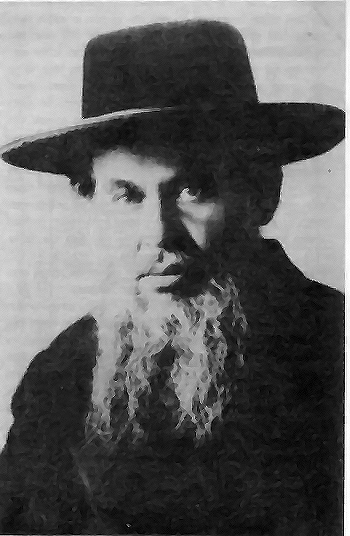

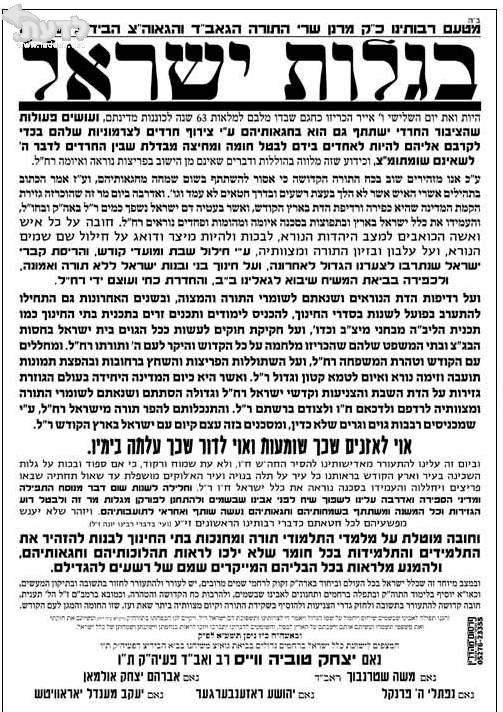





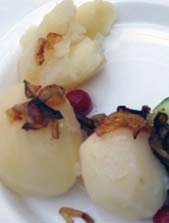

 The Rambam’s statement is extraordinary. We could be forgiven for thinking that the defining characteristics of a Jew is seen through the Mezuza on their door, or through their observance of the Mitzvah of Tzitzis, Tefillin, Kashrus, and similar. Giving Tzedaka, however, is a universal humanistic value that is not just the domain of Jews, so why did the Rambam specifically choose Tzedaka as the characterising hallmark of the Jew?

 pitputim
You must be logged in to post a comment.