Read about their duplicity here. Why should we trust let alone use their Hechsher? You are better off supporting OU, StarK or Chof K and the like. Unfortunately, in Israel things have multiple hechsherim. I’d like to see a company like Osem take a stance and say go and find another product to stamp. It won’t happen, though, because it requires principles and not just profits.
Hats off to Rabbi Telsner on Shabbos. In his Drosha at the Chabad Yeshivah Shule in Melbourne, he briefly vent his spleen regarding the Chillul Hashem being perpetrated in parts of Israel by the offshoots, weeds and seeds of the Eda Charedis. Rabbi Telsner’s point was that any “Chassidim” in those groups were not. They didn’t have or display the approach of the Baal Shem Tov on loving each Jew irrespective of the questionable activities those Jews were involved in. R’ Teslner added that the zealots couldn’t be learning Chassidus, and if they claimed that they were, nothing was internalised. Rabbi Telsner was scathing. He said that “all they seem to do is a Chilul Hashem and then they come Schnorring to our doors”. He’s right.
What is the reaction in Adass or Beis HaTalmud? Did Rabbis Beck or Wurzburger have anything to say about these issues? If not, why not? If yes, was it to a cloistered private circle or was it a public comment. If anyone knows, please do inform us. I’m sure many in the community would like to know where these organisations stand on this massive Chillul Hashem malaise.
Extremist: a person who favours or resorts to immoderate, uncompromising, or fanatical methods or behaviour, especially in being politically radical
Fanatic: refers to persons showing more than ordinary support for, adherence to, or interest in a cause, point of view, or activity.
Zealot: stresses vigorous, aggressive support for or opposition to a plan or ideal and suggests a combative stance.
Taking stance that is “not the norm” can be viewed as extremist. In a community of meat-eaters, a vegetarian who is uncompromising may be seen as adhering to an extremist view. Once a community comprises more vegetarians, they cease to be called fanatics. Their behaviour becomes an acceptable norm, albeit of a minority view. In either case, some vegetarians are more vocal than others. We accept the views of someone who is passionate about their vegetarianism. We don’t have a problem with the existence of vegetarian-only restaurants. There are lines, though. Where does society draw those lines?
It would be unacceptable to enter a vegetarian restaurant and demand to eat meat.
It would be unacceptable to enter a meat restaurant and demand that they cease serving meat.
Why is it unacceptable? Simply because we recognise the right of free choice: an inalienable right; a God-given right. Free choice is the basis of our existence as humans and is the eco-system through which we are able to rise or fall.
Kosher-style restaurants or take-aways are not kosher. It is forbidden by Halacha to eat food prepared in such establishments. Yet, some people on the fringe, do so. You find yourself in an environment where Kosher-style is presented to you. The food is unacceptable and yet your host insists that you partake. They cannot understand what is wrong. There is no pork. It’s supposedly a kosher fish with side salad. What can be wrong with the dressing? You decline. Your host may well be upset, yet you may not be in a position to adequately explain why you cannot take part. Your host may not be in a position to understand or accept your stance. It would be wrong for your host to become angry. Equally, it would be wrong for you to show anger towards your host. There is a gap between your views and theirs. You may also both be somewhat fanatical in your views. You may not understand each other. You may both even be somewhat fanatical in not accepting or understanding the rationale; but there is still a line. This line is the glue which keeps society together. When that line is crossed, we are in danger of falling apart as a unit. The line is crossed when someone is a zealot. You become a zealot when you take an aggressive or combative stance.
Sometimes, in rare cases, a Jew is commanded to sacrifice their life and not compromise their ideals. This is קידוש ה, the sanctification of God’s name that is wrought through death. It is a form of passive aggression. We aspire, though, to live. In regards sanctifying God’s name through living our lives, the Talmud in Yoma quotes a verse and interprets it as follows:
ואהבת את ה’ אלוקיך you shall love Hashem, your God. [This means]
שיהא שם שמים מתאהב על ידך that the name of Heaven [God] should become beloved through your hands [actions]
Ultimately, your actions need to be ones which cause the name of God to remain/become beloved through the mode of your adherence to Torah and Mitzvos. The Talmud then provides some examples:
Your business dealings should be honest and upright
You should adhere to righteous Jews and learn from their ways and their Torah
You should speak with pleasantness
This list is not exhaustive. Clearly, there are many other things that have the potential to both sully or exalt respect for the practice of Judaism. The resultant potential love of Heaven is induced thereby.
The greater test is to stay an honourable, practicing and believing Jew during one’s life. As incredible as Isaac’s preparedness to allow himself to be sacrificed by his father, Abraham, the test for Abraham, who would have had to live with what he did for the rest of his life, was greater. The test to go on living is usually protracted and far more stressful. Similarly,causing God’s name and Judaism to be loved by one’s actions is greater and more challenging through the mode of one’s life and the way one lives.
I am convinced the events of the last few weeks involving a section of the ultra-orthodox, anti-Zionist, community in Israel have caused the name of God and the image of Judaism to be severely tarnished. Halachically,
one does not spit at little girls (or anyone for that matter)
one does not ask a woman to move to the back of the bus, whether she is dressed according to one’s own acceptable levels of modesty or not.
one does not throw stones at people who are not keeping Shabbos
one does not yell at people who don’t adhere to a certain standard of dress, even in one’s own backyard
one does not compare Jews to Nazis—ever.
one does not use the holocaust in an abhorrent pantomime to advance an agenda
To be sure, the anti-Zionist zealots, comprising so-called Sikrikim, Neturei Karta, Toldos Aaron and the others believe that they are “defending” God’s honour. They are, of course, wrong. Their behaviour is nothing short of odious and against Halacha. These zealots do not act alone. They receive the silent, or “behind closed doors” blessings of their Rabbinic leaders. They will not listen to anyone; we are all Treyf. In their mind, they have a complete mortgage on the truth.
What can we do?
We must recognise that there is a sizeable number of “black hats” and “thick stocking” style people, who are also disgusted by this thuggish minority of misguided individuals.
We must ask our own Rabbis, yes, each and every one of them, to explicitly make a statement in writing and in sermons to their congregations rejecting the ideology of the zealots as outside the pale of normative Judaism. Statements should be without prevarication. There is no need to speak about anything else. For example, the statement by the RCA is sensibly crafted, whereas the one from the Aguda is disingenuous.
There is a group in our own community, constituting a section of Adass Israel Congregation, who fully agree with the philosophy of the zealots. A few days ago, I was accosted in the street, next door to my parents’ house, by a brain-washed boy , who yelled at the top of his lungs “Zionists are Pigs” (in Yiddish). Do not forget that this group of zealots are in our midst. Pockets exist in most Jewish communities around the world.
When asking for a statement/response from your Rabbi, it is important to not only include members of the Rabbinic Council of Victoria or the Organisation of Rabbis of Australia. One should also approach the Rabbis of Adass, Beth HaTalmud and other non-affiliated congregations and ask specific questions with no wriggle room. In particular, ask if it is ever appropriate to demand that a woman “move to the back of the bus” even if she is on one of those bus lines where such an pseudo-mechitza is implemented.
When a collector comes to your door, ask them the same question. If you don’t like their answers, give them less and someone else more.
Avoid apologetics. There is absolutely no justification for this disgraceful anti-halachic behaviour.
Let me end with a story about a true sage, R’ Shlomo Zalman Auerbach ז’ל. In his neighbourhood of Sha’arei Chesed a lady persisted in driving through the otherwise empty streets on Shabbos. Surrounded by the “holy” ones, he was asked, “Surely you have a Torah obligation to protest against this desecration of Shabbos?”. R’ Shlomo Zalman responded that indeed he did have a responsibility to express his dislike for what was occurring. He advised them, however, that throwing stones, or surrounding/blocking the car and/or yelling “Shabbos” achieved nothing. It only served to further aggravate the situation. “So in what way are you protesting?” they asked. R” Shlomo Zalman was quiet. Over the next few weeks, rather than accosting the women who drove through the neighbourhood, they observed R’ Shlomo Zalman as he walked in the street after Shule and came face to face with the car. A look of genuine pain was seen on his face. The lady noticed this look from R’ Shlomo Zalman’s face over the next few weeks, and apparently decided that she didn’t want to cause any angst to this old and pious man. If you are respectful to people, they will also respect you. Don’t cross lines.
We Jews who also try to keep Halacha to the best of our ability must vehemently reject and ostracise this group of unsound zealots and let them know that we are not with them in any shape or form, and that their corrupt version of Judaism is simply an invalid aberration.
The Gemara פסחים נא ע”ב, states—שלא ישנה אדם מהמנהג—when there is a custom in a particular city to behave in a certain manner, it is forbidden to acquit oneself in an alternative way. In particular, if there is an opinion to be stringent or indeed lenient in respect of a particular Halacha in a given town, it is forbidden to effectively inhabit that town and alter the Minhag.
The Ramo in his responsa (שו”ת סי’ נד) considers the question of barrels that had previously been smeared with lard, and were now used to store olive oil. Was one permitted to use the olive oil if it sold in these used barrels? The Ramo decides that it’s permitted without qualification to buy the olive oil, and furthermore, this is a long and established convention. The status of this practice being a custom, not only means that it is limited to a permissive ruling. The Ramo expresses the view that someone who desires to be stringent based on the opinion of their own Rabbi, should not do so, even if that person is a בעל נפש—a punctilious individual.
On the category of בעל נפש, It is common for contemporary Poskim to decide Halacha, and then provide additional direction to the בעל נפש. This is found in the משנה ברורה and אגרות משה. (See also (חולין מד ע”ב) for a more fundamental source). Yet, in the case of the barrels, the Ramo specifically directs the בעל נפש to not be מחמיר. Why so? Surely one is always entitled to adopt a stringency? The Ramo’s reasoning is that since it is permitted and בני ישראל behave in consonance with that היתר, their practice should not be indirectly questioned in any way through the stringent actions of those who wish to take upon themselves an alternative ruling. There is much more to say on the general issue of חומרות. For example, in יו”ד סימן פט ס”ק יז, the Shach cites the earlier opinion of the Maharshal who considers those who wait six hours after hard cheese before consuming meat as not only “simpletons”—the Maharshal coins them as apostates (דברי מינות)! Not every חומרה is sensible, and one who is really a בעל נפש will be cognisant of not offending others or foisting their private practice upon the masses. המחמיר יחמיר על עצמו
The Maharashdam who was a contemporary Rishon at the time of both the Ramo and Beis Yosef, limits the aforementioned rule of the Ramo (יו”ד סי’ קצג) to
a Psak which involves a דין דרבנן, a Rabbinic law. However, if one wants to be מחמיר because they fear an infraction of a דין דאורייתא, a Torah law, they may do so.
a situation where the act of being מחמיר is not assumed by the existing population who settled and live in the city. Newcomers to a town, may not exert their חומרא on the townspeople. (Note that majority or minority is not the consideration here; מנהג המקום is the determining factor and we do not say חוזר וניעור).
There are groups of people in Israel, known by many names, who
assume levels of צניעות which can only be described as חומרות
settle in existing cities, such as בית שמש, and not only wish to practice their own חומרות, but seek to force others to adhere to those same חומרות.
To be sure, members of these communities falsely claim that their standards are
not extreme,
involve איסורים דאורייתא, and
may even imply the need to act in a manner of יהרג ואל יעבור.
Such claims are false.
The actuality is that צניעות is, by definition, a set of lines followed by a grey area. The grey area is defined and governed by societal practice. Societal practice cannot be determined by fiat, violent or otherwise; it is also relative to time and place.
Ironically, when extremist women commenced wearing black Burkas as an “extra” level of צניעות, even the usually strict Edah Charedis exclaimed that “enough is enough”. To add to the irony, the Edah objected despite the fact that one could cogently show that were one to live among Muslim women, it might well be a Rabbinic imperative to match their levels of צניעות! I don’t expect we will find such a judgement emanating from the Beis Din of the Edah even though I contend that such a ruling could quite cogently be constructed.
A line was drawn. Grey areas exist in every city, town or village. I do not hold the view that, for example, in Melbourne, one can talk about מנהג מלבורן unless it is something that all the religious communities have practiced and continue to practice. If Adass, the Litvaks, Ger or Chabad or whoever do things uniformly in a particular way, then it is a matter for those communities. They cannot and should not ever impose their practice on anyone else. Ironically, it may well be דינא דמלכותא that preserves the halachic status quo outside of the State of Israel.
Bet Shemesh, on the other hand, is and was, an established city and it had its lines and grey areas. Those areas were amorphous and pluralist but never included the consideration that men and women walk on either side of a road. (This was also not the practice in Poland, for example, except allegedly in Kelm). The line never extended to the disgraceful dehumanisation and targeting of women who wear Tichels and skirts down to their knees. The line didn’t consider a woman who “heaven forbid” displayed her toes through sandals as licentious and through whose toes was causing lustful thoughts in these less than holy בעלי נפש thereby “polluting” the atmosphere with such פריצות. (Yes, one lady wearing a long skirt and sandals was indeed set upon by unruly ruffians for this most trivial reason).
I have been disturbed for days by the sad picture of that little girl holding her mother’s hand while trembling on her way to school because she feared the modern zealots would spit and accost her. שומו שמים … how far have we strayed from דרכיה דרכי נועם.
If zealots feel the need to build their own עיר מקלט city, where they can enact all level of stringency, that’s their business. If they are permitted to do so by the law of the land, then let them go ahead. If a person wants to live or visit, it would be a good idea to follow those stringencies within the boundaries of that city. This is not different from להבדיל Mecca, where Muslims have accepted certain extra practices only within that city. This would not ever imply though that mindless automatons are justified in resorting to spitting and other forms of violence if someone does not follow their city-based dicta. A city whose Rabbi encourages such practices of violence either directly or indirectly will face a דין וחשבון in due course. I would call such a city that duly practices such abominable acts a modern-day example of an עיר הנדחת.
For a little more perspective, let me conclude with a rather prophetic and incisive psak from no less a גאון than Rav Chaim Berlin ז’ל.
Rav Chaim Berlin was the son of the famed Netziv (from the Netziv’s first wife) and a half-brother of R’ Meir Bar Ilan. He was Rosh Yeshivah in Volozhin, Chief Rabbi of Moscow, and at the end of his life became Chief Rabbi of Jerusalem after R’ Shmuel Salant ז’ל.
R’ Chaim Berlin’s halachic responsa were published posthumously by alumni of Yeshivas Chaim Berlin in the USA. In Even Ha-Ezer, R’ Chaim was asked by a former student now in the USA what to do in the event that a woman stretched out her hand to him as part of common business practice. R’ Chaim answers that according to the letter of the law עיקר הדין there is no איסור because the act is not occurring בדרך חיבה—amorously—and since the student is visibly religious and is expected to be doing so simply as part of business etiquette, it is permitted. Interestingly, and this is the part that I found very impressive, R’ Chaim quotes the Gemara יומא פו:א
ואהבת את ה’ אלוקיך – שיהא שם שמים מתאהב על ידך
You shall love Hashem your God—[implies that] Heaven should become beloved [by others] on account of your hands [actions]
R’ Chaim contends that the person who is clearly a religious Jew, and is visibly seen as such, and who does not behave with common business etiquette is likely to encourage Non-Jews to think that Jews and their Rabbis are fanatical madmen! Accordingly, he says that failing to shake the hand, in the case of that student, would constitute a חילול שם שמים!
These are powerful words. I’m not a Posek suggesting that anyone simply make their own halachic conclusions based on this insight. However, it is quite clear, that we have witnessed over the last few weeks is exactly what R’ Chaim Berlin was warning us against.
The actions of an ungainly ugly tail of extremist Jews have through their own prescribed grey areas caused Judaism to be seen by many as no different to the Taliban or Salafist Wahhabis. My accusation extends to the imbeciles who berated a blind woman when she sat at the front of one of those new separate buses.
It is well-known that during the British Mandate, there was an important event held in the presence of the two leading religious figures of that time, R’ Avraham Yitzchak HaCohen Kook z”l, and R’ Yosef Chaim Sonnenfeld z”l. The former, of course, became the 1st Chief Rabbi whereas the latter was ideologically opposed to him and Av Beth Din of the Edah Charedis. At this event, in the presence of the British dignitaries, a woman began to sing. To be sure, they undoubtedly had no idea that religious men may not hear live singing of the female variety. The reaction of each of them is interesting:
Rav Kook, a lofty man possessed with an ultra sensitive neshama, stood up in shock and made a quick exit. Nothing else existed at that moment. He instinctively removed himself.
Rav Sonnenfeld put his head down and covered his ears with his hands.
None of us approach the lofty spiritual stature of these holy men. I dare say the same applies to Israeli army conscripts who find themselves at an event where women sing as part of the entertainment/process.
How would/should a Jewish conscript behave if they were part of a non-Jewish army and this occurred? I doubt that they would make a commotion or threaten to “die” rather than stay at the performance. It is likely they would put their head down and/or attempt to block the voice out. Why then in the Israeli army do Jewish soldiers behave differently, as reported in the press? Why do Rabbis of the Charedi Leumi variety demand the most extreme response? The answer is that one expects an Israeli army to be more attuned to the needs of religious Jews. That is a reasonable expectation. However, the reality is that respect is earned. Respect may not be demanded and it is not a byproduct of being genetically related.
We know that דברי תורה בנחת נשמעים, words of Torah are best delivered in a gentle manner. “We demand” is only going to make matters worse, especially in a society which is already alienated by religious jews on account of their not being seen to be pulling their weight in a State sense, and featuring prominently in various cases of moral and ethical malfeasance.
Dogma is part and parcel of our religion; coercion is not. Our purpose is to imitate God—Imitatio dei—והלכת בדרכיו. God, himself, gave us free choice. What right then do we have to remove that בחירה from a fellow Jew? We are expected to be holy. Holiness means separation. We saw two expressions of that separation above: Rav Kook and Rav Sonnenfeld. What is the appropriate approach then for an ordinary soldier?
It’s obvious to me, sitting here in Australia, from the distance.
Put your head down/close your eyes. Many poskim hold that if you do not see the person singing it’s not ערווה
Bring your fingers up to your ear lobes and block what you can. You can even hum to yourself.
Gently speak to your commander after the event pointing out that it was uncomfortable for you to be in this situation.
Increase Torah and Derech Eretz in your military group.
I’m not sure what else one can or should be expected to do. Walking out en masse and creating a furore simply germinates the same enmity that has transported people to a situation where they already don’t respect each other.
It’s a short step from reacting in a virulent manner to tearing down posters and having Tznius police. Ironically, R’ Kook who did walk out, didn’t do so out of protest. His was but an ultra pure soul that literally fled from a remote smell of איסור. His Rabbinic leadership was all about gentle enfranchisement and tolerance for those who were not yet observant. None of us are R’ Kook, including the conscripts who perhaps imitate his reaction.
They have a chip on their shoulders, and much of this is due to unrelenting Charedi delegitimisation of their ideology. Years of Charedi attempts to delegitimise Mizrachi or Torah Im Derech Eretz type Jews are now manifest in less than diplomatic approaches to dealing with the reality of a State before the Geula. Dogma is expressed in virulent and uncaring tones.
We are all worse off as a result. I couldn’t see any קידוש ה’ ברבים
The following, is my free translation of a statement issued by Rabbi Yosef Avrohom Heller, Rosh Kollel of Crown Heights and one of the most prominent (if not the most prominent) Poskim in Chabad today. (His views on other matters, such as “Who is Moshiach” are well known).
Rabbi Yosef Avrohom Heller
There are dozens of children wandering and lost, and thank God we are blessed with many institutions established to bring them back through Torah.
But these are not only the only misguided ones: many young people in Yeshivos are perplexed and in danger of dropping out.
This is not only dangerous, but the simple fact that they are lost and confused – is itself a great loss, as we must expend all our powers to keep them and guide them. Because everyone should succeed in Torah study and Mitzvos, and we should not be focussed only on those who are already in a proverbial deep hole.
We should give them our full attention and show them the beauty and wondrous taste of Torah.
There are still many students who ostensibly behave as they should, but since we are not in reality educating them in a proper way and do not give them the necessary tailored spiritual needs, they may turn down the road and become lost, and the debt is imposed on each of us to pay attention to their suffering and help them.
How is this done?
Each child is different
The first rule is that every child is different, each has a potentially different learning path and outcome from the other, and our expectation is different from child to child. This applies to both learning Torah and and serving God.
If we can show each child what they can achieve on a personal level, the child will feel a hundred percent successful in their achievements.
But if the child gains the feeling that they were “unsuccessful” or feel they have to live up to an unreasonable expectation, then in addition to the grief that the child is suffering, there is a danger that because they are not seen to be successful, they will seek success elsewhere.
The truth is that it is hard to expect institutions to look after and devote themselves personally to each student according to their value, since this is nearly impossible. So, the responsibility is on the parents, neighbors and friends, to see that each achieves their individual potential.
Gemorah? Is not for everyone!
Previously there was no concept of people learning all day. Only very few people did this, and others set time for Torah and the rest of the day they were at work.
Today there is a new concept that has no source in the Torah that everyone should specifically learn Gemara. One who studies Mishnayos is considered a lesser individual!
There was never anything like this in the past: one studied Talmud, another Mishnayos. Is it conceivable to say that the latter is less of a Talmid Chacham than the former?
A third studied Chumash with Rashi and also had a place of honour in the Beit Midrash.
It is the same with the study of Talmud itself: the first is studying the first Sugya in Pesachim and another is learning the last chapter. Is the latter therefore considered to be less than the first? We can not all learn the same thing, because God did not create everyone as clones of each other.
For every student to succeed, according to their ability, they must feel their success according to their potential ability. If this is the case, they will feel satisfaction and pleasure in learning. They need not aspire to be a great “genius”.
But if they learn matters which are more complex than their innate ability or matters which do not challenge them adequately they will not feel satisfaction in the classroom.
For example, for one student it may be grossly inadequate to painstakingly teach them one Mishna a day, explaining each part with examples and illustrations. For another student, this may be exactly the approach that is required and they will feel fulfilled and not lacking in self-esteem.
The mathematician, philosopher and technician
Therefore, an entire class cannot assume a one size fits all approach. It does not work.
As an example: the mathematician, philosopher and engineer, are three types all of whom can excel. They each have different ways of thinking. Is one less wise than the other? This is the way God created the world. Two heads are not identical. Every person is wise within their God-given boundaries.
So when learning a complex issue involving a dispute between two Tanaim, the Gemara brings about a dispute between two Amoraim on their interpretation Now we have four views. Then the Gemara brings a different interpretation of the Amoraim and we now have eight approaches. Then there is a dispute between Rashi and Tosfos – and we have 16 opinions. This can then extend to different understanding in Rashi and Tosfos which leads to 32 approaches.
A student who can understand all these methods is mathematically gifted, but how many are born with this ability?
However another student could resolve a conflict between two different Gemoras because they had a more philosophical (abstract learning) ability. And others may have practical more applied sense, and can apply the principles to conclude practical halachic ramifications in our daily lives.
So when Yeshivos deliver complex shiurim with hair-splitting logical minutiae, many students do not have the tools to deal with this approach. But if you were studying with them issues of Jewish law tracing the Gemora through Tanaim and Amoraim and Rishonim and Acharonim until they could see and understand the conclusions in Shulchan Aruch they would feel experts in that field, and they will importantly derive much satisfaction and fulfilment.
Different children’s institutions
The conclusion is that there must be different departments in each Yeshivah. For example, children of the same age will have one group studying Gemorah, a second group learning Mishnayos and a third group learning Halacha.
The institution itself must have a framework and provide options so that students select what is suitable for them and is fulfilling.
If you do not give him the opportunity – it’s like the philosopher being forced to become a mathematician, and instead of becoming successful in their chosen field, they end up not being successful at all.
We need to open many types of such institutions, and there are a lot of donors willing to support it, since they were disappointed that they had suffered and were not successful in their own learning.
We need to explain to people that this is a real life-death situation, and if we lack money, then by Halacha we have to sell all the scrolls in the synagogue so that each synagogue will only have one, and thus finance the costs.
There is a recent great awakening to write Torah scrolls, and almost every month in our neighborhood there is one more new Torah Scroll. So certainly they would be willing to donate money for new institutions. This is more important than the new Torah scrolls.
One story tells of a woman who wrote to the Lubavitcher Rebbe that they wish to contribute a Torah in loving memory of her relatives, and the Rebbe responded (אגרות קודש ח”ל ע’ צב) that if she will support a yeshiva student who studies Torah, then the souls will be raised more than through buying a Torah scroll. And how much more so in regard to save the lives of children in Israel.
So parents need to know that if their child is not succeeding in a given Yeshivah no matter how hard they try, they should take the child out of that Yeshivah. This is פיקוח נפש.
We are all accustomed to the difference in feeling between the two cities. ירושלים is not just the holiest city in the world, but one feels the holiness. Holiness is often associated with difference—המבדיל בין קודש לחול—and this idea is consonant with either the Kabbalistic doctrine of recognising the spark of holiness within even inanimate objects and raising these to a higher appreciation, or the more ascetic misnagdic notion of dissociation with all things that are profane.
The highways between these two cities highlighted a transition that I was aware of from a earlier trip, but sensitised to on this trip. As one meanders through the challenging highways and approaches Tel Aviv, the visage of signs, mostly in yellow, on successive lamp posts, declaring the last Lubavitcher Rebbe as the משיח increases. In otherwise barren highways, sometimes punctuated by Arab Villages and cities on the side, the signs start to pop up in a seemingly ubiquitous fashion.
I felt sadness. It is so many years after the פטירה of the last Rebbe זי’ע and I wondered why his holy face needed to be plastered everywhere among the otherwise profane and colourless lamp posts. Would these signs encourage people to do more מצוות? It is a brave person who is able to make that conclusion. Would these signs encourage people to be inspired? I doubt it, given that they are everywhere as one approaches. להבדיל I work near the Trade Union at the top of the City near Carlton. There are always signs hanging from the building façade. They are provocative, and designed to be this way. Nevertheless, like the signs on the billboards across RMIT, one rarely gives them a second glance because they have become rote. Indeed, on this trip I noticed a series of poles which had signs of what looked like the רש”ב. R’ Shalom Dov Ber זי’ע, a previous Rebbe. The car was travelling too quickly for me to notice the wording below the picture. I noticeד these signs because they were different.
Have we reached a point where any semblance of usefulness of these signs has evaporated? Perhaps.
I interviewed a number of students in Ramat Efal, and when we spoke about University life in Melbourne at RMIT, I stressed the need to live relatively close to the Jewish community. After informing a very bright student that there was also Chabad on campus, I noticed the student resile. He went onto explain that he didn’t want anything to do with Chabad and their משיחיות. He wasn’t a visibly religious Jew, but I was still surprised nonetheless. After all, even the yellow flag waiving fringe of Chabad should still come across as warm and non-judgemental? Why would he be so turned off?
As I drove back from Ra’anana to Jerusalem that evening, I asked myself whether יצא שכרם בהפסידם. The Meshichist type, in my experience, are more pushy; they are more single-minded; they often do not display the type of understanding or social etiquette or intelligence required to influence the intellectual or materialistic élite that live in Tel Aviv. I couldn’t help but feel that the rarer old style, externally simple yet intrinsically sophisticated real McCoy Lubavitcher would be far more successful in increasing קדושה in this environment; especially in places like Tel Aviv.
I was left feeling quite sad. I felt sorry that such a great man was being promoted through posters and one liners. His legacy was surely much more significant and profound than that. The Israel-cum-Tel Aviv style approach to קירוב is very different to that outside of Israel. Does it need to be? I think not. Israelis need better than just “in your face” and shallow Meshichisten. Ironically, the Israeli who leaves Israel is more likely to be exposed to this type of Chabadnik and respond more positively. It need not be that way.
The Meshichist movement really needs to just go away and get back to first principles. I’m not sure the Breslovers even have first principles. That movement is almost as confounding.
Last night, there was a knock on the door. My daughter answered and called out “Aba”, as I was eating dinner. I know this means that there is a Tzedaka collector at the door. I don’t do things properly. I should sit down with them, offer them a L’chaim or cold drink and listen to their pitch and look at the pictures. It’s something I need to improve on. He noticed I was in the middle of dinner and apologised, which is always the sign of a mentch.
I recognised immediately that he was a Lubavitcher. He told me that he had seen me at Shule and that I had wished him שבת שלום. I couldn’t recall. I used to have a policy of not asking them who they were collecting for and just gave each person a modest amount. Lately, there are two categories that I enquire about. The first is whether they consider the State of Israel as a hindrance towards the Geula born from the Satan who is misleading us with false promises. If they are one of these, I will tell them that I prefer to give to those who see the State of Israel as a manifestation of יד השם and those who look to improve the religious and economic situation therein and not carp on the outer. I wish these people well in their ventures but advise them that I would rather give my modest support to those whose views don’t upset me. I make a mental note to give double to the next collector (who is not one of these types) to compensate somewhat. I know the Rav ז’ל would have given to this type of collector. He used to collect for his Uncle, R’ Velvel ז’ל, even though the Rav and R’ Velvel had different views on what the State of Israel meant from a religious perspective.
The second type of individual with whom I am uncomfortable, is the Meshichist. This is not for the same reason, but again, I’m uncomfortable with their views. Perhaps it is precisely because I went to a Chabad School and was exposed to what I think is the real McCoy, that I am upset with this type of person. I recognise they are fully entitled to their beliefs, in the same way that I am entitled to reject them. Back to the story at hand.
This person came in, and modestly mentioned that he was a Rosh Yeshivah from Arad in the south of the State of Israel. I asked him whether he was a Meshichist. He smiled and said (in Ivrit)
“I am not one of those people who go around saying Yechi”
So far, so good. My next question was:
Is there even a remote possibility that the Mashiach may not be the last Rebbe ז’ל?
He smiled, genuinely, and with warmth said:
I will be happy with whoever Hashem chooses to be Mashiach, it is Hashem’s choice, and it is not important to me who that person is. That’s not the important thing.
He had that certain real old-fashioned Chabad warmth that I was accustomed to in my youth. I immediately took to him. He almost had a smile like R’ Zalman Serebryanski ז’ל and projected a certain Emesdikeit. I gave him 3 times what I normally give someone at the door, but in retrospect, I feel I should have given him more. If any of my readers encounters him in the next few days, please tell him to come back!
Chabad do great things. I don’t agree with elements of their Philosophy, but that’s not a big deal. If we are honest, and delve deeply, most of us can’t say that we agree 100% with any particular approach.
When I compare this, to the type of Chabad that my kids are/were exposed to, I feel they have missed out. One just returned from Camp. One of the first safety approaches that were enacted was the method to call out for help if a camper was lost or in trouble. Campers were told to yell “YECHI” and those who heard this and were in a position to help, were to yell back “HAMELECH”. Couple this with the saying of Yechi thrice after each of the three Davenings every day, I ask you, is this what Chabad is about? Don’t people realise this turns non dyed in the wool people off? It’s simply not what Yidden do!
Let’s have more of those genuine Chassidim whom I encountered at my door please? They lack absolutely nothing in their התקשרות. They perform Hashem’s will through the prism of the approach advocated by their Rebbe. They are comfortable in their own skin and don’t need to holler daily to prove their credentials. Their actions are their deeds.
Finally some good news. Remember the poor fellow who sustained 50% burns to his body? Well he has been released from hospital, thank God. Recall that Matzav.com had taken a while to publish the story and then in a tepid manner. Consider how they reported the release:
Aharon Rottenberg of Rockland County has been released from the hospital. Aharon suffered burns over 50 percent of his body last month when he tried to stop an attacker from fire-bombing his house.
Aharon’s attorney says his client hasn’t returned home, but is staying in an undisclosed location in the area.
On May 22, Aharon was burned when an incendiary device exploded as he wrestled with an 18-year-old who had come to burn down the Rottenberg home.
Rottenberg has filed an $36 million lawsuit. Rottenberg claims a campaign of intimidation was orchestrated that led to the arson attack that burned half of his body. He says he was targeted.
Rottenberg is being represented by civil-rights attorney Michael Sussman.
The 18-year-old has been charged with arson and attempted murder.
Rottenberg had been recovering at Westchester Medical Center. He suffered third-degree burns over half his body
שומו שמים
Where do these guys get off? Did you notice that there isn’t a single word about Skver? Did you notice that they even went as far as saying he’s from Rockland County as opposed to honing in on his more accurate location (New Square)? Notice they tell us nothing about the attacker! From the article you wouldn’t know he is Jewish let alone a Skverer Chasid, and let alone someone from the home of the Rebbe himself! Notice that they say that “He claims that he was targeted”. Hello! Who is claiming he wasn’t targeted! Even the Rebbe acknowledges something bad had happened. What do they want us to believe, the 18 year old was some delinquent who happened to walk past the house and randomly chose to throw an “incendiary device” at that home. The attacker was also a Skverer of course.
Are the readers of matzav that stupid or gullible?
At best, this is another insult to intelligence. At worst it is yet another indication of the reprehensible approach taken by Charedi newspapers to the truth. Feh!
But maybe the readers are from another planet. One self-named “Ben Torah” wrote in the comments section:
I hope Matzav continues to report good news. I hope Matzav reports every time a Yid is discharged from a hospital! (Otherwise I’m not sure why it is reporting this Yid in particular.)
Sheesh! He probably makes a bracha each time he breathes air.
The extreme charedim, such as Satmar and their ilk do not support the State of Israel. They do not want to take a cent from the Government. After all, this is not a Government made up of Shomer Shabbos people, and in addition, they consider the State as undermining and stopping the progress of the Geula. So what do they do? They prefer to quietly live amongst non-Jews. They don’t, however, just live in a spread out manner. They prefer homogenous enclaves within the non-Jewish States. As they get bigger, they also want to control those cities. They ask that other don’t ride on their bikes in an immodest manner while passing through their neighbourhoods and they take people to task for offending their principles whilst in what they term their neighbourhood.
How much longer can this last? A recent report suggests that Kiryas Yoel, may well be experiencing some fireworks in the not too distant future. Ironically, they might have been better off in the State of Israel.
Dissident leaders from Kiryas Joel filed a federal lawsuit Monday accusing the Satmar Hasidic community’s majority faction of abusing its control over municipal affairs and demanding the 34-year-old village be dissolved.
The 59-page complaint catalogs grievances dating back a decade and depicts a religious faction exercising uncontested power in the secular realm. The case, brought by Goshen attorney Michael Sussman, calls Kiryas Joel a “theocracy” that violates the First Amendment’s prohibition against the establishment of religion.
“Religion is wonderful,” Sussman said at a press conference in his office Monday, seated beside Joseph Waldman, a plaintiff and longtime dissident leader. “But it cannot dominate the state. And that is what is happening in Kiryas Joel.”
The case alleges discrimination against dissidents — estimated in court papers to comprise 40 percent of the village’s roughly 20,000 residents — in various facets of public life, from tax exemptions for synagogues to election improprieties to selective enforcement of village noise ordinances.
Among the most serious allegations is that Kiryas Joel’s Public Safety Department, a quasi-police agency, has acted as enforcers for the main congregation and tolerated acts of violence and intimidation against dissidents by unruly crowds of young supporters of Satmar Grand Rebbe Aron Teitelbaum, the leader of Kiryas Joel’s majority faction.
In one incident in August 2010, a mob of screaming boys — angry about a marriage held in a dissident wedding hall — allegedly hounded relatives of one of the newlyweds as they walked home from a synagogue after midnight. The complaint says the boys punched, kicked and threw bottles and eggs at the family, which included a pregnant woman.
The suit alleges that public safety officers passed by during the harassment and did nothing. Later, when the family members approached their destination, an officer parked nearby allegedly refused to escort them home.
The plaintiffs are asking a federal judge to dissolve the Village of Kiryas Joel, which would effectively remove its leaders, lift its laws and place it under the governance of the surrounding Town of Monroe. The village was incorporated in 1977 as a satellite of the Brooklyn-based Satmar sect.
If the judge won’t do that, the suit asks for the removal of the current village leaders, including the mayor, trustees and administrator.
The lawsuit comes in the wake of a much-publicized attack against a dissident in New Square, a Hasidic community in Rockland County roiled by the same sort of internal rift as the Satmar Hasidim. In that May 22 incident, a 43-year-old man suffered severe burns fighting off a young man who tried to burn down his home.
Sussman, who’s also representing the burn victim, Aron Rottenberg, announced Monday that he had filed a $36 million lawsuit in state court against New Square’s grand rebbe, David Twersky, and the 18-year-old aide suspected of starting the fire.
I guess it must have been about 20 years ago, when I sat at the Seudas Bris of a baby who had just been named Avrohom. For some reason, I can vividly remember the scene, including the exact table and seat where I was sitting. I don’t normally remember such things in this way. Rabbi Groner ז’ל was speaking in his renowned powerful and emotive manner; a style which many of his students have naturally if not genetically assumed in their own delivery.
“Let me tell you about R’ Avrohom Mayor” he thundered. “In Melbourne, you don’t know who he was nor are you aware of his greatness. R’ Avrohom was an עובד who learned Chassidus for many hours before davening only to then daven for another 4 hours each day. You could see him at lunchtime in 770, draped in Tallis and Tefillin, in deep contemplation while still davening שחרית. But one thing I will tell you, despite his עבודת התפילה, R’ Avrohom would never peform his daily עבודה before he had made sure each of his children had had their breakfast, and food was on the table. R’ Avrohom was completely בטל to the זולת. First it was somebody else, and only then was it R’ Avrohom Mayor.”
I do not know why, but I remember these words with remarkable clarity. The little baby was a great-grandson born through R’ Avrohom’s daughter’s family (Rubin). We were and remain close friends of the then little Avrohom’s parents and family. Subsequently, I saw a large photo of R’ Avrohom Mayor and was awe-struck by the holy הדרת פנים of his countenance. That was then.
Recently, I read that a book had been published by his grandson (Moshe Yosef Rubin) which could be described as a biography of R’ Avrohom. Lately, I have been caught up buying lots of books, and wanted to add this one to the long list of books I intended to read. Not finding the book at bookdespository.com or amazon.com made the purchase less than automatic, so I expedited the process by borrowing a copy.
Over Shavuos, I finished reading the book and it left me feeling both inspired and inadequate. The book is nicely referenced and footnoted, and even allowing for the natural license of a grandson to possibly exalt his Zeyde or omit the odd narrative, it was inescapable that I had read about an impressive and incredible human being.
In my travels, I have been to the USA several times, but only twice to New York. Despite my school years in Chabad, I felt no specific desire to visit 770 Eastern Parkway, and, in point of fact, I have never been there. I am not a Chosid, and have never been in Yechidus with any Rebbe, let alone the Lubavitcher Rebbe ז’ל. I never felt I had anything meaningful to say, and all that I asked for, I tried to achieve through my poor but personal davening. For reasons of familial nostalgia, I did want to visit the Amshinover Rebbe, if only to tell him that I was attending on behalf of my late namesake, who was an Amshinover Chasid, but alas, each time I attempted to see him, it didn’t work out. Maybe that’s the way it was meant to be. After reading this book, however, at this stage of my life, I would have liked to have spent a weekend participating in one of R’ Avrohom Mayorer’s apparently intimate and uniquely inspiring farbrengens.
Elderly Russian Chassidim were not a new phenomenon to me. Rav Perlov ז’ל and Rav Betzalel Wilshansky ז’ל were originally Chassidim of the Rashab ז’ל and even a young non conforming and fiercely individualised lad like me could not help but be intrigued by their הנהגות, demeanour and countenance.
Rav Perlov seemed to be ancient. We were davening שחרית at the school’s 7am minyan, and he seemed to have been there from the crack of dawn. Watching him slowly removing his Rashi Tefillin and don Rabeinu Tam’s tefillin was like a slow motion movie. The world seemed remotely removed from Rav Perlov. Time was an irrelevance. He was seemingly hovering above time. His קריאת שמע took an eternity. R’ Perlov’s wife was no less daunting. I can still vividly see her face, as she walked across the school yard while we played football. She held up her hands, shielding her face, slowly shuffling across the yard, concerned that a ball might hit her. We, of course, froze, and halted our sport until she had safely passed.
Rav Betzalel, with his rounded enormous hat and greyish kapote, was a picture of יראה. I feared looking at him. He seemed thoroughly gripped and enveloped by דע לפני מי אתה עומד. It was as if he was acutely aware of אלקות at each moment, while we were remotely meandering through a confused sea of גשמיות with the odd sprinkle of רוחניות. One Tisha B’Av stands out. R’ Betzalel was called up to say the Haftora of אסוף אסיפם and his loud wailing and sincere crying left me speechless and in awe that someone could so acutely feel the words of the נביא. It is also one of those moments where I can vividly remember exactly where I was standing, as I watched R’ Betzalel literally go to pieces.
R’ Zalman Serebryanski ז’ל was the warm and smiling, intellectual, Rosh Yeshivah and R’ Isser Kluwgant ז’ל carried himself with the dignity of מלכות. R’ Betzalel Althaus ז’ל epitomised שירה וזמרה and התעוררות, but it was R’ Nochum Zalman Gurewicz ז’ל who was the master story-teller. It was R’ Nochum, who interrupted our Gemora classes to tell us about the NKVD and his time in the army. It was he who attempted to regale us with stories of near escapes from the clutches of the evil Soviet empire. But I, and many others, were the sons of Holocaust survivors.
As second generation survivors, stories of Soviet persecution didn’t leave me with the type of indelible tattooed watermark of the שארית הפליטה. This was not the archetypical definition of death and destruction: the evil Amalekite Nazi regime. Put in simple terms, I was brought up surrounded by Holocaust survivors and their harrowing tales. I could not make room to digest the stories of Soviet Jewry, despite being surrounded by the aforementioned respected, impressive and honourable older Chassidim.
Fast forward to this new book. I have a new-found understanding. To put it simply, the stories in this book captured important elements of the attempted destruction of Judaism in the Soviet archipelago, whereas the Holocaust was about the attempted destruction of the Jewish Nation. The Nazis didn’t care if one was frum, half-jewish, a bundist or fascist. If you were Jewish, you were to be exterminated: end of story. The Soviets, however, would leave you alone, and indeed embrace you, if you cast off your Judaism and adopted the communist oath of allegiance to Stalin ימח שמו and his evil socialist ideology.
Enter R’ Avrohom Mayorer and others of his kind. These were Chabad Chassidim who fought with all their might to stave off the attempt to kill Judaism. Story after story of immense bravery, courage and conviction is retold expertly and one is left in wonderment and disbelief. How much easier would it have been to stay alive, unpersecuted, and in comparative safety, simply by compromising and exclaiming יעבור ואל יהרג?
The inspiration for this struggle against the Soviets was the fulfilment of the direction from the Rashab and the Rayatz ז’ל. These Rebbes loomed large in the hearts of the Chassidim who risked their lives, daily, to make sure that the נכשלים אחריך didn’t give up their souls to Godless Soviet atheism. But this was not just a story about the Soviet Union.
R’ Avrohom continued with the same fervour to build up Chabad institutions in the new State of Israel. Whether it was Lod or Kfar Chabad or Tel Aviv, R’ Avrohom Mayorer was devoted to his task of ensuring that Torah (and Chassidus Chabad) flourished in the most difficult and challenging times during the formation of the Yishuv. Life was physically challenging and these were a different style of pioneer in the newly growing, but constantly challenged State.
In his later years, R’ Avrohom finally moved to New York where he was united with the family he so dearly loved. It would seem from all accounts that the last Rebbe ז’ל preferred that R’ Avrohom spend all his days in Israel. R’ Avrohom, was R’ Avrohom. You could take the man out of any country, but you couldn’t take his care and support for Chabad and indeed any Jew, out of the man. You could transplant him into Uganda, and he would find a way to spread Yiddishkeit בכלל and Chabad חסידות בפרט. The issue of R’ Avrohom not remaining in Israel isn’t covered in the book, nor would one expect such a private issue to be discussed in the context of a book written by his great-grandson. Notwithstanding this fact, in my view, it can only be the small-minded, gratuitous, simplistic and ignorant חסיד who failed and fails to see the wood from the trees and appreciate the immense impact and personality of this major תלמיד חכם. It is not a matter of chance that arguably the Rebbe’s greatest חסיד, R’ Yoel Kahn, spent many long hours in deep conversation with R’ Avrohom. Like the Chassidim I encountered in my youth, this book vividly painted the picture of a man who was larger than life.
R' Avrohom with his partner in life R'n Sarah.
On Rosh Hashono and Yom Kippur, I am emotionally exhausted and distraught when I sing the chilling words:
כי לא תחפוץ במות המת
What does it mean? Hashem doesn’t want the death of a dead person? If he doesn’t want it, then why let man die? And so what if כי אם בשובו מדרכו וחיה—even after תשובה man dies. R’ Avrohom Mayorer explained this in a brilliant way. What Hashem doesn’t want, is במות המת. When we leave this world after 120 years, Hashem doesn’t want us to leave as a מת, someone whose time was already up; someone who was retired and no longer active; someone whose strengths and abilities were no longer manifest; someone who was physically there but who had effectively ceased their living task. No, on the contrary, we are exhorted to work and live until our last breath and try to bring more קדושה into this world through the מצווה of והלכת בדרכיו. This also epitomised the עבודה of R’ Avrohom Mayorer.
For this vort alone, the book was well worth reading. I will always remember this vort. May his memory be a blessing.
On theologically Jewish issues, especially those that pertain to matters of faith, there are two diametrically opposed positions. At one end, let’s call it the rationalist end, Jews seek to understand the meaning of life and the answers to questions using their intellect and through the study of Seforim that take this approach. The Rambam’s Moreh Nevuchim and Rav Yosef Albo’s Sefer HaIkkarim are examples. The approach is known in some circles as חקירה. Others call it an intellectual approach to Judaism. That does not mean other approaches are lacking intelligence. of course.
At the other end is the approach of simple faith, אמונה פשוטה. This approach realises the limitations of man’s intellect and seeks a distance from the pursuit of the purely rational. That’s not to imply that there is no use of intellect, but the intellect is only used to buttress an existing unqualified acceptance of sublime submission through metaphysical or mystical notions.
What path should a student of יהדות choose? Is one preferred over another? Is one guaranteed of a successful outcome in terms of meaningful adherence to Torah and Mitzvos while the other is contraindicated?
Rabbi Dr. Benny Lau, who is considered by some as a religious left winger/moderate and an independent thinker, is reported in the paper as slamming “blind obedience to Rabbis”. Rabbi Lau, a nephew of ex-Chief Rabbi Yisrael Lau, was speaking at a symposium held at the Sha’arei Mishpat College where he apparently expressed the view that blind obedience to Rabbis—which I see as an extension to אמונה פשוטה—can result in problems because many who need to ask are not able to. In order to ask, they have to leave the fold, because asking—the sense of intellectual or rationalist enquiry—is considered anathema. In that environment, questions connote doubt/ ספקות באמונה and doubt is diametrically opposed to אמונה פשוטה . Without being at Rabbi Benny Lau’s talk, I surmise that he was also referring to the growing tendency to ask one’s Rabbi everything—even things which a mature human being ought to work out for themselves, albeit in a Jewish context.
My own view has always been that prescriptive formulae are problematic. They focus on a נשמה but at the expense of the individuality of the שכל. We are different. We have different intellects, modes of appreciation, and more. Two children from the same parents have potentially differing intellectual outlooks and needs. I’ve always felt that for every person for whom אמונה פשוטה and all that goes with it, there is another for whom עבודת השכל is the hot button.
I do not understand why Rabbi Lau has seemingly advised the national religious movement, as if that is some structured body walking in a single direction with only one mind. I would have thought that movement has matured to include a congruence of different approaches under an amorphous umbrella of trying to support the State of Israel through a meaningful engagement with Torah and Mitzvos.
There are people of high intelligence and great skill who choose to leave many if not most major decisions in their life to a Rabbi/Rebbe/Rav/Manhig. They may also choose not to engage in understanding rationalist explanations on the meaning of conundrums and leave their brains “in park”. Some call this self-effacement ביטול, while others call it a cop-out. Pejoratives are contraindicated. It’s a personal choice, surely. Does the Torah not give us this choice?
Equally there are people of different intelligence who choose to struggle with the questions of life, through the prism of יהדות. Often, the struggle is life-long and may not reap much fruit despite unending effort. Rabbis in such a world are consulted for questions for which a known answer isn’t easily reachable. Herman Cohen or Aristotle don’t scare. They are opportunities to synthesise or be rejected.
My mantra is “each to their own”. If a type A person achieves meaning in life through one approach, then the alternative approach is contraindicated. It is only when we assume that everyone needs to follow one approach, that we are proverbially enchained. Ironically, the approach that Rabbi Lau is suggesting to the national religious group is one approach and yet he seems to be supporting one size fits all. I don’t see his view as more emancipated than the alternative approach which relies on ביטול and a more extreme leaning on Rabbis to make day-to-day life choices.
I’m happy if Rabbi Lau reminds people that there is a valid path where people choose to engage and deal with the secular and that this doesn’t mean a doomsday descent. At the same time, if he is implying that confronting the world through questions and fronting the secular is the only way, then I humbly disagree.
Disclaimer: My blog post is based on a newspaper report. That’s always a tendentious proposition 🙂
What has changed? The situation at New Square gets worse (hat tip to Steven)
The Chilul Hashem grows daily. The Skeverer Rebbe stays silent; he doesn’t visit the victim of the arson attempt nor has he put this arsonist house boy into Cherem for this act, to my knowledge. Check out the video above. Can you imagine if they were Muslims saying this is “MuslimLand” and not “JewLand” as expressed by the Skverer Chasid?
All that aside, what also irks me is that the two internet based news sites, matzav.com and www.theyeshivaworld.comremain completely silent on the matter. Nothing has happened in New Square that’s worth reporting? How can this be? This is the same type of blackwashing that takes place in Artscroll and other Charedi publications. Why are they hiding it? Is it because they want their kids to do such things or because they don’t want their kids to do such things? If the latter, why not show it, and issue condemnation?
Here are the front page topics on Yeshivah World News which were considered more news worthy than an arson attack on a family of 5 by Skeverer Chasidim:
Bloomberg Compares Same-Gender Marriage To Slavery
Google Announces Mobile Payment System: Google Wallet
Burglars Stealing Silver Sefer Torah Crowns Busted After Investigation By Metropolitan Police & Shomrim London NW
New Jersey State Police: 18 Percent Increase In Fatal Traffic-Accidents This Year
Wisconsin Union Law Struck Down By County Circuit Judge
Here are the topics that matzav considered more newsworthy than an arson attack on a family of 5 by Skeverer Chasidim:
Bloomberg Makes Case For NYC Same-Gender Marriage Law, Compares It To Slavery
RCA Examining Its Guidelines For Individual Membership of Yeshiva Chovevei Torah
Lakewood Officials and Askanim Visit Bnei Brak On Chizuk Mission
Lakewood Cheder Closes On 13-Acre Campus
17% of Lakewood Residents Are Under Age 5
OU Kosher: Building Bridges to the World of Yeshivos
NYC to Save Money by Increasing Class Sizes for Special Education Kids
New York City Health Department Wants All ‘Alcopops’ Banne
New National Rubashkin Campaign
שומו שמים
Why is the story from New Square clearly under censorship by Matzav and Yeshivah World News. Pitputim have a few commenters who come across as apologists for Charedim, would any like to respond with a guest post justifying this practice of שקר?
Two items on the news caught my eye, and both upset me in their own way.
The first was a visit to Iran, yes, yet again, by members of Neturei Karta. What do they hope to achieve? I cannot understand a mindset that thinks that they are bringing the Geula closer by kissing the neck of Esav. Look at the smirks. Feh.
Grovelling to Sonei Yisrael Yimach Shemom (Photo from Reuters)
The second is another NK protest designed to protect the Satmar enclave of Williamsburg (why is one guy shockeling?) about a new Shaytel place opening up in Crown Heights. Do they really think that a single person is going to pay attention to this? What will they achieve except some newspaper coverage that might link these clowns to the photoshopping incident. What a Kiddush Hashem. Feh.
Rabbi Ralph Genende issued an opinion (hat tip to Ezra May) about Di Tzeitung’s photoshopping of women in an uncelebrated manner. There is a way to criticise this Satmar newspaper but Rabbi Genende has not simply sought to do that. Rabbi Genende has used this as an opportunity to trumpet modern orthodoxy and contrast it with ultra orthodoxy.
Let’s look at how he made his arguments, and ask some questions.
While modern Orthodoxy has long-championed the greater inclusion of women in Jewish public life, the Chareidi (ultra-Orthodox) world still struggles with, if not out rightly rejects.
In what way do Charedim struggle with the inclusion of women? My observation is that each group within the Charedi world has their own halachic interpretation which they pursue.
In what way are the modern Orthodox championing inclusion of women? The Rav forbade the inclusion of women on Synagogue boards and the RCA issued their displeasure with Rabbi Avi Weiss’ attempts to ordain women.
they don’t have the right to impose this on others as the “Torah-true way”
In context, only readers of their paper are ‘forced’ to see this picture through their lenses. Is that not their free choice?
I do have a problem with their zealotry, their conviction that they have the G-d given right to make women sit at the back of the bus or pressure them to move out of their allotted seats on an El AL plane because they don’t want to sit next to them.
I agree that women on a public bus should not be forced to move, but is this because of a lack of respect for women per se? I would have thought it was all about separation of sexes. I suspect that they would drag a man from the women’s section if he wandered over there.
More to the point, what has this to do with Di Tzeitung’s editorial policy unless one is simply trying to make the facile point that if they are extreme with one thing they must be extreme with others. Is Rabbi Genende implying that all those who choose not to publish pictures of women push women to the back of buses? Clearly that’s not the case.
To airbrush out pictures of women (which is done regularly not only in Di Tzeitung but also in other Chareidi publications) is a distortion of the truth which in Halacha is called gneivat da’at (being deceitful) and midvar sheker tirchak (keep away from falsehood).
How so? It is Gneivas Daas or Sheker if there is an expectation that they do not airbrush woman out of pictures. Is Rabbi Genende seriously suggesting that the readership of these papers is not aware of the editorial policy to do so? Come now.
The readership of the Tzeitung believe that women should be appreciated for who they are and what they do, not for what they look like”. I am not assured by this because the Tzeitung producers and readers are ‘fine-print’ shmekkers; they often focus on the most stringent minutiae of Halachik practise
So the implication is that anyone who aspires, as policy, to be a so-called בעל נפש must be telling a lie if they miss the fine print? Maybe yes, maybe no, but how does Rabbi Genende know?
Equally, it is sciolistic to suppose that the difference between Charedim and modern orthodox relates to the fine print. Is Rabbi Genende aware, for example, that the Rav, as scion of Brisk acted in Psak in a manner which tried to accommodate all opinions! Is this the difference between Charedim and Modern Orthodox? I think not. Was Rav Hirsch dismissive of the fine print? What about the Sridei Eish?
And I am not assured by their reverence for what women do because this is usually restricted to a very narrow area
Is Rabbi Genende now questioning the appreciation of all Charedim for their wives because their lives are less outward and worldly (in his parlance narrow) than his? What sociological study is he leaning on to support this assertion?
More worrying is the attitude of a large segment of the Chareidi world towards women and modesty in general. A group of Chareidi women and girls in Bet Shemesh have begun to wear Muslim garb covering their whole body (including their heads and faces) with rabbinic approval.
We are all aware of this radical group. We are also all aware that they have also been condemned by Charedim. What license did Rabbi Genende use to define this phenomena as a large segment. Is he engaging in hyperbole to push his own barrow?
There is an increasing tending in the Orthodox world to separate the sexes at schools, weddings, funerals and shule events. This was not the norm in the Orthodox world in the past.
Rabbi Genende has now moved from Charedi and Modern Orthodox to “Orthodox” in general. Do his claims stack up? Orthodox Schools were always segregated. Even the Rav who allowed it at Maimonides felt that once that community was able, that males and females should learn Torah in separate classes. On weddings, I’m not sure how this practice has increased in vacuo. Is Rabbi Genende also claiming that the level of immodesty has stayed constant during time? It has not. The levels of Tzniyus in clothing has greatly decreased over time. Indeed, the Rav refused to perform a wedding for a Chasan who was not wearing a hat, and did not perform weddings when the Kallah was wearing a plunging neck line etc. Once when the Rav was caught out performing Siddur Kiddushin for a bride who was immodestly dressed, the story is related that he kept asking for a bigger and biggur siddur until he was unable to see the Kallah past the siddur! There are also explicit sources which forbid the mingling of genders during funerals, including the Shura.
While modest, respectful, appropriate behaviour between men and women is what the Torah expects, it does not expect a total separation of the sexes.
Rabbi Genende is entitled to his opinion, but I’m not sure why he thinks he is entitled and they are not entitled to follow a contrary view?
As the wise rabbis of Pirkei Avot advised long ago: “Be careful with your words”.
I agree with this 🙂
Let us in the modern-Orthodox world encourage them to be more inclusive in their ways and views. You need fences for protection but you also need gateways and openings so that you can grow and move freely in Hashem’s varied and colourful world.
I am not sure if Rabbi Genende speaks for modern Orthodoxy, but I don’t see his article as encouragement! Nay, he is playing to his audience; his congregation.
Disclaimer: Let me be clear that I do think that what Di Tzeitung did was careless and gross and lacked an awareness of the world, but I do not agree with using this as a platform to bash and/or push one’s own barrow; something I contend is what Rabbi Genende achieved with his article.
See this. In our own Age newspaper. Who is peddling this stuff to the Age. Feh!
Am I the only one embarrassed? They got this from the infamous failedmessiah who lifted it from Hirshel Tzig’s blog and got the name of the paper slightly wrong.
In the words of one of the blogsters, if someone has a יצר הרע for Hilary Clinton, they have bigger issues than Di Tzeitung.
On the 3rd of Iyar, שבת פרשת אמור, the Yeshivah centre saw fit to commemorate the anniversary of Rabbi Groner’s birth with a themed date of unity. All shules and institutions financially affiliated with the centre Davened together. This was also the Yohr Tzeit of Moshe Zalman Feiglin ז’ל described by Rabbi Telsner as the “Avraham Avinu” of the community.
Rabbi Groner was always prepared to go the extra mile, even when gravely ill, to wish Happy Birthday to someone else.
It was nice to sit in a packed shul where a wide cross-section of ages was represented. In addition, rather than a normal shabbos, this shabbos was designed to promote cooperation and tolerance. I attended Shule and a little of the Kiddush/Farbrengen afterwards. I would have liked to have heard the guest speaker Farbreng first, but I understand why they did it in this way, inviting representatives of each Minyan to speak.
While I was standing during קריאת התורה two things struck me:
The number of people who were מחמיר to stand during קריאה
The silence and decorum.
One of the things Rabbi Groner ז’ל used to constantly bemoan was the incessant chatter and “wandering” that took place in Shule. I cannot help but think that he was smiling from above to see that, without anyone having to Clapp on the Bimah, the קהילה naturally assumed a proper level of decorum.
may Hashem avenge his murder by the Nazis, I suggest you borrow or buy a copy of אם הבנים שמחה Eim Habanim Semecha (EHS) which has also been translated into English. Rav Teichtal is known throughout the world of Halacha, as the famous Posek and author of Responsa שאלות ותשובות משנה שכיר. In fact, I’d venture to say that many Rabbis, save the centrist or religious zionist, would only know of him because of his שאלות ותשובות משנה שכיר. Most certainly, when I was a lad, most people, including centrist and religious Zionist Rabbis hadn’t heard of אם הבנים שמחה because the Charedi anti Zionist world banned the book and exerted extreme pressure on the family not to republish it.
When I was learning in Israel, there was never a time that I went into a bookshop without asking whether they had a copy. The closest I got, was just before I left, when someone gave me the address of a family member, and suggested I might try knocking at their door. I didn’t have the guts to do that. How pleased I was, some twenty years later, when it was republished. When it appeared in English, I was both surprised and not surprised. I was surprised that something I couldn’t lay my hands on appeared in English, but given the compelling nature of the Sefer, I was not surprised that others sought fit to translate it with haste.
Rav Teichtal was the long term Av Beis Din and Rav of Piešťany, in Western Slovakia.
On the 10th of Shvat 1945, as Rav Teichtal was transported to the concentration camp in Mathhausen. Rav Teichtal’s son related (see introduction to EHS)
After starving their victims for a number of days, the oppressors tossed each of them a meager crust of bread, with the evil intent of having them fight pathetically for their paltry allotment. Indeed, one of the Ukrainians grabbed the portion of a Jew – my father’s neighbor – who was desperate for this crust of bread. This angered my father, who demanded the return of the theft. The other travelers begged my father not to get involved, since it might cost him his life. But he said “How can I stand by when the wronged man’s life depends on this food?” Indeed he insisted on taking a stand, and the Ukrainians, with the cooperation of the Nazi soldiers, rose against him and killed him, after torturing him mercilessly.
Prior to the the outbreak of World War 2, Rav Teichtal was as anti-zionist as his mentor, the Minchas Elazar of Muncasz. Rav Teichtal had written anti-zionist polemics like the majority of his Hungarian Charedi colleagues. Describing the views of the Muncazer, Rav Teichtal wrote (EHS):
“The Minchas Elazar opposed resettling and rebuilding the Land [and] based his entire opposition on the idea that salvation must happen with miracles and wonders. In his opinion, anyone who tries to [bring salvation naturally] denies the redemption which will occur miraculously.”
Rav Teichtal הי''ד later in life
During the war, while hiding in Budapest, he wrote (EHS):
“A large portion of our Israelite [European Jewish] brethren who
were killed would have been saved if they had already been in Eretz
Yisrael. And now, who will accept the responsibility for the pure
blood which has been spilled in our time? Similarly, all those who
deterred the Israelites from going to Eretz Yisrael and participating
with those building [the land] cannot purify themselves and say:
‘Our hands have not shed this blood.’
“Those [anti-Zionists] who have a predisposition on this matter
[fleeing to Palestine] will not see the truth and will not concede to
our words. All of the evidence in the world will not affect them, for
they are smitten with blindness, and their inner biases cause them
to deny even things which are as clear as day. Who amongst us is
greater than the [twelve] spies [meraglim]? The Torah testifies that
they were distinguished, righteous individuals. Nonetheless, since
they were influenced by their desire for authority, they rejected the
desirable Land, and led others astray, causing this bitter exile…
[These] spies were prejudiced by hidden motives. The same holds
true in our times, even among rabbis, rebbes, and Chassidim. This
one has a good rabbinical position; this one is an established Admor,
and this one has a profitable business or factory, or a prestigious
job which provides great satisfaction. They are afraid that their
status will decline if they go to Eretz Yisrael. People of this sort are
influenced by their deep-rooted, selfish motives to such an extent
that they themselves do not realize that their prejudice speaks on
their behalf. People of this sort will not be convinced to accept the
truth, even if they are shown thousands of proofs from the Torah…
The holy kabbalist [Rabbi Eliyahu of Greidetz] who resembles
an angel of the Lord of Hosts states explicitly that the reason
there are tzadikim who oppose [aliyah] is because the kelipot [evil
forces] have become strong within them. It entices them to nullify
this great matter for which the Holy One Blessed Be He constantly
longs. He longs for us to return to our forefathers’ inheritance, for
every Jew has an obligation to strive to return to our Holy Land, as
I will prove unequivocally from the words of our Sages.
The מקובל Rav Eliyahu Greidez, mentioned above, was none other than Rav Eliyahu Gutmacher, ז’ל to whom many Jews in Poland flocked, to receive ברכות and advice, and in whose memory Kibbutz Sde Eliyahu was named.
The Kabbalist, Rav Eliyahu Guttmacher ז’ל, one of the theological founders of Religious Zionism
Perhaps the most heart-rending story that served to motivate Rav Teichtal to be transformed from an anti-Zionist into a religious Zionist was (see here) :
“What can we say; how can we speak, and how shall we justify ourselves? God has found the sin of your servant.” I shall tell you a story.
In a small town there was a shamash (sexton) of a synagogue who died, leaving behind a widow. The people of the community thought about how they could provide her some financial support, for at that time there was no pension for widows. Perhaps it would be possible to allow her to continue the work of her late husband. On the other hand – it is not proper for a woman to serve as the shamash of a synagogue. Eventually it was decided that she would carry out those activities that could be performed outside the synagogue, while the tasks of the shamash during prayer times would be filled by the worshippers themselves, on a voluntary basis. Thus the woman would be able to continue earning the salary that her husband had received.
It came time for “selichot,” and as part of her job the woman had to get up and go about from house to house in the village, waking the people for selichot. She took the special “selichot stick” in her hand and headed for the most distant house in the village – the home of Weiss Shendor. When she knocked on the door, Weiss Shendor awoke, alarmed at the disturbance at such an unusual hour. When he opened the door and saw the wife of the shamash, he asked what she wanted. She explained that as part of her duties she had to go from house to house, waking everyone for selichot. When Weiss Shendor heard this, he tried to persuade her that it was not seemly for a woman to go about outside so early in the morning, in such cold and wet weather, and that it would be better if he did the job in her stead. The woman accepted the offer and handed him the “selichot stick,” and Weiss Shendor set off to waken the people.
Upon knocking at the first house he was asked to identify himself. He answered, “I am Weiss Shendor, and I have taken it upon myself to waken the people for selichot.”
The house owner was incensed. “Weiss Shendor? A pork-eater like you isn’t going to wake me forselichot!” With that he slammed the door and went back to sleep.
He went off to the second house and again came the question, “Who is it?” Again he gave the same reply, and again the same response: “Weiss Shendor? A Shabbat desecrator like you will not come and wake me for selichot!” Again a door was slammed in his face.
The same thing happened at the next house: “A swindler and gambler like you will not wake me forselichot!” – and so on, at every house throughout the entire village. The wake-up round ended with nothing more to show for itself than a trail of scorn and disdain. Not a single person got up for selichot.
When the congregation was gathered for the morning prayers, the rabbi asked: “What happened this year, that no one came to the synagogue for selichot?” The people started justifying themselves and explaining that it was all Weiss Shendor’s fault. He was a shady character who was notorious throughout the village; it was he who had come to awaken them for selichot, and that was why none of them had come.
“Fools!” responded the rabbi. “It’s true that Weiss Shendor is guilty of everything that you’ve accused him of, but this time he was waking you for selichot; he wasn’t doing any of the bad things that he’s known for. So why didn’t you get up?”
[Here Rabbi Teichtal burst into tears and shouted:] It’s true that the Zionists desecrate Shabbat and so forth, but it was they who awakened the nation and shouted, “Get out of the rubble; the gentiles hate us, there is no place for us except in Eretz Yisrael” – and we didn’t listen!
Let us only hope to be worthy of correcting the distortion and having God accept us in the promised land”
These days, alas, not much has changed in respect of the Hungarian ultra-Charedi establishment and the State of Israel, as seen by the following Pashkevil (click to enlarge), appearing now in Jerusalem.
This story originally appeared in שבת בשבתו in 2001 in a weekly Parsha sheet put out by מכון צומת and was retold by Rav Aviner.
During the 1929 riots, on Friday, the 17th of Av, rioters ran wild throughout the country, cruelly ransacking and murdering. In the afternoon, thousands of inflamed Arabs stormed out of the Mosque of Omar after being saturated with the hateful incitement of the Mufti, Haj Amin Al-Huseini, and marched forward, armed with knives and clubs. Most of them advanced towards the neighborhoods of Meah Shearim and Beit Yisrael, with cries of “Slaughter the Jews.” At the head of the inflamed throng marched an Arab sheik, waving a long sword and firing up the rioters not to have pity on men, women or children, since it was a holy war — a jihad.
Jaffa Gate
When the rioters reached the Italian hospital, two Charedi youths emerged from the flour mill at the southern edge of Meah Shearim and advanced towards the rioters. One of them, who had curly side-locks flowing from under his hat, pulled out a pistol and shot straight into the mouth of the sheik walking in front, and he died on the spot. The inflamed masses were seized with fright and they began to flee in the direction of Damascus Gate, while the two youths chased after them, throwing a hand grenade which killed three more rioters. Moreover, the rioters trampled one another to death during their escape.
That same bearded youth who fired the pistol was the saintly Rabbi Aharon Fisher, father of the illustrious Rabbi Yisrael Ya’akov Fisher,
Rav Yisrael Ya'akov Fisher ז'ל
Chief Rabbinic Justice of Edah HaCharedit in our own times [now ז’ל, this was correct in 2001].
The next day, the great Rabbi Yosef Chaim Sonnenfeld,
Rav Yosef Chaim Sonnenfeld ז'ל
who lived in the Old City, had to go to Meah Shearim as a Mohel [circumciser]. His family and friends were terribly worried about him, and they begged him not to go, but he insisted. He would not forego the mitzvah.
The eighty-year-old rabbi, clad in his tallit, walked to Meah Shearim not by way of Jaffa Gate, but by way of Damascus Gate, a troublesome spot even in normal times. He walked calmly along the same route where thousands of murderers had walked, in order to fulfill the mitzvah of circumcision, and he returned by way of Jaffa Gate. When he was later asked why he went precisely by way of Damascus Gate, he responded, “So that the Arabs would not think that they had succeeded in banishing the Jews from even one corner or street in Jerusalem.” And why had he returned by way of Jaffa Gate? “Such is my regular custom, in order to fulfill the words, “Walk around Zion. Circle her” (Psalm 48:13) (BeDor Tahapuchot, Rabbi Shlomo Zalmen Sonnenfeld, pages 226-229;393-396).
It is well-known that the illustrious Rabbi Yosef Chaim Sonnenfeld was not a Zionist. Quite the contrary, he ascribed to the opposite view. He was the most Charedi of Charedim, and an opponent of Rabbi Abraham Isaac Kook.
To say that the Charedim did not sacrifice themselves for this land is a severe libel.
Meah Shearim was established on a spot where people were afraid of bandits.
The Charedim sacrificed themselves for the Land, or more precisely, for the word of G-d, who commanded us to settle the Land.
Several months ago, I performed at a wedding in Melbourne, where the father of the חתן was Rabbi Chaim Rapoport. I originally met Rabbi Rapoport when he was a member of the Chabad Kollel. Subsequently, I have read a number of articles authored by him in a well-known learned blog. One is immediately impressed by both the quality of his writing and the material he presents. Rabbi Rapoport is clearly a scholar and has tackled difficult issues, such as Homosexuality with both erudition and compassion. He is also an accomplished “defender” of Chabad having written a book in response to Rabbi Berger’s critique of Chabad Meshichism, and, more recently, a series of responses to the controversial book by Samuel Heilman and Menachem Friedman.
Rabbi Rapoport is also respected outside Chabad, as reflected by his status and place in Chief Rabbi Sacks’ cabinet, with responsibility for Jewish Ethics. This is a fairly unique position, as Chabad scholars tend, in my opinion, to be more respected inside Chabad and marketed to the outside world as opposed to being also respected outside Chabad with minimal Chabad marketing or “control”. Rabbi Rapoport is by no means at all comparable to Rabbi Shmuley Boteach, the latter having been effectively ostracised by Chabad over actions he took which went beyond those of even a left-leaning, card-carrying, member of Chabad.
It might be said, then, that Rabbi Rapoport’s personal status and place as a Chabad Chasid with a less fettered mind, results in him not being seen as a “pure” paragon of the official party line. Equally, there are those who strongly assert that he represents authentic Chabad, unfettered by a Meshichism born out of the passing of the last Rebbe. I am convinced that Rabbi Rapoport is a very committed Chabad Chasid. What perhaps sets him apart, and worries some quarters, is that he is not a propounder of the classic Meshichist line: the last Rebbe ז’ל is Moshiach waiting to be revealed. Rather, Rabbi Rapoport contends that the LR might be the Mashiach, and if he is, he’d be happy to see him in that role. Rabbi Rapoport perhaps controversially contends that most Chabadniks are not Meshichisten and that Chabad receives bad press as a result of a lunatic fringe, a minority of whom go further than identifying Mashiach.
With this background in mind, it would seem there should be no so-called control over what Rabbi Rapoport might speak about should he be invited to do so in the main Chabad Shule in Melbourne or indeed at any other official Chabad activities in Melbourne in private houses and elsewhere. My very firm advice is that this was not the case. Rabbi Rapoport was fettered. He was advised in clear language not to speak about certain controversial (read Mashiach) topics. Remarkably, a person of this stature didn’t feature prominently in the official activities of Melbourne Chabad despite him spending a week of Sheva Brachos in Melbourne.
Why was this the case? Is the main Chabad Shule and leadership at ease with a sign at the back of the shule stating the LR is Mashiach but uncomfortable with a Chabadnik who may well argue that the LR might be Mashiach?
Fast forward. Another prominent Chabadnik, Rabbi Sholom Dov Ber Wolpe was in Melbourne last Shabbos. Rabbi Wolpe is a big Talmid Chacham but known for his very extreme Meshichist ideology and his uncompromising attitude to the return of any territories beyond the Green Line. There are many Chabad institutions who are wary of allowing him to occupy a pulpit because of the unpredictability of what he will say. In point of fact, Rabbi Wolpe roused the anger of the LR himself when he published a Meshichist treatise against the express wishes of his Rebbe.
I came across his writing, more recently, when researching the question of Indian Sheytels (wigs) for women, and whether they ought to be considered Avoda Zara (benefitting from Idol worship). I was struck by two things when I read Rabbi Wolpe’s response to this question.
Rabbi Wolpe claimed in his introduction defending the use of Hindu Sheytels, that it is impossible that the Sheytels were from Avoda Zara because the LR would have detected this as women passed by the LR as he handed out “dollars”
Rabbi Wolpe then justified his view on Halachic grounds
I came away with the view that point number 1, was his starting point, and point number 2, was the halachic-justification. I always thought that a Posek or Talmid Chacham should be involved in point number 2, first, and do so with a clear and uncluttered mind.
Rabbi Wolpe is a founder of SOS Israel. He published a radical responsa saying that it was forbidden for Israelis to study from text books which did not extend Israel beyond the green line! Rabbi Wolpe has also written polemics against Rav Schach and his views. The wikipedia article is a good summary.
Contrast the two speakers: Rabbi Wolpe is considered an extreme Meshichist, and nobody within Chabad or outside of Chabad would deny that. Rabbi Rapoport represents a more moderate Chabad. Rabbi Wolpe was apparently not fettered in any way. He could speak about any topic that he wished. The main Chabad shule did not issue him with any advice in this regard. Rabbi Rapoport, however, was muzzled somewhat.
Does this issue show that the new leadership of Chabad in Melbourne, have deftly transformed Chabad to be more Meshichist than when Rabbi Groner ז’ל was directing policy?
Over Pesach I heard this story directly from the Levi.
He had travelled to receive Brachos from the Lubavitcher Rebbe ז’ל and to bring his son around the time of his Bar Mitzvah. He is a Levi and was called up as a Levi in 770. The next Aliyah, Shlishi, went to the Lubavitcher Rebbe. The Rebbe faltered and instead of starting with ברכו he began the ברכה of אשר בחר בנו. Nobody said anything to correct or interrupt the ברכה. At the end of the Aliyah, after the Rebbe said the second ברכה of אשר נתן לנו, he then said ברכו. Of course, one can say ברכו at any time and have ten people answering.
Upon returning to Melbourne, the Levi mentioned this story to members of the Chabad Kollel. The reaction was
“You’ve misunderstood. The Rebbe did it on purpose. He wanted to teach people what the Halacha was”
Unfortunately, these were also very high quality אבריכים from the USA (from several years ago). It’s somewhat sad that they couldn’t see the Rebbe as a human being, as well as a great צדיק and מנהיג ישראל (or נשיא)
Over Yom Tov, I went to the main Chabad Shule as well as Elwood, as is my practice. At Chabad, some people who I respect voiced their opinion that if it’s a “Chabad School” what right do I have to criticise the teachers actively promoting that all children write to the Ohel requesting a Bracha. If that is part of the School’s ethos and practice, I should live with it.
This is a fair point. It misses a very important nuance, however. It is true that
if we sent our children to a non chassidic (some would say anti chassidic) school like Yesodai Hatorah I would have little traction if I suggested that my children would be better off studying chassidus than musar.
if we sent our children to Yavneh College, I’d might be considered a tad silly if I suggested that my children should miss Yom HaAtzmaut davening because I wanted them to say Tachanun.
if we sent our children to Adass, I’d be foolish to suggest they make sure the girls learn Chumash with Meforshim and Mishnayos
In Israel (and in some parts of the USA) there is a reality. Schools specify their philosophies and rules explicitly. They also enforce them (mostly without fear and sometimes without favour). In some schools if there is a TV in the house, the kids won’t be admitted ditto if the mother wears a fancy sheitel or ditto if the kids wear coloured shirts. I contend that Yeshivah/Beth Rivkah in Melbourne is different (or at least they were different). How so?
The Schools are marketed as community schools. What does a community school mean? I am not sure that this has been clearly enunciated. It has been experienced, however. There is no doubt (and yes, this irritates some shpitz Chabad parents) that Beth Rivkah is more tolerant to Zionism and teaches in Sfaradit. In Yeshivah, this was never the case. Both Schools always allowed irreligious children to be admitted despite the “danger” of their kids possibly being influenced. They absorbed the children of the holocaust generation (me and my ilk), then the Russian immigration, and more recently Israelis who wanted to send their children to Jewish Schools without necessarily being able to pay the fees. All good.
I like the Schools. I like them because my children get to see people who are committed. This is a most positive educational lesson. If they see people who are wishy-washy, then I consider this to be a negative educational experience. They do not go to a School where the parents run the School. There are such schools in Melbourne and I think those schools are worse off as a result. I don’t think parents should “run” Schools.
There was a Manhig Ruchani (Rabbi Groner ז’ל) and when he needed to take advice he took it from the last Rebbe ז’ל. He was a tolerant man. He understood what the position of Chabad was vis-a-vis the wider community. Being outward for Rabbi Groner and his band of teachers was more than just putting on T’fillin outside Glick’s. There was a degree of tolerance. Some of my own teachers were very tolerant of my meshugass. They represent positive memories for me.
I remember in my last year of high school, on Fridays, we used to learn a Sicha on the Parsha. I didn’t want to. Why? Because I felt I lacked fundamental skills. I didn’t think my textual skills were developed adequately. I sat on my own in the class room and learned Chumash Rashi etc. My teacher, R’ Nochum Zalman Gurevich ז’ל whom I respected, tolerated me. That left me with a positive feeling about Chabad! He, however, was the real McCoy. He had Mesiras Nefesh and it showed. His tears and Tehillim were real. These are the types of teachers I wanted my kids to experience. There are some great new teachers now, but there are also fossils and some very ordinary ones. The ones that irritate me are the ones who are really Chabad B’Chitzoniyus and not B’Pnimius. The Pnimius style teacher doesn’t count how many sheets they collected from their students to send to the Ohel or think their main purpose in life is shouting yechi at davening each day.
I can list a whole range of issues where the two Schools differ and issues where there are contradictory messages. That’s not the purpose of this blog post. Rather, I simply wanted to justify why I felt I not only want my kids to go to the Schools, but that I also felt comfortableexpressing my concern when a practice appeared to be beyond the original intent of a so-called community school. If I am wrong, then let’s hear some clear and unadulterated statements about what a community school does mean in 2011.
I remember that when “they” first wanted to set up a Mesivta, Reb Zalman Serebryanski ז’ל allegedly gave it his blessing but indicated that it should be a different school, because Yeshivah Beth Rivkah were set up to be community schools.
It is well-known that in Melbourne, Beth Rivkah College, the sister School to the boy’s Yeshivah College is more moderate. It does not seek to distance itself from the State of Israel; it has no problem engendering feelings for the love of Israel, appreciating the חיילים who risk their lives for their State and their people. This traditional, more moderate, attitude of Beth Rivkah has meant that non-Chabad families, who are otherwise traditional or even frum, feel comfortable sending their daughters to Beth Rivkah. Much of the credit for this lies at the feet of earlier principals of Beth Rivkah, including the current principal, Mr Gurewicz, who was a soldier in the Israeli Army and whose wife is an Israeli who also exudes a love of the land. Mr Gurewicz isn’t going to be principal for ever, and if Beth Rivkah goes down the track of Yeshivah, latent, triumphalist hard-line Meshichist elements may well take over Beth Rivkah. They have begun chipping away at Sepharadit as their first effort.
Beth Rivkah, unlike its brother school Yeshivah College, would not allow Meshichist chanting or signs of this variety that appear in the Mesivtah room at the Yeshivah. Indeed, in a possibly significant or unrelated move, Rabbi Gurewicz just resigned from the Va’ad Ruchni of Chabad in Melbourne (the Vaad was devised to replace Rabbi Groner ז’ל as the source of spiritual direction) for what has been described as “personal reasons”.
It is with this backdrop that I feel compelled to describe a recent incident involving my young niece. She’s not from a Chabad home. Her mother attended Beth Rivkah, as did her sister and Aunties and cousins. She’s very bright and a respectful if not precocious little girl; she is also very perceptive.
Just before Pesach, one of her teachers suggested that girls who wanted to write a note that would be personally delivered to the grave site of the last Rebbe, ז’ל could do so by writing their names and any message or request they might have. It is not my intention in this post to enter a halachic excursus about אין דורשים על המתים. Let’s assume that what the girls were asked to do is acceptable from a Halachic ground (yes, we are well aware that the Rambam is opposed to such practices).
One would expect that an intelligent and sensitive teacher would realise that there is some tension about this practice. I’m not sure how clever one has to be in order to be aware that there are those who do not feel that it is appropriate to make requests of a holy person who now resides in Gan Eden. There are others who are comfortable with such requests, provided that the request is cast in language which beseeches the dead person to make a representation to Hashem, using their proximity to Hashem and their exalted status in Hashem’s eyes in Gan Eden. Finally, there are others, who are simply not comfortable sending letters to a grave, period. Some such people are uncomfortable sending letters to Hashem via the Kosel.
What about the teacher? She is both an educator and a chasid. Do the two roles clash? Is there a tension between these two roles? I do not think that there need ever be a clash between the two roles. In my estimation it is a primitive Chasid or an unsophisticated Teacher whose involvement will inevitably cause a tension between the two roles.
In the case at hand, in the spirit of positive criticism, here is what I would have done, if I was the teacher in a Chabad School (also marketed ostensibly as a community School—Beth Rivkah College).
I would have explained the מצווה of visiting the dead at their graves (using simple sources)
I would explain the opinions of those who lie on grave sites cry and moan versus the opinion of those who consider it wrong to even visit a grave site because it is a place of Tumah (using simple sources)
I would explain what the position of Chabad was, in the context of the two aforementioned opposing views, and then enunciate the different practices of Rebbes up to and including the last Rebbe who spent long periods at the gravesite of his father-in-law, the Rayatz ז’ל (I’d use some audio visual support if available)
I would then suggest that those who felt inclined to pass on written requests to be read at the grave of the last Rebbe ז’ל that they could do so by filling out a form. (I’d show some examples of things that are appropriate or inappropriate)
I would suggest that those who wanted to pass on a written request to a different Rebbe or indeed to Hashem via the Kosel, could do so.
Finally, I would ask the girls who did not feel inclined to write any request, to say some Tehillim while other girls filled their forms. I’d explain that Tehillim is an equally acceptable way to beseech Hashem.
I would try to discern if I was successful in encapsulating the language of tolerance and if there was any latent tension, I’d deal with it.
If a teacher did the above, I think it is appropriate, and I am not sure one could say this teacher is a bad or failed chasid if a few girls choose not to fill in a form and say Tehillim instead!
Alas, before Pesach, at least one educator at Beth Rivkah decided that she was not going to be considered a good Chasid unless each girl filled out a form. So, how did she get around the issue of some girls feeling uncomfortable writing anything? She simply advised them that they didn’t have to write a specific request. Instead, all they needed to do was write their name and their mother’s name on the form.
The teacher thought she was clever. She wasn’t. She thought she was now a perfect 100% chasid because she got a 100% hit-rate and was able to go to the Kever and tell her Rebbe that she managed to achieve 100%. Does she think that Hashem is a fool? What she didn’t realise is that each and every girl who was cajoled into filling out a blank form has potentially experienced a negative educational experience. They have gone home and told their parents. They have felt forced. They have felt distance from the Rebbe ז’ל and their likelihood to have a positive attitude to Chabad down the track, is diminished by every such incident.
It’s an asinine approach, but what would I know. I’m just an educator, I’m not a Chabadnik.
I have to acknowledge credit, where credit is due. chabad.org has a calendar which describes auspicious days. I was taken aback to see this entry
Passing of Rabbi Joseph Ber Soloveichik (1993)
On the 18th of Nissan, 5753 (April 9, 1993), Rabbi Joseph Ber Soloveichik, a scion of the illustrious Volozhin-Brisk rabbinic dynasty, passed away at the age of 90.
Rabbi Soloveichik, known to many as “The Rav,” was the Rosh Yeshivah (dean) of the Rabbi Isaac Elchanan Theological Seminary at Yeshiva University in New York City. He was a great thinker who authored many volumes on Jewish thought and law, and a great Talmudic scholar and educator.
His regular classes were attended by hundreds, and many thousands still enjoy their recordings. He inspired many students to delve into the study of the Talmud and Jewish law.
Whatever the motive, I was pleasantly surprised and pleased to see someone whose name wasn’t Schneersohn make it into the Chabad calendar. I am happy to be wrong!
My only regret is that I didn’t have an evening of learning in my house on the Rav’s Yohr Tzeit. Next year, God willing, I will organise it and have some guest speakers.
The Shule sends out a notice for the coming week. It lists important days. Eg the Tzemach Tzedek’s Yohr Tzeit; that’s fair enough. Whose Yohr Tzeit does it fail to mention? Yitzchok Avinu, Reuven ben Ya’akov Avinu and Levi Ben Ya’akov Avinu. Okay, I guess we’ve forgotten about them and they weren’t Chassidic Rebbes.
Ah, but on the 18th of Nissan, we are told that it’s the birthday of Rabbi Levi Yitzchak Schneersohn ז’ל (often called a “kabbalist” trying to gloss over the fact that he said Chassidus at the same time as the Rayyatz ז’ל was Rebbe, which is a big no-no); that’s not to diminish his stature and achievements, but his birthday gets a tick, and Yitzchok Avinu doesn’t rate a mention?
Check this out. One of the Satmer Rebbes, R’ Zalman Leib, organised the purchase of the Divrei Chaim’s alleged Sefer Torah, which was in the hands of other (jewish) Yorshim, for $1,000,000!
Am I alone in thinking this money could have been spent in a more productive manner? Is there a mitzvah to spend money for such a purpose? Perhaps it’s actually אסור given what the alternatives could have been?
Even though I have seen this type of thing before, I watched with incredulity and astonishment. The images of these young kids passing the table is an utter nonsense. It is no less than cultic brainwash. Undoubtedly, there are some who will say
“if we protest they will get more press than they deserve”
I don’t buy that argument. After watching this video, I am flummoxed. How can people who are supposedly intelligent beings get involved in such a foolish, unavailing and ignominious enterprise? Don’t people understand that davening with a sign such as these at the back of a shule only conjures up images of absurd behaviour? Why would anyone want to be under a banner that conjures anything remotely like the video above?
I know that at Yeshiva College in Melbourne, it is very much hip and trendy for boys to travel to 770 for Tishrei for inspiration; I sure hope the school also has a policy that no boy is permitted attend such circuses or derive “inspiration” therefrom. There is at least one teacher in the School who proudly wears a yarmulke with yechi emblazoned in vibrant living lettering.
The Lubavitcher Rebbe ז’ל did not deserve demeaning and vacuous chassidim besmirching his holy memory.
This never ceases to shake me up. I did a nice wedding last night. There were a number of members of the local Adass Israel congregation present. Most were the modern/litvish type but a number were your run of the mill hungarian chassidim from Adass. They are unmistakeable because they stare. They stare and stare at you. Their kids stare at you. Only their wives don’t stare, but that’s because you can’t see 🙂
I went outside to have a breather during the main course (and to hear the cricket score) and two young guys, probably abut 25 years of age were standing nearby. I asked them what type of chassidim they were: the first was Satmar and the second was Munkacz. I asked the Satmar guy if he had read any of the rejoinders to ויואל משה the well-known critique of Zionism by the first Satmar Rebbe, R’ Yoel ז’ל. He said he had heard of them but hadn’t looked. I asked him why would he not engage in Torah and delve into the item from the point of view of someone who had an alternative view, if only to make sure that one had a rounded perspective. Looking at me uncomfortably, his offsider from Muncaz, who was much more aggressive, decided to chime in and interrupt my comments.
Rav Avraham Yitzchak HaCohen Kook ז'ל
We spoke about a number of things. I told him some stories and then he told me some. He was more widely read than his Satmar friend. Our discussion though was about to face an abrupt end. He acquainted me with a story about “Kook”. I said,
“I beg your pardon, are you referring to Rav Kook”.
At which point he said “who gave him Smicha.” I had a mental blank and could not recall, but I told him that he should read what the Netziv said about him in Volozhin and ask himself why the Aderes chose him for an Eidem. He persisted and said, do you want to hear the story about “Kook” or not. I looked at him and said,
“you can disagree with someone, you can even completely disagree with someone, but don’t ever drop a title from a Rav who so many held and hold in the greatest esteem. This is not Kavod HaTorah. Do I call your Rebbes, “Yoel or Eloozer? God forbid. Don’t you have any simple manners. Can you just talk like a Mench?”
His response: “You either hear it the way I say it or ” … I walked off.
I was sad, very sad. Here you have 2 guys who have been fed a one tracked line all their lives. Fine. It’s their business. They have an intense feeling of Yiras Shomayim which they define as following the path of their Rebbe without deviating even one micrometer.
Rav Kook was consumed by an incredible level of אהבה. Everyone knows that Rav Kook’s love for the Holy Land of Israel was passionate in the extreme. He saw it bound up with אהבת התורה in a vigorous symbiotic relationship. What many forget, however, is that Rav Kook’s simple love of every Jew was extraordinarily vehement. His love of Yidden stemmed from his acute spiritual sensitivity to Elokus. Rav Kook felt the Tzelem Elokim reflected in every Yid whom he saw. It wasn’t a campaign or some hachlata (decision) or a daily utterance that inspired him. His was an innate automatic attachment to anything exuding spirituality. Rav Kook would have loved those two Mevinim. He would have been Mochel his Kavod. He would never have been offended by them. He would have seen them, and their Rebbes as items of Kedusha. Yet, these miniscule proverbial warts have the temerity to show a level of disrespect that is offensive to me, in the extreme.
Imagine Hakadosh Baruch Hu looking down and observing. The estrangement of so many shpitz yidden from kedusha is astonishing. If they had any semblance of kedusha they could not ever speak in the way they did about an איש אלקי, a Gaon and Tzaddik, Rav Kook z”l? Why should he send Eliyahu HaNovi to come and announce ובה לציון גואל to us? If we continue in this path of שנאה the only way we will be redeemed is through Yisurin God forbid and through בעתה as opposed to אחישנה.
If you have never noticed, there are two traditions about how to pronounce לזמן at the end of the Bracha of Shecheyanu. Most Ashkenzic Jews in my experience pronounce it as Lazman with a patach under the Lamed (ל). This is also what you will find in most standard Nusach Ashkenaz Siddurim today. The other pronunciation, which is supported by the משנה ברורה and the ערוך השלחן based on the opinion of the רמ”א and מגן אברהם is to pronounce it as Lizman with a chirik under the Lamed. Apparently, this latter form is more grammatically correct. The same is apparently true of Bazman and Bizman.
I am no grammarian. I know almost nothing about grammar. I do harbour a trenchant fidelity towards Mesorah/Tradition, however. This is one of the rare cases where the אחרונים say one thing and the Minhag (Ashkenaz) is not to follow these אחרונים and to follow the סידור אוצרות התפילה
Chabad, amongst others, say Lizman and Bizman.
Picture the scene. It’s an Ashkenazi Shule, always has been. It uses an Ashkenazi Siddur (these days Artsroll but in times gone by Singer). The Rabbi of the Shule is a Chabadnik. He decides to direct the reader of the מגילה on Purim to say Lizman Hazeh and not Lazman Hazeh. When challenged, he says “innocently” that this is the opinion of the מגן אברהם etc.
Will the Lizman vs Lazman kill me? No. Will it make a huge difference in עולם האמת … I doubt it. But it works both ways. If it won’t make that much of a difference, why insist on a מנהג which clearly seems to not be מנהג אשכנז and use the paradox of אחרונים who are Ashkenazim as support? After all, for a Chabadnik, when there is a contradiction between their Siddur and the שולחן ערוך הגרש’’ז they follow the Siddur 🙂
It’s the thin edge of the wedge; that’s what bothers me. You just don’t go about lancing an established Mesorah with a chirik.
Disclaimer: I don’t daven Nusach Ashkenaz myself. I have always said Lazman, but I’ve noticed lately that my father seems to say Lizman, so I may well have to change to Lizman myself.
The Rebbe felt that the Rav was wishy-washy because he was susceptible to changing his mind on issues based on political or societal pressure. As such, he felt the Rav could not be relied upon.
This is not the type of statement one makes without some type of evidence. Suffice it to say, that I wouldn’t simply write something like this unless I had seen evidence supporting it. In truth, I had the evidence for over a year. However, the person who gave it to me did so on the condition that I not disclose the evidence. Recently, I obtained the snippet from a new source. This source didn’t restrict distribution in any way.
Here it is (click in the image to enlarge):
Letter from the Lubavitcher Rebbe ז'ל mentioning the Rav ז'ל
In summary, the Lubavitcher Rebbe asserts that:
In important matters of halacha/politics, if “they” warn the Rav that his opinion will not be appreciated, then the Rav will refrain from making his opinion publically known. The Rav will also find ways to interpret the halacha leniently in such cases. For example, there were a few years when the Rav allowed microphones to be used on Shabbos and Yom Tov and then the Rav changed his mind.
The Rav is “wishy-washy/susceptible to changing his mind” when put under pressure, except in respect of his own personal Yiras Shomayim and his own adherence to Halacha
The Rav is a person who changes his mind by nature.
There are those who would argue that the Lubavitcher Rebbe has at best oversimplified his understanding of the Rav’s personality as the iconic Ish HaHalacha and at worst ignored the complexity therein.
“Rabbi Soloveitchik once spoke at an RCA convention, and dealt with the issue of shuls that permitted the use of a microphone on Shabbos. He said that, with regard to those who permitted the use of a microphone, he wondered whether they understood the Halakha well enough to permit this; with regard to those who prohibited the use of a microphone, he wondered whether they understood physics well enough to prohibit this.”
My impression from a number of rabbis who asked the Rav about taking shul positions with microphones was that the Rav was against their use on Shabbat, but felt that the mekil position was legitimate, and could be relied upon in cases of need. This is consistent with the fact that he refused to comment [my emphasis] on Rabbi Unterman’s heter for the Shabbat microphone developed by Prof. Zev Lev, as documented by Julius Berman in Mentor of Generations, p. 141. This is in contrast with Rav Moshe Feinstein, who concluded his teshuva on microphones (Igrot Moshe OC 4:84) by prohibiting a rabbi from taking a position in such a shul.”
Clearly, what the Lubavitcher Rebbe attributed to weakness under pressure or an inability to decide was more complex. The Rav navigated through a gordian path of conservative temples many of which were run or being taken over by ostensibly modern orthodox Rabbis. The Rav’s aim was, and he largely succeeded, to move those temples to the halachic right (sic). There were some innovations, despite the so called societal pressures, that did not affect the Rav’s public and unwavering Halachic opinion (e.g. Mechitzos). The Rav submitted himself to the altar of Halacha at all times. On matters about which there was some interpetation, the Rav encouraged his Talmidim to get to a stage where they could decide what should be done. He was never shy to give his opinion when asked but would rarely force his own opinion on his Talmidim. The Rav gave his Talmidim some freedom and encouraged them to think and decide, whilst bound by the limits of Mesorah.
In my opinion, it is a simplification to assume that this was some character flaw. On the contrary, this was the Rav’s pedagogy through active learning.
Like many of you, I have just watched the funerals of the five kedoshim of Family Fogel from Itamar. I don’t have words to describe the sickening feeling I had when I watched the pictures here (warning: graphic images)
They say everything is השגחה פרטית and I don’t deny it. My feelings have moved from utter despair and sadness to extreme anger. Just released on youtube is this footage from Iran TV from several years ago.
It is a most uncomfortable and disconcerting segue to the murder of the five Fogels הי’ד in Itamar. You watch it and ask yourself what can we do about neanderthals who parade themselves as supporters of those who encourage, cheer and perpetrate the butchering of innocent children in their beds on Shabbos Kodesh.
Do we have Neturei Karta supporters in Melbourne? Is the Adass Charedi offshoot of שומרי אמונים closely aligned with this Neturei Karta offshoot? Are the שומרי אמונים the self-same people whose cars brandished anti-zionist sentiment driving around Melbourne “in protest” at Zionist activities in the State of Israel.
There is arguably a חיוב to protest against these types of מחללי שם שמים but how?
I just realised that this type of Jews has a collective noun, straight out of the מגילה
מתיהדים
Update: our own daughter was planning to be in Itamar that Shabbos. The seminary had other plans.
For many of you, this post is nothing new. Indeed, for me it should have been nothing new. Nonetheless, the incident shook me up. Yesterday I was about to get into my car in a street which has a sizeable number of Hungarian Haredi residents. From the distance, a boy on a bike called out, “Mr Balbin, Mr Balbin, do you remember me from xxx’s wedding? Do you still do weddings”. I waited till he and various other boys who were riding on their bikes approached. After apologising that I didn’t recognise him because I perform at many weddings and it’s hard for me to remember a single face in a crowd, we continued chatting amiably. There were 6 to 10 boys on their bikes in total. Their ages spanned (what looked to me to be) from 7 to 12 years of age. By now, each boy was staring at me. I asked each what type of chasid he was, expecting a range of responses. It turned out that they were all Satmar. We chatted and I informed them that I wasn’t a fan of Satmar ideology vis a vis the State of Israel and Satmar’s attitude towards people who were not yet frum. I explained that Hakadosh Baruch Hu had effectively paskened that the State of Israel is part of his plans and this is plain for all to see. I added that I don’t (at least I try not to) “hate” any Jews. I wasn’t quite ready for the outpouring of pre-canned volcanic hate that subsequently erupted, although I hear you saying that I was asking for it by daring to question their views.
Satmar Rebbe ז’ל
I was informed (in rather yelling tones) that
the ציונים are Kofrim
the ציונים dig up kvaros to build hospitals
the ציונים caused the holocaust because they went against the Shalosh Sh’vuos
the ציונים should be hated not loved
and did I know Lubavitchers think their dead Rebbe is Moshiach (I think they brought this up because I said all Yidden should be loved)
Big deal, I hear you say. Haven’t you ever been to Meah Shearim or Williamsburg or “name a Satmar enclave”? This is Melbourne, though. Melbourne is/was unique. Even the Haredim are more tolerant of each other.
Where else in the world would you find a single Haredi Shule where Satmar, Belz, Viznitz, Slonim, you name it daven together? I always thought that Melbourne was different. I think it was different. It is quickly becoming no different, at least as far as these brainwashed boys is concerned.
I tried to tell them that
they should consider loving all Jews because all Jews were created B’Zelem Elokim (to which the response was “except the Zionim”)
there are people who question whether there are indeed Jewish graves being dug up, but more importantly there are authoritative Poskim who say that it’s okay to dig up and even if they disagree and their Poskim say that they shouldn’t, it’s no reason to “hate” and “carry on” against Yidden who are acting according to a written Psak Din
that the Shalosh Shvuos is widely held to be not L’Halacha but either way, I suggested that they acquaint themselves with the views of those who hold that the Shalosh Shvuos doesn’t apply and to “open their eyes”.
They looked at me like I was from planet mars, and asked me “where do you daven”. I saw this as a leading question. It would lead to the criticising of any Shule/community I davened with, as a means of discrediting anything that I said. This is how the ’thought’ processes worked. I told them that I daven “wherever people let me in”. That threw them off the track.
Perhaps what bothered me most was that the younger the kid, the more yelling took place about the ציונים. I asked myself where were they learning to espouse views with such a hatred and lack of tolerance? Is it at their School? Perhaps these kids are part of the so called new דברי אמונה school which has opened up because the local Haredi Adass school is no longer considered extreme enough. Is this what their Melamdim teach? Even if they hold these views, why are such views being inculcated at an age where they simply do not know enough to make head or tail of weighty issues? Are they being encouraged to speak like this at home? Perhaps. I do know that at least one of their parents refused to buy a blue and white havdala candle because it’s too much like the colours of ציונים. If a child is with their father in a store and hears that attitude, then of course plenty of unbridled hate must rub off.
Ironically, they asked me “if it wasn’t the ציונים then why did the holocaust happen” to which I answered וידום אהרּן. We were speaking throughout in Yiddish, and it was clear that they didn’t know what I was talking about. I retold them the story of Aaron’s sons, and Aaron’s reaction. I got into my car with their wide eyes following my every move. I couldn’t help but be overcome with genuine sadness. Is this חינוך? Was this the vision of R’ Yoel? Did R’ Yoel envision the creation of robotic, hate-filled, automata?
In a previous post, I bemoaned the fact that Haredi anti-zionists who declared that the State of Israel and those who supported it were responsible חס ושלום for the Holocaust, hid behind a proverbial rock and were seemingly afraid to assert their views publicly. This was later buttressed by the observation that the video of Melbourne’s R’ Beck was pulled from the youtube site (although I have retained a copy for download). Many of us are uncomfortable stating our views publicly and unambiguously (where possible). I understand perfectly well that it’s not always wise to do so. I also accept that we are not always wise 🙂
Most of us are cognisant of the fact that it is challenging for a Hasid to consistently exist as part of a Hasidic framework without a (physical) Rebbe. With the tragic departure of a Rebbe to עולם האמת, there is a dearth of live Torah. There are no private audiences. The room is barren and the seat is void. The atmosphere spasmodically mourns the electric ambience that was. Assuredly, the memory lives on. The mission carries on and may presume a new strength and, of course, דוד מלך ישראל חי וקיים. Visits to a Kever
מצבה of the Lubavitcher Rebbe ז'ל
are harrowing and melancholic—some may even refuse the experience while others will be inveigled by proximity. Torah from a Rebbe is demoted to unpublished or hidden archives, new compilations, exercises in synthesis and newly organised anthologies of existing material. Those seeking essential counsel resort to second and third-best options, including the somewhat questionable practice of randomly opening volumes of old letters in order to seek the elusive advice to a new problem.
The sense of emptiness is not exclusively the domain of the Hasid, although one expects that reliance of a Hasid on their Rebbe is more amplified than the interdependence of the non-Hasid and their own רב המובהק. All Jews are distressed by a grim feeling of dislocation when a רב המובהק, a mentor, a guide and sage, travels to another world leaving an incontestable void
On several occasions, the Rav, a scion of Brisk, also gave testament to the importance of retaining an important Rabbinic figure as one’s guide, in keeping with the dictum of עשה לך רב. This phenomena is, of course, not new. Poignantly, the Rav added that even after the פטירה of one’s רב המובהק, it is paramount to attempt to envision what the רב המובהק might have advised. The Rav evinced the loneliness he succumbed to when his own guide(s) had passed on to another world. One of those apart from his father, was undoubtedly, the Gaon Rav Chaim Heller ז’ל.
מצבה of Rav Chaim Heller ז'ל
See this 2007 link from Mississippi Fred McDowell’s great blog for more about Rav Heller. Both the Lubavitcher Rebbe and the Rav used to meet regularly at the home of Rav Chaim Heller in Berlin, but I digress.
When a Jew, Hasid or otherwise, has difficulty dealing with the loss of their mentor, there are perhaps three principal reactions:
Deny that the נפטר has passed onto another world; or
Accept that the נפטר had passed onto another world, but consider this phenomenon a temporary dislocation in the sense that the נפטר will return at the time of גאולה as part of the somewhat undefined process of redemption—תהליך הגאולה; or
Accept that the נפטר has passed onto another world and aspire to meet again with the advent of תחיית המתים, the resurrection of the dead.
Amongst Hasidim, the two groups who have not replaced their Rebbe and continue to flourish are Breslav and Lubavitch. Breslav is not a new phenomenon. Habad Lubavitch is comparatively new and its overt asssertion that the late and last Rebbe was the Mashiach to be, attracted much controversy.
We are led to believe that Habad is split between those who believe he is [still] Mashiach and those who do not. How many are in each camp? I feel that most Habadniks actively conceal their views. Why? Why do they not display the courage of their convictions? Why would they be ashamed to state their opinion on such a matter? Is it because they are not sure, or is it because they do not want this to be a known opinion because it may turn others off?
People who accept approach 1, above, constitute a group that I do not even begin to comprehend. Some would suggest that this group would benefit from psychiatric therapy. Let’s put them to one side.
Approach 2, in my estimation, encapsulates some 95% of Habadniks whilst the remaining 5% associate with approach 3. These are just my feelings. They are not supported by statistics. They cannot be supported by statistics given that Hasidim are reluctant to state their views unambiguously and on the record.
Within approach 2, though, I assert there are 3 nuances:
The Rebbe will come back as the Moshiach and it is impossible for anyone else to be Moshiach since the Rebbe is the Nosi HaDor and the Dor HaShvii (I don’t know the definition of Dor, but no matter).
The Rebbe may come back as Moshiach. He is also likely to, but it is not certain. הקב’ה may decide that Moshiach is someone other than the last Rebbe.
The Rebbe is not Moshiach, but he will greet Moshiach, resurrected, together with other great figures of Judaism.
I posit that most Habadniks subscribe to nuanced position number 1. Nuanced position number 1 is also most attuned and consistent with the chanting of יחי אדונינו וכו
Let’s consider the difficulty in eliciting clear statements of conviction by looking at my own stomping ground, the Yeshivah Center in Melbourne. Where does the Yeshivah Center stand? It is a matter of interpretation. In my opinion, most in the Center do not have the courage to express their convictions publically. Instead, they camouflage behind the bold יחי sign hanging at the back of the main shule and allow this to passively stand testament to their views. Why should this be an issue captured by a sign?
It has always been policy to never disenfranchise people by having the courage of one’s convictions to state one’s views on non halachic matters where those views may not be accepted. There are things that are only said in whispered tones amongst אנשי שלומינו (i.e. card carrying Hasidei Habad) and things which are concealed from עמך—the rest of us.
A good example is the tendency to add the following words to the bottom of a wedding invitation or other appropriate announcements:
ונזכה זען זיך מיט’ן רבי’ן דא למטה אין א גוף ולמטה מעשרה טפחים והוא יגאלינו
Have a close look next time you get a wedding invitation with these words on them. Do they appear in the English text as well? Why not?
Consider these anachronisms as support for my thesis that as long as nobody is looking they will express the courage of their convictions:
The boys’ school casts a blind eye to the daily chanting of יחי, three time after the obligatory היום יום. This chanting would seem to me to be diametrically opposed to the psak of Rabbi Groner ז’ל. Transparent games are being played when it is claimed that “it’s not the main shule” or it’s “not an “official” minyan of the school“. Of course, both of these propositions are just fallacious deflections.
The boys’ school has a יחי sign in the Mesivta room proper. Did Rabbi Groner allow two signs? When? I heard his psak with my own ears.
At Chabad Youth Camps, יחי is chanted not once but three times a day, after שחרית מנחה and מעריב. When asked about this, the response is that “it’s not official policy“. Sure thing! Can we expect spontaneous tolerance for the singing of התקוה three times a day as well?
Each שבת during the time of סעודה שלישית young budding chassidic boys sing traditional and haunting melodies which serve as a great source of inspiration. I used to experience this myself as a boy and fondly remember singing beautiful niggunim בצוותא. And now? The words of יחי are cleverly overlaid onto various traditional niggunim. This is the new התקשרות
On a Friday night, when the Rosh Yeshivah of Yeshivah Gedola is not in attendance the בחורים, sing יחי. When he is there, they won’t. Does the Rosh Yeshivah not know what goes on? Is there an innate tension in the air?
New reprints of older publications fail to remove שליט’א even when it’s obvious it’s not a simple reprint of a שיחה. Indeed, one recent publication for י שבט listed the period of each Rebbe’s “reign” or נשיאות. Unsurprisingly, the last Rebbe did not have an end date nor was the ubiquitous שליט’א elided.
How many parents put יחי yarmulkas on their children, but don’t have the fortitude to wear them themselves.
I’m not one of those, like Professor David Berger, who allegedly contends that the יחי chanters are idolators or apikorsim and Chabad should be marginalised as a result. I’ve read Rabbi Berger’s book and I don’t find many of the arguments compelling. The chanting of יחי does bother me—it bothers me to a great extent. I know, though, there is nothing I can do about it except present my views. I know those views are largely ignored and inconsequential.
What I have difficulty with, though, is the pretence. Let’s call a spade a spade. The Yeshivah should come out openly and either say they support the saying of יחי as per nuance 1, or outlaw it across the organisation. If they wanted to outlaw it, they could. They hold the purse strings and salaries of many in the organisation.
Have the courage of your convictions. Pull out those yellow flags and wave them with gay abandon?
In his youth, the Rav lived in Khaslavich, White Russia, where his father R’ Moshe was Rav.
R' Moshe Soloveichik ז’ל
Most of the inhabitants of the town were impoverished Hassidim of Habad. There is a well-known story about the Rav and his Melamed, the (Habad) Hasid Reb Baruch Yaakov Reisberg ז’ל. The Melamed should have taught the Rav, Baba Metzia. Instead, the melamed was secretly teaching the Rav and other תנוקות של בית רבן, Sefer HaTanya, by the Alter Rebbe of Habad. Consequently, the Rav apparently could recite pages of Tanya by heart. When R’ Moshe brought the Rav to visit his illustrious grandfather, R’ Chaim in Brisk, R’ Chaim noticed that his grandson wasn’t as knowledgeable as he ought to have been in Talmudic studies. To quote the prose of the Rav’s eloquent son-in-law, Rav Aaron Lichtenstein שליט’א (see Tradition 30:4, p. 194)
“For the better part of a year, young Soloveitchik’s Talmudic progress was impeded while the study of Tanya accompanied by enthralling stories of Hasidic lore proceeded merrily apace. While Rav Moshe was somewhat slow to detect the tre state of affairs, his wife — herself the learned daughter of an outstanding rabbinic scholar — was more perceptive. Detecting the slow rate of growth in her son’s Talmudic knowledge, she prodded Rav Moshe to remedy the situation. Failng to obtain proper satisfaction, she finally complained to Rav Haym and upon the family’s next visit to Brisk, the budding scholar was duly examined and found wanting. The result was that Rav Haym recommended that Rav Moshe henceforth take personal charge of his son’s Talmudic education, and it was from that day that the period of rigorous mutual study dated.”
I have read and re-read this story many times in different books. On Motzei Shabbos, I was alerted to an article commemorating the 70th Yahr Tzeit of R’ Moshe Soloveitchik. The article appeared in shturem.net an Israeli Chabad news website. In among the article the story above is retold only this time it is a new version of the same story:
מהעורך, הרה”ח ר’ אהרון דב הלפרין שי’, שמעתי בזמנו סיפור מעניין שסיפר לו הרב חדקוב ע”ה, בשם בנו הגדול, ממלא מקומו, הגרי”ד סולוביצ’יק מבוסטון זצ”ל; סיפור אשר היו מעורבים בו גם הסבא ר’ חיים מבריסק, גם האבא ר’ משה, וגם הנכד עצמו, כמובן, מספר הסיפור. היה זה בחודש טבת תשכ”ז, כשנפטרה אמו של הגרי”ד סולוביצ’יק מבוסטון, והרבי זי”ע שלח משלחת נכבדה לנחמו, כשבראש המשלחת עמד המזכיר הנודע החסיד הרב חיים-מרדכי-אייזיק חדקוב ע”ה.
המשלחת ישבה אצל הגרי”ד סולובייצ’יק שעה ארוכה, ותוך כדי הדברים הוא סיפר להם כדלהלן: “כשהייתי ילד, אבי כיהן כרבה של חאסלאוויטש שהיתה ברובה עיירה חב”דית. באחת השנים, המלמד בחדר היה יהודי נכבד חסיד חב”ד, תלמיד-חכם. המלמד, ‘גנב’ מפעם לפעם מהזמן שהיה עליו ללמד גמרא ולימד תניא וגם סיפר סיפורים חסידיים. איך שהוא הדבר נודע לאבי, והוא לא שבע רצון מכך. בהזדמנות, כשביקרנו בבריסק אצל הסבא [ר’ חיים], סיפר לו אבא את אשר אירע. הסבא גער בי ואמר שזה לא טוב מה שאני עושה וכי צריך ללמוד כל הזמן עם המלמד רק גמרא. אחר-כך רמז הסבא לאבי שהוא רוצה להישאר בחדר לבד רק איתי.
כשאבא יצא מהחדר, אמר לי הסבא ר’ חיים: “תשמע טוב מה שאני אומר לך: תמשיך ללמוד עם המלמד שלך תניא. אתה עוד תזדקק לזה מאוד!”…
“כעת אתם מבינים” – אמר הגרי”ד בחיוך לחברי המשלחת בראשות הרב חדקוב – “מה זה ‘חכם עדיף מנביא’?”…
In summary, some Hasidei Habad were sent to the Rav represent the Rebbe and perform the Mitzvah of Nichum Avelim, after the Rav’s mother passed away. The Hassidim were with the Rav for an hour. The head of the group was the Rebbe’s secretary, Rabbi Hodakov. Rabbi Hodakov allegedly retold a version of the story that the Rav had allegedly said to Rabbi Hodakov at the Shiva. This version was relayed from Rabbi Hodakov by R’ Aaron Dov Halperin ‘שי. In this new version, R’ Chaim Brisker privately told the Rav that he should continue learning Tanya since he (the Rav) would need to draw from the Tanya later on his life. The Rav apparently used this story to illustrate that חכם (R’ Chaim Brisker) עדיף מנביא.
I have to say that I was surprised to read this allegedly new version. I do not understand how or why this version, if true, didn’t come to light while both the Rav and the Rebbe were still בעלמא הדיין. If this version is true, surely Habad would have wanted this particular version to be known. Would the Rav have been embarrassed by it? I doubt it. The Rav was seemingly never embarrassed by his past connection with Habad. Indeed, he gave a shiur in the Alter Rebbe’s לקוטי תורה in Boston for some time. One would have to also conclude that the Rav never told anyone in his own family about this version of the story or that he did tell them and they concealed it; most unlikely.
This new version smells fishy to me. Can anyone shed some light?
People do not agree. This is a fact of life. There are, and always will be, emotive issues which evoke strong disagreement. Sometimes the disagreement can result in feelings of aggression even hate between antagonists. Jews are no different. If anything, because there are many issues of substance lingering around our Daled Amos, there is perhaps more opportunity, perhaps even propensity, to viscerally agree to disagree.
Rav Dov Lior, Chief Rabbi of Kiryat Arba and Hevron
Two recent examples of differing approaches to courage and expressing the truth of one’s convictions confronted me this week. The first involved Rav Dov Lior, Chief Rabbi of Kiryat Arba and Hevron, and Rosh Yeshiva and head of the Rabbinic Council for Judea and Samaria. Rav Lior is considered to be a star pupil of Rav Tzvi Yehuda HaCohen Kook, z”l, and one of the brightest among Gush Emunim style adherents of the concept of a greater Israel. Born into a Belzer family and subsequently orphaned, Rav Lior was touted as an Illuy even amongst the Charedi population of the State of Israel. Rav Lior and others gave their Haskama to a book which was considered to be “inciting” by the police and other authorities. Refusing to back down, Rav Lior is now likely to be arrested. Rav Lior claims that the arrest warrant interferes with his right to offer religious approbation to a book related to Torah thoughts and principles.
You can agree or disagree with Rav Lior, but you will never die wondering what his views are on a particular topic. He says it like it is, and his views are like he says. There is no diplomatic licence employed to bury his thoughts or camouflage his principles for fear of a physical or financial backlash. Rav Lior, his supporters and students, do not cower underneath rocks like proverbial green moss, afraid of the consequential glare of sunlight. Rav Lior subscribes to a philosophy that sees the hand of God in the creation of the State of Israel.
Diametrically opposed to his views are those who endorse the position of the late Rebbe of Satmer, Rav Yoel Teitelbaum z”l. Rav Teitelbaum held that the primary (perhaps only) reason for the Holocaust was God’s “retribution” against the actions of zionists who dared transgress the 3 oaths. These views, largely held by the Hungarian charedi population, are considered utterly abhorrent by many. It is simply beyond comprehension to fathom the concept of 6 million Jews murdered, gassed and burned and amongst them תנוקות של בית רבן who were hurled against walls to have their skulls fractured, all because God was angry that they dared defy British anti-semites and seek to re-inhabit ארץ אבותינו. Whatever the case may be, we know where the Satmer Rebbe stood on this issue in the same way that we know the views of people like the Neturei Karta’s R’ Moshe Beck.
In summary, one will not die wondering what Rav Dov Lior or להבדיל R’ Moshe Beck’s views on issues are. They have the courage of their convictions to openly state their opinions. Fast forward now to the following video of a local identity, the brother of R’ Moshe Beck, Rav A. Z. Beck, the Hungarian Rabbinic leader of a separatist Haredi group in Melbourne.
STOP PRESS:
It seems the video above was removed from youtube. In some sense that says plenty. Those of you who wish to see the video, may download it
What are their views? Do they think Hitler and the SS were sent by Hashem because of the Zionists and their rebellion against the Shalosh Shavuos? Is this the view of that community as a whole? To be sure, there are exceptions, but is this the mainstream view? Do they contend that since most Jews in Melbourne consider themselves Zionist or pro State of Israel that these Jews are all Kofrim (apostates)? Is it permitted to engage in business with regular Jews in Melbourne, or is there some blanket overarching permission when it comes to making money? It is alleged that the Melbourne Rav Beck distanced himself from his brother. To what extent? Is it only the fact that the brother openly states his opinions and demonstrates the courage of his convictions? Is it only because the Monsey brother kissed Ahmadinajad ימח שמו? Is what is said in private also said in public?
My sweeping and largely postulating interpretations are that:
The Rav appreciated the emotional and warm element of old-time and simple chassidim, the emotional part of which was missing from his own upbringing and its purely intellectual approach to Yahadus
Chabad chassidus is an intellectual branch (Tanya in particular) and the Rav could more likely associate with some elements.
The Rav had no time for “incredulous” chassidic stories of mofsim and pilei ploim. The Rav thought that most were exaggerated at best.
Alter Rebbe
The Rav was closer to the Rayatz than he was to the last Rebbe.
The Rayatz respected the Rav greatly.
The Rav had a great appreciation of the Ba’al HaTanya and thought that the Alter Rebbe was the equal of the Gaon and the greatest of all the Chabad Rebbes.
The Rav felt that the Rebbe thought he was Mashiach and was delusional in this regard.
The Rav felt that much of the so called machlokes between the Gaon and the Alter Rebbe and others was due to “askonim” on both sides who were basically clueless and had an agenda (what has changed?)
The Rav felt that the Rebbe wasn’t able to be as effective as he could have been because he simply lacked enough quality chassidim and had failed to produce these.
The Rav felt that many if not most chasidim didn’t really understand Tanya let alone were in a position to teach it to the masses
The Rebbe felt that the Rav was wishy-washy because he was susceptible to changing his mind on issues based on political or societal pressure. As such, he felt the Rav could not be relied upon.
The Rebbe had a very high regard for the Rav’s intellect and personal yiras shomayim
The Rav held that the Rebbe had a Geonishe Kop and was the icon of a manhig
The Rav was a follower of elements of both the Vilna Gaon and the Alter Rebbe, but in the end was his own man.
Vilna Gaon
The Rav felt the differences between the Nefesh HaChaim and Tanya were not significant, and most people didn’t have the acumen to properly understand the differences.
The Rebbe was implacably against the concept of a “State” of Israel vis-a-vis any religious connotation. For the Rebbe, any part of the world could be transformed into “Israel”.
The Rav was against the State being seen as the “beginning” of the redemption, but was a strong supporter of the State as a religious entity embodying the “psak” of hakadosh baruch hu.
The Rav and Rebbe had wives who were both strong and unique people in their own right.
Both the Rav and the Rebbe were severely affected after their wives passed away.


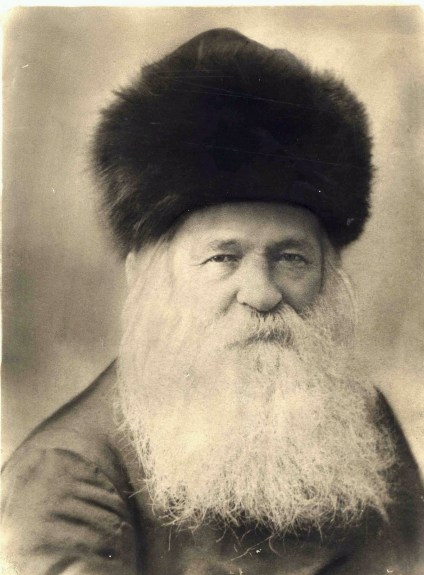


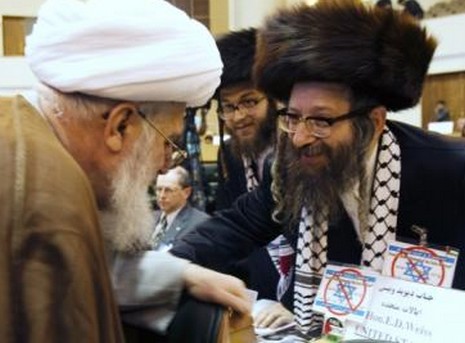


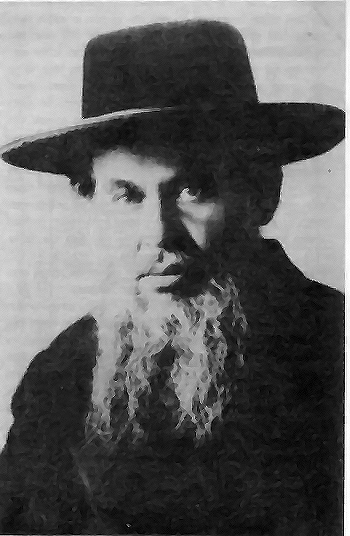

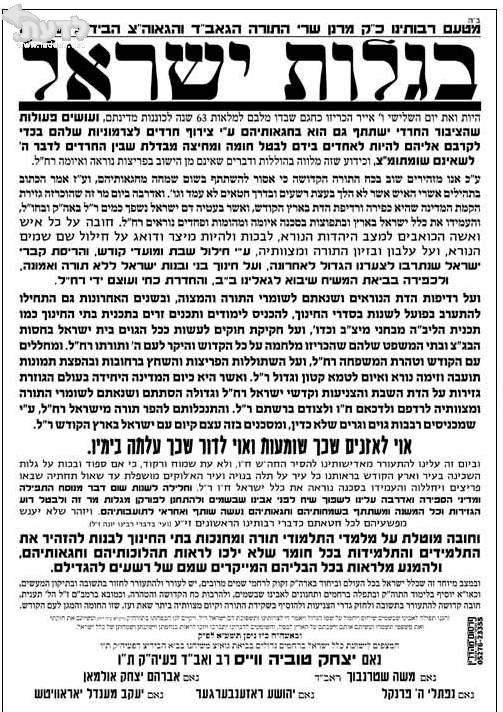


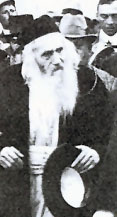
 is clearly a scholar and has tackled difficult issues, such as Homosexuality with both erudition and compassion. He is also an accomplished “defender” of Chabad having written a book in response to Rabbi Berger’s critique of Chabad Meshichism, and, more recently, a series of responses to the controversial book by Samuel Heilman and Menachem Friedman.
 was in Melbourne last Shabbos. Rabbi Wolpe is a big Talmid Chacham but known for his very extreme Meshichist ideology and his uncompromising attitude to the return of any territories beyond the Green Line. There are many Chabad institutions who are wary of allowing him to occupy a pulpit because of the unpredictability of what he will say. In point of fact, Rabbi Wolpe roused the anger of the LR himself when he published a Meshichist treatise against the express wishes of his Rebbe.
 could do so by writing their names and any message or request they might have. It is not my intention in this post to enter a halachic excursus about אין דורשים על המתים. Let’s assume that what the girls were asked to do is acceptable from a Halachic ground (yes, we are well aware that the Rambam is opposed to such practices).
 I am no grammarian. I know almost nothing about grammar. I do harbour a trenchant fidelity towards Mesorah/Tradition, however. This is one of the rare cases where the אחרונים say one thing and the Minhag (Ashkenaz) is not to follow these אחרונים and to follow the סידור אוצרות התפילה
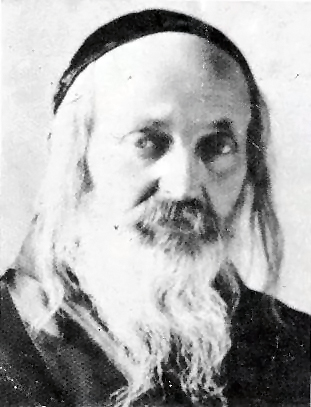


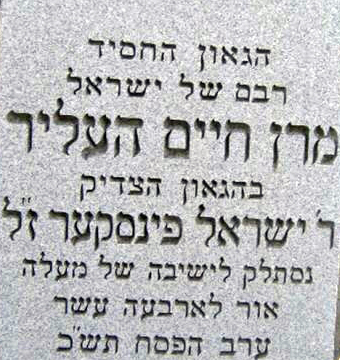
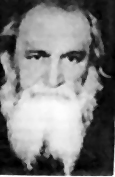
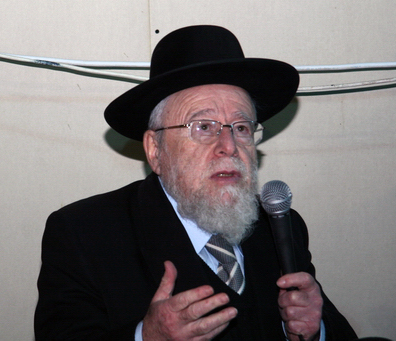

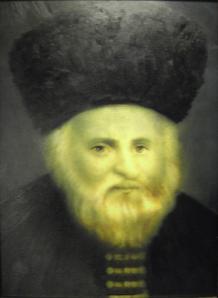


 pitputim
You must be logged in to post a comment.