To become a posek, at least a recognised posek, it is not enough to pass exams on Yoreh Deah and Choshen Mishpat. In addition, it is important to add practice to theory. What does practice consist of? Traditionally, doing Shimush meant that the young Rabbi sat for some time (perhaps a year) in close proximity to a Posek or Dayan or Av Beis Din and observed the range of questions that were being asked and learned how to answer, when to answer, when not to answer, when to ask for more information and more.
A Rabbi who wanted to be qualified to pasken Nidah questions, would see the artefacts that the supervising Posek would see. A Rabbi who wanted to pasken about kashrus, would see the chicken or the innards of an animal and learn in a practical fashion. These days, one can find augmentation via multi-media. I have seen video lectures in full colour given by experts in Nikkur, for example. The posek who wishes to learn the complex aspects of Gittin or Chalitza, would be well served sitting in on, or observing the work of an established Beis Din.
The notion of shimush is sound. Without shimush, one is locked somewhat into a theoretical world. A Rosh Yeshivah or Rosh Kollel often doesn’t have shimush. That’s a generalisation, of course, and is intended to be. They will have a profound knowledge of texts but may not have experienced the so-called “real world” around them, and “real world” questions.
Poskim, and indeed qualified communal Rabbis, will be exposed to aspects of the real world that they learn from and adapt to. The Debreciner z”l, whose brother the בצל החכמה was a Rabbi in Adass many years ago, was rumoured to have a resident (religious) psychiatrist or psychologist close at hand to assist him with issues of mentoring and advice. The Posek or qualified communal Rabbi will often be called upon to provide sage advice and counsel.
At RIETS, after ordinary Smicha graduands complete their text-based examinations, they are subjected to a series of scenarios that are simulated out by qualified actors. In those scenarios, a husband and wife may play out marital problems, or a congregant may come to complain about another congregant’s behaviour etc. Each graduand interacts with the actors’ scenarios and is then provided with feedback by both their fellow graduands and their experience Smicha Rebbeim.
The value of practical exposure is well-known in general educational circles. At my own university, RMIT, it is now compulsory for each student to be exposed to a semester of “Work integrated learning”. Simulation has a place, but the “real thing” is even better. Even at the more informal level, I recall when we were learning Chullin in Daf HaYomi, that Reverend Velvel Krinsky z”l, who was a shochet and bodek, would bring various innards to enhance the learning experience. Given my limited spatial imagination, this certainly helped to lift the words off the page.
What of today? In an article recently published by the Jerusalem Post, it was reported that:
On October 31, Chief Ashkenazi Rabbi Yonah Metzger informed Israel Radio, Reshet Bet, that he had visited a shelter for battered Orthodox women in Beit Shemesh and was horrified to hear of their suffering.
Apparently the chief rabbi had not been aware that Orthodox women were victims of domestic violence and expressed sincere compassion for their plight.
He described how he spoke with the women and listened to their stories. This eloquent spiritual leader pointed out that Jewish law (Halacha) does not condone violence in the home and that good Jewish husbands honor their wives and treat them with dignity and respect. He was so impressed by the experience that he is now going to recommend that all dayanim (religious judges) visit this shelter.
I have no doubt that a visit to the victims of spousal abuse would at least allow a Dayan or Posek to approach the concept of אל תדין את חברך עד שתגיע למקומו. Statistically, I do not know whether abuse is more rampant that it was, but there can be no doubt that with the advent of instant modern communication, we are more acutely aware of their prevalence, often in disturbingly graphic portrayals.
But this type of shimush, or worldly experience, should not be limited to emotional or spousal abuse. I am of the strong view that society in general, especially cloistered societies, and Rabbis in particular, are not sufficiently sensitised and exposed to the trauma of victims of abuse. The stigma attached to these issues is grave.
My words are but a miniscule digital imprint in a sea of platters and NAND based memory in the blogosphere. Contrary to the views of some, my words serve no self-aggrandising cause, but are a (semi) conscious stream of thought emanating from my cerebral cortex, often in a seemingly sporadic form.
If there was one thing I’d like to add to the shimush of Rabonim, it would be that they each attend ten to twenty secular court cases where they will be exposed to the harrowing impact statements and testimony of victims across a range of abuse, including sexual abuse and inappropriate contact. I feel that through this experience, they will better understand the comments of a person who comes to them, sometimes after an extended period of time, and says “I was violated”. Until they do, despite the various well-meaning courses that some undertake, I don’t think they will have had “real shimush”.
Looking around the world, and seeing reported incidents on a daily basis, it’s high time this became part of a mandated curriculum. Is it less important than the sircha on a lung?
Yesterday, a number of my alumni were wishing everyone “Eid Ul Aza” or “Eid Mubarak” or similar. November 6, 2011 is associated with an Islāmic festival, sometimes called Eid al-Adha. Essentially, Muslims contend that it was Yishmael who Avraham Avinu was commanded to sacrifice on the Akeyda. They celebrate this act of faith with a feast and wish each other Eid Mubarak. I had discussed this issue in the past with some of my more open-minded alumni, and one of them said “forget who it was, just celebrate an act of extreme faith”.
I have always considered religious festivals to be a private matter. It never made sense to me that someone should wish me a Happy Chanukah anymore than I would wish them a Merry Xmas. To be sure, Muslims are not considered בעלי עבודה זרה and so the issue in this instance is somewhat different from a halachic point of view. On the other hand, this particular festival grated on me because it was contradicted by all ancient sources.
We contend that it was Yitzchak who was on the Akeyda. Even if some Muslims seemingly acknowledge that Yitzchak was also charged to be on the Akeyda with Avraham, I always viewed that as apologetic and a cop-out.
So what does one say, if anything? In the end I settled on “Enjoy your feast”. Is that kosher in the spirit of שלום?
What do you say when someone wishes you Merry Xmas? In the case of Roman Catholics Xmas is עבודה זרה.
Do you feel uncomfortable if someone wishes you Happy Chanukah? Are you as über sensitive as me?
I admit that I am overly sensitive. Towards the end of the year, our office is bedecked with Xmas decorations. I feel uncomfortable just entering the office at that time, and avoid doing so at all costs. I don’t so much care if someone pays for and displays their own personal decorations, but I do not care for University money being used for one particular religion. Are my views too extreme?
Many Jews react in extremes because they don’t understand the mandated existential aloneness of the Jew. The reaction is usually at two extremes: some become left-leaning, tree-hugging, egalitarian-seeking, über humanitarians whose mantra is “Tikkun Olam”. They believe they can somehow meld into the world and become accepted by showing exemplary humanity and a tamer more palatable hold on their heritage. Others become rabid, angry, and even violent proponents of the “Malchus Shakai” concept. They are impatient. They believe in completely cutting themselves off from the seventy nations and either living on an island, or engaging in an often violent Milchamos Hashem, fighting for Shabbos or an expanded Israel.
None of this is new. It has manifested itself throughout history. The German approach of being a Jew “in the four corners of one’s house”, whilst an “elegant man of the street” when outdoors was also an ill-fated attempt at becoming “accepted” and “acceptable” in the eyes of the seventy nations.
The reality is that עם לבדד ישכון: we are a nation destined to loneliness. We can never look at this loneliness as a problem that we can or must “solve”. That approach is flawed and has proven to be flawed throughout history because it contradicts the very nature of Hashem’s covenant with Bnai Yisrael.
We certainly have a responsibility to be Mentchen, Torah Observant, good citizens, and Holy. These are immutable responsibilities. When they are, however, hijacked by motives to solve the “loneliness” problem, radicalism is born. Over time, only the shades of “reactionism” change through the prism of society’s expectations.
In understanding the nature of our covenant and our loneliness, I adapt a copyrighted (by Dr. Israel Rivkin and Josh Rapps) version of part of a talk from the Rav on Parshas Lech Lecha delivered in 1973.
The Rav noted that Parshas Lech Lecha and the story of Avraham is as current today as it was many years ago. The struggle between Jews and the Egyptian continued throughout the ages.
In Parshas Lech Lecha, Avraham is commanded to differentiate himself from the nations of the world. Avraham is the progenitor of the process of the separate nation. Avraham, the first Jew, encounters Egyptians soon after he enters Eretz Yisrael. Ironically, Avraham is blamed for the tension because he had claimed that Sara was his sister and did not declare that she was his wife. Had she been his sister, would that have given the Egyptians the right to take her? [Apologists would blame Avraham, of course]
Egypt constantly surfaces throughout Tanach as the antagonist of the Jewish Nation. Avraham was not the only ancestor to have dealings with the Egyptians. Yosef was enslaved in Egypt, after which the Jewish Nation was enslaved there. During the time of the first and second Temples there was constant friction with Egypt. Why?
The prophet Zechariah says that all the nations will gather against Jerusalem and Hashem will come to battle them on behalf of His nation. In the Messianic period Egypt will be singled out for special punishment in that it will not celebrate the festival of Succos.
Parshas Lech Lecha lays down the everlasting principle that the Jew must be separate and alone from other nations of the world. Bilaam [and latter-day Bilaams] recognised this and said that the Jewish Nation dwells alone and does not count itself among the other nations of the world. This separation began with Avraham, culminating with the Mitzvah of Bris Milah. [In our time, the holocaust denier, Mahmoud Abbas, is allegedly “comfortable” with a State, but specifically will not accept a State for Jews. This is the behaviour of a latter-day deceitful Bilaam]
The Torah (Breishis 17:1) says that Hashem commands Avraham to “walk before Him and to be complete” so that Hashem will grant The covenant between Avraham and his descendants. Rashi comments that Hashem tells Avraham that He is all-powerful and all-capable to administer each and every creature. Accordingly, “you shall walk before Me and I will be a God and protector for you”. Based on this interpretation, what is the connection between this statement of Hashem and the Bris Milah itself?
The Midrash says that after he was commanded to perform the Bris Milah, Avraham was concerned that this separate act of Milah would cause a fundamental change in his relationship with the rest of the world. Until that point, all people sought out Avraham, and he was able to influence them. [Tikkun Olam was easy. There were no obstacles]. Even though they knew that Avraham ascribed to a different philosophy, there was enough in common with the nations of the world to the extent that they sought Avraham out.
Avraham protested. With the inception of the Bris Milah, they would no longer associate with him and he would be alone. The Torah describes that Avraham sat at the door of his tent, at the height of the heat of the day, searching for guests, yet none passed by. The people did indeed boycott him. Hashem reassured Avraham that he should not worry about his loneliness, Hashem will always be with and protect him.
Milah and Shabbos (and Yom Tov) are both classified as Osos (signs) from Hashem to Bnai Yisrael. The Rav pointed out that although they share the concept of sign, they symbolise different aspects of the relationship between Hashem and Bnai Yisrael. Shabbos symbolises the unique Kedushas Yisrael; the sanctity of the Jew. The Jew has to follow a path of Kedusha and be separate from the other nations of the world.
The essence of Mila, however, is that the Jew is inherently different from the other nations. He has a different, unique destiny. The non-Jew can understand that there is a concept of sanctity. He might grasp that there is a concept of performing Mitzvos. However he has a hard time grasping this unique separation between the destiny of the Jew and the destiny of the rest of the world. He finds it especially difficult to grasp the connection between the Jew and Eretz Yisrael; the embodiment of this destiny.
Avraham understood that with the Mitzvah of Mila, the Jew will now embark on a separate, unique life style and destiny from the rest of the world. After Mila there will no longer be seventy-one nations. Rather there will be seventy nations on one side and one nation on the other. The Jew will always be excluded from the “United Nations”, throughout the ages. Avraham was afraid to be alone and separate from the rest of the nations. [Others still seek the approval and acceptance of the United Nations as the panacea]
Hashem promised Avraham that should he perform the Mila He will protect him and always be with him. Hashem promised that Ani Kel Shakay, He will be the God and protector of Avraham. Hashem’s alliance with Avraham will be far superior to the alliance between Avraham and the other nations of the world. And it is through the merit of the Mila that Avraham and his descendants were also granted Eretz Yisrael, for this is the destiny.
It is these two linked concepts, Mila and Eretz Yisrael, that define the Jew while causing him to remain an enigma to the rest of the world.
Have things changed? Is commercialism and making an extra buck overtaking honesty despite government laws? I wonder what those who “eat fish out” say. It’s scary.
Statement by H.E. Mr. Ron Prosor, Permanent Representative of the Permanent Mission of Israel to the UN 24 October 2011
Security Council-“Situation in the Middle East, including the Palestinian Question”
Thank you, Madame President.
At the outset, I would like to extend my condolences to the People of Turkey following yesterday’s tragic earthquake.
Let me begin by reminding this Council that the name of today’s debate is the “Situation in the Middle East, including the Palestinian question” – and not vice versa. This morning I’d like to take the unusual step of actually focusing on the situation in the Middle East.
Let me assure you that I will give proper attention to the Israeli- Palestinian Conflict. However, first, let’s look at the facts: the Middle East is in turmoil. Thousands of innocents have been gunned down in the streets. People are calling for their freedom and demanding their rights. Yet, month after month, this Council deals with and focuses disproportionately on one and only one conflict in our region.
I don’t claim that this Council does not deal with the situations of specific countries in the Middle East. It does. However, I think it is time to start connecting the dots so that we can face the bigger picture.
For generations, the Arab World has failed miserably to address the needs of its own people. The United Nations Development Program has sponsored five “Arab Human Development Reports” since 2002. Year after year, the Arab researchers who write these reports offer a glimpse into the real world of the Middle East.
Young people struggle without access to jobs and education. Women are denied basic rights. Free expression is repressed. Minorities are persecuted. Elections are a sham.
And with their world in flames, Arab Leaders continue to blame Israel and the West for all their problems. For years, it’s the only explanation that they have been able to offer to their own people. From time to time, they spice up the story. When a shark attacked a tourist in the Red Sea resort of Sharm El-Sheikh, the local Egyptian governor suggested that the Mossad was using sharks to harm Egyptian tourism. Everything wrong in the Middle East, according to many Arab leaders, is simply Israel’s fault. If it’s not the Mossad, it’s the CIA, or MI6, or some other “foreign force.”
Today the people of the Middle East demand real answers for their plight. We have seen their brave stands in public squares. We have heard their cries. And we have witnessed the deadly response to these calls for freedom.
In Hama, Daraa and Latakia, the Syrian regime slaughters its citizens in a desperate bid to hold onto power. Some members of this council remain blind to Assad’s brutality.
In Libya, the reign of Moammar Qaddafi is over after more than 40 years of repression and many months of bloodshed. The Libyan despot’s violent end illustrated what Churchill once described as a signal disadvantage of the dictator: what he does to others may often be done back to him. This truth haunts the minds of many leaders in our region — and Qaddafi’s fate rings an alarm for them.
In Iran, an Ayatollah regime represses its own people as it helps other tyrants to butcher theirs. Last week, UN Special Rapporteur Shaheed briefed the General Assembly, offering a chilling picture of what daily life in Iran looks like. His report highlighted, (quote) “a pattern of systemic violations of… fundamental human rights…including multifarious deficits in relation to the administration of justice…practices that amount to torture…the imposition of the death penalty in the absence of proper judicial safeguards…the persecution of religious and ethnic minorities, and the erosion of civil and political rights.”
Iran remains the world’s central banker, chief trainer and primary sponsor of terror. Recent events have shown that its state-directed terrorist activities extend from the Persian Gulf to the Washington Beltway, with targets that range from innocent protestors to foreign soldiers to official diplomatic representatives. This is the way the regime behaves today. One can only imagine what it would do with a nuclear capability – with the dangerous combination of extremist ideology, advanced missile technology and nuclear weapons.
IAEA reports make clear that Iran continues to march toward the goal of a nuclear bomb in defiance of the international community. We cannot allow it to place the entire world under the specter of nuclear terrorism. The world must stop Iran before it is too late.
Madame President,
The Middle East is trembling. Its future is uncertain. And two roads stand before us.
There is the future offered by Iranian and Syrian leaders – a future of more extremism, greater violence and continued hate. Their vision will not liberate human beings, it will enslave them. It does not build, it destroys.
And there is another road – a path of progress, reform and moderation.
The choice before us is clear – and it has never been more critical to make the right choice for the future of the Middle East and its inhabitants. It is time for this Council to stop ignoring the destructive forces that seek to keep the Middle East in the past, so that we can seize the promise of a brighter future.
Madame President,
Make no mistake: it is important for Israel and the Palestinians to resolve our longstanding conflict. It is important on its own merits, so that Israelis and Palestinians alike can lead peaceful, secure and prosperous lives. But it will not produce a sudden outbreak of stability, harmony and democratization from the Persian Gulf to the Mediterranean Sea. And seriously addressing the underlying problems of the Middle East will be essential for advancing Israeli – Palestinian Peace.
The road to peace can only be built on a foundation of mutual recognition and dialogue.
A month ago, President Abbas stood in this building and said the following (and I quote):
“I come before you today from the Holy Land, the land of Palestine, the land of divine messages, ascension of the Prophet Muhammad (peace be upon him) and the birthplace of Jesus Christ (peace be upon him).”
He denied 4,000 years of Jewish history. It was not a small omission. It was not an oversight. The Palestinian leadership attempts to erase the connection between the Jewish people and the Land of Israel.
Others in the Arab World have offered a different message.
For example, in 1995, King Hussein came to the United States and said (quote): “For our part, we shall continue to work for the new dawn when all the Children of Abraham and their descendants are living together in the birthplace of their three great monotheistic religions.”
Let me repeat this. King Hussein said three monotheistic religions, not one or two.
Those who seek peace do not negate the narrative of the other side. On the contrary, they recognize its existence and choose to sit down and negotiate peace in good faith. This is what President Sadat did. This is what King Hussein did.
The ancient Jewish bond to the land of Israel is unbreakable. This is our homeland.
The UN recognized Israel as a Jewish state 64 years ago. It is time for the Palestinians and the more than 20 Muslim countries around the globe to do the same.
Let there be no doubt: Israel wants peace with a future Palestinian state. Let me repeat that: Israel wants peace with a future Palestinian state. In word and in deed, my Government has demonstrated time and again that we seek two states for two peoples, living side-by-side in peace. You don’t ever hear the Palestinians say “two-states for two peoples”. If you any of you do, please phone me on a “9-11 number” immediately.
Prime Minister Netanyahu stood in this hall last month and issued a clear call to President Abbas. Let me reiterate that call today to the Palestinians. Sit down with Israel. Leave your preconditions behind. Start negotiations now.
The international community has called on the Palestinians to go back to negotiations. Israel has accepted the principles outlined by the Quartet to restart negotiations immediately, without preconditions. We are waiting for the Palestinians to do the same.
Madame President,
The Palestinians suggest that settlements are the core cause of the Israeli-Palestinian Conflict. It’s an interesting assertion considering that our conflict was raging for nearly a half century before a single settlement sprung up in the West Bank.
From 1948 until 1967, the West Bank was part of Jordan, and Gaza was part of Egypt. The Arab World did not lift a finger to create a Palestinian state. And it sought Israel’s annihilation when not a single settlement stood anywhere in the West Bank or Gaza.
The issue of settlements will be worked out over the course of negotiations, but the primary obstacle to peace is not settlements. This is a just a pretext for the Palestinians to avoid negotiations. The primary obstacle to peace is the Arab World’s refusal to acknowledge the Jewish People’s ancient connection to the Land of Israel — and the Palestinian’s insistence on the so-called right of return.
Today the Palestinian leadership is calling for an independent Palestinian state, but insists that its people return to the Jewish state. It’s a proposition that no one who believes in the right of Israel to exist could accept because the only equation in political science with mathematical certainty is that the so-called right of return equals the destruction of the State of Israel.
The idea that Israel will be flooded with millions of Palestinians is a non-starter. The international community knows it. The Palestinian leadership knows it. But the Palestinian people aren’t hearing it. This gap between perception and reality is the major obstacle to peace. The so-called right of return is the major hurdle to achieving peace.
Since the Palestinian leadership refuses to tell the Palestinian people the truth, the international community has a responsibility to tell the Palestinian people about the basic compromises that they will have to make.
Madame President,
The many issues that remain outstanding can only – and will only – be resolved in direct negotiations between the parties. Israel’s peace with Egypt was negotiated, not imposed. Our peace with Jordan was negotiated, not imposed. Israeli-Palestinian peace must be negotiated. It cannot be imposed.The Palestinian’s unilateral action at the United Nations is no path to real statehood. It is a march of folly.
Today the Palestinians are far from meeting the basic criteria for statehood, including the test of effective control. The President of the Palestinian Authority has zero authority in the Gaza Strip. Before flying 9,000 kilometers to New York to seek UN membership, President Abbas should have driven 50 kilometers to Gaza, where he has been unable to visit since 2007.
In the same breath that they claim their state will be “peace-loving”, Palestinian leaders speak of their unity with Hamas, an internationally recognized terrorist organization. Hamas and “peace-loving”? There is no greater contradiction in terms.
This month, on a fundraising excursion for terrorism with his Iranian patrons, Hamas Leader Ismail Haniyeh stood in front of an audience in Tehran and said, “the correct strategy to liberate our country and Jerusalem is violent resistance.”
Under Hamas rule, Gaza remains a launching ground for constant rocket attacks targeting Israeli civilians, which are fueled by the continuous flow of weapons from Iran and elsewhere. Israel has the right to defend itself. As the Palmer report made clear, the naval blockade is a legitimate security measure in order to prevent weapons from entering Gaza by sea.
When it is not attacking Israelis, Hamas is oppressing its own people. In Gaza, civil society is nonexistent, political opponents are tortured, women are subjugated, and children are used as suicide bombers and human shields. Textbooks and television glorify martyrdom and demonize Jews. Incitement against Israelis also continues in the West Bank and in the official institutions of the Palestinian Authority, which names its public squares after suicide bombers.
The unresolved questions about a future Palestinian state cannot be simply swept under the carpet. They go to the core of resolving our conflict. They have to be addressed. Let me be clear: for Israel, the question is not whether we can accept a Palestinian state. We can. The question is what will be the character of the state that emerges alongside us and whether it will live in peace.
Madame President,
The Palestinian’s unilateral action at the UN breaches the Oslo Accords, the Interim Agreement, the Paris Protocol and other bilateral agreements that form the basis for 40 spheres of Israeli-Palestinian cooperation – all of which could be jeopardized by a unilateral action at the UN.
This unilateral initiative will raise expectations that cannot be met. It is a recipe for instability and potentially, violence. Members of the international community should be clear about their responsibilities: You vote for it, you own it. All those who vote for unilateral recognition will be responsible for its consequences.
At this critical juncture, the Palestinians’ true friends will encourage them to put aside the false idol of unilateralism and get back to the hard work of direct negotiations.
Speaking of friends, the many so-called Arab champions of the Palestinian cause have a responsibility to play a constructive role. Constructive support from the Arab World is vital for building the civic and economic structures necessary for real Palestinian statehood and peace. Instead of simply adding to the chorus of state-bashing, the Palestinians true supporters will help advance state-building.
Arab donors provided just 20 percent of the international funds for the Palestinian Authority’s regular budget last year. Let me put this in perspective: last year, Arab donations to the regular PA budget accounted for a little more than half of what Saudi Prince Alwaleed bin-Talal spent on his newest personal luxury jet.
People in Washington, London, and Paris are struggling with an economic downturn, but still providing the bulk of support for Palestinian institutions, while Arab states saturated in petrol dollars don’t even give the Palestinians crumbs off the table.
Madame President,
In the Jewish tradition, we are taught: “whosoever saves a single life, saves an entire universe.” This sacred principle forms the backbone of Israel’s democracy. It drives our Government’s policy. We witnessed a clear reflection of these values last week – as all of Israel welcomed home our kidnapped soldier, Gilad Shalit, after more than five years in Hamas captivity. It was a moment of great joy, but it came with tremendous costs.
I would like to take this opportunity to thank the Secretary-General personally and some of the countries represented here today that played an important role in the release of Gilad Shalit.
For us, the supreme value of a single human life justified releasing more than a thousand terrorists and criminals covered in the blood of innocents.
The values inherent in such an act shine bright in our region. Many took note. On Twitter, one Syrian blogger, Soori Madsoos, wrote “Their government is prepared to pay the ultimate price for one citizen, while our government kills us like we are animals and our Arab neighbors say that it’s an internal matter.”
Time and again, Israel has shown that it is ready and able to make bold and courageous decisions to preserve life, to uphold human dignity and to pursue peace.
Madame President,
Sustainable peace must be negotiated. It must be nurtured. It must be anchored in security. It must take root in homes, schools and media that teach tolerance and understanding, so that it can grow in hearts and minds. It must be built on a foundation of younger generations that understand the compromises necessary for peace. A brighter future in the Middle East must be forged from within, when we are open and honest about the challenges before us – and resolute in our determination to meet them together.
Yes, it’s a time when we are all enjoined to be happy. It’s not just that we have to be happy. There are even curious leniencies that the Rabbis permitted. Duchening at Shachris is a concession. Chazal clearly realised that תפסת מרובה לא תפסת and that if they didn’t set ברכת כהנים in the morning, there would unlikely be any proper Duchening at Mussaf. Why didn’t Chazal stick to their guns, so to speak? Why didn’t they simply say that drinking to a point of שכרות (not עד דלא ידע) was strictly forbidden and instead encourage a nice kiddush/seuda after davening albeit with more alcohol than usual?
Furthermore, according to non Chassidic Poskim, clapping (and even dancing) are forbidden on Shabbos and Yom Tov. Clapping in particular is permitted on Simchas Torah? Why? It seems this is for the כבוד התורה? It was enacted at the time of the Geonim. Again, I don’t understand. If clapping on Yom Tov is forbidden, why permit it on Simchas Torah? It makes no sense to me. I’d be more than pleased to understand the limits under which halachic considerations seem to be allowed to be relaxed as a result of the dictum of והיית אך שמח.
I have been reading a wonderful set of essays about the Yomim Tovim from Rabbi Dr Norman Lamm. His delicious prose and profound insights never cease to regale me. This year, I read an essay on Shmini Atzeres. I mentioned it briefly at our table on Shmini Atzeres evening. Rabbi Lamm asks why specifically this Yom Tov had the notion of unadulterated Simcha, such that אך connotes an increase of Simcha as opposed to the usual meaning of אך which is a reduction.
He goes onto quote an insightful Gemora in Yoma 21a where as soon as Shmini Atzeres/Simchas Torah had concluded, everyone was petrified. They were worried about the גשמים. Rain signified פרנסה, the ability for someone to make a living and keep the proverbial clock ticking at home. All eyes were on the smoke of the מערכה; the smoke from the wood which would burn the sacrifices. The particular direction of the wind at the end of Shmini Atzeres/Simchas Torah, signified the גשמיות fortunes that were to be ushered in. Would they be good for the poor or the rich? Would it be bad for everyone or good for everyone?
According to Rabbi Lamm, the effective culmination of Tishrei, where we immersed ourselves so deeply in עבודת התפילה and in תשובה and fasting was suddenly if not hesitatingly upon us. Hashem had said “stick around for another day … but on one condition, you must be happy“. With the winds soon to advise us whether our prayers had been answered, who could be happy? Every human mind would be worried. What will happen? Was I listened to or have I been consigned to some other non descript path. Would I have נחת and good health, or would things God forbid not seem to be so great. The fear of the unknown is a palpable one.
I. Holtz (from the alexander gallery)
When I daven for the Amud, I have always been wracked with guilt. Will I be an adequate Shliach Tzibbur? On Shmini Atzeres, it’s all over. The deed is done. We’ve all passed כבני מרון. The downturn potentially begins. ויעקב הלך לדרכו. Hashem says ’No’. He says, be happy. Delight in my Torah. Make my Torah happy through your enacting its commands.
Ah, but would it be so easy.
This year, I quixotically watched people circumvolve while brandishing a Torah. Smiles on some faces, while others robotically gyrated, occasionally exalting in niggun. Were they happy? Truly happy? Were they going through the motions, or was it just me? Perhaps it was indeed me who was thinking too deeply and allowing myself not to let go. Was I in a state of spiritual suspension? Why wasn’t I jumping out of my skin to dance? Sure, when I was younger I danced like there was no tomorrow. No doubt, I learned more Torah than I do now, both qualitatively and quantitatively. I still learn, though. I still like nothing more than to grab a Sefer and immerse myself in an ענין of Torah. I love it. I always will. So, what has changed. Life’s good!
Rabbi Lamm notes that if the Torah commands happiness, then this must mean that happiness is not at all dependent on the direction of the smoke. It is an inner state. It doesn’t matter whether the extrinsic reality will turn out to be good. It must be, that happiness is an internal state of achievement, something that one can reach by somehow locking out and extinguishing the portion of one’s state of mind that seems utterly subservient to the external; to the existential reality of our existence and all that goes with it.
Society recognises this internal friction and electricity. It calls it stress. Stress comes from something external (unless it’s a chemically induced condition). Stress is treated in at least two ways. One way is ingest a medically indicated dulling agent. By dulling our reaction to stress, we are able to refocus on what matters and deal with the here and now. Another method in vogue is known as mindfulness. It borrows ideas of buddhist relaxation and seeks to find a cognitive dissonance from negative (stressful) thoughts and then suffusing these with positive notions. Again, the idea is to somehow remove the negative barriers. In a Jewish context, the source and meaning behind positive notions is more natural and substantial.
Having a few לחיים’ס on Simchas Torah has always helped me to divest myself of every bit of hindrance that could envelop my neurones and prevent me from watching the dancing in a mechanistic manner or participating in gratuitous robotic gyrations together with a plastic grin. Is that why Chazal told me to Duchen at Shachris and allowed me to clap? That’s not to say that I, nor anyone else, countenances wanton drunkenness or alcohol abuse. Nor am I saying that this is for everyone, or even for the majority of people. For me, however, it’s a release. It frees me to not focus on externals. It allows me to not pivot on the “direction of the wind” at the conclusion of Simchas Torah. It’s a crescendo; the last movement of the symphony, if you will, a spiritual journey of uplifting, that started at Slichos, through Rosh Hashono, Yom Kippur, Hoshana Raba, concluding with Succos.
To the rest of you who can divest yourselves of worldly stress without any agent and reach אך שמח on your own, well done!
It’s no secret that despite never having seen him face to face, I have felt very comfortable asking (what I thought were) difficult questions of Halacha to R’ Hershel Schachter. R’ Schachter’s father, R’ Melech Schachter ז’ל was a prominent Rabbi in Philadelphia and a Rosh Yeshivah at RIETS. Recognising that his son’s education was paramount, R’ Melech gave up a large pulpit job and moved his entire family to take up a small job as a Rav in the Bronx. He knew his son, R’ Hershel was a genius and that R’ Hershel was destined to greatness. R’ Hershel began studying in the Salanter School in New York. In those times, this was one of the few decent schools that combined Torah with a proper secular education. During the Mathematics classes, little R’ Hershel was inattentive. This was not a once off. R’ Hershel seemed pre-occupied with something else during these classes. Finally, the irate teacher had enough.
“Schachter, I’m tired of having to constantly try to get your attention. Will you please concentrate. These subjects are very important and you need them for life”
The young Hershel stood up and responded:
My father moved our family here so that I would learn more Torah. He didn’t send me away from Philadelphia so I would excel in Maths
R' Hershel Schachter שליט’’א
This story was promulgated by one of the students in the class at that time.
By the age of 26 he was appointed as a Rosh Yeshivah at YU’s Yeshivas Yitzchak Elchanan Theological Seminary (RIETS) the same year that he received his Smicha from the Rav ז’ל, having been an assistant to the Rav at the age of 22.
To me, one of the things that sets R’ Hershel apart is not just his enormous בקיאות in הלכה which has seen him as a major Posek for the OU together with R’ Belsky. His ability to completely distance himself from שקר becomes clear through his שיעורים. His candour is breathtakingly transparent and all based on firm מקורות. His moral fibre and ethics are completely derived from הלכה.
He doesn’t impose himself in any way. He talks with a genuine humbleness, not someone who assumes a facile text-book based humbleness. R’ Hershel basically teaches. He is constantly teaching Torah. YU have some 3000+ of his shiurim online. He is a veritable מעיין הנובע. R’ Schachter says “I don’t know” with ease. I remember the first time he said it to me, I thought
“what the heck, he didn’t say, I need to check and be מעיין and get back to you. He had no problems saying ‘I don’t know’ and when I tried to push him he repeated ‘I don’t know'”.
In each case when he said that, it took me some time to realise that his answer was calculated, and there was more behind it than simply saying “I don’t know”.
It was, therefore, no surprise to me that a I came across (hat tip Anon) a typically candid interview where R’ Schachter’s plain unadulterated clear thinking was there for all to see. His advice on reforming the Beis Din System is a clarion call. Privately, many Charedim love R’ Schachter and consider him one of the Gedolim. R’ Schachter, though, will never formally be considered a Gadol by the Aguda or Charedi world. After all, his Rebbe was the Rav, and he still teaches at that “treyf” institution known as YU.
The בזיון התורה that Aguda demonstrates towards R’ Schachter is typified by their seating of him at an anonymous table amongst the crowd during the Siyumim of Daf HaYomi. R’ Schachter doesn’t care. He genuinely doesn’t take himself seriously. He doesn’t complain.
I reproduce two questions and answers from R’ Schachter’s interview about the reforms needed for the Beis Din System. These comments say it all. On second thoughts, the entire interview just needs to be read. I’m reproducing it all here without permission. It is from Ami Magazine as reprinted with permission by Voz Is Nayes.
Q: Unfortunately many kehillos in the charedi community are taking their disputes not to bais din, but to court. That seems to say that there is a problem with the way people perceive batei din, a crisis. You have been outspoken about the bais din system. What is your assessment? A: The present system is terrible. There is a Mishna in Pirkei Avos that the oilam says a vort on. It says, “K’sheyihiyu habaalei dinim lifanecha, yihiyu b’einecha k’resha’im. K’she’yaamdu m’lifanecha yihiyub’einecha k’tzaddikim, shekiblu aleihem es hadin.” [“When the litigants stand before you (the judges), they should be in your eyes like wicked people. When they stand up from being in front of you, they should be in your eyes like righteous people, because they have accepted the judgment.”] They say from a few different dayanim that they would put a tallis over their face, to not see the face of a rasha. But that is wrong; part of the din Torah is to look at the person and see from his facial expression and how he talks…whether or not he is saying the truth. You have to be able to detect whether he is telling the truth. Any judicial panel must get to the underlying facts and the truth in order to render a proper decision. Unfortunately that is not always the case in the present-day bais din system.
Q: Did you come to this conclusion from personal experience? A: I was once asked to sit in on a din Torah to see that there wouldn’t be any shenanigans. I believe that it was a yeshiva against an administrator. The administrator just sat there while the toain [lawyer in bais din] presented the whole case. You have to hear from the administrator himself! How can the toain present the case? The toain can say all sorts of shekarim [lies], because he just says whatever the baal din told him. If the baal din himself says it, he’d be scared; he’d be shaking. You can tell if he’s telling the truth; nikarim divrei emes, nikarim divrei sheker. I thought it was terrible. What kind of a din Torah was that?
Q: Is that experience indicative of dinei Torah today? A: Certainly. I remember another case where a widow had died and she had no children. The question had become who would get the yerusha [estate]. One of her relatives probably thought that, just as in the case of a geir shemais v’ain lo yorshim [a convert who dies without inheritors], the nichasim [property] become hefker (the property becomes ownerless), so too in the case of this almanah everything would become hefker [which is not true]. This relative, I believe it was a great-nephew, pocketed all the money. The other members of the family wanted a din Torah. Someone asked me to watch. The head of the bais din asked the great nephew, “How many bankbooks were there when your great-aunt asked you to take care of her finances?”He answered, “Four.”The dayan asked, “How much money was there in each account?”Suddenly the toain screamed out, “Don’t answer! You’re not mechuyav [obligated] to answer!”That was the end of the case. Had this been a secular court, they would have thrown him out the window. What do you mean, you don’t have to answer? A chutzpah! The dayanim want to find out the facts. But that was the end; there was nowhere to go after that.
Q: Are you saying that this is nowadays the general trend to obfuscate the facts? A: There are countless similar instances when the toain instructs his client not to respond to a question. It also became the style now that when a couple is getting divorced, the toanim tell the husband to say that he wants shalom bayis, so that the bais din assumes that she is a moredes (rebellious wife), and she doesn’t get the kesuba. Ridiculous. One of the latest pieces of shtick was where a wife had apartment buildings, and the husband wanted a heter meah rabbanim so that he could have peiros nichsei milug [proceeds from a wife’s property], even after he was living with the second wife. This was written up in the New York Times and the non-Jewish lawyers were laughing at us. Such a chillul Hashem! This is what our religion stands for? Now they tell the husband to take peiros nichsei milug, even though he never took peiros during the marriage. He doesn’t know about it, so why tell him? Even if he knows that there are nichsei milug, but he doesn’t know that the husband gets peiros nichsei milug, Rav Moshe Feinstein says in his teshuvos that they are considered nichasim she’sinam yiduim [unpublicized property] and the Gemara in Kesubos says that the husband doesn’t get peiros from that property. So why are the toanim telling the husband that he is entitled? Just to make more agmas nefesh (aggravation)?
Q: Would you call then the problem in the bais din system a crisis? A: It’s worse than a crisis. They tell me that there is a prominent talmid chacham in Flatbush who tells his baalei battim to go to a secular court because they stand a better chance of yoshor [justice] in a goyishe [non-Jewish] court than in a din Torah. If you ask him, he’ll deny it, but that’s what he tells people. Unfortunately, I think that the comment about yoshor is true.
Q: Is the problem because of the toanim? A: They drei a kup and obstruct the proceedings. They keep repeating the same things over and over. Rabbi Belsky says that they get paid by the hour, so….I asked Rabbi Belsky, “How do you allow toanim in your bais din?” He said that if he didn’t allow toanim, no one will go to him. They will go to a weaker batei din than his. Here in our yeshiva, when a baal habos wants to have a din Torah, we never allow toanim. One time a person did want to have a toain. We told him, “Stay in the other room. We’ll know what the din is; just tell us what the facts are.”
Q: But isn’t that a problem? Once there is a toain system, people feel that they have a better chance with a toain, so, like Rabbi Belsky said, if you have a bais din without toanim, everyone will go to other batei din? A: Yes. It’s terrible.
Q: How old is this toain system? A: Very recent. In the Shulchan Aruch it says that you’re not allowed to have a toain.
Q: But if the litigant doesn’t know how to express himself, can’t the toain present his claims for him? A: If he can’t express it for himself, thereis a rule of psach picha l’ilaim [“speakingfor the mute”]. But what can’t he express? Tell us what the facts of the case are. Often there is no argument about what the facts are.
Q: When do you believe this system started? A: I think it started in America. I wasn’t there in Europe, but I don’t think they had it years ago.
Q: If you would make a takana, you would say to abolish the entire toain system? A: Absolutely. You don’t need a toain. If you have a katan (minor) or someone who doesn’t know the facts, you have to have psach picha l’ilaim; you have to help him out a little. But the bais din, who is learned, can do that. Tayninan l’yisomim;tayninan l’likuchos. Whenever the baal din doesn’t know the facts, we have to helpthem.
Q: When many people come to bais din, they are not coming because they are having a shaila l’halacha; they are coming to win. So they want a toain for that, don’t they? A: It’s terrible. Bais din should tell them that every penny that they have shelo k’din [wrongly] is gezel [theft].Regarding the case I told you about the toain screaming out, “Don’t answer them,” I recently asked someone whether anything changed in the situation. They told me that no, nothing changed, but that the great-nephew who got the money had to spend it all on a relative who was very sick. That’s always the case.
Q: There is a recent case involving two kehillos that have been fighting for five years in bais din and have no psak. The proceedings are going on and on. Is this the norm today? A: Rabbi Belsky told me that, in the case you are referring to, they’ve had over two hundred sessions. He told me, in this language, that why does someone have to go to graduate school and become an engineer? Just become a toain and you can make a fortune of money. Have unlimited sessions, and get paid by the hour. A shanda and a cherpa. [It’s a shame and repulsive matter.]
Q: How do we bring public awareness to these problems? A: Rabbonim should speak about it. Why is there so much cheating in business? Rabbonim should get up once a year in shuls and speak about Lo sigzol, that you’re not allowed to cheat in business, and that you’re not allowed to cheat on your income tax. If you talk about it long enough it will have an effect on some of the baal habattim. Rabbonim have certain topics that they talk about in hashkafa. Let them give chizuk about gezel.
Q: Do you have a problem with the borerim system [in which two of the dayanim are chosen by the litigants and the two dayanim choose a third]? A: The borerim system is also a shanda. A lot of the borerim act like toanim. I was involved in a din Torah. The borer took shochad (bribes). I had to resign from the case. He felt insulted. It was before Rosh Hashanah, and he told me that he was not going to be mochel [forgive] me. I told him, “I don’t need mechila. You took shochad. You’re pasul to be a dayan.”It says in Shulchan Aruch that you can’t have one litigant pay his dayan and the other pay his dayan, unless, which Reb Moshe writes in a teshuva, it is clear that both are being paid the same amount, in which case each one can pay his dayan and they both pay the third. But that isn’t what happens. They don’t pay the same amount. The payment depends on how long each one bothers the dayan. So they don’t pay the same amount and it is true shochad.
Q: You mean that they are not allowed to charge for the private sessions, as well? A: Of course not. That’s shochad! They pay more money for the private sessions, and then the dayan, instead of talking like a dayan, talks like a toain. I was once involved in a din Torah. One of the dayanim was making up his mind: “This side is wealthier than the other, so let him pay.” What way to talk is that? A din Torah of a penny has to be treated like a din Torah of a million dollars.
Q: Are you saying there is a problem with the dayanim? A: Of course. Do you think that all of the dayanim are honest? Many are acting like toanim; many of the toanim are acting like criminals. They make up their minds in advance that their side has to win. I don’t walk into a din Torah with the attitude that my side always has to win. If I think my side is wrong, I’ll pasken against them. The Rosh in the beginning of Perek Zeh Borer says that people think that their dayan always has to side with them. He has to explore their position; that’s true. But not to invent reasoning out of nowhere. Once we had a din Torah here. It was over real estate in California where they had invested a couple of million dollars. We asked them, “Do you want a din Torah, or would you rather have a peshara [compromise]?”We told them that a peshara is not a fifty-fifty split. It is whatever yoshor dictates. They agreed. The din of peshara in this case turned out to be one hundred percent in favor of one person. That was the peshara. They thanked us. They shook hands with us, shook hands with each other. That’s the way it should be. Regrettably, dayanim today don’t judge with yoshor.
Q: An individual person is affected by this greatly. The big groups can go to a court, because they aren’t worried about any social repercussions. If a regular person did that, he would not be able to get a shidduch for his children, because he would be called a rasha. A: It’s terrible. The dayanim themselves are misusing the system. Someone told me that he was divorcing his wife. He gave the get (divorce) first; he didn’t want to hold it up. So now every time there is a question about custody, his wife goes to court with impunity. Each time he goes to court for anything, the bais din sends him a seruv [summons]. They misuse the seruv. They vilify him, and if there would be a seruv against him, he would lose his job. He is a rabbi.
Q: Could there be a watchdog group, with rabbanim getting together to examine how the batei din are behaving? A: It’s a safek sakana [possible danger] for the watchdog group; they’re going to be killed.
Q: Meaning physically? A: Yes. These people are chashud [suspected] on shifichas damim [murder].Many years ago, Rav Dovid Cohen from Gvul Yaavetz visited me in the summertime. He said that he wanted to set up a dayanim system from all the yeshivos. Whenever someone would want to have a din Torah, they would have to pick three dayanim from the group. They wouldn’t be able to pick a professional who would act like a toain. They would get paid from an outside source, not by the baalei dinim at all. He asked me if I would join, and I said,” Fine.” He said that he would be working on it. It never got off the ground. I don’t know what happened. That we can’t have a bais din system that works is an embarrassment, a shanda and a cherpa.
Q: What should a person who has a claim do, other than go to secular court? A: People who have a dispute should find an honest rav to make a din Torah between them. I remember that the Mirrer Yeshiva in Yerushalayim had an arrangement with a headhunter in New York. They ended up having a din Torah between them. The headhunter was Modern Orthodox. Mir wanted a veryyeshivish bais din; he wanted a Modern Orthodox bais din. Somehow they both agreed on me. So they came and presented both sides, and I paskened that the yeshiva owed him the money. But then I took out my checkbook and wrote the yeshiva a check. Everybody knows that the Mirrer Yeshiva needs money. So the baal habayis also realized that he should give the yeshiva money. I think that he gave up all his claims.
Q: Are you saying it is preferable to go to one upstanding rav? A: If you can find one trustworthy person, that would be the best. The zabla system [of choosing dayanim by each party choosing one judge] is no good. The borer will sometimes say things that are not true. The party tells him something in the private session, where he is being paid by the hour, and he repeats what he has been told, and then in the next session we find out that it’s not true. Better to just have one person that both trust.
Q: Is it common to choose one dayan to hear a case? A: I remember one time there was a chassidishe rebbe who died and was buried in Eretz Yisrael. There was a plot next to him and the question became who would get it. His oldest son was in business, though he had semicha. The second had taken over the title of rebbe, so he felt that he should get it, but the oldest said that he should get it because he was the bechor [firstborn]. They both came to Rav Soloveitchik. He told them that kol hakodem zacha; whoever would die first would get it. Eventually the oldest son died first, but he had realized that his brother was right and before he died he asked to be buried in another cemetery.
Q: Do you want to share another personal anecdote? A: I remember that I was in a din Torah, and the toain was acting so nastily that I said, “Reb So-and-so, you’re a genius!” He didn’t realize that I meant a chacham l’ra [an evil genius] and he went around saying that Rabbi Schachter had said that he was a genius.
Q: But doesn’t a toain assist a litigant in the halachic research related to his case? A: The toanim will quote a line from Shulchan Aruch or a line from a teshuva sefer out of context. They quote it out of context because they know that it will be beneficial for their case.
Q: Any solution? A: The rabbanim should give drashos and tell people that if they take money shelo k’din, Hakadosh Baruch Hu will see to it that they lose that money.
End of Interview
Postscript: My father told me that after the war he was in dispute with another Jew over a business deal in Berlin. They went to Beis Din. My father hired a Toyen (his advocate). When my father began briefing the Toyen as to why he thought he was right, the Toyen said to him (it’s much better in Yiddish)
It’s Erev Yom Kippur. I’m at work. I’m finding it difficult to focus on work. It’s my Elter Zeyde and namesake, R’ Yitzchak Amzel’s ז’ל (Bogushitzer) Yohr Tzeit. Tonight, on Yom Kippur, is my Zeyde, R’ Yehuda Balbin’s ז’ל Yohr Tzeit. Elwood Shule will be pretty much full. Just before כל נדרי I’ll be sitting on the Bima saying תפילה זכה. Only this time, it will be different.
In times gone by, people pass and shake my hand, wishing a גמר חתימה טובה and a גוט יום טוב. Some would peer into my מחזור to see what I was saying, and nod their head in acknowledgment. Then in Yiddish they would say
“Oy, תפילה זכה. I remember my father and zeyde saying this, with tears streaming down their foreheads. You can’t imagine the scene in Poland. The shule was overflowing and stifling. The air was electric and you could hear a pin drop. When the חזן started אור זרוע לצדיק we all trembled: man, woman and child.”
My father sang in the choir in the Chassidishe Shtiebl in Rawa. The בעל תפילה (not a חזן wearing a pointy white hat not intoning an operatic performance) was R’ Zishe Shoichet. הי’ד. Earlier that morning, the town was literally a mess after כפרות. Everyone rushed to R’ Zishe who would then Shecht the chickens, ostensibly for the poor. But who wasn’t poor? When a tired and awe-struck R’ Zishe cried out אור זרוע לצדיק the walls evinced shock and awe. Even the Maskil or Bundist would be at Shule, and they too would tremble before מלך מלכי המלכים.
Over the years, the remnants of that generation were liberally sprinkled among the pews. I remember when there were 40 or 50 people standing in aisles and at the door. I remember when there was even an overflow. This was the home of the survivor. This was a peek into their past. Yes, they drove to Shule (although those who had the strength avoided it on Yom Kippur or parked a distance away so that nobody would see that they were driving) but there they were, bedecked in a Tallis, and a tattered old Kapeloosh (fedora). Who wouldn’t come to Shule wearing a Kapeloosh? Comically, they would drive home wearing the Kapeloosh. But they were fasting. They were davening. It was Yom Kippur.
Someone always fainted (G’Chalished). They knew how to navigate a Machzor. They didn’t need Rabbi Artscroll’s English guide to tell them when to start, when to stop, when to sing or when to cry. It was imbued indelibly. There was nobody announcing page numbers. There wasn’t even a need to standardise on a single Machzor. You wouldn’t see one of those “new” fangled English Machzorim issued by the British Empire. There was Tabik (snuff) and smelling salts. By the afternoon, bad breath was the order of the day. Just before Yizkor, the Shule seemed to double in number. The air was electric. R’ Chaim Gutnick ז’ל mesmerised and enfranchised everyone: young and old, sick and healthy, man and woman. After Yizkor, when, as a boy, I’d return to the Shule proper to see men and women with red weeping eyes. Like a time warp, it looked as though they had travelled back into the bosom of their departed loved ones, and been touched on their foreheads.
The year after we were married, I was employed to daven in Wellington, New Zealand. It was a very English Shule (Routledge Machzor and all). No Piyutim were skipped. I had to say a separate Kel Moleh for each name on the Shule list. I can’t forget, though, the face of what seemed to be the only Poilishe Yid in the crowd. As I came down the steps exhausted from davening a Mussaf which finished at 5pm (they didn’t want a break because people might leave) an old yid, Mr Ryzman, in a tattered kapeloosh, smiled broadly revealing a motley set of teeth, and loudly said “Shekoyech”. I was later told that he rarely smiled, and had told others that he felt “in der heim”.
I didn’t think much of all this at the time. It just seemed so normal and expected. Fast forward. Tonight, I will do exactly what I have always done. Regrettably, there will be very few Yidden in a Kapeloosh. Instead, we will have a more modern array of psychedelic yarmulkes perched on coiffured heads bearing testament to attendance at a flashy Bar Mitzvah or the like. There will be page announcements and new innovative speeches designed to make sure that people remain interested. Woman somehow will have forgotten that it is customary to have a head covering; even those who didn’t have a fancy hat wore a white scarf.
But they are here. They have come. They have identified with their people.
ועמך כולם צדיקים
אנו מתירים להתפלל עם העברינים
Davening will be lonely. The singing won’t be spine tinglingly inclusive. I will wait for the עולם to say their bits in response to mine. Alas, there will be comparative silence and an eery feeling of emptiness will envelop me.
I’ve learned to cope emotionally somewhat, despite my perhaps extreme nostalgia, only by trying to daven in a more dispassionate way.
But it’s Yom Kippur. That doesn’t seem right, does it?
Many modern husbands perform more domestic duties in the house than their fathers; certainly more than their grandfathers. There are exceptions, of course, but I am generalising. Even over time, I am pretty sure I do a little more now than I did in the earlier days of marriage. To be open and honest, I’m not a paragon of domestic help nor would I claim to be. I do much more than my father, no doubt, but my sisters’ husbands lend their hand more than me. At this stage of my hoary existence, I can claim that I clear the table each night after eating dinner, depositing any dishes into the dishwasher, and I do put away those items which can go directly into the fridge or a cupboard.
On שבת I become particularly domesticated. Friday nights I’m very quickly removing plates etc after each course and rallying others to assist (we’ve divided up courses between most of the children (my eldest daughter usually has some reason she can’t take part :-). This is repeated during the day, unless we have guests, when the expectation is that I’m transformed into a genial socialite who sits relaxed at the head of the table like the proverbial king of the castle. My more recent conversion to the cause of שבת domestication, has also attracted a good deal of skepticism. She who must be obeyed, together with progeny will claim that my motivation is flawed because my aim is to simply lessen the restful meandering and conversation mandated for a מנוחה oriented שבת meal, through targeted activities designed to hasten the rendezvous between my head and the hallowed pillow. I will admit that שבת is a great opportunity for me to avoid fiddling with my iPhone or iPad and all that whirs around us, and that the somnolent excitement concomitant with propping up in bed with a great book or ספר is quickly extinguished by the dull and thunderous drone of my expected snoring.
Now, contrary to the triumphant Meshichist who greeted me on Rosh Hashana with his finger-pointing to the Mikva, as if to intimate that as a non-believer I ought to consider a dip in the Mikva on Erev Rosh Hashana, I’ve always gone to the Mikva and have done so all my life. Greeting my entry to the Mikvah, however, was the ubiquitous sign beseeching us (men) to remember to perform (“do” is the usual verb) Eruv Tavshilin. It seemed like everywhere I went, there was another sign, an email reminder from a shule, or a klapp on the bimah all with the same message “Don’t forget to make/do Eruv Tavshillin”
Not withstanding that I’m arguably more domesticated now, as above, and not discounting the impact of “Master Chef” and other such programs that have attracted the interest of men to the culinary art of food preparation (once known by the more derogatory term “cooking”), I have never understand why in our day and age, Eruv Tavshilin is not performed by women.
Picture the scene, if you will. The עקרת הבית is busily making the finishing touches to delectable Yom Tov treats. The house is awash with people rotating in and out of the shower before donning their Yom Tov finery. The husband breathlessly comes back from work just before the clock strikes “Yom Tov”, brandishing flowers and/or the halachically mandated gift for his wife (that’s another story/saga) and he needs to “remember Eruv Tavshilin“. Or, if his wife is that ever diligent frumak, just as he steps into the shower, he hears that oh so gentle but thunderous voice innocently asking “have you done Eruv Tavshilin yet … it’s nearly Yom Tov”.
I don’t understand. It’s all about mixing up (Eruv) the preparation of some food which will be eaten on Shabbos with food that is being made for Yom Tov, so as to enable a halachic device designed to allow the cooking on Yom Tov for the שבת that is immediately to follow. Who is cooking? Who is mixing? Who will cook? Who will mix? What on earth has this to do with the husband?!? I surmise, and will readily accept more learned explanations, that the husband was roped into this job because in past times, women were largely uneducated and could not be expected to make non rote ברכות. But times have changed. I looked at this issue briefly and asked around and I haven’t had a good answer about why it should not be one of those religious acts that is the responsibility of the wife and not the husband. Hey, I haven’t even heard feminist types protesting that men have usurped this ברכה from their domain in another incursion of male domination. Why can’t women be מוציא the house to eat food prepared for שבת? After all, she is the one who does all the hard work.
My אשת חיל has always made the ברכה in our house and not thought anything of it until one fine evening surrounded by her fellow Tehillim Zoogers, some were moaning about how their husbands were prone to forget. Coming home, she “gently” suggested that perhaps in addition to me clearing the table, perhaps it is me who should be doing Eruv Tavshilin after all. I tried, in good faith, to argue that I felt (sincerely) that it was her role, and that my playing a part in this day and age was really artificial. From the twinkle in her eye, I am not sure I convinced her. Well, on Erev Rosh Hashana I stood next to her while she did it, and said “I’m happy to do it. I’m here … look … but I really think it’s not as real when the husband does it. I’m not sure if she believes me, but I think I’m getting there 🙂
And yeah, the Rebeztin should be able to do it for those who forget instead of the Rabbi too …
Oh, of course, in America (hat tip to anon) they have taken this to a new “level”
Israel has been experiencing a terrible drought. There were lots of תפילות said in order to break the drought.
Word to hand is that there is now thank God serious rain. What does one do? If one resides in Israel whether or not they see it, there is a special תפילה.
The Mishne Brura says that it’s a ספק whether or not to say the special ברכה if one resides outside Israel.
I reckon there is no harm saying it without explicitly using God’s name. If you feel likewise, use the Rambam’s Nusach below for someone who doesn’t own a field.
מודים אנחנו לך ה’ אלוהינו, על כל טיפה וטיפה שהורדת לנו; ואילו פינו מלא שירה כים, ולשוננו רינה כהמון גליו, ושפתותינו שבח כמרחבי הרקיע, ועינינו מאירות כשמש וכירח, וידינו פרוסות כנשרי שמיים, ורגלינו קלות כאיילות–אין אנו מספיקין להודות לך ה’ אלוהינו, ולברך את שמך מלכנו, על אחת מאלף אלפי אלפים ורוב רבבי רבבות פעמים הטובות, שעשית עימנו ועם אבותינו. מלפנים–ממצריים גאלתנו ה’ אלוהינו, מבית עבדים פדיתנו, ברעב זנתנו, ובשובע כילכלתנו, ומחרב הצלתנו, ומדבר מילטתנו, ומחולאים רעים רבים דיליתנו; ועד הנה–עזרונו רחמיך ה’ אלוהינו, ולא עזבונו חסדיך. על כן אברים שפילגת בנו, ורוח ונשמה שנפחת באפינו, ולשון אשר שמת בפינו–הן הן יודו לך, ויברכו את שמך ה’ אלוהינו. ברוך אתה ה’, רוב ההודיות אל התושבחות.
I had an unexpected surprise when the 9th Volume arrived for me at Uni on Friday. I admit to being a שאלות ותשובות junkie, especially the high quality stuff. Since Reb Moshe Feinstein’s passing, one of the late and great original Poskim is no longer publishing his decisions.
Rav Moshe ז’ל
Thankfully, his illustrious family, in concert with other Talmidei Chachamim have now published two posthumous volumes. The first one (and no doubt this one) attracted derision with claims of inauthenticity. I don’t buy those arguments. These two volumes (volumes 8 and 9) are, in my opinion, the authentic opinions of Reb Moshe ז״ל. The introduction to this volume describes the very careful process involved and provides an answer to those who rashly dismissed תשובות simply because the writing style was not that of Reb Moshe. They somehow forgot that towards the end of his life, R’ Moshe was old.
I’ll share one Psak which I found interesting and perhaps counterintuitive.
The question is found in אורח חיים ט:ז
Consider the case of someone who has davened in a Shule regularly for over 12 months and now wishes to claim that he is entitled to lead the davening because he has become ל״ע a mourner. Is the person entitled to this privilege if they are not a formal paid-up member, as opposed to a regular מתפלל?
Reb Moshe differentiates between a poor person and Shules which don’t have an established policy on the matter. Clearly it is not proper to consider a poor person who cannot afford a paid membership as a “non-member,” R’ Moshe quotes in the name of the Shach. An interesting case is one where a Shule wants to set up a rule saying that it is really only the right of financial members as opposed to non-financial regulars who may lay claim to the right of leading the davening.
Reb Moshe makes the point that a new policy cannot be enacted by the board of the Shule! Furthermore, it should be determined by a democratic vote such that the votes of each NON financial but permanent member is counted! In other words, even an AGM or extraordinary meeting of all financial members is invalid in determining policy unless it counts the votes of regulars who are not financial members! Reb Moshe explains that this process is only necessary when there are non trivial numbers of regulars who are non financial members in the daily davening.
What about someone who has been refused membership but is a regular? Reb Moshe says that he does have a right to lead the davening even though he isn’t a financial member, because he is in fact a regular who has been excluded from the ability to pay.
Reading between the lines, it seems to me that each Shule that has a constitution, might want to run a copy past a recognised Posek!
The latest appeal failed. However, there would appear to be a “people’s” based approach which may influence the American administration to review the case. Technically, one needs to be an American. I used my google mail address to register (rather than an email address which ends in “.au” and then sign the petition. It’s a tad irregular given that one ought to be an American, however, I’m prepared, even in Ellul, to be found guilty of the עבירה of parading as an American. God only knows it will be nothing compared to the big ones he will judge me on.
Accordingly, I would have no hesitation in asking each and every one of you to please do likewise by clicking here, after which it would also be great if you could pass this onto others by simply clicking one of the options near Share this: attached to the end of this blog post.
Whatever he did, he did, but the punishment meted out is just way over the top.
Consider this site which attempts to kasher Facebook. What next, Google for Menner and Google for Yentes with results filtered according to gender and shpitz?
I can understand separate toilets, but this?
Will they be scanning for homosexuals within each group and having new signs directing hell to the left and heaven to the right?
Will they be scanning for pedophiles and lecherous types within each group?
Will they be checking for signs of Shabbos non observance or Kashrus malfeasance?
I can’t get my head around these people. How will they deal with family who are of the opposite gender, let alone permitted relationships such as Mummy, Daddy, Booba, Zayda etc
We have credible information that Rabbis Shem Tov et al, have initiated the serving of new writs to the Crown Heights 770 Meshichisten (including the Gabbai) with a view to having this group permanently removed from the Lubavitcher Rebbe’s ז’ל original headquarters.
The divide between the Meshichisten and regular Chabadniks is set to widen. Even if not successful, this new action is likely to cause many closet Meshichisten (who are outwardly silent for reasons of diplomacy and financial consideration) to become more public and outspoken.
Yeshivah College in Melbourne remains hopelessly contradictory and continues to allow the daily morning thrice recital of “Yechi” followed by “Ad Mosai” (now prior to T’kias Shofar) in the School’s Beis Medrash and Mesivtah Minyan and openly flouts the clear Psak of Rabbi Groner ז’ל.
Not to be outdone, Rabbi Moshe Kahn of Melbourne’s Chabad Youth takes this two steps further by allowing the recital of Yechi thrice, three times a day at camps (at a minimum) although Rabbi Kahn is not a Meshichist himself.
It is hoped that Chabad, led by what I consider to be the more realistic types, returns to its roots as a once glorious movement that inspires the world-over with overflowing love and a commitment to reconnecting all Jews with Torah and Mitzvos (yes, they also want them to connect to Chassidus, and that doesn’t bother me in the slightest even though I know zero Chassidus).
Meanwhile in Melbourne two of the four individuals seem to no longer dance and prance like a ridiculous Bananas in Pyjamas parody, on the corner of Balaclava and Hotham. Only the “father and son” tag-team remains to be out of control and active. Not much can be done to rein them in, however.
Many members of the Vaad Ruchni in Melbourne are overt and covert Meshichisten. I wonder with whom they will side when the news of the new writ hits the airways?
In that general context, I’ll sign off with the wise words of R’ Aharon Soloveichik ז’ל (HaRebbi Melech HaMoshiach, David Berger, Urim Publications, 2005. p.75, note 7)
To my great dismay. . . publications affiliated with the Lubavitch movement have persisted in stating that I validate their belief that a Jewish Messiah may be resurrected from the dead. I completely reject and vigorously deny any such claim. As I have already stated publicly. . . such a belief is repugnant to Judaism and is the antithesis of the truth. My intent in signing the original letter . . . was merely to express my opinion that we should not label subscribers to these beliefs as heretics. Any statements in that letter which imply an endorsement of their view were not shown to me at the time I signed and I once again repudiate any such ridiculous claim
The following is an adaptation of small part of a Yohr Tzeit Shiur given by the Rav in 1966. It is strongly based on the transcription copyrighted in 2001 by Josh Rapps and Israel Rivkin. I have made minor stylistic changes.
Ezra enacted a rule that we should read the ברכות וקללות of ויקרא in פרשת בחוקותי prior to Shavuos and the ברכות וקללות in דברים) פרשת כי תבוא) before ראש השנה (Megila 31b). The Rav ז’ל asked:
According to our order of reading the Torah, במדבר is always read the Shabbos prior to Shavuos and נצבים is always read the week prior to ראש השנה. Why do we deviate from the Takanas Ezra?
The גמרא distinguishes between the ברכות וקללות in תורת כהנים) ספר ויקרא) and ספר דברים —משנה תורה (for example, in the ברכות וקללות of תורת כהנים, one person reads the entire set, while the ברכות וקללות in משנה תורה may be subdivided among several people). Why is there a distinction between them?
The Rav explained based on a רש’’י דברים 14:2
… כי עם קדוש אתה להשם אלוקיך
רש’’י explains כי עם קדוש as קדושת עצמך מאבותיך, you possess inherited sanctity from your forefathers. However there is another type of sanctity that Moshe mentions:
בך בחר ה’ אלוקיך להיות לו לעם סגולה
describes an amazing principle, that a Jew has two forms of sanctity, קדושת ישראל through יחוס מאבות. There is a second individual קדושה granted to each Jew, קדושת עצמך, your individual holiness, based on our selection as בני ישראל by Hashem.
The Rav asked what is the status of a משומד (someone who has become an apostate)? Does he retain complete קדושת ישראל or not? On the one hand there are sources in the גמרא that he remains a complete Jew (for instance his Kiddushin is valid, see Yevamos 47b). On the other hand, there are other sources that exclude him from various religious tasks (Shechita, Kesivas Stam and others, see Gittin 45b).
Which קדושה does the משומד lose? The Rav said that the inherited קדושה of a descendant of the patriarchs is irrevocable. However, the Rav felt that a משומד forfeited the second קדושה that is based on their personal selection as the chosen people of the Jewish nation.
A convert has both קדושות, as the הלכה says, he recites the פרשת ביכורים and he says אלוקינו ואלוקי אבותינו based on Abraham being called the father of a multitude of nations, אב המון גויים. He has an inherited קדושה from Abraham and he acquires the קדושת ישראל when he converted.
If there are two קדושות inherent in Jews, and every generation has these two קדושות, they must be based on two separate כריתת ברית (enacted covenants). קדושה is based on the obligation to fulfil מצוות. The Rambam (הלכות מלכים 9:1) describes the observance of מצוות among the generations prior מתן תורה as the historical map of sanctity among the Jewish people. Each higher level of sanctity could be attained only through the acceptance of additional מצוות. Even though they underwent Milah and Tevila in Egypt prior to the Korban Pesach and the Exodus, בני ישראל needed an additional Tevila at Sinai. The Rambam says that since they attained new מצוות at Sinai, they had to undergo another conversion process. In short, Mizvos are built upon כריתת ברית, the enactment of a covenant with all the obligations therein.
Har Grizim and Har Avol
A Jew has two distinct sources of obligation. The first is based on the original ברית at הר סיני that derived from the patriarchs and was then expressed through Moses. This covenant obligates all successive generations, through our lineage connection—Yichus—to fulfil the מצוות. There is a second כריתת ברית that is based on individual קדושה and is entered into by each and every generation.
Where do we find these two covenants? The first covenant is in בחוקתי and the second is in כי תבוא. Why do we need both covenants*?
פרשת נצבים is the continuation of the ברית in כי תבוא (according To Rabbeinu Nissim Gaon). At מתן תורה, Moshe read the ספר הברית while the Jews stood at הר סיני. What did Moshe read to them? חז’’ל tell us that he read the Torah from Breishis through the story of the Exodus. The Sinaitic covenant was built on the Exodus that was in turn built on the covenant with the Patriarchs. In תורת כהנים, Hashem mentions that He will recall the original covenant with Jacob, Isaac and Abraham. In other words, the entire Sinaitic covenant is based on, and is the continuation of, the covenant of the forefathers and transfers from generation to generation.
Therefore Shavuos, the holiday of Matan Torah, is associated with the ברכות וקללות in בחוקתי that were given at הר סיני. Even though the ברכות וקללות are recorded in בחוקתי, they are referred to and are connected to פרשת משפטים, when Moshe sprinkled the people and read the ספר הברית to them. These ברכות וקללות were part of the ברית enacted with the Patriarchs. We read פרשת במדבר prior to Shavuos, because the entire concept of Yichus, Jewish lineage, is based on פרשת במדבר. The entire concept of counting the people derives from the sanctity of the Patriarchs and the lineage of the 12 tribes who trace that lineage back to Abraham. As it says in the Parsha,
למשפחותם ולבית אבתם, ויתילדו על משפחותיהם
חז’’ל say that each one brought his lineage documentation (Shtar Yuchsin) proving that he descended from the patriarchs and their children.
The different levels of sanctity attained by each of the twelve tribes was derived from their connection to the קדושת אבות of the previous generations. This is the Kedusha of כי עם קדוש אתה להשם אלוקיך. In Bris Atzeres read on Shavuos, we find the fulfillment of the statement כי עם קדוש אתה להשם אלוקיך, the sanctity of each Jew based on his lineage. The Midrash says on the verse זה קלי ואנויהו, that Moshe emphasised that the קדושה did not begin with him (Moshe), but rather it began long ago through our forefathers, Abraham, Isaac and Jacob, as expressed in אלוקי אבי וארוממנהו. This is the essence of Shavuos, מתן תורה and ברכות וקללות of בחוקותי. Ezra established that they should read about this covenant, the covenant that mentions the patriarchs and the exodus from Egypt that led to קבלת התורה at Sinai, before Shavuos each year.
The Rav lecturing at Stern College
How do I know that this covenant extends to subsequent generations? I would not know it from פרשת בחוקתי alone. The Yichus, lineage described in פרשת במדבר teaches that the covenant also extends to me based on that Yichus.
The covenant based on ברכות וקללות in נצבים was not only given to the generation that stood before Moses prior to his death. Rather, this set of ברכות וקללות was, and is, given to each and every individual generation. We are not bound to this covenant through lineage, or through the patriarchs. It is our own responsibility. As רש’’י explains ובך בחר השם אלוקיך, Hashem has selected you and endowed each generation with a קדושה that is separate and distinct from the קדושה of the Avos.
רש’’י explains the verse ואת אשר איננו פה עומד עמנו היום (and those who are not with us this day) that the oath obligates the future generations of Klal Yisrael. Targum Yonasan Ben Uziel says explicitly that it binds all future generations. All succeeding generations stood before the Ark and Moshe and accepted the oath to observe the מצוות of Hashem. Therefore ראש השנה is a יום הזכרון for ברית, not only for the ברית אבות but also for the ברית that Hashem makes with each generation. ברכות וקללות in משנה תורה must be read prior to ראש השנה, however the story would be incomplete without also reading פרשת נצבים, since the connection to each generation, לא איתכם לבדכם אנוכי כורת הברית הזאת (not with you alone am I forging this covenant), is not found in כי תבוא, but rather in נצבים. Therefore, reading נצבים prior to ראש השנה is in total agreement with Takanas Ezra, as it is the continuation of the ברכות וקללות in משנה תורה.
The Sinaitic covenant that was built on the patriarchs was a covenant created with the entire עם ישראל. Everyone, each and every יחיד, is included and responsible, because each of us belongs to the עם, to the רבים. כי עם קדוש אתה, the basis of the sanctity, is the עם, the רבים. That’s why the ברכות וקללות in בחוקותי are written in לשון רבים, plural, as it was given to the entire nation. However the כריתת ברית in נצבים was given in the singular form, to each and every יחיד. It is not just a כריתת ברית with each successive generation, but rather it is a covenant with each and every individual within those generations.
Each of us stood before Moshe and the Ark and we accepted the oath administered by Moshe. Moshe is talking about each individual who might say in his heart שלום יהיה לי, I will go my own way. Moshe warns such an individual, that the retribution for this sin will be great. He is talking to each and every Jew, throughout all the generations.
* Really there were 3 covenants, with the third at Mount Grizim. But that was a different type of covenant based on Arayvus, acceptance of mutual responsibility for fellow Jews.
It’s time that גאון יעקב aka the Yiddishe Kop used its creative juices to deal with the הלכה: עשיו שונא את יעקב phenomenon—we live alone—עם לבדד ישכון. I came across this youtube video last night, and I would suggest that if, like me, you felt it was effective, that you post it to your Facebook pages, and email it to colleagues and friends from the אומות העולם so that the message spreads.
The Amshinover Rebbe is a controversial figure. Amshinov descended from the famed R’Yitzchak Vurka ז’ל who was linked to R’ Simcha Bunim of P’Shischa (whose disciples included the Kotzker, Chiddushei HaRim of Ger, Alexander and more) right back to the Magid of Mezritch.
Early complaints against Chassidim in general were about their reported lack of respect for certain aspects of Halacha and strange practices during davening. One of these, but by no means the only one, was their seeming disdain for davening within the mandated halachic time frame: the Zman. Some, such as Rabbi Dr Norman Lamm described this behaviour as “antinomianism”. It was as if there was a “higher imperative” that surpassed the halachic imperative. These complaints fuelled early litvak/misnagdic distaste for Chassidic Rebbes and the Chassidic lifestyle. Many Rebbes were comparatively unlearned. Unlike their misnagdic brethren, Rebbes were often not experts in many facets of Jewish learning, and concentrated on simple drashos, one liners, and seemingly fanciful stories.
These days, the number of Rebbes has by no means subsided. Elements of Chassidism, such as the reverence for an uber Rabbi, have invaded the misnagdic Weltanschauung. Most Rebbes are respected solely by their Chassidim, save for a chosen few whose learning and well-known middos and deeds are universally acknowledged.
Acknowledged by both the Chassidic and Misnagdic/Litvak world, there is an unobtrusive Rebbe in Bayit Vegan,
The Amshinover Rebbe שליט’’א
who is uniformly respected. Many an itinerant Yeshiva student who slept in, knew they could go to the Rebbe’s Beis HaMedrash because they would always catch the Minyan “on time”, even well after the Zman. The Rebbe’s davening and preparation for davening meant that time was an irrelevant imposition in his quest for nearness to Hashem.
Yes, my great-grandfather and name-sake was a simple Amshinover Chosid who lived in Boguszyce, and delivered chalav yisrael and cheese goods from his small farm by horse and buggy to nearby towns and villages. Yes, I have tried on two occasions to see the Rebbe given that I am somewhat of a pseudo-Polish romantic (others would describe my malady as extreme second generation post holocaust syndrome). I have been unsuccessful (maybe there is a message there). I also felt somewhat “wrong” to seek Yechidus and waste the Rebbe’s time given that I didn’t have a particular problem or issue that I felt I needed to discuss. That’s probably due to the part Brisker in me on my grandmother’s side and the influence of the Rav on my outlook.
Recently, someone emailed me a comment post from a hebrew web site. I thought it might be useful to loosely translate the comment and post it below.
There are some Rebbes, Rabonim and Roshei Yeshivos from this and past generations, about whom many believed and believe that they are Tzadikim and holy. Sometimes this belief comes about because of the (biased) education imparted in the house, other times this belief is purely a political imperative.
It is only very few, about whom one can sense with one’s own eyes, irrespective of earlier biases, their true righteousness, and pure Avodas Hashem.
The Amshinover Rebbe is the Rebbe about whom one does not need to believe that he is a Tzadik. This can be readily observed every minute and hour of the day, each day, over many years.
Without minimising the importance of others, I do not think there is anyone in our generation who approaches the Amshinover Rebbe’s stature as a Tzadik, and who serves Hashem in his holy way and through pure Avodas Hashem.
I’m talking about a person who is ascetic in the extreme. He barely eats (he drinks a natural juice concentrate), sleeps 5-6 hours in a week and lives a life of extreme simplicity. He doesn’t have the trappings of many “grand” Rebbes. He doesn’t have a fancy car at his disposal. He wears basic clothing. On the door of his apartment of three rooms, on the second floor, there is a sign which simply reads “Family Milekowski”. In this apartment of three rooms, twelve children were brought up. He literally runs away from any smell of honour, has no special honoured seat for Davening and at a Tish, he sits on a plain bench. He has no use for extravagant silver utensils or accoutrements.
His love for fellow Jews is unparalleled, spending many hours each day helping people from all around the world. He cares for each Jew irrespective of which group they may belong to. Whoever hasn’t experienced his love, cannot understand what I mean. Even when he talks to fifteen year old children he uses words of respect and speaks in the third person.
He is the only Rebbe, in my opinion, who has never allowed a word to cross his lips without careful forethought. He doesn’t unload on anyone. This is someone who trembles with a countenance revealing his genuine fear of Hashem. Each time he even makes the most “mundane” of brachos the trepidation in saying Hashem’s name is palpable . The Rebbe never sits during davening, even if that davening takes him 10 hours.
The Amshinover Rebbe is possessed with unique strength. There are innumerable stories and testimonies from people who will support what I have written above. To give you a feel, I’ll relate one.
A few years ago, on Rosh Hashana, after two entire days without sleep and being involved with intensive davening that included a 7 hours personal Shmone Esreh, the Rebbe proceeded to wish a “Git Yohr” for four hours as people passed in front of him. After aTish, just before T’kias Shofar, the Rebbe informed his Gabbay that he needed to leave for some sleep. Before he entered his room, the Rebbe requested that the Gabbay wake him in nine minutes. After nine minutes, as the Gabbay entered, the Rebbe immediately jumped up and re-entered the Beis Medrash as if he has enjoyed a complete sleep. The Rebbe had minimised his bodily needs.
In respect of the Rebbe’s knowledge of Torah, he was never “caught out” on any topic: Bavli, Yerushalmi, Shulchan Aruch, Poskim, Kabbala, Chassidus or Sheylos U’Tshuvos (many tried to catch him out, but were unsuccessful). Even to this day, the Rebbe maintains Chevrusos studying all these topics.
I could go on and on about the Rebbe’s greatness, but it would be unnecessary if one takes the above into their hearts with seriousness. Nobody seriously questions the Rebbe because he is a giant of giants who serves Hashem constantly, and surely won’t err in Halacha.
I will finish with one story, which admittedly I heard second-hand. That being said, “well known things don’t require proof”.
R’ Shlomo Zalman Auerbach ז’ל, loved and respected the Rebbe. Once, R’ ShlomoZalman was asked how it was possible that the Rebbe seemingly didn’t follow Halacha (on account of the Rebbe davening after the Zman). R’ Shlomo Zalman answered:
“The Mishna in Pirkei Avos says that one Mitzvah causes another Mitzvah and an Aveirah causes another Aveirah. There are two ways of understanding this double meaning. When a man does a good deed, but isn’t sure whether what he did was indeed a good deed, look and see if the Yetzer Hora stirs the man or whether the Yetzer Hora is sidelined and leaves him alone. The obvious way to answer this is to look at the next action, after the Mitzvah. If the next action is good, then this is proof that the first action was also good.
When the Amshinover Rebbe does something which isn’t easily understood, we don’t know if he is doing Mitzvos or Aveyros ח’ו. Have a look at what his next actions are. They are Mitzvos … “
It’s important to note that the Rebbe studied for several years in Yeshivas Brisk. He grew up in an authentic “Litvak” home (his father was the Gaon R’ Chaim Milekovski). In all aspects of his life the Rebbe is a Machmir and punctilious, even more than the Briskers and the Chazon Ishnikes. This extends to all aspects of Kashrus, Pesach Chumros, Succos, Daled Minim, giving honour and respect to another human being, avoiding Machlokes, not speaking Lashon Hara etc. Do you know another Rebbe who has not had a single Machlokes with anyone?
The Rebbe is always on the go, rushing around with his eyes perched downwards. Everything the Rebbe does is with great care and Zrizus.
One more last story will serve to elucidate how much we don’t really know about him or appreciate his greatness.
A few years ago, on the Hillula of a previous Rebbe, his great-grandfather R’ Shimon Sholem ז’ל (Rabbi Shimon Sholem was a major driving force behind the exodus of thousands of young men in Mir, Kletzk, Radin, Novhardok, and other yeshivas via Japan to Shanghai at the outbreak of World War II and was also widely respected by the Rayatz of Chabad) on the 19th of Av,
R’ Shimon Sholem of Amshinov (and Otwock)
the Rebbe went to R’ Shimon Sholem’s grave site in the old city of T’verya. On the way, he davens Shachris at the Kever of R’ Meir Ba’al HaNes. In that year, the Rebbe arrived very early at the Kever of R’ Meir Ba’al HaNes, and the Chassidim were sure that the Rebbe would manage to daven by the Zman. The Chassidim were astonished. The Rebbe paced around the Beis Medrash at the Kever of R’ Meir Ba’al HaNes deep in thought, occasionally glancing at the ticking clock. The Rebbe continued to pace back and forth, sweating profusely in the Tiberian heat. In the end, the Rebbe paced deep in thought for a full six hours, preparing himself for the eventual T’filla. What was the Rebbe thinking about? What was he waiting for? Everyone watched in astonishment. We will never know.
“The purpose of knowing, is that we will never know”
There is considerable hyperventilation in the comments section over at this blog, primarily in regards to understanding the social realities at play.
This really isn’t about religion. It’s about the fact that in a religious community people are close and cloistered. It’s about the fact that victims have not felt strong enough to confront the world they live in. I certainly don’t blame them. It’s decidedly not about a victim trembling in regards to the Halacha of mesira. It’s not about a victim coming to a Rabbi who follows the Aguda versus the RCA. The closer and more united a community is, the more difficult it is for victims to come forward. This, more than halachic nuance, is the critical issue.
I contend that very few are truly worried about the halachic issue; they are a drop in the ocean. In the past, it was a combination of misguided attempts at minimising bad press and a gross lack of understanding of the nature of crimes, their recidivism and the long-term effect they have, which influenced well-meaning people to make the tragic wrong call.
In my estimation it’s mainly all about societal pressures and realities not halachic pronouncements. Cover ups have occurred throughout history across all groups and all religions. The common element is the close and cloistered nature of the group.
We need to focus on the main group of people: victims. We need to continue to encourage each and every one of them to feel they can come forward without the social stigma. There is no halachic issue according to any posek: a victim may and should go to the police. While we concentrate on those who knew and should have known better, we must ask ourselves why we have been complicit in a societal structure that inhibits victims from going to the police.
Some of the commenters on the aforementioned blog can’t “imagine” that this sort of thing would happen in a modern orthodox or religious Zionist style community. Think again. It happened. The crimes were not reported and it was not about halacha. It was about victims feeling that they could not go to the police. This is what we need to address.
Victims will make a difference to attitudes. They don’t need a Rabbinic or Psychologist gatekeeper. What victims can achieve, nobody else can.
The key to reform is opening up tabooed doors.
There are a number of perpetrators and victims who still occupy the proverbial “cone of silence”. I continue to hope that victims have the strength and empowerment to emerge and proceed directly to the authorities. It matters little whether incidents happened 5 years ago or 25 years ago.
Silence only works against the present and future. If we deal with the past, we protect the future.
The following is republished without permission from OROT Vol. 1 5751/1991 by Joshua Hoffman
In March, 1924, Rav Avraham Yitzhak Hakohen Kook came to America as part of a rabbinic delegation whose purpose was to raise funds for Torah institutions in Eretz Yisrael and Europe. The other members of the delegation were, Rav Moshe Mordechai Epstein,
Rav Moshe Mordechai Epstein ז’’ל
head of the Slabodka Yeshiva, and Rav Avraham Dov Baer Kahana Shapiro, the Rav of Kovno (Kaunas) and president of the Agudat Ha-Rabbanim of Lithuania. The three rabbis were brought to America by the Central Committee for the Relief of Jews Suffering Through the War, better known as the Central Relief Committee (CRC).
The Central Relief Committee was founded by leaders of the Agudat Ha-Rabbanim, the Union of American Orthodox Congregations, and other Orthodox Jews on October 8, 1914, to raise funds for the assistance of the masses of Jews overseas left homeless and impoverished as a result of the upheavals of World War I. On October 25, 1914, the American Jewish Relief Committee was formed by a more heterogeneous religious group1 The committees decided to pool the funds they collected into the joint Distribution Committee, formed on November 27,1914 to act as a disbursing agency. In mid-1915, the labor groups formed the People’s Relief committee, which also joined the JDC. In 1922, the JDC decided that each of its three committees take over the obligation of supporting those overseas educational institutions which they aligned with. Accordingly, the CRC supported all the Orthodox institutions previously funded by the JDC2.
Rav Avraham Dov Ber Kahana Shapira, the Kovno Rav
Many European yeshivot and talmud torahs had been exiled during World War I and were now in the process of returning to their original homes, some of which had to be rebuilt, or of reopening at new locations, and the cost involved in these operations was tremendous. Funds were also needed to support the students attending these institutions. By 1923, the CRC realized that to continue functioning, it must launch an emergency fund-raising campaign, and for this purpose, began plans, late that year, to bring to America a group of the most prestigious rabbis of the time, to help encourage Jews to contribute3. Rav Kook, being Chief Rabbi of Palestine, was an obvious choice. Because of the many duties which his office demanded, he requested that someone else be found, but the CRC convinced him of the necessity of his participation, and so, in February 1924, after a mass send-off, he sailed for America4. The major leaders of European Jewry-the Hafetz Hayyim and Rabbi Hayyim Ozer Grodzinski-were unable to come5. Instead, Rabbis Epstein and Shapiro, both outstanding figures in their own right, were asked to join the delegation.
Rabbi Epstein arrived in New York on January 30, 19246, accompanied by Rabbi Ya’akov Lessin, a founder of the Slabodka Kollel, and later the Mashgiah Ruhani (Spiritual Advisor) of the Rabbi Isaac Elhanan Theological Seminary (RIETS) in New York7. Rabbi Epstein arrived early in order to raise funds for his own yeshiva. He spent part of his time in Chicago, where his brother, Rabbi Ephraim Epstein, was spiritual leader of the Knesset Israel synagogue. Rabbi Shapiro, accompanied by Rabbi Avraham Faivelson, secretary of the Agudat Ha-Rabbanim of Lithuania8, met Rav Kook in Cherbourg, France, from where they sailed together on the S.S. Olympic to America. They arrived in New York on the evening of March 18, 1924.
On the morning of March 19, the two rabbis were greeted by thousands of Jews, among them hundreds of rabbis, singing HaTikvah. This being Rabbi Kook’s first trip to America, his appearance provoked great excitement. When he stepped off the ship, the impression he made was so striking that it led one non-Jewish reporter, not content with giving him the title “Chief Rabbi of Palestine,” to dub him, “the Jewish pope”. He was, however, quickly informed the Jews don’t have such a position9.
The two rabbis were met by Rabbi Epstein, and the three of them were then driven at the head of an automobile procession to City Hall, where they were officially received by Mayor John P. Hylan and other public dignitaries. An enthusiastic reporter wrote that this was probably the greatest honor given a rabbi by a public official since Rabbi Menasseh ben Israel visited London and was greeted by Oliver Cromwell! Mayor Hylan made a short welcoming speech, and presented the rabbis with the “Freedom of the City”. Rabbi Kook then delivered a message in Hebrew, which was translated by Rabbi Herbert S. Goldstein. In his message, he thanked the American People for supporting the Balfour Declaration. He was referring to a resolution passed by both houses of Congress and signed by President Harding in 1922, recognizing the Declaration. Rabbi Kook also told the mayor that the honor being shown the rabbinic delegation was really an expression of honor towards the Jewish People and its Torah, which is the light of the world. This expression of honor, he added, was an indication that America was holding true to its ideals of equality and brotherly love. The mayor then shook hands with Rabbi Kook, who proceeded, to the mayor’s surprise, to converse with him in proper English. The rabbis were then taken to their quarters at the Hotel Pennsylvania10. They stayed at that location for a few weeks, and then relocated to a private home on West 76th Street, which Mr. Harry Schiff had put at their disposal. That house was their headquarters for the duration of their stay in America11.
During their eight months in America, the rabbinic delegation visited ten major cities, several smaller ones, and various neighborhoods throughout the metropolitan New York area. The basic pattern of their reception in New York was followed in all the cities they visited. There was a large crowd greeting them on their arrival, followed by an automobile procession to City Hall, where they were received by local officials and given the key to the city. During their stay in the city, the rabbis would visit the local talmud torahs or yeshiva and attend rallies and banquets, where they would speak of the CRC’s relief efforts and appeal for funds. Invariably, Rav Kook received the most attention and generated the most enthusiasm12
Rav Kook’s predominance in the delegation, despite the tremendous stature of his two colleagues, was partially engineered by the CRC itself. The committee had designated him as the spokesman for the group and the other two rabbis agreed to this move. Simply as a fund-raising tactic, the CRC felt that emphasizing the appearance of Rav Kook, the first chief rabbi of Palestine, in America, would create a greater response and lead to a larger contribution of funds. When the CRC asked prominent public officials including President Coolidge, to send greetings to the rabbinic delegation to be read at major fund-raising events, they pointed out that it was especially important to mention Rav Kook13. There was a great deal of Jewish pride aroused by the phenomenon of the Chief Rabbi’s visit, and the CRC tried to utilize it to the utmost in the interest of the Torah institutions of Europe and Palestine.
There was, however, more behind Rav Kook’s predominance, beyond the significance of his rabbinical position. His personality and intellect were unique even among such rabbinic giants as Rabbis Shapiro and Epstein, and this was immediately perceived by those who came in contact with him or heard him speak14. His reputation for demonstrating love and appreciation for all Jews, even those estranged from tradition, was well known. As early as 1912, a writer for the Boston Jewish Advocate had suggested that Rav Kook, then Chief Rabbi of Jaffa, come to Boston to serve as chief rabbi, to replace Rabbi Gavriel Ze’ev (Velvel) Margolis, who had moved to New York in 1911. The writer felt that Rav Kook’s ability to appeal to all segments of Jewry in Palestine, would enable him to unite the various elements of Boston Jewry15. By 1924, many of Rav Kook’s works had already been published, and he was known as a poet and philosopher who incorporated elements of modern, secular thought into his Jewish world-view, a rare occurrence among Orthodox rabbis of his time16.
The special attention which Rav Kook received in America was highlighted by a reporter for the Jewish Daily Forward, who went to the Hotel Pennsylvania to interview the rabbi. When the reporter approached the information desk in the lobby, he was immediately asked, “Are you here to see the rabbi?” He received the same query from members of the hotel staff on the fifth floor, where the delegation was staying. At their suite, it was Rav Kook who was surrounded by reporters and visitors, although all three rabbis were staying there17. Rav Kook himself had an ambivalent attitude towards the honor shown him. In a letter to his son, R. Zevi Yehuda, he wrote that he was suffering from afflictions of honor, which involve loss of time from prayer and Torah study18. In another letter, however, he wrote that the honor shown him by public officials as a representative of the rabbinate, was a positive development, which could be used to advantage by the American Jewish community in the future19.
On April 2, at the Hotel Astor, a reception was held for the rabbinical delegation, officially launching the Torah Fund campaign. All three rabbis addressed the gathering, with Rav Kook being the last speaker. He spoke of Zion and Jerusalem in a manner so deep, noted one observer, that many listeners had a difficult time understanding him. He also noted that one could ascribe to Rav Kook what the sages ascribed to Queen Esther, namely, that he had a special appeal for each group present. Members of Mizrahi, Agudat Yisrael, Hasidim, Zionists and others, all felt that Rav Kook’s remarks supported their particular philosophy20. Another reporter wrote that the speech projected an unusual, superhuman love for Eretz Yisrael, one which only Rav Kook, the chief rabbi of the land, could display21.
On April 3, Rav Kook began a series of shi’urim at RIETS. The content of the shi’urim was not transcribed, but it was noted that he discussed the nature of court testimony, the laws of Eretz Yisrael, and Jewish culture. One of the concepts he developed was that of the corporate, metaphysical entity of Israel, i.e., its “zibbur” aspect22. One commentator was astonished by Rav Kook’s ability to deliver a traditional-style Talmudic lecture, including all the elements of in-depth analysis, in a fluent Hebrew. He then submitted Rav Kook’s shi’ur as an argument for the use of the Ivrit be-Ivrit system in American Hebrew schools!23 Another writer noted the fusion of halakha and aggadah in Rav Kook’s shi’ur, as well as the great love he expressed for Jews, Torah and Eretz Yisrael. Sitting in New York, listening to Rav Kook, he wrote, one felt he had been transported to Jerusalem, because Rav Kook brought Jerusalem with him to New York24.
On April 15, Rav Kook met with President Calvin Coolidge at the White House. Although the President had a meeting with his cabinet that same day, and it wasn’t his usual day for receiving visitors, he considered it a great honor to meet with the chief rabbi of the Holy Land, and therefore broke with his usual custom and granted him an audience25. At the meeting, Rav Kook thanked the President for his government’s support of the Balfour Declaration, and told him that the return of the Jews to the Holy Land will benefit not only the Jews themselves, but all mankind throughout the world. He quoted the Talmudic sages as saying that no solemn peace can be expected unless the Jews return to the Holy Land, and therefore their return is a blessing for all the nations of the earth. Rav Kook also expressed the gratitude of Jews throughout the world towards the American government for aiding in relief work during the war. He said that America has always shown an example of liberty and freedom to all, as written on the Liberty Bell, and that he hoped that the country will continue to uphold these principles and render its assistance whenever possible. The speech, written in Hebrew, was delivered in English by Rabbi Aaron Teitelbaum, executive secretary of the CRC. Rav Kook answered “Amen”, and explained that since he wasn’t fluent in English, he had Rabbi Teitelbaum read his message. By answering “Amen”, he indicated that he consented to every word that had been read. The President responded that the American government will be glad to assist Jews whenever possible26. Before leaving Washington, Rabbis Kook and Teitelbaum held a meeting of local rabbis and community leaders to raise money for the Torah Fund27.
Rav Kook’s remarks to President Coolidge on the universal significance of the Jews’ return to their homeland are typical of remarks he made to public officials throughout his stay in America. As mentioned, he told Mayor Hylan that the Torah is the light of the world. While in Montreal, he told the mayor of that city that “the ultimate return of the Hebrews to Jerusalem will not only be for their good, but for the good of the world at large28.” Towards the end of his stay in America, he met, in New York, with the President-elect of Mexico, and expressed his hope that Jews would continue to prosper in his country. He added that all countries which have favored Jews have enjoyed prosperity and Mexico, by welcoming the wandering Jews, would now also prosper29. Rav Kook’s practice of publicly expressing Jewish pride was earlier displayed in England in 1917, after the Balfour Declaration was passed by the British Parliament. At a public gathering celebrating the event, rather than thanking the British government, Rav Kook congratulated it for having been privilege to assist the Jews in returning to Palestine30. The dynamic relation between Israel and the other nations of the world which Rav Kook referred to in speaking to government officials, was elaborately formulated by him in his writings31.
The image of the Liberty Bell and the verse engraved upon it, evoked by Rav Kook in his message to the President, was again referred to by him in a speech on June 22 at Independence Hall in Philadelphia, where the bell is located. Rav Kook said that the bell was one which rang out the freedom of America. He explained that the verse engraved on the bell, “And you shall proclaim liberty throughout the land for all its inhabitants,” spoke of liberty achieved after forty-nine years of work. Freedom is so important, he said, that one must work forty-nine years to achieve it. This is true for the individual, to whom the verse is addressed, and much more so for a nation. He then placed a wreath of flowers on the bell and said that freedom can be a crown of thorns or a crown of flowers, depending upon how it is used. In America, freedom is used properly, and therefore, it is a crown of flowers32.
Rav Kook’s praise of American freedom may have been more than mere rhetoric. In his philosophical writings, freedom is a central conccpt32a. He writes that the creation of the world is grounded. in the notion of divine freedom of action, and Man’s task is to link himself to this freedom and thereby actualize his inner essence33. Rav Kook may have felt that the freedom enjoyed in America would enable its citizens to realize this wider sense of the concept. As we will see, Rav Kook, shortly before his departure from America, discussed his view of the country’s Jewish community. When he first came to the country, he wrote to his son that it was a difficult exile for the Jews, despite its outer amenities34. As he saw more of the country and its Jewry, however, his views began to change. In one city, he told his audience that America is the best exile for the Jews, because of its concept of liberty. He added, however, that it is still better to be in Eretz Yisrael, because, elsewhere, the Jew is ultimately a stranger, while in Eretz Yisrael he is in his own land35.
Rav Kook himself, as we have seen, was very reluctant to travel to America. Besides the fact that he had many pressing matters to attend to in Palestine, his strong attachment to the land made it very difficult to leave. In New York, he told a reporter that Eretz Yisrael was part of his very soul, and leaving it was akin to having part of his soul removed36. This feeling was apparently so strong that it projected itself onto Rav Kook’s visage. One reporter, describing his impressions of Rav Kook when he first arrived in New York, wrote that he was a very outgoing person, very eager to meet people and involved in the world, yet, at the same time, looked like a stranger, really wanting to be somewhere else37.
Despite Rav Kook’s physical distance from Eretz Yisrael during his stay in America, the land was uppermost in his thoughts. He urged American Jews to buy land and build industry there, and, if possible, to emigrate38. He also attended to Palestine affairs while in this country. A major issue of importance at that time was the effort of the chief rabbinate of Palestine to gain the right to decide on matters of constitution and administration of wakfs, or properties donated for religious purposes in Palestine. Rav Kook had been working on this matter before leaving for America, but the official decision was still pending. While in Washington, he discussed the matter with the British ambassador39. In May, 1924, an ordinance was passed giving the chief rabbinate the control they sought. This ordinance strengthened the power of the chief rabbinate and was vigorously opposed by both leftist, anti-religious factions, and by the old community of Jerusalem, led by Rabbi Hayyim Sonnenfeld. Rabbi Sonnenfeld sent a cable to the British Colonial Office, asking that the right of decision concerning the wakfs should remain with the Moslem Religious Court, as it had until then, rather than with the “Zionist Chief Rabbinate”. The Colonial Office, however, rejected the appeal, saying that the ordinance could not be annulled40.
While in America, Rav Kook also spoke of the yeshiva he was in the process of creating in Jerusalem. In 1922, a small group of young Talmudic scholars began to study in his bet ha-midrash. From this core group, he hoped to develop a Torah institution which, together with the institution of the chief rabbinate, would turn Jerusalem into the spiritual center of world Jewry. The group was referred to as “Merkaz Ha-Rav”, because Rav Kook felt it was not large enough to merit the title of “yeshiva”. He hoped to name it eventually the Central Universal Yeshiva, to which young scholars from all parts of the world would come to study. The physical aspect of Eretz Yisrael, Rav Kook said, constituted Zion, while its spiritual aspect constituted Jerusalem. He insisted that Zion has significance only if it culminates in Jerusalem. He called his campaign to realize this goal of developing the spiritual nature of Jerusalem, Degel Yerushalayim, “Banner of Jerusalem”, a movement which he actually started during his years in London, from 1917 to 1919. In interviews and public addresses he gave during his stay in America, he spoke enthusiastically of this project41. At an OU convention, he said that he envisioned joint cooperation between his projected yeshiva and RIETS, including exchange of faculty, the sending of RIETS students to his yeshiva for a certain period of time, and contributions of RIETS students and faculty to a future Torah journal42. In a letter to his son, he wrote that his central purpose in coming to America was to gain support for the yeshiva43. However, because of his obligations to the CRC, he did not make a formal effort to raise funds for his own yeshiva until a few days before he left the country, when the business of the Torah Fund had already been concluded. At that time, he set up an American committee to aid the yeshiva, headed by Rabbis Aaron Teitelbaum, Israel Rosenberg, Bernard Levinthal, and others44.
Yeshivat Mercaz HaRav (from wikipedia)
Although the rabbinical delegation was in America primarily to raise funds for Torah institutions overseas, they dealt with other issues, as well. Rabbi Shapiro, for example, made an appeal-through the politically active Rabbi Simon Glazer of New York-to Secretary of State Charles Evan Hughes, to permit prospective haluzot entrance to America, despite recently passed laws which severely limited foreign immigration45. The delegation was often called upon to arbitrate conflicts between rabbis and rabbinical organizations. Rav Kook was again the spokesman for the group in these cases. Their efforts in this area met with mixed success. In Pittsburgh, a peace agreement adopted through the mediation of the delegation by two rabbis in the city, made front-page headlines in the local Yiddish press46. In Montreal, on the other hand, the delegation was unable to find a solution to a conflict involving kashrut supervision, as one of the factions refused to submit to their authority47. In Newark, Rav Kook proposed a rapprochement between two rabbis who had been disputing the rights to supervision of certain slaughterhouses in the city. When one of the rabbis refused to make peace, Rav Kook in turn refused to attend his installation as spiritual leader of a local synagogue. Rabbi Shapiro also declined the invitation, while Rabbi Epstein, having been the teacher of that rabbi in Slabodka, did attend. He went, however, only as a private individual, not in his official capacity as a member of the rabbinical delegation48. The importance of rabbinic unity was constantly stressed by the delegation while they were in America49. Rav Kook felt that Jerusalem should serve as a unifying factor in this area. By establishing a universal rabbinic organization there, such unity could, he felt, be achieved50.
A difficulty encountered by the CRC in its Torah Fund was its convergence with the campaign of the Keren Hayesod, the financial arm of the World Zionist Organization. In connection with this campaign, Hayyim Weizmann had come to America around the same time as the rabbinical delegation. The coincidence provoked wide-scale criticism. The Hebrew weekly Hadoar, for example, wrote that despite the importance of the Torah institutions of Europe and Palestine, they felt the campaigns for the Tarbut schools overseas and for the Keren Hayesod, both already underway, should take precedence, and that the CRC should delay the beginning of its Torah Fund campaign until the others are completed51. Other voices suggested that the conflict in scheduling was a deliberate attempt by the CRC and the Agudat Ha-Rabbanim which helped coordinate the campaign, to undermine the Keren Hayesod because of it irreligious character52. Whether or not this allegation was true, the conflict worked to the detriment of the Torah Fund, which fell short of its one million dollar goal53.
The irreligious nature of the Keren Hayesod was, indeed, an issue being raised in Orthodox circles in America at the time. In 1923, Rabbi Simon Glazer, an ardent Zionist worker, who had almost single-handedly brought about the joint congressional resolution recognizing the Balfour Declaration54, sharply criticized the Keren Hayesod at the 1923 convention of the Knesset Ha-Rabbanim, a rabbinic organization run by Rabbi G.Z. Margolis together with Rabbi Glazer. The result of this criticism was the organization’s withdrawal of support for the Keren Hayesod, and its official alignment with the Agudat Yisrael World Organization55. In 1924, the Morgen Journal ran a series of articles critical of the Keren Hayesod, and at the Agudat Ha-Rabbanim convention in May of that year, one participant suggested a move similar to that of the Knesset Ha-Rabbanim. Rav Kook, who was present at the convention, spoke against the proposal, and vigorously defended the work of pioneers in Eretz Yisrael, who were selflessly dedicated to rebuilding the land. He also warned the rabbis not to engage in overhasty zealousness56. It is possible that some of the rabbis present knowing of Rav Kook’s recent protest against public Sabbath violation in Palestine57, and his support of a law in Tel Aviv making such violation a civil crime58, felt that the rabbi would approve of withdrawal of support for the Keren Hayesod. In actuality, they totally misread Rav Kook’s position. One reporter, present at the convention, wrote that he had spoken to many of the rabbis present there about Rav Kook, and discovered that they really knew very little about his views59.
Rav Kook’s support of the Tel Aviv Sabbath legislation provoked quite a different reaction from the previously cited reporter for the Forward. He wrote with anger that Rav Kook wanted to impose religious rule in Palestine, and that such an approach was in opposition to the ideals of democracy, socialism and free thought60. This criticism was echoed in other Jewish socialist papers and reflected that movement’s attitude towards religion. As spelled out in one of the papers of the time, they were willing to tolerate religious Jews as long as they did not attempt to impose their religion on others61. The reporter for the Forward, in fact, also interviewed Rabbi Shapiro, and was much more satisfied with his remarks than with Rav Kook’s. Rabbi Shapiro told him that, although he was not happy with the Jewish cultural schools being built in Lithuania, he would never complain to the government about them, since it was an internal Jewish issue. The reporter felt that it was this approach, rather than Rav Kook’s, which had enabled the Jewish people to survive throughout its long period of exile62.
Because of the conflict with the Keren Hayesod campaign, the CRC cancelled its original plan to have the rabbis visit Chicago near Pesah time and make appeals in synagogues during that holiday. The CRC had hoped that a generous response in Chicago would serve as an example for the other cities which the rabbis were to visit. However, the Keren Hayesod, which had already designated the last day of Pesah as a day to make appeals for their campaign in Chicago, protested the projected appearance of the rabbis, and prevailed upon the CRC to arrange a different date for their Chicago campaign. They decided that the rabbis would visit other cities first, and come to Chicago for Shavuot63.
The first major city visited by the rabbis as a group was Montreal. On their arrival in the city on May 5, they were greeted by more than two thousand Jews at the train station. From there, they were driven in an automobile procession to City Hall, where they were greeted by Mayor Duquette. The mayor spoke highly of the Montreal Jewish community, and wished the rabbis success on their mission. Rav Kook, in his reply, referred to Montreal as one of the greatest British cities outside of England. He said that Canada was a sister country of his, since Palestine was under British protectorate rule, and that he was, therefore, a British subject. He praised the British government for helping the Jews build a home of their own. He added that, “When all is said and done, the difference of religious belief is only on the surface, the fundamentals being, to do good to all mankind, live up to the teachings of the Bible and carry out the precepts of the Golden Rule.” At a fund-raising banquet the next evening, Rav Kook said that the Torah is the source of the Jew’s past and future. A reporter present wrote that the speech revealed a wealth of scholarship and erudition, and that hearing it was like watching the flow of a placid stream, whose source is inexhaustible. Six thousand dollars were pledged that evening to the Torah Fund64.
The next city visited by the rabbis was Pittsburgh. They were in the city on May 18 and 19. While there, they visited the Hebrew Institute, where Rav Kook addressed the children in Hebrew. As mentioned earlier, the delegation was able to make peace among the local rabbis. One Pittsburgh resident, Mr. Charles Levin, was so pleased with this development that, in appreciation, he gave one hundred dollars to Rav Kook, to use for the Institute for the Blind in Jerusalem65.
The next stop for the rabbis was Cleveland, which they visited from May 20 to 22. Although there was a large reception for them at the train station when they arrived in the city, there was a very poor turnout at the banquet held the next evening, at which only $1,500 was raised for the Torah Fund. Before leaving, the rabbis criticized the community for its poor response, and suggested that a fund be set up in the city to help support the CRC66. Interestingly, the Cleveland Plain Dealer, in describing Rav Kook, noted that he had a reddish beard, wore a squirrel cap, and spoke the Hebrew which Jews in Palestine had spoken two thousand years before.
The rabbis next visited Detroit, from May 27 until June 2. At a banquet on May 29, Rav Kook spoke of the essence of Jewish nationality, and the essential unity in moral purpose of the various elements among the Jewish People. In discussing the significance of the galut, he said, “The past, present and future form a constant stream of the history of our people, and constitute one process. “The redemption of our people,” he said, “both in a physical and spiritual sense is determined by the manner in which the Jewish will asserts itself . . . American Jewry constitutes that phase of present Jewish life which makes possible the necessary adjustment in life of our people as a whole. The present sufferings of the Jewish People in Eastern Europe, on the one hand, and the Zionist activities, on the other, are the signs of the coming Jewish rebirth67.”
One Detroit reporter, in describing his impressions of Rav Kook, wrote of the importance of his rabbinic position and his impeccable scholarly credentials. However, he wrote, the rabbi was most of all a poet-philosopher, whose large, kind eyes contained a suggestion of the mystic, and that his sympathy for his people and for the world, dominates his outlook upon the problems of the Jewish People, the strangeness of its historical evolution, its sufferings and its efforts to achieve a more or less cohesive adjustment. Like an ancient prophet, wrote the reporter, Rav Kook sees a final resolution of his people’s and humanity’s problems on the basis of reason, justice and enlightenment. The reporter, Abraham Caplan, concluded that, “as close as Rav Kook is to his people, whom he loves with such a love few others have, he moves in a lofty mental sphere and detaches himself from the maddening crowd68.”
After leaving Detroit, the delegation went to Chicago, arriving there on June 2, and remaining there for a week, through Shavuot. Chicago was their major stop outside of New York City, and they raised over fifty thousand dollars there, of which the local press was very proud69. While in the city, Rabbis Kook and Epstein delivered shi’urim to the students and faculty of the Hebrew Theological College.
From June 2 to 24, the rabbis visited Philadelphia. Speaking at Independence Hall on June 22, Rav Kook expressed his hope that the freedom and equality of humanity, which the Liberty Bell proclaimed, might continue to be the inspiring message of America70. At a mass rally held at the Academy of Music on June 24, Rav Kook said that the Jewish religion is the hope of the world, and Jerusalem the hope of the Jewish People. “We do not forget our bond with Zion,” he said, “and we do not permit the world to forget it71.”
From Philadelphia, the delegation proceeded, on June 25, to St. Louis, and from there to Boston, where they arrived on July 1. A local Boston reporter, writing on Rav Kook’s speech at a banquet held in the city, noted that when he spoke of Zion and Jerusalem, one felt that he really meant what he said, and even those who couldn’t understand the speech itself sensed the holiness of his words72.
The rabbis next visited Baltimore, from July 6 to 8. The local Jewish press wrote enthusiastically of their cause, and urged the city’s Jews to contribute73. Rabbi Israel Miller of Yeshiva University, recalled Rav Kook’s visit to the local talmud torah which he was then attending. After he addressed the student body in Yiddish, the students filed past him individually to receive his blessing. Rabbi Miller particularly remembered the kindness projected through Rav Kook’s eyes74, a feature also mentioned as we have seen by Abraham Caplan of Detroit.
On July 8, the rabbis returned to Chicago, where they remained for a few more days, and then finally returned to New York, in anticipation of their departure from America. They did not personally travel to cities further west, but representatives of the CRC went to cities such as Denver, Kansas City, Los Angeles and San Francisco to raise money for the Torah Fund75. In addition, the Agudat HaRabbanim had its members pledge to spend two weeks each, traveling to smaller cities which did not have rabbis, in order to raise funds76.
Throughout their stay in New York, special receptions were held for the rabbinical delegation in various communities of the city, including Brownsville, East New York, Harlem, Boro Park, and others. They also occasionally visited private individuals. For example, the delegation visited the home of Rabbi Israel Rosenberg, a leader of the Agudat Ha-Rabbanim and the CRC, where a special meal was prepared in their honor77. This was one of the few places where Rav Kook ate anything other than what was prepared for him by his private cook, or by his son-in-law, Rabbi Israel Rabinowitz Teomim, who had accompanied him on his trip to America78. Another home in which Rav Kook consented to eat, was that of Dr. Samuel Friedman, popularly known as “Shabbos” Friedman, because of his rare status as a Sabbath-observing physician. Dr. Friedman’s son, in his biography of his father, described an interesting incident that occurred while Rav Kook was visiting his parents’ home in Edgemere, New York. A distraught man interrupted a conversation between Rabbi Kook and Dr. Friedman, and told the doctor that his ailing daughter had no chance to live, and that, therefore, Dr. Friedman was her only hope for survival. Rav Kook told the man to pray, but the man said he couldn’t, because he was a Sabbath-violator. Rav Kook told him that if he wanted his child to live, he must repent and decide to observe the Sabbath. He then told Dr. Friedman to tend to the child, who, in the end, survived79.
The rabbis had originally planned to stay in America for about three months80. However, because their fund-raising efforts were not as successful as had been hoped, they remained for eight months. In the end, they raised a little over $300,000, far short of the one million dollar goal which the CRC had set. Before leaving, the rabbis helped set up a membership drive for the CRC, which it was hoped, would bring in more funds81. In any case, in May, 1925, the executive committee of the JDC decided to reorganize its work for all spheres of relief, and thus, the CRC rejoined the organization, thereby considerably relieving themselves of fund-raising burdens. The money raised by the rabbis, therefore, proved to be quite helpful for the short period of time during which it was needed82.
The rabbinical delegation left America on November 12,1924. During their last few days in the country, farewell receptions were given them by various organizations. At a banquet held on Sunday evening, November 9, by the CRC, the rabbis thanked American Jewry for its help in saving the Torah centers in Europe and Palestine. Rav Kook, in his speech, said that the CRC campaign should not be taken in isolation from other campaigns, because all Jewish spiritual efforts are interconnected, and lead to Israel’s ultimate redemption83.
On Tuesday afternoon, November 11, a special farewell ceremony for Rav Kook was held by the Zionist Organization and the Keren Hayesod. The event was attended by about five hundred of the leading Zionist and Keren Hayesod workers of Greater New York. The famed orator, Reverend Zevi Hirsch Masliansky, opened the ceremonies by praising Rav Kook for his spirit of tolerance towards people with whose religious views and practices he differed most radically. Another speaker Gedaliah Bublick, editor of the Yiddish daily, the Tageblatt, declared that Rav Kook represented the inseparable union of the Jewish religion and Jewish nationalism. In his farewell address, Rav Kook spoke of recent events in Jewish history, of the first steps in the great redemption, and predicted that “in the final structure, the material and the spiritual will be harmoniously blended in truth to the fundamental character of the Jewish People.” He also spoke of the haluzim, the Jewish pioneers in Palestine, and predicted that the workers for the spiritual redemption of Palestine and they will ultimately say “Amen” to each other, united in common purpose84.
On November 12, at 9:00 A.M., the rabbinical delegation was met at Pier 59 by thousands of Jews, wishing them a safe journey. The rabbis issued a letter of farewell to American Jewry, wishing them the blessings of the Torah, and asking them to become members of the CRC and thereby continue to support Torah institutions over-seas. Their ship, the Mauretania, departed at 11:00 that morning85.
Reporters were very interested in the impression the rabbis had of America, and especially in those of Rav Kook. In an exclusive interview he had with the Morgen Journal, Rav Kook referred to American Jewry as a hidden treasure, and enumerated three qualities they had which, if developed, could make them one of the most important Jewries in history. These qualities were a deep feeling for religiosity, a sense of Jewish nationalism, and a sense of social responsibility. He attributed the last quality to the excellent human material of which the Jewish communities consist, as well as to the civil liberties enjoyed by American Jews as free citizens of a republic under a generous and democratic government. He also noted the importance of the civic education which American Jews receive through their unhampered participation in their country’s political affairs. In order for American Jews to develop their potential, Rav Kook said, it is necessary for them to provide a proper Jewish education for their youth. To this end, he felt that parochial schools should be built by the Jewish community. He felt that American Jewry would eventually surpass Jewries in other lands of the diaspora and serve as an example for them, and ultimately, would be able to transfer its talents to Palestine to help rebuild the Jewish homeland86. These last remarks echoed those he made at an OU convention in June, where he said that, just as in the past, there were two great centers of Jewry, Palestine and Babylonia, so today, there are two great centers of Jewry, Palestine and America87.
Rav Kook maintained contact with the American Jewish community after returning to Eretz Yisrael, largely in connection with the committee he had set up in New York to aid his yeshiva. He planned a return trip to this country to raise funds for the yeshiva, but was never able to make it88. He was occasionally asked for his opinion of events on the American Jewish scene89, and one of his last acts before he died, was to send a telegram to the Agudat HaRabbanim of America expressing his opposition to proposed changes in the ketubah sponsored by the Conservative movement90.
Rav Kook’s trip to America came at a watershed period in Jewish history. Immigration laws passed in 1921 and 1924 had in effect put an end to the mass influx of Eastern European Jews to America, a process which had begun in the 1880’s. A time for consolidation had come, and Rav Kook’s visit with his two colleagues gave American Jewry an opportunity to take stock of itself, and consider its strengths and weaknesses. The appearance of the rabbinic delegation in America helped bolster the community’s self-image, and the honor shown the rabbis by public officials greatly strengthened Jewish pride. The message received from the rabbis, and especially Rav Kook, was that America, which had been considered earlier a “treife medinah”, was now beginning to emerge as a major center of Jewish religious life. It was widely felt that the rabbis’ visit did more for American Jewry than for anyone else91. Rav Kook’s unique contribution was his promotion of love for Eretz Yisrael and support for its physical upbuilding, especially at a time when voices of opposition were beginning to be heard in the religious community.
What follows are the impressions a writer for the English section of the Tageblatt, Jean Jaffen had of Rav Kook upon meeting him at the Hotel Pennsylvania.
“It is impossible to speak of Chief Rabbi A. I. Kook without becoming sentimental, at times even maudlin.
“I witnessed the hardy reception tendered to the rabbi by Mayor Hylan of New York. I was moved by the occasion for, literally speaking, his patriarchal countenance and prophetic mien brought tears not only to the eyes of his fellow rabbis present, but to the eyes of many a transient street gamin as well as the municipal officials.
“I read of Rav Kook’s versatility. I heard of his rare spirit. I knew of his literary work. I heard of the numerous titles conferred upon him. I was familiar with the rabbi’s achievements in the spiritual and physical development of Palestine. When I went to meet him I therefore awaited a spiritual bulwark, a gigantic mind. And I found much more.
“I was admitted into an attractive reception room at the Hotel Pennsylvania where a host of people, from indifferent newspapermen to rabid enthusiasts and disciples of the rabbi, were eagerly awaiting him. I admit that my short knowledge of Hebrew, to which I immediately resorted, made me feel more at ease (I was the only woman present) and made my presence more desirable.
“Rabbi Kook was ushered in from the adjacent room. I sincerely hoped that it were possible for me to remain silent throughout. I wanted to sit, look and listen.
“I managed to be the last one confronted, so that I might have time to stay. I looked at the calm, celestial face illuminated by the large, Semitic eyes, which spoke of sorrow and impression, of poetry and hope-and of wisdom. I noticed his white, well-kept hands as he removed his massive headgear to the surface of a skullcap. I looked at his beautiful, immaculate garb, black velvet and white. I followed up closely his consistent resort to the Talmud which he brought in under his arm and from which he would raise his eyes only to answer questions, which were provoked by his own replies.
“It is quite a revelation to hear a well-constructed, well-modulated English come from so aged a man (Rabbi Kook is about sixty) who has spent his life in Russia and Palestine. He later accounted for it by saying that frequent meetings with Herbert Samuel led him to make a study of the language. He did it by a thorough study of an English translation of the Bible92. Rabbi Kook speaks German, Russian, French and Chaldean, besides Hebrew and English.
“His tone was quite jovial for he mostly answered questions about the things nearest to him, the Torah and Palestine. But when putting questions, his tone was grave, for he asked of the galut, of the desecration of the Bible, of the violation of the Sabbath. He would often abandon the topic under discussion and with the intellect of a father would ask personal questions of each respective guest. He was able to discuss freely modern phenomena and types and phases of modern life.
“Rabbi Kook was most impressive when he struck the lyric chords. He turned poet in expression and ardor when he spoke of the great number of Jewish colonies springing up in Palestine, of the development of industry and natural resources. Then his face beamed all the more as he told of a railroad between Tel-Aviv and Lod, which is not operated on the Sabbath.
“The words ‘enthusiasm’ and ‘inspiration’ constantly echo in his conversation. “Jewish children must be inspired to the Bible and by the Bible,” was one of his frequent remarks. Another was, “The building up of Palestine must be with dignity and religion.”
“I came away from this venerable man with a vision of all that I ever knew and heard of the Jewish race, with an intense feeling for the things he conveyed and with a feeling of annoyance against all the pettiness of everyday life which surrounded me upon my departure93.”
Notes
1 The Sefer Ha-Yavel shel Agudat Ha-Rabbanim: 1902-1927 (New York; Agudat Ha-Rabbanim, 1928), p.125, states that the AJRC was started by “reformed Jews” who called for a general meeting, led by bankers and leaders of the American Jewish Committee. This group asked the CRC to join with them to form one united relief committee; The CRC, however, insisted on retaining its separate existence, in order to assure that the needs of the Orthodox world would be attended to. Oscar Hardlin, in The Continuing Task (New York, 1964), p.25, writes that the American Jewish Committee had asked forty national organizations to meet in October, 1914. At that meeting, Oscar S. Strauss, Julian V. Mack, Louis D. Brandeis, Harry Fischel and Meyer London were charged to select one hundred people to act as the AIRC, with Louis Marshall serving as president and Felix M. Warburg as treasurer. Harry Fischel also served as treasurer of the CRC, while Louis Kamicky, publisher of the Yiddish daily, the Tageblatt (Jewish Daily News), served as its President. See also Aaron Rothkoff’s article, “The 1924 Visit of the Rabbinical Delegation to the United States of America,” in Ha-Masmid (New York, 1959), p.122. Rothkoff incorrectly identifies Kamicky as publisher of the daily, Morgen Journal.
2 Yeshiva University Archives, records of the Central Relief Committee, 198/8.
3 Ibid. 140/1.
4 Iggerot Rayah, vol.4, p.177, no.1212, and CRC, 140/2.
5 The Hafetz Hayyim was in his eighties, and too ill to travel, while Rav Hayyim Ozer had recently lost his wife. Rav Kook wrote R. Hayyim Ozer a letter of condolence shortly before leaving for America. See Iggerot Rayah, vol.4, p.185, no.1222. Until then, he had tried to convince R. Hayyim Ozer to join him in the trip. See, for example, Iggerot Rayah, vol.4, p.175, no.1207. The Morgen Journal, April 16,1924, published a letter from R. Hayyim Ozer, expressing his regret that he couldn’t come, and referring to the members of the delegation as being the greatest geonim of the generation.
6 Morgen Journal, Jan.31, 1924, p.1. That paper reported that 150 rabbis attended a reception for Rabbi Epstein.
7 Rothkoff, op. cit., p.123.
8 Ibid.
9 Morgen Journal, March 21, 1924, p.9.
10 Ibid, March 20, 1924, pp.1 and 2, and Tageblatt, March 20, p.1. The Tageblatt article included a Yiddish translation of Rav Kook’s Hebrew speech.
11 Rothkoff, op. cit., p.124.
12 See, for example, Der Tag, April 3, 1924.
13 Y. U. Archives, CRC, 140/6.
14 See, for example, the report in the Tageblatt, March 20, 1924, p.1.
15 Boston Jewish Advocate, March 1, 1912, p.6.
16 Tageblatt, March 20,1924, p.1. See also The Jewish Forum, March, 1924, pp.173-176 (and also June, 1924, p.367, for corrections of errata in the March article).
17 Forward, March 26, 1924, p.7.
18 Iggrerot Rayah. vol. 4, p.189, no.1229. Rav Kook was referring to the passage in Talmud Bavli, Berakhot 5a which states that afflictions can be identified as “chastisements of love”, if they do not cause loss of time from prayer or Torah study. See also the quotation in Rothkoff, op. cit., p.125. Rabbi Israel Tabak, who came to America on the Olympic at the same time as Rabbis Kook and Shapiro, related his impressions of these rabbis in his memoirs. Of Rav Kook he wrote, “Rav Kook impressed me as particularly serious, steadfast of purpose, and always deep in thought; he invariably held a sefer close to him, and was constantly engaged in study or contemplation. His face reflected his strong character, his determination to get things done, to make every day count. In spite of his fame and his important position as Chief Rabbi, he was modest and reserved and never assumed an air of superiority.” (Three Worlds, A Jewish Odyssey, by Rabbi Israel Tabak, Jerusalem, 1988, p.93). Rabbi Tabak erroneously states (ibid.) that Rabbi Epstein was on the Olympic together with the other two rabbis.
19 Ibid, pp.195-196, no.1241.
20 Das Yiddishe Licht, April 18, 1924, p.19.
21 Tageblatt, April 3, 1924, p: i
22 Ibid, April 6, 1924, p.7
23 Das Yiddishe Licht, May 2 1924 pp.4-5
24 Tageblatt, April 3, 1924 p 1
25 Morgen Journal, April 16 ‘924 p 1
26 CRC, 140/7. The CRC records contain an English translation of Rav Kook’s entire speech, and fragments of President Coolidge’s speech.
27 Morgen Journal, April 16 1924 p 2
28 Canadian Jewish Chronicle, May 9, 1924, p.5.
29 Jewish Daily Bulletin, Oct. 30,1924.
30 Alexander Carlebach, Men and Ideas (Jerusalem, 1982), p.109.
31 See, for example, Orot. pp.15-17.
32 The Philadelphia Jewish World (Yiddish), June 23, 1924.
32a. See e.g. Eder Ha-Yeqar, p.28; Iggerot Rayah, vol.1, p.53; no.44; Orot ha-Qodesh, vol.3, p. 40; vol.4, p.423; Arpiley Tohar, bot. p.57; Eretz: Tzvi [Tzvi Glatt Memorial Volume] (Jerusalem, 1989) p.183, par. 2; Rabbi M.Z. Neriyah, Sihot ha-Rayah (Tel -Aviv, 5739) note bottom p.342.
33 Orot Ha-Qodesh, vol.3, p.26.
34 Iggerot Rayah, vol.4. p.190, no.1231: “Galut kevedah hi, ela she-me’uteret bi-zehuvim” (“It is a heavy exile, but adorned with gold coins”).
35 Philadelphia Jewish World, June 23, 1924, and Baltimore Jewish Times, May 23, 1924. See also, Orot, p.11(6).
36 St. Louis Jewish Record (Yiddish), June 13,1924.
37 Morgen Journal, March 23, 1924, p.4
38 Ibid, March 20, 1924, p.2.
39 Ibid, April 16, 1924, and CRC, 140/6.
40 Chicago Chronicle, June 13, 1924, and Morgen Journal, June 10,1924, p.9, which carries a report from Jerusalem, dated May 10. See also Iggerot LaRayah (Jerusalem, 5750) p.257.
41 Morgen Journal, April 29,1924, p.6; Das Yiddishe Licht, July 25 and August 8,1924.
42 Das Yiddishe Licht, May 30,1924, English section, p.12, and sources in note 40. See also Iggerot La-Rayah (second, enlarged edition, Jerusalem, 5750) pp. 325-326, no.215.
43 Iggerot Rayah, vol.4 p.190, no.1231.
44 YU Archives, CRC, 124/1 and 5.
45 The Glazer Papers, American Jewish Archives, Cincinnati, Ohio. The prospective haluzot were widows whose husbands had died childless, and were survived by a brother. The woman could not remarry unless halizah was performed with the surviving brother. Often, the brother was in America and the widow overseas.
46 The Jewish Indicator (Yiddish), May 11, 1924, and Der Tag, May 23.
47 The Canadian Eagle (Yiddish), May 11, 1924, and Der Tag, May 23. On the entire controversy, see Ira Robinson, “The Kosher Meat War and the Jewish Community Council of Montreal, 1922-1925,” in Canadian Ethnic Studies, Vol. XXII, No.2, November 30, 1990.
48 Ya’akov Mendelssohn, Mishnat Yavetz (Newark, 1925), p. 72. Rav Kook is referred to as “rosh ha-medabrim’; the spokesman of the group.
49 See, for example, Morgen Journal, May 14, 1924 and Nov. 10,1924, p.1. Rav Shapiro attributed the failure to reach the CRC’s one million dollar goal to the lack of unity among American Jewry.
50 See sources in note 40.
51 Hadoar, March 21,1924, p.2, and March 28, p.1. In its Nov.14 issue, the journal further criticized the delegation for not having rebuked American Jewry on account of its low level of religious observance.
52 Newspaper article by B.Z. Goldberg, dated March 24, 1924. The article is included in a collection of press clippings in CRC, 206. The newspaper is not identified, but appears to be Der Tag.
53 In a letter to the Chief Rabbi of South Africa (CRC, 124/5) Rav Kook wrote, that despite all the honor shown him in America, he was unable to raise enough money to establish a firm foundation for the yeshivot.
54 See his work, The Palestine Resolution (Kansas City, Mo., 1922). He sent a copy of it to Rav Kook. See Iggerot Rayah, vol.4, pp.155-156, no.1169.
55 Das Yiddishe Licht, July 27, 1923, p.8
56 Der Tag, May 20,1924 (in CRC, 205).
57 Das Yiddishe Licht, April 4, 1924, English section. p.10.
58 Forward, March 26, 1924, p.7, and Iggerot Rayah, vol.4, p.160, no.1179.
59 Der Tag, May 20, 1924. Also, see Ha-Doar, May 30 and June 6. The article in the May 30 issue gave the impression that many members of the Agudat Ha-Rabbanim backed the proposal in question. In a letter to the editor in the June 6 edition, R. Hayyim Hirschenson explained that it was the proposal of only one person, who himself was an outsider, and not a member of the Agudat Ha-Rabbanim. The article in Der Tag seems to corroborate the May 30 Ha-Doar version. Later, in the winter of 5686 (1925-1926), Rav Kook was criticized by a group of Hasidic rabbinic leaders for his support of the Keren Ha-Yesod. See article by R. Ya’akov Filber in Ha-Zofeh, 3 Ellul, 5750, p. 8 and Iggerot La-Rayah (Jerusalem, 5750) pp.303-306, no.199.
60 Forward, March 26, 1924, p.7.
61 Der Wecker, April 12, 1924 (in CRC, 206).
62 Op. cit.
63 CRC, 140/9 and 11.
64 Canadian Jewish Chronicle, May 9,1924, pp.5 and 9.
65 The Jewish Indicator, May 27, 1924.
66 The Cleveland Jewish World (Yiddish), May 23, 1924.
67 Detroit Jewish Chronicle, June 6, 1924.
68 Ibid.
69 Chicago Jewish Courier, June 11,1924. In an article on June 4, the Courier suggested that the rabbinic delegation meet with the directors of Chicago’s Hebrew Theological College (now located in Skokie) to determine the direction the institute should take, and what balance should exist in the curriculum between Talmud and other Jewish studies.
70 The Philadelphia Jewish World (Yiddish), June 23, 1924.
71 Ibid. June 25, 1924.
72 Clipping from a Boston Yiddish newspaper, in CRC, 206, dated July 3,1924. Rav Kook was accompanied on his trip to Boston by Rabbi Yehiel Mikhel Charlop, who had come to New York to deliver the money collected during a Shavuot appeal for the Torah Fund in four synagogues in Omaha, Nebraska, which he served as rabbi. See the Omaha Jewish Press, July 10, 1924, and Mikhtevei Marom (Jerusalem, 5748) p.63. That work contains letters sent to Rabbi Charlop by his father, R. Ya’akov Moshe, who was a very devoted student of Rav Kook. In a conversation (Nov.14, 1990) Rabbi Zevulun Charlop of RIETS, a son of R. Yehiel Mikhel, related that in an unpublished letter, his grandfather prompted R. Yehiel Mikhel to make the trip from Omaha to New York. In other unpublished letters, R. Ya’akov Moshe wrote to his son of his attempts to dissuade Rav Kook from traveling to America, and of Rav Kook’s attempts to persuade Rav Charlop to accompany him on the trip.
73 Baltimore Jewish Times, July 4, 1924, p.10.
74 Conversation, September, 1990.
75 Denver Jewish Times, August 14, 1924.
76 Sefer Ha-Yovel shel Agudat Ha-Rabbanim, p.62.
77 Conversation with J. Mitchell Rosenberg (Rabbi Rosenberg’s son) on December 17, 1989. Mr. Rosenberg recalled that Rav Kook told him of a meeting he once had with President Wilson (sic). Rav Kook said that he had explained to the President the Jewish concept of the Messiah, and that the President had understood what he was told.
78 Leonard Seymour Friedman, in The Angel Cometh (New York, 1986), p.136, mentions this precaution taken by Rav Kook. The other members of the rabbinic delegation also seem to have acted in this manner. See CRC, 140/11, telegram from Rabbi Teitelbaum to B. Horwich, dated April 17, 1924.
79 Ibid. pp.113-115.
80 Morgen Journal, March 21, 1924, p.9.
81 CRC, 124.
82 CRC, 198/8.
83 Morgen Journal, Nov.10, 1924, p. 1
84 The New Palestine, Nov.14, 1924, p.323. See also Ma’amrey Ha-Rayah Jerusalem, 5744) pp.94-99.
85 Morgen Journal, Nov.13, 1924.
86 Ibid, Nov. 12, 1924, p.2, and Jewish Daily Bulletin, Nov. 13, 1924, p.2. See also The Jewish Forum, September, 1924, p.558, and Iggerot Rayah, vol.4, p.201, no.1149.
87 Das Yiddishe Licht, May 30, 1924, English section. p.12.
88 CRC, 124/6.
89 Ibid.
90 See London Jewish Chronicle, Sept. 6, 1935, p.12, and Hayyim Karlinsky, Divrei Yosef (New York, 1947), introduction, p.39. The proposal provided for an authorization by the husband, at the time of marriage, to allow his wife to appoint an agent to write a get and another agent to deliver it. This authorization was to be spelled out in the text of the ketubah. The proposal was made by Rabbi L. Epstein, who claimed that Rav Kook approved it, In his telegram, Rav Kook expressed his opposition to the proposal. In a letter to R. Hayyim Ozer Grodzinski, also cited by Karlinsky, Rav Kook wrote that he had never heard of Epstein. An account of the proposal and the Agudat Ha-Rabbanim’s campaign against it, is given in Karlinsky’s work, introduction, pp.31-44, and in the work Le-Dor Aharon, published by the Agudat Ha-Rabbanim in New York, 1937.
91 Editorials in newspapers at the time of the delegations’ departure.
92 Rav Kook received English instruction while a resident of London. In a letter to the London Jewish Chronicle, Sept. 13,1935, p.12, Rabbi Dr. S. M. Lehrman writes: “It was my never-to-be-forgotten privilege to be his disciple in Talmud and Poskim and also to become his first English tutor. A more brilliant pupil could not be imagined. Together we read also the classics of other European languages, of which he possessed such an excellent knowledge.”
The following, is my free translation of a statement issued by Rabbi Yosef Avrohom Heller, Rosh Kollel of Crown Heights and one of the most prominent (if not the most prominent) Poskim in Chabad today. (His views on other matters, such as “Who is Moshiach” are well known).
Rabbi Yosef Avrohom Heller
There are dozens of children wandering and lost, and thank God we are blessed with many institutions established to bring them back through Torah.
But these are not only the only misguided ones: many young people in Yeshivos are perplexed and in danger of dropping out.
This is not only dangerous, but the simple fact that they are lost and confused – is itself a great loss, as we must expend all our powers to keep them and guide them. Because everyone should succeed in Torah study and Mitzvos, and we should not be focussed only on those who are already in a proverbial deep hole.
We should give them our full attention and show them the beauty and wondrous taste of Torah.
There are still many students who ostensibly behave as they should, but since we are not in reality educating them in a proper way and do not give them the necessary tailored spiritual needs, they may turn down the road and become lost, and the debt is imposed on each of us to pay attention to their suffering and help them.
How is this done?
Each child is different
The first rule is that every child is different, each has a potentially different learning path and outcome from the other, and our expectation is different from child to child. This applies to both learning Torah and and serving God.
If we can show each child what they can achieve on a personal level, the child will feel a hundred percent successful in their achievements.
But if the child gains the feeling that they were “unsuccessful” or feel they have to live up to an unreasonable expectation, then in addition to the grief that the child is suffering, there is a danger that because they are not seen to be successful, they will seek success elsewhere.
The truth is that it is hard to expect institutions to look after and devote themselves personally to each student according to their value, since this is nearly impossible. So, the responsibility is on the parents, neighbors and friends, to see that each achieves their individual potential.
Gemorah? Is not for everyone!
Previously there was no concept of people learning all day. Only very few people did this, and others set time for Torah and the rest of the day they were at work.
Today there is a new concept that has no source in the Torah that everyone should specifically learn Gemara. One who studies Mishnayos is considered a lesser individual!
There was never anything like this in the past: one studied Talmud, another Mishnayos. Is it conceivable to say that the latter is less of a Talmid Chacham than the former?
A third studied Chumash with Rashi and also had a place of honour in the Beit Midrash.
It is the same with the study of Talmud itself: the first is studying the first Sugya in Pesachim and another is learning the last chapter. Is the latter therefore considered to be less than the first? We can not all learn the same thing, because God did not create everyone as clones of each other.
For every student to succeed, according to their ability, they must feel their success according to their potential ability. If this is the case, they will feel satisfaction and pleasure in learning. They need not aspire to be a great “genius”.
But if they learn matters which are more complex than their innate ability or matters which do not challenge them adequately they will not feel satisfaction in the classroom.
For example, for one student it may be grossly inadequate to painstakingly teach them one Mishna a day, explaining each part with examples and illustrations. For another student, this may be exactly the approach that is required and they will feel fulfilled and not lacking in self-esteem.
The mathematician, philosopher and technician
Therefore, an entire class cannot assume a one size fits all approach. It does not work.
As an example: the mathematician, philosopher and engineer, are three types all of whom can excel. They each have different ways of thinking. Is one less wise than the other? This is the way God created the world. Two heads are not identical. Every person is wise within their God-given boundaries.
So when learning a complex issue involving a dispute between two Tanaim, the Gemara brings about a dispute between two Amoraim on their interpretation Now we have four views. Then the Gemara brings a different interpretation of the Amoraim and we now have eight approaches. Then there is a dispute between Rashi and Tosfos – and we have 16 opinions. This can then extend to different understanding in Rashi and Tosfos which leads to 32 approaches.
A student who can understand all these methods is mathematically gifted, but how many are born with this ability?
However another student could resolve a conflict between two different Gemoras because they had a more philosophical (abstract learning) ability. And others may have practical more applied sense, and can apply the principles to conclude practical halachic ramifications in our daily lives.
So when Yeshivos deliver complex shiurim with hair-splitting logical minutiae, many students do not have the tools to deal with this approach. But if you were studying with them issues of Jewish law tracing the Gemora through Tanaim and Amoraim and Rishonim and Acharonim until they could see and understand the conclusions in Shulchan Aruch they would feel experts in that field, and they will importantly derive much satisfaction and fulfilment.
Different children’s institutions
The conclusion is that there must be different departments in each Yeshivah. For example, children of the same age will have one group studying Gemorah, a second group learning Mishnayos and a third group learning Halacha.
The institution itself must have a framework and provide options so that students select what is suitable for them and is fulfilling.
If you do not give him the opportunity – it’s like the philosopher being forced to become a mathematician, and instead of becoming successful in their chosen field, they end up not being successful at all.
We need to open many types of such institutions, and there are a lot of donors willing to support it, since they were disappointed that they had suffered and were not successful in their own learning.
We need to explain to people that this is a real life-death situation, and if we lack money, then by Halacha we have to sell all the scrolls in the synagogue so that each synagogue will only have one, and thus finance the costs.
There is a recent great awakening to write Torah scrolls, and almost every month in our neighborhood there is one more new Torah Scroll. So certainly they would be willing to donate money for new institutions. This is more important than the new Torah scrolls.
One story tells of a woman who wrote to the Lubavitcher Rebbe that they wish to contribute a Torah in loving memory of her relatives, and the Rebbe responded (אגרות קודש ח”ל ע’ צב) that if she will support a yeshiva student who studies Torah, then the souls will be raised more than through buying a Torah scroll. And how much more so in regard to save the lives of children in Israel.
So parents need to know that if their child is not succeeding in a given Yeshivah no matter how hard they try, they should take the child out of that Yeshivah. This is פיקוח נפש.
There has been recent news and commentary about the organisation known as “כמוך”. This organisation seeks to provide a range of support mechanisms for those with a proclivity towards homophillia. The group advertises itself as belonging to Orthodox Judaism. R’ Haskel Lookstein wrote:
“I can’t change Jewish law, but the way one thinks about it has to change. There is something very sensitising about hearing from Jews who are shomrei mitsvot in just about every way, except for conformity to the halakha of sexual behavior, and are struggling with that tension. I wasn’t aware of the depth of the struggle before”
(cited in Debra Nussbaum Cohen, “The ‘Trembling’ Phenomenon,” The Jewish Week, November 9, 2001 )
כמוך have sought Rabbinic approbation for marriage between males and females both of whom have homophile tendencies. It would seem that, reading between the lines, those Rabbis who have expressed support for this association, would prefer to do so on a case-by-case basis, as opposed to a blanket פסק דין permitting or forbidding this practice.
Not having any idea whether such marriages of “accommodation” (I can’t think of a different way of describing them) can help change orientation, I’m not sure what the halachic basis for permitting יחוד of this variety between two people who don’t actually love each other. Technically, though, they are married, and I guess one only needs to separate from another person if one doesn’t like the person, so I guess the reasoning is “sound”. Love would does not seem to be a precondition for enabling יחוד let alone קידושין?
Either way, the innovation sits uncomfortably with me even if on a pure techno-halachic scale, it’s not forbidden. It sits uncomfortably because I can’t see it as part of the halachic norm. I can’t see קידושין as being constituted by such. I can’t imagine this to be the familial structure mandated and encouraged by the תורה. It’s not a פלגש; even from a more urbane lusty level. In the end, though, at least there is an attempt to deal with the issue and not sweep it under the proverbial carpet.
One assumes that the motivation of a Rabbi who would permit this is:
to lessen the chance that a forbidden act is committed
to induce, if possible, a reorientation of gender attraction
It is interesting that it’s mainly the Religious Zionist Poskim who are involved in this. I surmise that this is because they are the Israeli quasi equivalent to a Centrist Orthodoxy that doesn’t recoil from the world.
Rabbi Chaim Rapoport, who wrote a book on the general topic, states
[E]ven proponents of conversion and reparative therapy acknowledge that in many cases such therapy can, at the very most, help the individual in his pursuit of celibacy, but would not enable him to embark upon a potentially viable marital union. Furthermore, even one of the greatest optimists about the success of sexual reorientation therapies, (Orthodox) Dr. Joseph Berger, acknowledges that “even under the best of circum- stances, with highly motivated, suitable patients, the success rate is between 30 and 50 percent”. Consequently, we may conclude that it is almost universally recognized that people of exclusive and apparently unalterable orientation do exist in a significant number (p. 24).
See also the Traditionarticle which quotes R’ Aharon Feldman of Ner Yisrael:
Judaism looks negatively at homosexual activity, but not at the homosexual nature. Whatever the source of this nature, whether it is genetic or acquired (the Torah does not express any view on the matter), is immaterial. . . . Accordingly, a Jewish homosexual has to make a commitment to embark on a course where he will ultimately rid himself of homosexual activity. It is not necessary that he change his sexual orientation (if this is at all possible), but that he cease this activity. It is obvious that for many people this [cessation of homosexual activity] will be difficult, and will have to be accomplished over a period of time. But it must be done and it can be done.
One can only hope that Halachic life and life in general becomes easier for those facing these difficult challenges.
The following is copied from an interview in Jewish Action.
RHS: is Rav Hershel Schachter, JA: is R’ Gil Student
R' Schachter
JA: How much money should one give to tzedakah?
RHS: If one can afford it, the recommended amount is one-tenth of one’s annual earnings, which includes salary and interest earned. There are different opinions as to whether the one-tenth is applied to the total earned [aside from withheld taxes] or to the remainder after essential living expenses. I think the general practice follows the first opinion. Of course, this applies only if one can afford it. If one cannot afford to give one-tenth of his income to tzedakah then he should not.
The Gemara (Ketubot 50a), quoted by the Rambam (Hilchot Arachim 8:13), seems to say that the maximum one may give is 20 percent, because if one gives too much, one may become poor and dependent on the charity of others. In another place (Hilchot Matnot Aniyim 7:5), the Rambam sets the recommended amount, rather than the maximum, as 20 percent. Yaakov Avinu said (Bereishit 28:22) that from everything he will earn “aser a’asrenu lach,” he will give one tenth and then another tenth. The Chofetz Chaim (Ahavat Chesed II 50:2) resolves this contradiction regarding whether 20 percent is the maximum or the recommended amount. According to the Chofetz Chaim, if poor people are knocking at one’s door asking for donations, if one can afford it, then one should give up to 20 percent. But if people are not asking for that much then the recommended level of giving is 10 percent.
JA: When giving tzedakah, can people decide entirely on their own whom to give?
RHS: A person does have some tovat hana’ah, the right to decide whom to give the money, but not that much. The mishnah in Pirkei Avot (3:8) tells us that we are only trustees of HaKadosh Baruch Hu’s money. We shouldn’t act as if it is ours. “Ten lo mishelo she’atah veshelcha mishelo, Give to Him what is His because you and yours are His.” Everything belongs to the Ribbono Shel Olam—our bodies, our souls, our wisdom and our property. We should act as if we are just trustees giving out His money. That is why we must follow the instructions of the Chumash (Devarim 15:7), quoted in the Shulchan Aruch (Yoreh Deah 251:3), regarding priorities for whom to give more and whom less.
The Rambam (Hilchot Matnot Aniyim 7:7) quotes Tehillim (75:21) “Al yashuv dach nichlam, Do not send a poor man away embarrassed.” If a poor
We are only trustees of HaKadosh Baruch Hu’s money. We shouldn’t act as if it is ours.
person asks fortzedakah for himself, you must give him something. But you do not have to give him a hundred dollars; you can give him just one dollar. You have a little tovat hana’ah. You have the right to choose whom to give a lot and whom to give a little.
This rule does not apply to a person collecting for an institution. You can choose not to give tzedakah to an institution because you want to donate elsewhere. Some people respond with a check to every solicitation letter they receive. I don’t. I throw out most of these letters. I’m not obligated to send money to an institution or to a person I’ve never heard of. If a poor person is standing in front of you, then you have to give him something. If a person is collecting for someone else or for an institution, or if he or even a famous rav sends a letter rather than comes himself, then the rule does not apply, and you are not obligated to give anything.
JA: What are the priorities for determining whom to give more?
RHS: The Shulchan Aruch (Yoreh Deah 251:3), based on Biblical and Talmudic sources, states that poor relatives come first, next come neighbors, then people in the same city [aniyei ircha], and then the poor in Israel [aniyei Eretz Yisrael]. The Chatam Sofer (VI:27) gives precedence to the poor of Yerushalayim over those from elsewhere in Eretz Yisrael, and then the poor people who live in other parts of the world.
The question is what does “precedence” mean? Does it mean you give everything to the poor people in your family? The commentaries assume that this is not the case. The Chatam Sofer (II: 233-234) writes that you give half of your tzedakahmoney to family and divide the other half among other poor people. Others think that you have to give more than half to those who take precedence.
For many years, the American community was supporting its own yeshivot and sending its surplus tzedakah money to Eretz Yisrael. Now we realize that there is no surplus money and yeshivot in America are closing.
The Aruch HaShulchan (Yoreh Deah 251:4) says a little more than half—51 percent. The Pitchei Teshuvah (251:2) quotes an opinion that states you should give three-quarters to those with precedence and one-quarter to the rest. The Chachmat Adam (145:5) and Rabbi Moshe Feinstein say that the split is two-thirds/one-third.
Here is an example following this last opinion: Assuming I have $1,000 to give totzedakah, if I have a relative who needs $667, I give it to him. The maximum is $667; but if he needs less, I give him less. Once my relatives are taken care of within the amount of $667, I give up to two-thirds of the remaining money to needy neighbors. And of the remaining money, I similarly give up to two-thirds to aniyei ircha. And so on, through the list of priorities.
However, aniyei ircha does not refer to the poor people of your city literally. I live in Manhattan. Are all the poor people in New York considered my aniyei ircha? I don’t think so. Years ago, the cities were small and aniyei ircha were the people you knew. Today, aniyei ircha are the people with whom you associate, with whom you have a kesher. There are so many shuls in New York, but I don’t davenin all of them. There are so many mikvaot in this city, but my family only uses one. The shuls and mikvah from which my family benefits are considered aniyei ircha. The yeshivot where I, my children and my grandchildren learned, even in distant cities or countries, are considered aniyei ircha. The institutions with which I have a connection are aniyei ircha, and those with which I have no link are aniyei ir acheret [the poor of another city].
JA: Is it better to give to poor people far away so they can eat or to a local yeshivah so it does not close down?
RHS: That is a very serious question. For many years, the American community was supporting its own yeshivot and sending its surplus tzedakah money to Eretz Yisrael. Now we realize that there is no surplus money and yeshivot in America are closing. I think that our local yeshivot take precedence over aniyim in another city. Let other people take care of the aniyim in the other city until we can support ourselves and educate our children.
JA: Should someone who receives tuition assistance give tzedakah priority to those yeshivot?
RHS: Definitely. One who is receiving a tuition scholarship should certainly givetzedakah money, if he has any to give, to the institution offering him the discounted tuition. He should give his own money or raise funds from others to try to return the amount of the tuition break.
JA: Is it tzedakah to give to a yeshivah that pays higher wages than was standard in the past?
RHS: I think it is considered tzedakah. Years ago, many yeshivot and day schools had under-qualified teachers. Those teachers knew how to speak Hebrew and read a little Chumash, but they were lacking in knowledge and often observance. Many of them were not even shomer Shabbat. What kind of a positive religious influence can such teachers have on children? We would prefer to have observant and learned teachers but such people can go into many other fields. We expect a little mesirut nefesh [sacrifice] on the part of Jewish educators, but we can’t expect that much. Since they can go into other professions and make more money, we have to make chinuch appealing. If we do not pay decent salaries, we are not going to get good teachers.
JA: Is it considered tzedakah to give money to people who can work but choose not to?
RHS: There is absolutely no mitzvah of tzedakah in this case. The mitzvah oftzedakah is to give to a poor person. Someone who has the ability to earn a living is not considered poor. I am not obligated to give him tzedakah just because he decided to retire at the age of twenty.
A clear difference between chassidic and non chassidic groups used to be the importance attached by the former to stories. Whether these were ‘Ba’al Shemsker’ Mayses or ‘Booba’ Mayses, the promulgation of stories about the wondrous acts and מופסים accredited to Rebbes was and remains a powerful ingredient in the glue known as אמונת חכמים
In the other extreme, due to the unreliable nature of many stories, anti chassidic groups often conclude a לא היה ולא נברא approach to any story; they don’t believe any of them.
The Rav used to treat chassidic stories with a large grain of salt. He would even assume a mirthful tone about these. In Brisk, there was a general feeling of derision towards describing the mundane. There was no room to read about someone’s יחוס or similar. They disdained the concept of biographies or תולדות אנשי שם. If there was something to learn about another person this was achieved through learning Torah. If they had not published Torah, then learn Torah. In Brisk, Torah was everything. Torah subsumed Mussar, and there was not even a Mussar Seder as part of the curriculum (let alone Chassidus).
Ultimately, Briskers would say למאי נפקא מינה, why do you need to know? If you seek inspiration, derive this from Torah itself.
Times have changed. Whereas once upon a time, תולדות אנשי שם was the purview of Chassidim, this is no longer the case. Stories and Biographies of Gedolim are no longer limited to Chassidic Rebbes. The emergence of Artscroll and Feldheim (in response to the needs of the masses) has meant that the non and anti chassidic student can now derive similar חיזוק from stories about the life of an arch Misnaged. Gone are the days that מופסים only happened among Rebbes. Now we have stories which are “moredik” among the misnagdim and non chassidim. We read about R’ Aryeh Levin ז’ל and are inspired. He wasn’t a Rebbe. We read about R’ Kook ז’ל and are inspired, and he was derided by anti Zionist elements common to Chassidim and Misnagdim. Books about R’ Shlomo Zalman ז’ל and others abound. Do they do any harm? I doubt it; as long as they tell the whole truth and only the truth.
Ironically, large volumes are written about people like R׳ Velveler Brisker ז’ל, the Rav’s own uncle, a scion and paragon of Brisk. It is difficult to see R’ Velvel approving of volume 1, let alone a volume 2, about him.
There have also been the so-called controversial books, such as ״the making of a gadol” by the now maligned Rosh Yeshivah, R’ Noson Kaminetzky. From the episode of banning his book, we see the opposite effect: as long as books never ever show a gadol in a human or fallible way, they are kosher. If they also tell the whole truth, this can mislead or deflate readers and the book then gets shelved in the Apikorsus Cabinet or burned.
Applying the yardstick used in our day and age towards the Torah itself, one might well imagine many sections would be banned. Who would publish the story of Moshe Rabbeinu and the rock, or the pilegesh B’Givah or indeed Shir HaShirim? Luckily, these were authored through Ruach HaKodesh and stay unimpeachable and impervious to bans.
This brings me to my point. It is one thing for the students or followers of a Rabbi or Rebbe to write a biography about him (or her, as was the case with Nechama Leibovitz and ‘Tales of Nechama‘) but what about an auto biography? Biographies, especially today, are sanitised and homogenised so that the subject of the biography is painted in only a positive (and often unrealistic) light.
Autobiographies are much rarer (see “Jewish Autobiography: The Elusive Subject,” Jewish Quarterly Review 95:1 (Winter 2005): 16-59 by Mosely). There is the well researched edition of R’ Yehuda Aryeh of Modena‘s auto biography, Chayei Yehuda. More recently, there was the scandal surrounding the editing of the second edition of R’ Kook’s (first) father in law, the Aderes‘s autobiography, Seder Eliyahu. Questioning the “real audience” of the auto biography, family members contrived to edit and remove crucial elements of the auto biography.
Some have claimed that this wasn’t an autobiography written by R’ Emden, as seen in this book. Serious researchers, however, pay no credence to that attempted besmirching. Indeed, as I understand it noted historian, R’ J. J. Schacter (not to be confused with R’ Hershel) is completing a scholarly work on Megilas Sefer in the not too distant future. The Ya’avetz, as he was commonly known, was a famous son of the equally famous Chacham Tzvi. R’ Emden is known for his fierce opposition to the alleged neo-sabbatean R’ Yonasan Eybeshutz. What struck me, though, about the autobiography was how human R’ Emden was and yet, how much of a Tzadik and upright example he was despite the revelation that he was a fallible human being, albeit a Rabbinical Giant. To give you a feel for what I mean, I’ve copied a few random pages from the translated version. Ask yourself when the last time you read a biography from Artscroll or Feldheim which basically told the whole truth. Does our generation need only sanitised versions of human beings? Are we likely to have less יראת שמים if we read that someone was angry, jealous, sad, moaning, groaning, in pain, in fear or the like? Our generation is crying out for more אמונת חכמים. We do ourselves a great disservice if we don’t tell the whole truth and instead portray them all as מלאכים.
כי אדם אין צדיק בארץ אשר יעשה טוב ולא יחטא
is not a statement of weakness! It is a statement of human condition.
We are all accustomed to the difference in feeling between the two cities. ירושלים is not just the holiest city in the world, but one feels the holiness. Holiness is often associated with difference—המבדיל בין קודש לחול—and this idea is consonant with either the Kabbalistic doctrine of recognising the spark of holiness within even inanimate objects and raising these to a higher appreciation, or the more ascetic misnagdic notion of dissociation with all things that are profane.
The highways between these two cities highlighted a transition that I was aware of from a earlier trip, but sensitised to on this trip. As one meanders through the challenging highways and approaches Tel Aviv, the visage of signs, mostly in yellow, on successive lamp posts, declaring the last Lubavitcher Rebbe as the משיח increases. In otherwise barren highways, sometimes punctuated by Arab Villages and cities on the side, the signs start to pop up in a seemingly ubiquitous fashion.
I felt sadness. It is so many years after the פטירה of the last Rebbe זי’ע and I wondered why his holy face needed to be plastered everywhere among the otherwise profane and colourless lamp posts. Would these signs encourage people to do more מצוות? It is a brave person who is able to make that conclusion. Would these signs encourage people to be inspired? I doubt it, given that they are everywhere as one approaches. להבדיל I work near the Trade Union at the top of the City near Carlton. There are always signs hanging from the building façade. They are provocative, and designed to be this way. Nevertheless, like the signs on the billboards across RMIT, one rarely gives them a second glance because they have become rote. Indeed, on this trip I noticed a series of poles which had signs of what looked like the רש”ב. R’ Shalom Dov Ber זי’ע, a previous Rebbe. The car was travelling too quickly for me to notice the wording below the picture. I noticeד these signs because they were different.
Have we reached a point where any semblance of usefulness of these signs has evaporated? Perhaps.
I interviewed a number of students in Ramat Efal, and when we spoke about University life in Melbourne at RMIT, I stressed the need to live relatively close to the Jewish community. After informing a very bright student that there was also Chabad on campus, I noticed the student resile. He went onto explain that he didn’t want anything to do with Chabad and their משיחיות. He wasn’t a visibly religious Jew, but I was still surprised nonetheless. After all, even the yellow flag waiving fringe of Chabad should still come across as warm and non-judgemental? Why would he be so turned off?
As I drove back from Ra’anana to Jerusalem that evening, I asked myself whether יצא שכרם בהפסידם. The Meshichist type, in my experience, are more pushy; they are more single-minded; they often do not display the type of understanding or social etiquette or intelligence required to influence the intellectual or materialistic élite that live in Tel Aviv. I couldn’t help but feel that the rarer old style, externally simple yet intrinsically sophisticated real McCoy Lubavitcher would be far more successful in increasing קדושה in this environment; especially in places like Tel Aviv.
I was left feeling quite sad. I felt sorry that such a great man was being promoted through posters and one liners. His legacy was surely much more significant and profound than that. The Israel-cum-Tel Aviv style approach to קירוב is very different to that outside of Israel. Does it need to be? I think not. Israelis need better than just “in your face” and shallow Meshichisten. Ironically, the Israeli who leaves Israel is more likely to be exposed to this type of Chabadnik and respond more positively. It need not be that way.
The Meshichist movement really needs to just go away and get back to first principles. I’m not sure the Breslovers even have first principles. That movement is almost as confounding.
Last night, in conversation with two sensible people, I was flummoxed to find the arcane view expressed that in theory someone accused of non-consensual sodomy should not face justice as
it was “many years ago”
they may have done T’shuva
they haven’t been involved in such things for the last few years
Now, before anyone gets too quizzical or Machiavellian, we were not speaking about Australians. Indeed, we were focussed on principles.
I asked my two interlocutors
what the meaning of ובערת הרע מקרבך meant in the context. Does it mean that if the person has allegedly done תשובה that there is no חיוב?
how they defined תשובה in the context of the רמבם?
what הלכה said about the recidivism attributed to perpetrators by experts
whether expert advice needed to be heeded
what their reaction would be if a victim was one of their children “many years ago”
what if בית דין find out that someone bashed another person, but the bashing occurred 5 years earlier and the basher had done תשובה so to speak. Would the case not be heard? Would the דין not be meted out? Would a בית דין act in a way less than a western court of law?
what are the responsibilities of a person who is aware of a past injustice. Do they have a דין of לא תעמוד על דם רעך?
I opined that there was a world-wide awakening, across religions, groups within religions, and elsewhere, with the strong view that society needed to be more open and change. Society had now not only drawn a red line, but was now ready, especially through new media, to protect beyond that red line and do all that was in their power to see that
justice is served
the future social environment is safer
those affected are counselled and supported and not marginalised via internal ructions throughout their life
see that education across the board is enhanced through the realisation that there is no room for the proverbial “carpet sweep”
As R’ Schachter explained to me, Yidden may not be in a situation where the ethical and moral standards of general society are, and are seen to be, more virtuous than ours. We are enjoined not to allow such a situation to exist via the positive Torah command of קדושים תהיו as per the רמבן and others.
We need to carry out a significant change in our thinking and actions. Issues regrettably continue to emerge. This one is another indicating we have learned precious little. In response to an apparently dangerous person stalking children in Ganei Geulah, Rabbinic authorities are using the papers etc to warn people to watch their children, but suggest that the police not be informed because it’s לשון הרע.
It is my custom, when I am fortunate enough to be in Israel, to spend half a day at the כותל in the covered alcove to the left. I sit in the same place, and simply say תהילים. I’m not a תהילים זאגער but I’m drawn to it at the כותל. Some years are more inspirational than others. I surmise that lack of inspiration is due to my shortcomings.
On Monday, as I said תהילים, a gentleman who looked to be about 45 years of age, came up behind me with four American tourists in tow. He carefully asked each of them their names and the name of their fathers, after which he began making a special מי שברך for each. As he finished, he informed them that his own son was becoming בר מצווה and that given that he needed to buy two sets of תפילין, would they be kind enough to help out with some financial assistance. An awkward silence ensued. Two of the guys wandered away and one of them must have obliged. I resumed my תהילים and after a few moments he returned with another set of dewy-eyed tourists.
The scene troubled me. Even assuming he needed the money for his son, I felt uneasy. At a time when each religious Jew needs to stand and be counted, and try to counteract negative images, this scene came across as opportunistic.
Do one’s prayers get answered more readily at the כותל than 10 miles away from that spot? We have no tradition that this is the case today. Is a מי שברך from a gentleman with Payos, long black coat and hat more likely to find favour in Hashem’s eyes than if these tourists had personally felt inspired enough to issue their own prayer from the heart?
I’m tired of the fiscal opportunism. Can we leave our religion pure and holy? Are we able to refocus on a less predatory approach? The commercialisation of religion is disturbing. The booming business of the red kabbala string is void of meaning. Being addressed as ‘צדיק’ as a method of getting one’s attention and inflating their ego is self-defeating; if anything, I found it annoying. Why all this focus on paying someone to pray for you? Call me a cynic, but will a set of kabbalists davening at Amuka for shiduchim help?
Jews have a direct line to God. If we are sincere, we improve our chances of being heard. On Erev Shabbos, there was a group of about 60 individuals all chanting some Kabbalistic prayer for removing this and the other. I had never seen the prayer. I do know though that it wasn’t authored by the אנשי כנסת הגדולה. If someone took the trouble to compile all these special prayers and varying segulos (which the spell checker wanted to correct as “seagulls”), they could probably fill an Airbus A380. אם כן אין לדבר סוף
Can we get back to basics perhaps?
This phenomenon is not restricted to Jews or orthodoxy. In desperately seeking non standard or scientific solutions to health problems, alternatives are being pursued more and more radically. Some Rabbis, as pointed out in this article, have begun warning about the possibly עבודה זרה based “holistic/alternative” approaches to health care. Perhaps there is a parallel here, להבדילֹ. It is natural (sic) for people to try something different when all the normal possibilities have been exhausted:
If you weren’t listened to after 3 Yom Kippur’s of solemn davening and תשובה why not try going to the Oomba Poomba and tie a green thread on your little toe while reciting a passage of a fragment of a תפילה found in the Cairo Geniza
If conventional medicine isn’t working, and the doctors have “given up”, why not mix some partick thistle and cats paw and cook it in a bunsen burner, smearing the mixture on your forehead as a רפואה.
More seriously, when people become desperate, they use desperate measures, but we are in trouble when we ignore and avoid the standard approaches, be they basic, Torah and Mitzvos, or להבדיל basic Medical Science and supplant them with hip alternatives that often do much more harm than good.
I just can’t feel comfortable with this. Wouldn’t it be nice to establish a free shadchan network where the shadchanim had psychology and counselling degrees and were always at arm’s length both personally and financially from those seeking the service? Utopian? Perhaps. Would it serve many communities better than the circus that this seems to have become? I think so.
Surely it’s about putting people in touch with each other, with somewhat confidence that they aren’t polar opposites and tick some boxes of compatibility.
I have to thank my students. They allowed me to change my lecturing schedule through Sunday lectures so that I could dash off to the Holy Land for my cousins daughter’s wedding. My cousin Jackie z”l after whom our grandson is also named, passed away a year ago and I had promised to attend a wedding should it eventuate: and here I am. It was weird yet comforting to stand in line to board an El Al flight. It’s not Singapore Airlines, but the food is better, even the Hamasbia (I’m frumer than you) meals.
The airline crew work with what I can best describe as “ruthless efficiency”. It’s almost like a military operation. They are quick to serve, and before you can say boo, the tea and coffee is coming. I mucked up my flight plans (typical) and ended up in Hong Kong for the fast, and boarded a few hours before the fast finished. At least on EL Al, without asking, the hostess offered to give me my meal at the end of the fast. I should have asked her to Pasken for me 🙂
There were two other frumaks on the flight, wearing green crocs, and one tried to give me a knowing smile. I don’t know why, but I prefer that people don’t see me as “Charedi”. How could I be. I listen to Jazz (there were billboards today in Meah Shearim saying that it was forbidden to go to frum concerts let alone listen to Jazz); I am a University lecturer; I am comfortable with all manner of people, and don’t see the world in terms of us vs them. Indeed, my refrain since arriving has been to stop people using the word “Chiloni”. It’s a pejorative. I dislike it. The only person who is בוחן לב האדם is Hashem. Sounds cliched but that’s how I view things.
Rav Kook z”l had a famous observation. The Gemara בבא מציעא נז ע”ב says:
בונים בחול ואחר כך מקדישים
You don’t use the money from Hekdesh for the building blocks of the Beis Hamikdash, otherwise the builders may come to do aveyros (Meilah). Instead, you use normal building blocks bought from non holy money. Rav Kook said that during the time of building, even the least holy person could stand in the Kodesh Kodoshim! Where are we now? Are we built or are we building? We are building, surely? Even anti or non Zionists would say we are far from built. Based on this insight, which I took to heart many years ago, I look at everyone, including myself, as potential. If we see the potential, we might have a chance to spread kedusha. If we only see the negatives, what’s the point? We create division and hatred. Didn’t Yishmael do Teshuva even though Hashem said to look at him באשר הוא שם?
I feel at home here. It’s surreal and utopian. Yes, I’m only in a Hotel and a typical tourist. I don’t struggle like the builders who live here; but I feel at home. No place on earth fills me with the feelings that I experience in this Holy Land, in the Holiest city on Earth, Hashem’s chosen place.
Yes, I know, some people, even great people, think that you can make Eretz Yisrael “here”. All that you can hope for is that at the time of Binyan Beis Hamikdash borders will expand and holiness will spread like the proverbial tsunami. In the meanwhile, we live in a second best infrastructure. We may have Kedushas HaTorah and we can seek out Kedushas Yisrael, but we do not have Kedushas Ha’aretz. Combine the three, and you have that winning elusive formula?
Regards from the hypocrite who lives in Melbourne.
Based on the recent discussions by Rabbinic organization in the US and Canada
regarding reporting child abuse, we saw fit to reprint this article:
One’s Duty to Immediately Report Child Abuse, at all Costs
When children are battered, whether sexually or “just” physically, anyone who knows about it has to report it to the authorities. The child, after all, is helpless and has no defenses. According to Jewish law, the primary loyalty of anyone who knows what is happening must be to the battered child, and this duty is absolute. Allow me to add that from a legal standpoint, if the person who knows about it is a professional in an associated field, for example a social worker or psychologist, and he does not report it, he is liable to go to prison for half a year.
Cruelly hitting children is alien to the world of Jewish law. Our halachic authorities viewed the matter so gravely that Ha-Rav Ha-Gaon Yosef Shalom Elyashiv ruled that outside of Israel in the case of a battered child, one must assist the authorities to remove him from his home – even if the child will be moved to a non-Jewish family. The reason is that such treatment could threaten the child’s life (see Shut Tzitz Eliezer 19:52 who discusses abused children in Israel and considers the abuser a “Rodef – pursuer” who must be stopped).
The desire not to report it in order to spare the perpetrator may derive from sincere motives, but one must first take pity on the helpless child. His fate comes before all else. In the Crisis Center for Religious Women, it is reported that there are more children who suffer from beatings and sexual abuse among the religious public than among the secular public. This is not because the religious are more violent, but because more often the religious public avoids reporting such incidents, and they make reports only when the matter go to extremes. Until then, the battered child suffers terrible harm.
It is important to note that there is only one situation in which one is exempt from reporting. If the perpetrator is aware of his problem, is willing to go for appropriate treatment, steadfastly shows up for treatment sessions, and the responsible authorities supervise this process, then the perpetrator is doing what he would be ordered to do anyway. In all other instances, without exception, there is an obligation to report abuse, and quickly. The child’s fate depends on us.
I recall a story in which I was personally involved. Someone saw his neighbor kick his small daughter in the head when she was lying on the floor. The man hesitated about whether or not to report what had occurred, when it was clear that he would pay for his deed with a fight with the neighbor. I ruled that he was obligated to report it, and immediately. During the talk it became clear to me that the person asking the question was a social worker. I had trouble believing this and I asked him, “How can it be that you, as a social worker, would ask me such a question?”
He did report what he had seen, and as he feared, he got into a fight with his neighbor, as well as with much of the neighborhood in which he lived, since the violent father incited them against him. I heard about that and I talked to him. I told him, “It will all be worth it. Think about the fact that you saved a Jewish life.”
Subsequent to that Psak, I asked him a number of questions. I reproduce the questions and answers below. Q is me, A is R’ Aviner.
Q: On what basis does one assume that the process outlined above, is indeed the process required by the law? Which law? In Australia there is a law of mandatory reporting which requires that professionals and para professionals, including teachers and Rabbis report alleged abuse to the police. Is R’ Aviner saying that in the case of someone who has previously committed a crime and is now under the care of a psychologist, as above, that one should ignore the law of the land and not report them to the authorities?
A: Good point. This is according to the law in Israel. One should follow the law if it is other wise.
Q: If we report someone to the authorities and they are convicted, and we know that there is every chance that the the abuser will be assaulted in the prison by fellow inmates (because inmates tend to target those who have abused children) is there a problem with doing so?
A: No. We do not allow a child to be abused to save the abuser!
Q: Does a Rabbi have any more knowledge/authority on deciding whether a person is likely to abuse again, despite having treatment, given that all the research shows that offenders offend and re-offend, despite knowing that what they did was wrong?
A: Rabbis are generally in contact with specialists who guide them.
Q: Is it permissible for a community to effectively send away an offender to another country, and “warn” people in the other country that the person has offended, in order to protect the offender from a local prison sentence?
I have a word of advice to anyone using email: never, but never, assume that what you have written, even with the qualifying words “highly confidential” or “for your eyes only” won’t be sent on against your express wishes. Personally, I would never send out something confidential to a third-party, but the reality is that people do. Indeed, I experienced this “phenomenon” a few weeks ago when I sent an email to four trustworthy people. One of them may have leaked, but all denied it. It is remotely possible that their email account was accessed against their will, so I gave them the benefit of the doubt.
It would seem, and I do not know, that Rabbi Feldman’s private emails to fellow Rabbis were leaked to the Jewish News. It would then appear that the AJN created a news story based on the email interchange. It is important to remember that Rabbis are also entitled to discuss matters להלכה ולא למעשה. If another Rabbi leaked Rabbi Feldman’s private emails, then it’s beyond contempt, and disgusting.
If the AJN constructed their story based on such leaks, then I suggest their actions are unethical and amoral. I don’t care if they are in the business of selling papers. In the least, I wonder if they conferred with Feldman before publishing? At any rate, no doubt the AJN got legal advice before they went to press and Yossi Feldman has now reportedly got his own counter legal advice, and there are threats of defamation flying around. I’d hope that it would go ahead to an independent international Beth Din for arbitration before it got to any defamation lawyers, though.
Was this episode necessary? If there was just a modicum of respect, the AJN should not have behaved like a Murdoch style paper excitedly thinking they had a Watergate leak. They should have asked Feldman for clarification. This issue of abuse is too grave to be side-tracked by what will become a win/win for only the respective lawyers. How sad.
Here is what I received Erev Shabbos from one of my readers (thanks Steve). It is doing the rounds and is a legitimate email from Feldman.
From: Yeshiva Shul
Date: Thu, Jul 28, 2011 at 8:58 AM
Subject: Statement from Rabbi Yosef Feldman in relation to article in the AJN
To: yeshivashul
B”H
I would like to put on the record that from my perspective the Australian Jewish News coverage in issue dated 29/7/11 misquoted, misconstrued and misrepresented my comments from an in internal Halachic debate amongst the Rabbinate of Australia relating to the serious and reprehensible issues of Child abuse and the appropriate response. I reserve all of my Halachic and Legal rights in relation to this matter which constitutes in my opinion no less than character assassination at the highest level. Today I will be consulting with a senior defamation Lawyer in relation to what I believe is an outrageous travesty, and exploring all available options including Beth Din or court proceedings to remedy the matter.
I quote the beginning of the article which says that, “Among his assertions were that anyone who reported a paedophile would be responsible if the paedophile was raped in prison.” I never made such an unqualified assertion in relation to a convicted paedophile. This and other serious matters arising from the coverage will be pursued vigorously.
I would also like to make abundantly clear that the Rabbinate of NSW under my Presidency and encouragement has unequivocally and unanimously endorsed a resolution condemning all forms of child abuse and recommends the reporting of such to the relevant secular authorities.
I also emphatically endorse the joint statement on this matter publicised by ORA (The Organisation of Rabbis of Australasia) the Melbourne Beth Din and the Sydney Beth Din, which states that there is no Halachic impediment to conveying all credible information regarding such matters to the police or relevant authorities, but to the contrary, it is Halachically obligatory to do so. The obligation applies not only to mandatory reporters but to all who become aware that abuse is taking place.
The Jewish News has called for my resignation as President of RCNSW.
My response is that as a result of what I and others believe to be their unprofessional recklessness, in my personal capacity I call for the immediate resignations of both AJN National Editor Zeddy Lawrence and article author Josh Levi, before they cause further damage to myself, the Sydney Rabbinate and the Jewish community.
Rabbi Yosef Feldman
I hope this rather nasty incident doesn’t deflect from the main issue at hand:
SYDNEY’S top rabbi has been urged to resign after he said it should be up to rabbis to decide whether allegations of child abuse should be reported to police.
In a series of emails that contradicted the recommendations from other rabbinical authorities around Australia in the wake of claims of abuse at Melbourne’s Yeshivah College, Rabbinical Council of NSW (RCNSW) president Rabbi Yosef Feldman outlined his views to fellow members of the rabbinate.
Among his assertions were that anyone who reported a paedophile would be responsible if the paedophile was raped in prison.
He also said abuse should be dealt with, when legally possible, outside the Australian legal system.
“I really don’t understand why as soon as something of serious loshon horo (evil talk) is heard about someone of even child molestation should we immediately go to the secular authorities (sic),” Rabbi Feldman wrote.
“One must go to a Rov (rabbi) who should firstly investigate the veracity of the complaint and if thought to be serious, warn the culprit etc. and act in a way that could scare him by threatening him with publicity by internet to the whole community.”
He added: “I personally feel that if we as a Jewish leadership can’t deal with this and other issues bifnim (internally) we are showing ourselves to be impotent …”
When contacted by The AJN this week, Rabbi Feldman didn’t back down. He said that if there is no legal obligation to report abuse and the rabbi believed the perpetrator would not reoffend, then there was no need to call the police.
“If there is a grey area then we have to look at the Jewish perspective and the human rights of the aggressor. It is not only the victim that he (the rabbi) has to think of, because in this case he also has to think of the attacker.”
In light of Rabbi Feldman’s emails, the president of the Organisation of Rabbis of Australasia (ORA) Rabbi Dovid Freilich told The AJN: “He is halachically wrong and the statement is abhorred. When it comes to molestation and child abuse, it is a mitzvah to go right to the authorities – 100 per cent. I personally would have resigned if I was a member of the NSW Rabbinical Council, to show my total disapproval of Rabbi Feldman’s sentiments.”
Manny Waks, the head of Canberra’s Jewish community, who alleged this month that he was a victim of sexual abuse at Yeshivah College in the early 1990s, described Rabbi Feldman’s comments as “immoral” and “unethical”.
“Contrary to what the rabbi says, there is no grey area in this case. There are victims and there are perpetrators.
“Rabbi Feldman should immediately clarify his remarks publicly, and if he still stands by them then his colleagues should ask him to tender his resignation immediately,” Waks said.
Adding his voice to the chorus of disapproval, the Sydney Beth Din’s Rabbi Moshe Gutnick said Rabbi Feldman was “out of touch with the view of society”.
“He is out of touch with the views of rabbinic Judaism. I dissociate myself with them as should every observant Jew,” Rabbi Gutnick said.
The RCNSW met on Tuesday morning to discuss the issue.
“One rabbi suggested that I should stand down,” Rabbi Feldman said. “He was not listened to and I had overwhelming support.”
The council did, however, express its unanimous adoption of a motion passed by the Rabbinical Council of Victoria condemning all forms of child abuse and affirming “its halachic position” that prohibitions of reporting such crimes to the civil authorities “do not apply in cases of abuse”.
In a statement, Rabbi Feldman said: “I would like to unequivocally publicise my support and encouragement of the adoption of that resolution within the NSW rabbinate and the wider Jewish community.”
However, on Wednesday he told The AJN: “My opinion is that we [rabbis] should determine if there was actual abuse, then call the police. The statement from the rabbinic council does not specify this and I believe it does not contradict my view.”
NSW Jewish Board of Deputies president Yair Miller said the email exchange was disturbing, but noted the RCNSW’s decision.
“It would be entirely unacceptable and unbefitting any rabbi, even in an abstract discussion, to canvass the theoretical possibility of not reporting allegations of serious criminality to the police,” he said. “What is more important, however, is that that possibility has been unanimously and unreservedly rejected by all members of that council.”
In a joint statement issued yesterday, ORA, the Melbourne Beth Din and the Sydney Beth Din said: “There is no halachic impediment to conveying all credible information regarding such matters to the police or relevant authorities, but to the contrary, it is halachically obligatory to do so.
“The obligation applies not only to mandatory reporters but to all who become aware that abuse is taking place.”
Leaving aside the press hyperbole describing him as “Sydney’s top Rabbi”, in and amongst Feldman’s self-contradictory statements, as reported above, Feldman fails to see the wood from the trees. Feldman struggles to reconcile ובערת הרע מקרבך with לא תעמוד על דם רעך and in doing so, he fails in his responsibility to ensure that the former is addressed. Feldman does make a valid halachic observation: it is definitely problematic that in Australia there is a penal system that passively tolerates inmates who have been found guilty of serious crimes, such as sexual offences or homicide against a minor, being subject to extra-judicial punishment by their fellow inmates. This is clearly not acceptable. The prison system needs to be reformed to make sure that such things do not happen.
A responsible comment taking the above into consideration would have read like this:
It is incumbent upon the Jewish community to protect children at all costs from the scourge of sexual predators who are in our midst. I am troubled by the continued revelation of instances of child molestation and abuse. These occur both within the religious and irreligious communities, amongst Jews and non Jews. I fully support all efforts to protect our children and encourage any victim of such abuse, to come forward and identify themselves to the authorities irrespective of when such offences may have taken place. Studies clearly show that predators have a predilection to re-offend, and even if they have not, they need to face the justice system as per the laws of our country. Rabbis should be trained to appreciate the gamut of issues surrounding sex abuse and we will ensure that each Rabbi is so trained by professionals.
I am gravely concerned, however, about the incidence of abuse within the prison system. Abuse of those who are incarcerated by fellow inmates is simply not acceptable. It isn’t acceptable according to Jewish law and it should not be part of our modern society. Accordingly, I will, through the Organisation of Orthodox Rabbis and the aegis of the ECAJ be mounting a political campaign to stop the incidence of rampant prison abuse. We accept that criminals need to be incarcerated but we do not accept that they should be abused within the prison system itself.
Feldman’s reported comments in the Jewish News are facile. If these AJN comments are accurate he should stand aside from his elected position as he has not displayed the requisite political prowess or leadership characteristics Sydney so sorely needs. Untold damage may have been done to the cause of מאן מלכי רבנן.
Recently, we hired a new administrative staff member. There was something about her face and demeanour that caused me to think she was Jewish. I didn’t ask directly at first, even though I tend to be too forward at even an early stage though it’s none of my business. Somewhere during the daily pleasantries, she slipped in the information that at home her Booba called her Chayale. I was sure my gut feel had been right. I wasn’t yet in a position to state that she was a member of those who were ביישנים, רחמנים and גומלי חסדים as per the גמרא in יבמות, but I wasn’t going to die wondering either. Chayale is very sweet and has a degree of איידלקייט that just sets her apart from the others. As time went by, it became clear she could speak Yiddish. We began conversing in Yiddish, and she didn’t mind if I called her Chayale, even in front of others. Her Yiddish was good, with a litvish/bundist accent. She had learned Yiddish in Sholem Aleichem College, and I figured she was an irreligious girl from a Bundist background. Eventually, we spoke about her parents and it became clear that her father was a Yid while her mother was not. She loves her father, a man of extreme tolerance, who allows his children to explore whatever they wish. Her mother was equally tolerant, but had never had any desire to convert nor did her husband request or secretly wish for this to happen. They had a סדר on פסח and the like, but it sounded like a quasi-romantic cultural experience. Chayale’s Booba had fed her cholent and she was exposed to culinary delights and some traditions.
Each day now, when she passes my office and we exchange pleasantries, I think about what might have been. I become a little despondent. I see elements of a Yiddishe נשמה, but they are distant like a flickering star. She has a non Jewish boyfriend and has never had any intention of converting, despite the bevy of Jewish friends. Chayale explained that her friends were tolerant of her and accepted her as if she was one of them. It should not affect me, but it does. Her face, demeanour, mode of conversation and characteristics seem to have been imbued with elements that are familiar. She is proverbially close, and yet so far.
I ask myself what was achieved by the tolerance and acceptance. On the one hand, perhaps her נשמה was one which was at הר סיני and needs to be re-ignited to a former state. On the other hand, perhaps the scene is one of חיצוניות and of no significant consequence—a purim-like masquerade. Perhaps she was destined to be a בת נח, and maybe I should gradually introduce her to this concept. After all, the רמבם writes that the true בן נח needs to keep the שבעה מצוות because הקב’’ה commanded these. In a work environment, it is not advisable to tread down this path.
Case 2
My most recent encounter, was a few moments ago. I was greeted by a security guard at RMIT. He is a black African, and I had not met him before. A friendly fellow, with a broad smile through gaping front teeth, he engaged me in a discussion about my background, my parents’ background, whether I kept שבת and so on. Expecting that he might be from Ethiopia, he informed me that he was from Nigeria and that there was a belief that some of them had descended from the tribe of Efraim. Cursory research suggests that this is dubious. Unlike Chayale, though, the security guard was most enthusiastic, and informed me that he had started learning Hebrew in Nigeria and even applied for a scholarship to study in Israel. He seemed genuinely interested in exploring and I provided him with the contact details of the Rabbi on campus at RMIT. He took down my name and office number, and promised to visit me to have further discussions.
As I sit in my office, about to do some (real) work, I contrast the two encounters. They leave me feeling both sad and yet hopeful. I try to envisage them standing in a יחוס line to see אליהו הנביא just prior to, or perhaps right after, the building of בית המקדש השלישי.
Que Sera Sera. In the meantime, I’ll deal with the here and now, and try to avoid feelings of dismay and/or wonderment.
Several years ago, a voluntary organisation (חסד) was established to scrutinise and affirm the credentials of Tzedoko collectors frequenting Melbourne. The organisation had the approbation of the majority of the Melbourne Rabbinate and was served by the Av Beis Din in Melbourne. At the onset, I was most uncomfortable with the concept. I had felt that if someone was uncomfortable enough to have to knock on my door, from shores afar, that I would simply give, albeit modestly. I had the view that the less I knew, the better. Most probably, my mindset was influenced by the Rambam’s statement that the highest form of Tzedoko is when the giver doesn’t know who they give to and the receiver doesn’t know from whom they received.
The חסד organisation initially encountered resistance from elements of the Charedi Rabbinate in Melbourne. Ironically, some of these Rabbis issued, and continue to issue, their own letters certifying the bona fides of a collector. I know of one Rabbi, a friend and a most honourable person, who was concerned by one דעה in הלכות צדקה and this was the sole reason he didn’t formally sign up to the concept. חסד not only issued speedy certificates after consulting with similar organisations and respected רבנים around the world, they also administered their own fund, and provided genuine collectors with a monetary kick-start, as well as a certificate.
After a conversation with a local Rabbi who had extensive experience overseas, and after hearing some of the horror stories relating how communities were occasionally duped into providing sometime enormous sums to a fraudster, I gradually came around to the idea that this was a good idea. I subscribed to the view that the more people asking collectors to produce a חסד certificate, the more likely we were to stamp out Tzedaka fraud.
I recall translating a Psak from the famed misnagdic posek, רב אלישיב שליט’’א for חסד in which Rav Elyashiv supported the חסד concept on halachic grounds. There is also the typically outspoken view of הרב אבינר שליט’’א of the religious Zionist camp, who wrote:
Most Beggars are Swindlers – The Halachah is that we do not give money to beggars until we clarify that they are truly poor. This is a “Takanat Chazal” (Ruling of our Sages) since most beggars are swindlers. This ruling is found in the Shulchan Aruch (Yoreh De’ah 251:10) and it applies to this day. Rabbis estimate that ninety percent of people who ask for money today are swindlers. If someone asks for money we do not give it until he provides verification from a reliable Rabbi. If someone asks for food, however, we give him immediately. What if he is being deceptive? It is a potentially life-threatening situation, and we therefore provide food without delay. Today, most beggars in Israel do not ask for food because there are many soup kitchens, and if you offer them food, they say that they prefer money.
Is Giving Tzedakah to someone who is not poor a Mitzvah? – The halachic authorities discuss if one fulfills the mitzvah of giving tzedakah if the recipient is in fact not poor. They point to the Gemara in Baba Batra (9a and see Rishonim and Achronim) and they also discuss whether the intention of the giver matters, but for certain he loses out on the mitzvah by giving that money to someone who is not truly poor. Perhaps you will say that giving tzedakah is still worthwhile even if the person is not poor since it strengthens one’s personal character traits (tikkun midot), as the Rambam explained in his commentary to Pirkei Avot (3:15):, that by performing an act over and over, one will achieve proper characteristic traits. This, however, does not occur when one is performing an act which is not beneficial. A person is cruel if he does not give to the poor, but he is not kind if he gives to the wealthy. We have to give to truly poor people. A person should not buckle under emotional pressure from a beggar: I have many children and a husband who is sick, you have a kippah but you are not really observant, you give a shekel and they throw it down, etc… If a person was poor before he asked for money at the Kotel, after a day he would no long be considered poor: They collect 1000 shekels a day!
Rabbinic Verification – Even providing rabbinic verification is problematic today. Anyone can print a Rabbi’s letter or signature off the internet in thirty seconds. One time some people from a tzedakah organization in Ashdod came and asked for my signature. I did not know them and asked if they had other Rabbis’ signatures. They told me that they had the support of the Lubavitcher Rebbe. I said: If so, I will blindly support it. Please send me the letter. When I received it, I saw that in the signature there was an extra “alef” in the last name “Schneersohn” and instead of being signed by the last Rebbe – Ha-Rav Menachem Mendel, it was signed by the previous Rebbe – Ha-Rav Yosef Yitzchak, who died almost sixty years ago! It was a forgery! Often times there are people who request money for yeshivot or organizations which do not exist, never existed, and will never exist. One time I signed a letter in support of giving money to the poor. I found out that they were giving $1000 to anyone about to be drafted into “Nachal Ha-Charedi” (Ultra-Orthodox unit in the army) to convince them not to join. They claimed they were poor: They were in great spiritual poverty if they were about to join Tzahal. I called and requested my name be removed from the letter, but they did not. I called again, no response. I called again, no response. I sent a letter, no response. I sent a letter from a lawyer and they called: “Why not talk like a mensch? Come on, let’s talk,” etc… We have to be extremely careful about where we give our money.
In sum: We only give tzedakah to people who we can verify are poor or to trustworthy organizations. Give to one, two, three trustworthy organizations. It is not possible to provide for every poor person in any event. Most beggars are not evil people, they are mentally and emotionally unstable. We do not judge them, but we only give tzedakah to genuinely poor people.
Two evenings prior, I interviewed a potential postgraduate student in my office for an hour. I was inclined to accept the student, however, some documentation was missing. I asked the student to quickly email me some missing mark sheets from his undergraduate aeronautical degree. The next morning, he duly emailed me a certified and scanned copy of his consolidated mark sheet. A consolidated mark sheet lists all the subjects that the student has passed. It does not indicate whether a student had failed and retaken a subject. As a matter of probity, despite my inclination that he was a genuine student, especially given that he had quickly organised the missing mark sheets on the next morning, I advised the student that I would need to see a fuller transcript. The student replied that it was very difficult to get this quickly because his University was very slow on such matters. I also know this to be true in some countries. It can take a year for some Universities to respond and re-issue a transcript. The student pressed on, and was desperate to be admitted, and asked me what he could now do. I suggested that he contact his University nonetheless, and ask them to email me directly, providing fuller information. The student duly supplied me with a web link where I could contact the registrar of that (international) University. Last night, I received an email from the Registrar, less than 12 hours after my email had been sent. The email read:
I HAVE EXAMINED THE MARKSHEET ATTACHED BY YOU. I CONFIRM THAT THIS STUDENT HAS PRODUCED A FAKE MARKSHEET. HE HAS NOT COMPLETED THIS COURSE TILL DATE. SO FAR HE HAS PASSED ONLY 3 SUBJECTS OUT OF TOTAL 15 SUBJECTS
I was flabbergasted to say the least. I asked for a genuine copy to be sent to me, and I am now in the invidious moral position of having to inform authorities about this irregularity. I could stay silent and simply not admit him to the University, but I feel morally bound to ensure that he not only does not gain entry to another University whose procedures may well have been less rigorous (trust me, some so-called group of eight ivy league universities can be quite slack) but that he doesn’t cause a bad name for future students through this fraud.
I was going to post about the demise of the חסד organisation but had not gotten round to it, as I am incredibly busy at this point in time. The incident about the student was a timely reminder about probity and its importance. A recent conversation with Rav Schachter was also on my mind. Rav Schachter clearly stated that the standards of morality and ethics (assuming these are of course reasonable) exhibited by the אומות העולם cannot be or seen to be greater than our community. In other words, every time a Yid fails to follow accepted standards of ethical and moral behaviour, that Yid potentiates a חילול שם שמים. Our community, in these very difficult times, needs to be cognisant of that reality and should do everything in its power to avoid such an interpretation by the אומות העולם, as this causes זלזול of Hashem’s name, and nothing is worse than that.
I was, therefore, very sorry to hear that the חסד concept and organisation had been shelved. The reason appears to be that whilst there is an enormous work load on the volunteers, there isn’t the level of acceptance by the community in requesting credentials to make it a viable and effective enterprise.
Especially in these times, we need to ask ourselves why our Kehilla cannot seemingly have a process of charitable probity. Do we want to wake up to an article on the front page of a newspaper declaring that a Jewish charity collector has been arrested at the airport on charges of fraud and misappropriation after an Interpol tip off? Are those who continue to think that it is possible to avoid the gaze of the world in this day and age deluding themselves?
I feel good this morning. After almost 6 weeks of chasing, I managed to speak with רב שכטר. He is in Tannersville during the summer and basically learns all day. I felt uplifted speaking to a גאון בתורה who is also so Menshlich and unassuming. We discussed a range of issues, not all of which I will publish here, of course.
The מצווה of ובערת הרע מקרבך implies that there is no so-called time limit against alleged criminal activity. They must be investigated.
There is no איסור of חילול השם involved in re-opening and investigating something which happened in the past. On the contrary, especially when the אומות העולם do this as a matter of procedure and process, by not doing so, that of itself is a חילול השם because it gives the impression that their moral system is superior to ours.
There is no din of מסירה in cases of a possible public menace. The determination of what is a public menace is guided by the best possible advice from specialists in the field. Since specialists agree that recidivism is the unfortunate norm in some known categories of crime, even if the מלכות של חסד may mean that the punishment is greater than Torah Law and therefore problematic, we must submit the possible public menace to the authorities. וכל ישראל ישמעו ויראו ולא יזידון עוד.
He did not know what a “french press” was, and whilst we discussed the views of the חזון איש in הלכות שבת we agreed that he would investigate this matter after someone showed him a french press and he properly understood how it works etc.
On the matter of headlines on blog posts or newspaper posts which used the generic term “Charedim” and then processed to discuss a particular group within the Charedim inside the article, where that group/organisation/members have performed eg revisionism and a hiding of the truth, he said that it was a מצווה to be מוכיח those who distort the truth. He wasn’t sure whether writing “Charedim” in general in a headline and then expanding on the particular group in the body of article was an איסור. He said he would think about it further.
He said that the Rav davened a Nusach which was a quasi Nusach Ari sprinkled with elements of Volozhiner Nusach.
He hadn’t heard of a Minhag to only eat Milchigs on שבועות but mentioned there was a recent publication from קרלין סטולין entitled בית אהרון וישראל that was comprehensive in tracing the various שבועות מנהגים. If anyone has this, I’d be obliged.
Last night, there was a knock on the door. My daughter answered and called out “Aba”, as I was eating dinner. I know this means that there is a Tzedaka collector at the door. I don’t do things properly. I should sit down with them, offer them a L’chaim or cold drink and listen to their pitch and look at the pictures. It’s something I need to improve on. He noticed I was in the middle of dinner and apologised, which is always the sign of a mentch.
I recognised immediately that he was a Lubavitcher. He told me that he had seen me at Shule and that I had wished him שבת שלום. I couldn’t recall. I used to have a policy of not asking them who they were collecting for and just gave each person a modest amount. Lately, there are two categories that I enquire about. The first is whether they consider the State of Israel as a hindrance towards the Geula born from the Satan who is misleading us with false promises. If they are one of these, I will tell them that I prefer to give to those who see the State of Israel as a manifestation of יד השם and those who look to improve the religious and economic situation therein and not carp on the outer. I wish these people well in their ventures but advise them that I would rather give my modest support to those whose views don’t upset me. I make a mental note to give double to the next collector (who is not one of these types) to compensate somewhat. I know the Rav ז’ל would have given to this type of collector. He used to collect for his Uncle, R’ Velvel ז’ל, even though the Rav and R’ Velvel had different views on what the State of Israel meant from a religious perspective.
The second type of individual with whom I am uncomfortable, is the Meshichist. This is not for the same reason, but again, I’m uncomfortable with their views. Perhaps it is precisely because I went to a Chabad School and was exposed to what I think is the real McCoy, that I am upset with this type of person. I recognise they are fully entitled to their beliefs, in the same way that I am entitled to reject them. Back to the story at hand.
This person came in, and modestly mentioned that he was a Rosh Yeshivah from Arad in the south of the State of Israel. I asked him whether he was a Meshichist. He smiled and said (in Ivrit)
“I am not one of those people who go around saying Yechi”
So far, so good. My next question was:
Is there even a remote possibility that the Mashiach may not be the last Rebbe ז’ל?
He smiled, genuinely, and with warmth said:
I will be happy with whoever Hashem chooses to be Mashiach, it is Hashem’s choice, and it is not important to me who that person is. That’s not the important thing.
He had that certain real old-fashioned Chabad warmth that I was accustomed to in my youth. I immediately took to him. He almost had a smile like R’ Zalman Serebryanski ז’ל and projected a certain Emesdikeit. I gave him 3 times what I normally give someone at the door, but in retrospect, I feel I should have given him more. If any of my readers encounters him in the next few days, please tell him to come back!
Chabad do great things. I don’t agree with elements of their Philosophy, but that’s not a big deal. If we are honest, and delve deeply, most of us can’t say that we agree 100% with any particular approach.
When I compare this, to the type of Chabad that my kids are/were exposed to, I feel they have missed out. One just returned from Camp. One of the first safety approaches that were enacted was the method to call out for help if a camper was lost or in trouble. Campers were told to yell “YECHI” and those who heard this and were in a position to help, were to yell back “HAMELECH”. Couple this with the saying of Yechi thrice after each of the three Davenings every day, I ask you, is this what Chabad is about? Don’t people realise this turns non dyed in the wool people off? It’s simply not what Yidden do!
Let’s have more of those genuine Chassidim whom I encountered at my door please? They lack absolutely nothing in their התקשרות. They perform Hashem’s will through the prism of the approach advocated by their Rebbe. They are comfortable in their own skin and don’t need to holler daily to prove their credentials. Their actions are their deeds.
Our community is an incredibly benevolent one. Here, I mean the Melbourne community in general, across all groups. When there is someone in need, there is a charity fund, numerous ones, various Gemilus Chasodim organisations, formal and informal, that help with loans, food after illness or birth—the list goes on. We have every reason to be proud to not only have created a climate where Yidden are so caring and generous. These acts also form a cogent living example for our children so that they are exposed to an attitude of giving, caring and helping.
Are we doing enough? I don’t mean to ask whether individuals or organisations are coping with the requirements of those who are in need. I am particularly referring to the qualitative aspects of giving Tzedaka as opposed to the already established and measurable quantitative metric. For example, consider a family of N souls whose bread-winner no longer wins bread. That person and their family are supplemented generously with food, clothes, school fees and all manner of assistance. Baruch Hashem that their needs are being met. What of the bread-winner and his responsibilities?
It must be easy to become despondent and fall into an habitual trap where the mind is convinced that there is no light at the end of the tunnel. Meandering from day-to-day, week to week, year to year, I could well expect that a person loses focus and hope and despairs of ever getting to a point where either they don’t have to stand with their hand outstretched or even have to do so on less regular occasions. It is very expensive to live a particular life style and afford to put children through private schools. It is not getting easier.
Why is this thought invading my head space? I recall that we once wanted to ask whether a group, who were out of work, and Baruch Hashem well supported by various funds, would consider attending daily minyanim in Shules that were challenged to find a minyan for daily Shachris, or even Mincha/Ma’ariv in the winter months. In return, the Shules would donate funds towards the Charities that were supporting these individuals. I thought at the time that this was a no brainer: a win-win situation. Perhaps the new networking opportunities would even help in gaining employment, even part-time employment. Alas, I was wrong.
Administrators of these funds informed me that
“you can’t rely on them, they are unreliable lazy good for nothings”
“they wouldn’t get up on time anyway”
“our management thinks that this is a wrong approach”
I have to say that I was shocked. God forbid, if I was in a situation where I had to come for weekly help and couldn’t work. If I was, I’d offer my services even on a volunteer basis in any which way I could. What brings people to a point where they simply lose their way?
What are we missing? I think we are missing professional staff. I believe that we need to have a qualified professional social worker associate full-time with those in need and their families. That person would oversee the complete and more complex issues surrounding families and individuals and work with cognate professional to help as appropriate. Surely, this itself is a higher level of Tzedaka that could be performed and would help make those in need even partially better equipped to sustain their families. Anything has to be better than turning into a בטלן and יושבי קרנות?
Should we become more intelligent in the manner in which we appropriate certain acts of חסד? Is there a halachic imperative on the receiver to take part in acts designed to help them get back on their feet? Is it a two-way street from a Halachic perspective?
I ask these questions, not חס ושלום, to diminish the importance of what is being done. Rather, I wonder if we can do things a little better?
My cousin Ya’acov Balbin ז’ל was an ardent student and חסיד of R’ Zalman. It was R’ Zalman who approached my Uncle, Meir Balbin ז’ל to entrust Ya’acov into his care so that he attended the Yeshivah College in Melbourne, as opposed to Mt Scopus College. Ya’acov would not stop speaking about R’ Zalman or R’ Groner (whose Yohr Tzeit is tomorrow) as formative influences in his life. I was younger and R’ Zalman was a smiling elderly חסיד with a rasping cough who always projected warmth and love, but about whom I was too young to call my teacher.
Sitting next to me at Shule is R’ Shimon Allen, an equally devout חסיד of R’ Zalman. Shimon’s eyes well with tears each time he tells me a story about R’ Zalman and the profound effect he had on his life and the life if his wife Adina. I used to feel that I was regaled about R’ Zalman in stereo: Shimon in my left ear and Ya’acov ז’ל in my right. I asked Shimon (in response to emails from readers in respect of recounting my experiences with elder Chabad Chassidim of my youth) to consider writing something about R’ Zalman. Shimon referred me to a speech he had given at Monash University which I reprint below (with light editing) on this day, the 20th Yohrtzeit. May his memory be a blessing.
It is an honour to speak to you this evening, regarding the years I was privileged to spend as a Talmid, a student, of Moreinu HaRav Reb Y’hoshua Schneur Zalman Serebryanski zichrono livrocha.
Reb Zalman is, and will always be, an important part of my life. Chaim Serebryanski, Reb Zalman’s son, once called out loudly at a farbrengen: ‘Der Rebbe is mein tatte!’ I was sitting close to Reb Zalman who laughed very heartily at hearing this. I can say, ‘Reb Zalman is mein tatte’ and though Reb Zalman would probably laugh heartily at this also, I am sure he would know where both those feelings emanate from.
Tonight we are gathered here in the Jewish Museum to relate some aspects of Reb Zalman’s life. However, a museum is a building used for storing and exhibiting objects illustrating antiquities, natural history and art. The truth however, is that our yiddishkeit, our Judaism is not represented by buildings. Yiddishkeit is the transmission of a mesorah—tradition—which is handed down from generation to generation, from time immemorial.
If we view yiddishkeit – Judaism – objectively, our tradition – our mesorah – has really existed throughout the eon only because of the continuation of Torah values. Jewish culture on the other hand, varied with the geography, but the real linkage between the Jewish people, wherever they might be, throughout the ages, is that spark which manifests itself in the mores, morals, values and commandments of our Torah.
So while we are gathered here in a building presenting antiquities, the building of itself cannot capture those heavenly, sublime values of Torah which were intrinsic to the life of Reb Zalman.
For Reb Zalman embodies, and bridges, the mesorah – traditions – from earlier generations, until the end of time. Reb Zalman’s life spanned the generations from horse and cart, to the landing of man on the moon. His mores, morals, values and adherence to the commandments of the Torah remained constant throughout his life, in what was certainly the most cataclysmic time in world history. Reb Zalman’s life is, of itself, proof of the existence of Hashem, for the way he conducted his life, links us inextricably to the giving of the Torah some 4000 years ago on Har Sinai – Mount Sinai.
Although I am nowhere near to Reb Zalman’s spiritual standing or intellect, I would like to relate a few personal experiences and from that, I hope you can have some inkling, some hint of the depth of Reb Zalman’s persona.
We who were fortunate enough to know Reb Zalman well, came to understand from the manner in which he conducted his life, the true meaning of humility, wisdom, sincerity, understanding, graciousness, love, a sense of humour and humaneness.
Reb Zalman was short in stature, but what I remember most vividly, what always struck me were his eyes – that sparkle, that twinkle, that gleam lifted my spirits and simply made everything light and bright. Other times when discussing matters of importance … well it felt as if he was able to see into the deepest recess of my heart and mind, to know what was really bothering me. And when he laughed, his cheeks would lift high on his face, turn bright red and his bushy eyebrows lowered and his eyes seemed to almost disappear.
He was always, even in his years of old age, immaculately dressed. A black hat, his suit or kapota was spotless, a sharp crease in his trousers and his shoes always polished. Never a mark. Never a stray hair. Always a picture of order and cleanliness. Even when walking around his home, in shirt sleeves, his shirt, and I can still see the pattern of it in my mind’s eye, was the whitest of white and his tzizit always appeared as though they were being worn for the first time. There was an elegance about Reb Zalman.
I first saw Reb Zalman on Simchas Torah, 35 years ago. We had davenned shachris and celebrated the hakafos in Katanga shul As usual there was a Kiddush in shul, and as is customary on Simchas Torah we went from one Kiddush to another, eventually making our way down to the home of Reb Nosson and Mrs Nechama Werdiger. the son-in-law and daughter of Reb Zalman, who at that time were living in Springfield Avenue. I entered their home, and for those who remember, the living room was immediately on the left. There, directly opposite the living room doorway was Reb Zalman, sitting beside the coffee table with a small glass of vodka, the bottle beside, other filled glasses on the table and in a circle around him was a group of unmarried young men.
I did not know at that precise moment who Reb Zalman was, but that first encounter is forever etched in my mind. The phrase ‘hadras ponim’ a shining countenance, is not a cliché or exaggeration. Reb Zalman had the most wonderful eyes which were totally ‘lit up.’ He was speaking very quietly, very softly, and those young men gathered around, were concentrating carefully on what he said. I could not hear what Reb Zalman was saying, suffice to say that first impression is everlasting.
The following year I entered Yeshiva Gedolah, and there began a relationship, which is cherished, beyond words, I was introduced to a world of Rav Perlov and limud hatorah; of Reb Shmulik Althaus and nigun; of Reb Nochum Zalman Gurewicz and gemillus chassodim; Reb Isser Kluwgant and kibud hatorah, and most importantly I came to know Reb Zalman.
We are now in the days of sefirah – counting the 49 days from Pessach until Shavuos – the time of the revelation of matan torah – and if I may, as an aside, I note that if we will count 49 days from today, for everything is hashgocha prot’e’us, we will arrive at Reb Zalman’s yahrzeit and there will be an aliyah, a revelation for his neshoma which on the yahrzeit moves, to a higher spiritual level – and it is customary on Shabbos to recite each week a perek – chapter – of Pirkei Avos – Ethics of the Fathers. The Torah tells in the first perek, the 6th mishnah stating “asay lecha rav – provide yourself with a teacher— uh’k’nay lecha chover – acquire for yourself a friend, “ve’he’vay don es kol ho’odom le’chaf zechos” – and judge every person favourably. Each of these statements is a separate concept. And we all know the dictum … she’loh le’shmo – bo le’shmo – that, which is not for the sake of heaven will become for the sake of heaven, because Reb Zalman was my Rov – that ‘asay lecha rav’ of Pirkei Avos —and I found in him a friend and he taught me to judge every person favourably.
Reb Zalman was a chassid, and a Rov, and a melamed – a teacher, and a mashpia – mentor, and a mechanech – educator, and a Rosh Yeshivah, and a baal hasogah – a man of ideas, a baal da’as – a man of deep understanding. Reb Zalman was appointed by the Lubavitcher Rebbe as menahel – the director of Lubavitch and depending on the situation, each of these roles were carried out, always, with great equanimity.
Reb Zalman loved and feared Hashem — and there is no question that Reb Zalman was a great chossid of Lubavitch – totally iber g’geben to the Rebbeim. But I would like to relate an incident which occurred which showed how much people revered Reb Zalman. Yeshiva Gedolah had moved from its home in Meadow Street to its present home in Alexandra Street. I was amongst a group of bochurim walking into Yeshiva Gedolah via Wavenhoe Street., together with Chaim Ber Wilshansky. For Chaim Ber to be there, then it must have been for a fabrengen, for he always helped prepare, with food, from Nasheray. As if from nowhere, an elderly lady approached us, and from her appearance she did not look close to yiddishkeit, but she asked us, in Yiddish— ‘Voss macht der rebbe?’ We looked at each other wondering what this elderly lady’s connection was to the Lubavitcher Rebbe. Of course as Chaim Ber was a balalbos, the eldest in the group, we naturally let him answer. Chaim Ber smiled, lifted his hands and replied in Yiddish ‘mstoma der Rebbe iz gut Boruch Hashem.’ This elderly lady looked at us, with a slight smile as if to say ‘thank you for this information,’ sighed and said in Yiddish ‘oiy, der rebbe Reb Zalman’ and walked away.
What can one say? Perhaps that elderly ladies ‘oiy’ was a reflection of the ahavas yisroel shown to her by Reb Zalman, or to whomever else he came in contact with. This was often experienced by the placing of his hand on your shoulder, on even the tallest man, and the question ‘nu, voss machst du ?’ When Reb Zalman asked me how I was, I used to answer, ‘Boruch Hashem.’ He once quizzed me, ‘Boruch Hashem gut?’ And he explained to me that as we both have to praise Hashem for the good, we must also praise him for the opposite, ‘chas v’sholem.’ He wanted to know where ‘I was at’. From that time on I always replied ‘Boruch Hashem good’ or ‘Boruch Hashem bad’ and that more accurate description pleased him.
Each day, among the Hallelukas of the p’sukei di’zimroh of davenning, in k’pital ‘kuf mem zayin,’ – Hallelukah kitov zamroh elokaynu — we daven —’hanoh’sain sheleg ka’tzomare – He gives snow like fleece; and the m’forshim – our sages – explain that wool and snow have significant similarities. Wool is noted for its quality of insulation – to keep the body warm. Snowflakes are shaped in such a way that air spaces are created in them and when they fall, they too, insulate. Ahavas yisroel is like she’leg ka’tzomare – snow like fleece —which covers and insulates / and which gives warmth. Reb Zalman showed true ahavas yisroel – no matter what the my’mid u’matzev – situation – of the person he was speaking with; man or woman, rich or poor, scholar or not, I felt / people felt ‘insulated’, you could feel his warmth, it was palpable. One felt that he, or she, is important, that there was no need to put up a barrier, and that Reb Zalman accepted you unconditionally. A snowflake has the ability to insulate us, but we know that we cannot touch / we cannot have an effect on a snowflake – it is so aiydel, so refined, that if we try to touch it / if we try to ‘influence’ it simply melts. Reb Zalman was that snowflake, he would insulate us / he would warm us – but if for some reason we could not reciprocate that love, if we tried to ‘touch’ that love he showed us / to influence that love, it did not matter, because Reb Zalman’s ahavas yisroel was true, it was aiydel, it was refined and unable to be affected.
Reb Zalman was a very humble man. A yeshiva is a place of learning. Yeshiva Gedolah is a place of learning and here I learnt not only Torah, but humility from Reb Zalman. While I learnt with many bochurim during seder, the most cherished times, the sweetest times of learning was always with Reb Zalman. Reb Zalman understood lofty concepts of Torah. He was able to break down a complex gemorrah, or a section of chassidus to its component parts, but Reb Zalman always before delving deeply into a topic would ask ‘nu, voss mainst du ?’ – what do youthink? He wanted to find out how much I had grasped and how much I didn’t understand. And then he would begin to ‘chazir iber’ – go over the gemorrah or chassidus and I remember many wonderful times learning, literally spending an hour, on one or two words, but every facet and nuance that was contained in the words, became so clear and precise, that I felt that I had achieved something wonderful. When we as bochurim were in a group learning with Reb Zalman and he asked the question directed to everyone ‘voss mainst du?,’ if someone answered with pride, trying to show off how much he understood, more than the others, to try and impress Reb Zalman, well, a pity on that Talmid, Reb Zalman would quizzically ask ‘you know? you understand?what do you understand?’ and Reb Zalman would then ask a series of questions which showed how much the Talmid did not understand and when that person became contrite, Reb Zalman would start again, from the beginning to explain, so that each Talmid really and truly understood the learning. This point was even further pressed if we were studying chassidus, where the concept of bittle hametzios, the nullification of ‘ich’ was a paramount lesson. So if R.Z. received an answer ‘I think’ with an explanation, he raised his eyebrows at the Talmid and said ‘ich ? vere bist du?’ – ‘who are you to think?’
In the early years of Yeshiva Gedolah, we learnt in the Yeshivah in Hotham Street On one occasion a small group of us were learning chassidus in shul with Reb Zalman and Reb Aryl, Reb Zalman’s son, whom we all know to be a Talmid chocham, came over to where we were sitting to tell Reb Zalman that he now understood something that they must have previously discussed or learnt, Reb Zalman said ‘nu, loh mere hearen.’ Reb Aryl gave his explanation and Reb Zalman concentrated, listening carefully, and then quietly explained to Reb Aryl were he was incorrect and explained the piece of chassidus once again – a young Talmid, or an older Talmid, his son – it did not matter. Everyone received a correct explanation of what they were studying so as to be able to reach the next level of learning. Reb Zalman was patient, the most amazing and wonderful mashpia, b’chesed el’yon.
Another lesson in Reb Zalman humility; after the birth of our first child, Avrumki, we were of course elated. Every parent feels the tremendous joy, the miracle of birth, Boruch Hashem, and wishes to share that simcha with those people who are nearest and dearest. I was a Talmid of Reb Zalman. Adina and I were always welcome in his home and for us it was the most natural thing that Reb Zalman should be sandek. I approached Reb Zalman and told him we would be greatly honoured if he would be sandek. Without hesitation he looked me straight in the eye and asked ‘Shimonke?’ – and truth be said, I don’t remember when Reb Zalman began calling me Shimonke, but it was always that. Nobody else refers to me as Shimonke – so I understood this as a term of endearment. Shimonke, did you ask Rav Perlov first? If he will not, then ok. My head was spinning . For us it was a foregone conclusion that he would accept. We were as close to Reb Zalman as one could imagine and even now at this momentous occasion in our lives he was teaching me a lesson, the lesson of koved hatorah – Rav Perlov was sandek for our first-born child.
I have another memory to share with you which reflects Reb Zalman’s constant care. After our chasana we moved into our first home, a small flat in Westbury Street, opposite Reb Isser and Rebbitzin Kluwgant aleihem hasholem. Reb Zalman popped in to see how we were settling in and when we greeted him at the door, he didn’t even hesitate, but walked straight into the kitchen, opened the refrigerator door, looked inside to see if we had sufficient food and exclaimed ‘I want to make sure Adina is feeding you well!’
All the years I knew Reb Zalman he lived either at number 96 Hotham Street, or on the corner of Hotham Street and Balaclava Roads. We all know this to be a busy intersection, trams, buses, cars and trucks. But on entering Reb Zalman’s home there was a serenity. For some reason the outside did not intrude into the daled amahs of Reb Zalman, and his Rebbetzin Brocha Serebryanski’s oleho hasholem’s, home. Their home was modest. Spotlessly clean. Sometimes the radio was on in the kitchen, softly playing classical music. Rebbetzin Serebryanski was the akares habayis, supporting and fussing over Reb Zalman and when I was in their home she always offered me a cup of tea, or fruit and when she felt that everything was organised and under control she would then leave us. In Rebbitzen Serebryanski’s old age, Reb Zalman would often remain at home to assist her with whatever was necessary and he once commented to me, with a little smile and a hidden message … ‘un dos iz neet a za geferlecha zach tzu helfen der frau’ – it is not such a terrible thing to help your wife!
Often I would see Reb Zalman bend over and pick off the carpet some piece of lint, whether at home or in the Yeshiva Gedolah, which my eye never saw. His home was immaculate and here time took on a different dimension. Sometimes I was there for a seudah – a meal, but the food always seemed unimportant. Other times to learn a little. And other times to simply talk. Reb Zalman when listening to me, cocked his head ever so slightly to the side, with eyes downward looking, holding his reading glasses between his fingers in a particular manner and obviously concentrating – it seemed to me as if he was praying that whatever my concern was, it should be removed. Reb Zalman advised and counseled and encouraged and when I left their home there was an inner calmness and confidence to move forward.
Reb Zalman had a mischievous sense of humour – please let me explain. A Shabbos morning, Reb Zalman’s davenning was always a picture of bittul and concentration. He sat at his mokam k’vua – his place – on the left hand side of the aron hakodesh a few rows from the front – his tallis covering his head, his moustache was so thick it was difficult to see his lips moving. There was hardly a movement of his body and then suddenly he was off – carrying a small silver box of tabac – snuff, in his hand, which he tapped in a certain way before opening. Often he would circulate in the shul, ‘working the crowd’ so to speak, at a time when he , according to halacha, was unable to speak. I sat on the right hand side of shul and watched Reb Zalman as he approached numerous balabattim, Mr. Josefberg, Mr. Ross, who was hard of hearing, Mr. Tessler, Mr. Schechter, Mr. Selzer, Mr. Gedalia Segal, Mr. Nessanel Slonim and many others, with that beautiful big smile, often gently pushing them on the shoulder as a ‘hello’, or shaking hands, offering them a shmek tabac and of course they would say ‘Good Shabbos Reb Zalman.’ He loved them and they in turn loved him, and by his presence he encouraged them to talk, or perhaps they simply wanted to talk with him – I’m not sure. Of course Rabbi Groner would be shushing to maintain the decorum of the shul – but Reb Zalman took no notice still not talking himself, but with his eyes and facial expression encouraging others to!! And he would laugh as someone got into ‘trouble’ and then he would move onto the next balaboss and caused further mischief and all the while those eyes were gleeful and laughing. Those were amazing moments.
Reb Zalman was a baal hasogah – a man of vision. He often mentioned to me the necessity to have a keren – a fund – that with the interest earned, and only the interest, for the principal should never be touched, would be provided to the day schools, to subsidise the cost of education. He saw how fees escalated and put tremendous strains, financially and emotionally on families, in some cases causing parents to remove their child from a Jewish school. If our community, and we do have the ko’ach b’yodo – the strength in our hand, to bring this vision to fruition, then I can think of no more appropriate, no finer naches ruach for Reb Zalman.
In the pesukei d’zimroh of Shabbos davenning, the Hallelukah of kipital ‘kuf lamed hay’, we daven: peh loh’hem v’lo y’da’bay’ruh, Ö ayenayim loh’hem v’loh yir’ooh, oznayim loh’hem v’loh ya’a’zeenu. They have a mouth, but cannot speak, they have eyes but cannot see, they have ears but cannot hear. There is an English phrase: I have been able to view distant horizons, because I sat on the shoulders of a giant! Now I can say that I too have seen distant horizons. My eyes have been opened because I sat on the shoulders of a giant, Reb Zalman, who taught me how to think and speak Torah thoughts, who taught me how I should behave with my eyes, and ‘tuned my ear’ to what I should be listening to.
We have been speaking about Reb Zalman, a chassid and Talmid chocham and it is appropriate to finish with words from Sefer Malachi, perek shaynee, possuk hay, which epitomises his life: ‘Brisee hoysaw eetoe ha’chaim v’ha’sholem vo’etname loh mo’roh va’ya’roh’ain’nee uh’mip’nay sh’mee nee’chas hu. Toras e’mes hoy’sow b’fee’hu v’av’loh loh nim’tzoh v’so’foh’sov b’sholem uh’v’me’shor ho’lach ee’tee v’ra’beem hay’sheev may’oh’von. My covenant was with him of life and peace; and I gave them to him for the fear wherewith he feared me, and was afraid before my name. The law of truth was in his mouth, and iniquity was not found in his lips; he walked with me in peace and equity and did turn many away from unrighteousness.
I have never met Rabbi Chaim Steinmetz, aka the Happiness Warrior. In the following article republished in the Jewish Week, Rabbi Steinmetz shows an alarming level of imprudence. In Melbourne we face concerns over Shechitah, Shechitah was just banned by the Danes. Now we have Steinmetz quoting Russell Crowe. If I was on his board, I’d seek to have him cautioned. Yes, עד כדי כך.
Consider these snippets
Circumcision is unsettling. As the actor Russell Crowe wrote on Twitter: “I love my Jewish friends, I love the apples and the honey and the funny little hats but stop cutting yr babies.” Despite the politically incorrect tone, Crowe reminds us why the anti-circumcision movement is here to stay: circumcisions are bloody and make babies cry. Even the committed among us are uncomfortable, and we look down nervously when the mohel begins the ceremony. It’s painful to enter the Covenant of Abraham.
Yes Rabbi. Do you think that stating the obvious and being “one of us” will make your views more palatable or do you think that the anti-Semite, tree hugger, or militant vegan will clasp your every word and mangle it to fit their cause?
I’m a Modern Orthodox rabbi who talks a great deal about the place of Judaism in the 21st century. But increasingly I’ve come to realize that circumcision is incompatible with the times, as is much of Judaism.
Your “honesty” is breathtaking Rabbi, but what do you hope to achieve by acceding to moralistic arguments of the world by effectively saying “you are right. It is a barbaric act, but I’m Jewish, and because of that please let me continue perform barbaric acts. I’m inspired by them.”
I know the Rabbi means well, but he has little idea how to frame his prose effectively. He seems to also not know how to confront modernity in anything but a left-wing apologetic manner which gives strength to those who don’t enjoy his level of commitment to acts of “barbarism” in the name of an ancient religion.
My experience has been that the older I get, the easier I find it to listen to my parents. It’s paradoxical in one sense. When you are younger and less mature, you might expect to be more in need of the sage counsel of parents. At the same time, while one develops their own firm views of life, there is a tendency to perhaps discount alternate suggestions. After marriage, one ought to learn the art of joint decision-making. Someone who ignores the views of their spouse, may also ignore the requests from their parents. There are pathological extremes, but they aren’t in my purview. When one is more “independent” that doesn’t mean they don’t show כבוד or יראה to their parents. There is perhaps something missing: the element of being able to be מבטל one’s approach and adopt the (sensible) wishes of one’s parents. Graphically, I’d present it like this. Your mileage may vary. The cosine coefficient varies for different people of course.
Interestingly, I’ve found that as I get older, and perhaps finds it easier to be מקיים this מצווה, at least as far as minimising personal views on a given matter, the level of inherent joy in following a missive is enhanced. It’s a cause to celebrate even though it is ironically a voir dire. I find that the older I become, the more joy I derive from quashing my own predilections and views and submitting to those of a well-meaning (and sensible) parent. You might say this is all so obvious and no חידוש. Perhaps so, but my blog isn’t about חידושים per se; it’s about giving expression to those things that temporally invade my head space.
Within יהדות there are probably four major groups:
Chassidim
Misnagdim
Sefardim
Centrist
Each of these groups are broad and have sub-groups with their own nuanced approach.
Chassidim
Originally, Chassidism was an approach that courageously and creatively enfranchised the high numbers of uneducated and simple folk through a growing set of charismatic, often brilliant leaders, who had ostensibly embraced a more metaphysical understanding of תורה and מצוות laced with שמחה. The hierarchical strata existent in other groups, was disposed of. There was only a binary system: the Rebbe and Chassidim. Chassidim were guided by their Rebbe and he acted as a chosen mediator between them and הקדוש ברוך הוא on matters of grave importance and direction. Within Chassidism there were different approaches: from the uplifting שמחה of Breslav, to the admirable concentration on חסד from Satmar, the focus on תפילה by a range of groups, to the intellectual, inclusivist and non judgemental approach of חבד.
Misnagdim
Probably an outgrowth of Ashkenazi ascetic Chassidim (not to be confused with commonly understood Chassidim) this group focussed on the study of Ethical texts (מוסר). There are many approaches within this group ranging from the ‘you are just a nothing’ to ‘the world was created just for you’ psychology. The texts are supported by Torah verses and sayings of חז”ל. The percentage of מוסר studied during a day depended on the sub-group. Led by charismatic mentors, the Mussar Shmuess became an important session where chosen students were cajoled into refining their moral and ethical behaviour. Unlike Chassidism, this group was mainly located amongst the intellectual élite, although its Charismatic leaders had a wider universal impact.
Sefaradim
They share at least one common element with Chassidim in that they were greatly influenced by the Zohar, Kabbala and the Ari. The so-called man in the street wasn’t necessarily a Talmudic Scholar but knew much more Torah than his or her common Ashkenazi counterpart: they could often recite Nach by heart. Reverence for the Chacham (Chief Rabbi) was, and remains, indelibly strong. With a proud heritage of luminaries such as the Rambam, they are a dignified group who have now embraced Western Society, for better and, sometimes, for worse.
Centrist
This is a group which had roots in German Orthodoxy where Torah and the modern western world were not seen as antithetical. It has been called Torah Im Derech Eretz or Torah uMaddah. Having a stronger link with more rationalist approaches to Judaism, this group were not aligned with Kabbala or Mussar. Ostensibly they was ready to face the changing requirements of the world front on through Torah and Halacha without viewing the world as an evil force that is to be distanced from at all times. It is perhaps the most free of the groups in that individualism and personal choice is not contraindicated. As such, it also presents perhaps the most risk. Adherents can sometimes become over-influenced by non Halachic values and as a result other groups triumphally decry this approach as too dangerous.
Being a Mentch
Whatever approach is taken, ultimately they all endeavour to grow people in the צלם אלוקים. A person for whom שויתי ה’ לנגדי תמיד is more than a fleeting moment, is motivated and empowered to act like a Mentch. Theologically, and consonant with the human psyche, most groups tend to not only follow their path but also delegitimise the approach of other groups. This notion presents a constant challenge to Jewish unity. It can be constructive and sometimes destructive.
My mantra has always been “nobody has a mortgage on the truth”. Call it שבעים פנים לתורה or י’ב שערים. I have always felt that we ought to learn from each group. At the same time, especially over the last 20 years, I’m probably most aligned with Centrist Orthodoxy, as reflected particularly through the Brisker cum Halachic Man tinge of the Rav ז’ל.
Yet despite the differences in syllabi amongst each group, and their insistence that this syllabus or approach will transform people into Mentchen, we find that within each group whilst there are many who are fulfilling the syllabus, yet they are far from being considered Mentchen. How can this be? We could conclude that only the real adherents of a given approach are reflective of the efficacy of that approach. While this may be true, for an approach to יהדות to be considered as effective, my point in this post is that at least today, there is something over-arching and even more important than the nuanced differences of the various approaches loosely outlined above. In a word, that is the דוגמה חיה, the living personification of any of the above approaches. We need, yes each of us, to strive to become the personification of imitatio dei, a concept whose roots are in the מצווה of והלכת בדרכיו and something the Rav stressed over and over. It is why the חסיד who has a Rebbe, a Rebbe they respect not for social for familial reasons, but for genuine spiritual reasons, is inspired to be a better person—a mentch—a צלם דמות תבניתו. It is this, in my opinion, which precedes and is the motivating factor before a syllabus or weltanschauung. It is why the מתנגד who may say they reject the potentially antinomian tendencies displayed by some Chassidim, now also attach themselves to the ’פוסק הדור’ or the ‘זקן ראשי הישיבות’ or to their ראש כולל. It is why the Sefardim revered the Baba Sali and other מקובלים and drank every spoken and unspoken word. It is why many Centrists, after the passing of the Rav, are searching and seeking senior figures after whom they can model their lives. In my life, on a more personal level, Rav Abaranok ז’ל was a person I could only describe by the abstraction that ‘the שכינה reflected from his forehead’ in a way that we know Moshe Rabbenu appeared after he came down from Har Sinai.
We lead busy lives. We have incessant interruption. It’s harder to know what our children do and what they don’t do without proverbially locking them up. The cocoon is not a long-term or viable approach for many of us. What we can do, is seek out the real Mentchen, be inspired by them, whether they are female or male, and try to harness that inspiration so that we can also become Mentchen.
Use your particular syllabus or pathway by all means. My main contention is that the particular syllabus is not as important as the true and real motivation behind its manifestation in how we play out our lives, and that motivation must only be והלכת בדרכיו, to go in His ways.
Ignoring Kabbalistic considerations for the moment, we know that the laws about proper clothing for davening are relative. In simple terms, one is meant to wear clothes which are “appropriate” when having a meeting with an important personage. Clearly, the style of clothing changes from place to place, and indeed from climate to climate. It has also changed over time. The idea that שלא שינו את לבושם that Jews didn’t change their clothing from the time they were exiled in Egypt cannot be taken literally.
One can look at a Chassid who wears medieval clothes, especially on Shabbos and Yom Tov with a positive twist: namely, that they are
yearning for the days of yore,
exhibiting a fidelity to their tradition,
expressing disdain for a modern world they consider tainted
aligning themselves to their mentors (התקשרות) in all aspects including dress
teaching their children that one can live in this world and be part of a chain of tradition
I don’t wear a Shtreimel or Spodik or white stockings. At the same time, if somebody chooses to do so, it doesn’t bother me.
I don’t know why I thought about this over שבת, but it occurred to me as I was davening שחרית that perhaps it presents a halachic conundrum. How so? Imagine Chasid X, who wears a particular uniform on שבת. Let’s say that Chasid X does some exemplary work for the community, for example, they might be an icon of charity or community service or Hatzalah, or whatever. Chasid X is then invited to receive an award from the Queen’s representative, the Governor General, or the Prime Minister, or the Premier. After consulting with his Rav, the Chasid is advised that it would be קידוש השם ברבים to accept the award as it would highlight the achievements of the community at large. The Chasid comes to receive his award, makes a nice humble speech, and all is good. My question is, how does he dress to receive the award? My lay understanding of Halacha (and I’m by no means a Posek) is that the Chasid should consider appearing in his Shtreimel, Bekeche, white stockings etc. But would he? I doubt it. This begs the question: If the best שבת and יום טוב finery is deemed inappropriate to wear in front of an important non-Jew on an important occasion, why would one be allowed to wear it for Davening in general? (Does any one know how Maharam Shapira dressed in the Polish parliament?)
To put it simply, in some countries you wouldn’t appear in sandals without socks in front of an important person. In Israel and other countries, it’s commonplace. However, if nobody did this, it is questionable whether one is permitted to daven in this way. Why would a Spodik etc be any different?
I’ve seen a similar example. Some adhere to the Kabbalistic notion that one should always have two head coverings. Yet, if they find themselves in a situation where they have to daven, and they don’t have the second head covering, I’ve seen them put on the hood from a hoodie! Is a hoodie considered acceptable clothing in front of a dignitary? What about an ordinary peaked cap? Is that acceptable? Would anyone wear that in front of a dignitary?
I wear a hat on Shabbos. I do so, because
I like it
I think it looks good with a suit
My father and grandfather wear and wore it
It’s part of my shabbos and yom tov clothing
In point of fact, my grandfather hated me walking in the street in a simple yarmulka, but I think that had more to do with trauma from the war. I have been in a meeting with the Premier, and I wore a suit, but I didn’t wear my hat. Perhaps I am not different to the Chasid who wouldn’t wear his Spodik in such a situation. Is the simple answer that I reserve my best clothing for Shabbos, but that I wear acceptable clothing otherwise? Perhaps.
There are two things at play here:
acceptable garb
quasi-uniform
Does a quasi-uniform over-ride the requirement to wear acceptable garb?
I’m reminded of R’ Schachter’s observation that someone who normally wears a Gartel but doesn’t have one, and resorts to using their tie as their Gartel, is perhaps completely missing the point. Am I missing the point?
The Rav ז’ל wouldn’t perform חופה וקידושין if the חתן wasn’t wearing a hat. He argued that the חתן had a דין of מלך and a מלך wears a crown at important occasions, and the proverbial Jewish crown of the King (today) is the hat. He didn’t even accept a straw hat as a substitute.
The following is an email I received, via a second party, from Dr AriehEldad, who is now a member of the Knesset. He is a secular right-wing politician. Dr Eldad is world-renowned as a Burns Physician having won the Evans Award from the American Burns Treatment Association.
Dr Arieh Eldad
“I was instrumental in establishing the Israeli National Skin Bank, which is the largest in the world. The National Skin Bank stores skin for every day needs as well as for war time or mass casualty situations.
This skin bank is hosted at the Hadassah Ein Kerem University hospital in Jerusalem where I was the Chairman of plastic surgery. This is how I was asked to supply skin for an Arab woman from Gaza, who was hospitalized in Soroka Hospital in Beersheva, after her family burned her.
Usually, such atrocities happen among Arab families when the women are suspected of having an affair. We supplied all the needed Homografts for her treatment. She was successfully treated by my friend and colleague, Prof. Lior Rosenberg and discharged to return to Gaza. She was invited for regular follow-up visits to the outpatient clinic in Beersheva.
One day she was caught at a border crossing wearing a suicide belt. She meant to explode herself in the outpatient clinic of the hospital where they saved her life. It seems that her family promised her that if she did that, they would forgive her.
This is only one example of the war between Jews and Muslims in the Land of Israel. It is not a territorial conflict. This is a civilizational conflict, or rather a war between civilization and barbarism.
Bibi (Netanyahu) gets it, Obama does not.
I have never written before asking to please forward onwards, so that as many as possible can understand radical Islam and what awaits the world if it is not stopped.”
Eldad is a professor and head of the plastic surgery and burns unit at the Hadassah Medical Center hospital in Jerusalem. He studied medicine at Tel Aviv University, where he earned his doctorate. He served as the chief medical officer and was the senior commander of the Israeli Defense Forces medical corps for 25 years, and reached a rank of Tat Aluf (Brigadier General). He is renowned worldwide for his treatment of burns and won the Evans Award from the American Burns Treatment Association. He also lives in Kfar Adumim a settlement on the West Bank.
Pass this link on, please. You can use the Share via Email button below.
This question occupied the minds of some in England in 1890. You might wish to look at this beautifully entertaining post, which I hope you will enjoy as much as I did.
אין חדש תחת השמש
PS. I’ve always known (from my father) that a Peruke (Peh-roo-keh) is another name for a wig, although I’ve only ever heard him use it in the context of a toupee for a male.
Finally some good news. Remember the poor fellow who sustained 50% burns to his body? Well he has been released from hospital, thank God. Recall that Matzav.com had taken a while to publish the story and then in a tepid manner. Consider how they reported the release:
Aharon Rottenberg of Rockland County has been released from the hospital. Aharon suffered burns over 50 percent of his body last month when he tried to stop an attacker from fire-bombing his house.
Aharon’s attorney says his client hasn’t returned home, but is staying in an undisclosed location in the area.
On May 22, Aharon was burned when an incendiary device exploded as he wrestled with an 18-year-old who had come to burn down the Rottenberg home.
Rottenberg has filed an $36 million lawsuit. Rottenberg claims a campaign of intimidation was orchestrated that led to the arson attack that burned half of his body. He says he was targeted.
Rottenberg is being represented by civil-rights attorney Michael Sussman.
The 18-year-old has been charged with arson and attempted murder.
Rottenberg had been recovering at Westchester Medical Center. He suffered third-degree burns over half his body
שומו שמים
Where do these guys get off? Did you notice that there isn’t a single word about Skver? Did you notice that they even went as far as saying he’s from Rockland County as opposed to honing in on his more accurate location (New Square)? Notice they tell us nothing about the attacker! From the article you wouldn’t know he is Jewish let alone a Skverer Chasid, and let alone someone from the home of the Rebbe himself! Notice that they say that “He claims that he was targeted”. Hello! Who is claiming he wasn’t targeted! Even the Rebbe acknowledges something bad had happened. What do they want us to believe, the 18 year old was some delinquent who happened to walk past the house and randomly chose to throw an “incendiary device” at that home. The attacker was also a Skverer of course.
Are the readers of matzav that stupid or gullible?
At best, this is another insult to intelligence. At worst it is yet another indication of the reprehensible approach taken by Charedi newspapers to the truth. Feh!
But maybe the readers are from another planet. One self-named “Ben Torah” wrote in the comments section:
I hope Matzav continues to report good news. I hope Matzav reports every time a Yid is discharged from a hospital! (Otherwise I’m not sure why it is reporting this Yid in particular.)
Sheesh! He probably makes a bracha each time he breathes air.
In studying the laws of דינא דמלכותא, I heard a shiur from R’ Schachter. In one of his comments he stated that if the law of the land meted out a form of judgement that far exceeded the expected outcome of a prosecution under a formal פסק דין from a סנהדרין, this implied a situation where there is a clear conflict between Torah Law and the Law of the Land, and creates Halachic tension.
We are limited in what we can do in such a situation since we live under שלומה של מלכות and, in the main, are very appreciative of the system of laws enacted, even if they aren’t completely motivated by satisfying the requirements of the דין of a בן נח.
Accordingly, in this case, based on what I have read, there may have been a miscarriage of justice in that (amongst other things) the presiding Judge exercised irregular behaviour. This would then imply a new court case after which, presumably, justice would take its course. Given that Rubashkin is widely known as an איש צדקה it seems to me that his efforts for a new trial should be supported in any way that people are able: either through דורון or תפילה.
In summary: until the judicial process is fully exhausted, he is the proverbial חצי עבד וחצי בן חורין in my eyes. There is a ספק and in the case of a ספק we help someone seek a just outcome. At the end of the day, he may well be found guilty in a new trial, or may receive a lesser/larger sentence, or may get off on a technicality. Que Sera Sera.
Until and if that happens, those who are uncomfortable with supporting the effort—and I understand their viewpoint—should simply adopt שתיקה. There is no חיוב to protest against your fellow Jew until the process has ended and something else unfolds.
The entire assembly raised up and issued its voice; the people wept that night.”
And Rashi writes:
כל העדה – סנהדראות
The entire assembly – the Sanhedrins
This pasuk, like many other verses in the Torah and the rest of Tanach, does not draw much attention. However, our Holy Torah – which is a Torah of Truth, written from a pure and holy source – does not write letters or words, and definitely not verses, for no purpose. Every pasuk contains a hidden treasure – a treasure with seventy facets of the Torah’s “Pardess,” and we our obligated to plumb its depths.
When the ten tribal leaders, great Torah scholars, present the Holy Land as
“A land that devours its inhabitants” (Bamidbar 13:32) ארץ אוכלת יושביה
without getting into the reason for this perception, it is clear that only a special person or fool would be unafraid to enter the land after this observation. Even when Moshe and Aharon try to stem the tide of fear by tearing their clothes in protest, this action has no effect. The nation knows that seeing is believing and despite the great Moshe Rabeinu giving them assurances they are afraid; very afraid.
Even after Yehoshua and Calev, “the spies of the Land” (14:6), who also saw with their own eyes, speak in praise of the Land – there is no significant success. The people remain unconvinced. Stop for a minute and think about that. We have incredible leaders: Moshe, Aharon, Yehoshua and Calev exhorting the people to trust them and fear not. Given all that they have gone through together, we still find that כָּל-הָעֵדָה, the heads of the Sanhedrins, are fearful and engulfed with trepidation.
What psychology is playing out here? Human beings, as great as they may be, are still human, and external fears can envelope and overpower even the greatest people. Seeds of hopelessness and despair can be seen. The impact of these seeds, which eventually develop into a mature tree of the deepest despair, ultimately caused the destruction of the First and Second Temples, which has yet to be rebuilt.
This notion of despair is encompassed in one word, which has deep meaning: “ויבכו – The people wept.”
Melancholia is a serious affliction. When sadness overtakes a person, they tend to despair of life. They feel empty and rudderless. There is no point in studying Torah and performing mitzvos, and logical reasoning will often not transpose the person in deep depression to resume a more regular routine.
In contrast, this is not the case when a person is happy with a mitzvah, happy for being alive, happy for being healthy and whole. Even if the person is not completely healthy they know that: “Whatever Hashem does, it is for the best,” כל דעביד רחמנא לטב עביד and: “It can always be worse.”
Within a backdrop of despair and melancholia, it can be understood why the nation said: “Let us appoint a leader and let us return to Egypt.” (14:4) This is seemingly, total foolishness. Would anyone in their right mind consider going back to a life of slavery and persecution? Furthermore, it says in Shemos: “Bnei Yisrael were Chamushim.” (lit., armed) וחמושים עלו מצרימה. Chazal teach us that only a chamishis (fifth of the nation) departed Egypt. They were the ones who believed in Hashem, Who split the sea for them, and gave them the Torah. They were the spiritually enlightened generation; even the lowliest among them witnessed things that the prophet Yechezkel never merited. Did they really wish to give all this up? Moreover, for what? To return to the place from where they escaped, the place where they were empirically hated – Egypt?!
However, based on what was previously said, the nation’s desire to return to Egypt can be understood. Sadness עצבות that causes despair will ultimately cause a person to lose hope and not see the light at the end of the tunnel. The person becomes blinded by the darkness. This is true even when it is clear and obvious that Hashem is with him and helping him each step of the way. Sadness conceals light. In that moment of despair everything is uncertain. Disrepair sets in and logic is a remote consideration.
Egypt represented a continuum of עצבות—the place where they wallowed and subsequently descended into the forty-nine levels of impurity. The fiftieth level is the level of despair, as R. Moshe Chaim Luzzato writes. There is seemingly no reason for a person who has reached the forty-ninth level to attempt to climb up and out. He has fallen to the lowest levels; giving up is no longer a conscious activity, is it an inevitability? He has already reached the proverbial bottom and is unable to discern the harm that one more level can achieve.
A fundamental teaching of the Jewish nation, and the secret of our survival is that even when we have hit rock bottom, we should still remember: “There is no positive outcome if you continue to despair.” There is virtue in not allowing a descent to the fiftieth bottom level; the level of no return.
A great rabbi once said: Sadness is not a sin, but where sadness can lead – no sin could ever possibly lead!
A state of Happiness is not a mitzvah per se, but where happiness can lead – no mitzvah could ever possibly lead!
I’m often jealous of people who otherwise seem “simple” or “non intellectual” and yet despite clear hardship and set backs, remain mainly בשמחה. Perhaps that’s the message. Get over yourself. Get over your set backs. Find the positives. Don’t dwell on the negatives, and make your time in this world a productive one. The opposite, will lead to despair, and despair will lead to a situation where even Moshe Rabeinu can’t convince you that a direct promise from Hashem has significance to your life. If this happened to the Sanhedrins, it could certainly happen to all of us.
On the eve of a שמחה in our family, with the impending bris, on Sunday אי’’ה, of our grandson, I wish all readers שבת שלום, and weeks and weeks and years of only שמחה.


 Many modern husbands perform more domestic duties in the house than their fathers; certainly more than their grandfathers. There are exceptions, of course, but I am generalising. Even over time, I am pretty sure I do a little more now than I did in the earlier days of marriage. To be open and honest, I’m not a paragon of domestic help nor would I claim to be. I do much more than my father, no doubt, but my sisters’ husbands lend their hand more than me. At this stage of my hoary existence, I can claim that I clear the table each night after eating dinner, depositing any dishes into the dishwasher, and I do put away those items which can go directly into the fridge or a cupboard.



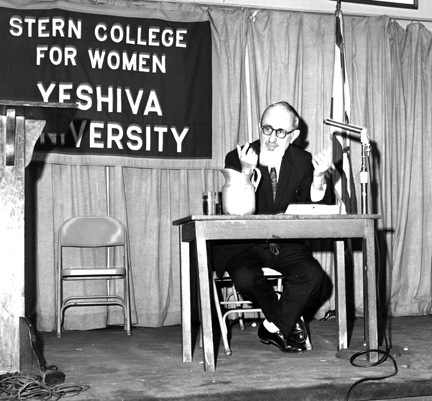






 In the following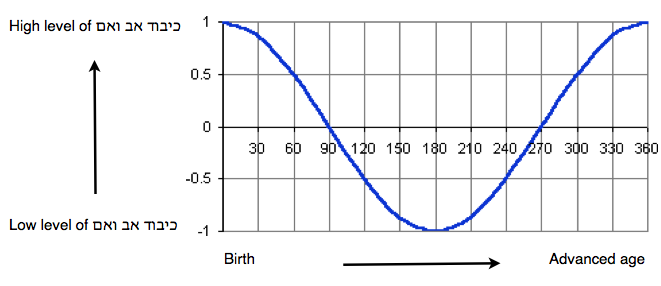



 pitputim
You must be logged in to post a comment.