Hat tip to Dovid, reports coming to hand indicate that there have been a series of arrests at 4:30am in Meah Shearim involving the Shamash of the Av Beis Din, R’ Tuvia Weiss. After a long investigation, it would seem that there has been a massive money laundering operation happening through the offices of the Shamash, Amram Shapira. Also arrested were Shmuel Lubatzki who ran the “charity” known as HaVaad HaArtzi as well as Yossele Sheinberger and Ya’acov Eisenbach. The charges are serious and involve many millions. Through their representative, Yitzchak Shlomo Blau, the Eda have sent a message to the Israeli police that all bets are off, and communication lines are now closed.
I expect that there will be a new ferocious round of violence, tyre and rubbish burning and mass demonstrations. Worse, our friends at Satmar, who are philosophically aligned with the Eda, have suggested that Chassidim demonstrate in the USA against the “religious persecution” of minorities. Will they demonstrate in Australia too?
In the meanwhile, one of the two Satmar Rebbes, R’ Zalman Leib?, has condemned the Belzer Rebbe because the latter dared to suggest that violence may not be the way to deal with the issues being faced. In a rambling tirade, lacking Torah sources or halachic veracity, the Satmar Rebbe basically said that you can’t fight a lack of kedusha (read Tumah) by adding Kedusha elsewhere. He suggested that one had to “confront” the Tumah. He’s right, but he hasn’t explained why confronting can’t be achieved by increasing Kedusha. He seems to think that Kedusha can’t permeate. We know that is simply wrong! We live in times where the most powerful method to deal with the opposite of kedusha is to bring kedusha to it! You can’t mandate Kedusha through fiat. That’s a medieval approach, at best. It doesn’t work in the free world. Period.
Next time you consider Satmar, remember that although they do great things in Chesed, they are aligned with the Eda Charedis in no uncertain fashion.They are implacably against Israel and their world view is one that is increasingly aggressive against anyone who doesn’t allow their spreading tentacles to transform and supplant an existing landscape with their definitions of Tzniyus etc. It’s in our midst too. Today, in East St. Kilda, as I got out of my car, 3 little boys from the Adass offshoot school said “look the Tziyoni is here” after which they quickly scuttled back up their drive way. Who is teaching these kids such disgraceful hate laden invective? Am I also the Tumah that the Satmar Rebbe and the Eda Charedis wants to “attack”? Are the women wearing Sheytels and Tichels and little girls going to School in Bet Shemesh, the Kochos HaTumah?
We are in big trouble. These extremists have gone way too far. The market needs a correction.
I applaud R’ Metzger for this initiative, although, I believe that this was originally the journey undertaken by Rav Kook ז’ל in 1913. Bridging gaps is efficacious; spitting and sending to the back of the bus, breeds resentment. Just to name drop, R’ Metzger sat a few rows behind me at Kerem B’Yavneh, although he was in fifth year, as I recall.
The story is told of how Rav Kook, upon one of his visits to an anti-religious kibbutz, was approached by one of the leaders who greeted him as follows: “With all due respect Rabbi, you shouldn’t waste your time trying to convince us to be religious. It’s not that we don’t know what Torah is, most of us were raised in observant homes. We know Torah, rabbis, mitzvot and we don’t like them!” Rav Kook questioned,”Why?” The kibbutznik replied: “We simply can’t stand your old-fashioned, meaningless, outdated rituals!” Exclaimed Rav Kook, “I agree”. “What?”, asked the surprised rebel. Explained the Rav, “I also hate the “religion” that you describe. But the dynamic, idealistic and deep Torah is so beautiful that anyone who is exposed to it cannot but love it!”.
I don’t know what the rest of you think, but these irritate me, in no particular order.
The “floating handshakers”
You are in Shule on Shabbos for a call-up or a Bar Mitzvah. Suddenly, usually during Krias HaTorah and thereafter, pockets of people come into shule and either walk straight up to the Bima and/or to the Ba’alei Simcha and extend their hands to say Mazel Tov. If you are lucky, they will finish their circumvolution of the Shule and then exit. Mostly, they or someone else who ought to be listening or davening, will find a reason to begin a new conversation. They have already davened. The Ba’al Simcha wasn’t special enough for them to actually daven in the Shule/Minyan where the simcha was taking place. A “Groise Toyve”, they perform and in the process they thoroughly disrupt any semblance of decorum that might have existed prior to their bold entry. I’ve seen people who object to Schnorrers disturbing the Davening. I reckon the “a bi yotze tzu zein” do-gooders who come for a hand shake are equally disturbing. What should you do? I suggest saying, “Good Shabbos, Oh, you must have had another Simcha to attend?”
The “never on timers”
People spend a lot of time, effort, not to mention money, on trying to create a good party for a Wedding or Bar/Bat Mitzvah. They often set cocktails+finger food for 6:30 with entry at 7:15 ish. Why is it that at frum functions, almost exclusively, people turn up just before the main course, between 8 and 8:30pm? Isn’t this rude? Is it nice when half the hall is empty because every shlepper and shlepperen can’t bring themselves to rock up on time? I’m not talking about some ludicrous functions where Chossen and Kallah turn up at 8:30pm because they have driven around Melbourne in a limousine for hours. I don’t know about you, but a Simcha starts when they enter. Before that, it is just weird to start washing and participating in Simchas Chossen V’Kallah (entree) with no Chossen or Kallah in sight! At non frum functions, people have good manners and come on time.
Shlomo Carlebach and band
The “incessant chatters”
This group of people, both men and women, talk and talk and talk. It doesn’t matter who is speaking or what they are saying, 99% of the time (and yes, I do know) they yap and display shocking manners at frum simchas. I hasten to add, that it’s also a big chillul hashem. Why? Because there is always someone at the Simcha who is not yet frum, or even a goy. They look at this behaviour and wonder why “these people” have no manners whatsoever. (Thanks to Bet Shemesh, they will now call them “Charedim”) By the way, this behaviour is almost exclusively at Simchas where there is a Mechitza for the seating. Why so? Some surmise it’s because if you place a pack of “boys only” or “girls only” around a table, that’s what happens. When they sit together, for some reason, they don’t behave that way. Perhaps the husband or wife kick their partner under the table, I don’t know.
The “entrance mob”
There are people who do the Ba’alei Simcha a great favour, even after they come late. No sooner have they had their meal and a drink or two, and they exit, standing around in the entrance. It is literally teeming with the same people, who do so at every simcha. Are they so depressed that they cannot bring themselves to just be nice and dance the first 10 minutes of each bracket? And before you start telling me “it’s because the music is too loud”, get a life. These people hang out jn the entrance when there is no music. It makes absolutely no difference. Sure, some will step out for a fag, but it isn’t about that. This is about bad manners again. Oh, and if you are wondering, it doesn’t happen at non frum Simchas.
Hats off to Rabbi Telsner on Shabbos. In his Drosha at the Chabad Yeshivah Shule in Melbourne, he briefly vent his spleen regarding the Chillul Hashem being perpetrated in parts of Israel by the offshoots, weeds and seeds of the Eda Charedis. Rabbi Telsner’s point was that any “Chassidim” in those groups were not. They didn’t have or display the approach of the Baal Shem Tov on loving each Jew irrespective of the questionable activities those Jews were involved in. R’ Teslner added that the zealots couldn’t be learning Chassidus, and if they claimed that they were, nothing was internalised. Rabbi Telsner was scathing. He said that “all they seem to do is a Chilul Hashem and then they come Schnorring to our doors”. He’s right.
What is the reaction in Adass or Beis HaTalmud? Did Rabbis Beck or Wurzburger have anything to say about these issues? If not, why not? If yes, was it to a cloistered private circle or was it a public comment. If anyone knows, please do inform us. I’m sure many in the community would like to know where these organisations stand on this massive Chillul Hashem malaise.
In this week’s Parsha, we learn that when Pharoah’s daughter was bathing on the banks of the Nile, she caught sight of baby Moshe in the ark his mother had prepared to save him from the decree her father had enacted. Moshe was crying and understandably hungry. Rashi quotes a Midrash (שמות רבה א, כה) where Chazal inform us that Moshe refused to breast feed from Egyptian mothers. Moshe’s spiritual sensitivity did not allow him to drink breast milk that was nutritionally influenced by a mother who had ingested non kosher food. The mouth that was to speak directly with God was not to be tainted by drinking milk that was derived from such a source.
Halachically, there is nothing whatsoever wrong with breast milk of any human variety. It makes no difference whether the mother had previously eaten a glatt kosher schnitzel or a ham sandwich with cheese. Breast milk is kosher and is unaffected by the source of nutrition. This Halacha is clear in Shulchan Aruch, Yoreh Deah. Yet, in a departure from unadulterated (sic) halacha, the Ramo (סימן פא ס”ז), clearly influenced by the Chazal in that Midrash, (see the Gro (ביו”ד שם ס”ק לא) ) paskens that it is a מדת חסידות to avoid “spiritually tainted” food. Similarly, although one is permitted to take pills that include non Kosher ingredients, where it is possible to obtain a Kosher version (e.g. Vitamins and the like) R’ Moshe ז’ל paskens (without providing a source) that it’s better to do so. R’ Hershel Schachter is of the opinion that R’ Moshe’s source is probably this same Midrash and Ramo.
R’ Yaakov Kamintesky ז’ל asks a pertinent question. One can well understand that a holy mouth which was destined to speak directly with God would be sensitised and indeed expected to observe a מדת חסידות which would preclude even the smell of non kosher food (see פרק ב דחגיגה ירושלמי about Elisha Ben Abuya) or breast milk derived from non kosher food to be ingested. This is the level of Moshe Rabeinu, רבן של כל ישראל, but what about the rest of us? We have no expectation that our mouths will be used to speak פה אל פה with God. Why should we at all be concerned about such a consideration? R’ Yaakov answers that we have no right to deny potential from our children, irrespective of their ability. Every child has a growth potential that often exceeds the expectation of parents and educators. If we over focus on IQ or learning challenges then we effectively cheat the child because we deny them their opportunity to attain the seemingly unattainable.
Often, it is assumed that to become a high level Talmid Chacham (in today’s parlance a “Gadol HaDor”) one must have a very high level of intelligence. This is untrue. There were certainly many highly intelligent Rabbis over the generations, however, it is false to imagine that they were all that way. Many had average or above intelligence. It is known, for example, that the famed Chazon Ish, was not known for being particularly “sharp”. The Chazon Ish applied himself with a very high level of diligence and התמדה. If you revise a Mishna 100 times, you will achieve the level of truly understanding what it’s about.
The life lesson is to never minimise the potential of a child and to nurture and provide the environment which will help them meet their highest level. This can only occur if we don’t over categorise our children according to the abundant metrics and conditions that they are associated with. Even the so-called average child can be stymied by assuming that their level will not ever grow to one in tune with the aforementioned מדת חסידות described by the Ramo.
Extremist: a person who favours or resorts to immoderate, uncompromising, or fanatical methods or behaviour, especially in being politically radical
Fanatic: refers to persons showing more than ordinary support for, adherence to, or interest in a cause, point of view, or activity.
Zealot: stresses vigorous, aggressive support for or opposition to a plan or ideal and suggests a combative stance.
Taking stance that is “not the norm” can be viewed as extremist. In a community of meat-eaters, a vegetarian who is uncompromising may be seen as adhering to an extremist view. Once a community comprises more vegetarians, they cease to be called fanatics. Their behaviour becomes an acceptable norm, albeit of a minority view. In either case, some vegetarians are more vocal than others. We accept the views of someone who is passionate about their vegetarianism. We don’t have a problem with the existence of vegetarian-only restaurants. There are lines, though. Where does society draw those lines?
It would be unacceptable to enter a vegetarian restaurant and demand to eat meat.
It would be unacceptable to enter a meat restaurant and demand that they cease serving meat.
Why is it unacceptable? Simply because we recognise the right of free choice: an inalienable right; a God-given right. Free choice is the basis of our existence as humans and is the eco-system through which we are able to rise or fall.
Kosher-style restaurants or take-aways are not kosher. It is forbidden by Halacha to eat food prepared in such establishments. Yet, some people on the fringe, do so. You find yourself in an environment where Kosher-style is presented to you. The food is unacceptable and yet your host insists that you partake. They cannot understand what is wrong. There is no pork. It’s supposedly a kosher fish with side salad. What can be wrong with the dressing? You decline. Your host may well be upset, yet you may not be in a position to adequately explain why you cannot take part. Your host may not be in a position to understand or accept your stance. It would be wrong for your host to become angry. Equally, it would be wrong for you to show anger towards your host. There is a gap between your views and theirs. You may also both be somewhat fanatical in your views. You may not understand each other. You may both even be somewhat fanatical in not accepting or understanding the rationale; but there is still a line. This line is the glue which keeps society together. When that line is crossed, we are in danger of falling apart as a unit. The line is crossed when someone is a zealot. You become a zealot when you take an aggressive or combative stance.
Sometimes, in rare cases, a Jew is commanded to sacrifice their life and not compromise their ideals. This is קידוש ה, the sanctification of God’s name that is wrought through death. It is a form of passive aggression. We aspire, though, to live. In regards sanctifying God’s name through living our lives, the Talmud in Yoma quotes a verse and interprets it as follows:
ואהבת את ה’ אלוקיך you shall love Hashem, your God. [This means]
שיהא שם שמים מתאהב על ידך that the name of Heaven [God] should become beloved through your hands [actions]
Ultimately, your actions need to be ones which cause the name of God to remain/become beloved through the mode of your adherence to Torah and Mitzvos. The Talmud then provides some examples:
Your business dealings should be honest and upright
You should adhere to righteous Jews and learn from their ways and their Torah
You should speak with pleasantness
This list is not exhaustive. Clearly, there are many other things that have the potential to both sully or exalt respect for the practice of Judaism. The resultant potential love of Heaven is induced thereby.
The greater test is to stay an honourable, practicing and believing Jew during one’s life. As incredible as Isaac’s preparedness to allow himself to be sacrificed by his father, Abraham, the test for Abraham, who would have had to live with what he did for the rest of his life, was greater. The test to go on living is usually protracted and far more stressful. Similarly,causing God’s name and Judaism to be loved by one’s actions is greater and more challenging through the mode of one’s life and the way one lives.
I am convinced the events of the last few weeks involving a section of the ultra-orthodox, anti-Zionist, community in Israel have caused the name of God and the image of Judaism to be severely tarnished. Halachically,
one does not spit at little girls (or anyone for that matter)
one does not ask a woman to move to the back of the bus, whether she is dressed according to one’s own acceptable levels of modesty or not.
one does not throw stones at people who are not keeping Shabbos
one does not yell at people who don’t adhere to a certain standard of dress, even in one’s own backyard
one does not compare Jews to Nazis—ever.
one does not use the holocaust in an abhorrent pantomime to advance an agenda
To be sure, the anti-Zionist zealots, comprising so-called Sikrikim, Neturei Karta, Toldos Aaron and the others believe that they are “defending” God’s honour. They are, of course, wrong. Their behaviour is nothing short of odious and against Halacha. These zealots do not act alone. They receive the silent, or “behind closed doors” blessings of their Rabbinic leaders. They will not listen to anyone; we are all Treyf. In their mind, they have a complete mortgage on the truth.
What can we do?
We must recognise that there is a sizeable number of “black hats” and “thick stocking” style people, who are also disgusted by this thuggish minority of misguided individuals.
We must ask our own Rabbis, yes, each and every one of them, to explicitly make a statement in writing and in sermons to their congregations rejecting the ideology of the zealots as outside the pale of normative Judaism. Statements should be without prevarication. There is no need to speak about anything else. For example, the statement by the RCA is sensibly crafted, whereas the one from the Aguda is disingenuous.
There is a group in our own community, constituting a section of Adass Israel Congregation, who fully agree with the philosophy of the zealots. A few days ago, I was accosted in the street, next door to my parents’ house, by a brain-washed boy , who yelled at the top of his lungs “Zionists are Pigs” (in Yiddish). Do not forget that this group of zealots are in our midst. Pockets exist in most Jewish communities around the world.
When asking for a statement/response from your Rabbi, it is important to not only include members of the Rabbinic Council of Victoria or the Organisation of Rabbis of Australia. One should also approach the Rabbis of Adass, Beth HaTalmud and other non-affiliated congregations and ask specific questions with no wriggle room. In particular, ask if it is ever appropriate to demand that a woman “move to the back of the bus” even if she is on one of those bus lines where such an pseudo-mechitza is implemented.
When a collector comes to your door, ask them the same question. If you don’t like their answers, give them less and someone else more.
Avoid apologetics. There is absolutely no justification for this disgraceful anti-halachic behaviour.
Let me end with a story about a true sage, R’ Shlomo Zalman Auerbach ז’ל. In his neighbourhood of Sha’arei Chesed a lady persisted in driving through the otherwise empty streets on Shabbos. Surrounded by the “holy” ones, he was asked, “Surely you have a Torah obligation to protest against this desecration of Shabbos?”. R’ Shlomo Zalman responded that indeed he did have a responsibility to express his dislike for what was occurring. He advised them, however, that throwing stones, or surrounding/blocking the car and/or yelling “Shabbos” achieved nothing. It only served to further aggravate the situation. “So in what way are you protesting?” they asked. R” Shlomo Zalman was quiet. Over the next few weeks, rather than accosting the women who drove through the neighbourhood, they observed R’ Shlomo Zalman as he walked in the street after Shule and came face to face with the car. A look of genuine pain was seen on his face. The lady noticed this look from R’ Shlomo Zalman’s face over the next few weeks, and apparently decided that she didn’t want to cause any angst to this old and pious man. If you are respectful to people, they will also respect you. Don’t cross lines.
We Jews who also try to keep Halacha to the best of our ability must vehemently reject and ostracise this group of unsound zealots and let them know that we are not with them in any shape or form, and that their corrupt version of Judaism is simply an invalid aberration.
Back in the days when I began the musical element of my life, I was bemused to see the primarily non-Jewish bands, such as the Los Latinos or Volares respectfully wearing brightly coloured silk yarmulkes. In those days, the façade of the נכרי singing יבריכך ה’ מציון wasn’t complete unless the cap fit and he wore it. Most likely, the haute couture generated supplementary mirth at an already happy and refreshed שמחה. The boldy-coloured yarmulkes, perched precariously on thick, black, amply lubricated and coiffured Italian scalps were not solely the respectful masquerade of a musician. The non-Jewish videographer or photographer, (if Mr Cylich or Herbert Leder weren’t available) also donned the Jewish millinery uniform.
Schnapps’ keyboard player, Peter, is one of the חסידי אומות העולם. A respectful and sensitive man, Peter initially asked whether he was required to wear a Kippa. I quickly responded in the negative, and ensured that the other band members knew there was no expectation whatsoever that they do so. In the words of my percussionist, also named Peter, “We are just a pack of goyim anyway”.
Back then, in my young and lest restless years, I felt it was critical not to encourage the portrayal of a misleading repose. I didn’t want to be responsible for a single person being misled by an exterior גניבת דעת. That was then. Today, regrettably, many Jews choose not to wear one even when these are provided by בעלי שמחה as part of a theme or memento.
I fondly recall my old friend Mr Yisrael Tuvia Blass ז’ל posing the question (in Yiddish) “Why is Yom HaKipurim considered like Purim?” His answer was “on Purim, Yidden masquerade as goyim (e.g. Haman) and on Yom Hakipurim, “goyim” masquerade as Yidden. (It sounds even better in Mame Loshen).
Should non-Jewish teachers be required to wear them at Jewish Schools? This question arose several years ago in the USA and was posed to three leading Rabbis of their generation: the Rav ז’ל, R’ Moshe Feinstein ז’ל and R’ Aaron Kotler ז’ל. The Rav responded with a simple “no” (the Rav had a policy of not providing the reasons for a Psak). R’ Moshe answered that “he should do as everyone does”. In other words, the non-Jewish teacher should wear a yarmulke. R’ Aaron Kotler answered that the non-Jew should not wear a Yarmulke. Explaining his Psak, R’ Aaron opined that the idea of והבדלתם, that a Jew should be separate, extends to the notion that a non-Jew should not be encouraged to adopt Jewish customs and, therefore, בדווקא, the teacher should not don a Yarmulke.
I read this on שבת in R’ Hershel Schachter’s דברי הרב, and it rang true to me, justifying the position I took with Schnapps, so many years ago.
The Gemara פסחים נא ע”ב, states—שלא ישנה אדם מהמנהג—when there is a custom in a particular city to behave in a certain manner, it is forbidden to acquit oneself in an alternative way. In particular, if there is an opinion to be stringent or indeed lenient in respect of a particular Halacha in a given town, it is forbidden to effectively inhabit that town and alter the Minhag.
The Ramo in his responsa (שו”ת סי’ נד) considers the question of barrels that had previously been smeared with lard, and were now used to store olive oil. Was one permitted to use the olive oil if it sold in these used barrels? The Ramo decides that it’s permitted without qualification to buy the olive oil, and furthermore, this is a long and established convention. The status of this practice being a custom, not only means that it is limited to a permissive ruling. The Ramo expresses the view that someone who desires to be stringent based on the opinion of their own Rabbi, should not do so, even if that person is a בעל נפש—a punctilious individual.
On the category of בעל נפש, It is common for contemporary Poskim to decide Halacha, and then provide additional direction to the בעל נפש. This is found in the משנה ברורה and אגרות משה. (See also (חולין מד ע”ב) for a more fundamental source). Yet, in the case of the barrels, the Ramo specifically directs the בעל נפש to not be מחמיר. Why so? Surely one is always entitled to adopt a stringency? The Ramo’s reasoning is that since it is permitted and בני ישראל behave in consonance with that היתר, their practice should not be indirectly questioned in any way through the stringent actions of those who wish to take upon themselves an alternative ruling. There is much more to say on the general issue of חומרות. For example, in יו”ד סימן פט ס”ק יז, the Shach cites the earlier opinion of the Maharshal who considers those who wait six hours after hard cheese before consuming meat as not only “simpletons”—the Maharshal coins them as apostates (דברי מינות)! Not every חומרה is sensible, and one who is really a בעל נפש will be cognisant of not offending others or foisting their private practice upon the masses. המחמיר יחמיר על עצמו
The Maharashdam who was a contemporary Rishon at the time of both the Ramo and Beis Yosef, limits the aforementioned rule of the Ramo (יו”ד סי’ קצג) to
a Psak which involves a דין דרבנן, a Rabbinic law. However, if one wants to be מחמיר because they fear an infraction of a דין דאורייתא, a Torah law, they may do so.
a situation where the act of being מחמיר is not assumed by the existing population who settled and live in the city. Newcomers to a town, may not exert their חומרא on the townspeople. (Note that majority or minority is not the consideration here; מנהג המקום is the determining factor and we do not say חוזר וניעור).
There are groups of people in Israel, known by many names, who
assume levels of צניעות which can only be described as חומרות
settle in existing cities, such as בית שמש, and not only wish to practice their own חומרות, but seek to force others to adhere to those same חומרות.
To be sure, members of these communities falsely claim that their standards are
not extreme,
involve איסורים דאורייתא, and
may even imply the need to act in a manner of יהרג ואל יעבור.
Such claims are false.
The actuality is that צניעות is, by definition, a set of lines followed by a grey area. The grey area is defined and governed by societal practice. Societal practice cannot be determined by fiat, violent or otherwise; it is also relative to time and place.
Ironically, when extremist women commenced wearing black Burkas as an “extra” level of צניעות, even the usually strict Edah Charedis exclaimed that “enough is enough”. To add to the irony, the Edah objected despite the fact that one could cogently show that were one to live among Muslim women, it might well be a Rabbinic imperative to match their levels of צניעות! I don’t expect we will find such a judgement emanating from the Beis Din of the Edah even though I contend that such a ruling could quite cogently be constructed.
A line was drawn. Grey areas exist in every city, town or village. I do not hold the view that, for example, in Melbourne, one can talk about מנהג מלבורן unless it is something that all the religious communities have practiced and continue to practice. If Adass, the Litvaks, Ger or Chabad or whoever do things uniformly in a particular way, then it is a matter for those communities. They cannot and should not ever impose their practice on anyone else. Ironically, it may well be דינא דמלכותא that preserves the halachic status quo outside of the State of Israel.
Bet Shemesh, on the other hand, is and was, an established city and it had its lines and grey areas. Those areas were amorphous and pluralist but never included the consideration that men and women walk on either side of a road. (This was also not the practice in Poland, for example, except allegedly in Kelm). The line never extended to the disgraceful dehumanisation and targeting of women who wear Tichels and skirts down to their knees. The line didn’t consider a woman who “heaven forbid” displayed her toes through sandals as licentious and through whose toes was causing lustful thoughts in these less than holy בעלי נפש thereby “polluting” the atmosphere with such פריצות. (Yes, one lady wearing a long skirt and sandals was indeed set upon by unruly ruffians for this most trivial reason).
I have been disturbed for days by the sad picture of that little girl holding her mother’s hand while trembling on her way to school because she feared the modern zealots would spit and accost her. שומו שמים … how far have we strayed from דרכיה דרכי נועם.
If zealots feel the need to build their own עיר מקלט city, where they can enact all level of stringency, that’s their business. If they are permitted to do so by the law of the land, then let them go ahead. If a person wants to live or visit, it would be a good idea to follow those stringencies within the boundaries of that city. This is not different from להבדיל Mecca, where Muslims have accepted certain extra practices only within that city. This would not ever imply though that mindless automatons are justified in resorting to spitting and other forms of violence if someone does not follow their city-based dicta. A city whose Rabbi encourages such practices of violence either directly or indirectly will face a דין וחשבון in due course. I would call such a city that duly practices such abominable acts a modern-day example of an עיר הנדחת.
For a little more perspective, let me conclude with a rather prophetic and incisive psak from no less a גאון than Rav Chaim Berlin ז’ל.
Rav Chaim Berlin was the son of the famed Netziv (from the Netziv’s first wife) and a half-brother of R’ Meir Bar Ilan. He was Rosh Yeshivah in Volozhin, Chief Rabbi of Moscow, and at the end of his life became Chief Rabbi of Jerusalem after R’ Shmuel Salant ז’ל.
R’ Chaim Berlin’s halachic responsa were published posthumously by alumni of Yeshivas Chaim Berlin in the USA. In Even Ha-Ezer, R’ Chaim was asked by a former student now in the USA what to do in the event that a woman stretched out her hand to him as part of common business practice. R’ Chaim answers that according to the letter of the law עיקר הדין there is no איסור because the act is not occurring בדרך חיבה—amorously—and since the student is visibly religious and is expected to be doing so simply as part of business etiquette, it is permitted. Interestingly, and this is the part that I found very impressive, R’ Chaim quotes the Gemara יומא פו:א
ואהבת את ה’ אלוקיך – שיהא שם שמים מתאהב על ידך
You shall love Hashem your God—[implies that] Heaven should become beloved [by others] on account of your hands [actions]
R’ Chaim contends that the person who is clearly a religious Jew, and is visibly seen as such, and who does not behave with common business etiquette is likely to encourage Non-Jews to think that Jews and their Rabbis are fanatical madmen! Accordingly, he says that failing to shake the hand, in the case of that student, would constitute a חילול שם שמים!
These are powerful words. I’m not a Posek suggesting that anyone simply make their own halachic conclusions based on this insight. However, it is quite clear, that we have witnessed over the last few weeks is exactly what R’ Chaim Berlin was warning us against.
The actions of an ungainly ugly tail of extremist Jews have through their own prescribed grey areas caused Judaism to be seen by many as no different to the Taliban or Salafist Wahhabis. My accusation extends to the imbeciles who berated a blind woman when she sat at the front of one of those new separate buses.
It is well-known that during the British Mandate, there was an important event held in the presence of the two leading religious figures of that time, R’ Avraham Yitzchak HaCohen Kook z”l, and R’ Yosef Chaim Sonnenfeld z”l. The former, of course, became the 1st Chief Rabbi whereas the latter was ideologically opposed to him and Av Beth Din of the Edah Charedis. At this event, in the presence of the British dignitaries, a woman began to sing. To be sure, they undoubtedly had no idea that religious men may not hear live singing of the female variety. The reaction of each of them is interesting:
Rav Kook, a lofty man possessed with an ultra sensitive neshama, stood up in shock and made a quick exit. Nothing else existed at that moment. He instinctively removed himself.
Rav Sonnenfeld put his head down and covered his ears with his hands.
None of us approach the lofty spiritual stature of these holy men. I dare say the same applies to Israeli army conscripts who find themselves at an event where women sing as part of the entertainment/process.
How would/should a Jewish conscript behave if they were part of a non-Jewish army and this occurred? I doubt that they would make a commotion or threaten to “die” rather than stay at the performance. It is likely they would put their head down and/or attempt to block the voice out. Why then in the Israeli army do Jewish soldiers behave differently, as reported in the press? Why do Rabbis of the Charedi Leumi variety demand the most extreme response? The answer is that one expects an Israeli army to be more attuned to the needs of religious Jews. That is a reasonable expectation. However, the reality is that respect is earned. Respect may not be demanded and it is not a byproduct of being genetically related.
We know that דברי תורה בנחת נשמעים, words of Torah are best delivered in a gentle manner. “We demand” is only going to make matters worse, especially in a society which is already alienated by religious jews on account of their not being seen to be pulling their weight in a State sense, and featuring prominently in various cases of moral and ethical malfeasance.
Dogma is part and parcel of our religion; coercion is not. Our purpose is to imitate God—Imitatio dei—והלכת בדרכיו. God, himself, gave us free choice. What right then do we have to remove that בחירה from a fellow Jew? We are expected to be holy. Holiness means separation. We saw two expressions of that separation above: Rav Kook and Rav Sonnenfeld. What is the appropriate approach then for an ordinary soldier?
It’s obvious to me, sitting here in Australia, from the distance.
Put your head down/close your eyes. Many poskim hold that if you do not see the person singing it’s not ערווה
Bring your fingers up to your ear lobes and block what you can. You can even hum to yourself.
Gently speak to your commander after the event pointing out that it was uncomfortable for you to be in this situation.
Increase Torah and Derech Eretz in your military group.
I’m not sure what else one can or should be expected to do. Walking out en masse and creating a furore simply germinates the same enmity that has transported people to a situation where they already don’t respect each other.
It’s a short step from reacting in a virulent manner to tearing down posters and having Tznius police. Ironically, R’ Kook who did walk out, didn’t do so out of protest. His was but an ultra pure soul that literally fled from a remote smell of איסור. His Rabbinic leadership was all about gentle enfranchisement and tolerance for those who were not yet observant. None of us are R’ Kook, including the conscripts who perhaps imitate his reaction.
They have a chip on their shoulders, and much of this is due to unrelenting Charedi delegitimisation of their ideology. Years of Charedi attempts to delegitimise Mizrachi or Torah Im Derech Eretz type Jews are now manifest in less than diplomatic approaches to dealing with the reality of a State before the Geula. Dogma is expressed in virulent and uncaring tones.
We are all worse off as a result. I couldn’t see any קידוש ה’ ברבים
It’s always interesting to read the articles on the Galus Australis blog. One article bemoaned the fact that Orthodox Rabbis had the audacity to state their view about marriage. The article purported to suggest that since marriage is effectively a matter of private ritual, Rabbis should have nothing to say about ritual in a western pluralist society. As usual, those Tikun Olamniks remove the words “BeMalchus Shakay”. It’s uncomfortable to mention those two words; they don’t fit a pre-conceived agenda.
The reason that Tikun Olamniks like to separate “ritual” from “ethics and morality” is sometimes related to the issue of separation of Church and State. There is a fear that if ritual is permitted to impregnate western laws, those who pine for a Godless or a progressively self-reforming and evolutionary morality will be stymied and forced to tow a particular religious line.
I am a supporter of separation of religion and state. A primary consideration for me is that religion is better served and internalised when it isn’t canonised by our political paragons of purity.
Ironically, that right of free speech doesn’t extend to an organisation whose name bothers some. So let’s fix a few things:
lets call them the Organisation of non Reform, Conservative, Reconstructionist, Humanist Rabbis
lets assume they have been elected to their positions in a formal ballot
lets assume that the laws of the land permit such a group to make statements outside of ritual.
What are we left with? We are left with the objection that since civil marriage isn’t ritual but a form of contract/commitment between two people, a group representing the major strand of Judaism should not comment about the nature of the parties to that commitment, if and when that issue is brought to the parliament and public eye.
Just imagine, if you will: parliament is drafting the parameters of IVF law. Should ORA not make a submission? If the IVF laws are problematic to ORA, should they make no statement? Or perhaps the issue of IVF isn’t as sensitive to the tikun olamniks as commenting about the institution of marriage?
Red herrings exist everywhere; sometimes even with a hechsher. One of the big red herrings at present is the statement which implies that there ever was some policy explicit or implicit to be “insensitive and non inclusive” to those with a disposition towards the same gender. I have read about not giving an Aliyah to someone who has married a non jew. I have read about not giving an Aliyah to someone who publicly desecrates shabbos. I have also read about not giving an Aliyah to those who have been accused of despicable crimes and await their day in court. I have never read that one should refrain from according standard honour to someone with a disposition towards the same gender. I have seen those with such a disposition get called up to the Torah. Still, it is a positive step to make explicit that one should not discriminate/hate people because they have a gender disposition.
It is entirely appropriate for the Rabbinate to make comment and provide input regarding the authentic Jewish view of marriage. It is also churlish to call upon the Rabbinate to therefore also make pronouncements about idol worship and the like because these are noachide laws. I’m not sure I see a law being proposed that suggests that idols be formally enshrined as valid gods for the purpose of worship. You can assume, though, that if such legislation was ever proposed, the Rabbis would and should have something to say about that.
Is not having a Mesora (tradition) something to be concerned about?
If you took a range of Orthodox people into a room and asked them whether it was forbidden to leave a peeled egg, onion or garlic overnight and use them the next day, you’d get three different reactions:
What are you talking about? My mother and grandmother and great-grandmother never had such a tradition nor did they pass such a tradition onto us
I’ve never heard of that
What are you talking about? It is well-known that this is entirely forbidden. I’ve never even heard of anyone permitting such a thing.
Unlike an “ordinary” question of Kashrus, such as how long one waits between meat and milk for which absolutely everyone agrees that one must wait, except that there are different traditions, e.g.
six full hours
into the sixth hour
three or four hours
The question of eggs, onion and garlic left overnight is:
Not a question of Kashrus per se
Black or white. It’s either yes or no.
In other words, some will be concerned about it whereas others will simply not be.
If you look this issue up in the Gemora (נידה יז), it is intriguing. The Gemora says in the name of R’ Shimon Bar Yochai that leaving these (peeled) items overnight is a most dangerous practice and tantamount to “suicide” if subsequently consumed. Nu, it’s an open Gemora, as they say, with very clear and harsh language, so what’s the issue? On the contrary, based on this Gemora, avoiding such a situation should be common across every single orthodox home.
The mystery then deepens.
Open up a Shulchan Aruch and look for this Din. You will discover that you simply can’t find it. Both the Mechaber, R’ Yosef Karo, and the Ramo don’t mention this Gemora’s advice/din. That’s the prime Sefardi Rishon and the prime Ashkenazi Rishon. You search in the Rambam, the Rif, and the major codifiers and you find that they too were seemingly not bothered or perhaps no longer concerned by this Gemora. They too do not codify any prohibition.
Chazal say (חולין י) that חמירא סכנתא מאיסורא—a danger (סכנה) is something we are more concerned about than performing a possible איסור. With an איסור we follow the רוב (the statistical likelihood) however with a possible סכנה we will be concerned about a minute concern. If the reason then for R’ Shimon Bar Yochai’s concern is רוח רעה this would constitute a סכנה, so how do we explain the Rishonim apparently not being concerned about the סכנה expressed by the Gemora?
You are perplexed, and so am I, so you ask your Local Orthodox Rabbi. In all likelihood he will say
It’s best not to leave these things overnight and use them the next day
You will likely be advised that you can avoid the problem by leaving a bit of the peel or root on the item because the effect of the רוח רעה is nullified by this form of protection.
The Gemorah also mentions another method of protection via אותיות—holy letters. There was a custom to write/carve a פסוק on an egg and give this to a child to ingest when they started their education. Without getting into the topic of how one can “eat” פסוקים, the fact that there were holy letters on the egg meant that the רוח רעה could not take hold. This is mentioned in regards to the Yom Tov of שבועות where clearly the egg had to be written on before Yom Tov (and left overnight) in order for the child to ingest it on Yom Tov itself.
Rav Belsky, who together with R’ Schachter is the major Posek for the OU has written a תשובה where he suggests that putting the egg, garlic or onion in a zip-lock bag (sealed) will also mitigate the problem. His reasoning is that the Gemora in נידה mentions a type of basket which won’t help as protection. R’ Belsky feels that’s because the basket doesn’t constitute a hermetic seal. I’m not sure I understand his reasoning because they did have jars in those days, and presumably a jar would have provided an adequate seal?
R’ Waldenberg ז’ל in ציץ אליעזר suggests that one might consider washing the egg/onion/garlic in order to remove the רוח רעה given that רוח רעה is removed in other cases via washing (e.g. in the morning on one’s hands, or before bread etc). I’m not sure I understand his reasoning because I would have thought the Gemora itself would have mentioned this as a “solution”. In addition, it seems that there are different types of רוח רעה. Perhaps the Gemora in :יומא עז which mentions the demon (and also :חולין קז) called “שיבתא” is suggesting that for this particular demon the רוח רעה is removed with washing, but perhaps the “one” associated with eggs, onion and garlic is unaffected by such washing?
So, what we can see thus far is that while there definitely was a concern about an evil spirit the major Rishonim from whose opinions we determine Halacha seemed to no longer be concerned with this evil spirit.
Why is that? Already we see תוספות in יומא and חולין state:
ומה שאין אנו נזהרים עכשיו מזה לפי שאין אותה רוח רעה מצויה בינינו כמו שאין אנו נזהרין על הזוגות ועל הגילוי”.
In other words, there already was at the time of Tosfos a view that these evil spirits had dissipated (for want of a better word). Interestingly, there is a tradition from the Gaon (as relayed by R’ Shlomo Zalman ז’ל), that after the death of the Ger Tzedek, originally known as Graf Potocki there was a further weakening of רוח רעה to the extent that one no longer had to be concerned about walking four cubits before washing one’s hands in the morning.
We also find similar views echoing Tosfos, such as the מהר”ם מרוטנברג who is quoted by the הגהות מרדכי on שבת to the effect that it would seem that these evil spirits no longer exist in our (his) time.
It would appear that the Rishon (codifier) who was concerned about the issue of peeled eggs, onions and garlic was the סמ’’ק in the early 1200’s in France. It could be argued that from the Gemora in ביצה י’ד one could also conclude that Tosfos were still concerned about the רוח רעה because they also used this reason to permit preparing crushed garlic on Yom Tov itself, but there is little doubt that the Rishonim almost exclusively, especially with respect to the codifiers ceased being concerned about the סכנה posed by this evil demon.
Logically, one needs to conclude that the Rambam and the Rif, the Shulchan Aruch and the Ramo were no longer concerned. Surely if there was even a small doubt remaining, given that we are talking about סכנה, they would have been מחמיר and explicitly codified it להלכה ולמעשה.
So, from the period of the Rishonim until the Acharonim, the prevailing view was, from what I can tell, one need not be concerned.
Seemingly, “out of the blue” in the early 1800’s some 500 years after the Rishonim, the Shulchan Aruch HaRav in דיני שמירת הגוף והנפש codifies explicitly that it is forbidden to eat eggs, onion and garlic that have been left overnight because it is dangerous. In case you are thinking that this is understandable because the Shulchan Aruch HaRav himself was a great מקובל and חסיד of the מגיד of Mezeritch, and may well have been מחמיר because the advice came from R’ Shimon Bar Yochai, but that a Litvishe Misnaged would not have been concerned and would simply have left this out as did most Rishonim, you would be wrong! The ערוך השולחן of Navardok, another major Acharon and Codifier from the era of the Acharonim is also concerned about this phenomenon. I haven’t seen it inside, but the חפץ חיים not in the משנה ברורה but in his לקוטי הלכות is also concerned by the issue, as was R’ Moshe Feinstein ז’ל in Igros Moshe (יורה דעה ג:כ). [R’ Moshe also deals with the two views of Tosfos mentioned above].
In summary: this is an issue which is (to me at least) mysterious. One could almost say
“There was once an evil spirit which the Tanoim were concerned about. That evil spirit seemed to have left this world because the major Rishonim didn’t warn us about it as they did other evil spirits. Suddenly? in the early 1800’s the evil spirit was again a matter of concern and Acharonim warned us about it”
Add this to the very long list of things that my little brain can’t understand. If anyone has heard an explanation about why this phenomenon seemed to re-appear, please follow-up in the comments section.
As I started, my personal view is that one should ask their grandmother and if there was no tradition, then there are certainly opinions that would justify both not worrying about it, or indeed worrying about it!
Yeshivah World News is reporting that R’ Kanievsky, widely regarded by everyone as a holy man and Talmid Chacham of the highest order, has issued an order banning the internet to the extent of יהרג ועל יעבור. Now, we have not seen this advice written explicitly and it should, therefore, be ignored as purporting to be R’ Kanievsky’s view until such time as R’ Kanievsky writes and signs his opinion in his own clear sentences.
But we don’t need Yeshivah World News to report such things (via the internet) to be convinced that there are and will continue to be eminent Rabbis who issue blanket bans on various modes of modern technology, such as the internet. What does this mean for the בעל הבית? I’m not referring to someone who does business via the internet. I’d be surprised if there was even a single Rav of stature who would issue a ban on business activities using the internet. I’m referring to the rest of us: we who use the internet to interact with family and friends; we who use the internet to read and pass on articles of interest; we who use the internet to find out what is happening in the world; we who use the internet to have a laugh; and we who use the internet to discover Torah in an unprecedented manner.
I heard R’ Schachter speak last week. He amusingly pointed out that the Yekkes (Frankfurters vs Hamburgers) have a מחלוקת about what פרשה one should speak about on מוצאי שבת. One group holds that until Tuesday you speak about last week’s Parsha, and the other group opines that from מוצאי שבת you speak about next week’s Parsha. In order to satisfy both opinions, he spoke about both חיי שרה and תולדות.
R’ Schachter noted that finding yourself a Rabbi very much depended on where you were at a particular stage of your life. When younger and learning in a seminary, it is natural and correct that the Rabbi is your Rosh Yeshivah. That Rabbi, like R’ Kanievsky, lives in a particular world, a refined idealistic world. They live in the world of the Yeshivah where consideration of halachic questions is inherently contextual. While spending formative years in a בית המדרש, it may very well be halachically correct to not interact with the internet. One’s interaction should be solely with our holy texts. One is able to learn תורה לשמה with relative ease, coupled with והגית בו יומם ולילה. Eventually, one leaves this environment. Some may return to חוץ לארץ others to their homes in Israel, but most assume and are consumed by a new and changing environment together with different challenges and expectations.
R’ Schachter asks: should that Rosh Yeshivah still be your Rebbe? He answers, probably not. The Rosh Yeshivah lives in a different world. It is not your world. Psak and halachic advice requires the Posek to appreciate and understand your new context. Some do and others don’t. Certainly, it might have been correct to Pasken one way when addressing a Yeshivah or Seminary student. Certainly, it is correct to Pasken in a particular way for certain types of towns, environments and shielded cities. That Psak may, however, no longer be relevant to someone’s new situation and challenges and expectations. R’ Schachter mentions that we find that the Malochim of חוץ לארץ departed and were replaced by the Malochim of ארץ ישראל. They served different roles in different contexts. They weren’t mixed. יצחק אבינו was not אברהם אבינו. He was מקודש by virtue of the עקידה and he was the only one of the אבות who was commanded not to leave ארץ ישראל and descend to the context of the טומאה of חוץ לארץ.
I’d like to suggest that we look at certain Piskei Din, such as those bandied around the internet as דעת תורה in the same light. A strict ban may well be appropriate for certain people at a certain place and in certain times. Such a Psak, however, can be entirely misplaced for someone in a different place in a different environment and facing another reality. Does this make the R’ Kanievsky’s of this world any less authoritative? Certainly not. He is and remains a holy man, one of the giants of our generation. Does it mean that one is ignoring דעת תורה? I would also say certainly not. So called, דעת תורה is what your Rebbe or Rav tells you today, for you, in your time, and in your place, and in your environment.
The bottom line is that you should respect these Psakim but understand their context.
To become a posek, at least a recognised posek, it is not enough to pass exams on Yoreh Deah and Choshen Mishpat. In addition, it is important to add practice to theory. What does practice consist of? Traditionally, doing Shimush meant that the young Rabbi sat for some time (perhaps a year) in close proximity to a Posek or Dayan or Av Beis Din and observed the range of questions that were being asked and learned how to answer, when to answer, when not to answer, when to ask for more information and more.
A Rabbi who wanted to be qualified to pasken Nidah questions, would see the artefacts that the supervising Posek would see. A Rabbi who wanted to pasken about kashrus, would see the chicken or the innards of an animal and learn in a practical fashion. These days, one can find augmentation via multi-media. I have seen video lectures in full colour given by experts in Nikkur, for example. The posek who wishes to learn the complex aspects of Gittin or Chalitza, would be well served sitting in on, or observing the work of an established Beis Din.
The notion of shimush is sound. Without shimush, one is locked somewhat into a theoretical world. A Rosh Yeshivah or Rosh Kollel often doesn’t have shimush. That’s a generalisation, of course, and is intended to be. They will have a profound knowledge of texts but may not have experienced the so-called “real world” around them, and “real world” questions.
Poskim, and indeed qualified communal Rabbis, will be exposed to aspects of the real world that they learn from and adapt to. The Debreciner z”l, whose brother the בצל החכמה was a Rabbi in Adass many years ago, was rumoured to have a resident (religious) psychiatrist or psychologist close at hand to assist him with issues of mentoring and advice. The Posek or qualified communal Rabbi will often be called upon to provide sage advice and counsel.
At RIETS, after ordinary Smicha graduands complete their text-based examinations, they are subjected to a series of scenarios that are simulated out by qualified actors. In those scenarios, a husband and wife may play out marital problems, or a congregant may come to complain about another congregant’s behaviour etc. Each graduand interacts with the actors’ scenarios and is then provided with feedback by both their fellow graduands and their experience Smicha Rebbeim.
The value of practical exposure is well-known in general educational circles. At my own university, RMIT, it is now compulsory for each student to be exposed to a semester of “Work integrated learning”. Simulation has a place, but the “real thing” is even better. Even at the more informal level, I recall when we were learning Chullin in Daf HaYomi, that Reverend Velvel Krinsky z”l, who was a shochet and bodek, would bring various innards to enhance the learning experience. Given my limited spatial imagination, this certainly helped to lift the words off the page.
What of today? In an article recently published by the Jerusalem Post, it was reported that:
On October 31, Chief Ashkenazi Rabbi Yonah Metzger informed Israel Radio, Reshet Bet, that he had visited a shelter for battered Orthodox women in Beit Shemesh and was horrified to hear of their suffering.
Apparently the chief rabbi had not been aware that Orthodox women were victims of domestic violence and expressed sincere compassion for their plight.
He described how he spoke with the women and listened to their stories. This eloquent spiritual leader pointed out that Jewish law (Halacha) does not condone violence in the home and that good Jewish husbands honor their wives and treat them with dignity and respect. He was so impressed by the experience that he is now going to recommend that all dayanim (religious judges) visit this shelter.
I have no doubt that a visit to the victims of spousal abuse would at least allow a Dayan or Posek to approach the concept of אל תדין את חברך עד שתגיע למקומו. Statistically, I do not know whether abuse is more rampant that it was, but there can be no doubt that with the advent of instant modern communication, we are more acutely aware of their prevalence, often in disturbingly graphic portrayals.
But this type of shimush, or worldly experience, should not be limited to emotional or spousal abuse. I am of the strong view that society in general, especially cloistered societies, and Rabbis in particular, are not sufficiently sensitised and exposed to the trauma of victims of abuse. The stigma attached to these issues is grave.
My words are but a miniscule digital imprint in a sea of platters and NAND based memory in the blogosphere. Contrary to the views of some, my words serve no self-aggrandising cause, but are a (semi) conscious stream of thought emanating from my cerebral cortex, often in a seemingly sporadic form.
If there was one thing I’d like to add to the shimush of Rabonim, it would be that they each attend ten to twenty secular court cases where they will be exposed to the harrowing impact statements and testimony of victims across a range of abuse, including sexual abuse and inappropriate contact. I feel that through this experience, they will better understand the comments of a person who comes to them, sometimes after an extended period of time, and says “I was violated”. Until they do, despite the various well-meaning courses that some undertake, I don’t think they will have had “real shimush”.
Looking around the world, and seeing reported incidents on a daily basis, it’s high time this became part of a mandated curriculum. Is it less important than the sircha on a lung?
Yesterday, a number of my alumni were wishing everyone “Eid Ul Aza” or “Eid Mubarak” or similar. November 6, 2011 is associated with an Islāmic festival, sometimes called Eid al-Adha. Essentially, Muslims contend that it was Yishmael who Avraham Avinu was commanded to sacrifice on the Akeyda. They celebrate this act of faith with a feast and wish each other Eid Mubarak. I had discussed this issue in the past with some of my more open-minded alumni, and one of them said “forget who it was, just celebrate an act of extreme faith”.
I have always considered religious festivals to be a private matter. It never made sense to me that someone should wish me a Happy Chanukah anymore than I would wish them a Merry Xmas. To be sure, Muslims are not considered בעלי עבודה זרה and so the issue in this instance is somewhat different from a halachic point of view. On the other hand, this particular festival grated on me because it was contradicted by all ancient sources.
We contend that it was Yitzchak who was on the Akeyda. Even if some Muslims seemingly acknowledge that Yitzchak was also charged to be on the Akeyda with Avraham, I always viewed that as apologetic and a cop-out.
So what does one say, if anything? In the end I settled on “Enjoy your feast”. Is that kosher in the spirit of שלום?
What do you say when someone wishes you Merry Xmas? In the case of Roman Catholics Xmas is עבודה זרה.
Do you feel uncomfortable if someone wishes you Happy Chanukah? Are you as über sensitive as me?
I admit that I am overly sensitive. Towards the end of the year, our office is bedecked with Xmas decorations. I feel uncomfortable just entering the office at that time, and avoid doing so at all costs. I don’t so much care if someone pays for and displays their own personal decorations, but I do not care for University money being used for one particular religion. Are my views too extreme?
Have things changed? Is commercialism and making an extra buck overtaking honesty despite government laws? I wonder what those who “eat fish out” say. It’s scary.
It’s no secret that despite never having seen him face to face, I have felt very comfortable asking (what I thought were) difficult questions of Halacha to R’ Hershel Schachter. R’ Schachter’s father, R’ Melech Schachter ז’ל was a prominent Rabbi in Philadelphia and a Rosh Yeshivah at RIETS. Recognising that his son’s education was paramount, R’ Melech gave up a large pulpit job and moved his entire family to take up a small job as a Rav in the Bronx. He knew his son, R’ Hershel was a genius and that R’ Hershel was destined to greatness. R’ Hershel began studying in the Salanter School in New York. In those times, this was one of the few decent schools that combined Torah with a proper secular education. During the Mathematics classes, little R’ Hershel was inattentive. This was not a once off. R’ Hershel seemed pre-occupied with something else during these classes. Finally, the irate teacher had enough.
“Schachter, I’m tired of having to constantly try to get your attention. Will you please concentrate. These subjects are very important and you need them for life”
The young Hershel stood up and responded:
My father moved our family here so that I would learn more Torah. He didn’t send me away from Philadelphia so I would excel in Maths
R' Hershel Schachter שליט’’א
This story was promulgated by one of the students in the class at that time.
By the age of 26 he was appointed as a Rosh Yeshivah at YU’s Yeshivas Yitzchak Elchanan Theological Seminary (RIETS) the same year that he received his Smicha from the Rav ז’ל, having been an assistant to the Rav at the age of 22.
To me, one of the things that sets R’ Hershel apart is not just his enormous בקיאות in הלכה which has seen him as a major Posek for the OU together with R’ Belsky. His ability to completely distance himself from שקר becomes clear through his שיעורים. His candour is breathtakingly transparent and all based on firm מקורות. His moral fibre and ethics are completely derived from הלכה.
He doesn’t impose himself in any way. He talks with a genuine humbleness, not someone who assumes a facile text-book based humbleness. R’ Hershel basically teaches. He is constantly teaching Torah. YU have some 3000+ of his shiurim online. He is a veritable מעיין הנובע. R’ Schachter says “I don’t know” with ease. I remember the first time he said it to me, I thought
“what the heck, he didn’t say, I need to check and be מעיין and get back to you. He had no problems saying ‘I don’t know’ and when I tried to push him he repeated ‘I don’t know'”.
In each case when he said that, it took me some time to realise that his answer was calculated, and there was more behind it than simply saying “I don’t know”.
It was, therefore, no surprise to me that a I came across (hat tip Anon) a typically candid interview where R’ Schachter’s plain unadulterated clear thinking was there for all to see. His advice on reforming the Beis Din System is a clarion call. Privately, many Charedim love R’ Schachter and consider him one of the Gedolim. R’ Schachter, though, will never formally be considered a Gadol by the Aguda or Charedi world. After all, his Rebbe was the Rav, and he still teaches at that “treyf” institution known as YU.
The בזיון התורה that Aguda demonstrates towards R’ Schachter is typified by their seating of him at an anonymous table amongst the crowd during the Siyumim of Daf HaYomi. R’ Schachter doesn’t care. He genuinely doesn’t take himself seriously. He doesn’t complain.
I reproduce two questions and answers from R’ Schachter’s interview about the reforms needed for the Beis Din System. These comments say it all. On second thoughts, the entire interview just needs to be read. I’m reproducing it all here without permission. It is from Ami Magazine as reprinted with permission by Voz Is Nayes.
Q: Unfortunately many kehillos in the charedi community are taking their disputes not to bais din, but to court. That seems to say that there is a problem with the way people perceive batei din, a crisis. You have been outspoken about the bais din system. What is your assessment? A: The present system is terrible. There is a Mishna in Pirkei Avos that the oilam says a vort on. It says, “K’sheyihiyu habaalei dinim lifanecha, yihiyu b’einecha k’resha’im. K’she’yaamdu m’lifanecha yihiyub’einecha k’tzaddikim, shekiblu aleihem es hadin.” [“When the litigants stand before you (the judges), they should be in your eyes like wicked people. When they stand up from being in front of you, they should be in your eyes like righteous people, because they have accepted the judgment.”] They say from a few different dayanim that they would put a tallis over their face, to not see the face of a rasha. But that is wrong; part of the din Torah is to look at the person and see from his facial expression and how he talks…whether or not he is saying the truth. You have to be able to detect whether he is telling the truth. Any judicial panel must get to the underlying facts and the truth in order to render a proper decision. Unfortunately that is not always the case in the present-day bais din system.
Q: Did you come to this conclusion from personal experience? A: I was once asked to sit in on a din Torah to see that there wouldn’t be any shenanigans. I believe that it was a yeshiva against an administrator. The administrator just sat there while the toain [lawyer in bais din] presented the whole case. You have to hear from the administrator himself! How can the toain present the case? The toain can say all sorts of shekarim [lies], because he just says whatever the baal din told him. If the baal din himself says it, he’d be scared; he’d be shaking. You can tell if he’s telling the truth; nikarim divrei emes, nikarim divrei sheker. I thought it was terrible. What kind of a din Torah was that?
Q: Is that experience indicative of dinei Torah today? A: Certainly. I remember another case where a widow had died and she had no children. The question had become who would get the yerusha [estate]. One of her relatives probably thought that, just as in the case of a geir shemais v’ain lo yorshim [a convert who dies without inheritors], the nichasim [property] become hefker (the property becomes ownerless), so too in the case of this almanah everything would become hefker [which is not true]. This relative, I believe it was a great-nephew, pocketed all the money. The other members of the family wanted a din Torah. Someone asked me to watch. The head of the bais din asked the great nephew, “How many bankbooks were there when your great-aunt asked you to take care of her finances?”He answered, “Four.”The dayan asked, “How much money was there in each account?”Suddenly the toain screamed out, “Don’t answer! You’re not mechuyav [obligated] to answer!”That was the end of the case. Had this been a secular court, they would have thrown him out the window. What do you mean, you don’t have to answer? A chutzpah! The dayanim want to find out the facts. But that was the end; there was nowhere to go after that.
Q: Are you saying that this is nowadays the general trend to obfuscate the facts? A: There are countless similar instances when the toain instructs his client not to respond to a question. It also became the style now that when a couple is getting divorced, the toanim tell the husband to say that he wants shalom bayis, so that the bais din assumes that she is a moredes (rebellious wife), and she doesn’t get the kesuba. Ridiculous. One of the latest pieces of shtick was where a wife had apartment buildings, and the husband wanted a heter meah rabbanim so that he could have peiros nichsei milug [proceeds from a wife’s property], even after he was living with the second wife. This was written up in the New York Times and the non-Jewish lawyers were laughing at us. Such a chillul Hashem! This is what our religion stands for? Now they tell the husband to take peiros nichsei milug, even though he never took peiros during the marriage. He doesn’t know about it, so why tell him? Even if he knows that there are nichsei milug, but he doesn’t know that the husband gets peiros nichsei milug, Rav Moshe Feinstein says in his teshuvos that they are considered nichasim she’sinam yiduim [unpublicized property] and the Gemara in Kesubos says that the husband doesn’t get peiros from that property. So why are the toanim telling the husband that he is entitled? Just to make more agmas nefesh (aggravation)?
Q: Would you call then the problem in the bais din system a crisis? A: It’s worse than a crisis. They tell me that there is a prominent talmid chacham in Flatbush who tells his baalei battim to go to a secular court because they stand a better chance of yoshor [justice] in a goyishe [non-Jewish] court than in a din Torah. If you ask him, he’ll deny it, but that’s what he tells people. Unfortunately, I think that the comment about yoshor is true.
Q: Is the problem because of the toanim? A: They drei a kup and obstruct the proceedings. They keep repeating the same things over and over. Rabbi Belsky says that they get paid by the hour, so….I asked Rabbi Belsky, “How do you allow toanim in your bais din?” He said that if he didn’t allow toanim, no one will go to him. They will go to a weaker batei din than his. Here in our yeshiva, when a baal habos wants to have a din Torah, we never allow toanim. One time a person did want to have a toain. We told him, “Stay in the other room. We’ll know what the din is; just tell us what the facts are.”
Q: But isn’t that a problem? Once there is a toain system, people feel that they have a better chance with a toain, so, like Rabbi Belsky said, if you have a bais din without toanim, everyone will go to other batei din? A: Yes. It’s terrible.
Q: How old is this toain system? A: Very recent. In the Shulchan Aruch it says that you’re not allowed to have a toain.
Q: But if the litigant doesn’t know how to express himself, can’t the toain present his claims for him? A: If he can’t express it for himself, thereis a rule of psach picha l’ilaim [“speakingfor the mute”]. But what can’t he express? Tell us what the facts of the case are. Often there is no argument about what the facts are.
Q: When do you believe this system started? A: I think it started in America. I wasn’t there in Europe, but I don’t think they had it years ago.
Q: If you would make a takana, you would say to abolish the entire toain system? A: Absolutely. You don’t need a toain. If you have a katan (minor) or someone who doesn’t know the facts, you have to have psach picha l’ilaim; you have to help him out a little. But the bais din, who is learned, can do that. Tayninan l’yisomim;tayninan l’likuchos. Whenever the baal din doesn’t know the facts, we have to helpthem.
Q: When many people come to bais din, they are not coming because they are having a shaila l’halacha; they are coming to win. So they want a toain for that, don’t they? A: It’s terrible. Bais din should tell them that every penny that they have shelo k’din [wrongly] is gezel [theft].Regarding the case I told you about the toain screaming out, “Don’t answer them,” I recently asked someone whether anything changed in the situation. They told me that no, nothing changed, but that the great-nephew who got the money had to spend it all on a relative who was very sick. That’s always the case.
Q: There is a recent case involving two kehillos that have been fighting for five years in bais din and have no psak. The proceedings are going on and on. Is this the norm today? A: Rabbi Belsky told me that, in the case you are referring to, they’ve had over two hundred sessions. He told me, in this language, that why does someone have to go to graduate school and become an engineer? Just become a toain and you can make a fortune of money. Have unlimited sessions, and get paid by the hour. A shanda and a cherpa. [It’s a shame and repulsive matter.]
Q: How do we bring public awareness to these problems? A: Rabbonim should speak about it. Why is there so much cheating in business? Rabbonim should get up once a year in shuls and speak about Lo sigzol, that you’re not allowed to cheat in business, and that you’re not allowed to cheat on your income tax. If you talk about it long enough it will have an effect on some of the baal habattim. Rabbonim have certain topics that they talk about in hashkafa. Let them give chizuk about gezel.
Q: Do you have a problem with the borerim system [in which two of the dayanim are chosen by the litigants and the two dayanim choose a third]? A: The borerim system is also a shanda. A lot of the borerim act like toanim. I was involved in a din Torah. The borer took shochad (bribes). I had to resign from the case. He felt insulted. It was before Rosh Hashanah, and he told me that he was not going to be mochel [forgive] me. I told him, “I don’t need mechila. You took shochad. You’re pasul to be a dayan.”It says in Shulchan Aruch that you can’t have one litigant pay his dayan and the other pay his dayan, unless, which Reb Moshe writes in a teshuva, it is clear that both are being paid the same amount, in which case each one can pay his dayan and they both pay the third. But that isn’t what happens. They don’t pay the same amount. The payment depends on how long each one bothers the dayan. So they don’t pay the same amount and it is true shochad.
Q: You mean that they are not allowed to charge for the private sessions, as well? A: Of course not. That’s shochad! They pay more money for the private sessions, and then the dayan, instead of talking like a dayan, talks like a toain. I was once involved in a din Torah. One of the dayanim was making up his mind: “This side is wealthier than the other, so let him pay.” What way to talk is that? A din Torah of a penny has to be treated like a din Torah of a million dollars.
Q: Are you saying there is a problem with the dayanim? A: Of course. Do you think that all of the dayanim are honest? Many are acting like toanim; many of the toanim are acting like criminals. They make up their minds in advance that their side has to win. I don’t walk into a din Torah with the attitude that my side always has to win. If I think my side is wrong, I’ll pasken against them. The Rosh in the beginning of Perek Zeh Borer says that people think that their dayan always has to side with them. He has to explore their position; that’s true. But not to invent reasoning out of nowhere. Once we had a din Torah here. It was over real estate in California where they had invested a couple of million dollars. We asked them, “Do you want a din Torah, or would you rather have a peshara [compromise]?”We told them that a peshara is not a fifty-fifty split. It is whatever yoshor dictates. They agreed. The din of peshara in this case turned out to be one hundred percent in favor of one person. That was the peshara. They thanked us. They shook hands with us, shook hands with each other. That’s the way it should be. Regrettably, dayanim today don’t judge with yoshor.
Q: An individual person is affected by this greatly. The big groups can go to a court, because they aren’t worried about any social repercussions. If a regular person did that, he would not be able to get a shidduch for his children, because he would be called a rasha. A: It’s terrible. The dayanim themselves are misusing the system. Someone told me that he was divorcing his wife. He gave the get (divorce) first; he didn’t want to hold it up. So now every time there is a question about custody, his wife goes to court with impunity. Each time he goes to court for anything, the bais din sends him a seruv [summons]. They misuse the seruv. They vilify him, and if there would be a seruv against him, he would lose his job. He is a rabbi.
Q: Could there be a watchdog group, with rabbanim getting together to examine how the batei din are behaving? A: It’s a safek sakana [possible danger] for the watchdog group; they’re going to be killed.
Q: Meaning physically? A: Yes. These people are chashud [suspected] on shifichas damim [murder].Many years ago, Rav Dovid Cohen from Gvul Yaavetz visited me in the summertime. He said that he wanted to set up a dayanim system from all the yeshivos. Whenever someone would want to have a din Torah, they would have to pick three dayanim from the group. They wouldn’t be able to pick a professional who would act like a toain. They would get paid from an outside source, not by the baalei dinim at all. He asked me if I would join, and I said,” Fine.” He said that he would be working on it. It never got off the ground. I don’t know what happened. That we can’t have a bais din system that works is an embarrassment, a shanda and a cherpa.
Q: What should a person who has a claim do, other than go to secular court? A: People who have a dispute should find an honest rav to make a din Torah between them. I remember that the Mirrer Yeshiva in Yerushalayim had an arrangement with a headhunter in New York. They ended up having a din Torah between them. The headhunter was Modern Orthodox. Mir wanted a veryyeshivish bais din; he wanted a Modern Orthodox bais din. Somehow they both agreed on me. So they came and presented both sides, and I paskened that the yeshiva owed him the money. But then I took out my checkbook and wrote the yeshiva a check. Everybody knows that the Mirrer Yeshiva needs money. So the baal habayis also realized that he should give the yeshiva money. I think that he gave up all his claims.
Q: Are you saying it is preferable to go to one upstanding rav? A: If you can find one trustworthy person, that would be the best. The zabla system [of choosing dayanim by each party choosing one judge] is no good. The borer will sometimes say things that are not true. The party tells him something in the private session, where he is being paid by the hour, and he repeats what he has been told, and then in the next session we find out that it’s not true. Better to just have one person that both trust.
Q: Is it common to choose one dayan to hear a case? A: I remember one time there was a chassidishe rebbe who died and was buried in Eretz Yisrael. There was a plot next to him and the question became who would get it. His oldest son was in business, though he had semicha. The second had taken over the title of rebbe, so he felt that he should get it, but the oldest said that he should get it because he was the bechor [firstborn]. They both came to Rav Soloveitchik. He told them that kol hakodem zacha; whoever would die first would get it. Eventually the oldest son died first, but he had realized that his brother was right and before he died he asked to be buried in another cemetery.
Q: Do you want to share another personal anecdote? A: I remember that I was in a din Torah, and the toain was acting so nastily that I said, “Reb So-and-so, you’re a genius!” He didn’t realize that I meant a chacham l’ra [an evil genius] and he went around saying that Rabbi Schachter had said that he was a genius.
Q: But doesn’t a toain assist a litigant in the halachic research related to his case? A: The toanim will quote a line from Shulchan Aruch or a line from a teshuva sefer out of context. They quote it out of context because they know that it will be beneficial for their case.
Q: Any solution? A: The rabbanim should give drashos and tell people that if they take money shelo k’din, Hakadosh Baruch Hu will see to it that they lose that money.
End of Interview
Postscript: My father told me that after the war he was in dispute with another Jew over a business deal in Berlin. They went to Beis Din. My father hired a Toyen (his advocate). When my father began briefing the Toyen as to why he thought he was right, the Toyen said to him (it’s much better in Yiddish)
Many modern husbands perform more domestic duties in the house than their fathers; certainly more than their grandfathers. There are exceptions, of course, but I am generalising. Even over time, I am pretty sure I do a little more now than I did in the earlier days of marriage. To be open and honest, I’m not a paragon of domestic help nor would I claim to be. I do much more than my father, no doubt, but my sisters’ husbands lend their hand more than me. At this stage of my hoary existence, I can claim that I clear the table each night after eating dinner, depositing any dishes into the dishwasher, and I do put away those items which can go directly into the fridge or a cupboard.
On שבת I become particularly domesticated. Friday nights I’m very quickly removing plates etc after each course and rallying others to assist (we’ve divided up courses between most of the children (my eldest daughter usually has some reason she can’t take part :-). This is repeated during the day, unless we have guests, when the expectation is that I’m transformed into a genial socialite who sits relaxed at the head of the table like the proverbial king of the castle. My more recent conversion to the cause of שבת domestication, has also attracted a good deal of skepticism. She who must be obeyed, together with progeny will claim that my motivation is flawed because my aim is to simply lessen the restful meandering and conversation mandated for a מנוחה oriented שבת meal, through targeted activities designed to hasten the rendezvous between my head and the hallowed pillow. I will admit that שבת is a great opportunity for me to avoid fiddling with my iPhone or iPad and all that whirs around us, and that the somnolent excitement concomitant with propping up in bed with a great book or ספר is quickly extinguished by the dull and thunderous drone of my expected snoring.
Now, contrary to the triumphant Meshichist who greeted me on Rosh Hashana with his finger-pointing to the Mikva, as if to intimate that as a non-believer I ought to consider a dip in the Mikva on Erev Rosh Hashana, I’ve always gone to the Mikva and have done so all my life. Greeting my entry to the Mikvah, however, was the ubiquitous sign beseeching us (men) to remember to perform (“do” is the usual verb) Eruv Tavshilin. It seemed like everywhere I went, there was another sign, an email reminder from a shule, or a klapp on the bimah all with the same message “Don’t forget to make/do Eruv Tavshillin”
Not withstanding that I’m arguably more domesticated now, as above, and not discounting the impact of “Master Chef” and other such programs that have attracted the interest of men to the culinary art of food preparation (once known by the more derogatory term “cooking”), I have never understand why in our day and age, Eruv Tavshilin is not performed by women.
Picture the scene, if you will. The עקרת הבית is busily making the finishing touches to delectable Yom Tov treats. The house is awash with people rotating in and out of the shower before donning their Yom Tov finery. The husband breathlessly comes back from work just before the clock strikes “Yom Tov”, brandishing flowers and/or the halachically mandated gift for his wife (that’s another story/saga) and he needs to “remember Eruv Tavshilin“. Or, if his wife is that ever diligent frumak, just as he steps into the shower, he hears that oh so gentle but thunderous voice innocently asking “have you done Eruv Tavshilin yet … it’s nearly Yom Tov”.
I don’t understand. It’s all about mixing up (Eruv) the preparation of some food which will be eaten on Shabbos with food that is being made for Yom Tov, so as to enable a halachic device designed to allow the cooking on Yom Tov for the שבת that is immediately to follow. Who is cooking? Who is mixing? Who will cook? Who will mix? What on earth has this to do with the husband?!? I surmise, and will readily accept more learned explanations, that the husband was roped into this job because in past times, women were largely uneducated and could not be expected to make non rote ברכות. But times have changed. I looked at this issue briefly and asked around and I haven’t had a good answer about why it should not be one of those religious acts that is the responsibility of the wife and not the husband. Hey, I haven’t even heard feminist types protesting that men have usurped this ברכה from their domain in another incursion of male domination. Why can’t women be מוציא the house to eat food prepared for שבת? After all, she is the one who does all the hard work.
My אשת חיל has always made the ברכה in our house and not thought anything of it until one fine evening surrounded by her fellow Tehillim Zoogers, some were moaning about how their husbands were prone to forget. Coming home, she “gently” suggested that perhaps in addition to me clearing the table, perhaps it is me who should be doing Eruv Tavshilin after all. I tried, in good faith, to argue that I felt (sincerely) that it was her role, and that my playing a part in this day and age was really artificial. From the twinkle in her eye, I am not sure I convinced her. Well, on Erev Rosh Hashana I stood next to her while she did it, and said “I’m happy to do it. I’m here … look … but I really think it’s not as real when the husband does it. I’m not sure if she believes me, but I think I’m getting there 🙂
And yeah, the Rebeztin should be able to do it for those who forget instead of the Rabbi too …
Oh, of course, in America (hat tip to anon) they have taken this to a new “level”
Israel has been experiencing a terrible drought. There were lots of תפילות said in order to break the drought.
Word to hand is that there is now thank God serious rain. What does one do? If one resides in Israel whether or not they see it, there is a special תפילה.
The Mishne Brura says that it’s a ספק whether or not to say the special ברכה if one resides outside Israel.
I reckon there is no harm saying it without explicitly using God’s name. If you feel likewise, use the Rambam’s Nusach below for someone who doesn’t own a field.
מודים אנחנו לך ה’ אלוהינו, על כל טיפה וטיפה שהורדת לנו; ואילו פינו מלא שירה כים, ולשוננו רינה כהמון גליו, ושפתותינו שבח כמרחבי הרקיע, ועינינו מאירות כשמש וכירח, וידינו פרוסות כנשרי שמיים, ורגלינו קלות כאיילות–אין אנו מספיקין להודות לך ה’ אלוהינו, ולברך את שמך מלכנו, על אחת מאלף אלפי אלפים ורוב רבבי רבבות פעמים הטובות, שעשית עימנו ועם אבותינו. מלפנים–ממצריים גאלתנו ה’ אלוהינו, מבית עבדים פדיתנו, ברעב זנתנו, ובשובע כילכלתנו, ומחרב הצלתנו, ומדבר מילטתנו, ומחולאים רעים רבים דיליתנו; ועד הנה–עזרונו רחמיך ה’ אלוהינו, ולא עזבונו חסדיך. על כן אברים שפילגת בנו, ורוח ונשמה שנפחת באפינו, ולשון אשר שמת בפינו–הן הן יודו לך, ויברכו את שמך ה’ אלוהינו. ברוך אתה ה’, רוב ההודיות אל התושבחות.
I had an unexpected surprise when the 9th Volume arrived for me at Uni on Friday. I admit to being a שאלות ותשובות junkie, especially the high quality stuff. Since Reb Moshe Feinstein’s passing, one of the late and great original Poskim is no longer publishing his decisions.
Rav Moshe ז’ל
Thankfully, his illustrious family, in concert with other Talmidei Chachamim have now published two posthumous volumes. The first one (and no doubt this one) attracted derision with claims of inauthenticity. I don’t buy those arguments. These two volumes (volumes 8 and 9) are, in my opinion, the authentic opinions of Reb Moshe ז״ל. The introduction to this volume describes the very careful process involved and provides an answer to those who rashly dismissed תשובות simply because the writing style was not that of Reb Moshe. They somehow forgot that towards the end of his life, R’ Moshe was old.
I’ll share one Psak which I found interesting and perhaps counterintuitive.
The question is found in אורח חיים ט:ז
Consider the case of someone who has davened in a Shule regularly for over 12 months and now wishes to claim that he is entitled to lead the davening because he has become ל״ע a mourner. Is the person entitled to this privilege if they are not a formal paid-up member, as opposed to a regular מתפלל?
Reb Moshe differentiates between a poor person and Shules which don’t have an established policy on the matter. Clearly it is not proper to consider a poor person who cannot afford a paid membership as a “non-member,” R’ Moshe quotes in the name of the Shach. An interesting case is one where a Shule wants to set up a rule saying that it is really only the right of financial members as opposed to non-financial regulars who may lay claim to the right of leading the davening.
Reb Moshe makes the point that a new policy cannot be enacted by the board of the Shule! Furthermore, it should be determined by a democratic vote such that the votes of each NON financial but permanent member is counted! In other words, even an AGM or extraordinary meeting of all financial members is invalid in determining policy unless it counts the votes of regulars who are not financial members! Reb Moshe explains that this process is only necessary when there are non trivial numbers of regulars who are non financial members in the daily davening.
What about someone who has been refused membership but is a regular? Reb Moshe says that he does have a right to lead the davening even though he isn’t a financial member, because he is in fact a regular who has been excluded from the ability to pay.
Reading between the lines, it seems to me that each Shule that has a constitution, might want to run a copy past a recognised Posek!
Consider this site which attempts to kasher Facebook. What next, Google for Menner and Google for Yentes with results filtered according to gender and shpitz?
I can understand separate toilets, but this?
Will they be scanning for homosexuals within each group and having new signs directing hell to the left and heaven to the right?
Will they be scanning for pedophiles and lecherous types within each group?
Will they be checking for signs of Shabbos non observance or Kashrus malfeasance?
I can’t get my head around these people. How will they deal with family who are of the opposite gender, let alone permitted relationships such as Mummy, Daddy, Booba, Zayda etc
There has been recent news and commentary about the organisation known as “כמוך”. This organisation seeks to provide a range of support mechanisms for those with a proclivity towards homophillia. The group advertises itself as belonging to Orthodox Judaism. R’ Haskel Lookstein wrote:
“I can’t change Jewish law, but the way one thinks about it has to change. There is something very sensitising about hearing from Jews who are shomrei mitsvot in just about every way, except for conformity to the halakha of sexual behavior, and are struggling with that tension. I wasn’t aware of the depth of the struggle before”
(cited in Debra Nussbaum Cohen, “The ‘Trembling’ Phenomenon,” The Jewish Week, November 9, 2001 )
כמוך have sought Rabbinic approbation for marriage between males and females both of whom have homophile tendencies. It would seem that, reading between the lines, those Rabbis who have expressed support for this association, would prefer to do so on a case-by-case basis, as opposed to a blanket פסק דין permitting or forbidding this practice.
Not having any idea whether such marriages of “accommodation” (I can’t think of a different way of describing them) can help change orientation, I’m not sure what the halachic basis for permitting יחוד of this variety between two people who don’t actually love each other. Technically, though, they are married, and I guess one only needs to separate from another person if one doesn’t like the person, so I guess the reasoning is “sound”. Love would does not seem to be a precondition for enabling יחוד let alone קידושין?
Either way, the innovation sits uncomfortably with me even if on a pure techno-halachic scale, it’s not forbidden. It sits uncomfortably because I can’t see it as part of the halachic norm. I can’t see קידושין as being constituted by such. I can’t imagine this to be the familial structure mandated and encouraged by the תורה. It’s not a פלגש; even from a more urbane lusty level. In the end, though, at least there is an attempt to deal with the issue and not sweep it under the proverbial carpet.
One assumes that the motivation of a Rabbi who would permit this is:
to lessen the chance that a forbidden act is committed
to induce, if possible, a reorientation of gender attraction
It is interesting that it’s mainly the Religious Zionist Poskim who are involved in this. I surmise that this is because they are the Israeli quasi equivalent to a Centrist Orthodoxy that doesn’t recoil from the world.
Rabbi Chaim Rapoport, who wrote a book on the general topic, states
[E]ven proponents of conversion and reparative therapy acknowledge that in many cases such therapy can, at the very most, help the individual in his pursuit of celibacy, but would not enable him to embark upon a potentially viable marital union. Furthermore, even one of the greatest optimists about the success of sexual reorientation therapies, (Orthodox) Dr. Joseph Berger, acknowledges that “even under the best of circum- stances, with highly motivated, suitable patients, the success rate is between 30 and 50 percent”. Consequently, we may conclude that it is almost universally recognized that people of exclusive and apparently unalterable orientation do exist in a significant number (p. 24).
See also the Traditionarticle which quotes R’ Aharon Feldman of Ner Yisrael:
Judaism looks negatively at homosexual activity, but not at the homosexual nature. Whatever the source of this nature, whether it is genetic or acquired (the Torah does not express any view on the matter), is immaterial. . . . Accordingly, a Jewish homosexual has to make a commitment to embark on a course where he will ultimately rid himself of homosexual activity. It is not necessary that he change his sexual orientation (if this is at all possible), but that he cease this activity. It is obvious that for many people this [cessation of homosexual activity] will be difficult, and will have to be accomplished over a period of time. But it must be done and it can be done.
One can only hope that Halachic life and life in general becomes easier for those facing these difficult challenges.
The following is copied from an interview in Jewish Action.
RHS: is Rav Hershel Schachter, JA: is R’ Gil Student
R' Schachter
JA: How much money should one give to tzedakah?
RHS: If one can afford it, the recommended amount is one-tenth of one’s annual earnings, which includes salary and interest earned. There are different opinions as to whether the one-tenth is applied to the total earned [aside from withheld taxes] or to the remainder after essential living expenses. I think the general practice follows the first opinion. Of course, this applies only if one can afford it. If one cannot afford to give one-tenth of his income to tzedakah then he should not.
The Gemara (Ketubot 50a), quoted by the Rambam (Hilchot Arachim 8:13), seems to say that the maximum one may give is 20 percent, because if one gives too much, one may become poor and dependent on the charity of others. In another place (Hilchot Matnot Aniyim 7:5), the Rambam sets the recommended amount, rather than the maximum, as 20 percent. Yaakov Avinu said (Bereishit 28:22) that from everything he will earn “aser a’asrenu lach,” he will give one tenth and then another tenth. The Chofetz Chaim (Ahavat Chesed II 50:2) resolves this contradiction regarding whether 20 percent is the maximum or the recommended amount. According to the Chofetz Chaim, if poor people are knocking at one’s door asking for donations, if one can afford it, then one should give up to 20 percent. But if people are not asking for that much then the recommended level of giving is 10 percent.
JA: When giving tzedakah, can people decide entirely on their own whom to give?
RHS: A person does have some tovat hana’ah, the right to decide whom to give the money, but not that much. The mishnah in Pirkei Avot (3:8) tells us that we are only trustees of HaKadosh Baruch Hu’s money. We shouldn’t act as if it is ours. “Ten lo mishelo she’atah veshelcha mishelo, Give to Him what is His because you and yours are His.” Everything belongs to the Ribbono Shel Olam—our bodies, our souls, our wisdom and our property. We should act as if we are just trustees giving out His money. That is why we must follow the instructions of the Chumash (Devarim 15:7), quoted in the Shulchan Aruch (Yoreh Deah 251:3), regarding priorities for whom to give more and whom less.
The Rambam (Hilchot Matnot Aniyim 7:7) quotes Tehillim (75:21) “Al yashuv dach nichlam, Do not send a poor man away embarrassed.” If a poor
We are only trustees of HaKadosh Baruch Hu’s money. We shouldn’t act as if it is ours.
person asks fortzedakah for himself, you must give him something. But you do not have to give him a hundred dollars; you can give him just one dollar. You have a little tovat hana’ah. You have the right to choose whom to give a lot and whom to give a little.
This rule does not apply to a person collecting for an institution. You can choose not to give tzedakah to an institution because you want to donate elsewhere. Some people respond with a check to every solicitation letter they receive. I don’t. I throw out most of these letters. I’m not obligated to send money to an institution or to a person I’ve never heard of. If a poor person is standing in front of you, then you have to give him something. If a person is collecting for someone else or for an institution, or if he or even a famous rav sends a letter rather than comes himself, then the rule does not apply, and you are not obligated to give anything.
JA: What are the priorities for determining whom to give more?
RHS: The Shulchan Aruch (Yoreh Deah 251:3), based on Biblical and Talmudic sources, states that poor relatives come first, next come neighbors, then people in the same city [aniyei ircha], and then the poor in Israel [aniyei Eretz Yisrael]. The Chatam Sofer (VI:27) gives precedence to the poor of Yerushalayim over those from elsewhere in Eretz Yisrael, and then the poor people who live in other parts of the world.
The question is what does “precedence” mean? Does it mean you give everything to the poor people in your family? The commentaries assume that this is not the case. The Chatam Sofer (II: 233-234) writes that you give half of your tzedakahmoney to family and divide the other half among other poor people. Others think that you have to give more than half to those who take precedence.
For many years, the American community was supporting its own yeshivot and sending its surplus tzedakah money to Eretz Yisrael. Now we realize that there is no surplus money and yeshivot in America are closing.
The Aruch HaShulchan (Yoreh Deah 251:4) says a little more than half—51 percent. The Pitchei Teshuvah (251:2) quotes an opinion that states you should give three-quarters to those with precedence and one-quarter to the rest. The Chachmat Adam (145:5) and Rabbi Moshe Feinstein say that the split is two-thirds/one-third.
Here is an example following this last opinion: Assuming I have $1,000 to give totzedakah, if I have a relative who needs $667, I give it to him. The maximum is $667; but if he needs less, I give him less. Once my relatives are taken care of within the amount of $667, I give up to two-thirds of the remaining money to needy neighbors. And of the remaining money, I similarly give up to two-thirds to aniyei ircha. And so on, through the list of priorities.
However, aniyei ircha does not refer to the poor people of your city literally. I live in Manhattan. Are all the poor people in New York considered my aniyei ircha? I don’t think so. Years ago, the cities were small and aniyei ircha were the people you knew. Today, aniyei ircha are the people with whom you associate, with whom you have a kesher. There are so many shuls in New York, but I don’t davenin all of them. There are so many mikvaot in this city, but my family only uses one. The shuls and mikvah from which my family benefits are considered aniyei ircha. The yeshivot where I, my children and my grandchildren learned, even in distant cities or countries, are considered aniyei ircha. The institutions with which I have a connection are aniyei ircha, and those with which I have no link are aniyei ir acheret [the poor of another city].
JA: Is it better to give to poor people far away so they can eat or to a local yeshivah so it does not close down?
RHS: That is a very serious question. For many years, the American community was supporting its own yeshivot and sending its surplus tzedakah money to Eretz Yisrael. Now we realize that there is no surplus money and yeshivot in America are closing. I think that our local yeshivot take precedence over aniyim in another city. Let other people take care of the aniyim in the other city until we can support ourselves and educate our children.
JA: Should someone who receives tuition assistance give tzedakah priority to those yeshivot?
RHS: Definitely. One who is receiving a tuition scholarship should certainly givetzedakah money, if he has any to give, to the institution offering him the discounted tuition. He should give his own money or raise funds from others to try to return the amount of the tuition break.
JA: Is it tzedakah to give to a yeshivah that pays higher wages than was standard in the past?
RHS: I think it is considered tzedakah. Years ago, many yeshivot and day schools had under-qualified teachers. Those teachers knew how to speak Hebrew and read a little Chumash, but they were lacking in knowledge and often observance. Many of them were not even shomer Shabbat. What kind of a positive religious influence can such teachers have on children? We would prefer to have observant and learned teachers but such people can go into many other fields. We expect a little mesirut nefesh [sacrifice] on the part of Jewish educators, but we can’t expect that much. Since they can go into other professions and make more money, we have to make chinuch appealing. If we do not pay decent salaries, we are not going to get good teachers.
JA: Is it considered tzedakah to give money to people who can work but choose not to?
RHS: There is absolutely no mitzvah of tzedakah in this case. The mitzvah oftzedakah is to give to a poor person. Someone who has the ability to earn a living is not considered poor. I am not obligated to give him tzedakah just because he decided to retire at the age of twenty.
I have to thank my students. They allowed me to change my lecturing schedule through Sunday lectures so that I could dash off to the Holy Land for my cousins daughter’s wedding. My cousin Jackie z”l after whom our grandson is also named, passed away a year ago and I had promised to attend a wedding should it eventuate: and here I am. It was weird yet comforting to stand in line to board an El Al flight. It’s not Singapore Airlines, but the food is better, even the Hamasbia (I’m frumer than you) meals.
The airline crew work with what I can best describe as “ruthless efficiency”. It’s almost like a military operation. They are quick to serve, and before you can say boo, the tea and coffee is coming. I mucked up my flight plans (typical) and ended up in Hong Kong for the fast, and boarded a few hours before the fast finished. At least on EL Al, without asking, the hostess offered to give me my meal at the end of the fast. I should have asked her to Pasken for me 🙂
There were two other frumaks on the flight, wearing green crocs, and one tried to give me a knowing smile. I don’t know why, but I prefer that people don’t see me as “Charedi”. How could I be. I listen to Jazz (there were billboards today in Meah Shearim saying that it was forbidden to go to frum concerts let alone listen to Jazz); I am a University lecturer; I am comfortable with all manner of people, and don’t see the world in terms of us vs them. Indeed, my refrain since arriving has been to stop people using the word “Chiloni”. It’s a pejorative. I dislike it. The only person who is בוחן לב האדם is Hashem. Sounds cliched but that’s how I view things.
Rav Kook z”l had a famous observation. The Gemara בבא מציעא נז ע”ב says:
בונים בחול ואחר כך מקדישים
You don’t use the money from Hekdesh for the building blocks of the Beis Hamikdash, otherwise the builders may come to do aveyros (Meilah). Instead, you use normal building blocks bought from non holy money. Rav Kook said that during the time of building, even the least holy person could stand in the Kodesh Kodoshim! Where are we now? Are we built or are we building? We are building, surely? Even anti or non Zionists would say we are far from built. Based on this insight, which I took to heart many years ago, I look at everyone, including myself, as potential. If we see the potential, we might have a chance to spread kedusha. If we only see the negatives, what’s the point? We create division and hatred. Didn’t Yishmael do Teshuva even though Hashem said to look at him באשר הוא שם?
I feel at home here. It’s surreal and utopian. Yes, I’m only in a Hotel and a typical tourist. I don’t struggle like the builders who live here; but I feel at home. No place on earth fills me with the feelings that I experience in this Holy Land, in the Holiest city on Earth, Hashem’s chosen place.
Yes, I know, some people, even great people, think that you can make Eretz Yisrael “here”. All that you can hope for is that at the time of Binyan Beis Hamikdash borders will expand and holiness will spread like the proverbial tsunami. In the meanwhile, we live in a second best infrastructure. We may have Kedushas HaTorah and we can seek out Kedushas Yisrael, but we do not have Kedushas Ha’aretz. Combine the three, and you have that winning elusive formula?
Regards from the hypocrite who lives in Melbourne.
Based on the recent discussions by Rabbinic organization in the US and Canada
regarding reporting child abuse, we saw fit to reprint this article:
One’s Duty to Immediately Report Child Abuse, at all Costs
When children are battered, whether sexually or “just” physically, anyone who knows about it has to report it to the authorities. The child, after all, is helpless and has no defenses. According to Jewish law, the primary loyalty of anyone who knows what is happening must be to the battered child, and this duty is absolute. Allow me to add that from a legal standpoint, if the person who knows about it is a professional in an associated field, for example a social worker or psychologist, and he does not report it, he is liable to go to prison for half a year.
Cruelly hitting children is alien to the world of Jewish law. Our halachic authorities viewed the matter so gravely that Ha-Rav Ha-Gaon Yosef Shalom Elyashiv ruled that outside of Israel in the case of a battered child, one must assist the authorities to remove him from his home – even if the child will be moved to a non-Jewish family. The reason is that such treatment could threaten the child’s life (see Shut Tzitz Eliezer 19:52 who discusses abused children in Israel and considers the abuser a “Rodef – pursuer” who must be stopped).
The desire not to report it in order to spare the perpetrator may derive from sincere motives, but one must first take pity on the helpless child. His fate comes before all else. In the Crisis Center for Religious Women, it is reported that there are more children who suffer from beatings and sexual abuse among the religious public than among the secular public. This is not because the religious are more violent, but because more often the religious public avoids reporting such incidents, and they make reports only when the matter go to extremes. Until then, the battered child suffers terrible harm.
It is important to note that there is only one situation in which one is exempt from reporting. If the perpetrator is aware of his problem, is willing to go for appropriate treatment, steadfastly shows up for treatment sessions, and the responsible authorities supervise this process, then the perpetrator is doing what he would be ordered to do anyway. In all other instances, without exception, there is an obligation to report abuse, and quickly. The child’s fate depends on us.
I recall a story in which I was personally involved. Someone saw his neighbor kick his small daughter in the head when she was lying on the floor. The man hesitated about whether or not to report what had occurred, when it was clear that he would pay for his deed with a fight with the neighbor. I ruled that he was obligated to report it, and immediately. During the talk it became clear to me that the person asking the question was a social worker. I had trouble believing this and I asked him, “How can it be that you, as a social worker, would ask me such a question?”
He did report what he had seen, and as he feared, he got into a fight with his neighbor, as well as with much of the neighborhood in which he lived, since the violent father incited them against him. I heard about that and I talked to him. I told him, “It will all be worth it. Think about the fact that you saved a Jewish life.”
Subsequent to that Psak, I asked him a number of questions. I reproduce the questions and answers below. Q is me, A is R’ Aviner.
Q: On what basis does one assume that the process outlined above, is indeed the process required by the law? Which law? In Australia there is a law of mandatory reporting which requires that professionals and para professionals, including teachers and Rabbis report alleged abuse to the police. Is R’ Aviner saying that in the case of someone who has previously committed a crime and is now under the care of a psychologist, as above, that one should ignore the law of the land and not report them to the authorities?
A: Good point. This is according to the law in Israel. One should follow the law if it is other wise.
Q: If we report someone to the authorities and they are convicted, and we know that there is every chance that the the abuser will be assaulted in the prison by fellow inmates (because inmates tend to target those who have abused children) is there a problem with doing so?
A: No. We do not allow a child to be abused to save the abuser!
Q: Does a Rabbi have any more knowledge/authority on deciding whether a person is likely to abuse again, despite having treatment, given that all the research shows that offenders offend and re-offend, despite knowing that what they did was wrong?
A: Rabbis are generally in contact with specialists who guide them.
Q: Is it permissible for a community to effectively send away an offender to another country, and “warn” people in the other country that the person has offended, in order to protect the offender from a local prison sentence?
I have a word of advice to anyone using email: never, but never, assume that what you have written, even with the qualifying words “highly confidential” or “for your eyes only” won’t be sent on against your express wishes. Personally, I would never send out something confidential to a third-party, but the reality is that people do. Indeed, I experienced this “phenomenon” a few weeks ago when I sent an email to four trustworthy people. One of them may have leaked, but all denied it. It is remotely possible that their email account was accessed against their will, so I gave them the benefit of the doubt.
It would seem, and I do not know, that Rabbi Feldman’s private emails to fellow Rabbis were leaked to the Jewish News. It would then appear that the AJN created a news story based on the email interchange. It is important to remember that Rabbis are also entitled to discuss matters להלכה ולא למעשה. If another Rabbi leaked Rabbi Feldman’s private emails, then it’s beyond contempt, and disgusting.
If the AJN constructed their story based on such leaks, then I suggest their actions are unethical and amoral. I don’t care if they are in the business of selling papers. In the least, I wonder if they conferred with Feldman before publishing? At any rate, no doubt the AJN got legal advice before they went to press and Yossi Feldman has now reportedly got his own counter legal advice, and there are threats of defamation flying around. I’d hope that it would go ahead to an independent international Beth Din for arbitration before it got to any defamation lawyers, though.
Was this episode necessary? If there was just a modicum of respect, the AJN should not have behaved like a Murdoch style paper excitedly thinking they had a Watergate leak. They should have asked Feldman for clarification. This issue of abuse is too grave to be side-tracked by what will become a win/win for only the respective lawyers. How sad.
Here is what I received Erev Shabbos from one of my readers (thanks Steve). It is doing the rounds and is a legitimate email from Feldman.
From: Yeshiva Shul
Date: Thu, Jul 28, 2011 at 8:58 AM
Subject: Statement from Rabbi Yosef Feldman in relation to article in the AJN
To: yeshivashul
B”H
I would like to put on the record that from my perspective the Australian Jewish News coverage in issue dated 29/7/11 misquoted, misconstrued and misrepresented my comments from an in internal Halachic debate amongst the Rabbinate of Australia relating to the serious and reprehensible issues of Child abuse and the appropriate response. I reserve all of my Halachic and Legal rights in relation to this matter which constitutes in my opinion no less than character assassination at the highest level. Today I will be consulting with a senior defamation Lawyer in relation to what I believe is an outrageous travesty, and exploring all available options including Beth Din or court proceedings to remedy the matter.
I quote the beginning of the article which says that, “Among his assertions were that anyone who reported a paedophile would be responsible if the paedophile was raped in prison.” I never made such an unqualified assertion in relation to a convicted paedophile. This and other serious matters arising from the coverage will be pursued vigorously.
I would also like to make abundantly clear that the Rabbinate of NSW under my Presidency and encouragement has unequivocally and unanimously endorsed a resolution condemning all forms of child abuse and recommends the reporting of such to the relevant secular authorities.
I also emphatically endorse the joint statement on this matter publicised by ORA (The Organisation of Rabbis of Australasia) the Melbourne Beth Din and the Sydney Beth Din, which states that there is no Halachic impediment to conveying all credible information regarding such matters to the police or relevant authorities, but to the contrary, it is Halachically obligatory to do so. The obligation applies not only to mandatory reporters but to all who become aware that abuse is taking place.
The Jewish News has called for my resignation as President of RCNSW.
My response is that as a result of what I and others believe to be their unprofessional recklessness, in my personal capacity I call for the immediate resignations of both AJN National Editor Zeddy Lawrence and article author Josh Levi, before they cause further damage to myself, the Sydney Rabbinate and the Jewish community.
Rabbi Yosef Feldman
I hope this rather nasty incident doesn’t deflect from the main issue at hand:
SYDNEY’S top rabbi has been urged to resign after he said it should be up to rabbis to decide whether allegations of child abuse should be reported to police.
In a series of emails that contradicted the recommendations from other rabbinical authorities around Australia in the wake of claims of abuse at Melbourne’s Yeshivah College, Rabbinical Council of NSW (RCNSW) president Rabbi Yosef Feldman outlined his views to fellow members of the rabbinate.
Among his assertions were that anyone who reported a paedophile would be responsible if the paedophile was raped in prison.
He also said abuse should be dealt with, when legally possible, outside the Australian legal system.
“I really don’t understand why as soon as something of serious loshon horo (evil talk) is heard about someone of even child molestation should we immediately go to the secular authorities (sic),” Rabbi Feldman wrote.
“One must go to a Rov (rabbi) who should firstly investigate the veracity of the complaint and if thought to be serious, warn the culprit etc. and act in a way that could scare him by threatening him with publicity by internet to the whole community.”
He added: “I personally feel that if we as a Jewish leadership can’t deal with this and other issues bifnim (internally) we are showing ourselves to be impotent …”
When contacted by The AJN this week, Rabbi Feldman didn’t back down. He said that if there is no legal obligation to report abuse and the rabbi believed the perpetrator would not reoffend, then there was no need to call the police.
“If there is a grey area then we have to look at the Jewish perspective and the human rights of the aggressor. It is not only the victim that he (the rabbi) has to think of, because in this case he also has to think of the attacker.”
In light of Rabbi Feldman’s emails, the president of the Organisation of Rabbis of Australasia (ORA) Rabbi Dovid Freilich told The AJN: “He is halachically wrong and the statement is abhorred. When it comes to molestation and child abuse, it is a mitzvah to go right to the authorities – 100 per cent. I personally would have resigned if I was a member of the NSW Rabbinical Council, to show my total disapproval of Rabbi Feldman’s sentiments.”
Manny Waks, the head of Canberra’s Jewish community, who alleged this month that he was a victim of sexual abuse at Yeshivah College in the early 1990s, described Rabbi Feldman’s comments as “immoral” and “unethical”.
“Contrary to what the rabbi says, there is no grey area in this case. There are victims and there are perpetrators.
“Rabbi Feldman should immediately clarify his remarks publicly, and if he still stands by them then his colleagues should ask him to tender his resignation immediately,” Waks said.
Adding his voice to the chorus of disapproval, the Sydney Beth Din’s Rabbi Moshe Gutnick said Rabbi Feldman was “out of touch with the view of society”.
“He is out of touch with the views of rabbinic Judaism. I dissociate myself with them as should every observant Jew,” Rabbi Gutnick said.
The RCNSW met on Tuesday morning to discuss the issue.
“One rabbi suggested that I should stand down,” Rabbi Feldman said. “He was not listened to and I had overwhelming support.”
The council did, however, express its unanimous adoption of a motion passed by the Rabbinical Council of Victoria condemning all forms of child abuse and affirming “its halachic position” that prohibitions of reporting such crimes to the civil authorities “do not apply in cases of abuse”.
In a statement, Rabbi Feldman said: “I would like to unequivocally publicise my support and encouragement of the adoption of that resolution within the NSW rabbinate and the wider Jewish community.”
However, on Wednesday he told The AJN: “My opinion is that we [rabbis] should determine if there was actual abuse, then call the police. The statement from the rabbinic council does not specify this and I believe it does not contradict my view.”
NSW Jewish Board of Deputies president Yair Miller said the email exchange was disturbing, but noted the RCNSW’s decision.
“It would be entirely unacceptable and unbefitting any rabbi, even in an abstract discussion, to canvass the theoretical possibility of not reporting allegations of serious criminality to the police,” he said. “What is more important, however, is that that possibility has been unanimously and unreservedly rejected by all members of that council.”
In a joint statement issued yesterday, ORA, the Melbourne Beth Din and the Sydney Beth Din said: “There is no halachic impediment to conveying all credible information regarding such matters to the police or relevant authorities, but to the contrary, it is halachically obligatory to do so.
“The obligation applies not only to mandatory reporters but to all who become aware that abuse is taking place.”
Leaving aside the press hyperbole describing him as “Sydney’s top Rabbi”, in and amongst Feldman’s self-contradictory statements, as reported above, Feldman fails to see the wood from the trees. Feldman struggles to reconcile ובערת הרע מקרבך with לא תעמוד על דם רעך and in doing so, he fails in his responsibility to ensure that the former is addressed. Feldman does make a valid halachic observation: it is definitely problematic that in Australia there is a penal system that passively tolerates inmates who have been found guilty of serious crimes, such as sexual offences or homicide against a minor, being subject to extra-judicial punishment by their fellow inmates. This is clearly not acceptable. The prison system needs to be reformed to make sure that such things do not happen.
A responsible comment taking the above into consideration would have read like this:
It is incumbent upon the Jewish community to protect children at all costs from the scourge of sexual predators who are in our midst. I am troubled by the continued revelation of instances of child molestation and abuse. These occur both within the religious and irreligious communities, amongst Jews and non Jews. I fully support all efforts to protect our children and encourage any victim of such abuse, to come forward and identify themselves to the authorities irrespective of when such offences may have taken place. Studies clearly show that predators have a predilection to re-offend, and even if they have not, they need to face the justice system as per the laws of our country. Rabbis should be trained to appreciate the gamut of issues surrounding sex abuse and we will ensure that each Rabbi is so trained by professionals.
I am gravely concerned, however, about the incidence of abuse within the prison system. Abuse of those who are incarcerated by fellow inmates is simply not acceptable. It isn’t acceptable according to Jewish law and it should not be part of our modern society. Accordingly, I will, through the Organisation of Orthodox Rabbis and the aegis of the ECAJ be mounting a political campaign to stop the incidence of rampant prison abuse. We accept that criminals need to be incarcerated but we do not accept that they should be abused within the prison system itself.
Feldman’s reported comments in the Jewish News are facile. If these AJN comments are accurate he should stand aside from his elected position as he has not displayed the requisite political prowess or leadership characteristics Sydney so sorely needs. Untold damage may have been done to the cause of מאן מלכי רבנן.
Several years ago, a voluntary organisation (חסד) was established to scrutinise and affirm the credentials of Tzedoko collectors frequenting Melbourne. The organisation had the approbation of the majority of the Melbourne Rabbinate and was served by the Av Beis Din in Melbourne. At the onset, I was most uncomfortable with the concept. I had felt that if someone was uncomfortable enough to have to knock on my door, from shores afar, that I would simply give, albeit modestly. I had the view that the less I knew, the better. Most probably, my mindset was influenced by the Rambam’s statement that the highest form of Tzedoko is when the giver doesn’t know who they give to and the receiver doesn’t know from whom they received.
The חסד organisation initially encountered resistance from elements of the Charedi Rabbinate in Melbourne. Ironically, some of these Rabbis issued, and continue to issue, their own letters certifying the bona fides of a collector. I know of one Rabbi, a friend and a most honourable person, who was concerned by one דעה in הלכות צדקה and this was the sole reason he didn’t formally sign up to the concept. חסד not only issued speedy certificates after consulting with similar organisations and respected רבנים around the world, they also administered their own fund, and provided genuine collectors with a monetary kick-start, as well as a certificate.
After a conversation with a local Rabbi who had extensive experience overseas, and after hearing some of the horror stories relating how communities were occasionally duped into providing sometime enormous sums to a fraudster, I gradually came around to the idea that this was a good idea. I subscribed to the view that the more people asking collectors to produce a חסד certificate, the more likely we were to stamp out Tzedaka fraud.
I recall translating a Psak from the famed misnagdic posek, רב אלישיב שליט’’א for חסד in which Rav Elyashiv supported the חסד concept on halachic grounds. There is also the typically outspoken view of הרב אבינר שליט’’א of the religious Zionist camp, who wrote:
Most Beggars are Swindlers – The Halachah is that we do not give money to beggars until we clarify that they are truly poor. This is a “Takanat Chazal” (Ruling of our Sages) since most beggars are swindlers. This ruling is found in the Shulchan Aruch (Yoreh De’ah 251:10) and it applies to this day. Rabbis estimate that ninety percent of people who ask for money today are swindlers. If someone asks for money we do not give it until he provides verification from a reliable Rabbi. If someone asks for food, however, we give him immediately. What if he is being deceptive? It is a potentially life-threatening situation, and we therefore provide food without delay. Today, most beggars in Israel do not ask for food because there are many soup kitchens, and if you offer them food, they say that they prefer money.
Is Giving Tzedakah to someone who is not poor a Mitzvah? – The halachic authorities discuss if one fulfills the mitzvah of giving tzedakah if the recipient is in fact not poor. They point to the Gemara in Baba Batra (9a and see Rishonim and Achronim) and they also discuss whether the intention of the giver matters, but for certain he loses out on the mitzvah by giving that money to someone who is not truly poor. Perhaps you will say that giving tzedakah is still worthwhile even if the person is not poor since it strengthens one’s personal character traits (tikkun midot), as the Rambam explained in his commentary to Pirkei Avot (3:15):, that by performing an act over and over, one will achieve proper characteristic traits. This, however, does not occur when one is performing an act which is not beneficial. A person is cruel if he does not give to the poor, but he is not kind if he gives to the wealthy. We have to give to truly poor people. A person should not buckle under emotional pressure from a beggar: I have many children and a husband who is sick, you have a kippah but you are not really observant, you give a shekel and they throw it down, etc… If a person was poor before he asked for money at the Kotel, after a day he would no long be considered poor: They collect 1000 shekels a day!
Rabbinic Verification – Even providing rabbinic verification is problematic today. Anyone can print a Rabbi’s letter or signature off the internet in thirty seconds. One time some people from a tzedakah organization in Ashdod came and asked for my signature. I did not know them and asked if they had other Rabbis’ signatures. They told me that they had the support of the Lubavitcher Rebbe. I said: If so, I will blindly support it. Please send me the letter. When I received it, I saw that in the signature there was an extra “alef” in the last name “Schneersohn” and instead of being signed by the last Rebbe – Ha-Rav Menachem Mendel, it was signed by the previous Rebbe – Ha-Rav Yosef Yitzchak, who died almost sixty years ago! It was a forgery! Often times there are people who request money for yeshivot or organizations which do not exist, never existed, and will never exist. One time I signed a letter in support of giving money to the poor. I found out that they were giving $1000 to anyone about to be drafted into “Nachal Ha-Charedi” (Ultra-Orthodox unit in the army) to convince them not to join. They claimed they were poor: They were in great spiritual poverty if they were about to join Tzahal. I called and requested my name be removed from the letter, but they did not. I called again, no response. I called again, no response. I sent a letter, no response. I sent a letter from a lawyer and they called: “Why not talk like a mensch? Come on, let’s talk,” etc… We have to be extremely careful about where we give our money.
In sum: We only give tzedakah to people who we can verify are poor or to trustworthy organizations. Give to one, two, three trustworthy organizations. It is not possible to provide for every poor person in any event. Most beggars are not evil people, they are mentally and emotionally unstable. We do not judge them, but we only give tzedakah to genuinely poor people.
Two evenings prior, I interviewed a potential postgraduate student in my office for an hour. I was inclined to accept the student, however, some documentation was missing. I asked the student to quickly email me some missing mark sheets from his undergraduate aeronautical degree. The next morning, he duly emailed me a certified and scanned copy of his consolidated mark sheet. A consolidated mark sheet lists all the subjects that the student has passed. It does not indicate whether a student had failed and retaken a subject. As a matter of probity, despite my inclination that he was a genuine student, especially given that he had quickly organised the missing mark sheets on the next morning, I advised the student that I would need to see a fuller transcript. The student replied that it was very difficult to get this quickly because his University was very slow on such matters. I also know this to be true in some countries. It can take a year for some Universities to respond and re-issue a transcript. The student pressed on, and was desperate to be admitted, and asked me what he could now do. I suggested that he contact his University nonetheless, and ask them to email me directly, providing fuller information. The student duly supplied me with a web link where I could contact the registrar of that (international) University. Last night, I received an email from the Registrar, less than 12 hours after my email had been sent. The email read:
I HAVE EXAMINED THE MARKSHEET ATTACHED BY YOU. I CONFIRM THAT THIS STUDENT HAS PRODUCED A FAKE MARKSHEET. HE HAS NOT COMPLETED THIS COURSE TILL DATE. SO FAR HE HAS PASSED ONLY 3 SUBJECTS OUT OF TOTAL 15 SUBJECTS
I was flabbergasted to say the least. I asked for a genuine copy to be sent to me, and I am now in the invidious moral position of having to inform authorities about this irregularity. I could stay silent and simply not admit him to the University, but I feel morally bound to ensure that he not only does not gain entry to another University whose procedures may well have been less rigorous (trust me, some so-called group of eight ivy league universities can be quite slack) but that he doesn’t cause a bad name for future students through this fraud.
I was going to post about the demise of the חסד organisation but had not gotten round to it, as I am incredibly busy at this point in time. The incident about the student was a timely reminder about probity and its importance. A recent conversation with Rav Schachter was also on my mind. Rav Schachter clearly stated that the standards of morality and ethics (assuming these are of course reasonable) exhibited by the אומות העולם cannot be or seen to be greater than our community. In other words, every time a Yid fails to follow accepted standards of ethical and moral behaviour, that Yid potentiates a חילול שם שמים. Our community, in these very difficult times, needs to be cognisant of that reality and should do everything in its power to avoid such an interpretation by the אומות העולם, as this causes זלזול of Hashem’s name, and nothing is worse than that.
I was, therefore, very sorry to hear that the חסד concept and organisation had been shelved. The reason appears to be that whilst there is an enormous work load on the volunteers, there isn’t the level of acceptance by the community in requesting credentials to make it a viable and effective enterprise.
Especially in these times, we need to ask ourselves why our Kehilla cannot seemingly have a process of charitable probity. Do we want to wake up to an article on the front page of a newspaper declaring that a Jewish charity collector has been arrested at the airport on charges of fraud and misappropriation after an Interpol tip off? Are those who continue to think that it is possible to avoid the gaze of the world in this day and age deluding themselves?
I feel good this morning. After almost 6 weeks of chasing, I managed to speak with רב שכטר. He is in Tannersville during the summer and basically learns all day. I felt uplifted speaking to a גאון בתורה who is also so Menshlich and unassuming. We discussed a range of issues, not all of which I will publish here, of course.
The מצווה of ובערת הרע מקרבך implies that there is no so-called time limit against alleged criminal activity. They must be investigated.
There is no איסור of חילול השם involved in re-opening and investigating something which happened in the past. On the contrary, especially when the אומות העולם do this as a matter of procedure and process, by not doing so, that of itself is a חילול השם because it gives the impression that their moral system is superior to ours.
There is no din of מסירה in cases of a possible public menace. The determination of what is a public menace is guided by the best possible advice from specialists in the field. Since specialists agree that recidivism is the unfortunate norm in some known categories of crime, even if the מלכות של חסד may mean that the punishment is greater than Torah Law and therefore problematic, we must submit the possible public menace to the authorities. וכל ישראל ישמעו ויראו ולא יזידון עוד.
He did not know what a “french press” was, and whilst we discussed the views of the חזון איש in הלכות שבת we agreed that he would investigate this matter after someone showed him a french press and he properly understood how it works etc.
On the matter of headlines on blog posts or newspaper posts which used the generic term “Charedim” and then processed to discuss a particular group within the Charedim inside the article, where that group/organisation/members have performed eg revisionism and a hiding of the truth, he said that it was a מצווה to be מוכיח those who distort the truth. He wasn’t sure whether writing “Charedim” in general in a headline and then expanding on the particular group in the body of article was an איסור. He said he would think about it further.
He said that the Rav davened a Nusach which was a quasi Nusach Ari sprinkled with elements of Volozhiner Nusach.
He hadn’t heard of a Minhag to only eat Milchigs on שבועות but mentioned there was a recent publication from קרלין סטולין entitled בית אהרון וישראל that was comprehensive in tracing the various שבועות מנהגים. If anyone has this, I’d be obliged.
Last night, there was a knock on the door. My daughter answered and called out “Aba”, as I was eating dinner. I know this means that there is a Tzedaka collector at the door. I don’t do things properly. I should sit down with them, offer them a L’chaim or cold drink and listen to their pitch and look at the pictures. It’s something I need to improve on. He noticed I was in the middle of dinner and apologised, which is always the sign of a mentch.
I recognised immediately that he was a Lubavitcher. He told me that he had seen me at Shule and that I had wished him שבת שלום. I couldn’t recall. I used to have a policy of not asking them who they were collecting for and just gave each person a modest amount. Lately, there are two categories that I enquire about. The first is whether they consider the State of Israel as a hindrance towards the Geula born from the Satan who is misleading us with false promises. If they are one of these, I will tell them that I prefer to give to those who see the State of Israel as a manifestation of יד השם and those who look to improve the religious and economic situation therein and not carp on the outer. I wish these people well in their ventures but advise them that I would rather give my modest support to those whose views don’t upset me. I make a mental note to give double to the next collector (who is not one of these types) to compensate somewhat. I know the Rav ז’ל would have given to this type of collector. He used to collect for his Uncle, R’ Velvel ז’ל, even though the Rav and R’ Velvel had different views on what the State of Israel meant from a religious perspective.
The second type of individual with whom I am uncomfortable, is the Meshichist. This is not for the same reason, but again, I’m uncomfortable with their views. Perhaps it is precisely because I went to a Chabad School and was exposed to what I think is the real McCoy, that I am upset with this type of person. I recognise they are fully entitled to their beliefs, in the same way that I am entitled to reject them. Back to the story at hand.
This person came in, and modestly mentioned that he was a Rosh Yeshivah from Arad in the south of the State of Israel. I asked him whether he was a Meshichist. He smiled and said (in Ivrit)
“I am not one of those people who go around saying Yechi”
So far, so good. My next question was:
Is there even a remote possibility that the Mashiach may not be the last Rebbe ז’ל?
He smiled, genuinely, and with warmth said:
I will be happy with whoever Hashem chooses to be Mashiach, it is Hashem’s choice, and it is not important to me who that person is. That’s not the important thing.
He had that certain real old-fashioned Chabad warmth that I was accustomed to in my youth. I immediately took to him. He almost had a smile like R’ Zalman Serebryanski ז’ל and projected a certain Emesdikeit. I gave him 3 times what I normally give someone at the door, but in retrospect, I feel I should have given him more. If any of my readers encounters him in the next few days, please tell him to come back!
Chabad do great things. I don’t agree with elements of their Philosophy, but that’s not a big deal. If we are honest, and delve deeply, most of us can’t say that we agree 100% with any particular approach.
When I compare this, to the type of Chabad that my kids are/were exposed to, I feel they have missed out. One just returned from Camp. One of the first safety approaches that were enacted was the method to call out for help if a camper was lost or in trouble. Campers were told to yell “YECHI” and those who heard this and were in a position to help, were to yell back “HAMELECH”. Couple this with the saying of Yechi thrice after each of the three Davenings every day, I ask you, is this what Chabad is about? Don’t people realise this turns non dyed in the wool people off? It’s simply not what Yidden do!
Let’s have more of those genuine Chassidim whom I encountered at my door please? They lack absolutely nothing in their התקשרות. They perform Hashem’s will through the prism of the approach advocated by their Rebbe. They are comfortable in their own skin and don’t need to holler daily to prove their credentials. Their actions are their deeds.
Our community is an incredibly benevolent one. Here, I mean the Melbourne community in general, across all groups. When there is someone in need, there is a charity fund, numerous ones, various Gemilus Chasodim organisations, formal and informal, that help with loans, food after illness or birth—the list goes on. We have every reason to be proud to not only have created a climate where Yidden are so caring and generous. These acts also form a cogent living example for our children so that they are exposed to an attitude of giving, caring and helping.
Are we doing enough? I don’t mean to ask whether individuals or organisations are coping with the requirements of those who are in need. I am particularly referring to the qualitative aspects of giving Tzedaka as opposed to the already established and measurable quantitative metric. For example, consider a family of N souls whose bread-winner no longer wins bread. That person and their family are supplemented generously with food, clothes, school fees and all manner of assistance. Baruch Hashem that their needs are being met. What of the bread-winner and his responsibilities?
It must be easy to become despondent and fall into an habitual trap where the mind is convinced that there is no light at the end of the tunnel. Meandering from day-to-day, week to week, year to year, I could well expect that a person loses focus and hope and despairs of ever getting to a point where either they don’t have to stand with their hand outstretched or even have to do so on less regular occasions. It is very expensive to live a particular life style and afford to put children through private schools. It is not getting easier.
Why is this thought invading my head space? I recall that we once wanted to ask whether a group, who were out of work, and Baruch Hashem well supported by various funds, would consider attending daily minyanim in Shules that were challenged to find a minyan for daily Shachris, or even Mincha/Ma’ariv in the winter months. In return, the Shules would donate funds towards the Charities that were supporting these individuals. I thought at the time that this was a no brainer: a win-win situation. Perhaps the new networking opportunities would even help in gaining employment, even part-time employment. Alas, I was wrong.
Administrators of these funds informed me that
“you can’t rely on them, they are unreliable lazy good for nothings”
“they wouldn’t get up on time anyway”
“our management thinks that this is a wrong approach”
I have to say that I was shocked. God forbid, if I was in a situation where I had to come for weekly help and couldn’t work. If I was, I’d offer my services even on a volunteer basis in any which way I could. What brings people to a point where they simply lose their way?
What are we missing? I think we are missing professional staff. I believe that we need to have a qualified professional social worker associate full-time with those in need and their families. That person would oversee the complete and more complex issues surrounding families and individuals and work with cognate professional to help as appropriate. Surely, this itself is a higher level of Tzedaka that could be performed and would help make those in need even partially better equipped to sustain their families. Anything has to be better than turning into a בטלן and יושבי קרנות?
Should we become more intelligent in the manner in which we appropriate certain acts of חסד? Is there a halachic imperative on the receiver to take part in acts designed to help them get back on their feet? Is it a two-way street from a Halachic perspective?
I ask these questions, not חס ושלום, to diminish the importance of what is being done. Rather, I wonder if we can do things a little better?
I have never met Rabbi Chaim Steinmetz, aka the Happiness Warrior. In the following article republished in the Jewish Week, Rabbi Steinmetz shows an alarming level of imprudence. In Melbourne we face concerns over Shechitah, Shechitah was just banned by the Danes. Now we have Steinmetz quoting Russell Crowe. If I was on his board, I’d seek to have him cautioned. Yes, עד כדי כך.
Consider these snippets
Circumcision is unsettling. As the actor Russell Crowe wrote on Twitter: “I love my Jewish friends, I love the apples and the honey and the funny little hats but stop cutting yr babies.” Despite the politically incorrect tone, Crowe reminds us why the anti-circumcision movement is here to stay: circumcisions are bloody and make babies cry. Even the committed among us are uncomfortable, and we look down nervously when the mohel begins the ceremony. It’s painful to enter the Covenant of Abraham.
Yes Rabbi. Do you think that stating the obvious and being “one of us” will make your views more palatable or do you think that the anti-Semite, tree hugger, or militant vegan will clasp your every word and mangle it to fit their cause?
I’m a Modern Orthodox rabbi who talks a great deal about the place of Judaism in the 21st century. But increasingly I’ve come to realize that circumcision is incompatible with the times, as is much of Judaism.
Your “honesty” is breathtaking Rabbi, but what do you hope to achieve by acceding to moralistic arguments of the world by effectively saying “you are right. It is a barbaric act, but I’m Jewish, and because of that please let me continue perform barbaric acts. I’m inspired by them.”
I know the Rabbi means well, but he has little idea how to frame his prose effectively. He seems to also not know how to confront modernity in anything but a left-wing apologetic manner which gives strength to those who don’t enjoy his level of commitment to acts of “barbarism” in the name of an ancient religion.
My experience has been that the older I get, the easier I find it to listen to my parents. It’s paradoxical in one sense. When you are younger and less mature, you might expect to be more in need of the sage counsel of parents. At the same time, while one develops their own firm views of life, there is a tendency to perhaps discount alternate suggestions. After marriage, one ought to learn the art of joint decision-making. Someone who ignores the views of their spouse, may also ignore the requests from their parents. There are pathological extremes, but they aren’t in my purview. When one is more “independent” that doesn’t mean they don’t show כבוד or יראה to their parents. There is perhaps something missing: the element of being able to be מבטל one’s approach and adopt the (sensible) wishes of one’s parents. Graphically, I’d present it like this. Your mileage may vary. The cosine coefficient varies for different people of course.
Interestingly, I’ve found that as I get older, and perhaps finds it easier to be מקיים this מצווה, at least as far as minimising personal views on a given matter, the level of inherent joy in following a missive is enhanced. It’s a cause to celebrate even though it is ironically a voir dire. I find that the older I become, the more joy I derive from quashing my own predilections and views and submitting to those of a well-meaning (and sensible) parent. You might say this is all so obvious and no חידוש. Perhaps so, but my blog isn’t about חידושים per se; it’s about giving expression to those things that temporally invade my head space.
Ignoring Kabbalistic considerations for the moment, we know that the laws about proper clothing for davening are relative. In simple terms, one is meant to wear clothes which are “appropriate” when having a meeting with an important personage. Clearly, the style of clothing changes from place to place, and indeed from climate to climate. It has also changed over time. The idea that שלא שינו את לבושם that Jews didn’t change their clothing from the time they were exiled in Egypt cannot be taken literally.
One can look at a Chassid who wears medieval clothes, especially on Shabbos and Yom Tov with a positive twist: namely, that they are
yearning for the days of yore,
exhibiting a fidelity to their tradition,
expressing disdain for a modern world they consider tainted
aligning themselves to their mentors (התקשרות) in all aspects including dress
teaching their children that one can live in this world and be part of a chain of tradition
I don’t wear a Shtreimel or Spodik or white stockings. At the same time, if somebody chooses to do so, it doesn’t bother me.
I don’t know why I thought about this over שבת, but it occurred to me as I was davening שחרית that perhaps it presents a halachic conundrum. How so? Imagine Chasid X, who wears a particular uniform on שבת. Let’s say that Chasid X does some exemplary work for the community, for example, they might be an icon of charity or community service or Hatzalah, or whatever. Chasid X is then invited to receive an award from the Queen’s representative, the Governor General, or the Prime Minister, or the Premier. After consulting with his Rav, the Chasid is advised that it would be קידוש השם ברבים to accept the award as it would highlight the achievements of the community at large. The Chasid comes to receive his award, makes a nice humble speech, and all is good. My question is, how does he dress to receive the award? My lay understanding of Halacha (and I’m by no means a Posek) is that the Chasid should consider appearing in his Shtreimel, Bekeche, white stockings etc. But would he? I doubt it. This begs the question: If the best שבת and יום טוב finery is deemed inappropriate to wear in front of an important non-Jew on an important occasion, why would one be allowed to wear it for Davening in general? (Does any one know how Maharam Shapira dressed in the Polish parliament?)
To put it simply, in some countries you wouldn’t appear in sandals without socks in front of an important person. In Israel and other countries, it’s commonplace. However, if nobody did this, it is questionable whether one is permitted to daven in this way. Why would a Spodik etc be any different?
I’ve seen a similar example. Some adhere to the Kabbalistic notion that one should always have two head coverings. Yet, if they find themselves in a situation where they have to daven, and they don’t have the second head covering, I’ve seen them put on the hood from a hoodie! Is a hoodie considered acceptable clothing in front of a dignitary? What about an ordinary peaked cap? Is that acceptable? Would anyone wear that in front of a dignitary?
I wear a hat on Shabbos. I do so, because
I like it
I think it looks good with a suit
My father and grandfather wear and wore it
It’s part of my shabbos and yom tov clothing
In point of fact, my grandfather hated me walking in the street in a simple yarmulka, but I think that had more to do with trauma from the war. I have been in a meeting with the Premier, and I wore a suit, but I didn’t wear my hat. Perhaps I am not different to the Chasid who wouldn’t wear his Spodik in such a situation. Is the simple answer that I reserve my best clothing for Shabbos, but that I wear acceptable clothing otherwise? Perhaps.
There are two things at play here:
acceptable garb
quasi-uniform
Does a quasi-uniform over-ride the requirement to wear acceptable garb?
I’m reminded of R’ Schachter’s observation that someone who normally wears a Gartel but doesn’t have one, and resorts to using their tie as their Gartel, is perhaps completely missing the point. Am I missing the point?
The Rav ז’ל wouldn’t perform חופה וקידושין if the חתן wasn’t wearing a hat. He argued that the חתן had a דין of מלך and a מלך wears a crown at important occasions, and the proverbial Jewish crown of the King (today) is the hat. He didn’t even accept a straw hat as a substitute.
The lawyer for Aron Rottenberg, the New Square man seriously burned in an arson attack on his home, said this afternoon that he will file a lawsuit tomorrow contending that New Square’s grand rebbe is responsible for a campaign of intimidation against Rottenberg that sparked the attack.
Lawyer Michael Sussman said that Rottenberg is committed to breaking Grand Rebbe David Twersky’s hold on power over everything that happens in the ultra-insular Hasidic village.
“That control, if it is going to be exerted as it has been, has to end,” Sussman said.
But wait, there’s more. In noting the continued campaign of obstructing the truth and blackwashing what really happens, I can advise that Yated Ne’eman has moved from the sublime to the ridiculous. Yated Ne’eman is a mouthpiece of the Litvishe Misnagdic world. Originally created by R’ Schach ז’ל and the Steipler Gaon ז’ל, the paper is now under the editorial control of R’ Elyashiv, R’ Shteinman and R’ Karelitz.
One popular magazine, entitled Mishpacha, has recently been embroiled in controversy because it dared to publish articles that didn’t simply cover the singular life which starts at Cheder, moves to Yeshivah, and then to Kollel for each and every male Jew. Women, of course, can’t be mentioned in papers with or without pictures, unless they have just passed away. For more on the ban, see here, for example.
Mishpacha is quite popular, especially amongst Western style Agudisten and Right Wing Modern Orthodox. It even had the guts to pubish stories that mentioned R’ Hershel Schachter, the esteemed Rosh Kollel at YU. That is a big no-no. Never mind that R’ Schachter is one of the most respected Poskim today. Yated Ne’eman, however, was apparently losing readers. It needed to muzzle Mishpacha. Fast forward and Mishpacha was banned. The magazine was considered outside the pale of normative (thus used) Charedi Judaism. I’ve seen a few copies of Mishpacha Magazine and it didn’t strike me as being heresy, but what do I know.
So, what happens when a group of people go to visit the famed Yeshivah of Radin, of the Chafetz Chaim ז’ל? Well, of course, Yated publishes a picture of the group outside the Beis Hamedrash. There’s only one problem with the picture. You see, the editor of Mishpacha magazine was present, so what does one do. Doesn’t the Torah say
and thou shalt photoshop evil from your midst … ובערת הרע מקרבך
And so it came to pass. Exhibit one is the Yated picture, with the editor of Mishpacha photoshopped from the picture so that the Yated readers remain blackwashed. Exhibit two is the original. Hat tip to R’ Segal and the report in Chadrei Charedim.
Exhibit 1: Yated Doctored ImageExhibit two: Original picture. Where has the man with the multi colored lines gone?
How will the apologists explain this latest nonsense? Whose little world is going to be infected if the editor of Mishpacha remains in the picture?
What group do you belong to? Are you a Chasid or a Misnaged? Are you Chassidic Lite or a Snag? Are you Satmar or Belz? Are you a Meshichist or anti? Are you Dati Leumi or Charedi Dati Leumi? Are you Zionist or anti-Zionist? Do you support the left or the right? Do you wear a hat and jacket for davening or don’t you? Do you wear a Tichel or Sheitel? Do you wear thick stockings or normal stockings? Do you wear open toes or only closed shoes? Do you drink Chalav Yisrael or is Chalav HaCompanies your Chalav Yisrael? Will you send your children to University or will they only do courses via correspondence?
Some of these questions, if not all of them, are used by potential Shadchonim to match people up. If it is indeed necessary to have a one to one match between the answers to these questions before a meeting takes place, then I wonder how many of those issues are really fundamental? This is a deeper question which I am not dealing with in this post.
Societal pressure to conform has negative and positive aspects. The positive aspect is that people feel part of a community. The negative aspect is that a level of individuality or existing family minhag is lanced.
On Shavuos, there is an Ashkenazi custom to sing Akdamus. In my youth, there were probably only two occasions each year when I heard Rabbi Chaim Gutnick ז’ל lead the davening in some form. One was Neilah, where his authentic Nusach was no doubt the one he heard in Telz as a Yeshivah Student, and elsewhere in Poland and London. I will never forget him reciting “Enkas Mesaldecha”. (As an aside, I can’t grok the “man made, popular hit songs” approach to Nusach. How can one sing Enkas Mesaldecha to “a little bird is crying!?!) . The other time I heard Rabbi Chaim Gutnick lead, was on Shavuos when he was called up for the first Aliya, and before commencing, he sang the ancient Akdamus Milin to its authentic tune.
In the main Shule at the Yeshiva, for many years, R” Hershel Klein ז’ל used to say the Akdamus. Those were the days when there were a significant number of Baal HaBatim who davened in the Shule who were not Chabad Chasidim. The Shule had no problem accommodating these customs and didn’t feel it had to follow the practice at 770. When R’ Hershel Klein was ill, he asked me to say it on his behalf. These days, R’ George Marcus has taken on the role but he passes the baton to me because I have a louder voice.
Interestingly, I read that the last Lubavitcher Rebbe ז’ל did say Akdamus, but he did so in between the Aliyos. Apparently, his father, R’ Levik ז’ל had the custom to say Akdamus as in normative minhag ashkenaz (as did other branches of Chabad) but his father-in-law, the Rayatz z”l did not say Akdamus loudly in a responsive manner as per minhag Ashkenaz. In order to somehow satisfy both practices, the last Rebbe said Akdamus quietly. This is reported in the name of people who stood close enough to hear it.
Why did he do so? Was it because of respect for his father or was it because it was a minhag and we are enjoined אל תטוש תורת אמך and לא תגדודדו? I suspect that the last Rebbe was not ready to completely cancel his own father’s Minhag even if it was not the Minhag of his father-in-law the previous Rebbe, whom he revered, all his life.
In trying to become “accepted” by a particular group or feel like a card-carrying member of that group, how many family minhagim are discarded in the process? Does membership of a particular group mean you have to throw away all or most family minhagim which are not known by that particular group?
We have a Minhag to only eat Milchig on Shavuos. Yes, there is such a Minhag, and no, it’s not in contradiction to שמחת יום טוב. I guarantee that my wife or mother’s milchig dishes will leave you completely בשמחה. To me, as a second generation holocaust survivors’ child, I feel that it is even more important to ensure that what Hitler ימ’ש didn’t manage to destroy, doesn’t get erased in the process of “becoming part of something”.
I despair sometimes at the simple lack of intellectual honesty, nay, let’s call it גניבת דעת, an attempt to pull the wool over everyone’s eyes and pasteurise and homogenise the world we live in. One of the more infamous cases involved the Artscroll “My Uncle the Netziv”, which was sent out by Lakewood as a gift/inducement by the organisation to garner donations. When Lakewood discovered that, ה’ ירחם, the great Volozhiner Rosh Yeshiva, the Netziv z”l read the newspaper and the original Artscroll edition mentioned that fact, it quickly wrote to all the recipients of the book and asked that the book be returned or disposed of. I kid you not. Artscroll, of course, discovered their “terrible” error and under a cloud of humbug, withdrew the original edition.
So, what has this to do with today?
מענין לענין באותו ענין
There was a recent shocking story about an 18-year-old Skverrer chasid who set fire to the house of another Skverer Chasid, a Ba’al Koreh, because the latter refused to stop davening and layning in an old age home, as opposed to listening to the Skverer Rebbe’s dictate that all Chassidim daven only in the central Skverer Shule (in New Square). The story was widely reported. Vos iz Neis which was being attacked by Charedim by asking people not to advertise therein, reported the story. We now see why they don’t like such publications. I searched and couldn’t find a single report of this attack in the other two prominent internet publications, Yeshivah World News and Matzav.com. I couldn’t even find a call to say Tehilim for the poor victim! Why? Sweeping under the carpet once more? More blackwashing? Do they not want people to learn that attempted murder through arson is an unspeakable איסור דאורייתא and gross חילול השם? The world now waits to hear from the Skverer Rebbe himself. I hope he goes to visit the burn victim, who has a critical first five days according to his doctors.
השם ירחם
Victim of the attempted murder with 50% burns to his body.
Disclaimer: I am not a Rabbi and my pitputim on Halachic matters should always be viewed as such: not להלכה and not למעשה. In all instances, I recommend investigating the issue yourself (if possible) and then approaching your local orthodox Rabbi.
Are you permitted to make plunger coffee on shabbos? I was asked this question a while back. The term “plunger coffee” isn’t universally known. The device is more commonly known as a French Press.
French Press with screen filter on stem
The method employed to make plunger coffee is
Obtain ground coffee (not instant)
Insert ground coffee into an empty french press
Pour in boiled water
Place the lid with stem/screen onto the top of the press
Allow to sit for some time
Slowly plunge the stem down to the bottom of the press
Pour out the resultant coffee into a coffee cup
The stem and mesh screen assembly can move up and down while the lid remains in place. The first halachic issue is that of cooking on shabbos, that is, cooking the roasted ground beans. This aspect isn’t a problem on Yom Tov. More accurately, in this instance, the coffee has already undergone one form of ‘cooking’ which we can call אפיה (roasting/baking). There is a dispute whether there is indeed halachic cooking after a prior process of some form of cooking (roasting or baking, for example). The practical ashkenazi consensus is that we are concerned about the possible infraction of halachic cooking after a prior cooking. To mitigate this possibility, halachic cooking is not considered to be germane if the boiled water is not directly from an primary source כלי ראשון but is derived from a ternary source כלי שלישי. This leniency is not universally held, but is far and away the most common position (approved by the משנה ברורה and שמירת שבת כהלכתה) and is utilised by many if not most Shabbos observers, in general. In practical terms:
The shabbos urn is the primary source כלי ראשון
After pouring the water from the urn into a dry cup, the cup is considered a secondary source כלי שני
Water poured from the כלי שני is considered ערוי מכלי שני and some define the resultant boiled water as not being halachically capable of cooking, but we will assume a further step
Water poured from the כלי שני into a second dry cup is considered a כלי שלישי a ternary source, and such water is not considered halachically capable of cooking, as mentioned above. This water can, it would seem, be poured onto roasted ground coffee at the bottom of the plunger.
There is another consideration in respect of the ground coffee. Halacha defines a concept called קלי הבישול these are food items that are eminently susceptible to cooking. The הלכה of קלי הבישול is a גזרה Rabbinic decree. The Gemara lists foods that are not susceptible: meat (as opposed to chicken), salt, spices, water and oil. According to some ראשונים (notably the יראים) anything which the Gemorah does not list is considered as קלי הבישול. This is also the opinion of the משנה ברורה. Some opinions, such as the חזון איש, contend that any food that our eye sees is cooked very quickly should pose a halachic concern. In other words, the issue of קלי הבישול is one of מציאות according to the חזון איש and others.
What sets קלי הבישול apart is that they are deemed to become halachically cooked even in a secondary source כלי שני. Notwithstanding this, it could be argued that since coffee beans have been roasted (and thereby undergone a halachic process of cooking prior to Shabbos) they are not considered קלי הבישול. Some Poskim allow קלי הבישול in a כלי שלישי while others do not. As an aside, an interesting question pertains to spearmint or peppermint tea leaves which are generally considered קלי הבישול as they are unprocessed from a cooking perspective and are either susceptible to easy cooking or not listed in the גמרא. There are authorities who allow קלי הבישול in a ternary source, a כלי שלישי. Others, such as the חזון איש and חיי אדם disagree. The point of disagreement relates to how we view the process of halachic cooking. If we look at it as a מציאות a quasi-scientific observation, then there ought to be no difference between a כלי שני and a כלי שלישי. On the other hand, if we look at it as a pure דין in בישול then there is a difference between the כלי שני and כלי שלישי perhaps on account of the latter being removed from the a halachic definition/concern of cooking. The Rav was of the opinion that the הלכה of כלי שלישי is derived from דין and is a pure halachic determination as opposed to an observational phenomenon מציאות that might otherwise lend itself to scientific conjecture.
The next issue that needs to be considered is the one known as בורר selecting. The laws of בורר are very complex and also apply to non-food stuff. On both Shabbos and Yom Tov (although the latter has some leniencies close to a meal/consumption) the הלכה permits the removal of the desirable from the undesirable. If someone removes the undesirable from the desirable, however, then the הלכה considers this to be forbidden as an אב מלאכה a primary shabbos Torah prohibition.
An example close to the one we are looking at. Consider an old-fashioned tea-pot which is sitting on the shabbos blech or a covered source of fire. The pot contains tea leaves and water. Over time, the tea leaves tend towards the bottom of the pot. As the water boils the tea essence seeps into the liquid. The tea leaves themselves are undesirables; people do not eat them. Assume this pot was placed on the blech on Erev Shabbos on a low heat with the intention of drinking freshly brewed tea at the end of the friday night סעודת שבת meal. Nobody wants to find bits of undesirable tea leaves in their cup. Is there a permitted way to serve the tea without the leaves. This question was particularly burning (sic) before the advent of tea bags.
Based on the above, one is forbidden to remove the undesirable tea leaves from the desirable tea essence/brew. This is בורר. So, if there was a thought of inserting a big spoon to removing only the tea remnants and subsequently placing the pot on the table so that people can be served, this is not allowed. On the other hand, if the desired liquid/essence/brew is removed from the pot, and the tea leaves remain in the pot, then one is separating the good from the bad, and separating the good from the bad is permitted and not בורר. To enable separation of the good liquid from the bad tea leaf remnants, some pots have a spout which contains a wire mesh. As one pours, the wire mesh prevents any tea leaves that have risen from leaving the pot and thereby facilitates a permitted form of separation. This is the opinion of the חזון איש in הלכות שבת סימן נ’ג towards the end . The חזון איש if I have understood him correctly, feels that since there remains a mixture of some liquid with tea leaves (at the bottom of the pot) effectively, the liquid that emerges through the spout is a separate entity and only if the leaves were floating all about and hadn’t settled would this technically be forbidden as בורר. On the other hand, the Sefardic posek, the בן איש חי (parshas Beshalach 18) prohibits this methodology. The reason for the בן איש חי is that the actual tea-pot contraption which includes the mesh, is considered a specific vessel for the purpose of separation, כלי המיוחד לבורר. Sefardim generally follow the בן איש חי although Rav Ovadya sometimes disagrees with him and has the broad shoulders to do so.
The Mishnah in :שבת קלט discusses devices that can be used to effect separation/straining/בורר it discusses this in the context of משמר. Specifically, the removal of grape dregs from wine. We mentioned that separating desirable from undesirable is one requirement for a permissive ruling for בורר. The other two requirements are that it be done
close to consumption
by hand
In the case of a coffee plunger, we are confident that the coffee will be consumed almost immediately after being poured from the plunger. The more vexing question is whether the device per se can be considered by hand. Chazal proscribed the use of an implement כלי המיוחד לבורר. Use of a specific device falls under the rubric of עובדין דחול and is a Rabbinic prohibition as opposed to the act of separation בורר which is a Torah prohibition. At first and second glance it would seem that clearly the handle of the plunger, with its attached mesh screen, is a classical כלי המיוחד לבורר device for separation and should be prohibited, at least Rabbinically. This is the opinion of R’ Moshe Heinemann, the Posek of Star K, based on my communication on this issue. Tangentially, R’ Moshe Heinemann is also the long-term Posek consulted by Melbourne’s Lakewood Rosh Kollel for non-standard questions. A respected Posek, Rabbi Heinemann was the author of the controversially lenient Psak regarding Shabbos Ovens (for Yom Tov use) which was the target of Rabbinic protest.
I have some questions on R’ Heinemann’s view regarding the French Press. For the stem to be considered a prohibited בורר device it would seem to me that one has to first ascertain that the stem is being used for בורר. If the stem is being used for something that is permitted, then in my limited understanding the device doesn’t fall under the category of עובדין דחול.
Consider two distinct stages in the birth of the final coffee product. The first is when the stem is pushed down into the glass press, thereby forcing the ground coffee to the bottom of the glass. What act is being performed during this stage. In my opinion, this is an act of סילוק diversion/casting aside. The coffee is moved down to the bottom, but at no time does has it become separated from the coffee liquid above. For there to be an act of בורר, I understand that the undesirable needs to be removed from the desirable. I would argue that it has not been removed, but has been forced into a new section of the glass environment. I have mentioned my סברה to some local Rabbis and haven’t yet received a rejoinder.
The next act involves the pouring out of the liquid into the coffee cup. This is certainly involving the desirable leaving the environment of the undesirable through the act of pouring whilst aided and abetted by the static barrier of the screen. I am working on the assumption that the plunger is pushed down in a way that there is always some liquid remaining together with the lower section of ground coffee even after the top most liquid has been poured into the coffee cup.
Following my logic סברה, we are perhaps now in the same situation as that described by the חזון איש in respect of the tea-pot with the mesh screen at the spout which the חזון איש permits on Shabbos. In discussion, I learned (I haven’t seen this inside) that the ארחות שבת testifies that many have difficulty understanding the permissible ruling of the חזון איש (which as I said above is not the view of the Sephardic בן איש חי. I saw the בן איש חי quoted in ילקוט יוסף when I was in the Sephardic Singapore Shule a few months back—ילקוט יוסף is an amazing sefer). The ארחות שבת goes onto quote R’ Shmuel Auerbach (one of the sons of the late and great R’ Shlomo Zalman Auerbach ז’ל) to the effect that R’ Shmuel cannot understand the lenient opinion of the חזון איש and feels that since we are dealing with a ספק דאורייתא Torah doubt, we should be מחמיר and forbid the tea-pot/strainer device.
For reference, Rav Aviner does permit a coffee plunger on Shabbos and agreed with my reasoning (I didn’t send all my thoughts at that stage). Rav Heinemann doesn’t permit it, as described above. Rabbi Michael Broyde in a series of communications to me, contends that there is a problem of בישול even in a כלי שלישי because following the roasting of beans, they are not edible. I’ve been back and forth with him on this, but I’m not sure I fully understand Rabbi Broyde’s reasoning. The famed Eretz Chemda sent me the following (at that stage, I hadn’t sent them my fuller analysis including the חזון איש).
1. Regarding the use of a French press on Shabbat
The Shulchan Aruch (Orach Chaim 319: 10) writes that it is permissible to filter on Shabbat something that must people do not bother filtering. This applies even to one who would not drink without filtering. Some say that use of the French press is comparable to this citation in the Shulchan Aruch and therefore may be used on Shabbat. Nevertheless, this is on condition that one waits the duration of time in which the majority of coffee grounds will become submerged in the water and only a few coffee grounds will remain. However, some Rabbis say that the cited halakha applies only to drinks that most people don’t mind drinking what is being filtered. But in the case of coffee, many drink without filtering, but none drink the actual grains, and therefore the use of the French press is prohibited on Shabbat.
The reasons that you mentioned are good reasons. However, they’re insufficient. First of all, the Issur that we’re dealing with is Meshamer , not Borer, that applies regardless of what is being removed. Secondly, pressing the grains down is considered removing the waste material. The fact that a bit of the waste remains isn’t enough, since the removal is what rendered it drinkable.
2. Regarding roasted items
One can be lenient and place them into a third-degree vessel. Despite the Ramah’s stringency stating that there is cooking after baking and roasting lechatchilah in a secondary vessel, the Mishnah Berurah (sif katan 47) writes that everyone agrees that it is permissible in a third-degree vessel. There is no practical difference between coffee grounds and a large item.
I’m not sure I still understand what Eretz Chemda are saying vis-a-vis משמר versus בורר because the act occurs inside the vessel with everything still joined. That is likely to be my lack of understanding. If any of you have asked this question before and/or have some contributions to make to the topic, I’d love to hear from you. I will ask Rav Schachter soon. I’m not expecting that he will permit it.
Disclaimer: I am not a Rabbi and my pitputim on Halachic matters should always be viewed as such: not להלכה and not למעשה. In all instances, I recommend investigating the issue yourself (if possible) and then approaching your local orthodox Rabbi.
Rabbi Ralph Genende issued an opinion (hat tip to Ezra May) about Di Tzeitung’s photoshopping of women in an uncelebrated manner. There is a way to criticise this Satmar newspaper but Rabbi Genende has not simply sought to do that. Rabbi Genende has used this as an opportunity to trumpet modern orthodoxy and contrast it with ultra orthodoxy.
Let’s look at how he made his arguments, and ask some questions.
While modern Orthodoxy has long-championed the greater inclusion of women in Jewish public life, the Chareidi (ultra-Orthodox) world still struggles with, if not out rightly rejects.
In what way do Charedim struggle with the inclusion of women? My observation is that each group within the Charedi world has their own halachic interpretation which they pursue.
In what way are the modern Orthodox championing inclusion of women? The Rav forbade the inclusion of women on Synagogue boards and the RCA issued their displeasure with Rabbi Avi Weiss’ attempts to ordain women.
they don’t have the right to impose this on others as the “Torah-true way”
In context, only readers of their paper are ‘forced’ to see this picture through their lenses. Is that not their free choice?
I do have a problem with their zealotry, their conviction that they have the G-d given right to make women sit at the back of the bus or pressure them to move out of their allotted seats on an El AL plane because they don’t want to sit next to them.
I agree that women on a public bus should not be forced to move, but is this because of a lack of respect for women per se? I would have thought it was all about separation of sexes. I suspect that they would drag a man from the women’s section if he wandered over there.
More to the point, what has this to do with Di Tzeitung’s editorial policy unless one is simply trying to make the facile point that if they are extreme with one thing they must be extreme with others. Is Rabbi Genende implying that all those who choose not to publish pictures of women push women to the back of buses? Clearly that’s not the case.
To airbrush out pictures of women (which is done regularly not only in Di Tzeitung but also in other Chareidi publications) is a distortion of the truth which in Halacha is called gneivat da’at (being deceitful) and midvar sheker tirchak (keep away from falsehood).
How so? It is Gneivas Daas or Sheker if there is an expectation that they do not airbrush woman out of pictures. Is Rabbi Genende seriously suggesting that the readership of these papers is not aware of the editorial policy to do so? Come now.
The readership of the Tzeitung believe that women should be appreciated for who they are and what they do, not for what they look like”. I am not assured by this because the Tzeitung producers and readers are ‘fine-print’ shmekkers; they often focus on the most stringent minutiae of Halachik practise
So the implication is that anyone who aspires, as policy, to be a so-called בעל נפש must be telling a lie if they miss the fine print? Maybe yes, maybe no, but how does Rabbi Genende know?
Equally, it is sciolistic to suppose that the difference between Charedim and modern orthodox relates to the fine print. Is Rabbi Genende aware, for example, that the Rav, as scion of Brisk acted in Psak in a manner which tried to accommodate all opinions! Is this the difference between Charedim and Modern Orthodox? I think not. Was Rav Hirsch dismissive of the fine print? What about the Sridei Eish?
And I am not assured by their reverence for what women do because this is usually restricted to a very narrow area
Is Rabbi Genende now questioning the appreciation of all Charedim for their wives because their lives are less outward and worldly (in his parlance narrow) than his? What sociological study is he leaning on to support this assertion?
More worrying is the attitude of a large segment of the Chareidi world towards women and modesty in general. A group of Chareidi women and girls in Bet Shemesh have begun to wear Muslim garb covering their whole body (including their heads and faces) with rabbinic approval.
We are all aware of this radical group. We are also all aware that they have also been condemned by Charedim. What license did Rabbi Genende use to define this phenomena as a large segment. Is he engaging in hyperbole to push his own barrow?
There is an increasing tending in the Orthodox world to separate the sexes at schools, weddings, funerals and shule events. This was not the norm in the Orthodox world in the past.
Rabbi Genende has now moved from Charedi and Modern Orthodox to “Orthodox” in general. Do his claims stack up? Orthodox Schools were always segregated. Even the Rav who allowed it at Maimonides felt that once that community was able, that males and females should learn Torah in separate classes. On weddings, I’m not sure how this practice has increased in vacuo. Is Rabbi Genende also claiming that the level of immodesty has stayed constant during time? It has not. The levels of Tzniyus in clothing has greatly decreased over time. Indeed, the Rav refused to perform a wedding for a Chasan who was not wearing a hat, and did not perform weddings when the Kallah was wearing a plunging neck line etc. Once when the Rav was caught out performing Siddur Kiddushin for a bride who was immodestly dressed, the story is related that he kept asking for a bigger and biggur siddur until he was unable to see the Kallah past the siddur! There are also explicit sources which forbid the mingling of genders during funerals, including the Shura.
While modest, respectful, appropriate behaviour between men and women is what the Torah expects, it does not expect a total separation of the sexes.
Rabbi Genende is entitled to his opinion, but I’m not sure why he thinks he is entitled and they are not entitled to follow a contrary view?
As the wise rabbis of Pirkei Avot advised long ago: “Be careful with your words”.
I agree with this 🙂
Let us in the modern-Orthodox world encourage them to be more inclusive in their ways and views. You need fences for protection but you also need gateways and openings so that you can grow and move freely in Hashem’s varied and colourful world.
I am not sure if Rabbi Genende speaks for modern Orthodoxy, but I don’t see his article as encouragement! Nay, he is playing to his audience; his congregation.
Disclaimer: Let me be clear that I do think that what Di Tzeitung did was careless and gross and lacked an awareness of the world, but I do not agree with using this as a platform to bash and/or push one’s own barrow; something I contend is what Rabbi Genende achieved with his article.
This story originally appeared in שבת בשבתו in 2001 in a weekly Parsha sheet put out by מכון צומת and was retold by Rav Aviner.
During the 1929 riots, on Friday, the 17th of Av, rioters ran wild throughout the country, cruelly ransacking and murdering. In the afternoon, thousands of inflamed Arabs stormed out of the Mosque of Omar after being saturated with the hateful incitement of the Mufti, Haj Amin Al-Huseini, and marched forward, armed with knives and clubs. Most of them advanced towards the neighborhoods of Meah Shearim and Beit Yisrael, with cries of “Slaughter the Jews.” At the head of the inflamed throng marched an Arab sheik, waving a long sword and firing up the rioters not to have pity on men, women or children, since it was a holy war — a jihad.
Jaffa Gate
When the rioters reached the Italian hospital, two Charedi youths emerged from the flour mill at the southern edge of Meah Shearim and advanced towards the rioters. One of them, who had curly side-locks flowing from under his hat, pulled out a pistol and shot straight into the mouth of the sheik walking in front, and he died on the spot. The inflamed masses were seized with fright and they began to flee in the direction of Damascus Gate, while the two youths chased after them, throwing a hand grenade which killed three more rioters. Moreover, the rioters trampled one another to death during their escape.
That same bearded youth who fired the pistol was the saintly Rabbi Aharon Fisher, father of the illustrious Rabbi Yisrael Ya’akov Fisher,
Rav Yisrael Ya'akov Fisher ז'ל
Chief Rabbinic Justice of Edah HaCharedit in our own times [now ז’ל, this was correct in 2001].
The next day, the great Rabbi Yosef Chaim Sonnenfeld,
Rav Yosef Chaim Sonnenfeld ז'ל
who lived in the Old City, had to go to Meah Shearim as a Mohel [circumciser]. His family and friends were terribly worried about him, and they begged him not to go, but he insisted. He would not forego the mitzvah.
The eighty-year-old rabbi, clad in his tallit, walked to Meah Shearim not by way of Jaffa Gate, but by way of Damascus Gate, a troublesome spot even in normal times. He walked calmly along the same route where thousands of murderers had walked, in order to fulfill the mitzvah of circumcision, and he returned by way of Jaffa Gate. When he was later asked why he went precisely by way of Damascus Gate, he responded, “So that the Arabs would not think that they had succeeded in banishing the Jews from even one corner or street in Jerusalem.” And why had he returned by way of Jaffa Gate? “Such is my regular custom, in order to fulfill the words, “Walk around Zion. Circle her” (Psalm 48:13) (BeDor Tahapuchot, Rabbi Shlomo Zalmen Sonnenfeld, pages 226-229;393-396).
It is well-known that the illustrious Rabbi Yosef Chaim Sonnenfeld was not a Zionist. Quite the contrary, he ascribed to the opposite view. He was the most Charedi of Charedim, and an opponent of Rabbi Abraham Isaac Kook.
To say that the Charedim did not sacrifice themselves for this land is a severe libel.
Meah Shearim was established on a spot where people were afraid of bandits.
The Charedim sacrificed themselves for the Land, or more precisely, for the word of G-d, who commanded us to settle the Land.
You mentioned that you were unsure as to the standards employed by ‘Sydney Kashrus’ (The Kashrut Authority). I will do my best to clarify for you our position as follows:
We basically have three levels.
The first level are certified products such as Teal Lake wine , Jenbray Tuna, cholov yisroel dairy products etc, made to a standard similar to that of such bodies as the Eida Chareidis . Any difficult shailois in this regard I ask HoRav HaGaon R’ Yakov Blau Shlit”a of the Eida with whom I have done a lot of work over the years.
Then there are certified products made to the OK and OU standard. This may include dairy products that are not cholov yisroel. All of our certified products are to that standard as a minimum. I have a very close working relationship with the OU and the OK and with both Rav Belsky Shlit”a and Rav Shachter Shlit”a. It should be noted that all our licensed facilities including caterers follow that same standard as a minimum.
We have a third level (a level that does not exist in the USA).These are what we call “approved” products manufactured by non-jews. I have wriiten an article explaining the halachic rationale and resultant differences and you can find it on our website www.ka.org.au in the halachic policies section. It is in relation to this “level” that we indeed follow the London Beth Din, The Manchester Beth Din, The Johannesburg Beth Din, and all who list “approved” products.
Many might be tempted to say that the approved products are ‘less kosher’ than certified products – such a statement is in my opinion wrong. The reality is that they fall under a different halachic paradigm.
An analogy to illustrate: It is without question forbidden to add a drop of milk to chicken soup. If one did so on purpose one would not be permitted to eat the soup. However, if it fell in by accident, and was botul b’shishim, the Halocho is that one is permitted to eat the soup. Two apparently identical occurrences, yet there are two opposite outcomes. The reason for this is that we are dealing with two completely different paradigms – the meizid (purposeful intent)paradigm and the shogeg (unintentional/accidental) paradigm.
Similarly there are two distinct paradigms in relation to kosher foods. The certification paradigm, when a company comes to you, pays you for your services and markets to Jews; and the approval paradigm, where you initiate the visit to the company, you are not paid by them and they are not specifically interested in the Kosher market. The OU/OK, etc ONLY deal with the first paradigm. This is largely because of the size of the kosher market and the Jewish population of the USA. There are sufficient certified products so it is not necessary to have approvals. Furthermore, halachically, as companies are specifically marketing for the Kosher consumers it may not be possible to employ the approval paradigm. However jn other countries, such as the UK and Australia, there are insufficient products and the relative size of our kosher consuming market enables us to employ the approval paradigm.
Products manufactured at level 1 or 2 are all marked K or C in our directory. They are all formally certified or made to that standard and are colloquially called “mehadrin”. [Though some would argue as to whether a chalav-stam product – albeit certified to OU/OK standard – should be called “mehadrin”]. Products that are level 3 or “approved” are listed without notation. The consumer has the choice to be mehader or not, and we are transparent with the information we provide allowing them that choice. We believe that this way we maximise the opportunities for people to keep kosher.
Kosher Australia has announced that it is moving to only use the certification paradigm. That is their choice, which should be respected by those under their jurisdiction. The rabbis of the Kashrut Authority (comprising the rabbis of The Sydney Beth Din and the Yeshiva Rabbinate here in NSW) are of the view that it is still necessary to retain the approvals paradigm. We feel it would be both erroneous and onerous of us to impose on the general kosher consumer the stringency of only eating certified products when the approved products are 100% kosher l’chatchila. See Tur Orach Chaim Siman 110 , where we are instructed to pray upon entry to the Beis HaMidrash that “I do not err in a matter of halacha … and pronounce on … that which is permitted that it is forbidden”. If the consumer wishes to eat only ‘mehadrin’ products that is the consumer’s choice but not a Halachic necessity.
Simply put, the availability and cost of Kosher here in Australia cannot be compared to that in the USA. Only listing certified products would place an added burden on the kosher consumer; and could cause those who are on the periphery of keeping kosher to turn away from kashrus observance. Of course, if it was halachically unacceptable to list approved products then the above rationale would bear no weight – the fact however is that the approved products are kosher l’chatchila to be consumed. It is on that basis that we have left the choice in the hands of the consumer whether to be mehader or not.
I hope this clarifies the issues from our perspective.
All the best
Rabbi Moshe D Gutnick Rabbinic Administrator The Kashrut Authority Kosher Certification in Australia New Zealand and the Asia Pacific
Rabbi Gutnick asked me to preserve formatting. Just in case, I have included a PDF of the Sydney KA Response
The Mizrachi Organisation is to be congratulated and commended for the incredible amount of time and money that they have put into Kashrus in Australia. Starting from מורי ורבי, Rav Abaranok ז’ל the move over time to align standards with the world respected and renowned OU is something we should all celebrate and not criticise. Rabbi Mordechai Gutnick, and his team, of late, together with the lay committee are responsible for the thick booklet we now have.
It is true that life would be a lot easier if all Australian products had a Universal Symbol for Kashrus, and if the Sydney Kashrus Authority also adopted the OU standards across the board. My feeling is, and I haven’t discussed this with Rabbi Moshe Gutnick and could be completely wrong, that Sydney tend to adopt the standards of the London Beth Din. These are legitimate, of course, but, to me, the OU is the best hechsher in the world. To appreciate the quality of OU, one only needs to listen to the OU Kashrus Q and A videos from both Poskim, Rav Hershel Schachter and Rav Yisroel Belsky and listen to the array of shiurim from the Kashrus experts across a wide array of issues.
I have spoken to both Poskim in the past, and I am in awe of their ידיעת התורה (knowledge of Torah). In the case of Rav Schachter (only because I have had a little more interaction and listen to his shiurim regularly) his גדלות in מדות טובות (moral fibre) is also inspiring. Rav Schachter is eminently approachable. It is one of my disappointments that nobody sponsors a Kollel Week of nightly Shiurim in Melbourne with someone like a Rav Schachter. Chabad, understandably invite their own, and I don’t even know if Beis HaTalmud does these sorts of things much since Rabbi Nojowitz departed and the new regime took over. Any גבירים (financially comfortable people) out there want to sponsor something like this? Melbourne would be bedazzled by the Halachic clarity that Rav Schachter transmits. He isn’t the only one, of course. I’d be equally happy to hear Rav Zalman Nechemia Goldberg or Rav Usher Weiss. The latter travels to South Africa and the States quite often for lectures. I have also spoken with Rav Usher Weiss, and he too is an עניו (humble) and a גדול בתורה (great knowledge of Torah) who is most unassuming. I’d say he is less likely though to stand out on some issues, even though his analysis often makes you think he thinks something is indeed מותר (permitted) when he finally paskens it’s אסור (forbidden). Rav Schachter, however, seems to have a more Brisker approach to Psak and concludes according to his understanding: for example, he has said that showering on Yom Tov is permitted (albeit not using very hot water), something I have personally felt was מותר for over 30 years, but I am digressing (as usual).
A personal testimony.
I was a fill in representative for Elwood Shule many moons ago at the Council of Orthodox Synagogues of Victoria. The topic of the then Mizrachi Kashrus arose. Indeed, it was brought to the table by Mizrachi. There was also a prior proposal around the same time, I believe it may have even been authored by (now) Adjunct Professor Harry Reicher, then of Melbourne, where the lay body was to take over the financial and administrative oversight of kashrus, beis din and involve all groups (even Adass). Without going into the details of the plan, I clearly recall the Mizrachi delegate, Mr John Kraus, speak to details depicting the financial loss incurred by the Mizrachi Organisation in continuing to run Kashrus. He was very keen for the COSV to take over. The COSV debated the issue, did its sums, and came back with a positive response. I remember feeling that this was going to be a momentous outcome for the community. Why, indeed, should Mizrachi have to bear the burden? Inexplicably, just as the “deal was to be done”, Mr Kraus returned to the COSV and suddenly and surprisingly announced that Mizrachi had withdrawn the offer and would continue to oversee the operation. I am not privy to Mizrachi’s thinking at that point.
I don’t see Adass as a practical partner in any future Kashrus organisation or Beth Din or anything of that sort. They are separatist, and have a right to stay that way. They don’t change. They are effectively a hamlet and organisation to themselves. Each to their own.
All non Adass shules, including Shteiblach and the like, should join the COSV and pay dues. There is an important role for a COSV and it’s not satisfactory that some congregations contribute, while others do not.
My brother-in-law, Romy Leibler, did a great job reforming the lay (financial) arm of the Beth Din together with Meir Shlomo Kluwgant. I think it’s way past the time for the COSV to do the same through quiet diplomacy with Mizrachi. Melbourne will grow when this happens. In my opinion, such a move is more important than dealing with alternative, and so deemed “enlightened” kashrus supervision that we have seen sprouting lately and which is diverting us from the main game of communal accountability and reform.
What say you?
PS. Some of you may know that there is an esteemed Kashrus Organisation called the cRc (Chicago Rabbinic Council), which is headed by the respected Av Beis Din of the Beth Din of America, Rav Gedalya Dov Schwartz. They were in the press recently with their analysis of the Kashrus of Starbucks. On Pesach, you may have notice another organisation, who name themselves CRC (Central Rabbinic Congress which I think is more than cheeky), who approve various products, including the “Glicks” line of products from overseas. CRC is not cRc. CRC is affiliated with Satmar and the Eida Charedis. They feature, infamously, on this page under Jews against Zionism. Pick your products in my view. If I have a choice, I will always use OU and avoid the anti zionist Eida Charedis and their ilk.
I have just returned from Monash University where the Melbourne Jewish Community commemorated Yom Hashoa, remembering the 6 million Jews who were murdered by the Nazis, may their names be blotted. Many families were seen attending together with a parent or grandparent, who are holocaust survivors. What person would not join their parent or grandparent on such an occasion? Sadly, I witnessed some families attend, as they always did, only this time without the Holocaust survivor in tow. Alas, the survivor had gone to meet their maker.
When I was a boy, attending this event was almost a punishment. It used to be held at Dallas Brooks Hall and maybe even Festival Hall before that. It tarried for what seemed an eternity. One could barely hear a non-Yiddish phrase. The evening was full of long speeches by people who spoke only the Queen’s Yiddish—the Litvishe style Yiddish so consummately enunciated by Bundists. I used to pray for the choir of old men and heaving women to emerge, for I knew that when they plodded onto the stage, it was time to sing the famous Partisan Song, that haunting melody forever etched in my mind. The lyrics were composed by Hirsh Glick, and tonight in Melbourne, we heard from Glick’s friend, Phil Maisel, formerly incarcerated in the Vilna Ghetto, who personally related the scene when Glick wrote the poem, thereafter describing how Glick was murdered by Estonian prison guards after trying to escape with a group of 40 inmates.
The Rav said that every time a Jew stops and remembers the Holocaust he fulfills the positive Torah command of remembering Amalek, זכור את אשר עשה לך עמלק. Times have changed. We no longer endure the long and winding speeches mainly from members of the Bund. We have also lost the heart-rending and eloquent speech from Rav Chaim Gutnick ז’ל who captivated every heart on these occasions, often on the theme of the dry bones coming to life, the עצמות היבישות of the נביא יחזקאל. Instead, the devices of multi-media are intermeshed with chosen personal testimony, interesting narrative, and soulful choirs. The commemoration does not take long, is usually very powerful, and serves the purpose of transporting many of us, back in time, amongst the Nazi killing fields.
The traditional universal day of mourning to remember and mourn Jewish tragedy is Tisha B’Av. The Rav strongly felt that Tisha B’Av should also be the day when the Holocaust is remembered. When Menachem Begin, then Prime Minister of the State of Israel, visited the Rav, one of the topics they discussed was contemporary modes of Holocaust commemoration. The Begin and Soloveitchik families were very close in Brisk, with Menachem Begin’s father being R’ Chaim Brisker’s Gabay. The Rav reportedly convinced Begin to press the Knesset to adopt Tisha B’Av as the (correct) day to also commemorate the Holocaust. A young Rabbi Shlomo Riskin, was also present at the Rav’s house at that meeting, as he describes in his wonderful collection of essays entitled “Listening to God” (I highly recommend his book). Upon returning to Israel, Begin, however, faced oppostion to this concept on practical grounds, because Israeli school children would be on holidays on Tisha B’Av and Ministers felt that the commemoration would be largely uneventful with the secular public.
Ironically, whilst the Kinos on Tisha B’Av are literally crying out for a Kina related to the Holocaust, and I have been personally moved by the Kina authored by the Bobover Rebbe ז’ל, the Rav (like his Uncle R’ Velvel ז’ל but for a different reason) was opposed to us adding new Kinos since we don’t have the ability to write with the requisite authority and style. The Chassidic genre, like the Bobover Rebbe, had no trouble adding a Kina and neither did the German-derived Rabbi Schwab ז’ל of Breuer’s Shule.
An interesting question can be asked: during the time of the second beis hamikdash, did the Jews fast on Tisha B’Av? On the one hand, the first temple was destroyed, and the level of miracles was lower in the second beis hamikdash. On the other hand, is it not anachronistic to mourn the destruction of the Beis Hamikdash whilst the second Beis Hamikdash is standing and in use? It appears that both Rashi and the Ritva in Gemora Rosh Hashono 18B held that during the second beis hamikdash they did not fast on Tisha B’Av. On the other hand, the Rambam in his Pirush Hamishnayos to the first perek of Rosh Hashono, in the third Mishna, opines that the Jews did observe Tisha B’Av even during the time of the second Beis Hamikdash. The reason would seem to be, that although we regained the right to bring Korbanos (sacrifices) in the second Beish Hamikdash, after the destruction of the first Beis Hamikdash, there has been and there is no end to the tragedies that befell and continued to befall our people. The Rambam held that until the Redemption, there is a direct link beginning from the destruction of the first Beis Hamikdash extending until our times. Tisha B’Av essentially commemorates the beginning of, and the continuation of, Jewish suffering. The second beis hamikdash was a temporary hiatus; it did not signal an end to Jewish suffering and so the Jews, according to the Rambam continued to fast.
The Rav, perhaps following the Rambam, felt that no new mournful days should be added and that Tisha B’Av was more than just the destruction of the Temple. Tisha B’Av signified both the beginning and the continued suffering of the Jewish nations, reaching the contemporary unfathomable holocaust of our generation.
The Gemora in Avoda Zara 17A relates the famous story of R’ Elazar Ben Durdaya. R’ Elazar performed an intense level of repentance after an encounter with a famous harlot. This lady had indicated that R’ Elazar’s Teshuva would never be accepted in Heaven. R’ Elazar tried to summon all manner of help to effect T’shuva, after which he finally came to the realisation that the only way he could do T’shuva would be through his own efforts. With that cognisance, he sat down on top of a mountain and cried until his soul left him. A Heavenly voice proclaimed that Rav Elazar Ben Durdaya had entered Olam Habo –the World to Come. When Rebbi heard this story, he began crying and remarked,
“There are some who acquire their share of Olom Habo in just a moment.”
יש קונה עולמו בשעה אחת
Many ask why Rebbi cried. Surely he should have been happy that R’ Elazar Ben Durdaya had been accepted to Heaven with a “clean slate”. Reb Chaim Shmulevitz ז’ל explains that Rebbi cried in recognition of universal human frailty. Each one of us potentially experiences a gripping moment in our lives that is capable of transforming our thoughts and deeds. Rebbi cried because so few of us are able to recognise or “seize the moment”. Our generation lives with that moment. It’s in our blood.
In terms of the Mitzvah to remember and not forget Amalek, our generation was cursed through the cataclysmic and inhuman tragedy of the Holocaust. If this remembrance though means that some, especially in our generation, choose a different date to remember, or different devices to remember, so be it. I will live with their choice, and join them.
Hat tip to Anon who sent me the picture below. It’s outrageous. They were afraid it would be a breach of Tzniyus to call these things Lady Fingers, which is what they are. What next, a podgy version of these called Rebbishe Fingers made by a company called Shirayim?
Removing the Lady from the Finger
Interestingly, even the Wikipedia entry for Lady Fingers mentions Pesach. I’m just waiting for the Charedipedia—pasteurised and homogenised at boiling point, with multiple hechsherim and plombes on each page. Some pages may get through only as gebrochts, but that would be configurable in the options section.
Seek out that fine “Americanishe” vaybel, or the Yisroo-ldike vaybel or indeed the second or third generation Oystralishe vaybel. Ask them if there is a Minhag to eat certain types of food at lunchtime prior to the Seder. I’m betting that apart from some hungarian charedi circles the Minhag is in a grave (sic) state of decline bordering on extinction. More people know about the connection between Quinoa and Pesach than Gribbenes and Oylom Habo let alone its holy role in our Pesachdike folklore.
Minhag Avosaynu needs to be re-established, re-publicised, re-JEWvinated, and re-envigorated. If you speak to today’s urban, upwardly mobile, modernishe husband, he is so far gone, he isn’t even aware there are specific delicacies gracing culinary Jewish tables from the days of the snake, that he is missing out on.
Yes, it’s a very busy time—the proverbial calm before the storm. The women are exhausted. The men are buying the Yom Tov gift for their wives and heading off to the Mikvah. All is ready for the Seder, or it should be by now. Breakfast had been a quick gulp and greps, any itinerant kids are carefully corralled so they don’t bring or spread chametz into the house. The last bit of unsold chametz is burnt.
You look at your 2011 “new” Haggada with a “Moiredik” set of new pirushim that will finally have you acknowledged (by ignorant guests) as the true genius of the Pesach Seder, worthy of the mantle of the חכם פון דער מה נשתנה.
Lunchtime approaches. It’s been a hectic day. You won’t be eating till after מגיד, and if those pesky know it alls start showing off, and the Ba’al HaSeder loses control of time or is himself a know it all, you’ll be tipsy and famished by the time that coveted salt water and hard-boiled egg dish makes its annual academy award appearance from the bowels of the kitchen.
But what did you eat for lunch on Erev Pesach?
There is no מצה and normally your wife isn’t going to cook any special פלייש … so let me guess, you were given this anemic bowl of green rabbit food carefully checked to make sure that worms or quasi kitniyos were nuked. Maybe you were lucky and were thrown a shtickle fish (you know, the piece that looks a bit “off” or anorexic and shouldn’t be served to the guests at the seder)
Rabosay! That’s not the way it was, nor was it the way it’s meant to be. Let’s return to our roots. Begin the revolution.
שמע בני מוסר אביך ואל תיטוש תורת אימך
The minhag is easy, nutricious, filling and is common across all different groups: chassidic, misnagdic, sefardic, centric, and I-Don’t-Know-nic. All Major Poskim have re-approved the Minhag, and even has a tick from the Heart Foundation as long as you begin with a cholesterol pill and finish with another cholesterol pill (yes, to be sure even your neighbours meshigenneh dog won’t eat the pills, wrap them in kosher lepesach glad wrap, as approved by the gastroenterological guild of gubernia)
Note: Some modernishe houses have now invested in chip making machines (Rachmono Litzlan). Please note that this was never allowed in Europe as it didn’t exist, and חדש אסור מן התורה and in any case, it’s questionable whether such devices can fry in a way that allows the Nefesh Elokis to puff with real Ruchniyus. Rumour has it that the Nefesh HaBehamis, the Yetzer Hora, is strengthened by these chip machines. To be safe and keep up fealty use a simple cooked Kartofle, with lashings of fried onion and schmaltz.
Borscht
Roiten Borscht
Listed by the Gemora to be good for pimples, there are some who prefer the greeny/white schuv borscht extracted from lip-smacking sorrel leaves. Me? I vomit after a mere glimpse of schuv borscht as it reminds me of my first ever enema. Well, I didn’t know it was an enema until my Booba cajoled it past my epiglottis using the same wristy technique employed to stuff the gizzard of the gantz.
Rav Elyashiv is considered by many to be the most important current Posek. Israeli Litvaks and Misnagdim certainly follow his Piskei Halacha to the letter. Sefardim turn to Chacham Ovadya Yosef, whereas Chassidim have an array of Poskim they consult. The most important Posek for the so-called Centrist Orthodox is Rav Hershel Schachter.
I have one volume of R’ Elyashiv’s פסקי תשובות at home. Apparently, many are in fact תשובות for cases R’ Elyashiv was involved with when he was a member of the Rabbanut of the State of Israel. Those who know much more than I, advise that many of the תשובות are drawn from פסקי-דין של בתי הדין הרבניים האיזוריים בישראל.
R' Shlomo Elyashiv ז’ל
The מסדר קידושין at R’ Elyashiv’s own wedding was none other than R’ Kook ז’ל who was also the שדכן. R’ Elyashiv’s grandfather, R’ Shlomo Elyashiv ז’ל was the בעל לשם שבו ואחלמה a very famous מקובל (of all things). When Rav Kook became Rav of Yerushalayim, R’ Shlomo Elyashiv wrote:
To my dear, long-time friend, the brilliant rabbi, the great luminary whose name is renowned for praise and glory, our venerable master and teacher, R. Avraham Yitzchak HaKohen Kook shlita…
I was [just] informed that Your Eminence has been appointed Chief Rabbi of Jerusalem, and I was very happy to hear this. Let me, therefore, have the honor of blessing Your Eminence: May you hold this rabbinic post for a long time, and may your good name reach [near and] far, and may you go higher and higher. Amen, so may it be G-d’s will.
It is clear that both R’ Elyashiv and his father had a very close connection to Rav Kook. R’ Elyashiv also worked for the State of Israel’s Rabanut. He can be seen here fourth from the right on the top row at the opening of Heichal Shlomo (click to enlarge).
R' Yosef Sholom Elyashiv שליט’’א at the inauguration of Heichal Shlomo
It has been widely reported that R’ Elyashiv issued a Psak as follows:
until now the public, as well as seminaries and other educational institutions, had been instructed not to visit places that desecrate Shabbos, but now that the chareidi public has grown and unfortunately the major sites in the country desecrate Shabbos while those that do keep Shabbos cannot accommodate the larger groups. Thus if they stand firm in not going to places that desecrate Shabbos, trips and weekends of the major schools may have to be canceled, despite their vital importance in maintaining a proper framework for students during the summer.
When presented with the dilemma, HaRav Eliashiv said, “Since a directive not to visit places that desecrate Shabbos has been established and it is widely known that this is to keep a distance from ugly and unseemly things, this wall should not be breached by contravening the takonoh in any way.”
The rabbonim then pointed out that having schools and seminaries arrange summer programs to safeguard girls is also an important takonoh and if they are not in these programs they could spend their time at other, unsuitable places. “Since we are in a state of war against those who breach the walls of Shabbos,” replied Maran, “we must continue with the battle, which is more important than this concern, and not allow breaches in a time of war to uphold the sanctity of Shabbos.”
“Even in the case of a place that is not publicly known to be a Shabbos desecrater,” he continued, “if we know that Shabbos desecration takes place there, `ein tevunoh ve’ein chochmoh’ – and it should not be patronized.”
To be sure, R’ Elyashiv is often misquoted. I know some people who do not listen to anything said in R’ Elyashiv’s name. Instead, they seek to see things in writing only. Be that as it may, I read the above, and was somewhat נבוך—perplexed. R’ Elyashiv was perhaps suggesting that for בני and בנות ישיבות it was fitting that they not only not be מסייע לדבר עבירה (help someone indirectly commit a sin) but also that they not תומך עוברי עבירה (support those who sin) and thereby distance themselves from non conducive environments. What of Israeli society? R’ Elyashiv’s alleged view could perhaps be summarised by the command to נח that he should enter the ark and separate himself and his family from the sinners around him. The isolationist approach is certainly self-preserving. It’s a pretty safe approach.
I feel that ironically, Rav Kook’s approach was diametrically opposed. R’ Kook would have echoed the command of צא מן התיבה go forth from the ark. Is it a sin to visit an establishment whose owners don’t keep Shabbos? That is the salient question. R’ Hershel Schachter in his shiurim explains that a Cohen who is a Shabbos desecrator is (these days) commanded to Duchan (ברכת כהנים), even though Shulchan Aruch states that such a Cohen isn’t eligible to perform this Mitzvah. The reasoning is that unless the congregation is repulsed by the fact that someone desecrated Shabbos, the Shabbos desecrator is no longer the classical מחלל שבת בפרהסיא and it is better that he keeps one more Mitzvah (to bless the people with love) than to sit on the sidelines and be estranged and do nothing.
Certainly, the environment addressed by R’ Elyashiv is nothing like the environment addressed by R’ Schachter. The type of people R’ Elyashiv is talking to are indeed repulsed by and revile those who commit Shabbos desecration.
How does one classify the people who live and God forbid die for the State of Israel and their people? R’ Kook had, I would suggest, a different approach. Let’s use just one well-known and hugely controversial example. This example was used by the opponents of R’ Kook to suggest that he associated with sinners and promoted secular studies.
Just imagine. The fledgling Yishuv in Israel was opening up the Hebrew University. Who would attend such a University? Surely, the Shabbos desecrators and those who do not sit in Yeshivos. Based on the sentiments attributed to R’ Elyashiv, the very thought of an important Rabbi, let alone a Chief Rabbi, attending and speaking at such a ceremony would be anathema. Surely, הלא משנאיך ה’ אשנא—ascribe scorn and hate to the sinner! R’ Kook saw the light among the darkness. R’ Kook, ironically, in contrast to R’ Elyashiv, took a different view (admittedly at a different time).
R’ Kook perceived opportunity in these Jews and the institution. R’ Kook discerned the sliver of light, as encapsulated by their adherence to קדושת הארץ, to attempt to influence them in a way that would be for the good. Did R’ Kook delude himself to the extent that he thought that after his speech, they would listen to him? I doubt it. Did he expect that Hashem would shine his countenance on the people and aid them to stay loyal to our מסורה despite the fact that they were immersing themselves in the Weltanschauung of the modern world? I would say he definitely did.
I can’t express the sentiments anywhere nearly as beautifully as R’ Kook did. Accordingly, I present a translated excerpt from his speech at the opening of the Hebrew University. After you’ve read it, ask yourself whether R’ Kook should have been condemned by the Charedim? After that, ask yourself whether R’ Kook would have wanted religious Jews in Israel to avoid the establishments of those who transgress and miss the opportunity to also create a kiddush hashem, as opposed to locking oneself up in the proverbial Ark of Noah.
Rav Kook speaking at the opening of the Hebrew University
There are two paths to the spirit of Israel.
One path goes inward, entirely holy, serving in its entirety to deepen its spirit and shine the light of its Torah deep within. This was the function of all of the Torah institutions that ever existed, the spiritual fortresses of Israel, the yeshivas of the past, present and future, serving amongst us to magnify and glorify the Torah, in the full meaning, greatness and richness of this holy yearning of the Jews in every generation. This path of the spirit is entirely confident-“great peace to those who love Your Torah and they will never stumble.” Yet, even with all of this confidence, Rabbi Nechunia ben Hakaneh would pray when entering the beit medrash that no error may come about through him.
The second path of the spirit in the nation serves not only to deepen the holiness of the Torah within deep within, but also serves as a path for a two-way traffic: to bring concepts and values of Judaism from our private domain to the public domain of the world in general, since it is for this that we stand as a light to the nations; and to bring in the general sciences from the breadth of humanity, and adapt that which is good and elevated to the treasure of our life in its purity; for ultimately doing so makes it possible for us to bring forth a logical and lovely expression from our world to the world at large.
To this end, this university can serve as a great and elevated tool.
But here, my friends, is the place for fear.
We had experience in previous days when our most valued and holy concepts were exported from our realm to the public domain. That is what occurred with the translation of the Torah into Greek. At that time, two paths in Judaism grew clear in regard to this issue. The Judaism of the land of Israel was afraid, and its world grew dark (Masechet Sofrim). But the Judaism of the Greek world experienced a happiness of heart and greeted this work with great joy.
We have also had the experience of importing streams of various cultures, Greek wisdom and other cultures of the nations of the world that we have encountered in the course of our history, which penetrated deeply into us. And this absorption has also been met with fear in many circles and with happiness of heart in others.
When now, after these eras have passed, we come to evaluate them, we see that the fear was not without cause-even though the happiness of heart was also not without cause. Although we gained from those streams in some ways, we also forfeited a great deal.
And it is clear that of those who exported the streams of [our culture] and imported those of [gentile culture] without any fear but solely with an optimistic, banal joy and happiness of heart only, very few of their grandchildren are partners at this time with us in our difficult and holy work of building our land and supporting the renaissance of our nation, for most of them were assimilated amongst the nations and swept away by the “richness of the nations.”
Only those who sat confidently in our inner fortresses, in the tents of Torah, in the holiness of the mitzvot and divine decrees, and those who, while exchanging values and concepts via the spiritual pathway linking Israel to the nations, maintained an attitude not only of happiness of heart but also of a fear that accompanied the happiness of heart and joy of the spirit which came from the power of that great vision of oncoming “richness of the nations” brought forth all of those faithful powers of creativity that are being applied to our great building [of the Holy Land] with our entire heart and soul, and the entire great bloc of the Jewish nation that is faithful to the banner [of this movement].
And so the prophet justifiably said, “Then you will see and be radiant, and fear, and your heart will be happy, for the wealth from the west will be will cast upon you, the richness of nations shall come to you.”
But how can we silence the fear? How do we assure the that the Jewish people will withstand that great current [of gentile influence]?
In regard to this, sirs, I stand as an representative of the public on this honorable stage, and transmit to you the expression of the heart of faithful Judaism, as expressed by many of its parts, which are its finest parts.
We must know that this university will not, by itself, encapsulate all that is necessary for our national life. That comes, first and foremost, from the great and strong yeshivas of Torah, those that exist and those that are yet to be created (amongst them the Central Yeshiva-Merkaz Harav-which we are struggling to establish, with the help of God, may He be blessed, in Jerusalem, to act as a shining light in the light of the Torah of Israel in all of its topics, in halachah and aggadah, in wisdom of deeds and wisdom of mind), yeshivas that, as their name implies, that now, as they did in the past, will establish the spirit of the nation in its full confidence.
And alongside that, this university must function at a level where it will cause God, the Jewish people and the land of Israel to be publicly sanctified and not profaned in any manner-whether by the administration, the teachers, or students. And this applies in particular to those who will teach Judaic studies-from the book of books, Tanach (the light of our life) to the breadth of the Babylonian and Jerusalem Talmud and all of their branches, as well as the wisdom of Israel and its history. These must be people who, in addition to their great knowledge in their respective fields, will be completely committed to the faith of Israel in their views, in their feelings and in the way that they conduct their lives. This will indicate a “happiness of heart” and the greatness of the purified expression of the intellectual disciplines. Then our fear, together with our great sight of the “glorious” vision of this day, and together with the illumination shining upon our souls from the radiance of the lights of the various and multi-hued currents of spirit that pass over us, will bring us to that very “happiness of heart” that we seek, and which contains a blessing within itself.
And we hope that this institution, which is crowned today in the glory of Israel, will take on that character, as it receives the “wealth of the gentiles,” and that we may be assured that, as Rabbi Nechuniah ben Hakaneh prayed, “that no error will come about because of me.”
“My nation will sit in the field of peace and in tranquil resting places and in secure homes” (Isaiah 32:18). And may we merit to see the joy of our nation, and the building of our Temple and its beauty, to which all the nations will stream to take Torah from Zion and the word of Hashem from Jerusalem. Amen.
Commendably, Kosher Australia has revised its earlier information and now tells us:
Subsequent to the printing of the 2011 KAPG, we noted that both the OU and the Star-K have altered their respective positions regarding the acceptability of quinoa. The OU now recommend consulting with one’s Rav and the Star-K now require formal Pesach supervision due to the concern of likely contamination from chometz. However, the London Beth Din and the Eidah Charedis, among others, maintain that quinoa is kitniyos. Based on information from the OK, those people who use quinoa on Pesach may purchase Eden brand quinoa which we have confirmed is free of cross-contamination with Chometz.
This is good. The Eidah Charedis’ stance isn’t surprising. For them, חדש אסור מן התורה and so there is no need to even find out what Quinoa is.
I still take issue with Kosher Australia’s wording in respect of the Star K position. The Star K did not state that Quinoa is likely to be contaminated by Chametz! What they did say, was that it was possible that Quinoa came into contact with Chametz. That’s true. Guess what, though, that applies to just about everything we buy because of the nature of food lines and cross contamination. In particular, we also get Potato flour with a Hechsher! The salient point is that the Star K do NOT consider Quinoa to be Chametz. Here is what they do say:
Tired of potatoes, potatoes, potatoes for Pesach? Try quinoa (“Keen-Wa”), a sesame-seed-sized kernel first brought to the United States from Chile nineteen years ago, according to Rebecca Theurer Wood. Quinoa has been cultivated in the Andes Mountains for thousands of years, growing three to six feet tall despite high altitudes, intense heat, freezing temperatures, and as little as four inches of annual rainfall. Peru and Bolivia maintain seed banks with 1,800 types of quinoa.
Quinoa was determined to be Kosher L’Pesach. It is not related to the chameishes minei dagan-five types of grain products, nor to millet or rice. Quinoa is a member of the “goose foot” family, which includes sugar beets and beet root. The Star-K tested quinoa to see if it would rise. The result was as Chazal termed, sirchon; the quinoa decayed – it did not rise. However, recent investigations have found that there is a possibility that Quinoa grows in proximity to certain grains and processed in facilities that compromise Quinoa kosher for Passover status. Therefore, Quinoa should only be accepted with reliable Kosher for Passover supervision
The Psak from the Star K mirrors the Psak from my wife 🙂 Although, I had noted, as per the advice from OK, that Eden Quinoa has no Chashash of Chametz because it is an organic company that has nothing to do with wheat as per the OK checking including the milling.
The bottom line is that it’s best to either have a Hechsher on any ground Quinoa. Then again, some of you also boil your sugar 🙂
For Chabad I’d say no Rebbe ever found grains in their Quinoa, but since none except for perhaps the last Rebbe z’l, was exposed to Quinoa you’d better not use it 🙂 I wonder what Chabad would say about someone who washed Quinoa before Pesach and checked there was no inadvertent grain therein?
R’ Moshe Feinstein ז’ל unlike the Edah Charedis, held that we do not create new types of Kitniyos.
I hasten to add that in my opinion, which is not להלכה nor למעשה (ask your Rabbi), it is desirable to use (certified or at least Eden) Quinoa for babies and little children who have a hard time eating on Pesach, let alone the unfortunate ones who are gluten intolerant and elderly people who have issues with their digestion and stomach.
Regards from Kuala Lumpur where I haven’t seen any Quinoa as yet 🙂
There’s “help wanted” and then there’s “help wanted.” In a demonstration of the ahavas haTorah and bikkush ha’emes that reflects the atmosphere found amongst the talmidim of America’s largest yeshiva, a sign found hanging on a wall at Beth Medrash Govoha in Lakewood, NJ, shows the desire of its talmidim to uncover the truth behind often-overlooked or taken-for-granted portions of Torah, mesorah, or, in this case, tefillah.
The sign, which can be seen at the link below, has a simple heading: “Help Wanted!” But it is not just a “Help Wanted” sign seeking assistance or a job. It’s a “Help Wanted” sign seeking the emes – literally. The emes behind Emes Vetaziv, the tefillah we say each day in tefillas Shacharis.
The sign-hanger, assumed to be a yungerman at Beth Medrash Govoha, asks whether the phrase “Ein Elokim zulasecha,” is kodesh, meaning holy and referring to the Ribono Shel Olam, or chol, mundane, meaning referring to other gods. To further elaborate on the writer’s analysis and question regarding this phraseology in tefillah is beyond the purview of this post, and readers are welcome to read it in its entirety below in Lashon Kodesh. Perhaps printing it out will aid the reader.
Nevertheless, it is inspiring to witness the pure, unpretentious desire for truth of bnei Torah. We often look past these things, not giving it a second glance. It’s a sign on the wall; who cares? We should care. Let us appreciate and pay homage to those whose bikkush ha’emes and love of Torah usually fly under the radar – unless, that is, someone decides to make a Matzav out of it….
May we merit the day when those words, “Ein Elokim zulasecha,” are recognized by all of humanity. May that day arrive speedily.
Okay, what’s wrong with this? There is nothing wrong with the question and issue. It’s עמלה של תורה and who can be critical of that? What irritates me is that this online, web-based news source gets so excited about this as if it’s some new phenomenon. Well, hello there Mr Matzav. Did you ever go online? Have you seen the myriad of people who raise issues like this on blogs, and lomdishe forums, let alone audio shiurim and the like? Surely you have. Are these people who do so somehow lesser than the Lakewood yungerman? I’m just surprised they didn’t use the customary appelation of “Moiredik”.
Sheesh. Get with it. The internet is gushing with Torah and you get excited only because someone asks on a piece of paper and hangs in at the back of the Beis Medrash? Perhaps what you could have done Mr Matzav, was to start encouraging Lakewood to start recording their shiurim and putting them online; heaven forbid.
But wait, there is more. The readers of Matzav (yes, the internet folk who shouldn’t be reading it) answer online.
Quinoa (pronounced Kin-wa). It’s not a grain; it is related to spinach. Its ברכה is האדמה. Its seeds may or may not be ground in the same way as Potatoes maybe ground and everyone eats potatoes (despite the חיי אדם trying to make them אסור on פסח because of Kitniyos). There are, of course, others, who assert that the גזרה of Kitniyos on Pesach doesn’t apply in Israel, but we won’t go there in this article. Let’s just look at Kosher Australia.
Quinoa
Recently, a letter was circulated by Kosher Australia, explaining the reasons for food items becoming non kosher “suddenly” together with an explanation denying a sudden lurch to “the right.” It was a well written letter and I am a supporter of Kosher Australia aligning their standards with the OU. The OU, in my opinion, is the premier and most trusted Kashrus Authority in the world. Okay, I’m biased because I ask (major) questions to Rav Schachter, who happens to be one of the two Poskim for the OU.
On the matter of Quinoa on Pesach, Kosher Australia advised us that it was following the practice of the OU and that as a result Kitniyos were not to be used. Coincidentally, I had printed out the 2011 OU Pesach Guide and was reading it. I found that the assertion by Kosher Australia vis a vis Quinoa and Kitniyos was false! In earlier years, the OU had been negative, but this year they decided (quite correctly in my opinion) that the issue of whether to use Quinoa was a matter for individual kehilos.
Let’s face some facts. Determining whether something is or isn’t Kitniyos is not the same as telling us whether treyf is used as an ingredient in foodstuff. Kitniyos is in many ways a more complex question and one that requires a Psak from one’s own Rabbi who I believe will consult with his own Posek Muvhak given the nature of the question. I think the OU got it right. If you want to use Quinoa you should ask your Rav unless you happen to also have a family Minhag of חדש אסור מן התורה. This was also the basis for Rav Moshe’s permissive ruling on peanuts, but of course it didn’t matter if it was Rav Moshe, the Machmirim on the right eventually squeezed out a universal issur on peanuts (and peanut oil). I can remember in the old days we had oils that eventually “became” kitniyos. And no, we never had those nuts in Poland!
Kosher Australia has no business determining what is and what is not Kitniyos.
In fact, they have done a good thing by listing a table of items which some consider Kitniyos. This is the way it should be with Quinoa as well. This episode is a very subtle way that Rabonim are attempting to create a Minhag in Australia by default, by “trying to be all things to all people”. Yes, we are Machmir on Pesach. But even Rabonim said not to be Machmir on Potatoes. I know, Potatoes are a European staple and this avant-garde Quinoa stuff is something Charedim can’t spell or say, let alone know how to integrate into an oily cholent.
Yes, it is true that the London Beth Din don’t allow Quinoa, equally, the Star K and Chicago cRc do allow it. Kosher Australia should have adopted the stance of the OU and kept out of this. Rabbi Sprung in Melbourne paskened for Mizrachi that it was fine as long as it was supervised.
By the way, the list of “maybe Kitniyos” listed in Kosher Australia’s booklet is also wrong. It claims that carrots are not Kitniyos according to all. That’s not true. I understand that Belzer don’t eat carrots.
PS. My wife over-ruled me and she won’t let me use Quinoa unless it has a hechsher. I tried to tell her that Eden were certified as one of the brands that had no grain whatsoever in the fields or processing plants and, therefore, it was okay. She wouldn’t hear of it. “Where is the Kosher stamp?”.


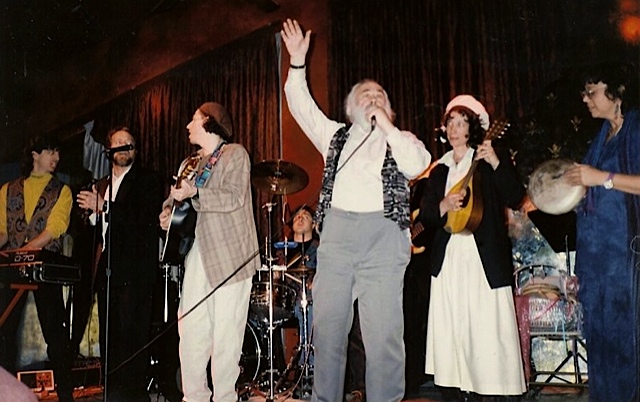


 Schnapps’ keyboard player, Peter, is one of the חסידי אומות העולם. A respectful and sensitive man, Peter initially asked whether he was required to wear a Kippa. I quickly responded in the negative, and ensured that the other band members knew there was no expectation whatsoever that they do so. In the words of my percussionist, also named Peter, “We are just a pack of goyim anyway”.


 Many modern husbands perform more domestic duties in the house than their fathers; certainly more than their grandfathers. There are exceptions, of course, but I am generalising. Even over time, I am pretty sure I do a little more now than I did in the earlier days of marriage. To be open and honest, I’m not a paragon of domestic help nor would I claim to be. I do much more than my father, no doubt, but my sisters’ husbands lend their hand more than me. At this stage of my hoary existence, I can claim that I clear the table each night after eating dinner, depositing any dishes into the dishwasher, and I do put away those items which can go directly into the fridge or a cupboard.



 In the following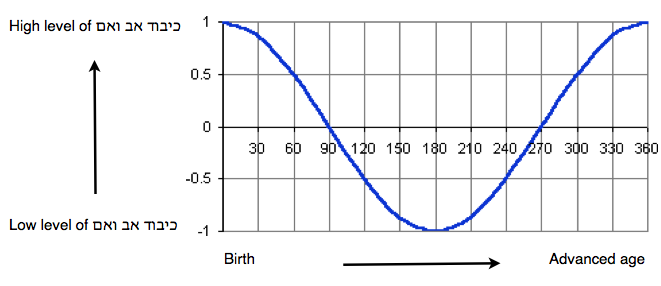






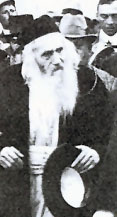






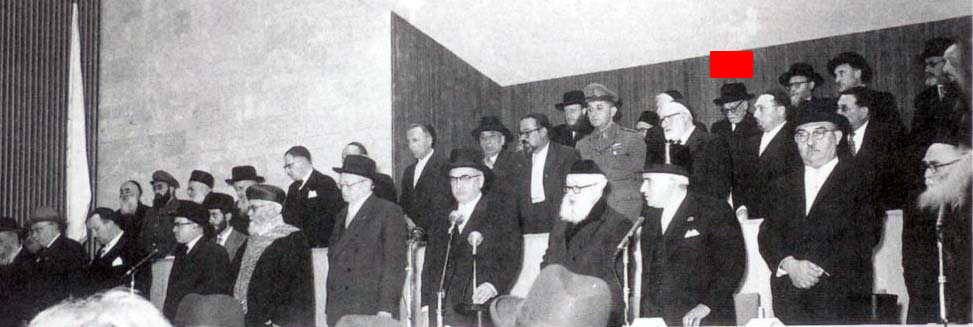
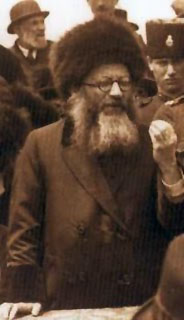

 pitputim
You must be logged in to post a comment.