Definitions of Religious Zionism

I saw this comment from Chardal who said:

A religious zionist is:
Someone who either made aliya out of a sense of religious obligation OR someone who feels the need to find a valid religious excuse as to why they have not yet made aliya (ie, why they are patur). On a national level, this person feels that Jews should en-masse settle the land of Israel.

A religious non-zionist is:
Someone whose aliya is based on non-halachic religious considerations OR someone who feels no need to excuse their living in chu”l. On a national level, this person feels that there is inherent religious/pragmatic value in a large exile community and does not connect to any national project designed to move Jewry to Zion.

A religious anti-zionist is:
Someone who has to find a heter for making aliya and considers those who do so to be putting themselves in a spiritually dangerous position. If this person already lives in Israel, they are connected to the vestiges of the old yeshuv and consider themselves to be in a religious struggle against the state. On a national level, this person considers any national project to move Jews to Israel to be delaying the redemption.

Thoughts?

Honouring Talmidei Chachamim

This story is from Rav Aviner. I dare say it’s instructive.

Ha-Gaon Rav Avraham Dov Auerbach, Av Beit Din (Head of the Rabbinic Court) of Tiveria, once told me about an incident that occurred there in the past: it once happened that the “eruv” was damaged, but the Rav of Tiveria ruled that it was kosher. There was a great Torah scholar who lived there and he bumped into the Rav of the city after Shabbat. They talked, the Torah scholar walked him home, and then they sat and chatted some more. The Torah scholar said, “Let’s learn some Torah.” The Rav of the city obviously agreed. The Torah scholar took Massechet Eruvim and they learned. Suddenly, the Rav of the city said, “Oy va-voy! If so, I ruled incorrectly today!” The Torah scholar said, “It appears so.” The Rav of the city asked, “Did his honor announce in his shul not to carry on Shabbat?” “No,” he responded, “since carrying in this place is a rabbinic prohibition, but honoring a Torah scholar is a Torah mitzvah. I therefore did not say anything.”

Even if the Mara De-atra errs, you cannot proclaim that he has erred. You can argue gently and try to persuade him’

שו’ת דברי חיים

The Matisyahu saga unravels

It would appear that Matisyahu’s adherence to Torah and Mitzvos is in recess. There are reactions a plenty. First, we have the pop chassid who wrote:

Last night, Matisyahu went onto Facebook “live” (as it were) to speak up about some of the issues that have been swirling around him recently.

And although he didn’t exactly explain why he was in a picture with a dude smoking pot, or why he wasn’t wearing a kippah, he did hint that he was into a much more “universalist” philosophy. Where we are all one and united.

Okay then.

What I’ve found most fascinating about this whole Matisyahu thing is that so many people, people that are either OTD, not religious, etc etc etc, have come out of the woodwork to accuse us religious folks of being “judgmental” of not caring about Matisyahu’s personal journey and allowing him to be “real”. If he’s trying to be healthy then, so what, right? Heshy Fried brought it up in one of the first blogs about Matisyahu’s “Kippah-Gate”. He argued that some people need to go off the derech. For their own health. Many others have made this assertion.

I would agree. I would agree if I thought what Matisyahu was doing was healthy. But it’s not.

Although he may not be doing drugs in a physical form, he’s turned religion and spirituality into a drug.

What do I mean?

There is a thing in the baal teshuva world known as the “flaming baal teshuva”. This often happens in the first phase of their returning to Judaism, and can be identified by extreme amounts of kavanah (passion and focus) in prayer, being extremely judgmental of other Jews, and taking on lots of mitzvahs super fast. This happens because at first, being religious is a drug. It is something that gets one high. This isn’t a bad thing, inherently. It gives one the energy one needs to launch into an entire lifestyle. However, its power takes you up to the stratosphere and shakes your entire being in a very physical way.

Becoming a baal teshuva is a very delicate process, and unfortunately there is a whole huge contingent of “kiruv professionals” dedicated to the idea that as long as a person becomes frum, any means justify their ends. These kiruv people are drug pushers, some so bad that they should be locked up. They feed their subjects the parts of Judaism that get them high, while forgetting that Judaism, at its core, is a very grounded religion. A religion that requires us to dig deep, focus on each individual action, and slowly improve.

I’ll never forget when I was thinking that perhaps Chabad wasn’t for me and I started shopping around for other yeshivas in Israel, and I went in to speak with the rosh yeshiva of another baal teshuva yeshiva. I was sitting around waiting for him when I overheard a rabbi talking to a baal teshuva that looked to be no more than eighteen years old. He was describing what would happen when Moshiach comes. “The goyim, they’ll be hanging by our tzitzit! They’ll pay for years of oppressing us! They’ll be our slaves!”

I was in shock, and walked straight out the door. I realized that this yeshiva was about the drugs, about stuffing kids full of intense propaganda.

The worst thing that happens with this process is when these “professionals” then throw these drugged up, confused kids, into early marriages, marriages they are not close to being prepared for.

Now, I know that some of you would criticize me for saying someone has an “issue” with drugs if all they did was pot. So let me explain what I mean.

Drugs are a funny thing. And so is addiction. It can take many different forms. A person can be addicted to crack, of course, but they can also be addicted to video games. They can be addicted to writing. Yes, they can be addicted to pot. Or they could be addicted to religion.

The point is, some of us need to get high. We need something in our lives to escape from the world. To deal with the difficulties in our lives by throwing ourselves full out into. For some, this comes out healthily. We exercise, we do art, we do a hobby. We’re all addicted to something.

But some people use addiction to try to fill an imaginary hole within. They get high so that they don’t have to face their own issues. They’re addicted not because of some physical addiction, although that can come into play, but because if they let go of the thing that’s getting them high, they have to face their own lives, lives that are imperfect, confusing and painful.

If we religious folks are honest with ourselves, we can admit that many in our community have chosen to become religious just because it gets them high. They do it more for themselves than for G-d. And almost all of us, especially baal teshuvas, have had some phase in our religious lives that has been marked by this desire to get high.

The problem, though, occurs when the high becomes more important than G-d. More important than our beliefs. And so, we’ll do anything to get that next fix.

What happens in any drug addiction is that eventually our drug stops being quite as effective. We start to get used to it, and then we have to go on to the next thing. The next substance that will help us escape our existence.

Unfortunately, this means that for some people who are addicted to religion, they need to move onto whatever is next. Because at the end of the day, Judaism is not a drug. It’s the experience of Judaism that a baal teshuva has that is a drug. But Judaism, as I said, is a grounded religion, focused on action and practicality, for all the high flying ideas that surround it.

What I found so interesting about the Facebook conversation Matisyahu conducted last night was how many people were so happy for him. They loved what he wrote and felt so moved. They were gushing about how inspiring he was, how he was moving them to be more honest in their own lives, how he helped them connect to spirituality.

And Matisyahu thanked them all for being so positive. He was inspired in turn.

On its face, this was an uplifting turn of events.

In reality, what was happening was that a bunch of people who used spirituality for a high were getting high off of what Matisyahu had written. These people don’t care about Matisyahu any more than the people who were defending him on my article in the Huffington Post. What they cared about was their experience.

People who claim to be “spiritual” are often just looking to get high. Religion and spirituality offer a convenient escape from day to day life, and a person like Matisyahu is the perfect person to throw their desires at.

I challenge anyone who has been following this whole ordeal to show me proof that Matisyahu is in, or is going to, a healthy place. Prove to me that he’s not going down the same road so many other celebrities have gone down before. The one that leads to (and is caused by) unhealthy addictions, deep emotional issues, hurting the ones they love, and, G-d forbid… it’s unnecessary to explain where it usually leads.

I challenge the people that are “defending” Matisyahu to prove to me that they aren’t hurting him even more, contributing to the problem, and acting like every fan that has contributed to a celebrity’s decline by worshiping him into the ground. That they’re not just like every druggy’s friend who encourage his descent to justify their own.

I challenge the kiruv professionals to prove to me that they aren’t actively destroying people’s lives with their silly propaganda. To prove that implying that a person cannot be happy or healthy unless they are religious, and doing everything to get someone to that place, is not an incredibly destructive agenda.

I challenge everyone who is a part of this conversation to look within themselves and decide if they really care about another Jew or whether they are only pushing their own agenda.

The internet is a world where words seem to have no consequences, where we can rant and cry and scream about the things that plague us without having to deal with the results of our actions.

But words have just as much power on the internet as in real life, and sometimes more when they become spread enough. We all have a responsibility to deal with the difficulties of the Jewish world with care and delicacy.

And in our daily lives we have a responsibility to transform our beliefs from drugs into reality. Getting high lasts for a moment. But until we internalize Judaism into our souls, especially through the study of Chassidus, we are all just pundits.

In summary, pop chassid, felt it was too fast too soon and like a drug hit, only the people who were administering the dose of Judaism were unrealistic and pumping him full of unrealistic expectation. Matisyahu was fed a dose of elements of Judaism that made him high. He didn’t get the real thing, so to speak.

Next,  we have Guravitzer’s view:

The descent of Matisyahu is a direct lesson for people in power, especially Shluchim who need programs to promote to their communities. The lesson: Never sacrifice an individual for community inspiration. Maybe that’s a slight paraphrase of, “When working for Klal Yisroel, don’t forget Reb Yisroel” – or in this case, Reb Matisyahu. Shluchim gave Matisyahu his platform. Not just his first platform, but year after year of platforms, which translated into press, and then Sony noticed him. Shluchim on campus noticed his attraction to their college-age crowds and started the trend, then communities picked up on it. Shluchim may believe that they have no responsibility to think through who they bring to entertain or lecture for their community beyond checking that the person is kosher. Shluchim may believe that they have no reason to consider the impact on the performer or lecturer themselves. They are wrong, wrong, wrong.

The first question every Shliach should have asked is the same question they would have asked about their own Baalei Teshuvah and community members – is this right for the Baal Teshuvah, for the person, not is this right for my community. Did no Shliach notice that he was back to doing drugs almost immediately? Did no Shliach realize they were propping him up as an example for their communities, and Lubavitch in general, when he had barely acquired anything of his own to give? The message became, don’t follow Torah, Mitzvos and Chassidus, follow the celebrity and Sony contract. Shluchim vet visitors to their Chabad houses from other towns carefully. As they should, there are crazies out there. Witness the firebombing of the California Chabad house. Phone calls, references, some chatting to feel the visitor out, whatever it is, Shluchim check. The same vetting should apply to entertainment, not only for its value to the community, but for the value to the person performing. Matisyahu isn’t the first person to inappropriately join the Chabad house circuit, only the most prominent. The problem takes other shapes as well, such as the direction given staff – bochurim or bochurettes – when they come to a community to run camps or programs. I don’t know how far down the responsibility goes – rumor had it back then when Matisyahu started his career that his mashpia encouraged him in his path of celebrity, which is outrageous – but we are each responsible for every yid, not only the ones we want to take charge of.

In summary, he felt that some in Chabad were opportunistic in using Matisyahu’s talents without doing due diligence on where he was at, and what he needed.

The only thing I have in common with Matisyahu is that we are musicians and singers. I remember the first time I saw him perform. I couldn’t relate to what he was doing. I don’t like rap. My first attempt at doing “Jerusalem” live was an abject failure. I remember the moment to this day. It’s just not me. When I listen to song it’s never about the lyrics. It’s always about the tune. There is no melody in rap music; I hear nothing, it is a vacant dirge. [I do admit to being an unabashed fan of Adele’s songs, but let’s not go there now].

I’ve often felt that both extremes: Misnagdim and Chassidim (viz Chabad given they are the only one’s who genuinely give a damn) are too extreme and inflexible when it comes to the menu for Ba’alei Tshuva. Misnagdim over focus on unrealistic ‘Moredik’ stories. It’s ironic given that this used to be the purvey of Chassidim of yore. Misnagdim are more likely to use the infamous Bible codes and similar discredited devices to “prove” that someone should be frum. There are no proofs for belief in God. Get over it. It’s belief, no more and no less. At the same time, their brand of Judaism is so void of Ga’aguim that I find it soulless. Yes, I’m generalising. There are exceptions; notable ones.

Chabad, however, use the powerful armoury of their sublime metaphysical meaning of life. The Alter Rebbe was a genius. One can see that just from the beauty of his language in his Shulchan Aruch. If only he had met the Gaon on that fateful day. These were the two giants of that generation. I’m not sure if we have seen two like that since then. I have always viewed Chassidus as a sufficient but not necessary part of Torah. It works very well for some, but less so for others. In many cases, though, it seems that the only thing Ba’alei Tshuva seem to become pseudo-expert in is Chassidus. What’s wrong with exposing the more cerebrally inclined to the beauty of a Tosfos, a Rambam and a Reb Chaim, or a Tshuva from R’ Shlomo Zalman? Was Matisyahu only fed a diet of Chassidus? What of Chochmas HaTorah? Given his esoteric leanings, would it perhaps also have been an idea to feed him a good does of Nigleh (to use Chabad parlance)? Surely he needed something else to anchor him, so to speak.

At one stage, I used to learn Maharal instead of Mussar during Mussar Seder. I liked it a lot more. Mussar did nothing for me. It wasn’t a big dose of Maharal, but I gravitated to it because of its accessibility. I could just pick it up and learn. Maharal was another incredible genius. What a tall and majestic figure he was.

Once Matisyahu left Chabad, there was no doubt (to me) that he wouldn’t find joy elsewhere. Let’s face it. Amongst Chassidim, apart from the Sfas Emes  and a few selected Seforim, there isn’t a lot out there.

I’m sad that he has gone down the current track. I’m even sadder for his wife and children. Life will not be easy for them. Let’s not be pointing fingers at him. If you live in the states and see him, invite him and his family for a meal. Don’t pontificate or ever be judgemental.

We never tread the roads he travelled.

Abuse: Halachic and Ethical Dilemmas (2)

Thanks to all who commented on the first scenario. Consider, now, a new scenario.

Your daughter is showing signs of strain. She has not been herself for some time. You have tried all manner of parental approach: the stick and the carrot and you can’t seem to manage to cajole her to be on the same page as you and your husband. She is also not performing to her ability at school.

You become aware of rumours that a male associated with your daughter’s school has been exposing himself and may well have fondled or even forced himself on some girls. When you hear these rumours you are in a state of disbelief. You cannot imagine that this apparently fine and upstanding individual would do such things. If he did, then you conclude that he must be sick or have experienced some trauma that has scrambled his moral compass.

One day your daughter casually mentions that the said person approached her and attempted to interfere with her. You aren’t sure whether actual interference has taken place. On the other hand, this may well explain her unusual behaviour and lack of focus. Given the rumours, you run to the School and meet with the powers that be. They tell you that there have been issues with this person and that he is receiving treatment and the strong indications are that this earlier behaviour will no longer be manifest. It’s a close-knit school where each parent knows the other and shares strong common ideals. The school did not contact the police because they felt they were dealing with it internally through professionals. Their Rabbi forbade “Mesira” anyway and there was no mandatory reporting in place.

You are concerned. The said perpetrator is still “at large” in the sense that he is able to find ways to continue to interact with the children in the School. You are told he has done Teshuva. What do you do?

  1. Do you allow any of your children to continue to be enrolled in the School?
  2. Do you have a halachic responsibility to inform as many parents as possible about what happened to your daughter? (What about her shidduch chances and those of the siblings, given the close-knit community)
  3. Should you go to the press or post on a blog, even anonymously.
  4. If you fail to advise other parents and the police, and another child is interfered with are you halachically or ethically culpable?
  5. Did you transgress לפני עיוור לא תתן מכשול and/or לא תעמוד על דם רעך?
  6. Can parents now sue you for damages, both halachically and civilly?
  7. Can your children sue you if you didn’t remove them from the School?

“Reality looks much more obvious in hindsight than in foresight. People who experience hindsight bias misapply current hindsight to past foresight. They perceive events that occurred to have been more predictable before the fact than was actually the case”. Hersh Shefrin

Calling on ALL Melbournians

It is important that we keep the Jewish in “Jewish Care” alive, vibrant, and uppermost.

Jewish Care Survey
Attitudes To Mental Health Issues

Jewish Care Victoria is exploring the extent to which Jewish community
beliefs inform attitudes to mental health issues. No such research has been conducted within the
Jewish Community of Melbourne.

To this end, we ask that you click on the surveymonkey
link to complete the short survey.

Please do this no later than Thursday 14 June 2012.

Surveymonkey is a secure site and all responses provided by you
including ratings, information and comments can only be accessed by Community
Services Staff within Jewish Care Victoria . Data generated will be aggregated and
reported on as a whole so that you cannot be identified. After the conclusion of the research, surveymonkey data will be destroyed.

For further information about this research, please contact the
Jewish Care Victoria Mental Health Program
Team Leader, Bronwen Taylor on 8517 5983 or the
Policy and Research Manager, Rachael Bajayo on 8517 5743.

Bronwen Taylor
Mental Health Team Leader
Individual and Family Support 

An important contribution to Chabad after the Rebbe’s passing

[Hat tip to R’ Dovid]

This is an erudite and honest (in my opinion) analysis and critique of  “the Rebbe is Moshiach” within elements of Chabad by R’ Yechezkel Sofer. He was vilified for taking this position, and was rudely called “Yechezkel Kofer” by the lunatic fringe. Apparently, R’ Shalom Dov Ber Wolpe wrote a rejoinder entitled “Sefer, Sofer, Sippur” but I have not seen this.

R’ Yechezkel Sofer

R’ Sofer is a distinguished educator whose online Shiurim in Sefer Hatanya, are popular. I’m not sure, but I think he may also the same Rabbi cited here as controversially allowing polygamy?

At any rate, his viewpoint isn’t a solitary one by any stretch. Other well-known Chabad Rabbis who have similar views include:

  • Rabbi Berel Levin, the chief editor of the new edition of the Shulchan Aruch Harav
  • Rabbi Leibell Shapiro, Rosh Yeshiva in Miami & his son Rabbi Chaim Shapiro, Rosh Beis Medresh Lehora’a in Morristown
  • Rabbi Yosef Avrohom Heller, Rosh Kollel of Crown Heights and arguably the most prominent Posek in Chabad today
  • Rabbi Ezra Shochet, the brilliant rosh yeshiva of Ohr Elchanan of LA
  • Rabbi Chaim Rappaport, who needs no introduction

I particularly enjoyed his analysis of the Rambam’s position in Hilchos Melachim. It was common place and still is, to hear people misappropriate some phrases therein (viz Neherag).

I gave away a copy last night to a Meshichist Meshulach from India who recoiled upon seeing that it didn’t say שליט’א … but נשמתו בגן עדן מקדם or נשמתו בגנזי מרומים

Helping people not to transgress Daas Torah

[Hat tip Abe]

Image


Agudas Yisrael and Yom Ha’atzmaut: then and now

[Hat tip to Mark]
The letter below was penned by famed Rosh Yeshivah of Telz in Cleveland and member of the Moetzes Gedolai HaTorah in the USA, Rav Eliyahu Meir Bloch ז’ל. I had heard about the sentiments, but it is all the more powerful when one reads the actual letter. Well, not quite the actual letter, but a translation of the letter, which I lifted from the following article.


With God’s help, Sunday, Parashat Bechukosai, 5714

My respected friend, Mr. David Ulman, Shalom and with eternal blessing!

First I would like to express my gratitude to you for contacting me to request clarification with regard to the holiday of Independence without judging or criticising from afar. Now let me respond to the matter with clarity.

  • The copy of the advertisement that you sent to me is indeed correct. Furthermore, this event was attended by the Women of Agudath Israel and Pirchei Agudath Israel. The reason that their attendance was not mentioned [in the ad] is simply due to the fact that they decided to attend later [after the flyer was published], and they became an official part of the evening’s program.
  • Before we discuss the actual matter we must first clarify the following questions:
    1) Is Yom ha-Atzma’ut a worthy matter for the Ultra- Orthodox community to deliberate and to express a stance regarding it[s celebration]?
    2) Is it worthy of celebration?
    3) Is it worthy for the members of Agudath Israel to unite with the members of Mizrachi in a fashion which allows us to express our approach and influence others to act according to the spirit of Agudath Israel?

In my humble opinion, one must respond to these questions as follows:

  1. The independence of Israel and the establishment of the State are important events in the life of our nation. It is worthy for members of Agudath Israel to participate when there is a possibility to express their thoughts and views before a large forum in order to influence them regarding the approach of the Agudah and to refute the negative sentiments against Agudath Israel.
  2. In my opinion, despite all of the defects and deficiencies in the leadership of the State of Israel, its mere existence, which happened via revealed miracles, is of great significance that deserves recognition and appreciation. This recognition must be publicly expressed for two reasons: First, because the truth must be expressed. Second, that all should know and recognise that our war against the Government of Israel is not targeted against the existence of the State.
  3. Participation with Mizrachi in a fashion that Agudath Israel is free to express its views was recognised as the correct approach by creating a religious front that Agudath Israel is always willing to renew. Although I know that we disagree with Mizrachi on our fundamental beliefs, and in no way are our views consistent with each other, and consequently our actions are totally different, still there are many issues on which we can work together and, through this, strengthen the ultra-religious and its influence on the life of the nation.

After this preface let’s discuss the issue of our participating in the celebration of Yom ha-Atzma’ut. The collective meeting for Yom ha-Atzma’ut was not particularly festive; it was simply a symposium conducted by all the Orthodox factions and gave everyone the opportunity to express their views. Of course, if we would not have attended, the meeting would have turned into a platform focused on criticising Agudath Israel and its leaders who are the “Gedolei ha-Torah.” Our participation on the other hand caused the speakers to speak politely and allowed Agudath Israel to express its views in front of more than one thousand people. Hence even if we would not have related to the State of Israel in a positive fashion, our participation would still have been of value. However, in my view since the creation of the State of Israel is indeed an important milestone in the life of our nation, our relationship to it, therefore, is positive, and our participation is obligatory.

Our participation together with Mizrachi is despite the fact that the religious political front was canceled. In Cleveland there is a religious front by the name “Orthodox Jewish Association” comprised of representatives of ultra-orthodox synagogues, Agudath Israel, Mizrachi, Young Israel and representatives of the educational institutions of the ultra-orthodox. A condition was established that if there is any issue with which one of the participants disagrees, the organisation cannot act. For example when rabbi… came here as the representative of the so-called Jewish Agency’s Torah Department, during their month of propaganda, and most of the organisation’s members were willing to participate in an open forum, Agudath Israel and our educational institutes did not agree, despite our personal relationships with rabbi…. Of course Mizrachi acted independently, but not in the name of our joint religious organisation. Due to this organisation, thank God, we were able to eliminate non-kosher at United Jewish Appeal banquets and gatherings and accomplish other positive outcomes that strengthened the religious position and its respect in the community. Therefore, if we would not have agreed to organise the Yom ha-Atzma’ut gathering of course we could have stopped the organisation from attending. However, our view is positive [towards Yom ha-Atzma’ut] and therefore we did attend. It is noteworthy that nothing was done without consulting with us. We oversaw all preparations to insure all would be in accordance with our interests. For example, no irreligious attended and all women sat in a separate section behind a Mechitzah etc….

To summarise, I feel it correct to clarify why this was conducted this year and not in previous years. The reason did not emanate from our side but from the side of the other factions. In past years all the Zionist factions would conduct the gathering in accordance with their approach and of course we are neither part of them nor their ways. But this time they approached us with a proposal that the gathering would be only with religious people in accordance with the spirit of Torah and asked us if under these conditions we would be willing to participate. And thus, despite the fact that this year we are actually at war with the Mizrachi even more so than in previous years, we still feel it was the correct approach to demonstrate to them that on issues on which we are in agreement we can work together.

In general, I already expressed my view that we lost a great deal by refraining from recognising correct issues just because the irreligious and those manipulated by them, the Mizrachi, agreed to them, because through agreeing with them we would have strengthened their false opinions. In my opinion, our views did not find receptive hearts within the nation not because of our stance against their incorrect views; rather it is because of our negative position against the correct views such as learning Bible, speaking Hebrew and Eretz Yisrael. The populace cannot understand our concerns and, moreover, when we emphasise our positive views they will accept us and allow us to fight the falsehoods. In addition, I must express that this attitude of ours is not unique to our life in America. We acted this way in Lithuania as well despite the fact that then, as now, we were totally zealous concerning anything that, God forbid, is not in accordance with the spirit of Torah. We did not regress because of persecution, denouncement and sometimes even suffering, sorrow and much damage to our holy Yeshiva.

With this I am your friend, I respect you and bless you, 

Eliyahu Meir Bloch

Abuse: Halachic and Ethical Dilemmas

Consider this scenario

The family of a victim of sexual abuse approaches the abuser and their family. The family of the abused has not yet reported the said abuse to the police; instead they initially confront the abused and their family. The situation becomes complicated and lawyers are brought in. Lawyers for both sides settle on an agreement involving some “compensation.” In return the abuser agrees to plead guilty to a somewhat lesser offence without recording a conviction.

The lawyer of the abuser is under no doubt that her client is a dangerous pedophile. She had a choice. She could have refused to take the case. In the end, whether she was the lawyer who accepted the brief, or a lawyer who turned the case down, she is unable to remove thoughts from her head. She is convinced that the abuser is a dangerous person and that he may continue on his misadventure and sexually abuse others. She is bound by client confidentiality; we understand that. 

My question relates to the Halachic imperative. Is a lawyer/person in such a case permitted to remain silent? Is there not a real problem of contravening a Torah command:

לא תעמוד על דם רעך

Unfortunately, the abuser commits further crimes. Is the lawyer somehow responsible? If they are not directly responsible, are they indirectly culpable?  Later victims, upon learning that a lawyer knew about the abuse and stayed silent, decide to summons the lawyer to a בית דין. They seek at least financial compensation for the years of medical treatment and the lost opportunity that a victim must carry all their life.

  • Is the lawyer permitted to stay silent from a Jewish point of view?
  • If the lawyer isn’t culpable from a Western legal point of view, how should the family of the lawyer respond to their vilification by elements of the community who are disgusted that their mother didn’t pass on her very real fears to the authorities?

The impending gathering about the Internet at Citi Field (Part 3)

[Hat Tip Abe] Another interesting post on what the Internet Asifa achieved and why these people just can’t be taken seriously. See here.

What’s the deal with these protestors?

[The following is re-blogged from Rabbi Horowitz’s excellent site. Hat tip to Moshe]

Tuesday evening, a charming and sincere young man who is a survivor of childhood abuse shared with me that he had driven seven hours each way in order to attend a protest at the “Internet Asifa” in CitiField. He mentioned how gratifying it was and how pleased he was to have made the trip. This was the second rally recently organized by abuse victims – the first was held at a Williamsburg fundraiser for an individual who is under indictment for allegedly molesting a child over a period of 4 years.

These protests have elicited a wide range of emotions among members of our community along a continuum ranging from sorrow and sympathy to bewilderment and bemusement and even to hostility and anger.

Moreover, many members of our community have been asking those of us who are advocates for abuse survivors, “What’s the deal with these protests? What exactly do they [the survivors] want?

Others are asking more basic questions, like, “Why can’t they just move on with their lives?” or “Someone messed around with a friend of mine, and he got over it. Why can’t they?”

Well, my friends, it will serve us well to better understand the survivors and what exactly it is they want. We ought to because this conversation is very long overdue. But in a practical sense, it is imperative that we do because in all likelihood these protests will grow and intensify in the weeks and months ahead. The survivors are finding their voices and they will only gain traction now that the national and even international media is covering the abuse matter as it relates to our community.

To begin with, one needs to really understand why abuse is so destructive to its victims. For that, a careful and thorough review of Abraham Maslow’s Hierarchy of Needs might be a good place to start.

In a nutshell, Maslow divided all human needs into 5 groups and suggests that they are sequential in nature — meaning that until all Level 1 needs are met, it is impossible to move on to Level 2 needs, and that Level 3 needs cannot be realized until Level 2 needs are met.

Here are the groups of needs as Maslow sees things:

Level 1 – [The Most] Basic Needs (such the need for food, water and shelter)
Level 2 – Safety and Security (the need to feel protected from danger)
Level 3 – Socialization (the need to bond with family and friends)
Level 4 – Self Esteem (the need to feel self-confident and respected)
Level 5 – Self Actualization (the need to “be all you can be.”)
For a practical example of Maslow’s theory in action; just imagine that your car breaks down on the wrong side of the tracks and you are fearful for your safety. Just then a childhood friend calls and says, “Hi, Yankie, I’m in town for the week. Can we get together and catch up on things?” However, much as you would love to enjoy the Level 3 need of socialization under regular conditions, your brain quite literally cannot even contemplate engaging in that pleasure when your life is in danger.

Child abuse destroys innocent children’s lives in so many ways. But perhaps the most damaging component of all, is the fact that is that it totally destroys their Level 2 security — without which it is quite literally impossible for them to rebuild their lives. How can they ever feel safe again after they were violated? Just imagine what it would be like having a childhood where you were living 24/7 like that fellow in the dangerous neighborhood who had a broken-down car noted above? And this is all the more damaging when it is perpetrated by a family member, friend, or educator whom the children were depending on to keep them safe. For if the adults in whose care they rely on are hurting them, who in the world can they ever fully trust again?

It is also important to note that just like people celebrate sports victories and/or losses in diverse manners, so too do they have different time frames in which they can successfully recover from the incredible trauma of childhood abuse.

All of this is exacerbated when the children come forward and are not believed, or worse yet punished or threatened for reporting their molester. It is quite literally a second round of abuse and it just reinforces their feeling of being rootless and wind-driven. In fact, so many victims report that they were more devastated by not being believed than they were from the original abuse.

Speaking of not believing the victim, research indicates that the overwhelming majority of children who come forward with abuse allegations were telling the truth. Think about it. Why would anyone in their right mind come forward with a claim of being abused if it didn’t happen? (The exception to this rule is in messy custody battles where one party clearly stands to gain if the other is maligned.) All the more so in our community where there is unfortunately a stigma attached to those who do so and to their families. Going public and helping to get the perpetrator apprehended, in order to protect the lives of other innocent children, often comes at great personal cost to the survivors and their families.

About five years ago, as awareness in our community about the matter of child abuse began to rise, many of the long-suffering victims began to hope against hope that things would finally change. People would finally “get it” they believed, and they would once again feel welcome and nurtured instead of being treated as pariahs who ruined the sterling reputations of their abusers. Who knows, they might even get their Level 2 security back again.

Then they pick up a charedi publication one weekend and see a picture of a group of distinguished rabbis visiting a monster in a Virginia jail cell, who was serving a 31-year prison sentence for raping his daughter in three continents over a period of many years. More than 10 survivors contacted me as soon as that picture ran in the paper. “How could they do that to us?” they asked me. “Don’t they know that by supporting the molestor they are stabbing us in the heart?” they cried. Well, they are. They really are.

And what in the world should survivors in our community think when they see a huge fundraiser for someone accused of molesting a child? Many of them viewed the very public nature of this effort as clear warning of what is in store in the future for anyone else who might dare report a predator to the authorities.

For many of the survivors, though, the final straw was the Internet Asifa. Why were they so upset? Let me count the ways for them.

To begin with, the kids in the street know the truth — that the Internet is a firecracker compared to the atom bomb of abuse as far as going off the derech is concerned. Just ask any of them — or any of the adults in our community who work with the at-risk teen population, what the main reason is for children leaving Yiddishkeit.

Moreover, many of these kids credit the connectivity of the Internet for finally raising awareness of abuse in our community, and as we all know, there is more than a kernel of truth there. “Why are the people running the Asifa blaming the Internet for causing children to go off the derech and saying nothing about the matter of child safety?” they wonder.

Bottom line, there are hundreds and hundreds of abuse victims and survivors who were once part of our kehilos. Some left completely while others exist on the fringes – misunderstood, marginalized, and hurting.

Trust me, the vast, overwhelming majority of them are nice kids who want neither vengeance nor revenge. They do, however, want to see that today’s children don’t suffer the way they did and they desperately want to see that things are changing as it relates to child safety.

Now that the lid has blown off, these young men and women, who had their innocent childhoods stolen from them, by vicious predators masquerading as upstanding members of the community, will have their voices heard and their stories told. We have two stark choices. We can reach out, engage them and really listen to what they have to say. Or we can continue to give them the back of our hands, and then we will hear their tortured messages through the front pages of the newspapers and under the glaring lights of television cameras.

Recommended reading:

L’maan Hashem – What Will It Take? Let’s start protecting our children

Sefer Shimush Tehillim

My cousin’s husband, Reuven Brauner has another worthwhile compilation published. You may download it here.

What is it? The introduction states:

Sefer Shimush Tehillim is a short and relatively little-known treatise attributed to Rav Hai Gaon (according to the Sedei Chemed) which describes the Kabbalistic uses of particular chapters and verses from the Book of Psalms for prophylactic or healing purposes. These selections are meant to be either recited alone, frequently multiple times, or in conjunction with some other action or prayer. Shimush Tehillim is mentioned in Teshuvas HaRashba (413), by the Chida, and others. This work is not to be confused with bibliomancy which is the use of Biblical verses for predicting the future.

There are numerous instances cited in the Talmud and other sources regarding the utilization of Biblical verses to ward off demons and the Evil Eye, against bad dreams, against the effects of drinking water uncovered at night, and other more serious calamities. Verses were employed to lighten the pain at childbirth, as protection against danger on a journey, fierce dogs, bleeding and wounds, and the effects of fire and fever. Verses were recited to gain favor or improve one’s memory, and so on. (See Sanhedrin 101a and Shulchon Oruch, Yoreh Deoh 179:8-10, et al.)

Yet, it must be noted, there was great opposition to use of the Torah for magical, curative purposes. The Rambam, the Tur (Yoreh Deoh 179), and the Shulchon Oruch (Yoreh Deoh 179:10) forbade such usage. The Rambam in Hilchos Avodas Cochavim 11:12 pointedly writes:

“Regarding one who incants over a wound or reads a verse from the Torah, and so one who reads verses to calm a frightened child or places a Sefer Torah or Tefilin on a child so that he will sleep – it is not bad enough that these people are numbered among the sorcerers and diviners, but they are also counted as heretics to the Torah by using words of the Torah to heal the body. The (words of the) Torah are for healing the soul only, as it is written, ‘and they shall be life for your soul’. However, it is permitted to recite verses and chapters from Tehillim for protection against troubles and harm – by merit of their recitation.”

Protection – yes, curing – no.

Since Tehillim, more than any other Sefer from Tanach, was used to defend against the effects of all types of predicaments and saving from danger, as recorded in Shimush Tehillim, I thought that it might be interesting to prepare the following table1 to illustrate which chapters it suggests be used for which ailment and condition. For the convenience of the reader, I have also added a cross-referencing index.

Nevertheless, since this monograph is meant for general educational purposes only and not practical application, and in deference to the dissenting opinions, I have only provided a selection of chapter usage from the book, and did not list the use of single verses nor what other actions are required in addition to the recitation of the chapter to affect the desired results. For such purposes, the interested reader must consult an actual edition of Shimush Tehillim and ask his rabbi as to how to employ it, if at all. All this aside, it is commendable to recite Tehillim anyway for the efficacy of it as prayer is well-known.

Finally, I made no attempt at trying to determine why each chapter has the effect claimed, as there is no indication of this in Shimush Tehillim itself.

Re-architecting our Mikvaos

The scourge of male perverts, pedophiles and sickos is challenging communities across the globe. The Halachos of a Mikva are complex and need expert Rabbinical advice and architectural nous. Our Mikvaos are cleaner and more acceptable than in times gone by. My father’s description of the scene at the Mikva in Rawa Mazowiecka in Poland before World War 2 was, how do I put it delicately, “off-putting” especially by today’s standards.

I recall when I was learning in Israel that, before Pesach, I sought out a Mikvah near Rechov Har Sinai in Ra’anana. I was the only person there apart from the Mikvah Warden. After completing my spiritual oblution, I opened the door to leave the Mikvah proper only to find the warden “too close to the door”. I had the distinct impression that he may have peered through the key hole. You don’t forget scenes like that.

I do realise that it is only Chassidim who dip in the Mikva daily today. Some, like me, have the custom to do so before the שלש רגלים. Most will do so on Erev Yom Kippur. Strictly speaking, one could also dip in a swimming pool (heated, one would hope 🙂

It’s perhaps worth considering a few changes to future or renovated Mikvaos. My suggestions are:

  1. The change area no longer be a common open area. Rather, there should be a series of say 10 little cubicles with a swinging door behind them where one undresses and then girds a towel.
  2. Showers must have self-closing doors behind them
  3. In high use communities, for example, Chassidim, a total of four consecutive mikva pools should be available. Each pool should be fully enclosed so that nobody can peer in.
  4. There should be a maximum of one person in a pool at a time, unless it is an older or incapacitated man who brings someone to assist them.
  5. The absolute maximum time for an individual to be in the Mikvah should be 60 seconds. There should be an LED timer on the back of the self-closing door which should start warning that time is elapsing, from 30 seconds into the process.
  6. There should be a separate entry door and exit door to each pool. The entry door should be accessible from the shower area. Only when a person has exited through the exit door, should the entry door unlock and indicate that the pool is available.
  7. If a person has not emerged after 120 seconds an alarm should sound.

It is important that we not only strengthen Tzniyus in our community by focussing on the translucency of female stockings (which is only a matter of Minhag) but return to fundamentals. Some reformation of Mikva architecture, based loosley on my suggestions above, would seem to be necessary in our times.

Milchigs on Shavuos and Kiddush Wine

Most people observe a well-known minhag to eat Milchigs. Some have their cheese blintzes or cheese cake prior to a main meal (avoiding halachic hard cheese which would necessitate a 6 or 5 and a bit hour wait). Others have one Milchig meal on the first day. The Minhag in my father’s house is to have only Milchigs for the entire Shavuos; others from Poland also share this Minhag. If and when I mention this to others, they look incredulous. Sometimes, they will say, “But you have to eat meat on Yom Tov” while others will say  “אין שמחה אלא בבשר ויין”.

I mentioned the Minhag to Rav Schachter, and he confessed that he too had never heard of it. He did note that according to the Chafetz Chaim, though, wine was now the main ingredient for שמחה and so he felt that יש על מי לסמוך and I was entitled to continue this practice.

The relevant sources are Pesachim קיט and  ,ביאור הלכה, או”ח תקכ”ט ב

תניא רבי יהודה בן בתירא אומר: בזמן שבית המקדש קיים אין שמחה אלא בבשר שנאמר “וזבחת שלמים ואכלת שם ושמחת לפני ה’ אלהיך”, ועכשיו שאין בית המקדש קיים, אין שמחה אלא ביין, שנאמר ויין ישמח לבב אנוש

והאנשים, בזמן שבהמ”ק היה קיים כשהיו אוכלין בשר השלמים… ועכשיו שאין בהמ”ק קיים אין יוצאין ידי
חובת שמחה אלא ביין… אבל בשר אין חובה לאכול עכשיו כיוון שאין לנו בשר שלמים, ומ”מ מצוה יש גם באכילת בשר כיון שנאמר בו שמחה [כן מתבאר מדברי הב”ח וש”א], והמחבר שלא הזכיר בשר אזיל לשיטתיה בב”י ע”ש, ולענין יין סמך על מה     שהזכיר בס”א שצריך לקבוע סעודה על היין

In summary, the meat (not chicken) that is originally referred to is the meat of Korbanos. In the absence of Korbanos, men were required to institute their שמחה through the consumption of wine at the meal. [Women on the other hand obtain this through a Yom Tov gift].

My reading of the above leads me to a number of conclusions.

  1. If you make Kiddush on Yom Tov with Grape Juice and consume no wine, it would seem you have not fulfilled Chazal’s happiness requirement
  2. Kiddush wine does not constitute the type of drink, in my opinion, that Chazal were referring to. The sweet thick molasses that parades as Kiddush wine may serve the purpose of Kiddush because it has a name/שם of wine. However, I don’t see how anyone could consider it as an ingredient for שמחה. I’d go further, if it wasn’t called “יין” it could be cogently argued that it was not חמר מדינה (a regular drink of choice in one’s locale) because nobody but nobody would casually serve this to a guest who occasioned one’s house.
    If it wasn’t for קידוש would anyone drink the stuff?

Cellphone vibration syndrome and other signs of tech addiction

See this article.

I have to admit that I have had the odd phantom vibration only to find it was a figment of my imagination.

CPAP Machines on Shabbos/Yom Tov

Medical research into sleep apnea and what it can be responsible for is established and continuing to develop. Sleep apnea can cause:

  • Heart arrhythmias
  • Heart failure
  • High blood pressure
  • Stroke
  • Depression
  • Hyperactivity

The use of CPAP (or these days APAP machines) is now widespread and the relief that the devices provide is real, including:

  • Restoration of normal sleep patterns.
  • Greater alertness and less daytime sleepiness.
  • Less anxiety and depression and better mood.
  • Improvements in work productivity.
  • Better concentration and memory.
  • Patients’ bed partners also report improvement in their own sleep when their mates use CPAP, even though objective sleep tests showed no real difference in the partners’ sleep quality.

Current machines are turned on by pressing a button and then “wait” for you to start breathing. Once you breathe, air is pumped into you (at a pre-set measured level depending on whether you are moderately or severely impaired) and this keeps a flap open so that the air you breathe during the night is unobstructed. The obstruction is also one cause of snoring. The machines are relatively quiet.  Some machines build up to the required pressure gradually. There is an LCD or LED style readout on the machine that is activated once it is turned on. There is no “visible” fire/filament. Some patients also use a humidifier which is attached to the machine. This warms and wets the pumped air in patients who are unable to breathe through their nose, and whose mouths become dry and irritated as a result.

Can these machines be used on Shabbos/Yom Tov? Let’s note first that the accepted opinion is that of R’ Shlomo Zalman Auerbach ז’ל that Electricity is forbidden מדרבנן unless there is flame involved (or filament, as opposed to incandescence). The Chazon Ish isn’t disregarded, but his opinion that all electricity is forbidden דאורייתא is not followed when it comes to medical issues.

What about the status of the patient? Is he (most patients are men 40+) a חולה at the time he is using the machine? What type of חולה is he? Is he a חולה שיש בו סכנה or שאין בו סכנה?   Is he considered “sick all over”, that is חולה של כל הגוף? Perhaps he is a ספק סכנה? The answer to these questions will probably depend on the severity of the apnea. For example, it might be questionable if the patient was only “mild” as opposed to moderate or severe. On such matters, one needs to consult with experts, that is, Doctors. Preferably, one should see a Sleep Physician.

Using a shabbos clock doesn’t really help. It can’t turn on the machine. Furthermore, many machines turn off automatically anyway if left on.

I am pretty sure that if you asked a Brisker Posek, they would tell you that there was no שאלה and to go ahead and use it. There is a tradition from R’ Chaim Volozhiner through to R’ Chaim Brisker, the Griz and the Rav, that the Brisker way is to be מחמיר when it comes to looking after health and avoiding illness. There are many stories told in this regard. One that comes to mind was R’ Chaim making his eldest son R’ Moshe Soloveitchik (the father of the Rav) absolutely swear that he would never ever be מחמיר on issues of סכנת נפשות or ספק סכנת נפשות. Only after R’ Moshe did that, was he given permission from his father to take up his first Rabbonus.

There have been a few articles written on this topic. R’ Moshe Heineman (who was close to R’ Moshe Feinstein) from the Star K, is lenient, see here. See the opinion of R’ Halperin and R’ Prof. Abraham over here and here who are also lenient.

One is required to turn on the machine with a שינוי (change) to minimise any infraction. [I also think one could consider getting two people to turn it on together].

I rang R’ Hershel Schachter to ask his opinion. He stated that if there is no choice but to use such a machine, then what can one do. He quoted the שולחן ערוך of the Baal HaTanya  who is lenient in Dinim of a חולה and said that this opinion is defended by the אגלי טל from Sochatchow (the Kotzker Rebbe’s son-in-law). He also suggested turning it on with a Shinui.

Some might argue that “what is one night” although this year we know it can be three nights as it is this evening. It seems that the Poskim are wary about interrupting medical treatment and consider such interruptions as contributing cumulatively to the danger (סכנה).

I haven’t considered the issue of the humidifier and whether it boils the water to יד סולדת and if there are ramifications thereby.

Does anyone out there know of other Psakim?

Disclaimer: The above is not L’Halacha and not L’Maaseh. Ask your own Rabbi for advice if you have an issue.

To report or not to report? There is no question.

Aguda has played with words on this issue for a long time. It seems they are all words and no action. The Law, however, has different and more transparent standards. See this article.

Attitudes towards the אומות העולם

R’ Shteinman recently made news because of a speech that he gave which spoke unkindly of the אומות העולם.

R’ Shteinman שליט’’א

A translation of his speech is available. One should read it in context.

The purpose of creation is for the torah! As long as there was no Torah, there were all sorts of no good things, until Avraham came. From Avraham began the spark of what began the Torah, Avraham then Yitzchak and Yaakov, Yosef and the Tribes. but without torah the world could not exist. And it was a great chessed that 26 generations until the torah was given, in the merit of chessed, because they waited for the torah. But without torah there is no world! So the purpose of the world, one must know, is the torah. And today they say there are 8 billion people in the world. And what are they all? murderers and thieves, people without seichel .. but for whom is the purpose of the world? did Hashem create it for these murderers, for those evil people? Only for the tzadikim, those who learn torah, people who learn and keep torah. that is the purpose of the creation. And with parnassa Hashem helps. Most of the time the richest people specifically are not people of such great education. Why? because that is not the main thing. It depends on Hashem supporting all His creations. The mian thing is that a Jew should learn torah…Klal Yisrael are connected to the roah. The gentiles have no connection to the torah. the nations of the world don’t have anything, not security, not good deeds, and whatever klal yisrael has is only with the torah. […]

I’m not in a position to understand these thoughts. I’m not sure if R’ Shteinman realised that his words would be broadcast around the world. If he did not, then that itself is problematic as it implies that one may be too removed. My problem with what he said is:

  1. It was possible to make the comment that people without Torah values have been seen to be involved in all manner of atrocities throughout History. This includes those who are Jewish without Torah and those who are “frum” without (real) Torah. However, given the bad press that frum Jews are getting, it might have been better to appeal to statistics which clearly show that Mentchliche values and proper behaviour in our society go hand in hand with Torah observance. That being said, I’m not sure that’s the best approach to show the beauty of Torah, anyway.
  2. There were and are חסידי אומות העולם. This speech doesn’t logically admit them.
  3. There are ישמעאלים who are non violent and were and are happy to live peacefully. Why wouldn’t they be classed as בני נח?
  4. What is wrong with a בן נח anyway? It’s a halachic category. It has a purpose and a reward. Should it be sneered at? Is the בן נח somehow culpable for being born?
  5. Later in his talk he mentioned the Chayei Adam. The Chayei Adam worked for a living.
  6. I’m not sure how the Rav knows that rich people aren’t bright. Why would he say that anyway? Again, the point that we require a Bracha from Hashem can be made cogently without saying that.

At the risk of being accused of Charedi bashing, similar comments have been made by Sefardi Chachamim and Rabbis from יהודה and שומרון. Let’s segue to today’s news from Yediot.

“If the wife of a Knesset member would have been raped, this whole mess would have been sorted out, but no one cares about us” one of the demonstrators who were arrested told Ynet.

The protesters waved signs reading “South Tel Aviv a refugee camp” and “Infiltrators, leave our home.”

One of the demonstrators who spoke during the rally urged Prime Minister Benjamin Netanyahu to “decide whether we live in Israel or Sudan.”

Smaller protests against the illegal immigration phenomenon were held in Bnei Brak, Ashdod, Ashkelon and Eilat.

Residents of the south Tel Aviv neighborhoods Shapira and Kiryat Shalom held another rally on Chahmei Yisrael Street. They waved signs reading, “Our streets are no longer safe for our children,” “The craziness of our life: Neglect, crime, rape and violence,” “Yesterday it was my daughter, tomorrow it will be your daughter,” and “Yishai was right.”

So one doesn’t have to be an elderly Charedi Gadol to make similar points in a demonstrative manner.

Do Israelis have a right to protest? Of course they do. Can they argue that there are too many immigrants from amongst the אומות העולם? Yes, they can. Every country has limits, and Israel has a right to preserve its raison d’être as a Jewish State. Leftists will counter that the Shoah implies Israel should take any and all refugees. Should they? Perhaps they should deport anyone who breaks the law?

These are weighty issues, and they require very careful language and associated action. There is much more to write, but this isn’t the time.

Let me close with an allied observation about the manner in which we do interact with the אומות העולם.

It is common in non Charedi Schools to sing the National Anthem on chosen days. It is common in non Charedi Schools to have a flag of Australia. It is common in non Charedi Shules to have a prayer devoted to the Government. We know הוי מתפלל לשלמה של מלכות. When a group specifically chooses not to

  • sing the Anthem
  • fly the flag
  • devote a special prayer for the Government

I am puzzled. Why? Does it mean that automatically it provides legitimacy to the more sordid elements of society? Is there a danger that through doing so people will become less Jewish (whatever that means)? You take the money but don’t show gratitude in the accepted way?

It seems to me, that being careful not to להתגרות and aggravate is a Jewish value, as is הכרת הטוב. Can someone explain why the rhetoric and the lack of material acts has become so negative and at times so embarrassing?

Are these lyrics problematic?

Australians all let us rejoice
For we are young and free
We’ve golden soil and wealth for toil,
Our home is girt by sea:
Our land abounds in nature’s gifts
Of beauty rich and rare,
In history’s page let every stage
Advance Australia fair,
In joyful strains then let us sing
Advance Australia fair.

The impending gathering about the Internet at Citi Field (Part 2)

Couldn’t resist this one.

The prayer of the SheLah HaKadosh

1565-1630 (11 Nisan, 5391) ISAIAH BEN ABRAHAM HA-LEVI HOROWITZ (SheLah Hakadosh) (Prague, Bohemia-Tiberias, Eretz Israel) Rabbi, kabbalist, and Jewish leader known as the SheLah Hakadosh for his major work “Shnai Luchot Habrit” (Two Tablets of the Covenant) which combines Halachah and Kabbalah as a way of life.

He moved to Eretz Israel in 1621 after the death of his wife. In 1625 he was arrested with many other Rabbis and held for ransom. The SheLah served as leader and Ashkenazi Rabbi in Jerusalem. He used his personal wealth to financially support the community. The SheLaH strongly believed that he was privileged to be able to observe the commandments tied to the land of Israel. He is buried next to the Rambam in Tiberias.

Many observe the practice of saying this T’filla (link includes English translation) for their children. Some couple this practice with fasting on Erev Rosh Chodesh Sivan.

Myths and Facts: Yesodei Hatorah vs Elwood Shule

[Apologies: Many of you submitted comments, but I couldn’t turn comments off for this post. I had never intended that this post would induce discussion as this would just end up as flame fodder]

In a previous post, I mentioned that the truth will come out. I will resist the temptation to be more expansive and limit myself to incontrovertible cold facts. Do not ask me to expand on these as I don’t wish to reignite. Rather, my intention is to go on the record so that rampant misinformation doesn’t permeate.

Below, ETTC stands for Elwood Talmud Torah Congregation (Elwood Shule). YHT stands for Yesodei Hatorah College, as led by Messrs Lipkies and Casen, on behalf of their board.

Myth:  ETTC never got along with YHT and tried to close down the School
Fact:  ETTC tried for a number of years to conclude an ordinary long term lease for YHT based on reasonable commercial rates.

Myth: ETTC did not support the school in tangible ways
Fact:  ETTC supported both the original establishment of the School and provided a most favourable rental fee for use of ETTC buildings. In fact, YHT paid no rent for many years, and when they later agreed to a nominal rental of $20,000 per annum in return for providing regular mispallelim for ETTC’s daily minyanim, YHT failed to honour this commitment. The bottom line: when compared to normal rental fees over the years, ETTC has supported YHT to the tune of more than 1.5 million dollars.

Myth: ETTC should have offered a better deal to YHT when discussions about a more permanent lease began and none of the litigation from YHT would have transpired.
Fact: ETTC made offers more generous than that ultimately accepted by YHT. All of these offers were rejected by YHT

Myth: ETTC initiated court action against YHT
Fact: YHT brought the legal proceedings against ETTC and ETTC was obliged to defend itself.

Myth: ETTC forced YHT to go to arbitration
Fact: ETTC had no choice but to go to arbitration and in doing so prevented YHT from effectively taking over the premises

Myth: The issue was simply over the existence of a lease
Fact: YHT sought damages of more than 1 million dollars against ETTC

Myth: YHT actually had a lease and ETTC were being difficult
Fact: After a thorough and lengthy arbitration hearing ex Federal Court Judge, the Honourable Alan Goldberg AO QC,  ruled decisively in ETTC’s favour and awarded ETTC the costs of arbitration

Myth: After Goldberg’s findings ETTC went after more money from YHT
Fact: YHT did not accept the umpire’s decision and appealed on a technicality to the Supreme Court (one assumes they had Halachic permission to do so?)

Myth: ETTC wasted money by defending itself in the Supreme Court
Fact: YHT hired arguably the most expensive and high-profiled QC in Victoria who eventually unearthed a technicality that questioned but one aspect of Goldberg’s findings. ETTC had no choice but to defend itself once more.

Myth: The appeal in the Supreme Court found in favour of YHT
Fact: The appeal was allowed (on a procedural issue) but made no substantive findings

Myth: ETTC will be in a worse financial situation because it vigorously defended itself against YHT’s claims
Fact: ETTC will recoup over $2m in rent as per the new lease which will more than cover its costs and provide a much needed injection of fresh income for new projects to reinvigorate the Shule.

Myth: ETTC and YHT are sworn enemies
Fact: ETTC hopes that relations with YHT will be harmonious and is very sad that YHT sought the action that they did and that they chose to reject a deal put on the table by the current ETTC board which would have seen YHT with a much better outcome than what transpired.

Disclaimer: I am a board member and long-term member of Elwood Shule. This post, however, was not approved of by the Board and is not to be seen as representing anything but my own summary.

They must be excommunicated

Are there billboard announcements all around Meah Shearim denouncing this Nidetrechtige Oysvoorf? Are we only going to see announcements about the denier level of stockings, or could we perhaps have the Satmar Rebbe’s come out and openly disassociate themselves from this mohammedan brown tongue?

Watch this video (in his polished Ivrit no less-another example of hypocrisy). If it doesn’t bother you, then perhaps you need to take another look at yourself and ask why you are desensitised to such debasement and such a profound חילול השם.

Question: Is there a group in Melbourne’s Adass community who support this guy and his philosophy and approach? Who are they? Here we are on the eve of the great day that Hashem wrought open miracles and allowed us to re-unite Yerushalayim Ir Hakodesh, and this low life calls it “al-quds”. I’m profoundly sickened by people who harbour such philosophies and spread them around the world in the way that this חזיר does.

«Hat tip to Krakovian Ezra»

The impending gathering about the Internet at Citi Field

Most of us will be aware that certain sections of Charedi Judaism (who call themselves כלל ישראל) are organising an enormous gathering of males (no women allowed) to conjure strength and provide direction in the fight against the iniquity of the internet.

Many pixels will be excited by this event as it unfolds. The following is a guest post by the pseudonymous  “Yosef Drimmel” on Rabbi Slfkin’s blog. It is a brilliant piece and I reproduce it here for comment. I couldn’t agree more with Drimmel.

May 20, 2012, Flushing, NY – A gathering of Ultra-Orthodox Jews from the New York tri-state area was held today at Citi Field. 40,000 men gathered here as approximately 40,000 women followed the events in their neighborhoods via satellite connection. This remarkable event filled with excitement and optimism offered a unique reflection on almost twenty years of Internet use and its effects on a generation.

Leading Rabbis spoke passionately about the various problems facing the community today and urged people to use the Internet and any tools available to address them. An introspective atmosphere was created that united laymen and leadership fostering a commitment to truth and transparency.

The leaders acknowledged they were short-sighted and unrealistic when in the past they attempted to ban the Internet entirely and that methods such as forced signatures on school applications were inappropriate and ineffective. Instead they expressed that many schools need to focus more on the academic and social growth of their students and less on their ability to conform to exclusive rules.

In a humbling manner, some rabbis went so far as to suggest that in the past they felt threatened by the dissemination of information and opinions over the Internet. But in the end they realized that transparency and open dialogue are in the greater interests of Klal Yisroel.

Perhaps the most moving moment of the day was the public apology issued by the leadership in the name of the entire community to the victims of decades of sexual abuse that occurred within our community, noting that it was the Internet that gave a voice to those who had none in the face of the establishment. A new covenant was drawn promising complete cooperation with law enforcement and advocating tougher laws to prevent and report child abuse. A number of enablers were removed from their positions and a new fund to support victims was created.

Some of the speakers also brought attention to the problems of Internet addiction. Expert psychologists and social workers discussed the pathways and pitfalls of excessive use of the Internet, a human challenge more than a religious one. Emphasis was made for teachers and clergy to be aware of individuals suffering from emotional problems of all sorts and to understand the best ways to help people. The disastrous stories of well-meaning but incompetent rabbis who offered counseling proved to be very enlightening to many in the field.

Some attention was paid to the unfortunate availability of pornography on the Internet. While no rabbi wanted to make a fire-and-brimstone rant against basic human instinct, even-keeled advice was offered regarding coping with this distraction and enjoying a healthy lifestyle and fulfilling relationships. A new program was presented to educate brides and grooms on the subject of positive attitudes about intimacy, mutual love and respect.

In the final remarks, the rabbis pledged to move forward with the continuous forging of new ideas. Future gatherings will probably be at a lower cost and scale but focused on actual changes and improvements the community will need to make. Future agendas will include problems and questions such as attitudes towards education and employment, proper allocation of charity funds, funding Jewish education as a community, today’s shidduchim system, agunos, extremism and intolerance, segregation of Ashkenazim and Sefaradim, participation in the Israeli workforce and armed forces, the system of Halachic rulings in Israel and America, reliance on subsidies, and integrity and honesty.

 Many of the attendees left the event feeling invigorated about their future and that of their children and grandchildren, echoing the sentiment that through justice and kindness we may merit the coming of the Messiah.

See also here for another excellent critique.

Should Jews make a pilgrimage to Poland?

The march of the living program has brought into focus the practice of visiting Poland for a  commemorative experiential post holocaust event. Several years ago, I presented a research paper in Kraków. My father and his immediate family survived the Holocaust through חסדי השם and his שלוחים Felka (Feliksa nee) Gallach and her father, Jozef Gallach.

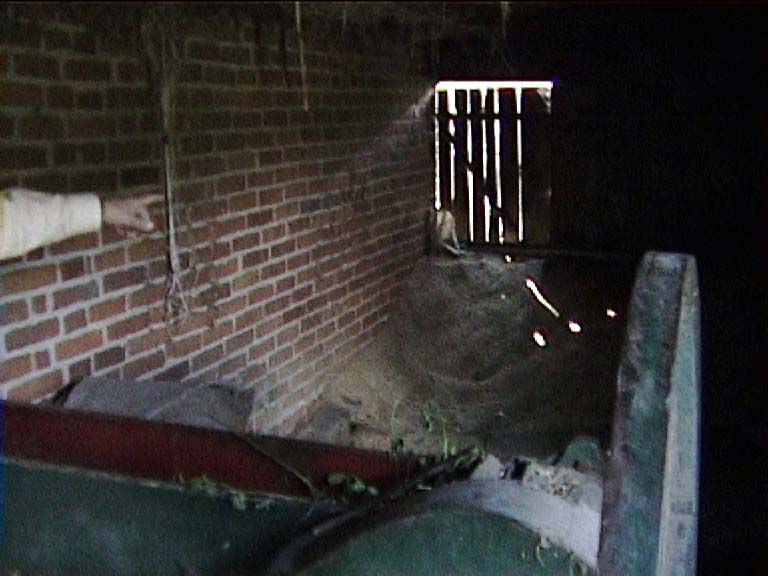
The Balbin family of six sat, quite literally, in a box submerged under straw.

at the back of a ramshackle hut, in the rear of a remote farm in Závady, for a period of 2+ years. When they emerged, they had great difficulty standing. For a period of a dangerous six months they “lived” hidden in the corn fields adjoining the hut.

Felka and her father Jozef were inducted at Yad Vashem in 1998 and 1996 respectively, as righteous gentiles—חסידי אומות העולם—together with 6,339 Righteous Poles.

Felka on left, with my father

They assuredly deserved this honour, and I am here today because of their heroic efforts. A young 16-year-old Felka used to emerge in the dead of night, at great risk to herself, throwing potatoes, bread and other food scraps into the hole. Family Gallach never disclosed that they were hiding Jews at the back of their farm. They had a choice. By not supplying food scraps, starvation would have been inevitable.

My father eventually relented, and after a period of over 50 years, he became the first Balbin to personally visit Rawa and thank Felka face to face. Felka was quite ill, and we brought expensive and hard to obtain medicine to aid in her suffering from Parkinsons disease.

The re-union

It didn’t start there. Immediately after the war the family sent and continues to send clothing, money and medicines. We don’t throw out our excesses. Even grandchildren know that “it goes to Poland”. I was most fortunate to be present when my father met the elderly Felka (who has since passed away).

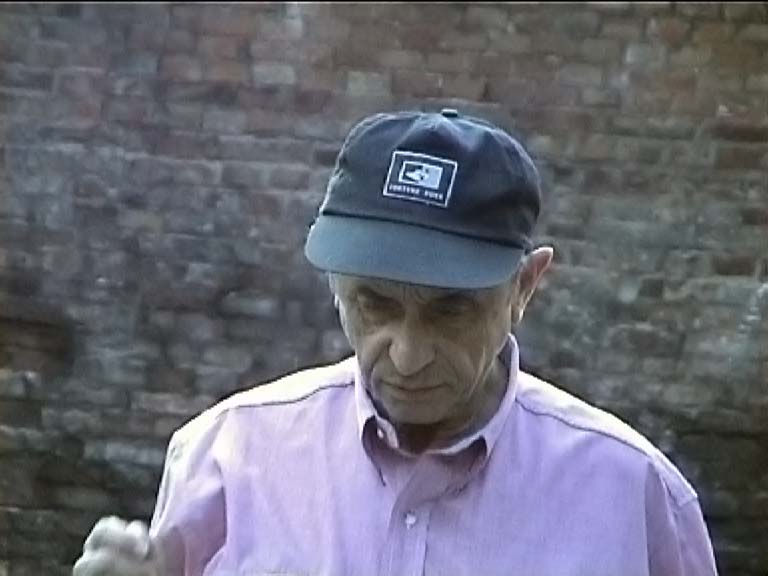
It was a difficult trip for my father; he was most apprehensive. Reluctant to speak Polish and reveal his identity, his demeanour was accurately captured by this photo. With his head down, often pacing, he appeared afraid to peer, explore or relate to the surrounds.

Our next stop was my father’s home town, Rawa. We visited his childhood home. He was transfixed and emotional. Was it something that he should have done? Was it worth me being there with him and experiencing the roller coast of emotions? Was this as much if not more for me than it was for him? Were the wounds worth re-aggravating? This picture reveals some of the emotion etched in his face better than my words.

Our next two stops were confronting and highly offensive. Wanting to visit קבר אבות we proceeded to the בית עולם. I was excited. Even though we are Cohanim and unable to enter a holy cemetery, I so much wanted to “connect” with my namesake, my father’s beloved Zeyda,  R’ Yitzchak Amzel ז’ל. The scene at the cemetery was shocking.

When were the tombstones removed? It was not during the Nazi persecution. It wasn’t even immediately after the war, when the tombstones remained intact. No, it was in the ensuing years, when almost no Jew was to ever visit this town of Rawa. The residents of Rawa clearly decided that a Jewish cemetery was just an opportunity to gather expensive stone and use it for paving and other mundanely servile needs. What type of person could do this? How were they educated? What milk did they drink? It’s hard to fathom. Unlike the Germans who have educated their youth and are intolerant to racism and anti-Semitism, this forsaken piece of earth was overtaken by brazen savagery. Is there another more diplomatic way to describe it?

To add insult to injury, as we walked to our car and passed through a park, three Polish men sitting on a park bench, who would have been some 60 meters away, raised their legs, placing their hands on their genitalia, gesticulating with mannerless intent. We were wearing hats and not Yarmulkas. My father would not allow me to wear my Yarmulka. I had wanted someone to attack my Jewishness so that I could “fight back” in an emancipated manner not available to my forbears. Those males would have been under 10 during the war and yet they not only recognised Jews from the distance, but sought fit to poison the atmosphere with their anti-Semitic display. It’s worth noting that the population of Rawa Mazowiecka was roughly 50% Jewish and there was  harmonious coöperation for many hundreds of years.

With a sour taste in our mouths we left Rawa. On our return to Melbourne, Dad was proud that he had visited Felka, but the extreme negative experiences left him ambivalent at best.

It has been part of my mission to try to reclaim and cordon off the Cemetery. I’ve been working with Australian politicians unsuccessfully, and sadly, Michael Danby MP has been unable to help over many years despite his efforts. I am now working with Rabbi Schudrich, the Chief Rabbi, and others. It’s at a delicate stage.

Several years ago, Rabbi Shlomo Aviner caused a storm when he stated

In a conversation with Ynet, [Rav] Aviner explained: “As is well known, leaving Israel is permitted only for the sake of mitzvah, while visiting the death camps is not defined as a mitzvah by the Halacha. There are important figures and great rabbis who have not visited there.

“Clearly what happened in the Holocaust must be remembered, but this can be done using films, books, the Yad Vashem museum and there are even the testimonies of survivors who are still alive,” he stated.

And what about the emotional experience?

“I once told educators that in any case the impression vanishes after six months, like any other emotional experience with a short shelf life. They smiled and said that it actually fades away after three weeks.”

[Rav] Aviner also said that the trips have not been proven to have an “educational value.” “For some this experience is very difficult and they come back utterly distraught,” he added.

‘Why should Nazi collaborators benefit?’
Another argument against visiting the camps, according to the rabbi, was the fact that the Polish people “collaborated with the Nazis” and were now making a living off of these visits. “I’m not busy holding a grudge against the Poles, but we shouldn’t provide livelihood to people who allowed death camps to be built on their land and who are now making a profit out of it.

“They are not my friends and I don’t want to support them.”

Rabbi Aviner’s view is shared by Rabbi Eliezer Melamed, a renowned Talmid Chacham and others.

A few weeks ago, my cousins visited Rawa. Their experience was even worse than ours. When knocking on the door of my father’s home, they politely asked if they could just come inside and take a look for sentimental reasons. They were rebutted with the words:

“No Jew will cross this door again”

Why? What had any Jew done to them? Most were living in houses that were not their own or that they had purchased for peanuts immediately after the war. Was that the answer?

They were also affronted by the graffiti at soccer stadiums. Apparently, the biggest insult to the opposing team is to paint a Magen David, and accuse the other team of being “Jews”. During games, they hatefully spifflicate “Jew, Jew, Jew” at each other. Coincidentally, I had also read that:

It describes a derby match from November 2008 in Krakow between the city’s teams, Cracovia and Wisla, whose rivalry is such that it is described here as a “holy war”.

Some Wisla fans sang an anti-Semitic song about the supposed Jewish origins of their rivals and when a Cracovia player left the pitch, fans shouted: “To the gas chambers.”

When the match ended Wisla players went over to their fans to thank them, some of them making obscene chants about Jews.

Beforehand, some Cracovia fans made monkey noises at Wisla’s Brazilian player, Cleber, when he was sent off.

But this is not the whole picture. Wisla now have two Israeli players in their first team, and one of them, David Biton, is the club’s top scorer this season.

Anti Semitic imagery when Hapoel Tel Aviv played in Poland

Our youngest daughter will be visiting Poland with her Seminary in a few months time.

An exciting new translation of Shas

See here for a review.

The socialist agenda at University

RMIT is situated near Trades Hall. This means a proliferation of posters. Interestingly, I’ve barely seen one poster protesting about the situation in Syria, but as is to be expected from the intellectually dishonest, Israel occupies (sic) a prominent position. It was no surprise then to see the poster below.

Les Thomas is the brother of Jack Thomas aka “Jihad Jack” who was charged of receiving money from Al-Qaeda. Ezekiel Ox was a member of the Trotskyist Socialist Alternative, and  as for Santo Cazzati, judge for yourself

But wait, there is more. I was gob-smacked to find the solitary poster below.

I didn’t know what to think. Could they be commemorating the Holocaust? Surely not. It was then that I realised, that like all their causes it’s all about “resistance” the code word for revolution. Am I too cynical?

Lag Ba’omer the most mysterious day of simcha?

I’m not the wiser from year to year (no smart cracks please). Let’s look at the reasons for this pause in the Aveylus of S’fira and the Simcha attached to it.

It’s the day that R’ Akiva’s students stopped dying.

I don’t get it. As I recall this is a Gemora in Yevamos. If they stopped on Lag Ba’omer and then started again on Lamed Daled, I am unable to understand  why anyone would be happy. If they stopped dying on Lag Ba’omer and didn’t die thereafter (this is one Girsa in that Gemora), I do understand suspending Aveylus, but I don’t understand the day of happiness.

It is the Yohr Tzeit of the Rashbi

I don’t understand. If it was his Yohr Tzeit and that was such an auspicious event, then why oh why isn’t this mentioned by Chazal. You won’t find it in the Gemora or Medrash. Why not? I don’t think you even find it mentioned in the writings of the Geonim. As I recall, the first Rishon who mentioned it was the Meiri. The others didn’t mention it, including the Rambam. Did the Rambam have a Mesora for Rashbi’s Yohr Tzeit? Sure, we know that much later R’ Chaim Vital related that the Ari went to the Kever and suggested that his Talmid not say Nachem on this day, the “simcha of the Rashbi”.

The day that five students of R’ Akiva got Smicha (including Rashbi) and continued his legacy.

I think this is quoted in the Tshuvos of the Chasam Sofer. Again, we know that R’ Akiva re-established Torah again, this time in the South of Israel and that is surely good, but to suspend Aveylus and then have these big shindigs in the middle of S’fira when in fact his 24,000 students from the North and centrally were dying?

About 35 years ago, when I had to “decide” how to act in S’fira given that my father’s Mesora was not transmitted, I chose the S’fardi practice of having 33 days of mourning, and then ceasing mourning on the 34th day. The assumption was that this was the end of the plague, and therefore the mourning period terminated. I’m not even getting into the opinions of those (like the Chida) who say that it wasn’t Rashbi’s Yom Simcha (Hillula).

I don’t get it. Someone enlighten me please?

Whatever the case, I am lucky to always play at a wedding on Lag Ba’omer, and last night was no different. It was a beautiful wedding with lots of genuine Simcha and that’s good enough for me to have a special night 🙂

What a cutie

From spitting on young girls to burning Chabad Houses

I saw this on YWN

Rabbi Moti Koenig of Chabad in Modi’in Illit has grown accustomed to the fact that many residents would prefer if he and his Bet Chabad would vanish. Nevertheless, he remains determined in his mission, to bring Chabad chassidus to the predominately Litvish torah community.

On Monday, the Chabad library was targeted by an arsonist. He was summoned during the early hours Monday morning (Sunday night to Monday morning) and told to come to the building, horrified to find that the site used to deliver shiurei torah and spread chassidus was targeted by arson. Anti Chabad graffiti was also visible at the site along with graffiti against the planned Lag B’Omer event sponsored by the children of the community later in the week.

Rav Koenig explained that this was not the work of “children or shabavnikim”, but by those who label themselves “avreichim” and “bnei torah”, questioning how they can set such a site ablaze, a location containing so many sifrei kodesh.

Rav Koenig added that he remains more committed to make this year’s Lag B’Omer event in the city the biggest ever, hoping to double the number of children taking part.

On the one hand, should I be shocked? If they shout and spit on girls who they deem to be non tzniusdik in Ramat Beit Shemesh, why should I be surprised that these ‘Misnagdim’ set fire to a Makom Torah and HarBotzas HaTorah. We’ve also seen that it’s not limited to Misnagdim. In Skver, despite the Rebbe over there saying that his house boy would not go to prison, that lad was sentenced to 8 years in prison for attempting to burn down the house of another Skverrer Chosid who wasn’t towing the line.

This is all a gross perversion of Torah. These people do not keep Torah and Mitzvos. To use their own phraseology, they keep a religion that has elements in common with Judaism. These violent Kanoim should be found and put into prison. Anyone who perpetrates violence against their fellow Jew “in the name of Torah” should be put into prison and left to stew there for many years.

Predictably, those whose IQ approaches room temperature commented and diverted the attention of the arson to the fact that Chabad were Meshichisten. Sigh. Even if what they said was true, and most Chabadniks were Meshichisten, since when does that justify arson? How sick are people who attempt to justify one by the other. At worst, Meshichisten wilfully misread the plain reading of the Rambam in Hilchos Melochim, but to imply that this is Kefirah is a long long bow. Sure, there are some loo loos who are Boristen and the like, but they are a tiny outlier, and in my experience ought to be seeing a psychiatrist for other manifestations of their meshugass.

The entire world wept when the Chabad House in Mumbai was attacked, and those Kedoshim were murdered by Islāmic Terrorists. Now, we have so called Yidden who come to burn a Chabad House because it happens to be in a Litvishe area. Sick, sick, sick.

It cuts across boundaries, sadly.

The following article (hat tip Daas Torah) appeared regarding a B’nei Akiva person who learned for two years in Yeshivat Hakotel. The illness/proclivity/predilection to either abuse of children or child pornography knows no boundaries. Some smug individuals have assumed that it appears to be mainly a Charedi manifestation. From my perspective, the only significance to the Charedi manifestation is that they are more likely to get away with it due to the cocoon.

I can only hope that this person only looked at images and no more. At least from my perspective, that’s orders of magnitude less than full on abuse.

The FBI announced today the arrest of Evan Zauder  for possessing child pornography.

26-year-old Evan Zauder is a Dual Masters student and a Jim Joseph Fellow in Education and Jewish Studies at NYU. After high school graduation from CHAT in Toronto, Canada, he went on for two years of study at the renowned Yeshivat HaKotel in Jerusalem’s Old City. He continued his education at Yeshiva University, achieving a BA  in Political Science and a minor in Hebrew Language.

Upon his arrival in New York, he began working for Bnei Akiva of New York as a Regional Director, and quickly moved his way up the ranks at Bnei Akiva to director of the In-School Programming division. He is the Director of Youth Programming at The Hebrew Institute of Riverdale, and he spends his summers working for Bnei Akiva of North America, most recently directing a post-tenth grade summer program in Israel. Evan is also founding and current Director of the Yeshivat HaKotel Alumni Association of America.

According to the complaint, Zauder possessed child pornography that had been downloaded from the Internet and saved onto his computer. During a search of Zauder’s residence conducted on Monday, May 1, 2012, a computer containing hundreds of images and videos of minor children engaging in sexually explicit conduct was seized.

Zauder is charged with one count of possessing child pornography, which carries a maximum sentence of 10 years in prison and a maximum fine of $250,000 or twice the gross gain or loss from the offense.

Manhattan U.S. Attorney Preet Bharara stated: “As a teacher, Evan Zauder was supposed to help children not, as alleged, contribute to their xploitation. Protecting children from harm is an important priority shared by our Office and the FBI, and we will continue to work tirelessly to
pursue and prosecute individuals who prey on the innocent.”

FBI Assistant Director-in-Charge Janice Fedarcyk stated: “The FBI remains committed to protecting children from exploitation. The market for child pornography creates demand for production of images, and every photo and video is a record of abuse

Are the Agudah Zionists after all?

In an emotional outburst against Tzipi Livni, MK, Rabbi Yisrael Eichler MK is reported by Arutz Sheva as having stated that

“It is only because of the ultra-Orthodox, here in Israel, that today we are in our beloved homeland of three-thousand years dating back to God’s promise to Abraham that ‘to your seed I shall give the land’,”

What does this mean? Surely the meaning is that as a reward for Limud HaTorah and Shmiras HaMitzvos, Hashem is supporting the continued existence and security of a Jewish State. But what of the three oaths, which are quoted by Satmar, Neturei Karta, Shomrei Emunim and the like? Does it mean that according to United Torah Judaism, these are superseded by the protection of Torah? What then is the view of Satmar et al? Do they contend that irrespective of the amount of Torah in the State of Israel, the “State” entity itself, as opposed to the land, is enough to cause much of the manifest problems we experience? I’ve never understood, then, why they don’t leave the State. It’s one thing to say I don’t take “anything” from the Government of the State, but how does this make any difference. Why are they living there? After all, the Satmar Rebbe chose not to live there. Could they not all go to Williamsburg or Brussels and live the same lives without infuriating Satan by their living and expanding in the State they should not be part of?
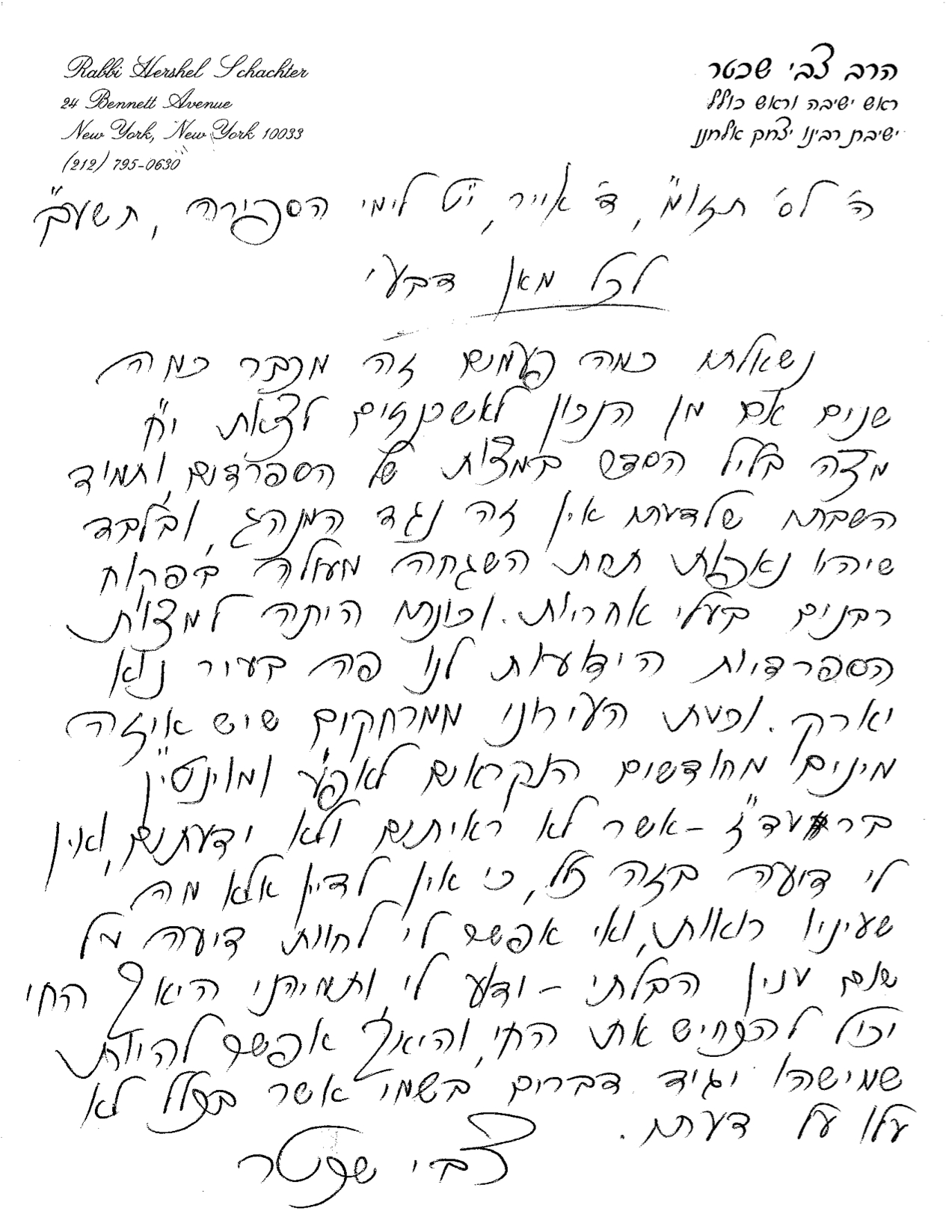
So you say it’s forbidden to leave Israel, that’s why they don’t leave. The reality though is that they have left in the past and do leave. Is Torah protecting the State, as per the comment of Rabbi Eichler? Perhaps they contend that their Limud HaTorah only protects their own.

My comments, above, should be seen as largely tongue-in-cheek. The point I am trying to make is what purpose is there in making statements like this, especially in a parliament where some members are anti-religious or ambivalent towards the religious. What is served by such an outburst? Will the Israeli public all of a sudden take their side? I just don’t get it. These type of comments, as well as comments in the past, where Eichler stated

“Reform Jews are worse than our enemies. They are anti-semites who hate Israel”

achieve very little. Okay, I know that Reform is gravely problematic, but anti-semites? I haven’t met a Reform Jew who wants to kill me. They are misguided, certainly.

It is true that there are elements of the Israeli press who actively seek to ridicule Charedim. That phenomenon must be condemned. But it is equally true that the Charedim do themselves no good at all when they exude

  • angry and vitriolic hate
  • physical aggression against those who aren’t up to their standards
  • supremacist invective
  • an “us” versus “them” divide

Perhaps it’s the Chabad upbringing in me and/or the extreme love philosophy of Rav Kook, but I just don’t see how this style of negativity achieves anything, except more ridicule and a lowering of Kavod HaTorah.

I’m probably living in a fool’s paradise. Closeted in Australia, I still see the role of a frum politician as an opportunity. It’s an opportunity not to behave in the same way as those who haven’t benefited from Torah. It is an opportunity to always behave with decorum and speak respectfully. It is an opportunity to reject anti-Torah legislation through powerful speeches laden with an ambience that will trigger the Nefesh Elokis in most parliamentarians (Rav Lau comes to mind).

Do you know why the so-called “slut walk” is planned to take place Rachmono Litzlan in Yerusholayim? It’s not just because the walkers don’t comprehend the Kedusha therein. It’s also because Kedusha has to be radiated. If the proverbial fans of this radiation are seen to be vituperative pariahs on account of spiteful mouths and a lack of support for the physical safety of the country, the Kedusha finds it harder to permeate and is concealed.

There is no point being triumphalist. דברי תורה בנחת נשמעין

Stunning Imax 3D movie of ירושלים עיר הקודש

Hat tip to Abe.

Statement from מו’’ר, Rav Hershel Schachter שליט’’א

This puts an end to R’ Meir Rabi’s attempts to use Rav Schachter’s name in support of his Laffa. I hope he has the good sense to remove Rav Schachter from his marketing and information websites.

In English:

TO WHOM IT MAY CONCERNI have been asked many times over the past years if it is correct for Ashkenazi Jews to fulfill their obligation to eat Matza on the night of Pesach with Sephardic Matza. I have always answered that, in my opinion, this is not against custom provided that the Matza is produced under expert supervision and under the strict guidance of reliable and responsible Rabbinic authorities. My intention was in strict reference to the Sephardic Matzas that are known to us here in New York. I have now been informed from afar that there are new varieties called Laffa and Mountain Bread that I have never seen and know nothing about and I have not expressed any opinion concerning them, for one may only rule on what one’s eyes have seen. It is impossible to give my opinion on anything that I am not familiar with. I am greatly astonished how a “living person can contradict a living person” and how it is possible that anyone can say things in my name that have totally never entered my mind.Signed: Tzvi Schachter

Tachanun on Yom Ha’atzmaut

I understand but do not accept the view of Hungarian Satmar, Toldos Aron, Shomer Emunim and similar, that the establishment of a State for Jews is the work of Satan and should be rejected. Such a view, in the opinion of many great sages is not justifiable, and its tenuous reliance on the three oaths is seen as an halachic fiction.

I understand, but do not agree with the view of Chabad and some other Chassidim and Misnagdim, that “it is what it is”. They contend that the establishment of the state wasn’t a necessary event in the development of events leading to the Mashiach. However, given that the State is a reality, they will support the people within the State. Chabad, for example, refrain at all costs from saying the State of Israel. Listen carefully. They will always say Eretz Yisroel, following the practice of the last Rebbe, who I believe only referred to it as the “State of Israel” but once.

I understand and accept the position of those who see the State of Israel as being an eschatological reality created by Hakadosh Baruch Hu, and that it will eventually lead to ובא לציון גואל, but who will either

  • not say hallel
  • will say hallel without a bracha
  • will say hallel with a bracha

They do not disagree with the metaphysical importance of the State, but have halachic techno-legal reasons for their particular practice. For example, the Rav didn’t say Hallel and at Kerem B’Yavneh we said Hallel without a Bracha.

I do not understand why people who do not agree that the establishment of a State for Jews is the work of Satan (e.g. Satmar) or who are passively ambivalent about the eschatological significance of a State (e.g. Chabad) not only say Tachanun, but insist on saying Tachanun. It is related that the Chazon Ish, who was saved from the events of the Holocaust by no less than the efforts of Harav Kook ז’ל, insisted on saying Tachanun.

In Melbourne, a number of years ago, when a Bris occurred at the ultra-orthodox Adass Yisrael congregation, Rabbi Beck insisted that Tachanun be said davka because it was Yom Ha’atzmaut and that it would be entirely wrong for someone to come away with the impression that Tachanun might not have been said on Yom Ha’atzmaut.

It is well-known, that Chizkiyahu the great King, in whose generation the Gemora tells us (in Sanhedrin from memory) that Torah study and knowledge was in a high and unprecedented state, failed to materialise the Geula because Chizkiyahu became too haughty and felt that it was unnecessary to utter special praise (Shira) to Hashem and thank him for the miracles that Hashem wrought on Am Yisrael.

Shira, praise and thanksgiving, is the power to see the illumination of the future in the present. It is the power to perceive our existence as a link between the past and the present, and the power to raise everything towards an all-encompassing Geula.

Therefore after crossing the Red Sea, in “Shirat Ha’Yam” – it states: “Az” Yashir. Az– “Then,” past tense, is a reflection on the past, “Yashir” – “will sing praise” in the future tense. There is the joining and encapsulation of the past and the future, thereby giving meaning to the present.

The Torah is also referred to as “shira.” We seek to find Hashem in every nook and cranny and aspect of life—in every corner. This is the approach to Torah that elevates the world. Torah that creates a superficial division between the Yeshivah and the external, real world, is not the ideal.  Yahadus desires to interpret everything, and of course, especially the manifestation of God’s name

It is possible to study Torah as in the days of Chizkiyahu, to the extent that even the children are expert at the laws of tumah and tahara, yet still the Geula is hindered and delayed.

Yeshayahu expected Chizkiyahu to offer praise, and sing shira to elevate the entirety of reality. Chizkiyahu failed and the world was set back in reaching its goal.

One’s individual Torah, despite it’s great value and benefits, is not termed Shira. Only the transcendent Torah that strives to see how everything is bound to Hakadosh Baruch Hu is described as shira.

Those who separate the Torah from the State as if they are two entities are not singing.  This is how Rav Kook explained the criticism of Chizkiyahu. “That in his days briers and thorns covered Eretz Yisra’el,” for Chizkiyahu did not demonstrate how the Torah is also connected to the land.

In justifying Chizkiyahu, some have posited that the miracle of his victory over Sancherev was not as great as the sun standing still (in the days of Yehoshua) and that is why Chizkiyahu didn’t sing Hashem’s praises. Mortals, however, are not qualified to  judge which miracle is greater or more substantial. Judging such things is an expression of haughtiness, and this is what Chazal meant.

Shira dissolves the temporal manifestation of ingratitude, as supplied by the Yetzer Horah.

What is most puzzling to me is that even those who don’t recognise the need to especially sing to Hashem still insist on making this a day like any other and continue saying Tachanun. Yet, on their own days of celebration (e.g. a special day in a Chassidic court), they suspend the saying of Tachanun.

Why?

Diet Coke on Pesach (segue)

In a previous article, I was critical of the wording and approach to this issue by Kosher Australia. In particular, they announced that people should not buy these diet drinks as they were Kitniyos. I argued that they were likely Kitniyos Shenishtane and therefore a matter of disagreement among Poskim and Kashrus Agencies and that people should ask their local orthodox rabbi (who would presumably liaise with Kashrus Authorities and advise their congregant as to the Halacha). I did not feel that Kosher Australia should make a certain pronouncement on the matter.

It is true that the Diet products have a Hechsher of the Rabbanut. It is equally true that some will rely on such a Hechsher and some will not. Some may rely on it during the year, but not on Pesach. Others may never rely on it. Some will only rely on a specific Rabbanut Hechsher: e.g. Yerushalayim.

I have also learned that R’ Lande has issues with one variety of Diet Coke preparation even during the year (let alone Pesach). It seems then that those who follow R’ Lande’s hashgacha need to investigate this fully with his office, depending on where in the world they find themselves wishing to drink Diet Coke and the like.

I asked the OU about the Israeli Diet Coke which doesn’t have a Mehadrin Hechsher, and only bears a Rabbanut Hechsher. The reply I received from the OU stated:

“Diet Coke from Israel is certified by OU. However, the OU symbol is not used on Coke products in Israel. One of the issues involved is kitniyos shenishtane”

In other words, like other Mehadrin standards, the OU does have some issues with this production which prevented them placing their Mehadrin OU stamp, however, the product is certified for use (clearly for those who do not necessarily seek Mehadrin).

Unsurprisingly, my attempts at eliciting further details failed. The OU are not about to provide me with details of changes that ought to take place before they put an OU on the product. I understand that  the OU have instigated some changes in USA production and therefore are able to place their imprimatur on that production line. Whether they rely on Bitul for Kitniyos Shenishtane when they have their OU imprimatur, I do not know.

So, in summary, if I was a Kosher Supplier of groceries in Melbourne, I’d either

  • approach the OU to see if they are able to instigate a process whereby the Israeli product gets the OU stamp, or
  • import the diet drinks from the USA with the OU stamp

Clearly the former is better, as we support Israel and Israeli goods.

The other contentious issue is that of Quinoa. As I mentioned, there was a finding by a respected Kashrus Agency that some Quinoa was proximate to Chametz during production. This is a concern. I notice that Eden has a Quinoa that is certified year-round by the OK. If I was a Jewish greengrocer, I’d be approaching the OK to see if they can ensure that Eden Quinoa is certified as OK Kosher for Pesach as well and stamp it as such. That way, those who use Quinoa because it is not Kitniyos, will be confident and free to do so.

Disclaimer: I must stress again, that all my comments on Halachic topics should be deemed pitputim b’almo. In other words, they are not L’Halacha, and not L’Maaseh. Discuss the matter with your local orthodox Rabbi.

Rav Schachter on Soft Matza

It has been claimed in various quarters that R’ Schachter has no issue in principle with “soft” matza. His name has been used, making such claims, and through a long bow, trying to associate R’ Schachter with the acceptability of particular types of ashkenazi machine made soft laffa style matza.

I heard R’ Schachter speak on this topic, and I came away with the distinct understanding that

  1. Soft Matza was certainly used in the past by Ashkenazim
  2. There are some Sephardim who have maintained their Mesora on how to make the traditional soft matza
  3. An Ashkenazi who wishes to eat from a Sephardi Soft Matza and rely on a particular  Sephardi Mesora on how to make these matzos may do so if they wish, but they are relying on that well-known and accepted Sephardi hechsher.
  4. R’ Schachter in no way endorses any particular Matzos (hard or soft)
  5. Ashkenazim over the last 200 years have reverted to thin hard matzos. (R’ Shlomo Zalman Auerbach disagrees with R’ Schachter and says that an Ashkenazi should therefore only ever have hard matzos)
  6. R’ Schachter had absolutely nothing to say about new laffa style, some of which has also found its way into Melbourne, Australia, under R’ Rabi, and in no way should R’ Schachter’s comments be used to ascribe any acceptability to the kashrus thereof.

I understand that R’ Schachter has very recently made the above views known explicitly in response to queries about the use of his name on R’ Meir Rabi’s Kosher Business/Hechsher, which promotes Rabi’s soft laffa style product. I also understand that R’ Rabi is now aware of these clarifying comments.

There is a solution to this conundrum. R’ Rabi should open himself up to an overseas kashrus expert, such as Rav Moshe Heineman or indeed the OU or similar to come and oversee his laffa production before next Pesach, and formally put their imprimatur on his production. Heck, if it’s good, he can export it too, presumably.

Yom Hashoa 2012: a disturbing tale of contrast

Last night, as is traditional, we attended the Yom Hashoa Commemoration at Robert Blackwood Hall. My parents, both survivors, together with more than 15 of their offspring, sat in a row on the ground floor. Compared with my youthful recollections of the memorial, the last ten years have been exemplary. Representation from Jewish Schools in choir or prayer, together with witness testimonies typically dominate the program. This year commenced with a similar motif. Simply listening to a testimony is riveting, humbling and often a highly emotional experience. There is no need or place for theatrics, props or fancy multi-media. The barren figure of an elderly survivor speaking from a podium is a most powerful image. In some years, organisers have employed the recitation of poetry or similar artistic device. Those devices do nothing for me, personally. I am overly grounded and, although I am a musician, alternative displays of artistry do not add to my night.

But last night was different.

The testimony from Sarah was extraordinary. Speaking eloquently and without notes, Sarah took us through the moment she was separated from her parents in the Ghetto to the present day. She described her odyssey, her pain, and her haunting memories. Around me, the gasping and incredulity was palpable. I felt like an indiscriminate ant in the cosmos of surreality and struggled to hold back tears.

Over the last 40 years that I have attended commemorations, there has always been the recitation of Tehillim, in both Hebrew and Yiddish, by two representatives of Yeshivah College. This year, for an unknown reason, they were replaced by two girls from Beth Rivkah College (which had already been represented by their primary girls choir). Thinking the worst, I suspected that Yeshivah had pulled out of the event. I fired off an email and, that evening, received an immediate answer from Jerusalem. Unbelievably, Yeshivah had received a letter which stated that their services would not be required. I am flummoxed. Why would the organisers allow such a circumstance? What type of enfranchisement are they seeking to foment?

The removal of Yeshivah College was, however, not the greatest disappointment for me and many others. A new uber-modern style presentation had seemingly been incorporated to capture the “relevance” of the Holocaust to modern times and the “youth of today”. Icons of Facebook and the like were displayed in case we didn’t know which apps the “youth of today” were using. Seemingly wearing no Kippa, a young gentleman with a South African accent got off on the wrong foot. A casual style of presentation, together with ubiquitous hand motions one sees when a salesperson is selling their wares, greeted us. It was almost like we had been transported from the Holocaust to board room of an advertising agency. This was style, though and not substance, so we overlook those things and move on. Establishing his credentials, the gentleman, whose name escapes me, informed us that he had been on many “march of the living” trips, and was an active educator, with abundant experience relaying the message of the Holocaust to Jewish kids. We saw pictures which “proved” that he had been there, standing in front of the memorial at Majdanek. I was getting fidgety. Okay, I thought:

Please now tell us what your contribution to the evening will be. Enough about you and what you do. What are you going to contribute this evening that will help us commemorate the memory of the Kedoshim. How will you transport us back in time and help us experience and remember the enormity of the calamity to our people that was the Holocaust. Will you take us on a virtual tour of a Shtetl? Will you transport us into the bosom of a Ghetto or Concentration Camp? Will you struggle with the theological spider web induced by the moral turpitude of the human race?

Unfortunately, the presentation had little to do with these issues—the issues  we were seated in the hall to solemnly remember. Instead, we were served an agenda more readily apparent in left-wing circles. Lectured to remember that the world is still depraved and that we should be actively fighting against atrocities in Darfur, Sudan and the like, we were informed of useful meetings with leaders of the Sudanese community to help them deal with multiculturalism in Melbourne. We were, perhaps, meant to feel proud that they had enjoyed the attendance of the president of the JCCV.

Enough!

At this point, I and many others, were quietly seething. We didn’t need to be lectured on morality; certainly not tonight. The Holocaust was the worst tragedy in human terms that has occurred in our Jewish history. We were well aware of our place in the world. The most remote suggestion that to find “meaning” in the Holocaust today is to translate the miracle of our survival into a “Tikun Olam” style agenda where our role in this depraved and hypocritical world is to help poor people facing mass killings in their own countries, is downright facile. Did he think that had the Holocaust not have happened, our moral fibre would not be as strong? Did he think that the history of the Holocaust was a bizarre motivational prop to be utilised for the creation of a new, public and morally inclined, “Jewish identity”. Were we sitting in sadness in order to induce an inclusive Jewish moral spine into society at large?

No, sir, this was the night where people say Kaddish for our murdered. We remember our Kedoshim. This was a night where we commemorate our cataclysmic event. This was a night where we struggle to understand. Nobody can help us understand the enormity of our sadness. A lack of understanding is not healed or helped by those who distribute Jewish Aid to non-Jews. This is not a night for neo-moralistic tikun olam-style lectures.

Nobody put it better though than the Rav, in a letter he wrote on April 4, 1953, to the then president of the Rabbinical Council of America, Rabbi Theodore Adams. The Rav was addressing a joint religious/secular proposal to include a new liturgical paragraph into the Hagada, in order to commemorate the Shoah.

” The whole wording is reminiscent of many creations of a similar strain which try to substitute a mundane metaphysics of the historico-national experience for the great religious metaphysics of the God-experience, and following this tendency have replaced the traditional time-honoured and by-Jewish-martyrdom-sanctified phrases of kiddush Hashem and gevurotav shel ha-Kadosh Barukh Hu which express the transcendental meta-historical consciousness of our people with ultra-modern terms as gevurat yisrael and kiddush shem yisrael. Such a philosophy is rampant in all the literary manifestoes of the Mapai and Mapam ideologies, which let nationalistic “mystical” faith take the place of the faith in the God of Israel.”

Last night, I witnessed an incarnation of the self-same philosophy that, perhaps unintentionally, substitutes our specific historico-Judaic experience with a humanistically-inspired tikun olam dogma.

I’m closing the Kosher V’Yosher vs other Rabonim comment stream

I posted an article about Diet drinks on Pesach. The comments section was respectfully filled with important information from Rav Moshe Gutnick of NSW and others. I found myself eventually having to tone down some of the comments of interlocutors through editing. Rabbi Rabi of Kosher V’Yosher sent me a comment last night and it is not one that I can edit in the way that I wanted to. I would have removed the misleading Gravatar. Seemingly unable to find a picture of himself alone, Rabbi Rabi continues to use conjunctions of his image with a famous Posek (in this case Rav Belsky, may he have a Refuah Shelemah). In my opinion, this is G’neyvas D’aas as it may well constitute a transparent attempt to ascribe importance and respectability to his business and hechsher. It’s most unbecoming. I’m not going to be a mouthpiece for marketing of business/hechsherim. So, I’ll reproduce his comment below (lightly edited) without his gravatar and that’s the end of this issue for me unless I see written information either to his business/hechsher from Rabonim which contradicts the information that is issued by the Rabbinic Council of Victoria/NSW or if Rabbis from Victoria or NSW produce written information to them which contradict’s Rabi’s information.

In our first year we did not have flour that was Shemurah from Ketzira, harvest, but only Shemurah from milling. An alert was placed upon the Matza packets of that year – suggesting that people use Matza that is Shemurah from Ketzirah for their Mitzva of Motzi Matza. There was no ambiguity that would lead any reasonable person to think that regular flour was used. If there is anyone who has a record indicating otherwise, I urge them to bring this immediately to my attention. Failing that, all remarks and those on this site saying/suggesting otherwise ought to be removed.In the same vein, quite a few postings here have been edited, the same courtesy and moral fibre dictates that all unsubstantiated remarks that reflect negatively upon my work and reputation should also be removed.A remarkable claim has been made, that HaRav Schachter rules that soft Matza may only be made by those with a Mesora; however, Rabbi Lebowitz has written that “I spoke to Rav Schachter about this several times. He holds it is completely permissible and has nothing to do with mesorah.” SEE full email http://www.realmatza.com/r-a-lebowitz-email.html Rabbi Moshe Gutnick emailed me that HaRav Schachter’s ruling can be found on the web. Can anyone assist me to locate this? We have not been able to locate it.

Distasteful, Disrespecting and simply wrong

The following poster has begun to appear

I am on record as vigorously opposed to the antics, utterances and public displays of Meshichisten. I will also go on record here as vigorously opposed to posters, such as the one above. The last Lubavitcher Rebbe ז’ל was an undeniable Tzadik, Gaon and led a highly successful Chassidic movement that is still buzzing along. To equate the antics of a section of his Chassidim as “dangerous” or proposing an “existential threat” to Judaism is an insulting canard and materialistically false. I am most saddened when I see his visage plastered on billboards; it is demeaning.

One thing is clear: this is not the work of Chabadniks. It is the work of co-religionists who were and always have been opposed to Chabad, with or without Meshichism. This is the work of so-called Misnagdim. Like Meshichisten, they too should get a life and visit us on our planet.

Mehadrin only

Hat tip to Daniel F. Seeing is believing!

McDonald's Matza 1990

The influence of religion on University life

I am unashamedly a fan of the separation of Religion and State, as per the US Constitution. In my life at University, I have felt uncomfortable when certain religious practices or traditions are loosely enmeshed with university life. Ironically, I’d prefer to see University as a secular home of enquiry. As a home, it could also provide facilities for its inhabitants. Therefore, a ski group, a soccer club, rooms for worship, a gymnasium and swimming pool, are all extras which are nice, but by no means mandatory.

Just before Xmas, our central office is decked out with Xtian imagery. This is inappropriate. This is a central office. It was not designated as a public manifestation of the celebratory imagery associated with a conspicuous time of the year. Privately, if a staff member wishes to involve the trappings of their beliefs or otherwise in their office, then as long as its their own private property and is not a reasonable cause for students or fellow staff feeling reluctant to enter that office for consultation, I do not object.

Last Friday, our morning tea consisted of hot cross buns. Given most people in our Department are comfortable with that, it of course doesn’t concern me. I obviously didn’t go and for 20+ years have never partaken in morning tea apart from having a cup of tea. Eating Kosher food is my private affair and I don’t expect the University to service my need.

Consider, this development. It disturbs me.

Professor Malcolm Gillies, vice-chancellor of London Metropolitan University, said the selling of alcohol was an issue of “cultural sensitivity” at his institution where a fifth of students are Muslim.

Speaking to a conference of university administrators in Manchester, he said that for many students, drinking alcohol was “an immoral experience”.

“Because there is no majority ethnic group [at London Metropolitan], I think [selling alcohol] is playing to particular parts of our society much more [than to others],” he was reported as saying in the Times Higher Education magazine.

He said he saw little reason for the university to subsidise a student bar on campus when there were “at least half a dozen pubs within 200m”.

He told the Guardian the makeup of his institution had changed considerably over the past few decades. In the past it had been “substantially Anglo Saxon – now 20% of our students are Muslim,” he said.

“We therefore need to rethink how we cater for that 21st-century balance. For many students now, coming to university is not about having a big drinking experience. The university bar is not as used as it used to be.”

Gillies also told the conference that universities needed to be more cautious in their portrayal of sex than in the past.

“We’ve got a younger generation that are often exceedingly conservative, and we need to be much more cautious about sex too,” he said. Many female Muslim students were taken to university by a close male relative. “Their student experience is going to be different from someone who is gorging out in the Chocoholics Society or someone who is there to have a … libidinous time.

If I was a Muslim, and people were drinking at a University event, then I could either choose not to drink, or not attend. There is no reason whatsoever for others not to engage in their normal practices. It is ridiculous to wake up all of a sudden and claim there are pubs 100-200 meters away when that has always been the case. There is a bar at our University which sells cut price bear on Thursday afternoon. We are in the Central Business District. Should it be closed down because people can go across the road?

These are very dangerous moves. They impinge not on the freedom of Muslims to adhere to their own religion, but on the rights of others to act in a way which the law specifically permits and ought to protect.

Anisakis, copepods, kitniyos shenishtaneh? Not in Satmer Matzas

ThE New York post reports about the new secret ingredient to keep your gut lined with pathogens, and all Mehadrin to boot.

Diet Drinks: Kitniyos that have undergone a process of change

[Disclaimer: everything I write is not להלכה and not למעשה. In this case, my knowledge of food science is also, at best, cursory. Do discuss this issue with your Rabbi and don’t be influenced in practice by my pitputim]

In Halacha, legumes which have been traditionally not used over Pesach for a number of well-known reasons, are forbidden. This is the Ashkenazi prohibition of Kitniyos. Some, like Rabbi David Bar Chaim (who I remember as David Mandel when he was in Melbourne many moons ago, and who went to study at BMT/Hakotel at around the same time that I went to KBY 🙂 asserts that it’s not a blanket Ashkenazi prohibition, but rather one that is an Ashkenazi prohibition outside of Israel. His view is that Minhag Eretz Yisrael was never to adopt the minhag not to eat Kitniyos. I would assume, that Rabbi Bar Chaim, should he find himself in Chutz La’aretz over Pesach, would adopt the Minhag of Ashkenazim in Chutz La’aretz and not partake of Kitniyos. My assumption may not be true, of course, as he would appear to have a renaissance-style agenda for reinstating what he sees as Minhag Eretz Yisrael, even prior to Mashiach coming, rejecting any imported Minhagim from those who have made Aliya over the last 3-400 years.

What is the הלכה if Kitniyos is an admixture of a food stuff? Do we assume that it is Batel B’Rov, nullified by the majority of the ingredients which are fine, and bought before Pesach? This is a disagreement amongst the Poskim, however, where there is any semblance of a medical need, given that the issue of mixtures isn’t black and white, Poskim are certainly lenient across the board.

What about the derivatives of Kitniyos? This is known as מי קטניות? Famously, Rav Kook ז’ל declared that they were completely acceptable, because Ashkenazim never had a Minhag not to consume this, and the process negated all the issues that Kitniyos came to protect in the first place. Rav Kook’s permissive ruling is halachically sound, however, Charedim rejected it and as such it has become a default “not to rely on this Hetter”. Having said that, I well recall that even in Melbourne, as the outsiders “infiltrated” our midst, certain Kitniyos or questionably Kitniyos derived oils (מי קטניות) were definitely used by almost everyone. Peanut oil is a good example. It is highly unlikely (as per R’ Moshe ז’ל) that peanuts were ever included in the ban on Kitniyos. If we couple that doubt together with the fact that we aren’t dealing with peanuts per se, but rather a product derived from peanuts, and prepared before Pesach with a Hechsher, it can cogently be argued that there should be absolutely no problem. However, we have a long-standing custom to choose something with zero doubt over Pesach: that is, we are Machmir. Being Machmir (stringent) seems to be a long-standing Minhag. In a similar way, during Aseres Yemei T’Shuva we have a custom to be Machmir on Pas Palter and perhaps Chalav Stam even though we aren’t Machmir a whole year around.

Enter the Diet Drink. Our society loves their Diet Coke, Diet Pepsi, Diet Prigat etc. When you pick up a bottle of these at your local Kosher greengrocer, you will see that the Coke has at least one “Charedi” Hashgacha, such as from the Chug Chasam Sofer, or Rav Lande from B’nei Brak. Yet, the diet version has a Hashgacha from the Rabanut. What gives? Artificial sweeteners are often derived from Kitniyos. They are another level away from מי קטניות. Why? Because they have been chemically altered/processed. This is known as קטניות שנשתנו, Kitniyos that have undergone a process (chemical) change/development. Again, the Poskim are divided on this issue. Unlike Kitniyos derived oils, however, on this issue even Charedi Poskim stand on either side of the debate. One cannot just dismiss it because it emanated from the “Zionist” Rav Kook (did you know, by the way, that Rav Kook refused to join a religious zionist political party). On this issue, we have very respected Kashrus authorities who permit it: such as Rav Belski (senior Posek of the OU and a Charedi Rosh Yeshiva) and Rav Gedalya Dov Schwartz of cRc—not to be confused with the anti-zionist CRC—(who I was fortunate to meet and speak with when he came for a wedding I played at in Melbourne) and others. Rav Schwartz is well-balanced and respected by all. The model of co-operation in Chicago is an icon for the rest of the world.

With this in mind, I’d like to quibble with the wording that was sent out by our own Kosher Australia recently. Yankel Wajsbort, who does a fantastic job, and is partly responsible for bringing our lists to the modern world of communication wrote:

A reminder that all the Diet drinks (Coke, Pepsi, Prigat) available in Australia use kitniyos sweeteners (a check of the label will show that the regular Kosher certification does not cover Pesach).

I have three problems with this statement, especially in the context of the later comments about Hommous and Techina products being Kitniyos for Ashkenazim.

  1. This is not, in the main, Kitniyos. Rather it is Kitniyos that has undergone a process change, as above.
  2. It is not true that the label will show that the “regular” certification doesn’t cover Pesach. There is a different certifying body that approves of Diet drinks, as above. At least, that is true for Prigat. I haven’t looked at Coke.
  3. Kosher Australia has three ways of issuing a pronouncement on the issue of Kitniyos that has undergone change: It either takes its own stand on the issue, which I assume would be accompanied by a formal Tshuva, or it decides to follow one group of opinions on the matter (the strict one) given that it is a body that needs to certify for a range of groups across Melbourne, or it lists the two sides of the coin and suggests that people check with their local orthodox Rabbi (LOR).

My preference, similar to what I wrote about Quinoa, is that Kosher Australia briefly list the major Kashrus organisations on both sides of this halachic divide, and then suggest that one should consult with their LOR. The approach taken in the communication above is just too black and white for my tastes (sic).

Kosher Australia acknowledged that the wording could have been better, and their consistent policy is to follow R’ Lande on these matters. They prefer, apparently,  not to get into the intricacies, as above, as this may confuse. Fair enough.

Disclaimer: I don’t use Diet drinks on Pesach, only because I’m somewhat of a Machmir over Pesach, and if I ever want to be lenient, my wife steps in and puts a halt to it 🙂

PS. I discovered that Georgio Armani products seems also not to have Chametzdik alcohol in their liquid perfumes/after shaves. I saw this on one of the major hechsher websites. Anyone checked on it? Seems that the American one is fine. Not sure if Armani produce it anywhere else and/or differently.

PPS. Does anyone know why Chabadniks who avoid all processed food on Pesach, seem to rely on Hechsherim for wine these days (but not, for example, Vodka)

Walking between two women/men

In an earlier post, I remained בצריך עיון without an adequate understanding of how a certain bad spirit רוח רעה could cease to be a concern for the Rambam and Shulchan Aruch, Ramo and others, and yet become an issue again over the last 200 years. I wondered whether the particular manifestation of רוח רעה might have disappeared for a period of time, and if so, how and why later poskim decided that the cause of such harm had returned. Alternatively, perhaps from a bland rational stance, an increase in צרות and bad happenings to Jews caused Poskim to re-examine possible causes and re-introduce once discarded so-called הלכות.

Onto the matter at hand: there are two places in Shas which discuss whether (amongst a range of other things) a male/female is permitted to pass between two females/males: one is in Horayos, and the other in Pesachim. The source in Horayos describes the practice less in terms of being forbidden, but more in terms of the action as being a “cause of forgetting” one’s Torah learning. In other words, passing between two women has (or potentially has?) the effect that it can cause the male/female to forget what they have learned. Is this like the prohibition of unpeeled eggs overnight , another instance of a particular metaphysical effect that is beyond our physical discernment, and that we would be well advised to stay away from? To be sure, the Gemora also lists a series of “antidotes” in the sense that these promote a heightening of one’s ability to remember what they have learned. The antidotes include consumption of particular food stuff. I think that my own inability to remember things that used to roll off my tongue is simply due to me not doing חזרה revision. I have a tendency to read things that I have never studied, rather than things that I once had studied. That’s probably the academic in me. Here is a list of items designed to help ones memory.

1. Eating bread baked on coals (and all the more so, the coals themselves);
2. Eating a scrambled egg without salt;
3. Frequent consumption of olive oil;
4. Frequently drinking wine and smelling spices;
5. Drinking water left over from kneading a dough;
i. Some say, also sticking one’s finger in salt and using that finger to eat.

One side of me is tempted to adopt the approach of R’ Schachter on the issue of eating Fish and Meat together. R’ Schachter contends that not eating fish and meat together was the “best medicine of the time” but that we are enjoined to follow the best medicine of our time. Accordingly, that is the reason why many Poskim do not consider there to be any issue today in eating fish and meat together. In our case of walking between to humans of the same gender, could it be argued that the list of 5 (from Horayos 13b) constituted the best medical advice of the time (given the primitive understanding of medicine back then) and that in our day, we should only follow evidence-based, and medically sound treatment?

The items which stymie one’s ability to function well in their Torah (only?) learning, the Gemora lists:

1. Passing under the reins of a camel, and all the more so under a camel itself;
2. Passing between two camels; passing between two women; and a woman who passes between two men (causes difficulties for the men);
3. Passing where one can smell a carcass; passing under a bridge which has not had water under it for 40 days;
4. Eating bread that was not fully baked; eating the froth that accumulates on the spoon used to stir cooking meat; drinking from a stream that passes through a cemetery;
5. Looking at the face of a corpse;
i. Some say, also reading what is written on a tombstone.

I haven’t done the due research to find out if it was commonplace for medics in those times to also include non physiological causes, but I suspect that it was indeed common.

Interestingly and strikingly, it would appear that the Rambam and Shulchan Aruch, again decided not to include the advice that one should not walk between two women/men. I am sure that there are Acharonim that discuss the reasons for this. I regret to say that I haven’t done adequate research. I understand that Rav Aviner does indeed permit it in his גן נעול.  Rav Aviner’s “right hand man” contacted me to clarify that Rav Aviner asks the same question as I do in his גן נעול and remains בצריך עיון but he doesn’t permit the practice להלכה except using well known leniencies. Unfortunately, being Erev Pesach, I was unable to procure a copy of the relevant pages in גן נעול.

It was with interest then, that I was reading on Shabbos, the newly published Piskei Halacha of R’ Yisroel Belsky who together with R’ Schachter are the senior poskim of the OU (may R’ Belsky continue with a Refuah Shelema). In this book it states:

Most poskim maintain that women may perform actions that cause forgetfulness of Torah (Shemiras HaGuf V’Hanefesh pages 98-99). Practically speaking, though they should l’chatchillah be stringent (R’ Belsky).

The halacha of not walking between two women applies whether a man is walking between two women that are stationary (R’ Belsky, Minchas Yitzchak 10:68:3) or if a man walks between two walking women. Certain poskim question whether this issue applies to one walking between non-jewish women (Maharsham 4:148). Practically speaking one should be stringent (R’ Beslsky, Shmiras HaGuf VeHanefesh 111:9, Beis Baruch 1:39).

One should not walk between his wife and his daughter (R’ Belsky, Shmiras HaGuf VeHanefesh page 33. Refer to Shevet HaKehasi 2:325 who permits if the girls are under 12).

There is a misconception that one who eats the end piece of a loaf of bread is susceptible to forget his Tora knowledge. However, there is no real source for this minhag, and one is permitted to eat it (Orchos Rabeinu 3, page 104 states that the Steipler did not eat the end of the loaf).

It seems to me, that the problem exists only if the two women or men (or beasts!) are companions. Otherwise, no one could go anywhere, since there are enough men and women in the world that one is always passing between them?

The aforementioned stricture of a male/female passing between two females/males is brought in Kitzur Shulchan Aruch Siman 3:8 and the Chazon Ish is known to have been very careful with this (as quoted by R’ Kanievsky in Ta’ama D’Kra page 108 (6th edition)). So the Kitzur Shulchan Aruch mentions it, but the Rambam and main Shulchan Aruch ignore it. Do you understand that? I don’t.

The Magen Avraham סעיף קטן ג בשם כוונות also notes that one should not put on two clothing items together for the same reason. This is perhaps germane when one puts a hat on, together with the yarmulka inside the hat. In Rivevos Efrayim from Memphis, Tennessee (ח”ח סימן רצא) R’ Greenblatt was asked whether a man who is walking with his wife in the street (on his right) and then passes another woman to the man’s left, if the man is transgressing. He answers that this is okay, because the Gemara talks about two stam women, not a woman and a wife! I’m not sure whether this is a Litvish piece of hermeneutics which seeks to avoid an uncomfortable issue, or not. The Ben Ish Chai שנה ב’ (פרשת פינחס אות יז) qualifies this general Halacha to when the three people (man and two women or woman and two men) are in a straight line, and when there is less than four Amos between them.

Is this Halacha similar to the eggs overnight or meat and fish issue? Is this a Halacha that stems from medical advice, or is it one that derives from metaphysical considerations, such as Shedim or Spirits? If it is the latter, then I ask again, why the Rambam and Shulchan Aruch didn’t include it. The latter, R’ Yosef Caro certainly was deeply steeped in Kaballah as is well-known. Today is also the Mechaber’s Yohr Tzeit. May he have a Lichdige Gan Eden.

The Sefer Leket Yosher (d. 1490) who was a Talmid of the Terumas Hadeshen perhaps enlightens us on the general issue. He states

עיין בשער המצות (ס׳ וילך) וז״ל: צריך לזהר במאד מאד שלא לאכול שום לב בהמה וחיה ועוף, חכלית שרש התקשרות נפש הבהמית, ואם יאכלהו האדם מחקשר בו נפש הבהמית ההיא לגמרי, והיצה״ר מתקשר בו. ומטע״ז ג״כ ארז״ל שהאוכל לב בהמה גורם לו שכחה וטפשות הלב. עכ״ל.

Incredible stuff. He states that eating the heart of an animal (one of the other things one should not do for the same reason) is dangerous because one is effectively eating the soul (life source) of the animal, and as such he eats the source of גשמיות and יצר הרע, the Animal Soul or the Nefesh Habehamis. It seems to me to show that this is not a medical piece of advice (at least for this item) but a more metaphysical/kaballistic piece of advice. Note also, quite interestingly and perplexingly for those who forbid these things, that the Ramoh in Yoreh Deah at the end of Siman 11, says explicitly about Shochtim (who generally must be more punctilious with Mitzvos than the rest of us)

“And it is customary to eat from the heart”

On that note, I’ll sign off and wish everyone a Freilich’n and Kosher’n Pesach … חג שמח

David Kramer will face charges

See the article from the Age.

Condemned because he reported abuse

See this sad story. Yet another episode.

When is not approved not kosher?

The word kosher, alone, doesn’t mean too much. It needs to be qualified. It is not an absolute unless each and every authority agrees. That is rare. Even with something as mundane as water, we know that because of micro-organisms (copepods) in various countries, some authorities recommend filtration. If your Posek recommends that you filter, then it may also be that your Rabbi considers unfiltered water not kosher. On the other hand, your Posek may consider it Kosher B’Shaas HaDchak or B’Dieved. It depends on the issue at hand and its halachic severity in the eyes of your Posek.

There are a myriad of so-called Kosher Certifications. Does that make them all Kosher? That’s a loaded question; it’s in the eyes of the particular consumer and their Posek. For one Posek a particular certification is not recommended, and how you translate not recommended in general, may mean it’s simply not Kosher any time under any circumstance. Triangle K and Rav Abadi’s Kashrus rulings are but one example of certification that is not relied upon by other agencies and communities. It is relied upon by others. They aren’t on the Kosher Australia list, and are not on many lists around the world. If your Posek says that you may not rely on it, then for you, it is not Kosher. It is not fit. Kosher means fit for halachic consumption; your halachic consumption. If you rely on an agency, such as Kosher Australia, then it’s the same deal. If they do not recommend it, it is not fit for your kosher consumption. However, saying that someone else whose Posek or Kashrus Agency does allow, Triangle K for example, is eating non kosher, is none of your business.

If I don’t use the Melbourne Eruv because my Posek advises me not to, I am not going to say that Jews who do rely on it, based on their Posek or Agency, are carrying on Shabbos!

In context then, there was a harmless post on the Kosher Australia Facebook page where a subscriber to Kosher Australia, who follows Kosher Australia asked on the Kosher Australia Facebook page whether the “It’s Kosher” supervision is Kosher. In context, that clearly is asking whether food under the auspices of “It’s Kosher” is permitted to be eaten. The answer is of course No! The reason, as provided by Yankel Wajsbort of Kosher Australia is that it is not recommended. There are no surprises here, and I was flabbergasted to learn that one of those heavily associated with “It’s Kosher” took great umbrage at the question. It is perfectly valid to ask if something is Kosher to a Kosher Agency. That’s how questions are asked. Nobody asked “if I am served something from “It’s Kosher” at someone’s house, am I permitted to eat it, or should I find a reason to make a quick exit. That’s a different question. Kosher is Lechatchila; in the first instance. In the first instance, if you are served, for example, Soft Matza from “It’s Kosher” can you eat it according to Kosher Australia. The answer is no. The folks from “It’s Kosher” are a bit too sensitive from what I can detect. You can’t stymie valid questions and answers and most importantly, attempting to stymie such discussion is definitely not going to ingratiate “It’s Kosher” in the eyes of the Kosher consumer.

“It’s Kosher” and its network of consumers ought just follow their Rabbi (Meir Rabi), and leave others to follow Kosher Australia and/or their own Posek. Threats are silly in the context.

It’s nice to be nice

I don’t know who the lady is. She works in the Tempo shop in Melbourne, off Carlisle Street. She’s of Russian origin, judging by her accent. I’m there almost each Sunday morning to pick up some Milk, and whatever else my wife asks me to buy. Without fail, for each customer, she behaves in a most friendly way. She always says please and thank you, never seems flustered, and always wishes customers a nice day or Good Yom Tov or whatever is relevant. Sure, she’s not the only person who does this, but given the clientele and the environment, I think she is extremely genuine, and not the product of a short course in client management. It’s natural. She’s always immaculately presented and an asset to the shop, and never looks like she’s doing you a favour by serving you. As I left the shop yesterday and she wished me Good Yom Tov for Pesach, I stopped and reflected on how agreeable she was, and thought that I should mention it as הכרת הטוב.

There is much to be learnt from all types of people. I certainly could use a dose of her natural conviviality.

Uncovering Abuse

http://www.washingtonpost.com/lifestyle/style/documentary-standing-silent-recounts-efforts-to-uncover-abuse-in-orthodox-community/2012/02/28/gIQAewi9NS_print.html


http://www.washingtonpost.com/lifestyle/style/documentary-standing-silent-recounts-efforts-to-uncover-abuse-in-orthodox-community/2012/02/28/gIQAewi9NS_print.html

Do you moan, cry, do Tshuva or praise Hashem?

It’s unfortunate. Of late, many of our wisest and respected Rabonim have passed away. These deaths have occurred in close proximity. A number of others have been seriously ill, some remaining so, and others recovering Baruch Hashem. In almost all cases, however, the Rabonim have been old men; in some recent cases, over 100 years of age.

Nobody enjoys seeing their mentor seriously ill, or worse, passing away. It is understandable that feelings of sadness diffuse and displace an otherwise more positive disposition. The Vizinitzer Rebbe, a holocaust survivor, had suffered from Alzheimers and passed away at 95. He left a legacy of Torah and Chesed, and his sons and sons-in-law are considered paragons in their own right.

Yesterday, R’ Chaim Pinchas Scheinberg, who I met when he visited Melbourne some years ago, passed away at the age of 101. Reportedly, he was also experiencing Alzheimers. Sadly, R’ Yosef Shalom Elyashiv, who is aged 101, is still comatose in a critical situation due to life threatening illnesses. I hope he recovers quickly and resumes his earlier activities with renewed vigour. R’ Chaim Kanievsky who is in his mid-eighties, and R’ Aharon Leib Shteinman who is 100, I believe, and may they both be well, both were taken to hospital recently.

How should we react to this? I’ve noticed that almost all reaction is of the variety:

Oh Hashem, we have sinned, we have to do T’shuva … please stop this, we are sorry

Look, we have sinned. We also sinned while they were well, and all was good. We do have to do T’shuva. There is a tendency, however, for everyone to gratuitously assume that they know why Hashem does what he does. Why is it so clear to all that someone who is elderly passed away because of us or because of Tznius or Lashon Hora problems or … Is it heretical to say that Hashem has a plan which we do not understand. That plan includes a life span. Even Moshe Rabenu passed away. The physical body, short of a miracle, has a use by date. We all have it. Unless Mashiach comes, or Hashem decides to bestow an Eliyahu Hanovi style miracle on us, we all will eventually complete our task on this world. What about a different reaction?

Yes, we mourn. Aveylus is mandated by Halacha. Aveylus, however, is categorised by a period of silence, followed by positive discussion about the niftar and acts designed to elevate their soul in heaven. Is it anathema to thank Hashem for having had the opportunity to learn from, learn with, interact with, be led by … the great Rav who has passed away at the end of his life? Do we have to associate the death of an old person with our sinning?

The phenomenon is not just one with the Misnagdim. When the Lubavitcher Rebbe passed away, I recall the moment vividly. I was on the way to play at a Simcha. I was in a state of complete shock. He was, in my mind, one of the pillars of our generation. He and his father-in-law were directly responsible for my education. My mind was numb. To be honest, I didn’t at all feel like playing at a wedding. The MBD song “Mashiach Mashiach” was a great hit, and I recall singing it with a lump in my throat. I had no problem with the concept that the last Rebbe may have been a candidate for Mashiach, but now, after he had passed away, I sang that song in the knowledge that Hashem had chosen someone else. It was a negative feeling that was meant to be tinged with a positive thought. Not easy!  I didn’t feel at that moment that I or we had done something wrong, that we had sinned, and because of our sins, this great Torah Sage completed his mission on our Earth. Clearly, the continuation of his institutions and mode of  Yahadus is still felt, and in this way, he is “alive”. This is the positive side I was alluding to above. On Chabad blogs, instead of the “We have to do Tshuva” style responses, you get the “Oh, Mashiach Now, how long do we have to wait”. It is a different style of response, I admit, but again, it doesn’t recognise when someone has gone to another world because their “time is basically up” and they have completed their Shlichus (to use Chabad parlance).

When a truly great Rabbi passes away into the next world, his legacy remains. His teachings bubble along, and people stay inspired. We see this with the great luminaries, such as the last Rebbe from Chabad,  R’ Kook ז’ל, the Rav ז’ל, R’ Moshe ז’ל, R’ Shlomo Zalman ז’ל, the Chazon Ish ז’ל … their indelible mark remains and seems to grow well after their passing.

In contradistinction, we have also witnessed the unspeakable tragedy in Toulouse, which hit me even harder when it was revealed that one of the Kedoshim, Gavriel Sandler הי’ד was named after my friend, R’ Gavriel Holzberg הי’ד who was murdered in Mumbai. True, these people “fulfilled” their Shlichus, but we are disturbed by their death in a profound way. We ask why their days were not filled. If they could achieve so much in so little time, how much more could they fulfil if they had lived to 80 or 90 or 100+? We do reflect on this, and some of us are inspired to improve ourselves (Tshuva) and others wring their arms and cry out for Geula (We want Mashiach now). These are “normal” responses. With this in mind, let us remember the Pasuk in Mishlei:

אין חכמה ואין תבונה ואין עצה לנגד ה

there is no wisdom, or understanding or counsel over Hashem

Panacea: A call to unmarried girls to doll up

Sometimes I think that I really am living in a different world. Yet, I am generally quite comfortable around more Charedi types. That is, as long as they look at me, don’t mumble, and are happy to engage in intelligent conversation and normal social interaction.

We’ve all heard about the “Shidduch Crisis“. This is the phenomenon where:

  1. completely holy young men seek women 3-4 years younger than them (and fathers-in-law/yerusha) who are able to sustain them in a surreal life where they learn Torah and schnorr for a living
  2. Girls of age 21+ are placed in the “old pile” and spend demeaning years in the shidduch system, never to graduate with a Shtar Eirusin.

All sorts of remedies for this malady have been proposed. I think they all miss the point. It isn’t about the Shidduch system per se. Shidduchim after all are an introduction agency. It’s a business; big business. The Shadchonim market their goods in a way that reflects the needs of their clientele, or at least they try to. They would like to see all these single and pure angelic girls married “off” (I dislike that Yinglish phrase). In the least, it means more business and perhaps a better seat in Olam Habo. Pardon my cynicism, I’ve become old(er) and more hoary. The issue is not the system, it’s the life style. It’s simply unreal and unnatural. Sure, Eliezer was sent to choose Yitzchak’s wife. Eliezer had a helping hand, and there was a good deal of Godly intervention there. I think they call it Hashgocho Protis, although today it’s become “bashert”. You can’t “fix” Charedi society with quick fixes. It’s got to be a gradual transmogrification over a generation. You see, we have too many “holy young men” who aren’t. They aren’t geniuses. They aren’t paragons of virtuosity. Many will also be ill-suited to education or leadership. They will not become “Gedolim” or even “Askonim”. They will stay back benchers, occupying the hallowed halls of Mir and Lakewood, forever and a day. They remain removed from Olam Hazeh.

They do not see the norm to be one where one earns an honest living, has set times for Torah, brings up a sound family with good values, and become a living beacon to all those who interact with them. No, in our world, this is a second-rate existence. Forget about the Yissachar and Zevulun nexus; that is a marriage of convenience. You know, it’s B’Shaas Hadchak. The money ideally should fall from Heaven, like Manna, and each and every one of us should spend our days dissecting a R’ Chaim or a R’ Baruch Ber. Sorry guys, that situation is called Moshiach’s times. In the meanwhile, we are in Olam Hazeh, the real world.

It comes as no surprise that a new bizarre method of connecting prospective brides with grooms has been implemented, where the prospective brides get to meet an array (or should that be a gaggle) of prospective mothers-in-law. How natural is that? What a great and “unpressured” cupid pressure cooker that must have been. The green house emissions must have been sky-high. Those poor girls. What are they expected to do, show that they can make a potato-free latke in 1 minute, or bake a triple braided inside out, gluten-free and protein enriched challah, or perhaps stay awake for 8 days in a row and still smile happily when asked to change a poo nappy?

Many of the problems with society are linked to its leaders. It is they who direct the circus that this has become, and who have produced this surreal environment. Contrast this with the wise counsel of R’ Ahron Soloveichik ז’ל. A group of his holy students came to ask his advice about a wedding they had been invited to. This wedding was, shock horror, not segregated and the boys wanted to know whether they were permitted halachically to attend. R’ Ahron, in his inimical Soloveichik style of clear thinking responded with words to the effect:

What is your question? You must go! I hope they seat you on a table with nice eligible girls. This is a perfect way for you to interact with a future partner. You can talk, you can look and after that, if either of you are interested, arrangements can be made for a continuation. I would say that this is the best way. It’s in a public place, there are no questions of Yichud, and you will see each other naturally.

I can’t imagine too many Gedolim espousing such a view. R’ Ahron was no left-wing neo-orthodox type. Like all the Briskers, he was thoroughly uncompromising when it came to Halacha, and called it as he saw it.

With this background, you can read this wondrous post from Yitta Halberstam (hat tip to Talya) in the Jewish Press. The writer, a prospective mother-in-law, bemoans the fact that at the Shidduch meetings I mentioned above, the girls don’t doll up. They are plain jane, with little to no attempt to make themselves look stunning. We are even told the “moredik” story of how the Satmer Rebbe recognised that a girl with no teeth would find it hard to find a husband. Do you need the Satmer Rebbe to tell you this?

Yitta tells us:

Since most of the young women at chasunas seem quite presentable, I couldn’t shake off my sense of disbelief as I looked around now. What were they thinking? How had their mothers allowed them to leave their homes with limp hair and unadorned faces? With just a little blush, eyeliner and lip-gloss, they could have gone from average to pretty. There are very few women who can’t use a little extra help. Even the most celebrated magazine models can look downright plain when stripped of all cosmetics, al achas kamah v’kamah girls who are not born with perfect features. So what was going on? Were they in denial about the qualities young men are seeking in future wives? Yes, it is somewhat disillusioning that men dedicated to full-time Torah learning possess what these girls might perceive are superficial values, but brass tacks: they want a spouse to whom they are attracted. The young men themselves might be too shy or ashamed to admit it, but their mothers won’t hesitate to ask what for some is the deal maker/deal breaker question, namely: “Is she pretty?”

Thankfully, every one’s conception of attractiveness is different; beauty is in the eyes of the beholder, and a woman’s intellect, personality and soul can have a tremendous bearing on the way in which her beauty is perceived. Still, there is trying, and then there is not trying. The mystery perplexed me: Why hadn’t some of the girls gone overboard in presenting themselves in the best possible light? I felt like shaking them in despair. As I further scanned the room (I had started assuming the role of disembodied observer once I realized that I was at the wrong event; my son is learning full time now, but plans to pursue a Ph.D so he wasn’t appropriate for this particular group), I could not help but notice the number of girls who could have vastly improved their appearances–gone from plain Jane to truly beautiful–if they simply made some effort. The truth of the matter is, I mulled, one way of looking at the story of Purim (and there are so many different prisms through which itcan be viewed) is to see it as the narrative of the tyranny of beauty ruling every society in which Man (and woman) has ever lived. Vashti incurred Ahachshverosh’s wrath because he wished to parade her beauty and she refused (bad skin day). The women of the kingdom who vied for the Queen’s throne were given twelve months to prepare for the beauty pageant – why hadn’t some of the girls at the shidduch event taken a mere half hour?

Some women who are deeply religious or intellectually inclined may delude themselves into thinking that their male counterparts will only see, appreciate and cherish their inner beauty, and that will (or should) be their overriding priority. All other surface qualities will be secondary, subordinate to the place where their neshoma stands. Truly, it is an ideal that I passionately share with them–the yearning to be seen in a soulful way, visible to the heart but not necessarily the naked eye– but unfortunately we are not living in an ideal world.

Many years ago, I had a conversation with Georgie, the internationally renowned hair stylist andsheitelmacher, who brought a certain new aesthetic to the frum world when she first launched her business. Georgie told me then that she wished she could persuade young women in shidduchim to participate in “make-over” sessions with hairstylists, cosmetologists and wardrobe consultants, who would help them achieve their best possible look. “I am often shocked by how little these girls do for themselves,” I vividly remember her saying. “How will they ever find a shidduch?”

In one sense, Yitta is right. However, these girls are just reflecting the spiritual values that deplore Olam Hazeh, and which their presumed Bashert has just as categorically rejected as part of his life aim to sit on the back bench.