One of a kind

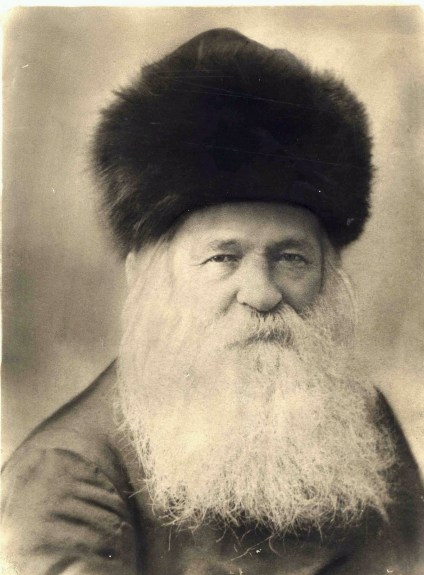
One of my mentors was Rav Baruch Abaranok ז’ל. In the early days, he was in New Zealand at the Dexton home for orphans. At other stages he was a grocer and a מוכר ספרים. Eventually he came to Melbourne, where he became the מרא דאתרא of Mizrachi Shule. I used to try to visit him on Sundays, bringing my children Talya and then Tzvi Yehuda with me. My visits coincided with the days when I stopped going to Mizrachi for reasons I won’t go into. If I didn’t visit Rav Abaranok regularly, he would express surprise and I felt bad.

When he got quite ill, I went rarely. I know he couldn’t understand it, but I couldn’t tell him; in fact, I coudn’t tell anyone. I was consciously trying to stop myself getting too close because I feared the emotional chasm that would materialise should he leave this world due to ill-health. This was a selfish motive; a display of weakness on my behalf. I don’t expect anyone to understand or accept what I did, but that’s what happened and why.

When we were married, I learned that my father-in-law had been a Talmid of Rav Abaranok in New Zealand, and they knew each other well. One story my father-in-law related was that in his grocery store, Rav Abaranok had a set of scales. When he sold, say, some sugar he weighed the sugar with the bag, and then weighed the bag separately. This, of course, is צדק צדק תרדוף … Rav Abaranok, as per Torah law, did not want to charge for any extra weight derived from the bag.

His honesty and integrity were not limited to the grocery store. All who knew him readily testified to his great morality and ethical virtue. I recall that when Talya was born, he came to our door with a gift. I had never experienced a Rabbi coming to my door in this way, and giving a gift. When Tzvi Yehuda had his Bris, Rav Abaranok was the Sandek. He, of course, tried every which way to give this honour to someone else. Again, I was stunned when he brought a gift of a Hebrew/English set of Mishnayos. On Yossi’s Bris, he presented a beautiful Mishna Brura, as authored by his teacher, the Chafetz Chaim. Rav Abaranok was the Rabbinic Posek for Mizrachi Kashrus, the precursor to Kosher Australia. Only someone of his integrity was acceptable to most.

These days, I am accustomed to seeing a different phenomenon. Some Rabbi cum Mashgiach comes into a food establishment from time to time to check the kosher bona fides. After the regulatory check, he sits down, and then waits, departing with a stack of food for his family! Something isn’t quite right. Yes, I know, he has an account …

As they say,

חבל על דאבדין ולא משתכחין

The truth will come out

Various sprinklings of disinformation, sock puppeting and outright lies find their way across the internet about the court case where two individuals from the governing “board” of Yesodei Hatorah College (YHT), took Elwood Shule to court because they didn’t like the Arbitrators ruling . The Arbitrator was an eminent Judge and QC of the highest rank who ruled against YHT and ordered it to pay Elwood’s costs. That’s not to cast aspersions on the School itself and its educators, who I understand do a sterling job, especially for children who have challenging special needs. There is definitely a place in our community for an American style Aguda school.

Ironically, it was those two members of their “board” who insisted that all matters be kept secret. Elwood never entertained such secrecy but reluctantly had to sign on in order for Arbitration to proceed. We have had, and continue to have nothing to hide. Make no mistake: Elwood will not only survive this, but they will become a shining example to other communities through innovative programs that enfranchise those elements of the community who are the children and grandchildren and great-grandchildren of the fiercely Zionist Holocaust survivors who paid for and built every brick of the Shule.

In good time, with Hashem’s blessing, the real story about these two interlocutors will come out, and hopefully they will donate their money to the School and not lining lawyer’s pockets. We would be happy if, as per the Arbitrator’s ruling, the College goes from strength to strength in their eventual own premises and Elwood Shule is able to carry out its ambitious renaissance program, unencumbered and designed for its own membership.

Watch this space when the dust settles. In the meanwhile, just don’t believe everything that you read.

Disclaimer: I am a board member and long-term member of Elwood Shule. This post, however, was not approved of by the Board and is not to be seen as representing anything but my own private opinion.

Kashrus Agendas

One of my earlier posts was mentioned in my old classmate’s now ubiquitous posts on kashrus. There is a constant refrain to these posts and unless I am not accurately reading between the lines, the theme is:

  • the Rabbis in Melbourne make oodles of money from Kashrus
  • the organisations in Melbourne make oodles of money from Kashrus
  • the standards of Kashrus in Melbourne are too extreme and designed to support a monopoly and those standards cost us money and are unnecessary anyway
  • some kosher good suppliers are making a fortune from profiteering on kashrus.

Enter the proverbial iconoclast, clad in fire-proof armour:

  • I will assume standards of kashrus which are different
  • I will market my standards incessantly across the internet and elsewhere
  • My motive is to bring the price of Kosher food down because I believe (anecdotally) that there are people who eat Treyf because they can’t afford the price of Kosher goods (meat?) that have assumed an OU-like standard
  • My finances and business dealings with partners on these matters are none of anyone’s business
  • My financial books are closed
  • I am answerable to nobody but Hashem
  • London bridge is falling down.

Assuming the motives are earnest and with honourable intent, the line of argument used is rather straw man like. Yes, we would like to see all Kashrus under a central body. Yes, we like to see a collegiate Rabbinate and not isolated breakaways running their own kashrus supervisions/business. Yes, we would like to see the financial aspects of Kashrus provision (where relevant) under the financial supervision of a communal lay body. Yes, we would like to see Rabbis and Chemists and Mashgichim paid properly for their professional hard work. Yes, we would like to see shysters purporting to offer a kashrus service outed.

I assume my erstwhile colleague is serious about his concerns about the price of chickens and more, so I suggest that he invite Rabbis and owners to an independent Dayan. I’d recommend R’ Hershel Schachter.

Vacillating on the internet is okay for musicians like me, but I’d suggest it isn’t a productive path for a Rabbi attempting to convince his colleagues through earnest debate. Some would say it’s a populist agenda like the socialists who put up “Viva La Revolution posters” near my office and all around RMIT. I don’t think they achieve much thereby.

Drinking on Purim

Rav Kook gave the following Dvar Torah in his Siddur, עולת ראי’’ה  :

The Talmud in Megillah 12a states that the near destruction of the Jews in the time of Ahasuerus was a punishment for participating in the royal banquet and bowing down to the Persian idols. What led them to perform these disloyal acts?

The Jews of that era thought that the root cause of anti-Semitism was due to xenophobic hatred of their distinct culture and religion. As Haman explained his rationale for destroying them:

“There is a certain people scattered and dispersed among the peoples in all the provinces of your kingdom. Their laws are different from those of every other people; neither do they keep the king’s laws.” (Esther 3:8)

In order to overcome this hatred, the Jews decided it would be prudent to adopt the customs of their idolatrous neighbors. They demonstrated their allegiance as loyal Persian subjects by attending the royal banquet and bowing down to the Persian idols.

However, the Jews soon discovered that their efforts were futile. They were dismayed to learn of Haman’s plot to annihilate them, despite their best attempts at integrating into the local culture.

Accepting the Torah Again

With the realization that assimilation was not the answer, and that their only true protection from enemies is God’s providence, the Jewish people reaffirmed their commitment to keep the Torah and its laws.

“‘They confirmed and took upon themselves’ (Esther 9:27) — they confirmed what they had accepted long before” (Shabbat 88a).

The Talmud teaches that the renewed commitment to Torah at Shushan complemented and completed the original acceptance of Torah at Sinai. What was missing at Sinai? The dramatic revelation at Mount Sinai contained an element of coercion. Alone and helpless in the desert, the Jewish people could hardly refuse. The Midrash portrays this limited free choice with the threat of burial beneath the mountain, had they refused to accept the Torah. In the days of Ahasuerus, however, they voluntarily accepted the Torah, in a spirit of love and pure free will, thus completing the acceptance of Torah at Sinai.

Effusion of Good Will

This appears to be the explanation for the unusual rabbinic requirement to become inebriated on Purim (Megilah 7b). It is ordinarily forbidden to become drunk, since without the intellect to guide us, our uncontrolled desires may turn to immoral and destructive acts.

But on Purim, the entire Jewish people was blessed with an outburst of good will to accept the Torah. On this special day, every Jew who respects the Torah finds within himself a sincere yearning to embrace the Torah and its ways. For this reason, we demonstrate on Purim that even when intoxicated, we do not stray from the path of Torah, since our inner desires are naturally predisposed to goodness and closeness to God. Even in a drunken state, we are confident that we will not be shamed or humiliated with the exposure of our innermost desires. As we say in the “Shoshanat Ya’akov” prayer on Purim,

“To make known: that all who place their hope in You will not be shamed; and all who take refuge in You will never be humiliated.”

We can ask a few questions here. It is understandable that drink and merriment caused the Jews of that time to try to become more like the Nochrim of that generation. We understand this. That attitude, or mistaken belief, was at the root cause of the enlightenment in Germany and elsewhere. Jews thought that they could behave like Nochrim in the street, and like Yidden at home. They falsely relived what the Jews of Persia already found out. A Jew is a Jew is a Jew. You cannot escape from that. Your pin tele Yid will shine somewhere, sometime. There will be a descendant of Amalek who will resent that countenance. That descendant will threaten your physical and/or spiritual existence.

What is the response? One response is that of extremes. Chassidim have decided that they will adopt measures which go beyond Halacha. Halacha does not mandate that Jews  are forbidden to wear the same style clothes as non-Jews. A male Jew fulfils a positive command if he wears Tzitzis, and according to some Acharonim, fulfils a Rabbinic command if he wears a Yarmulke. Both males and females should guard the laws of Tzniyus in their attire (and demeanour). Some Chassidim, however, don’t consider this enough. They would like to look “like Jews” (as in a Uniform) in the street. This is an extreme reaction in the same vein as those who take the opposite extreme and dress to look specifically like Nochrim.

What does drinking achieve? Far be it from me to claim that I don’t know. Drinking is a poisoned chalice. It can be liberating, in that it removes inhibition. It can be liberating, in that it unburdens one’s stress and worries. It is an artificial time-bound expediency. How much does one drink? Unlike all other Mitzvos, we are specifically not given an amount. Why? Is it a Reviis, is it ten Reviis? It is neither. The amount one drinks is subjective. It is precisely the amount that leaves a person free to the extent that they are unstressed by the fact that they are not troubled by the concept of a blessed Haman. How can a person not be troubled by that? Surely, the thought of God looking favourably upon the Hamans of this world is distressing in the extreme?

That depends on where one’s feet are. If one is sober, one’s feet are planted in this Earth at this time, in the Golus leading to Geula state that we are in. Inebriated, one is able to rise above that sunken reality and levitate, albeit for only a short period, into a Utopian reality where וראו כל עמי הארץ כי שם השם נקרא עליך … that even the Nochrim will see that God’s name is inscribed on our foreheads.

How though do we understand the idea that we can confuse Mordechai as being cursed? My understanding of this is that it is only in our sober state that we mistakenly only see our perfection, only occasionally focussing on those cursed areas of our free will which cause us to stray off the Holy path. We know only too well, that once a person has their veneer lifted, when they have had a few shots, they often become very willing to introspect and describe their failings and indeed seek to consider them afresh.

I feel that this is a meaning of עד דלא ידע in the context. But, like everything in our world, שם שמברכים על הטוב, כך מברכים על הרע, in the same way that one can bless over good things, one blesses over bad things. Alcohol can also be abused. If a person is already in a state where they do not appreciate the difference between a blessed Mordechai and a cursed Mordechai, because they have diluted Mordechai, or they already don’t understand the difference between a cursed Haman or a blessed Haman, then that person will gain nothing by drinking the Alcohol except a headache and an unwanted expectoration. Alas, these types of people need to have a Purim party, but only when they understand the Purim in the party. If there is no Purim, it’s just another party; a Goyishe party. ודו’’ק

Mad Chumros for Purim

Saw this one over at Daas Torah. It’s not a Purim joke. Some crazies have suggested cleaning out ears before hearing the Megila so that you “catch every word”. Perhaps they will advertise cut-rate GPs or Ear, Nose and Throat Surgeons, who will syringe the embedded wax for those who are Machmir for the opinion of the Chazon Ish.

I'm afraid this is real
Technique approved by Badatz Shochtim

What’s next? The Hungarian decreeing that one should only listen to the Megilla this way, because חדש אסור מן התורה and מנהג אבותינו בידינו?

and our conservative types suggesting that it can be done remotely via a live podcast

But wait, there is more. I’m going to suggest to these wise litvaks (is that an oxymoron?) that immediately after the megilla they replenish their wax supply so that חס ושלום no distant לשון הרע find its way into the canals. The Poskim have ruled that the following product may be used without a hechsher

\
Not Kosher Certified

For two reasons:

  1. It’s not ראוי לאכילת כלב
  2. It’s נותן טעם לפגם

However, if there is a חשש that the לשון הרע is fresh, and not בן יומו, it is best to be Machmir.

On Erev Pesach, one should be מבער the wax or sell it to a Ben Noach. Those who want to be מחמיר should either

  1. Use a dropper, and insert a רביעית of kerosine into the ear canal (be careful not to do this near a flame), or
  2. to be safe, insert (micro-organism free) boiling water, that is יד סולדת according to all opinions into the ear canal.

Some entrepreneurial Avreichim are working with the company to develop a Kitniyos free, Glatt (gelatine free) Vegan alternative with a Hechsher for Pesach from a number of reputable Authorities.

Repulsive Mormons at it again

See this story, reproduced below.

Daniel Pearl, the Jewish Wall Street Journal reporter kidnapped and beheaded by terrorists in Pakistan in 2002, has been baptized posthumously at a Mormon temple in Idaho, the Boston Globe reported on Wednesday.

Pearl’s Mormon baptism is one of several reports of prominent, deceased Jews being subjected to the Mormon ritual. In recent months, Anne Frank, Simon Wiesenthal, and parents of Holocaust survivor and Nobel Prize winner Elie Wiesel were all the targets of proxy baptisms.

The Mormon tradition of baptizing deceased Jews and those of other religions is meant to give them access to salvation. But Pearl’s parents are now joining the chorus of criticism against the practice, telling the Boston Globe that the report of the baptism was “disturbing news.”

“To them we say: We appreciate your good intentions but rest assured that Danny’s soul was redeemed through the life that he lived and the values that he upheld,” the Pearls wrote in an email to the newspaper. “He lived as a proud Jew, died as a proud Jew and is currently facing his creator as a Jew, blessed, accepted and redeemed. For the record, let it be clear: Danny did not choose to be baptized, nor did his family consent to this uncalled-for ritual.”

Earlier this month, Elie Wiesel blasted U.S. Republican presidential candidate Mitt Romney for staying mum on the posthumous baptism of Wiesenthal. The Mormon church had issued an apology the previous day.

The posthumous baptisms were performed in Mormon churches in Utah, Arizona and Idaho, according to the Simon Wiesenthal Center, a Jewish human rights organization named after the man who hunted down more than 1,000 Nazi war criminals including Adolf Eichmann in the years following the Holocaust.

In a televised interview with MSNBC, Wiesel, a Holocaust survivor who went on to become a prolific author and Nobel laureate, said of Romney, “How come that he hasn’t spoken up after all? I’m sure he’s not involved in that. But nevertheless, the moment he heard about this, he should have spoken up, because he is running for the presidency of the United States, which means it’s too serious of an issue for him not to speak up,” he added.

Wiesel said he was disgusted when he heard of the conversions, saying, “I’m a Jew. I was born a Jew and I live as a Jew … That they should do it to me? Then of course they must have done it to my parents, who were killed in Auschwitz … It’s unforgivable.”

The Church of Jesus Christ of Latter Day Saints, in its written apology, suggested that the action was the work of one member whom they said has since been disciplined.

“We sincerely regret that the actions of an individual member of the church led to the inappropriate submission of these names,” church spokesman Michael Purdy said in a statement emailed to Reuters. “The policy of the church is that members can request these baptisms only for their own ancestors. Proxy baptisms of Holocaust victims are strictly prohibited.”

Wiesenthal’s mother Rosa died at the Belzec concentration camp in Poland in 1942. His father, Asher, died during the First World War.

The apology, said Rabbi Abraham Cooper of the Simon Wiesenthal Center, will not fix things.

“A heartfelt apology is certainly appropriate, but it rings hollow if it keeps happening again and again,” Cooper told Reuters.

Pearl was killed in Karachi, Pakistan on Feb. 1, 2002. His widow, Marianne, is strongly opposed to the baptism. “It’s a lack of respect for Danny and a lack of respect for his parents,” she said.

Daniel Pearl הי’’ד

Revulsive antipathy to the mormons

I object when someone approaches me and suggests

you need to be saved

I object when someone approaches me and suggests that my grandparents and great grandparents right up to Aaron the Cohen Gadol,

all need to be saved

I object when someone feels the need to attempt to convert a Jew to their belief system, either in this world or posthumously.

One of my colleagues at work likes to drop in almost each day to discuss his bible reading. He is what you’d call an Erliche Xtian. The problem is that it’s not simply about his bible reading. Subliminally, he feels that somewhere along the line he might be able to interest me in his parroted interpretations.

Yes, I could say “live and let live” in the way that Rabbi Levi Brackman suggested in this article. I have been too nice; that’s why he still comes. From now on, I will put a stop to it, in very genial terms, but he will know exactly why.

I reject Brackman’s view in the context of that article, in the strongest possible terms. I cannot accept that Brackman wants us to turn a blind eye to their shenanigans simply because the souls they seek, are in another world.

I agree with live and let live. My colleague can both

  1. go on practicing his xtian beliefs and wag his tongue in tongues
  2. try to discuss his ideas with me

But, and this is my limit, if I recommend him that I do not wish to discuss his beliefs and I do not want him to approach me anymore in this regard, then he must desist—that is also live and let live.

The Mormons are a rather odd Xtian cultic sect. They have great power and are expanding. They are rejected as lunatics by the mainstream Xtian Church. Mormons love genealogy. They love family trees because they can examine your family tree and then conduct services to baptise your relatives after they have passed away. Indeed, here is an interesting Halachic question: is one permitted to make their family tree accessible on the internet to anybody, given that Mormons may use this and perform idolatrous practices (at least D’Rabbonon) because of the information that you passively allow them to see. I will ask R’ Schachter this question next time I speak with him.

Rabbi Levi Brackman is entitled to his opinion, however, I reject it in the strongest terms. Every Jewish soul is precious. They are precious both in this life time and in the world to come. Some souls, such as those belonging to those who were murdered in the Holocaust and other anti-semitic events through our history, are special: they are Kedoshim. Whether the souls are Kedoshim, or just the normal variety like you and I, it is offensive in the extreme for any religion to leech onto their souls, so to speak, and attempt to involve those souls in a “religious” service which converts them to Mormonism (against their will).

The symbolism of such conversion post death, is enormous, when and if Jews remain silent about it, or adopt the Brackman approach of turning his right cheek and exclaiming “live and let live”.

Yes, it’s about “live and let live”. That dictum demands that they leave people alone, both in life and in death.

I agree with the calls to Mitt Romney (a card carrying Mormon) to disavow this protest and to suggest that they leave Holy Jewish Souls out of their rituals.

How dare they attempt to touch the soul of Anne Frank, or any other Kodosh?

Saying Tehillim for the sick

It is proper and laudable when concerned brothers and sisters pray for those who are dangerously ill. We say private prayers in the Amida, make a Mishebeyrach, say an extra chapter of Tehillim, sometimes privately, and other times as a collective group.

Recently, several prominent Rabbis continue to be dangerously ill. These include: R’ Ya’akov Yoseph, R’ Yisroel Belsky, and R’ Yosef Shalom Elyashiv. Rav Aviner recently addressed a question about R’ Elyashiv, who is 100+, and as I understand, on a ventilator and in need of רחמי שמים.

R Ya'akov Yosef

The question was:

Should we pray for Ha-Rav Yosef Shalom Elyashiv to heal from his illness, or – as one Rabbi suggested – should we pray for Hashem to take his soul on High since he is suffering so much?

This is a very bold question to ask (I think that most people who ask such questions either are on an exceedingly high level or are asking להלכה and not למעשה.

Rav Aviner’s answer was:

It is correct that the Ran writes in Nedarim (40a d.h. Ain. And see Baba Metzia 84) that if a person is suffering terribly and seems to have no hope of recovery, it is permissible to pray for him to die. The source for this idea is the Gemara at the end of Ketubot (104a), where it is told that Rebbe Yehudah HaNasi was suffering terribly; his maidservant saw and prayed that he should die. Even though she was not a Torah scholar, but a maidservant, the Sages greatly respected her and the Ran rules according to her example. In Shut Tzitz Eliezer (vol. 5 Ramat Rachel #5, 7:49 Kuntres Even Yaakov chap. 13, 9:47), it is written that this applies only if one is davening for the benefit of the sick person who is suffering a fatal illness, and not in order to lighten our own burden. It is clear that our intent in this case it is to lighten the burden on Ha-Rav Elyashiv.
The Ran writes that it is permissible to pray for a person’s end in such a situation, but he does not write that one is obligated to do so. After all, the Gemara itself relates that while the maidservant prayed that Rebbe should die, the Sages prayed that he should not die. In the book “Midbar Shur,” in his eulogy for Ha-Rav Yitzchak Elchanan (pp. 332-336), Maran Ha-Rav Kook asks: Why did the Sages pray that he should not die? Their view is difficult to understand. After all, Rebbe Yehudah Ha-Nasi was bed-ridden, suffering, could not teach or give halachic rulings, and was seemingly of no benefit to this world. If he would ascend on High, he would continue to teach Torah there. So why didn’t they pray for him to die? Maran Ha-Rav Kook explains that the influence of a great Torah scholar is not only through his teaching, halachic rulings, etc., but also in the presence of his holy soul in this world. The fact that his soul is located in this world brings blessing, even when he is unable to provide practical benefit, is closed in a room and cannot converse with others. This is similar to the Vilna Gaon, who for many years was closed in a room learning Torah. This world with Rebbe Yehudah Ha-Nasi is not the same as a world without Rebbe Yehudah Ha-Nasi.
When Rabbenu Ha-Rav Tzvi Yehudah taught us this idea, he would say that Maran Ha-Rav Kook also suffered greatly, and he told him: Each and every moment that Abba is in this world, despite the suffering, he brings it light. And our Rabbenu would relate this with tears in his eyes.
If so, the same applies in our case. This world with the Ha-Tzadik, Ha-Gaon, Ha-Gadol, Ha-Rav Elyashiv is not the same as a world without him, even though he is currently unable to teach, give rulings, etc. The Rabbis who called on us to pray for Ha-Rav Elyashiv’s healing are therefore correct, and we hope that he will truly be healed and will once again actively bring the blessing of Torah and holiness to this world.
May Hashem send him a speedy and complete recovery.

R’ Hershel Schachter recently discussed the question of davening for a Refuah Shelema for someone who is close to being a גוסס—basically on their deathbed with no hope of survival, short of a miracle. R’ Schachter notes that the Mishna in Brachos is clear that one is forbidden to pray for a revealed miracle. As an example, he describes a man rushing home from work after being told that there is a major fire burning around his house. While driving, the man prays that his house is not one of those engulfed by flames. R’ Schachter notes that such a תפלה is ridiculous. Either the house is, God forbid, in flames or it is not in flames. Asking that it not be in flames is tantamount to praying for an overt miracle to transform a readily observable occurence.

R' Shmuel Rozovsky ז'ל

R’ Schachter then to retells a story that he experienced when visiting the Ponovitzer Yeshiva in B’nei Brak, during the time that Reb Chatzkel Levenstein ז’ל was the Mashgiach. Apparently, someone was very sick due to a certain cancer, רחמנא לצלן, and there was a request that everyone say Tehillim for a Refuah Shelema. Reb Chatzkel, who was sitting in Mizrach, refused and exclaimed that it was forbidden. The mood was incredulous; who would refuse such a request? At that time, the famed Rosh Yeshivah, R’ Shmuel Rozovsky ז’ל was seen leaning over to Reb Chatzkel and talking to him. Tehillim commenced. R’ Schachter was to subsequently learn that R’ Shmuel had explained to R’ Chatzkel that there were people who were successfully treated for the particular cancer afflicting the person for whom Tehillim had been requested, and it wasn’t one where there was “no hope” because the doctors had no more new ideas or one where the patient was effectively in palliative care. Had it been someone in palliative care, R’ Chatzkel would have been right.

Importantly, R’ Schachter explains that it is still proper to say Tehillim. However, one does not ask for a רפואה שלמה. Rather, one should ask for רחמי שמים, mercy from Heaven.

In reflecting on the question to R’ Aviner, in light of R’ Schachter’s insight, I think it’s most appropriate, when someone is effectively in a palliative state, to ask for רחמי שמים and not assume that we should suggest to Hashem how that רחמנות should be manifest (e.g. by death חס ושלום).

Let’s hope that we don’t need to say Tehillim for anyone because we have merited the realisation of the pasuk of אני ה’ רופאיך, “I am God your Healer”.

Gender segregation in psychological or psychiatric treatment

The question is not a new one. If one needs to undergo an extended and deep treatment regime, where there is much fundamental discussion about one’s life circumstances and all the confidential issues surrounding such, is it permitted to see a therapist of the opposite gender.

Some poskim will not permit any gender if the medical provider is an “apikorus” or not religiously inclined, as they fear that the treatment may well eventually involve the religious patient being influenced to unburden themselves from the yoke of Torah and Mitzvos. I have witnessed this therapy being applied to another individual. Such therapies sometimes assume that if a patient’s life circumstances have brought them into a spiralling and uncontrolled level of descent, that one must rebuild afresh and cast away all and every vestige of the former life to avoid these. This can mean ceasing to adhere to a religion-based lifestyle and/or cutting oneself off from the familial environment.

On the matter of gender separation, other Poskim contend that since there is a tendency, and indeed a need, to unload all of one’s deepest secrets and intimate feelings, it is best not to do so with a medical therapist of the opposite gender, as this may place both people in a position where they are sexually vulnerable. Such an opinion was recently published by R’ Yitzchak Zilbershtein, an expert in Halachic Medical Ethics,

R' Zilbershtein

and the Posek for the Ma’aynei Hayeshua hospital in Bnei Brak. R’ Zilbershtein is a son-in-law of R’ Elyashiv, grandson of the saintly R’ Aryeh Levin ז’ל, and brother-in-law of the famed R’ Chaim Kanievsky.

The ruling was countersigned by eminent Poskim, including R’ Ovadya Yosef, R’ Yisrael Belski, R’ Vosner and R’ Karelitz.  It concludes with the observation that if there is a clinical need to engage someone of the opposite gender because of their expertise, one should first ask the Rabbi of the Hospital. Presumably, the Rabbi of the hospital will be in a position to reflect on the medical therapist in question and whether there is a risk of a developing intimacy versus the immediate need of the patient.

It can be expected that many will howl with derision about such a Psak, as it suggests that there is professional compromise at play. On the other hand, it can also be viewed as a sensible suggestion because it engenders הרחקה, a distance between situations that may be likely to involve deep intimacy of thought. At the end of the day, it would, in my opinion, be wrong to compromise on the efficacy of treatment and possible cure on account of gender issues. I am presupposing that the “best” person for some treatment, or even the person who has a record of great success might be of the opposite gender.

החכם עיניו בראשו

“The wise man has eyes in their head”, and acts accordingly. For the masses, especially in B’nei Brak where gender separation is extensive and where seeking  a psychologist or psychiatrist (and not a Rabbi) to deal with one’s innate problems is rarer, this is a Psak that will hopefully encourage people to seek a medically qualified therapist.

Having recently read a book by a religious psychologist whose domain of expertise is Child Molestation, it was interesting to note that in most cases it was he who discovered that molestation had occurred. Parents usually have no idea. This is especially so in a frum community where feelings are taboo and extreme conformance is a way of life. It was only because parents sought professional help for “strange behaviour” that he discovered the tell-tale signs of molestation. Let’s hope that this Psak encourages the religious community to also deal with the myriad of psychological ailments and propensities that our generation is facing by referring these to experts.

The connection between Chabad and the establishment of Adass Israel in Melbourne

This is a great little piece of research by Rabbi Dr Aryeh Solomon of Sydney. Hat tip to Moshe. Enjoy. If you can’t read it below click here

Giving a year of one’s life

R’ Yosef Shalom Elyashiv, may he have a רפואה שלמה, is still critically ill, although reports today suggest that he has emerged from a medically induced coma and is gesturing with his hands and eyes. R’ Elyashiv is a widely acclaimed Posek who is over 100 years of age. I have asked two Shaylos to him in the past. These were over 20 years ago and before he was named or considered the “Posek HaDor”.

Recently, various Charedi press outlets have reported that a young man allegedly bequeathed one year of his life to R’ Elyashiv. Symbolically, this is a nice gesture. However, it troubles me on a few fronts.

It is reported that the young man went to speak about his proposal to a range of Poskim and Rabonim and that they advised the young man to speak to his family first. I gather that he sought to find out if it was “possible” to do so, from a halachic perspective.

If it is indeed possible to do so, which is what is implied in the press, then I’d be interested to be educated as to which section of Shulchan Aruch discusses this phenomenon. In particular, where does it suggest in our Mesora/tradition that we have the right to dispense with a year of our lives, even for a so-called noble cause? It also troubles me that the young man didn’t discuss this proposition with his own family before he asked permission from the Poskim. I’d imagine that the young man checks with his wife (and not his Posek) about the details of the bread and milk order. Why wouldn’t you discuss this minor matter with her first, as well?

Another aspect troubles me. It seems to imply that we have the ability, as opposed to the permission, to enact such an extension of life. How many people have had, and continue to have, parents and children who are critically ill and who wouldn’t do the same thing if it was indeed possible?

What about 20 people donating a year each. Does that mean the person will live another 20 years?

Are we going to see jewbay sales where people auction a year of their lives to the lucky winner, together with a “Buy it now” clause?

If it wasn’t so sad, it would be funny. I see this as the natural outgrowth of the unreasonable  and non halachic veneration accorded to human beings, albeit great human beings. Ironically, this time it isn’t occurring amongst Chassidim, who have generally owned the mortgage on this level of veneration. Rather, it is coming from the newer Misnagdic forms of veneration, where “the Rebbe” is replaced by a “Posek HaDor” or “Gadol HaDor” or “Manhig HaDor” or “Zekan Roshei HaYeshivos” et al.

R' Elyashiv, שליט’’א

Redressing the Charedi imbalance

I received a link to a video which explicates the positive acts performed by Charedim (hat tip Moshe)

It’s important to not fall into the trap that sees all or even most Charedim as lazy parasites who spit on little girls. We all know that it only takes one group of extremists to tar many others. In Melbourne, although our own Adass community has many more extreme Neturei Karta, Toldos Aharon extremists than 30 years ago, one has to say that there are exemplary icons who are more visible and who also contribute to a positive image for Charedim. Icons like Izzy Herzog ז’ל come to mind immediately. I know from many people, including my Uncle, that Izzy was magnanimous with his Chesed. He didn’t check to see if the recipient was ‘truly‘ frum before he interacted with them in exactly the same way that he would react with members of his own community. The Charedi volunteers from Hatzola are an incredible group of people. I know some of them personally after having performed at their children’s weddings. They are Mentchen in the true sense of the word and still stand poles apart from the growing extremist fringe that questions every Eruv string and Animal Sinew, but won’t bother saying “good morning” if they see you in the street because you might infect them. So while we should be positive and proud of the special Chesed acts performed in our own Charedi community, we should not be afraid to voice our opinions.

Last night, in a matter of ten minutes, two young men came to our house. One was a Vizhnitzer Sofer Stam, who needed help with his children, and the other was the son of the Stropkova Rebbe who was collecting for a Kollel for “off the derech” types. I could have just pulled out my wallet and given them something, but I was in somewhat of a fiesty mood. After ascertaining that they weren’t Satmar, I asked them about their attitudes to the Sikrikim. Both condemned them as a Chillul Hashem. I suggested to the Sofer that he find a new gig so that he doesn’t have to feel so bad as to have to knock on people’s doors for a crust. I felt sorry for him. What can he do? A Melamed? He’s a prisoner of his system. Mind you, he had “married off” three kids, and looked a lot younger than me (no smart comments please).

The second guy said that his father the Stropkova davka lived in Kiryat Moshe because he wanted to live amongst a range of “normal” people. I asked him why a Kollel was appropriate for “shvacher” people? Perhaps they should be taught a trade. I asked him what intervention was in place for people like this when they were in Cheder. At any rate, I gave them both. I felt I did the right thing. If you travel out to Australia, I’ll tell you what I think of the extremists who are associated with your dress code.

Who runs the Edah Charedis?

The news out of Israel is that the Av Beis Din of the Edah, together with some of his fellow Dayanim issued a letter requesting that their community daven for a Refuah Shelema for the critically ill R’ Elyashiv. R’ Elyashiv is described by non Chassidic Ashkenazim as the “Posek HaDor”. However, R’ Elyashiv is seen by the Neturei Karta and their ilk as tainted on account of his previous employment and relationship with the Rabanut.

The Beis Din of the Edah Charedis took the sensible view that when a man of this stature and learning is critically ill, one should cast aside any aspersions and genuinely pray for his recovery. The “Askanim” or Committee of the Edah, like Askanim in many groups have their own agenda. They parade and market allegiance to “Daas Torah” but they pick and choose when they listen to their own Daas Torah. This is a very dangerous situation and further marginalises the importance of Rabbis in our world.

Daas Torah is a new invention: an outgrowth of the chassidification of Jewry post Holocaust. Ironically, Daas Torah isn’t under threat from those who don’t subscribe to that weltanshaung. Rather, it is being undermined by the very people who created and now misuse it like a political football to further their own often sinister agendas.

Homeopathy and Alternative Medicine against Halacha?

The Torah tells us Vayikra (19:26)

לא תנחשו ולא תעוננו

which means that a Jew is not permitted to participate in (loosely translated) omens and superstitions. We normally associate that with things like the red “kaballah” string which some Poskim rule, based on a Tosefta, is forbidden to be worn as a Torah prohibition of the above.

Perhaps more interestingly, poskim such as R’ Hershel Schachter contend that not following evidence-based (scientific) medicinal practices and treatments also contravenes this biblical command. They claim this is why the Rambam (and Magen Avraham and others) omitted the prohibition of easting fish and meat all together. If Science (peer reviewed evidence based research) indicates that something does not pose a health danger, then it is prohibited to adopt a former practice that relies on faulty medicine of the time.

It could be argued that homeopathy and its cognate areas, elements of whose treatments have not been scientifically evaluated for efficacy, pose a similar Torah prohibition. That is not to imply that all alternate medicine (now also known as complementary medicine) falls under this prohibitive rubric. Rather, unless there is a known, scientific, evidence-based peer-reviewed study which shows that a homeopathic or alternate approach is indicated as a complementary approach to a medical condition, it could be cogently argued that it is forbidden to use these alternate approaches.

RMIT has a research group in Complementary Medicine. I don’t think Halacha has any problem with that, nor would it have a problem with going to a regular doctor who is also well-read and skilled with alternative, evidence-based, scientifically-sound, complementary alternative approaches to medical conditions.

Marriageable age in Chabad

An interesting set of letters has appeared regarding the phenomenon of boys who seek to get married around the age of 23 or more. The gist of the letter is that this is not spiritually healthy, especially in our day where there are many forms of attraction. They state that if a person is as mature and ready at 20 as they will be at 23+ then they should not delay the process of seeking a partner until later. There are numerous ramifications. Time will tell if this advice is efficacious or established.

Beit Rafael Bikur Cholim

R’ Shimon Allen and his wife Adina are to be commended for this incredible gesture of Gemilas Chesed on behalf of the community. Shimon sits near me at Shule, and I know of many examples of his generosity. He would not want me to highlight it, however, I am doing so as an expression of הכרת הטוב—acknowledging good deeds.

Of course, it would be far better if there were no sick children and this facility was not needed. Unfortunately, the reality is otherwise.

A bikur cholim home is now available in North Melbourne to assist Jewish parents who have children receiving treatment at the Royal Children’s Hospital. Beit Rafael Bikur Cholim is a non profit organisation dedicated to easing the physical and emotional challenges endured by parents whilst their child is hospitalised.

Established in 2011, by Shimon and Adina Allen, Beit Rafael offers a quiet place where family members can relax and recover their emotions in a private setting, by providing accommodation, at no charge, directly across the road from the hospital.

A fully furnished and serviced, two bedroom apartment will be at your disposal to enable you to be close to your child, and will remove the need for you to commute back and forth to your home. A pantry stocked with kosher non perishables and a freezer containing kosher meals will be in the apartment.

The challenges of remaining with your hospitalised child during the week and over Shabbat and Yom Tov will be minimised.

Beit Rafael will be available to all members of the Jewish community, and parents will be welcome to stay at Beit Rafael for the duration of the child’s treatment, at any given day or time. When a child is hospitalised their greatest comfort is the presence of family.

It is suggested you enter the telephone number for Beit Rafael in to your telephone – emergencies do not give us warning.

Beit Rafael appreciates and respects your need for privacy and confidentiality is assured.

Please call the number below to verify availability and to arrange access to this apartment. You will be given the address and security code to enter the Beit Rafael apartment.

Telephone:  0421 408 522

On Shabbat  or Yom Tov please call:  0421 327 859

Shule to court controversy

It is difficult for mainstream Shules to survive in their earlier form.  A powerful method of attracting people back to Shule membership is to court iconoclasts and embellish them with a podium. A Melbourne Shule is seizing the moment, so to speak, as I understand they are sponsoring a visit from Rabbi Shmuley Boteach.

Rabbi Boteach is a controversial figure. Ostracised by Chabad, I haven’t  noticed him gaining traction with Modern Orthodox organisations. let alone right wing or ultra orthodox. He is visible amongst non-Jews and those outside the pale of traditional orthodoxy. I expect he is also motivated by a wish to influence Jews to become more devout as well as inspiring non-Jews to commit to the seven noachide laws. Is he the best man to do so? Boteach did himself no favours when he poorly debated Christopher Hitchens. That debate was embarrassing, to put it mildly.

Boteach described himself thus:

… then the Rebbe died and I had a major falling-out with the Chabad leadership because of my outreach to non-Jews. Ever since then, I have reconciled myself to the somewhat lonely status of being a Lubavitcher without a community. I compensated for my sense of isolation by becoming integrated into the mainstream Jewish community

It came then as little surprise when a senior figure in Chabad, Rabbi Dr Immanuel J. Schochet branded Boteach’s most recent book as heresy. R’ Schochet forbids the provision of a platform for Boteach to promote this book. R’ Schochet’s words are chosen in the context of the book. R’ Boteach, in his response to R’ Schochet, sought to popularise being banned by stating

We Jews are the people of the book, not the people who ban books.

This statement is shallow. There are Halachos about heresy. Books have been banned because they are deemed heretical. He can argue that his book is not heresy, but this “people of the book” line is something that might appeal more to Madonna and Michael Jackson. We are the people of the book even without including books that are deemed heretical. To be sure, R’ Schochet’s statement is an Halachic one. I do not see the category of “people of the book” influencing Halacha. Schochet chooses not to elaborate on his reasons, but I surmise that they be based on Rambam Hilchos Tshuva, 3:6-8

המורדים, ומחטיאי הרבים, והפורשין מדרכי צבור

Shmuley Boteach and Michael Jackson

Boteach expresses the view that he does not understand how Schochet could argue against missionary activity and at the same time choose not to discuss Boteach’s book in any detail.

Rabbi Schochet seems to have significantly changed his approach to Judaism and Christianity since his lectures under my auspices. Back then he orated openly on Jesus and the New Testament, rebutting missionary claims and engaging missionaries in public dialogue and exchange. There are hundreds of his tapes that attest to this fact.

R’ Schochet undoubtably considers it more difficult to engage in dialogue with missionaries and/or those who are ensnared by them precisely because of Boteach’s new book. Boteach admits as much himself quoting this review  [light editing from me]:

“Kosher J” is, after all, a book which Publisher’s Weekly — the platinum standard in book reviews — called an “informed and cogent primer on J. … a brave stab at re-evaluating J through an intensive look at the Xtian Testament and historical documents … and a well-researched analysis that will certainly reopen intrafaith and interfaith dialogue.”

R’ Schochet may or may not agree that it is “well-researched” but he too clearly feels that it will reopen intra and interfaith dialogue. Does Boteach expect us to be convinced that his book can’t be heretical because of the review by Publisher’s Weekly?

R’ Schochet’s son, R’ Yitzchak Schochet, is also a prominent Rabbi in the UK and has been considered a possible future Chief Rabbi of the Commonwealth. He had this to say about R’ Boteach

I question whether Rabbi Boteach has brought even one Jew involved in Christianity back to their roots through his debates, and suggest that it is little more than image and soundbite.

R’ Boteach reacted with:

Indeed, his father [R’ Schochet], who wrote this bizarre attack on me out of the blue calling me a heretic,

I don’t see anything in the letter that calls Boteach a heretic. Rather, R’ Schochet carefully crafted his words to refer to Boteach’s book as problematic.

Boteach has a liberal view of Apikorsus/Heresy in general. In the September 2000 issue of Nishma, Boteach stated in response to R’ Avi Weiss (who is considered a paragon of left wing modern orthodoxy, and who ordained the first female rabba)

I know that for Rabbi Weiss, even the willingness to be open to talking to apikorsim is a risk. But when the goal of the discussion is already a foregone conclusion, the conversation isn’t very risky.

Rabbi Boteach might not think it’s risky; others clearly do, and they do not feel an obligation to elaborate and give Boteach more airtime, as this would simply provide fuel for the fire.

Let’s be under absolutely no illusions here. R’ Boteach is not a Rabbi Slifkin. Rabbi Slifkin’s books were banned by people who couldn’t read English, let alone who had read Slifkin’s books. R’ Slifkin is an author of erudite and learned Jewish books based on Rishonim and Acharonim. Time will show that Rabbi Slifkin’s approach to documenting an orthodox perspective on Evolution eminently sound and commendable. I’m a fan of Rabbi Slifkin and his essays.

Boteach isn’t a Rabbi Kamenetsky either. Kamanetsky’s book “the Making of a Gadol” was unfairly banned and later modified because it was seen to embarrass R’ Aron Kotler ז’ל and other Lithuanian Rabbis look “too human”.

The audience for Boteach’s book, however, is mainly the non-Jewish world and perplexed Jewish fringe dwellers. Is the correct approach to attempt to re-educate our co-religionists that they should see themselves as derivatives of Judaism? They worship J, and see him as “above Judaism”. What will Boteach achieve through this passively aggressive attack on their well-seated belief system?  Will the world become happier and a pluralistic paragon of peace? Does Boteach think that he’s the first who realised that Saul of Tarsus was the man who fashioned what that religion is today?

I have a religious colleague at work who likes to regale me daily with his “inspiration”. I’m quite tired of it, to be honest. In the last week I asked him to come back to me with the historical record of when Shabbos became Sunday, who initiated this, and why. It has quieted him. I don’t see any value whatsoever in challenging his belief system (he thinks he can speak in tongues) and I don’t expect him to challenge mine.

The Rav, in his famous 1964 essay “Confrontation” was firmly opposed to theological disputation or cooperation with the Church, except when dialogue was limited to shared societal values such as feeding the poor, helping the sick etc and where Jews needed to be partners with all people in advancing such activities. His grandson, R’ Meir Soloveitchik put it thus:

The Rav’s opposition to communal, and organizational interfaith dialogue was partly predicated upon the prediction that in our search for common ground — a shared theological language — Jews and Christians might each sacrifice our insistence on the absolute and exclusive truth of our respective faiths, blurring the deep divide between our respective dogmas. In an essay titled “Confrontation,” Rabbi Soloveitchik argued that a community’s faith is an intimate, and often incommunicable affair. Furthermore, a faith by definition insists “that its system of dogmas, doctrines and values is best fitted for the attainment of the ultimate good.” In his essay, the Rav warned that sacrificing the exclusive nature of religious truth in the name of dialogue would help neither Jews nor Christians. Any “equalization of dogmatic certitudes, and waiving of eschatological claims, spell the end of the vibrant and great faith experiences of any religious community,” he wrote.

A left-wing organisation known as YCT—Yeshivat Chovevei Tora—a brainchild of R’ Avi Weiss, has over the years promoted a stance which sees Rabbi Soloveitchik’s ruling as no longer binding in our time. YCT planned to join the Rabbinic Council of America (RCA) but withdrew those plans when they realised they would not be acceptable to the RCA.  In a learned panel discussion on this topic, Rabbi Dr David Berger, one of the outstanding academics in this field, said:

Rabbi Soloveitchik worried that theological dialogue would create pressure to “trade favors pertaining to fundamental matters of faith, to reconcile ‘some’ differences.”  He argued against any Jewish interference in the faith of Christians both on grounds of principle and out of concern that this would create the framework for reciprocal expectations.  Now, the changes in Catholic attitudes detailed by Dr. Korn are real, welcome, and significant, but they do not undermine these concerns.  Quite the contrary.  The trajectory of dialogue to our own day has confirmed the validity of Rabbi Soloveitchik’s analysis to an almost stunning degree.

With this background clearly in mind, perhaps the Melbourne Shule that has now invited R’ Boteach to speak has also broken ranks with the Rav and the RCA and embraced the views of YCT. As noted above, R’ Boteach’s views are seen to be even more left-wing than YCT. It should make for a controversy that will occupy the Jewish News and further seek to redefine the relevance of Shules and methods for attracting and retaining membership.

The Nazi Flag in Melbourne

See this article in the Sun. I thought I had a pretty good grasp over who is who in Melbourne. I’ve never heard of Chayim Ben Ariel and had not seen the use of this Kabbalistic אלד which is meant to ward off the Ayin Hora and ostensibly stands for  אנא למדני דתך

Chayim Ben Ariel (pic from the Sun)

I haven’t heard of this person or his mate. Does anyone know who they are?

Light and Darkness II: Guest post from P. Hasofer

The following was posted as a comment to my earlier blog post on this topic by P. Hasofer. He hasn’t asked for a guest post, but I am posting it as it is a little long for a comment, and worth reading. Yes, I have little knowledge of Chassidus in general, including Chabad Chassidus. Allow me to bring to the table, a different perspective (similar to that of R’ Hershel Schachter  and no doubt from where he derived it) by R’ Chaim Volozhiner ז’ל (the successor and lead student of the Vilna Gaon) in his Nefesh Hachaim. See the words of the Nefesh Hachaim  here.

Dear R’ Isaac Balbin:

To understand what the Rebbe, Zechusoi yogen oleinu. is explaining here, please let me give you a short introduction with which will make things more understood, You have written in the past that you don’t have much knowledge in Chabad Chassidus, so this will hopefully help you understand this Inyan.

This idea is explained at length in Chabad Chassidus starting from the Alter Rebbes Tanya.

There are 3 general elements in our world. 1. Kedusha 2. Klipas noga 3. Sholosh Klipas Hatmeos:

Kedusha doesn’t really need to much explanation I hope, its basically anything holy, Torah and Mitzvos, Shabbos, Tefillin etc.

Klipas Noga, is the middle area, which includes everything mundane, anything that is kosher, or just simply not Kedusha, for example – all kosher foods etc, which can be elevated to Kedusha, by either using it Leshem Shomayim, or Making a brocho before eating the food, and having the intention to use the energy derived from the food, for Torah study or the keeping of Mitzvos.

Sholosh Klipos Hatmeos are all those things which are forbidden or Not Kosher, and cannot be elevated or used for Kedusha, or Lesham Shomayim, we are prohibited to have anything to do with them, and through pushing it away, that is its redemption and purpose. “Ibudo zehu tikuno”

The second level, Klipas Noga, is clearly not Kedusha at all, and can be used against Kedusha, or be elevated to the realm of Kedusha, it is therefore our mission to elevate the “nitzus” (holy spark) which is inside these creations, and bring them to the realm of Kedusha.

Now onto our subject, the transformation or effect that Kedusha – light can have on Klipa – darkness.

Lets separate this into 3 parts:

  1. The effect the light of Torah “Or Hashemesh” has on the darkness – “klipa” in the world that surrounds us.
  2. The effect Mitzvos “Or Haner” has on the darkness (Klipa).
  3. The effect a Baal Tshuvah has on the darkness (Klipa).

“Ki Ner Miztva VeTorah Or”

The effect of the light of the sun – Or Hashemesh on the darkness – it pushes away the darkness, when the sun comes up, it disperses the darkness. It does not transform the darkness into light, it merely pushes it away, and overpowers it, by its mere existence and nature.
On the other hand, the light of a candle is quite different by its mere nature, not only does it disperse the darkness, depending of course how big the candle is, but it has another advantage. As explained above, the sun light pushes away the darkness. The candle however not only pushes away the darkness, but it also transforms the wick and oil etc, into light, it transforms what is not light, into light.

So too, in our Discussion:

Torah is like the sunlight, it pushes away and disperses any darkness in reach, it pushes away the Darkness and Klipas around us, and inside us.
Mitzvos have the same effect, but with an additional advantage, Mitzvos do not only push away the darkness and klipa, but with its intense light it has the power to transform that which is not light – that which is not holy, the mundane, the Klipas Noga. It transforms the Physical objects and energy used in the fulfillment of the Mitzva into Light, into Kedusha. (it must be noted that Torah also transforms the persons energy used to study Torah, into Kedusha, but it is specifically the Mitzvas Talmud Torah which has that effect.)
When affecting or transforming the Darkness – the Klipas, the light can only have an effect on the darkness which has the capability to be transformed into light – into Kedusha. Just like the candle can only burn and transform into light those materials which are possible to burn and become light, the oil and wick etc. must be suitable to burn. Meaning: Torah and Mitzvos can only have an effect on Klipas noga, which has the ability, and is suitable to become Kedusha, one cannot elevate Sholosh Klipas Hatmeos into Kedusha.

A Baal Teshuva though, through their Teshuva (and each of us as well, with our own Aveiros, in which we are can be a Baal Teshuva in our own way) not only transforms the mundane, the Klipas Noga, but effects the Sholosh Klipas Hatmeos, they with the power of Teshuva, transforms their sins – the ultimate darkness and Klipa, into Kedusha, “zdonos nasu lo Kezochios”

To Summarize: there are 3 ways of effecting the darkness – Klipas.

Torah: Pushes away the darkness – Klipas, but only that which is possible to push away – Klipas Noga.

Mitzvos: Transforms the Klipas Noga, and elevates it into the realm of Kedusha.

A Baal Teshuva: Transforms even the lowest darkness – Sholosh Klipas Hatmeos into Kedusha.

Anecdotes and Stories of the survivors

I’ve always liked to hear and be regaled by stories and maysalach, especially when retold by or about the generation of holocaust survivors. I mentioned Mr Sperling ז’ל in a blog post when he passed away last year. Here is a Mr Sperling story. I’m sure readers have many stories to contribute. I’m happy to post them as guest posts or in the comments section.

Arriving after the war to the shores of Australia, Mr Sperling set about trying to make a buck, any which way. One of his early ventures centered around the role of a travelling salesman in rural areas, where his goods were shmattes purchased “on the cheap” from the many emerging tailors, knitters, and assorted purveyors of quality shmattes.

On one occasion he sold a sizeable number of “hoisen” (slacks) to a country shop. After returning to that same shop some months later, the shop owner expressed disquiet about the quality of the stock he had purchased on the previous visit.

“Mr Sperling, can you explain to me please why all those slacks you sold me had the zips on the backside instead of the front?”

In a flash, Mr Sperling responded:

“Oy, dat is der laytest fashion fun europe”

One more Simcha peeve

In a previous blog post, I mentioned four simcha peeves. Unfortunately, I was reminded of another one recently: the intrepid minyan seekers (sic). Consider the two possible scenarios:

  1. The Ba’alei Simcha remembered to insert a specific time in the seder hasimcha specifically devoted to the davening of Ma’ariv.
  2. The Ba’alei Simcha either forgot or had not intended to insert a specific time slot for davening.

In both case 1 and case 2, the Mentshlich thing to do is to quietly approach the Ba’alei Simcha (or you could even come to the Band Leader) and ask if there is a preferred time for davening Ma’ariv. If there is a time, the case is closed, that’s when you daven. Ask whether an announcement will be made, of course. What do you do if you are one of the people who leave Simchas early because you have a difficult Tosfos that you just have to rush home for, or perhaps you have a sick child at home etc? I suggest that you do not disturb the Simcha. That means, do not make a minyan if it means that you will not be in the hall while someone is saying a Dvar Torah or giving a Hakoras HaTov speech. Sacrifice your own dinner. Eat it quickly. See if you can find another nine people who have also finished eating. Explain that you have to leave early, as above, and see if they will join you in the foyer while the rest of the guests continue eating their Dinner (or Dessert). Do not do this during a dance bracket. Why should the dance floor suddenly become barren and decrease the Simchas Choson V’Kallo because you preferred to choose your own time for davening?

If the B’aal Simcha forgot, try and minimise their already frazzled state of mind, and suggest a neutral time, at your expense, and your cheshbon, during eating time (when you are normally saying Mishnayos Baal Peh). Don’t choose speeches or dancing! I know this seems obvious, but I’m so frustrated seeing the arguably selfish and insensitive herding of the “cattle” davka during a speech or dance bracket.

At one Simcha, I was so embarrassed, I wanted to hide under a rock. One fellow organised a minyan, during a father’s speech of Hakoras HaTov. Not only were tables empty, but you could hear the bellowing of the “Borchu es Hashem HaMevoroch” reverberating inside the hall during the comparative silence of the speech. In my mind, יצא שכרו בהפסדו, and it was bordering on a חילול ה.

In summary, if you see this type of thing happening, approach the organiser of the minyan and ask if they have considered proper manners in executing their minyan for davening.

Lighting up the darkness

It is a long-standing Chabad metaphor, repeated by the last Lubavitcher Rebbe, that his Chassidim need to be lamp lighters. One of their tasks is to create light in a dark world, so to speak. In advice allegedly also given to Binyamin Netanyahu, he had said

“even in the darkest hall, the light of a single candle can be seen from a great distance”

Netanyahu had taken to using this metaphor in many speeches and discussions. If I’m not mistaken, he also used this metaphor in his famous recent speech to the UN. The metaphor is apt an powerful, and certainly justifies the lighting of the Jewish soul, if you wish, by Chabad emissaries throughout the world.

Recently, I was listening to a shiur by R’ Hershel Schachter. He mentioned the Pasuk

כי נר מצוה ותורה אור

For Mitzvos are a candle and Torah is light

He made the point (unrelated to Chabad) that whilst its true that a little light can illuminate “big” darkness, that Mitzvos are limited in that they are but the light of the candle. It is not effective on the larger scale, so to speak, of vast darkness. They light up the immediate surround, but are pretty limited as one moves away. Torah, however, is light itself. Accordingly, says R’ Schachter, if one wants to really illuminate and disperse the darkness, one needs to increase in Torah learning, whose light is Or itself.

The truth versus the whole truth

In a previous blog post, I cross referenced a story relayed by R’ Lazer Brody. At least one of my readers was a tad skeptical about the stories veracity. In the meanwhile, I received an email which suggested that the story never happened. True enough, the story didn’t happen in the way it was described. Here is what R’ Lazer Brody apparently writes about that story

Dear Rahel,
The story is actually a composite of three stories, all of which happened. The activists on the 350 bus, with the Breslever’s comment about the value of riding a mehadrin bus was one incident that occurred 2 weeks ago. A Breslever’s invitation of egalitarian activist for Shabbat and the revelation that many Haredi men and women are university graduates and army veterans was a second incident. The explanation about the rationale of shmirat eynayim to a hostile feminist was a third incident that happened to me personally in Manhattan. I turned all three into one incident to show how Rabbi Shalom Arush teaches his students to react in such a situation – ahavat Yisrael and Kiddush Hashem. Blessings always, LB

Some have reacted to this admission by saying that it was Gneyvas Daas. Others use this story to show that one must always check the veracity of such nice tales because they may well never have happened. I am as skeptical as the others. I’ve often been accused of having too much skepticism. Either way, I have absolutely no problems with the

  • story itself
  • use of the story in context

The story is made up of three sections, all of which are true according to R’ Brody. They happened to three different Breslaver Chassidim. To combine these into one story is to say that it is both conceivable that this could occur to one Chassid, but most importantly, that this is one approach to pursue when confronted with such a situation.

It isn’t the whole truth, but it is certainly truthful. I’m okay with it.

R' Lazer Brody (left) with his teacher R' Shalom Arush

Lock these vermin out

I’m sorry, there is no other way than to describe them. They are vermin. If this story is accurate, or even mostly accurate, I hope they have video footage. There should be video surveillance cameras installed in every single road in Beth Shemesh where these vermin hang out. Catch them, put them in prison for 5 years, and then lets see where it takes us. Are we going to wait and wait and wait for the never resultant condemnation from their Rabbinic mentors? The lunatics are out of the asylum.

Watch this video of the girl, Natalie Mashiach, recounting her horrible experience.

And, for something different, a Breslover reaction.

Natalie Mashiach, assaulted in Beth Shemesh

Another horrifying case of child abuse

The victims of this abuse have life-long sentences. That community must be one of the saddest and most troubled in a long time. I can’t see any other option but to disperse and live elsewhere; what a tragedy.

The next time somebody tries to sell you the line that ‘it happened years ago’ and that the criminal who did the abuse is ‘cured and gets respected professional psychological help’ ask yourself when the victims will be cured despite their own psychological treatment. Ask yourself whether the victims and their families will ever recover.

Next time someone expresses the view that the parents of an alleged abuser are nebachs and it’s no fault of theirs (which may well be the case in many instances, and sadly true) remind them to apportion at least as much, if not more pity on the parents and families of the VICTIMS of abuse.

Some klezmer and more

Hat tip to Abe. I enjoyed this performance though I’m not the world’s greatest Klezmer fan. While I was watching, I had positive thoughts about these guys thinking “heck, normal frumaks, using their God-given talents and not spooked because a lady or ten are behind them or in the audience”. Compared to the images we have seen lately, I almost felt relieved!

At the same time, I wondered, how many kids are there who should be

  • musicians
  • tailors
  • cabinet makers
  • shoemakers

Unfortunately, the image our “Gedolim” or the so-called “Daas Torah” that is “approved” for the masses, resonates with the view that everyone, or almost everyone is somehow born with a God-given talent for learning; that is, תורתם אומנותם. In the words of R’ Zishe, we won’t be asked why we “weren’t Moshe Rabennu”, we will be asked why we didn’t achieve our potential.

It is true, that many are seeking “computer work” and the like, and training for this. Each to their own. Our education systems need to nurture the simple message of each to their own. We won’t fully achieve that unless we also formerly teach respect for every type of Yid; yes the tinker and the tailor and candlestick maker. It must start at Kindergarten and be a developing theme with a formal curriculum. It must be treated with no less application than an anti-abuse or bullying policy. Somehow, through the tomes of Talmud and the pages of Chumash and Meforshim, we’ve come to develop children who have the most selective forms of אהבת ישראל. We, the Yidden who try to be frum, yes, each group, from the white left to the black right, needs to sit down and infuse this into the schools. We’ve become elitist. We are not an elitist religion. We are מחוטב עציך עד שואב מימיך.

The parameters of social responsibility

Companies need to abide by the law and should follow a moral and ethical line even beyond the law when dealing with their employees. However, companies should never ever be in the business of making social comment, especially when it involves matters such as whether same gender marriage is appropriate. Is this Apple or Microsoft’s domain? I am quite disturbed when they attempt to set a legislative agenda by doing so. Yes, I am aware that the business savvy among you will say they don’t really care, all they want to do is ensure that homosexuals and lesbians are attracted to their products and “feel good” about the company. There are limits to this brazen business agenda.

Read the report here.

Small community, small minds, big actions

There is a story in the Jerusalem Post about the City of Amsterdam firing its Chief Rabbi Aryeh Ralbag. The Ralbag family are very famous. They are big Talmidei Chachamim and oversee the controversial Triangle K Hechsher, which is not widely accepted.

Rabbi Ralbag signed onto a statement that homosexuals have an inclination that “can be modified and healed.” There is no doubting that they have an inclination towards the same gender. It appears though that Rabbi Ralbag aligning himself with a view that suggests that this can be modified is considered both disrespectful and irritating to the extent that he can no longer function as the Rabbi of Amsterdam.

This is not my area of expertise, nor do I imagine that it is Rabbi Ralbag’s area of expertise. There are, however, respected practitioners such as Dr Elan Karten, who tend towards that view. I haven’t got any insight into the veracity of the claims. As expected, the politically correct in Amsterdam have jumped and howled and sacked their Rabbi because he is seen as disrespectful.

He apparently apologised if his comments hurt anyone, but I’m not sure what his hangable offence was. Perhaps there was something more offensive in the document he signed? That document has an “Agudist” tinge to it, as witnessed by the signatories. Certainly, I prefer the RCA’s position. It is more constructively written. I would have preferred to sign the RCA version myself, but I don’t agree that Rabbi Ralbag should have been sacked.

The parents should be fined

More disgraceful acts in Beth Shemesh. Read it here

The Eda Charedis is imploding

Hat tip to Dovid, reports coming to hand indicate that there have been a series of arrests at 4:30am in Meah Shearim involving the Shamash of the Av Beis Din, R’ Tuvia Weiss. After a long investigation, it would seem that there has been a massive money laundering operation happening through the offices of the Shamash, Amram Shapira. Also arrested were Shmuel Lubatzki who ran the “charity” known as HaVaad HaArtzi as well as Yossele Sheinberger and Ya’acov Eisenbach. The charges are serious and involve many millions. Through their representative, Yitzchak Shlomo Blau, the Eda have sent a message to the Israeli police that all bets are off, and communication lines are now closed.

I expect that there will be a new ferocious round of violence, tyre and rubbish burning and mass demonstrations. Worse, our friends at Satmar, who are philosophically aligned with the Eda, have suggested that Chassidim demonstrate in the USA against the “religious persecution” of minorities. Will they demonstrate in Australia too?

In the meanwhile, one of the two Satmar Rebbes, R’ Zalman Leib?, has condemned the Belzer Rebbe because the latter dared to suggest that violence may not be the way to deal with the issues being faced. In a rambling tirade, lacking  Torah sources or halachic veracity, the Satmar Rebbe basically said that you can’t fight a lack of kedusha (read Tumah) by adding Kedusha elsewhere. He suggested that one had to “confront” the Tumah. He’s right, but he hasn’t explained why confronting can’t be achieved by increasing Kedusha. He seems to think that Kedusha can’t permeate. We know that is simply wrong! We live in times where the most powerful method to deal with the opposite of kedusha is to bring kedusha to it! You can’t mandate Kedusha through fiat. That’s a medieval approach, at best. It doesn’t work in the free world. Period.

Next time you consider Satmar, remember that although they do great things in Chesed, they are aligned with the Eda Charedis in no uncertain fashion.They are implacably against Israel and their world view is one that is increasingly aggressive against anyone who doesn’t allow their spreading tentacles to transform and supplant an existing landscape with their definitions of Tzniyus etc. It’s in our midst too. Today, in East St. Kilda, as I got out of my car, 3 little boys from the Adass offshoot school said “look the Tziyoni is here” after which they quickly scuttled back up their drive way. Who is teaching these kids such disgraceful hate laden invective? Am I also the Tumah that the Satmar Rebbe and the Eda Charedis wants to “attack”? Are the women wearing Sheytels and Tichels and little girls going to School in Bet Shemesh, the Kochos HaTumah?

We are in big trouble. These extremists have gone way too far. The market needs a correction.

This should happen once a month

I applaud R’ Metzger for this initiative, although, I believe that this was originally the journey undertaken by Rav Kook ז’ל in 1913. Bridging gaps is efficacious; spitting and sending to the back of the bus, breeds resentment. Just to name drop, R’ Metzger sat a few rows behind me at Kerem B’Yavneh, although he was in fifth year, as I recall.

The story is told of how Rav Kook, upon one of his visits to an anti-religious kibbutz, was approached by one of the leaders who greeted him as follows: “With all due respect Rabbi, you shouldn’t waste your time trying to convince us to be religious. It’s not that we don’t know what Torah is, most of us were raised in observant homes. We know Torah, rabbis, mitzvot and we don’t like them!” Rav Kook questioned,”Why?” The kibbutznik replied: “We simply can’t stand your old-fashioned, meaningless, outdated rituals!” Exclaimed Rav Kook, “I agree”. “What?”, asked the surprised rebel. Explained the Rav, “I also hate the “religion” that you describe. But the dynamic, idealistic and deep Torah is so beautiful that anyone who is exposed to it cannot but love it!”.

Four Simcha Peeves

I don’t know what the rest of you think, but these irritate me, in no particular order.

The “floating handshakers”

You are in Shule on Shabbos for a call-up or a Bar Mitzvah. Suddenly, usually during Krias HaTorah and thereafter, pockets of people come into shule and either walk straight up to the Bima and/or to the Ba’alei Simcha and extend their hands to say Mazel Tov. If you are lucky, they will finish their circumvolution of the Shule and then exit. Mostly, they or someone else who ought to be listening or davening, will find a reason to begin a new conversation. They have already davened. The Ba’al Simcha wasn’t special enough for them to actually daven in the Shule/Minyan where the simcha was taking place. A “Groise Toyve”, they perform and in the process they thoroughly disrupt any semblance of decorum that might have existed prior to their bold entry. I’ve seen people who object to Schnorrers disturbing the Davening. I reckon the “a bi yotze tzu zein” do-gooders who come for a hand shake are equally disturbing. What should you do? I suggest saying, “Good Shabbos, Oh, you must have had another Simcha to attend?”

The “never on timers”

People spend a lot of time, effort, not to mention money, on trying to create a good party for a Wedding or Bar/Bat Mitzvah. They often set cocktails+finger food for 6:30 with entry at 7:15 ish. Why is it that at frum functions, almost exclusively, people turn up just before the main course, between 8 and 8:30pm? Isn’t this rude? Is it nice when half the hall is empty because every shlepper and shlepperen can’t bring themselves to rock up on time? I’m not talking about some ludicrous functions where Chossen and Kallah turn up at 8:30pm because they have driven around Melbourne in a limousine for hours. I don’t know about you, but a Simcha starts when they enter. Before that, it is just weird to start washing and participating in Simchas Chossen V’Kallah (entree) with no Chossen or Kallah in sight! At non frum functions, people have good manners and come on time.

Shlomo Carlebach and band

The “incessant chatters”

This group of people, both men and women, talk and talk and talk. It doesn’t matter who is speaking or what they are saying, 99% of the time (and yes, I do know) they yap and display shocking manners at frum simchas. I hasten to add, that it’s also a big chillul hashem. Why? Because there is always someone at the Simcha who is not yet frum, or even a goy. They look at this behaviour and wonder why “these people” have no manners whatsoever. (Thanks to Bet Shemesh, they will now call them “Charedim”) By the way, this behaviour is almost exclusively at Simchas where there is a Mechitza for the seating. Why so? Some surmise it’s because if you place a pack of “boys only” or “girls only” around a table, that’s what happens. When they sit together, for some reason, they don’t behave that way. Perhaps the husband or wife kick their partner under the table, I don’t know.

The “entrance mob”

There are people who do the Ba’alei Simcha a great favour, even after they come late. No sooner have they had their meal and a drink or two, and they exit,  standing around in the entrance. It is literally teeming with the same people, who do so at every simcha. Are they so depressed that they cannot bring themselves to just be nice and dance the first 10 minutes of each bracket? And before you start telling me “it’s because the music is too loud”, get a life. These people hang out jn the entrance when there is no music. It makes absolutely no difference. Sure, some will step out for a fag, but it isn’t about that. This is about bad manners again. Oh, and if you are wondering, it doesn’t happen at non frum Simchas.

What gives?

Perhaps it’s time to divest from the Edah Charedis?

Read about their duplicity here. Why should we trust let alone use their Hechsher? You are better off supporting OU, StarK or Chof K and the like. Unfortunately, in Israel things have multiple hechsherim. I’d like to see a company like Osem take a stance and say go and find another product to stamp. It won’t happen, though, because it requires principles and not just profits.

Free english translation of the Talmud

My cousin in Ra’anana’s husband, R’ Reuven Brauner, has assiduously reformatted the original Soncino English translation of the Gemora. This is available as a free download here.

It is a wonderful resource, and you are encouraged to visit, download and make use. Easy to pop onto your iPhone, iPad (or for the cheap skates amongst you, the substandard android devices 🙂

I’m going to encourage him to send it to Roi Reshef and see if it can be integrated into Roi’s incredible free application ובלכתך בדרך.

ישר כוחיכם

Where is the outrage and condemnation?

Hats off to Rabbi Telsner on Shabbos. In his Drosha at the Chabad Yeshivah Shule in Melbourne, he briefly vent his spleen regarding the Chillul Hashem being perpetrated in parts of Israel by the offshoots, weeds and seeds of the Eda Charedis. Rabbi Telsner’s point was that any “Chassidim” in those groups were not. They didn’t have or display the approach of the Baal Shem Tov on loving each Jew irrespective of the questionable activities those Jews were involved in. R’ Teslner added that the zealots couldn’t be learning Chassidus, and if they claimed that they were, nothing was internalised. Rabbi Telsner was scathing. He said that “all they seem to do is a Chilul Hashem and then they come Schnorring to our doors”. He’s right.

What is the reaction in Adass or Beis HaTalmud? Did Rabbis Beck or Wurzburger have anything to say about these issues? If not, why not? If yes, was it to a cloistered private circle or was it a public comment. If anyone knows, please do inform us. I’m sure many in the community would like to know where these organisations stand on this massive Chillul Hashem malaise.

Dampening potential

In this week’s Parsha, we learn that when Pharoah’s daughter was bathing on the banks of the Nile, she caught sight of baby Moshe in the ark his mother had prepared to save him from the decree her father had enacted. Moshe was crying and understandably hungry. Rashi quotes a Midrash (שמות רבה א, כה) where Chazal inform us that Moshe refused to breast feed from Egyptian mothers. Moshe’s spiritual sensitivity did not allow him to drink breast milk that was nutritionally influenced by a mother who had ingested non kosher food. The mouth that was to speak directly with God was not to be tainted by drinking milk that was derived from such a source.

Halachically, there is nothing whatsoever wrong with breast milk of any human variety. It makes no difference whether the mother had previously eaten a glatt kosher schnitzel or a ham sandwich with cheese. Breast milk is kosher and is unaffected by the source of nutrition. This Halacha is clear in Shulchan Aruch, Yoreh Deah. Yet, in a departure from unadulterated (sic) halacha, the Ramo (סימן פא ס”ז), clearly influenced by the Chazal  in that Midrash,  (see the Gro  (ביו”ד שם ס”ק לא) ) paskens that it is a מדת חסידות to avoid “spiritually tainted” food. Similarly, although one is permitted to take pills that include non Kosher ingredients, where it is possible to obtain a Kosher version (e.g. Vitamins and the like) R’ Moshe ז’ל paskens (without providing a source) that it’s better to do so. R’ Hershel Schachter is of the opinion that R’ Moshe’s source is probably this same Midrash and Ramo.

R’ Yaakov Kamintesky ז’ל asks a pertinent question. One can well understand that a holy mouth which was destined to speak directly with God would be sensitised and indeed expected to observe a מדת חסידות which would preclude even the smell of non kosher food (see פרק ב דחגיגה ירושלמי about Elisha Ben Abuya) or breast milk derived from non kosher food to be ingested. This is the level of Moshe Rabeinu, רבן של כל ישראל, but what about the rest of us? We have no expectation that our mouths will be used to speak פה אל פה with God. Why should we at all be concerned about such a consideration? R’ Yaakov answers that we have no right to deny potential from our children, irrespective of their ability. Every child has a growth potential that often exceeds the expectation of parents and educators. If we over focus on IQ or learning challenges then we effectively cheat the child because we deny them their opportunity to attain the seemingly unattainable.

Often, it is assumed that to become a high level Talmid Chacham (in today’s parlance a “Gadol HaDor”) one must have a very high level of intelligence. This is untrue. There were certainly many highly intelligent Rabbis over the generations, however, it is false to imagine that they were all that way. Many had average or above intelligence. It is known, for example, that the famed Chazon Ish, was not known for being particularly “sharp”. The Chazon Ish applied himself with a very high level of diligence and התמדה. If you revise a Mishna 100 times, you will achieve the level of truly understanding what it’s about.

The life lesson is to never minimise the potential of a child and to nurture and provide the environment which will help them meet their highest level. This can only occur if we don’t over categorise our children according to the abundant metrics and conditions that they are associated with. Even the so-called average child can be stymied by assuming that their level will not ever grow to one in tune with the aforementioned מדת חסידות described by the Ramo.

Responses to Zealotry

Some definitions:

Extremist:  a person who favours or resorts to immoderate, uncompromising, or fanatical methods or behaviour, especially in being politically radical

Fanatic: refers to persons showing more than ordinary support for, adherence to, or interest in a cause, point of view, or activity.

Zealot: stresses vigorous, aggressive support for or opposition to a plan or ideal and suggests a combative stance.

Taking stance that is “not the norm” can be viewed as extremist. In a community of meat-eaters, a vegetarian who is uncompromising may be seen as adhering to an extremist view. Once a community comprises more vegetarians, they cease to be called fanatics. Their behaviour becomes an acceptable norm, albeit of a minority view. In either case, some vegetarians are more vocal than others. We accept the views of someone who is passionate about their vegetarianism. We don’t have a problem with the existence of vegetarian-only restaurants. There are lines, though. Where does society draw those lines?

  • It would be unacceptable to enter a vegetarian restaurant and demand to eat meat.
  • It would be unacceptable to enter a meat restaurant and demand that they cease serving meat.

Why is it unacceptable? Simply because we recognise the right of free choice: an inalienable right; a God-given right. Free choice is the basis of our existence as humans and is the eco-system through which we are able to rise or fall.

Kosher-style restaurants or take-aways are not kosher. It is forbidden by Halacha to eat food prepared in such establishments. Yet, some people on the fringe, do so. You find yourself in an environment where Kosher-style is presented to you. The food is unacceptable and yet your host insists that you partake. They cannot understand what is wrong. There is no pork. It’s supposedly a kosher fish with side salad. What can be wrong with the dressing? You decline. Your host may well be upset, yet you may not be in a position to adequately explain why you cannot take part. Your host may not be in a position to understand or accept your stance. It would be wrong for your host to become angry. Equally, it would be wrong for you to show anger towards your host. There is a gap between your views and theirs. You may also both be somewhat fanatical in your views. You may not understand each other. You may both even be somewhat fanatical in not accepting or understanding the rationale; but there is still a line. This line is the glue which keeps society together. When that line is crossed, we are in danger of falling apart as a unit. The line is crossed when someone is a zealot. You become a zealot when you take an aggressive or combative stance.

Sometimes, in rare cases, a Jew is commanded to sacrifice their life and not compromise their ideals. This is קידוש ה, the sanctification of God’s name that is wrought through death. It is a form of passive aggression. We aspire, though, to live. In regards sanctifying God’s name through living our lives, the Talmud in Yoma quotes a verse and interprets it as follows:

ואהבת את ה’ אלוקיך you shall love Hashem, your God. [This means]

שיהא שם שמים מתאהב על ידך that the name of Heaven [God] should become beloved through your hands [actions]

Ultimately, your actions need to be ones which cause the name of God to remain/become beloved through the mode of your adherence to Torah and Mitzvos. The Talmud then provides some examples:

  • Your business dealings should be honest and upright
  • You should adhere to righteous Jews and learn from their ways and their Torah
  • You should speak with pleasantness

This list is not exhaustive. Clearly, there are many other things that have the potential to both sully or exalt respect for the practice of Judaism. The resultant potential love of Heaven is induced thereby.

The greater test is to stay an honourable, practicing and believing Jew during one’s life. As incredible as Isaac’s preparedness to allow himself to be sacrificed by his father, Abraham, the test for Abraham, who would have had to live with what he did for the rest of his life, was greater. The test to go on living is usually protracted and far more stressful. Similarly,causing God’s name and Judaism to be loved by one’s actions is greater and more challenging through the mode of one’s life and the way one lives.

I am convinced the events of the last few weeks involving a section of the ultra-orthodox, anti-Zionist, community in Israel have caused the name of God and the image of Judaism to be severely tarnished. Halachically,

  • one does not spit at little girls (or anyone for that matter)
  • one does not ask a woman to move to the back of the bus, whether she is dressed according to one’s own acceptable levels of modesty or not.
  • one does not throw stones at people who are not keeping Shabbos
  • one does not yell at people who don’t adhere to a certain standard of dress, even in one’s own backyard
  • one does not compare Jews to Nazis—ever.
  • one does not use the holocaust in an abhorrent pantomime to advance an agenda

To be sure, the anti-Zionist zealots, comprising so-called Sikrikim, Neturei Karta, Toldos Aaron and the others believe that they are “defending” God’s honour. They are, of course, wrong. Their behaviour is nothing short of odious and against Halacha. These zealots  do not act alone. They receive the silent, or “behind closed doors” blessings of their Rabbinic leaders. They will not listen to anyone; we are all Treyf. In their mind, they have a complete mortgage on the truth.

What can we do?

  • We must recognise that there is a sizeable number of “black hats” and “thick stocking” style people, who are also disgusted by this thuggish minority of misguided individuals.
  • We must ask our own Rabbis, yes, each and every one of them, to explicitly make a statement in writing and in sermons to their congregations rejecting the ideology of the zealots as outside the pale of normative Judaism. Statements should be without prevarication. There is no need to speak about anything else. For example, the statement by the RCA is sensibly crafted, whereas the one from the Aguda is disingenuous.
  • There is a group in our own community, constituting a section of Adass Israel Congregation, who fully agree with the philosophy of the zealots. A few days ago, I was accosted in the street, next door to my parents’ house, by a brain-washed boy , who yelled at the top of his lungs “Zionists are Pigs” (in Yiddish). Do not forget that this group of zealots are in our midst. Pockets exist in most Jewish communities around the world.
  • When asking for a statement/response from your Rabbi, it is important to not only include members of the Rabbinic Council of Victoria or the Organisation of Rabbis of Australia. One should also approach the Rabbis of Adass, Beth HaTalmud and other non-affiliated congregations and ask specific questions with no wriggle room. In particular, ask if it is ever appropriate to demand that a woman “move to the back of the bus” even if she is on one of those bus lines where such an pseudo-mechitza is implemented.
  • When a collector comes to your door, ask them the same question. If you don’t like their answers, give them less and someone else more.
  • Avoid apologetics. There is absolutely no justification for this disgraceful anti-halachic behaviour.

Let me end with a story about a true sage, R’ Shlomo Zalman Auerbach ז’ל. In his neighbourhood of Sha’arei Chesed a lady persisted in driving through the otherwise empty streets on Shabbos. Surrounded by the “holy” ones, he was asked, “Surely you have a Torah obligation to protest against this desecration of Shabbos?”. R’ Shlomo Zalman responded that indeed he did have a responsibility to express his dislike for what was occurring. He advised them, however, that throwing stones, or surrounding/blocking the car and/or yelling “Shabbos” achieved nothing. It only served to further aggravate the situation. “So in what way are you protesting?” they asked. R” Shlomo Zalman was quiet. Over the next few weeks, rather than accosting the women who drove through the neighbourhood, they observed R’ Shlomo Zalman as he walked in the street after Shule and came face to face with the car. A look of genuine pain was seen on his face. The lady noticed this look from R’ Shlomo Zalman’s face over the next few weeks, and apparently decided that she didn’t want to cause any angst to this old and pious man. If you are respectful to people, they will also respect you. Don’t cross lines.

We Jews who also try to keep Halacha to the best of our ability must vehemently reject and ostracise this group of unsound zealots and let them know that we are not with them in any shape or form, and that their corrupt version of Judaism is simply an invalid aberration.

Enough is Enough.

A sane view of Beit Shemesh from the right

Rabbi Ron Yitzchok Eisenman on the violence in Beit Shemesh.

Should a non-Jew wear a Yarmulke?

Back in the days when I began the musical element of my life, I was bemused to see the primarily non-Jewish bands, such as the Los Latinos or Volares respectfully wearing brightly coloured silk yarmulkes. In those days, the façade of the נכרי singing יבריכך ה’ מציון wasn’t complete unless the cap fit and he wore it. Most likely, the haute couture generated supplementary mirth at an already happy and refreshed שמחה. The boldy-coloured yarmulkes, perched precariously on thick, black, amply lubricated and coiffured Italian scalps were not solely the respectful masquerade of a musician. The non-Jewish videographer or photographer,  (if Mr Cylich or Herbert Leder weren’t available) also donned the Jewish millinery uniform.

Schnapps’ keyboard player, Peter, is one of the חסידי אומות העולם. A respectful and sensitive man,  Peter initially asked whether he was required to wear a Kippa. I quickly responded in the negative, and ensured that the other band members knew there was no expectation whatsoever that they do so. In the words of my percussionist, also named Peter, “We are just a pack of goyim anyway”.

Back then, in my young and lest restless years, I felt it was critical not to encourage the portrayal of a misleading repose. I didn’t want to be responsible for a single person being misled by an exterior גניבת דעת. That was then. Today, regrettably, many Jews choose not to wear one even when these are provided by בעלי שמחה as part of a theme or memento.

I fondly recall my old friend Mr Yisrael Tuvia Blass ז’ל posing the question (in Yiddish) “Why is Yom HaKipurim considered like Purim?” His answer was “on Purim, Yidden masquerade as goyim (e.g. Haman) and on Yom Hakipurim, “goyim” masquerade as Yidden. (It sounds even better in Mame Loshen).

Should non-Jewish teachers be required to wear them at Jewish Schools? This question arose several years ago in the USA and was posed to three leading Rabbis of their generation: the Rav ז’ל, R’ Moshe Feinstein ז’ל and R’ Aaron Kotler ז’ל. The Rav responded with a simple “no” (the Rav had a policy of not providing the reasons for a Psak). R’ Moshe answered that “he should do as everyone does”. In other words, the non-Jewish teacher should wear a yarmulke. R’ Aaron Kotler answered that the non-Jew should not wear a Yarmulke. Explaining his Psak, R’ Aaron opined that the idea of והבדלתם, that a Jew should be separate, extends to the notion that a non-Jew should not be encouraged to adopt Jewish customs and, therefore, בדווקא, the teacher should not don a Yarmulke.

I read this on שבת in R’ Hershel Schachter’s דברי הרב, and it rang true to me, justifying the position I took with Schnapps, so many years ago.

The Rav on Vayigash: 3 short insights

Notes from a shiur given in Boston on January 6, 1979. (מוצאי שבת)

Insight 1

I try to answer one question halachically. When the brothers come to Mitzraim for the first time to buy food and presented themselves before Joseph, were accused of espionage and denied the charges, Judah’s name is not mentioned. No matter where you look, he isn’t mentioned. We find in the conversation between the brothers and the Viceroy the word, “Vayomru” — (and they said) but it doesn’t mention “Who said.” “Vayomru” is mentioned in fact several times but not specifically who. Where does Yehudah appear?

In his debate with Jacob (where he appeals to his father to let them go a second time to buy food and to take along their youngest brother Benyamin as requested by the Viceroy). At first, it is Reuven – the oldest brother who intervenes right away and is rejected by the father. Much later, it is Yehuda. Scripture tells us there was no food and then Yehuda repeated basically what his brother spoke before him. Suddenly, he emerges from the shadows to the forefront. Apparently, his appeal was irresistible and was accepted. He could have said it before the food was consumed but waited till the point of starvation. When they come to Joseph’s house Yehuda again disappears in the background. When they were caught with the silver chalice in Benjamin’s possession, again, Yehuda is not mentioned. The turning point is where Yehuda is singled out in a solemn manner. Yehuda took over the leadership. The fact that Joseph couldn’t contain himself any longer is due to Yehuda’s appeal. Yehuda takes over when the situation becomes grave. Thus, it was grave when the food became low. Before the goblet was found they thought it was a joke on the part of Joseph. When the goblet was found however, disaster threatened. Yehuda takes over in the time of crisis. Technically, Reuven’s power still had not been removed till Jacob’s blessings in Sedra “Vaychi”. Yehuda takes over in the time of despair.

“Chazal” (Sages) says, “Reuven bchor shota” – Reuven is a fool for he speaks of “Jacob killing his children if he fails to return Benjamin – Aren’t his children Jacob’s also? Yehuda however, wins over with his oration. When Yehuda takes over, the mission will be implemented. The reason is: Yehuda will be Melech. From him will arise the kingship. I want to quote Rambam about the mission of a king. If a “novi” – prophet appoints a king, even if not from the house of David, and he follows the right path, he will be accepted. His ability must be to fight a war. He should think of one objective – to raise the standard – to establish justice, to break the arms of the wicked and to engage in a holy war because the whole purpose of appointing a king is to implement justice, to march ahead of the armies and to emerge victorious over our enemies.

The job of the king is two-fold: to enforce justice and fight the war. The word war, however, has to be interpreted. The word milchama (war) by Rambam is in a much wider sense than the literal meaning. I would say, “milchama” means time of crisis — military, economic, or spiritual. When there is a war it is a critical time. When times are normal there is no need for such unity. In times of war, we need unified, collected leadership. He is responsible for the well-being of the people and their continued existence. Secondly, the king is responsible for the principles of justice. The courts were composed of three, twenty-three, or seventy-one justices — and found in all the cities. But the king is necessary when justice is being trampled in time of crisis and is in danger of disappearing. When the principles of justice are being desecrated, where the people make mockery, the Bes Din (court) is not sufficient. For example, the Hashmonayim lived in critical times. They fought against the “mishyavnim” — the revisionists in combat and the power was seized by Yehuda Hamaccabee. He had the courage and ability of a king.

These are the two objectives which a Melech should pursue: general crises and justice. When the brothers first come to Joseph and he accused them of espionage, they thought he was irritated but not critical. After all, he acted like a gentleman, was handsome and in general conducted himself exemplary. When they finished the food, Yehuda smelled danger. His conscience was affected. “I must come forward at once, it is a crisis!” Later, he withdraws because again there is no crisis. He becomes humble, modest, withdrawn. When he comes before Joseph, they exchange gifts etc. Again he withdraws and his name is not mentioned. When the goblet is discovered and they tear their clothes in despair, now he must emerge. It is a critical time. They all come to Joseph’s house and Joseph understands very well that he’ll have to deal with them, but he thought it would be collective bargaining. However, “Vayigash Yehuda” — Yehuda stepped forth. Joseph had an intuitive feeling that he’ll have to fight with Yehuda and this he’d want to avert. Of course, they were aroused by the initial charge of espionage for it is wrong to be suspicious. But this was a conspiracy. “This Egyptian is out to destroy the house of Jacob.” After all, many nationalities came to Egypt and Joseph didn’t receive them personally. Here he singles out the house of Jacob. He is a fiend interested in destroying the house of Jacob and he will go on provoking and provoking. The possibility that the house of Jacob will be destroyed aroused the “Lion of Judah”.

It is time for the King Yehuda to come forth. Medrash says that the “Shvotim” (tribes) were not involved at all. It is a confrontation of 2 kings. The Torah characterizes Yehuda as a “lion”. Often, the lion sleeps and is unaware of what is happening outside. This “lion” slept when Joseph was sold. In time, when courageous action was desired the “lion” aroused to defend the principles of justice and to defend Jacob’s house. Yehuda appears courageous twice: — once in the affair with Tamar when she returned his goods for identification (when he accused her of harlotry and sentenced her to death. He could have remained silent but chose to forego his honor and publicly admitted his guilt). Secondly, was his defense of Benyamin. Yehuda was successful on both occasions. Why was he tested twice? Because there are two problems! Does he have power as an individual? Does he have power as a leader? Some people can only do one. Some have leadership but as an individual (over their own conscience) they have no power. Here he was tested on both levels. It was not easy to lower himself for an unknown girl. The second time he called the Viceroy of Egypt a liar.

Insight 2

There is another problem which is bothersome. When Yehuda came over to Joseph and wanted to engage in an argument what was the substance of his argument? He told him a story which Joseph knew very well. Basically, it seems strange to think that Joseph would change his position and let Benjamin go free. He merely told Joseph all which he already previously knew. He didn’t argue; he merely related a story. Therefore, what is the idea?

I believe that Yehuda told Joseph something new — something he didn’t know! It is like a lawyer telling a judge that which he already knows. Yet, he must have told him something which caused Joseph to break down and reveal his identity. Why did Joseph torture his brothers — charge them with espionage? I believe that Joseph pursued a double objective. First, Joseph wanted to make up his mind, “should I be loving and forgiving or should I be vindictive? Shall I be a brother or an Egyptian tyrant? The answer is: “It depends on them! Are they the wild Bedouins who sold me or have they grown up? Has the morality of Abraham taken hold of them? Are they or aren’t they ‘B’alay T’shuvah’ (repentant)? Have they changed in the course of time?”

Judah’s appearance changed his mind. He remembered Judah on that awesome day when he sold him. How Jacob would suffer to such a message. He had no compassion for his father’s feelings. Now we are told by medrash that Judah grasped the columns of the palace and shook them. He was ready to give his life. The one who repents is willing to give his life. I believe that Judah felt, Joseph will give in if he repeats the story. Here Judah shows his feeling for his father.

Deep down in his heart, Joseph wanted something which no one could give him. Joseph dreamt twice! Once he dreamt of the surrounding sheaves and the prostration of the sheaves. This was fulfilled! When the brother’s came and bowed there was no doubt about the reality in such a fantastic manner. His ego was satisfied. His brothers are beggars and prostrate themselves. Was the second dream a reality or is it a vision waiting to be recognized. Joseph wanted not only that the sheaves should prostrate themselves but also the celestial bodies! He was mainly interested in the second dream. This is related to the spiritual leadership which the “shvotim” (tribes) will prove. He wanted “malchus” (kingship) not in Egypt but in the Eternal City — the “Messiah”. He wanted all to prostrate themselves and recognize that from him will the Messiah issue forth.

In order to have all this he had to have one condition. When Joseph beheld the second vision, this is the one which he revealed to Jacob. Jacob declared, “Do you expect me to bow to you?” Jacob is the sun! In order to recognize fulfillment of the second condition, Jacob must bow. Jacob had the key – the control. Jacob will never accept and Joseph can never lay claim to “malchus”. His problem was, “How can he make Jacob prostrate himself?” Thus, he contrived the following plan. He will contain or retain Benjamin — fully knowing that Jacob will not remain in Canaan if Benjamin doesn’t return. He will come to Egypt, bow just once to the “Egyptian Viceroy” as a matter or protocol and the “malchus” will come to him. Judah did not understand all this but he felt that the strange Egyptian leader had an interest in making Jacob leave Canaan and come to Egypt. “Jacob will come without knowing the identity.” Should he know, he surely will not bow and Joseph cannot take over “malchus”.

What did Judah tell Joseph? “You are making a mistake. Jacob will never come. You cannot achieve your objective. If you keep Benjamin, Jacob will die but not in Mitzraim. You have lost your game! You’ll never force Jacob to come! “This is when Joseph broke down and realized that “Hashgocha” (providence) has different plans. Now he no longer could control his emotions!

Insight 3

“Vayigash alov Yehuda” (And Yehuda drew near to him). It should have said, “Vayigash Yehuda el Yosef”. This would have been perfectly acceptable Hebrew grammar. What is the difference semantically? In order to understand “alov”, we must study the end of Sedra “miketz” to find out to whom. The brothers didn’t understand the Egyptian. They really didn’t believe he was an Egyptian. “What could we really have said about him had we been exposed to him? We he brutal, capricious? He never engaged anyone else in conversation — the thousands who came to buy. The others bought, they loaded – they departed. Here he asked them all sorts of personal questions. Also they couldn’t understand Shimon’s treatment. Having seen him arrested and bound before their very eyes when they first departed from home, yet when they returned and Shimon was released and was questioned, “How were you treated?,” he answered “Better than ever!” When they come to Joseph’s house, they were wined and dined and exchanged gifts. It was strange!

Even after the charge against Benjamin they were not brought to jail or to the executioner, but to his own house. It was customary even at the time of accusation to throw all into jail. Here the text reads, “Cholilah” (far be it from me to take you all as slaves). In that era, a Yehuda rebuttal against Pharaoh (as he did) would have led to the gallows. Therefore, “alov” is Joseph — the cryptical figure; on one hand an Egyptian — on the other hand, a different kind of person. Even the word, “Baso” (his house) had the opulence of a king but the reminiscence of the quality of their own home. Even when they were apprehended, they were not assaulted and he didn’t shout. He used the language of Avraham, Yitzchak and Yaakov. It is more of a complaint person, not the language of a despot. Joseph was still the cryptic, mysterious figure which no one could describe. He was the man of their family!

Extremism rears its ungainly tail-Chillul Hashem in Bet Shemesh

The Gemara פסחים נא ע”ב, states—שלא ישנה אדם מהמנהג—when there is a custom in a particular city to behave in a certain manner, it is forbidden to acquit oneself in an alternative way. In particular, if there is an opinion to be stringent or indeed lenient in respect of a particular Halacha in a given town, it is forbidden to effectively inhabit  that town and alter the Minhag.

The Ramo in his responsa (שו”ת סי’ נד) considers the question of barrels that had previously been smeared with lard, and were now used to store olive oil. Was one permitted to use the olive oil if it sold in these used barrels? The Ramo decides that it’s permitted without qualification to buy the olive oil, and furthermore, this is a long and established convention. The status of this practice being a custom, not only means that it is limited to a permissive ruling. The Ramo expresses the view that someone who desires to be stringent based on the opinion of their own Rabbi, should not do so, even if that person is a בעל נפש—a punctilious individual.

On the category of בעל נפש, It is common for contemporary Poskim to decide Halacha, and then provide additional direction to the בעל נפש. This is found in the משנה ברורה and אגרות משה. (See also (חולין מד ע”ב) for a more fundamental source). Yet, in the case of the barrels, the Ramo specifically directs the בעל נפש to not be מחמיר. Why so? Surely one is always entitled to adopt a stringency? The Ramo’s reasoning is that since it is permitted and בני ישראל behave in consonance with that היתר, their practice should not be indirectly questioned in any way through the stringent actions of those who wish to take upon themselves an alternative ruling. There is much more to say on the general issue of חומרות. For example, in יו”ד סימן פט ס”ק יז, the Shach cites the earlier opinion of the Maharshal who considers those who wait six hours after hard cheese before consuming meat as not only “simpletons”—the Maharshal coins them as apostates (דברי מינות)! Not every חומרה is sensible, and one who is really a בעל נפש will be cognisant of not offending others or foisting their private practice upon the masses. המחמיר יחמיר על עצמו
The Maharashdam who was a contemporary Rishon at the time of both the Ramo and Beis Yosef, limits the aforementioned rule of the Ramo  (יו”ד סי’ קצג) to

  • a Psak which involves a דין דרבנן, a Rabbinic law. However, if one wants to be מחמיר because they fear an infraction of a דין דאורייתא, a Torah law, they may do so.
  • a situation where the act of being מחמיר is not assumed by the existing population who settled and live in the city. Newcomers to a town, may not exert their חומרא on the townspeople. (Note that majority or minority is not the consideration here; מנהג המקום is the determining factor and we do not say חוזר וניעור).

There are groups of people in Israel, known by many names, who

  • assume levels of צניעות which can only be described as חומרות
  • settle in existing cities, such as בית שמש, and not only wish to practice their own חומרות, but seek to force others to adhere to those same חומרות.

To be sure, members of these communities falsely claim that their standards are

  • not extreme,
  • involve איסורים דאורייתא, and
  • may even imply the need to act in a manner of יהרג ואל יעבור.

Such claims are  false.

The actuality is that צניעות is, by definition, a set of lines followed by a grey area. The grey area is defined and governed by societal practice. Societal practice cannot be determined by fiat, violent or otherwise; it is also relative to time and place.

Ironically, when extremist women commenced wearing black Burkas as an “extra” level of צניעות, even the usually strict Edah Charedis exclaimed that “enough is enough”. To add to the irony, the Edah objected despite the fact that one could cogently show that were one to live among Muslim women, it might well be a Rabbinic imperative to match their levels of צניעות! I don’t expect we will find such a judgement emanating from the Beis Din of the Edah even though I contend that such a ruling could quite cogently be constructed.

A line was drawn. Grey areas exist in every city, town or village. I do not hold the view that, for example, in Melbourne, one can talk about מנהג מלבורן unless it is something that all the religious communities have practiced and continue to practice. If Adass, the Litvaks, Ger or Chabad or whoever do things uniformly in a particular way, then it is a matter for those communities. They cannot and should not ever impose their practice on anyone else. Ironically, it may well be דינא דמלכותא that preserves the halachic status quo outside of the State of Israel.

Bet Shemesh, on the other hand, is and was, an established city and it had its lines and grey areas. Those areas were amorphous and pluralist but never included the consideration that men and women walk on either side of a road. (This was also not the practice in Poland, for example, except allegedly in Kelm). The line never extended to the disgraceful dehumanisation and targeting of women who wear Tichels and skirts down to their knees. The line didn’t consider a woman who “heaven forbid” displayed her toes through sandals as licentious and through whose toes was causing lustful thoughts in these less than holy בעלי נפש thereby “polluting” the atmosphere with such פריצות. (Yes, one lady wearing a long skirt and sandals was indeed set upon by unruly ruffians for this most trivial reason).

I have been disturbed for days by the sad picture of that little girl holding her mother’s hand while trembling on her way to school because she feared the modern zealots would spit and accost her.  שומו שמים … how far have we strayed from דרכיה דרכי נועם.

If zealots feel the need to build their own עיר מקלט city, where they can enact all level of stringency, that’s their business. If they are permitted to do so by the law of the land, then let them go ahead. If a person wants to live or visit, it would be a good idea to follow those stringencies within the boundaries of that city. This is not different from להבדיל Mecca, where Muslims have accepted certain extra practices only within that city. This would not ever imply though that mindless automatons are justified in resorting to spitting and other forms of violence if someone does not follow their city-based dicta. A city whose Rabbi encourages such practices of violence either directly or indirectly will face a דין וחשבון in due course. I would call such a city that duly practices such abominable acts a modern-day example of an עיר הנדחת.

For a little more perspective, let me conclude with a rather prophetic and incisive psak from no less a גאון than Rav Chaim Berlin ז’ל.  

Rav Chaim Berlin was the son of the famed Netziv (from the Netziv’s  first wife) and a half-brother of R’ Meir Bar Ilan. He was Rosh Yeshivah in Volozhin, Chief Rabbi of Moscow, and at the end of his life became Chief Rabbi of Jerusalem after R’ Shmuel Salant ז’ל.

R’ Chaim Berlin’s halachic responsa  were published posthumously by alumni of Yeshivas Chaim Berlin in the USA. In Even Ha-Ezer, R’ Chaim was asked by a  former student now in the USA what to do in the event that a woman stretched out her hand to him as part of common business practice. R’ Chaim answers that according to the letter of the law עיקר הדין there is no איסור because the act is not occurring בדרך חיבה—amorously—and since the student is visibly religious and is expected to be doing so simply as part of business etiquette, it is permitted. Interestingly, and this is the part that I found very impressive, R’ Chaim quotes the Gemara יומא פו:א

ואהבת את ה’ אלוקיך – שיהא שם שמים מתאהב על ידך

You shall love Hashem your God—[implies that] Heaven should become beloved [by others] on account of your hands [actions]

R’ Chaim contends that the person who is clearly a religious Jew, and is visibly seen as such, and who does not behave with common business etiquette is likely to encourage Non-Jews to think that Jews and their Rabbis are fanatical madmen! Accordingly, he says that failing to shake the hand, in the case of that student, would constitute a חילול שם שמים!

These are powerful words. I’m not a Posek suggesting that anyone simply make their own halachic conclusions based on this insight. However, it is quite clear, that we have witnessed over the last few weeks is exactly what R’ Chaim Berlin was warning us against.

The actions of an ungainly ugly tail of extremist Jews have through their own prescribed grey areas caused Judaism to be seen by many as no different to the Taliban or Salafist Wahhabis. My accusation extends to the imbeciles who berated a blind woman when she sat at the front of one of those new separate buses.

עת לעשות לה’ הפרו תורותיך

Women singing in the Israeli Army

It is well-known that during the British Mandate, there was an important event held in the presence of the two leading religious figures of that time, R’ Avraham Yitzchak HaCohen Kook z”l, and R’ Yosef Chaim Sonnenfeld z”l. The former, of course, became the 1st Chief Rabbi whereas the latter was ideologically opposed to him and Av Beth Din of the Edah Charedis. At this event, in the presence of the British dignitaries, a woman began to sing. To be sure, they undoubtedly had no idea that religious men may not hear live singing of the female variety. The reaction of each of them is interesting:

  1. Rav Kook, a lofty man possessed with an ultra sensitive neshama, stood up in shock and made a quick exit. Nothing else existed at that moment. He instinctively removed himself.
  2. Rav Sonnenfeld put his head down and covered his ears with his hands.

None of us approach the lofty spiritual stature of these holy men. I dare say the same applies to Israeli army conscripts who find themselves at an event where women sing as part of the entertainment/process.

How would/should a Jewish conscript behave if they were part of a non-Jewish army and this occurred? I doubt that they would make a commotion or threaten to “die” rather than stay at the performance. It is likely they would put their head down and/or attempt to block the voice out. Why then in the Israeli army do Jewish soldiers behave differently, as reported in the press? Why do Rabbis of the Charedi Leumi variety demand the most extreme response? The answer is that one expects an Israeli army to be more attuned to the needs of religious Jews. That is a reasonable expectation. However, the reality is that respect is earned. Respect may not be demanded and it is not a byproduct of being genetically related.

We know that דברי תורה בנחת נשמעים, words of Torah are best delivered in a gentle manner. “We demand” is only going to make matters worse, especially in a society which is already alienated by religious jews on account of their not being seen to be pulling their weight in a State sense, and featuring prominently in various cases of moral and ethical malfeasance.

Dogma is part and parcel of our religion; coercion is not. Our purpose is to imitate God—Imitatio dei—והלכת בדרכיו. God, himself, gave us free choice.  What right then do we have to remove that בחירה from a fellow Jew? We are expected to be holy. Holiness means separation. We saw two expressions of that separation above: Rav Kook and Rav Sonnenfeld. What is the appropriate approach then for an ordinary soldier?

It’s obvious to me, sitting here in Australia, from the distance.

  1. Put your head down/close your eyes. Many poskim hold that if you do not see the person singing it’s not ערווה
  2. Bring your fingers up to your ear lobes and block what you can. You can even hum to yourself.
  3. Gently speak to your commander after the event pointing out that it was uncomfortable for you to be in this situation.
  4. Increase Torah and Derech Eretz in your military group.

I’m not sure what else one can or should be expected to do. Walking out en masse and creating a furore simply germinates the same enmity that has transported people to a situation where they already don’t respect each other.

It’s a short step from reacting in a virulent manner to tearing down posters and having Tznius police. Ironically, R’ Kook who did walk out, didn’t do so out of protest. His was but an ultra pure soul that literally fled from a remote smell of  איסור. His Rabbinic leadership was all about gentle enfranchisement and tolerance for those who were not yet observant. None of us are R’ Kook, including the conscripts who perhaps  imitate his reaction.

They have a chip on their shoulders, and much of this is due to unrelenting Charedi delegitimisation of their ideology. Years of Charedi attempts to delegitimise Mizrachi or Torah Im Derech Eretz type Jews are now manifest in less than diplomatic approaches to dealing with the reality of a State before the Geula. Dogma is expressed in virulent and uncaring tones.

We are all worse off as a result. I couldn’t see any קידוש ה’ ברבים

The amorality of the press

Software has bugs. That’s a given unless you have a formal proof of correctness with respect to specifications, something that doesn’t happen except in some areas of defence and health.

Facebook had a bug which allowed you to pretend that you were reporting inappropriate pictures and thereby gain access to a person’s private pictures. It’s a story, yes. It should be reported, yes, again. But, someone exploited this bug and then sequestered Mark Zuckerberg’s pictures. Zuckerberg is the man behind Facebook. Okay, that’s also a story. But, pray tell, what right does the newspaper have to print these pictures (even if they aren’t offensive)? Quite apart from legal consideration, is there any morality that deems it proper to publish someone’s pictures without their permission?

I find this repugnant. Who gives the press the moral right to (further) publish private pictures? Linking to the pictures as opposed to housing and publishing them is no better. It stinks.

Humanitarian Tikun Olamniks

It’s always interesting to read the articles on the Galus Australis blog. One article bemoaned the fact that Orthodox Rabbis had the audacity to state their view about marriage. The article purported to suggest that since marriage is effectively a matter of private ritual, Rabbis should have nothing to say about ritual in a western pluralist society. As usual, those Tikun Olamniks remove the words “BeMalchus Shakay”. It’s uncomfortable to mention those two words; they don’t fit a pre-conceived agenda.

The reason that Tikun Olamniks like to separate “ritual” from “ethics and morality” is sometimes related to the issue of separation of Church and State. There is a fear that if ritual is permitted to impregnate western laws, those who pine for a Godless or a progressively self-reforming and evolutionary morality will be stymied and forced to tow a particular religious line.

I am a supporter of separation of religion and state. A primary consideration for me is that religion is better served and internalised when it isn’t canonised by our political paragons of purity.

Ironically, that right of free speech doesn’t extend to an organisation whose name bothers some. So let’s fix a few things:

  1. lets call them the Organisation of non Reform, Conservative, Reconstructionist, Humanist Rabbis
  2. lets assume they have been elected to their positions in a formal ballot
  3. lets assume that the laws of the land permit such a group to make statements outside of ritual.

What are we left with? We are left with the objection that since civil marriage isn’t ritual but a form of contract/commitment between two people, a group representing the major strand of Judaism should not comment about the nature of the parties to that commitment, if and when that issue is brought to the parliament and public eye.

Just imagine, if you will: parliament is drafting the parameters of IVF law. Should ORA not make a submission? If the IVF laws are problematic to ORA, should they make no statement? Or perhaps the issue of IVF isn’t as sensitive to the tikun olamniks as commenting about the institution of marriage?

Red herrings exist everywhere; sometimes even with a hechsher. One of the big red herrings at present is the statement which implies that there ever was some policy explicit or implicit to be “insensitive and non inclusive” to those with a disposition towards the same gender. I have read about not giving an Aliyah to someone who has married a non jew. I have read about not giving an Aliyah to someone who publicly desecrates shabbos. I have also read about not giving an Aliyah to those who have been accused of despicable crimes and await their day in court. I have never read that one should refrain from according standard honour to someone with a disposition towards the same gender. I have seen those with such a disposition get called up to the Torah.  Still, it is a positive step to make explicit that one should not discriminate/hate people because they have a gender disposition.

It is entirely appropriate for the Rabbinate to make comment and provide input regarding the authentic Jewish view of marriage. It is also churlish to call upon the Rabbinate to therefore also make pronouncements about idol worship and the like because these are noachide laws. I’m not sure I see a law being proposed that suggests that idols be formally enshrined as valid gods for the purpose of worship. You can assume, though, that if such legislation was ever proposed, the Rabbis would and should have something to say about that.

Of peeled eggs, onion and garlic

Is not having a Mesora (tradition) something to be concerned about?

If you took a range of Orthodox people into a room and asked them whether it was forbidden to leave a peeled egg, onion or garlic overnight and use them the next day, you’d get three different reactions:

  1. What are you talking about? My mother and grandmother and great-grandmother never had such a tradition nor did they pass such a tradition onto us
  2. I’ve never heard of that
  3. What are you talking about? It is well-known that this is entirely forbidden. I’ve never even heard of anyone permitting such a thing.

Unlike an “ordinary” question of Kashrus, such as how long one waits between meat and milk for which absolutely everyone agrees that one must wait, except that there are different traditions, e.g.

  1. six full hours
  2. into the sixth hour
  3. three or four hours

The question of eggs, onion and garlic left overnight is:

  1. Not a question of Kashrus per se
  2. Black or white. It’s either yes or no.

In other words, some will be concerned about it whereas others will simply not be.

If you look this issue up in the Gemora (נידה יז), it is intriguing. The Gemora says in the name of R’ Shimon Bar Yochai that leaving these (peeled) items overnight is a most dangerous practice and tantamount to “suicide” if subsequently consumed. Nu, it’s an open Gemora, as they say, with very clear and harsh language, so what’s the issue? On the contrary, based on this Gemora, avoiding such a situation should be common across every single orthodox home.

The mystery then deepens.

Open up a Shulchan Aruch and look for this Din. You will discover that you simply can’t find it. Both the Mechaber, R’ Yosef Karo, and the Ramo don’t mention this Gemora’s advice/din. That’s the prime Sefardi Rishon and the prime Ashkenazi Rishon. You search in the Rambam, the Rif,  and the major codifiers and you find that they too were seemingly not bothered or perhaps no longer concerned by this Gemora. They too do not codify any prohibition.
Chazal say (חולין י) that חמירא סכנתא מאיסורא—a danger (סכנה) is something we are more concerned about than performing a possible איסור.  With an איסור we follow the רוב (the statistical likelihood) however with a possible סכנה we will be concerned about a minute concern. If the reason then for R’ Shimon Bar Yochai’s concern is רוח רעה this would constitute a סכנה, so how do we explain the Rishonim apparently not being concerned about the סכנה expressed by the Gemora?
You are perplexed, and so am I, so you ask your Local Orthodox Rabbi. In all likelihood he will say
It’s best not to leave these things overnight and use them the next day
You will likely be advised that  you can avoid the problem by leaving a bit of the peel or root on the item because the effect of the רוח רעה is nullified by this form of protection.
The Gemorah also mentions another method of protection via אותיות—holy letters. There was a custom to write/carve a פסוק on an egg and give this to a child to ingest when they started their education. Without getting into the topic of how one can “eat” פסוקים, the fact that there were holy letters on the egg meant that the רוח רעה could not take hold. This is mentioned in regards to the Yom Tov of שבועות where clearly the egg had to be written on before Yom Tov (and left overnight) in order for the child to ingest it on Yom Tov itself.
Rav Belsky, who together with R’ Schachter is the major Posek for the OU has written a תשובה where he suggests that putting the egg, garlic or onion in a zip-lock bag (sealed) will also mitigate the problem. His reasoning is that the Gemora in נידה mentions a type of basket which won’t help as protection. R’ Belsky feels that’s because the basket doesn’t constitute a hermetic seal. I’m not sure I understand his reasoning because they did have jars in those days, and presumably a jar would have provided an adequate seal?
R’ Waldenberg ז’ל in ציץ אליעזר suggests that one might consider washing the egg/onion/garlic in order to remove the רוח רעה given that רוח רעה is removed in other cases via washing (e.g. in the morning on one’s hands, or before bread etc). I’m not sure I understand his reasoning because I would have thought the Gemora itself would have mentioned this as a “solution”. In addition, it seems that there are different types of רוח רעה. Perhaps the Gemora in :יומא עז which mentions the demon (and also :חולין קז) called “שיבתא” is suggesting that for this particular demon the רוח רעה is removed with washing, but perhaps the “one” associated with eggs, onion and garlic is unaffected by such washing?
So, what we can see thus far is that while there definitely was a concern about an evil spirit the major Rishonim from whose opinions we determine Halacha seemed to no longer be concerned with this evil spirit.
Why is that? Already we see תוספות in יומא and חולין state:
ומה שאין אנו נזהרים עכשיו מזה לפי שאין אותה רוח רעה מצויה בינינו כמו שאין אנו נזהרין על הזוגות ועל הגילוי”.
In other words, there already was at the time of Tosfos a view that these evil spirits had dissipated (for want of a better word). Interestingly, there is a tradition from the Gaon (as relayed by R’ Shlomo Zalman ז’ל), that after the death of the Ger Tzedek, originally known as Graf Potocki there was a further weakening of רוח רעה to the extent that one no longer had to be concerned about walking four cubits before washing one’s hands in the morning.
We also find similar views echoing Tosfos, such as the מהר”ם מרוטנברג who is quoted by the הגהות מרדכי on שבת to the effect that it would seem that these evil spirits no longer exist in our (his) time.
It would appear that the Rishon (codifier) who was concerned about the issue of peeled eggs, onions and garlic was the סמ’’ק in the early 1200’s in France. It could be argued that from the Gemora in ביצה י’ד one could also conclude that Tosfos were still concerned about the רוח רעה because they also used this reason to permit preparing crushed garlic on Yom Tov itself, but there is little doubt that the Rishonim almost exclusively, especially with respect to the codifiers ceased being concerned about the סכנה posed by this evil demon.
Logically, one needs to conclude that the Rambam and the Rif, the Shulchan Aruch and the Ramo were no longer concerned. Surely if there was even a small doubt remaining, given that we are talking about סכנה, they would have been מחמיר and explicitly codified it להלכה ולמעשה.
So, from the period of the Rishonim until the Acharonim, the prevailing view was, from what I can tell, one need not be concerned.
Seemingly, “out of the blue” in the early 1800’s some 500 years after the Rishonim, the Shulchan Aruch HaRav in דיני שמירת הגוף והנפש codifies explicitly that it is forbidden to eat eggs, onion and garlic that have been left overnight because it is dangerous. In case you are thinking that this is understandable because the Shulchan Aruch HaRav himself was a great מקובל and חסיד of the מגיד of Mezeritch, and may well have been מחמיר because the advice came from R’ Shimon Bar Yochai, but that a Litvishe Misnaged would not have been concerned and would simply have left this out as did most Rishonim, you would be wrong! The ערוך השולחן of Navardok, another major Acharon and Codifier from the era of the Acharonim is also concerned about this phenomenon. I haven’t seen it inside, but the חפץ חיים not in the משנה ברורה but in his לקוטי הלכות is also concerned by the issue, as was R’ Moshe Feinstein ז’ל in Igros Moshe (יורה דעה ג:כ). [R’ Moshe also deals with the two views of Tosfos mentioned above].
In summary: this is an issue which is (to me at least) mysterious. One could almost say
“There was once an evil spirit which the Tanoim were concerned about. That evil spirit seemed to have left this world because the major Rishonim didn’t warn us about it as they did other evil spirits. Suddenly? in the early 1800’s the evil spirit was again a matter of concern and Acharonim warned us about it”
Add this to the very long list of things that my little brain can’t understand. If anyone has heard an explanation about why this phenomenon seemed to re-appear, please follow-up in the comments section.
As I started, my personal view is that one should ask their grandmother and if there was no tradition, then there are certainly opinions that would justify both not worrying about it, or indeed worrying about it!

Find yourself a Rabbi

Yeshivah World News is reporting that R’ Kanievsky,  widely regarded by everyone as a holy man and Talmid Chacham of the highest order, has issued an order banning the internet to the extent of יהרג ועל יעבור. Now, we have not seen this advice written explicitly and it should, therefore, be ignored as purporting to be R’ Kanievsky’s view until such time as R’ Kanievsky writes and signs his opinion in his own clear sentences.

But we don’t need Yeshivah World News to report such things (via the internet) to be convinced that there are and will continue to be eminent Rabbis who issue blanket bans on various modes of modern technology, such as the internet. What does this mean for the בעל הבית? I’m not referring to someone who does business via the internet. I’d be surprised if there was even a single Rav of stature who would issue a ban on business activities using the internet. I’m referring to the rest of us: we who use the internet to interact with family and friends; we who use the internet to read and pass on articles of interest; we who use the internet to find out what is happening in the world; we who use the internet to have a laugh; and we who use the internet to discover Torah in an unprecedented manner.

I heard R’ Schachter speak last week. He amusingly pointed out that the Yekkes (Frankfurters vs Hamburgers) have a מחלוקת about what פרשה one should speak about on מוצאי שבת. One group holds that until Tuesday you speak about last week’s Parsha, and the other group opines that from  מוצאי שבת you speak about next week’s Parsha. In order to satisfy both opinions, he spoke about both חיי שרה and תולדות.

R’ Schachter noted that finding yourself a Rabbi very much depended on where you were at a particular stage of your life. When younger and learning in a seminary, it is natural and correct that the Rabbi is your Rosh Yeshivah. That Rabbi, like R’ Kanievsky, lives in a particular world, a refined idealistic world. They live in the world of the Yeshivah where consideration of halachic questions is inherently contextual. While spending formative years in a בית המדרש, it may very well be halachically correct to not interact with the internet. One’s interaction should be solely with our holy texts. One is able to learn תורה לשמה with relative ease, coupled with והגית בו יומם ולילה. Eventually, one leaves this environment. Some may return to חוץ לארץ others to their homes in Israel, but most assume and are consumed by a new and changing environment together with different challenges and expectations.

R’ Schachter asks: should that Rosh Yeshivah still be your Rebbe? He answers, probably not. The Rosh Yeshivah lives in a different world. It is not your world. Psak and halachic advice requires the Posek to appreciate and understand your new context. Some do and others don’t. Certainly, it might have been correct to Pasken one way when addressing a Yeshivah or Seminary student. Certainly, it is correct to Pasken in a particular way for certain types of towns, environments and shielded cities. That Psak may, however, no longer be relevant to someone’s new situation and challenges and expectations. R’ Schachter mentions that we find that the Malochim of חוץ לארץ departed and were replaced by the Malochim of ארץ ישראל. They served different roles in different contexts. They weren’t mixed. יצחק אבינו was not אברהם אבינו. He was מקודש by virtue of the עקידה and he was the only one of the אבות who was commanded not to leave ארץ ישראל and descend to the context of the טומאה of חוץ לארץ.

I’d like to suggest that we look at certain Piskei Din, such as those bandied around the internet as דעת תורה in the same light. A strict ban may well be appropriate for certain people at a certain place and in certain times. Such a Psak, however, can be entirely misplaced for someone in a different place in a different environment and facing another reality. Does this make the R’ Kanievsky’s of this world any less authoritative? Certainly not. He is and remains a holy man, one of the giants of our generation. Does it mean that one is ignoring דעת תורה? I would also say certainly not. So called, דעת תורה is what your Rebbe or Rav tells you today, for you, in your time, and in your place, and in your environment.

The bottom line is that you should respect these Psakim but understand their context.

עשה לך רב.

Attacking Steve Jobs: an ill-directed pursuit

Let me be up front. I’m an Apple fan boy. My reasons are somewhat different to others. You see, my main operating system has always been Unix. Accordingly, I couldn’t and wouldn’t use Windows. For me, as a Computer Scientist, Windows was summarised by

sorry, you can’t do that

we don’t speak to other computers

I’ve used the internet for longer than probably any of my readers. I was using it in the early 80’s. I still dislike using Microsoft Word because I find myself wasting time wrestling with it. It’s better than it was, but the only reason it exists on my computer is because sometimes I have to read or pass on documents in that format.

That didn’t change when Apple came on the block. I still stuck to Unix, and I typeset my documents in troff using vi and then moved to LaTeX and used to get excited setting up my .xwindowsrc files. Don’t even ask how happy I was when motif came on the horizon and how I’d come to my office early just so I could get onto the Blit terminal. Yes, we had one.

Apple Computers though were a curiosity. They were cute, they were innovative. They broke the mould (sic). There were aspects that I didn’t like, but increasingly they represented the wellsprings of salvation from the Microsoft Coultergeist. For a number of years when I worked at CITRI, I inherited a Mac and started playing with it. It never replaced my usual computer. That was until … OSX was born (Cheetah to be precise).

All of a sudden, I had the best of both worlds. I had Unix as the underbelly (no pun intended) and an appealing interface. When the first Palm Pilot was released, I was so excited, I imported one from the USA. I hated the idea of a paper diary. With my band, I’d often get asked are you available for a wedding a year later, or a Bar Mitzvah two years later. My diary didn’t go that far, and I was terrified that if I lost it, I’d double book.

Then came the iPod. I had the first one. I had to have it. My music (or part of it) was in my hands. No more using a decca_record_brush and special fluids to keep my vinyl in tip-top condition. Now the i in iPod was about the i in internet. It was about connectivity and new network technology.

The rest is history. We moved to iMacs, iPhones, and now iPads. They happen to be great gadgets and for me, also tools of my trade.

The Chief Rabbi, Lord Sacks, in an article decrying the i-need generation, stated:

“The consumer society was laid down by the late Steve Jobs coming down the mountain with two tablets, iPad one and iPad two, and the result is that we now have a culture of iPod, iPhone, iTune, i, i, i.”

“When you’re an individualist, egocentric culture and you only care about ‘i’, you don’t do terribly well.”

He went on: “What does a consumer ethic do? It makes you aware all the time of the things you don’t have instead of thanking God for all the things you do have.

“If in a consumer society, through all the advertising and subtly seductive approaches to it, you’ve got an iPhone but you haven’t got a fourth generation one, the consumer society is in fact the most efficient mechanism ever devised for the creation and distribution of unhappiness.”

I normally find myself in complete agreement with Rabbi Sacks’ elegant and thought-provoking essays and books. He is one of the most profound expositors of our tradition to the outside world and is respected outside of Judaism. On this issue, however, I disagree.

There is scant evidence to suggest that Steve Jobs “laid down” the consumer society. If this was true, then why did Rabbi Sacks wait for Jobs to die before he made this allegation? The consumer society is ubiquitous. Some do it better than others. To say that it was “laid down” by one company is, in my estimation an exercise in posthumous polemic. I understand that the Chief Rabbi is unhappy that we are apparently so consumed by what we perceive we need, and that many of us are not sensitised to what others need, but I feel that his argument is facile.

When I started with computers, I had one run per day. I agonised over a set of punch cards that was to represent my best attempt at making something happen. A single error, and I had to wait for the next day. Things improved. First there were multiple runs per day and I received instant feedback and became more productive. I used to come into University early so that I could “hog” one of the terminals. Was this an iHog or was this the normal progression of a society that provided answers and opportunities quicker and better?

I became more contactable when the mobile phone was invented. This helped my music business. Clients were able to contact me immediately and find out whether they could get the best band for their simcha! I wasn’t entirely happy though. I had a palm pilot in one pocket, and a mobile phone in the other. I couldn’t synchronise my palm pilot unless I was tethered to a single computer. When the Palm Treo came out, I was ecstatic. It had an annoying bulging aerial, but it meant that finally I could have one piece of electronics in my pocket. Things didn’t synchronise as well with my Apple computer, but I didn’t mind. It was my choice. I liked Apple’s operating system and I liked my Treo. Those who used Windows had better connectivity and a wider range of software and devices. I was an idealist. In fact most Apple fan boys were likewise. They knew that archaic hebrew formats didn’t render in microsoft’s version of word for mac, but they persisted. If, as Rabbi Sacks would have it, we i-Consumed fan boys and girls  wanted the quickest and best, perhaps we would have gone for the Windows-based solutions; after all, they were also a lot cheaper.

No, people who chose Apple looked for excellence and an uncompromising approach. Steve Jobs’ company philosophy represented that pursuit. When Jobs decided there would be no floppy drives on a computer, they thought he was mad. He was right. When he said that the flash plug-in was a poor piece of software that wore batteries down, was a security nightmare, and was ill-conceived for mobile devices the big boys went into battle. But he was right again. Adobe Flash is now a goses. It is dying and will be replaced by JavaScript based HTML5 sooner than later.

No, Rabbi Sacks. Those of us who followed Steve Jobs’ products did so because they were simply the best and he represented the pursuit of excellence to the most minute, and mostly anal detail.

It’s a nice Drosha, and maybe some will like your populist inferences, but on this occasion Rabbi Sacks, I think you’ve missed the mark and chosen a target that can’t answer you.

Even the windows fan boys and girls begrudgingly admit to the efficacy of Jobs’ vision of elegance, connectivity and “it just works”. If not for Jobs, they wouldn’t even have their sub-standard el-cheapo Android devices 🙂

Do we really think the Zune failed because it wasn’t called i-Zune?

man and woman in the covenantal community: parshas chayei sarah

The following is an adaptation of a talk by the Rav in the 1970s on חיי שרה based on the original 1998 copyrighted version from Dr Israel Rivkin and Josh Rapps. 

There were 2 covenants between Hashem and בני ישראל. The first was the ברית אבות (Patriarchal Covenant) between אברהם, יצחק and יעקב and Hashem. The second was the Covenant at הר סיני.

The Rav explained that, on the surface, the ברית אבות is an enigmatic covenant, with only one commandment contained within it, circumcision. What did this covenant accomplish, what does it demand from the Jew and what is its relevance to us today?

The Torah mentions the ברית אבות  when it first mentions the Covenant at הר סיני  in Parshas Bechukosai, referring to it as Bris Rishonim. The dual covenant notion is expressed in Mussaf on Rosh Hashonah, as both are mentioned in the Beracha of Zichronos. Apparently the two covenants are complementary. The ברית אבות is the background and pre-requisite for the establishment of the Covenant at הר סיני . The Covenant at הר סיני  relates to human deed and performance. It teaches us how to act in all situations. The ברית אבות  addresses human personality and character as a whole, the essence of the I-awareness, teaching man who they should be. The Covenant at הר סיני  teaches man how to act and what to do as a member of the Covenantal Community. The ברית אבות  tells the Jew how to feel as a member of that Covenantal Community, and how to experience being a Jew. It is wonderful to be a Jew, unfortunately not everyone knows how to appreciate this experience.

The covenant was reached with two people: man and woman. From the time of creation, and their first rendezvous, Hashem addressed Himself to both man and woman. Both were created together. In plural, they were they called אדם and endowed with the greatest of gifts, the humanity of צלם אלוקים. Human reality connotes a duality. At creation the human condition transcended physiological gender differentiation and extended into the metaphysical level. The very statement of creation, where man and woman were created together and in the image of Hashem, contradicts the perverse notion that Judaism ascribes an inferior status to women. At the same time, it also absolutely contradict the false notion that there is no metaphysical distinction between man and woman.

Man and woman differ existentially, but they do not differ in terms of values (axiological existence), as both share the image of God, their humanity. Hashem created a dual existence, man and woman, as they complement each other. The two existential beings together represent one perfect destiny.

This complementary nature and single destiny is the basis of the Covenantal Community. We see this through the relationship of אברהם and שרה. Both were equal parties to the covenant with Hashem. Indeed, at times we might be tempted to think that שרה was the central figure (see רש’’י on the verse telling אברהם to listen to the voice of שרה, that אברהם was on a lower level, in terms of prophecy, than שרה was).

The defining essence of the Covenantal Community, as requiring both שרה and אברהם, man and woman, is also seen at the end of לך לך. Avraham asks Hashem to pass the covenant on to ישמאל, resigning himself a childless existence with שרה. Hashem answers that שרה, his wife, will bear him a child to be called יצחק, and this child, the product of both שרה and אברהם, will be the recipient and next progenitor of the covenant. ישמאל cannot be the recipient of the covenant, because he represented only one side of the Covenantal Community, אברהם, but not שרה. Hagar was inadmissible as the second half of the covenantal union with אברהם.

When Hashem appears to אברהם and changes his name to indicate that he is now the father of all the nations of the world. Hashem informs him that the change is effective from the time of notification. Later, when Hashem informs אברהם that שרה’s name has been changed, it is mentioned in terms of having previously been changed. Why? The covenantal community requires the dual involvement of man and woman. Since the Covenantal Community required both אברהם and שרה, it was impossible to change the name of one without automatically affecting the name of the other. שרה’s name was changed automatically at the same time אברהם’s name was changed. Hashem later simply informs אברהם that her name has already been changed as well. Only together, could they achieve covenantal sanctity.

After שרה dies, אברהם realises that with the death of the mother of the Covenantal Community, his mission as father of the Covenantal Community is drawing to a close. All that is left is to act out the last part and walk the historical stage, making way for others to pick up the mantle. אברהם survived שרה by 38 years. Yet, after the death of שרה the Torah tells us just two stories involving אברהם (in relation to his role as father of the Covenantal Community). The first is the purchase of the burial plot for שרה, the מערת המכפלה, the second is the story of finding a wife for יצחק. The latter story is more important in the context of the Covenantal Community given the progenitorial relationship of רבקה and יצחק. The Torah relates that יצחק brought רבקה into the tent of his mother. She filled the gap left by the death of the mother in respect of one half of the Covenantal Community.

The Torah says that אברהם came to eulogise שרה and (then) to cry for her. Human nature suggests that one cries and then eulogises. Crying is not mourning. It is the spontaneous release of tension to a (usually destructive) surprise. On the other hand, a eulogy is a rational, intellectual performance requiring clarity of mind to evaluate and appraise the loss, and discover how reality has consequently been changed. אברהם suffered a double loss with the death of שרה. The first was the loss of his wife and partner as they met the challenges of life. No one understands the bleak loneliness and destructive nostalgia felt by a surviving mate. אברהם felt that his whole world had been dislocated. The second sense of loss was the uncertainty of the fate of the Covenantal Community. אברהם understood that the covenant was entrusted to both a man and a woman. Now that the mother of the Covenantal Community had died, would Hashem trust him to continue? Perhaps he had sinned and was no longer worthy to be the father of the Covenantal Community.

The first thing that אברהם did was to appraise שרה’s contributions to the growth of the Covenantal Community, and to put in place a future plan. After all, אברהם was not alone in this loss. As the Rambam writes, that they had brought tens of thousands of followers into the covenant. These people also felt the loss of the mother of their community. First אברהם oriented himself to the loss of שרה in terms of the community. Afterwards he broke down and cried over the loss of his soul mate.

What was שרה’s assigned role within the Covenantal Community? What kind of person was she? The first (enigmatic) verse (and רש’’י) in the Parsha answers these questions.  The repetition of the word שנה after each digit in the number 127 is strange, as well as the clause שני חיי at the end of the verse.  רש’’י quotes the מדרש that the reason for the repetition is to emphasise that when she was 100 she was as free of sin as a woman of 20, and as a woman of 20 she was as beautiful as a girl of 7‡.

What kind of life did she lead? What was the essence and substance of her personality? The Torah answers these questions by stressing that indeed שרה was a unique individual. She was a 7-year-old innocent child, with the beauty of a 20-year-old girl at the age of 100. רש’’י stresses that even though she was ripe in years (100), she was still a young vivacious girl. The whole biography of שרה can be summed up in these three closing words of the first verse שני חיי שרה.

The Rav mentioned that he would associate the opening רש’’י in Chayei שרה with (להבדיל) the story of Peter Pan. Peter Pan refused to grow up and take his place in life. However, שרה did not suffer from a stymied, under–developed personality. She was a bold, daring and responsible person who, miraculously, did not allow the maturity of the adult in her to squash her inherent enthusiasm of an innocent child. She grew older and wiser with the passage of time, yet in times of need or crisis the young girl in her came to the fore. רש’’י is telling us that the three time periods of a member of the Covenantal Community, childhood, young adulthood and mature older person can coexist simultaneously; they are not mutually exclusive. The paradoxical confluence of all three in an individual is a sign of greatness necessary for leadership in the Covenantal Community.

There are 4 basic מצוות in the life of the Jew. Study of Torah, Faith in Hashem, Prayer and the Love of Hashem. One studies Torah with his intellect. Not everyone is endowed with the capabilities necessary to study Torah at a meaningful level. Intellectual endeavours are esoteric in nature. The more capable one is, the more time they have for study and the pursuit of knowledge and the more knowledge they accumulate. A wise person is called a זקן because intellectual wealth is usually associated with someone who has devoted much time to study, and this is typical in an older person. Maturity is required for the study of Torah. The immature mind cannot adequately grasp the concepts of study.

Torah scholarship, indeed scholarship in any field, requires intellectual curiosity and skepticism. The effective student questions everything the teacher offers, attempting to refute the lesson in order to achieve a clearer understanding of the topic. The Gemara (Baba Metziah 84a) relates the story that after the passing of Resh Lakish, the Rabbis sent Rabbi Elazar Ben Pedas to take his place as the study partner of Rav Yochanan. After a while he was sent back. Rav Yochanan explained that Resh Lakish would argue with him and force him to support his positions and opinions. Rabbi Elazar Ben Pedas would agree with Rav Yochanan and would not challenge him intellectually. Rav Yochanan had no use for a passive study partner. Some people become vindictive with old age. However old age that is accompanied with a discriminating skepticism is a very important quality for the study of Torah.

When it comes to prayer, skepticism is an undesirable quality §. The adult, with the skeptical mind does not know how to surrender himself in prayer. He does not know how to generate the mood of despair, helplessness, worthlessness necessary for prayer. If a man does not feel himself completely dependant on Hashem for his needs, he may not pray. The closer one comes to Hashem the more he realizes how insignificant he truly is. The Rambam speaks of man’s movement towards Hashem and with the sudden realization of how worthless he is, that he is someone here today and gone tomorrow, he recoils from Hashem. The Rambam refers to this experience as Yiras Hashem. This experience is the spring well of prayer.

The sophisticated intellectual cannot pray. Only a child, the naïve person who is capable of complete faith and trust in Hashem can pray. An infant has unlimited trust in his mother. King David expresses this concept when he says that he puts his faith in Hashem like the weaned child’s faith in his mother. A child instinctively feels protected in the arms of his mother, sensing that the mother would never allow any harm to come to him and would do anything to make his life more enjoyable. A child has absolute faith in his mother because she has never lied to or disappointed him. This same absolute, child-like faith in Hashem is required for prayer. In theological terms, faith cannot be applied to man. Faith is absolute, complete reliance without reservation that he will never be betrayed or disappointed. To have faith in man would contradict the statement of King David, Kol Haadam Kozev, all men lie. One can have confidence in man, but it is blasphemous to have faith in man.

Faith requires of the faithful the willingness from time to time to suspend his judgement, to surrender body and mind to Hashem. Faith sometimes requires irrational actions without providing an explanation for the action. The ability to surrender judgement requires the child within to help the intellectual adult surrender himself to God and pray.

The ability to suspend judgement was required of אברהם at the Akeida. Hashem had decreed that it was prohibited to murder another human being, including the abomination of human sacrifice. One who commits such an act is punishable with death. אברהם had spent much of his adult life engaging the priests who practiced human sacrifice in debate, attempting to convince them to stop this horrible practice, a practice that contradicts the very essence of humanity. אברהם built altars, but he never sacrificed anything on them, with the exception of the ram on Mount Moriah after the Akeida. Suddenly, Hashem commands אברהם to offer a human sacrifice. In this context, it was not important who he was to sacrifice, but rather that he was to offer a human sacrifice at all. אברהם could have protested to Hashem, how could he do the very thing that he had devoted so much of his energy and time to discredit and prevent! How could he suspend his humanity and offer a human sacrifice? אברהם never protested to Hashem. He suspended his judgement and humanity in order to fulfill the will of Hashem. אברהם acted as a child, showing complete faith in Hashem.

Hashem does not ask us to make the same leap of faith that He required of אברהם. All we are asked to do is to accept the Torah and the מצוות without trying to rationalize each Mitzvah. We have no right to rationalize the מצוות, our obligation is to accept and follow, and like אברהם show our complete faith in Hashem. It takes a great deal of Chutzpa to rationalize the מצוות, to make them fit in our view and mood of the minute.

The Rambam writes that אברהם deduced that Hashem was the guiding force behind creation. The Rambam describes אברהם as an intellectual giant who overcame the foolishness of the idolaters that surrounded him to recognize Hashem. Yet this intellectual giant was capable of suspending his judgement when he had to faithfully serve Hashem. אברהם was also the first person to pray to Hashem, because he was the first who was capable of suspending his intellect to express his complete reliance and child-like faith in Hashem. He was able to view himself as dust and ashes when praying to Hashem. He acted the same way when called to perform the Akeida. The Torah teaches us that man must be ready to act as both an adult and child, and to switch between them at a moments notice.

Both אברהם and שרה, the founders of the Covenantal Community, exhibited maturity and child-like behavior when called upon to do so. The Torah expects a member of the Covenantal Community to fight as a young man for his ideals, like אברהם did when called upon to save his nephew. אברהם was at least 75 years old at that time, probably older, yet he acted as a young warrior when it was time to fight and went into battle without hesitation. When אברהם studied the skies of Mesopotamia in search of Hashem he acted as a wise old man. When he prayed, he did so with the complete faith of a young child. And when called upon to fight, he did so as a young and vigorous man.

What is the covenant personality as defined by the patriarchs and matriarchs? One trait is the existential dialectic with which he/she is burdened, having an awareness of greatness as well as helplessness, of courage and self-doubt. The 3 fold personality that is so indicative of the Covenantal Community, that of child, youth and old person, is expressed in the opening verse of the Parsha, Shnay Chayei שרה, the biography of שרה. These three traits combined to form the essence of the covenant personality as exhibited by the patriarchs and matriarchs.

In addition to the covenant personality, the ברית אבות  has also created a concept of covenant historical destiny that is distinct from historical experience. The covenant bestowed upon בני ישראל a destiny distinct from other historical processes in 2 ways: 1) causal determination and 2) dialectic covenant destiny.

The main distinction between universal historical and covenant dynamics lies in their view of the causality of events. Universal historical dynamics is based on the premise that an event in the present is caused by an event in the past. Event A begets event B.  It is based on a mechanical notion of causality. The covenant event should be placed in a different causal context, that of teleology or purposiveness. The covenant dynamic is sustained by the covenant promise and the drive to attain a goal that temporarily lies outside the reach of the community.

Let us examine the relationship between the Jew and ארץ ישראל. The whole ארץ ישראל experience, including that of the state and the political pressures that it faces, cannot be explained in normal historical mechanistic terms. Rather it is a covenant event. The commitment of the Jew to the land is not based on events that happened in the past as much as on a promise of a miraculous future when the divine promise will be fulfilled. In covenant history, the future is responsible for the past. Covenantal events cannot be explained in terms of normal historical categorisation. One cannot explain in normal psychological terms the commitment of the Jew to ארץ ישראל. It is an irrational, yet unconditionally strong, commitment based on the covenantal promise.

The covenant has created a new concept of destiny. The word destiny conveys a notion of destination. The historical experience of the Jew is not based on the point of departure, but rather the destination towards which they are driving. The destination of the Jew is the ultimate eschatological redemption of the universe that will occur with the coming of Moshiach. The covenant is the force behind this destiny.

Historical destiny, however, can also be characterised by another trait: the contradiction inherent in our historical experience. There has never been a period in history where the Jew lived a completely covenantal existence. From the beginning, Jews have always lived among non-Jews. אברהם lived among the children of Ches; he dealt with them in economic matters. The modern Jew is certainly entangled and integrated into the general society. Consequently we share the universal historical experience. We have no right to tell society that societal ills like pollution, famine and disease are problems owned by the rest of society. These problems apply to the Covenantal Community as well. The Jew as a member of humanity, as someone endowed with צלם אלוקים, must contribute his part to the benefit of humanity, regardless of the terrible treatment accorded him throughout the ages. The patriarchs and matriarchs were buried together with Adam and Eve, the parents of all of society, in order to show that there is no gap between the Jew and the rest of society. There is no contradiction between laws based on human dignity of צלם אלוקים, and laws based on the sanctity of the Covenantal Community. The Covenantal Community adds additional responsibilities to the Jew beyond those already based on his humanity.

The non-Jewish world finds it difficult to understand this duality and therefore view us as an enigmatic people. For example, they view our commitment to ארץ ישראל as irrational because they do not comprehend the nature of the covenantal commitment that is the foundation upon which this attachment is based. The extra commitment that the Jew has that they do not share or understand creates existential tension between the Jew and non-Jew. אברהם described this tension when he instructed אליעזר and ישמאל to remain behind while he and יצחק travelled on to another point. The Jew and non-Jew have common cause up to the point of פה, “here”. However the Jew has an additional commitment beyond that of society. He cannot remain “here” as אברהם said. He must go further, to כה, to fulfil his additional covenantal commitment and destiny. This tension is worth enduring in order to be the maintainers of the destiny and legacy of אברהם.

__________________

‡ Parenthetically, the Rav noted 2 questions here. We know that a woman is punishable from the age of 12, so why was she compared to a woman of 20 in terms of purity from sin, which implies that a woman of 20 is not liable for her actions. Also, we know that the prime age of beauty for a woman is not 7, but closer to 20. The Rav noted that while he does not like to alter texts, he felt that this מדרש would read better if it was inverted to say that she was as beautiful at the age of 100 as a woman of 20 and as free from sin as a young girl of 7.

§ The Rav noted that the Jewish people discovered prayer, taught the world how to pray, and unfortunately many of us have forgotten how to pray. The Rav emphasised the importance of the Siddur in the life of the Jew. He related the story of the first Lubavitcher Rebbe, the Baal Hatanya, who as a young boy in White Russia reached the age where he had to choose where to continue his studies. He was presented with 2 choices. The first, Vilna, was the centre and pinnacle of Talmudic study. The second was the town of Mezeritch, where the Maggid of Mezeritch concentrated on the study of prayer and the Siddur. The Baal Hatanya was an accomplished Talmudist already, but he felt that he knew nothing about the Siddur and how to pray, so he decided to go to Mezeritch.

Can the Crown Heights example be reproduced elsewhere?

The following article from the Jerusalem Post is of interest to the wider community. Amongst Chabad, it has been known for some months. Read it.

The Jewish term רגלים לדבר can be translated using the words of this article as “credible evidence”. The critical issue is determining whether evidence is credible. There are a range of views. On one extreme is the largely derided view of R’ Menashe Klein ז’ל who clearly stated as follows:

Child abuse reporting R’ M Klein 16 58http://www.scribd.com/embeds/16001839/content?start_page=1&view_mode=list

In summary, R’ Klein felt that the Torah does not halachically consider anything to have happened unless there are two kosher witnesses who attest. This is an extreme view. I would suggest that certain cloistered circles utilise this view in order to keep things “in-house”. I don’t think that they are motivated by the actual legalistic decision itself, and in many cases the people involved and who use it as their justification are cowards, selectively religious, or simply not God-fearing. R’ Klein’s position is extreme and is opposed by Rav Eliashiv, the Tzitz Eliezer ז’ל, R’ Shlomo Zalman Auerbach ז’ל all three of whose decisions, in general, are considered to be more widely accepted, influential and robust.

The Crown Heights Beis Din clearly didn’t agree with R’ Klein’s view either. That being said, the determination of “credible evidence” is a critical issue.

The Aguda, in my opinion, have been dancing on the tightrope. Faced with a reality wherein people aligned with their organisation have and continue to be involved in serious crimes, it cannot be seen to be taking R’ Klein’s view. The internet has laid bare the pockets of iniquity and forced the Aguda to make pronouncements through their Council of Sages and their mouthpieces. On the other hand, devolving the determination of what is considered credible evidence to non-Rabbinic authorities, be they Jewish or otherwise, Police or professional, is not something Aguda have been prepared to say unequivocally and with complete clarity and transparency. There are some clever spin doctors who speak for the Aguda, but they fool nobody in their level of translucence on this issue. Indeed, some members of Aguda leadership, such as R’ Shmuel Kamenetzky, are thought to lean towards R’ Klein’s views on such matters even today, despite the mounting evidence that there is a scourge that needs to be excised.

Allegations against R’ Motti Elon are before the courts in Israel, however, it is clear that elements of the Orthodox Zionist Rabbinate in Israel, felt that they could deal with those allegations by effectively placing R’ Elon under conditions akin to “house arrest”. I do not know whether they also informed the police. Perhaps they knew that the Police were already aware of the allegations. Rabbi Elon denies the charges. Time will tell. The courts will decide.

I don’t think that any Posek, however, will attempt to define רגלים לדבר in a general way. If so, the person in the street is left with two choices:

  1. When a situation arises, ask a recognised world authority (and here, I do not mean one’s local orthodox rabbi most of whom would readily admit that they are not qualified to make determinations on such issues)
  2. Decide for oneself whether there is enough רגלים to hand over the דבר to the police, so that the authorities will decide in the end whether there is רגלים לדבר.

In my opinion, there is also a qualitative difference in respect of 1. above. A renowned Posek will not need to question witnesses nor will they need to question the accused or make local enquiries. Rather, they will listen to the nature of the quality of information that is provided to them and indicate whether it is appropriate to pass on the matter to the authorities. It would be wrong, in my opinion, for any para-inquest regarding the veracity of testimony to take place. Rather, the Posek would only look to see if someone was basically   “off the planet” in their allegations.

If a Posek insists on hearing evidence first hand, for example, before they can make up their mind whether a matter should be reported, then I contend that their position is closer to that of R’ Klein and/or the the Aguda.

God forbid, someone has been reported to have entered your neighbour’s house with a gun, and screams are heard. What do you do? Do you go to your Posek? Does your Posek insist on speaking with the alleged gun wielder or screamer before giving you permission to report to the police? All I can say is I hope not.

To be sure, there are some 3% reported false accusations. In addition, there is collateral damage that may occur when issues come to light. We need to get away from a culture where those who report are seen as pariahs.

Shimush in our time

To become a posek, at least a recognised posek, it is not enough to pass exams on Yoreh Deah and Choshen Mishpat. In addition, it is important to add practice to theory. What does practice consist of? Traditionally, doing Shimush meant that the young Rabbi sat for some time (perhaps a year) in close proximity to a Posek or Dayan or Av Beis Din and observed the range of questions that were being asked and learned how to answer, when to answer, when not to answer, when to ask for more information and more.

A Rabbi who wanted to be qualified to pasken Nidah questions, would see the artefacts that the supervising Posek would see. A Rabbi who wanted to pasken about kashrus, would see the chicken or the innards of an animal and learn in a practical fashion. These days, one can find augmentation via multi-media. I have seen video lectures in full colour given by experts in Nikkur, for example. The posek who wishes to learn the complex aspects of Gittin or Chalitza, would be well served sitting in on, or observing the work of an established Beis Din.

The notion of shimush is sound. Without shimush, one is locked somewhat into a theoretical world. A Rosh Yeshivah or Rosh Kollel often doesn’t have shimush. That’s a generalisation, of course, and is intended to be. They will have a profound knowledge of texts but may not have experienced the so-called “real world” around them, and “real world” questions.

Poskim, and indeed qualified communal Rabbis, will be exposed to aspects of the real world that they learn from and adapt to. The Debreciner z”l, whose brother the בצל החכמה was a Rabbi in Adass many years ago, was rumoured to have a resident (religious) psychiatrist or psychologist close at hand to assist him with issues of mentoring and advice. The Posek or qualified communal Rabbi will often be called upon to provide sage advice and counsel.

At RIETS, after ordinary Smicha graduands complete their text-based examinations, they are subjected to a series of scenarios that are simulated out by qualified actors. In those scenarios, a husband and wife may play out marital problems, or a congregant may come to complain about another congregant’s behaviour etc. Each graduand interacts with the actors’ scenarios and is then provided with feedback by both their fellow graduands and their experience Smicha Rebbeim.

The value of practical exposure is well-known in general educational circles. At my own university, RMIT, it is now compulsory for each student to be exposed to a semester of “Work integrated learning”. Simulation has a place, but the “real thing” is even better. Even at the more informal level, I recall when we were learning Chullin in Daf HaYomi, that Reverend Velvel Krinsky z”l, who was a shochet and bodek, would bring various innards to enhance the learning experience. Given my limited spatial imagination, this certainly helped to lift the words off the page.

What of today? In an article recently published by the Jerusalem Post, it was reported that:

On October 31, Chief Ashkenazi Rabbi Yonah Metzger informed Israel Radio, Reshet Bet, that he had visited a shelter for battered Orthodox women in Beit Shemesh and was horrified to hear of their suffering.

Apparently the chief rabbi had not been aware that Orthodox women were victims of domestic violence and expressed sincere compassion for their plight.

He described how he spoke with the women and listened to their stories. This eloquent spiritual leader pointed out that Jewish law (Halacha) does not condone violence in the home and that good Jewish husbands honor their wives and treat them with dignity and respect. He was so impressed by the experience that he is now going to recommend that all dayanim (religious judges) visit this shelter.

I have no doubt that a visit to the victims of spousal abuse would at least allow a Dayan or Posek to approach the concept of אל תדין את חברך עד שתגיע למקומו. Statistically, I do not know whether abuse is more rampant that it was, but there can be no doubt that with the advent of instant modern communication, we are more acutely aware of their prevalence, often in disturbingly graphic portrayals.

But this type of shimush, or worldly experience, should not be limited to emotional or spousal abuse. I am of the strong view that society in general, especially cloistered societies, and Rabbis in particular, are not sufficiently sensitised and exposed to the trauma of victims of abuse. The stigma attached to these issues is grave.

My words are but a miniscule digital imprint in a sea of platters and NAND based memory in the blogosphere. Contrary to the views of some, my words serve no self-aggrandising cause, but are a (semi) conscious stream of thought emanating from my cerebral cortex, often in a seemingly sporadic form.

If there was one thing I’d like to add to the shimush of Rabonim, it would be that they each attend ten to twenty secular court cases where they will be exposed to the harrowing impact statements and testimony of victims across a range of abuse, including sexual abuse and inappropriate contact. I feel that through this experience, they will better understand the comments of a person who comes to them, sometimes after an extended period of time, and says “I was violated”. Until they do, despite the various well-meaning courses that some undertake, I don’t think they will have had “real shimush”.

Looking around the world, and seeing reported incidents on a daily basis, it’s high time this became part of a mandated curriculum. Is it less important than the sircha on a lung?