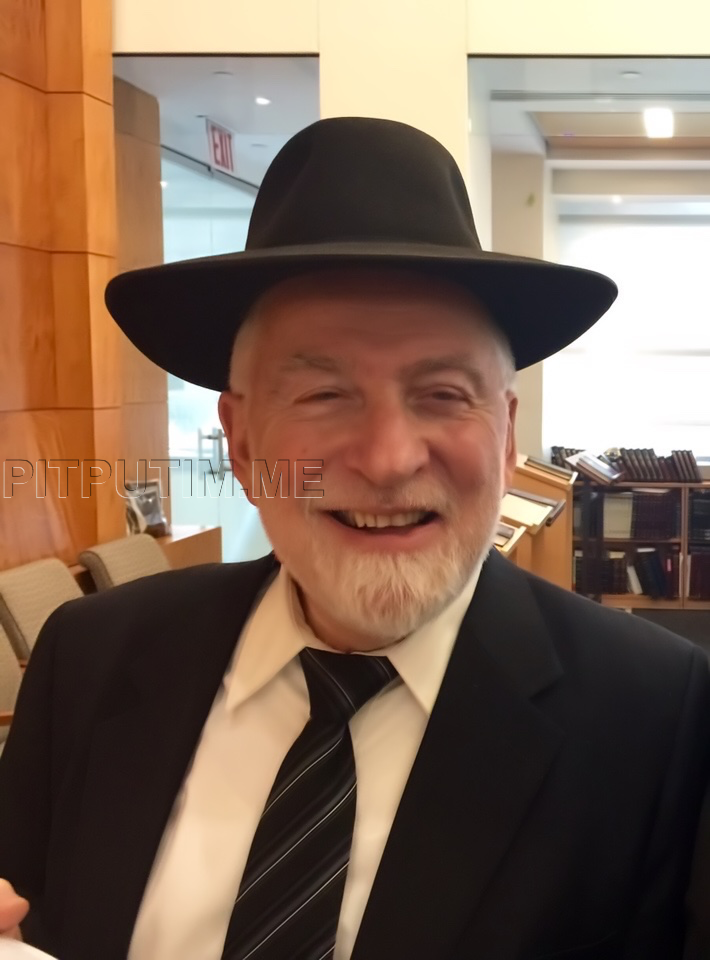
Shira Chadasha’s “Modern” Orthodox appointee

Let’s dispense with this rotund canard. Shira Chadasha is not considered part of (modern/centrist) and certainly not mainstream Orthodoxy. It is part of the break away left wing “Open Orthodoxy”. The appointee (who was the first from Avi Weiss’s program who insisted on being called “Rabbi”) worked at “Mount Freedom Jewish Center” in New Jersey which is intellectually honest and describes itself as Open Orthodox. Open Orthodoxy, through  Chovevei Torah, is definitely not considered Modern/Centrist Orthodox. As Rav Schachter told me, Am Horatzus is absolutely rife therein; none of them know Mesora and Mesoras HaPsak.

It  is well to the far left. Some within Modern Orthodoxy don’t want to cut them off, but it is inevitable. It will happen. The RCA made this very clear when it stated:

Oct 31, 2015 — Formally adopted by a direct vote of the RCA membership, the full text of “RCA Policy Concerning Women Rabbis” states:

  • Whereas, after much deliberation and discussion among its membership and after consultation with poskim, the Rabbinical Council of America unanimously passed the following convention resolution at its April 2010 convention:
    1. The flowering of Torah study and teaching by God-fearing Orthodox women in recent decades stands as a significant achievement. The Rabbinical Council of America is gratified that our members have played a prominent role in facilitating these accomplishments.
    2. We members of the Rabbinical Council of America see as our sacred and joyful duty the practice and transmission of Judaism in all of its extraordinary, multifaceted depth and richness – halakhah (Jewish law), hashkafah (Jewish thought), tradition and historical memory.
    3. In light of the opportunity created by advanced women’s learning, the Rabbinical Council of America encourages a diversity of halakhically and communally appropriate professional opportunities for learned, committed women, in the service of our collective mission to preserve and transmit our heritage. Due to our aforesaid commitment to sacred continuity, however, we cannot accept either the ordination of women or the recognition of women as members of the Orthodox rabbinate, regardless of the title.
    4. Young Orthodox women are now being reared, educated, and inspired by mothers, teachers and mentors who are themselves beneficiaries of advanced women’s Torah education. As members of the new generation rise to positions of influence and stature, we pray that they will contribute to an ever-broadening and ever-deepening wellspring of talmud Torah (Torah study), yir’at Shamayim (fear of Heaven), and dikduk b’mitzvot (scrupulous observance of commandments).
  • And whereas on May 7, 2013, the RCA announced:

    In light of the recent announcement that Yeshivat Maharat will celebrate the “ordination as clergy” of its first three graduates, and in response to the institution’s claim that it “is changing the communal landscape by actualizing the potential of Orthodox women as rabbinic leaders,” the Rabbinical Council of America reasserts its position as articulated in its resolution of April 27, 2010… The RCA views this event as a violation of our mesorah (tradition) and regrets that the leadership of the school has chosen a path that contradicts the norms of our community.

Therefore, the Rabbinical Council of America

  • Resolves to educate and inform our community that RCA members with positions in Orthodox institutions may not
    1. Ordain women into the Orthodox rabbinate, regardless of the title used; or
    2. Hire or ratify the hiring of a woman into a rabbinic position at an Orthodox institution; or
    3. Allow a title implying rabbinic ordination to be used by a teacher of Limudei Kodesh in an Orthodox institution; and,
  • Commits to an educational effort to publicize its policy by:
    1. Republishing its policies on this matter; and,
    2. Clearly communicating and disseminating these policies to its members and the community.

This resolution does not concern or address non-rabbinic positions such as Yoatzot Halacha, community scholars, Yeshiva University’s GPATS, and non-rabbinic school teachers. So long as no rabbinic or ordained title such as “Maharat” is used in these positions, and so long as there is no implication of ordination or a rabbinic status, this resolution is inapplicable.

As for what drives the new clergy Lila Kagedan at Shira Chadasha, this quote from Lila is very telling.

“I was drawn to ritual. I felt committed to the halachic process, but to be honest, I became absolutely disgruntled several times growing up,”.

One of those times was when her 13-year-old brother was permitted to sit on a beit din for the annulment of vows before Yom Kippur. “Meanwhile, I felt like I had no status.”

Need one say anymore about what motivates such females as opposed to Yoatzot Halacha? I suppose she also feels upset that she can’t Duchen because she’s not a male Cohen? Let’s get real here.

Call a spade a spade and dispense with the charade. If they think they uphold Halacha, good luck to them. I hope they do and may it improve, but the need to force their modes of worship over well established nomenclature that rejects such modes, only indicates they have no respect for established Rabbinic Poskim and leadership. Reform don’t call themselves Orthodox, and neither do Conservative. I don’t see why putting the adjective “Open” before Orthodox is anymore than a not so clever ruse. There are many learned Jewish Orthodox women in Melbourne who exercise their scholarship and feel empowered to do so.

They don’t feel “I had no status”. The existential imperatives of Judaism come second to them as they academically dance around terminology (hopefully with a Mechitza).

Anyone who even remotely thinks this is the model of Rav Yosef Dov HaLevi Soltoveitchik is simply an intellectual fraud.

I wonder what Caulfield’s Rabbi Genende’s stance on this is? I wrote to the RCV that this would happen over a year ago. It’s time the RCV not only put out stance like the RCA, I’d be happy if they formally affiliated with it.

How many Jews in Melbourne hold these perverted views?

Does the Adass breakaway, “Divrei Emineh”?

Do Satmar and the Neturei Karta in Adass?

How many only disagree in as much as they shouldn’t be saying this (out loud), but actually subscribe to this discredited view of R’ Yoelish of Satmar? Emphasis is mine. Text is from my Mashgiach, Rav Rivlin שליט’’א

The Gemara in Ketubot (111a) derives from the triple mention of the pasuk, “I have bound you in oath, O daughters of Jerusalem” (Shir Hashirim), that Hashem bound Am Yisrael and the nations of the world with three oaths. The first oath is, “shelo yaalu bachoma,” that the Jews should not forcibly, “break through the wall,” and enter Eretz Yisrael. The second is that the Jews should not rebel against the nations. The third is that the nations of the world should not oppress Yisrael too much over the course of the exile. According to R. Zera, there are three additional oaths which relate to the ultimate redemption. The Gemara concludes with the threat that if Israel violates these oaths, their flesh will be made free like wild animals in the field, i.e., Hashem would bring upon them great suffering and physical destruction.

The Satmar Rebbe, Rav Yoel Teitelbaum, claims in “Vayoel Moshe” that Hashem brought about the Holocaust because the Zionist movement caused the Jews to violate the “Three Oaths.” Since the Jewish people forcefully went to resettle Eretz Yisrael, Hashem brought upon them massive destruction, as the Gemara warns in its conclusion. Rav Shlomo Aviner compiled thirteen answers to this claim, amongst them the following:

1) Rav Teitelbaum’s claim rests on the fact that there was a “choma,” that the nations of the world prohibited the Jews from settling in the land of Israel. The Avnei Nezer writes that this oath does not apply when the nations give Yisrael permission to return. Following the Balfour Declaration and the San Remo Conference, in which the nations of the world determined that the Jewish people have a right to settle the land of Israel, the oaths do not apply. The Midrash hints to this idea, that if Bnei Yisrael have permission to enter the land they do not violate the oaths.

2) Another answer is that once there is a sign from Hashem to return to the land, the oaths no longer apply. In addition to the permission given by the nations, the national reawakening and birth of modern Zionism can be viewed as a sign from Hashem that it is permissible to return to the land. The oaths were not an “issur” (absolute prohibition), but rather national tendencies that Hashem instilled within Klal Yisrael which would cause them to remain unmotivated to return to their land. Also, throughout most of the exile, it was very difficult physically for Jews to return to Eretz Yisrael. Once a wide scale movement with an objective to return to Eretz Yisrael began, and it was physically possible to begin Aliya to Eretz Yisrael, it became clear that the oath was no longer in effect.

3) The Gemara in Sanhedrin (98a) says that when Eretz Yisrael gives forth fruit abundantly, it is a sure sign that the redemption is coming. Eretz Yisrael, in the time of the Zionist movement, began blooming and giving forth fruits unlike any previous time since the destruction of the land. This sign of redemption showed that the oath was no longer in effect.

3) Rav Teichtal, in his work, “Em Habanim Smeicha,” offers another explanation. Although the Jews were sworn not to enter Eretz Yisrael forcefully, the nations of the world were also sworn not to persecute the Jews too much. Over the course of the exile, the Jews were severely persecuted by the gentiles. Because the gentiles violated their oath, the Jews were no longer bound by their oath.

4) According to some opinions, the only way to violate the oath would be if people came to Eretz Yisrael in very large groups. Since the Jews entered the land slowly, and over the course of many years, they did not violate the oath.

5) The author of the “Hafla’ah” maintains that the oaths only apply to those who are in the exile of Bavel, and not in other lands.

6) R’ Chaim Vital explains that the oath only applied for 1000 years, not longer.

7) The Gra writes that the oath applies only to building the Beit Hamikdash, not to entering Eretz Yisrael.

8) Elsewhere in the Gemara there are other, conflicting, sources. Furthermore, the Gemara regarding the “Three Oaths” is aggada, and we do not decide halacha based on aggada. [I add that this isn’t even from Torah and Neviim, but from Kesuvim, the weakest link in determining Halacha]

Based on all of these explanations, there is ample basis to say that the movement to return to Eretz Yisrael was a positive, not a negative, one. In fact, others maintain just the opposite, that the Holocaust was because Jews became entrenched in galut and did not return to Eretz Yisrael. Since we are not living in a generation of prophecy, it is very difficult for us to determine exactly why Hashem brings specific punishments to the world. However, the Gemara does teach us that when we are afflicted with punishment, we should look into our actions, and try to fix our bad deeds. By looking at the Akeida, we may gain some insight regarding the Holocaust.

One of the most famous tests of Avraham was Akeidat Yitzchak. We constantly mention the Akeida in our prayers, and we still reap the benefits of this test. The question is asked, what is so special about this test? Avraham did not even do any great action of sacrifice, because in the end he did not slaughter his son. There were many other tests which Avraham actually fulfilled which are not so commonly mentioned!

Furthermore, Rav Dessler questions the very concept of “zechut Avot” (merit of the Patriarchs). If two criminals violated the same law, one coming from a dysfunctional family and one from a normal background, logic dictates that the one from a normal background should be punished more severely. When we come to Hashem and tell Him that we are descendants of Avraham, Yitzchak and Yaakov, this should work against us! Why is there zechut? In fact, Rabbeinu Bachya says that sometimes it is best not to mention zechut avot. After the sin of the spies, Moshe pleaded to Hashem and did not mention that Hashem is “notzer chesed la’alafim,” that He rewards for good deeds for generations to come. Moshe did not want Hashem to say, “If Bnei Yisrael came from such great people, why did they sin?”

Perhaps this insight can explain why we ask Hashem to remember the Akeida, as opposed to other tests of Avraham. Many times Am Yisrael does not live up to the other tests which Avraham was tested with. Through our entire history, however, Am Yisrael lived up to the test of the Akeida, and on many occasions Jews were willing to die “al kiddush Hashem” (in sanctification of G-d’s name).

The Torah introduces the story of the Akeida with the phrase, “It happened after these things.” (Bereishit 22:1) The parsha directly before the Akeida is the story in which Avraham makes a peace-covenant with Avimelech. The Rashbam explains that Avraham was tested with the Akeida because he did not have a sufficiently strong connection with Eretz Yisrael, and was willing to make a pact with Avimelech, thereby forfeiting some of his right to the land. The Tanna D’vei Eliyahu writes that any nation which has a serious conflict with Yisrael, does so only because of the pact which Avraham signed with Avimelech. Hashem always had a two-part covenant with Yisrael: descendants and Eretz Yisrael. Because Avraham was willing to give part of Eretz Yisrael, Hashem said, “I will take the other half of the pact — your son.”

Although we are not prophets, and we cannot determine which punishments correspond to which sins, we must try to learn lessons from events which happen in this world. Today it is clear that our bond to Eretz Yisrael still needs strengthening. If we pray and strengthen our connection to Eretz Yisrael, there will be an end to all of the Akeidot.

For those who want to seriously understand why Satmar and these clowns are dead wrong, read this from the Seforim Blog.

I note they don’t mention Gog and Magog, and the Jewish Redemption where their friends will be beholden to the Beis Hamikdash and Elokus. Politically, they don’t mention that, because they are of course afraid. These are the Jews about which the Torah says “stay home, you are afraid to go to war and you are an impedance”. Help your wives with the washing, cooking and food provision.

I notice Issy Weiss of Neturei Karta wears the palestinian scarf. Why doesn’t he put a Kaffiyeh on and add tzitzis to the corners. Now there’s solidarity.


An example of Mori V’Rabbi, Rav Hershel Schachter’s Centrist World View

It is so easy to say why this clear thinking enormous Talmid Chacham is effectively the Posek for the Rabbinic Council of America and the Orthodox Union. I reproduce an article he just published (c) Torah Web entitled “Volunteering Mitzvos”. What he writes is אמת לאמיתו.

About two years ago I came across a “teshuva” written by a Conservative clergyman. The thrust of the essay was that since the Tanoim established the halacha that women are exempt from wearing Teffilin because they are exempt from learning Torah, and today we expect women to learn Torah just like men, therefore women are no longer exempt from wearing Tefillin.

Needless to say, this is totally incorrect. The halacha that was formulated by the Tanoim that women are exempt from learning Torah has never changed. The laws of the Torah are not subject to change; the immutability of Torah is one of the thirteen principles of faith of the Rambam, and in our generation it has become the main point of distinction between Orthodox Judaism and other branches of Judaism. For centuries Orthodox women have been volunteering to shake a lulav on Succos and to listen to shofar on Rosh Hashonah. No one has changed the halacha that women are exempt from lulav and shofar, rather women have been volunteering to observe these mitzvos as an ainah m’tzuvah v’osah. In the days of the Bais Hamikdash only men were obligated to give machatzis hashekel towards the purchase of the korbonos tzibbur but the mishnah records that a woman may volunteer to observe the mitzvah as an ainah m’tzuvah v’osah.

We don’t recommend in all cases that one volunteer to perform a mitzvah that he is exempt from. The Shulchan Aruch quotes from the Talmud Yerushalmi that if it is raining on Succos and sitting in the Succah would be very uncomfortable, not only is one exempt from the mitzvah, but also it simply does not make any sense to volunteer to observe the mitzvah – when sitting in the Succah is very uncomfortable there is simply no kiyum ha’mitzvah. If the lights in one’s Succah have on gone out on the evening of Shabbos or Yom Tov and eating in the Succah would be very uncomfortable, but one’s friend has a Succah a one hour walk away, one would not be obligated to walk for an hour in order to sit in the Succah. Nonetheless, if one did go out of one’s way and walk for an hour, when one finally arrives at the friend’s Succah and sits there comfortably, Rav Akiva Eiger says that one may recite the brocha of leishev baSuccah. In this instance, the one who walked the hour is volunteering to observe the mitzvah in a fashion of aino m’zuvah v’oseh.

Rabbi Soloveitchik, who gave a shiur on Gemorah in Stern College, did not intend to disagree with the Talmudic principle that women are exempt from talmud Torah. He merely felt that in that generation it made good sense that the opportunity should be available for women to volunteer to studygemorah, in the same way that women have been volunteering for centuries to observe lulav and shofar. At that time he recommended that the gemorahs studied by women should not be Maseches Baba Kamma or Maseches Sanhedrin, but rather Maseches BrochosPerek Kol Ha’bosor,Maseches Shabbos, etc. which discuss dinim that are relevant to women halacha l’ma’aseh.

The Ta’noim understood from a phrase in the beginning of Parshas Vayikra that the mitzvah of semicha (i.e. that the one who brings a korbon must lean on the head of the korbon before sh’chitah) only applies to men and not to women. The expression “Bnai Yisroel” which appears in chumash so many times sometimes comes to exclude geirim (converts), sometimes comes to exclude women, and sometimes excludes neither. The Tanoim had a feel and a sense for how to darshon the pesukim based on the context of the passuk.

During the period of the second Bais Hamikdash, many women felt bad that they were not permitted even to volunteer to do this mitzvah of semicha since doing so would be a violation of avodah b’kodshim (getting work/benefit from a korban by the korban supporting their weight when they lean on it). Men who are obligated to do semicha are obviously not in violation of this prohibition of avodah b’kodshim, but since women are not obligated to do semicha, were a woman to do it voluntarily she would be in violation of this issur. As a result, many women wanted to perform an “imitationsemicha” (i.e. without actually leaning on the head of the animal but merely by having their hands float on top of the head of the animal). The permissibility of this was a big dispute amongst the Chachomim. Many were of the opinion that the performance of such an “imitation semicha” might possibly lead mistakenly to a violation of avodah b’kodshim if women would actually lean on the animal, and therefore it should not be permitted. The accepted opinion is that we do permit it, but we have to be careful that one thing should not lead to another.

The bottom line is that each of us has to observe all mitzvos that we are obligated in. However, when it comes to someone volunteering to do that which is not obligatory on him/her, there are rules and regulations pertaining to each individual mitzvoh/halacha specifically, and to observance ofhalacha in general, and it is not so simple to determine when one should or should not go beyond that which is obligatory.

Copyright © 2016 by TorahWeb.org. All rights reserved.

Are you really smart?

 Some years ago, there was a Mensa convention in San Francisco. Mensa, as you know, is a national organization for people who have an IQ of 140 or higher.  

Several of the Mensa members went out for lunch at a local cafe. When they sat down, one of them discovered that the salt shaker contained pepper & the pepper shaker was full of salt. 

How could they swap the contents of the 2 bottles without spilling any & using only the implements at hand? Clearly this was a job for Mensa minds. 

The group debated the problem, presented ideas & finally came up with a brilliant solution involving a napkin, a straw & an empty saucer . . .

They called the waitress over, ready to dazzle her with their solution. “Miss”, they said, “We couldn’t help but notice that the pepper shaker contains salt & the salt shaker – “.  

But before they could finish, the waitress interrupted, “Oh! Sorry about that”. 

She leaned over the table, unscrewed the caps of both bottles & switched them. 

There was dead silence at the Mensa table. 


ENJOY
 

Shira Chadasha’s new spiritual dynamo (a female): some questions

They might ask:

  1. whether she answers Men’s Shaylos?
  2. why shira chadasha doesn’t have daily minyanim
  3. whether vegan and vegetarian restaurants are kosher (of course they are not!)
  4. which side of the “mechitza” members of LGBTI who identify as such should sit
  5. whether Avi Weiss is considered a world-renowned posek
  6. whether she consider herself open orthodox (and not part of the Orthodox community, as affirmed by the RCA (and should be affirmed with the RCV)
  7. whether a woman should wear a head covering to shule and if so, why?
  8. What length sleeves are halachically mandated as covering Erva
  9. Whether dresses should cover the knee even when a woman sits
  10. Whether she encourages Shira Chadasha men to wear a Tallis Kotton
  11. Whether she will eat from RMG Rabi’s kashrut business
  12. Whether supervising Rabbis should be involved in their Kashrus as a business concern
  13. Whether she supports Rav Soloveitchik’s view on interfaith dialogue
  14. Whether she considers Prof Sperber as a Gadol HaDor
  15. How much of the female chest should be revealed in a t-shirt. Up to the breast bone, or below? Is cleavage permitted?
  16. Whether men could take on the lighting of Shabbos candles if they felt strongly they wanted to do it
  17. Whether tight jeans/pants are permissible?
  18. Whether women should dispense with Tichels and hats as they are anachronistic today … 
  19. Whether she believes that Carlebach is guilty of any of the crimes alleged against him
  20. Whether mixed swimming is permitted
  21. Whether mixed dancing without a mechitza is permitted
  22. Whether a man or woman who exposes Erva should be given an honour in Shule
  23. Whether she believes that every word of the Torah is directly from God
  24. What her understanding of Mesora is
  25. Whether she believes the Jews accepted the Oral Law at Sinai
  26. What makes up the Oral Law.
  27. Whether she considers Reform or Conservative conversions valid
  28. Whether she would lie when reading a Ksuba and say a bride was a virgin if she knew she was not?
  29. Whether she would change the Ksuba so it states whether the groom is a virgin
  30. Whether she follows R’ Moshe Feinstein’s view that women who are attracted to such groups and who do so for equality and/or feminism are doing so for foreign reasons
  31. Whether she will decide Nida questions
  32. Whether she considers herself a witness at a wedding ceremony
  33. Whether entering a Reform Temple is permitted
  34. Whether Open Orthodoxy will really emerge as the new Conservative movement
  35. Whether there is anyone at Avi Weiss’s institution with the level of knowledge as Rabbi Shaul Liberman?
  36. Does a woman have to wear tzitzis on a large body scarf
  37. Should a man wear a Yarmulka all day
  38. Should a woman wear a Yarmulka all day
  39. Should a man wear a Yarmulka if he is eating in a Vegetarian restaurant? Should he may a bracha?
  40. Does she think settlements are an impediment to peace
  41. Does she think any Israeli prime minister should sit down with a Palestinian leader unless the latter agrees Israel is THE JEWISH homeland?
  42. Is Donald Trump racist?
  43. Whether a female should sing in a band such that her voice is clearly heard
  44. ……..

Methodologies to attract members: ARK — revised

Over the weekend, I was strongly encouraged  to repost my article. I had one comment which was valid in retrospect, and I am taking that fully into account in this revision. I was not aware, but a number of people have mentioned that R’ Shneur Zalman Waks is involved in conversions, including one involving the marriage of a Cohen. I was informed he has his own Beth Din and does not involve the Melbourne Beth Din. That’s not to say his conversions are invalid. I can’t give an opinion without knowing details. If anyone knows, do tell. We have RMG Rabi’s Beth Din which does conversions, R Schneur Zalman’s ARK Beth Din for conversion, Adass which has always been separatist, in addition to the standard and fully internationally accepted Melbourne Beth Din. In my opinion, a community should only have one Beth Din and it should be modelled on the Melbourne Beth Din, with its checks and balances from a lay committee, including a separation from money issues.

The original reason for this post, however, was that someone sent me emails that Shneur Zalman sends to his ARK community (of which I know little) and I’m commenting on the last one that I received.

Shneur Zalman of ARK, is someone who is different and seemingly diverse. That, in of itself, isn’t a problem provided he is sincere and maintains a fidelity to strict Halacha. I’ve decided to intersperse commentary on his most recent article because I found it vexing. The quotes below are verbatim from what was sent to me.

Growing up in a strictly Chabad home in the days before internet meant that my information sources were rather limited. We weren’t allowed to listen to radio, watch television, or read ‘secular’ books, so I became a Jewish History buff.

This is a questionable representation. There are plenty, including Rabbis, who were and stay intimately involved in many issues and who have strongly different views than Shneur Zalman. The statement that bothers me is that it is crafted to convince ARK congregants that Shneur was born into a prison-like idyllic “crown heights” or “kfar chabad” standard Chabad home of a most orthodox type. This has been a matter of discussion by members of that family itself. I do not know if ARK members have been exposed to counter claims. This is contextually important.

Shneur Waks and wife Lisa

The issue of Chabad in particular is profoundly misplaced. All ultra orthodox groups encourage minimisation of interaction with the outside world unless necessary.  Of all the ultra groups who have a higher percentage who are exposed to the outside world, Chabad is clearly the one most exposed and experienced (and pilloried as a result). That being said, it might be that Shneur Zalman’s  parents had no hidden TV or other devices, and a computer was locked for use for “business” purposes. I do not know. Perhaps he was denied access to the world.

It is ironic though that Shneur Zalman’s claimed TV and Radio-avoiding family chose to agree many years ago and feature in full length documentaries for SBS about how they get on with life!  I assume these were motivated primarily for the benefit of the non Orthodox and gentiles who do watch TV and whom the family they wished to influence to adopt their “idyllic Amish-like lifestyle?  I’m sure the parents felt this was prototypical Chabad Chasidism encouraging others to have double-digit children while demonstrating how it could be done with dynamic results. My band members (non Jewish, watched it with incredulity). Maybe this was a form of outreach, though, using the very medium Shneur Zalman claims was discouraged to engage with. I assume Shneur Zalman was part of that documentary. Based on his description, he might appeared like a rabbit in bright lights not knowing anything about the outside world, save his claim to be a self-made “Jewish History buff”, appearing bewildered by the brouhaha.  I have not seen the video, as the topic per se had never been of interest to me.

From my religious study I already knew about the suffering of the Jews as they were enslaved by the Egyptians, nearly annihilated by the Persians, and oppressed by the Greeks and Romans. But added to that I discovered the long history of Christian antisemitism; peaking during the Crusades, Spanish Inquisition, Pogroms, and of course culminating in the devastating Holocaust.

Shneur Zalman has been selective. He implies that his “History buff” knowledge informed him of Xtian antisemitism, the inquisition, pogroms and the holocaust, but these were denied by his education. I find this derisorious. All these events save the last, are covered in formal long lamentations  on Tisha B’Av, and spoken about on Pesach. Either Kinos wasn’t said, or understood, or Shneur Zalman met teachers throughout his entire Jewish education who always put a full stop at the Roman Conquest.

Everyone is aware of the Holocaust, including the ultra orthodox  and the survivors who occupied the pews. Does Shneur Zalman not know what happened because of his religious upbringing at home?. Even Satmar knows!

Shneur Zalman is disingenuous about modern-day events. He most definitely would have heard how his namesake was persecuted by the Communists and dreaded NKVD. Strangely, Shneur Zalman doesn’t seem to mention the systematic attempts at destroying Torah Judaism to eradicate the Jewish people in the Soviet Union. The Nazis attempted it physically, the Soviets were happy if one abandoned Judaism spiritually and adopted a (ironically Jewish sourced) Stalinism or Marxism, that considered a Jewish text, to be poison and to be eradicated.

Shneur Zalman tells us that

I read every book I could get my hands on which told the story of the darkest years in human history and heard the story from the mouths of many survivors. When we then sang the Vehi Sheamda on Seder night, which basically translates that in every generation there are those who want to kill us, it was felt in a most immediate fashion.

Shneur Zalman’s  own Chabad School has a very good free lending library almost next door to his house. Are we to assume that his parents forbade him to borrow books from that library (let alone his excellent School library) or perhaps they they vetted the books lest they would corrupt their son with hatred to those hell-bent on killing Jews at any time or place? I think not. Is Shneur Zalman being purposefully disingenuous here or just tardy? I’m not sure.

I surmise that Shneur Zalman is  naïve  if he considers himself a “Jewish history buff” and yet could write

At some point I came to question the point of this message. Granted, we should never be complacent about antisemitism. We have suffered too deeply to be so naïve. But I personally never experienced antisemitism. Sure there were Saturday morning drunks who could scream out “bloody Jew”, but to rate that at all would be to belittle the traumas inflicted on our people. So what relevance does the story of antisemitism have to me, my generation, and the ones younger?

How did Shneur Zalman know that only drunks screamed this message from their fast-moving car? Is he superman with X-ray vision?

It is incredulous that anyone could emerge as a self-proclaimed ” Jewish History buff” and yet feel that because in the short cloistered walk of 1 minute from his house to his School (remember, he claims he was forbidden to be exposed to the real world) he concluded that people who called out “bloody jew” in that moment, were not hard-core anti-Semites. What a strange intuition. It in fact contradicts the beginning of each and every blood bath the Jews faced. Does Shneur Zalman not realise that they all started with small voices of “bloody Jew” and then grew into a society unfettered by morals and ethics proceeding to death and destruction. Does Shneur Zalman not realise that if he took a number plate and reported it to the police that those who said those things would be prosecuted for hate crime? Was Shneur Zalman blind and deaf  to a prominent incident, next door to his home, where one of his chassidic colleagues was beaten by off-duty police. It was all over the papers and the talk of the centre. Did Shneur Zalman miss the articles or was he forbidden to read them.

I contrast that with my experience which is philosophically diametrically opposed

Walking with my father to Elwood Shule, we stood in the middle of Brighton Road on the tram tracks. A car load of “young and restless” passed us, rolled down their window, and called out “Bloody Jews”. To me, standing next to my elderly father, a holocaust survivor, this was simply not on. I took off on a fast run down the tram tracks of Brighton Road in my suit, hoping that their car would be stopped by a red light. Luckily, it was. I reached their car, thumped hard on their window and bonnet. Startled, they turned their heads and heard me yell at the top of my voice.

If you filthy scumbag anti Semites ever say that again, I will smash your bones and report you to the police. Don’t ever take a Jew lightly. I will break every bone in your body if you dare say that again

I went to the same school as Shneur Zalman. I don’t attribute my then reaction to the school in totality, let alone should Shneur Zalman be insinuating that his lack of understanding of the beginnings of anti-Semitism had anything to do with his home or his school. This was Shneur Zalman’s  reaction, and his alone. His sad misunderstanding of anti-Semitism, is there for all to I see in that paragraph.

By the way, my father later asked me why I reacted with such crazed venom. I explained that precisely because of the message of Pesach and his place as a survivor, I for one was not ever going to be a  Jew who minimised such vituperation in the way that Shneur Zalman seemingly professed to his ARK community in tame words and wonderful sculptures.

A wedding at ARK. (I’m not sure who the second witness is, based on this picture)

Jumping back to where Shneur Zalman was heading, he informs us

The most prominent response I came across when I was younger was that we should never trust the Goy. We were even taught in the first chapter of the Tanya, the seminal work of Chabad philosophy written by my namesake, that non-Jews are inherently incapable of good deeds, that whatever seemingly kind acts they perform are for their own selfish gain.

I see this as sloganeering. The lack of definition and intentional misrepresentation is breathtaking. Firstly, he claims this was the most “prominent” response. Response to what? Response to anti-Semitism? What is the context of trust here? Was it trust in business? Trust in Tae Kwan do? Even a young Shneur Zalman would know that this is not manifestly practiced by any ultra orthodox people (who may have more tangles in business with many Jews than they do with non Jews.)

What was he getting at, I thought? Was he saying that he was taught that a non-Jew was more likely to thrust a knife in his back than a Jew? If so, statistics would say that this is entirely correct whether one is ultra orthodox or not. Does Shneur Zalman not know of a gentile reporter who recently donned a Yarmulka and found that this immediately made him a magnet of hate, violence, and derision. Heck, the reporter was featured everywhere.

Does Shneur Zalman still not read the popular press? Perhaps he subscribes to the doctrine that it’s all because of the “settlements”. I guess the prime settlement of Tel Aviv, which is still claimed by Hamas and their ilk as the problem as well as the mere existence of Jews? Or perhaps Shneur Zalman sides with Neturei Karta or Mahmoud Abbas, that a Jewish homeland, should never exist? Alternatively, he might be one of the mixed up clerics who think that sharing bread and holding hands with clerics of other religions espousing “social justice” will solve the latent hate blatantly expressed in the texts of their religions, while clasping hands for photo ops. Will Shneur Zalman change that? It has never solved anything. I don’t see a “Jewish history buff”.

Now, I do not profess to have more than a simple passing knowledge of Chabad metaphysics as described in Tanya, but I do know that it is not a Shulchan Aruch as Shneur Zalman had his ARK members misunderstand. One of its tenets, which isn’t universally held (I hope Shneur Zalman is able to transmit authentic  other Orthodox approaches and that he isn’t still in the “imprisoned cloistered” youth that he painted, Tanya is a collection of older texts rewritten coherently and beautifully. Jews do have an element of Neshama that non-Jews do not. The oldies used to call it the “pintlele yid”. This has ramifications to understanding conversion, and whilst it most certainly is a valid understanding of Judaism, I’d hope Shneur Zalman isn’t on some populist anti-Chabad rant  presenting it as the only  Orthodox approach to understanding the metaphysics of the soul. It seems that Shneur Zalman either forgot, or chose not to mention many Talmudic statements which, if understood in a simple way are far more contentious. More importantly, projecting other Orthodox approaches would be a great idea if he didn’t “like” the Tanya’s sources.

What I can say without any doubt is that his namesake was an absolute giant of an intellect on par with the Gaon of Vilna, and was possessed with a love of Jews and the future of Judaism that was legendary. That he chose sides in the Russian/French non-Jewish conflict is remarkable. Perhaps Shneur Zalman should tell his ARKers about how his name sake  made the right choice and that almost single-handedly saved Soviet Jewry from obliteration. To this day, moderate Rabbis such as Rabbi Riskin make kiddush on Vodka on Shabbos because of the incredible legacy that Shneur Zalman’s  name sake left in Russia. Shneur Zalman will readily admit he isn’t a boot lace compared to his name sake: either in matters of standard Jewish Law, or in matters of Jewish Metaphysics or as a Jewish History buff. Is there anybody today?

Next Shneur Zalman makes what seems to be a leap of logic from his earlier statement, that confounds understanding.

But that is a very depressing message. Moreover, it contradicts our experience. And most importantly, that message is precisely the message propounded by the most evil of people. I mean isn’t that precisely what Hitler was saying in the inverse? Surely that can’t be the moral of the story.

Shneur Zalman, it would be profoundly incorrect to assume that every non-Jew is an anti Semite. It would also be wrong to assume that many non Jews are indeed anti semitic but it’s definitely on the rise. I have personally experienced it in today’s age of the culturally sophisticated.

Hitler? Has Shneur missed out ? Has he taught ARK about Amalek? We read it today in Shule. I know of no Jewish gangs who take baseball bats to Lakemba or Coburg with the aim of obliterating Lebanese Muslim anti-Semites who openly say Jews should all die (as does Hamas). Again, perhaps Shneur Zalman has not caught up with current events? He seems to live in a utopian but unrealistic world.

Over the last two weeks, ARK Centre has been hosting an incredible exhibition put on by Courage to Care that provides an answer to this question most profoundly and resolutely. We must remember the suffering of our people not in order to perpetuate trauma but to learn the evils of bigotry and what happens when good people stand by and allow it to happen. We must learn to be up-standers, not by-standers!

The exhibition contained a number of evocative pieces. The one that affected me most deeply was a piece by an incredibly inspiring, youthful, and optimistic, 89 Year old Sarah Saaroni. It is a sculpture of Dr Janusz Korczak, a paediatrician and head of an orphanage, who had an opportunity to save himself but decided to stay with the children as they were gassed to death. In the sculpture he is holding, embracing, and comforting a dozen children or so as they are standing in the gas chamber. The image really is heart wrenching and now, as a father of two beautiful children I love so dearly, it really is difficult to process.

But the sculpture is more than a statement about the unbelievable depravity of the Nazis who could do this to pure children. It is a tribute to the spiritual depth of the doctor who, in the midst of absolute darkness, was able to radiate a beam of holiness, of love. His facial expression left me, and I dare say anyone who sees it, with a sense of warmth and serenity.

I’m not sure how Shneur Zalman’s  religious education seems to have forgotten the concept of the other Chassidim. Yes, the חסידי אומות העולם.  The righteous gentiles. Note: they are called Chassidim, Shneur Zalman.

I do hope Shneur Zalman exposes ARK to that concept. It was there well before the cultured sculptures, and has a history as long as the history of anti-Semitism. Furthermore, his namesake writes about them and their reward in the world to come. Is Shneur Zalman trying to turn  his congregation into populist left-wing tree huggers? Let Shneur Zalman break bread and condemn Senator Lee Rhiannon of the loony greens to ARK. Would he? Perhaps he should remind ARK about German Jewry who were more German than the Germans, and that it did not help them in the “advanced” socialist democracy of Germany.

Don’t misread me. I interacted with 400+ non Jewish alumni on my Facebook. I didn’t have family or friends on facebook. I recently lent a significant amount of money to a non-Jewish colleague who had to fly back from overseas because her father and uncle dropped dead. The message I give Shneur Zalman is, rather than the seemingly post-modern one he is giving ARK, one can be centrist orthodox with an absolute fidelity to Halacha and live in this world peacefully, especially with tolerant non Jews. I can tell Shneur Zalman, that if I ever meet an intolerant or anti semitic type who threatens me overtly or covertly, I turn into a different persona. I don’t sit down to “break bread” with them. I know exactly with what I am dealing, and any “Jewish history buff” will affirm this.

Shneur Zalman writes:

This is a message that is so relevant and extremely positive. This is, in fact, what the Jewish tradition is all about. We are not the Chosen People of a superior race as I was taught. Rather we are a people who have, unfortunately, experienced immense suffering as a result of bigotry and the absence of enough up-standers in our midst. This experience of being a stranger in a strange land endlessly persecuted compels us to be the preachers of light; to declare that all human beings are created in the image of God and, therefore, all equally deserve to be treated with compassion, dignity, and humanity.

To the whole team at Courage to Care, thank you for your vision and dedication to fulfil it.

With hope and prayer that we internalise this message and turn our horrible history into a reservoir of inspiration to become more sensitive and caring human beings especially to those who are very different to us.

I couldn’t disagree more with this contorted configuration of childhood and this message. My own family was saved by righteous gentiles who were honoured in Yad Vashem. I have visited them. For close to 70 years, the extended Balbin family still sends all our surplus clothes to their extended family. A number of their family are anti Semites. They hid the fact that they saved Jews. When the husband of the girl found out, he beat his wife constantly. She held it a secret for some 30 years because she knew he was a depraved anti-Semite. We send them money and medicine too. (One of the family couldn’t even stand being in the room with me and my father, and left). This, despite the heroic efforts of his mother and her father). Some morality!

In short Shneur Zalman, I find this newsletter message rather populist, misleading, and simple. I’d rather if it was more learned and candid and more informed and realistic. The simple reading of history today, actually matches the claimed simple education Shneur Zalman claims to have received!

He didn’t receive a simple education.

He sounds populist.

Is he a member of the Rabbinic Council of Victoria?

If not, why not?

Why doesn’t he  break bread with them and convince them of his views and how they conform with Halacha. This is the Rabbinic way.

I take that back if he does not consider himself or ARK Orthodox.

On the independence of Poskim and development of Halacha

פרשת ויקרא                                                          ©  מאיר דויטש

(יג) וְאִ֨ם כָּל־עֲדַ֤ת יִשְׂרָאֵל֙ יִשְׁגּ֔וּ וְנֶעְלַ֣ם דָּבָ֔ר מֵעֵינֵ֖י הַקָּהָ֑ל וְ֠עָשׂוּ אַחַ֨ת מִכָּל־מִצְוֹ֧ת ה’ אֲשֶׁ֥ר לֹא־תֵעָשֶׂ֖ינָה וְאָשֵֽׁמוּ:

(יד) וְנֽוֹדְעָה֙ הַֽחַטָּ֔את אֲשֶׁ֥ר חָטְא֖וּ עָלֶ֑יהָ וְהִקְרִ֨יבוּ הַקָּהָ֜ל פַּ֤ר בֶּן־בָּקָר֙ לְחַטָּ֔את וְהֵבִ֣יאוּ אֹת֔וֹ לִפְנֵ֖י אֹהֶ֥ל מוֹעֵֽד:  (ויקרא פרק ד)

רשות משפטית עליונה – הסנהדרין

מה זאת התורה? התורה היא אוסף של חוקים ומשפטים. התורה לא יכולה להכיל את הכול, לפיכך אמר המהר”ל שהתורה היא המבנה, הקירות של הבניין, ואנו בכל דור ודור קובעים את התכולה שבו, כך שהבניין יתאים ויהיה שימושי לתקופה. תכולה זו נקבעת על ידי בית דין.

רבי יוסף אלבו אומר: “שאי אפשר שתהיה תורת ה’ יתברך שלמה באופן שתספיק בכל הזמנים. לפי שהפרטים המתחדשים תמיד […] הם רבים מאוד משיכללם ספר, על כן נתנו למשה בסיני על פה דרכים כוללים […] כדי שעל ידם יוציאו החכמים שבכל דור ודור הפרטים המתחדשים”.

בברייתא (חגיגה ג, א) אנו מוצאים:

“תנו רבנן: מעשה ברבי יוחנן בן ברוקה ורבי אלעזר חסמא שהלכו להקביל פני רבי יהושע בפקיעין, אמר להם: מה חידוש היה בבית המדרש היום? אמרו לו: תלמידיך אנו, ומימיך אנו שותין. אמר להם: אף על פי כן, אי אפשר לבית המדרש בלא חידוש. […] ואף הוא פתח ודרש: [קהלת יב] דברי חכמים כדרבנות וכמשמרות נטועים […] ת”ל משמרות, אי מה מסמר זה חסר ולא יתר אף דברי תורה חסירין ולא יתירין. תלמוד לומר נטועים, מה נטיעה זו פרה ורבה – אף דברי תורה פרין ורבין”.

חלו שינויים רבים בצורת ההכרעה. אתרכז בתקופת הסנהדרין היושבת בלשכת הגזית.

1. ימין ושמאל

בדברים יז, ח-יא נאמר: “כי יפלא ממך דבר למשפט […] ובאת אל הכהנים הלוים ואל השפט אשר יהיה בימים ההם ודרשת והגידו לך את דבר המשפט […] על פי התורה אשר יורוך ועל המשפט אשר יאמרו לך תעשה לא תסור מן הדבר אשר יגידו לך ימין ושמאל”.

הרמב”ן כותב על פסוק זה: “ימין ושמאל – אפילו אומר לך על ימין שהוא שמאל או על שמאל שהוא ימין לשון רש”י. וענינו אפילו תחשוב בלבך שהם טועים, והדבר פשוט בעיניך כאשר אתה יודע בין ימינך לשמאלך תעשה כמצותם”.

כאן נקבע כי יש לקבל פסק דין הסנהדרין, אפילו אם לדעתנו הם טועים.

2. מפי שמועה והליכה לפי הרוב

בברייתא, ב”תנורו של עכנאי” (בבא מציעא נט, ב) כתוב: “השיב רבי אליעזר כל תשובות שבעולם ולא קיבלו הימנו [למרות כל ההוכחות בנסים וגם בת הקול מהשמים שאמרה שהלכה כמותו.] עמד רבי יהושע על רגליו ואמר: לא בשמים היא […] שכבר נתנה תורה מהר סיני, אין אנו משגיחין בבת קול, שכבר  כתבת בהר סיני בתורה אחרי רבים להטת”.

את החשיבות בעמידה בפסיקה שנשמעה מפי רבים אנו יכולים לראות אצל עקביא בן מהללאל (עדויות ה, ו): “עקביא בן מהללאל העיד ארבעה דברים, אמרו לו עקביא חזור בך מארבעה דברים שהיית אומר [ששמע מפי המרובים] ונעשך אב בית דין לישראל. אמר להן: מוטב לי להקרא שוטה כל ימי ולא ליעשות שעה אחת רשע לפני המקום שלא יהיו אומרים בשביל שררה חזר בו”. מה שעבר על עקביא בן מהללאל בגלל שעמד איתן על הדעות ששמע מפי רבים הרי הוא ידוע. עקביא רצה בכל זאת לשנות את הפסיקה ששמע מפי הרבים ומצא דרך לעשות זאת, כך אומרת המשנה (עדויות ה, ז): “בשעת מיתתו אמר לבנו חזור בך בארבעה דברים שהייתי אומר אמר לו [הבן לעקביא] ולמה לא חזרת בך אמר לו [עקביא]: אני שמעתי מפי המרובים והם שמעו מפי המרובים, אני עמדתי במשמועתי והם עמדו במשמועתן, אבל אתה שמעת מפי היחיד ומפי המרובין מוטב להניח דברי היחיד [דברי שלי] ולאחוז בדברי המרובין”.

מכאן אנו רואים: “אחרי רבים להטות”.

3. סמכות של בית הדין

יש שתי גישות לפסיקת ההלכה: השמרנית שאינה מאפשרת כל שינוי בנושא שנפסק בעבר, ולעומתה, הדינאמית: שרואה בהתפתחות ובשינויים שחלו צורך לדון מחדש בשאלות שכבר נפסקו בעבר.

לפי השיטה השמרנית דיון בהלכה אפשרי רק בנושא שלגביו טרם נפסקה הלכה. הלכה שנפסקה אין אפשרות לשנותה, גם אם התנאים והטעמים לפיה נפסקה השתנו או הופרכו. על פי גישה זו, מחלוקת בדבר הטעמים השונים המהווים את גרעין הפסיקה אפשרית, כל עוד לא נפסקה ההלכה, לאחר מכן אין לדון עוד באותה הלכה פסוקה.

נעיין בסנהדרין יא, ב: “כי יפלא ממך דבר למשפט וגו’ [דברים יז], שלשה בתי דינין היו שם. אחד יושב על פתח הר הבית ואחד יושב על פתח העזרה ואחד יושב בלשכת הגזית באים לזה שעל פתח הר הבית ואומר כך דרשתי וכן דרשו חבירי כך לימדתי וכך לימדו חבירי אם שמעו [פסק דין בנושא] אומרים להם ואם לאו באין להם לאותן שעל פתח העזרה […] אם שמעו אומרים להם ואם לאו אלו ואלו באים לבית דין הגדול שבלשכת הגזית שממנו יוצאת תורה לכל ישראל”. ממשנה זו אנו למדים כי כל בתי הדין הנמוכים רשאים להורות רק לפי הלכה פסוקה (אם שמעו). יוצא מכלל זה הוא בית הדין הגדול, שמשתמע מלשון המשנה שהוא רשאי לפסוק לא רק בנושאים שטרם נדונו ואין לגביהם הלכה פסוקה, אלא גם בנושאים שיש להם הלכה פסוקה.

מן המשנה משתמע כי בית הדין הגדול לא הוגבל ויכול היה לדון בכל שאלה שהובאה לפניו ולפסוק לגביה לפי מיטב שיפוטו.

לעומת המשנה שלפנינו בתוספתא (סנהדרין ז, א) הדיון בנושא הוא שמרני: “הולכין לבית דין הגדול שבלשכת הגזית […] נשאלה שאילה אם שמעו אמרו להם ואם לאו עומדין למינין רבו המטמאין טימאו רבו המטהרין טהרו משם היה יוצאת הלכה ורווחת בישראל”. לפי התוספתא גם בית הדין הגדול לא יכול לשנות את פסיקתו של בית דין קודם (אם שמעו אמרו להם), רק אם לא שמעו רשאי הוא לעמוד למניין ולקבוע הלכה.

התוספתא בעדויות א, ד אומרת: “לעולם הלכה לפי המרובין לא הוזכרו דברי היחיד בין המרובין אלא לבטלן ר’ יהודה אומר לא הוזכרו דברי יחיד בין המרובין אלא שמא תיצרך להן שעה ויסמכו עליהן”.

לפי הרישא, הזכרת דברי היחיד היא לבטלן, והם יישארו בטלים לעולם ולא יהיה ניתן לפסוק על פיהן. לעומת זאת, לפי דעתו של ר’ יהודה בתוספתא, יש לשמר את דברי היחידים וכאשר הנסיבות ישתנו ותיצרך להן שעה, יהיה ניתן לפסוק כדעתם.

המשנה בעדויות א, ה אומרת: “ולמה מזכירין דברי היחיד בין המרובין הואיל ואין הלכה אלא כדברי המרובין, שאם יראה בית דין את דברי היחיד ויסמוך עליו שאין בית דין יכול לבטל דברי בית דין חברו עד שיהיה גדול ממנו בחכמה ובמנין. היה גדול ממנו בחכמה אבל לא במנין במנין אבל לא בחכמה אינו יכול לבטל דבריו עד שיהיה גדול ממנו בחכמה ובמנין”. לפי דעת המשנה שלפנינו יכול בית דין לבטל פסיקה קודמת אם יעמוד בתנאים המתאימים.

לסיכום:

יש לקבל את פסק הדין של הסנהדרין, אפילו אם לדעתנו הם טעו. יש לקבל את דעת הרוב בפסקי הדין.

למרות העולה ממסכת סנהדרין, כי קיימת דינאמיות בפסיקת ההלכה, התוספתא קובעת כי גם הסנהדרין היושבת בלשכת הגזית אינה יכולה לשנות הלכה שנפסקה כבר בעבר. גם הרמב”ם נוקט בשיטה השמרנית ומאמץ את התוספתא. לעומתם, רבי יהודה מכיר בדינאמיות בפסיקת ההלכה ומשמר את דברי היחיד לפסיקה בעתיד.

4. קרבנות חטאת

בויקרא ד, יג נאמר: “ואם כל עדת ישראל ישגו ונעלם דבר מעיני הקהל ועשו אחת מכל מצות ה’ אשר לא תעשינה ואשמו”.

רש”י פירש את הפסוק כך: “עדת ישראל. אלו סנהדרין: ונעלם דבר. טעו להורות באחת מכל כריתות שבתורה שהוא מותר: הקהל ועשו. שעשו צבור על פיהם”.

והרמב”ם אומר: “כל דבר שחייבין על שגגתו חטאת קבועה אם שגגו בית דין הגדול בהוראה והורו להתירו ושגגו העם בהוראתן ועשו העם והם סומכין על הוראתן ואחר כך נודע לבית דין שטעו, הרי בית דין חייבין להביא קרבן חטאת על שגגתן בהוראה ואע”פ שלא עשו הן בעצמן מעשה שאין משגיחין על עשיית בית דין כלל בין עשו בין לא עשו אלא על הוראתן בלבד, ושאר העם פטורין מן הקרבן ואע”פ שהם העושין מפני שתלו בבית דין”.

5. מיהי סנהדרין כשרה לפסיקה?

הרמב”ם הרחיב בנושא: “וכן אם הורו בית דין הגדול שדם הלב מותר ולא היה ראש ישיבה עמהן או שהיה אחד מהן אינו ראוי להיות ממונה בסנהדרין […] ועשו העם על פיהם ואכלו דם הלב הרי בית דין פטורין וכל מי שאכל מביא חטאת קבועה על שגגתו”.

מכאן יוצא כי יש לבדוק את כשרותה של הסנהדרין ולברר מי ישב בדין לפני שמקבלים את פסק הדין שלה.

6. האם על כולם לקבל את פסק הדין לפי הרוב?

בירושלמי הוריות א, א אנו מוצאים כבר פירוש אחר על הפסוק ימין ושמאל: “דתני יכול אם יאמרו לך על ימין שהיא שמאל ועל שמאל שהיא ימין תשמע להם תלמוד לומר ללכת ימין ושמאל שיאמרו לך על ימין שהוא ימין ועל שמאל שהיא שמאל”.

נמשיך באותה משנה בהוריות: “הורו בית דין לעבור על אחת מכל מצות האמורות בתורה והלך היחיד ועשה שוגג על פיהם בין שעשו ועשה עמהן בין שעשו ועשה אחריהן בין שלא עשו ועשה פטור מפני שתלה בבית דין”. המשנה ממשיכה: “הורו בית דין וידע אחד מהן שטעו או תלמיד והוא ראוי להוראה והלך ועשה על פיהן […] הרי זה חייב מפני שלא תלה בבית דין”.

כאן אומרת המשנה כי אם אחד הדיינים, או אפילו תלמיד ראוי להוראה, בדעה כי בית הדין טעה בפסיקתו, אינו רשאי לקבל את דעת בית הדין, ואם עשה כפי שהורו הוא חייב, כי לדעתו בית הדין טעה. יוצא מזה כי דין אחד לו ודין אחר לאחרים!

7. עכשיו כשראינו שאין הפסיקה לפי הרוב מחייבת את כולם, נשאלת השאלה האם פסיקה לפי הרוב מחייבת תמיד

הרמב”ם כתב: “אם הורו [הסנהדרין] וידע אחד מהן שטעו ואמר להם טועים אתם ורבו עליו המתירים והתירו, הרי בית דין פטורין וכל מי שעשה על פיהם חייב להביא חטאת קבועה על שגגתו, שנאמר ואם כל עדת ישראל ישגו עד שישגו כל הסנהדרין. ידע אחד מן הסנהדרין או מיעוטן שטעו המתירין ושתקו הואיל והורו ולא היה שם חולק ופשטה ההוראה ברוב הקהל הרי בית דין חייבין בקרבן וכל שעשה על פיהם פטור, ואלו ששתקו אם עשו על פי אלו שהורו הרי אלו חייבין מפני שלא תלו בבית דין”.

ובהמשך הוא מוסיף: “וכן אם הורו ועשו מיעוט הקהל על פיהם ונודעה השגגה, הרי בית דין פטורין ואלו המיעוט שעשו חייבין וכל אחד ואחד מביא חטאתו”.

לסיכום:

אם אחד מהדיינים חלק על הרוב ואמר שהם טועים, אין קביעת הרוב פוטרת את העושה לפי פסק הדין של הרוב מלהביא חטאת על שגגתו, ובית הדין פטורים. דהיינו אין העושה יכול לקבל פסק דין של בית דין שאחד או מיעוט מחברי בית הדין חולקים על הרוב.

אם אחד מחברי הסנהדרין או מיעוטם, ידעו שהרוב טעה אבל שתקו, העושה על פי הרוב פטור ובית דין חייב. אבל המיעוט שידע שבית הדין טעה אם עשה על פי אותה פסיקה של הרוב, הוא חייב כי לא תלה בבית דין. יוצא מכאן כי הוא אינו יכול להסתמך על אותו פסק דין או להתנהג על פיו.

הורו בית דין ועשו רק המיעוט על פיהם, בית הדין פטור והעושים חייבים. יוצא מזה כי הפסיקה מחייבת רק אם רובו של הציבור, לא רק מקבל את הפסיקה אלא עושה על פיה. העניין מתחיל להסתבך כי כל העושים עד שמגיע מספרם לרוב יהיו חייבים חטאת, ורק כאשר העושים ישיגו רוב הם יהיו פטורים ובית הדין חייב.

8. זקן ממרא

הרמב”ם כותב: ” […] בעת שיפלא דבר ויורה בו חכם המגיע להוראה בין בדבר שיראה בעיניו בין בדבר שקבל מרבותיו, הרי הוא והחולקין עמו עולין לירושלים ובאין לבית דין שעל פתח הר הבית, אומרים להן בית דין כך הוא הדין, אם שמע וקבל מוטב ואם לאו באין כולן לבית דין שעל פתח העזרה ואומרים להם גם הם כך הוא הדין, אם קבלו ילכו להן ואם לאו כולן באין לבית דין הגדול ללשכת הגזית שמשם תורה יוצאת לכל ישראל שנאמר מן המקום ההוא אשר יבחר ה’, ובית דין אומר להם כך הוא הדין ויוצאין כולן, חזר זה החכם לעירו ושנה ולמד כדרך שהוא למוד הרי זה פטור, הורה לעשות או שעשה כהוראתו חייב מיתה ואינו צריך התראה, אפילו נתן טעם לדבריו אין שומעין לו”.

בעניין זקן ממרא הגמרא בהוריות ב, א אומרת: “אמר אביי, אף אנן נמי תנינא: חזר לעירו, שנה ולימד כדרך שלימד – פטור, הורה לעשות – חייב”. במסכת סנהדרין פח, ב נאמר: “חזר לעירו ושנה. תנו רבנן: אינו חייב עד שיעשה כהוראתו, או שיורה לאחרים ויעשו כהוראתו”. אנו למדים ממסכת סנהדרין ומהרמב”ם כי גם אם לא הורה לאחרים אלא רק עשה כהוראתו, הוא נעשה זקן ממרא.

מה יעשה אותו זקן ממרא? המשנה בהוריות א, א אומרת: “הורו בית דין, וידע אחד מהן שטעו או תלמיד והוא ראוי להוראה, והלך ועשה על פיהן […] הרי זה חייב מפני שלא תלה בבית דין”. דהיינו אם הראוי להוראה בדעה שבית הדין טעה, אין הוא יכול להיתלות על פסק בית הדין ועליו לעשות כדעתו אחרת יהיה חייב. אבל אם יעשה כדעתו הרי הוא יהיה זקן ממרא.

האין זה טראגי להיות זקן ידען ולמדן? האין הוא מסתכן בנפשו בגלל היותו למדן? האם להיות ידען וחכם היא משימת מוות?

מן הנאמר לעיל עולה:

בית דין עומד תחת ביקורת מתמדת והיזון חוזר של חכמים וגם של תלמידים שהגיעו להוראה.

בתי הדין, זה שבפתח הר הבית וזה שבפתח העזרה, יכולים לפסוק רק לפי מה ששמעו ואינם רשאים לפסוק הלכה חדשה שטרם נפסקה. לעומתם חכם שהגיע להוראה מורה, בין בדבר שיראה בעיניו בין בדבר שקיבל מרבותיו, כדבר המובן מאליו, דהיינו – לחכם היחיד מותר להורות מה שמנוע מבית דין. חומר למחשבה.

ראה גם: Menachem Fisch, Rational Rabbis, Indiana University Press 1997 עמודים 63 ואילך

 המהר”ל, גור אריה, פרשת יתרו.

 מעניינת בנושא דעתו של שד”ל בהשוואת הדיברות, הראשונים עם השניים. לדעתו הראשונים הם מה’ והשניים הם ממשה, שהתאימם מדור יוצאי מצרים (הדיברות הראשונים) לדור הנכנס לארץ. שד”ל, שנתון ביכורי העתים, וינה תקפ”ח. ראו בעניין זה גם:  HYPERLINK “http://www.daat.ac.il/daat/tanach/tora/hahilufim-2.htm” http://www.daat.ac.il/daat/tanach/tora/hahilufim-2.htm

 יוסף אלבו, ספר העיקרים, מאמר ג, כג.

  גם תנאי זה אינו מחויב תמיד כפי שאנו רואים: יהיה גדול בחכמה וכו’ “א”א עיטור שוקי ירושלים בפירות קשיא עליה שהראשונים תקנוהו ור’ יוחנן בן זכאי ביטלה אחר חרבן מפני שנתבטל הטעם לראשונים ולא היה גדול כראשונים” (השגת הראב”ד רמב”ם, הלכות ממרים פרק ב, הלכה ב). כאן אנו רואים בטל הטעם בטילה ההלכה. אבל הרמב”ם כותב: “אפילו בטל הטעם שבגללו גזרו הראשונים או התקינו אין האחרונים יכולין לבטל עד שיהיו גדולים מהם” (רמב”ם שם). אבל אם נמצא לסתור פסק דין אומר הרמב”ם: “ב”ד גדול שדרשו באחת מן המדות כפי מה שנראה בעיניהם שהדין כך ודנו דין, ועמד אחריהם ב”ד אחר ונראה לו טעם אחר לסתור אותו הרי זה סותר ודן כפי מה שנראה בעיניו, שנאמר אל השופט אשר יהיה בימים ההם אינך חייב ללכת אלא אחר בית דין שבדורך”. (רמב”ם שם, הלכה א).

ראה גם שו”ת הרי”ד סימן צג ד”ה וראיתי שכתב: “ואע”ג דהן יחיד ורבים והלכה כרבים הני מילי בדלא פסקי אמוראי הלכה כיחיד, אבל היכא דאמוראי פסקי כיחיד אאמוראי סמכינן ושבקינן לכללא דיחיד ורבים הלכה כרבים (אע”ג דגם על האמוראים מקשה התלמוד דשביק רבים ועשה כיחיד כדמצינו בסוכה יט, ב: אביי אשכחי’ לרב יוסף דקא גני בכילת חתנים בסוכה, אמר ליה כמאן כר”א שבקת רבנן ועבדת כר”א, אמר ליה ברייתא איפכא תני”. מ”מ מצינו הרבה פעמים בש”ס דאמוראים פסקי כיחיד במקום רבים ולא מקשים עליהם, עיין המאור ומלחמות ב”ק צו, ב”.

 רמב”ם, הלכות ממרים פרק א, הלכה ד.

  רמב”ם, הלכות שגגות פרק יב, הלכה א.

  רמב”ם (שם), פרק יג, הלכה א.

  רמב”ם (לעיל הערה 252), פרק יג, הלכה א.

  “והסנהדרין עצמן שעשו בהוראתן אינן מצטרפין לרוב הקהל, עד שיהיו הרוב שעשו חוץ מן הסנהדרין, עשו רוב אנשי ארץ ישראל על פיהם, אע”פ שאלו העושים שבט אחד, וכן אם עשו רוב השבטים אע”פ שהן מיעוט הקהל, בית דין חייבים והעושין פטורין, כיצד היו יושבי ארץ ישראל שש מאות אלף ואחד, והיו העושין בהוראת בית דין שלש מאות אלף ואחד והרי כולן בני יהודה בלבד, או שהיו העושים בני שבעה שבטים כולן אע”פ שיש בהן מאה אלף, הרי בית דין חייבין וכל העושים על פיהם פטורין [וכאן גם קביעה מעניינת] ואין משגיחין על יושבי חוצה לארץ שאין קרוי קהל אלא בני ארץ ישראל, ושבט מנשה ואפרים אינן חשובין כשני שבטים לענין הזה אלא שניהם שבט אחד”. רמב”ם, הלכות שגגות, פרק יג, הלכה ב.

  רמב”ם, הלכות ממרים פרק ג, הלכה ח.

   הפרדוקס האולטימטיבי שלנו נמצא בסוגיא של זקן ממרא. יש מחלוקת בין ר’ כהנא ור’ אלעזר לגבי ההיקף של זקן ממרא:

אמר רב כהנא: הוא אומר מפי השמועה והן אומרין מפי השמועה – אינו נהרג, הוא אומר כך הוא בעיני והן אומרין כך הוא בעינינו – אינו נהרג […] ורבי אלעזר אומר: אפילו הוא אומר מפי השמועה, והן אומרין כך הוא בעינינו – נהרג, כדי שלא ירבו מחלוקות בישראל. (סנהדרין פח.)

נחשוב על מקרה מעניין – מה היה קורה אם הייתה מחלוקת בבית הדין הגדול על כיצד לפסוק בדין זה שנדון על ידם, ורוב הסנהדרין היו פוסקים כמו רבי אלעזר והיה זקן אחד שפסק כמו ר’ כהנא ולא שותק. אז הרוב צריך להתייחס לזקן הבודד כאל זקן ממרא ולהרוג אותו, ואילו הזקן, שלשיטתו זה לא מקרה של זקן ממרא, צריך לעמוד על דעתו ולחלוק עליהם. יש לנו כאן תרחיש בו תלמיד חכם צריך להתנהג בדרך שתוביל להריגתו. האם זו אחד מהמצוות של ייהרג ואל יעבור?

ר’ אריה קלאפר [במאמרו בבית יצחק כו] כותב שזקן ממרא היא משימה של התאבדות. הוא טוען שההלכות לגבי פר העלם דבר של צבור מכתיבות שהזקן צריך לנהוג כמו פסק הדין שלו ולא לציית לבית הדין. באותו הזמן, בית הדין חייב להרוג אותו כזקן ממרא שאינו מקבל את דעת בית הדין. ר’ קלאפר טוען שהתחום של זקן ממרא זה פרדוקס אחד גדול – הוא חייב לנהוג כשיטתו למרות שזה מביא למיתתו על ידי בית הדין הגדול. ר’ קלאפר מכנה את הזקן הממרא “הגבור הטראגי של המסורת.”

Don’t support Satmar ever

These chassidim occupy a religion which has many connections to orthodox judaism, but they are also the biggest group that causes problems. Purim wouldn’t have occurred if Mordechai was a Satmar Chosid or Esther was one of them. He would have been told to cower to the enemy and suck it it all up and Esther would have been hidden in a bunker. These people who base their religion on R’ Yoelish’s discredited V’Yoel Moshe continue to be a thorn in the side of Jewish continuity and unity. They are everywhere and their polemic is offensive and untimely. While rockets rain from Gaza this is what they say.

In Melbourne, they are in Adass Yisrael. Don’t forget it. On Yom Ha’atzmaut, their Rabbi commanded that they say Tachanun at a Bris!

When they come to collect “Peerim Gelt” ask who they are. If they are Satmar. Give them ten cents. Give your money to poor people in the community who don’t follow this perverted philosophy. Which philosophy? The one which gives strength to the enemy. They haven’t learned that sucking up to those who actually don’t like you, will never help in the long run. Read this from ynet, and tell me if it doesn’t annoy you as much as it does me (emphasis is mine).

I don’t know which permission Rabbi Teitelbaum used to visit Israel and then leave. It seems to me that this is patently against Jewish law. I know of no permission to do so because of a grandson’s bar mitzvah. Love to read his halachic defence. It’s all politics; not halacha.

Disclaimer: I don’t have a clue how many in Melbourne’s Adass community follow him versus his (beloved) brother Zalman, but they both share the same hate for the Jewish State and do enormous damage with their sharp unbridled tongues.

Rabbi Aharon Teitelbaum visits Israel and rails against settlers and ultra-Orthodox recruits who join the ID.
Kobi Nachshoni
Published: 03.11.16, 17:33 / Israel Jewish Scene
As terror attacks continue to strike Israel, Rabbi Aaron Teitelbaum said on Tuesday that “the real culprits are the settlers in Israel who agitate the nations of the world in the country and throughout the world, which causes serious hatred of Israel and the severe wave of attacks.”

Rabbi Teitelbaum, also known as the Satmar Rebbe, and his brother lead the world’s largest Hasidic movement, landed in Israel on Tuesday and spoke sharply to his followers, at his grandson’s bar mitzvah in Jerusalem. The city had which suffered a serious attack shortly before that, alongside two other attacks that night. “In recent months, the blood of Israel is spilling like water,” he said. “We cry every day for those dead and wounded. ”

The rabbi also addressed the growing numbers of ultra-Orthodox recruits in the IDF. “It is true that there is no coercion,” he said, “but via soft words there is an increase in recruits to the IDF, which is a source of evil , and especially when the young men are not as strong spirituality. What is new is that no one here screams out loud that there is a prohibition to enlist in the IDF, which is is a place of destruction.”

The anti-Zionist rabbi attacked in his speech all the ultra-Orthodox political parties that participate in state institutions, are partners in the government, and enjoy its budgets. “You are always hearing about what’s happening here in Israel, and especially the conscription law, there there are agreements with the government,” he said. “We will stand firm so that the yeshivas will not be destroyed. ”

“The agreements – there are some who say they are good, some say they are bad, and they need a lawyer to teach them, but the reality is that since that law there has been a rise in ultra-Orthodox recruits. One should know that the main sin in enlistment is
those who go there will not return (i.e. will become alienated from religion – KN).”

The brilliance of R’ Chaim Brisker (Soloveitchik)

Rav Chaim Soloveitchik, the Brisker Rav, זצ’’ל

He was a famed Rosh Yeshivah of Volozhin, and a chavrusa of the Rogatchover Gaon, who changed the face of Torah learning. Indeed, the Rav (R’ Yosef Dov HaLevi Soloveitchik) said that if not for R’ Chaim’s sophisticated models of analysis, many intelligent Jews would have been lost to academia and the enlightenment. Chochmas HaTorah, the genius of Torah, was embodied in his unique methodology.

So, what do you think R’ Chaim asked a potential student who wanted to learn in Volozhin? It wasn’t like today. A student who wanted to learn in Volozhin was already a known genius and had probably learned all they could from other teachers and Yeshivas. They were coming to Oxford. They knew Shas. They knew how to learn. They were coming to hear the famed Shiurim of R’ Chaim or the Netziv.

R’ Chaim would ask them

If you had a third eye where would you place it

Most of the students would wriggle uncomfortably at the unexpected question and eventually say

I’d put the eye on the back of my head. My eyes see what’s in front of me, but if I put one behind me, I can see what is behind me as well

R’ Chaim replied:

No. You’d put the eye on your finger. That way, you could freely direct your eye in any direction and see everything

I don’t know about you, but I found this answer, and the question most profound!

Jewish LGBTI Youth! – Jews All Diverse & Equal

[hat tip magyar]

I am very reluctant to write this blog post in case I am misunderstood, or if I haven’t understood. We can all be educated, and I would welcome readers to help me understand.

The JCCV considers itself as the roof body of the Jewish Community in Victoria. At the moment, it would seem that one of the biggest issues on its agenda is that there are Jews, undoubtedly good people, who have sexual proclivities which are different to the majority of people. Now, if those people are being discriminated against in the sense that they are excluded from events, activities, meetings involving Jews, or if they are not admitted to Shiurim or lectures, then that would be outrageous. Personally, I have never seen it. Maybe my world is cloistered, however as a University Professor for 3 decades I would say that I have been exposed to all manner of different types of people.

There is a radicalism however that has crept in which is hiding behind the mantra of “sexism”, “equality”, “social justice” and I find it misapplied. Let me give an example which shook me up terribly.

I was giving a lecture about programming colours. One of the algorithms (recipes) I was talking about was how to make a red redder or less red. I like to involve the class (even if there are 200+). So, I looked around the room for people wearing red. I picked out two people and they happily stood up. I asked the class how they would describe the difference between the reds that were being worn by the two students. I noticed that the men, in general, seemed to say “oh, that one is a darker red” or words to that effect. Women on the other hand would say “that is crimson”, “that is wine” etc. In other words, they used a single word, a colour. They seemed to be able to hone in on the colour and give it a name whereas the males in the class would be more adjectival; they would describe things without honing in on a specific colour for a different shade of red.

I made a passing comment, that this was the third time I had noticed this difference in my class between males and females. At that point, one lady near the back stood up and yelled “you are sexist”. I was shocked. She stood up and started to leave the lecture theatre. I asked her to stop and explain, but she went on a rave and left.

When she left the lecture theatre, I have to admit I was very shaken. I don’t like being accused of being sexist especially if it was true. So I asked the  class. The majority of the students said “she’s a weirdo, you aren’t sexist, and neither was your comment”. In fact, as she left the lecture theatre many students booed her.

The student had a “look to her” but I’m not going to describe it as it is not the issue.

When I finished the lecture, I sat in my office, and was so upset, I actually went home and cancelled a lecture I had in the afternoon. I asked many of my colleagues, and they said “she’s just a radical, ignore her”.

This is the reality though that I face, and I therefore claim that I am well aware of current issues as I’m in touch with the young 1st year generation regularly.

Which brings me to a video apparently funded? or sponsored by the JCCV from “minus 18”.

After watching it twice, I was baffled. The messages I got from it were

  • come out and don’t be ashamed to say you are LGBTI
  • if you are LGBTI you can find a connection to some form of Judaism
  • there is a “space” for LGBTI to exist
  • You can be LGBTI and Jewish at the same time. Where there is a will there is a way.
  • You can bat for both sides, and be ex-Chabad

I asked myself what problem was the JCCV aiming to solve? Was it to encourage more people to “come out”? Was it to encourage people to group themselves according to sexual proclivity and then feel that this was a “movement”.

Is this one of the fundamental JCCV problems facing Jews and Judaism?

Compare this with those who assimilate and have gentile children, undergo fake conversions and keep nothing Jewish except Matzah Balls on Pesach. Is the Isla Fisher/Sasha Baron Cohen phenomenon of greater concern than someones sexual proclivities to the JCCV? If so, what are they doing about that.

I asked myself, are we going to have rainbow coloured pews in Shules or Reform Temples and therefore feel wanted and better? Is this akin to the apology to Aborigines which as we all know was a symbolic act that achieved nothing to improve their health and life style challenges.

Maybe more LGBTI folk are now  going to attend synagogue, eat kosher, light shabbos candles, attend shiurim, go to Zionist forums etc?. But who is persecuting (actively or passively) people with variant sexual preferences?

On an Orthodox level. clearly one can’t change Torah, so even Keren-Black of the Reform can’t expect lines of the Torah to be excised or thrown. Traditional Judaism can never give a green light to acts of homosexuality or lesbianism. If reform can, that’s their business. Maybe that’s the answer. LGBTI should go to the Alma Road Temple where all can be re-interpreted.  They seem to be able to accommodate anything with the possible exception of Pork? and say it’s got “new Jewish meaning today”. Come to think of it, why single out Pork? What did Pigs do wrong? Equality demands they be treated like cows in Reform Judaism? They aren’t dirty. Do Reform eat Pork? I don’t know. If not, why not? Happy to try and understand.

Equality and “Social Justice” (the new buzzword) seem to be a religious movement.  It’s a desire. Is there any sense in

  • LGBTI Vegans, or
  • LGBTI Vegetarians, or
  • an LGBTI choolent club, or
  • an LGBTI Swimming Team or
  • an LGBTI Mindfulness group or
  • ….

Someone help me here. I seem to not understand why we shouldn’t also have

  • “Vegans for Judaism,
  • or “Judaism for the Vertically challenged”,
  • or “Judaism for the drug addicted”,
  • ….

with “equal standing” and “no discrimination”.

What am I missing?

And this is a big project from the JCCV?

More people go to the football than identify with their religion (or if you are uncomfortable with that term “Jewish Culture”)!

Maybe set up pop up “religious” services at half time of a Carlton/Collingwood Match at the MCG. Will that bring Jews “back” to their religion, their culture, their history?

I looked up the JCCV web site, and saw Jenny Huppert quoted as follows:

JCCV President Jennifer Huppert stated, “The aim is for a fully welcoming and respectful Jewish community, where Jews of diverse sexual orientation and gender identity participate actively in the community. Everyone must be treated with respect, dignity and equity.”

Who has stopped someone from participating actively because of a sexual proclivity? Where has the wider Jewish community not shown respect? What is the dignity Jenny speaks of? What is equity? Can they not buy seats at Yom Haatzmaut, or in their Shule or Reform Temple?

I’m flummoxed.

Maybe I’m just plain ignorant or too old-fashioned. Whatever the case, someone enlighten me please?

Supervised Milk vs Government Regulated Milk

Firstly a disclaimer: In our house you will only find Milk that was formally supervised, that is, in Melbourne the Milk from Tempo supervised by the Hungarian Charedi community. This is commonly known as Chalav Yisrael. The same is true of cheese we buy and eat.

It is common among the “frum world” to call standard milk that one buys from a supermarket (assuming it’s kosher of course, because sometimes they now have strange health additives) as “Chalav Akum“. Now, there is nobody who permits Chalav Akum. It is forbidden according to Shulchan Aruch without any question.

But, it grates on me, that people call the milk one buys in, say, Australia or the USA as Chalav Akum. It is NOT Chalav Akum. This milk falls into its own category. R’ Moshe Feinstein called it “Chalav HaCompanies” and permitted it expressly in many of his Responsa. He never changed his mind, however, he said that in Yeshivas that could afford  Jewish supervision of milk, or for someone who considers themselves  a “Baal Nefesh” (which is difficult to translate, but let’s just say it’s someone who is wary of any/most lenient opinions across the gamut of Judaism—perhaps this is the level of “Tzadik” described in the Sefer HaTanya?) they should take on the stringency of Jewish supervision.

Rabbi Dr Tendler, R’ Moshe’s son-in-law, testifies there was standard milk in R’ Moshe’s house. If R’ Moshe was strict, he extended it only to himself. The Rav agreed with R’ Moshe.

The term Baal Nefesh wasn’t defined by Reb Moshe, of course. It appears earlier in many Seforim. Sometimes they use Medakdekim, but I don’t know if that’s exactly the same thing. Perhaps it is.  I haven’t merited seeing a definition. There are people who I consider to be a Baal Nefesh, but I think the real Baal Nefesh would never call themselves that 🙂

HaRav Tzvi Pesach Frank זצ’’ל, Chief Rabbi of Jerusalem and Dayan of the Eda Charedis

Now, what grates on me is the issue of powdered milk. Why so? There are some (e.g. the Har Tzvi, Rav Tzvi Pesach Frank) who contend that the decree to need milk to be supervised never applied to milk powder. If one looks carefully on Hashgacha in Israel one often sees that they make mention that the milk (usually from overseas) is from milk powder, because they know that some agree with Rav Frank.

What some Charedim do, however, is mislead. They mention that powdered milk is the same as milk, and quote the Chazon Ish. Yes, the Chazon Ish was the première Posek of Bnei Brak and his word is most important in the Torah world. As such, Charedim will not accept the powdered milk permission of Rav Frank, (even though he was no lightweight in anyone’s eyes and a staunch opponent of Hungarian Charedim). I don’t have a problem with anyone following the Chazon Ish, of course. Why should I? He was the Posek of B’nei Brak and his influence extended beyond.

So what is this blog post about? Well it’s about what they do not tell you about the Chazon Ish.

Everyone assumes that the permission to use Government regulation for Milk was initiated as a “lenient” opinion by R’ Moshe Feinstein זצ’’ל. (R’ Moshe was disgustingly ridiculed by Satmar, as is well-known, and one of their ilk wrote a repulsive book called Ma׳aneh L’igros, which might have been taken seriously if the author had even a modicum of Derech Eretz. The book was thrown in the gutter because of its disgraceful lack of respect to R’ Moshe and withdrawn from print.

The FACT however is that no less a figure than the Chazon Ish himself, before R’ Moshe, allowed Government regulation of Milk and he, yes, the same Chazon Ish expressly permitted it to satisfy the rules of Chalav Yisrael!

Some biased ones will tell to sell you all sorts of tall tales about this. The facts are that the Chazon Ish mentioned his decision/psak to Rav Wosner ז’ל on two occasions, and published it openly in his Seforim, and his Psak was also affirmed by the Steipler Gaon (the Chazon Ish’s brother-in-law). Some will do everything to make one think that the Chazon Ish didn’t mean it; that it was not L’Maaseh (for practical effect); it was just a Sevorah (theory) etc. However, those that say this are just plain revisionists for their own populist purposes. I thank RDS for an excellent article on this topic. If “the Baalei Nefesh” want to forbid it, fine. To claim that this was also the view of the Chazon Ish, though, is just pure fiction.

So, in future, if you are one of those who drinks Government regulated milk, you really should mention that it was permitted by the Chazon Ish. Saying it was permitted by R’ Moshe Feinstein can make it sound like a “lenient opinion” but if you say it was the Chazon Ish, then you are telling the truth and standing on the shoulders of a Charedi giant. Of course, R’ Moshe was a giant, but not for Charedim in Israel who considered his opinions too permissive.

I recently discussed this with the OU, and they affirmed that they agreed 100% with my sentiments.

One more disclaimer: the milk really needs to be from a civilised government where corruption and alternative milk substitution is not rife. If you are travelling, you need to be very careful because in some countries, there really is no issue of respect/fear of Government regulation if it exists at all. If it doesn’t exist, there is no permission to use the Milk according to anyone, unless they don’t have Treyf animals in that country! As a tangential example, we all know many Hindus are strict vegetarians or even vegans. Yet, for years, McDonalds in India sold their advertised pure veggie food, using animal oil from cows which many Hindus consider a sacred animal! The outcry in India was enormous. I was there at the time. (Personally, I only ate what was in my suitcase)

Sometimes victims of crime behave in strange ways

I have always had sympathy for victims of crime, with a special emphasis on the horrid crime of pedophilia as it has been in the news for long, with history now being revealed, and now we have the Pell fiasco. My blog stands testimony to my revulsion. Recently, I had a victim come to my house and share an entire bottle of whisky (and herring) with me. I did not even know he was a victim. In fact, I had only met him once overseas for a very short moment and he just seemed like a nice bloke. He reached out to me for some reason and said he needed to drink. It was in the mid-morning, after davening, but I can’t say no if someone reaches out to me in that way. He cried and cried in the middle of our chit-chat in our backyard (the whisky must have caused him to let his guard down) and I felt great pain and empathy for him. What could I do? I could only offer moral support, and keep him happy with a drink and excellent herring (thanks to my wonderful wife who was on hand to replenish).

I was reading the papers, and I’m on record on my blog (right from the beginning) as being someone who demanded long ago that Malka Leifer be brought to answer the court. (Believe me, I got lots of hate comments from fake names when I did that, with some personal and disgusting comments).

I noticed some people have the view that they found it bizarre that Leifer could get anxious before going to a court. I re-thought this, and realised that unless people are being misquoted (and yes, they are welcome to correct the record)  I find the thought itself bizarre. I can not get my head around someone not understanding that even a criminal does get anxious and could even suffer an attack of severe anxiety when they face a court/police and the like. Even if someone was completely innocent (which I’m not implying at all in this case) they would have to be a really detached person, or have a mental condition to not be severely anxious.

I’m aware that one such convicted criminal was seemingly detached. I find that bizarre and worrying. It means he hasn’t yet understood what he did. That is a starting point. Him saying Tehillim, as he purportedly did is sheerly cruel and beyond me.  I still can’t begin to understand that person’s disease  and believe me, I faced up to him nose to nose on these issues and made enemies for having the guts to do so.

There is medication to help someone overcome their anxiety short-term during such  proceedings, and ultimately, the Israeli court Psychiatrist will decide if Laufer is mad or normal and just a terribly afraid person. Given her cloistered world I’d imagine she’d be terrified. However, to say that it is bizarre that she is anxious is itself bizarre in the extreme! I would like to see her face the music, and if she has to be calmed to not get frazzled, so be it. Do it! Give her prescribed Benzodiazepines and she should be okay for that period of her trial. Humans, even some criminals, do get frazzled when under pressure. It’s human nature, no?

This is also a sad side effect of these types of events. Those who have been wronged sometimes can err and also say bizarre things, or act in bizarre ways. Alas, there probably isn’t a quick pill they can take to “fix” the damage. I just pray that they regularly see professionals who will help them renormalise their lives so that their scars don’t manifest themselves by making bizarre statements (or acting in a bizarre fashion … which I am not saying about anyone in particular).

Victims deserve great Rachmonus from God, to heal them immediately from the after effects of what was a horrid experience. I sincerely hope each victim does see skilled professionals regularly, and doesn’t just try to heal themselves through home-brewed approaches or life-long vengeance that won’t ever be quelled even when the perpetrator is behind bars and compensation is paid and apologies made.

This is serious stuff and requires skilled psychiatrists or (when no medication is needed) psychologists. And please, forget dubious counsellors. They are not the right people for these things. They don’t have a formal association or a code of conduct, let alone the proper level of training. Moishe Kapoyer can become a counsellor just because he thinks he is. Sadly, I know some very dubious counsellors in Melbourne, and some good ones. Unfortunately, many people are taken in by dubious counsellors who themselves need help.

Let’s hope that victims seek the best medical attention regularly. Statements that Malka Laufer should not be expected to be panicked are not edifying in the least and probably do more harm than good.

George Pell and his band of merry men

This editorial is well worth reading. The fact that the papacy apparently praised his appearance is astounding. The criminals need to be locked up. The title is irrelevant. We don’t stop going to doctors because some are crooks and have perpetrated horrible crimes including rape and fondling. This is about people. Some don’t seem to understand the difference between crooked and sick people and philosophies that are absolutely above-board and to be lauded. I’m sure there are lots of really good Roman Catholics. I hope they aren’t tarnished by the sins of some of their pathetic colleagues.

A cardinal grapples with ‘the indefensible’
ON THE same day Hollywood conferred its most prestigious prize on “Spotlight,” the newsroom drama about the Boston Globe’s reporting on the Catholic Church’s complicity in the sexual abuse of children by priests, a related drama was unfolding near the Vatican itself. For hours, Cardinal George Pell, the Holy See’s treasurer and one of its top-ranking clerics, answered questions posed by an Australian commission that quizzed the cardinal on the extent of his knowledge about pedophile priests he knew decades ago.

Cardinal Pell, the most senior Australian Catholic, stayed mainly on message, the message from the Vatican for years having been one of carefully couched contrition in the face of incontrovertible evidence that the church enabled and covered up for sex abuse by clergy. “I’m not here to defend the indefensible,” said the cardinal.

But under polite and sustained grilling, the 74-year-old cardinal, who testified in Rome by video link to Australia, stumbled on several occasions, revealing the shortcomings in the church’s response to revelations of misconduct.

He referred to having heard rumors, during his years as a young clergyman, of “eccentricities” among priests teaching at Australian Catholic schools, a case of whitewash by euphemism. He pleaded a “senior moment” to explain away his failure to recall various allegations and the church’s response. While discussing a notorious priest who was widely known as a serial abuser by the early 1990s, when Cardinal Pell was a high-ranking church official in Melbourne, he said: “I didn’t know whether it was common knowledge or whether it wasn’t. It’s a sad story and [the extent to which it was known publicly] wasn’t of much interest to me.”

The cardinal went on to say he was kept in the dark on the wrongdoing by a lower-ranking cleric and that “There’s tendency to evil in the Catholic Church too and sometimes it’s better, sometimes it’s worse but for good or for ill the Church follows the patterns of the societies in which it lives.”

That formulation, often heard from church officials, seeks obliquely to airbrush the church’s staggering lapses and reflects the Vatican’s ongoing failure to come fully to terms with the pattern of abuse. The fact is that the church was institutionally complicit in allowing men in positions of authority, in hundreds of dioceses worldwide, to abuse children, thereby damaging or wrecking their lives.

Even now, the church’s foot-dragging continues. While hundreds of priests have been defrocked and disciplined, bishops — the princes of the Catholic Church, sovereign in their dioceses — have only rarely been held to account, despite constant demands by victims’ groups and reformers.

Mindful of that criticism, the Vatican last summer announced that Pope Francis would establish a tribunal to judge bishops who enabled or turned a blind eye to pedophile priests. But nothing has been heard from the tribunal since, and the impunity of all but a handful of bishops remains a fact.[my emphasis]

Jorge Mario Bergoglio (aka pope francis) needs to get his act together … yesterday.

Rabbonim when the Bride is flashing Erva D’Orayso?

I have seen pictures even official Shule pictures in their magazines of Rabbonim officiating at weddings where the Bride is rather “fully out there” in respect of lack of Tzniyus. What gives?

Rav Soloveitchik refused to officiate at such weddings. Once when he found himself caught out, he kept asking others to get him a bigger and bigger Siddur (he also refused to do Chuppas in a Shule). When he had a really big Siddur he then officiated in a way that he could not see the bride (rather than embarrass her) and looked into his Siddur and said the Brachos etc. The Rav didn’t compromise his Judaism or our holy Mesora. The word fidelity to Judaism comes to mind.

I do not know why Kallah teachers, and every Rabbi don’t insist that each bride go to a proper inspiring Kallah teacher, where they are all told that they must wear some sort of fancy scarf covering up the parts that should be covered under the Chuppa. What are they afraid of, that they go to a Reform ceremony instead? Reform are empty. Everyone knows that. The RCV should adopt this stance as a matter of policy and no Rabbi should break the rule.

I bumped into a “Jewish” celebrant at the chemist. I looked at her and her face rang a bell. I asked her “where do I know you from?”. She then told me what she did. I then remembered. It was one wedding I did at the last minute, where they had the “ceremony” on the dance floor just before we started playing. The bride was marrying a gentile unbeknown to me and it was one of the very few times I was caught out. I told the celebrant that for the entire week after that wedding I was literally ill. She asked me why. I said

“because you are a great pretender, and you have zero to do with any authenticity, you are a blender of bull, who makes up things as you go along. That couple were never married Jewishly and all you facilitated was an impending assimilation. Your little Tallis and your blowing a Shofar were as authentic as Michael Jackson’s skin colour.”

She looked at me like I was from Mars and scowled. I told her to have a nice day, and to discover real Judaism rather than the concocted monstrosity she was selling for a fee.

It’s time some Rabbonim in  our community who are so concerned about populist interfaith dialogue, LGBT, aboriginal rights, and social justice, actually bothered to also be concerned about Mesora and implement proper Jewish Laws and customs at a Chuppa and were not “afraid” of putting Yiddishkeit first.

I remember the days when Rabbonim specified there was to be no mixed dancing until Benching and no female singers until then. Yes, you can definitely bench before dessert and have the “King Street Disco” until midnight. Why are we so bashful to make our weddings JEWISH in flavour? I know gentiles who come home from such weddings wondering why Jews were imitating them, except that for them a wedding is big with 70 people and for us it’s at least 300 כן ירבו.

I’ve watched standards drop alarmingly over the years. Holocaust survivors had MORE questions about God than our modern Gen kids, but they didn’t abandon Mesora. Our young Gen call their children by any name that sounds more gentile than a gentile, and need to be shaken up. Sometimes you don’t even see the Jewish name in the Jewish News. Did they ever get one or is it   טיפני בריטני׳ (Tiffany Brittania)

If they are having a Jewish Wedding, then make them do it properly. No “Kosher Style”, no weak compromises. Strength begets strength. It’s not the Orthodox who are assimilating, it is the Reform that assimilate in alarming levels, and the Conservative who become Reform.

It’s time Rabbonim realised that whilst it’s great to be “cool” and “friendly” and “populist” there are strict lines and they should insist on them. Frankly, it used to be unthinkable not to have the Rabbi at a Simcha in the days of old. Today, even the friendly Rabbi often isn’t invited so they don’t see the “shrimp” and pritzus.

Rav Schachter told me that it is preferable to have a Bar Mitzvah call up on a Monday or Thursday than cause חילול שבת … Maybe the father will even put on Tefillin and they can video the entire event. Is there something holy about Maftir on Shabbos? It’s not even from the main Aliyos.

PS. I don’t attend weddings that are Treyf and they offer to order me a Kosher Meal double wrapped while I sit at a table struggling with the silver foil, tape, and glad wrap, as everything spills on me, and others think I’m a Charedi weirdo. I’d rather give a present and say enjoy your party, but don’t call it a Jewish Wedding Simcha. It’s a wedding populated by Jews.

CSG have warned us re Purim

CSG the arm that helps protect Jews from those who conspire to harm us have correctly warned of the problems that may occur dressing up as Haman like characters or terrorists. I urge that people listen to them and that their kids don’t dress up in Arab clothing brandishing plastic swords and the like. It’s probably not a great idea to find your kid in court

See HERE

From

http://www.9news.com.au/national/2016/02/25/09/32/melb-s-jalal-brothers-in-police-custody

Personally I would like to see 1000+ kids all dressed up as different types of injured civilians wearing a t shirt which says
Purim: Muslim Extremist Terrorism is not part of a civilised world.

Or 

Iran: Mordechai and Esther are buried there but we won’t.

I’d organise the kids in a rally and invite the Press. Do it in the middle of the City Square with permission 

This is more important to me than an eighth day Hakhel concert (let that be successful)

More on Badatz

I received this from MD. This would imply that they may be machmir on some ingredients especially if they are a fundamental (דבר המעמיד without other מעמידים of היתר). I don’t know. I do know for sure that they play games with prices and they do dictate ingredients and that in the case I know it was simply the amount of water in juice!

t is not about dilution, it is about nutrition values.
Channel 2 of the Israel TV did some comparisons.
In ELITE’s bubble chocolate, the ordinary Hechsher had fewer calories, more protein and fewer carbohydrates than the Badatz one.
The ready-made ordinary kashrus Pizza has less calories, protein, sodium and carbohydrates than the Badatz one.
Osem produces Chicken Soup powder. The production under the ordinary Hechsher has no Monosodium Gluconate and natural ingredients (חומרים טבעיים) only, as against the one produced under the Badatz has MS and does not contain any natural ingredients.
The same was found in milk products.
Here are just a few answers of the manufacturers:
תגובת זוגלובק: “במקרה של הפיצה ההבדלים נובעים מדרישות ההשגחה של סוגי הכשרויות השונים, דבר המשליך על הערכים התזונתיים של המוצר הסופי”.
תגובת אסם: “[…] באבקת מרק העוף בלבד לא ניתן היה לפתח מוצר מרכיבים טבעיים בלבד בכשרות בד”צ ולכן המוצר בכשרות רגילה”.
תגובת תנובה: “הפער בין הרכיבים במוצר יופלה לבן טבעי נובע משימוש ברכיבים המאושרים על ידי בד”צ ולכן המחיר גם זול יותר”.
And one mother thought that the only difference was Cholov Yisroel. Now she is aware that her child is getting a product with a lesser nutrition value.

As we can see, it is not the manufacturers that change the ingredients; it is the Hasgacha of Badatz. There is no Hechsher Badatz, as they have no authority to issue Hechsherim. The manufacturers are supplying to their customers the improved KOSHER nutrition products – מי שלא רוצה שיאכל קש.

The moral decay that is anti semitism 

Dennis Prager made his name when I was a youngster with Joseph Telushkin (who more recently wrote a marvellous book about the Lubavitcher Rebbe זי׳ע

Denis has been involved in some Oxford Debates of late.

[hat tip Md]

Here he is in a stinging and compelling snippet.


Pope Francis and the eery silence!

I’ve watched with interest, as not only those under Pell, but Pell himself has now had a leak alleging abuse he may have allegedly perpetrated. It’s apparently a year-long police investigation which has correctly been kept under wraps. Whoever leaked it really needs to look at themselves in case Pell is proved innocent. Victims will be reticent, and the police have to be careful. These things have to be done in secrecy. Pell is not like a teacher, but like the headmasters’ chief headmaster, the number 3 in the Avoda Zora of the vatican facing allegations. The Pope is of course “infallible” so can be expected to do the right thing?

My only question is this: given the leak (which shouldn’t have happened both for Pell’s sake since he may be innocent, and the victims who may face all manner of trials and tribulations and retribution) the Pope, who nobly stands like a proud socialist, shoulder to shoulder with Palestinian “victims blaming occupation” for murderous terrorism of men, women and children, should be making an urgent enquiry to Victoria Police. If it is true that George is being investigated, the infallible pope should tap George on the shoulder and say

“stand aside until such time as your name is cleared or otherwise”

It might be a beat up, but it might very well be sadly true. I’ve read some editorials and reports, and admittedly I haven’t read many. My editorial is simply this:

Forget Pell for a minute and interview the pope and ask him if he has made discrete enquiries and then asked Pell to stand aside until the Victoria Police finish their investigation?

If not, why not? I would have thought this is an issue where victims of all faiths would either voice their opinion or travel to Rome and demand such from a pope who is meant to represent millions.

Have I missed something? Perhaps the Rabbis who engage in “interfaith dialogue” can push for this too?

“Who is like your people, Israel”

Amazing technology. I would produce it in Yehuda and Shomron and thereby deny it to all those anti Semites, Gentiles and Jews, who support BDS. Suck eggs EU.

This is from the Jerusalem Post.

US government to stock Israeli bio-tech cure for lethal radiation in 2017

By YAAKOV LAPPIN

22 Feb 2016, 02:51 AM

Pluristem Therapeutics developed ground-breaking cell therapy that can heal 100% of patients exposed to radiological attack; Company hopes to hold contacts with Israeli authorities soon.

An Israeli bio-tech company has developed an anti-radiation therapy that the US government will likely begin stocking next year, and which is able to cure 100% of patients exposed to unconventional radiological incidents like a terrorist dirty bomb, or an attack on a nuclear power plant.

Pluristem Theraputecs has developed a placenta-based cell therapy, which involves injecting patients who have been exposed to lethal doses of radiation.

Clinical trials have so far yielded a near 100% recovery rate for animals exposed to radiation, Yaky Yanai, President and Chief Operation Officer of Pluristem told The Jerusalem Post on Sunday.

Last week, the US’s National Institute of Allergy and Infectious Diseases (NIAID), a part of the US National Institutes of Health (NIH), initiated studies in large animals to evaluate dosing. The trials are part of the US’s Department of Homeland Security Program to protect the population in case of catastrophes involving radiation.

“The whole free world is dealing with unusual challenges,” Yanai said.

Defining lethal radiation as an amount that kills 70% of population exposed and over, Yanai said that within 48 hours of someone receiving the company’s placenta cell injections, bone marrow blood cell production levels returned to normal, and animals fully recovered from the high radiation exposure.

Initial experiments were conducted at Hadassah Medical Center in Israel, and produced results that Yanai described as “phenomenal.” The US then asked the company to join its NIAID program, designed to protect masses of the population in case of catastrophic incidents, including a nuclear terrorist attack, an attack on a nuclear reactor, or an accident occurring in a nuclear power plant.

“We saw that injecting the placenta cells enabled nearly 100% of the population to recover, compared to 30% of the [animal] group that did not receive the injections,” he said.

The FDA developed an “animal route” for clinical trials, Yanai added.

During the trial period, Pluristem Therapeutics agreed to make available an immediate supply of the radiation antidote to the US if needed.

The US government is now paying for, and carrying out trials as it seeks FDA approval, which it will likely receive in 2017.

“You don’t need DNA matches for patients. It can be injected into the muscle very easily, in all humans or animals,” Yanai said.

“As a proud Israeli citizen, I can say that Israel is at the top of our priorities, and we are talking to Israeli authorities. We very much want to provide the level of defense that the Israeli people deserve,” he added

Aspects of the Badatz Hechsher

Don’t water down your milk and juices and other important ingredients just to make a buck

On Israel TV, investigative reporters clearly revealed yesterday that levels of ingredients were reduced (not abolished) when they were produced for Badatz and other “Heymishe Hashgachos”. The nutritional value, especially for children was compromised. It is of absolutely no business for a Kashrus agency (in this case also Belz) to dictate changes in amounts of ingredients unless it is a matter of bitul, which can’t be done by Jews anyway.

The producer creates a product. It is either Kosher according to the published standards or it is not. I am aware for a several years of this practice occurring and it is nothing short of a Chillul Hashem, which has zero to do with Kashrus.

I trust the OU over them any day.


It looks as though RMG Rabi’s “Kosher” Business may be Kaput

A reader passed on the following information:

Finally all the images on the It’s Kosher Facebook page are frozen

Among some of the more allegedly dishonest messages were:

  1. A series of logos some belonging to the American Conservative Movement, some just a Kosher symbol belonging to nobody in particular and even a logo from Masterchef including, “these are all Jewish, these are all Kosher.”
  2. Another image had marketing for Limors Restaurant on Kooyong Road with a large photo of the establishment and even a menu! The story about Limors is this non Kosher restaurant that was allegedly serving pure treyf 7 days a week was advertising at one stage (about 2 years ago) that 6 days a week their breakfast was “Kosher under the supervision of Meir Gershon Rabi”. RMG Rabi hosted a sheva brochos for his own daughter, catered by Limors.
  3. We are aware of many people who were allegedly confused and ate in this restaurant, meals that were cooked with 100% non Kosher meat believing that this restaurant was fully under RMG Rabi.
  4. As most of the religious public do not accept RMG Rabi and do not eat a milchig “kosher” breakfast in a non Kosher restaurant serving 7 days a week, the arrangement between Rabi and the owner from Limors was allegedly suspended and according to Limor there was allegedly no Kosher food available for well over 12 months.
  5. In typical style “it’s Kosher”, in the marketing on its Facebook page, Limors was still there until 5 days ago! This is even though it was bought to RMG Rabi’s attention.
  6. Other images were RMG Rabi’s selfies of himself with staff of establishments he went to visit, and were removed. Some have complained that images were not even in accordance with Tzniyus standards.
  7. On the webpage of Kosher Veyosher/Its Kosher there are a number of pages of self promotion of RMG Rabi. These have now been passworded and are no longer accessible to the public.
  8. A reason that RMG Rabi’s promotions  have suddenly been passworded as well as all images on his Facebook page, is likely due to a legal letter received by RMG Rabi warning him to immediately remove all pictures, comments, logos and names of their organisation and Rabbi as they are falsely being used by RMG Rabi to promote his business with Kalman Gradman.
  9. Dayan Abraham from the London Beth Din and many others face the same dilemma

The Australian Jewish News on RMG Rabi

The report listed in the paper was hopeless. It lacked the broader information which has been published everywhere. As pointed out to me by [hat tip BA] they have a religious affairs writer, Yossi Aron who often sits on the fence on every issue. The fact that Aron didn’t write the story (was he even consulted!), and explain it more comprehensively without the supercilious quote from RMG Rabi being laid bare for all to see, is yet another blight on this “newspaper” whose agenda for sensationalism, especially when it involves Orthodox Jewry, knows no bounds, and is an example of very shoddy journalism.

Don’t hold your breath on RMG Rabi’s convert story. There’s lots more to it.

How to keep Bernie Sanders honest in the US elections

Unless a miracle occurs or Hillary stumbles, I can’t see anyone other than Bernie Sanders winning the Presidency. Many have noted that he avoids talking about his Jewishness. It is clear that he has strong socialist views. In my opinion, many of his socialist views are actually Torah views, vis-a-vis Society, Justice, the Poor etc. Notwithstanding that, he potentially will be worse than Henry Kissinger for Israel. Accordingly, I would set him up for an interview which focussed on four or five of his socialist opinions. I would show him that they in fact emanated from the Torah and were Jewish values. I would ask him if agreed with these Jewish values, and whether he had been subconsciously informed by them. Finally, I’d ask him which Jewish values he did not identify himself with. Specifically, I would ask him if he supported assimilation of Jews, such that they would be dissolved among the nations. Does he perform a Pesach Seder, and if so, what is he commemorating? I would ask him if he felt any value in self-reflection on Yom Kippur, and whether such a notion was good for the American people. Finally, I’d ask him if he agreed that all people should abide by the Noachide Laws. He needs to be put on the spot, and not allowed to create his own golden path avoiding difficult questions. Let him tell us about his Zayda and Booba and what they meant to him etc. Does he financially support the notion of Jewish schools, or does he believe all schools should admit all comers.

Alas, the press are giving him a free run and letting avoid issues with neutral one liners. I think he is a good and genuine guy, but he needs to have his Jewish Neshoma rekindled.

I would have loved to hear him in audience with the Lubavitcher Rebbe זי’’ע

The only chance that Israel/American relations will suffer less under his presidency, is if Herzog defeats Netanyahu. The latter has run out of ideas and is biding time until Obama leaves.

Dealing with two Adars

I came across this beautiful piece of Torah from מורי ורבי, Rav Hershel Schachter שליט’’א, (c) TorahWeb 2008, and think it is well worth sharing.

Will the Real Adar Please Step Forward

If one dies during the month of Adar in a shanah peshuta (a non-leap year which has only one Adar), when do the children observe the yahrzeit during a shana meuberes (a Jewish leap year which consists of thirteen months, two of them called Adar)? Should the yahrzeit be kept during the first Adar or the second? The Shulchan Aruch (Orach Chaim 568:3) quotes a difference of opinion on this matter. The sephardim follow the view of the Mechaber (Rav Yosef Karo) that the yahrzeit should be observed in the second month of Adar, while the Ashkenazim follow the view of the Rama (Rav Moshe Isserles) that it should be kept in the first Adar.

The presentation of this dispute in the Shulchan Aruch runs as follows: (I) the whole idea of observing a yahrzeit is a matter of minhag (custom) (II) customs are binding (rabinically) because they are considered as if the individual had taken a neder l’dvar mitzvah (a vow regarding a mitzvah) (III) when it comes to nedarim the determination of what is and is not included depends on lashon beni adam (the common language usage in the place and time of the neder) (IV) the gemara in Nedarim (63a) quotes a dispute among the Tanaim whether in common usage it is the first or the second Adar which is referred to simply as “Adar” without specifying “first Adar” or “second Adar”. The Mechaber and the Rama are arguing about which view of the Tanaim is the accepted view, i.e. do people have in mind the first or second Adar when they refer to Adar during a leap year?

We are still left with a major problem. Given that all languages change over time, just because in the days of the Tanaim in Eretz Yisroel the common usage of the term “Adar” during a leap year may have meant one or the other of the two months, perhaps over the years the usage has changed. The Meiri in his commentary to Maseches Nedraim repeats many times that the interpretations of lashon bnei adam as given by the Mishna and the Gemara only applied at that time and in that part of the world. It is quite possible that the usage of terms has changed.

The Rama concludes that one should observe the yahrzeit in a leap year during both months of Adar. We would probably understand this to be based on the Talmudic dispute regarding what is indeed the lashon bnei adam, and because of the doubt we recommend that one be machmir. However, Rav Solovetichik was fond of pointing out the explanation given by the Vilner Gaon for this position. The Gaon said the yahrzeit should be observed in both months of Adar not because of a safek (a doubt) but rather b’Toras vaday (as a certainty).

The Tanaim (Megillah 6b)had a major dispute regarding the observance of Purim during a leap year. Should the Megillah be read on the fourteenth day of the first month of Adar or of the second month of Adar. In this context the Talmud does not refer to the aforementioned dispute between the Tanaim regarding a neder. The issue of what is included in a neder is a function of lashon bnei adam, but the reading of the Megillah is a function of which day is the real Purim, which in turn depends on which month is the real Adar. The Tanaim give seemingly tangential reasons for their views of when the Megillah should be read, and don’t tackle the crux of the issue: which day is the real Purim? Therefore it would appear that both Adars are really Adar, and the fourteenth of both months is really Purim. In fact, the fifteenth of each month is also considered a day of Purim and thus a regular year has two days of Purim and a leap year has four days of Purim.

The Talmud and the Shulchan Aruch point out that it is forbidden to fast or to deliver a eulogy on any of the days of Purim, whether one lives in Jerusalem or Tel-Aviv. We leave out tachanun in a leap year on all four days of Purim. The question of when one reads the megillah is not really a question of which day is the real day of Purim, but rather on which of the four days should one observe the mistvos of Purim. Pesach is a seven day yom tov in Eretz Yisroel but one can only observe the seder on the first night. Rosh Hashana is (biblically) a twenty four hour yom tov, but the mitzvah of shofar can only be fulfilled during the day. Similarly, all four days are really Purim but one can not read the Megillah on whichever day he chooses. One tana is of the opinion that we should not postpone reading the Megillah to the second month, since we are not allowed to forgo an opportunity to do a mitzvah – ein maavirin al hamitzvos. The second tana insisted that we read the megillah on the second Purim, which is closer to Pesach, to connect the geulos of Purim and Pesach.

And now the punch-line: the observance of the yahrzeit is not purely a matter of minhag. Rather the assumption is that since a person died on this day, perhaps this day is still a day of judgment (yom hadin) for the deceased (or perhaps for his entire family)[1], and as such ought to carry with it certain observances (fasting, reciting of kaddish, learning mishnayos, etc.) in order to mitigate the din. If we assume that both months of Adar are really Adar, then both possible days of the yahrzeit may be viewed as yemei hadin, and hence the yahrzeit ought to be observed in both Adars, not merely out of doubt (meisafek) but rather as a certainty (b’Toras vaday).

[1] See Chaim Uvracha Lmishmeres Shalom on the topic of yahrzeit, #15.

Question for Welcoming Shules

I have read noble expressions of welcome for those who identify themselves as LGBT.

My question is this: a woman who transgenders into a male, with operations. Is she/he eligible to be called up for an Aliya at Caulfield or other welcoming Shules?

Should they sit downstairs with the men?

Is her voice Kol Isha?

Conversely a male who is lopped and augmented and transgenders into a female insists that since they were born a male, they would like an Aliya to the Torah. Would he allow that?

Does that ex-male need to inform females of their change vis a vis use of toilets, change rooms, mikvaos as a spiritual cleansing?

As I have written elsewhere, I know many homosexuals at Shule and have to my knowledge never treated them differently to another male.

Transgender introduces new problems of ‘welcome’ as outlined above.

I know about Tumtum and Androginos.

I’m interested to know what all welcoming shule’s Rabbis pasken on such issues. Ask them?

Top court rules public ritual baths open to all Jewish conversions

The following story appeared in multiple news outlets. Reform and Conservative will see it as a “victory”. I see it as stupidity if they do:

It’s a secular civil matter involving money of the state. As such, Xian, Hindu, and Arabs would also be able to apply to use such Mikvaos for ritual cleansing if they applied and were Israeli Citizens. Melanie Landau might delight in this “equality”, but the difference is that Open, Conservative and Reform versions are simply closer religions to Judaism. That’s all. Their converts are not accepted as traditional Jews any more than RMG Rabi’s are.

The Supreme Court on Thursday unanimously ruled that people undergoing a non-Orthodox Jewish conversation are entitled to immerse themselves in a public ritual bath as part of the ceremony, striking down a lower court’s decision to the contrary.

The justices accepted an appeal by the Masorti Movement and the Movement for Progressive Judaism in Israel against a ruling which banned non-Orthodox converts from using state-funded mikvehs.

The Supreme Court’s decision was hailed as a victory for non-Orthodox streams and a blow to the Chief Rabbinate. Israel’s Chief Sephardi Rabbi Yitzhak Yosef called it “outrageous.”

The court made clear that while it ruled on a specific case against the religious authorities in Beersheba, where the case was first discussed, its ruling applies throughout Israel.

The appellants argued that immersing in a mikveh as part of the process of conversion ought to be considered a “religious service” and as such should be provided by local religious authorities by law, with no distinction between conversion or other ritual needs. The appellants added that the attempt to distinguish between people using the mikveh when converting in the state’s official program and those converting via an alternative stream constituted illegal discrimination.

They contended that in so doing, the religious authorities in Beersheba also discriminated in granting services, products, and entry to public facilities.

Supreme Court Justice Elyakim Rubinstein, who ruled in the case along with Salim Joubran and Chief Justice Miriam Naor, wrote in the decision, according to Haaretz: “Once it established public mikvehs and put them at the service of the public – including for the process of conversion – the state cannot but be evenhanded in allowing their use.”

“The State of Israel is free to supervise the use of its mikvehs, so long as it does so in an egalitarian manner,” he added. “The state’s choice not to supervise immersion done as part of private conversion programs does not justify the prevention of such immersion.”
Chief Rabbi Yosef said the court’s “miserable decision to allow reform Jews and Conservatives to immerse in mikveh baths intended to serve the entire public is outrageous. Reform Jews are making use of halacha for their needs when it is convenient and are undermining the Jewish identity of the State of Israel. The court cannot on the one hand satisfy a small minority, and on the other gravely harm thousands of Jews interested in Jewish life according to halacha and in keeping the true Jewish identity of the state.”

Representatives of the non-Orthodox movements commended the court’s decision.
Director of the Masorti Movement Yizhar Hess said that the ruling “echoes from Jerusalem to the edge of the land, and will resonate across the wide Jewish world,” calling it “a clear decision that Conservative and Reform Jews are not stepchildren in the State of Israel.”

Rabbi Gilad Kariv, director of Reform Jews in the country, said the verdict “is another significant step on the road to full recognition of Reform and Conservative Judaism in Israel.” He promised: “We will continue the effort to complete this journey in the coming years.”

Jewish Care Responds to Article Published in The Age Feb 10 2016

Bill Appleby, Jewish Care CEO formally responds to an article that has been published in The Age newspaper on February 10, 2016 entitled Yeshivah Centre Abuse Victims Fear Bullying, Intimidation:

Last December, we announced that we would assist the Yeshivah Centre in the operation of their Redress Scheme which was established to offer assistance to victims of child sexual abuse.
Jewish Care agreed to operate a confidential 1800 number and email address for abuse victims. In addition, our President Mike Debinski was engaged in a personal and separate capacity to oversee the operation of the Scheme.
Our Board agreed to assist Yeshivah because we felt that we were uniquely and appropriately placed to offer assistance to the victims and that we have the relevant expertise in the area to most effectively respond to survivors of abuse; ensuring a caring and empathetic initial response to what is no doubt a traumatic disclosure.
The Board and I are extremely disappointed with the article as it contains a number of serious factual errors. Unfortunately, Jewish Care has been mentioned in The Age article as having breached a victim’s trust after an email sent to the Board of Jewish Care was sent to a member of the Committee of Management at the Yeshivah Centre.
It is absolutely vital to understand that the author of the email mentioned in the article did not identify as a victim, nor did the email contain any victim information. The content of the email only raised an issue of perceived governance concerns. Those concerns have been clarified by the Board with the assistance of independent legal advice.
The article also stated that Jewish Care is the administrator of the new sexual abuse Redress Scheme. This is incorrect. Jewish Care is not the administrator of the Yeshivah Redress Scheme. The Scheme is administered independently of Jewish Care and I have previously described our limited role above.
We believe the implication that Jewish Care Directors released information about a victim to another body is defamatory and formally requested The Age newspaper on the 9th February to immediately retract these inaccuracies.

In closing, I want to give our community, clients, residents, staff and volunteers absolute confidence that we respect and keep confidential all client information in accordance with our statutory responsibilities. This is as you would expect.
As we have done for 168 years, we continue to serve the community professionally, providing vital support for those who are most in need.We remain ready to assist and continue with our efforts on behalf of all those in the Victorian Jewish community who need our assistance.

We believe the implication that Jewish Care Directors released information about a victim to another body is defamatory and formally requested The Age newspaper on the 9th February to immediately retract these inaccuracies.
In closing, I want to give our community, clients, residents, staff and volunteers absolute confidence that we respect and keep confidential all client information in accordance with our statutory responsibilities. This is as you would expect.

And now RMG Rabi extends his services to conversion

I received this by email, however, I have known about it for some time, having heard it from Dayonim in Melbourne and Sydney. In fact, the story gets worse than what is related here. I will leave it to other investigative types to find out what happened after this episode. Again, it confirms my (non Rabbinic) view that absolutely nobody should rely on RMG Rabi’s pseudo-halachic determinations and cosmic inventions. I’ve edited the quote below lightly and added a source.

[Hat tip BA]

Some years ago a young non-Jewish girl by the name of ### approached
the Melbourne Beth Din to convert to Judaism. She was told the standard procedure
and was given a list of teachers who were approved by the Melbourne Beth Din.
Shortly quite a number of concerns starting coming to the attention of the Beth Din.

These issues we are aware of, have had them confirmed, but do not feel we should make
them public. Five prominent senior Rabbanim from the Melbourne Rabbinate were
consulted and the unanimous decision was not to go ahead with her Geirus.
Numerous Rabbonim were allegedly hassled and pestered over a lengthy period, but the
Rabbonim would not budge and would not convert her as per Halachic advice from overseas experts.

Ms ### then moved to Sydney where she applied to the Sydney Beth Din to convert
to Judaism. After more than a year of her arguing, pressuring, threatening the Sydney
Beth Din and other prominent Rabbonim, she was told that she would not be converted
by the Sydney Beth Din either.

Ms ### was engaged to an American Israeli named ###. This ### was told in
Israel by a “do gooder” that the only person who could help to convert ### is a Rabbi called Meir Rabi.
### was told that Rabi has a history of allegedly antagonising the local Rabbonim and is described as a
rebel who will probably help especially if the other Rabbis say not to. ### also threatened
many Sydney Rabbonim.

Within a couple of weeks of Meir Rabi meeting ### the conversion was, predictably, carried out.
Meir Rabi manufactured a letterhead printed pretending to be an official beth din, calling himself
Harav HaGaon Meir Rabi, Rosh Beth Din.  The other two “Dayonim” of the Beth Din
were his business partner Kalman Gradman (who was bestowed the title Rabbi), and a third
gentleman by the name of Yitzchak Micha’el. Both of these gentlemen, Gradman and
Micha’el, may not halachically be part of a Beth Din for conversion. Kalman Gradman
TEXT REMOVED…
whose past conviction arguably disqualifies him from being part of a conversion Beis Din. Yitzchak
Micha’el is himself a convert which disqualifies him from converting others (see Bet Din Shel Yerushalayim (in Dinei Mamonot Ubirurei Yuchsin 7:416) where it is invalid even B’Dieved, after the fact).

Meir Rabi knew that no Mikveh would allow him to come with his two business associates to convert
the woman, so the 3 of them took ### to the Brighton City Baths to use as a mikvah,
where she performed a dunking and they “baptised” her.

48 hours later in a hush-hush ceremony the couple were married.

Suffice it to say, no Rabbinic authorities accept Rabi’s conversion.

Are מומר לתיאבון types (hungry people) going to hang their coats on his hook and trust? Surely by now your eyes are wide open. Isn’t it time that the established and accepted and respected Kashrut authority in Melbourne was respected?

PS. I note that a famous Arab West Bank Techina factory had its kashrus certification revoked by the Israeli Rabbanut, because of the dangers of Mashgichim coming unannounced to check on operations, and the Arab owner’s argument that they had comprehensive video cameras installed within the factory was rejected! 

The word that I employ is “obscenity”

Just reminding readers that although some posts, at times, resemble quasi-eulogies, reminisces (see for example  1,2,3 or 4) or halachic quandaries, the main purpose of pitputim is to provide personal catharsis. Hits, ads or any variegation are of no interest. Comments are useful when something is learned, corrections are made, or its ריתחא דאורייתא. Indeed, no “audience” is fine. Spectators are not a motivation. That being said, a record of thoughts, for the benefit of offspring dawned on me more recently.

Chaim New ע’’ה was a quintessential, non archetypical, unique, Chasid of Chabad.

He would have disavowed such a title, hated that I was writing about him, but that’s how it was. First, a single word:

Obscenity

— the word may be used to show a strong moral repugnance.

What is obscene? I’m referring to the choice of מי יחיה ומי ימות. Trembling, moaning these words, while leading davening  as שליח ציבור made them no less awesome or spine-chilling. Each year (at Elwood Shule, where I was prevailed to function as בעל תפילה after the passing of full-time celebrated Chazonim)  there was a sense of real terror, especially following Unesaneh Tokef . מי בקיצו ומי לא בקיצו. “Who should leave at their time, and who should leave not leave at their time”. What does it mean “not at their time”. It is a concept that in a Godly sphere is impenetrable, on a logical plane. Chaim New left this world. I do not understand or accept reasoning.

Curiously the feeling was that if the שליח ציבור davened ברדת ובזיעה, with shock and awe, God might be swayed and people would be granted longer life. This is undoubtedly true of some who lead services, but it is so easy to mistaken one’s self-importance to think that Hashem actually can’t see the less than convincing charlatan שליח ציבור (which is how one tends to view oneself over time). My family will testify that I took this (some will say) too personally, and as described elsewhere, perhaps irrationally blaming myself every time another Holocaust survivor left the Shule to a higher abode. I miss them all so much. They were Elwood Shule, where I davened regularly for most of my life.

Only last night I spoke to the son of a now departed member, an ex-survivor, who said that “when I have a hard week, I have to sleep in on Shabbos, so I rarely make it to Shule these days”. I thought to myself: your father not only left ירושה when he came penniless, but he worked harder, went through more, and still came to Shule. This son is already a good guy. I like him. He is one who feels guilty if he doesn’t come to Shule on Shabbos. Kudos to him and to the education his father left him. Most of todays congregants don’t feel any commitment, and the twenty plus regulars on a shabbos at Elwood stand as a sad Matzeyva for what once was.

But this is the obscenity.

Chaim wasn’t a survivor. Chaim wasn’t old. Chaim went to Shule daily. Chaim had shiurim regularly. Chaim did Chesed (as I was to discover) in a hidden way. Chaim was a great soul mate to Sheiny. Chaim was a great father. Chaim was a fantastic grandfather. Chaim was an incredible son and brother. Chaim was involved in a positive way in this world with all types of Jews.

It is critical to record, and this hasn’t been said nearly enough: Chaim was nothing without his Sheiny (or Sheine Gittel as he called her, as a term of endearment). Sheiny is a truly remarkable lady, may she continue in this way until we are all swept to ירושלים on the wings of an eagle. She was his partner כפשוטו. Together, they built a home where the children astound me with positive character traits, warmth, care, and, incredibly, their sense of strength and continued purpose. Chaim, Sheiny and the kids were regular visitors to our house over many years. We watched the children grow. I do not know how they manage to plum the deep depths of strength they display, at the same time making the rest of us unwittingly realise that we are truly pathetic and inadequate by comparison.

I am not known for חניפה (aggrandisement) and mean every word, above, במלוא המובן.

A good friend in Chaim New ע’’ה was rudely removed in the last weeks. He was friends with more people than commonly known. This is a mystery. Chaim was intensely private. To talk on a truly personal level was a rare but occasional occurrence. What I do know, is that we shared, sometimes on the bench at green meadows park, and other times hiding to have a cigarette during a meal, and more.

Davening Shacharis on that fateful Shabbos morning in Melbourne, the news was pervasively apparent in a matter of seconds. A thunderbolt. Words on the siddur started wobbling with some strange momentum of their own. Tefilla was remised. Nausea set in.

Chaim and Sheiny’s children were coming to our house for lunch that day, and I rushed home to tell my wife. She was hysterical and in total disbelief. I felt numb. I didn’t know what to do, what to say, or how to stay calm, let alone deal with my disbelief. I shared countless shots of whisky with Chaim over the years, and I now needed to escape into a hole that I could not find.

Version 2

I went back to Shule, finished Shacharis, and realised that my concentration was hopelessly impaired. I was enveloped in a trance. My wife went immediately to the New household to lend support. Perhaps obscenely, I had just received some very special whisky. Looking up at my wife, I exclaimed, this is exactly the type of whisky I would have shared with Chaim. I made Kiddush on the whisky, adding the obligatory herring and tzibbeles that he knew he would always get at our house, and was only able to retreat to my room, lie on the bed, and stare at the ceiling. Time seemed to meander. I tried to divert my attention by reading. Nothing I picked up penetrated: words were individual disjointed letters that refused to meld. The process of memory recall set in. In parallel, I felt sick in the pit of my stomach for the situation that our friend Sheiny had experienced, having just also lost her father, rising from Shiva. My father passed away some three years ago, near the time Sheiny’s mother passed away—from the same illness. We had shared sorrow. This sorrow was another level of hell.

Once, Chaim confided to me that he always felt pangs of guilt. He was so proud of his brothers. They were, at the time, wrestling to set up successful Chabad Houses. He and I were sitting at his desk behind his Mac. He was attempting to convince me of the beauty of English classical music through his Bose speakers. English composers did not appeal to me, I insisted. He tried to introduce me to various other composers, but I wasn’t budging. For me, the depressing and haunting sounds of Russian composers, like Rachmaninov, were on a higher plane. He liked those too. Maybe it was my penchant for morbid struggle expressed through classical music.

During Elul, Chaim listened to Chazonus. He said it was important to leave that “other world” and enter the Cantorial world of Kedusha for Tishrei. In those days, I was a regular at his desk. He needed my help with his Mac. He was proud—very proud— and always apologised for calling me out. I, of course, had no problem helping out, in the early days as he set up his familial IT infrastructure. As time marched on, Chaim worked things out for himself and I only got the very occasional call for an opinion. Chaim liked to work things out for himself. It was during those times that he sometimes let down his guard, and said things which he might not normally have done. I know he trusted me, but he kept things very close to his chest, in general. He had inherited some of the traits of “Malchus” that I saw in his grandfather R’ Isser Kluwgant ע’ה. At the same time, unlike R’ Isser, he was earthy and a thrill seeker. Some misunderstood his demeanour. I didn’t.

Most people should exclaim “when will my deeds match or come close to those of my father”. Chaim had another burden. Burden is the wrong word. Responsibility is a more accurate term. Chaim felt that his brothers were the real Chabadniks because they were Shluchim and pioneers. He lived in comparative luxury, and I know that he felt unnecessarily “guilty”. Ironically, he had no reason to feel guilty. I watched as he carefully oversaw the needs of his brothers and then some. I watched as he created movies for special occasions as well as chronicling and restoring pictures. He hated cables. Everything had to be neat and wireless. I too am a voracious picture collector. I knew exactly where he was coming from. He was a kindred spirit. I watched as he tended to his parents’ needs, especially as they got older. I identified with all that. At the same time, I had an army of people to oversee my parents’ needs. I was working long hours, and always knew I wasn’t doing enough. Chaim, however, despite his schedule, dropped everything and was around the corner helping his father with the computer and more, any time. We used to exchange stories of our father’s entanglements with modern technology and laughed together.

We both enjoyed a good scotch or five. He had his Nat Sherman cigarettes, and I sufficed with an e-cig. We’d sometimes meet on the park bench at green meadows park half way between our houses. I urge nobody to put a cigarette in their mouths. It’s a drug.

Chaim loved to read. I think the last book he borrowed from me was Rabbi Dr Norman Lamm’s PhD thesis on Tanya vs Nefesh HaChaim. I warned him that it was a very hard read. That didn’t deter him. A few months later, he was still reading it and mentioned with a smirk that he had a dictionary next to the book, and that it was a masterpiece.

I didn’t share his thrill seeker nature. His motor bike always scared me. I’d tell his wife Sheiny that she had to stop him. She shrugged her shoulders and said she’d tried many times. He’d proudly tell me how he got members of his “ruffian” Jewish bikies group to put on Tefillin. He was performing his duty even as he haired down winding roads at speeds that make me dizzy.

Above all, we enjoyed each others company because of mutual respect. He knew I was remote from Chassidus because I felt it was somewhat abstract for my uber logical disposition. He would retort that it was logical. I would say it was meta-physical. We’d go back and forth. When he and his beautiful family would come for a Shabbos meal or vice versa, Chaim always had a Lubavitch Vort from Chassidus. I, of course, would respond with something from the Rav, Rav Soloveitchik. Chaim would say they were the same thing in the end. Often he was right. Other times, he’d like a different perspective.

There was one memorable occasion, when we lived in Lumeah Road, and he and Sheiny and the kids undertook the long trek to our house. It was also nostalgic for him, because the New family lived directly across the road, bringing back memories in which he regaled. We always had a loooong lunch, with plenty of Tamdhu, Herring and Tzibbeles, and all was good. One Shabbos, it must have been about 5:30pm and I said that we’d better head off to Mincha. I agreed I’d walk with him to Yeshiva rather than Katanga around the corner. We both realised, once the blood was voraciously circulating during our walk, that we were somewhat “light on our feet”. We passed Mizrachi Shule on Balaclava Road. Suddenly Chaim said “stop, I need to go in”. I pleaded with him not to do so. I knew his guard was down, and he’d likely say things that he wouldn’t ordinarily utter. It was to no avail. I waited at the gate of Mizrachi for what must have been 20 minutes before he emerged with a large grin on his face. He said he’d “assailed” two of his father’s long-term friends and told them that compared to Lubavitch they were not doing anything of value for the community. When we caught up later, he told me, with a smile, that one of his father’s friends had rung his father and described him as a drunken Lubavitch lout who had insulted Mizrachi values. Chaim wasn’t perturbed. He had actually said what was on his mind. In life, he kept most if not 99% of things inside. I can’t help but think that this level of concealment had to contribute to stress.

Chaim loved my band Schnapps. He was not a dancer, that is, he wasn’t even a good dancer. He was an awkward shuffler. He’d stand on the side watching Schnapps’ musicians intensely. When he got my attention, I knew exactly what he wanted. He pined for a good solo. It was Chaim, so I always obliged. The joy on his face was palpable. He loved class, and he appreciated excellence. He was also a quintessential feinschmecker. Ironically, last night, we performed some incredible solos with some great Jazz overlays.

I thought of Chaim.

I find it hard to write on this topic. I had three attempts, and could never “finish”. I’ve only scratched the surface. יהי זכרו ברוך and he will be מליץ טוב for his family and כלל ישראל. He will be united with the Lubavitcher Rebbe, whom he loved so much. The void that the Lubavitcher Rebbe’s passing induced, was something that affected Chaim acutely, and in private conversation, he expressed this to me, many a time.

בלע המוות לנצח ומחה ה׳ דמעה מעל כל פנים

Carlebach, R’ Moshe Feinstein and Chabad

I know there are many people who feel uplifted by his tunes. However, the Halachic perspective on this controversial figure, needs to be known.  I am aware that Vicki Polin had been accused of many things including hyperbole, but it cannot be argued by anyone who has a fidelity to historical fact, that as years progressed he became more “progressive” and there were serious accusations.

Reb Moshe Feinstein wrote an opinion in among a section of his writings one would not normally read Igros Moshe, Even HaEzer Vol. 1, No 96. In that, my reading is that until he became more progressive, his songs were fine. After that, they were to be avoided.

One Shabbos Shachris, without much forethought, I chose a Carlebach tune for Kel Adon. (Let me say that it is Halachically very problematic to sing Kel Adon in any tune, unless one does this in a form of Aniya (answering). The Chazan says a stanza and the Kahal repeat it. The same is true of Lecha Dodi. There is a special Kedusha and Mesora to this form of Answering which is an endangered species and I urge Ba’alei Tefilla and Chazonim to re-introduce it, even with song. This was the very strong opinion of the Rav).

I finished davening, and Rabbi Groner ז’ל as was his custom, thanked me for the שחרית and then asked me to sit down. He relayed a story between he, the LR and R’ Shlomo Carlebach. Rabbi Groner had been a friend of Carlebach, and had learned with him. After Shlomo went down certain paths, Rabbi Groner wondered what approach he should take vis a vis his relationship with Shlomo and inter alia his music/influence.

Rabbi Groner told me that the LR was very firm. Although the LR always stressed Kiruv (bringing people closer to God), he did do so again in respect of Shlomo. The LR instructed Rabbi Groner that all efforts should be made to be warm to Shlomo, however, and this was a big however, this was never to be done within the Mosdos (institutions) of Chabad. One should find other ways.

Rabbi Groner then regaled me with stories of Shlomo and his brother’s brilliance in learning, but he asked me not to do this again. Suffice it to say, that within a Lubavitch Mosad, I never sang a Carlebach song during Tefilla. I admit, I was also influenced by R’ Moshe Feinstein’s Tshuvah, which although is kind, and doesn’t mention Shlomo by name, is known by his Talmidim, to have Shlomo in mind.

I’m not here to judge Shlomo. However, I do think that anyone with a fidelity to Chabad absolutely must follow the LR’s instructions. Some will not know, others I know ignore these instructions. I mentioned my conversation with Rabbi Chaim Tzvi Groner, and he affirmed that he had heard it from his father himself as well. R’ Chaim Tzvi will quietly discourage Shlomo’s tunes in his Chabad House.

Make up your own mind about those who choose to not follow the LR’s very clear dictum. Do they know better?

If you have an interest in Mattersdorf

The following will be of great interest. There is a project to restore.

R’ Meir Deutsch on Mishpatim

Guest post. Copyright Meir Deutsch.

כל הזכויות שמורות – מאיר דויטש תורה צוה לנו משה (דברים לג, ד)

על פי הדברים האלה כרתי אתך ברית את ישראל

בני ישראל מקבלים את התורה והמצווה בנעשה ונשמע. בפרשתנו, פרשת “משפטים”, אחר מעמד הר סיני של השבוע הקודם, בסוף הפרשה, מצווה ה’ את משה שיעלה אליו ההרה. משה עולה בצווי ה’ להר כמו שנאמר: “ויאמר ה’ אל משה עלה אלי ההרה והיה שם ואתנה לך את לחת האבן והתורה והמצוה אשר כתבתי להורותם.” משה מקבל מה’ בהר שני לוחות אבן, “והלחת מעשה א-לוהים המה”, ובנוסף ללוחות, כאמור, מקבל משה את התורה והמצווה אשר כתב ה’ להורות את בני ישראל.
הלוחות הם לוחות אבן, לא קלף, לא פפירוס, אלא לוחות אבן כבדים.
ברדתו מן ההר עם לוחות האבן שומע משה קולות במחנה. הוא משליך את לוחות האבן ומשברם. מעשה זה של משה משאיר את בני ישראל ללא עשרת הדברים שעל שני הלוחות וכנראה גם ללא התורה והמצווה שכתב ה’ להורות את בני ישראל.
לאחר זמן חוזר ה’ אל משה: “ויאמר ה’ אל משה פסל לך שני לחת אבנים כראשונים וכתבתי על הלחת את הדברים אשר היו על הלחת הראשונים אשר שִברת”. אנו רואים כי לוחות אבן אלה, השניים, היו לוחות אבן שנחצבו וסותתו במדבר על ידי משה, לוחות ארציים, שלא כלוחות הראשונים שהיו מעשה א-לוהים, לוחות שמימיים.
נמשיך במעשה – לאחר שמשה חוצב ומסתת את האבנים לשני לוחות, הוא עולה שוב ההרה, אבל הפעם עליו להעלות להר את שני לוחות האבן הכבדים שחצב. ה’ כותב על הלוחות הארציים את עשרת הדברים.
אם כן, יש לנו עתה לוחות חדשים, אומנם ארציים ולא שמימיים, אבל מה קורה לתורה ולמצווה שניתנו עם הלוחות הראשונים? אנו רואים כאן שינוי.
בעליית ההר הראשונה של משה אומר לו ה’ כי הוא עומד לתת לו מלבד לוחות האבן גם את התורה והמצווה אשר כתב ה’ להורות את בני ישראל: “ואתנה לך את לחת האבן והתורה והמצוה אשר כתבתי להורותם”. האם ברדתו הראשונה מן ההר ראה כנראה ה’ וגם משה, כי למרות ההתחייבות של בני ישראל בנעשה ונשמע אין אפשרות לבני אדם ארציים לקבל את הנורמות והמצוות השמימיים? משה שובר את הלוחות וכנראה ה’ חוזר בו מהתורה והמצווה השמימיים. לדעת רבותינו שבירת הלוחות הייתה בפקודת הקב”ה: “רבי אלעזר בן עזריה אומר לא שבר משה את הלחות אלא שנאמר לו מפי הגבורה[…] רבי עקיבא אומר לא שבר משה את הלחות אלא שנאמר לו מפי הגבורה”.
בעלייתו השנייה של משה להר הוא עולה עם לוחות האבן הארציים, עליהם כותב ה’ את הדברים שהיו על הלוחות השמימיים, אבל אין הוא נותן למשה את התורה והמצווה. ה’ אומר למשה: “כתב לך את הדברים האלה כי על פי הדברים האלה כרתי אתך ברית את ישראל”. על פסוק זה כותב ספורנו: “אף על פי שקודם העגל אמרתי לתת לך את לוחות האבן והתורה והמצווה אשר כתבתי, עכשיו שחטאו אתה פסול לך הלוחות וכתבתי ולא אתן לך גם כן את התורה והמצווה אשר כתבתי, אבל כתוב לך אתה”. מעניינים גם דברי הרמב”ן על פסוק זה. הוא כותב: “כתב לך את הדברים האלה: צוה שיכתוב ספר ברית ויקרא אותו באוזני העם ויקבלוהו עליהם בנעשה ונשמע כאשר עשו בראשונה. כי כל המעשה אשר היה בלוחות הראשונות ירצה לשנותו עמהם בלוחות השניות, ואין ספק שעשה כן. והנכון בעיני כי בעבור שישראל הם החוטאים והעוברים על הברית, הוצרך הקב”ה לחדש להם ברית חדשה שלא יפר הוא להם בריתו” וכאן ממשיך הרמב”ן : ” ואמר למשה שיכתוב התנאין”.
הברית בין הקב”ה לבין עמו ישראל נעשתה, בצווי א-לוהי, אבל לפי התנאים של משה, לפי התורה והמצווה שכתב משה, זאת אומרת לפי הנורמות של בני אדם.
ה’ כותב את עשרת הדברים בלבד, כמו שכותב האבן עזרא: “כי השם לא כתב רק עשרת הדברים”, ומצווה על משה, המכיר את בני ישראל, לכתוב את הדברים האלה, ודברים אלה שכותב משה מהווים את הברית אשר כרת ה’ עם בני ישראל. אנו רואים כי התורה היא תורת משה, וה’ אומר מפי נביאו: “זכרו תורת משה עבדי אשר ציויתי אותו בחרב על כל ישראל חקים ומשפטים”. כאשר במשלי נאמר: “בני תורתי על תשכח ומצותי יצור לבך” מוצא הרלב”ג לנכון לפרש זאת: “בני אל תשכח תורתי והיא תורת משה וקראה לה תורתי לפי שהיא מסודרת מחכמת השם יתברך”.

ברצוני לגעת בנושא נוסף של הלוחות. בפרק לב פסוק טו נאמר: “ושני לוחות העדות בידו, לוחות כתובים משני עבריהם, מזה ומזה הם כתובים”.
יש דעות שונות מה הפירוש משני עבריהם, לא אכנס לכולן אולם זו שבמסכת שבת (קד, א) הפליאה אותי.
אמר רב חסדא: מ”ם וסמ”ך שבלוחות בנס היו עומדין. ואמר רב חסדא: כתב שבלוחות נקרא מבפנים ונקרא מבחוץ, כגון נבוב – בובן, (רהב – בהר), +מסורת הש”ס: [בהר רהב]+ סרו – ורס – כמו במראה.

מה שאני למד מברייתא זו הוא כי בבבל, לפחות בתקופתו של רב חיסדא, שהיה דור שני של אמוראי בבל (225-250 לספירה), העברית נכתבה בכתב אשורי, דהיינו הא-ב של ימינו.
כמאה שנים קודם, בתקופת מרד בר-כוכבא (132-135 לספירה), שימש הא-ב העברי (העתיק) בא”י ובכיתוב על המטבעות שטבעו בשנות המרד.

לאור האמור בפסוק אני שואל: האם לא נראה לפי הפשט כי הכוונה בנאמר “מזה ומזה הם כתובים” הוא כי בשני הלוחות לא היו שני דפים כתובים מצד אחד בלבד, אלא ארבעה עמודים, כתובים משני עבריהם של הלוחות, שניים שניים בכל לוח כמו שכתוב: “לוחות כתובים משני עבריהם, מזה ומזה הם כתובים”. מדוע רבותנו מפרשים משני עבריהם ככתב חלול? הרי גם לפי רב חסדא לא היתה אפשרות לקרוא הכתוב מהצד השני כי הוא נכתב בצורת מראה. האם הם חיפשו בלוחות נס של האותיות מם סופית וסמך?

אחרי קביעת רב חסדא כי מם וסמך בנס הן עומדין, נשאלת השאלה: באיזה כתב ניתנה התורה?
האם היה בזמן מתן תורה כתב אשורי? האם הלוחות נכתבו בכתב אשורי? אולי הם נכתבו כמו שנכתבו חוקי המורבי, שהם היו חרוטים על לוחות אבן? או שמא בכתב עברי? אם בכתב עברי, אז לא היה צריך נס לאותיות מם (סופית) וסמך, אבל היה צריך נס לאותיות אחרות.

דבר הכתב נדון על ידי רבותינו והרוצה יעיין בכתובים. אזכיר ברייתא אחת (סנהדרין כא, ב):
אמר מר זוטרא ואיתימא מר עוקבא:
בתחילה ניתנה תורה לישראל בכתב עברי ולשון הקודש,
וחזר וניתנה להם בימי עזרא בכתב אשורית ולשון ארמית,
ביררו להן לישראל כתב אשורית ולשון הקודש,
והניחו להדיוטות כתב עברית ולשון ארמי.

כאן מקשים:
1. לפי דעת מר זוטרא שהתורה נתנה בכתב עברי, קשה הרי לכתב עברי אין תגין.
2. לפי ברייתא זו קשיא, דאיך אפשר לומר שהתורה נתנה בכתב עברי? דהא אמרינן (שבת ק”ד א): אמר רב חסדא: מ”ם וסמ”ך שבלוחות בנס היו עומדין. ודבר זה לא תמצא רק בכתב אשורית.
3. ועוד הקשו על זה, דאיך אפשר לומר שהתורה נתנה בכתב עברי, ועזרא היה משנה הכתב? ואיך אפשר זה, והלא כתיב אלה המצוות, ואמרו ז”ל (שבת שם) שאין הנביא רשאי לחדש דבר מעתה, ואפילו אותיות מנצפ”ך?

אבל גם הברייתא עצמה מפליאה! לפי הגמרא היו שני מתן תורה, זו של משה וזו של עזרא. ומפליא יותר שבני ישראל לא אימצו לא אף אחת מהן אלא “ביררו להן לישראל כתב אשורית ולשון הקודש”.

לוחות הברית עמוד מס’ 1


Inviting Jewish Politicians to speak on Shabbos

I noticed an advertisement by a Shule in Melbourne, where a Jewish Federal Member of Parliament (from the Liberal party) was invited to speak as follows:

Cholent n’ Chat Kiddush after Shabbat
Tefillah

With the dynamic and resourceful Federal Resources Minister Josh
Frydenberg

“Brave New Year: Economic and Strategic Challenges facing Australia”

Firstly let me say that this particular Shule does a great job creating interesting programs to attract people to Shule. They are to be commended for that. They are professionally run, and have full pews on Rosh Hashana and Yom Kippur.

Now, I do not know Josh Frydenberg. I am hoping that he or a relative lives close to the Shule. In the least the Rabbi or a board member should have invited him for Shabbos. If this is not the case, then the creation of such an event serves to potentiate a Halachic abuse of Shabbos. I will assume Josh or his family live within walking distance or some other arrangement has been made. It is the responsibility of the Rabbi of the Shule to make sure that the Halacha is followed here. If Josh were not to be within walking distance, Rav Soloveitchik was very clear that it would be forbidden to invite a person when they “knew” such an invitation would induce Shabbos desecration.

The last issue is that of the topic. The Navi Yeshayahu 58:13 tells us:

אִם תָּשִׁיב מִשַּׁבָּת רַגְלֶךָ עֲשׂוֹת חֲפָצֶיךָ בְּיוֹם קָדְשִׁי, וְקָרָאתָ לַשַּׁבָּת עֹנֶג לִקְדוֹשׁ ה’ מְכֻבָּד, וְכִבַּדְתּוֹ מֵעֲשׂוֹת דְּרָכֶיךָ, מִמְּצוֹא חֶפְצְךָ וְדַבֵּר דָּבָר

from which the Talmud (Shabbos 113B) and Codifiers conclude that one’s topics of speaking, should be “Shabbosdik”. A clear explanation of this can be found in (‘שולחן ערוך הרב’ או”ח סי’ שז ס”א), What I have written is short of an exact definition. At the same time, unless the organisers know exactly what Josh will be talking about, they may be causing an infraction for Josh. The speaker is the one who is enjoined not to speak about matters which involve or may come to involve acts forbidden on Shabbos. On the other hand, those who attend, also take part in this activity. If they were not in attendance, then there would be no talk. To be clear, if Josh was to speak about the Government’s attitude to Israel or Jewish multiculturalism or security that would be quite pareve. If, however, he were to speak about the likelihood of, say, changes to death duties or superannuation, then this would induce people to consider acting on their investment portfolios, and that may be forbidden. As I mention, I am not a Rabbi, so do take every thing I say with a grain of salt, and make sure you speak with your own learned Posek/Halachic Decisor.

The purpose of this post isn’t to seek out and unearth things that might be wrong in an Orthodox setting. For all I know, Josh may in fact be a member of Caulfield Shule and attend every now and again, in the same way that Michael Danby attends Elwood Shule regularly. I am simply noting that the planning of topics and events needs careful halachic attention.

Another aspect of  וְדַבֵּר דָּבָר is to make sure that people are not brought to צער (feeling bad) by the speech. As such, I would suggest that any Labor voters (I hope there is no such thing as a tree hugging anti semitic Greens voter among our people) would probably not be permitted to attend the talk as they would get annoyed by the Conservative platform that will be espoused. Causing yourself צער on Shabbos is contraindicated halachically as well.

Perhaps I am being over pedantic. Note though that I tend to look at things through the prism of Halacha especially when I had learned these laws only one week ago!

I repeat what I said at the beginning of this article: the particular Shule in question does a great job in bringing innovative new ideas to entice people to enfranchise with Judaism. I wish them only success.

Breslov Charlatan

He has a white beard and Peyos. That means nothing. He has accusations that he “fiddled” with women in Israel. That means something. He exclaimed that if the Moshiach didn’t come on Tu Bishvat, then everyone would know he is a charlatan. Moshiach didn’t come. He is a charlatan. It is a small step, it seems for a charlatan to oversee a dangerous cult that now issues death threats against South Africa’s Chief Rabbi. In South Africa, don’t hold your breath waiting for him to be arrested and exported to Israel. This is a dangerous man. Whether he is a Rabbi or not, I do not know. Whether he is a Rabbi who deserves that title, I do know. He does not. He is contemptuous and should be deported to face charges.

The Mossad have a long arm in saving Jews. The South African Government is anti-Semitic because they erroneously think that the Bedouins in Yehuda and Shomron somehow constitute a latter day indigenous nation. That Government is itself unable to create an environment of law and order, and it preaches to Jews. The Mossad should pick up Berland and bring him to justice.

Eliezer Berland should be put in chains and dragged back to Israel to face a court of law. His brand of pseudo chassidism is nothing more than a perverse fiction. Don’t hold your breath for the socialist Pope to call for Berland’s arrest. The Pope has a global swag of perverted pedophiles under his purvey.

Berland argued that he shouldn’t be returned to Israel because he is from the West Bank. Heck, South Africa supports the BDS so why don’t they return him unopened to Israel as illegal produce?

This won’t make one iota of difference to Meir Rabi and his business ventures but …

The Rabbis are damned if they protest and damned if they don’t. Meir will provide that infamous counterfeit smile and consider this free advertising. Those Jews however who consider themselves genuinely Yirei Shomayim (and not the type who say “a pox on Rabi if he is wrong, I’m just following him”) will take heed. Unfortunately, The Lakewood Beis HaTalmud couldn’t bring themselves to sign. I am sure Rabbi Nojowitz would have signed. Those of you who learn there should ask the current Rosh Kollel why he is missing in action. I’d be fascinated to hear any contorted reasoning for this.LetterRabonimAusFinal3

Righteous Gentiles: Frum Noahides – Gentiles who act like Jews?

It is well-known that the Lubavitcher Rebbe זי’’ע mounted a major campaign to encourage gentiles to engage in the seven Noahide Laws. The Rambam states that they  receive their reward when they do so because they believe in God and perform these as their task. The ultimate question is that Jews have 620 Laws (not all of which can be done anyway). Does this mean that Jews reap a higher reward i.e. 613 Torah + 7 Rabbinic versus 7 Noahide for Gentiles? Alternatively, do we say that there is a peak of a mountain. We are all enjoined to reach the peak of the mountain. Jews have a more demanding path that they must traverse to reach that peak, whereas Gentiles have seven laws that they must keep to reach the same peak?

There are also differing opinions about converts. Jews do not proseletise. The Baal Hatanya contends that all converts to Judaism are actually Jewish souls at the time of Sinai which are being returned. Other Orthodox Philosophers do not agree. With this in the back of your mind, read the following from Tablet Magazine. [Hat tip Shochet assistant]

The Gentiles Who Act Like Jews

A man with a brambly salt-and-pepper beard, a kippah on his head, and circular glasses balanced on his nose stood behind a podium, lecturing on the parasha, the weekly Torah reading, in a southern twang. He was not a rabbi. He wasn’t even Jewish.

In front of him, an audience of about 20 sat in rows, listening attentively. Some wore head wraps and dresses suitable for a wedding, and others looked like they came in off the street. One man boasted neck tattoos and a gauge earring.

I was the only Jew in the room, but everyone else was here to study Torah. I was here to study them.

They call themselves Righteous Noahides: non-Jews who believe in Orthodox Judaism. According to Jewish theology, there are laws that Jews must obey, the 613 mitzvot, but then there are seven laws for children of Noah—everyone else in the world. They are: Do not deny God; do not blaspheme; do not murder; do not engage in incest, adultery, pederasty, or bestiality; do not steal; do not eat of a live animal; and establish courts.

The Noahide laws, which are derived from passages in the Torah, were enumerated in the Talmud. In the Middle Ages, Maimonides urged their observance on non-Jews, writing, “Anyone who accepts upon himself and carefully observes the Seven Commandments is of the Righteous of the Nations of the World and has a portion in the World to Come.” But the idea never really caught on among non-Jews.

But about 40 years ago, Chabad grand Rabbi Menachem Mendel Schneerson launched a global “Noahide Campaign,” writing and speaking about the need for Righteous Noahide communities, believing Noahide laws would bring about peace and understanding and would hasten the coming of the Messiah. Some non-Jews listened. For example, in 1987, President Reagan signed a proclamation glorifying “the historical tradition of ethical values and principles, which have been the bedrock of society from the dawn of civilization when they were known as the Seven Noahide Laws, transmitted through God to Moses on Mount Sinai.”

Noahidism now encompasses communities around the world, especially in Great Britain, the Philippines, Latin America, Nigeria, Russia, and the United States. According to Rabbi Michael Schulman, who runs Noahide website AskNoah.org, the Philippines may have the most developed community, with well over 1,000 adults and their children living in a collection of agricultural towns. They run Hebrew schools, community meetings, and even a national summit.

The group I visited, called Netiv, is a bustling 40-person community located in Humble, Texas—in the United States, Texas is the center of Noahide life. Some members travel over two hours each way, two or three times a week, for classes. They obey the Noahide laws, but they also take the concept further, endeavoring to obey other mitzvot and learn more from Judaism.

Adults set out a potluck in the kitchen while children ran around. The man with neck tattoos showed everyone the Kabbalistic painting he made and auctioned it to the crowd.

But the main event was Rod Bryant’s lecture on the parasha, in which Moshe—Bryant used Moses’ Hebrew name—strikes down an Egyptian for beating a Jew. It’s a familiar story, but Bryant put a Noahide spin on it. He emphasized how Moshe stood up for what he knew was right, despite the masses around him just following the status quo.

Like Moshe, Bryant said, Noahides struggle to stand up for their beliefs, despite being surrounded by Christian families and friends. Unlike those around them, Noahides do not identify as Christian. Their feelings on Christianity and Jesus range from respect of the “all religions have something to offer” variety to palpable disdain. They’ve given up what they consider idol worship to follow Jewish theology.

Bryant didn’t always teach Torah; he was a Pentecostal chaplain in the Army during the first Gulf War. He started a small study group in his house that got so large that it moved to a church. Around that time, Bryant began finding inconsistencies in Christian scripture, so he started digging into historical records.

“It was like archeology,” Bryant recalled.

The larger his group grew, the more uncomfortable he felt: He was responsible for the spiritual lives of all these people, and here he was teaching things he didn’t believe. When people asked him to lecture on passages about Jesus, he started making excuses.

“He was like, ‘It’s too long,’ ” remembered one former Christian group member. “I was like, ‘I’ll bring food.’ ”

He started teaching Torah from a Jewish perspective to a small group. Arilio Navarro, who had been having similar doubts about Christianity, came in to learn at one point. Navarro pulled Bryant aside and told him quietly, “I don’t think Jesus is God.” He was pretty sure he’d be thrown out.

To his surprise, Bryant replied, “Oh, you don’t? Me neither.”

It eventually became obvious that Bryant couldn’t be part of the church anymore, and he left, or was kicked out, depending on whom you ask. Probably a bit of both. Either way, he found himself without a job.

“OK, Hashem, funny sense of humor,” he remembered thinking. “Now I really have to trust you.”

He started communicating with rabbis who had been inspired by Rabbi Schneerson’s teachings about Noahides, and he learned about Righteous Gentiles and the seven laws of Noah. Eventually, in 2010, he founded Netiv, which has been growing ever since.

***

Like Bryant, others who have discovered Noahidism, while not identifying as Jews, seem to love Judaism: the emphasis on asking questions rather than just taking a priest’s word for things, the traditions, the intellectual rigor, the in-depth instructions it provides for maintaining family relations. But above all, they say Judaism gives them a newfound sense of peace.

“It gives me a new way to breathe before God,” said Irene Griffin, a Netiv regular.

The typical story goes like this: A person starts out Christian. (I’ve yet to meet someone who came to Noahidism from anything else. Bryant said one Muslim girl used to stop by, but her family found out and put a stop to it.) These seekers then find inconsistencies between the scripture and the priest’s or minister’s teachings. They start asking questions their religious leaders can’t answer to their satisfaction, questions like: “Why don’t we keep the Sabbath?” “Why do babies need to be baptized?” “If the Bible says God is one, why do we have a Trinity?”

And so on.

Thus begins a journey into different kinds of Christianity. Some searchers become Seventh Day Adventists, who obey Old Testament commandments. Many, interestingly enough, join Messianic Judaism, which becomes a stepping-stone toward more traditional Judaism—apparently, Jews for Jesus can occasionally bring Christians to Judaism rather than the other way around.

At some point, many give up Christianity altogether, which puts them in a boat that seems to be taking on water.

“We’re not Christian. So, what are we?” Dianna Navarro, Arilio’s wife, remembered thinking. She recalled when she discovered that God was one in Genesis while in her old Christian church, while she was starting to doubt the Trinity. She jumped up, excited, crying, “God is one!” The lady next to her muttered, “I know.”

Tina Sachs was already part of Bryant’s group while she was questioning, resulting in a fairly smooth transition from Christianity to Noahidism. But for others, like the Navarros, there was no easy way to land safely: They gave up Christianity and found themselves like Looney Tunes characters who had walked off a cliff with nowhere to stand.

***

Though he and his wife Jackie are currently Noahides, Richard Waer didn’t used to be religious at all.

“He wouldn’t let me baptize my babies!” pouted Jackie Waer, who had been raising their children Catholic up until a few years ago. It must have been a big source of marital stress at the time; I marveled at how irrelevant it is now.

Richard’s friend Arilio Navarro brought him to a Netiv class, and Richard was hooked. “I felt like I’d been taken out of the Matrix,” he said. “And I felt a little lost.”

Jackie came on board immediately. Something about Judaism attracted her. But even more important was seeing how much her husband began to change. He’d struggled with alcoholism before, but Noahide theology set him free—paradoxically, by calling him to account. “Seeing alcoholism not as the devil, and not as me, but as something in me was what did it,” Richard said. Judaism didn’t demonize alcohol but set forth a way of thinking about the yetzer hara—evil inclination—that made sense to him.

“God speaks to people how they listen,” he said. “I just had to get out of my own way.”

Jackie covers her hair with colorful wraps that she finds on Wrapunzel.com, an online community of Orthodox Jews. A foodie at heart, she zealously tries to make her Netive Mexican cooking kosher, although cholent remains a challenge.

“A lot of us are just fumbling in the dark,” she said.

People around the Waers didn’t really know what was going on when they became Noahides, and many confuse them for Muslim. Even the Waers’ three daughters were perplexed by the sudden “Guess what, kids! We’re not Catholic anymore!” nature of their family’s change, but they noticed that their parents seemed happier.

Ryan Smith’s journey to Noahidism was considerably different. While incarcerated in 2009, he dreamed he was watching the news, and the weatherman said there would be a solar flare causing temperatures to hit about 800 degrees.

In the dream, Smith waited for everything to start burning. Then he saw some sort of figure coming out of the sky, saying, “Don’t be afraid, I’ve come to take my people home.” Smith started crying in his sleep and woke up.

Despite growing up Catholic, Smith had never seriously read a Bible before, but the moment after waking up from an apocalyptic dream seemed like a good time to start. He went on to research religion obsessively and even taught himself to read Hebrew, he said, so he could read the Torah. He contacted Schulman, the rabbi who runs AskNoah.org, from whom he learned about Noahidism, and began teaching Noahidism to other inmates, turning it into a small prison religion.

For Smith, who has since been released and is now volunteering with Schulman, Noahidism changed everything; he wouldn’t take back being incarcerated.

“It was the highlight of my existence,” he said. “I’m glad I went there.”

Just as paths to Noahidism are different, so are individual practices. Tina Sachs is a Noahide, and her husband is a secular Jew. For her, Noahidism mainly means attending classes at Netiv and lighting candles on Shabbat. On the other hand, others at Netiv are “Noahide Hasidim,” as Bryant, the Netiv leader, jokingly calls them.

The Navarros for instance, keep kosher and observe Shabbat, and Arilio studies with a rabbi online. When we met, Dianna was wearing a necklace with a Kabbalah tree of life symbol on it and a red string around her wrist.

“It reminds me never to speak badly of anyone,” she said.

Noahides elicit mixed responses from religious Jews. When I first began researching Noahidism, one rabbi emailed me, telling me to avoid a particular Noahide leader, saying the leader was “throwing teachings like pasta at the wall to see what sticks.”

Some rabbis emphasize that Noahides should not perform any mitzvot designated specifically for Jews; they point to interpretations of Genesis 8:22 that argue it is forbidden for non-Jews to keep Shabbat. According to Maimonides:

The general principle governing these matters is: [Non-Jews] are not to be allowed to originate a new religion or create mitzvot for themselves based on their own decisions. They may either become righteous converts and accept all the mitzvot, or retain their statutes [in the Noahide Code] without adding or detracting from them.

Arilio Navarro understands these concerns, but he doesn’t abide by them.

“There are a lot of blessings that come with Shabbat, and I don’t want to leave them on the table,” he said. “I spent most of my life doing that; I don’t want to do that anymore. I have a Jewish soul.”

All the rabbis and Noahides I talked to agreed that Noahides don’t have an obligation to keep more than the seven laws. But the sort of people who go on a spiritual quest that leads them out of Christianity aren’t the sort who are typically satisfied with that. They want to do more.

“We left Egypt and can feel the warmth of Judaism,” said Bryant. “We don’t want to just keep wandering through the desert.”

The Navarros, like several others at Netiv, want to convert to Judaism. What holds them back is not conviction, but logistics: It’s hard to maintain an Orthodox lifestyle alone. There are no shuls within walking distance, and the closest Orthodox Jews live in downtown Houston. Moving would be expensive; houses cost twice as much in the city. That’s why many at Netiv want to start an Orthodox Jewish community of their own, one intimately connected with Noahides.

But most Noahides don’t express a need to convert. They like the flexibility of not being obligated to take on the laws.

***

When Gallup took a poll of 3,789 Texans in 2004, only 0.7 percent identified as Jewish. So, why has Noahidism taken root here, albeit on a small scale? I heard a variety of theories, involving, variously: Texan independence, superior leadership, or a surplus of shekhina—divine feminine presence—in the Lone Star State.

Considering the large number of Noahides in Latin America and Africa, Schulman theorized that countries that had had Christianity forced upon them might be pulling off the yoke of their oppressors. And it’s true that Noahidism seems to spring up mostly in Christian countries. But imperialism is pretty much everywhere—what place hasn’t been taken over by Christianity or Islam or nationalism or something else?

The best explanation for Noahidism’s spread lies not in space, but in time. A few decades ago, Noahides were usually lone individuals, or perhaps groups of four or five, who had come to the Noahide commandments on their own.

“No one knew each other existed,” explained Bryant.

But thanks to the Internet, Noahides realized they weren’t alone. Religious seekers were suddenly able to get their hands on all kinds of information on Judaism (many talk about Aish.com and Chabad.org like family friends), and Noahide-specific websites appeared. The true headquarters of Noahidism isn’t in Texas or the Philippines; it’s in the web servers. Bryant regularly gets emails saying, “I’m so happy I found your video. I thought I was the only person in the world who lived this way.”

Because Noahides are so spread out, dating can be a problem; it’s not that easy to find non-Jews who practice Judaism. So, Noahides having started dating sites, such as Soulmate Connections. Cherrie Lacrosse, another Texan, met her husband through one such site.

“It was like we’d known each other forever,” she remembered.

***

Of course, many are already married before becoming Noahides, such as Peter and Val Loth, a couple that frequents Netiv.

They both grew up Christian, but as an adult Peter found out he was actually a Jewish Holocaust survivor who’d been adopted by a Polish family as a baby. Already married, Peter and Val started looking into Judaism, and they discovered that many did not consider their marriage valid. All of a sudden, religious Jews were telling them that they might need to get divorced. “It was scary,” said Val. Peter met Bryant at a church speaking engagement, and the Loths joined his study group, which eventually became Netiv.

They decided to remain married—“God brought us together for this purpose,” said Val—but life got complicated in other ways. Peter had from time to time spoken on forgiveness to church groups, but once he announced that he was religiously Jewish, speaking engagements dried up. Upon finding out he was Jewish before one speech, a pastor dropped Peter off at a McDonald’s, leaving him to find his own way back to his hotel.

Peter and Val aren’t alone in experiencing these problems; Netiv is a kind of support group for Noahides. “We stick together because we have to,” said Jackie Waer. Extended families rarely understand what’s going on, and that’s created rifts. Val Loth simply hasn’t told her elderly Christian mother, knowing it would break her heart. “Honoring her is leaving her in her little Catholic world,” she said.

Most people simply don’t know Noahides exist. Bryant remembers one time a Noahide group from Waco, Texas, took a trip to Israel for Sukkot and, for some reason, decided it would be a great idea to show up on the Temple Mount. A Muslim man approached them.

“Are you Jewish?” he asked.

“No,” replied one of the Noahides, who looked like a Hasid. “I’m a Noahide.”

“Are you an American?”

“No, I’m a Texan.”

“… OK, then.”

And when Noahides show up at Chabad houses or synagogues, saying they want to learn Torah, they’re frequently turned away at the door.

“What about being a light to the nations?” asked Bryant, the Netiv leader. “Where else are they going to learn Torah? At church?”

One thing about Noahides: They really, really want to be accepted by Jews.

“We all came from Adam and Chava,” Smith pointed out. “We’re all related, just with very big branches.”

***

Like this article? Sign up for our Daily Digest to get Tablet Magazine’s new content in your inbox each morning.
Ilana E. Strauss is a writer and filmmaker living in New York. Her work has appeared in The Atlantic, Heeb, GOOD Magazine, The Washington Post, Reader’s Digest, and The Toast.

The Fallacy, Delusion and Myth of Tikkun Olam

Everyone wants to (or should aspire to) improve the world. The words “Tikkun Olam” (fixing (sic) the world) though have been exchanged as the task of a Jew. The problem is that Tikkun is not defined, ill-defined, or defined in a virtual partial vacuum of traditional Orthodox Judaism. It has become a catch cry of tree huggers, New Israel Fund supporters, Reform, Ameinu, Conservative, Shira Chadasha and Conservadox. Ironically, none of these groups recite it in the Aleinu Prayer thrice daily. Eating in a “vegetarian restaurant” or sharing “interfaith hands” and more, have become the new flag of a newly defined version of Judaism. Judaism is not defined by Jews. There are halachic formulae distributed at Sinai. These are applied. They are not created. The further we are from Sinai the more careful we must be to check innovations and new decisions with recognised leaders in the application of the formulae. It’s almost laughable that these Tikkun Olamniks will enter into a Buddhist temple (with its blatant idolatry) barefooted to show their respect for Buddhists, but they will (occasionally) visit a JEWISH Shule, without wearing the customary hat for women, sleeves, longer dress or skirt, or iPhone in pocket, discussing football or other things ad nauseam. I would like a dollar for the number of speeches at Bar and Bat Mitzvas where the “themes” have nothing whatsoever to do with Judaism or Jewish truths. Enough from me. Here is a nice article on the topic from the Algemeiner Journal [Hat tip Magyaro] which is worth reading.

It is so very difficult, indeed utterly unbearable, to sit silently by while Jews, and now the general religious and secular communities, completely misuse and distort the term Tikkun Olam– certainly not intentionally or out of any malice, but rather out of ignorance in the pursuit of virtuous goals and principles which may be applicable to general society and civilization but which have tragically become a poor substitute for authentic religious observance.

This repair rhetoric has become an obsession, a catch-all credo. Everything today is Tikkun Olam. Enough with the Tikkun Olam. It is a senseless and meaningless misconception, its true meaning nothing like it is commonly used and purported to be.

It is not at all a centuries-old tradition, it is not a call to action, and it is not a commandment. And to be clear, Tikkun Olam does not even mean repairing the world in the sense of social justice. Nor in traditional sources is Tikkun Olam in any way even a direct human imperative or action, but rather one that is left in G-d’s hands.

We cannot, and are not instructed to, save the world, or even to repair it. Judaism teaches no such thing. Rather, we are instructed to conduct ourselves properly, to observe the Mitzvos, the Commandments (which are not good deeds, but rather commandments, required imperatives), and in that way to contribute to society and civilization both by example and through practice and action.

For Jews those Mitzvos include not simply socially or politically correct precepts such as giving charity and engaging in political action, but also observance of the Sabbath, dietary restrictions (Kashrus), daily prayer, and other commandments which seem to have fallen out of favor and are ignored, if not openly denigrated and violated, in some segments of the community, as they substitute the false panacea of something they call Tikkun Olam for the authenticity of true Judaism, clinging desperately to Tikkun Olam to avoid their actual responsibilities as Jews to observe the Torah and the commandments.

The term and concept Tikkun Olam appears nowhere in the Torah itself, but first appears only in the Mishna and Talmud in the context of the courts and halakhic (legal) regulations involving disputes and legal rights.

Subsequently in Kabbalah the term was used to refer to the upper worlds or to the repair of the individual soul damaged by the sin of violating or neglecting Jewish law. Following that, the only mention of Tikkun Olam in prayer is in the Aleinu prayer recited at the conclusion of every service, but even in that context it means either that G-d, not man, will ultimately repair the world, or, as others interpret, it does not mean repair of the world at all but rather is a prayer for the uprooting of idolatry, the rebuilding of the Temple and establishing G-d’s kingdom on earth, through the observance of the commandments and not through any separate social imperative.

Indeed, scholars from across the spectrum and diversity of the Jewish community have acknowledged and bemoan the misuse and distortion of the term Tikkun Olam by the community.

Thus Rabbi Jill Jacobs observed years ago (Zeek, July 2007) that, “In its current incarnation, Tikkun Olam can refer to anything from a direct service project such as working in a soup kitchen or shelter, to political action, to philanthropy. While once regarded as the property of the left, the term is now widely used by mainstream groups such as synagogues, camps, schools, and federations, as well as by more rightwing groups wishing to cast their own political agendas within the framework of Tikkun Olam.”

After quoting Arnold Jacob Wolf (“Repairing Tikkun Olam,” Judaism 50:4), who writes, “All this begins, I believe, with distorting tikkun olam. A teaching about compromise, sharpening, trimming and humanizing rabbinic law, a mystical doctrine about putting God’s world back together again, this strange and half-understood notion becomes a huge umbrella under which our petty moral concerns and political panaceas can come in out of the rain,” Jacobs points out that one of the key figures in the Kabbalistic school of thought which developed the concept of Tikkun Olam was the same person who codified Jewish law, since it is individual observance of halakha, Jewish law, which is the way to repair the world.

Professor Steven Plaut of Haifa University wrote about “The Rise of Tikun Olam Paganism” (The Jewish Press, January 23, 2003), calling it a “pseudo-religion,” “social action fetishism” (The Jewish Press, November 19, 2008) and a “vulgar misuse and distortion by assimilationists.” He concludes that Tikkun Olam is quite clearly “a theological notion and not a trendy socioeconomic or political one,” observing that, “It would be an exaggeration, but only a small one, to say that nothing in Judaism directs us to the pursuit of social (as opposed to judicial) justice.”

Most recently there was the publication earlier this year by Oxford University Press of the scholarly book Faith Finding Meaning: A Theology of Judaism by Rabbi Byron L. Sherwin, which also highlights the current fallacy (pages 33-35). Calling it “a blatant distortion of the meaning of the term,” a “substitute faith” and a “shibboleth,” he writes that “the current [promiscuous] usage of this term represents a category mistake, is a blatant example of conversion by redefinition, and constitutes a paradigmatic example of the reductionist fallacy” which is merely “liberation theology without the theology.” He concludes, “Tikkun Olam means ‘for the proper order of the Jewish community.’ It is a long way from that definition to ‘build a better world.’”

Please. Everyone. Enough with the Tikkun Olam. For Jews who truly do want to engage in Tikkun Olam, the only honest and authentic Jewish way to do that is to encourage observance of the Torah across the entire spectrum of the Jewish Community. That in fact is actually what our responsibility is, nothing more and nothing less, and the rest is up to G-d—if we do our part, so will G-d.

Grand Rabbi Y. A. Korff, the Zvhil-Mezbuz Rebbe of Boston, is Chaplain of The City of Boston and spiritual leader of the Zvhil-Mezbuz Beis Medrash in downtown Boston and Newton. This column first appeared in The Jewish Advocate of Boston.

Responses of Gedolai Horoah to RMG Rabi’s Business forays

Firstly, here is a letter from מורי ורבי הרב הרשל שכטר, Posek for the OU and Rosh Kollel at Yeshivas Rabbeinu Yitzchak Elchanan.

RavShechterBenPekuah


A rough translation follows: My parts are in square brackets]

4 Shevat 5776 (January 14, 2016)

In respect of a ben pakuah [a calf that is born alive after its mother has already been slaughtered]  (which has been “born” [prematurely] at eight months, before it has completed its normal formation, [ from its slaughtered mother ]  one may eat its gid hanasheh (Sciatic nerve) and cheilev (forbidden fats) (YD 64:2) [ which are normally forbidden] and [since it is 8 months old] it is not reasonable for this premature calf to put its feet on the earth [as it it is a mature calf] because it is a “nefel”. If they took this calf and put it into an incubator [to allow it to mature] until it became fully fledged healthy, as if it was born as a nine month old calf, [on this matter] the Chazon Ish’s view is that halachically the calf is considered fully formed  and its gid hanashe and cheilev are forbidden. [the prohibitions of gid hanasheh and cheilev only apply when the ben pakua preforms the halachic act of ‘hifris al gabei karaka’ (lit. places its hoof on the ground)].  It is not possible for a premature calf to execute this halachic action.

It is. therefore, impossible to raise premature bnei pakua for slaughter as the only way to do so is by placing them in an incubator until they become viable. As previously stated this would cause them to have the status of full-termbnei pakuos whose gid hanasheh and cheilev would be forbidden Biblically or Rabbinically as soon as they are ‘hifris algabei karka’.

Tzvi Shachter

There is also a picture that someone sent me of RMG Rabi (who looks to be in a long Rabbinic coat, unless I’m mistaken) sitting with (the Belzer) Rabbi Pinchas Padwa. The picture conjures an endorsement of RMG Rabi’s venture with Kalman Gradman, Stephen Bloch and perhaps others. Rabbi Padwa sent the following letter to Rav Beck of Adass.

RavPadwa-Beck

My translation follows. My emendations and additions are in square brackets [ ]

To the honoured famous Torah scholar and Gaon and Tzadik Rabbi A Z Beck shlita, the Head of the Beth Din [ of Adass] in Melbourne, Australia.

After [genuine and serious] genuflection, I am writing  to clarify my opinion on this matter [of commercial production of Beni Pekuah meat].  Although I wrote a response to Rav [Ze’ev] Vitman [formerly the Chairman of the Shemittah Committee of the Chief Rabbinate] [it must be understood that] the letter was solely for academic purposes [as opposed to a letter with a definitive Psak Din Lehalocho U’Lemaaseh] and was [motivated in order] to clarify Torah concepts, which is my normal practice [with such letters].

I did not enter the fray of deciding on commercial Ben Pekuah from a practical halachic conclusion, especially as this is a type of matter which will bring a stumbling block and a breach and separation from the walls of our religion, Chas V’Shalom, and will serve to undermine the Torah which is under the bastion of Kashrus and Kashrus for which the Rav [Beck] gives his all to sustain.

God forbid, that someone should do anything large or small which will breach the fences of the world and weaken the standing of Rabbinic Gaonim, who stand on guard [to protect Torah and Kashrus].

I  join [Rav Beck] and the great Rabbis of the Holy Land, the princes of Torah, that one should not grow commercial B’nei Pekuah [farms] as such a venture will result in a Churban [devastation of Kashrus].

I bless the honored Torah scholar that he should merit to stand strong against any breach in the wall of our sacred religion against any breach in our religion, for many more good years]

Rabbi Pinchas Leibish Padwa

It would seem, but who can know that Rabbi Padwa was called to task for giving the appearance that he was a supporter of RMG Rabi vis-a-vis his letter to Rav Vitman. He then clarified his view. RMG Rabi claims an anonymous Rabbi has eaten his meat. One wonders if that was Rabbi Padwa or Rabbi Vitman. Someone should ask them.

Now, the interested reader might wish to consider that the wonderful Kosher Australia organisation has even bigger issues they face. RMG Rabi attends the Shabbos early minyan at Mizrachi, however, he is not given any Aliya due to what some consider his subversive actions. In particular, there have been letters allegedly from his pen to gentile manufacturers stating that Kosher Australia is not reliable. This is something that simply cannot be tolerated, from a maverick or anyone else. It is for these reasons that I have posted the above. RMG Rabi and his business partners really should find a different honest income and stop attempting to disrupt the hard work of many years, by a myriad of volunteers.

The Mashgiach of the DNA can be heard here

Where is Beis HaTalmud (Lakewood Kollel in Melbourne) on RMG Rabi issues?

I don’t frequent this Kollel, so there may have been a learned treatise published from its Rabbis which address RMG Rabi’s broad-shouldered pronouncements on grave Kashrus issues. I do know that the Rosh Kollel there takes his Halachic advice from Rabbi Heinemann.

I’d like to think that an institution that pays its members to sit and learns all day and is supported by various, actually has an opinion and is ready to publish this somewhere; all other groups have disavowed themselves of RMG Rabi’s Kashrus Business, including the Haredi Adass through Rav A.Z. Beck, Rav Schachter from the OU, Chabad, and leading Haredi Poskim in Israel. There can be no doubt that some of the few who do eat based on Rabi’s supervision attend a Shiur at Beis HaTalmud.

If a place of learning is silent and doesn’t publish halacha, then one has to wonder what the value of pilpul that never ends with a definitive full stop is worth? Many Gedolim, such as R’ Chaim Brisker thought that pilpul was a waste of time, as is well-known.

I will give the benefit of the doubt and assume this isn’t some mysterious case of misplaced diplomacy gone wrong. שתיקה כהודאה?

If anyone has an analysis coming out of that Kollel, I’d be pleased to read it.

Thanks.

I prefer truth

I saw this on the internet:

When The Children Open Their Hearts
The Connecting Link… / Meirav Maggeni,
Author of Content and Stories in Chemed, the Religious School System
For the last few days, the first thing I did when I got home from school was to open my email, but I have been disappointed every time. I don’t understand why Rabbi Chaim, the school rabbi, didn’t send me a reply, like he promised to do.

A week ago, I went to Rabbi Chaim and asked him a question about something that really bothers me. “How can it be that the great and mighty Holy One, Blessed be He, who created heaven and earth and is all-powerful, cares about what I do (small and puny that I am) when I wake up in the morning? What difference does it make to Him whether I wash my hands and which shoe I put on first, the left one or the rig ht one? What is the point of all of these nitty-gritty details in our lives? Does the Master of the Universe really care how I make a glass of tea on Shabbat? I really don’t understand why all of these tiny points are so important. The main goal is that we should be good to each other, help our friends, pray, and study Torah. Why do we need all of this detail??”

Rabbi Chaim listened carefully to my questions and wrote down my email address, and he promised to send me an answer soon. But a whole week has already gone by, and I am disappointed to say that no answer came. So I decided to go to his house, pound on the table, and demand an answer.

Rabbi Chaim greeted me warmly, and he showed me respect as an important guest. He told me to sit in the living room, and hinted to his wife Batsheva that he wanted her to bring us some refreshments. He sat down next to me and waited for me to speak as if he had all the time in the world to meet me. To tell the truth, the way he greeted me so warmly confused me a bit. If he has so much free time, why didn’t the rabbi send me an email, I thought to myself.

However, Rabbi Chaim didn’t leave much time for thinking, and he turned to me and asked, “Why have I been privileged to have you visit me today?” I was very surprised. I said, “Don’t you remember that I asked you a question?” And he replied, “Of course I remember. The very same day I wrote you a detailed and reasonable reply. Are you sure that you didn’t get my letter?”

I shook my head, and told him that I had not received any letter. Rabbi Chaim took a piece of paper out of his pocket, where he had written down my email address: “yoav@gmail com” – and he showed it to me. And I said, “Now I understand why your mail didn’t get to me. There is a period missing. Here is how you have to write the address: yoa v@gmail.com – then I will get your email.”

But Rabbi Chaim looked surprised. “Oh, come on,” he said to me. “What does it matter if there is a period in the middle of the address or not? Don’t try to tell me that such small details are important! Doesn’t it seem funny to think that because of a missing period we can’t send mail back and forth between us?” Rabbi Chaim said this with a big smile, to show me that he didn’t really believe what he was saying. Rather, he wanted to teach me something about the significance of small details.

“Do you see it now?” He went on. “The purpose of the mitzvot is to help us form a link to the Holy One, Blessed be He. In order for the link to form properly, it is important to ‘key in’ the exact address, without missing even one single ‘period.'”

I thanked Rabbi Chaim for the special way he answered my question. He smiled and said, “It was not my ide a. This is a well-known story that a friend of mine sent me. I am lucky that he didn’t forget to put the ‘period’ in my address, otherwise it would not have gotten to me.”

On the way home I thought about what the rabbi taught me. Now I understand that the mitzvot make a connection between us and G-d. The only way to form the link is to observe all the precise details of the mitzva. I realized that I still have a lot to learn about the mitzvot and about how to observe them in a precise way. I therefore took it upon myself to study halacha very seriously, and I decided that if I had any questions I would turn once again to Rabbi Chaim. And please pray for me to be successful in forming my link to G-d…

What do you think, my readers? I am sure that you want to be form a link with the Creator of the World. So from now on, always make sure to remember the ‘tiny period’ and where it must go.

I have just a “teeny” problem with this story, viz, the truth. if you have an email address MoisheKapoyer@gmail.com then according to gmail this is the same as Moise.Kapoyer@gmail.com (also moishekapoyer@gmail.com is the same etc)

This isn’t known, but try it. As such, I look at the above story, and unless I have misread, it’s Gneivas Daas and untrue. It does us no good.


The time has come: I do not recommend anyone rely on R’ Gershon Meir Rabi for kashrus

Ben Pekuah is now done and dusted. RMG Rabi, has once more shown his עקשנות but more to the point, his lack of consideration for the advice given by the גדולי הוראה in the world. It’s just a shame that the dismemberment of RMG Rabi’s business has to come from outsiders. In this case, it is Rabbi Yair Hoffman of the five towns. I will reproduce yet another interchange between RMG Rabi and Rabbi Yair. It concludes with a video (we have to resort to videos so that words aren’t twisted and tortuously reinterpreted where R’ Chaim Kanievsky, who whilst not my Posek, is from the Gedolay Horoah, say the words בהחלט … absolutely (not) … in his assessment of RMG Rabi’s investment project and supervision venture with Stephen Bloch and others (who I thought should have realised that they were not backing a winner). The money invested would better have been spent on Charity.

The following video of Mori V’Rabbi Rav Hershel Schachter (who does not support RMG Rabi and directly interchanged with him on a person to person basis). It is important to internalise what Rav Schachter says. It makes it very clear about the types of Musmachim and Gedolay Horoah one should seek on grave questions. Listen very carefully.

The latest interchange from five towns follows. I would urge those with true יראת שמים to distance themselves from each and every one of RMG Rabi’s business forays into Kashrus. There is nothing altruistic in what I interpret. It is opportunism of an unacceptable variety, ועתיד ליתן דין וחשבון, on his activities which hurt the community and those struggling to keep Kosher Businesses acceptable to all, בלי פקפוק from keeping their noses above water.

I’d suggest that RMG Rabi perhaps take a degree in the Law. He will likely meet realities despite his tortured logic that rejects his arguments and dismisses them summarily.

Ben P’Kuah – The Battle Rages On
By Rabbi Yair Hoffman
The following represents a letter that the consulting Rabbi of the Ben Pekuah Meat concern in Australia, Rabbi Meir Rabi, wrote in response to the Five Towns Jewish Times article last week on the topic of Ben Pekuah. Rabbi Yair Hoffman has written a point by point response. In addition, a letter was written by Rav Hershel Schachter Shlita, agreeing with Rabbi Hoffman’s point. Below is Rabbi Rabi’s letter.

Dear Sirs,
We appreciate the opportunity to add some information to clarify last week’s article about BP.
A] Our primary objective is to welcome those who are sympathetic but not currently committed to eating kosher meat, either because of its cost, or because the choicer cuts aren’t available.

RYH Response: While that may be what you say, the fact that the promotional material includes letters and photos with Chareidi Rabbis, many of which were done without their permission, is indicative of a campaign to also get the Chareidi target market.

B] All our BP are derived from those that originated as non-fully-gestated babies.

RYH Response: The distinction between fully gestated and the 8 month calf which forms the underpinnings of this entire venture is a debate in the Poskim, with many Poskim holding it is prohibited. The Rambam holds that there is no such distinction and so do the Baalei HaTosfos in tractate Shabbos 135a (“Ben”). The uestion is whether it is fair to market such a product even to Jews who are less observant. Furthermore, the Ramah writes elsewhere that we do not distinguish between ben ches and ben tes anymore.
I believe that you making a halachic error in thinking that the offspring of a ben ches BP is treated like a BP ben ches and not a ben tes once it has walked on the ground. This, it seems, is what you are basing your entire edifice upon.
Lastly, the very thought of specifically harvesting a fetus prematurely in order to raise and breed its offspring is halachically untenable as well as perhaps morally questionable..

C] BP is markedly less expensive than and superior to ordinary kosher because
• every ounce of meat of every animal that is Shechted is Glatt Kosher LeMehadrin

RYH Response: The term Glatt when used colloquially means a higher quality of kashrus and does not exclusively refer to the smoothness of lungs anymore. The fact that this meat is only kosher according to a combination of a minority opinion combined with two obscure readings of texts makes this statement somewhat misleading.
In addition, as mentioned in our first article, the London Beis Din has requested that Rabbi Rabi take down the letter from the London Beis Din on his website that gives the impression of support. They claim that the letter was only meant to help you get a job in hashgacha and you had used this letter to support his own hechsher and to have it reflect on Ben Pekuah. They have said its use is dishonest.
When I brought up the issue in conversation with Mr. Bloch he said that this has nothing to do with the company as they are not displaying the London Beis Din letter of approbation. In fact, the company brochure, which the 5TJT has now gotten hold of displays the London Beis Din letter prominently. This is a questionable practice.

• checking the lungs for ritual blemishes is not required – a great time, money and personnel saving

RYH Response: Most smaller shechitas have only one processing line with one experienced bodek. This is probably the case in the abattoirs used in your area as well. Thus, the line would not be slowed at all and the personnel savings would be of one employee.

• in ordinary Kosher such blemishes regularly disqualify up to 66%

RYH Response: Actually, my research is that it is more like 25 to 35 percent. This is especially true in Australia where the cows are much healthier than elsewhere.

• no need to remove Cheilev and Gid [the forbidden fats and sciatic nerve] – a tremendous saving

RYH Response: The issue of Chailev is also not so clear cut. All seem to hold that the chailev must be removed, rather there is a debate as to whether this obligation is biblical or on account of maris ayin.
The reason why you may have thought that there is no need to remove the chailev is that in SA 64:2 it appears to only mention hifris al gabei karka, walking on ground, in relation to Ben tes. You assume that it doesn’t apply to children of a Ben ches or your Ben ches that gets saved. But perhaps the real reason that it only mentions it in relation to Ben tes is because that is the only one that survives.
A Ben ches that is removed and survives can very well be considered a Ben tes! Furthermore, once a cow is walking around, whycan;t we assume the maris ayin would be there regardless of the origin of the cow. And how can you categorically state that the opinion that holds Ben tes Chailev is Doriso will not hold the same for progeny of a Ben ches or the Ben ches itself that somehow was saved and grew to birth age? The issue is about possibly feeding chailev to others.

• there is no risk these painstaking tasks are performed hurriedly and incompletely

RYH Response: According to the simple readings it would be uite risky.

• BP animals are processed as efficiently as non-Kosher animals
• BP requires far fewer Kosher staff
• ordinary Kosher production runs slower, is less efficient, and requires more staff
• tereifos from ordinary Kosher sold to the non-Kosher market only fetch non-Kosher prices. Their extra production costs cannot be recovered.

RYH Response: In this list you list 9 reasons why your meat is substantially cheaper than the standard kosher meat. But most Kosher shechita is done at the gentile slaughter facility and a kosher production team is brought in. The team will number between 3 and 5 people. The cost per day of this team is about $2200 per day. But if this number is spread out over the total edible poundage of the slaughter that day (say the product of 100 cows at 850 pounds divided by 2 for bone and fat loss and halved again), the additional cost is less than ten cents more– yes, less than 10 cents more on the wholesale level. So what then is the extra cost in kosher production? It is the distribution system, the markups of all the middle people and the standard aspects of economics that would apply to all businesses. The nine points that are made here are a drop in the bucket and perhaps are not the real reason that kosher meat is higher.

D] In previous generations kashering and removing prohibited cheilev fats and gid was performed at home so BP offered no real benefit whereas modern meat processing presents tremendous challenges and costs to Kosher. Today BP offers tremendous benefits.

RYH Response: An honest system of reliably tracking and reliably keeping tabs on BP herds would also involve expenses. Outsourcing this system to a gentile firm and outsourcing crucial aspects of overseeing the kashrus involved to a gentile firm is fraught with missteps. Assurances of reliability here notwithstanding, the fact is that we were not yet able to obtain assurances of your organization’s kashrus integrity from any of the three major kashrus organizations in Australia nor from the London Beis Din despite their letter being on your own website. Indeed, on the contrary, we have received and viewed letters demanding that you take down these letters from your website and you have not complied with them.

E] Chazal did not ban or even discourage cultivating herds of BP notwithstanding the potential problem that animals with partial BP Yichus cannot be Shechted.
The Gaonim Rav Sherira and Rav Hai certainly took precautions to prevent such risks when they cultivated their BP herds for feeding the community [R Chaim Kanievsky explained they did this simply to promote awareness of BP] but clearly these were unremarkable since no mention or fuss is made about them.

RYH Response: With due respect, no mention is made anywhere of herds that Rav Shrirah Gaon and Rav Hai Gaon cultivated. They had a few Ben Pakuahs. There is no evidence that they cultivated herds of Ben Pakuahs.

We have very strict safety and security systems, including DNA to verify and guarantee the purity of all our BP which is documented and confirmed by an independent auditor as are all our protocols.

RYH Response: There are two issues here. Firstly, when dealing with DNA there needs to be a trust of the person in charge. Thus far, we have been unable to find Rabbis in your community that stand behind your supervision – even on ice cream – and certainly for meat. The second issue deals with the DNA parameters. Rabbi Yaakov Roza is one of the top experts in the field of DNA testing and halacha. He states that the halachic criterion is to match 200 of the 500 DNA parameters in order to create a DNA umdana. Your process matches 12 of 25 DNA parameters.

F] Halacha accepts the legitimacy of non-Jewish experts due to their need to maintain their integrity and reputation.

RYH Response: This is not true on issues of meat. A kfailah has ne’emanus on taste, but not for matters having to do with supervising meat.

The material collected from the Shechted animals for DNA analysis is overseen by Rabbi Rabi.

G] DNA is vastly superior to double seals required for meat which is in the control of a Goy [ShA-YD-118] Furthermore, considering Rabbi Hoffman’s confirmation that authentic Kosher seals are fairly readily available, one must seriously question their reliability [the OK reports; “Our Mashgiach sent the meat back and was shocked to observe the (non-Jewish) driver applying other Kosher seals he had on the truck to those same boxes of meat”]

DNA provides the most powerful tool on earth to prevent substitutions and guarantee the integrity of Kosher meat. The Israeli media reports “Only 15,600 tons of 35,000 tons of non-Kosher meat imported during 2007 to 2009 for the Palestinian Authority, reached its stated destinations. 56% just “disappeared.” State Comptroller Micha Lindenstrauss wrote, “There is a concern that it was smuggled into Israel and lucratively sold as Kosher meat”

H] The Pesukim in the Torah, and the argument Ubbar Yerech Imo – a foetus is deemed to be akin to a limb of the mother, fail to explain or provide foundation for the ruling that all future generations of purebred BP are also BP. The Gemara and Rishonim see no need to explain it, as though it is self-evident.
Indeed, R Chaim Kanievsky explained – obviously species replicate themselves and since BP is a species unto itself it requires no Passuk or Derasha to know that it replicates itself.

RYH Response: You are quoting Rav Chaim Kanievsky, but he and Rav Shteinman and Rav Karelitz and two other gedolim signed a letter saying that commercial BP production is forbidden. The Five Towns Jewish Times published this letter last week. Why is this being ignored?

Furthermore, we now have a video of Rav Chaim wondering what happened to you [in other words, that you have gone completely off the deep end]. His grandson then asked the question, “Is what he is doing wrong?” Rav Chaim responds, “Certainly!”

We also have a letter here from Rav Hershel Schachter of the OU saying that the approach of the requirement of shechita being not a full fledged requirement is incorrect, and thus any allowing of stunning before the shechita would make the meat treif.

I] Just as deer meat may be cooked with dairy since Basar-BeChalav is restricted to the species of BeHeimah which excludes Chayos, like deer, so too BP is not a BeHeimah and may be cooked with dairy.

RYH Response: In order to respond to this, we must take off the kid gloves. Not one Rishon or acharon mentions that BP meat is pareve in 1600 years. You have an inference that you make in one sefer (which you admit has alternative readings) that you have extrapolated to say this very explosive idea. In addition, there is not a posek in America, Australia, or Eretz Yisroel that has ruled in this manner – it is simply untenable.

R Moshe Sternbuch, quoting the Meshech-Chochmah, unequivocally declares that BP meat may be cooked with dairy – השחיטה מתיר בבן פקועה ושרי בחלב – the Shechitah [of the mother] permits the BP and it may be cooked with milk. [MoAdimUzManim Vol-4 Chapter-319]

RYH Response: No, these sources are referring to the milk because it is considered chalav shechuta milk of a slaughtered animal.

J] Rabbi Hoffman had access to all R Chaim’s correspondence prior to publication of his article as well as the details of a renowned Posek who endorses and has eaten our BP meat.

RYH Response: Following the principles of due diligence, each item and name that you have presented must be confirmed. Thus far, I have been unable to confirm one citation or quote. Those that have responded to my inquiries have had slightly different stories than that which was presented. The renowned posek you cite also must have instructed you to remove his name from your website, which you did take down but a few days ago.

The Rav Chaim correspondences, are working with a different reading than yours as can be seen from the letter that he signed along with the other four Gedolim, and from the video that we have. YH
Rabbi Meir G Rabi, Consulting Rabbi, AK Ben Pekuah Pty Ltd

The author of the responses can be reached at yairhoffman2@gmail.com

Watch the video below:

Laws and Customs of Yohrtzeit

I have prepared this essay in honour of my father, R’ Shaul Zelig ben Yehuda HaCohen’s 3rd Yohrtzeit. Any corrections or additions are most welcome.

Click below

https://cldup.com/vgb_xVA4fV.pdf

or via scribd at

Ben Pekuah again–Sigh

This latest post, which can be seen here, is verbatim.

The New Commercially-Produced Ben P’kuah Meat
(Thursday, January 7th, 2016 10:52 AM)
rav chaim kanievsky[By Rabbi Yair Hoffman for the Five Towns Jewish Times]

There is a new type of meat, called Ben Pekuah Meat, that is about to enter the kosher consumer market, and it is stirring up some serious controversy, particularly in Boro Park. It seems that the Hebrew language Mishpacha had recently run an article on Ben P’kuah meat and has also published an alleged ruling of Rav Chaim Kanievsky shlita. The Hebrew Yated had also run a piece on it. Two Rabbonim in Brooklyn have brought up the issue to this author, and have asked that the matter be investigated.

The meat is coming out of a company in Australia. But questions abound, both on the nature of Ben P’kuah and on the specific company producing it. What is this meat? Who are the people that are behind this initiative? What are the underlying issues?

BEN P’KUAH MEAT

A Ben P’Kuah or BP is an unborn calf that is found in the womb of its mother that was just slaughtered. The Gemorah in Chullin 69a states that such a foetus does not require its own slaughter. The Mishna in Chulin 74a records a debate between Rabbi Meir and the sages regarding a fully matured calf. Rabbi Meir holds that it does require its own slaughter, while the sages hold that it does not – on a biblical level. There are two types of BP – the first is that of a foetus that was not fully formed – to which even Rabbi Meir agrees that Shechita is not required. The second type is when it reached maturity. There, Rav Meir holds that Shechita is required – biblically. The sages disagree.

THE REASONS

There seems to be three sources as to why the BP is exempt from Shechita. The Gemorah (69a) states that the verse “vekhol b’heimah” is the source. It is understood to mean that the entire animal can be eaten – even the foetus found inside. Later on (69b) the Gemorah returns to an original source called, “Behaima BaBehaima” that any animal within another animal is included in the original shechita. Finally, the Baal haMaor 70b understands it as falling under the rublic of “uber yerech imo – the foetus is considered a limb of its mother.”

THE CHAILEV AND VEINS

The Chailev and veins of a BP cow that is still in the cow are actually permitted (AH 13:2). The blood, however, still retains the prohibition of Dam Aivarim – blood absorbed into the limbs. There are essentially two reasons for the exclusion of the blood from the verse of “the entire animal” permitting it. 1] It is no different than any other organ of the slaughtered cow and 2] the verse only permits food that is generally eaten – blood is a liquid and is not in that category. There is a substantive difference between these two reasons. According to the first reason, ingesting the blood is a violation of a lav; according to the second reason, the ingestion of blood would involve the more stringent violation of Karais. After the calf’s legs hit the ground, the other items are forbidden on account of Maris ayin.

NO TREIFUS

The repercussions of being a BP cow is that there is no concept of treifus. The animal does not need to undergo the rigorous inspection of lungs that regular cows have to go through.

DESCENDANTS OF BP COWS

One of the most fascinating and pertinent areas of the laws of Ben P’kuah cows is the fact that if a cow descends from two parents who are BP cows, the descendant cow also only requires Shechita miderabanan. If, however, a regular cow fathers a calf from a BP cow, the calf will remain non-kosher forever. In the Gemorah’s language, “ain lo takana l’olam.” The explanation is that it is considered to have a delay in the shechita process called “Shehiya.” How so? The cow is considered to be half-shechted and half regular. There is no greater delay in the shechita process than this and it is thus considered “shehiya.”

OTHER ASPECTS OF BEN P’KUAH

Many students of Chumash will recall the debate explained by many commentators between Yoseph and his brothers as to whether there is a prohibition of aiver min hachai regarding a Ben P’kuah. Yoseph held that before matan Torah, they are considered as bnei noach, and thus the original shechita of the ben p’kuah’s mother does not stop the biblical prohibition of aiver min hachai, eating the limb from a live animal. The brothers held that they were full-fledged Jews in this regard and that the mother’s shechita does remove the prohibition of aiver min hachai.

The Gemorah in Bava Kamma 106b discusses whether there is an obligation for a theif who steals a Ben Pkuah cow to repay 4 or 5 times the value of the cow, just like there would be an obligation if he had stolen a regular cow. There are also questions as to whether there is a prohibition of shechting a Ben Pkuah and its offspring on the same day. Another question is whether the Ben Pakuaj may be shechted on Shabbos or not.

WHO THEY ARE

This author has been in communication with the general manager of the company as well as the supervising Rabbi through email and telephone conversation. The company is based in Melbourne, Australia, and it has been, they claim, a project ten years in the making. The Rabbi associated with the company is Rabbi Meir Rabi, who has authored an article on the topic in the 35th volume of Techumim.

FUNDAMENTAL ERROR

In this author’s opinion, the supervising Rabbi, Rabbi Meir Rabi, who authored the article in Tchumim, has made a serious error in his understanding of the nature of BP meat.
Rabbi Rabi seems to understand the BP animal as a new, different type of creature. He cites (in footnote 6 to his Tchumim article) the Meshech Chochma in Bereishis 18:8 as being of the opinion that BP meat is not fleishig. Rabbi Rabi then claims that Rav Moshe Shternbuch writes the same thing in his response Vol. IV #319. He further writes that he was told by Rav Shternbuch that according to all opinions the meat is pareve and that he was also told this by Rav Chaim Kanievsky shlita.

However, it seems to this author that the Meshech Chochma is only saying that milk from a BP cow is not considered dairy, because it has the halachic status of a pre-shechted cow.
Milk from a shechted cow is only forbidden by Rabbinic decree, on account of maris ayin, but is biblically permitted. The Meshech Chochmah makes no mention of any possibility of the meat being considered pareve. Nor is there any such indication in Rav Shternbuch’s writings.

As far as the next two citations that Rav Shternbuch said that it is considered pareve as did Rav Chaim Kanievsky, there is no such indication in the rishonim or acharonim on the relevant Gemorahs, nor in the response, nor in the Poskim. It is difficult to conceive that such a view would have escaped mention in the nearly 1600 years since the Gemorah was written.
It is especially difficult to accept that Rabbi Shternbuch would say that all would agree that this is the case. I am conjecturing that Rabbi Rabi incorrectly understood both of these Gedolim.
This matter is so obvious that there is almost no need to show it, but Rabbi Akiva Eiger in his glosses to the Shulchan Aruch (YD 87:6) clearly shows that the only issue is the milk – not the meat. Rav Elyashiv zt”l in Kovetz Haaros al HaTorah (page 308) clearly indicates this too.

Although this is a substantive error, it would not, however, forbid Ben P’kuah meat. Why then bring it up? The reason is that a BP meat operation must ensure that no non-BP cow can mate with the BP cows. True, DNA testing is in the process, but a claim of DNA proven is only as good as the weakest link in the chain. Someone else assuring me that DNA testing was done – is not necessarily foolproof and only boils down to one person’s assertions. Let us also realize that a BP cow can also ruin the cows in a regular herd from being kosher in the future. This is a grave responsibility when commercially producing so many BP cows.

This is not to say that theoretically DNA may not be used Halachically to ascertain crucial information. Indeed, a shiur delivered by Rabbi Shmuel Fuerst from Chicago carefully delineates the parameters of when DNA can and cannot be used.

How does the Australian religious community view Rabbi Rabi? A website called J-Wire reports as follows: “Rabbi Meir Rabi took over the reins of authorising foodstuffs from Rabbi Shlomo Rudszki, a former chief minister at Melbourne’s South Caulfield Hebrew Congregation. However, many members of the community do not recognise his Kosher VeYosher certifications and the dominant Kosher Authority has told J-Wire that whilst they are still checking Nestles and Peters ice cream products, there has been no decision made and they state that the products classified as Kosher by Rabbi Rabi are yet to pass their tests.”
However, inquiries have not found anyone that is aware of this claim, including Rabbi Rudski’s own children.

There is an organization called “Kosher Australia” belonging to the wider Orthodox community. They do not recognize or accept Rabbi M. Rabi. Their official position is that Nestle’s and Peters are not under an accepted hashgacha.

His website, kosherveyosher.com, lists an approbation from the London Beis Din. However when the London Beis Din was contacted for verification, the following reply was received.

“Dayan Abraham has asked me to send you a copy of a letter which he sent to Rabbi Rabi, over a year ago. In the light of this letter, he regards Rabbi Rabi’s continued use of his letter of recommendation to be dishonest. Regards, David Frei, Registrar, London Beth Din”

When speaking to the London Beis Din representative this author was told that the Dayan of the London Beis Din felt that Rabbi Rabi was undermining kashrus in Australia by his private hechsher and had requested, actually demanded, that he remove the letter back in 2007, 2010 and also in November, 2014. Rabbi Rabi completely ignored it.

Another fundamental question deals with how the entire operation of a Ben P’kuah shechita would be any cheaper. The animals must land on the ground in order to eventually sire progeny. Thus they are subject to a very rigorous deveining process. After consulting with industry experts, it seems that the differences in processing would not amount to a significant savings. Why then is the company embarking upon the entire idea. One industry expert suggested that perhaps it is a marketing idea designed to get buyers.

The author contacted the managing director of the company, Stephen Bloch, as well as the Rabbi, Rabbi Meir Rabi, and the following exchange of conversation took place:

Q: Where is this BP operation happening?
A: In Australia. Original shechita is performed in a private location. They have opted to set up a private location where all the equipment is required, built according to Dr. Temple Grandin.
Q: Has she been at the site?
A: No she has not been. We have an independent auditor that monitors the process.
Q: Are the owners, or the majority shareholders, religious Jews?
A: Some are. Some are not. But why should that make a difference?
Q: Because some people, particularly in New York, only purchase meat items from Sabbath observing Jews. They would not eat from a hechsher of which the owner of the establishment might be in a position to have any position of possible control over things.
A: We understand and appreciate that. And there have been numerous problems in kashrus even with such a system with shomer Shabbos owners. We, however, have a system in place that ensures the absolute integrity of the meat. On our website, we have the auditor’s report and a foolproof system in place. The auditor monitors everything and we even use DNA tracking to ensure that it is only this meat that is being used.
Is the auditor is an observant Jew?
No. He is not. But it is a guaranteed system. And creates a mirsas.
Q: Mirsas is a halachic tool that works regarding other foods, but it is not an effective halachic tool in regard to meat. Is there a Posaik that has signed off on this idea that a gentile auditor is equivalent to a mashgiach?
A: We do not use it as a mashgiach. It is no different than the simanim that all hashgachos use. I have in my possession the identifying material, plumbas stickers of hechsherim, of numerous hasgachos that were just left at the place and they never bothered to pick them up. Our integrity, our system, will inspire much more confidence.
Q: I too, have such a collection – from the top hechsherim as well. But let’s get back to this concept. Let’s assume even, for the sake of argument, that your system is one hundred times better than a regular hechsher. But do you have a posaik, other than yourself, that has signed off on this idea that a goyish auditing firm can be acting in the role as mashgiach in your foolproof system? Do you have a gadol or posaik that has seen this system and has approved of this system where the hashgacha is overseen by a gentile auditor?
A: We do. I have to speak to him whether I can use his name.
Q: Okay. I have two more topics to bring up.
[The next phase of the conversation was a debate as to the reading of the Meshech Chochma. Rabbi Rabi claimed that the Meshech Chochma must hold that it is pareve because otherwise the rabbinic prohibition of using Ben Pekuah milk would have kicked in. The author responded that if he held that it was pareve he would have said that and one cannot build an entire edifice based upon a question, and that there are numerous answers to that question. Perhaps there was no prohibition of maris ayin in the time of Avrohom Avinu because there were no other Jews, and this is just one possible answer.]
Q: I had contacted the London Beis Din and they said that they have repeatedly asked you to take down their letter on your hechsher’s website, and yet you refuse to do that. Don’t you feel that you are morally obligated to comply with their request?
A: Rabbi Rabi- Well, it depends on why they are requesting that they take it down.
Q: Let’s assume the worst possible reason for the sake of argument. Let’s assume that your competitors in the field of kashrus had actually gone as far as bribing the London Beis Din to get them to ask you to take it down. Don’t you feel a moral obligation to take down the letter?
A: No, I do not.
Q: I think that this is a serious error on your part – in terms of public relations.
A: Stephen Bloch- This actually has nothing to do with us, it is not on the Ben Pekuah site – it is on the Rabbi’s own website.
Q: Still, it does reflect on your company as well as long as he is your endorsing Rabbi.
A: Rabbi Rabi: I responded to the Dayan of the London Beis Din and said that I would be willing to take down the letter if he would provide the same letter to me on his own letterhead rather than that of the London Beis Din.
Q: Still, if I were you, I would comply as soon as possible with the request of the London Beis Din and not use a letter that they do not wish you to use.

Subsequent to this conversation, Rabbi Meir Rabi sent some written communications allegedly from Rav Chaim Kanievsky shlita that purport to show that Rav Chaim Shlita holds that BP meat is, in fact, pareve.
This author has sent inquiries to Rav Chaim to verify the accuracy of this, as well as to Rav Shternbuch. We will print it in the future as soon as we hear the information.

There is also a letter that was signed by numerous Gedolim in Eretz Yisroel against the commercial production of Ben P’kuah meat because of numerous problems associated with it. The problems are that milk from a Ben Pkuah cow is forbidden midrebanan, it will lead to leniencies in other shechitas, and it is virtually impossible to have adequate supervision. The letter is signed by Rav Chaim Kanievsky, Rav Aharon Leib Shteinman, Rav Nissim Karelitz and others as well. The letter signed by the Gedolim comes out against any commercial production of Ben Pekuah meat.

There has never been a commercial production of Ben Pekuah meat in recorded history since the time of the Gemorah. There are numerous reasons for this.

The author can be reached at yairhoffman2@gmail.com


It’s a boy!

ברוב תשבחות לבורא עולם I’m thankful to announce the birth of our newest grandson נ’’י this evening, Teves 12 to our daughter Batsheva and Rabbi Yisroel (Izzy) Goldman.

Grandparents שיחיו: Rabbi Yossy and Rochel Goldman (Johannesburg),  Isaac and Leonie Balbin (Melbourne).

Great-Grandparents שיחיו: Rabbi Shimon Goldman (New York), Rebbetzin Shula Kazen (New York), אימי מורתי Mrs E. Balbin (Melbourne), Dr Ivan & Ursula Cher (Melbourne).


Does a pure Tzadik like Rav Kanievsky need this?

My intention is not to give free airtime to business person and rabbinic authority R’ M.G. Rabi (RMG) of Australia and his newest venture (Ben Pekuah farming) although that is inevitable. Those who follow RMG as their Rabbi did so with his many controversial views and will continue to do so. Good luck to them. It is their right and their choice. In my estimation the majority of Torah Observant Jews will not ever rely on RMG’s decisions especially now for reasons that have been documented in many arenas.

On a recent overseas trip to seek agreement from authorities, RMG  had many believe that he found approbation from the venerable 87-year-old sage Rav Kanievsky, son of the Steipler Gaon, and universally recognised as a pure Tzadik who sits and learns like no one else. Having heard this, including having personal direct knowledge of RMG’s words with acclaimed Halachists who refused his requests for support, I suspected, that Rav Kanievsky featured on RMG’s marketing and communication campaign. RMG has a habit of having his picture taken with a recognised Halachist.

Someone who has seen RMG’s media and communications arm still promoting Rav Kanievsky as a supporter, please let me know, especially if Rav Kanievsky’s name and face are still displayed and I will make sure that Rav Kanievsky is informed dispassionately via a third-party about the context of the use of his name and picture. Rav Kanievsky has a right to know.

Why do I say this? Because, like Rabbi Abraham from London and others who have found themselves superglued to RMG’s marketing, my view is that the number of respected Halachists who refuse to meet with him in the future will increase. This will not strengthen his position.

RMG will counter with “This is not the way of Halacha”. I do not know who gave RMG license to pasken (Smicha) so we cannot ask that Rabbi directly if this is his way as well and that he approves of the path RMG has chosen to take. It could be asked if that Rabbi is identified and still alive.Does anyone know who it was? If they are alive do they feature on RMG’s websites?

That being said RMG doesn’t have to follow his own Rabbi’s path as long as he is sure he is acting according to Shulchan Aruch. There have always been sole opinions in Judaism. Some opinions remain a Daas Yachid, when it is a respected Posek, others just disappear into the ether.

It is well-known  now that Rabbi Kanievsky has explicitly not agreed to RMG and the venture. If RMG wants to argue that Rav Kanievsky was “manipulated” then I suggest RMG should never have gone to see him in the first place for approbation! There are many Halachists of note who are not elderly, well aware of the issues and capable of agreeing or disagreeing with him.

Those who followed him will follow him and likely have the attitude that

I can eat it, it’s on that Rabbi’s head not on mine if it turns out to be not permitted

If  it is now in the public domain that Rav Kanievsky has explicitly signed against RMG Ben Pekua farms, will RMG remove Rav Kanievsky’s name and face from his marketing and communications?

If RMG does not, then I ask RMG is that “the way of Halacha” as RMG often writes and says. Categorically, and here there isn’t any question in my opinion, one must take down Rav Kanievsky from all marketing and communications campaigns in respect of RMG and his business investors foetus farms. One doesn’t even need to ask. Yiras Shomayim dictates it as does common decency.

I will mention a recorded and written event from a Rav who has influenced my life, the Grid, Harav Yosef Dov Halevi Soltoveitchik זצ’’ל (the Rav)

One of the Rav’s students, to whom he had given permission to make halachic judgements (that is, was already a Rabbi) came to see the Rav to ask a question about male and female equality in an aspect of one part of Torah/Rabbinic obligations and practices. The Rav listened to his question and (the best way I can describe it) heard it but did not listen. The questioner, presented a range of halachic reasons and presented his conclusion and sought the Rav’s agreement. Upon leaving the Rav’s house, one of those present asked the Rav “why didn’t you explicitly tell him that you disagree with his approach and conclusions”. The Rav answered in his sage and distinguished way words to the effect

“When he entered and began speaking, I realised that he hasn’t come to ASK me for my Halachic view on the matter. He had already made up his mind before he entered my house. When someone genuinely comes to ask my opinion, I will give it, but if someone comes to prove their Halachic opinion in my presence and I detect that they are not really interested in what I have to say on the matter:  I could see that in this Rabbi.”

In response, the person said that “but your silence could be interpreted as agreement” (and this is a Talmudic dictum). The Rav responded that this might apply in a case where his lack of silence was actually listened to. However, this person was never going to listen to me or my opinion and was only interested to use my name as agreeing with him. That sort of person is entitled to his opinion, but he doesn’t need mine, and I have nothing to say to him as a result.

Others may disagree and say the Rav should have acted like the common practice of Haredim and put out an open letter/poster disagreeing (the Rav did on choice public matters especially via the RCA and official positions) even against the opinion of his ex-students, who were now Rabbis of note. I’m guessing that the Rav didn’t feel this was to be used except for well-known broad policy issues because he did not feel he would be listened to based on letters or posters and the Torah would not be honoured in any way.

I think the Rav was arguably right. A day doesn’t go by without some ban or disagreement signed by Gedolim X, Y and Z plastered in the streets of religious cloisters within Israel and the diaspora. These are ignored by those who ignore such things, and listened to depending on the range of those who signed and the issue at hand and the reader.

That being said, if someone came to the Rav and simply asked a plain question he answered it. For example, some bugged the Rav about the Halacha of women’s head covering (the Rav’s wife didn’t wear one). The Rav, repeated and continued to repeat, “it is absolutely forbidden for a woman to go without a head covering”. The Rav was way too smart to be goaded. Another asked about dubious ways to repeal a marriage. The Rav came out strongly, and condemned the view as he saw it as dangerous. When someone came and said he was a Cohen and was in love with someone forbidden to the Cohen, the Rav said “you are forced to accept that it is forbidden, this is the Halacha”. There are many examples. He wasn’t a shrinking violet.

In conclusion, I think it is incorrect to place an alleged opinion of Rav Kanievsky, together with his picture for one’s business/supervisor/kashrus activities after Rav Kanievsky has explicitly signed onto a letter with other Poskim who disassociate themselves and are firmly in opposition to RMG’s Ben Pekuah farms.

For the sake of Kavod HaTorah, he should take anything using Rav Kanievsky down from his web site. It cannot be the halachic way to use what is in black and white, even if RMG claims he has something else in black and white from before. The Halacha is that the upper level is stronger תתאה גבר and the lower level the תחתון is inferior. This situation isn’t the case of בשר בחלב that I quoted, but it has all the hallmarks of at best a misunderstanding of Rav Kanievsky by RMG or RMG might wish to argue that Rav Kanievsky changed his views. Whatever the case, his view is explicit in the widely circulated letter. Those Poskim are firmly of the view that RMG should cease and desist from his venture.

Rav Kanievsky should however not feature any longer as someone supporting RMG. By all means let him find a bevy of respected Poskim who agree with him and explicitly write that they also approve of the Kashrus of that meat.

I’m in recess for a few months

Hi all,

I’m taking a break from my blog for a little while. The reason is because I have set myself an ambitious  timetable of Torah learning to fit into my other activities, which will push my boundaries time-wise. There is much I could write about immediately. For example, Rabbi Genende of Caulfield Shule’s support for Female Rabbis, Rabbi Dr Nathan Lopez Cardozo wanting to take his Yarmulka off, and much much more, but I can’t fit this into my intended timetable.

Many times people have seen me and said “you don’t send me your pitputim”. Well, not only don’t I send them, I don’t even pay attention to who has subscribed.

If you want to know when I resume, just enter your email address somewhere on the page where it tells you to, and you will get an email that I have resumed. I will resume, but I need the time at the moment for my timetable.

Wishing everyone well, even those who don’t like my thoughts 🙂

Isaac

Let’s be “thankful” to the Iranians

News agencies tell us

100 Iranians have held a candlelight vigil in front of the French Embassy in Tehran

If that alone doesn’t tell the deluded something, they should be sent to Krakatoa.

Now, someone, please tell me what Hezbollah has said about this. They have overtaken the “Paris of the Middle East” formerly known as Lebanon.

The lefties in Tel Aviv rightly supported the French, but I hope they are consistent with their tree-hugging, and have demonstrations saying that France is forbidden to carry out any operation which might endanger Civilians. Wait, I’ve got a good idea. The French can drop leaflets on Rakkah, warning all civilians to leave, and then carpet bomb the place. But what if civilians stay and become human shields, or D’aesh decide to wear civilian clothes. What do they propose we do, sit down bare footed in Tel Aviv and sing John Lennon songs? That will save the day. I think they call it “Social Justice” or “Tikun Olam”.

Maybe the Toldos Aharon lunatics can meet with D’aesh and convince them to hold fire on innocent goyim.

As for Rabbi Dov Lior and his knowledge of “why” this happened (because of French complicity in the Holocaust), he isn’t even on the level of Bilaam, let alone Bilaam’s Donkey. Bilaam was a prophet! Rabbi Lior is not. The donkey saw what Bilaam couldn’t. Which Seif in Shulchan Aruch is Rabbi Lior quoting. What a stupid thing to say.

MG Rabi’s Kashrus Business

It’s triangle K in the States all over except Ralbag is far more respected, yet also not accepted, by Rov Minyan and Binyan of frum kosher consumers and authorities.


The covenantal community

I would highly recommend that Open “Orthodoxy” supporters of proffering new titles to learned women, as well as hard left members of the RCV (re) read Abraham’s Journey by Rav Soloveitchik. One is thunderstruck again by his open understanding that the Avos, Avraham, Yitzchak and Ya’akov were a team with their wives and through many verses he makes it obvious that without their wives, the covenantal leadership was significantly reduced.

In last week’s Parsha the Rav concentrates on the lack of any description in the Torah, save the burial of Sarah, about the last 38 years of his life. This is a long time. What was going on? Abraham without Sarah, was a “cappuccino without coffee”. There was little to report on or to talk about. If you find that “Abraham’s Journey” is too long and involved, I would also highly recommend the OU’s Soloveitchik Chumash which is a masterpiece in understanding the human side of Orthodoxy, existential reality, and the prime importance of Mesorah.

I can’t recommend these publications highly enough. Far from women being seenas secondary figures, they were masoretically part of a duo, to the extent that if that was broken up, so was the purpose.

Whilst the Mahari Bei Rav unsuccessfully tried to re-institute formal Semicha, I find it very hard to consider any female, religiously sincere, if the term Yoetzet Halacha is not enough for her.

It is also my view that no Yoetzet Halacha should ever address gatherings of Jewish (Religious or otherwise) Feminists. Feminism is a western ideology. It is viewed with extreme derision ranging from (the cousins)  Rav Moshe Feinstein through to Rav Soloveitchik himself. There is no doubts about this. It is in black and white in their own words. Those words are prophetic and just as relevant.

It’s time we focussed less on titles and more on the actual Jewish Education of our youth. Therein is the challenge. The best teachers and expositors go out to the professional world and their skills are not used. This is the tragedy of our society.

(c) Shabsaiart, Top left Rav Soltoveitchik, Top Right, Rav Moshe Feinstein

Dvar Torah on Chayei Sarah

The following is from Rav Mordechai Greenberg, Rosh Yeshiva of Kerem B’Yavneh.
The Rambam wrote about the evil perpetrated by the Yishmaelites towards Yisrael in his “Letter to Yemen.”(Igeres Taimon)

He wrote that Yisrael never encountered a more evil nation, adding that even though we accept their oppression without complaining, their hatred for us never ceases. A hint of this was taken from three names of leaders in Yishmael, “Mishma, Duma, and Massa” [Bereishit 25:14], meaning “Listen, remain silent, and accept the burden.” Even though we accept their governmental authority, we cannot save ourselves from their evil. While we continue to wish them peace, they pursue us with swords and war, as David wrote, “I want peace, while they speak only of war” [Tehillim 120:7].
Rabeinu Bechayei comments as follows on the verse, “Your G-d will place all of these curses on your enemies and on those who hate you” [Devarim 30:7]. “Your enemies are the Yishmaelites, those who hate you are the children of Eisav. The enemies are worse than those who hate. And because the children of Yishmael are worse for Yisrael than the children of Eisav, the verse calls them your enemies.” On the verse, “Can a maidservant inherit from her mistress?” [Mishlei 30:23], the Zohar writes that no exile is worse for Yisrael than the exile of Yishmael.
The students of the ARI wrote that the four kingdoms did not want to destroy Yisrael but only to fight against the religion of Yisrael. Yishmael, on the other hand, believes in the faith of the unique trait of G-d and is not fighting ag ainst the religion. Rather, he wants to destroy Yisrael. The promise to Hagar about Yishmael is, “He will be a human wild animal” [Bereishit 16:12]. The phrase used is “pereh adam.” In Hebrew, the noun is first, and it is followed by the adjective. That is, Yishmael is a wild animal which has human traits (“man” is an adjective modifying “wild”).
Rabbi Shimshon Rafael Hirsh writes that “pereh” is one who refuses to accept any authority, who does not feel obligated by anything. This seems to be a contradiction in terms. On one hand, Yishmael believes, but on the other hand he will not accept any commands! The answer is that Yisrael is a hint of “Yashar E-l” – following the straight path of G-d and acting as Divine slaves. However, the Yishmaelites view G-d as their slave. It is written, “G-d has heard the voice of the youth” [Bereishit 21:17]. They are convinced that G-d hears their voices and agrees to their deeds. The name of heaven is always in their mouths, and they believe that whatever they do is in the name of Allah. Their wars are holy wars, and every murderer among them is a shahid (a martyr).
Sarah expelled Yishmael when she saw him “metzachek,” laughing. She said, “this son of the maidservant will not share an inheritance with my son, Yitzchak” [21:10]. What upset Sarah so much about the inheritance? The author of Aruch La-ner explains that Yishmael wanted to inherit everything. However, this is not easy to understand. Yishmael was indeed the firstborn, but why should he be entitled to inherit everything?
The Natziv gives an explanation for this. “And Sarah laughed inside herself, saying, will I be rejuvenated after I am worn out? And my husband is old!” [18:12]. Sarah’s laughter showed that she had a lack of faith in Avraham’s ability to have children. By doing this, she gave an opening for the people of the generati on to mock Avraham, and to say that Yitzchak was not his son but rather the son of Avimelech. What is the meaning of Yishmael’s laughter? It implies that he, Yishmael, is the only son of Avraham and that the entire inheritance belongs to him. This means that Eretz Yisrael too belongs only to Yishmael.

“And Sarah laughed inside herself.” What was her punishment? “And Sarah saw the son of Hagar laughing.”