On the conundrum of mesora

(Guest post from R Meir Deutsch)

כך ראיתי בית אבא.

But many do not go in their father’s steps. You go to the synagogue and you see many praying in Nussach Sfarad/Sfard while having the Ashkenaz Tfilin. Is that what is meant by:

קשר תפילין הראה לעניו

Is that why we have the different Kesharim? In Keter/Kether I do not like the part אחרית כראשית .

Many left their father’s steps and went over to Chabad and say today only one Bracha/Broche when putting on Tfilin. Many today do not follow what they saw at home but follow a Rebbe or a Rabbi.

A friend of mine (not a Chossid) settled in the U.S. and made a Rabbi for himself עשה לך רב . He followed all his rulings till it came to Passover. The Rabbi told him not to eat GEBROCHTS / Shruya. He told the Rabbi I follow you up to here, but there is no Pessach without Kneidlach.

I wonder which one is the correct way.

On the lighter side.

One asked a Rabbi: Is G-d feminine or masculine?

The Rabbi replied: It depends; if you are Ashkenaz it is HASHEM HU HA’ELOKIM, if you are a Chossid it is HASHEM HE HA’ELOKIM.

Which accent in Ivrit/Ivris did Rav Kook prefer

It may come as a shock to some, but Rav Kook was vehemently against anyone changing their pronunciation. Rav Kook acutely felt that the issue of 12 gates/approaches to the Beis Hamikdosh, despite the concept of Shaar Hakolell (the 13th gate for those who knew not what their tradition was, and which the Ari felt was his Nusach, and which the B’aal HaTanya refined) was Kodesh Kodoshim.

If your father/grandfather pronounced things a certain way and/or followed a certain Nusach, Rav Kook was implacably against the Ben Yehuda approach of creating a universal style new pronunciation. This is known by anyone who spoke with Rav Kook.

Rav Kook preferred to speak in Loshon Kodesh. That’s another matter. I feel though that people need to understand that this icon of Jewish Rabbinic History was far less malleable despite his extreme and burning Ahavas Yisrael and Ahavas HaTorah and Eretz HaKodesh than people realise.

Certainly Poskim including Reb Moshe and the Minchas Elozor were authoritative in their machlokes and rulings on this matter, but it’s interesting to note Rav Kook’s view.

At Elwood Shule, I remember as a boy asking the older men (in Yiddish) what did your father say in Musaf, “Kesser or Nakdishach”. Invariably they said “Kesser” but once they moved to anglicised Melbourne, they simply went along with the English influenced Nusach of the regal Rabbinate. My father ע’’ה told me that he always said “Kesser” and a few times, I heard him mumble “Brich Hu L’Aylo Mikol Birchso Veshiroso” as opposed to Amen or Brich Hu. I keep this, and cherish the unadulterated Minhag Avoseynu.

Yud Shvat is also the Yohr Tzeit of the indefatigable Rav Yissochor Shlomo Teichtal הי’’ד

The Rayyatz was a holy man, and it is Yohr Tzeit. He is given deserved honour.

In the honour of the Gaon Rav Teichtal, I will reprint something I saw from Rav Aviner. I have written about Rav Teichtal before.

Teshuvah and Geulah

Q: Aren’t the Charedim correct that Am Yisrael will first perform Teshuvah and only then return to Zion in purity?

A: This was in fact one of the possibilities, but as it happened, Am Yisrael did not repent in the Exile but will do so here (In the newly released edition of the book “Eim Ha-Banim Semeichah” of Keren Re’em, it is written in the introduction [p. 12] that during the Tena’im ceremony held for the engagement between the granddaughter of Ha-Rav Yissachar Shlomo Teichtel, author of Shut Mishneh Sachir and Eim Ha-Banim Semeichah, and the eldest grandson of the present Belzer Rebbe, the Belzer Rebbe related that in the year 5703, Ha-Rav Teichtal came to his uncle and father [the previous Belzer Rebbe Ha-Rav Aharon and Ha-Rav Mordechai of Bilgoray] in Budapest to ask for a Haskamah for his book Eim Ha-Banim Semeichah. Rav Mordechai of Bilgoray said to him: There is a dispute in Mishnah Pesachim [10:6]: How far does one recite Hallel during the Pesach Seder prior to the meal? Bet Shammai says: Until [the verse] “Eim Ha-Banim Semeichah – As a joyous mother of children”, while Bet Hillel says: Until “The flint into a fountain of waters”. We currently follow the halachic rulings of Bet Hillel. In the future, the Halachah will follow Bet Shammai: “Eim Ha-Banim Semeichah” [- a play on the name of his book].

But apparently they were unaware that when the Belzer Rebbe – Ha-Rav Aharon -made Aliyah, he came to Reb Noson – Ha-Rav Shalom Natan Ra’anan Kook, Maran Ha-Rav Kook’s son-in-law – and said: You and I had differences regarding the way to bring Jews on Aliyah. We [much of the Haredi world] said that they should first be strengthened in Judaism outside of the Land and only then could they make Aliyah in order to build in holiness; you said that every one of them should quickly come on Aliyah without calculation. After the Holocaust, it has become clear to us that we erred, and we are greatly distressed over this fact. Sichot Ha-Rav Tzvi Yehudah – Eretz Yisrael pp. 57, 221-222. This story is also brought in Imrei Shefer on Ha-Rav Avraham Shapira, p. 37)

Klipas Nogah

What the heck is it? I use it in my iPhone email signature. One of my respectful readers asked me to explain what I meant by קליפת נוגה. To trace the concept historically, perhaps its earliest appearance is in the  זוהר חדש יתרו מ”ד ע”ב and I am happy to be corrected by those who live and learn these concepts regularly. I don’t understand Kabbalistic concepts and find them and Chassidus rather impenetrable. That’s just me. Nonetheless, we have Shulchan Aruch Orach Chaim 203 (hat tip RMS) telling us something very profound

אם אי אפשר לו ללמוד בלא שינת צהריים – יישן.

הגה: וכשניעור משנתו, אין צריך לברך “אלהי נשמה” (בית יוסף). ויש אומרים שיקרא קודם שיישן “ויהי נועם” (כל בו).

ובלבד שלא יאריך בה, שאסור לישן ביום יותר משינת הסוס, שהוא שיתין נשמי. ואף בזה המעט – לא תהא כוונתו להנאת גופו, אלא להחזיק גופו לעבודת השם יתברך.

וכן בכל מה שיהנה בעולם הזה, לא יכוון להנאתו אלא לעבודת הבורא יתברך, כדכתיב: “בכל דרכיך דעהו” (משלי ג ו), ואמרו חכמים: כל מעשיך יהיו לשם שמיים, שאפילו דברים של רשות, כגון האכילה והשתיה וההליכה והישיבה והקימה והתשמיש והשיחה וכל צרכי גופך, יהיו כולם לעבודת בוראך, או לדבר הגורם עבודתו. שאפילו היה צמא ורעב, אם אכל ושתה להנאתו – אינו משובח, אלא יתכוין שיאכל וישתה כפי חיותו לעבוד את בוראו.

וכן אפילו לישב בסוד ישרים ולעמוד במקום צדיקים ולילך בעצת תמימים, אם עשה להנאת עצמו – להשלים חפצו ותאותו – אינו משובח, אלא אם כן עשה לשם שמיים.

וכן בשכיבה, אין צריך לומר שבזמן שיכול לעסוק בתורה ובמצוות לא יתגרה בשינה לענג עצמו, אלא אפילו בזמן שהוא יגע וצריך לישן כדי לנוח מיגיעתו – אם עשה להנאת גופו אינו משובח; אלא יתכוין לתת שינה לעיניו ולגופו מנוחה לצורך הבריאות, שלא תיטרף דעתו בתורה מחמת מניעת השינה.

וכן בתשמיש האמורה בתורה, אם עשה להשלים תאוותו או להנאת גופו – הרי זה מגונה. ואפילו אם נתכוין כדי שיהיו לו בנים שישמשו אותו וימלאו מקומו – אינו משובח, אלא יתכוין שיהיו לו בנים לעבודת בוראו, או שתהיה כוונתו לעבודת הבורא או לדבר המביא לעבודתו.

כללו של דבר: חייב אדם לשום עיניו וליבו על דרכיו ולשקול כל מעשיו במאזני שכלו, וכשרואה דבר שיביא לידי עבודת הבורא יתברך – יעשהו, ואם לאו – לא יעשהו. ומי שנוהג כן, עובד את בוראו תמיד.

In other words there is a class of our actions that can be used for mundane/selfish or even sinful purposes but that group is not in of itself an irredeemable or innately bad category. It is a behavioural manifestation that depends on us. If we use it for good, it can be raised to holiness. If we misuse it, it can transform into a negative force.

When we consider many aspects of life, be they secular, seemingly mundane, or even holy, they can be a positive force or they maybe a negative sapping energy.
There are, of course, things which are innately evil or lacking קדושה and are simply impure. These are defined to us by Shulchan Aruch. But ultimately, many things are (in the words of a friend in Miami) Pareve. You can turn them into fleshig or milchig. What you do, depends on your intention and  actions: do you seek to have a positive emanating light or are you fooling yourself, or are you, God forbid, misusing what has been given to you.
iPhone, the internet, and other devices have been slammed by many righteous people and some Poskim. It is  my belief that they fall into the class of קליפת נוגה. In other words, they are not innately bad. They are a communication device but are able to aid in other ways. Of course, like many other appliances, they can be misused for the wrong thing(s). At the same time they can be a source of extreme קדושה.
In my own case the advent of the iPhone opened up a world to me that I would never have experienced. Although I am a musician, I have little music on my iPhone. I only insert the odd song that I need to learn for my band. Currently I have 50 Gigabytes of Shiurim on my iPhone. When I drive to work, and drive home, most commonly I am listening to a Shiur (and usually it’s from Rav Schachter). The internet as stored or accessible on my iPhone which is shining from a parve state to one which I have found  exalted. My own Posek was actually “sourced” from learning via my iPhone. I had the recent pleasure of spending a full day of Yarchei Kallah at YU, together my wife. and I had the merit of hearing two shiurim directly from Mori V’Rabbi Rav Schachter, and also spoke a little with him. The iPhone was the derech that I discovered him and his Torah.
Dayan Usher Weiss is another who I occasionally listen to. He knows me now. Just this week I spoke to him about a difficult Shayla which I became involved in, only because I was asked, and I knew that his standing would be able to influence those on the other end. (My son just brought back the second chelek of his Shaylos and Tshuvos for me).
To perhaps put the concept in more concrete terms. I will quote from a very good book I was given, named “GPS for the soul”, by Rabbi Nadav Cohen. It’s essentially a rewrite of Sefer HaTanya in a form that is palatable for simpletons like me. I haven’t read it from cover to cover, but do look therein when there is a concept that doesn’t cleanly penetrate my head due to the way it’s been explained to me before. Here is an embellished quote

From a verse in Yechezkel 1:4 “And I looked and  behold, a stormy wind came out of the north, a great cloud, a burst of flame, and a glistening (נוגה) around it, we learn there are four kinds of Kelipa (outer shell): “a stormy wind, a great cloud, a burst of flaming and a glistening (the latter is what I think is Klipas Noga)

These four Kelipot subdivide into two main groups: a lower level and a higher level. The lower level which is referred to as a stormy wind, a great cloud, and a burst of flame is called the three impure Klipot and they are responsible for infusing vitality into all forbidden things.

The remaining Kelipah (“a glistening“) is called kelipat nogah and  is responsible for infusing vitality into all permitted things-meaning, anything that isn’t forbidden or (already) a Mitzvah

Sefer Hatanya formally states (chapter 7)

קליפה רביעית הנקראת קליפת נוגה שבעולם הזה הנקרא עולם העשיה רובו ככולו רע רק מעט טוב מעורב בתוכה [שממנה באות מדות טובות שבנפש הבהמית שבישראל כמ”ש לעיל] והיא בחי’ ממוצעת בין שלש קליפות הטמאות לגמרי ובין בחי’ ומדרגת הקדושה ולכן פעמים שהיא נכללת בשלש קליפות הטמאות [כמ”ש בע”ח שער מ”ט ריש פ”ד בשם הזהר] ופעמים שהיא נכללת ועולה בבחי’ ומדרגת הקדושה דהיינו כשהטוב המעורב בה נתברר מהרע וגובר ועולה ונכלל בקדושה כגון ד”מ האוכל בשרא שמינא דתורא ושותה יין מבושם להרחיב דעתו לה’ ולתורתו כדאמר רבא חמרא וריחא כו’ או בשביל כדי לקיים מצות ענג שבת וי”ט אזי נתברר חיות הבשר והיין שהיה נשפע מקליפת נוגה ועולה לה’ כעולה וכקרבן. וכן האומר מילתא דבדיחותא לפקח דעתו ולשמח לבו לה’ ולתורתו ועבודתו שצריכים להיות בשמחה וכמו שעשה רבא לתלמידיו שאמר לפניהם מילתא דבדיחותא תחלה ובדחי רבנן. אך מי שהוא בזוללי בשר וסובאי יין למלאת תאות גופו ונפשו הבהמית שהוא בחי’ יסוד המים מארבע יסודות הרעים שבה שממנו מדת התאוה הנה ע”י זה יורד חיות הבשר והיין שבקרבו ונכלל לפי שעה ברע גמור שבשלש קליפות הטמאות וגופו נעשה להן לבוש ומרכבה לפי שעה עד אשר ישוב האדם ויחזור לעבודת ה’ ולתורתו כי לפי שהיה בשר היתר ויין כשר לכך יכולים לחזור ולעלות עמו בשובו לעבודת ה’ שזהו לשון היתר ומותר כלומר שאינו קשור ואסור בידי החיצונים

So, in summary, what I say in my “iPhone email sign off”, is that like the Television that is wheeled out each Motzei Shabbos in the Shule I daven at on Motzei Shabbos and is used to show DVDs of Torah, that TV is Klipas Nogah. It can glisten and shine and emerge from pareve.

Think of classical music, for example, it can be used to soothe nerves. It can’t be considered as forbidden in my world view.
I recognised the more right-wing sheltered types will see no glistening in such devices. הנח להם … I leave them to their philosophy with which I disagree.
Even the University education of the Lubavitcher Rebbe and the Rav, in my opinion was Klipas Noga. They used it to shed light and infuse the particular type of modern Jew for whom this was “the key”.

Our holiday. Part 4: Shabbos Leading to a visit to the Tziyun

Dear readers,

In some ways, this part of the trip afforded me with a most significant lesson in morality and middos.

On Friday night we were fortunate to be invited to a family home of the Chosson. The host is well-known to me as a fellow graduate of Yeshivah College in Melbourne. The hostess is a more recent person who I met in Melbourne a few times, and is somewhat more “reserved” but charming. I know many of their children, and with one of the husbands discussed his PhD, and if I can, I am hopeful to help him achieve some of dreams flowing from those ideas. He and his wife represent the essence of values that makes Chabad an attractive proposition to those who are searching and attuned to the spiritual. At subsequent Sheva Brachos my wife also discovered a common educational language. I was thrilled with that outcome.

The Dinner proceeded, and whilst I had been asked to pop in and meet the well-known Rebbetzin Henya Lane (a sister of my Mechuteniste) after Friday Night dinner, that didn’t happen because Friday night’s dinner ended late, partially due to wonderful hostessing and the happy, relaxed ambience. By that stage I wasn’t about to barge into someone’s house late on a Friday Night. Henya’s husband is also related to Avremy Raskin (who isn’t?), and is in need of a Refuah Shelema, since then. I understand he is on the mend, Boruch Hashem, but I don’t think I formally met him. My feeling is that he will return to full activity and vigour, and for whatever my Brocho is worth, R’ Chaim Dovid has it.

The “morning after” was Shabbos and it was time to go to Shule. Again, the combination of a windowless basement, remnants of jet lag, no alarm clock, and good food and drink the night before conspired to make me late to Shule. I’ve never been one to come late to Shule; I abhor it! I have to admit that on this occasion when I arrived at 770 for the aufruf upstairs, I felt thoroughly ashamed of myself for being late. The Aufruf was upstairs in the Yechidus room; the room where I felt very comfortable, and I again met some wonderful Talmidei Chachomim, including Rav Michoel Seligsohn, with whom I discussed various issues, and stay in touch. He is a very quick to respond, and I appreciate his perspicacity and learning. I had wanted to meet R’ Chaim Serebryanski who davens downstairs, and asked someone to see if he was there, but learned later that he finishes his seder learning and davening, early.

As davening came to a close, I initiated the process of remembering where my overcoat and hat were placed and thank God, I was still on the ball and found them. This is another weakness of mine. I’m prone to losing things. To many this is trivial. For me, it’s a major challenge. I still got lost merely negotiating the upper floor.

As I picked up my hat, I noticed the venerable Rav Yoel Kahn שליט’’א giving a shiur in Chassidus to the Bochurim of Tomchei Temimim. I felt I should experience this, as he is considered the doyen. Unfortunately, a combination of his accent, and compromised health, meant that from the distance, there was little chance for me to understand what he was saying. I waited for a moment wherein nobody noticed, and quietly slipped out, not wishing to offend.

My good friend, the Gaon, Rav Shea Hecht also has Yohr Tzeit around this time after his father R’ Peretz, and we shared much of the previous year at Ohel Devora in Melbourne saying Kaddish for our fathers. I had heard that Reb Shea was “around” and wanted to say Good Shabbos to him before I headed off to Getzel’s Shule for the Kiddusha Rabba. Someone advised me that he was in “that room” on the right, just down the hallway, otherwise known as the Cheder Sheni. I popped my head in and saw Shea and he greeted me warmly. As is his ebullient way, he introduced me to a packed room of people in the middle of a Kiddush, packed on benches like sardines.

Suddenly a colourful character named “Pinto” began speaking in a loud and boisterous and voice, challenging aspects of my views on various matters with a smile. This didn’t bother me, of course. Pinto was clearly refreshed and in a happy mood. I like happy people, as long as they haven’t left their brains parked at home, or don’t have any to find.

The next thing I knew, I was “magically” propelled onto one of the benkalach among this group of what I now know to be seasoned kiddush machers. They were generally my age and older and were a jolly group  for whom opinion flowed with un-alarming alacrity. They insisted I should make Kiddush as this was the real Kiddush. Pleas that I needed to go to attend a Kiddush for a Simcha seemed to be irrelevant.

Nu, so you will go after this kiddush.

I didn’t think too much of it, as I have a well known penchant for a drink after davening (I don’t eat before Shacharis which can make this dangerous), so I sat down thinking I’d spend 15 minutes or so and then head over to Getzel’s Shule. I was asked if I wanted wine, and answered that my preference was to make kiddush over mashke every shabbos, in the self-same way I did with my father ע’ה each week, and since. I asked for Scotch, and discovered that this colour didn’t seem to figure in the room at the time. There was herring and all manner of good Kiddush food (farbaysen), but it became obvious that I had stumbled into a Russian-Style Kiddush where everyone quaffed white liquid. At one stage, when I was told

we have everything

I challenged by asking for Galeh (pecha) and in an instant it was in front of me, and was really good (although not as good as my wife’s cuisine, of course 🙂

I don’t dislike white liquid, but suggested that the cup they had given me was three times the Shiur of the Chazon Ish, let alone R’ Chaim Naeh, and a usual 80-100ml cup would be plenty. Plastic sufficed, I didn’t follow Poskim who held you needed a more substantial material for a cup. Immediately, a cup of appropriate size was placed in front of me, brimming with “lighter fluid”, and I made Kiddush.

On my right was a friendly person who engaged in conversation. I was to learn later from R’ Shea that I had engaged anyone who

tried me out


and held my own with dignity, giving back anything I was dealt. Much of the conversation was “Have you been to the Ohel”. I explained my general feeling of uncomfortableness and inadequacy at visiting places like that, but this only spurred the crowd (rabble?) on more,  in the sense that they stated

well if that’s how you feel, you davka are the type of person who should go.

I was to discover that the “Vodka” I had consumed a number of subsequent times included the famed “Zeks und Ninetziger”, otherwise known as rocket fuel. My Zeyda Yitzchok after whom I was named, drank Zeks und Ninetziger every Shabbos, and I knew the secret was to pour and not allow it to touch the extremeties of one’s mouth. My father used to mention this to me.

Unsurprisingly, I don’t remember the details of conversations.

As I was about to leave, the gentleman on my right said to me

Nu, what time tomorrow shall I pick you up to go to the Ohel.

I hadn’t even agreed to do so let alone committed to such after Rabbi Kotlarky’s talk on that topic. By that stage, I felt somewhat “worn down”, and his ehrlichkeit penetrated. Knowing that we had lots to do on Sunday (including catching a flight later to Montreal), I thought I’d say 7am sharp, and this would surely prove to be too early for my interlocutor. He asked me where I was staying, and promised he’d be there at 7am. I had no contact number, and at that stage didn’t even know his surname. I didn’t know whether he was serious or not, but he was rather heartzig (heartfelt) and earnest and seemed to ooze chesed (kindness), so I took him at face value.

As I found out later, he was married to a lady I saw on our first evening in Crown Heights and whom I mistook for our good friend in Melbourne. Her mode of speaking and voice are almost identical and I had met a few years prior in Melbourne on Chanuka.

We left the Kiddush, and he accompanied me. We spiralled into a number of Chabad homes, while people were eating their lunch, and of course “had” to have a L’Chayim and some Gefilte fish at each such place. My “Chavruso” didn’t leave my side and directed me to all places. As we walked in, he was always greeted very warmly with

Good Shabbos Moshe.

Everyone seemed to know him and warmed  to him, seemingly magnetically. Moshe was very kind, and looked after me (I would have been lost without him, having no spatial skills whatsoever. Eventually we both finally made it to Getzel’s Shule for the Kiddush). I sensed the host would would have liked me to have come earlier, and he was very right. I still managed a L’Chaim or two. Thankfully I had davened Mincha at 770 beforehand.

It was really only then, when others asked me “where have you been” and I responded that I had been with Moshe Rubashkin, that I retraced my steps. It didn’t interest me to ask why people said

oooh, with Moshe

as if I had been with the King of England.

I woke on time, and sure enough, Moshe was also there on time. I had my Tallis and Tefillin and didn’t know if we’d daven before or after the visit to the ציון of the Rebbes. On the way we spoke, and although he was rather Russian, and I was an Aussie academic whose מהות (soul) was still planted in Rawa Mazowiecka, Poland, we had a curiously common language and got on very well. He kept saying I was “funny”. I don’t know what that meant, but I assume it meant that I was somewhat more unpredictable with my responses than he was used to.

When we arrived at Montefiore Cemetery, I didn’t know what to expect. We walked through a front door, and were confronted by the video of a past Sicha on a big screen. Somewhat fortuitously, sitting to the right and behind  the Lubavitcher Rebbe in a light suit, was Reb Yisroel New (whom I knew, as a great-grandfather of the Chosson). The topic was “holidays”. and the LR was fulminating that there could not be a holiday from Torah and that he couldn’t understand how Mosdos would close down completely. I was on holiday, but I didn’t feel I had stopped my small engagement with Torah, so took his words in context. Moshe stood there and listened באימה, and I didn’t move until he moved on.

At every stage, everyone seemed to greet him with warmth, and I realised he was a real personality amongst the populace. We moved into a large room where minyanim were taking place (and apparently a Bar Mitzvah was being prepared for) and then suddenly I came to a door.

I opened the door and tentatively entered and was confronted by the scene of two stark Matzeyvos filled with mounds of torn paper. I physically recoiled backwards. This was my natural reaction as a Cohen. Although there was a mechitzah around the Kvorim, it was not natural for me to be so close, and my Cohanic instincts made me take two backward steps.

I had the Maaneh Loshon with me, and after staring at the graves and scrutinising the words, noting the slight difference in language, my mind wandered to the contribution and responsibility these two Rebbes had played in my life, overseeing and supervising the establishment of the School that I was to attend for 12 years. People around me were saying Tehillim, and one lady was weeping audibly. Rain was dripping on my hat and Moshe was saying Tehillim. I didn’t write any note, nor did I take off my shoes or knock at the door. I didn’t feel disrespectful.

Eventually I started saying the Maaneh Loshon, but the words were floating around on the page, and I can’t say that they were at one with my mind and thoughts. I subconsciously decided that silent contemplation with my eyes shut was appropriate. It required great concentration not to commune directly with the Rebbes. I concentrated on asking their Neshomos to join me in beseeching Hashem for various things relating to others. Only at the end, did I venture into a short matter about me. I’m not sure how long I was standing there for, but was to learn that Moshe went 2 or 3 times a week, and normally said the entire Tehillim. I felt a little guilty, when after some time I felt I had ended my experience and tentatively started to leave. Moshe compromised his usual timing and joined me immediately. This was something I learned later.

A minyan was just starting, and I recognised the Ba’al Tefilla from 770 upstairs but had never asked his name (he was a gingy). During davening my mind occasionally wandered back to that sombre scene, and I understood why Chassidim felt drawn to visit their Rebbe’s resting place. Again, there was so much

Hello Moshe, how are you

I was amazed at the “celebrity status”. He asked someone walking along the muddy path if they needed a lift, and we drove back. He had no airs or graces.

When we returned, we sat in the car and continued talking for what seemed ages. Finally, there was this knock on the window, and I saw my wife with her hands up in the air, saying

I’ve tried to contact you for hours. I had no idea what happened to you, we have to go to X, Y and Z

She wasn’t angry, but had that look of “knowing her husband” and my proclivities. She said,

I see you seem to have found a soul mate.

I responded that we had a natural affinity to each other and could have spoken for another two hours without a problem, even though externally we are chalk and cheese.

Later, people told me about amazing acts of Chesed that Moshe was doing for many people, and I was not surprised.

I asked him to apologise to his wife for keeping him out for that long and mentioned that I had met his sister-in-law on the street when we arrived. He said

that was actually my galicianer wife

It was only then that I realised that Moshe and his wife were actually the bookends of our visit to crown heights: His wife when we arrived and Moshe when we left.

On my return, I obtained Moshe’s number and sent him a proper thank you. Should I return to Crown Heights, I will definitely seek him out. He helped make my visit to the ציונים of the Rebbes less stressful and dignified, and without pressure to conform in any way.

Our holiday. Part 2: 770 Eastern Parkway, Brooklyn New York

Dear Readers,

Herein part 2.

As stated in part 1, our trip, although planned, was somewhat up in the air awaiting various confirmations. As it turned out, Baruch Hashem these came through and we arrived on a Wednesday in Crown Heights, New York, for the first leg. I had never been to crown heights, nor, as I have stated did I ever have a great interest in visiting there. And this, despite the fact that I went to a Chabad School, and daven in Chabad. I’d heard things about the place, but admittedly, I really only listened with one ear, but for me, spending time in Yerusholayim, Ir HaKodesh, was and remains the focus of my heart and mind. Our son, Yossi is currently learning in Israel, and both my wife and I felt that despite our yearning to visit Israel once more, it would be better not to disrupt Yossi’s progress with our ever presence for a few weeks. So, based on my wife’s previous year’s experience, and her suggestion I acceded without rancour to a visit to Crown Heights en route to Montreal, and then our holiday in Miami.

It was difficult to pack because one encountered  the cold winter cold of Crown Heights and colder winter of Montreal and then the physical warmth of Miami; a contradiction in weather patterns, it say the least. My wife expertly found us what is known as a ‘basement’ for our lodging. Observing the architecture, it became clear that basements are a regular fixture of narrower houses that invariably are built on an incline. I was reminded of parts of Sydney. Down the steps we went, and into a basement. It was nightfall already, and the flight via Hong Kong had been longer than expected because our Melbourne to Hong Kong leg departed late, and we missed the connecting flight. I did enjoy a few scotches in the Cathay lounge in stuporous compensation. Marc Schachter was also present, and he was a more experienced flier to these regions, providing sound advice. It was impossible to get food into the airport, and while there was the usual sprinkling of OU Nash, that wasn’t exactly what we were after. This also meant there was no Kosher food on the long missed subsequent leg to New York, as they require 48 hours notice. That God, my wife had a few Wurst Sandwiches which we devoured early on the flight. I did contact Chabad close by, but there wasn’t enough time to effect any changes.

Arriving in Crown Heights, New York, the basement was neat and clean and had amenities for those who maintain a fidelity to Halacha. We quickly grabbed a sandwich from a 24 hour place near vt. It was overpriced, but tasty nonetheless and we were hungry. I mentioned to my wife, that despite sleeping on the plane, I had no idea what time I would wake in the morning and hopefully it wouldn’t be too late for a minyan.

As it turned out, I managed to wake in the morning hours at a reasonable time, grabbed my tallis and  tefillin and noticed lots of chassidim in the street walking in a particular direction. I followed them and then found myself literally 2 minutes later standing in front of 770. We were obviously very close to 770. I recognised it, ironically, from the 770 facade in Caulfield!

I wasn’t sure what to do. I am not comfortable davening with meshichisten, and I wondered if I would end up in a Shule therein bedraped with signs, people taking dollars from nobody, drinking Kos Shel Brocho from nobody, or pretending to make a pathway for nobody to walk through. These are scenes I don’t want to be ever be connected with. I become aggravated weekly from the unnecessary single sign at the back of Yeshivah in Hotham Street Melbourne which effectively states that there cannot be a Moshiach other than the late Lubavitcher Rebbe. This is a nonsense by any stretch of normative Judaism. There is nobody who can or should state who the Moshiach must be. It isn’t part of our Mesora to do that. I am not going to get into the issue from a learned perspective, but an interested and serious reader would do well to read the work of HaRav HaGaon R’ Yechezkel Sofer in his important Kuntress Yisboraru Veyislabnu, for which he was ridiculed and called R’ Yechezkel Kofer (a disgusting pejorative).

That sign grates on many people, but remains up because the Chassidim who run the Shule in Melbourne, including the clergy, don’t actually follow the Lubavitcher Rebbe’s directives which included the point that if such a thing causes one person not to come in or feel comfortable, then they should be discarded as they are not the essence of Chabad. Those people have their own rules for what is term Hiskashrus and that concept seems to supersede even what their own Rebbe stated clearly and plainly. I will stop there on that topic.

All these thoughts were in my mind as I stood at the doorway, wondering whether I should go in. I knew I’d be able to find another Shule, but my sense of direction is so woeful, I feared walking further. In addition, I had just finished reading the three recent books about the Lubavitcher Rebbe, and these had an effect on me. I decided to brave matters and enter.

Opening the door and there was a narrow corridor, and I noticed some people milling about. I recognised Rabbi Shem Tov; he has distinctive eye brows! He was rather self-effacing and pointed to a room and said a minyan would start there in 15 minutes. I searched for a place to put my coat, such that I might find it again and then the door opened and I walked in and readied myself for davening. I noticed that it was an office and that the bookshelves has been sealed. In front of me was a small desk, and it then became obvious that I was in the Lubavitcher Rebbe’s office, the room where many a famous yechidus/discussion took place. When a few men turned around and briefly eye-balled me, I realised that the Rebbes’s three secretaries were also in this minyan. My mind wandered to the many stories described in the three books (a draft review of which I have had for some time but have not managed to complete) It was a surreal experience finding myself in that very room. Some people strangely were davening just outside the room even though there was space therein. I was to learn later that this was their way of according respect, because they had no “permission” to enter. Not being a Chabad Chasid myself, I didn’t feel uncomfortable davening in the office and entered as I would in any circumstance.

I looked at the chair, and felt some sadness that there was nobody occupying it. At the same time I was made to feel very welcome. There were no shrieks of Yechi here, no emblazoned Yarmulkas, and no yellow lapel badges, all of which continue to annoy me as they are expressions of a false reality. Instead, call it by divine providence, my first encounter was with those who I consider “normal,  level-headed” Chassidim who were no less connected to their late Rebbe than the type who feel the need to advertise their views. We are lucky that tattoos are forbidden. If not, I would imagine Hiskashrus would be akin to tattooing the Rebbe on one’s back, forehead, and anywhere else.

Being a Thursday, there was layning. It was also Chanuka. The Gabbay, whose son-in-law is the Rabbi of Central Synagogue in Sydney, is a warm man, and when he called out “is there a Cohen”, I answered in the affirmative. I follow the Psak of Rav Soltoveitchik that these days, it is highly questionable whether one should make a Brocho of Gomel after flying as it happens to be safer than crossing a road (statistically). I am a stubborn type in the sense that I don’t like to deviate from what I have been taught to be clear halacha. Accordingly, I made the Brachos on an open sefer torah (and not closing it as per many including Chabad). The Baal Koreh didn’t interfere, and I respect him for that. I felt a bit cheeky doing so, but it is how I do it naturally. When I finished the second bracha, I decided that I would bench Gomel. When I think back why I did so, I think the primary reason was that it was a tad fortuitous and pre-ordained that I should immediately be in the Rebbe’s Yechidus Room, and I felt that Minhag Hamakom should prevail. I wasn’t consistent, because I used the Brocho of Gomel of Nusach Sfard instead of Chabad, but impressively, not a single person blinked an eye lid or issued any complaint. This seemed to be the type of inclusive environment I was used to as a youth, and although my actions were contradictory, I felt a feeling of “acceptance”. At the conclusion of davening, which was undoubtedly more meaningful for me because I was, where I was, and thereby able to commune more effectively with God, I was asked who I was etc.

I couldn’t really answer in any meaningful way except to say I was a Mechutan of Rabbi Yossy Goldman and Rabbi Shabsy Chaiton, both of whom everyone seemed to know. It probably sounded like I was trying to brandish Yichus, but that wasn’t my intention at all. Isaac Balbin, is a meaningless name, although I was to find out that a few people were readers of my blog and enjoyed it. That’s a bonus, but not the reason I write. Indeed, I am writing now, after visiting my father’s Tziyun at Springvale, and whilst I should be learning more Mishnayos, this post is what I am capable of doing at the minute  in my state of mind.

I continued returning to this Minyan later for Mincha etc. It seems it isn’t always available but being Chanuka, I was fortunate. I love the haunting Haneyros Halolu from Chabad, and enjoyed that immensely. Each time I noticed a few more rooms and then it dawned on me that one had to go downstairs to see the “main shule”. I forgot that everything is below ground here!

I didn’t want to go there. I had seen pictures. I had seen the Tzfatim outside, and that atmosphere as opposed to the one where I davened, provided no attraction to me. I didn’t go downstairs.

Shabbos was looming, and Ari Raskin’s aufruf was also to be upstairs, and that was lucky (for me at least). That day is a Parsha in of itself and will be Part 4 of the trip.

What can you “say” at a grave

לעילוי נשמת אבי מורי ר׳ שאול זעליג הכהן בן ר׳ יהודה הכהן,  מקדושי ניצולי השואה האיומה בשנה ב׳ להסתלקותו לרקיע השמימא

My father, Shaul Zelig HaCohen ז’’ל
My father, אבי מורי,  R’ Shaul Zelig HaCohen ז’’ל ּBalbin

(At least) One of my readers, is a Talmid Chochom, and a genius. I don’t have permission to publish his name so I will not do so. However, on this particular matter I disagree with him perhaps, and I believe that my opinion is the accepted one, and his thinking is somewhat skewed for whatever reason (which is generally not like him).

There is a הלכה that say אין דרורשין על המת one doesn’t “ask from” the dead.

It is an ancient tradition to visit the graves of Tzadikim. For example, Kalev prayed at Meoras ha-Machpeilah before confronting the meraglim (Sotah 34b). See also Ta’anis 23b.

There are also Minhagim brought in Shulchan Aruch and many other places to go on fast days, Erev Rosh Hashono, Yom Kippur etc since going at such times can affect the person to repent and minimise their own self-importance.

The Gemora in Taanis also mentions a second reason (16a) and that is to ask the dead to pray for mercy on our behalf. Reading this one would automatically assume one may ask a Tzadik to pray on our behalf  at auspicious times, according to various Minhagei Yisroel and Mesorah/tradition.

It would seem that according to this second explanation, one may pray to the dead in this fashion. Yet, we are also taught that it is strictly forbidden as a Torah Law! One who prays with such a singular intention transgresses the Torah command of “You shall not recognize the gods of others in my presence (see the authoritative Gesher ha-Chayim 2:26). One may also be transgressing the Torah command against “one who consults the dead” (see Shoftim 18:11 and Eliyohu Rabbah 581:4).

Now, the Pri Megadim Orach Chaim 581:16 (and others) explain this conundrum as meaning that  it is okay to speak directly to the dead to ask them to daven or beseech to Hashem on our behalf. This is in keeping with the style of Selichos that we recite and whose authors were not plain poets. Some also ask Malachim (intermediaries) to beseech Hashem on our behalf. The Melachim aren’t able to do anything but they can be a more effective mouth piece according to Mesorah/tradition. Others don’t accept this explanation and say that even this is forbidden (see Bach and Shach Yoreh Deah 179:15) and the authoritative Maharil, Hilchos Ta’anis as quoted in the Be’er Heitev Orach Chaim 581:17).

Instead, their take on this is we pray directly to Hashem that in the merit of the Tzadik/Dead person, Hashem should extend mercy to us. We are inspired to visit graves to “remind” Hashem of the holy tazddikim who are physically buried there. This view is accepted as normative Halacha by a bevy of Acharonim including the Kitzur Shulchan Aruch, Be’er Heitev, Chayei Adam, Mateh Efrayim and others.

The Chofetz Chaim in the Mishna Brura (581:27) says that we visit, because a cemetery where tzaddikim are buried is a place where Tefillos are more readily answered. But one should never place his trust in the dead themselves. He should instead just ask Hashem to have mercy on him in the merit of the tzaddikim who are interred here.

That being said, the Munkatcher Gaon, the great defender of Chassidishe Minhohim, the  Minchas Elozor, who was a great defender of Chassidic customs, and is commonly quoted by the Lubavitcher Rebbe, seeks to defend those who use a more direct discourse with the dead (see his Teshuva in 1:68). He, of course, makes reference to the Zohar and says that this is a positive practice.

Practically speaking, all opinions agree that it is strictly forbidden to daven directly to a dead person or Malach so that they should help us. The most that is permitted is to ask them to act as emissaries to Hashem, so that Hashem will look favourably upon us.

The Maharam Shick, Orach Chaim 293, and prime student of the Chasam Sofer, explains this nicely. He explains that there must be nothing between a Jew and Hashem. However, it is permissible for a Jew to ask another Jew to be an intermediary between him and Hashem.

The Maharam Shick goes on to  explain the apparent anomaly in the name of his teacher: When one Jew approaches another and tells of the pain he is suffering, the other Jew feels it just as he does. Now they are both in need of prayer. The Jew does not feel he is praying for an “other”–he is praying for himself.

In other words, all Yidden are Guf Echad (one body) so that if the toe is hurting, it needs the head and the heart to help it. So too, if we are in need, we can call upon all other Jews–and especially those who are the head and the heart of our people—to pray for us as well. Because if one Jew is hurting, we are all hurting.

According to the Talmud (and the Zohar), those righteous souls who have passed on from this world are still very much in touch with their students and family and care for them and their problems. We petition them to pray on our behalf—and they do and often their prayers are more effective than our own.

Praying at a gravesite does not mean you are asking the dead to rise from the grave and appear before you. That is the abomination to which the Torah refers. Neither are you, God forbid, praying to the dead—a practice that is most certainly forbidden. But you are able to connect with these souls, since, when it comes to the soul, all of us are truly one.

One is simply expressing faith that the Tzadikim never really completely die, and a grave cannot prevent one from connecting to their teacher. Just as this tzaddik cared and took care of others during his lifetim—not as “others” but as he cared for his own soul—so too now, his Neshoma still can feel your pain and pray with you but this is directly to Hashem.

The Zohar tells us that the tzaddik is here with us after his passing even more than before. In life, he ignored the boundaries of “I and you,” so now he can ignore the boundaries of life and afterlife.

This is the fundamental reasoning behind beseeching those in the grave to intercede on our behalf and assist. And this, in fact, has been the common practice in Jewish communities around the world (although not all, for example Beis HoRav (Soloveitchik)  based on the view of the Gaon that all this can be achieved in other ways and not in essentially a Makom Tumah.

Rabbi Chaim Paltiel of Magdeburg (Germany, fourteenth century) a Rishon, said that the burial-place of a Tzadik is Holy. Regarding Chabad in particular, I found this comprehensive piece which is of interest

In addition, some quotes from the last Rebbe זי’ע

אלו שביקרו באהלי צדיקים יודעים שישנם “אוהלים” שמעוררים קו מרירות וכיווץ, וישנם “אוהלים” שפועלים קו השמחה ועלי’. האוהל של כ”ק מו”ח אדמו”ר הוא מסוג זה, שבהגיע לאוהל, הנה עוד טרם שמתבונן, כבר פועל עליו האוהל עלי’ והגבהת הרוח ששייכת לשמחה מפני עבודתו שעבד בה כל ימי חייו הי’ באופן כזה שקירב והרים  כל יהודי אף הבריות, בדרכי קירוב ונועם, עם הכוונה לפעול בהם גם “ומקרבן לתורה” )לקו”ש ח”ב 50

The broadly respected Chabad Halachist and Chassidic Rebbe, the Tzemach Tzedek. said as per the testimony of the Rayatz, the previous Lubavitcher Rebbe that:

בדרך כלל יש ה’ מדריגות, הא’ מה שמבואר
בשו”ע או”ח הל’ ט”ב וז”ל ומה שנוהגים לילך על הקברות הוא כדי לעורר האבילות ולהכניע היצה”ר ולשוב בתשובה. והב’ הוא ג”כ נזכר בשו”ע הל’ ר”ה נוהגים ילך על הקברות ולהרבות שם בתחתנונים. ושם הטעם משום דבית הקברות הוא מקום מנוחת הצדיקים, ומתוך כך הוא מקום קדוש וטהור והתפלה מתקבלת שם ביותר כו’. והג’ מה שהולכים אל מקום מנוחת אביהם וכדומה שמעורר הבכי’ והספד ועושה פתיחות הלב לגמרי עד שיוכל לבכות על חטאיו ממש ג”כ בלב נשבר ונדכה ובבכי’ רבה ויכול לבוא לידי תשובה שלימה. והמדריגה הד’ הוא מה שהולכים על קברי צדיקים שהיו יודעים ומכירים אותם בהיותם חיים אזי מצד תוקף האמונה שהי’ מאמין בו בעודו בחיים חיותו שהוא איש אלקי וכמו”כ כשהולך על מקום מנוחת קדשו מתבטל שם

This morning, before Shachris, I briefly looked this issue up in the Encyclopaedia Talmudis, a Sefer that is also quoted extensively by the last Lubavitcher Rebbe and looked well worn in his Yechidus room when I was there. Rav Zevin emphatically classes Dorshin Al HaMeisim as a clear Issur. I won’t go through it, one can look it up. It’s under the second Chelek of  Daled and is beautifully set out as per Rav Zevin’s genius.

In summary, the way I see it, you ought not only go to a grave or write a letter and “speak” to the dead. This is pagan.

Sending a letter is long distance travelling to a grave, but the wording needs to include Hashem and comply with accepted Halacha

One can either ask for help from the Tzaddik or allow oneself to be either B’Yirah or B’Simcha to the extent that they are more enthused to engage separately or together with the Tzaddik, but this must always involve Hashem.

I haven’t read this article from Hakira Journal (yet), but just found it. It seems germane.

Finally, it’s aptl to close with the beautiful and apt prose of Rabbi Jakobovitz, the former Chief Rabbi of the British Commonwealth:

The Emeritus Chief Rabbi, Jakobovits, in the foreword to the then new Singers Prayer Book, contemplates “The Jewish idea of prayer” and disapproves of petitional prayers. He wrote “What purpose can be served by formulating our pleas to God? Does the all-knowing God, who knows our needs better than we do, require their articulation of what we feel in our hearts? Still more difficult theologically, how can we hope by prayer to change His will? Our very belief in the efficacy of our petitions would seem to challenge God’s immutability, and (they) even question His justice, since we should assume that whatever fate He decrees for man is essentially just; why, therefore, do we seek to reverse it?” “But such questions are based on a false, indeed pagan, understanding of prayer as a means of pacifying and propitiating the deity and thus of earning its favours. It was against these perverse notions that the Hebrew Prophets directed their denunciations so fiercely when they fulminated against the heathen form of sacrifices, the original form of worship later replaced by prayer.” “Like sacrifices, prayer is intended to change man not God. Its purpose is to cultivate a contrite heart, to promote feelings of humility and inadequacy in man, whilst encouraging reliance on Divine assistance. Through prayer, the worshipper becomes chastened, gains moral strength and intensifies the quest of spirituality, thereby turning into a person worthy of response to his pleas.

Our holiday. Part 3: 770 Eastern Parkway, Brooklyn New York

Dear Readers,

I’ve scribbled out part 1 (and thanks to a reader for the english correction wherein I learned that I had understood a word incorrectly all my life!)

I’m jumping to Part 3 before Part 2. Why am I doing so? Perhaps you will understand when I have finished writing. I apologise as always for errors but I don’t proof-read much if at all.

My dear father’s 2nd Yohr Tzeit is on Friday. Leading up to that has been somewhat teary. A way to cope is to try to divest from  thoughts and memories and ever presence. It only helps partly. Every which way life turns, the touch and influence of his Neshoma and memory is raw and palpable. Call it second generation holocaust survivor syndrome. It’s my existential reality; I can’t escape it.

This morning I had five injections in my feet (for plantar fascia) after enduring pain for way too long. The specialist kept saying, “this is going to hurt, this will hurt a lot more etc as he dug the needle and spread it around while squirting in places where needles don’t normally wander”. I answered each time. It doesn’t hurt. Just do what you have to do. When the procedure was finished and my feet felt like they had fallen asleep from the block used in my heels, he was ready to move on quickly (too quickly to his next patient). I stopped him and explained that nothing any doctor could do would cause me to show pain. He asked why? I replied that my parents are holocaust survivors in a world of insulting and sick denial, and their pain was far worse than anything I could ever imagine. Accordingly, I stridently refuse and refused to show visible pain; what I experienced was a drop in the ocean.

He stood there somewhat speechless. He asked me if my parents had passed away. I said my father had “just” passed away. That’s not true of course. His second yohr tzeit is in a few days and ברוך השם he is weaving his magic 2005-10-09_14-47-22 with השם and cajoling him to shower our family and wider family with Simcha after Simcha. To me though, it is like yesterday, and hence my instinctive but unintentionally dry incorrect answer.

So what has this to do with Crown Heights and Part 3 of a holiday? Is Isaac Balbin off on yet another emotional outpouring? Maybe he needs to see a shrink. Maybe I do need to see a shrink but not because of this 🙂

We were only in Crown Heights for a few days. The truly wonderful Tzirel Goldman led us on a walking tour of important places, and then our Mechutonim graciously took Leonie and I out to a very nice restaurant. Unfortunately due to a gig, I couldn’t make the wedding of their son, which had just taken place.

I felt an “agenda” happening yet I wasn’t in usual control. I was moving from place to place. The area was buzzing from Chanuka to Hey Teves (& silly meshichisten) and it was on for young and old. Let’s not forget to mention the aufruf I was looking forward to attending (oh and the Kiddush in Getzel’s Shule, someone I had heard lots about)

Suddenly, our Mechutonim, the Goldmans said, let’s go and introduce you to Rabbi Moshe Kotlarsky. I had momentarily forgotten he was their brother-in-law. I keep getting mixed up between Duchman and Kotlarsky for some reason, and Mendel Duchman (who I also met on this trip in Montreal) is also a Mechutan of the Chaitons.

Rabbi Moshe Kotlarsky

I recognised his face, had seen him in Melbourne, and was aware that he supervised the shlichus operations for the Lubavitcher Rebbe זי’’ע. “Fine, I responded thinking perhaps I might just say a few niceties and perhaps share a tiny piece of Torah”. We came into his room and he is a big man in several ways. His office looked organised and tidy. Emails were constantly flowing in. He looked tired and weary as if the world was on his shoulders. We shook hands and I sat in front of his desk, with Rabbi Yossy Goldman, and the lady folk including Rabbi Kotlarsky’s wife (who is my mechuteniste’s sister), Leonie et al on the side.

After the usual platitudes. I mentioned to him things he (made out he didn’t know) about Rav Gavriel and Rivkah Holtzberg הי’’ד

The horrid Holtzberg Kvura

and we immediately had a rapport based on our collective experiences with these special korbanos tehoros. He asked me if I had been back to see what they had done to Nariman House. My response was “no” and I wasn’t sure I could anyway. On my last trip, I somehow managed to get into the bullet-riddled, blood-stained building and took a video, which I won’t show, as it is nauseating. I mentioned my chelek in the miracle that is Moshe Holtzberg and he nodded, seemingly knowingly. I had the impression that this figure knew a heap more than he was letting on. Nonetheless, I told him how Rav Gavriel’s parents majestically appeared in Melbourne for our daughter Talya’s wedding to Zalman Bassin. The others were moved, but he seemed to show less emotion. I had the feeling that he was “used to” these types of happenings and for him, they were but another confirmation of what he had experienced and what was driving him with a sense of unstoppable purpose.

Suddenly he turned to me and asked “Have you been to the Ohel?” 

I answered truthfully. A בית החיים gives me the heebee geebies and I avoid them. As a Cohen I am somewhat cocooned but that came to an abrupt end when my father passed away and a scene I had never been close to, invaded me with shock. I mentioned the opinion of the Gro and Beis HoRav (Soltoveitchik) and Mori Rav Schachter and explained I was a soul with a foot from Brisk and a foot from Amshinov. It’s a contradiction in terms, which might explain my often ebullient meshugassen and eccentricity (well maybe not, but it’s a good try :-). I explained that I find it very difficult to go to my father. I unashamedly attend the least of my entire family. He asked me for the reason, and I explained that I was ממש a nothing compared to him and feel emotionally distraught even from the distance, after which I would be disturbed for days. He asked why? “That’s a good Midda to have. One should feel useless when standing next to giants”. I countered that the giants are around even outside the בית החיים and that is a fundamental. Why did one need to effectively go to a “sack of bones” which was even Tomei to experience their special presence. I suggested that maybe people can achieve things in different ways.

He cajoled me undoubtedly through his demeanour and presence, to “not” leave Crown Heights without a visit.

I launched into the issue of Doresh Al HaMeisim (I can make grown Rabbis scream, but he was very calm) and that I had no Minhag to go to Mikvah, wear slippers and knock on doors. He responded that’s all unnecessary. You can go in the way you feel “comfortable”. I said that DAVKA at a Tziyun, there is a natural tendency to “ask” from the Niftar, and tried to side track him with Brich Shmei and Shalom Aleichem which aren’t said by some for similar reasons. He then said, “Nu, take a simple Maaneh Loshon and say that”. I heard what he said, and understood him well. He had more than a touch of charismatic “Rabbi Groner” about him.

When I go to my father’s Tziyun, I say very specific Tehillim. I do that to stop myself from ASKING my father to do things. You can’t do that, but it’s a very natural tendency. I said I’d consider it seriously, but if I did go, it would be a very great mental strain to stop myself from lapsing into Doresh Al Hameisim when standing in front of two people who were responsible for my Torah education and much more.

In another part, I will explain what eventuated in terms of decision time.

I then mentioned that I had written but once to the Lubavitcher Rebbe yet had never received a reply. He didn’t ask what I had written, but I was comfortable saying it. I said that Melbourne was going through a particularly difficult and potentially splitting moment where two icons were jousting and Lubavitch was splitting. I had mentioned my family history, and made it clear that I could not be considered a Chosid in any shape, but I knew that the only person who could resolve the issue was the Rebbe himself and I asked him to. I never got an answer, and the Rebbe then had a stroke. I always assumed that the reason I hadn’t received an answer was because the Rebbe was B’Sakono and wasn’t in any position to respond with the same immediacy and wisdom as people were accustomed. I left it as a תשבי. One day I’d find out.

At that moment, Rabbi Kotlarksy said but you did get an answer, you just didn’t know it. I will now tell you what happened. As a result of the momentum of letters such as mine (I don’t claim any special powers!), he was summoned immediately to the Lubavitcher Rebbe who instructed him to travel to Melbourne and sort out the “mess”.

Rabbi Kotlarsky then told me how he sorted it out, and he did so quickly. I was very impressed by the ביטול of Rabbi Y.D. Groner ז’’ל about whom I could never imagine as “lower” than anyone, given his towering presence. That was a new greatness that I discovered. I was blown away by what Rabbi Groner had done. I was also blown away by the fact that on this particular trip after our daughter married into a well-known family, I had about an hour with someone who I never expected (or had a desire/need) to meet. I had no common business, so to speak.

But “the Aybishter Firt Der Velt”, and it was השגחה that I was to unravel a long mystery. I liked Rabbi Kotlarsky. He gave me the impression that he’s someone who I could sit for five hours listening to at a farbrengen. His finger was literally on the Chabad pulse.

We said our good byes, and I thanked him for allowing us to interrupt his very busy schedule. He was due to spend Shabbos at the Ohel for Hay Teyves and seemed to always be on planes, in cars and any vehicular transport, as he explained to me.

I’ve obviously not gone into all details, as they aren’t necessary and help nobody today.

So I come home to the Golus of Melbourne, and I’m due to now go the Tziyun of my dear father. I’ve had a practice run, so to speak, and it was mentally draining for me to keep my thoughts halachically sound and emotionally relevant.

I have to admit, that I am still implacably against people who write “to” the Rebbe as I noticed in many letters (even though they were torn) the people either didn’t know the Halacha, or were never taught it properly by some single-minded teachers who probably assumed something transcending Halacha. I don’t change my views on that and don’t apologise. I understand Chassidim emulate, but I am sure that the Lubavitcher Rebbe never ever was Doresh directly of his father in law. He was a Medakdek B’Mitzvos K’Chut Ha’saaroh and could not be questioned on such issues. I feel this was also why he had a common thread with the Rav, who is also known as the איש ההלכה.

So, until my next post, I will try to do the things one should do to give my dear father’s Neshoma nachas, although I can’t help but feel that there ought to be a motive to pile these up during the year, and just unload so to speak on the Yohr Tzeit when the Neshoma will go up a level (or levels).

I hope I haven’t bored you too much, but most of my posts are rather selfish. I heal myself through writing them.

Our holiday. Part 1: 770 Eastern Parkway, Brooklyn New York

Dear Readers,

I’m starting with some (self-indulgent) prose, as this will more fully inlay context.

As ought to be inferred from blog postings on pitputim, my tendency is to inspirationally respond to more rationalistic approaches of Judaism. I recognise of course that one size does not fit all.

This predilection isn’t for pre-conceived ulterior motives or להכעיס. It is perhaps a natural inclination of my id as opposed to some super-ego. Perhaps a PhD, based on formal logic and a grounding in science affected (or infected) a tendency to align myself with certain of the 70 faces of Torah. At the same time, I have always had a love for פשוטו של מקרא and that is a natural follow on.

I am certainly not the first or last to procure a comprehension and meaning through this particular prism. In some ways, it is the prism of Brisk, where my grandparents on one side were married and lived close by. Undoubtedly this is a reason for a veritable love affair with more halachic aspects, and a disdain for pilpul. I have modified my approach after realising that this isn’t the taste of Torah my kids want to hear at the table 🙂 Indeed neither do most unless one happens to know of a specific היתר. For example, I held for 30 years that showering on Yom Tov is permitted. Now many Poskim agree with that. I am far from a Posek, but I can detect when there is a hungarian-style inertia stopping the obvious 🙂

I am technically a תמים although in reality פסול is evident. Being classified a תמים means one learned in a Chabad Yeshivah. Chabad made Melbourne, irrespective of what Adass or Mizrachi or Johnny-come-latelys may claim or dream. The previous two groups have made enormous contributions, but these have been upon the shoulders and foundation of people sent by the Rayatz and last Lubavitcher Rebbe זי’’ע whose foresight was as prophetic as one can be, limited by the clouds of today’s גלות.

Many of us gained from the simple presence and הנהגות, primarily from the likes of (In no particular order) R’ Shmuel Betzalel Althaus, R’ Nochum Zalman Gurevitch, R’ Zalman Serebryanski, R’ Betzalel Wilshansky. Rav Perlov, R’ Isser Kluwgant (I never met R’ Abba Pliskin) and of course the late and great Rabbi Yitzchok Dovid Groner זכרונם לברכה. Although I didn’t notice it in an active learning sense (except with Rabbi Groner) most of the דמות תבניתם passively infused my soul and the lessons are indelibly etched. Understandably, I didn’t understand or realise much or most of this phenomenon until I was older and less of a one minded חריף. Indeed, the older I become, the more I miss “the real McCoy”.

One of the lessons passively learned over time is an extreme disinclination towards those who speak or act in a degrading way concerning another Jew because of a perceived lowly position that other Jew seems to occupy in the ladder of Torah and Mitzvos. Unfortunately this is a hallmark of some and their philosophy. I understand it, but I vociferously disagree with it.

Chabad are masters at seeing and seeking the good and never being judgemental. I have a spine chilling aversion to the word חילוני or even בעל תשובה. Neither of these words rest easily with me. I actually abhor them. When one truly does a דין וחשבון over oneself, I don’t understand how those words can enter anyones vernacular.

While I admit that when I was fresh out of Yeshivat Kerem B’Yavneh, a Yeshivah which I will forever be indebted because it imbued me with a sense of genuine התמדה and יגיעת התורה, I tended to be much more of a black and white person, a real loner. I would have no problem in those days sitting for three hours by myself on two lines of a Tosfos. I refused short cuts. Life and its experiences have taught me that the approach of compartmentalising people as  “Chofshi” or “Yeshiva Leit” or “Nisht Frim” make me uneasy.

I was super sensitised when I returned from Kerem B’Yavneh to the extent that I literally hid in my car between lectures so that I would not be amongst the אומות העולם. Upon returning home from University, I used to lie on the couch in a semi-state of depressive stupor and did little homework. My mother confided years later that she and my father ע’’ה wondered and worried greatly whether they had made the right decision asking me to come home when I wanted another period to advance my learning. I listened to my parents, however, not for halachic reasons but because they are and were giants in my eyes. In all honesty this was happening subconsciously. I was sensitised to an extreme level.

Life is hard enough for any of us to climb up the ladder, and the higher one manages, the bigger even a little fall can potentially cascade one downwards into a spiral. We’ve all seen this sadly.

I discovered a love of Israel while at Kerem B’Yavneh and being in ארץ אשר עיני ה בה מראשית השנה עד אחרית השנה was super special. This was not something that was imparted to me in Chabad in Melbourne. The “Medina” wasn’t a word that was used. ארץ ישראל was mentioned scantily and mainly in the context of גאולה. In Chabad there was basically 770 (or as they call it בית רבינו שבבבל). This was their epicentre until משיח took them out.

I was a lad when the technology of live Sichos beamed through the Shule, and our Torah classes were suspended. Although there was a live translation, I didn’t understand much, and frankly, for most of us, we saw it as an indulgence for our teachers and an opportunity to “wag” or play ball. In hindsight, the teachers could have listened to a recording, but I digress.

This year we not only wanted to go on holidays we needed to. My wife and I were exhausted physically and mentally. The mortal body and the soul need  some rest and relaxation (although I ironically heard the Lubavitcher Rebbe speak against this concept 40 years later when I entered a room leading to his קבר. There was a recording playing when one entered the ante-room, and this was part of his topic.) Was he telling me I didn’t need a holiday? I don’t think so. My understanding was that Torah could not stop because one was on holidays, and it didn’t for me anyway. I found myself in many discussions of interesting issues. The Lubavitcher Rebbe himself was somewhat supernatural in that respect. He was tied to his room and his Chassidim, except for the daily beautiful visit to his loving soul mate to enjoy a cup of tea and a chat. Medically, both my wife and I needed a holiday.

When my father ע’’ה was in this world he wanted us around him in Surfers Paradise, his favourite holiday destination. I didn’t go the beach or walk around bare-chested like those, for whom holidays affords an opportunity to be a little lax. For me, I strolled around mainly sharing “love and other bruises” with my father. I cherish those days and our nightly “farbrengens” which were catered in a way that superseded usual holiday-based epicure-centred  compromises. We danced, we sang, we shared special moments and we were light-headed through the addition of ubiquitous Tamdhu whisky. These moments are vividly captured in pictures and videos and cherished by the extended Balbin family.

The body, soul and brain do need a rest. My wonderful wife and I hadn’t been in a position to have a holiday for seven years. After my band Schnapps performed magnificently and professionally at Rabbi Yossel Gutnick’s magnanimous yearly “Chanukah in the Park” and once I knew all was well from a medical perspective, we booked to leave the very next morning.

770 was really not my destination of choice, to be honest, I had been in the States only once before, when presenting a paper in Texas and spent some days in Manhattan. I loved listening to Jazz late into the night. The quality was stupendous, and I knew some Jazz players, who used to play in my band Schnapps before they moved to live in the States. I could easily have stayed in Manhattan again and wiled my evenings at good fress outlets followed by Jazz; the latter being something my wife shares with me. However, things changed. Through our exuberant Mechutonim and our children and children-in-law there was a familial connection to Chabad now. There were now a range of people whom I now knew and knew of who lived there and importantly, my wife enjoyed the ambience and vibrancy she experienced the year before when she dashed there (while I was an Avel) to be at the engagement of our daughter Batsheva to Yisroel Goldman (aka izzinism) the son of well-known and Choshuve Chabad families. I had spoken to to Yisroel’s maternal grandmother, the well-known Mrs Shula Kazen,IMG_1097

IMG_1193
Batsheva, Rabbi Levin’s mother, my wife and Iwhose son

whose son Yosef Yitzchok ז’ל was curiously one of the first frum Jews I “met” on the internet back in the days of soc.culture.jewish and Aarnet. We developed a long distance relationship and neither he nor I could ever imagine that my daughter would marry his nephew. Shula, with her ultra clear head, is a true foot soldier of the last Rebbe and she continues what she understands to be her Shlichus into her 90’s. She has no holiday! She spoke with me many a time in Melbourne from the USA, apologising that she could not come to the wedding. At her house, I also met her sister, who is the mother of the acclaimed Gaon, R’ Feitel HaLevi Levin.

I wanted to also meet the famous Rabbi Shimon Goldman,IMG_1094 may he have a Refuah Shelemah, having read his book on Shedlitz. He shared that town with Professor Louis Waller, whose family were rooted in Shedlitz, and whose son Ian, president of Mizrachi Melbourne married my sister Adina.

I have a natural affinity for older people; they project Tachlis and חכמה with real stories that resonate. Accordingly, I promised Rebbetzin Shula that on my first opportunity I would visit her in her apartment and chat face-to-face. I wanted to meet Rabbi Goldman and at least give him Bircas Cohanim as well as Rebbetzin Rivka Groner’s father (Rabbi Gordon) who isn’t as well as he should be.

Rabbi Gordon
Rabbi Gordon

Our friends,Avremi andRifka Raskin’s son Ari, was getting married at that time in freezing Montreal. We watched Ari grow up from a babe, and Rabbi andRebbetzin Raskin, as I like to refer to them, had always been more than magnanimous when it came to our children’s weddings. Their home was and remains open for the entire community. Their hospitality is infectious.

IMG_1320


Over the last few years, we also had the Zechus to farbreng in our Succah with R’ Michel

R' Michel Raskin in vainglorious style
R’ Michel Raskin in vainglorious style

and Danya Raskin. Michel was very sick at one stage, and I could see it was affecting Avremy in a major way. I did what I could to cajole the Aybishter to give R’ Michel a lease of life. Thankfully Hashem had his plans for R’ Michel and these included a recovery and his famous crushing handshake. R’ Michel (and a line of traditionalists) love my wife’s Galeh (he calls it Pecha) and I love to hear his stories about Russia. It’s a natural extension of my life-long love of talking to older people. I found his stories and history much more interesting than the Booba Mayses and simple Shikrus that now pervades the Yeshivah Succa on Shemini Atzeres. Oh, for the times when Rabbi Groner farbrenged on Shmini Atzeres-I stayed the entire time.

In truth, from a halachic perspective I would move inside the house if it was cold or pitter pattering with rain on Shemini Atzeres, but out of respect for R’ Michel and other guests, I couldn’t do that, despite the Halacha being clear (to me). There is also the concept of כבוד הבריות and there was a certain romantic feeling about the rain pattering while being regaled with stories of awe.

So, logically, my wife suggested we spend a few days in Crown Heights before heading for a few days to Ari’s wedding and eventually enjoying a holiday in Miami on the way home (as it was the closest warm place where one could be Maaleh Gerah with gluttonous and fiscal abandon)

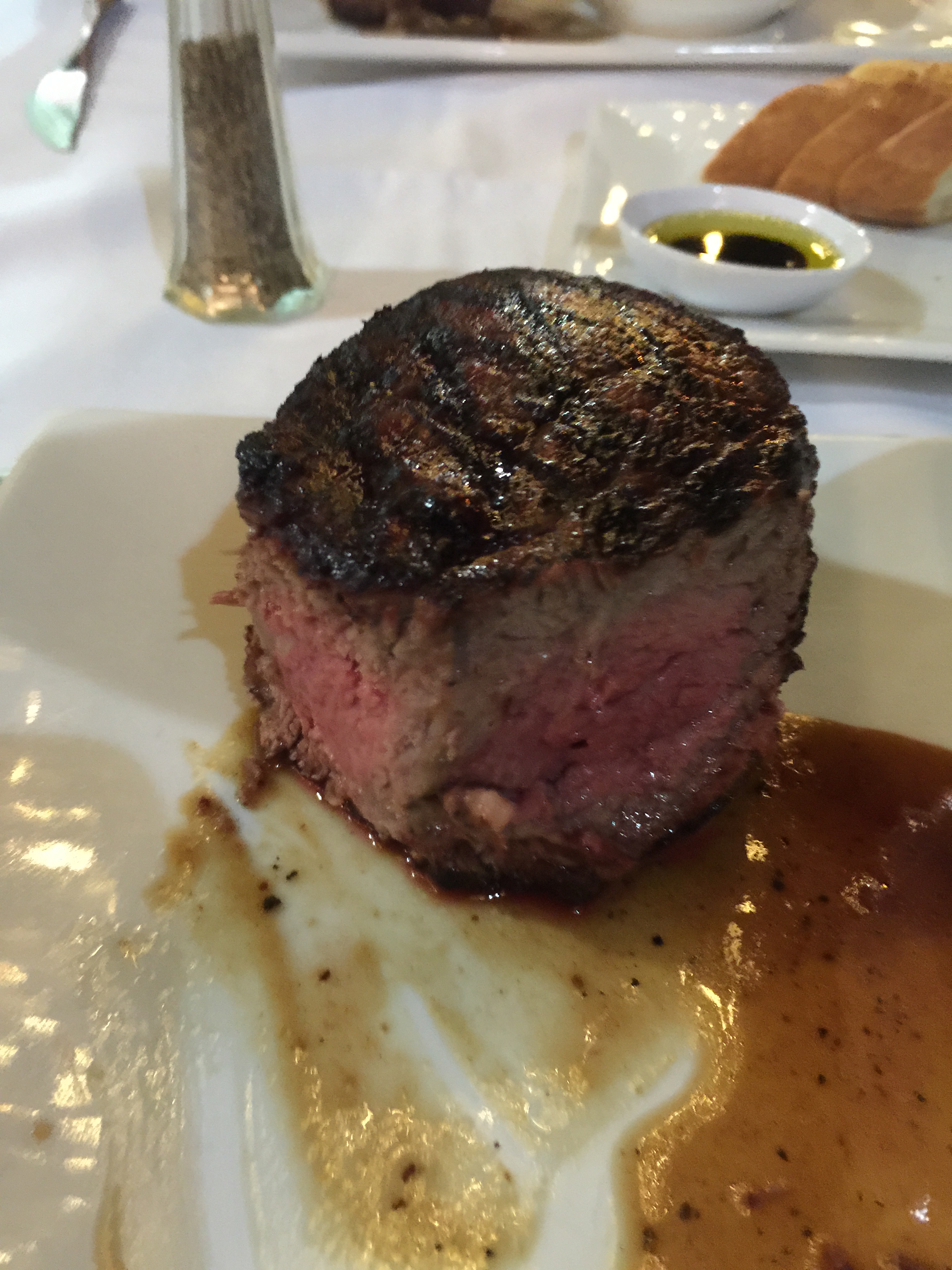
A three inch high fat free medium rare steak. Who could resist that!
A three-inch high fat-free medium rare steak. Who could resist that!

[to be continued]

Vaera, on the run from HK

[from Rav Greenberg, Rosh Yeshivah KBY]

The sages taught us at the end of the Tractate of Ketuvot that “anybody who lives outside of the land is like one who does not have a G-d.” The Baal Hahafla’ah writes that the use of the phrase “is like one” is problematic, because it seems to imply that one who lives abroad has a G-d and merely appears as if he does not have one, while one who lives in the land does not have a G-d but only appears to have one?!

The answer is that we are talking about two different people, a righteous one who lives abroad and an evil one who lives in the land. “The one who lives abroad, even though he studies Torah and performs mitzvot, is like one who does not have a G-d, since he is lacking the mitzva of living in the land, and outside of the land he is under the control of the government and the signs in the Zodiac. But the one who lives in Eretz Yisrael, even if the only mitzva that he has is that of living in the land, appears as if he does have a G-d, since his life is directly under the guidance of the Holy One, Blessed by He.”

I’m temporarily indisposed

Hello readers,
I’m currently overseas and my mind is overflowing with blog posts. Being a much needed holiday, though, I’m avoiding writing so as to rest, and share proper attention to my wife. R Meir Deutsch has a very good post on the censorship of the Rambam which he has been prevented from publishing elsewhere. Meir, knowing the readership can I suggest you email it to me in Ivrit AND ENGLISH as it will have more impact. The issue is too important to allow fallow.

The ‘phenomenon’ never sleeps

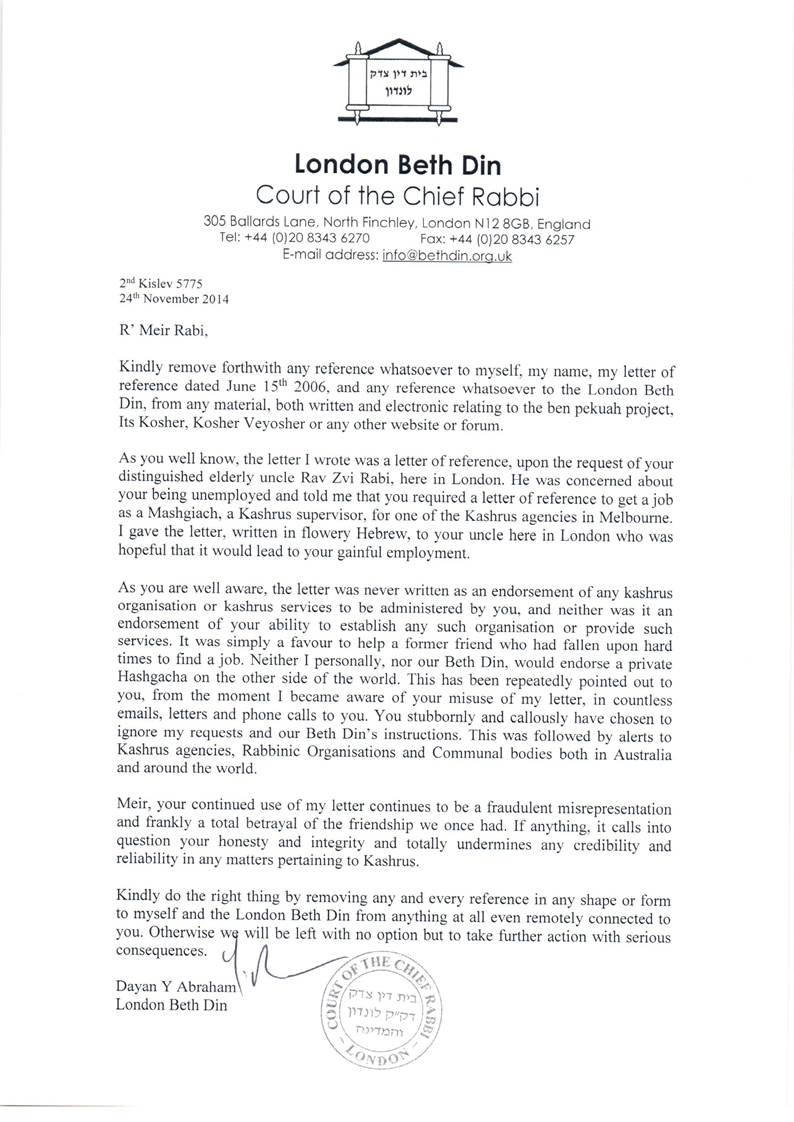
Fresh from his many years of strangulating a letter from Dayan Abraham for his benefit and refusing to take it down ….

Over here in the USA I met Mori VRabbi Rav Schachter. I showed him a picture of the Machshir and business partner of ‘it’s not treyf’ a day after said Person had been to see him and asked permission to take the picture. Rav Schachter agreed provided it wouldn’t be used on his websites. So, what did he do? He went against Rav Schachter and did post the picture on his Facebook page. Splitting hooves again? How much chutzpah can one have?

I was at a day long Yarchei Kalla at YU which was fantastic.

The machshir is going around getting support for his Bnei Pekuah farm.

Don’t be fooled. it’s all under his hashgocho only and not the Rabonim who he seeks to Hob nob with, and then publish his face with theirs together with their views on the theory (which is old and which he has been discussing on the net about for about 6 years)

I had to stop him using his picture as a Gravatar with Rav Belsky because It’s Gneivas Daas on my own blog. Why isn’t he in a picture with his mum and dad?

Anyway, the frum oilom don’t use his hechsher and many who do are those who …..

Git Voch from Crown Heights

Who was yoshke

(Hat tip BA from Toras Abba)

Who was Yoshke, the Xtians believe in ?

The Ravad ( 1st) in his Sefer Hakabala writes Xtians
mistakenly claim that the Oso Ha’ish lived in the times of Hordos and his son Arkiles. Our Mesorah (Sotah 47a) tells us , he was a Talmid of R, Yehoshua ben Prachya,who lived in the times of Yanai Hamelech. This would be 110 years before their claim.

The Tosfos Harosh* (Sotah 47a) writes there are two different Mashichei Sheker mentioned in the Gomoro.

The one in Meseches Sotah is not the Yeisho Hanotzri, mentioned in M. Sanhedrin77a. The Xtians believe in the Yeisho in M. Sanhedrin . He lived 70 years before the Churban. He was hung on Erev Pesach, but he was not a Talmid of R.Y.b Prachya,who lived 180 years before the Churban
The Me’iri ( Sotah 47 & Pesicha to Ms Avos) claims the one that the Xtians believe in is not mentioned at all in the Gemoro. Yeisho and Ben Stadah are not the Yoshke the Christian believe in.

There are numerous intellectuals (lehavdil) who claim, the Xtian Yoshke is a myth and complete fabrication. There never existed .such a person at all. (never mind the so called miracles)

*It’s only in the new print (no censors ksav yad)

Vayigash

Guest post from R Meir Deutsch

(Apologies for sending this late but the internet in New York is slow and flakey)

                    פרשת ויגש                     מאיר דויטש            © כל הזכויות שמורות

נגמרו החלומות של יוסף, החלומות של השרים וגם פרעה סיים לחלום, ואנו חוזרים למציאות. יוסף, העבד היהודי נהיה המשנה למלך והאדם החשוב במצרים. יוסף קורא לאביו ולאחיו לבוא אליו לגלות, וה’ אומר ליעקב: “אל תירא מרדה מצרימה כי לגוי גדול אשימך שם” – שם בגלות תהיה גוי גדול.
“לגור בארץ באנו כי כבד הרעב בארץ”, לגור ולא להשתקע. החליפו את המגורים הניידים של אוהלים לבתים קבועים עם דלתות ומזוזות, נכסים שאינם ניידים. אם לא להשתקע באו, מדוע לא שב יעקב אל ארץ מגורי אביו בתום שנות הרעב – דהיינו אחר 5 שנים, ונשאר שם עד מותו – שבע עשרה שנה?

יעקב עם כל משפחתו ורכושו יורדים למצרים.
“ויקחו את מקניהם ואת רכושם אשר רכשו בארץ כנען ויבואו מצרימה יעקב וכל זרעו אתו.” ומפרט: “בניו ובני בניו אתו, בנותיו ובנות בניו וכל זרעו הביא אתו מצרימה.” (בראשית מו ו-ז),
ובהמשך, ספירת הבאים למצרים ממשפחת יעקב – “יעקב ובניו”.
בבני זילפה אנו מוצאים גד – 8, אשר -8. ס”ה 16 נפשות.
בבני בלהה : דן -2, נפתלי – 5. ס”ה 7 נפשות
בני רחל שבאו עתה מצרימה – בנימין 11 (הפורה שבין האחים).
בני לאה: ראובן – 5, שמעון -7, לוי -4, יהודה -6, יששכר – 5, זבולון -4, ודינה 1. ס”ה 32 נפשות.

כדי לא לטעות ולבדוק שהכול בסדר מבחינה מתמטית מציבים משוואות ובהן המספרים, או האותיות המסמלות את המספרים. גם רבותינו וגם המפרשים הציבו משוואות. יש לנו כאן מספר משוואות.

אם נסכם את המספרים במשוואה שלנו – של כול הנפשות – נגיע למספר האמור בפסוק – ששים ושש: “כל הנפש הבאה ליעקב מצרימה יוצאי ירכו, מלבד נשי בני יעקב, כל הנפש ששים ושש.”
בפסוק האחרון של המניין נאמר “[…] וכל הנפש לבית יעקב הבאה מצרימה שבעים.” כאן יש לנו משוואה נוספת הכוללת, מלבד אותם ששים ושש נפשות, את יעקב עצמו ויוסף ושני בניו. ברור מהפסוקים שחלק מהנתונים במשוואות הם זהים = אותם נתונים.

יש לנו גם את ילדי האימהות. במשוואה של ילדי לאה, אם אנו סופרים את ילדיה, כולל את דינה אחותם, אנו מוצאים 32 ולא כפי שאומר הפסוק “שלושים ושלוש.” אופס! המשוואה לא מסתדרת.

נחזור לספירה שלנו.
בעניין בני לאה, ידוע לנו הנאמר: “רבותינו פירשו: זו [החסרה מילדי לאה] יוכבד, שנולדה בין החומות [במצרים, אבל ההיריון התחיל מחוץ למצרים]” – ראה בראשית רבה ורש”י. לכן אם נוסיף את יוכבד במשוואה נקבל את המספר 33.

מי זאת יוכבד זו?
יוכבד היא בתו של לוי ואחות לגרשון, קהת ומררי.
קהת הוליד את עמרם הנושא לאישה את דודתו יוכבד, שהיא אייזן דודה, דהיינו הדודה הגדולה של משה אבל גם אימו. אם היא נולדה בכניסת יעקב למצריים, אז היא ילדה את משה בגיל 130 (הרמב”ן בפרשתנו דן באריכות בנושא התאריכים), נס גדול יותר מאשר כניסתה של שרה להריון.

רבותינו נוהגים לפתור כל בעיה ובעיה בנפרד. הם מציבים משוואות, כמו אצלנו בילדי לאה, בודקים את הסיכומים, אם לא מסתדר, אז מחפשים ומוצאים את הנעלם – כאן אצלנו את יוכבד. מפליא כי אין הם בודקים אם הדבר שהוסיפו, יוכבד, מתאים למשוואות האחרות. האם שינוי במשוואה אחת אינו משפיע על תוצאת משוואה אחרת.
אם נוסיף את יוכבד לילדי לאה נמצא אומנם את המספר המבוקש שלושים ושלוש. האם אין פתרון של בעיה אחת מביא אותנו לבעיה אחרת? על זה יכול להיאמר: “מה הואילו חכמים בתקנתם”. אם נאמץ דעה זו של יוכבד, הרי אנו נימצא בבעיה גדולה יותר. כאשר סיכמנו את בני יעקב הבאים מצרימה, כאשר בני לאה הסתכמו בשלושים ושתים קיבלנו את התוצאה שבפסוק – ששים ושש. אם נסכם עתה את הבאים מצרימה יוצאי ירך יעקב, כולל כאמור את יוכבד, נקבל ששים ושבע, מספר שאינו שווה לששים ושש שבפסוק! רבותינו פתרו את משוואת בני לאה, אבל בזה פגעו במשוואה של הבאים מצרימה.

כאשר נתקלים בבעיה כזו, אני מנסה להיעזר ברשב”ם. (חבל שברוב החומשים צנזרנו אותו בפרקים הראשונים של ספר בראשית). מה אומר הרשב”ם:

בבני לאה נאמר: “ואלה שמות בני ישראל הבאים מצרימה, יעקב ובניו […]”, דהיינו בספירה הראשונה של 32 צאצאי לאה יש לכלול את יעקב ונקבל 33. אין כל צורך להכניס את יוכבד, שכאמור אינה פותרת דבר רק מקשה עלינו יותר. גם רד”ק מאמץ דעה זאת של הרשב”ם – לא יוכבד.

גם אנו נעזוב את יוכבד לנפשה. הגענו למספרים הדרושים בלעדיה.
אם אין אנו זקוקים ליוכבד במשוואות שלנו, ייתכן וההיריון של אימה ולידתה של יוכבד היו במצריים שנים רבות לאחר ביאת יעקב, ולכן אין אנו זקוקים גם לנס של לידה בגיל 130.

לימוד תורה מתחלק לארבע – ידוע בשם פרד”ס = פשט, רמז, דרש וסוד. הדרש עצמו מחולק לשניים: דרש הלכה ודרש אגדה.
לאחר ההקדמה הקצרה ברצוני לחזור לפרשתנו. האם הצלחנו לתרץ הכול? במשוואות שלנו הכול מסתדר. הכול בא אל מקומו בשלום. אבל-

ברצוני לעבור לרגע לפסוק מו, ז, שם כתוב: “[…] ויבואו מצרימה יעקב וכל זרעו איתו. בניו ובני בניו איתו, בנותיו ובנות בניו, וכל זרעו הביא איתו מצרימה.” פירוט נרחב של הבאים.
נבדוק פסוק זה.
יעקב עצמו בא למצרים.
בניו ובני בניו מנויים בפרשה,
בנותיו, אומנם רק אחת דינה, מופיעה ברשימה.
מי אלה בנות בניו? ברשימה שלנו יש אחת – שרח בת אשר.
יש מפרשים שאומרים כי הייתה עוד אחת מלבד שרח בת אשר והיא אותה יוכבד שהכרנו קודם.
שהייתה רק בת אחת של יעקב קשה גם לרמב”ן. ילקוט שמעוני (פר’ וישב) כותב כי עם כל לידת בן ליעקב נולדה גם בת, לפיכך היו ליעקב יותר מבת אחת – דינה. אבל בין הבאים למצרים לא נמנו יותר מאשר אחת – דינה. על כך משיב הרמב”ן בציטוט מב”ר (פד יט): אמר רבי יהודה לאחיותיהן נישאו השבטים. כאשר מנו את הבאים למצרים הן לא נמנו, כי הנמנים היו “מלבד נשי בני יעקב”. יפה! פתרון אלגנטי. עכשיו כולם בעלי דם כחול.
האם הרמב”ן באמת פתר את הנאמר בפסוק שלנו? כל אותן בנות שנולדו עם בניו של יעקב נישאו לאחיהן. נשארת לנו רק השאלה: מדוע דינה נכללה במניין של יוצאי ירך יעקב שבאו מצרימה? הרי לפי דרש בב”ר (פ יא) – אותו ב”ר שמצטט הרמב”ן קודם – דינה נישאה לאחיה שמעון {ראה רש”י על בראשית מו, י}, והראיה – שאול, הבן של שמעון, הוא בן הכנענית = זאת דינה שנאנסה על ידי כנעני = שכם בן חמור. אבל שכם לא היה כנעני כלל, הוא היה חיווי. אם דינה היא עתה אשתו של שמעון היא צריכה להיכלל בין “מלבד נשי בני יעקב” ולא להיספר כמו כל אחיותיה האחרות, וכידוע לנו היא נמנית ונכללת בספירת הבאים.
אז הינה יש לנו סיפור נוסף מב”ר (פרשה פ) הדן שם בעניין בן הכנענית ומפנה אותנו לדינה: “רבנן אמרין נטלה שמעון [את דינה] וקברה בארץ כנען. ומתנות כהונה אומר שם: וקברה בארץ כנען כי שם מתה, וזולתה לא מת אחד מבני יעקב בארץ כנען, ועל שם כך נקראה הכנענית.” זה פותר את עניין שכם החווי אבל מתחיל להסתבך. הכיצד, לפי דעה זו, הצליחה דינה להגיע למצרים כאשר היא כבר מתה ונקברה בארץ כנען?
אם נאמץ את דברי בראשית רבה שבני יעקב נישאו לאחיותיהן, אז את השאלה האחרונה שלנו לא פתרנו. בעצם לנו, אם נאמץ את הפשט של הנאמר, אין כמעט בעיה, אם אין אנו מאמצים את יוכבד ולא את בנות יעקב שנישאו לאחיהן, ואת דינה כחיה וקיימת. מדוע לא להישאר עם הפשט של הנאמר? גם חזקוני, אבן עזרא ורד”ק אומרים שהזכיר את בן הכנענית כי שמעון עשה שלא כהוגן ולא קיבל את הציווי של אברהם לא לקחת כנעניות – אין כל צורך לערב את בן הכנענית ולהדביק את התואר לדינה. שמעון, כמו אחיו יהודה, נשא לאישה אישה כנענית, למרות שסבא רבה שלו, אברהם, התנגד לקחת מהן אישה ושלח את אליעזר לחפש אישה לבנו יצחק שלא מבנות כנען. גם יצחק ציווה את יעקב “לא תיקח אישה מבנות כנען.” (בראשית כז ב)
השאלה שנשארת היא מדוע בנות יעקב ובנות בניו ברבים כאשר יש רק אחת – בת =דינה, ובת בנו=שרח? על שאלה זו ניתן התירוץ – זה דרכו של מקרא כאשר מדבר ברבים. הרי כשמנה כאן את בני דן הוא כותב: “ובני דן חושים.” לשון רבים למרות שיש רק אחד.

מדרש אגדה מספר לנו אגדות והסברים – הזיות וחלומות. כפי שראינו, הפירוש לפי אגדות מביא אותנו לבעיות נוספות ולא לפתרון בעיות. דיברנו על בני דן חושים – ברבים. מה אומר בראשית רבה, פר’ צד, ה: בתורתו של רבי מאיר כתוב ובן דן חושים.

עלינו לזכור את מה שאומרת הגמרא: “אין מקרא יוצא מידי פשוטו” (שבת סג, ע”א).

יש גם הסברים נחמדים במדרש רבה. אקח דוגמה אחת של מדרש רבה לפרשתנו. כאן משתמש המדרש במשל על פסוק במשלי:
“מים עמוקים עצה בלב איש, ואיש תבונות ידלנה (משלי כ ה). אומר המדרש: משל לבאר עמוקה מליאה צונן והיו מימיה צוננים ויפין, ולא היתה בריה יכולה לשתות הימנה, בא אחד וקשר חבל בחבל ונימה בנימה. משחה במשיחה ודלה הימנה ושתה, התחילו הכל דולים ממנה ושותים ממנה” (בראשית רבה פרשת ויגש פרשה צג).

Artscroll, censorship and the Rashbam

By R Meir Deutsch

ידוע על צנזור הרשב”ם. מעניין הוא כי עתה, היום, עדיין מצנזרים.
האם “ארטסקרול” הפך לצנזור? מי הסמיך אותם לכך? האם יצנזרו מחר את התנ”ך? את התלמוד?

http://www.kipa.co.il/jew/60175.html

הוצאה יכולה להחליט לא לפרסם את אחד המפרשים, אבל לומר כי זה הפירוש של הרשב”ם כאשר מקצצים חלק מדבריו? מי שיצטט את הרשב”ם יקבל הערות מקוראי חומשי ארטסקרול שיאמרו הרי אינך מצטט את הרשב”ם ?
צנזור מאין זה הוא בעצם סילוף דבריו של הרשב”ם.

לדעתי יהיה זה ראוי להוציא חרם על הוצאת “ארטסקרול” על ידי כל רבני ישראל (במיוחד רבני ארה”ב).

Finally a sophisticated positive way to deal with חילול שבת

You don’t have to be Einstein to work out that throwing rocks, shouting shabbos, spitting, overturning Rubbish bins and every bit of meshugass the paleontological neanderthals  attempt to “increase holiness” is a complete ביטול זמן and serves to sever them more from the rest.

Here, is an approach I like. Hats off, as they say

The Admor of Amshinov, Rav Sholom Shimon Kalisch זצ’’ל

In another blog I was asked to post the picture by a commentator, but I can’t recall the article! Anyway, I have in our dining room a picture of the Rebbe זי’’ע. I just took a picture of it with my iPhone. He was very well-known. In Lubavitch he is known because the Rayatz instructed his Chassidim, when the Rayatz was in hiding from the authorities, and unable to respond to their questions to only ask R’ Sholom Shimon. In addition, at the wedding of the last Rebbe, R’ Sholom Shimon walked into the Simcha in the wee hours of the morning while the Rayatz was saying a Ma’amar Chassidus. He must have sensed R’ Sholom Shimon had come in, because in a very rare occurrence, he actually stopped saying the Ma’amar Chassidus until the Rebbe from Amshinov had sat down. In Amshinov, there is also a tradition which I have seen written, that says there is only one sefer that has to be learned to understand all Chassidus, and that is the Tanya of the first Lubavitcher Rebbe.

Interestingly, I heard Rav Schachter saying that a Scholar is now working on an important Sefer comparing the Tanya to the Nefesh Hachaim of R’ Chaim Volozhin, the prime student of the Vilna Gaon (who did not sign the Cherem against Chassidim). The word is that he finds the thoughts and approaches close to identical. I also heard the Rav (Soloveitchik) say this, although he qualified it by saying that the differences are advanced and he doubts many actually understand the differences. The Rav was unique of course in the sense that he knew both those Seforim inside out, and had been taught Tanya by his Lubavitcher Melamed when a boy (but that didn’t matter because the Rav had a superior intellect, as is well known).

As for me, I know nothing about either! The current Amshinover Rebbe in Bayit Vegan,  is well-known as one of the Tzadikei HaDor. He doesn’t get involved in politics, and is a truly incredible Oved Hashem. My only connection is a nostalgic familial one, because my grandmother, Toba Frimet Balbin ע’’ה (née Amzel), who I loved very much and was the engine behind the Balbin family, was from Amshinover Chassidim. She and my Zeyda Yidel are buried in Israel, and I still remember Rabbi Yitzchok Dovid Groner ז’’ל speaking about her before her coffin left from Essendon Airport. Rabbi Chaim Gutnick ז’’ל told me that she used to bring him a present every Purim. I never knew that, and he told me they were all around his house!

PS.  I got this picture from Chayi Glick (nee Rotter), whose mother I believe stems from Amshinov and whom I cajoled incessantly to bring back the picture from New York.

IMG_0773

Parshas Veyeshev: Small acts leading to big consequences

[ I had written this for David Werdiger’s excellent JBD organisation, but received much positive appreciation via private email, so I thought I’d share it here as well. Besides, my kids don’t listen to my divrei torah at home, they say I talk too long. It’s the educator in me 🙂 ]

In Parshas Vayeshev, the Torah relates that after Rachel’s death, Ya’akov’s bed was in Bilha’s tent (because Bilha was Rachel’s handmaiden and Ya’akov’s concubine). Reuven, the eldest son, was upset, feeling that his own mother, Leah, should have been afforded this privilege as she was Ya’akov’s first wife and the one who bore him and most of the sons. Reuven unilaterally moved his father’s bed to his mother Leah’s tent; an act stemming from respect for his mother’s honour. The act itself was not earth shattering, however, its effect was cataclysmic. It signified that the eldest child was prepared to over-rule the overt wishes of a father – the father of all his brothers.

Rav Yosef Dov HaLevi Soloveitchik זצ’’ל: Picture from the Jewish Press

Rav Soloveitchik suggested that this is why the brothers indirectly felt empowered with the chutzpah to commit the regrettable act of selling Yosef, their father’s favourite son. They also assumed a level of personal empowerment. Reuven realises that he is responsible for this ill-advised empowerment. He repents, fasting and praying. What seemed like a small act of moving beds led to a rolling set of momentous events.
The moral is clear. We are all observed microsopically by our children, our friends and our relatives, and society. A seemingly innocuous act may lead to an unconscious outcome of unintended education or even profanation of God’s name. In contradistinction, a seemingly innocuous positive act can be eminently efficacious, leaving a subconscious impression that potentially influences micro and macro history, present and future.

After my father, R’ Shaul Zelig HaCohen’s passing ע’’ה I feel every little act and legacy that he left, suffuses the lives of our wider family. It is in this sense that we say

יעקב אבינו לא מת

and

דוד מלך ישראל חי וקיים

Poetry to my ears, a paunch to my boich

Remember, our parents and grandparents couldn’t have been wrong. Poskim always have trouble saying something is forbidden if Rishonim and Acharonim said it was ok.

Reverend Shimon Allen will of course tell me that there is nothing new in this.

Finally, I have some ammunition. (click on the link)

My father ע’’ה exulting in his yearly dose of Gribenes on Erev Pesach
My father ע’’ה. R’ Shaul Zelig HaCohen Balbin exulting in the yearly dose of Gribenes and liver and Kartofel on Erev Pesach

Veyeishev. Guest Post from R’ Meir Deutsch

We got to Parashat VaYeshev. We reached the dreamers. At first Joseph dreams of Sheaves (ALUMOT) and stars, the King’s bartender dreams together with the King’s baker. We barely finish that Parasha and the King himself, Pharoah, starts dreaming about cows and grain stalks.
Now let us stop dreaming and try to concentrate on Yosef and his brothers.
Let us just consider the text itself, and the Pshat.


פרשת וישב

מאיר דויטש © כל הזכויות שמורות

יוסף חולם את החלומות, וכדי להתגרות באחיו הוא מספר אותם להם. אני, הנער בן השבע עשרה, איני רק האהוב על ידי אבא, שעושה לי במו ידיו כתונת פסים, אלא, למרות שאתם מבוגרים ממני, אני עתיד למלוך עליכם. האם זה פלא שאחיו מקנאים בו, שונאים אותו וזוממים להורגו?
נראה את הטקסט בפרשתנו:

בראשית פרק לז

(יט) וַיֹּאמְרוּ אִישׁ אֶל אָחִיו הִנֵּה בַּעַל הַחֲלֹמוֹת הַלָּזֶה בָּא:
(כ) וְעַתָּה לְכוּ וְנַהַרְגֵהוּ וְנַשְׁלִכֵהוּ בְּאַחַד הַבֹּרוֹת וְאָמַרְנוּ חַיָּה רָעָה אֲכָלָתְהוּ וְנִרְאֶה מַה יִּהְיוּ חֲלֹמֹתָיו:
(כא) וַיִּשְׁמַע רְאוּבֵן וַיַּצִּלֵהוּ מִיָּדָם וַיֹּאמֶר לֹא נַכֶּנּוּ נָפֶשׁ:
(כב) וַיֹּאמֶר אֲלֵהֶם רְאוּבֵן אַל תִּשְׁפְּכוּ דָם הַשְׁלִיכוּ אֹתוֹ אֶל הַבּוֹר הַזֶּה אֲשֶׁר בַּמִּדְבָּר וְיָד אַל תִּשְׁלְחוּ בוֹ לְמַעַן הַצִּיל אֹתוֹ מִיָּדָם לַהֲשִׁיבוֹ אֶל אָבִיו:
(כג) וַיְהִי כַּאֲשֶׁר בָּא יוֹסֵף אֶל אֶחָיו וַיַּפְשִׁיטוּ אֶת יוֹסֵף אֶת כֻּתָּנְתּוֹ אֶת כְּתֹנֶת הַפַּסִּים אֲשֶׁר עָלָיו:
(כד) וַיִּקָּחֻהוּ וַיַּשְׁלִכוּ אֹתוֹ הַבֹּרָה וְהַבּוֹר רֵק אֵין בּוֹ מָיִם:
(כה) וַיֵּשְׁבוּ לֶאֱכָל לֶחֶם וַיִּשְׂאוּ עֵינֵיהֶם וַיִּרְאוּ וְהִנֵּה אֹרְחַת יִשְׁמְעֵאלִים בָּאָה מִגִּלְעָד וּגְמַלֵּיהֶם נֹשְׂאִים נְכֹאת וּצְרִי וָלֹט הוֹלְכִים לְהוֹרִיד מִצְרָיְמָה:
(כו) וַיֹּאמֶר יְהוּדָה אֶל אֶחָיו מַה בֶּצַע כִּי נַהֲרֹג אֶת אָחִינוּ וְכִסִּינוּ אֶת דָּמוֹ:
(כז) לְכוּ וְנִמְכְּרֶנּוּ לַיִּשְׁמְעֵאלִים וְיָדֵנוּ אַל תְּהִי בוֹ כִּי אָחִינוּ בְשָׂרֵנוּ הוּא וַיִּשְׁמְעוּ אֶחָיו:
(כח) וַיַּעַבְרוּ אֲנָשִׁים מִדְיָנִים סֹחֲרִים וַיִּמְשְׁכוּ וַיַּעֲלוּ אֶת יוֹסֵף מִן הַבּוֹר וַיִּמְכְּרוּ אֶת יוֹסֵף לַיִּשְׁמְעֵאלִים בְּעֶשְׂרִים כָּסֶף וַיָּבִיאוּ אֶת יוֹסֵף מִצְרָיְמָה:
(כט) וַיָּשָׁב רְאוּבֵן אֶל הַבּוֹר וְהִנֵּה אֵין יוֹסֵף בַּבּוֹר וַיִּקְרַע אֶת בְּגָדָיו:
(ל) וַיָּשָׁב אֶל אֶחָיו וַיֹּאמַר הַיֶּלֶד אֵינֶנּוּ וַאֲנִי אָנָה אֲנִי בָא:

נחזור לפסוק כ”ח: וַיַּעַבְרוּ אֲנָשִׁים מִדְיָנִים סֹחֲרִים וַיִּמְשְׁכוּ וַיַּעֲלוּ אֶת יוֹסֵף מִן הַבּוֹר וַיִּמְכְּרוּ אֶת יוֹסֵף לַיִּשְׁמְעֵאלִים בְּעֶשְׂרִים כָּסֶף.
ובהמשך כתוב: בראשית פרק לז

(לו) וְהַמְּדָנִים מָכְרוּ אֹתוֹ אֶל מִצְרָיִם לְפוֹטִיפַר סְרִיס פַּרְעֹה שַׂר הַטַּבָּחִים:

ומאוחר יותר נאמר: בראשית פרק לט

(א) וְיוֹסֵף הוּרַד מִצְרָיְמָה וַיִּקְנֵהוּ פּוֹטִיפַר סְרִיס פַּרְעֹה שַׂר הַטַּבָּחִים אִישׁ מִצְרִי מִיַּד הַיִּשְׁמְעֵאלִים אֲשֶׁר הוֹרִדֻהוּ שָׁמָּה:
דעת המפרשים ידועה. מדינים מוכרים לישמעאלים, ישמעאלים למדינים. יוסף נמכר פעמים רבות.

ננסה להתרכז בנושא:
ישמעאלים הם אנשי הובלה של סחורות, וכן האורחה בדרכה למצרים. “נושאים […] הולכים להוריד מצרימה”, וגם המכירה שלהם לפוטיפר אומרת: מִיַּד הַיִּשְׁמְעֵאלִים אֲשֶׁר הוֹרִדֻהוּ שָׁמָּה
מדינים הם סוחרים. נאמר במפורש: “מדינים סוחרים”
אם כן נוכל לסכם:
המדינים מוכרים את יוסף לישמעאלים. הישמעאלים מורידים אותו מצרימה (אנשי הובלה). הישמעאלים, שאינם סוחרים, מבקשים מהמדנים לתווך במכירת יוסף לפוטיפר. נשים לב, לא מדינים אלא מדנים. איני יודע מדוע המפרשים וגם התרגום קוראים למדנים מדינים. מי הם המדנים? ניזכר בפרשת חיי שרה וילדיו של אברהם מקטורה:
ותלד לו אֶת זימרן, ואת יוקשן, ואת מדן, ואת מדין …. (בראשית כה, ב). בין צאצאיו היו שני בנים: מדן ומדין.

מה שנאמר כי פוטיפר קנה את יוסף מהישמעאלים, נוכל לומר – ככתוב, המדנים מכרו אותו לפוטיפר, ופוטיפר קיבל את יוסף מיד הישמעאלים, המובילים, להם היה שייך.

ברצוני להתעכב בפסוק כ”ח: וַיַּעַבְרוּ אֲנָשִׁים מִדְיָנִים סֹחֲרִים וַיִּמְשְׁכוּ וַיַּעֲלוּ אֶת יוֹסֵף מִן הַבּוֹר וַיִּמְכְּרוּ אֶת יוֹסֵף לַיִּשְׁמְעֵאלִים בְּעֶשְׂרִים כָּסֶף.
נתאר את המאורע לפי הפשט.
בעצת ראובן שרצונו להציל את יוסף ולהחזירו לאביו, יוסף מושלך על ידי אחיו לבור במדבר.
האחים מתרחקים מהבור שבמדבר ויושבים לאכול לחם, משם הם רואים אורחת ישמעאלים מובילה סחורות, בדרכה למצרים.
יהודה מציע למכור את יוסף לישמעאלים. האחים שומעים את ההצעה. ההצעה לא זוכה לדיון, לא זוכה להסכמת שאר האחים ולא נעשית כל פעולה על-ידם, כמו שנאמר: “וישמעו אחיו”. לא אמרו איש אל אחיו נמכרנו.
סוחרים מדינים עוברים במקום – כנראה שבני יעקב לא רואים אותם. המדינים רואים את יוסף בבור או שומעים רעשים ובודקים עם נמצא מישהו בבור. הם, המדינים, מעלים את יוסף מהבור ומוכרים אותו לישמעאלים.
בינתיים, כאשר ראובן שמע את הצעת אחיו יהודה למכור את יוסף, הוא משאיר את אחיו ליד שולחן האוכל ורץ אל הבור, לפני שאחיו ידונו בהצעתו של יהודה ויקבלו החלטה, וזאת כדי להציל את יוסף ולהחזירו לאביו. כאשר מגיע ראובן אל הבור כבר עזבו המדינים את המקום. הוא מפנה מבטו אל הבור, סוקר את הבור פעם או פעמיים ולא מוצא בו את יוסף. הוא חוזר אל אחיו הסועדים, קורע בגדיו ואומר להם: “הילד איננו”.

זה הסיפור לפי הפשט. האחים לא העלו את יוסף מהבור, הוא גם לא נמכר על ידם. לא רק ראובן, אלא גם אחיו הופתעו כי יוסף נעלם מהבור.

ננסה לראות האם נוכל לקבל את הטענה כי האחים מכרו את יוסף.
נחזור לפסוק: וַיַּעַבְרוּ אֲנָשִׁים מִדְיָנִים סֹחֲרִים וַיִּמְשְׁכוּ וַיַּעֲלוּ אֶת יוֹסֵף מִן הַבּוֹר וַיִּמְכְּרוּ אֶת יוֹסֵף לַיִּשְׁמְעֵאלִים בְּעֶשְׂרִים כָּסֶף.
אם האחים מכרו את יוסף, אז הפסוק צריך להיות כך:
וַיַּעַבְרוּ אֲנָשִׁים מִדְיָנִים סֹחֲרִים וַיִּמְשְׁכוּ (או וימשכו אחיו) וַיַּעֲלוּ אֶת יוֹסֵף מִן הַבּוֹר וַיִּמְכְּרוּ אֶת יוֹסֵף לַיִּשְׁמְעֵאלִים בְּעֶשְׂרִים כָּסֶף. לראשית הפסוק אין כל קשר למאורע. אם האחים מכרוהו, מדוע מוזכרים כאן בכלל המדינים: “ויעברו אנשים מדינים סוחרים”? הרי, כאמור, אין להם כל חלק בסיפור שלנו, לא בהוצאת יוסף מהבור ולא בסחר עם הישמעאלים. המכירה הייתה על ידי האחים לישמעאלים ישירות.
האין זה מחזק את הטענה כי הם, המדינים, הם אלה שהעלו את יוסף מהבור ומכרוהו?

אם האחים היו המוכרים, הרי, כאשר זועק ראובן בשובו מהבור “והילד איננו”, ודאי היו אומרים לו אחיו: “ברור שאיננו, הרי מכרנו אותו. הנה חלקך מעשרים הכסף שקיבלנו עבורו“. האם גם אחיו היו מופתעים כמוהו שהילד איננו?

Guest post from R’ Meir Deutsch on Chanuka

What is Chanuka? This is the question in Mesechet Shabat. The question wants actually to give an answer to two customs; why are we celebrating eight days, and why are we lighting candles. The answer comes in a compact package – a can of oil sealed by the high priest.
Happy Chanuka.

חנוכה
מאיר דויטש © כל הזכויות שמורות

בתלמוד מוזכרים שני חגים שאינם מחגי התורה – פורים וחנוכה. בשניהם אנו אומרים “על הנסים”. כידוע, לפורים יש מסכת שלמה – מסכת מגילה, כמו כן מגילה שלמה שהיא מגילת אסתר, וכל זה על נס שקרה מחוץ לגבולות הארץ, בגולה. מה יש לנו לחנוכה? לא מגילה ולא מסכת. לכן אין זה מפליא שהגמרא צריכה לשאול “מאי חנוכה?”
על כך משיבה הגמרא במסכת שבת כא, ב: “בכ”ה בכסליו ימי חנוכה תמניא […] כשנכנסו יוונים להיכל טמאו כל השמנים שבהיכל, וכשגברה מלכות בית חשמונאי ונצחום, בדקו ולא מצאו אלא פך אחד של שמן שהיה מונח בחותמו של כהן גדול, ולא היה בו אלא להדליק יום אחד, נעשה נס והדליקו ממנו שמונה ימים, לשנה אחרת קבעום ועשאום ימים טובים בהלל והודאה”. לפי התלמוד הנס הוא פך השמן. האם לפך שמן שבער שמונה ימים צריך לקבוע לדורות שמונה ימים טובים והלל והודאה? בתשובת התלמוד אין כל זכר לניצחונות על צבאות אדירים על ידי קומץ של חקלאים. אפילו כיבוש ירושלים ושחרורה אינו מוזכר. כמו כן אין אזכור לטיהור המקדש ובניית מזבח חדש. יש רק נס אחד – פך השמן.
על ההיסטוריה של אותה תקופה אנו למדים מספרי החשמונאים ומיוספוס, ואולי מעט מתפילת “על הנסים” שבה אנו אומרים: “מסרת רבים ביד מעטים […] וטיהרו את היכלך”, מעניין כי בתפילה זו לא מוזכר פך השמן. מדוע אין זכר לכל הדברים הללו בתלמוד? האין הניצחונות וטיהור המקדש נסים גדולים מפך השמן? יש האומרים כי דעתם של חז”ל לא הייתה נוחה מבית החשמונאים, שהמליכו את עצמם אף על פי שהיו משבט לוי ולא מבית דוד. טענה זו אינה עומדת מאחר שתפילת “על הנסים” משבחת את בית החשמונאים. אולי חכמינו לא ראו בניצחונות החשמונאים ובטיהור המקדש דבר גדול משום שבימיהם הארץ הייתה נתונה תחת שלטון זר, בית המקדש כבר לא היה קיים, והניצחונות איבדו את משמעותם. לתשובה זו מצאתי סימוכין. בהקדמה למגילת תענית כתב המקבץ: “הנה באתי במגילת תענית לקרות הנסים ונפלאות שנעשו לאבותינו שקבעום על ידם לעשות יו”ט באותן ימים”. חכמינו שאלו: “תנו רבנן: מי כתב מגילת תענית? אמרו: חנניה בן חזקיה וסיעתו, שהיו מחבבין את הצרות” (שבת יג, ב).
האין זה מפליא כי ספר המתאר נסים ונפלאות, לפי הגמרא, חיברו אותו “מחבבי הצרות”? כנראה שהזכרת הטובות של אז, אשר אינן קיימות היום, היא כעין “הזכרת צרות”, לפיכך קבעו חכמינו הלכתא: “בטילה מגילת תענית” (ראש השנה יח, ב), בכך ביטלו גם את “יום ניקנור” אותו יכולנו לחגוג יחד עם יתר הניצחונות של בית חשמונאים.
תשובת הגמרא לשאלת “מאי חנוכה” ופך השמן תמוהה. הרי המקדש כולו חולל והיה צריך לטהרו, אין מזבח ואין לחם הפנים, אבל גם אין מנורה כי היא נלקחה על ידי היוונים. בית חשמונאי בנה מנורה חדשה. בתחילה נעשתה משיפודים של ברזל מצופים בעץ, העשירו ועשאום מכסף, חזרו והעשירו עשאום מזהב (ראש השנה כד, ב; עבודה זרה מג, א; מנחות כח, ב.). הכול טמא! אם הדבר החשוב ביותר היה למצוא שמן טהור? מדוע אם כן, במקום לחכות לנס, לא החלו בייצור מעט שמן בירושלים עד שיוכלו להביאו מתקוע שבגליל? המהרש”א אמר כי לא יכלו לעשות זאת כי כולם היו טמאים. אם כך המקדש טמא, בוני מנורת השיפודים טמאים, מדליק המנורה טמא, ורק השמן במנורה טמאה הוא טהור!

בשאלת הגמרא “מאי חנוכה” נשאלות למעשה השאלות: מדוע חג של שמונה ימים ומדוע מדליקים נרות.

כאמור, ספרי החשמונאים מספרים לנו מעט על ההיסטוריה של אותה תקופה. ספר ב’ מספר על איגרת:
“אל היהודים אשר במצרים ובברכה מאת האחים היהודים בירושלים ובארץ יהודה שלום רב. […] ונתפלל לה’ ויעתר לנו, וזבח ומנחה הבאנו והדלקנו את הנרות ונערוך את הלחם. ועתה עשו את ימי חג הסוכות בחודש כסלו” (א”ש חרטום, הספרים החיצונים: חשמונאים ב, תל-אביב 1979).

באותו ספר בפרק העשירי כתוב: “ביום עשרים וחמישה לחודש ההוא, הוא כסלו, חגגו שמונה ימים כחג הסוכות, בזכרם כי לפני זמן מה בילו את ימי חג הסוכות בהרים ובמערות”. וכיצד הוא נחוג אז? “במקלות מקושטים ובענפים המצויים בעונה ההיא ובתמרים הודו לה’ על אשר הצליח דרכם”.
לפי ספרי החשמונאים, בחודש כסליו היה כבר המקדש טהור, הוקרבו זבחים, הדליקו נרות וערכו כבר גם את לחם הפנים. לא מסופר בספרי החשמונאים על נס פך השמן, וגם אצל יוסף בן מתתיהו הוא אינו מוזכר. הקריאה של הלוחמים לאחיהם במצרים היית לחוג את חג הסוכות בחודש כסליו.
יוספוס קורא לחנוכה “חג האורים” או “חג הנרות”. גם בסוכות מוזכר חג האורים בשמחת בית השואבה.
“מי שלא ראה שמחת בית השואבה לא ראה שמחה מימיו. במוצאי יום טוב הראשון של חג ירדו לעזרת נשים ומתקנין שם תיקון גדול. מנורות של זהב היו שם, וארבעה ספלים של זהב בראשיהם, וארבעה סולמות לכל אחד ואחד, וארבעה ילדים מפירחי כהונה, ובידיהם כדים של מאה ועשרים לוג שהן מטילין לכל ספל וספל. מבלאי מכנסי כהנים ומהמייניהן, מהן היו מפקיעין, ובהן היו מדליקין. ולא היה חצר בירושלים שאינה מאירה מאור בית השואבה” (סוכה דף נא עמוד א).

התלמוד ממשיך (סוכה דף נג עמוד א): “תניא, אמרו עליו על רבן שמעון בן גמליאל כשהיה שמח שמחת בית השואבה היה נוטל שמנה אבוקות של אור, וזורק אחת ונוטל אחת ואין נוגעות זו בזו”.
האם אנו יכולים ללמוד גם מחכמינו כי יש קשר בין חנוכה לסוכות? חנוכה הוא החג היחיד שאינו מוזכר בכתובים בו גומרים את ה”הלל” (לפני שנקבע לאמרו ביום העצמאות וביום ירושלים). הגמרא בירושלמי, סוכה ד, ה אומרת: “שמונה עשר יום ולילה אחד קורין בהן את ההלל בכל שנה [הכוונה “הלל” שלם] שמונת ימי החג [סוכות ושמיני עצרת] ושמונת ימי החנוכה ויום טוב של עצרת [שבועות] ויום טוב הראשון של פסח ולילו”.
לפורים יש מגילה שלימה ויש גם מסכת, אבל אין אומרים בו את ה”הלל”, לעומתו, בחג החנוכה, גומרים את ה”הלל” כמו בחג הסוכות.
קשר נוסף נמצא במחלוקת בין בית שמאי ובית הלל על הדלקת הנרות. גם אם לא מוזכר שם במפורש חג הסוכות, הרי ניתן לנו רמז: “בית שמאי אומרים יום ראשון מדליק שמנה מכאן ואילך פוחת והולך, ובית הלל אומרים יום ראשון מדליק אחת מכאן ואילך מוסיף והולך”. ישנה מחלוקת מה הטעם של בית שמאי ובית הלל, אחת הדעות היא: “וחד אמר: טעמא דבית שמאי – כנגד פרי החג [שבקורבנות חג הסוכות היו פוחתים והולכים בכל יום], וטעמא דבית הלל – דמעלין בקדש ואין מורידין. אמר רבה בר בר חנה אמר רבי יוחנן: שני זקנים היו בצידן, אחד עשה כבית שמאי ואחד עשה כדברי בית הלל, זה נותן טעם לדבריו – כנגד פרי החג, וזה נותן טעם לדבריו – דמעלין בקדש ואין מורידין” (שבת כא, ב).

נשאל את עצמנו: לדעת בית שמאי, מה עושים פָּרֵי החג של סוכות אצל נרות חנוכה? אם אין קשר בין חג הסוכות לחנוכה, מה מביא אותם להשוות קורבנות של חג הסוכות שמספרם הולך וקטן לאופן הדלקת נרות בחנוכה? האם אין הדבר מצביע על הקשר בין שני החגים? אנו רואים כי גם בתלמוד קשרו בין חנוכה לסוכות.

Absolutely brilliant

Watch this

Make up your own mind on Meir Rabi and his reliance on Dayan Abraham for credibility

unnamed

Hygienic toilet flushing additives on Shabbos

As I generally do, I read the Heichal HaTorah publication, with sections from Rav Donenbaum, the respected Brisker Moro D’Asro of Heichal HaTorah on Friday nights. In last week’s section, he discusses the issue of the different types of toilet cleansers available on the market designed to keep the bowl/water fresh and clean. As I recall, the article started off with an assumption which I question, and which I believe is a key point in the analysis. Specifically, he assumes that a resultant colouring that may emanate from these solid chemical inserts adds to the hygienic “feel” of a toilet after flushing: Rav Donenbaum put the word hygienic in inverted commas.

My personal feeling, and I stress I am not a Posek, is that the colour itself adds absolutely nothing to any hygiene or feeling of such. In fact, from my perspective, it’s actually more of a divergence from the real state of the cleanliness of the toilet bowl as it serves to camouflage! I know many people who refuse to use it during the week because it’s horrid to look at, and really doesn’t tell you much.

If and when I go to a toilet, and the water looks crystal clear, I have far more confidence in the cleanliness, than when I see some dark blue (or other colour) water which may well be masking. Indeed, there are products that don’t have colour that are just as efficacious. Therefore, I would say that it’s hardly a situation of ניחא ליה based on ‘hygiene’ as Rav Donenbaum assumes and if you want to argue that it is ניחא or then go down a path of גרמא when it’s in the cistern then I’d say that in the least one should not make an objective ruling on an aspect which is entirely subjective.

The Halacha is clear. There is no prohibition in colouring food or liquid foods. This is the overwhelming opinion, as held by both the Mechaber and the Rama. Yes, it is true that the Sha’ar HaTziyun of the Chafetz Chaim says that someone who is punctilious should seek to avoid these situations. Others, such as the Aruch Hashulchan, Tzitz Eliezer, Chacham Ovadia and many more disagree and blankly permit it as noted in a footnote by Rav Donenbaum.

The same permission is applied to Molid Reach (creating a smell) especially when that smell is hardly lasting even if you buy a rolls royce version of such products. The cohanim used to use perfumed water on Shabbos when they washed their hands. This is an open Gemora (which I can’t remember the source of). Putting a smell on clothes or hair is a different category, because it lasts. A Melocho that doesn’t last, is considered by Rishonim and Acharonim as not a Melocho.

There is some discussion about the different types of devices and certainly the ones where the chemical device is placed in the uppermost bowl is argued as less problematic, as the water is already coloured, and it could be argued that one doesn’t care about what happens next and it is Gromo, rather than an intentional colouring. I am not sure that this argument is correct.

I don’t believe that the colouring serves the purpose that Rav Donenbaum is working with, namely, to give the feel that the bowl is now “hygienic”.

As a musician and frequent traveller, I have been to many putrid toilets in hotels and function rooms, where the water in the bowl is a “fresh” blue or green. I have never felt it cleaner simply because of the colour. They are often foul and stink. One might argue that if hygiene and smell was an issue, then using a toilet brush is the way to go, followed by another flush (I assume that Rav Donenbaum permits flushing toilets, although some Poskim are against it full stop).

If my memory serves me correct, some Chazon Ish types prefer to line the bowl with cotton wool so no “noise” is created (or is that one of those apocryphal jokes?)

I discussed the matter with Mori V’Rabbi Rav Schachter who felt that it was not permitted but for the simple reason that it is ניחא ליה whether it’s in the cistern or below because the colour shows whether the device is still working and hasn’t lost it’s efficacy. When one sees the colour fade, one knows they have to replace it.

I asked Rav Schachter whether I should speak to one of the companies, such as Harpic, and ask them why their blue module colours the water blue and to use the argument of מסיח לפי תומו and he said this was a very good idea. I went to the harpic site and lo and behold they stated explicitly

Let’s you know when it needs replacing by fading

Accordingly we see this mentioned explicitly. There is no doubt in my mind, that a chemical doesn’t have to be blue (coloured) to deodorise and kill germs and emit a pleasant smell. The primary purpose is to tell you when it needs replacing and is therefore forbidden. Rav Schachter mentioned this was different to a cup of tea, where the colour and colouring is immaterial.

Of course, I haven’t paskened in any way, I have quoted from my personal discussion with Mori Rav Schachter. תורה היא וצריכים ללמוד

Farewell Rabbi Yaakov Sprung

Please note: there will be no comments on this post.

I am not a member of Mizrachi. I used to be, about three decades ago, and my Rav was the saintly Rav Boruch Abaranok ז’’ל. Rav Abaranok was a Tzadik Gamur. He wasn’t a Beinoni. He was the real thing. He received his Smicha from the Chafetz Chaim and was friendly with Rav Elchonon Wasserman הי’’ד. He didn’t wear a Kippa Sruga (knitted yarmulka) and wore a dark suit and homburg hat. He wasn’t a great orator, but his words in a one on one situation, penetrated the heart more than any orator could achieve. He was also a staunch zionist, and supported the State of Israel in a genuine fashion. I have written about him here. When he paskened, he would subsequently invite you to come the next day or that night, to his office or home, and have all the Seforim open and prepared, and would explain from inside how he had come to his Psak Din.

Our son, Tzvi Yehuda, now famous for his incredible and successful chasing kosher side venture, was fortunate to have Rav Abaranok as his Sandek. I remember being flabbergasted when he arrived at the door for both the Bris and subsequent Upsherin, each time carrying a gift of Seforim. Our younger son, Yosef Dov who is learning in Israel presently, was also lucky to get a set of Seforim from Rav Abaranok ז’ל.

On Shabbos he wore a black litvishe kapote much like the dress of the Ashkenazi Chief Rabbis of Israel.

I used to bring our children (two back then) to Rav Abaranok almost every Sunday morning. His children and grandchildren were all overseas, and his wife nebach, was with him but not 100% due to her horrid experience in the Holocaust.

Rav Abaranok became very sick after a fall (as I recall). I had a strange sense that he was about to leave this world. It was too difficult for me to absorb emotionally, so I started visiting less often. He would ask me, if he saw me, “Yitzchok, what did I do. Why don’t you come anymore?”. He never realised that I couldn’t cope with seeing him slip away.

On his first Yohr Tzeit, I went and stood outside his house (which is no longer there) and just cried.

While he was still at Mizrachi, the community decided to appoint a new Rabbi. I stopped going because my father ע’’ה asked me to (the reason for which is immaterial to this post)

That Rabbi was replaced by the recently deceased and well-known, Rabbi J. Simcha Cohen ז’ל. Many members of our family still daven at Mizrachi and my brother-in-law is now the President. I was fortunate to have occasions to interact with him. My interactions were always of a Torah/Halachic nature and I enjoyed speaking “in learning” with him. He had a pleasant disposition and was a professional American style Rabbi with lots of grandeur.

Rabbi Cohen eventually left (I believe of his own accord, but I can’t recall), and was replaced by Rabbi Sprung.

Rabbi Sprung will complete 10 years of Rabonus at Mizrachi in August. I went to his home every Purim (even though he stopped serving scotch after the first year :-), and we shared divrei torah and halachic discussions. On one occasion, when there was an  injustice in the community, he was the Rabbi who was prepared to stand up, by ringing overseas, properly ascertaining facts, when he could easily have avoided the issue. He made a difference.

My wife loved his Shabbos Shiurim, and went every Shabbos to hear these. She said that he put so much preparation into each Shiur. He seemed to always be giving Shiurim. He went from minyan to minyan at Mizrachi and gave droshos. He enjoyed good relationships with the Roshei Kollel of Mizrachi’s Kollel and other Rabbinic staff.

His pastoral support was incredible. He would visit the sick, comfort the mourner or the forlorn, and his door was open. Recently, one post was perhaps too revealing about my state of mind. He doesn’t read blogs, but someone had mentioned it to him. On the next morning, I got a phone call wherein he expressed concern for me, and stressed that whenever I needed or wanted to discuss anything with him, to do so, and that his door was always open. My father ע’’ה was in hospital several times. Rabbi Sprung always visited him amongst many others. I know my father greatly appreciated Rabbi Sprung’s visits. He was in fact the only Rabbi to visit him.

Rabbi Sprung on the far left. [picture from melbourne eruv website]
On Simchos (Smachot if you want to use Ivrit) he would meticulously prepare by interviewing everyone, and then weave a wonderful Drosha where he paid tribute to the attributes of the Ba’alei Simcha and their families. I heard such Droshas many a time. We invited him and his Rebbetzin to our own Simchos, as I considered him a Choshuve Rav with whom I had developed a relationship.

Mizrachi is not like other Kehillos. There are a lot of “leaders” of other organisations who are highly opinionated who daven there as well as many highly educated professionals and “machers”. Rabbi Sprung’s fidelity to Halacha was unquestionable. He wasn’t afraid to state his firm halachic view on a range of issues, including those who led services at the conservadox Shira Chadasha (an identical view with which Mori V’Rabbi Rav Hershel Schachter agrees). These types of issues may have made him be seen as too “right-wing”, but I can’t know that with certainty. I can only describe my interaction. Perhaps Mizrachi will now employ a hatless, Kipa Sruga type. Time will tell.

Towards the end of his Rabbonus contract in August, Mizrachi decided that it would only extend the contract after a democratic vote of all members. I can’t recall whether they had a democratic vote to appoint him, but I do recall there were a few candidates. One can surmise that after 10 years in the role, some no longer appreciated what he offered.

I am sad to see Rabbi Sprung’s tenure at Mizrachi Melbourne come to an end. Knowing him, he will see it as Hashgocho (divine providence) and depart as gracefully as when he arrived. I know he was widely respected by the Melbourne Rabbinate, and he avoided politics when  possible. I’m guessing Rebbetzin Naomi Sprung may feel somewhat blessed that she has an opportunity to relocate to an area closer to her children and grandchildren. Melbourne, isn’t exactly close by, and to be dislocated from family would be a strain for anyone.

I wish Rabbi and Rebbetzin Sprung immediate future success, together with lots of Nachas and joy.

We now wait to see who the (democratically elected?) new Rabbi will be.

Rebbetzin Bashi Twersky speaks

In a earlier blog post, I felt that we need to be more nuanced in the way we express our opinions on why God allows/does things. One of the Seforim I learned back in days gone by was ספר העיקרים by one of the Rishonim, Rav Yosef Albo. It “spoke to me” at the time, and I used to learn it during Mussar Seder. I remember the Mashgiach noticed what I was doing, but he (sensibly) “let me be” and learn what my heart desired. He said nothing. I don’t know if they have reprinted this Sefer, but my original one seems to have gone walk about. If I remember correctly, it was in the second perek where he wrote a phrase which has stuck with me since

לו ידעתיו – הייתיו

If I knew Him (God), then I’d be Him.

In other words, attempts to know exactly why, are axiomatically impossible.

That doesn’t mean to say that one can’t surmise, one can’t draw lessons, or one can’t initiate a Drush. But, one can’t say this is why X happened, unless God himself, or a Navi is commanded to tell us.

I think her point below is excellent and salient. Some would say I’m even guilty of promoting it, which may be true, but isn’t and wasn’t ever my intention. My only quibble with what she says relates to the cause/effect nature of her statement which implies that we know for sure.

Again, I do not disagree with her point. She is clearly an intelligent lady. This is a snippet from the Jerusalem Post

Bashi Twersky, the widow of Rabbi Mosheh Twersky – who was killed in the Har Nof terrorist attack last week – said the internal divisions within the ultra-Orthodox community that have developed over the last two years were the (my emphasis) reason why her husband and three other members of the community died in the brutal incident.

Speaking at the mass prayer rally and ceremony held in the Jerusalem neighborhood on Tuesday night for the end of the shiva mourning period for the victims, Twersky said the dispute had become increasingly acrimonious over the last year in particular.

She was alluding to the establishment of a new political movement and party that is in competition with the traditional Degel Hatorah non-hassidic haredi party.

She said that the attack had been particularly brutal, and asked how such a death could befall those praying in synagogue, “how did the sanctity of the synagogue and prayer not defend us,” she asked.

“The fire of dispute has been burning among us for a year now, and this dispute became terrible, and every day it gets worse.”

“Someone who listens to a great rabbi different from the one I listen to, someone who belongs to a different camp from me is commanded to be cruel to them, is commanded to humiliate and disgrace them, to harass them with terrible brutality.

“When we behave with cruelty to our brothers, God sends a punishment with cruelty, measure for measure.

“In synagogues and study halls they persecuted, disgraced and humiliated those who think differently from me, and therefore we were struck by the attribute of strict justice in a synagogue at the time of prayer,” the rabbi’s wife said.

She added that strengthening religious observance, as has been advised by many rabbis, was not a good enough reaction, and that rather a “drastic change” was required.

AMI MAGAZINE INTERVIEWS RABBI MENACHEM GENACK, CEO OF OU KOSHER

[Hat tip BA]

November 24, 2014

Rabbi Hershel Schachter once told me that if there’s a disagreement in matters of halachah at the OU between him and Rabbi Yisroel Belsky, you are the deciding vote.

The halachic decisors at the OU are the three of us. So if there’s a dispute the majority rules.

You’re also involved in running the office?

Yes. That is part of my responsibilities.

Have standards been lowered over the years to expand and broaden the kosher market?

I think that generally during my 35-year tenure as the CEO of the Orthodox Union’s Kosher Division the standards have actually been enhanced. There’s a good side to the kosher market’s expansion, and a less good side. Rabbi Berel Wein would often bemoan the fact that we’re seeing a lot more “glatt” kosher and a lot less “standard” kosher, a lot more “shmurah” matzah and less “regular” matzah. My own experience growing up in America was that even the Conservative Jews had two sets of dishes. While they weren’t necessarily careful about kashrus outside the home, they were nonetheless careful inside the home. Unfortunately, because of the erosion of the Jewish people to assimilation, that broader commitment has weakened dramatically.
Coextensive with that, we’ve seen the growth of the Orthodox community, especially the chasidic and yeshivish com-munity, which is much more careful and demanding about kashrus. This is expressed most dramatically by the fact that in the 1940s there was no such thing as glatt kosher in America. Glatt kosher began to emerge primarily when Satmar came to America after the war. Before that it didn’t exist. Rav Moshe Feinstein never ate glatt kosher because according to the Rema one doesn’t have to. Today in the OU market everything is glatt. The driving force is the consumer market, which today is much more stringent in this matter.
We’ve actually seen conflicting attitudes. On the one hand, the frum community became much more demanding in terms of kashrus, but we’ve also seen the degrading of kashrus by the general population, which is very unfortunate. It’s unfortunate because we want them to be careful regarding kashrus, and also because kashrus is something that binds them together as Jewish and is a bulwark against assimilation.

When I studied in Lakewood, I remember the yeshivah used food products that I don’t think they would use today.
I have the same recollection. I remember when I was in Lakewood in the ’60s they used regular Rice Krispies, and so on. I don’t think that’s the case anymore. When Rav Aharon Kotler started Lakewood, he wasn’t makpid on chalav Yisrael. The famous story that’s told is that when he was finally convinced to switch to chalav Yisrael it came in a big canister, which overturned, and he was very upset about the entire switch.

The OU still certifies kosher chalav akum.

We’re sensitive to those who are diligent about chalav Yisrael. If something is used with what Rav Moshe called “chalav hacompanies,” we list it as OU-D on the ingredients. And when we certify products that are chalav Yisrael we indicate that.
The Chazon Ish has a discussion about chalav Yisrael and he quotes the Pri Chadash, that when there’s pikuach hamemshalah [government supervision] it’s muttar. It’s interesting to cite what Rav Wosner writes in Shevet Halevi that when the Chazon Ish wrote this, Rav Wosner recommended he not print it, since the Chasam Sofer does not permit it. However the Chazon Ish didn’t agree with him. Rav Moshe in his teshuvah claims that government supervision is good even according to the stringent position of the Chasam Sofer. So that’s the OU’s position in terms of dairy products. We have many products we give supervision to that are chalav Yisrael.

The consumer should know what the differences are between local chasidishe hashgachos and the major hashgachos. Would you agree with that?

100%.

Do you find those hashgachos to have more chumros?

I think the OU generally has more chumros. All the hashgachos we give we believe are l’chatchilah. We’re dan on everything. We record everything in terms of the halachos, the psakim. We have a secretary, a safra d’dayna, Rabbi Eli Gersten, who’s a very big talmid chacham. We don’t do things on a b’dieved level in shechitah or any production we certify. I think people have come to recognize that. One of the reasons is the level of the rabbanim we employ. There are over 50 rabbanim working in my office, not to mention the people in the field. These are musmachim of our finest yeshivos. They’ve come to recognize that the OU is a purely communal, non-profit organization. Beyond our salaries, we’re not the beneficiaries of even a penny that the OU earns. It goes right back into the Jewish community in terms of kiruv and to the Yachad Program, for children with disabilities. I think that makes the OU unique.

While there are three fine rabbanim in charge of the OU, we also have to rely on the individual mashgichim and on the credibility of the owners of companies. So while we may be able to rely on the OU, that doesn’t necessarily mean that the product is kosher.
Every hashgachah is based ultimately on the credibility of the entrepreneur who’s running it. If we find someone who’s dishonest, it doesn’t matter if he’s a Jew or a non-Jew; we remove our certification.

Rabbi Schachter told me that China is very problematic, since Chinese entrepreneurs have been caught cheating many times. With that in mind, how comfortable can we feel that we’ll actually be eating kosher at the end of the day?

In terms of China, as the global economy expanded, American companies started sourcing ingredients from every corner of the world. That requires us to go to China and other far-flung places. We inspect all these plants. We have people in China. And, generally speaking, the ingredients we use coming from China are in most cases ingredients that are relatively innocuous. We look at the kashrus sensitivity of the product. We inspect all the plants. The need is there because of globalization.

You have competition and I’m sure the OU is competitive to get as many companies certified by the OU as possible. How do we know you won’t compromise to get a customer?

Obviously it’s an issue and we confront it all the time. But in terms of the OU, that’s one of the things that’s a major underpinning behind our founding. The advantage of the OU as an organization is that there’s an infrastructure and any monetary temptation is mitigated because it’s a communal organization. Our people won’t be rewarded financially; their parnasah doesn’t depend on this or that company. That’s the advantage of communal kashrus.

There’s a conception that kosher food is more healthful and cleaner. Is this only among non-Jews, or also among those Conservative and Reform Jews who, you said before, stopped eating kosher?

You’re right. Companies who look for kosher supervision are not only looking to sell to Orthodox Jews who keep kosher. The kosher market is much larger than that. It includes people who for their own religious requirements look for kosher, such as Seventh-day Adventists or Muslims or people who have lactose intolerance and want to see if it’s pareve, or gluten intolerance and want to see if it’s kosher for Pesach. But a big part of the market includes those who have a perception that if it’s kosher, either quality- or health-wise it’s a better product. Part of that, candidly, is not always the case. For example, a kosher salami sandwich has just as much cholesterol as a non-kosher one. But other times it’s accurate: For example, when there was the problem with mad cow disease; because kosher slaughter eliminates a lot of the blood through salting, it seems it was less susceptible to mad cow. I think another thing is that we provide another set of eyes watching the plant. The USDA or FDA sees a plant maybe once a year. So the kosher designation gives consumers some comfort that there’s an extra set of eyes in the plant.

Does that hold true for non-Orthodox Jews?

I assume it’s universal. Also, in terms of the general Jewish population, we see that around Pesach time American Jews come home to roost and for the Seder and Pesach they’re more likely to buy kosher products.

How closely do you work with other kosher agencies?

The OU’s position is we will use other ingredients from other agencies that we feel meet a certain standard. So there is a certain amount of communication.
The OU is much larger than all the other agencies combined. We could’ve used our leverage to say that if you want to be an OU company you can only use OU products. But we didn’t. When I came to the OU 35 years ago, one of the people who told me to maintain that was Rav Soloveitchik. There was a company that applied to the OU that was under another certification. That certifier complained that we took the company away. I said, “We didn’t take them; they applied on their own.” He said,”Let’s ask Rav Soloveitchik.” Rav Soloveitchik told us, “It’s a free country, and they’re doing this for marketing reasons; they can choose whom they want to use for kashrus.” Then the Rav said to me: “I wouldn’t want to see everything come under the OU, because I don’t think that’s healthy for the American Jewish community that this should be a monopoly.” And I was always guided by that direction from the Rav.

It’s impossible today for any hashgachah not to rely on the OU, since no small kashrus supervision organization can possibly certify all the ingredients that are used in most products.

True. It’s impossible. Every supervision is relying for the basic ingredients on the OU. That doesn’t mean to say that some of them will not check with us as they may want to go see the plants on their own. But ultimately, basic ingredients, for example oils, are under the OU. I remember when I was growing up it was very difficult to get kosher oils. Then Crisco Oil came under the OU. What people take for granted now was very much not the case then. Trying to convince companies to make basic ingredients kosher was heroic work in the 1950s.

Kosher food is often expensive. Maybe we should educate people that in some things the extra hechsher is just a waste of money.

We try to do that in our Pesach directory. We have a special box where we list things we think are innocuous that are kosher all year. We know that to be an Orthodox Jew is a very expensive endeavor. With so many products under different national supervisions it’s possible not only to have kosher food available throughout the US, and if you’re buying a national product that has an OU, it’s the same cost as similar unsupervised items. That’s a tremendous savings. It makes it possible for people to keep kosher at no additional cost.

Any plans for future improvements?

There’s always room for improvement. A lot of it just has to do with a sense of seriousness and purpose. I’m proud of the people who work at the OU. They’re all talmidei chachamim and are endowed with that sense. So they’re the ones who inspire me.

The people in your office are really from diverse yeshivah backgrounds. I’ve been there more than once. You have Modern Orthodox rabbis and chasidim.

That was by design. When I first came to the OU, I thought the OU was a communal organization and should represent all different communities and yeshivos, and we tried to build it on that basis. On a related issue, another thing the OU does is we go to all yeshivos and we make presentations explaining what’s involved in kosher supervision. And also, every other year we do a program for three weeks to teach kashrus to yeshivah guys.

by Rabbi Yitzchok Frankfurter

Reprinted with permission from Ami Magazine

http://oukosher.org/blog/consumer-kosher/ami-magazine-interview-rabbi-menachem-genack/

Donate to the Har Nof fund?

We all graphically witnessed the murder in the Shule in Har Nof, leaving four widows and 24 children without a father.

An anonymous person has generously agreed to match whatever is donated, up to 1 million dollars. I have now donated, after an email from the OU.

Here is the link.

Please feel free to distribute to others if you are comfortable with the concept etc

How does one react to tragedy in an authentic Jewish manner

We say, many times, מפני חטאינו גלינו מארצנו. This is undeniable, and a basic tenet of Judaism. It goes to the concept of שכר ועונש Reward and Punishment (with apologies to Camus) and without which there could never be בחירה חפשית, free choice. Mankind was handed the choice, and through those choices, God through his נסתרות, his Godly account book, decides when, where and how we will get what is “coming to us”.

To pretend that any human being can fathom Godly logic is simply heretical in my opinion. It implies that using one’s own logic and calculations they understand the Godly ledger and plan. This is tantamount to imagining that a human being can work at that level, and that is heresy. We are given hints, advice, and when there was נבואה the direct word from God. We were also given the gift of תשובה which for matters between Man and God, we have the capability of being forgiven at opportune times, or even יש קונה עולמו בשעה אחת. It’s an involved process as outlined by the Rambam in הלכות תשובה, but it’s do-able. If we are earnest, Hashem is there. For matters between man and man, it is more difficult. Man’s capacity to forgive, despite the dictum of והלכת בדרכיו is disturbed by man’s frailties and predilections. Accordingly, one may have all the correct intentions, and yet, the person from whom one seek forgiveness refuses your entreaties (there are הלכות about how many times one must seek such forgiveness but ואכמ’’לֹ this is not the place to discuss these).

Who can say why Hashem hid his face so to speak, and allowed an atrocity such as the one in Har Nof to go ahead? The Rambam says that those who attempt to ascribe reason are מאוס they are despicable.

There may be some imbued with temporary phases of רוח הקודש and even non Jews who are given the power to see into the future (Bilaam is a famous example). But what does that mean to the public person in the street?

I can’t speak for the man or woman in the street, but I can speak for myself. My own view is that if a universally respected Rov, whether they are a Kabbalist, a Rebbe or a Rov, or whether it is one’s Rav Hamuvhak, one’s “special” Rabbi, suggests that following events, a person, each person, should retrospect, and seek to improve themselves in ways that actually may and will vary according to the vagaries of one’s pattern of sin needing improvement, then this is correct and proper. I also think that the timing for such statements is critical, and in fact, need not be tied in specific terms to a particular incident. When we feel most vulnerable, we are most amenable to listen, in general. Do we still feel their pain after Shiva or Shloshim?

A Rabbi who thinks they know “the reason for the Holocaust” or “the reason for the Chmelnitzki massacres” or “the three boys who were kidnapped at bus stop and murdered” or the Rabonim גזע תרשישים butchered while davening in Tallis and Tefillin is as close to an heretic as I can imagine. Unless they can show consistent רוח הקודש and some accompanying supernatural influence from above that can be tested and verified, what gives them the knowledge or power to be able to second guess God? This, to me is the height of חוצפה and bad manners.

Somebody once asked the Klausenberger Rebbe why he does not go to the demonstrations where they shout שבת and throw stones (who did they learn this stone throwing tactic from?). He shrugged his shoulders. The questioner was not satisfied and pressed on by saying that it was a Torah command to complain about those who are less observant in certain ways. The Klausenberger Rebbe answered, nu, did your protests help? Did they do any good? We already saw from Ya’akov Avinu, and presumably the Malach in Rivkah’s tummy, that when Eisav wants to go into a house of Avoda Zora, any yelling and screaming didn’t help. To admonish implies there needs to be a reasonable chance that the admonishment will help. If it doesn’t, you may well be pushing the person further away from Judaism. Achronim pasken this way L’Maaseh.

We saw three grades of reaction to this tragedy. The first was from the שונאי ישראל the arch haters of Jewry, the Neturei Karta. These low lifes had the unmitigated gall to actually attempt to comfort the family of the ישמאלי who had topped himself, and about whom the modern blood libel that “the Jews killed him” was swallowed “hook line and sinker.” They have been put in Cherem by many. Do they exist in Melbourne? Yes, they most certainly do.

The next grade of reaction was that of one of the Satmar Rebbes. There are two. They fought and continue to fight. As usual his thoroughly offensive comments were not only extremist, but dripping with a lack of compassion. In the midst of the Shiva for יראים and שלימים, not to mention the Druze who is in גן עדן as one of the חסידי אומות העלם he trotted out the headline grabbing “reason” that is the hallmark of the vacuous movement known as Satmar. Who are they, and who is he, that he knows why Hashem allows things to happen? Does he also go public with his advice to his own Kehilla about the hushed pedophilia in that community? What is the reason for such? Which lunatic would  claim that the reason for that phenomenon is due to the fact that they are anti the State of Israel when their Rebbe, R’ Yoel was saved by Zionists whom he despised! It’s all documented, not by artscroll of course. They tell me that R’ Yoel was not such an extremist in reality, and that when he heard of the death of any Jewish soul, would weep uncontrollably. I hope there was not a remote smell of triumphalism in the Satmar community that the murders in Har Nof, and the problems in Yerusholayim are due to “we are right, and you are all wrong”. That attitude stinks to high hell. If R’ Yoel had רוח הקודש why did he go to Israel and leave penniless. He failed dismally in Israel. Did he make a mistake? Are you allowed to say such things?

The third grade of reaction was the incredible one from the actual אלמנות of the slain Rabbis. They didn’t want any arguments or finger-pointing over Shabbos. They wanted no Loshon Hora or Rechilus or speaking ill of others. For this reason, in my home, their wish was respected and we tried our outmost to expel any negativity, and personally I did the same. This post would have been written on Friday, but as soon as I received their request, I was frozen, and resisted. Are there Satmar in Melbourne? Plenty.

We all have much on which to improve.

Stop being God’s accountant. Be your own accountant. Each of us knows exactly the aspects which we need to improve. If you don’t, that’s your first problem. It isn’t the same for everybody, nor can we be lumped into some group, all transgressing certain or the same sins.

Faith, according to Rav Soloveitchik, is about not questioning. It is about axiomatic acceptance. The only time questioning is a useful activity is if one has accepted the axioms, and uses questioning to enhance their understanding of the ways of Hashem.

I refrained from posting pictures of the first two grades of people because frankly, they don’t deserve a bit or byte. Perhaps a bite according to the Gemora.

shabbos achdus

The widows of the murdered in Har Nof have called for a shabbos of Ahavas Chinom, no machlokes, no Loshon Hora or Rechilus
etc

IMG_0412.JPG

The centrality of Eretz Yisrael

The following is from HaRav Tzvi Sobolofsky, a well known Rosh Yeshivah and Talmid Chacham from YU.

Avraham is described in Parshas Toldos (26:5) as one who observed the Torah of Hashem. Chazal (Kiddushin 82a) explains that this passuk is teaching us that Avraham observed the entire Torah even before it was given. The Ramban in his commentary on this passuk elaborates on this statement of Chazal. Yaakov also observed the mitzvos prior to them being given but only did so in Eretz Yisroel. This was the justification for Yaakov marrying two sisters, and as such Rachel actually died as he returned to Eretz Yisroel. The Ramban adds that although mitzvos are binding outside of Eretz Yisroel, the primary place for mitzvah observance is in Eretz Yisroel. Thus, the voluntary observance of theavos was limited to when they were present in Eretz Yisroel.

This premise of the Ramban, that there is a fundamental distinction between mitzvos performed in Eretz Yisroel and those performed outside of Eretz Yisroel, appears difficult to understand. Agricultural mitzvos such as terumah, ma’asros, and shemitah are linked to the land and do not apply in Chutz La’aretz. Mitzvos which are chovas haguf, those performed with one’s body, have to be observed outside of Eretz Yisroel and yet the Ramban understands them to be on a higher level if done in Eretz Yisroel. Why should mitzvos which are not connected to the agriculture of Eretz Yisroel still take on an additional dimension when done in Eretz Yisroel?

Chazal (Keilim, chapter 1) delineate the ten level of geographic kedusha that exists in the world. The place with the most intense kedusha is the Kodesh haKodoshim. Different areas of the Beis Hamikdash and Yerushalayim are each endowed with various degrees of kedusha. The tenth and final area mentioned is Eretz Yisroel. Each area has its ownhalachos that differentiates it from the other areas. The kedusha of Eretz Yisroel which separates it from the rest of the world is the fact that the korbanos of the omer and the shtei halechem offered on Pesach and Shavuos can only be brought from grain that was grown in Eretz Yisroel. Rather than the obvious halachik distinctions between Eretz Yisroeland Chutz La’aretz such as terumah, ma’asros, and shemitah, why do Chazal highlight the halachos that are related to korbanos?

The mefarshim explain that the theme of these mishnayos which differentiates between different levels of kedusha is the gradations of kedusha emanating from the Beis Hamikdash. Beginning with the Kodesh haKodoshim and ending with Eretz Yisroel, there are ten levels of kedushas ha’aretz. It would be irrelevant for the mishna to highlight the agricultural mitzvos that apply only in Eretz Yisroel as the mishna is not focusing on those distinctions.

The omer and the shtei halechem are korbanos that must come from an area endowed to some degree with kedushas ha’aretz. Eretz Yisroel has sufficient kedushas ha’aretz to enable these korbanos to be brought from grain grown in its borders.

Eretz Yisroel is distinct from Chutz La’aretz in two ways. It is agriculturally different which results in a practical difference concerning mitzvos pertaining to the land and it is also different in that it has kedushas ha’aretz which Chutz La’aretz does not. It is this second dimension of Eretz Yisroel that results in its unique status concerning all mitzvos. The primary location for the performance of all mitzvos is in the Beis Hamikdash, the place dedicated for avodas Hashem. The outermost precincts of the Beis Hamikdash end at the borders of Eretz Yisroel. Thus, the entire land is the primary location for mitzvah observance. Although the Torah clearly obligates us to fulfill mitzvos even in Chutz La’aretz, the Ramban understands this to mean that these mitzvos are still not at the level of mitzvos performed in Eretz Yisroel.

The avos who volunteered mitzvah observance only did so in Eretz Yisroel where the highest level of fulfillment of the mitzvos could be achieved.

This aspect of Eretz Yisroel as an extension of kedushas ha’aretz explains another halacha that does not apply in Chutz La’aretz. Chazal teach us that the declaration of Rosh Chodesh must be done by a beis din in Eretz Yisroel. The Rambam elaborates upon this theme by applying this even to our observance of Rosh Chodesh today. In the absence of the process of witnesses testifying that they saw the new moon and the subsequent declaration of Rosh Chodesh by beis din, Rosh Chodesh today is “declared” by the Jewish people observing it as Rosh Chodesh. The Rambam states that it is this observance-declaration of the Jewish community in Eretz Yisroel that determines the day of Rosh Chodesh which establishes Rosh Chodesh worldwide. Why is Eretz Yisroel so central to the observance of Rosh Chodesh, given that Rosh Chodesh has nothing to do with the agricultural uniqueness of Eretz Yisroel?

The declaration of Rosh Chodesh emanates from the Beis Hamikdash, as all Torah ultimately comes from the Beis Hamikdash which housed the aron and was the seat of the Sanhedrin. From Eretz Yisroel, the outermost area endowed with kedushas ha’aretz, goes forth the declaration of Rosh Chodesh. Whether by the formal announcement of beis din or the observance of the people, the new moon is sanctified in Eretz Yisroel. As we are about to observe Rosh Chodesh this coming week, we turn to Eretz Yisroel and realize its centrality in our lives. From the days of the avos until today, Eretz Yisroel remains the primary location for mitzvah observance. Even as we follow the commandment of the Torah to continue performing mitzvos in Chutz La’aretz, we look forward to the day when mitzvos will be performed in their complete glory in Eretz Yisroel blessed with the Beis Hamikdash rebuilt in its midst.

Copyright © 2014 by The TorahWeb Foundation. All rights reserved.

Obama

If you haven’t seen this video of snippets, you are missing an important ingredient to understanding American foreign policy. Do yourself a favour and watch it

ואפילו בהסתרה … even when he is hidden?

There is a moving Breslov melody which is very popular. The words are from R’ Nachman in לקוטי מוהרן although I haven’t ever read that ספר חסידות, but so I am told. The gist of it is that even when God is hidden, as in ואנכי הסתר אסתיר את פני he is still there albeit בהסתרה.

My davening was very agitated at Shule today. In fact, during davening, when I read certain things, tears welled up in my eyes, and for reasons which probably aren’t entirely normal, I didn’t want anyone to notice my distress. I raised my voice for pesukim which condemned רשעים.

I asked a few people, what is the meaning of this song after the tragedy the latest tragedy. Rav Moshe Twersky הי’’ד for example, Rosh Yeshiva, was named after R’ Chaim Brisker’s elder son Rabbi Moshe Soloveitchik, the Rav’s father, whose Yohr Tzeit falls out on the same day as my father ע’’ה.

I asked others whether Breslav would be bopping in the streets of Beit Shemesh. How can anyone, even a Chossid bring שמחה to the table.

I noted to others, that in this case, they don’t do Tahara, and one is buried in their bloodied clothing. I don’t know what the din is, but my feeling was it would have been appropriate to bury the person in their Tefillin as well as their Tallis. אפילו בהסתרה was sounding so hollow to me. I couldn’t cope with it.

[Hat tip BA]

Here is a post from a lady close by

Some people wake up in the morning to the soft strains of the music on their alarm clock. This morning I woke up to the heart-stopping shrieks of multiple ambulances and police cars racing down my street on the way to Har Nof. Meanwhile my husband was in shule davening Shacharis. I hadn’t even said goodbye to him as he left while I was still asleep and was considerate enough not to wake me. Thank G-d my husband came home from shule. But my friends Chaya Levine and Breina Goldberg weren’t as fortunate. What do you say to a friend, the widow of a holy martyr, whose life has changed drastically in an instant? How can I smile at Salim, the friendly Arab worker at the grocery store across the road, without feeling suspicious? And how do I deal with the fact that for the first time in 24 years in Israel I no longer feel safe in my own backyard? May G-d comfort all of us in these trying times, and may we all appreciate every minute spent with our loved ones.

I just don’t want to hear God’s accountants telling us it is because of a) or b) or c). Do yourselves a favour and adopt וידום אהרון.

At times like these, I’m terribly reminded of horrible holocaust scenes . I’m left with extreme בהלה

What can one do? We can donate money to relevant organisations, but there are families that now comprise some 24 children without a father. What was the Aybishter doing hiding? Can we ask why? I say yes. I say we adopt Moshe Rabeinu’s attitude and say מחיני נא מספרך rub me out from your Torah if you have something against the Jews. This so soon after a Shabbos Kiddush Hashem, it defies logic, and yes, I know “that soul may have completed its purpose in this world” is often used, but I don’t know why that soul wasn’t allowed to complete more. Who does it harm?

Don’t anyone dare suggest it was because we didn’t follow Satmar’s incorrect views.

In Melbourne we have the wonderful CSG looking after Shules and Schools. Ironically, they don’t look after Chareidim who think that their negative attitude to Israel and Torah Learning etc will protect them. This is a reminder that אין סומכין על הנס and you have to protect yourself. Does someone really believe that two or three deranged chevra from this כת הרוצחים these ישמאלים ממזרים aren’t capable of a copy cat style operation. Both major political parties are supportive of improved security, but there is a limit to what can be done. And I hope nobody touches the latently anti-semitic, nevus socialist alliance party. Don’t give them one vote.

Parents, watch your kids. Watch yourselves.  I see kids in the Charedi area of Ripponlea walking at night alone or in two’s. They wouldn’t have a hope of protecting themselves from the type of attack that Zac Gomo endured. Zac was a חייל with training and that saved him. He spoke Arabic and knew how to close a wind pipe.

Maybe we need to introduce קרב מגע in every Jewish School. Obama isn’t going to help us, and neither is anyone else. We can’t be sanguine. We must act, speak up, and look after ourselves. At the same time, improving one’s own personal faults in עבודת השם and עבודת הזולת, which is a very personal thing, should be on everyone’s mind. The world is finely balanced, and as usual, we are on the עקידה and although it is commonly thought that Yitzchak didn’t die on the עקידה the Midrash/Peskikta explicitly says that פרחה נשמתו i.e. Yitzchok died before the knife cut, and when he was saved, a new Yitzchok was effectively born.

אני הקטן don’t have anything of real value to contribute in this blog post except an outpouring of = extreme angst and aggravation that MY God was אפילו בהסתרה and if so, I say, no I beseech, that this game of hide and seek needs to stop through full גילוי אלוקות במהרה בימינו.

In the meanwhile, I would, even though it’s against intrernational law, not only demolish the houses, but evict all members of the family on a one way passage to Gaza. Let them rot there. I would investigate and include any Imam/Sheik who had influenced them (if they did) and do the same to them. The Balad party and all parties should swear allegiance to a JEWISH State, and if they can’t, they should leave to an Arab state.

End of Story.

And in case we needed more attention

We have this

I will not be voting for Mr Myers

IMG_0380.JPG

Being a Shaliach for Bircas HaGomel

This question came up for me recently. Note, unlike a Bircas Hanehenin which is optional in the sense that it only comes to be if you want to benefit from something, this is a Bircas Hanehenin that is a Chiyuv, It was about someone in a car accident and his mother (in Israel of all places) begged me to be the Shaliach for Bircas Hagomel. Whilst this appears to be against the Rama, and I have looked a little, a few local Rabonim replied in the negative immediately. I have seen some contrary opinions but alas haven’t studied them in enough detail (yet) to feel confident about them. I have asked Rav Schachter but I’ll need to ring him, as I have a few unanswered questions. Has anyone come across this one. It’s different of course to the husband and wife situation if one uses the argument of אשתו כגופו but I note many women had and  have the minhag to say it themselves anyway (either with a minyan in their house — I think it’s a peculiar minyan which has to have two Talmidei Chachomim) or they say it in Shule from the women’s gallery provided it’s not a Chassidic or neo-Litvak Shule of today. Some women, for a Bris,  say it at the Bris.


Benedictine, Gin and Tonic, and those sorts of things

This is forbidden by most major Kashrus authorities. Nothing is unchanged, and even those who wish to claim that it may have been Kosher, need to produce evidence that it’s currently Kosher.

Now, there is a rumour that Rav Lande from B’nei Brak permits it. I’d love to see that letter. It seems to be elusive. I think Rabbi Hasofer, who was once in Melbourne, is now the younger Rav Lande’s right hand man on Kashrus.

I note that I became a recent convert to diet tonic water (NOT for pregnant women). Schweppes used to be on the list, then were removed. It seems that much of the problem with Schweppes may be that they can’t be bothered saying what’s in their drinks and as such, we don’t know.

Enter Kirks. I bought those. Now they don’t seem to make the diet or normal tonic anymore (unless someone can direct me where I can buy).

In the meanwhile, I bit the bullet, and said to “hell” with relying on these secretive companies. We bought a SodaStream which also supports Israeli enterprise, and it has a diet tonic flavour. Provided you don’t but the fancy version with the LED lights (LED lights on Shabbos is a topic on its own) you can use it on Shabbos too.

Many of the flavours are new, and I just love the diet pink grapefruit. Reminds me of breakfast in an Israeli hotel where you fress to the extent that you can’t eat lunch.

Slurpees revisited

I listened to a Shiur from the Star K on this topic, a reputable Kashrus authority. Basically, you have every right to drink a slurpee as long as the syrup is kosher. What is kosher. Well the OU are strict and insist that their flavours have the OU symbol, and Star K advise that if you are in doubt ask the proprietor to show you the syrup.

We have a situation in Melbourne, however, that we seem to be unable to check the source of many flavours as they may well come from disparate sources. They certainly aren’t using OU.

Now, in Sydney, apparently they are more lenient. I find that a little hard to understand (as it supposedly due to the London Beth Din ruling).

Here is an interchange which might make you question the same. It’s okay to say X is my Posek, but you should never be afraid to ask your Posek to explain himself.


Screen Shot 2014-01-13 at 2.32.13 pm

Congratulations to Hatzollah Melbourne

When people are at their greatest need, these responders, many from the normally secluded Adass community, are available 24 hours a day 7 days a week. They do a magnificent job and all-not just Hungarian Charedim-should support the cause.

I think they can improve their annual dinner format, but I have expressed those views privately.


חזק ואמץ

may you sit idly with no call outs!

How do you see comments?

On Shabbos someone approached me and said they had wanted to see the comments thus far and add their own. The trick is to click on the TITLE of an article and then the comments should be below (if there are any).

To be honest, I only know about comments because I get an email telling me there is one and showing me what the comment is.

When you show all the comments by default, I think you take up valuable real estate. That being said, I am a believer that all hypertext links should be underlined. Nobody would know to click on the title of the article to see more. That’s just plain bad UI design (something I’m not responsible for, unless I’ve missed some option somewhere)

Mesora and Psak: How it may differ between Chassidim/Mekubalim and others

The closeness to Mesora has always been primary. Halacha LeMoshe Misinai is immutable. Torah Shebaal Peh as written is a record of Mesora including contradictions and attempts to disambiguate and show through the Midos SheHatorah Nidreshes BoHem, including Sevara (which isn’t listed but is clearly a Midda as testified by the Gemora in many cases). As time advanced through Tanaim, Amoraim, Geonim, Rishonim we move to latter generations known as Acharonim. To be sure, there are some Acharonim, who on occasion would argue with Rishonim. Two well known examples are the Vilna Gaon and the Rogachover. They were guided by what they felt was Emes L’Amito.

When it comes to Acharonim, there  are those, depending on which group you align yourself with, who are considered “the last word” and there are others, such as the Chazon Ish in respect of electricity where everyone seems to be Chosesh to some extent to his opinion. That being said, others will say he was an Acharon in B’Nei Brak and if he was your Rav and/or you lived there you need to follow his Psokim.

The Brisker Shitta, is different. Whilst they are beholden to Beis HoRav (Volozhin/Soloveitchik) they were never afraid to disagree with each other. Of course, there is a group that follows every word of Reb Meshulam Soloveitchik, son of the Griz (Uncle of the Rav) in the same way that Chassidim follow their Rebbe. He’s just not called a Rebbe, and he doesn’t fir tish etc.

We saw that as a Posek became more recognised, people came for Brachos. Some were averse, and others would give a general Brocha to be Yotze. I sensed this from Videos of R” Shlomo Zalman.

The Rishonim (and here there is some difference amongst Ashkenazim) and certainly Sephardim, are untouchable. If you want to innovate=bring something consonant with Menorah you need to bring a Rishon.

I remember well, some 40 years ago when my zeyda bought a copy of the Meiri. At the time it was very controversial. Beautifully put together, it was ignored somewhat for years. Now, it seems nobody has a problem quoting a Meiri. The Meiri was a Bar Mitzvah present for my cousin Ya’akov Balbin and while it sat in my house for many years after he went on Aliya, I sent it to him at his request.

There have been plenty examples of Ziyuf. There was the fake Yerushalmi on Kodshim, and more.

The common denominator was that to qualify for Psak,  especially the style of Psak (especially Hungarian) where one joins different Kulos, you had to have a Rishon (or early Acharon who quoted a Rishon given that some had access to Rishonim we don’t have, or a Girsa we don’t have.

There are stories where the Rav’s Talmidim, would say but Rebbe it’s an open Maharsho that contradicts your Pshat. When he was younger, he angrily banged the Gemora and said, “and I’m not an Acharon”? This was not haughty. This was what he felt. He felt his Pshat was more correct than the Maharsho and was ready to debate it with anyone.

Many Acharonim either didn’t own, or look at other Acharonim. That’s not to lessen their importance. But, it’s a derech.

Where Chassidim/Mekubalim are different, I feel is that they would consider that when there is no clear way forward or where there are different views, Kabbola, whether from the Zohar or Ari on occasion trumps and guides the Psak. A pure non Chossid/Mekubal would note such opinions but would be less likely to PASKEN based on them.

Do people agree with me or have I over simplified. Drush is another class. One has license to extrapolate and certainly doesn’t need a Rishon to find a nice Pshat.

Aleppo Codex - Genesis

Conversions: Now the Israeli Bureaucracy are Poskim

[Hat tip BA]

This, from the Times of Israel by Ben Sales, is another level of conversion madness.

TEL AVIV (JTA) — In 2012, Anna Varsanyi was married in an Orthodox Jewish ceremony conducted through Israel’s Chief Rabbinate.

Two years later, the Hungarian immigrant has made a life in Israel, settling with her husband in the central city of Modiin and working a desk job in a hospital. She is weeks away from having her first child.

But the baby won’t be Jewish, according to the State of Israel.

Varsanyi, 30, is the victim of an unusual bureaucratic mix-up.

Israel abounds with immigrants who are considered Jewish by the state but not by the Orthodox Chief Rabbinate under its stricter qualifications. Varsanyi is the rare case in which the opposite is true.

Born to a Jewish mother, Varsanyi meets the Chief Rabbinate’s standards for who is a Jew. But Israel claims Varsanyi isn’t Jewish because her mother converted to Christianity.

‘This woman’s basic rights are being violated, and those of her unborn child are being violated’
Varsanyi says her mother is Jewish and it was her great-grandmother who converted — in 1930.

“It’s like they tell you, ‘Come, make aliyah, you’re Jewish, you’re one of us,’” Varsanyi said, using the Hebrew word for immigration to Israel. “But when you’re already here, they say ‘You’re second-class, you’re not one of us. So you might as well leave.’ ”

Born under Hungary’s Communist regime to a Jewish mother and a non-Jewish father, Varsanyi grew up barely aware of her Jewish heritage. But a growing interest in her Jewish roots led her to study Yiddish literature and culture at university and to register for a 10-day Birthright Israel trip. Next came a year abroad at the University of Haifa, where she met her Israeli future husband. After a stint working for the Jewish Agency for Israel in Budapest, she immigrated in 2011.

Varsanyi gained citizenship under the Law of Return, which requires only one Jewish grandparent for an immigrant for automatic citizenship. Varsanyi’s maternal grandfather was unambiguously Jewish.

But when Israel’s Interior Ministry saw a document concerning her great-grandmother’s conversion, they refused to register her as Jewish, claiming she was raised Christian. To be recognized as Jewish, the ministry told Varsanyi, she needed to convert.

Except Varsanyi can’t convert because she is already Jewish according to Jewish law, which doesn’t recognize conversions to other religions. The chief rabbinates of both Israel and Hungary consider Varsanyi, her mother, her grandmother and her great-grandmother to be Jewish.

“It’s hard to imagine anybody more committed to the Jewish people than someone like Anna,” said Rabbi Seth Farber, the founder of Itim, an Israeli organization that guides people with religious status issues through Israeli bureaucracy. “They’re simply not looking at the facts. This woman’s basic rights are being violated, and those of her unborn child are being violated.”

At first, the Interior Ministry’s decision had little effect. Varsanyi already had citizenship and was married, the two areas in which issues of personal religious status are most likely to cause problems.

But last year she began petitioning the ministry for a change in status, worried that her future children would not have their marriages recognized by the government.

‘If I didn’t have principles or problems I’d say let them win’
“I think it’s ridiculous,” Varsanyi said. “Why would they force me to convert when I’m Jewish? If I didn’t have principles or problems I’d say let them win. But I wouldn’t be able to face myself.”

The ministry has rebuffed her requests, claiming that her mother converted from Judaism before she was born. Varsanyi says this is not true, that it was her great-grandmother who converted.

The ministry also has refused to rely on the Chief Rabbinate’s recognition of Varsanyi as Jewish, despite a 2012 law allowing it to do so. Interior Ministry spokeswoman Sabin Haddad told JTA that the ministry has asked the rabbinical court that declared Varsanyi Jewish for an explanation but has yet to receive a response.

After several rejections, Varsanyi has come to feel like the ministry’s employees “don’t give a crap.” She said she once met with a ministry official, who after reading her papers said, “I don’t know what you want because you’re not Jewish.”

“It was traumatic — I almost cried,” she said. “Like, ‘Welcome to Israel: You’re not a Jew.’ ”

Rabbi Riskin on the conversion issue

[Hat tip MD]

Original in hebrew is here

Rabbi Riskin: Haredim are the greatest reformers

Rabbi Shlomo Riskin came out strongly against the ultra-Orthodoxas a result of their opposition to the law, saying “The Haredim are the greatest reformers. Justifying only one way is to Catholicism and the Pope”

Rabbi Shlomo Riskin, Rabbi of Efrat and founder of Ohr Torah Stone institutions, has slammed the haredi opposition to the law after the conversion  waves on Israel Radio. “I do not understand the thing. Yes, I  there is a commandment of “love the convert. “Yes, I think that the Chief Rabbinate until now did not know what it means is to convert properly with love and care. How do they have the audacity to say the conversions I perform are not in accordance with  Jewish law? “said Rabbi Riskin.

“Their behavior regarding conversion law is contrary to Halacha. Unfortunately, the Haredim are the greatest reformers, on many  things. Including enlisting in the IDF, because there is no section in the Talmud, where it says there Torah in respect of the laws of saving people’s lives in action. There is room for dissenting opinion in Judaism. One who claims there is only one way this is not not Judaism, but Catholicism and the Pope. ”

“The government has taken a bold step in favor of the unity of Israel, a move that will prevent a split into two peoples: Jews and Israelis,” said Rabbi Riskin. “I hope the Chief Rabbinate understands that we, city rabbis, are completely dedicated to Halacha and as in all generations there were dissenting students of Hillel and Shammai offering a different interpretation. We unite and will not split, we will talk and not boycott. This is about the lives of human beings and the future of our people.”

On the Aruch Hashulchan

A reader asked me what “caused” the Aruch Hashulchan not to remain the primary acharon for Psak, arranged according to the Shulchan Aruch but then be “overtaken” by the Mishna Brura as a source for final psak by many. (Mind you they don’t accept the Mishna Brura on skirt length and more, even if they accept him for Hilchos Shabbos)

This is largely due to the Hungarian Charedim.

They couldn’t accept

  1. His Psak that it was permitted to say Krias Shma in front of woman with revealed hair because today such a thing no longer titillates a male
  2. His Psak that Dina D’Malchuso Dina, following the laws of the land, especially vis-a-vis Mesira, are not germane because in many cases we live in a Malchus shel Chessed.

Of course, number 1 is factually true unless one is hermetically sealed. Unfortunately, number 2 is not only factually true but is the problem with today’s society in fearing going to authorities over especially heinous crimes and is infamous. There are those who want to claim that the Aruch Hashulchan was forced to write as in 2. to assuage the authorities and avoid the censor. I don’t know. But I do know, that if you live in a Malchus Shel Chessed, you have no excuses.

I like the Aruch Hashulchan very much because he starts with primary sources and for a very much part time learner like me, that is helpful.

The Mishna Brura has some issues which many still won’t acknowledge: it wasn’t all written by the Chafetz Chaim. Some sections were written by family, who openly acknowledge they didn’t agree with the Chafetz Chaim and therein is the source of some contradictions in the Chafetz Chaim. I have seen tomes trying to reconcile contradictions in the Chafetz Chaim, but they failed to realise that it was from two sources!

The Shulchan Aruch HoRav, who mainly basis his Psak on the Magen Avraham, is a masterpiece of prose. It is a pleasure to read and every word needs to be weighed carefully. Furthermore, he doesn‘t always pasken for Lubavitch, although he follows the Kzots and not the Gra in respect of shiurim and the like. His Siddur will often say what is for Lubavitch. The Chafetz Chaim has a strange habit of not quoting Shulchan Aruch HoRav in many instances for some reason, even though he easily outweighed those Acharonim who were quoted.Then again, I don’t know who is  responsible for that.

As a more modern sefer, I do like the Shearim Metzunoyim B’Halacha, and I bought it 32 years ago. I understand he’s a relative of Rabbi Braun, formerly of Tzemach Tzedek in Sydney and now on the Beis Din in Crown heights. He wasn’t a Lubavitcher. The Kitzur remains an essential part of anyone’s library.

The Chayei and Chochmas Adam are good but a little too brief for me and seem to have parts missing.

In a nutshell, that’s my answer to the reader. By the way, you can find Aruch Hashulchan online, re-typeset.

For Sephardim, it’s another matter. You have the Ben Ish Chai or you follow Rav Ovadya as in Yalkut Yosef.

And, anyone who doesn’t know, do yourself a favor and download the free ובלכתך ודרך from the Apple Store for your iPhone or iPad (you have to type it in Hebrew). It’s great. I know it sits on my iPhone but haven’t got a clue about Android.

Finally, while I have no affiliation with Rusty Brick, I like their products. They cost a little, and are vastly superior to the free versions of various things available from Lubavitch web sites. It’s important to support software companies who are trying to write good things of use!

Rav Schochet – prominent Chabad rabbi – bans Telushkin Book For Heresy Content

If there is one thing that any chossid or reader of the works and episodes of the last Rebbe זי’ע is that while he was firm and unwavering, his responses during yechidus were often unexpected. There is a need for a person to imagine how is Rav HaMuvhak would have behaved, but once you get into the realms of the greats, you are a brave man extrapolating from the general to the particular. This is what Rav Schochet and many others do. They are well intentioned but in my opinion show disrespect by double guessing their Rebbe. Based on Schochets comments below we could never have seen the wonderful interchange between the LR and a reform rabbi who wrote 9 1/2 steps which the LR ALLOWED him to publish. I say take a step back and remember to be מקבל the אמת from whoever tells you. If he has problems with certain views or assumptions then let him state these; he otherwise falls in the category of the ubiquitous protests stuck on the walls of Yerushalayim which not many pay attention to.

Here is the article from CHABAD.info

Make up your own mind. I found the book excellent. I think that calling Telushkin out in this way achieves zero kiruv.

In a letter written a few weeks ago, Rabbi Gershon Elisha Schochet, Av Beis Din of Toronto, asks Rabbi YY Shusterman, Rov in Beverly Hills California, if he permitted the reading and disseminating of the Telushkin book.
After a response was not forthcoming, he chose to publish the letter:
I have heard a rumor, that you have supposedly approved the book of Telushkin, and additionally, you have ruled, in your capacity as a Rov More Hora’ah for Chabad, that Shluchim should encourage the distribution of the book.
I am sure you are aware of the Rebbe’s opinion prohibiting the use of books which were written by unscrupulous individuals, even when there is no inherent problem with the content of the book. And the Rebbe held the same regarding books which only referenced such publications.
Also, you are surely aware of the Rebbe’s extensive correspondence regarding the Conservative movement, it’s “Rabbis” and leaders – that the Halacha is they are considered heretics.
You are surely aware of the famous ruling by Rabbi Moshe Feinstein, that a Conservative “Rabbi” is not trusted for testimony in Jewish court just by the mere fact that he is affiliated with said movement, and he doesn’t need any prior warning before being disqualified…
Regarding the author, Telushkin – there is no need to do any research, for it is clearly known to anyone who searches the internet that he serves as a “Rabbi” in a Conservative temple, where a woman serves as a “Chazanit” and his assistant “Rabbi” is from the Reform movement,
Although this would have been enough for someone who is a G-d fearing Jew, and even more so for a Chossid of the Rebbe, and even more so for one who presents himself as a Rov who rules according to the directives of the Rebbe – to completely prohibit the above book.
More so, in this case (without even discussing the issue of the author), when many people who are considered G-d fearing Jews, and known around the world as smart people who are busy with spiritual issues (I am not talking about those “leaders” who are well-versed in politics, PR and monetary issues) – have said that the book has some terrible ideas which constitute a Chilul Hashem, so much so that anyone who has any inkling of a connection to the Rebbe, and more so if he has an iota of Hiskashrus, would immediately denounce this book.
I therefore turn to you and ask you, in the name of Anash and their descendants which are here and those that will come, that you please tell me that this rumor is a lie, and there is no inkling of truth in this matter.
If G-d forbid there is some truth to this rumor, I demand you tell me what the reasoning behind your ruling is, and if you made your decision independently or after consulting with other Lubavitcher Rabbonim and Mashpiim, and tell me their names and reasons.
With a blessing for a Ksiva V’chasima Tova,
Rabbi Gershon Elisha Schochet

Ron Prosor in the UN on Ir HaKodesh

It says a great deal that the international community is outraged when Jews build homes in Jerusalem, but doesn’t say a word when Jews are murdered for living in Jerusalem. Throughout history, Jerusalem has been the capital for one people and only one people – the Jewish people.
Amb Prosor addresses the UN Security Council

Amb Prosor addresses the UN Security Council
Copyright: UN Photo/Rick Bajornas
Following are excerpts on from remarks by Ambassador Ron Prosor, Permanent Representative of Israel to the UN, to the Security Council during the Emergency Session on Jerusalem:

• I am here to convey one simple truth. The people of Israel are not occupiers and we are not settlers. Israel is our home and Jerusalem is the eternal capital of our sovereign state.

• There are many threats in the Middle East, but the presence of Jewish homes in the Jewish homeland has never been one of them.

• It says a great deal that the international community is outraged when Jews build homes in Jerusalem, but doesn’t say a word when Jews are murdered for living in Jerusalem. The hypocrisy is appalling.

• Throughout history, Jerusalem has been the capital for one people and only one people – the Jewish people.

• Jerusalem is central to our identity and our tradition. The holy city is named more than 900 times in the Bible. On holidays we sing לשנה הבאה בירושלים – “Next year in Jerusalem.”

For thousands of years, through persecution and massacres, expulsions and crusades, blood libels and pogroms, Jews turned their hearts in prayer towards Jerusalem. The connection between the Jewish people and our capital cannot be denied.

• The Palestinians and others have had the audacity to accuse us of trying to alter the historic Jewish character of our ancient city. Really? The truth of the matter is that Jerusalem had a Jewish character long before most cities in the world had any character. It was the capital of the Jewish people long before Homer composed the Iliad, before Romulus and Remus founded Rome, and before the armies of Alexander the Great swept across the Middle East. Jerusalem is steeped in Jewish history.

• Earlier this month, he [Palestinian President Abbas] called on Palestinians to prevent Jews from visiting the Temple Mount using (quote) “all means” necessary. Are these the words of a leader committed to making peace?

• The video of his hateful remarks was broadcast on official Palestinian Authority television 19 times in three days -19 times in three days. The results of these inflammatory remarks were almost immediate. Hundreds of Arabs rioted in Jerusalem damaging the light rail system and a Hamas terrorist deliberately drove full speed onto a Jerusalem train platform and killed two people. Did President Abbas express outrage or remorse over the senseless killings? Of course not. He couldn’t even muster the courage to denounce an attack that left a three-month-old baby dead.

Rather than trying to extinguish the flames of conflict, the Palestinian leadership is adding fuel to the fire. First they incite violence on the Temple Mount and then they run to the Security Council to complain about the consequences. If this isn’t manufacturing a crisis, I don’t know what is.

• Following Israel’s victory in 1967, Israel reunited Jerusalem. Since then, all people – and I mean all people – regardless of religion and nationality can visit the city’s holy sites.

And while we were victorious and assumed control over all of Jerusalem, Israel extended a hand in peace to the Muslim world. According to the status quo brokered between Israel and the Waqf [the Islamic religious authority], Muslims would enjoy access to pray at their holy sites, while all other religions would be allowed access to the Temple Mount.

Israel went one step further and decided that Jews would not be allowed to pray on the site. I want to make sure you understand this. The Temple Mount is Judaism’s holiest place, but we were willing to restrict our own freedoms for the sake of peace. Can you think of another nation that would make this compromise? Can you think of another religion that would make this sacrifice?

Today, Jerusalem under Israeli authority is united for Muslims, united for Christians, and united for Jews. As Prime Minister Netanyahu reiterated this week (and I quote), “We are maintaining the status quo and allowing everyone access to the holy places, and we will continue to do so.”

Israel is doing everything in its power to minimize tensions. Even when riots break out, Israeli security forces, acting in coordination with the Jordanian government, refrain from entering the mosque and its courtyard unless there is an imminent threat to the site and its visitors.

The Palestinians, on the other hand, are doing everything in their power to inflame tensions. The Waqf has violated the status quo agreement by restricting access to Judaism’s holiest place – the place where we believe that God began the act of creation, where Abraham brought his son Isaac, and where Jacob fell asleep and dreamed of angels.

Today a Jew who wishes to visit this sacred site is threatened with violence. But you don’t have to take my word for it. Earlier this month, Hanan Ashrawi, a prominent member of the PLO Executive Committee, said that allowing Jews to visit the Temple Mount is a “declaration of war against Islam.”

There are the irresponsible words of a person trying to ignite a religious war. You don’t have to be a Catholic to visit the Vatican. You don’t have to be a Jew to visit the Western Wall. But the Palestinians would like to see the day when the Temple Mount is only open to Muslims – and that will not take place.

• It is time for the Palestinians to realize that the children of Abraham – all the children of Abraham – Jews, Christians and Muslims alike – are not doomed to live together in war, but rather destined to live together in peace.

• And so today I issue this promise from the people of the Promised Land – under our watch, Jerusalem, the eternal capital of the Jewish people, will remain a free and open city for all people and for all time.

Blotting out women

I have a little “shiur” each Sunday with my grandsons. I looked for a set of books which were considered better than “little midrash says”. Short enough to keep their attention and informative. It’s been fine, and I notice that the pictures are a great incentive for their concentration.

One grandson today, after I mentioned that Sarah was hidden in a box by Avraham, (Sorai, Avram), asked me “where is Sarah”. I said she’s in the box in the illustration. He persisted but where is Sarah. There are pictures of Avraham, Moshe and Yehoshua etc and admittedly the illustrators tended to not show faces of these people, but it dawned on me that women seemed to have disappeared from every Parsha as far as illustrations were concerned. Now Sarah was good looking. That’s why she was hidden. That’s essential to the story. How you capture that in an illustration is not my problem.

The solution however is heavy-handed. The other ridiculous aspect is that everyone seems to have peyos. From where  do they know this? Ironically the evil people during Noach’s time, look like common criminals in our time.

I’m very strongly attached to the truth. That doesn’t mean to say that one needs to breach Torah Law to tell the truth or draw the truth. They did illustrate idols, ironically! It reminds me of wedding invitations where the female is lowered to the level of רעיתו and her name has disappeared into thin air. Let me note, that R’ Chaim Brisker (Soltoveitchik) signed his son’s wedding invitation as

Chaim and Lipsha Soloveitchik. He didn’t even call himself HoRav, even though he was undeniably one the Torah geniuses of all generations.

Picture from vos is neias

Tzitzis in the Urinal, Part 2

I had previously written a blog post without looking anything up (not a good idea) but anyway, I had a hunch it was a reasonable question.

In the comments section, there is an interchange between myself and a Choshuve Rav on what I had written. On Shabbos morning, I went for the ערוך השלחן who was the prime Posek for both Lithuanian and Polish Jewry (in terms of an Acharon who had put together a smaller version of the Shulchan Aruch). There was much politics about two of his rulings which caused him to be “abandoned”. He shouldn’t have been, but that’s our crooked society. The Chayei Adam was also important, and for Chassidim, especially Chabad, the Shulchan Aruch HoRav was the decisive Shulchan Aruch (the latter sadly has parts missing due to a tragic fire).

Either way, the style of the Aruch Hashulchan is not for the masses. He usually starts from the Gemoras and Rishonim and ends up with his Psak. He is, in my opinion, far more decisive that the Mishna Brura who  tends to list important Acharonim and in the end often concludes according to the majority, even though you can “tell” from the gist of what he holds that he might disagree with them. That’s my opinion anyway. Your mileage may differ.

So, I was rather uplifted to see the Aruch Hashulchan (who started off as a Rav in a Lubavitch town of all places) write as follows

סימן כא סעיף ו

וכתבו בסעיף ג:

מותר ליכנס בציצית לבית הכסא, וכל שכן לשכב בהן דשרי. ויש שכתבו שנהגו שלא לישכב בטלית שיש בו ציצית, גם שלא ליתנו לכובסת כותית לכבס. והכל שלא יהיו מצות בזויות עליו. אך נוהגים להקל לשכב בהם.

עד כאן לשונו. ואינו מובן טעם האוסרים לישכב בטלית: אטו גריעא שכיבה ממרחץ ובית הכסא?

ונראה לי דטעמם: דכבר בררנו דהכל מודים דדבר של בזיון אסור אף כשנפסלו הציצית, וקל וחומר בכשרותן. ולכאורה הכניסה לבית הכסא ולמרחץ הא הוי דרך בזיון. וצריך לומר הטעם כמו שכתבתי, שכן דרכם של בני אדם ואי אפשר באופן אחר רק בטורח מרובה. ולכן השכיבה, שדרך בני אדם לפשוט בגדיהם – אם כן הוה בזיון כשישכוב בטלית. אך רבינו הרמ”א הכריע שנוהגים להקל לישכב בהם. והטעם: דלא חשבינן זה לבזיון כלל.

(ואדרבא האר”י ז”ל שכב בטלית קטן, כמו שכתב המגן אברהם סעיף קטן ב’.)

ויש מי שכתב דכל זה הוא בטלית קטן. אבל בטלית גדול העשוי רק להתפלל בו – אין ליכנס בו לבית הכסא (ט”ז סעיף קטן ג’). ובוודאי כן הוא, שהרי אין טורח לפושטו, ואם כן נחשב בזיון כשילך בו לבית הכסא או למרחץ. ונכון להקפיד להפשיט הטלית גם בעת יציאתו לקטנים. וכן אנו נוהגים, והכל מטעם שבארנו.

He discusses the practice of people sleeping in Tzitzis, and says how could this be forbidden if one says its permitted to go into the toilet (they didn’t have urinals) with Tzitzis, surely the latter is a bigger issue. He then says that in essence everyone agrees that it’s not respectful to take the Tzitzis into a toilet, even if the Tzitzis became Posul, and how much more so if they are Kosher. (Note: he isn’t talking about the Tallis for davening which everyone says one should take off). The Aruch Hashulchan then boldly says (and in my opinion it is logical and correct) that really if we think about it, taking Tzitzis into a Toilet (or smelly Urinal) really isn’t an honourable thing. The same applies to a bath house (I have heard that Chassidim leave their Shtreimels outside the Mikvah). We must conclude that “this is what people do, and it’s a real hassle to remove your Tzitzis each time you need to go the toilet”

Now, returning to my original question, one could argue (and I repeat, I am not a Posek) that simply tucking the Tzitzis in and going to a urinal, is preferable to leaving them hanging out. I would argue that this is not a major undertaking.That being said, IF I was a Posek, I think my answer to someone who asked me, would be that since you asked, I suggest that you tuck them in. You obviously have the sensitivity and it is the correct thing to do.

Interestingly, R’ Shea Hecht told me this morning that the famous R’ Lazar Doovid Freedman, used to take his Tallis Kotton off completely, before he went to the Beis HaKiseh. Now, I can’t recall, but I think he wore it OVER his shirt, at any rate, R’ Shea asked him why, and he answered that he has reasons.

I started to look into the Mishna Brura and elsewhere on Shabbos afternoon (I hadn’t had a shloof) and then found myself asleep with my head in the Mishna Brura. At any rate …

PS. I asked Rabbi Telsner on Shabbos morning if you could take a Shofar into the Beis HaKisei (I’m talking about perhaps in Marcheshvan where you aren’t using it) and mentioned to him that I’m not asking a klotz kasha. He answered that it was a good question.

Do elevators “need” a Mezuza?

[Hat tip MD for Hebrew Source]

This is in Hebrew and seems ambivalent about the concept. It’s yet another thing which seems unnecessary but those who want to be concerned for all opinions, can be strict (a sort of Mishna Brura approach or a R’ Moshe approach for a B’aal Nefesh)

I found this from R’ Sholom Klass.

Q. Do elevators require a Mezuzah?

A. There is a debate among authorities as to whether elevators require a Mezuzah. Most authorities feel that since the elevator is not stationary it is exempt from a Mezuzah. Thus an elevator or a door leading into an elevator does not require a Mezuzah.

The authorities that do require a Mezuzah on elevator doorways that are stationary write that it should be affixed on the right side as one enters the elevator on the bottom floor. On the other floors it should be affixed on the right side as one exits the elevator and enters the hallway.

From R’ Elchanan Lewis

Question:
If he could explain us, where should mezuzah be affixed by the entrance of elevator in multilevel building.
The door of elevator opens inside the wall (and does not turn around)
Is there difference between floors of the building?

Answer:
There is more than one opinion on this issue.

The Responsa Minchat Yitzchak (4, 93) holds that the elevator itself requires a mezuzah from the inside and not in the entrance of every level.

Others require a mezuzah on the right side of those who enter the elevator apart from the main entrance of the building in which the mezuzah should be placed on the right side of those leaving the elevator. (Chovat Hadar p.43)

Some exempt the elevator all together from a mezuzah. (Be’er Moshe 2; 88, 90)

The last opinion I found is to place the mezuzah in all levels on the right side facing out of the elevator. (Pitchei Shearim p. 190)

Most elevators I have seen do not have any mezuzah and those whom have, followed the last opinion above. (though I haven’t seen many buildings in religious neighbourhoods…)

In any case because of the doubt the mezuzah will be placed without a Brachah.

Note that Chacham Ovadia Yosef discusses this issue in the aforementioned chapter (p. 300), and he concludes that we do not consider the time spent on a boat a permanent residence, and thus it does require Mezuzot. This principle applies as well to other rooms that are not intended for permanent residence, such as elevators, buses, airplanes and jetways leading from airport terminals to planes. In all these situations, even if there are rooms of a size that normally obligates a room in Mezuza, no Mezuza is required, given the temporary nature of the use of these structures.

Summary: One who returns home after an extended absence does not recite a new Beracha over the Mezuzot in his home. One need not affix Mezuzot to the doorposts of boats, elevators, buses, airplanes or other structures that are not used for permanent residence.

Revach L’Neshoma writes:

Rav Yisroel Yaakov Fischer and Rav Shlomo Zalman Auerbach – Mezuza On The Elevator Door?

In Even Yisroel (9:100), Rav Yisroel Yaakov Fischer is asked if when he paskened that one is required to put a Mezuza on the entrance of the elevator, he had seen Rav Shlomo Zalman’s psak in Minchas Shlomo. Rav Shlomo Zalman says that in principle an elevator is patur from a Mezuza but you should put a Mezuza on the right side of the door when coming out of the elevator without a bracha.

Rav Shlomo Zalman’s reason, as brought down in the Even Yisroel, is that since when the elevator is not on that particular floor the doorway serves as an entrance to an empty pit, it cannot be considered a doorway since you cannot come in and out unless the elevator is there. Only in the case where there is a doorway to a ladder that is fixed in its place to go up and down, is there a requirement for a Mezuza.

Rav Fisher says that he hadn’t seen the Tshuva but after studying it now he doesn’t change his psak. Using Rav Shlomo Zalman’s analogy, Rav Yisroel Yaakov Fisher argues and says that if each person on the floor had his own doorway for the ladder that they all shared, and the ladder could be moved from one doorway to the other, each person’s doorway would definitely be required to have a Mezuza. The fact that the ladder is not always there. and then the doorway leads to a long drop down to the courtyard, does not take away the obligation for a Mezuza. Similarly the fact that the elevator is not always there does not exempt the doorway from requiring a Mezuza.

And perhaps the “best” answer from the folks at Eretz Chemda

This a fascinating question from the perspective of applying classical halachot to new situations, which can and does prompt varied conclusions in this case. As far as the bottom line l’maaseh, our response will be somewhat more straightforward. We will refer to a residential building. The status of mezuzot in commercial settings, even in normal rooms, is a major issue in its own right (see Living the Halachic Process, G-4).
The Rambam (Mezuzah 6:9) says that there is no need for a mezuzah on a sukka or on a house on a boat because these are not permanent places of living. Similarly, an elevator does not have a usage in a set manner because, from the perspective of any specific floor, one cannot access it when it he wants. Rather sometimes it is here and sometimes it is there (B’tzel Hachuchma III, 80).
On the other hand, there is a concept that a beit sha’ar (a hut that serves as a gateway) that is open to a house does require a mezuzah (Shulchan Aruch, Yoreh Deah 286:7). This is the case even when the beit sha’ar does not have the regular requirements of a room that would require a mezuzah. Thus, for example, the Chamudei Daniel (cited in the Pitchei Teshuva, Yoreh Deah 286:11) says that a beit sha’ar requires a mezuzah even if it does not have the usual size of 4 amot (approximately 6 feet) by 4 amot. In some ways then, an elevator is more likely to require a mezuzah than a sukka. While it moves around from place to place, it serves a function on behalf of a building where people live on a permanent basis (Minchat Yitzchak IV, 93, based on the aforementioned Chamudei Daniel). Yet, this is far from a simple matter. Firstly, the approach that an area can require a mezuzah just because it serves an area that requires one is not necessarily accepted (Minchat Yitzchak, ibid.). Secondly, the elevator does not even serve as a set beit sha’ar for any floor’s elevator shaft but is a roving beit sha’ar.
Those poskim who do recommend placing a mezuzah for an elevator, for the most part say to do so without a beracha because there does not seem to be more than a doubt that it is required (see some opinions in Pitchei She’arim 286:220-222). These poskim also have another issue to contend with: where would one put it. On one hand, you might want to put it on the entrance from the corridor into the elevator shaft. This would require a mezuzah on each flight. One posek said that on the first floor, where one enters the building, it would be on the right side going in, whereas on other floors, where one first and foremost, exits the elevator, it would be on the right side from the perspective of one leaving the elevator (Chovat Hadar 5:11). On the other hand, some say that the elevator shaft is just a dangerous hole that is sealed except when the elevator opens up next to it. Therefore, one would put a mezuzah on the elevator’s entrance. That way, whenever one would move from the corridor to the elevator shaft, one would meet an elevator in the entrance (Minchat Yitzchak, ibid.).
In any case, what is most important in such a matter is that the minhag ha’olam (the accepted practice) is to not put a mezuzah anywhere around an elevator. While we have seen some reasons to explain why one might want to place one, we have not found close to a consensus of poskim to require it. In such a case, it is not positive to start a trend to contradict an accepted practice based on doubt, which almost automatically, in our days, starts off a chumra (stringency) race to have the most halachically advanced building. In many circles, this could be seen as casting aspersions on others, actually on the masses, and the disadvantages of the chumra outweigh its advantages.

There is probably a good answer to this but …

On Shabbos, while in the male urinal, I stood next to a guy who was wearing his gartel. I admonished him and said that the gartel was a הכנה for davening. I don’t believe it is necessary today, but I wear one because my Zayda Yidel HaCohen Balbin ע’’ה did (and on Yom Kippur I wear his Gartel, as he passed away on Yom Kippur)

Zeyda-Yidel
ר׳ יהודה הכהן בלבין before WW2

The guy thought and said, “you know, you’re right”

Anyway, when I was younger and devoted some time each day to Mishna Brura, I remember being inspired by his words regarding wearing Tzitzis out, as opposed to in. I don’t include the uncouth manner of some who wear their shirts out of their pants as well today, something I don’t understand unless one wears a Kapote covering it (I see boys from the local Yeshiva all dressed like that, and personally I don’t agree with that practice).

Getting back to the Mishna Brura, in his usual way (not Litvish) of quoting all opinions he wrote very strongly that one should wear the Tzitzis out, as if he was a proud member of Hashem’s army. That was when I was in Kerem B’Yavneh. From that time on, I followed the Mishna Brura. (Ironically, the major Posek was actually the Aruch Hashulchan, but he was then considered controversial for very bad reasons by Hungarians, but in Lita and elsewhere they followed the Aruch Hashulchan).

Anyway, to my question. I don’t wear a suit jacket to work. My Tzitzis have always hung visibly at University. I am sure it didn’t help, but I don’t and didn’t care. I wear a shirt and pants, generally. In winter its warm and in summer it’s cool. It’s natural.  I walked into the bathroom, and went to the urinal to do what men do. In Universities, they don’t exactly smell “wonderful” once the students are in season. I left the Urinal and asked myself for the first time (I don’t know why) whether I should have tucked in my tzitzis before entering. At the end of the day, although the Mitzvah of Tzitzis is not a Chovas Gavro but a Chovas Cheftza, the Tzitzis themselves are M’aaseh Mitzvah. I haven’t looked to see  if this has been discussed anywhere (many Poskim/Haredim wear jackets and Yibitzes which cover the Tzitzis).

For Sephardim who follow the Zohar and Ari, this isn’t a question because they aren’t allowed to wear their Tzitzis out from memory because it’s considered Yuharo (showing off).

Am I asking a silly question?

PS. I’ve also mentioned to Meshichisten who have the advertisement on their Yarmulka that they should turn it inside out before entering a bathroom in my opinion.

What score did your Shule achieve for the Shabbos Project

I was thinking today about the reason(s) the Chief Rabbi of South Africa chose Parshas Noach as the week that Jews consider uniting in keeping Shabbos together. It’s a great concept and I together with many are fully behind it.

No doubt there is a “real reason” and someone from South Africa may be able to advise me. I heard a Rav today suggest that immediately after Bereishis, its is logical to go into action. We’ve just finished The Yomim Noroim, God has created the world, society made errors, and this is a logical Shabbos to commence Shabbos observance.

My mind, however, wandered to Noah’s ark itself. I felt the words, “Go out of the ark” the command to Noach to rebuild a humane society. This was a time of post-destruction, a time of building, a new beginning, and what better way than to observe the idea that we don’t work 7 days a week. We devote one day to the spiritual, to the level above the rat race of the week, and try to share that with others.

To be sure, there are some who have never left the ark nor do they want to. Hungarian ultra orthodox types no doubt are still in the ark. They don’t interact with the Jewish world unless they can make a buck. Accordingly, I wouldn’t have expected much emanating from the likes of some Haredi places. I heard the tired refrain that they didn’t want someone to drive to their house for a meal, but I’d like to suggest that almost all of them who work for a living and interact with such people know some within walking distance whom they could invite. But, they have the problem of not wanting their kids to see “sinful” people, so I imagine (correct me if I’m wrong) they couldn’t take part meaningfully in this exercise (except come and see what this Havdala ceremony was all about at the Park, although they usually keep Rabeinu Tam’s Tzeis Shabbos time. South Africa is void of Hungarian extremists and is Litvak/Chabad focussed so there is no problem of interaction potentially. That’s why they have comparative unity and almost no reform or conservative or conservadox (Shira Chadasha) movements, unlike Melbourne, where I hold Orthodoxy responsible for the existence of these aberrations.

Then there  are  the Shules who in my opinion should re-examine carefully their outreach or general Rabbis and boards if they didn’t take part. I know of one Shule that did zero out of the ordinary. They had their usual kiddies pre-shabbos function, which is nothing out of the ordinary. The Rabbi didn’t even mention the concept in his drosha, not that there was a single person new in attendance at the Shule. There was a “lunch/cholent” in a back room which actually had less people than the usual paltry few (I guess there were better functions at other Shules). What they might have done is find every Jewish person in the area (and there are plenty) and invite them to a free shabbos lunch (even in a marquee at the park if there were many), find a dynamic speaker or three, sing songs, use some ingenuity etc. You don’t have to be Einstein. But, if you are a comparatively disconnected internet Rabbi, many would argue that your days are numbered. Perhaps, get another job and get off the gravy train.

Kudos to the organisers, but next year the men might become more involved as they don’t generally bake challah 🙂

I regret that personally we didn’t invite a few of our neighbours, but my mind has been somewhat not where it should be.

Next year, God willing, hopefully in Yerusholayim Ir HaKodesh.