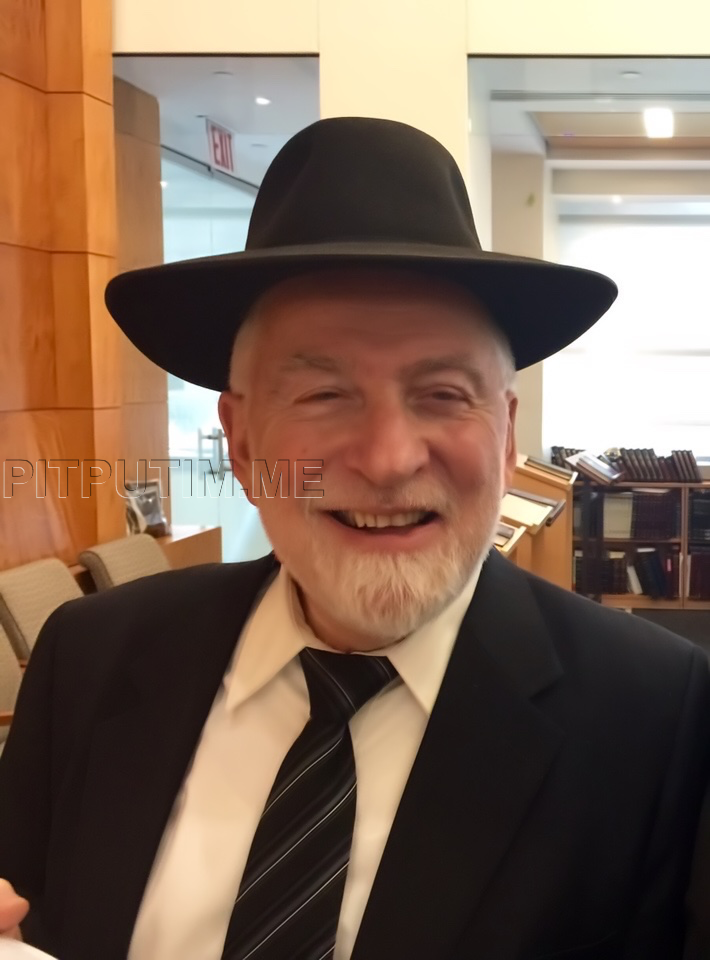
Happy Lag L’aomer, or Lag B’aomer?

I seem to have unanswered questions on the 33rd day of the Omer. The Gemora in Yevamos tells us that on this day the Talmidim of Rabbi Akiva ceased to die. I haven’t yet understood why that should be a happy day. Why? Well, if they started dying again the next day (assuming the Ashkenazi tradition) then who would be “happy” that there was a day of remission to the extent that it has morphed to. Note: this is, to my knowledge, the only source in Torah Sh’Baal Peh (Gemora) describing this day. Someone sent me a page of the Chidushei Agados of the Maharal on this Gemora. I have it at home, but can’t recall ever looking that up. The Maharal has a really nice explanation. He says that on this day the decree was lifted. Yes, it’s true that those for whom the decree had already been decided continued dying until presumably Shavuos, but I still had problems with this answer. Firstly, assuming that it is the reason, I would have thought that it would have been really hard to “get happy” knowing people would continue dying? Secondly, all but a handful died. It was a potential disaster for Torah She’Baal Peh.

Tradition has it amongst some that this is also the Yohr Tzeit/Hillula of the Rashbi. The Rashbi, is considered to be the author of the Zohar (or if you follow some views, most of the Zohar, but let’s not go there). The Zohar is Toras HaNistar, the hidden Torah, or perhaps the more esoteric metaphysically modelled face of Torah. The Zohar wasn’t and isn’t anathema to Misnagdim or Litvaks (most), but is of course anathema to the DarDaim (of which Rav Yosef Kapach was prominent) who believe to this day that it’s not part of Torah. Either way, the issue of it being associated with Toras HaNistar is agreed, and yet, the Ari Zal, for example, never wrote that on this day Rashbi passed away.

The Aruch Hashulchan and others note that this is the day that the Rashbi emerged from the Cave he had been hidden in for 13 years. That was a day of Simcha because with his emergence, so did the emergence of the Zohar, and the continuation of the chain of Torah SheBaal Peh.

Even assuming it wasn’t his Yohr Tzeit, I understand happiness at his emergence. (The Chasam Sofer mentions that on this day the Manna in the desert started to fall). I also understand that being morose for long periods without a break isn’t the best thing, especially today where the importance of positive thinking and talking is stressed even by secular psychologists. The glass is always “Half Full”. I’m not getting into that topic because like anything, if one over-does this approach in educating their children, I feel it shields them from reality, although I do accept that it should be, especially today, the de jure approach to education.

The Eidot HaMizrach have a different understanding. Yes, according to that Gemora in Yevamos 62B, the students stopped to die. They therefore cut off all Sefira mourning on midday of the next day (although this year being Erev Shabbos is likely more lenient — note, I’m writing this blog without looking things up, which is a bad thing, so remember that! Do your own checking up on what I claim 🙂 That approach makes sense to me, and always did. It’s also not as if the Beis Yosef as a father of Eidot HaMizrach wasn’t a Mekubal. He definitely was. Whether the Rambam was is an issue of contention. I have a book by Professor Menachem Kellner on this general topic, and I know (but haven’t seen) that the Lubavitcher Rebbe wrote a piece proving that the Rambam had access to the Zohar. Again, I digress.

Another question is why we don’t call it Lag Laomer, consonant with the way we count every night. A Rav pointed to a letter from the Lubavitcher Rebbe where he says that we say Lag Baomer is because the numerical value of Lag Baomer is the same as Moshe, and just as Moshe Rabennu revealed the Torah Shebiksav, and Torah Shebaal Peh (Halocho LeMoshe MiSinai) the Rashbi was permitted to reveal the secrets of the Zohar, and the Rashbi was a spark (Nitzutz) of Moshe Rabennu, if you will.

Artists rendering of the Remo

In Shiur today, I made another observation. Tonight, Lag BaOmer, is the Yohr Tzeit of the great Remoh (רמ’’א) who is known to have written 33 Seforim (but it is contentious that he died at the age of 33 as well). The Remoh’s name was MOSHE and he was the greatest Posek Rishon for Ashkenazi Jewry through his glosses on the Tur in Darkei Moshe, but more importantly his glosses on the Shulchan Aruch proper, adding the Ashkenazi view where he disagreed with Rav Yosef Karo. Nu, I suggested that his name was Moshe, and it is fitting that also in PSAK, that perhaps a Nitzutz of Moshe who had the same name, passed on high on this day.

My father ע’’ה in the Remoh's Kloiz in Kracow
My father ע’’ה in the Remoh’s Kloiz in Kracow

Food for thought. Happy for anyone to shred what I have written to ribbons as I have not opened a few Seforim which might help me and make this a better post.

If you haven’t noticed. These are Pitputim. No more.

Congratulations to Rabbi Danny Mirvis and his family

Danny Lamm has not taken long before his committee (how many Lamms are on that committee, and people complain about Yeshiva!) has offered the position of Senior Rabbi to Rabbi Mirvis.

He ticks the boxes.

  1. He is a Religious Zionist from a Hesder Yeshiva
  2. He isn’t a Chabadnik (yes, I don’t believe Mizrachi would ever appoint a Chabadnik)
  3. He was educated in the more politically moderate Yeshivat Har Etzion
  4. He and his wife are charming and seem to be well-liked
  5. He will likely complete a four-year stint before returning to Israel (preferably the stint will be a lot less due to Geulah being in place)
  6. I have only shared a few lines of conversation with him, and heard him speak twice. He does his homework and is a likeable person. I do not know how he traverses the philosophies of Rav Amital vs Rav Lichtenstein, the former apparently having more of an influence on his outlook. Rav Amital and Rav Lichtenstein had enormous respect for each other but were very different, with Rav Amital having his own strong disagreements with R’ Tzvi Yehuda Kook on Rav Kook’s approach and the approach needed today.
  7. Perhaps most tellingly 🙂 when I introduced myself he said “Oh, Jackie Bassin’s Zayda”. I was expecting, “Oh, Adina Waller’s brother”. I learned from that, that he obviously had exposure to our grandson, and appreciated him, and that this was perhaps more my Yichus than being my sister’s brother :-). If he’d known my father and not mentioned that I was his son, I might have had some misgivings. Rabbi Sprung knew my father and often asked him what his secret was. Sadly, Rabbi Mirvis won’t, but happily he will see some of my parents’ great grandchildren one on one.
  8. He will give a more meaningful approach to Judaism than the more tree hugging, Tikun Olam, we embrace everything style of leadership or the “I do it different and I will shock you style from ARK”, and will respect Kashrus and support established authorities and ignore the communal maverick.

Prior to that, the name “Mirvis” only registered with me in respect of his Uncle Johnny. Johnny who is no doubt also a Rabbi, was in fifth year of Hesder at Yeshivat Kerem B’Yavneh, when I joined Kerem B’Yavneh. I didn’t have much to do with him, partly because of my reclusive nature, and partly because he concentrated on the English and American Bochurim, for whom he was given a particular mashpia style role. I only knew of his father when he was appointed Chief Rabbi of the Commonwealth, although I need to declare that I am not a Monarchist, and consider both Philip and Elizabeth anti semites. The latter would visit a toilet in Ghana before stepping into Israel, and the former cantankerous oddity only goes to visit his mother’s grave, in a private capacity. Charles is hardly pro-Jewish either. Let me repeat what I have stated in other posts. If one claims to be against anti-Semitism and can’t call Israel the JEWISH State, they are an anti-Semite in my eyes, irrespective of where one sets borders.

Good luck. It’s not an easy community. You will be pushed around (older generation) by pseudo-Mevinim, but the youth will rally around you, and in that way, you will be successful. Now, if you can get the grandfathers and great grandfathers out of “Beit Haroeh” and hand it over to Ohr David, that would be a great start. Beit Haroeh has passed its used by date long ago and its time they grew up and moved into the Main Shule.

I also hope they let you influence Yavneh in respect to its Torah learning programs, and not write you out of that equation as they did with previous Rabbis.

From an interview at Har Etzion:

After numerous years as Director of the Yeshivat Har Etzion Center for Torah Leadership (CTL), Danny Mirvis is stepping down ahead of moving to Australia to assume a new position at the Mizrachi community in Melbourne. Dublin-born and London-raised, Danny has held numerous positions in the Yeshiva including Madrich of MTA, Racaz of the Overseas Program and most recently, Director of CTL. We asked him some questions about his time with CTL and plans for the future.

How has CTL changed over the years?

CTL started off as an exciting dream with many great ideas. Over the years, those ideas have been developed and organized to create three focused areas of activity:

1) Partner Projects – Supporting a broad range of educational and social initiatives of alumni from Yeshivat Har Etzion and Migdal Oz, including a focus on women’s learning.

2) Torah Leadership – Developing the connection with alumni actively involved in the Rabbinate and Chinuch across the world through ongoing contact, regular conferences and supporting different Torah publications.

3) Future Leaders – Identifying and investing in students and alumni with significant leadership potential, through leadership programs and CTL’s Winter Fellowships.

What have been the highlights of your time with CTL?

Rabbi Doniel Schreiber, the Dean and Founder of CTL, is a man of tremendous passion and vision. To work together with him and see how that vision has become a reality has been a privilege and pleasure.

For me, CTL’s proudest achievements have been the partner projects we identified and supported in their early stages, which have gone on to blossom and thrive on their own two feet. To give just a few examples, Garinei Ayala is now three times the size it was when they first came to our office to ask for assistance. The Shiurim in Givat Shmuel and Katamon are now self-sufficient and continue to grow and attract large crowds. The late night Beit Midrash at Penn turned to us for assistance at its inception and has gone on to become a fully-fledged part of Penn’s learning program.

How do you see CTL developing in the future?

CTL’s primary area of focus – the alumni of Yeshivat Har Etzion and Migdal Oz – is a talented, dynamic and growing group. It is through these alumni that CTL aims and hopes to make a positive impact and genuine contribution to the world around us. As our alumni progress and grow in number, new opportunities will develop for CTL to expand its programs and activities.

The same can be said for our alumni in Chinuch and the Rabbinate. I see great potential for CTL to increase its interaction with this group as it continues to grow in influence and number.

You have held numerous positions in the Yeshiva. How does it feel that your next position will be on the other side of the world?

Though I have held numerous positions in the Yeshiva, they have all shared the sense of mission of working towards the Yeshiva’s goals of being immersed in Torah and engaged with the world.

Mizrachi in Melbourne is a wonderful community with strong ties to the Yeshiva, a genuine appreciation for Torah and a deep love of Israel. Though it could not be much further away geographically from the Yeshiva, I see my role there as a continuation of the same mission.

What will you be able to take with you from your experiences with CTL to assist you with your future role?

First of all, thanks to CTL, I will belong to a global network of Rabbinic alumni from Yeshivat Har Etzion, which I will be able to draw on for ideas and advice.

I also hope to employ CTL’s educational and organizational philosophy in my new position. At CTL, we have not aimed to build our target audience around our programs and activities, but to build our programs and activities around our target audience. This is something I hope to continue in the future.”

PS. I had promised to show him my Shas, printed in Dublin on linen paper. He was astounded that such a thing existed. I suggested his father would know. It even has Chiddushim of the Satmar Rebbe at the back, and yes, there are still pages stuck together in my Shas, I never used it for Daf HaYomi 🙂

What exactly is the problem?

The Jerusalem Post, a middle to right wing paper, commented on some recent statistics in Israel. One that drew my attention was (emphasis is mine)

This year’s report also revealed a trend reversal in that transfers between educational streams show a move away from religiosity.

Among the Jewish population, the report noted, recent years have seen net migration from more religious to less religious school systems.

As such, more students have moved from haredi schools to state-religious and state- secular schools, and from state-religious schools to state-secular schools than in the opposite direction.

The largest number of transfers was from state-religious schools to state-secular schools, where in 2014/15, 14,700 pupils transferred.

The researchers called this “remarkable” since the national-religious population constitutes the smallest sector at 14-15% of the population.

We first note that the Jerusalem Post as opposed to any study that I am aware of concludes that this is a move away from religiosity. While that may be true, it is by no means a foregone conclusion.

  1. Have they measured, for example, whether the hours saved (presumably) at the State School, are being used “more productively” through daily shiurim at yeshivas and the like?
  2. Have they looked at the reasons given for the school moves?
    • A Charedi person may be just as frum, but may simply not be able to be burden costs
    • They have not discussed National Religious Charedi. There are many in this category and different approaches.
    • Have they defined religiosity
    • Is full observance in a State School a move away? Perhaps the longer term trend is that many of these students will influence more students to move toward “religiosity”?
  3. Looking at it with a pessimistic slant, one may wish to consider whether
    • Parents being left of center in religious observance are more likely to have children who move further to the left  than parents who have one or more “off the derech” children (I dislike the terminology and I do not know why we give it a classification category. Such categories can slur, and may become entrenched as something to feel more comfortable with. Let us not forget that the Torah itself did not like using negative language: animals that may not be consumed are called “not pure” as opposed to “trayf “.
    • How many teachers who practice orthodoxy are there in the State School system
    • How good is teacher training, especially in respect of pastoral care among State Religious teachers? Do they understand their pupils? It is far easier to simply teach in a State School in respect of the qualitative aspects of religion given a purely cultural/historical approach is most likely.
  4. The Rambam preached the middle ground. Life has taught me that very few start and stay on the middle ground. Indeed moving further in observance and understanding of Yahadus when younger, is not a negative trait. It would seem that as people age, and I do not remove myself from any such consideration, their level of Jewish observance moves left. To lead a life in the middle ground may well mean an early foundational right of middle experience. I specifically do not include those who learn for a living, do not publish, are not gifted intellectually, and are a burden to those who work for a living.
  5. Having not seen the statistical study and only read the Jerusalem Posts reporting on it, some of my comments may portray ignorance.


Whatever the case, what I took out of this, ostensibly, is that we need to increase in Torah Observance and Learning. In terms of observance, we must seek to minimise any negative proclivities. Those who have habituated a Chilul Hashem seen by the eyes of their children, are the greatest destroyers of  Yahadus, and the continued promoters of a perverted Judaism of the worst shameful order.

Challenges

There are a number in Melbourne. I won’t elaborate but 

חיה ביילא בת לאה בתיה 

Is one which hits home personally and she should get back to full health quickly.

I was at a Simcha tonight, and all I heard was ‘it’s terrible what’s going on in Melbourne lately’

Then somebody sent me THIS CHILLUL HASHEM

If I was there I would take the parents and teachers and air drop them into Gaza. That’s obviously their home. Disgraceful low lives.

Chabad Principal Rabbi Smukler attends and dances at Yom Ha’aztmaut service

The yearly prayer event which coincides with Ma’ariv is something I have attended for more years than I care to share. I do not recall but I believe I was unable to attend last year. In some years I was lecturing at the time, but I have attended almost every year.

I learned in a Hesder Yeshivah of note; the first Hesder Yeshiva in Israel. The Rosh Yeshiva, Rav Chaim Yaakov Goldvicht had the written and personal approval of the Chazon Ish. We dressed in our better finery and had a special dinner celebration of thanks. I lost my two Israeli room mates to War. I think about them often: Chovav Landau and Ze’ev Roitman HY’D. Chovav Landau’s wife was pregnant with their only child at the time. They were both in their fourth year of the five year program when I met them. I was closer to Ze’ev than Chovav. Ze’ev had lost his father to Yellow Fever, because a Doctor in Rechovot, had not changed needles after injecting an Arab patient. I felt his tragedy acutely. They both had machine guns locked in our room, and both perished when their tank was hit during the first Lebanon war.

The text of Ma’ariv in our Yeshiva was not the one adopted by the Kibbutz HaDati Movement (there was one next door) nor was it the text of newly published Koren Yom Haatzmaut Machzor. It was standard  Ma’ariv.

The Yeshivah formally followed the ruling that full hallel be said in the morning but without a blessing. There was no Tachanun.  This was not a statement of ‘less’ religious zionism. Rather, it represented delicate rulings related to liturgy and halacha.

As I recall, Ma’ariv had no additions. There was no Shofar etc I’m happy to be corrected. I do not know what current practice is followed. The Yeshivah did not affiliate with Bnei Akiva formally because of a concern for mixed gender functions. In my day Bnei Akiva in Jerusalem was gender separated.

Halachically, what one says before Ma’ariv and after the concluding Aleinu prayer is of lesser importance. When said in a Shule proper, there is also halachic  import.

That being said, I was to learn, later in life that the famed Rav Yosef Dov HaLevi Soloveitchik, otherwise known warmly as ‘the Rav’ was implacably opposed to additions to liturgy. This extended to the Holocaust and Kinos. He famously stormed out of RIETS when some ignored his ruling on Yom Haatzmaut.

Chabad’s Yeshivah and Beth Rivka Schools follow their choice. Chabad make no liturgical change and do say Tachanun. Whilst certainly not religious Zionist, they are not noted for the extreme anti Zionist rulings of the Adass Israel Congregation where Tachanun is especially said on Yom Ha’atzmaut even in the presence of a Bris Milah lest someone conclude that Adass saw any religious importance  in the State of Israel’s Independence Day.

For decades, Chabad’s boys school principal would not attend the Chabad dominated Rabbinical Council of Victoria’s gazetted service at Mizrachi. Thee council is, I believe dominated by Chabad Rabbis. This is not surprising in Melbourne where the survival and resurgence of Judaism is due in major part to Chabad.

I have been opposed to the service only being held at Mizrachi as I do not consider Mizrachi to be the ‘owner’ of this style of service. I am certain, that, for example, Caulfield Shule would gladly offer their Synagogue.

Chabad now has only one Principal: the controversial Rabbi Yehoshua Smukler.

It was then interesting for me to note Rabbi Smukler’s  front row appearance at Mizrachi last night, including his dancing circomvolution around the Bima. I concede that this may not have constituted halachic dancing (during Sefiras Haomer). He didn’t clap like Rabbi Cowen of Mizrachi’s Elsternwick Shule (Rabbi Cowen is considered a Chabad Chassid) nor did he sit on the Mizrachi wall like Rabbi Mordechai Gutnick, who spoke as President of the Rabbinical Council of Victoria (and who is also a Chabad Chasid) and R Leor Broh (also a Chabad Chasid) of Mizrachi’s Beit Haroeh Shule (populated by once young marrieds, now grandfathers :-).

To be complete, unlike a general Yom Tov or a Chabad Yom Tov such as Yud Tes Kislev, I didn’t notice any Chabad Rabbi in attendance wearing their longer black Kappote).

We live in very interesting times.

May the State of Israel metamorphose into the Eretz Yisrael of our redemption, speedily, in our days, with the continued grace of God.

An Eruv in Crown Heights?

There is an existing Eruv supervised by Rabbi Unsdorfer which covers North Crown Heights. This doesn’t include Chabad. While there have been Eruvin in Chabad (in Liadi and Lubavitch itself) times have changed, and the last Lubavitcher Rebbe זי’’ע stated clearly that he was against Eruvin today and an example is Melbourne. Let me qualify that. One cannot be against Kosher Eruvin in the sense that they think an Eruv is an unnecessary concept. That is a view likely held by Reform or “reconstructionist/new age” Jews. I would like to think that those who are less practicing but when they do practice, do so, according to traditional Orthodox Judaism also have no issue with the concept of a Kosher Eruv and would consider supporting such.

I was privy to details of the first (unkosher) Eruv constructed in Melbourne many years ago through the office of the then Mizrachi Organisation’s Rabbi (not the venerable Rav Abaranok ז’ל), and heard the tapes of Rabbi Groner ז’ל discussing the issue forcefully with Rabbi M.D. Tendler and read booklets from Rabbi M. Krasnjanski and Rabbi Yosef Bechoffer and more.

Melbourne now has a world-class Kosher Eruv, which is, I believe, under the supervision of Rav Gavriel Tzinner (who has mashgichim here through the Council of Orthodox Judaism of Victoria) and visits these shores from time to time. It is trusted by those who avail themselves of its facility, and this includes the ultra orthodox, generally secessionist, Adass Israel Congregation.

The Lubavitcher Rebbe did not issue Halachic decisions as a rule, but did do so from time to time if he felt it was important to identify and/or stress a Chabad custom, or if he deemed the matter to be of a level of importance to the extent that he did so.

On the issue of Eruvin, as I understand it, the Lubavitcher Rebbe preferred to build a quiet unannounced but strictly Kosher Eruv for the purposes of minimising the possibility of someone carrying by accident. I understand that he was concerned that, in our day, a proliferation of Eruvin would imply that ordinary Jews would forget there was a prohibition to carry. Indeed, on several occasions I have witnessed Jews, especially from Israel where there are Eruvin all over the place, not even be aware that one should not carry on Shabbos, as a matter of Torah law.

Since the Lubavitcher Rebbe passed away, as I saw in videos and written material, and as affirmed in the book by Rabbi Eliezrie which I happened to finish one week prior to this post, the LR specified that issues in “the future” for Chabad Chassidim (which undoubtedly included the possibility that he would not live to see the redemption before he passed away)  should be decided by Vaad Rabbonei Lubavitch or Mercaz etc depending on the type of issue. I do not recall reading or hearing the notion that one decides based on opening a random page of his Torah, a practice which many Rabbis forbid or do not encourage, including some Chabad-ordained Rabbis, since even the Goral HaGro (and yes there is also a Gemora גיטין דף סח)  was only used with Tanach.

I therefore close with my opinion that those who are now starting a public campaign to raise money for a more expansive Eruv in Crown Heights, Brooklyn, should only be doing so if they are not Chabad Chassidim, or they have express permission from the aforementioned Beis Din of Lubavitch.

I am not here to discuss the merits of an Eruv. In days gone by Eruvin were critical. They allowed one to bring home the pot of choolent, which was warming in the baker’s oven (I presume the baker had a fleshig section or the heavy pots never had enough to overflow 😦 ) for lunch after davening. It is a halakhic requirement to have something warm on Shabbos, and from there, Choolent, Chamin and the like emerged (in my opinion). As an aside, PLEASE don’t use the term Pareve Choolent. There is no such thing. Call it Potato Stew or slow cooked Potato or whatever. A choolent without meat, was unfortunately something which the poor suffered who couldn’t even get bones to put in their choolent.

Back to the issue. My view on the online appeal for money to support a wider Eruv in Crown Heights are:

  1. It should not be supported publicly by Rabbonei Lubavitch
  2. It should not be used by Chasidim of Chabad
  3. It should be constructed by a Rabbi of world-renowned expertise in Eruvin
  4. Others should follow their own Posek, and if their Posek allows it, by all means, use it
  5. Those who are not of Chabad persuasion who want to be personally stringent should only do so for themselves. They should not impose the stringency on their family. If they wish to change their mind and use the Eruv later on, they will need Hatoras Nedorim (annulment of vows, given the views of the Rambam on Reshus HoRabbim D’Orayso, which is also a Chumra of Briskers and I believe the Rav was also reluctant to use Eruvin)

In summary, it would have been better, given the relative paltry sum required from the vantage point of a Gvir, to have done this without fanfare, if one followed the late and great Lubavitcher Rebbe. Indeed, who knows if an Eruv was built in secret. It’s not in any book I’ve read (and I have read four relatively good ones on Chabad in the last year, especially when compared with the poor book by Heilman et al which was taken apart by Rabbi Rapoport of England)

Disclaimer: I aspire to be an ordinary Jew. I am not a card-carrying member of any group, although  I would be most inclined to follow Rav Soloveitchik if he were בעולם דידן. One can only surmise if the Lubavitcher Rebbe would have a different opinion. Those who try to second guess him, should give up now. There is no ability to do that. Like the Rav, the Lubavitcher Rebbe was a super genius.

Interesting article—Working does not contradict Torah

[Hat tip Kracower]

Yehuda Meshi Zahav

ZAKA chairman Yehuda Meshi Zahav describes sparingly and with restraint the things he and thousands of his volunteers at ZAKA do. ZAKA is a haredi (ultra-Orthodox Jewish) organization that rescues, identifies, and traces Jewish disaster victims in Israel and all over the world under sometimes virtually impossible conditions. Such a mission requires love of one’s fellow man, great empathy, faith, and a belief that good will come of it. It requires Zahav, a man with impeccable curly white payess (sidecurls).

Two months ago, following a four-year struggle, ZAKA won recognition as an official UN consultant and observer. The eventual decision was taken unanimously by a special UN committee composed of representatives of 19 countries, including Iran, Sudan, Venezuela, Cuba, Turkey, China, Russia, Pakistan, Uruguay, Burundi, Greece, the US, and Israel.

“Globes”: Did Iran and Pakistan also vote in favor?

Zahav: “There was no opposition, not even one country. We sent our representative, who met with every one of the committee members. The Iranians asked us if the report that ZAKA treats Jews first and Arabs later at terrorist events was true. We said that they hadn’t read it correctly. We treat the victim first, and then the murderer, regardless of nationality. They realized this, and voted in favor.”

About-face: From extremist haredi operations officer to national hero

Once upon a time, Zahav was the operations officer of the Eda Haredit extremist haredi group. He led demonstrations against Sabbath desecration, burnt Israeli flags, fasted and wore mourning clothes on Israel Independence Day, illegally removed dead bodies from the Abu Kabir Forensic Institute to prevent autopsies from being performed and put mice into the pathologists’ rooms, and sneaked onto archeological sites in order to prevent archeological excavations. Since then, however, Zahav has been honored by being asked to light a torch on Mt. Herzl while calling aloud in a clear voice, “For the glory of the state of Israel.” His grandfather, Rabbi Yosef Sheinberger, the mythological leader of the Eda Haredit and a fanatical opponent of the founding of Israel, refused to speak with Zahav for the last four years of his life. For Sheinberger, what Zahav did was a desecration of God’s name.

The change in Zahav began on July 6, 1989, when a terrorist blew up a bus on the 405 route from Tel Aviv to Jerusalem. It happened on a road in front of the Telz-Stone yeshiva (Jewish religious seminary) in Neva Ilan. Zahav and his friends wanted to see what was happening, “and then, when the dismembered bodies were laid out before my eyes, when the sirens were echoing among the smoky fragments of the bus, when the bloodstained clothes were scattered over the area, when entire families were broken and erased in an instant, I realized that the quarrels between us were meaningless. The type of skullcap you wear and the kind of clothes you wear pale in comparison with the real war we’re faced with. The Arab enemy doesn’t distinguish between the blood of a haredi, a secular person, and someone who’s modern Orthodox. We’re all connected. There’s no right or left. Everyone’s pain is the same. That was the moment when I crossed the lines and abandoned the ideology of haredi Judaism,” he later said, just before lighting the torch in honor of the ZAKA volunteers in 2003.

“Since then,” he says today, “I have been repenting. I put my efforts in the right place.” That also includes severe criticism of the leaders of the community he is identified with. “I didn’t see the haredi leaders with the bereaved families,” he said during one of the IDF campaigns in the Gaza Strip. “There were 20,000 people at the funeral, but I didn’t see black clothes there. There might have been haredim here or there, but when we want to, we can fill any place with black clothes.”

….

To read the full article click globes.

Published by Globes [online], Israel business news – www.globes-online.com – on April 27, 2016

© Copyright of Globes Publisher Itonut (1983) Ltd. 2016

Our own Taliban להבדיל

From Yeshiva World News:

An erev Pesach entertainment event in Jerusalem’s Arena Stadium that was to include Mordechai Ben-David has been canceled. According to a Kikar Shabbos News report, the cancellation follows the intervention of the “Vaad Mishmeres Kodesh & Chinuch”.

The entertainment event “Kumzing – By the Minagnim Orchestra” – was for men only, sponsored in part by the Jerusalem Municipality and was scheduled for Monday evening, 10 Nissan. The chairman of the vaad, Rabbi Mordechai Blau, announced on Sunday, 24 Adar-II that the committee opposes the event which if held, will be going on against the wishes of gedolei yisrael shlita.

Kikar reports as a result of the vaad’s announcement, the event is being canceled.

Rabbi Blau says that the Vaad takes issue with these shows since “gedolei yisrael oppose them”.

No names of any Gedolei Yisroel were named.

Unless there is something disgusting about this concern that I’m not aware of, the biggest enemy we face in our midst are not so much the Rabbonim Muvhakim, but rather the Askant, the Askonim (machars/political apparatchiks), who want to control lives whether it’s in keeping with Torah or indeed their Rav HaMuvhak.

I’m reminded by the admission of Rav Tzvi Pesach Frank who related a discussion with Rav Chaim Sonnenfeld.  I will leave out the juicy bits but you can read them here

About six weeks ago, I spoke with Rav Chaim Sonnenfeld, and at one point, I asked him if it is right that he signs himself as the Rav of the Ashkenazim in our Holy City… He answered me that the truth is, he does not sign so, but they made for him a stamp and wrote this on it.

I love this picture (edited by me to look clearer, I don’t know where I got it from), because it represents the truth. Not the world of falsehood that has enveloped our enclaves and askonim. Rav Kook (in the spodik) sitting next to Rav Sonnenfeld. The two behaved properly to each other, even though Rav Sonnenfeld was older and more prone to manipulation by the Hungarian political incursion into Yerusholyaim described by Rav Tzvi Pesach Frank.

Screen Shot 2015-10-19 at 7.49.23 PM

J-Street: the fifth column

They have concerns when a “settler leader” is appointed to a diplomatic post? Why? Why not have concerns when someone who is so left-wing that they have little connection with the Jewish dynamic of Israel is appointed to a position?

J-Street talk about two State solutions. The problem with them is that their starting point is not that any such discussion should be based on Israel as the State for JEWS. Would they accept talks that spoke of a State for Palestinians which was Judenrein? The answer is yes, they would. Their hypocrisy knowns no bounds and is consistent with the rhetoric of the left wing Reform movement which shares many practices with traditional Judaism, but is a tangential religion. I’d say that Shiites and Sunnis have more in common than Reform/J-Street and traditional orthodox Judaism. We are different though: we don’t kill each other over differences.

J-Street state:

 In the last year several Israeli officials in the US have “sent the message that Israel’s government is far more serious about legitimizing and entrenching settlements than they are about the two-state solution.”

Why can’t they be? Mahmoud Abbas is more serious about legitimising and entrenching hatred, incitement and terrorism than he is about a two state solution. He might want a two state solution, but every Palestinian leader knows that he or she will end up with their head blown to smithereens by their own if they ever signed an agreement with Israel, even if it was based on the indefensible 1967 borders.

As the Jerusalem Post noted:

The organization cited the appointment of Danny Danon as Israel’s Ambassador to the United Nations, Ambassador Ron Dermer’s decision to send out gift packages filled with settlement products to officials and Tzipi Hotovely’s call for Israeli diplomats to tell the world that “this country is all ours. We didn’t come here to apologize for that” as examples.

Clearly J-Street have not read the EU declaration on its labelling policy. There is nothing illegal about the products. They simply must be labelled because they don’t fall under the EU’s definition of Israel and the free trade agreement.

J-Street are so left-wing, I do not know how they could cope with the following truisms of David Ben Gurion which are as true then as they are now, let alone Isaac Herzog’s doctrine of walled separation.

If your Ivrit isn’t good, it is well worth watching this with someone who can translate. One can guess what Ben Gurion would have thought of J-Street and their unwelcome incursions into Israeli diplomatic appointments. J-Street forget that they do not vote for the Prime Minister of Israel of his coalition. If they want to grand stand, they do harm. If they want to influence, then I’d suggest discussing issues with Israel directly is an approach that is more positive.

J-Street quote a Conservative “Rabbi” as support against Trump when he says

Donald Trump’s words weren’t the worst part of his appearance before the world’s largest annual Jewish gathering, the AIPAC Policy Conference in Washington, DC. The standing ovations from many in the Verizon Center when he attacked the President of the United States were.

The last time I looked one was permitted to express disdain for the policies of a President. Isn’t it time any group who feel badly done by are not attacked by J-Street for doing so? Goodness only knows, J-Street would be doing so if Donald Trump became president. The move to the right by the USA is entirely linked to the extreme move to the left and the inactive diplomacy of Obama. He is widely seen as ineffective. This is also borne out by the fact that all of a sudden Saudi Arabia has formed a large coalition of Arab countries file under its direction, and declared Hezbollah a terrorist organisation. This would never have happened if Obama had been seen as pro-active, as opposed to a fence-sitter and drone-user. Obama has been trumped (sic) in Syria by Putin and Iran, and his strategies are most difficult to fathom. His one achievement has been to “stay out of trouble”. It is as if he is spooked by leadership. Leadership means that there are times when you must lead and not stand back and talk ad nausea.

J-Street were emboldened by Obama. They would not be emboldened by Hillary Clinton but would love the Jew who avoid his Jewishness, Bernie Sanders. Sanders would be an unmitigated socialist disaster for the USA and Israel.

Why all the brouhaha about Mikvaos in Israel for Reform

The laws of a Mikva are of the most complex that exist. They are riddled with minutiae and disagreement among even later day Rabbis. Reform has never shown an interest in archaic Rabbinic tradition, their arguments, Talmudic or otherwise; it’s about a ritual. As such, I don’t see why a Hot Pool of any type can’t be used for Reform conversions (I am unaware of them ever ruling that the minutiae of “old archaic” Rabbinic tradition should be upheld). It would be much cheaper.

Reform Judaism’s governing bodies dropped the requirement for immersion more than a century ago. The Pittsburgh Platform of 1885 stated: “We recognize in the Mosaic legislation a system of training the Jewish people for its mission during its [ancient] national life in Palestine, and today we accept as binding only the moral laws, and maintain only such ceremonies as elevate and sanctify our lives, but reject all such as are not adapted to the views and habits of modern civilization.” Thus did the Reform rabbinic authorities renounce – without banning – any and all requirements for ritual, including those involving mikveh. In 1977 Rabbi Walter Jacob commented that “the custom has fallen into disuse….Ritual immersion has completely ceased to be practiced for niddah [separation of spouses during menstruation] and is followed only by a small percentage within the Orthodox community” [Contemporary American Reform Responsa].

If they want to revive it, , perhaps in keeping with Reform philosophy, it’s time to invent an up to date,  modern “equivalent”.
If for some reason they would like a specific set of pools for this purpose, then let it be a user-pays situation.

Reform Jews are using mikvaot today in a wide variety of alternative ways: to mark lifecycle events or a change of personal status, to celebrate joy or sanctify grief. Immersions before a bat or bar mitzvah, to mark divorce or the death of a loved one, to celebrate graduation or a trip to Israel, as gratitude after recovery from a serious illness are increasingly common. And while mikveh is traditionally practiced in privacy, some liberal mikvaot are hosting groups, including women marking the onset of menopause and men taking their sons before the High Holidays.

See here for more

Sarah Hatsman, Reform Clergy, introduces new hand washing procedures with the Mikvah, and mindfulness.


The Mikvah is used by Orthodox women monthly. It is most likely that it is only used for a Reform Conversion and perhaps? before a wedding. On that basis, the State should withdraw funding from all Mikvaos and make admission based on a user pays affiliation to the type of Mikva.

Would the State fund Baptism Pools as well?

The same if true of Conservative (Masorti). There are plenty of US donors who would pay for these customised pools and rules.

Separation of Religion and State needs to occur in Israel. The Chief Rabbinate no longer is respected and has managed to descend a level each time there are new appointees.

Which Mikveh does the transexual, or fluid sexual go to?

The majority of people are aligned with traditional orthodoxy and will always be and have little to do with Reform  or Conservatives. These are mainly American phenomena that has been imported in small quantities into Israel.

Finally note the inequality. Male Orthodox Jews do not have the same requirements of a Mikva as a female. As such, according to many authorities they may be ritually cleaned in a swimming pool or a 4-5 minute shower. Certainly, it doesn’t have the “feel” and “preparation” of going to a Male Mikva, however, there is much that needs to be improved in the lack of Tznius in Male Mikvaos, which unfortunately isn’t being addressed by anyone it would seem.

Nobody complains about that. Perhaps feminists should argue they should have the easier rules as per men?

PS. The “diplobabble from some Shas MPs makes me cringe”.

More on Open Orthodoxy and Shira Chadasha

I have a number of Rabbi Shmuel Goldin’s books and I have thoroughly enjoyed them. 

In an op-ed in January in the Jerusalem post he convincingly buttresses the views of the Rabbinical Council of America in a rebuttal of a pro open orthodox opinion by Baruch Stein. I have been meaning to reproduce Rabbi Goldin’s piece for some time.

Absent, as well, is any acknowledgment of the complexities involved; complexities notably evident in the complete positions of the same authorities whom Stein chooses to selectively quote.

Consider an astounding pattern that has appeared over and over again in recent Jewish experience. Individuals or groups advocate radical change in Jewish tradition and then have the temerity to deride those who simply refuse to accept their unilateral “suggestions.”

Until now, this phenomenon has primarily been evidenced in interdenominational debates. Today, however, it is clearly occurring within the Orthodox community, as adherents of “open orthodoxy” move to unilaterally challenge the boundaries of Jewish practice and then publicly attack those unwilling to follow their lead as out of touch, misguided and obstinate.

Baruch Stein’s recent op-ed in the pages of this paper is a classic example of this disingenuous pattern of attack. Through an amalgam of disconnected quotes, statements, inaccurate comparisons and half-truths, Stein proceeds to make a case against the Rabbinical Council of America, Agudath Israel and others for failing to fall in line with the drive toward modernization of Jewish practice. Quoting a series of clearly partisan sources, including Rabbi Asher Lopatin, president of Chovevei Torah, the flagship seminary of the Open Orthodox community; Rabba Meesh Hammer-Kossoy, one of the “newly ordained women”; Meira-Welt Maarek, a graduate of the Susi Bradfield Institute for Halachic Leadership; and Shlomo Riskin, Chief Rabbi of Efrat, Stein makes the case that the RCA’s rejection of the ordination of women and other halachic changes “is extra-halachic,” lacks a textual frame of reference and is, in fact, “PR stunt by the rightwing membership of the RCA in order to further deepen the dividing lines among orthodoxy.”

Absent in Stein’s piece is the admission that many of these changes are based upon minority opinions within the halachic world and that the majority of Modern Orthodox decisors in America reject these changes at this time. Absent is any recognition of the real possibility that the “divisions” in the Orthodox community today are deliberately being created by the very groups pushing the envelope of change, with full cognizance that their advocated policies will not be accepted by many. Absent is the honest acknowledgment of the use of these familiar tactics: create unilateral change and then attack those who fail to fall in line.

Absent, as well, is any acknowledgment of the complexities involved; complexities notably evident in the complete positions of the same authorities whom Stein chooses to selectively quote.
Rabbi Riskin, for example, cited by Stein as an advocate for change in women’s role in orthodoxy, himself opposes the full ordination of women as rabbis. In a recent letter to members of the RCA leadership, Rabbi Riskin wrote: “We do not wish our women [graduates] to use the title of Rabbi or Rabbah, especially because the Synagogue is largely devoted to Communal Prayer and Communal Torah Reading, two areas in which women may not serve in the capacity of ba’alot tefillah [leaders of the prayer service] and ba’alot keriyah [Torah readers]; neither may they be Assistant or Associate Rabbis, who may be called upon as the sole religious leader in the absence of the official Synagogue Rabbi.”
Would Stein maintain that Rabbi Riskin is caving in to the haredi (ultra-Orthodox) world because of his opposition to full women rabbis? Even more egregious is Stein’s conflation of legitimate opposition to unilateral halachic change with the apparent acceptance of all sorts of horrible excesses, including, and I quote: unwanted marriages, systematic corporal punishment in schools, vigilante attacks on those suspected of listening to radio and reading secular magazines, the unwillingness to participate in the halachic imperative of self-defense, the abuse of halachic converts, the abuse of government programs intended to help the underprivileged, and more.
In Stein’s world black and white world, if you’re against women rabbis, you are guilty of all the above, because of “misguided rejections of modern unknowns.”
In a recent column in another forum, I bemoaned the looming split (some would say the already irrevocable split) in the Modern Orthodox world. What makes this split even more devastating, I argued, is that it didn’t/doesn’t have to be.
Much positive movement is already taking place in the Modern Orthodox community in the areas deemed critical by proponents of change today.
Increased Jewish education and the creation of appropriate leadership roles for women; resolutions concerning ethics within the Jewish community; studies of the conversion process and advocacy on behalf of halachic converts; discussions of greater inclusion into the Orthodox community and more are all unfolding in many forums and settings.
Halachic change can be prodded, but it must eventually occur through evolution and consensus, so that our Judaism will be recognizable as the Judaism of our grandparents and our children’s Judaism will be recognizable as our own. The mandate of every Jewish generation is to fashion a critical balance: a Judaism that enfranchises as many of the generation as possible, yet remains true to the traditions of our people. That balance can only be struck through honest, thoughtful discussion and debate – not through simplistic and unwarranted accusation and attack.
In the final analysis, there is something that Stein and I can agree upon: he claims that now is the time for the RCA “to take a stand.” I agree. The parameters of that “stand,” however, will be determined both by halachic guidelines and by the approach of those around us. If the proponents of “change” are willing to work together in mapping the path of modern orthodoxy towards the future, guided by Halacha and halachic process, they will find many willing partners within the RCA. If their expectation is, however, that change can be determined by minority opinion and summarily mandated and forced upon orthodoxy, they will indeed find that the RCA “will take a stand.” In the judgment of history, the resultant split within the Orthodox community will be on their ledger, not ours.
The author has served as rabbi of Congregation Ahavath Torah in Englewood, New Jersey, for over three decades. He is past president of the Rabbinical Council of America and currently chairman of its review committee on conversions. His articles have appeared in The Jerusalem Post and numerous other publications.

Shira Chadasha’s “Modern” Orthodox appointee

Let’s dispense with this rotund canard. Shira Chadasha is not considered part of (modern/centrist) and certainly not mainstream Orthodoxy. It is part of the break away left wing “Open Orthodoxy”. The appointee (who was the first from Avi Weiss’s program who insisted on being called “Rabbi”) worked at “Mount Freedom Jewish Center” in New Jersey which is intellectually honest and describes itself as Open Orthodox. Open Orthodoxy, through  Chovevei Torah, is definitely not considered Modern/Centrist Orthodox. As Rav Schachter told me, Am Horatzus is absolutely rife therein; none of them know Mesora and Mesoras HaPsak.

It  is well to the far left. Some within Modern Orthodoxy don’t want to cut them off, but it is inevitable. It will happen. The RCA made this very clear when it stated:

Oct 31, 2015 — Formally adopted by a direct vote of the RCA membership, the full text of “RCA Policy Concerning Women Rabbis” states:

  • Whereas, after much deliberation and discussion among its membership and after consultation with poskim, the Rabbinical Council of America unanimously passed the following convention resolution at its April 2010 convention:
    1. The flowering of Torah study and teaching by God-fearing Orthodox women in recent decades stands as a significant achievement. The Rabbinical Council of America is gratified that our members have played a prominent role in facilitating these accomplishments.
    2. We members of the Rabbinical Council of America see as our sacred and joyful duty the practice and transmission of Judaism in all of its extraordinary, multifaceted depth and richness – halakhah (Jewish law), hashkafah (Jewish thought), tradition and historical memory.
    3. In light of the opportunity created by advanced women’s learning, the Rabbinical Council of America encourages a diversity of halakhically and communally appropriate professional opportunities for learned, committed women, in the service of our collective mission to preserve and transmit our heritage. Due to our aforesaid commitment to sacred continuity, however, we cannot accept either the ordination of women or the recognition of women as members of the Orthodox rabbinate, regardless of the title.
    4. Young Orthodox women are now being reared, educated, and inspired by mothers, teachers and mentors who are themselves beneficiaries of advanced women’s Torah education. As members of the new generation rise to positions of influence and stature, we pray that they will contribute to an ever-broadening and ever-deepening wellspring of talmud Torah (Torah study), yir’at Shamayim (fear of Heaven), and dikduk b’mitzvot (scrupulous observance of commandments).
  • And whereas on May 7, 2013, the RCA announced:

    In light of the recent announcement that Yeshivat Maharat will celebrate the “ordination as clergy” of its first three graduates, and in response to the institution’s claim that it “is changing the communal landscape by actualizing the potential of Orthodox women as rabbinic leaders,” the Rabbinical Council of America reasserts its position as articulated in its resolution of April 27, 2010… The RCA views this event as a violation of our mesorah (tradition) and regrets that the leadership of the school has chosen a path that contradicts the norms of our community.

Therefore, the Rabbinical Council of America

  • Resolves to educate and inform our community that RCA members with positions in Orthodox institutions may not
    1. Ordain women into the Orthodox rabbinate, regardless of the title used; or
    2. Hire or ratify the hiring of a woman into a rabbinic position at an Orthodox institution; or
    3. Allow a title implying rabbinic ordination to be used by a teacher of Limudei Kodesh in an Orthodox institution; and,
  • Commits to an educational effort to publicize its policy by:
    1. Republishing its policies on this matter; and,
    2. Clearly communicating and disseminating these policies to its members and the community.

This resolution does not concern or address non-rabbinic positions such as Yoatzot Halacha, community scholars, Yeshiva University’s GPATS, and non-rabbinic school teachers. So long as no rabbinic or ordained title such as “Maharat” is used in these positions, and so long as there is no implication of ordination or a rabbinic status, this resolution is inapplicable.

As for what drives the new clergy Lila Kagedan at Shira Chadasha, this quote from Lila is very telling.

“I was drawn to ritual. I felt committed to the halachic process, but to be honest, I became absolutely disgruntled several times growing up,”.

One of those times was when her 13-year-old brother was permitted to sit on a beit din for the annulment of vows before Yom Kippur. “Meanwhile, I felt like I had no status.”

Need one say anymore about what motivates such females as opposed to Yoatzot Halacha? I suppose she also feels upset that she can’t Duchen because she’s not a male Cohen? Let’s get real here.

Call a spade a spade and dispense with the charade. If they think they uphold Halacha, good luck to them. I hope they do and may it improve, but the need to force their modes of worship over well established nomenclature that rejects such modes, only indicates they have no respect for established Rabbinic Poskim and leadership. Reform don’t call themselves Orthodox, and neither do Conservative. I don’t see why putting the adjective “Open” before Orthodox is anymore than a not so clever ruse. There are many learned Jewish Orthodox women in Melbourne who exercise their scholarship and feel empowered to do so.

They don’t feel “I had no status”. The existential imperatives of Judaism come second to them as they academically dance around terminology (hopefully with a Mechitza).

Anyone who even remotely thinks this is the model of Rav Yosef Dov HaLevi Soltoveitchik is simply an intellectual fraud.

I wonder what Caulfield’s Rabbi Genende’s stance on this is? I wrote to the RCV that this would happen over a year ago. It’s time the RCV not only put out stance like the RCA, I’d be happy if they formally affiliated with it.

How many Jews in Melbourne hold these perverted views?

Does the Adass breakaway, “Divrei Emineh”?

Do Satmar and the Neturei Karta in Adass?

How many only disagree in as much as they shouldn’t be saying this (out loud), but actually subscribe to this discredited view of R’ Yoelish of Satmar? Emphasis is mine. Text is from my Mashgiach, Rav Rivlin שליט’’א

The Gemara in Ketubot (111a) derives from the triple mention of the pasuk, “I have bound you in oath, O daughters of Jerusalem” (Shir Hashirim), that Hashem bound Am Yisrael and the nations of the world with three oaths. The first oath is, “shelo yaalu bachoma,” that the Jews should not forcibly, “break through the wall,” and enter Eretz Yisrael. The second is that the Jews should not rebel against the nations. The third is that the nations of the world should not oppress Yisrael too much over the course of the exile. According to R. Zera, there are three additional oaths which relate to the ultimate redemption. The Gemara concludes with the threat that if Israel violates these oaths, their flesh will be made free like wild animals in the field, i.e., Hashem would bring upon them great suffering and physical destruction.

The Satmar Rebbe, Rav Yoel Teitelbaum, claims in “Vayoel Moshe” that Hashem brought about the Holocaust because the Zionist movement caused the Jews to violate the “Three Oaths.” Since the Jewish people forcefully went to resettle Eretz Yisrael, Hashem brought upon them massive destruction, as the Gemara warns in its conclusion. Rav Shlomo Aviner compiled thirteen answers to this claim, amongst them the following:

1) Rav Teitelbaum’s claim rests on the fact that there was a “choma,” that the nations of the world prohibited the Jews from settling in the land of Israel. The Avnei Nezer writes that this oath does not apply when the nations give Yisrael permission to return. Following the Balfour Declaration and the San Remo Conference, in which the nations of the world determined that the Jewish people have a right to settle the land of Israel, the oaths do not apply. The Midrash hints to this idea, that if Bnei Yisrael have permission to enter the land they do not violate the oaths.

2) Another answer is that once there is a sign from Hashem to return to the land, the oaths no longer apply. In addition to the permission given by the nations, the national reawakening and birth of modern Zionism can be viewed as a sign from Hashem that it is permissible to return to the land. The oaths were not an “issur” (absolute prohibition), but rather national tendencies that Hashem instilled within Klal Yisrael which would cause them to remain unmotivated to return to their land. Also, throughout most of the exile, it was very difficult physically for Jews to return to Eretz Yisrael. Once a wide scale movement with an objective to return to Eretz Yisrael began, and it was physically possible to begin Aliya to Eretz Yisrael, it became clear that the oath was no longer in effect.

3) The Gemara in Sanhedrin (98a) says that when Eretz Yisrael gives forth fruit abundantly, it is a sure sign that the redemption is coming. Eretz Yisrael, in the time of the Zionist movement, began blooming and giving forth fruits unlike any previous time since the destruction of the land. This sign of redemption showed that the oath was no longer in effect.

3) Rav Teichtal, in his work, “Em Habanim Smeicha,” offers another explanation. Although the Jews were sworn not to enter Eretz Yisrael forcefully, the nations of the world were also sworn not to persecute the Jews too much. Over the course of the exile, the Jews were severely persecuted by the gentiles. Because the gentiles violated their oath, the Jews were no longer bound by their oath.

4) According to some opinions, the only way to violate the oath would be if people came to Eretz Yisrael in very large groups. Since the Jews entered the land slowly, and over the course of many years, they did not violate the oath.

5) The author of the “Hafla’ah” maintains that the oaths only apply to those who are in the exile of Bavel, and not in other lands.

6) R’ Chaim Vital explains that the oath only applied for 1000 years, not longer.

7) The Gra writes that the oath applies only to building the Beit Hamikdash, not to entering Eretz Yisrael.

8) Elsewhere in the Gemara there are other, conflicting, sources. Furthermore, the Gemara regarding the “Three Oaths” is aggada, and we do not decide halacha based on aggada. [I add that this isn’t even from Torah and Neviim, but from Kesuvim, the weakest link in determining Halacha]

Based on all of these explanations, there is ample basis to say that the movement to return to Eretz Yisrael was a positive, not a negative, one. In fact, others maintain just the opposite, that the Holocaust was because Jews became entrenched in galut and did not return to Eretz Yisrael. Since we are not living in a generation of prophecy, it is very difficult for us to determine exactly why Hashem brings specific punishments to the world. However, the Gemara does teach us that when we are afflicted with punishment, we should look into our actions, and try to fix our bad deeds. By looking at the Akeida, we may gain some insight regarding the Holocaust.

One of the most famous tests of Avraham was Akeidat Yitzchak. We constantly mention the Akeida in our prayers, and we still reap the benefits of this test. The question is asked, what is so special about this test? Avraham did not even do any great action of sacrifice, because in the end he did not slaughter his son. There were many other tests which Avraham actually fulfilled which are not so commonly mentioned!

Furthermore, Rav Dessler questions the very concept of “zechut Avot” (merit of the Patriarchs). If two criminals violated the same law, one coming from a dysfunctional family and one from a normal background, logic dictates that the one from a normal background should be punished more severely. When we come to Hashem and tell Him that we are descendants of Avraham, Yitzchak and Yaakov, this should work against us! Why is there zechut? In fact, Rabbeinu Bachya says that sometimes it is best not to mention zechut avot. After the sin of the spies, Moshe pleaded to Hashem and did not mention that Hashem is “notzer chesed la’alafim,” that He rewards for good deeds for generations to come. Moshe did not want Hashem to say, “If Bnei Yisrael came from such great people, why did they sin?”

Perhaps this insight can explain why we ask Hashem to remember the Akeida, as opposed to other tests of Avraham. Many times Am Yisrael does not live up to the other tests which Avraham was tested with. Through our entire history, however, Am Yisrael lived up to the test of the Akeida, and on many occasions Jews were willing to die “al kiddush Hashem” (in sanctification of G-d’s name).

The Torah introduces the story of the Akeida with the phrase, “It happened after these things.” (Bereishit 22:1) The parsha directly before the Akeida is the story in which Avraham makes a peace-covenant with Avimelech. The Rashbam explains that Avraham was tested with the Akeida because he did not have a sufficiently strong connection with Eretz Yisrael, and was willing to make a pact with Avimelech, thereby forfeiting some of his right to the land. The Tanna D’vei Eliyahu writes that any nation which has a serious conflict with Yisrael, does so only because of the pact which Avraham signed with Avimelech. Hashem always had a two-part covenant with Yisrael: descendants and Eretz Yisrael. Because Avraham was willing to give part of Eretz Yisrael, Hashem said, “I will take the other half of the pact — your son.”

Although we are not prophets, and we cannot determine which punishments correspond to which sins, we must try to learn lessons from events which happen in this world. Today it is clear that our bond to Eretz Yisrael still needs strengthening. If we pray and strengthen our connection to Eretz Yisrael, there will be an end to all of the Akeidot.

For those who want to seriously understand why Satmar and these clowns are dead wrong, read this from the Seforim Blog.

I note they don’t mention Gog and Magog, and the Jewish Redemption where their friends will be beholden to the Beis Hamikdash and Elokus. Politically, they don’t mention that, because they are of course afraid. These are the Jews about which the Torah says “stay home, you are afraid to go to war and you are an impedance”. Help your wives with the washing, cooking and food provision.

I notice Issy Weiss of Neturei Karta wears the palestinian scarf. Why doesn’t he put a Kaffiyeh on and add tzitzis to the corners. Now there’s solidarity.


An example of Mori V’Rabbi, Rav Hershel Schachter’s Centrist World View

It is so easy to say why this clear thinking enormous Talmid Chacham is effectively the Posek for the Rabbinic Council of America and the Orthodox Union. I reproduce an article he just published (c) Torah Web entitled “Volunteering Mitzvos”. What he writes is אמת לאמיתו.

About two years ago I came across a “teshuva” written by a Conservative clergyman. The thrust of the essay was that since the Tanoim established the halacha that women are exempt from wearing Teffilin because they are exempt from learning Torah, and today we expect women to learn Torah just like men, therefore women are no longer exempt from wearing Tefillin.

Needless to say, this is totally incorrect. The halacha that was formulated by the Tanoim that women are exempt from learning Torah has never changed. The laws of the Torah are not subject to change; the immutability of Torah is one of the thirteen principles of faith of the Rambam, and in our generation it has become the main point of distinction between Orthodox Judaism and other branches of Judaism. For centuries Orthodox women have been volunteering to shake a lulav on Succos and to listen to shofar on Rosh Hashonah. No one has changed the halacha that women are exempt from lulav and shofar, rather women have been volunteering to observe these mitzvos as an ainah m’tzuvah v’osah. In the days of the Bais Hamikdash only men were obligated to give machatzis hashekel towards the purchase of the korbonos tzibbur but the mishnah records that a woman may volunteer to observe the mitzvah as an ainah m’tzuvah v’osah.

We don’t recommend in all cases that one volunteer to perform a mitzvah that he is exempt from. The Shulchan Aruch quotes from the Talmud Yerushalmi that if it is raining on Succos and sitting in the Succah would be very uncomfortable, not only is one exempt from the mitzvah, but also it simply does not make any sense to volunteer to observe the mitzvah – when sitting in the Succah is very uncomfortable there is simply no kiyum ha’mitzvah. If the lights in one’s Succah have on gone out on the evening of Shabbos or Yom Tov and eating in the Succah would be very uncomfortable, but one’s friend has a Succah a one hour walk away, one would not be obligated to walk for an hour in order to sit in the Succah. Nonetheless, if one did go out of one’s way and walk for an hour, when one finally arrives at the friend’s Succah and sits there comfortably, Rav Akiva Eiger says that one may recite the brocha of leishev baSuccah. In this instance, the one who walked the hour is volunteering to observe the mitzvah in a fashion of aino m’zuvah v’oseh.

Rabbi Soloveitchik, who gave a shiur on Gemorah in Stern College, did not intend to disagree with the Talmudic principle that women are exempt from talmud Torah. He merely felt that in that generation it made good sense that the opportunity should be available for women to volunteer to studygemorah, in the same way that women have been volunteering for centuries to observe lulav and shofar. At that time he recommended that the gemorahs studied by women should not be Maseches Baba Kamma or Maseches Sanhedrin, but rather Maseches BrochosPerek Kol Ha’bosor,Maseches Shabbos, etc. which discuss dinim that are relevant to women halacha l’ma’aseh.

The Ta’noim understood from a phrase in the beginning of Parshas Vayikra that the mitzvah of semicha (i.e. that the one who brings a korbon must lean on the head of the korbon before sh’chitah) only applies to men and not to women. The expression “Bnai Yisroel” which appears in chumash so many times sometimes comes to exclude geirim (converts), sometimes comes to exclude women, and sometimes excludes neither. The Tanoim had a feel and a sense for how to darshon the pesukim based on the context of the passuk.

During the period of the second Bais Hamikdash, many women felt bad that they were not permitted even to volunteer to do this mitzvah of semicha since doing so would be a violation of avodah b’kodshim (getting work/benefit from a korban by the korban supporting their weight when they lean on it). Men who are obligated to do semicha are obviously not in violation of this prohibition of avodah b’kodshim, but since women are not obligated to do semicha, were a woman to do it voluntarily she would be in violation of this issur. As a result, many women wanted to perform an “imitationsemicha” (i.e. without actually leaning on the head of the animal but merely by having their hands float on top of the head of the animal). The permissibility of this was a big dispute amongst the Chachomim. Many were of the opinion that the performance of such an “imitation semicha” might possibly lead mistakenly to a violation of avodah b’kodshim if women would actually lean on the animal, and therefore it should not be permitted. The accepted opinion is that we do permit it, but we have to be careful that one thing should not lead to another.

The bottom line is that each of us has to observe all mitzvos that we are obligated in. However, when it comes to someone volunteering to do that which is not obligatory on him/her, there are rules and regulations pertaining to each individual mitzvoh/halacha specifically, and to observance ofhalacha in general, and it is not so simple to determine when one should or should not go beyond that which is obligatory.

Copyright © 2016 by TorahWeb.org. All rights reserved.

Shira Chadasha’s new spiritual dynamo (a female): some questions

They might ask:

  1. whether she answers Men’s Shaylos?
  2. why shira chadasha doesn’t have daily minyanim
  3. whether vegan and vegetarian restaurants are kosher (of course they are not!)
  4. which side of the “mechitza” members of LGBTI who identify as such should sit
  5. whether Avi Weiss is considered a world-renowned posek
  6. whether she consider herself open orthodox (and not part of the Orthodox community, as affirmed by the RCA (and should be affirmed with the RCV)
  7. whether a woman should wear a head covering to shule and if so, why?
  8. What length sleeves are halachically mandated as covering Erva
  9. Whether dresses should cover the knee even when a woman sits
  10. Whether she encourages Shira Chadasha men to wear a Tallis Kotton
  11. Whether she will eat from RMG Rabi’s kashrut business
  12. Whether supervising Rabbis should be involved in their Kashrus as a business concern
  13. Whether she supports Rav Soloveitchik’s view on interfaith dialogue
  14. Whether she considers Prof Sperber as a Gadol HaDor
  15. How much of the female chest should be revealed in a t-shirt. Up to the breast bone, or below? Is cleavage permitted?
  16. Whether men could take on the lighting of Shabbos candles if they felt strongly they wanted to do it
  17. Whether tight jeans/pants are permissible?
  18. Whether women should dispense with Tichels and hats as they are anachronistic today … 
  19. Whether she believes that Carlebach is guilty of any of the crimes alleged against him
  20. Whether mixed swimming is permitted
  21. Whether mixed dancing without a mechitza is permitted
  22. Whether a man or woman who exposes Erva should be given an honour in Shule
  23. Whether she believes that every word of the Torah is directly from God
  24. What her understanding of Mesora is
  25. Whether she believes the Jews accepted the Oral Law at Sinai
  26. What makes up the Oral Law.
  27. Whether she considers Reform or Conservative conversions valid
  28. Whether she would lie when reading a Ksuba and say a bride was a virgin if she knew she was not?
  29. Whether she would change the Ksuba so it states whether the groom is a virgin
  30. Whether she follows R’ Moshe Feinstein’s view that women who are attracted to such groups and who do so for equality and/or feminism are doing so for foreign reasons
  31. Whether she will decide Nida questions
  32. Whether she considers herself a witness at a wedding ceremony
  33. Whether entering a Reform Temple is permitted
  34. Whether Open Orthodoxy will really emerge as the new Conservative movement
  35. Whether there is anyone at Avi Weiss’s institution with the level of knowledge as Rabbi Shaul Liberman?
  36. Does a woman have to wear tzitzis on a large body scarf
  37. Should a man wear a Yarmulka all day
  38. Should a woman wear a Yarmulka all day
  39. Should a man wear a Yarmulka if he is eating in a Vegetarian restaurant? Should he may a bracha?
  40. Does she think settlements are an impediment to peace
  41. Does she think any Israeli prime minister should sit down with a Palestinian leader unless the latter agrees Israel is THE JEWISH homeland?
  42. Is Donald Trump racist?
  43. Whether a female should sing in a band such that her voice is clearly heard
  44. ……..

Methodologies to attract members: ARK — revised

Over the weekend, I was strongly encouraged  to repost my article. I had one comment which was valid in retrospect, and I am taking that fully into account in this revision. I was not aware, but a number of people have mentioned that R’ Shneur Zalman Waks is involved in conversions, including one involving the marriage of a Cohen. I was informed he has his own Beth Din and does not involve the Melbourne Beth Din. That’s not to say his conversions are invalid. I can’t give an opinion without knowing details. If anyone knows, do tell. We have RMG Rabi’s Beth Din which does conversions, R Schneur Zalman’s ARK Beth Din for conversion, Adass which has always been separatist, in addition to the standard and fully internationally accepted Melbourne Beth Din. In my opinion, a community should only have one Beth Din and it should be modelled on the Melbourne Beth Din, with its checks and balances from a lay committee, including a separation from money issues.

The original reason for this post, however, was that someone sent me emails that Shneur Zalman sends to his ARK community (of which I know little) and I’m commenting on the last one that I received.

Shneur Zalman of ARK, is someone who is different and seemingly diverse. That, in of itself, isn’t a problem provided he is sincere and maintains a fidelity to strict Halacha. I’ve decided to intersperse commentary on his most recent article because I found it vexing. The quotes below are verbatim from what was sent to me.

Growing up in a strictly Chabad home in the days before internet meant that my information sources were rather limited. We weren’t allowed to listen to radio, watch television, or read ‘secular’ books, so I became a Jewish History buff.

This is a questionable representation. There are plenty, including Rabbis, who were and stay intimately involved in many issues and who have strongly different views than Shneur Zalman. The statement that bothers me is that it is crafted to convince ARK congregants that Shneur was born into a prison-like idyllic “crown heights” or “kfar chabad” standard Chabad home of a most orthodox type. This has been a matter of discussion by members of that family itself. I do not know if ARK members have been exposed to counter claims. This is contextually important.

Shneur Waks and wife Lisa

The issue of Chabad in particular is profoundly misplaced. All ultra orthodox groups encourage minimisation of interaction with the outside world unless necessary.  Of all the ultra groups who have a higher percentage who are exposed to the outside world, Chabad is clearly the one most exposed and experienced (and pilloried as a result). That being said, it might be that Shneur Zalman’s  parents had no hidden TV or other devices, and a computer was locked for use for “business” purposes. I do not know. Perhaps he was denied access to the world.

It is ironic though that Shneur Zalman’s claimed TV and Radio-avoiding family chose to agree many years ago and feature in full length documentaries for SBS about how they get on with life!  I assume these were motivated primarily for the benefit of the non Orthodox and gentiles who do watch TV and whom the family they wished to influence to adopt their “idyllic Amish-like lifestyle?  I’m sure the parents felt this was prototypical Chabad Chasidism encouraging others to have double-digit children while demonstrating how it could be done with dynamic results. My band members (non Jewish, watched it with incredulity). Maybe this was a form of outreach, though, using the very medium Shneur Zalman claims was discouraged to engage with. I assume Shneur Zalman was part of that documentary. Based on his description, he might appeared like a rabbit in bright lights not knowing anything about the outside world, save his claim to be a self-made “Jewish History buff”, appearing bewildered by the brouhaha.  I have not seen the video, as the topic per se had never been of interest to me.

From my religious study I already knew about the suffering of the Jews as they were enslaved by the Egyptians, nearly annihilated by the Persians, and oppressed by the Greeks and Romans. But added to that I discovered the long history of Christian antisemitism; peaking during the Crusades, Spanish Inquisition, Pogroms, and of course culminating in the devastating Holocaust.

Shneur Zalman has been selective. He implies that his “History buff” knowledge informed him of Xtian antisemitism, the inquisition, pogroms and the holocaust, but these were denied by his education. I find this derisorious. All these events save the last, are covered in formal long lamentations  on Tisha B’Av, and spoken about on Pesach. Either Kinos wasn’t said, or understood, or Shneur Zalman met teachers throughout his entire Jewish education who always put a full stop at the Roman Conquest.

Everyone is aware of the Holocaust, including the ultra orthodox  and the survivors who occupied the pews. Does Shneur Zalman not know what happened because of his religious upbringing at home?. Even Satmar knows!

Shneur Zalman is disingenuous about modern-day events. He most definitely would have heard how his namesake was persecuted by the Communists and dreaded NKVD. Strangely, Shneur Zalman doesn’t seem to mention the systematic attempts at destroying Torah Judaism to eradicate the Jewish people in the Soviet Union. The Nazis attempted it physically, the Soviets were happy if one abandoned Judaism spiritually and adopted a (ironically Jewish sourced) Stalinism or Marxism, that considered a Jewish text, to be poison and to be eradicated.

Shneur Zalman tells us that

I read every book I could get my hands on which told the story of the darkest years in human history and heard the story from the mouths of many survivors. When we then sang the Vehi Sheamda on Seder night, which basically translates that in every generation there are those who want to kill us, it was felt in a most immediate fashion.

Shneur Zalman’s  own Chabad School has a very good free lending library almost next door to his house. Are we to assume that his parents forbade him to borrow books from that library (let alone his excellent School library) or perhaps they they vetted the books lest they would corrupt their son with hatred to those hell-bent on killing Jews at any time or place? I think not. Is Shneur Zalman being purposefully disingenuous here or just tardy? I’m not sure.

I surmise that Shneur Zalman is  naïve  if he considers himself a “Jewish history buff” and yet could write

At some point I came to question the point of this message. Granted, we should never be complacent about antisemitism. We have suffered too deeply to be so naïve. But I personally never experienced antisemitism. Sure there were Saturday morning drunks who could scream out “bloody Jew”, but to rate that at all would be to belittle the traumas inflicted on our people. So what relevance does the story of antisemitism have to me, my generation, and the ones younger?

How did Shneur Zalman know that only drunks screamed this message from their fast-moving car? Is he superman with X-ray vision?

It is incredulous that anyone could emerge as a self-proclaimed ” Jewish History buff” and yet feel that because in the short cloistered walk of 1 minute from his house to his School (remember, he claims he was forbidden to be exposed to the real world) he concluded that people who called out “bloody jew” in that moment, were not hard-core anti-Semites. What a strange intuition. It in fact contradicts the beginning of each and every blood bath the Jews faced. Does Shneur Zalman not realise that they all started with small voices of “bloody Jew” and then grew into a society unfettered by morals and ethics proceeding to death and destruction. Does Shneur Zalman not realise that if he took a number plate and reported it to the police that those who said those things would be prosecuted for hate crime? Was Shneur Zalman blind and deaf  to a prominent incident, next door to his home, where one of his chassidic colleagues was beaten by off-duty police. It was all over the papers and the talk of the centre. Did Shneur Zalman miss the articles or was he forbidden to read them.

I contrast that with my experience which is philosophically diametrically opposed

Walking with my father to Elwood Shule, we stood in the middle of Brighton Road on the tram tracks. A car load of “young and restless” passed us, rolled down their window, and called out “Bloody Jews”. To me, standing next to my elderly father, a holocaust survivor, this was simply not on. I took off on a fast run down the tram tracks of Brighton Road in my suit, hoping that their car would be stopped by a red light. Luckily, it was. I reached their car, thumped hard on their window and bonnet. Startled, they turned their heads and heard me yell at the top of my voice.

If you filthy scumbag anti Semites ever say that again, I will smash your bones and report you to the police. Don’t ever take a Jew lightly. I will break every bone in your body if you dare say that again

I went to the same school as Shneur Zalman. I don’t attribute my then reaction to the school in totality, let alone should Shneur Zalman be insinuating that his lack of understanding of the beginnings of anti-Semitism had anything to do with his home or his school. This was Shneur Zalman’s  reaction, and his alone. His sad misunderstanding of anti-Semitism, is there for all to I see in that paragraph.

By the way, my father later asked me why I reacted with such crazed venom. I explained that precisely because of the message of Pesach and his place as a survivor, I for one was not ever going to be a  Jew who minimised such vituperation in the way that Shneur Zalman seemingly professed to his ARK community in tame words and wonderful sculptures.

A wedding at ARK. (I’m not sure who the second witness is, based on this picture)

Jumping back to where Shneur Zalman was heading, he informs us

The most prominent response I came across when I was younger was that we should never trust the Goy. We were even taught in the first chapter of the Tanya, the seminal work of Chabad philosophy written by my namesake, that non-Jews are inherently incapable of good deeds, that whatever seemingly kind acts they perform are for their own selfish gain.

I see this as sloganeering. The lack of definition and intentional misrepresentation is breathtaking. Firstly, he claims this was the most “prominent” response. Response to what? Response to anti-Semitism? What is the context of trust here? Was it trust in business? Trust in Tae Kwan do? Even a young Shneur Zalman would know that this is not manifestly practiced by any ultra orthodox people (who may have more tangles in business with many Jews than they do with non Jews.)

What was he getting at, I thought? Was he saying that he was taught that a non-Jew was more likely to thrust a knife in his back than a Jew? If so, statistics would say that this is entirely correct whether one is ultra orthodox or not. Does Shneur Zalman not know of a gentile reporter who recently donned a Yarmulka and found that this immediately made him a magnet of hate, violence, and derision. Heck, the reporter was featured everywhere.

Does Shneur Zalman still not read the popular press? Perhaps he subscribes to the doctrine that it’s all because of the “settlements”. I guess the prime settlement of Tel Aviv, which is still claimed by Hamas and their ilk as the problem as well as the mere existence of Jews? Or perhaps Shneur Zalman sides with Neturei Karta or Mahmoud Abbas, that a Jewish homeland, should never exist? Alternatively, he might be one of the mixed up clerics who think that sharing bread and holding hands with clerics of other religions espousing “social justice” will solve the latent hate blatantly expressed in the texts of their religions, while clasping hands for photo ops. Will Shneur Zalman change that? It has never solved anything. I don’t see a “Jewish history buff”.

Now, I do not profess to have more than a simple passing knowledge of Chabad metaphysics as described in Tanya, but I do know that it is not a Shulchan Aruch as Shneur Zalman had his ARK members misunderstand. One of its tenets, which isn’t universally held (I hope Shneur Zalman is able to transmit authentic  other Orthodox approaches and that he isn’t still in the “imprisoned cloistered” youth that he painted, Tanya is a collection of older texts rewritten coherently and beautifully. Jews do have an element of Neshama that non-Jews do not. The oldies used to call it the “pintlele yid”. This has ramifications to understanding conversion, and whilst it most certainly is a valid understanding of Judaism, I’d hope Shneur Zalman isn’t on some populist anti-Chabad rant  presenting it as the only  Orthodox approach to understanding the metaphysics of the soul. It seems that Shneur Zalman either forgot, or chose not to mention many Talmudic statements which, if understood in a simple way are far more contentious. More importantly, projecting other Orthodox approaches would be a great idea if he didn’t “like” the Tanya’s sources.

What I can say without any doubt is that his namesake was an absolute giant of an intellect on par with the Gaon of Vilna, and was possessed with a love of Jews and the future of Judaism that was legendary. That he chose sides in the Russian/French non-Jewish conflict is remarkable. Perhaps Shneur Zalman should tell his ARKers about how his name sake  made the right choice and that almost single-handedly saved Soviet Jewry from obliteration. To this day, moderate Rabbis such as Rabbi Riskin make kiddush on Vodka on Shabbos because of the incredible legacy that Shneur Zalman’s  name sake left in Russia. Shneur Zalman will readily admit he isn’t a boot lace compared to his name sake: either in matters of standard Jewish Law, or in matters of Jewish Metaphysics or as a Jewish History buff. Is there anybody today?

Next Shneur Zalman makes what seems to be a leap of logic from his earlier statement, that confounds understanding.

But that is a very depressing message. Moreover, it contradicts our experience. And most importantly, that message is precisely the message propounded by the most evil of people. I mean isn’t that precisely what Hitler was saying in the inverse? Surely that can’t be the moral of the story.

Shneur Zalman, it would be profoundly incorrect to assume that every non-Jew is an anti Semite. It would also be wrong to assume that many non Jews are indeed anti semitic but it’s definitely on the rise. I have personally experienced it in today’s age of the culturally sophisticated.

Hitler? Has Shneur missed out ? Has he taught ARK about Amalek? We read it today in Shule. I know of no Jewish gangs who take baseball bats to Lakemba or Coburg with the aim of obliterating Lebanese Muslim anti-Semites who openly say Jews should all die (as does Hamas). Again, perhaps Shneur Zalman has not caught up with current events? He seems to live in a utopian but unrealistic world.

Over the last two weeks, ARK Centre has been hosting an incredible exhibition put on by Courage to Care that provides an answer to this question most profoundly and resolutely. We must remember the suffering of our people not in order to perpetuate trauma but to learn the evils of bigotry and what happens when good people stand by and allow it to happen. We must learn to be up-standers, not by-standers!

The exhibition contained a number of evocative pieces. The one that affected me most deeply was a piece by an incredibly inspiring, youthful, and optimistic, 89 Year old Sarah Saaroni. It is a sculpture of Dr Janusz Korczak, a paediatrician and head of an orphanage, who had an opportunity to save himself but decided to stay with the children as they were gassed to death. In the sculpture he is holding, embracing, and comforting a dozen children or so as they are standing in the gas chamber. The image really is heart wrenching and now, as a father of two beautiful children I love so dearly, it really is difficult to process.

But the sculpture is more than a statement about the unbelievable depravity of the Nazis who could do this to pure children. It is a tribute to the spiritual depth of the doctor who, in the midst of absolute darkness, was able to radiate a beam of holiness, of love. His facial expression left me, and I dare say anyone who sees it, with a sense of warmth and serenity.

I’m not sure how Shneur Zalman’s  religious education seems to have forgotten the concept of the other Chassidim. Yes, the חסידי אומות העולם.  The righteous gentiles. Note: they are called Chassidim, Shneur Zalman.

I do hope Shneur Zalman exposes ARK to that concept. It was there well before the cultured sculptures, and has a history as long as the history of anti-Semitism. Furthermore, his namesake writes about them and their reward in the world to come. Is Shneur Zalman trying to turn  his congregation into populist left-wing tree huggers? Let Shneur Zalman break bread and condemn Senator Lee Rhiannon of the loony greens to ARK. Would he? Perhaps he should remind ARK about German Jewry who were more German than the Germans, and that it did not help them in the “advanced” socialist democracy of Germany.

Don’t misread me. I interacted with 400+ non Jewish alumni on my Facebook. I didn’t have family or friends on facebook. I recently lent a significant amount of money to a non-Jewish colleague who had to fly back from overseas because her father and uncle dropped dead. The message I give Shneur Zalman is, rather than the seemingly post-modern one he is giving ARK, one can be centrist orthodox with an absolute fidelity to Halacha and live in this world peacefully, especially with tolerant non Jews. I can tell Shneur Zalman, that if I ever meet an intolerant or anti semitic type who threatens me overtly or covertly, I turn into a different persona. I don’t sit down to “break bread” with them. I know exactly with what I am dealing, and any “Jewish history buff” will affirm this.

Shneur Zalman writes:

This is a message that is so relevant and extremely positive. This is, in fact, what the Jewish tradition is all about. We are not the Chosen People of a superior race as I was taught. Rather we are a people who have, unfortunately, experienced immense suffering as a result of bigotry and the absence of enough up-standers in our midst. This experience of being a stranger in a strange land endlessly persecuted compels us to be the preachers of light; to declare that all human beings are created in the image of God and, therefore, all equally deserve to be treated with compassion, dignity, and humanity.

To the whole team at Courage to Care, thank you for your vision and dedication to fulfil it.

With hope and prayer that we internalise this message and turn our horrible history into a reservoir of inspiration to become more sensitive and caring human beings especially to those who are very different to us.

I couldn’t disagree more with this contorted configuration of childhood and this message. My own family was saved by righteous gentiles who were honoured in Yad Vashem. I have visited them. For close to 70 years, the extended Balbin family still sends all our surplus clothes to their extended family. A number of their family are anti Semites. They hid the fact that they saved Jews. When the husband of the girl found out, he beat his wife constantly. She held it a secret for some 30 years because she knew he was a depraved anti-Semite. We send them money and medicine too. (One of the family couldn’t even stand being in the room with me and my father, and left). This, despite the heroic efforts of his mother and her father). Some morality!

In short Shneur Zalman, I find this newsletter message rather populist, misleading, and simple. I’d rather if it was more learned and candid and more informed and realistic. The simple reading of history today, actually matches the claimed simple education Shneur Zalman claims to have received!

He didn’t receive a simple education.

He sounds populist.

Is he a member of the Rabbinic Council of Victoria?

If not, why not?

Why doesn’t he  break bread with them and convince them of his views and how they conform with Halacha. This is the Rabbinic way.

I take that back if he does not consider himself or ARK Orthodox.

Don’t support Satmar ever

These chassidim occupy a religion which has many connections to orthodox judaism, but they are also the biggest group that causes problems. Purim wouldn’t have occurred if Mordechai was a Satmar Chosid or Esther was one of them. He would have been told to cower to the enemy and suck it it all up and Esther would have been hidden in a bunker. These people who base their religion on R’ Yoelish’s discredited V’Yoel Moshe continue to be a thorn in the side of Jewish continuity and unity. They are everywhere and their polemic is offensive and untimely. While rockets rain from Gaza this is what they say.

In Melbourne, they are in Adass Yisrael. Don’t forget it. On Yom Ha’atzmaut, their Rabbi commanded that they say Tachanun at a Bris!

When they come to collect “Peerim Gelt” ask who they are. If they are Satmar. Give them ten cents. Give your money to poor people in the community who don’t follow this perverted philosophy. Which philosophy? The one which gives strength to the enemy. They haven’t learned that sucking up to those who actually don’t like you, will never help in the long run. Read this from ynet, and tell me if it doesn’t annoy you as much as it does me (emphasis is mine).

I don’t know which permission Rabbi Teitelbaum used to visit Israel and then leave. It seems to me that this is patently against Jewish law. I know of no permission to do so because of a grandson’s bar mitzvah. Love to read his halachic defence. It’s all politics; not halacha.

Disclaimer: I don’t have a clue how many in Melbourne’s Adass community follow him versus his (beloved) brother Zalman, but they both share the same hate for the Jewish State and do enormous damage with their sharp unbridled tongues.

Rabbi Aharon Teitelbaum visits Israel and rails against settlers and ultra-Orthodox recruits who join the ID.
Kobi Nachshoni
Published: 03.11.16, 17:33 / Israel Jewish Scene
As terror attacks continue to strike Israel, Rabbi Aaron Teitelbaum said on Tuesday that “the real culprits are the settlers in Israel who agitate the nations of the world in the country and throughout the world, which causes serious hatred of Israel and the severe wave of attacks.”

Rabbi Teitelbaum, also known as the Satmar Rebbe, and his brother lead the world’s largest Hasidic movement, landed in Israel on Tuesday and spoke sharply to his followers, at his grandson’s bar mitzvah in Jerusalem. The city had which suffered a serious attack shortly before that, alongside two other attacks that night. “In recent months, the blood of Israel is spilling like water,” he said. “We cry every day for those dead and wounded. ”

The rabbi also addressed the growing numbers of ultra-Orthodox recruits in the IDF. “It is true that there is no coercion,” he said, “but via soft words there is an increase in recruits to the IDF, which is a source of evil , and especially when the young men are not as strong spirituality. What is new is that no one here screams out loud that there is a prohibition to enlist in the IDF, which is is a place of destruction.”

The anti-Zionist rabbi attacked in his speech all the ultra-Orthodox political parties that participate in state institutions, are partners in the government, and enjoy its budgets. “You are always hearing about what’s happening here in Israel, and especially the conscription law, there there are agreements with the government,” he said. “We will stand firm so that the yeshivas will not be destroyed. ”

“The agreements – there are some who say they are good, some say they are bad, and they need a lawyer to teach them, but the reality is that since that law there has been a rise in ultra-Orthodox recruits. One should know that the main sin in enlistment is
those who go there will not return (i.e. will become alienated from religion – KN).”

Supervised Milk vs Government Regulated Milk

Firstly a disclaimer: In our house you will only find Milk that was formally supervised, that is, in Melbourne the Milk from Tempo supervised by the Hungarian Charedi community. This is commonly known as Chalav Yisrael. The same is true of cheese we buy and eat.

It is common among the “frum world” to call standard milk that one buys from a supermarket (assuming it’s kosher of course, because sometimes they now have strange health additives) as “Chalav Akum“. Now, there is nobody who permits Chalav Akum. It is forbidden according to Shulchan Aruch without any question.

But, it grates on me, that people call the milk one buys in, say, Australia or the USA as Chalav Akum. It is NOT Chalav Akum. This milk falls into its own category. R’ Moshe Feinstein called it “Chalav HaCompanies” and permitted it expressly in many of his Responsa. He never changed his mind, however, he said that in Yeshivas that could afford  Jewish supervision of milk, or for someone who considers themselves  a “Baal Nefesh” (which is difficult to translate, but let’s just say it’s someone who is wary of any/most lenient opinions across the gamut of Judaism—perhaps this is the level of “Tzadik” described in the Sefer HaTanya?) they should take on the stringency of Jewish supervision.

Rabbi Dr Tendler, R’ Moshe’s son-in-law, testifies there was standard milk in R’ Moshe’s house. If R’ Moshe was strict, he extended it only to himself. The Rav agreed with R’ Moshe.

The term Baal Nefesh wasn’t defined by Reb Moshe, of course. It appears earlier in many Seforim. Sometimes they use Medakdekim, but I don’t know if that’s exactly the same thing. Perhaps it is.  I haven’t merited seeing a definition. There are people who I consider to be a Baal Nefesh, but I think the real Baal Nefesh would never call themselves that 🙂

HaRav Tzvi Pesach Frank זצ’’ל, Chief Rabbi of Jerusalem and Dayan of the Eda Charedis

Now, what grates on me is the issue of powdered milk. Why so? There are some (e.g. the Har Tzvi, Rav Tzvi Pesach Frank) who contend that the decree to need milk to be supervised never applied to milk powder. If one looks carefully on Hashgacha in Israel one often sees that they make mention that the milk (usually from overseas) is from milk powder, because they know that some agree with Rav Frank.

What some Charedim do, however, is mislead. They mention that powdered milk is the same as milk, and quote the Chazon Ish. Yes, the Chazon Ish was the première Posek of Bnei Brak and his word is most important in the Torah world. As such, Charedim will not accept the powdered milk permission of Rav Frank, (even though he was no lightweight in anyone’s eyes and a staunch opponent of Hungarian Charedim). I don’t have a problem with anyone following the Chazon Ish, of course. Why should I? He was the Posek of B’nei Brak and his influence extended beyond.

So what is this blog post about? Well it’s about what they do not tell you about the Chazon Ish.

Everyone assumes that the permission to use Government regulation for Milk was initiated as a “lenient” opinion by R’ Moshe Feinstein זצ’’ל. (R’ Moshe was disgustingly ridiculed by Satmar, as is well-known, and one of their ilk wrote a repulsive book called Ma׳aneh L’igros, which might have been taken seriously if the author had even a modicum of Derech Eretz. The book was thrown in the gutter because of its disgraceful lack of respect to R’ Moshe and withdrawn from print.

The FACT however is that no less a figure than the Chazon Ish himself, before R’ Moshe, allowed Government regulation of Milk and he, yes, the same Chazon Ish expressly permitted it to satisfy the rules of Chalav Yisrael!

Some biased ones will tell to sell you all sorts of tall tales about this. The facts are that the Chazon Ish mentioned his decision/psak to Rav Wosner ז’ל on two occasions, and published it openly in his Seforim, and his Psak was also affirmed by the Steipler Gaon (the Chazon Ish’s brother-in-law). Some will do everything to make one think that the Chazon Ish didn’t mean it; that it was not L’Maaseh (for practical effect); it was just a Sevorah (theory) etc. However, those that say this are just plain revisionists for their own populist purposes. I thank RDS for an excellent article on this topic. If “the Baalei Nefesh” want to forbid it, fine. To claim that this was also the view of the Chazon Ish, though, is just pure fiction.

So, in future, if you are one of those who drinks Government regulated milk, you really should mention that it was permitted by the Chazon Ish. Saying it was permitted by R’ Moshe Feinstein can make it sound like a “lenient opinion” but if you say it was the Chazon Ish, then you are telling the truth and standing on the shoulders of a Charedi giant. Of course, R’ Moshe was a giant, but not for Charedim in Israel who considered his opinions too permissive.

I recently discussed this with the OU, and they affirmed that they agreed 100% with my sentiments.

One more disclaimer: the milk really needs to be from a civilised government where corruption and alternative milk substitution is not rife. If you are travelling, you need to be very careful because in some countries, there really is no issue of respect/fear of Government regulation if it exists at all. If it doesn’t exist, there is no permission to use the Milk according to anyone, unless they don’t have Treyf animals in that country! As a tangential example, we all know many Hindus are strict vegetarians or even vegans. Yet, for years, McDonalds in India sold their advertised pure veggie food, using animal oil from cows which many Hindus consider a sacred animal! The outcry in India was enormous. I was there at the time. (Personally, I only ate what was in my suitcase)

Rabbonim when the Bride is flashing Erva D’Orayso?

I have seen pictures even official Shule pictures in their magazines of Rabbonim officiating at weddings where the Bride is rather “fully out there” in respect of lack of Tzniyus. What gives?

Rav Soloveitchik refused to officiate at such weddings. Once when he found himself caught out, he kept asking others to get him a bigger and bigger Siddur (he also refused to do Chuppas in a Shule). When he had a really big Siddur he then officiated in a way that he could not see the bride (rather than embarrass her) and looked into his Siddur and said the Brachos etc. The Rav didn’t compromise his Judaism or our holy Mesora. The word fidelity to Judaism comes to mind.

I do not know why Kallah teachers, and every Rabbi don’t insist that each bride go to a proper inspiring Kallah teacher, where they are all told that they must wear some sort of fancy scarf covering up the parts that should be covered under the Chuppa. What are they afraid of, that they go to a Reform ceremony instead? Reform are empty. Everyone knows that. The RCV should adopt this stance as a matter of policy and no Rabbi should break the rule.

I bumped into a “Jewish” celebrant at the chemist. I looked at her and her face rang a bell. I asked her “where do I know you from?”. She then told me what she did. I then remembered. It was one wedding I did at the last minute, where they had the “ceremony” on the dance floor just before we started playing. The bride was marrying a gentile unbeknown to me and it was one of the very few times I was caught out. I told the celebrant that for the entire week after that wedding I was literally ill. She asked me why. I said

“because you are a great pretender, and you have zero to do with any authenticity, you are a blender of bull, who makes up things as you go along. That couple were never married Jewishly and all you facilitated was an impending assimilation. Your little Tallis and your blowing a Shofar were as authentic as Michael Jackson’s skin colour.”

She looked at me like I was from Mars and scowled. I told her to have a nice day, and to discover real Judaism rather than the concocted monstrosity she was selling for a fee.

It’s time some Rabbonim in  our community who are so concerned about populist interfaith dialogue, LGBT, aboriginal rights, and social justice, actually bothered to also be concerned about Mesora and implement proper Jewish Laws and customs at a Chuppa and were not “afraid” of putting Yiddishkeit first.

I remember the days when Rabbonim specified there was to be no mixed dancing until Benching and no female singers until then. Yes, you can definitely bench before dessert and have the “King Street Disco” until midnight. Why are we so bashful to make our weddings JEWISH in flavour? I know gentiles who come home from such weddings wondering why Jews were imitating them, except that for them a wedding is big with 70 people and for us it’s at least 300 כן ירבו.

I’ve watched standards drop alarmingly over the years. Holocaust survivors had MORE questions about God than our modern Gen kids, but they didn’t abandon Mesora. Our young Gen call their children by any name that sounds more gentile than a gentile, and need to be shaken up. Sometimes you don’t even see the Jewish name in the Jewish News. Did they ever get one or is it   טיפני בריטני׳ (Tiffany Brittania)

If they are having a Jewish Wedding, then make them do it properly. No “Kosher Style”, no weak compromises. Strength begets strength. It’s not the Orthodox who are assimilating, it is the Reform that assimilate in alarming levels, and the Conservative who become Reform.

It’s time Rabbonim realised that whilst it’s great to be “cool” and “friendly” and “populist” there are strict lines and they should insist on them. Frankly, it used to be unthinkable not to have the Rabbi at a Simcha in the days of old. Today, even the friendly Rabbi often isn’t invited so they don’t see the “shrimp” and pritzus.

Rav Schachter told me that it is preferable to have a Bar Mitzvah call up on a Monday or Thursday than cause חילול שבת … Maybe the father will even put on Tefillin and they can video the entire event. Is there something holy about Maftir on Shabbos? It’s not even from the main Aliyos.

PS. I don’t attend weddings that are Treyf and they offer to order me a Kosher Meal double wrapped while I sit at a table struggling with the silver foil, tape, and glad wrap, as everything spills on me, and others think I’m a Charedi weirdo. I’d rather give a present and say enjoy your party, but don’t call it a Jewish Wedding Simcha. It’s a wedding populated by Jews.

Aspects of the Badatz Hechsher

Don’t water down your milk and juices and other important ingredients just to make a buck

On Israel TV, investigative reporters clearly revealed yesterday that levels of ingredients were reduced (not abolished) when they were produced for Badatz and other “Heymishe Hashgachos”. The nutritional value, especially for children was compromised. It is of absolutely no business for a Kashrus agency (in this case also Belz) to dictate changes in amounts of ingredients unless it is a matter of bitul, which can’t be done by Jews anyway.

The producer creates a product. It is either Kosher according to the published standards or it is not. I am aware for a several years of this practice occurring and it is nothing short of a Chillul Hashem, which has zero to do with Kashrus.

I trust the OU over them any day.


Dealing with two Adars

I came across this beautiful piece of Torah from מורי ורבי, Rav Hershel Schachter שליט’’א, (c) TorahWeb 2008, and think it is well worth sharing.

Will the Real Adar Please Step Forward

If one dies during the month of Adar in a shanah peshuta (a non-leap year which has only one Adar), when do the children observe the yahrzeit during a shana meuberes (a Jewish leap year which consists of thirteen months, two of them called Adar)? Should the yahrzeit be kept during the first Adar or the second? The Shulchan Aruch (Orach Chaim 568:3) quotes a difference of opinion on this matter. The sephardim follow the view of the Mechaber (Rav Yosef Karo) that the yahrzeit should be observed in the second month of Adar, while the Ashkenazim follow the view of the Rama (Rav Moshe Isserles) that it should be kept in the first Adar.

The presentation of this dispute in the Shulchan Aruch runs as follows: (I) the whole idea of observing a yahrzeit is a matter of minhag (custom) (II) customs are binding (rabinically) because they are considered as if the individual had taken a neder l’dvar mitzvah (a vow regarding a mitzvah) (III) when it comes to nedarim the determination of what is and is not included depends on lashon beni adam (the common language usage in the place and time of the neder) (IV) the gemara in Nedarim (63a) quotes a dispute among the Tanaim whether in common usage it is the first or the second Adar which is referred to simply as “Adar” without specifying “first Adar” or “second Adar”. The Mechaber and the Rama are arguing about which view of the Tanaim is the accepted view, i.e. do people have in mind the first or second Adar when they refer to Adar during a leap year?

We are still left with a major problem. Given that all languages change over time, just because in the days of the Tanaim in Eretz Yisroel the common usage of the term “Adar” during a leap year may have meant one or the other of the two months, perhaps over the years the usage has changed. The Meiri in his commentary to Maseches Nedraim repeats many times that the interpretations of lashon bnei adam as given by the Mishna and the Gemara only applied at that time and in that part of the world. It is quite possible that the usage of terms has changed.

The Rama concludes that one should observe the yahrzeit in a leap year during both months of Adar. We would probably understand this to be based on the Talmudic dispute regarding what is indeed the lashon bnei adam, and because of the doubt we recommend that one be machmir. However, Rav Solovetichik was fond of pointing out the explanation given by the Vilner Gaon for this position. The Gaon said the yahrzeit should be observed in both months of Adar not because of a safek (a doubt) but rather b’Toras vaday (as a certainty).

The Tanaim (Megillah 6b)had a major dispute regarding the observance of Purim during a leap year. Should the Megillah be read on the fourteenth day of the first month of Adar or of the second month of Adar. In this context the Talmud does not refer to the aforementioned dispute between the Tanaim regarding a neder. The issue of what is included in a neder is a function of lashon bnei adam, but the reading of the Megillah is a function of which day is the real Purim, which in turn depends on which month is the real Adar. The Tanaim give seemingly tangential reasons for their views of when the Megillah should be read, and don’t tackle the crux of the issue: which day is the real Purim? Therefore it would appear that both Adars are really Adar, and the fourteenth of both months is really Purim. In fact, the fifteenth of each month is also considered a day of Purim and thus a regular year has two days of Purim and a leap year has four days of Purim.

The Talmud and the Shulchan Aruch point out that it is forbidden to fast or to deliver a eulogy on any of the days of Purim, whether one lives in Jerusalem or Tel-Aviv. We leave out tachanun in a leap year on all four days of Purim. The question of when one reads the megillah is not really a question of which day is the real day of Purim, but rather on which of the four days should one observe the mistvos of Purim. Pesach is a seven day yom tov in Eretz Yisroel but one can only observe the seder on the first night. Rosh Hashana is (biblically) a twenty four hour yom tov, but the mitzvah of shofar can only be fulfilled during the day. Similarly, all four days are really Purim but one can not read the Megillah on whichever day he chooses. One tana is of the opinion that we should not postpone reading the Megillah to the second month, since we are not allowed to forgo an opportunity to do a mitzvah – ein maavirin al hamitzvos. The second tana insisted that we read the megillah on the second Purim, which is closer to Pesach, to connect the geulos of Purim and Pesach.

And now the punch-line: the observance of the yahrzeit is not purely a matter of minhag. Rather the assumption is that since a person died on this day, perhaps this day is still a day of judgment (yom hadin) for the deceased (or perhaps for his entire family)[1], and as such ought to carry with it certain observances (fasting, reciting of kaddish, learning mishnayos, etc.) in order to mitigate the din. If we assume that both months of Adar are really Adar, then both possible days of the yahrzeit may be viewed as yemei hadin, and hence the yahrzeit ought to be observed in both Adars, not merely out of doubt (meisafek) but rather as a certainty (b’Toras vaday).

[1] See Chaim Uvracha Lmishmeres Shalom on the topic of yahrzeit, #15.

And now RMG Rabi extends his services to conversion

I received this by email, however, I have known about it for some time, having heard it from Dayonim in Melbourne and Sydney. In fact, the story gets worse than what is related here. I will leave it to other investigative types to find out what happened after this episode. Again, it confirms my (non Rabbinic) view that absolutely nobody should rely on RMG Rabi’s pseudo-halachic determinations and cosmic inventions. I’ve edited the quote below lightly and added a source.

[Hat tip BA]

Some years ago a young non-Jewish girl by the name of ### approached
the Melbourne Beth Din to convert to Judaism. She was told the standard procedure
and was given a list of teachers who were approved by the Melbourne Beth Din.
Shortly quite a number of concerns starting coming to the attention of the Beth Din.

These issues we are aware of, have had them confirmed, but do not feel we should make
them public. Five prominent senior Rabbanim from the Melbourne Rabbinate were
consulted and the unanimous decision was not to go ahead with her Geirus.
Numerous Rabbonim were allegedly hassled and pestered over a lengthy period, but the
Rabbonim would not budge and would not convert her as per Halachic advice from overseas experts.

Ms ### then moved to Sydney where she applied to the Sydney Beth Din to convert
to Judaism. After more than a year of her arguing, pressuring, threatening the Sydney
Beth Din and other prominent Rabbonim, she was told that she would not be converted
by the Sydney Beth Din either.

Ms ### was engaged to an American Israeli named ###. This ### was told in
Israel by a “do gooder” that the only person who could help to convert ### is a Rabbi called Meir Rabi.
### was told that Rabi has a history of allegedly antagonising the local Rabbonim and is described as a
rebel who will probably help especially if the other Rabbis say not to. ### also threatened
many Sydney Rabbonim.

Within a couple of weeks of Meir Rabi meeting ### the conversion was, predictably, carried out.
Meir Rabi manufactured a letterhead printed pretending to be an official beth din, calling himself
Harav HaGaon Meir Rabi, Rosh Beth Din.  The other two “Dayonim” of the Beth Din
were his business partner Kalman Gradman (who was bestowed the title Rabbi), and a third
gentleman by the name of Yitzchak Micha’el. Both of these gentlemen, Gradman and
Micha’el, may not halachically be part of a Beth Din for conversion. Kalman Gradman
TEXT REMOVED…
whose past conviction arguably disqualifies him from being part of a conversion Beis Din. Yitzchak
Micha’el is himself a convert which disqualifies him from converting others (see Bet Din Shel Yerushalayim (in Dinei Mamonot Ubirurei Yuchsin 7:416) where it is invalid even B’Dieved, after the fact).

Meir Rabi knew that no Mikveh would allow him to come with his two business associates to convert
the woman, so the 3 of them took ### to the Brighton City Baths to use as a mikvah,
where she performed a dunking and they “baptised” her.

48 hours later in a hush-hush ceremony the couple were married.

Suffice it to say, no Rabbinic authorities accept Rabi’s conversion.

Are מומר לתיאבון types (hungry people) going to hang their coats on his hook and trust? Surely by now your eyes are wide open. Isn’t it time that the established and accepted and respected Kashrut authority in Melbourne was respected?

PS. I note that a famous Arab West Bank Techina factory had its kashrus certification revoked by the Israeli Rabbanut, because of the dangers of Mashgichim coming unannounced to check on operations, and the Arab owner’s argument that they had comprehensive video cameras installed within the factory was rejected! 

The word that I employ is “obscenity”

Just reminding readers that although some posts, at times, resemble quasi-eulogies, reminisces (see for example  1,2,3 or 4) or halachic quandaries, the main purpose of pitputim is to provide personal catharsis. Hits, ads or any variegation are of no interest. Comments are useful when something is learned, corrections are made, or its ריתחא דאורייתא. Indeed, no “audience” is fine. Spectators are not a motivation. That being said, a record of thoughts, for the benefit of offspring dawned on me more recently.

Chaim New ע’’ה was a quintessential, non archetypical, unique, Chasid of Chabad.

He would have disavowed such a title, hated that I was writing about him, but that’s how it was. First, a single word:

Obscenity

— the word may be used to show a strong moral repugnance.

What is obscene? I’m referring to the choice of מי יחיה ומי ימות. Trembling, moaning these words, while leading davening  as שליח ציבור made them no less awesome or spine-chilling. Each year (at Elwood Shule, where I was prevailed to function as בעל תפילה after the passing of full-time celebrated Chazonim)  there was a sense of real terror, especially following Unesaneh Tokef . מי בקיצו ומי לא בקיצו. “Who should leave at their time, and who should leave not leave at their time”. What does it mean “not at their time”. It is a concept that in a Godly sphere is impenetrable, on a logical plane. Chaim New left this world. I do not understand or accept reasoning.

Curiously the feeling was that if the שליח ציבור davened ברדת ובזיעה, with shock and awe, God might be swayed and people would be granted longer life. This is undoubtedly true of some who lead services, but it is so easy to mistaken one’s self-importance to think that Hashem actually can’t see the less than convincing charlatan שליח ציבור (which is how one tends to view oneself over time). My family will testify that I took this (some will say) too personally, and as described elsewhere, perhaps irrationally blaming myself every time another Holocaust survivor left the Shule to a higher abode. I miss them all so much. They were Elwood Shule, where I davened regularly for most of my life.

Only last night I spoke to the son of a now departed member, an ex-survivor, who said that “when I have a hard week, I have to sleep in on Shabbos, so I rarely make it to Shule these days”. I thought to myself: your father not only left ירושה when he came penniless, but he worked harder, went through more, and still came to Shule. This son is already a good guy. I like him. He is one who feels guilty if he doesn’t come to Shule on Shabbos. Kudos to him and to the education his father left him. Most of todays congregants don’t feel any commitment, and the twenty plus regulars on a shabbos at Elwood stand as a sad Matzeyva for what once was.

But this is the obscenity.

Chaim wasn’t a survivor. Chaim wasn’t old. Chaim went to Shule daily. Chaim had shiurim regularly. Chaim did Chesed (as I was to discover) in a hidden way. Chaim was a great soul mate to Sheiny. Chaim was a great father. Chaim was a fantastic grandfather. Chaim was an incredible son and brother. Chaim was involved in a positive way in this world with all types of Jews.

It is critical to record, and this hasn’t been said nearly enough: Chaim was nothing without his Sheiny (or Sheine Gittel as he called her, as a term of endearment). Sheiny is a truly remarkable lady, may she continue in this way until we are all swept to ירושלים on the wings of an eagle. She was his partner כפשוטו. Together, they built a home where the children astound me with positive character traits, warmth, care, and, incredibly, their sense of strength and continued purpose. Chaim, Sheiny and the kids were regular visitors to our house over many years. We watched the children grow. I do not know how they manage to plum the deep depths of strength they display, at the same time making the rest of us unwittingly realise that we are truly pathetic and inadequate by comparison.

I am not known for חניפה (aggrandisement) and mean every word, above, במלוא המובן.

A good friend in Chaim New ע’’ה was rudely removed in the last weeks. He was friends with more people than commonly known. This is a mystery. Chaim was intensely private. To talk on a truly personal level was a rare but occasional occurrence. What I do know, is that we shared, sometimes on the bench at green meadows park, and other times hiding to have a cigarette during a meal, and more.

Davening Shacharis on that fateful Shabbos morning in Melbourne, the news was pervasively apparent in a matter of seconds. A thunderbolt. Words on the siddur started wobbling with some strange momentum of their own. Tefilla was remised. Nausea set in.

Chaim and Sheiny’s children were coming to our house for lunch that day, and I rushed home to tell my wife. She was hysterical and in total disbelief. I felt numb. I didn’t know what to do, what to say, or how to stay calm, let alone deal with my disbelief. I shared countless shots of whisky with Chaim over the years, and I now needed to escape into a hole that I could not find.

Version 2

I went back to Shule, finished Shacharis, and realised that my concentration was hopelessly impaired. I was enveloped in a trance. My wife went immediately to the New household to lend support. Perhaps obscenely, I had just received some very special whisky. Looking up at my wife, I exclaimed, this is exactly the type of whisky I would have shared with Chaim. I made Kiddush on the whisky, adding the obligatory herring and tzibbeles that he knew he would always get at our house, and was only able to retreat to my room, lie on the bed, and stare at the ceiling. Time seemed to meander. I tried to divert my attention by reading. Nothing I picked up penetrated: words were individual disjointed letters that refused to meld. The process of memory recall set in. In parallel, I felt sick in the pit of my stomach for the situation that our friend Sheiny had experienced, having just also lost her father, rising from Shiva. My father passed away some three years ago, near the time Sheiny’s mother passed away—from the same illness. We had shared sorrow. This sorrow was another level of hell.

Once, Chaim confided to me that he always felt pangs of guilt. He was so proud of his brothers. They were, at the time, wrestling to set up successful Chabad Houses. He and I were sitting at his desk behind his Mac. He was attempting to convince me of the beauty of English classical music through his Bose speakers. English composers did not appeal to me, I insisted. He tried to introduce me to various other composers, but I wasn’t budging. For me, the depressing and haunting sounds of Russian composers, like Rachmaninov, were on a higher plane. He liked those too. Maybe it was my penchant for morbid struggle expressed through classical music.

During Elul, Chaim listened to Chazonus. He said it was important to leave that “other world” and enter the Cantorial world of Kedusha for Tishrei. In those days, I was a regular at his desk. He needed my help with his Mac. He was proud—very proud— and always apologised for calling me out. I, of course, had no problem helping out, in the early days as he set up his familial IT infrastructure. As time marched on, Chaim worked things out for himself and I only got the very occasional call for an opinion. Chaim liked to work things out for himself. It was during those times that he sometimes let down his guard, and said things which he might not normally have done. I know he trusted me, but he kept things very close to his chest, in general. He had inherited some of the traits of “Malchus” that I saw in his grandfather R’ Isser Kluwgant ע’ה. At the same time, unlike R’ Isser, he was earthy and a thrill seeker. Some misunderstood his demeanour. I didn’t.

Most people should exclaim “when will my deeds match or come close to those of my father”. Chaim had another burden. Burden is the wrong word. Responsibility is a more accurate term. Chaim felt that his brothers were the real Chabadniks because they were Shluchim and pioneers. He lived in comparative luxury, and I know that he felt unnecessarily “guilty”. Ironically, he had no reason to feel guilty. I watched as he carefully oversaw the needs of his brothers and then some. I watched as he created movies for special occasions as well as chronicling and restoring pictures. He hated cables. Everything had to be neat and wireless. I too am a voracious picture collector. I knew exactly where he was coming from. He was a kindred spirit. I watched as he tended to his parents’ needs, especially as they got older. I identified with all that. At the same time, I had an army of people to oversee my parents’ needs. I was working long hours, and always knew I wasn’t doing enough. Chaim, however, despite his schedule, dropped everything and was around the corner helping his father with the computer and more, any time. We used to exchange stories of our father’s entanglements with modern technology and laughed together.

We both enjoyed a good scotch or five. He had his Nat Sherman cigarettes, and I sufficed with an e-cig. We’d sometimes meet on the park bench at green meadows park half way between our houses. I urge nobody to put a cigarette in their mouths. It’s a drug.

Chaim loved to read. I think the last book he borrowed from me was Rabbi Dr Norman Lamm’s PhD thesis on Tanya vs Nefesh HaChaim. I warned him that it was a very hard read. That didn’t deter him. A few months later, he was still reading it and mentioned with a smirk that he had a dictionary next to the book, and that it was a masterpiece.

I didn’t share his thrill seeker nature. His motor bike always scared me. I’d tell his wife Sheiny that she had to stop him. She shrugged her shoulders and said she’d tried many times. He’d proudly tell me how he got members of his “ruffian” Jewish bikies group to put on Tefillin. He was performing his duty even as he haired down winding roads at speeds that make me dizzy.

Above all, we enjoyed each others company because of mutual respect. He knew I was remote from Chassidus because I felt it was somewhat abstract for my uber logical disposition. He would retort that it was logical. I would say it was meta-physical. We’d go back and forth. When he and his beautiful family would come for a Shabbos meal or vice versa, Chaim always had a Lubavitch Vort from Chassidus. I, of course, would respond with something from the Rav, Rav Soloveitchik. Chaim would say they were the same thing in the end. Often he was right. Other times, he’d like a different perspective.

There was one memorable occasion, when we lived in Lumeah Road, and he and Sheiny and the kids undertook the long trek to our house. It was also nostalgic for him, because the New family lived directly across the road, bringing back memories in which he regaled. We always had a loooong lunch, with plenty of Tamdhu, Herring and Tzibbeles, and all was good. One Shabbos, it must have been about 5:30pm and I said that we’d better head off to Mincha. I agreed I’d walk with him to Yeshiva rather than Katanga around the corner. We both realised, once the blood was voraciously circulating during our walk, that we were somewhat “light on our feet”. We passed Mizrachi Shule on Balaclava Road. Suddenly Chaim said “stop, I need to go in”. I pleaded with him not to do so. I knew his guard was down, and he’d likely say things that he wouldn’t ordinarily utter. It was to no avail. I waited at the gate of Mizrachi for what must have been 20 minutes before he emerged with a large grin on his face. He said he’d “assailed” two of his father’s long-term friends and told them that compared to Lubavitch they were not doing anything of value for the community. When we caught up later, he told me, with a smile, that one of his father’s friends had rung his father and described him as a drunken Lubavitch lout who had insulted Mizrachi values. Chaim wasn’t perturbed. He had actually said what was on his mind. In life, he kept most if not 99% of things inside. I can’t help but think that this level of concealment had to contribute to stress.

Chaim loved my band Schnapps. He was not a dancer, that is, he wasn’t even a good dancer. He was an awkward shuffler. He’d stand on the side watching Schnapps’ musicians intensely. When he got my attention, I knew exactly what he wanted. He pined for a good solo. It was Chaim, so I always obliged. The joy on his face was palpable. He loved class, and he appreciated excellence. He was also a quintessential feinschmecker. Ironically, last night, we performed some incredible solos with some great Jazz overlays.

I thought of Chaim.

I find it hard to write on this topic. I had three attempts, and could never “finish”. I’ve only scratched the surface. יהי זכרו ברוך and he will be מליץ טוב for his family and כלל ישראל. He will be united with the Lubavitcher Rebbe, whom he loved so much. The void that the Lubavitcher Rebbe’s passing induced, was something that affected Chaim acutely, and in private conversation, he expressed this to me, many a time.

בלע המוות לנצח ומחה ה׳ דמעה מעל כל פנים

Inviting Jewish Politicians to speak on Shabbos

I noticed an advertisement by a Shule in Melbourne, where a Jewish Federal Member of Parliament (from the Liberal party) was invited to speak as follows:

Cholent n’ Chat Kiddush after Shabbat
Tefillah

With the dynamic and resourceful Federal Resources Minister Josh
Frydenberg

“Brave New Year: Economic and Strategic Challenges facing Australia”

Firstly let me say that this particular Shule does a great job creating interesting programs to attract people to Shule. They are to be commended for that. They are professionally run, and have full pews on Rosh Hashana and Yom Kippur.

Now, I do not know Josh Frydenberg. I am hoping that he or a relative lives close to the Shule. In the least the Rabbi or a board member should have invited him for Shabbos. If this is not the case, then the creation of such an event serves to potentiate a Halachic abuse of Shabbos. I will assume Josh or his family live within walking distance or some other arrangement has been made. It is the responsibility of the Rabbi of the Shule to make sure that the Halacha is followed here. If Josh were not to be within walking distance, Rav Soloveitchik was very clear that it would be forbidden to invite a person when they “knew” such an invitation would induce Shabbos desecration.

The last issue is that of the topic. The Navi Yeshayahu 58:13 tells us:

אִם תָּשִׁיב מִשַּׁבָּת רַגְלֶךָ עֲשׂוֹת חֲפָצֶיךָ בְּיוֹם קָדְשִׁי, וְקָרָאתָ לַשַּׁבָּת עֹנֶג לִקְדוֹשׁ ה’ מְכֻבָּד, וְכִבַּדְתּוֹ מֵעֲשׂוֹת דְּרָכֶיךָ, מִמְּצוֹא חֶפְצְךָ וְדַבֵּר דָּבָר

from which the Talmud (Shabbos 113B) and Codifiers conclude that one’s topics of speaking, should be “Shabbosdik”. A clear explanation of this can be found in (‘שולחן ערוך הרב’ או”ח סי’ שז ס”א), What I have written is short of an exact definition. At the same time, unless the organisers know exactly what Josh will be talking about, they may be causing an infraction for Josh. The speaker is the one who is enjoined not to speak about matters which involve or may come to involve acts forbidden on Shabbos. On the other hand, those who attend, also take part in this activity. If they were not in attendance, then there would be no talk. To be clear, if Josh was to speak about the Government’s attitude to Israel or Jewish multiculturalism or security that would be quite pareve. If, however, he were to speak about the likelihood of, say, changes to death duties or superannuation, then this would induce people to consider acting on their investment portfolios, and that may be forbidden. As I mention, I am not a Rabbi, so do take every thing I say with a grain of salt, and make sure you speak with your own learned Posek/Halachic Decisor.

The purpose of this post isn’t to seek out and unearth things that might be wrong in an Orthodox setting. For all I know, Josh may in fact be a member of Caulfield Shule and attend every now and again, in the same way that Michael Danby attends Elwood Shule regularly. I am simply noting that the planning of topics and events needs careful halachic attention.

Another aspect of  וְדַבֵּר דָּבָר is to make sure that people are not brought to צער (feeling bad) by the speech. As such, I would suggest that any Labor voters (I hope there is no such thing as a tree hugging anti semitic Greens voter among our people) would probably not be permitted to attend the talk as they would get annoyed by the Conservative platform that will be espoused. Causing yourself צער on Shabbos is contraindicated halachically as well.

Perhaps I am being over pedantic. Note though that I tend to look at things through the prism of Halacha especially when I had learned these laws only one week ago!

I repeat what I said at the beginning of this article: the particular Shule in question does a great job in bringing innovative new ideas to entice people to enfranchise with Judaism. I wish them only success.

Righteous Gentiles: Frum Noahides – Gentiles who act like Jews?

It is well-known that the Lubavitcher Rebbe זי’’ע mounted a major campaign to encourage gentiles to engage in the seven Noahide Laws. The Rambam states that they  receive their reward when they do so because they believe in God and perform these as their task. The ultimate question is that Jews have 620 Laws (not all of which can be done anyway). Does this mean that Jews reap a higher reward i.e. 613 Torah + 7 Rabbinic versus 7 Noahide for Gentiles? Alternatively, do we say that there is a peak of a mountain. We are all enjoined to reach the peak of the mountain. Jews have a more demanding path that they must traverse to reach that peak, whereas Gentiles have seven laws that they must keep to reach the same peak?

There are also differing opinions about converts. Jews do not proseletise. The Baal Hatanya contends that all converts to Judaism are actually Jewish souls at the time of Sinai which are being returned. Other Orthodox Philosophers do not agree. With this in the back of your mind, read the following from Tablet Magazine. [Hat tip Shochet assistant]

The Gentiles Who Act Like Jews

A man with a brambly salt-and-pepper beard, a kippah on his head, and circular glasses balanced on his nose stood behind a podium, lecturing on the parasha, the weekly Torah reading, in a southern twang. He was not a rabbi. He wasn’t even Jewish.

In front of him, an audience of about 20 sat in rows, listening attentively. Some wore head wraps and dresses suitable for a wedding, and others looked like they came in off the street. One man boasted neck tattoos and a gauge earring.

I was the only Jew in the room, but everyone else was here to study Torah. I was here to study them.

They call themselves Righteous Noahides: non-Jews who believe in Orthodox Judaism. According to Jewish theology, there are laws that Jews must obey, the 613 mitzvot, but then there are seven laws for children of Noah—everyone else in the world. They are: Do not deny God; do not blaspheme; do not murder; do not engage in incest, adultery, pederasty, or bestiality; do not steal; do not eat of a live animal; and establish courts.

The Noahide laws, which are derived from passages in the Torah, were enumerated in the Talmud. In the Middle Ages, Maimonides urged their observance on non-Jews, writing, “Anyone who accepts upon himself and carefully observes the Seven Commandments is of the Righteous of the Nations of the World and has a portion in the World to Come.” But the idea never really caught on among non-Jews.

But about 40 years ago, Chabad grand Rabbi Menachem Mendel Schneerson launched a global “Noahide Campaign,” writing and speaking about the need for Righteous Noahide communities, believing Noahide laws would bring about peace and understanding and would hasten the coming of the Messiah. Some non-Jews listened. For example, in 1987, President Reagan signed a proclamation glorifying “the historical tradition of ethical values and principles, which have been the bedrock of society from the dawn of civilization when they were known as the Seven Noahide Laws, transmitted through God to Moses on Mount Sinai.”

Noahidism now encompasses communities around the world, especially in Great Britain, the Philippines, Latin America, Nigeria, Russia, and the United States. According to Rabbi Michael Schulman, who runs Noahide website AskNoah.org, the Philippines may have the most developed community, with well over 1,000 adults and their children living in a collection of agricultural towns. They run Hebrew schools, community meetings, and even a national summit.

The group I visited, called Netiv, is a bustling 40-person community located in Humble, Texas—in the United States, Texas is the center of Noahide life. Some members travel over two hours each way, two or three times a week, for classes. They obey the Noahide laws, but they also take the concept further, endeavoring to obey other mitzvot and learn more from Judaism.

Adults set out a potluck in the kitchen while children ran around. The man with neck tattoos showed everyone the Kabbalistic painting he made and auctioned it to the crowd.

But the main event was Rod Bryant’s lecture on the parasha, in which Moshe—Bryant used Moses’ Hebrew name—strikes down an Egyptian for beating a Jew. It’s a familiar story, but Bryant put a Noahide spin on it. He emphasized how Moshe stood up for what he knew was right, despite the masses around him just following the status quo.

Like Moshe, Bryant said, Noahides struggle to stand up for their beliefs, despite being surrounded by Christian families and friends. Unlike those around them, Noahides do not identify as Christian. Their feelings on Christianity and Jesus range from respect of the “all religions have something to offer” variety to palpable disdain. They’ve given up what they consider idol worship to follow Jewish theology.

Bryant didn’t always teach Torah; he was a Pentecostal chaplain in the Army during the first Gulf War. He started a small study group in his house that got so large that it moved to a church. Around that time, Bryant began finding inconsistencies in Christian scripture, so he started digging into historical records.

“It was like archeology,” Bryant recalled.

The larger his group grew, the more uncomfortable he felt: He was responsible for the spiritual lives of all these people, and here he was teaching things he didn’t believe. When people asked him to lecture on passages about Jesus, he started making excuses.

“He was like, ‘It’s too long,’ ” remembered one former Christian group member. “I was like, ‘I’ll bring food.’ ”

He started teaching Torah from a Jewish perspective to a small group. Arilio Navarro, who had been having similar doubts about Christianity, came in to learn at one point. Navarro pulled Bryant aside and told him quietly, “I don’t think Jesus is God.” He was pretty sure he’d be thrown out.

To his surprise, Bryant replied, “Oh, you don’t? Me neither.”

It eventually became obvious that Bryant couldn’t be part of the church anymore, and he left, or was kicked out, depending on whom you ask. Probably a bit of both. Either way, he found himself without a job.

“OK, Hashem, funny sense of humor,” he remembered thinking. “Now I really have to trust you.”

He started communicating with rabbis who had been inspired by Rabbi Schneerson’s teachings about Noahides, and he learned about Righteous Gentiles and the seven laws of Noah. Eventually, in 2010, he founded Netiv, which has been growing ever since.

***

Like Bryant, others who have discovered Noahidism, while not identifying as Jews, seem to love Judaism: the emphasis on asking questions rather than just taking a priest’s word for things, the traditions, the intellectual rigor, the in-depth instructions it provides for maintaining family relations. But above all, they say Judaism gives them a newfound sense of peace.

“It gives me a new way to breathe before God,” said Irene Griffin, a Netiv regular.

The typical story goes like this: A person starts out Christian. (I’ve yet to meet someone who came to Noahidism from anything else. Bryant said one Muslim girl used to stop by, but her family found out and put a stop to it.) These seekers then find inconsistencies between the scripture and the priest’s or minister’s teachings. They start asking questions their religious leaders can’t answer to their satisfaction, questions like: “Why don’t we keep the Sabbath?” “Why do babies need to be baptized?” “If the Bible says God is one, why do we have a Trinity?”

And so on.

Thus begins a journey into different kinds of Christianity. Some searchers become Seventh Day Adventists, who obey Old Testament commandments. Many, interestingly enough, join Messianic Judaism, which becomes a stepping-stone toward more traditional Judaism—apparently, Jews for Jesus can occasionally bring Christians to Judaism rather than the other way around.

At some point, many give up Christianity altogether, which puts them in a boat that seems to be taking on water.

“We’re not Christian. So, what are we?” Dianna Navarro, Arilio’s wife, remembered thinking. She recalled when she discovered that God was one in Genesis while in her old Christian church, while she was starting to doubt the Trinity. She jumped up, excited, crying, “God is one!” The lady next to her muttered, “I know.”

Tina Sachs was already part of Bryant’s group while she was questioning, resulting in a fairly smooth transition from Christianity to Noahidism. But for others, like the Navarros, there was no easy way to land safely: They gave up Christianity and found themselves like Looney Tunes characters who had walked off a cliff with nowhere to stand.

***

Though he and his wife Jackie are currently Noahides, Richard Waer didn’t used to be religious at all.

“He wouldn’t let me baptize my babies!” pouted Jackie Waer, who had been raising their children Catholic up until a few years ago. It must have been a big source of marital stress at the time; I marveled at how irrelevant it is now.

Richard’s friend Arilio Navarro brought him to a Netiv class, and Richard was hooked. “I felt like I’d been taken out of the Matrix,” he said. “And I felt a little lost.”

Jackie came on board immediately. Something about Judaism attracted her. But even more important was seeing how much her husband began to change. He’d struggled with alcoholism before, but Noahide theology set him free—paradoxically, by calling him to account. “Seeing alcoholism not as the devil, and not as me, but as something in me was what did it,” Richard said. Judaism didn’t demonize alcohol but set forth a way of thinking about the yetzer hara—evil inclination—that made sense to him.

“God speaks to people how they listen,” he said. “I just had to get out of my own way.”

Jackie covers her hair with colorful wraps that she finds on Wrapunzel.com, an online community of Orthodox Jews. A foodie at heart, she zealously tries to make her Netive Mexican cooking kosher, although cholent remains a challenge.

“A lot of us are just fumbling in the dark,” she said.

People around the Waers didn’t really know what was going on when they became Noahides, and many confuse them for Muslim. Even the Waers’ three daughters were perplexed by the sudden “Guess what, kids! We’re not Catholic anymore!” nature of their family’s change, but they noticed that their parents seemed happier.

Ryan Smith’s journey to Noahidism was considerably different. While incarcerated in 2009, he dreamed he was watching the news, and the weatherman said there would be a solar flare causing temperatures to hit about 800 degrees.

In the dream, Smith waited for everything to start burning. Then he saw some sort of figure coming out of the sky, saying, “Don’t be afraid, I’ve come to take my people home.” Smith started crying in his sleep and woke up.

Despite growing up Catholic, Smith had never seriously read a Bible before, but the moment after waking up from an apocalyptic dream seemed like a good time to start. He went on to research religion obsessively and even taught himself to read Hebrew, he said, so he could read the Torah. He contacted Schulman, the rabbi who runs AskNoah.org, from whom he learned about Noahidism, and began teaching Noahidism to other inmates, turning it into a small prison religion.

For Smith, who has since been released and is now volunteering with Schulman, Noahidism changed everything; he wouldn’t take back being incarcerated.

“It was the highlight of my existence,” he said. “I’m glad I went there.”

Just as paths to Noahidism are different, so are individual practices. Tina Sachs is a Noahide, and her husband is a secular Jew. For her, Noahidism mainly means attending classes at Netiv and lighting candles on Shabbat. On the other hand, others at Netiv are “Noahide Hasidim,” as Bryant, the Netiv leader, jokingly calls them.

The Navarros for instance, keep kosher and observe Shabbat, and Arilio studies with a rabbi online. When we met, Dianna was wearing a necklace with a Kabbalah tree of life symbol on it and a red string around her wrist.

“It reminds me never to speak badly of anyone,” she said.

Noahides elicit mixed responses from religious Jews. When I first began researching Noahidism, one rabbi emailed me, telling me to avoid a particular Noahide leader, saying the leader was “throwing teachings like pasta at the wall to see what sticks.”

Some rabbis emphasize that Noahides should not perform any mitzvot designated specifically for Jews; they point to interpretations of Genesis 8:22 that argue it is forbidden for non-Jews to keep Shabbat. According to Maimonides:

The general principle governing these matters is: [Non-Jews] are not to be allowed to originate a new religion or create mitzvot for themselves based on their own decisions. They may either become righteous converts and accept all the mitzvot, or retain their statutes [in the Noahide Code] without adding or detracting from them.

Arilio Navarro understands these concerns, but he doesn’t abide by them.

“There are a lot of blessings that come with Shabbat, and I don’t want to leave them on the table,” he said. “I spent most of my life doing that; I don’t want to do that anymore. I have a Jewish soul.”

All the rabbis and Noahides I talked to agreed that Noahides don’t have an obligation to keep more than the seven laws. But the sort of people who go on a spiritual quest that leads them out of Christianity aren’t the sort who are typically satisfied with that. They want to do more.

“We left Egypt and can feel the warmth of Judaism,” said Bryant. “We don’t want to just keep wandering through the desert.”

The Navarros, like several others at Netiv, want to convert to Judaism. What holds them back is not conviction, but logistics: It’s hard to maintain an Orthodox lifestyle alone. There are no shuls within walking distance, and the closest Orthodox Jews live in downtown Houston. Moving would be expensive; houses cost twice as much in the city. That’s why many at Netiv want to start an Orthodox Jewish community of their own, one intimately connected with Noahides.

But most Noahides don’t express a need to convert. They like the flexibility of not being obligated to take on the laws.

***

When Gallup took a poll of 3,789 Texans in 2004, only 0.7 percent identified as Jewish. So, why has Noahidism taken root here, albeit on a small scale? I heard a variety of theories, involving, variously: Texan independence, superior leadership, or a surplus of shekhina—divine feminine presence—in the Lone Star State.

Considering the large number of Noahides in Latin America and Africa, Schulman theorized that countries that had had Christianity forced upon them might be pulling off the yoke of their oppressors. And it’s true that Noahidism seems to spring up mostly in Christian countries. But imperialism is pretty much everywhere—what place hasn’t been taken over by Christianity or Islam or nationalism or something else?

The best explanation for Noahidism’s spread lies not in space, but in time. A few decades ago, Noahides were usually lone individuals, or perhaps groups of four or five, who had come to the Noahide commandments on their own.

“No one knew each other existed,” explained Bryant.

But thanks to the Internet, Noahides realized they weren’t alone. Religious seekers were suddenly able to get their hands on all kinds of information on Judaism (many talk about Aish.com and Chabad.org like family friends), and Noahide-specific websites appeared. The true headquarters of Noahidism isn’t in Texas or the Philippines; it’s in the web servers. Bryant regularly gets emails saying, “I’m so happy I found your video. I thought I was the only person in the world who lived this way.”

Because Noahides are so spread out, dating can be a problem; it’s not that easy to find non-Jews who practice Judaism. So, Noahides having started dating sites, such as Soulmate Connections. Cherrie Lacrosse, another Texan, met her husband through one such site.

“It was like we’d known each other forever,” she remembered.

***

Of course, many are already married before becoming Noahides, such as Peter and Val Loth, a couple that frequents Netiv.

They both grew up Christian, but as an adult Peter found out he was actually a Jewish Holocaust survivor who’d been adopted by a Polish family as a baby. Already married, Peter and Val started looking into Judaism, and they discovered that many did not consider their marriage valid. All of a sudden, religious Jews were telling them that they might need to get divorced. “It was scary,” said Val. Peter met Bryant at a church speaking engagement, and the Loths joined his study group, which eventually became Netiv.

They decided to remain married—“God brought us together for this purpose,” said Val—but life got complicated in other ways. Peter had from time to time spoken on forgiveness to church groups, but once he announced that he was religiously Jewish, speaking engagements dried up. Upon finding out he was Jewish before one speech, a pastor dropped Peter off at a McDonald’s, leaving him to find his own way back to his hotel.

Peter and Val aren’t alone in experiencing these problems; Netiv is a kind of support group for Noahides. “We stick together because we have to,” said Jackie Waer. Extended families rarely understand what’s going on, and that’s created rifts. Val Loth simply hasn’t told her elderly Christian mother, knowing it would break her heart. “Honoring her is leaving her in her little Catholic world,” she said.

Most people simply don’t know Noahides exist. Bryant remembers one time a Noahide group from Waco, Texas, took a trip to Israel for Sukkot and, for some reason, decided it would be a great idea to show up on the Temple Mount. A Muslim man approached them.

“Are you Jewish?” he asked.

“No,” replied one of the Noahides, who looked like a Hasid. “I’m a Noahide.”

“Are you an American?”

“No, I’m a Texan.”

“… OK, then.”

And when Noahides show up at Chabad houses or synagogues, saying they want to learn Torah, they’re frequently turned away at the door.

“What about being a light to the nations?” asked Bryant, the Netiv leader. “Where else are they going to learn Torah? At church?”

One thing about Noahides: They really, really want to be accepted by Jews.

“We all came from Adam and Chava,” Smith pointed out. “We’re all related, just with very big branches.”

***

Like this article? Sign up for our Daily Digest to get Tablet Magazine’s new content in your inbox each morning.
Ilana E. Strauss is a writer and filmmaker living in New York. Her work has appeared in The Atlantic, Heeb, GOOD Magazine, The Washington Post, Reader’s Digest, and The Toast.

The Fallacy, Delusion and Myth of Tikkun Olam

Everyone wants to (or should aspire to) improve the world. The words “Tikkun Olam” (fixing (sic) the world) though have been exchanged as the task of a Jew. The problem is that Tikkun is not defined, ill-defined, or defined in a virtual partial vacuum of traditional Orthodox Judaism. It has become a catch cry of tree huggers, New Israel Fund supporters, Reform, Ameinu, Conservative, Shira Chadasha and Conservadox. Ironically, none of these groups recite it in the Aleinu Prayer thrice daily. Eating in a “vegetarian restaurant” or sharing “interfaith hands” and more, have become the new flag of a newly defined version of Judaism. Judaism is not defined by Jews. There are halachic formulae distributed at Sinai. These are applied. They are not created. The further we are from Sinai the more careful we must be to check innovations and new decisions with recognised leaders in the application of the formulae. It’s almost laughable that these Tikkun Olamniks will enter into a Buddhist temple (with its blatant idolatry) barefooted to show their respect for Buddhists, but they will (occasionally) visit a JEWISH Shule, without wearing the customary hat for women, sleeves, longer dress or skirt, or iPhone in pocket, discussing football or other things ad nauseam. I would like a dollar for the number of speeches at Bar and Bat Mitzvas where the “themes” have nothing whatsoever to do with Judaism or Jewish truths. Enough from me. Here is a nice article on the topic from the Algemeiner Journal [Hat tip Magyaro] which is worth reading.

It is so very difficult, indeed utterly unbearable, to sit silently by while Jews, and now the general religious and secular communities, completely misuse and distort the term Tikkun Olam– certainly not intentionally or out of any malice, but rather out of ignorance in the pursuit of virtuous goals and principles which may be applicable to general society and civilization but which have tragically become a poor substitute for authentic religious observance.

This repair rhetoric has become an obsession, a catch-all credo. Everything today is Tikkun Olam. Enough with the Tikkun Olam. It is a senseless and meaningless misconception, its true meaning nothing like it is commonly used and purported to be.

It is not at all a centuries-old tradition, it is not a call to action, and it is not a commandment. And to be clear, Tikkun Olam does not even mean repairing the world in the sense of social justice. Nor in traditional sources is Tikkun Olam in any way even a direct human imperative or action, but rather one that is left in G-d’s hands.

We cannot, and are not instructed to, save the world, or even to repair it. Judaism teaches no such thing. Rather, we are instructed to conduct ourselves properly, to observe the Mitzvos, the Commandments (which are not good deeds, but rather commandments, required imperatives), and in that way to contribute to society and civilization both by example and through practice and action.

For Jews those Mitzvos include not simply socially or politically correct precepts such as giving charity and engaging in political action, but also observance of the Sabbath, dietary restrictions (Kashrus), daily prayer, and other commandments which seem to have fallen out of favor and are ignored, if not openly denigrated and violated, in some segments of the community, as they substitute the false panacea of something they call Tikkun Olam for the authenticity of true Judaism, clinging desperately to Tikkun Olam to avoid their actual responsibilities as Jews to observe the Torah and the commandments.

The term and concept Tikkun Olam appears nowhere in the Torah itself, but first appears only in the Mishna and Talmud in the context of the courts and halakhic (legal) regulations involving disputes and legal rights.

Subsequently in Kabbalah the term was used to refer to the upper worlds or to the repair of the individual soul damaged by the sin of violating or neglecting Jewish law. Following that, the only mention of Tikkun Olam in prayer is in the Aleinu prayer recited at the conclusion of every service, but even in that context it means either that G-d, not man, will ultimately repair the world, or, as others interpret, it does not mean repair of the world at all but rather is a prayer for the uprooting of idolatry, the rebuilding of the Temple and establishing G-d’s kingdom on earth, through the observance of the commandments and not through any separate social imperative.

Indeed, scholars from across the spectrum and diversity of the Jewish community have acknowledged and bemoan the misuse and distortion of the term Tikkun Olam by the community.

Thus Rabbi Jill Jacobs observed years ago (Zeek, July 2007) that, “In its current incarnation, Tikkun Olam can refer to anything from a direct service project such as working in a soup kitchen or shelter, to political action, to philanthropy. While once regarded as the property of the left, the term is now widely used by mainstream groups such as synagogues, camps, schools, and federations, as well as by more rightwing groups wishing to cast their own political agendas within the framework of Tikkun Olam.”

After quoting Arnold Jacob Wolf (“Repairing Tikkun Olam,” Judaism 50:4), who writes, “All this begins, I believe, with distorting tikkun olam. A teaching about compromise, sharpening, trimming and humanizing rabbinic law, a mystical doctrine about putting God’s world back together again, this strange and half-understood notion becomes a huge umbrella under which our petty moral concerns and political panaceas can come in out of the rain,” Jacobs points out that one of the key figures in the Kabbalistic school of thought which developed the concept of Tikkun Olam was the same person who codified Jewish law, since it is individual observance of halakha, Jewish law, which is the way to repair the world.

Professor Steven Plaut of Haifa University wrote about “The Rise of Tikun Olam Paganism” (The Jewish Press, January 23, 2003), calling it a “pseudo-religion,” “social action fetishism” (The Jewish Press, November 19, 2008) and a “vulgar misuse and distortion by assimilationists.” He concludes that Tikkun Olam is quite clearly “a theological notion and not a trendy socioeconomic or political one,” observing that, “It would be an exaggeration, but only a small one, to say that nothing in Judaism directs us to the pursuit of social (as opposed to judicial) justice.”

Most recently there was the publication earlier this year by Oxford University Press of the scholarly book Faith Finding Meaning: A Theology of Judaism by Rabbi Byron L. Sherwin, which also highlights the current fallacy (pages 33-35). Calling it “a blatant distortion of the meaning of the term,” a “substitute faith” and a “shibboleth,” he writes that “the current [promiscuous] usage of this term represents a category mistake, is a blatant example of conversion by redefinition, and constitutes a paradigmatic example of the reductionist fallacy” which is merely “liberation theology without the theology.” He concludes, “Tikkun Olam means ‘for the proper order of the Jewish community.’ It is a long way from that definition to ‘build a better world.’”

Please. Everyone. Enough with the Tikkun Olam. For Jews who truly do want to engage in Tikkun Olam, the only honest and authentic Jewish way to do that is to encourage observance of the Torah across the entire spectrum of the Jewish Community. That in fact is actually what our responsibility is, nothing more and nothing less, and the rest is up to G-d—if we do our part, so will G-d.

Grand Rabbi Y. A. Korff, the Zvhil-Mezbuz Rebbe of Boston, is Chaplain of The City of Boston and spiritual leader of the Zvhil-Mezbuz Beis Medrash in downtown Boston and Newton. This column first appeared in The Jewish Advocate of Boston.

Responses of Gedolai Horoah to RMG Rabi’s Business forays

Firstly, here is a letter from מורי ורבי הרב הרשל שכטר, Posek for the OU and Rosh Kollel at Yeshivas Rabbeinu Yitzchak Elchanan.

RavShechterBenPekuah


A rough translation follows: My parts are in square brackets]

4 Shevat 5776 (January 14, 2016)

In respect of a ben pakuah [a calf that is born alive after its mother has already been slaughtered]  (which has been “born” [prematurely] at eight months, before it has completed its normal formation, [ from its slaughtered mother ]  one may eat its gid hanasheh (Sciatic nerve) and cheilev (forbidden fats) (YD 64:2) [ which are normally forbidden] and [since it is 8 months old] it is not reasonable for this premature calf to put its feet on the earth [as it it is a mature calf] because it is a “nefel”. If they took this calf and put it into an incubator [to allow it to mature] until it became fully fledged healthy, as if it was born as a nine month old calf, [on this matter] the Chazon Ish’s view is that halachically the calf is considered fully formed  and its gid hanashe and cheilev are forbidden. [the prohibitions of gid hanasheh and cheilev only apply when the ben pakua preforms the halachic act of ‘hifris al gabei karaka’ (lit. places its hoof on the ground)].  It is not possible for a premature calf to execute this halachic action.

It is. therefore, impossible to raise premature bnei pakua for slaughter as the only way to do so is by placing them in an incubator until they become viable. As previously stated this would cause them to have the status of full-termbnei pakuos whose gid hanasheh and cheilev would be forbidden Biblically or Rabbinically as soon as they are ‘hifris algabei karka’.

Tzvi Shachter

There is also a picture that someone sent me of RMG Rabi (who looks to be in a long Rabbinic coat, unless I’m mistaken) sitting with (the Belzer) Rabbi Pinchas Padwa. The picture conjures an endorsement of RMG Rabi’s venture with Kalman Gradman, Stephen Bloch and perhaps others. Rabbi Padwa sent the following letter to Rav Beck of Adass.

RavPadwa-Beck

My translation follows. My emendations and additions are in square brackets [ ]

To the honoured famous Torah scholar and Gaon and Tzadik Rabbi A Z Beck shlita, the Head of the Beth Din [ of Adass] in Melbourne, Australia.

After [genuine and serious] genuflection, I am writing  to clarify my opinion on this matter [of commercial production of Beni Pekuah meat].  Although I wrote a response to Rav [Ze’ev] Vitman [formerly the Chairman of the Shemittah Committee of the Chief Rabbinate] [it must be understood that] the letter was solely for academic purposes [as opposed to a letter with a definitive Psak Din Lehalocho U’Lemaaseh] and was [motivated in order] to clarify Torah concepts, which is my normal practice [with such letters].

I did not enter the fray of deciding on commercial Ben Pekuah from a practical halachic conclusion, especially as this is a type of matter which will bring a stumbling block and a breach and separation from the walls of our religion, Chas V’Shalom, and will serve to undermine the Torah which is under the bastion of Kashrus and Kashrus for which the Rav [Beck] gives his all to sustain.

God forbid, that someone should do anything large or small which will breach the fences of the world and weaken the standing of Rabbinic Gaonim, who stand on guard [to protect Torah and Kashrus].

I  join [Rav Beck] and the great Rabbis of the Holy Land, the princes of Torah, that one should not grow commercial B’nei Pekuah [farms] as such a venture will result in a Churban [devastation of Kashrus].

I bless the honored Torah scholar that he should merit to stand strong against any breach in the wall of our sacred religion against any breach in our religion, for many more good years]

Rabbi Pinchas Leibish Padwa

It would seem, but who can know that Rabbi Padwa was called to task for giving the appearance that he was a supporter of RMG Rabi vis-a-vis his letter to Rav Vitman. He then clarified his view. RMG Rabi claims an anonymous Rabbi has eaten his meat. One wonders if that was Rabbi Padwa or Rabbi Vitman. Someone should ask them.

Now, the interested reader might wish to consider that the wonderful Kosher Australia organisation has even bigger issues they face. RMG Rabi attends the Shabbos early minyan at Mizrachi, however, he is not given any Aliya due to what some consider his subversive actions. In particular, there have been letters allegedly from his pen to gentile manufacturers stating that Kosher Australia is not reliable. This is something that simply cannot be tolerated, from a maverick or anyone else. It is for these reasons that I have posted the above. RMG Rabi and his business partners really should find a different honest income and stop attempting to disrupt the hard work of many years, by a myriad of volunteers.

The Mashgiach of the DNA can be heard here

Where is Beis HaTalmud (Lakewood Kollel in Melbourne) on RMG Rabi issues?

I don’t frequent this Kollel, so there may have been a learned treatise published from its Rabbis which address RMG Rabi’s broad-shouldered pronouncements on grave Kashrus issues. I do know that the Rosh Kollel there takes his Halachic advice from Rabbi Heinemann.

I’d like to think that an institution that pays its members to sit and learns all day and is supported by various, actually has an opinion and is ready to publish this somewhere; all other groups have disavowed themselves of RMG Rabi’s Kashrus Business, including the Haredi Adass through Rav A.Z. Beck, Rav Schachter from the OU, Chabad, and leading Haredi Poskim in Israel. There can be no doubt that some of the few who do eat based on Rabi’s supervision attend a Shiur at Beis HaTalmud.

If a place of learning is silent and doesn’t publish halacha, then one has to wonder what the value of pilpul that never ends with a definitive full stop is worth? Many Gedolim, such as R’ Chaim Brisker thought that pilpul was a waste of time, as is well-known.

I will give the benefit of the doubt and assume this isn’t some mysterious case of misplaced diplomacy gone wrong. שתיקה כהודאה?

If anyone has an analysis coming out of that Kollel, I’d be pleased to read it.

Thanks.

Let’s be “thankful” to the Iranians

News agencies tell us

100 Iranians have held a candlelight vigil in front of the French Embassy in Tehran

If that alone doesn’t tell the deluded something, they should be sent to Krakatoa.

Now, someone, please tell me what Hezbollah has said about this. They have overtaken the “Paris of the Middle East” formerly known as Lebanon.

The lefties in Tel Aviv rightly supported the French, but I hope they are consistent with their tree-hugging, and have demonstrations saying that France is forbidden to carry out any operation which might endanger Civilians. Wait, I’ve got a good idea. The French can drop leaflets on Rakkah, warning all civilians to leave, and then carpet bomb the place. But what if civilians stay and become human shields, or D’aesh decide to wear civilian clothes. What do they propose we do, sit down bare footed in Tel Aviv and sing John Lennon songs? That will save the day. I think they call it “Social Justice” or “Tikun Olam”.

Maybe the Toldos Aharon lunatics can meet with D’aesh and convince them to hold fire on innocent goyim.

As for Rabbi Dov Lior and his knowledge of “why” this happened (because of French complicity in the Holocaust), he isn’t even on the level of Bilaam, let alone Bilaam’s Donkey. Bilaam was a prophet! Rabbi Lior is not. The donkey saw what Bilaam couldn’t. Which Seif in Shulchan Aruch is Rabbi Lior quoting. What a stupid thing to say.

The covenantal community

I would highly recommend that Open “Orthodoxy” supporters of proffering new titles to learned women, as well as hard left members of the RCV (re) read Abraham’s Journey by Rav Soloveitchik. One is thunderstruck again by his open understanding that the Avos, Avraham, Yitzchak and Ya’akov were a team with their wives and through many verses he makes it obvious that without their wives, the covenantal leadership was significantly reduced.

In last week’s Parsha the Rav concentrates on the lack of any description in the Torah, save the burial of Sarah, about the last 38 years of his life. This is a long time. What was going on? Abraham without Sarah, was a “cappuccino without coffee”. There was little to report on or to talk about. If you find that “Abraham’s Journey” is too long and involved, I would also highly recommend the OU’s Soloveitchik Chumash which is a masterpiece in understanding the human side of Orthodoxy, existential reality, and the prime importance of Mesorah.

I can’t recommend these publications highly enough. Far from women being seenas secondary figures, they were masoretically part of a duo, to the extent that if that was broken up, so was the purpose.

Whilst the Mahari Bei Rav unsuccessfully tried to re-institute formal Semicha, I find it very hard to consider any female, religiously sincere, if the term Yoetzet Halacha is not enough for her.

It is also my view that no Yoetzet Halacha should ever address gatherings of Jewish (Religious or otherwise) Feminists. Feminism is a western ideology. It is viewed with extreme derision ranging from (the cousins)  Rav Moshe Feinstein through to Rav Soloveitchik himself. There is no doubts about this. It is in black and white in their own words. Those words are prophetic and just as relevant.

It’s time we focussed less on titles and more on the actual Jewish Education of our youth. Therein is the challenge. The best teachers and expositors go out to the professional world and their skills are not used. This is the tragedy of our society.

(c) Shabsaiart, Top left Rav Soltoveitchik, Top Right, Rav Moshe Feinstein

2015 Resolution: RCA Policy Concerning Women Rabbis

Will the Rabbinical Council of Victoria agree and accept this policy?

Oct 30, 2015 — Formally adopted by a direct vote of the RCA membership, the full text of “RCA Policy Concerning Women Rabbis” states:

  • Whereas, after much deliberation and discussion among its membership and after consultation with poskim, the Rabbinical Council of America unanimously passed the following convention resolution at its April 2010 convention:
  1. The flowering of Torah study and teaching by God-fearing Orthodox women in recent decades stands as a significant achievement. The Rabbinical Council of America (RCA) is gratified that our members have played a prominent role in facilitating these accomplishments.
  2. We members of the Rabbinical Council of America see as our sacred and joyful duty the practice and transmission of Judaism in all of its extraordinary, multifaceted depth and richness – halakhah (Jewish law), hashkafah (Jewish thought), tradition and historical memory.
  3. In light of the opportunity created by advanced women’s learning, the Rabbinical Council of America encourages a diversity of halakhically and communally appropriate professional opportunities for learned, committed women, in the service of our collective mission to preserve and transmit our heritage. Due to our aforesaid commitment to sacred continuity, however, we cannot accept either the ordination of women or the recognition of women as members of the Orthodox rabbinate, regardless of the title.
  4. Young Orthodox women are now being reared, educated, and inspired by mothers, teachers and mentors who are themselves beneficiaries of advanced women’s Torah education. As members of the new generation rise to positions of influence and stature, we pray that they will contribute to an ever-broadening and ever-deepening wellspring of talmud Torah (Torah study), yir’at Shamayim (fear of Heaven), and dikduk b’mitzvot (scrupulous observance of commandments).
  • And whereas on May 7, 2013, the RCA announced:

In light of the recent announcement that Yeshivat Maharat will celebrate the “ordination as clergy” of its first three graduates, and in response to the institution’s claim that it “is changing the communal landscape by actualizing the potential of Orthodox women as rabbinic leaders,” the Rabbinical Council of America reasserts its position as articulated in its resolution of April 27, 2010… The RCA views this event as a violation of our mesorah (tradition) and regrets that the leadership of the school has chosen a path that contradicts the norms of our community.
Therefore, the Rabbinical Council of America.

  • Resolves to educate and inform our community that RCA members with positions in Orthodox institutions may not
  1. Ordain women into the Orthodox rabbinate, regardless of the title used; or
  2. Hire or ratify the hiring of a woman into a rabbinic position at an Orthodox institution; or
  3. Allow a title implying rabbinic ordination to be used by a teacher of Limudei Kodesh in an Orthodox institution; and,
  • Commits to an educational effort to publicise its policies to its members and community.
  1. Republishing its policies on this matter; and,
  2. Clearly communicating and disseminating these policies to its members and the community.


This resolution does not concern or address non-rabbinic positions such as Yoatzot Halacha, community scholars, Yeshiva University’s GPATS, and non-rabbinic school teachers. So long as no rabbinic or ordained title such as “Maharat” is used in these positions, and so long as there is no implication of ordination or a rabbinic status, this resolution is inapplicable.

CANCEL your subscription to Mishpacha Magazine

Anyone who wants to know what divisiveness is, anyone who wants to know what love of a fellow Jew is NOT, anyone who wants to know why Haredim are derided, anyone who wants to remember Kamtza and Bar Kamtza, anyone who wants to know why Al Aqsa isn’t the Beis Hamikdash should read this outrageous, monstrous and contumelious post

The haredi Mishpacha newspaper created a social media firestorm on Thursday after it published an opinion article in which the first paragraph, printed in Arabic and in Hebrew, asked that since members of the haredi public do not go up to the Temple Mount “could you please stop murdering us.”

The article, written by Mishpacha Magazine deputy editor Aryeh Ehrlich, explained how the haredi community refrains from going up to the Temple Mount since the haredi rabbinic leadership prohibits visiting the site.

Almost all leading haredi rabbis and arbiters of Jewish law rule that Jews may not visit the Temple Mount since they may enter areas that are forbidden to enter without undergoing purification rituals which cannot be conducted today.

“Us, the haredi community, we have no interest in going up to the Temple Mount in our time,” Ehrlich writes. “We oppose this vehemently. Moreover, Jewish law see this as a severe prohibition – punished by spiritual excommunication.”

So even if you have solid information on Israeli desires to change the status quo at the Dome of the Rock – something which is incorrect to the best of our knowledge – the haredi community has no connection to it. So please, stop murdering us.”

In the rest of the article, the Mishpacha deputy editor observed that several victims of the recent spate of terror attacks have been from the haredi community, and wrote that he was trying to understand why this was the case.

He went on to detail a conversation he had with an Arab worker at a Rami Levi store and he tried to convince him that members of the haredi public do not go up to the Temple Mount.

Ehrlich was subjected to fierce condemnation on social media once awareness of the article spread.

“How wretched and ghetto like can you be? Is this your version of ‘loving your neighbor as yourself’? Of loving your fellow Jew,?” asked one person on Twitter. “Are you are calling on Arabs not to murder haredim because they don’t go up to the Temple Mount but insinuating ‘go and murder those who do? Disgusting. What about just calling on them not to murder. It would be more humane and more Jewish.”

One talkbacker on haredi website B’hadrei Haredim exclaimed “What about other Jews who aren’t haredi, them you should kill?????”

“The Mishpacha newspaper is turning to murderers to ask them not to murder haredim…everyone else is okay apparently. (He forgot that the pogrom in 1929 was because Jews went to visit the Western Wall),” tweeted far-right former MK Michael Ben-Ari.

Following the outrage prompted by his article, Ehrlich took to Twitter and said that he was trying to explain in his article that the Islamic Movement in Israel was trying to create a religious war and has urged Palestinians to attack people with a religious appearance.

“My article in the Mishpacha Magazine says: This religious war is wild incitement based in imaginary rumors. Most people who observe the religious commandments don’t go to the Temple Mount, if only because of the religious prohibition. The article was trying, naively it must be admitted, to tear the away the mask from the murderous Palestinian aggression which has been going on for decades, and to neutralize the false Islamic incitement.”

It is beyond belief that these morons from Mishpacha think they can affect anything. As if the Arabs don’t know this. They know it’s a beat up. They dress up as Haredim wanting a lift so that someone will stop and give them a lift, and then pull a knife on the Jew loving driver who thought he was picking up a harmless Haredi.

These people need to find

מחילה ברקיע השמים אצל מלך מלכי המלכים, הקדוש ברוך הוא

Things we can do for Israel

Somebody sent me this link from chabad.org and noted that the one thing missing was actually being part of the non spiritual army, and fight and protect. I couldn’t agree more. That being said, I’m in Chutz La’aretz and therefore hypocritical. I also imagine that link was directed to those in Chutz La’aretz.

At the end of the day, the Rambam which was quoted by the LR and which is often repeated, says that you GO OUT TO MILCHOMO even on matters of Straw and Produce. B’Pashtus, as is the Pashtus of the Rambam in Hilchos Melachim, is that this is physical war (albeit assisted by good deeds and mitzvos and tefillos)

Avraham didn’t fight those kings with Kaballa or Chassidus. He SMOTE them AL PI CHAREV.

Religious women in the combat army

I am not a Rabbi, let alone someone who ought to be making definitive statements about this issue. I sit in relative comfort in Australia with the threat of terrorism, but without the threat of survival.

It was in the last year that I discovered, via Kurd tactics, that for a Muslim to be killed by a female soldier in combat, implies that this Muslim doesn’t acquire their mythical ‘olam haba’ let alone the bevy of virgins supposedly assigned to him as a result of his death during Jihad.

I do not think the following religious girls were motivated by such, but one can think of it as burying their dead in pig skin, although our world of political correctness which would demand that women have the same right to defend Israel as the LGBT rainbow movement, ought to be more comfortable with this concept.

Accordingly, I would argue that for יחידות who have a specific היתר from their parents and רב המובהק, who would need to be an outstanding Talmid Chacham, I make no comment except that every time they succeed, they will be putting the fear of being killed by a female, firmly in the mind of the terrorist who is hell-bent on the destruction of our State and People.

This is from Yediot by Dr Ruchama Weiss and Rabbi Levi Brackman. Note: Ruchama is Reform, to my knowledge, whereas Levi is the real mccoy.

In 2010, 935 young religious women joined the IDF. In 2013, the number jumped to 1,616. Every year, the army receives more and more religious female recruits, who are not only enlisting for traditional roles in the Education Corps, but are also joining combat units.
Follow Ynetnews on Facebook and Twitter

This new trend should not be taken for granted, given the fact that one of the main statements issued by the Chief Rabbinate Council when Chief Rabbis David Lau and Yitzhak Yosef took office was that the Rabbinate “forbids IDF enlistment in any way, continuing the tradition of the previous chief rabbis.”
Serving with Pride
A woman of combat who will find? / Yossi Yehoshua
Thought religious women skip the draft or rush to get married? Meet married women who are insisting on completing their mandatory service.

But it seems reality is stronger than halachic rulings. Meet Ornella, Sari and Hila, three religious female fighters who are convinced that despite the many difficulties, a religious girl who wishes to contribute to her people belongs in the army.
A fighting family

When 21-year-old Sari Michael of Netanya joined the Caracal Battalion in March 2013, she received surprised reactions from her close and distant surroundings. She studied at the Bar-Ilan religious girls’ school, where she says the educational staff conveyed a clear message that the best place for a young woman from the national-religious sector is national service.

Sari Michael. Serves in the Caracal Battalion (Photo: IDF Spokesperson’s Unit)Sari Michael. Serves in the Caracal Battalion (Photo: IDF Spokesperson’s Unit)
“I come from a fighting family,” Michael says. “My grandfather was an instructor in the Navy’s Shayetet 13 special forces unit, I have an uncle in the Givati Brigade, another uncle who is a combat medic, another relative in Intelligence Unit 8200, and they each contribute as much as they can. I have a female cousin who joined the Caracal Battalion a year before me, and when we meet on Saturdays we share our experiences from the service.”

At her parents’ request, Michael began doing national service at the Defense Ministry, but realized after several months that her goal was significant combat service. So she left and joined the IDF, where she was sent to serve in the Air Force. “I said to them, ‘I want to be a combat soldier. I want experiences.'”

‘I became more religious in the army’

She got her share of experiences at the Caracal Battalion, which mainly deals with securing the Israel-Egypt border. About two-thirds of its soldiers are women.

Asked whether she experienced any crisis following the move from convenient national service to an exhausting basic combat training, Michael replies sincerely: “There isn’t a single combat soldier who doesn’t experience a crisis, but I received support from Captain Einat Cohen, who is responsible for the enlistment of religious girls in the army. “She fought for my rights. She also gave me her personal cell phone number, and I know that even if I call her at 2am – she will pick up the phone.”
And what do you do when you have religion-related questions?

“There is the battalion rabbi, and I also consult my father. There are clear orders in the army. One of them deals with human dignity. It doesn’t matter if you’re religious or not, Jewish or Christian or Druze; you respect your fellow man and he will respect you. My friends are considerate. They don’t listen to loud music on Shabbat, but use headphones. In my unit there are many traditional people and five religious girls – which is a lot.”

As for her difficulties as an observant Jew, she says: “It’s clear that during action it’s more problematic and harder to implement, but I believe that any soldier who wants to be religious can be religious. It all depends on you, and I have actually become more religious in the army.”

This may sound strange to some soldiers, but Michael doesn’t have a hard time when she is forced to stay in the army on Shabbat. “My mother always told me that on Shabbat a person has an elation, and I enjoy Shabbat in the army. There is the Kiddush, there are prayers in the synagogue, we sit through the meals and laugh. We also have time for ourselves, and Shabbat is really good for the soul.”

‘Israel means more to me than anything’

Ornella, 21, immigrated from France a little over a year ago in order to join the IDF. Her father was born in Israel, her mother in France, and her family lives in 15th arrondissement of Paris. As there was no Jewish educational institution near her home, she studied in a public school with many Muslim students.

Ornella. Serves in the Lions of Jordan Battalion (Photo: IDF Spokesperson’s Unit)Ornella. Serves in the Lions of Jordan Battalion (Photo: IDF Spokesperson’s Unit)
“I am familiar with anti-Semitism,” she says. “I was the only Jewish girl in school. I didn’t hide the fact the I was Jewish and walked around with a Star of David medallion. Many of the students didn’t like it, and they were always looking for a fight.”

Asked whether she hesitated before making aliyah and joining the IDF, she replies decisively in an enchanting French accent: “I have been very Zionist ever since I was a little girl. The State of Israel means more to me than anything.”

Ornella’s brother, who also immigrated to Israel, didn’t serve in the army, so her decision to sign up for combat service raised eyebrows in her family. “It scared them. They don’t know any girls in combat service. But now I’m about to end my military training, and they are proud of me and believe that religious girls can also serve in combat roles.”

3 religious soldiers out of 80

Ornella says God helped her with the basic training difficulties. “My faith helped. As they say, ‘Think positive and things will be positive.’ If I want to, I can.”

She joined the IDF in November 2014, and began her basic training in March in the Lions of Jordan, a new infantry battalion where men and women serve side by side. Asked about her service alongside secular soldiers and how she deals with the issue of desecrating Shabbat for operational reasons, she replies: “My commanders always let me pray the morning and afternoon prayers, and let me leave the light on before I go to sleep so that I can read the Shema prayer. Although we are three religious soldiers out of 80 in the battalion, the boys know I am religious and respect me. “The Shabbat problem is less problematic right now, because I am in advanced training and we haven’t reached the line yet. But the question of desecrating Shabbat began with securing communities, when we have to travel by car. Every time I had a question, I turned to the Paratroopers’ base rabbi and he answered me. I also consult my brother.”
‘You can’t please everyone’

Hila Lev Ari, 20, from Moshav Bareket, serves in the Home Front Command’s rescue battalion. These days, she and her fellow soldier have been stationed in one of the hottest areas in Samaria. She studied in the Sha’alvim religious girls’ high school and later in Yigal Alon High School.

Hila Lev Ari. Serves in the Home Front Command’s rescue battalion (Photo: IDF Spokesperson’s Unit)Hila Lev Ari. Serves in the Home Front Command’s rescue battalion (Photo: IDF Spokesperson’s Unit)
She was motivated to join combat service following a terror attack in 2002, in which terrorists fired at hotels in Netanya, murdered two and injured many. She experienced the incident as a little girl, but says it changed her.

“My family wasn’t hurt, but these are the kinds of things that build you. I decided that if there was something I could do to prevent others from going through what I did, and turn the country into a safer and better place, I would devote myself to it.”

Lev Ari is an only child. “At first, my parents tried to convince me to do national service, but I realized that this is my life and that I can’t please everyone. My parents understood, and now they are proud of me.”

On the void that is a parent

There are many people who say,

“A day doesn’t go by when I don’t think about my father”,

after their father (or mother) has departed this world. I don’t doubt them. Thinking about my father ע’’ה is scratching the surface. I don’t think about him 24 hours a day, seven days a week. There isn’t a day, however, that doesn’t pass wherein I don’t reflect, either during the day, or as I try to fall asleep. I sometimes reflect on things I may or may have not done which would have met with his approval or disapproval. At other times it is surface tension.

The irony is that we have been married for more than 3 decades. During that time, I couldn’t put my hand on my heart and say I listened to everything he suggested. There were times we disagreed. However, I rarely over-argued my position, and if I we chose to take a slightly different path, I did so without fanfare or disrespect. I tried to make him unaware, but that was nigh on impossible. He had a sixth sense, and could simply tell from my voice on the phone in the car, if I had a good day.

What I have become acutely aware of during his physical void from this world, is a magnification and perhaps even the creation of my own frailties. It is true that some of those frailties were born because of the vacuüm connected to the history from whence they germinated.

A good analogy might be marking your own test. Until then, I may not have been aware or concerned to compare my test results with those of my fathers. It just wasn’t on the agenda. I was living life from day-to-day, navigating through morass and happiness (comprising much more of the latter). Comparison of test results or similar weren’t remotely registered or on any agenda.

It is only now that there are occasions where I am sure that

  • I know how my father would have wanted me to react and pass on the values of the Mesora/tradition;
  • there are instances where I am not sure, and indeed, others are also not sure.
  • the remote: the new situation that he may not have encountered where one needs to extrapolate.

That is the most difficult of all because subjective influences will doubtless infiltrate what might have been a logical or historical process.

Professor R’ Chaym Soloveitchik, the son of the Rav, wrote a seminal essay in Tradition magazine, many years ago, about the mimetic (think mime) tradition. I tended then to look at his thoughts through a more prism vis a vis Halacha recorded and the growing paper trails versus the מסורה/tradition handed down manually from family to family (and sung so well by Topol in ‘Fiddler on the Roof’). Tradition can subsume technico-legal aspects of Halacha and extends to Middos and behavioural mores.

One of my teachers, R’ Nochem Zalman Gurewicz ע’’ה had an uncompromising view of Halacha. He also had an uncompromising love of Jews. Although we were ostensibly learning Gemora with him in Year 12, the refrain, often accompanied by a bang on his desk was that we needed to self-imbue ourselves/become acquainted with the so called “missing” tome of Shulchan Aruch, known as the “Fifter Chelek”. This mythical tome, of course doesn’t exist in writing. R’ Chaym Soloveitchyk would probably identify some of the fifth tome as osmosis from one’s parents and grandparents.

I have heard (to the best of my recollection) Mori V’Rabbi, R’ Hershel Schachter talk about the fifth chelek of Shulchan Aruch. Likely he used that terminology as it is the terminology that is common today.

Again, to the best of my recollection, the Rav, Rav Soltoveitchik, didn’t use this terminology as much if at all. His main language: and the main language if R’ Hershel  was the terminology of

והלכת בדרכיו

Go in His ways

Based on the Ramban, this is an onus we carry each day. We are to conduct ourselves in ways that God would conduct himself. We know many of God’s traits (values is probably a better word). These are enunciated. The Rav and his father R’ Moshe and his father R’ Chaim of Brisk (after whom Professor R’ Chaym was named) held that the contents of the fifth chelek if you will, are in-between the lines of the other four chalokim. One needs to develop an acute sense of how to read a line of anything: be it Shulchan Aruch and Gemora (for which the Rav did have a formal Mesora passed down to him) and even Chumash (for which the Rav bemoaned that he never went through the exercise of reading between the lines with his father or Grandfather (The Rav does identify the Ramban, though, as the most outstanding pirush in that direction).

So, you are probably wondering why I am allowing a conscious and personal stream burst forth onto the internet about my father ע’’ה all of a sudden.

To be honest, I was re-arranging pictures, and each time his visage confronted me the פסוק of והלכת בדרכיו based on the foundation of מסורה confronted me and disturbed my status quo.

והיו עיניך רואות את מוריך


Back to work.

Sydney Adass is miles away from Melbourne’s Adass … check on THEIR attitude to Moshe Feiglin

[Hat tip BA]

Davening at Tzemach Tzedek this forthcoming Shabbos, Parshas Noach – Adass and Tzemach Tzedek will be welcoming Moshe Feiglin.
Moshe Feiglin is the past deputy speaker of the Knesset and founder of the Zehut party.
After davening, our members, with Tzemach Tzedek and Bet Yosef members are invited to a combined Kiddush to listen to and welcome him.
Moshe Feiglin has a unique insight into the problems facing Israel and their solutions.
For further details regarding his Sydney visit contact Sreuvi Lazarus Ph: 0415850245
Biography
Moshe Feiglin is the head of the Zehut political movement, dedicated to providing Israel with authentic Jewish leadership based on Jewish identity and liberty and imbuing every facet of Israeli life with the meaning of Jewish destiny.

In 1993, Moshe Feiglin co-founded the Zo Artzeinu (“This [is] our Land/Country”) movement with Shmuel Sackett to protest the Oslo Accords. In 1996, he established the Manhigut Yehudit movement to foster Jewish leadership for Israel. In 2000, the movement joined Israel’s Likud party as a faction dedicated to the same goal. Mr. Feiglin declared that he would be a candidate for chairmanship of the party as a springboard for premiership of the State of Israel. Mr. Feiglin was Deputy Speaker of the Knesset and Likud MK from 2013 – 2015.

Moshe Feiglin advocates human rights and liberty, family values, free market economy tempered with the Jewish values of kindness, Israeli sovereignty over all the land in its hands, Jewish rights on the Temple Mount and much more. He is determined to provide Israel with the authentic Jewish leadership that it so desperately needs. His goal is to be prime minister of Israel and to lead the nation to its Jewish destiny with authentic Jewish values.

So how controversial was Moshe Feiglin of Zehut?

In a previous article, I questioned why a religious zionist (modern orthodox) congregation such as Mizrachi would apparently not permit Moshe Feiglin to speak at Shalosh Seudos, prior to his main talk the next day at the Werdiger Hall. In response to some who have suggested “why don’t you ask your brother-in-law”, which is a valid question, my answer is simple: Whilst he is President of Mizrachi, and has been for many years, and from what I have witnessed has done a sterling job (I might be biased),

  • I suspect it would/should have been a committee decision
  • He may have a personal opinion which he may not wish to share
  • Simply because he is married to my sister ought not mean that my questions shouldn’t be asked in my blog
  • I don’t particularly want to put him on the spot, as he is משפחה at the end of the day

Now, Moshe Feiglin is certainly not the most controversial figure to speak in Melbourne at a Jewish Organisation. The left seem to be able to bring any and every type of anti-Jewish, questionably Zionist, type here with impunity. Ironically, the Holocaust generation, would have nothing of such people, but their tree hugging, reformulated Judaism as תיקון עולם not necessarily with the מלכות שד׳י that follows it, children are exactly those who are comfortable sitting with those who want to make Israel like “all the nations”.

Israel will never be like “all the nations”. As long as it follows the constant הלכה of והלכת בדרכיו where we are meant to emulate God, through his values, his published traits, his wishes, and his admonishments, we will share lots with many good countries, but we will depart on various issues. Indeed, this is why Jews and Judaism have survived. A Talmud that allows an Amora to say אין משיח לישראל doesn’t strike me as a Talmud that is afraid. Yes, I’m aware of the different explanations for this statement, my point being that, and not leaving it out, דרוש וקבל שכר …. listen and learn and understand and you will at least be rewarded for that.

The annual learnathon conducted in Melbourne has included people with views far more radical (of course to the left, never to the right) than Moshe Feiglin. Moshe Feiglin is above all a libertarian. I would now describe him as a radical libertarian. He has his own unique views on the crises facing Israel, and that Zionists, religious or otherwise basically abandoned him at the Werdiger Hall on Sunday night, is a blight on their Zionism.

The people happiest about such a phenomenon are the Benedict Arnold movements, Ameinu and J-Street, both of whom pander to left wing Western “sensibilities and politics” in the arcane belief that this will solve or should I say dissolve the problems.

I heard first hand what Moshe proposed, and although I was unwell and unable to attend, none of it shocked me or made me think he was a radical. We as a community need to ask ourselves some questions:

  • Is the view that the Oslo Accords are dead, and that a two state solution is not the answer, that of a Zionist heretic? Is it necessarily the view of someone who is violent? Can one be a pacifist and subscribe to the notion that there already is a Palestinian State and its name is Jordan
  • Is it anathema for someone whose Rabbi permits them to go to parts of the Temple Mount (note the Jewish Temples which preceded Al Aqsa) to be forbidden to pray! What sort of (Western) democracy is this? How do the magic words “status quo” which we see right at this minute with the lying induced violence conjure up an “Abracadabra” spell on thinking people? Why? Is it because we will lose American support? That’s the only reason I can think of. Surely thinking people would recognise that it makes no sense that a Jew cannot pray but someone from another religion can throw rocks, create fires, and destroy archeology?

Moshe Feiglin has his views. He was asked by an Arab MK when he was Deputy Speaker, and still a member of Likud, “What are the borders of Israel” and Feiglin replied quoting the Chumash, implying a wider, larger Israel. Is he not entitled to have or express such a view? The two state solution is the biggest lie we have seen. There is no partner, there is nobody serious on the other side. They are just a group of bickering tribesmen who are politically at each others throats and far away from even having a semblance of freedom.

I saw an article in the paper that was “shocked” because kids as young as 5 were shown programs about carrying guns in ISIS and their “friends”. Well, hello. Anyone who follows memri.org and I highly recommend it, will know that Palestinian Arabs have done this for decades. It is in an Australian paper because Australians have unfortunately also suffered at the hands of “radicalised ones”. Someone define what non radicalised means? Is that 1/2 Sharia or is it Australian Law?

Feiglin’s philosophy is very similar to that of many Australians. In fact, I read Prime Minister Turnbull make the same statement. There is Australian Law. There may be other legal systems. If you are uncomfortable with living in a country under an Australian legal system, then by all means go to a country that conforms with your definition of law.

Let it not be concluded that I necessarily agree with Moshe Feiglin’s views willy nilly. I’d need to read more and then form my own views. However, not allowing him to speak, is to me a great בזיון for this community which people like Isi Leibler laud as huge Zionists. Unfortunately, Leibler is long gone and doesn’t realise how that the old boat is sliding to the left more and more, while the sanguine views of the previous generation, are buried in Springvale and Lyndhurst.

If anyone felt that Feiglin said something that should preclude him from speaking, or from being granted a Visa, pray tell me why.

What made Mizrachi back flip on Moshe Zalman Feiglin’s planned talk at Shalosh Seudos?

I hear there are powerful forces that insisted that Moshe Feiglin’s talk at Mizrachi’s rather tame Shalosh Seudos, be cancelled. He was due to speak there by error or naturally. Mizrachi in Melbourne have certainly allowed right-wing revolutionaries from Ateret Cohanim to speak there, but Moshe Feiglin was cancelled. Was it because of the marxist left wing conservadox organisations like Shira Chadasha or is that Hadasha who had the Chutzpa to join the Reform and others and advertise their opposition to free speech. To them, I say go hug a tree. You will feel fulfilled. Go find a rabbi who fits your pre-defined view of Zionism and Judaism and give it a logo. Off you go. What was so damned offensive about Moshe Feiglin, someone tell me. I heard him on Friday night and knew little about him. He sounded fine to me. Are these the same dark forces that considered Rabbi Sprung too right-wing and who complain bitterly when Rabbis (for whom they have no respect) decide that certain whisky should be avoided. These are people who think they own Judaism. Guess what? They don’t. Ex nihilo is nonsense. The world was always filled with God. It was a matter for him to form a world such that והלכת בדרכיו not the ways of the humans who decide what is and is not moral, what is left and what is right.

So, I looked him up. I found this. Nothing objectionable:

Although Manhigut Yehudit is an educational organization that does not endorse political candidates, we believe that you will find Moshe Feiglin’s words at the Zehut Founding Conference to be enlightening and inspiring:

Dear Friends,

I must admit that I am very moved. I have participated in quite a few events in my life and have made quite a few speeches. But when you begin to understand the depth of the crisis and upheavals facing Israel and the world; when you understand that what we are doing here this evening is laying the foundation for the only leadership that is capable of understanding reality and thus, for dealing with it; when you understand that – you understand that tonight’s event is formative; it is an historic event.

A New Leadership Movement: From Zionism of Existence to Zionism of Destiny

Make no mistake. This is not a group of a few hundred Israelis who have decided to form another political party. What is happening here tonight is nothing less than a revolution.

Tonight, we are founding a new leadership movement for the Nation of Israel. Tonight, we are founding the only leadership that has the tools to truly deal with the approaching tsunami – from within and without!

Tonight, we are creating national leadership that will bring the State of Israel from one era: Zionism of Existence, to a completely new era: Zionism of Destiny.

The Vision: Identity, Meaning, Liberty

Everything so sorely lacking in Israeli politics can be found in this movement. First and foremost, what we have completely forgotten:

We have vision!

Our vision includes:

Loyalty to our identity

A message of meaning

A battle for liberty.

True answers can only be found within this vision:

Answers based on liberty to deal with all our current challenges: Housing, education, cost of living, health and of course security and foreign relations.

Only those who have vision and know the answer to ‘why?’ can provide the true answers to ‘how’.

Without Destiny, Existence is Endangered

Seventy years ago, the crematoria of Europe were extinguished and our Nation began to rise from the ashes. The State of Israel’s first seventy years are also about to be completed.

There is no doubt that the State of Israel is a success story. It has realized the vision of the prophets and has been the conduit for the unequaled historical miracle in which all parts of the Nation of Israel have participated.

But it is specifically the physical success that has made us vulnerable to a gnawing, paralyzing weakness that threatens all the achievements of the Return to Zion.

From a physical standpoint, we have never been greater and stronger; both economically and militarily. But internally – we have never been so weak.

Sometimes I feel that I should apologize to my children: I had so much fun growing up in this country. Israel was a country that radiated security and faith in the justice of its cause. What confusion and lowliness we are bequeathing the next generation – exactly at the most critical time!

Our parents, the generation of the War of Independence and the Six Day War, the generation of the Yom Kippur War and Entebbe, gave us a state that stood proud. They gave us a state in which a drizzle in Sderot meant that autumn was coming – not rockets coming out of the sky.

Missiles on Tel Aviv? Who would ever have thought?

Our parents gave us a state in which there was no need for security guards at the entrance to every shopping mall and train station.

They gave us a state whose existence was not questioned by any cultured person in the world.

They gave us a state in which every soldier in uniform understood what he represented and nobody dared attack him.

They gave us a state that would immediately obliterate any entity developing nuclear weapons to destroy us – with no warning, no speeches and no lobbying the Congress.

Our parents gave us a state in which every young couple could afford housing; a state that no matter what school you attended, you emerged an Israeli patriot.

They gave us a state in which little girls could play hopscotch on the corner unguarded.

A state without ‘protection’.

A state in which every Jew could walk freely – everywhere.

And what are we giving our children?

A threatened, helpless community that begs the world and the US air force for help?

A state that has lost its faith in the justice of its cause, a state that – more and more – the world considers a mistake?

A state in which young couples can only dream of owning their own home.

A state in which the schooling falls far short of our potential.

A state in which parents are forced to guard their children while they play outdoors.

A state in which personal liberties are being eroded.

The world is not exactly waiting patiently while we return to ourselves. The entire old order is crumbling before our eyes.

ISIS is replacing the Arab states.

Nuclear ayatollahs set the world agenda.

Europe is quickly becoming Moslem.

America stands by those who attempt to destroy us.

Where is the leadership of old? Leadership that would know how to present a vision and strategy in the face of the existential challenges falling upon us?

This is the new leadership that we are building today, here in Tel Aviv.

No more state that flees its message

No more state that flees its meaning and history.

Today, we are heralding the connection of all of these to the liberty of man.

Dear friends,

The era of religious and non-religious is over!

The era of Right and Left is finished!

All the ridiculous molds that divided us time and again are a thing of the past.

The Israeli young people yearn for the meaning taken from them.

They crave to dig deeply into their identity and liberty.

Israel’s young people desire leadership that will give them all these things. Leadership that will truly solve:

The housing shortage, the collapsing educational system, the high cost of living – leadership that will restore security to our streets.

We have all those gifts – and more – to give:

Housing: We know that liberty means that the land belongs to the citizens – not to the state. Land must be allotted by lottery to all army veterans in Israel.

The bureaucratic red tape must be cut and people must be allowed to build as they please on their land. And most important of all, we know that this is our Land and we should build throughout our country.

Education: We know how to truly solve the problem with education in Israel. Because we know that liberty means that we are responsible for the education of our children- not the State. The State will give vouchers to the parents of every child and the parents will decide where to redeem them.

Just imagine countless ‘boutique’ schools competing for your vouchers – just like the maternity wards compete for the social security funds that they receive for every new mother who gives birth in their hospital.

Every teacher will be a private tutor. And every student will be a king!

Cost of living: We know how to truly deal with the high cost of living and how to propel the economy forward. Simply, we must:

Open the Israeli market to competitive imports
Close the Standards Institute
Cut down the government mechanism to at least half
Nullify the tax on companies
Return the state payment for army veterans to social security
Stop funding our enemies.
War can never be over when the Israel Defense Force vocabulary does not include the word ‘victory’.

It is impossible to win when it is not clear who the enemy is (The rocket? The tunnel? Terror?)

If you cannot figure out who you are, (A Jew? An Israeli? A citizen of an amorphous state?) you will clearly not discover who your enemy is. Maybe we were sent here by the UN?

Now we can understand that a person or country that has no identity will never enjoy peace.

Yes, ladies and gentlemen: Only Zehut will bring peace!

We have the answer to the ‘why’? And thus, we can provide all the answers to the ‘how’?!

Dear friends, now it is in our hands!

The energies, the people, the clear plan and the will and preparedness to lead are all in this hall. They are in no other place and so, the responsibility is on our shoulders. We have all the tools with which to bring about a true revolution.

We have a year – not more – to reach every corner of this country.

Now friends, it is in our hands. And we have good reason to be excited at the eve of the New Year. To be excited and to thank the Creator, Who has brought us to this momentous and historic time, in which we have merited to establish leadership with vision for our Nation.

Shanah Tovah

I heard in Shule that he’s “homophobic”. Sorry, what does that mean. Does that mean that he beats up gay people or does it mean that he happens to accept Torah that the act of homosexuality is a SIN. Are the politically correct anonymous powers behind Mizrachi afraid to say the word תועבה … if so, they should join Shira Chadasha, the “Shule of Song”. Too far? Uncomfortable seats? Only for the young? Do me a favour people get a life.

Okay, so I looked for more, and found this.

While other Knesset members will ride off into the political sunset after their successors are sworn in to the parliament Tuesday, outgoing Likud MK Moshe Feiglin will go to the Party Registrar’s Office to officially create his new political home.

Feiglin left the Likud after he failed to get selected for a realistic slot on the party’s list for the new Knesset. He announced that he would form a party at an event held at the same time that Prime Minister Benjamin Netanyahu celebrated with his party’s new candidates.

Feiglin’s faction will be called Zehut, which means identity in Hebrew. It will push for Israel to decide what it means to be a Jewish state.

Speaking at the Knesset after he received his “former MK card,” Feiglin boasted how people waited in line to pay NIS 500 to join the list of party founders that would be submitted to the registrar. He said 60 percent of the initial 500 founders were not religious and that Zehut would not be sectarian.

“Establishing Israel’s identity is the key to its future,” Feiglin said. “The loss of its identity is the problem, and returning it is the solution.”

Feiglin said he turned down offers of realistic slots on multiple party lists, preferring to sit out the current Knesset and build a new party from the bottom up.

“The Likud is not the answer to anything,” he said. “I prefer to advance my ideas on my own. My ideas attract curiosity and appreciation. I didn’t need a stage. What I want is to provide an alternative of leadership.”

Feiglin said that if MK Yair Lapid could start a new party and win 19 seats and Kulanu leader Moshe Kahlon would win 10, he could win 20 in the next election, which he believes will take place soon after what he called a “Pyrrhic victory” for Netanyahu.

His political predictions proved right in the past. He wrote on Facebook ahead of the 2013 election, when Bayit Yehudi was polling 16 seats, that it would fall to eight when the Likud would warn its voters that the Left could come to power.

Zehut will be registered as soon as the Interior Ministry verifies the Israeli residence of everyone on its list of founders in accordance with the law.

Feiglin hopes the current Knesset will pass a bill allowing Jews abroad who are not citizens to join Israeli political parties.

Many secular people attended a pre-Passover toast Feiglin hosted Sunday night in Jerusalem.

Uri Noy of Petah Tikva, who was one of them, said he was surprised to see so many people not wearing kippot.

“The upheaval is really happening,” he said. “I came to Feiglin because I saw that in the [2006] Second Lebanon War, Israel did not fight back. I got turned on by him, and I’ve supported him since then.”

Noy said he was in Likud with Feiglin and he was glad they left because the Likud has not been true to its political platform that calls for keeping and settling the land of Israel.

He said there was nothing wrong with a secular Jew supporting the building of a Third Temple, noting that Zionist founder Theodore Herzl wrote in favor of it in his book Altneuland.

“Leaving the Likud is not giving up,” said Binyamin Nakonechny, a former Likud central committee member who was the first person who joined Zehut. “Feiglin has faced political setbacks throughout his career but he hasn’t given up. He has just started over.”

Okay, I can’t see anything that would cause the Marxist tree huggers to try and muzzle free speech. Then I saw he was sentenced to prison for opposing the Oslo Accords (sounds like Russia to me). Well, even the left-wing moustached types cannot say anything good about the useless 20 year old Oslo Accords. They were and are bullshit. Sorry, that is fact. Try a few stabbings to remind you. Then I thought to myself, maybe he was into religious coercion etc and I found this on wikipedia

Feiglin, responding to a report that Israel’s first permanent Arab Supreme Court judge Salim Joubran had refused to sing Israel’s national anthem, asserted Joubran: “must return his Israeli ID card and make do with the status of ‘permanent resident.’

Guess what, I agree with him. It’s a joke. The Marxist libertarian left wingers in our Jewish people are so self righteous that they don’t understand basic logic.

If someone supports a Kahane policy that doesn’t make them Kahane!

Try and get that through elementary logic.

Feiglin said:

Feiglin referred to U.S. Vice President Joseph Biden as a “diseased leper” in a 2010 op-ed column published by Israel’s third largest news outlet, Maariv.

Was he wrong? Is Obama any different? What good has Obama done for Israel except kiss the orifices of Iran since he came to power.

Then I heard he was a homophobe because:

“”Throughout history,” Feiglin explained, “from Rome to Europe in our day, the approval and spread of homosexuality presaged the decline of nations and cultures. If one reads the Torah portion ‘Noah’ – this comes as no surprise. . . .The organizers of a pride parade do not wish to gain rights. They strive to force homosexuality as a culture upon the public sphere. . . . A minority has no right to take over public assets. Let the marchers kindly go back to their individual closets. And let them do it without whining, because no one interferes with their affairs in there. Let them give up their attempts at takeovers, and leave the public sphere to normal people. . . .Feiglin added in an additional post: “I have no problem with homosexuals, most of whom are, most likely, good and talented people and no one wants to interfere in their private lives. I have a problem with homosexuality as a culture. This culture subverts the status of the family. And without the family there is no nation, and without a nation there is no civilization.”

Okay, he has no problem with what people do in their private lives, but opposes Pride parades and the creation of Pride cultures. Guess what. So do I. Does Shira Chadasha or Mizrachi embrace Parades in Tel Aviv and Jerusalem. I don’t tell people what to do in their bed rooms.

But then I found the answer. It’s got to be the pathetic political correctness of our good tree hugging leftists.

Feiglin is banned from entering the United Kingdom due to a decision by Home Secretary Jacqui Smith, made public in March 2008, excluding Feiglin on the grounds that his presence in the country “would not be conducive to the public good.” A letter to Feiglin from the Home Office said that Smith based her decision on an assessment that his activities “foment or justify terrorist violence in furtherance of particular beliefs; seek to provoke others to terrorist acts; foment other serious criminal activity or seek to provoke others to serious criminal acts and foster hatred which might lead to inter-community violence in the UK.”Feiglin responded, “Seeing that renowned terrorists like Hizbullah member Ibrahim Mousawi are welcomed in your country in open arms, I understand that your policy is aimed at encouraging and supporting terror.”

So what terrorism has Feiglin fomented. Since when do we follow anti-Semitic Britain? To all you libertarian democrats and supporters of free speech I say hang your heads in shame. There are far worse right wingers in the Likud, and Mizrachi would haven did let them in to speak, that was when old Mr Lamm ע’’ה was alive. Alas, his son, Danny obviously no longer has influence. As to my own views, I am outside Israel, but as long as he isn’t advocating terrorism (like the Muslims who advocate terrorism AND live in Australia) what is wrong with free speech? I was also gob-smacked when Australia wouldn’t allow that anti-abortion campaigner in. Unless there is something about him that I don’t know, we are heading towards totalitarian Russia, where if you have charisma, they certainly won’t let you in to talk.

This is political correctness gone mad

Rabbi Nathan Lopez Cardozo on “where is God”

Rabbi Cardozo is an exceedingly smart and erudite man; if not sometimes controversial. Without wanting to sound flippant, my family in Israel had a strong connection with the two murdered Henkins. My cousin is a Yoetzet Halacha (also an anti feminist) with strong roots to Nishmat. Another cousin, who is a Rabbi discussed Halachic issues with the murdered Rav Eitam Henkin and described him as a young genius beyond his years who was another yoresh of the famous Rav Henkin ז’’ל of the USA for whom Reb Moshe Feinstein ז’’ל used to put his hat and jacket on, when he received a call from Rav Henkin.

Rabbi Cardozo asks in his blog the question(s) we all have asked and which Jews have asked for so many damned years, and I use the word damned advisedly.

What I’d like to hear from Rabbi Cardozo is how he understands two concepts

  1. אהיה אשר אהיה
  2. הסתר פנים

If I sound flippant, I don’t mean to. I know someone who works as a researcher for Rabbi Cardozo and may ask him to get answers to these two questions.

Following on from Rabbi Genende’s critique of Noah and love of Abraham’s open flimsy tent …

I noticed a fan wrote a populist but sourceless response in the Jewish News. They say where there is a Rabbinic will there is a Halachic Way. In that spirit, I bring you some more open tents of Abraham as per the simile of Rabbi Genende, [Hat tip anonymous]

What I’d like the Caulfield Board and/or Rabbi Genende to answer is whether they see themselves as affiliated with the RCV or the Open Orthodox breakaway of Chovevei Tzion. I know the president of Caulfield reads my blog. I’d love a clear answer. I believe this is a reasonable and respectful question to ask.

Hevre,

As this email reaches your inbox, Dr. Elsie Stern, our vice president for academic affairs here at RRC, is notifying our rabbinical students that on September 21, 2015, RRC’s faculty voted to no longer bar qualified applicants with non-Jewish partners from admission to RRC, and to no longer ban RRC students in good standing from graduating as rabbis, because they have non-Jewish partners. As you are likely already aware, this policy change is the result of many years of discussion within the Reconstructionist movement.

Why have we taken this step? We no longer want to prevent very wonderful and engaged Jewish leaders from becoming rabbis. After years of study, research, and discussion with many members of the Reconstructionist community, we have concluded that the status of a rabbinical student’s partner is not a reliable measure of the student’s commitment to Judaism—or lack thereof. Nor does it undermine their passion for creating meaningful Judaism and bringing us closer to a just world. The issue of Jews intermarrying is no longer something we want to fight or police; we want to welcome Jews and the people who love us to join us in the very difficult project of bringing meaning, justice, and hope into our world.

As many of you asked us to do, we have strengthened our admissions standards on reviewing an applicant’s commitment to Jewish continuity in their personal, familial and communal life. We make this change while also revising our curriculum in major ways, focusing intensely on how to train rabbis (and other leaders) on practices and teachings of Jewish distinctiveness, even as we are preparing them for leadership in a multicultural world.

It has been a long journey to come to this place. No one in the process takes this historic decision lightly. We do feel that it reflects some of the realities in Jewish communities today. Our congregations have members with non-Jewish partners, and we need rabbis who can provide them with role models for vibrant Jewish living. Reconstructionism has always been predicated upon changing as Jews and Judaism change, even when these changes are emotionally challenging.

In this season of Sukkot, we can’t help but think of the theme of the ushpizin, the guests we welcome into our sukkah each year. Some of them are family, and some of them are temporary strangers. Each of them has a life story to share with us. As we continue to welcome guests further into the inner sanctum of Jewish life and into our own families, we are humbled. Know that our faculty has wrestled with this issue for many years, on our own and in conversation with many of you.

In the coming days and weeks, we will schedule calls to discuss this further with congregations, rabbis, board members, supporters, and congregational and communal leaders. Stay tuned for details.

Please join me in moving ahead into the new season.

L’shalom,

Deborah Waxman

Rabbi Deborah Waxman
President, Reconstructionist Rabbinical College and Jewish Reconstructionist Communities

P’shat in Shelo Ya’alu Choma

The non halachic oaths that are the hallmark of the philosophy of the holy Samar Rebbe, R’ Yoel, included the injunction that we don’t “aggravate the nations of the world” a loose translation of שלא יעלו חומה

Strictly speaking, this is talking about aggravating entities like the UN by forming a homeland for the Jewish people. Consider now the inevitable population explosion and the resultant aggravation and all that goes with it occurring in the preferred proxy to the land of Israel for Satmars, the (holy) United States of America. This is the latest, below. You can see the original from the Times of Israel here

MONROE, New York — When the Town of Monroe voted to allow Kiryas Joel, a densely populated Satmar Hasidic village located 55 miles from New York City to annex 164 acres of its land to alleviate a housing shortage, it wasn’t a surprise. But neither was the Orange County Legislature’s reaction: to join nine municipalities in a lawsuit against the annexation.

“The Village of Kiryas Joel is filled with good people living their lives, but for the past several years their government has been ignoring how things are done in New York State. That was a real tipping point,” said Orange County executive Steven M. Neuhaus.

Among the contentious practices performed in Kiryas Joel includes attempts at sex segregation in public playgrounds and sidewalks, and an alleged widespread $40 million in Medicaid fraud among the village’s residents. For Neuhaus there are also additional concerns involved in the annexation.

“We’re concerned about the impact an annexation of 164 acres, zoned for single family use, could have, because if it’s annexed it will be rezoned to high density housing for 1900 units. And where would all the extra sewer lines and water come from? Who is going to pay for that?” asked Neuhaus.

More than a property dispute, the annexation and subsequent legal challenge tells a story of diametrically opposed communities trying to preserve their ways of life. Add to the need to balance conservation against development, charges of government obfuscation and anti-Semitism, and one gets a sense of the delicate situation in this Hudson Valley locale.

‘Finally, I thought, there would be a Jewish community, a place to buy kosher food. Instead it has come to be a terrible, terrible curse’
“I’m Jewish, and so my problem with them has nothing to do with anti-Semitism. In fact I was here when Kiryas Joel first started and my first feeling was one of such joy and happiness,” said Rochelle Marshall, who has lived in Monroe for 50 years. “Finally, I thought, there would be a Jewish community, a place to buy kosher food. Instead it has come to be a terrible, terrible curse.”

The seeds for the dispute date back to the late 1970s when the Grand Rabbi of Satmar, Joel Teitelbaum founded Kiryas Joel, or KJ. Today about 22,000 people reside in the insular community, which to outsiders resembles a European shtetl. Women don’t drive and other than their immediate family members, they don’t socialize with men.

And, as is the norm in an ultra-Orthodox community, young people marry between the ages 18 and 19 and have between six to 10 children. This high birth rate means about 200 new housing units must be built annually for a population in which some 21% require public assistance.

If Kiryas Joel continues on its current trajectory there will be 42,497 residents by 2025, and 96,000 by 2040, according to the U.S. Census Bureau Population Estimates Program. From Kiryas Joel’s perspective, protecting and nurturing their way of life means vastly increasing the size of their village.

“In addition to meeting the needs of a growing population, the Village hopes to draw up plans for a number of new initiatives that go beyond its efforts to keep up with growth. This growth spells concomitant expansion of the communities infrastructure, including water, sewer, roads, sidewalks, streetlights, and transportation,” according to KJVoice.com, a news source which was created “to assist the community in transmitting its message and dispelling the myths that surround Kiryas Joel,” according to the website.

One of those myths is that Kiryas Joel initiated the annexation. That’s simply not true, said Josh Poupore, Senior Vice President for Corning Place Communications, which represents Kiryas Joel.
“The homeowners living on the 164 acres [up for annexation] petitioned the village for annexation,” Poupore said. “They want to become part of KJ. They want to get sidewalks, and sewer lines, and streetlights. Although public safety officers and a volunteer fire department exist in Monroe, English is not the first language of many of the Hasidic residents. But if they were to call the KJ Fire dispatcher, he speaks Yiddish. Those kinds of cultural things are very important.”

Orange Country’s Neuhaus said the issue of a language barrier for the people living in the 164-acre area is groundless. There’s no reason they need be annexed in order to get Yiddish speaking emergency personnel. The Hassidic residents living there could simply work out a mutual assistance agreement between the respective emergency services, he said.

On the other hand for the more than 22,000 residents of Monroe, annexation means even more high density housing on land originally zoned for single family homes, increased congestion, lower property values, and undo stress on the environment.

As these residents, and neighboring communities see it, preserving their way of life means ensuring expansion happens methodically and in keeping with existing zoning laws.

Leading the charge against annexation stands the non-partisan United Monroe, an all-volunteer grass roots organization created in 2013.

“I’m a progressive liberal who moved here eight years ago. I knew about KJ, and I thought it would be great to expose my kids to different cultures,” Emily Convers, United Monroe’s director, said, adding that annexation wasn’t something anyone anticipated at the time.

Then about two years ago Kiryas Joel publicized its intention to expand by either 507 acres or 164 acres. It submitted both petitions to the Town of Monroe whose three-member council rejected the first one, but approved the latter.

‘They seem to think they can just build it and worry about the permits and the legal stuff later on’
It also announced plans to tap into New York City’s water supply to guarantee future growth and set about constructing a 13.5-mile pipeline so it could send water to future homes in the area. Kiryas Joel is waiting for the requisite permits to draw water from the city’s aqueduct.

“They started to build the pipeline without the proper review or permit. The County isn’t allowing them to build it,” said Rich Cannava, co-founder of Preserve Hudson Valley, a non-profit environmental group that also plans to mount a legal challenge to annexation. “They seem to think they can just build it and worry about the permits and the legal stuff later on.”

Poupore, Kiryas Joel’s spokesperson, said the village has taken posted documents relating to environmental review online.

“They have followed everything to the letter of the law and they’re not required to open its meetings,” he said.

Not true, said Orange County’s Neuhaus. Like every municipality in the state of New York meeting and minutes of meetings are public information and must be accessible.

“They have a lot of work to do regarding open government. They need to adhere to the open meetings laws,” he said.

Indeed, while Convers has visited Kiryas Joel to distribute leaflets and speak with residents, United Monroe hasn’t attended a KJ board meeting. Not for want of trying, she said.

“We’ve tried to go and look to see when they’re scheduled. We get there and the doors are locked and the lights are off,” she said.

Preserve Hudson Valley’s Cavanna said it has filed several Freedom of Information Act requests with Kiryas Joel. However, as frustrated and concerned about the annexation as Cavanna is, he said he’d rather it hadn’t come down to legal action.

“There’s a better way to do this. We’d love them [KJ] to come to the table. We’ve extended that olive branch,” Cavanna said. “We understand they have their culture but it’s not fair to just say we will do what we need to for the betterment of our culture to the detriment of others.”

Cavanna isn’t the only one championing dialogue. So does a Center for Governmental Research report that was commissioned by Orange County.

“Instead of settling these matters in the courts, Orange County leaders would better serve taxpayers by working to establish a climate in which growth can occur with the cooperation of municipal, county, regional and state agencies,” according to the report.

Nevertheless, dialogue between the two sides remains virtually nonexistent. And when public hearings in Monroe occurred they were ripe with rancor.

Even so, annexation opponents bristle at the notion that anti-Semitism is a factor in the dispute. While United Monroe’s Convers acknowledges that some social media commentary has been anti-Semitic, she said it’s small scale.

‘We’re talking about corrupt leaders who keep their citizens in the dark and that the leadership are serial violators of environmental laws’
“There are always fringe nuts who will say the stupidest things. But United Monroe is nothing about that. Nobody is doubting the beauty of the Satmar culture, nobody is arguing that they shouldn’t live their lives the way they want,” said United Monroe’s Convers. “The issues are that KJ operates under cover of darkness, we’re talking about corrupt leaders who keep their citizens in the dark and that the leadership are serial violators of environmental laws.”

As the case heads to court each side Orange County’s Neuhaus said litigation might result in something positive.

“I think one of the successes would be that Kiryas Joel gets more involved in the community. Another would be to get a roadmap to whatever expansion they are thinking of,” he said. “Both sides want to live here, they both care for their families and they have to learn to live next to each other and coexist. Far worse places in the world have done it, we can do it here.”

Who said this?

Background: it is a critique of Chabad seeking to put Tefillin on soldiers, or any Yidden who haven’t worn them on that day …

“I’m only saying this, because this [putting on tefillin] became a fad.
The frauds and the evil ones’ have attached themselves to this particular mitzvah to advertise to the world, “I’m wearing Tefillin.”
I don’t believe any of this [that this made anyone frum], and even if it should be true, …..
Shabsai Tzvi made Baalei Teshuves in the tens of thousands …
It is brought down from the books of Reb Yaakov M’emdin and others, that there were Jews that distributed their total wealth and went to Shul to learn and they said “Moshiach is already here” and they did Teshuvah!

Rabbi Genende’s Drasha on Rosh Hashono

I must admit not hearing about it, but it flew across my desk, and I feel it requires some comments. I reproduce it below, adding my comments.

And every day the world grabs you by the hand and says: “This is important” and “this is important.” “This is where you should be putting your energy” and “This is where you should be directing your priorities.”
No it is the Torah that yanks you by the hand and gives direction to your heart and your hands about what you prioritise and how

And every day you’ve got to yank your hand back and put it up against your heart and say – “No this is important, this is what really counts! I will be guided by my heart, directed by my principles, driven by my faith.”
Actually, it is Shulchan Aruch which does that. In the rare cases, where one doesn’t see how the Shulchan Aruch should direct him, man does not go to his heart, he goes to his Rav Hamuvhak, which in my case is Rav Schachter, Head Posek of the RCA, Rosh Kollel of YU, and Head Posek of the OU. Who is Rabbi Ginende’s Rav Hamuvhak? I am interested to know. I assume it’s not his heart.
Life isn’t just about getting the logic right although clarity of mind and clear thinking are of course critical. It’s about getting your heart and mind in synch.
Is this a Pasuk or a Seif in Shulchan Aruch? What came first, the chicken or the egg. I don’t get it. My heart sometimes tells me A, but Shulchan Aruch says B. The latter is based on logic and clear thinking. Which should I follow?
At the beginning of recorded history Noah stood up, built an ark despite the cynics and sceptics. He was a righteous man, (ish tzadik bedorotav – איש צדיק בדרתיו) a Tzadik for his time and generation.
The Rabbi has seemed to not mention that it took Noah hundreds of years to convince people of the impending flood. The people were depraved. They didn’t listen. Noah Miktanei Amono Hoyo Ma’amin. He believed in even those of little faith. His generation, though, was depraved and if not for this Hero, there would have been no Avraham or Sarah!
Ten generations later the first Jew, Abraham, burst onto the world scene. He too dared to be different.
Yet we are told he used his logic, not his heart. He considered the Buddha’s and idols and inane entities so ridiculous that he SMASHED them in his father’s house. Would Rabbi Genende’s heart allow him to SMASH these today?
He was called an עברי a Hebrew, someone who chose to live on the other side, the word עברי comes from עובר as in מעבר לים on the other bank; He wasn’t transgender but he was a trans-Jew!
Call him a Chabadnik. He went to any corner and opened every door to every Jew and indeed tried to convince the non believer to believe. Guess what? We don’t hear any more of those converted by Avraham and Sarah except that they might have been the Erev Rav? Why is that?
Both were heroes, but it’s Abraham that we are named after, that we remember today in our Torah reading.
We actually descend from Noah’s son Shem. His one depraved son Cham was condemned as a violent animal and the other one Yefes, was the man of political correctness
It’s Abraham not Noah who was the first Jew.
And without Noah, Abraham wouldn’t have existed. Why is that, Rabbi?
He is our founding father, our hero. Abraham isn’t remembered for an ark but for his tent, a flimsy fragile temporary structure open with entries in all directions like a Chuppah.
Source please: Where do we know it was flimsy and fragile? What is this allegory to the Chuppa? Is this poetic license being employed?
There are two ways, two approaches to the world – the way of Noah, the ark-method, building yourself a secure and sealed structure to protect yourself from the wild waves and violent storms out there: It’s a sensible path but one based more on logic of the mind than language of the heart.
There are two approaches that must be taken according to generation and circumstance. Sometimes we must be firm as per God’s command to Noah, and other times we need to enfranchise, but Avraham only did so according to the Sheva Mitzvos B’Nei Noach. Dear Rabbi, did you ever wonder why they aren’t called Sheva Mitzvos B’Nei Avraham? Avraham wasn’t teaching them about Eiruvin. He was teaching them about monotheism
Then there is the way of Abraham, the tent open to and welcoming the winds of change but firmly planted on the ground with a strong tent pole and pegs like a steady moral compass.
So you have gone from a flimsy tent to a strong one with a moral compass. Avraham was certainly known as Midas HaChesed. Are you going to condemn Yitzchak because he was Midas HaYirah? What is your poetic meaning to gentle openly orthodox Abraham ready to Shecht his only son?
An open tent, an open heart and an open mind. Abraham is the model of compassion, he pulls his hands back to his heart. He is a massive intellect but in the end we remember him not for his magnificent mind but his exquisite heart, his creative chesed. 
Open Mind? Are you calling someone who goes into his Dad’s shop and elsewhere, and smashes every modern idol “an open mind with compassion”. Indeed he was. But, when it came to fundamentals, he didn’t dangle his toes in political correctness.
You can insulate yourself in an ark, oblivious to the world and its problems, protective of your own family and the property or you can open yourself to the world out there, embrace it, let it change you as you change it.
The kind of Judaism I believe in has always understood that you can’t stop the winds of change, but as Bob Dylan put it in Forever Young, you can ensure that you have a strong foundation, a firm tent, when the winds of change shift
Pray tell, who was the Rabbinic influence in your life that told you not to withstand the winds of change through the loving Mesora of our generations?
An open Orthodoxy as opposed to a closed one knows what it is to be a global Jew that the world’s problems are our problems that we can’t go on using our planets’ resources as if they were infinite.
Here Rabbi Genende needs to come clean. Is he a member of the Open Orthodoxy movement that embraces various unmasoretic principles and is rejected by the Rabbinic Council of America whose Posek was Rav Soloveitchik and whose Talmid Muvhak is without any doubt whatsoever Rav Hershel Schachter? The RCA has ruled that Open Orthodoxy are not to be admitted in the RCA. Tell us Rabbi Genende where are you in this equation?
We Aussies are almost as wasteful, reckless and feckless in our consumption of natural resources as the Americans. Our footprint is clumsy and large.
Our ingenuity and ability to correct the correctable is also famous.
Oscar Wilde’s acerbic retort could be applied to us – America is the only country that went from barbarism to decadence without civilisation between…
You see that as acerbic. Perhaps you should point to the current “infallible” Pope and his communist method of converting to Xtianity. His people slashed our chests with the cross in no less a barbaric way than D’aesh does with its opponents (or friends). That’s far more to the point than Oscar Wilde
We were given this earth לעבדה ולשמרה to work it
Interesting. Who was given that command? Abraham? Nope. His forebears, who you have placed as irrelevant to our times.
and protect and safeguard it for future generations (Genesis 2:15). So remember: Reduce, reuse, recycle and eat less red meat – it’s good for you and your planet.
What is a Rabbi doing telling us to eat less Red Meat? He knows he should eat Red Meat on Yom Tov, and wash it down with fine wine. He also knows that Korbanos were full of red meat. The jury is out on various diets and fads. Rabbis do have a duty to tell us what is not good for us.  חמירא סכנתא מאיסורא but if one’s motive is to modernise, become a vegan?
And open Orthodoxy knows you can’t close the ark against the world’s most pressing global challenge today: The mass displacement of people, the greatest number of refugees since War World 2. All these dreadful images etched on to our collective minds, seared into our consciousness from the lifeless pitiful body of the 4 year old Syrian Kurdish boy Aylan Kurdi washed up on the beach in Turkey, to the chaotic scenes at the at the railway station in Hungary.
This is the only way? Closing the Ark? Rabbi Genende is often pictured with Muftis and Priests. I’d like to know whether he has asked them to take in their people. They have the space, the money and the resources to do so very quickly. Has he? Would he go on the public record as being critical of them for not advocating such? Perhaps he’s not aware of this
I would be taking that message to the tree huggers. I’d also point out this 

They have sparked an intense, important and long overdue debate in Australia about our responsibility to respond to the cargoes of hapless people and to rethink our policies on asylum seekers.
I don’t know, the last I saw Labor was claiming that they stopped the boats, so is the Rabbi advocating for “Israel hating” Greens?
In Australia as across the world the people led the way and our government responded positively. I am heartened by the wave of compassion that has swept the world but the issues are complex, the problem growing and it’s going to take resilience and determination to sustain goodwill and not to suffer compassion fatigue. And to apply the same kind of compassion to those now stranded on Nauru or Manus Island. People of all faiths and ethnicities have to continue to make space for one another, to honour our shared humanity. Fail this and we will have failed one of the fundamental tests of humanity. Fail this and we have failed the command, “Love the stranger because you were once strangers” something close to Jewish hearts.
This is an incorrect translation and I will take it as poetic license to further Rabbi Genende’s political bent
Of course part of the complexity is that a large part of these refuges will be Muslim and while I’m afraid of and oppose a Muslim caliphate fear of all Muslims isn’t a defence. If we are not part of the solution in reaching out to moderate Muslims, of helping integrate Muslim refugees and migrants into our lifestyle and helping find a way to reach young disaffected Muslims, then we are part of the problem. Stereotyping Muslims is as bad as stereotyping Jews. We are after all the “People of the Book”, nuanced readers of reality.
Which part of Sharia is unclear? What percentage is required for you to give them credence. Try this 

I draw strength from the leadership of the ICV, I draw strength from the young thoughtful Muslims I meet, from the young American Muslim leaders leading regular visits to the Hartman Institute in Jerusalem to learn about Zionism and Israel. They assure us it’s not too late; we can still stem the tide of Islamic anti-Israel sentiment and anti-Semitism. I pray they are correct because it’s going to take all the positive good-will and ingenuity we can muster.
You take their assurances. Just like Neville Chamberlain. 

It’s easy to resort to black and white responses but that’s the way of Noah – you are in the Ark or you are outside.
Again the Rabbi seems to have missed the point. Noah was OUTSIDE his ark for hundreds of years more than he was in the ark. I dare say, he was more involved in ICV than the good Rabbi and for far longer. His generation, like ours, the Holocaust generation isn’t ready to have the wool pulled over our eyes by tree hugging political correctness manifestos.
That’s not the way of Abraham who from the beginning of his mission reached out to the world around him, converting and accepting his neighbours while remaining resolute in his pursuit of justice, compassion and righteousness.
Judaism since Avraham has always resisted the easy way – Just as we prefer a twisty Shofar, a כפוף to a straight one. Gimme a twisty curly shofar any time! Give me the long and winding road – a straight line may be the shortest path between two paths but it isn’t necessarily the best way between two moral poles.
Some more poetic esoterica? What has this to do with a Shofar. The best Bris Milah, which Avraham was the first to perform, was short and sharp, in the straightest line. Could you have used that line?
And being straight may be easy and comfortable but it doesn’t mean we reject Jews who aren’t straight but GLBTI.
Kindly define your terms. What does rejection mean? I’ve seen homosexuals getting Aliyos in plenty of Shules. They don’t walk in wearing a rainbow coloured Tallis nor should they need to advertise their proclivity. Do you want your congregants to come in with “I drove to Shule on Shabbos but my Rabbi still loves me” on their tee shirts or should they wear “I ate pork yesterday, but it’s okay, it was before Yom Kippur”. What the heck? What’s wrong with being like everyone else. I don’t ask people about their sexual proclivities especially in Shule. The only people I’ve heard talk about this are raucous ones, none of whom I actually know.
One of the fundamental challenges today is that of the inclusion of GLBTI individuals in the Jewish tent. 
Really. A much BIGGER problem is People going off the Derech, Shabbos and Modern Orthodoxy, and the Shidduch Crisis and the need for Gimmicks in Shule to get people to come because their Jewish Education is vacuous and synagogue based. While I’m at it. Which authority allowed a Shule, your Shule Rabbi Genende to be transformed into a concert hall. Rav Soltoveitchik wouldn’t allow a Chuppa in a Shule because it was unbecoming to Kedushas Beis Haknesses!
Orthodox Judaism has always embraced the traditional and Biblically-based definition of marriage as that between a man and woman; and that homosexuality is forbidden. Does this mean that there is no place for the gay person in Jewish life or for the Orthodox gay couple in the Orthodox community? Is it only Adam and Eve? Is there any place for Adam and Steve?
It’s easy to say – “It’s against the Bible and Judaism, that’s it.”
But you’re comfortable with public shabbos desecration about which the concept of Tinok Shenishba has been well and truly debunked by Rav Asher Weiss in Minchas Asher, quite honestly and convincingly. Do you honestly think people haven’t learned or been denied the lessons of Shabbos. That doesn’t worry you, but Adam and Steve sitting together in Shule? What do I care. There is nothing forbidding it. However, there is al pi Shulchan Aruch, and I challenge you to debate this with me, an absolute prohibition of Yichud between Adam and Steve, as there is for Adam and Eve before they perform Kiddushin. And, as a matter of fact, there is no existential Kiddushin according to either Noah’s laws or Abraham’s laws in respect of Adam and Steve, or Jill and Gill.
It’s a lot harder to say that to a sincere gay individual, to your son who has come out or to your sister who is living in a gay relationship. It’s a fearsome challenge, because if homosexuality is genetically wired as overwhelming evidence suggests how can a caring God demand they go against their nature?
I’m sorry to point out to you that you will not understand God’s way, irrespective of which morality your heart adopts. Furthermore, Rabbi Genende, what would you say if there was some Gene Therapy developed in 10 years time which obviated this “carelessness” of God? God put it there. Would you advocate it’s use to repair the אנוסים?
Indeed it has been suggested that the verse may only apply if the individual is acting out of free choice not compulsion ( אונס).
And that’s not a gun at his head? Please quote your sources?
And we need to recognise the vulnerability of young gay individuals, to affirm their right not to be alone לא טוב היות אדם לבדו , not to be driven to despair and suicide, but to establish loving relationships even as we ask of them and their heterosexual peers to show restraint in the public expression of their sexuality.
Rabbi Soloveitchik understood that Pasuk very differently to you, and he had plenty of cases, just as “cruel” like the Cohen who wanted to marry the convert etc. But, Halachic Man is bound by the Meסorah, and I dare say, Rabbi Genende, so are you. This is what makes the flimsy tent not fly away.
I don’t know why God created us differently and why the Torah decreed homosexuality forbidden. But I do know that the reality of the 21st century is that there are GLBTI Jews, that there are practising Orthodox Jews living in same-sex relationships.
Oh boy, it’s only the 21st century that has publicised this effectively. It’s always been there. If it wasn’t why is one of the Sheva Mitzvos B’nei NOACH
I do know that Orthodox Jews don’t stone sinners today even if they are desecrating Shabbat or committing adultery. In our shule we don’t ask people if they ate the abominable (to’evah) shrimp cocktail or had their name on the Ashley Madison site before we give them an Aliyah.
There are very good reasons for that, and it has NOTHING to do with your Shule. But what are your reasons? Are they halachically based on הוכיח תוכיח את עמיתך or is it a matter of “heart or constitution”.
So who knows what the future holds? Being flippant I could remind you that in the certain states in the USA gay marriage and marijuana were legalised on the same day. After all, Leviticus 20:13: If a man lies with another man he should be stoned. We have just been interpreting it incorrectly all these years…
Fair enough, old joke but a good one
Being serious I would rather err on the side of compassion than be a religious warrior without compunction. I will leave it to God to judge who is right.
Why are you a Rabbi? What morality do you impart to the masses. Are you limited to those parts of Shulchan Aruch that “fit your heart?” I haven’t seen anyone beat up a gay person in any Orthodox Shule by words or even invocation. Why would they? I had a great moral dilemma, but I dare say, I went about it in a different way to you, Rabbi Genende. We had a pedophile on bail in our Shule. I was troubled by his presence, which should have been quiet in a corner awaiting his trial (personally, in his position I wouldn’t have been able to go to Shule, but I digress). I discussed it with the Rabbi and I sensed he found this a “too hard issue” like the one you are grappling with. I rang Rav Schachter, and he said to me immediately, that I had no right to even imply that the eventually convicted pedophile should not come to Shule. He had a CHIYUV to daven like any body else, however, he should be quietly spoken to and asked to come and leave quickly and make himself unobtrusive. Is he also someone you consider an אנוס Rabbi Genende, the DNA may even indicate it. What then?
There is a fascinating Talmudic discussion about whether women can blow the shofar. While the Halachik debate focuses on obligation and responsibility there is another debate going on in Orthodoxy today about inclusion, leadership and spiritual role models.
The debate is within Avi Weiss’s break away group. The RCA aren’t debating the role of Rabats, or whatever you want to call them. They are very clear and their statements freely available.
While the ultra-Orthodox’ s position is generally that Noah steers the ark and Mrs Noah doesn’t even have a name, the Open Orthodox position is look to Sarah. When Sarah fearlessly challenges Avraham and he appeals to God (like many a Jewish husband may be tempted to), God’s response is simple and unequivocal: כל האמר לך שרה תשמע בקולה – Whatever your wife says – goes! (Genesis 21:12)Listen to her voice!
And today across the Jewish world – especially in Israel and USA we are doing just that today. We are paying attention to the learned and thoughtful voices of religious women who are achieving the same and even superior levels of Jewish knowledge to their male counterparts.
And pray tell how you extend this Drush to a Siman in Shulchan Aruch, and which commentators? NON Ultra Orthodox (and here I do mean RCA) couples listen to their wives and Na’ama as the wife of Noach is known.
While the title these women deserve may be debatable – rabbi, rabbah, Maharat – they are taking on positions of religious leadership in shules across Israel, Canada and the USA.
Do me a favour. I have a cousin who is a Yoetzet Halacha. She knows Shas and Poskim very well. She is anti feminist, as was Rav Moshe Feinstein. When she needs she consults with Rav Henkin, who by the way doesn’t approve of Shira Chadasha. Do you approve of Shira Chadasha as Orthodox Rabbi Genende? Would you advocate it being a member of the RCV or whatever new group forms?
There is still a way to go; even YU (Yeshiva University) the bastion of Modern Orthdoxy is opposed to women being ordained in any form.
Really? YU are against Yoatzot? Where did you get that from?
In my mind the debate is not about Jewish law but the power to define and control the franchise of Orthodox Judaism, about women sharing the right to decide on our collective future! I look forward to welcoming these women into Australia and in our Shule, into positions of spiritual leadership.
Well, you’d be well aware of the Rambam on this issue, wouldn’t you. He was very forward thinking. Do you know his wife’s name? I’m sure you are aware that a (male) King can’t give testimony. Let’s seek equality here too?
They are our “Women of Gold” and a women’s reading of Torah and Halacha can surely only enrich and enliven Judaism for all of us.
We have had women Prime Ministers in Australia and Israel, women running for President of the USA, women occupying highest positions in society, from COO of Facebook Sheryl Sandberg to CEO of Yahoo Marissa Mayer and Susan Wojcicki of YouTube. Surely the time has come for us to embrace women leaders in our Orthodox shules and institutions…after all they will still remain safely behind the mechitza.
The challenge Orthodoxy faces today is will it focus on the small (and laudably) totally committed 10% of the Chareidi ultra Orthodox or will it reach out to the fractured, bleeding majority, the Jews who are marrying out and walking away. It will be judged in the 21 century by how it responds to these challenges. This is not just a challenge for the religiously committed but for you and me – do you want your grandchildren to be and stay Jewish? How and what kind of Jewish?
We’ve also had our Madonna’s and Bar Rafaeli’s and young Ms Clinton and all those who do no service to Jews or Israel. I guess you forgot them, and forgot that Tel Aviv is the capital of the LGBTI World Mardi gras. Can you tell us in plain language whether you are opposed to the holy city of Jerusalem featuring a “Pork eating rights March” or are you governed more by Western Sensibilities than Modern Orthodoxy.
When you open the doors like Abraham and Sarah you let in all kinds of influences, some sweet breezes and some toxic winds. It’s a dangerous path because you don’t always know who you are welcoming in and Lionel Trilling has warned if you become too open-minded your brains can fall out…
But I would take the tent of Abraham any day over the ark of Noah hermetically sealed and separated by high walls from the rest of society, from my fellow human beings.
So when the world comes pulling at me and says: “This is important and this is important” I will definitely and unequivocally pull back my hand, turn it to my heart and say: “No this is important, the kind of heart I have, the soul I am growing is one that is guided by the way of positive passion wider inclusion and recognition, driven by my unerring belief in the God and the truth of Torah of Israel and the rich values we continue to share with the world.”
So I will sow the winds driving through my tent with seeds of love and scatter on them our values of dignity and equality, freedom and family, community and connectedness.
I expect you meant sew. I said enough about this above, but I will remind you that the Torah doesn’t tell us what happened to all those people Abraham and Sarah converted. Did you ever wonder why?

What’s wrong with trusting Rav Ya’akov Emden?

I was discussing a topic at Shule concerning why I wasn’t a regular purchaser of Hamodia. He asked me what I didn’t like. I suggested that I always felt like I was reading Disneyland when I read Hamodia’s description of any living or departed “Gadol” from yesteryear. Sure, I’m known to be a cynic. That’s different from being cycnical per se and is probably the wrong word in context. Being a cynic is probably a precursor or post effect from being a scientist of sorts. I have found that I see or notice things some do not. That’s unlikely to be a brain thing, but rather a training thing. I’ve been taught for so many years to dissect each word and scrutinise what’s written it’s invaded by mode of processing information. It’s a good invasion.

Consequently, when I read all the incredible stories about Great Rabonim and the occasional Rebbetzin? I am left with a feeling that “between the lines” there is much missing. What is missing? For me, it is the struggles, the emotions, the human side: the good and triumphant verses the struggles which weren’t always triumphant. I feel cheated. I know, as we all do, that there isn’t a family with a closet hidden and where some skeleton hangs proverbially.  With Hamodia I am being treated with a menu of  historiography and/or not well researched history. This extends way beyond Hamodia itself. Why, the (not so Holy) Artscroll translation decided they had jursidiction over the words of Rashi’s eynikel, the great Rishon, the Rashbam of the early 1000’s and chose to omit various things he “said wrong” or “should be hidden today”. No doubt, that was with permission of a “Choshuve” Rov or three, but I still don’t buy it. To me this consititites Olam HaSheker, the world of lies. Lies by commission and sometimes commission.  He, a Gerrer Chossid, opined that he could see nothing wrong with positivity as motivating force. I took his point, but countered that unlike former times, one simple can no longer escape the “real world”. If a child/talmid is imbued with brains and if they are also pursuers of truth and rigor, I think that the “world would come down” on such and they may cease to believe or start to doubt. They then separate into two types:

  • those that go through all the motions even with all the chumros, but deep down because they have felt they have been lied to, no longer believe anything . Social, Economic and other pressures make it too hard  for them to break away
  • those who have either experienced a bad incident or whose mind is too fertile to ignore the truth when they eventually discover it, either through interaction with a library, the internet, work and plain life and choose to leave the world of their parents and are banished and shamed as a result.

I’m reminded of a story which Mr Sperling of Elwood Shule used to tell me every Yom Kippur (in the days when Elwood had characters). In Yiddish he would relay how his father was very frum but his sons ranged in their frumkeit. One brother was completely not religious and was a card carrying member of the Communist party. This was not as uncommon as many people would have you believe. Yet, on Kol Nidrei night he had respect for his father and stood with all his brothers alongside their father. When the Chazan genuinely started saying (no choirs, organs, guitars and all the shticks people use today) Or Zarua LaTzadik אור זרוע לצדיק the communist boy’s leg went into an incontrollable shake. Mr Sperling used to rib him in the elbow each year and say “Nu, so you discovered God one night each year and you tzittered (trembled with awe) because your let always gives it away”.

To be sure, choosing what to expose one’s kids to it’s a delicate balancing act. It is one each parent and School considers. There are extremes and middle grounds and hilly grounds. There are a number of Schools that censure text books or story books or censor these in part. Do they think that the kids don’t notice glued pages or redacted texta? They do, and in many cases it makes them want to see the original so they know. People have a thirst for knowledge. The key is to quench the thirst in a meaningful way. Does anyone believe all the non Jewish books in the famous Lubavitch library fell in by carrier pigeon?

Defining what a “meaningful way” is complex. To give a comparison: It isn’t meaningful for anyone to give lower precedence to Tzniyis, be it for a male or female. At the same time, when one introduces laws (especially for women) that make them uncomfortably hot on a summer’s day, one really is using up מסירות נפש for the secondary, and not the primary. I’m not of course suggesting they prance barefoot in the gardens in white on Tu B’Av (would any Rav allow that today?) watched on by potential suitors. Yes, males and females should keep the עיקרים of Tzniyus. In terms of חומרות however, it is a very brave person who can pretend that their entire Kehilla are בעלי נפש people who are quietly and surreptitiously מחמיר on themselves across the gamut of Torah.

ָAnother example: we’ve over focussed on the claim that there can be nothing can be good in secular studies (unless you make a quick buck thereafter). This is simply untrue. Many of the greatest Rishonim and Acharonim disagreed. So you will say, yes, but that’s because they were on a Madrega, and we are not. I will counter that aside from the study of philosophy, where one would really need to be a learned בעל מדריגה if they were to cope with it, most University studies actually perform the side effect which allows one to see just how much צלם אלוקים they own. It is almost a פרוזדור to the real world, but one where you are learning as opposed to being bossed and working for someone else. You aren’t about to encounter כפירה if you study accountancy, computer science, law, medicine, architecture, mathematics, and much more. And if your bent is biology and those sciences, you would do well to be well acquainted with Rabbi Natan Slifkin’s books, as well as his interlocutor Rav Moshe Meisselman,  beforehand. You will be equipped. I’ve seen kids grow in their Yiddishkeit בדווקה because they are exposed to the חושך and are much more able to discern the אור and radiate within it and grow.

I remember the days when just about every Adass graduate who didn’t join their father’s business, went to Prahran Tech (as it was then known). It was normal. They used a short series of English names: George and Peter made up over 50% of them. (I will never understand how Hungarian Adassniks of yesteryear and today chose Peter of all names!). I think that was the Adass of the Germans and Oberlanders. Today it’s the world of Chassidim.

It is with this that I come to Rav Ya’akov Emden who is universally acclaimed as an outstanding Talmid Chacham. The son of the famed Chacham Tzvi, he didn’t need to even come second to his father. His entire mantra was truth which is why a healthy dose of skepticism had him at loggerheads with R’ Yonasan Eybesheutz. Most will never be told that he wrote an auto-biography. That of itself tells you lots about the man and that he did what he thought was right; not what others were doing “as right”. That Sefer is known as Megilas Sefer. I believe there have been three editions. Why so many editions? Of course, the answer is that people “greater and holier” than Rav Ya’akov Emden censored the Ya’avetz (as he is known) because “it was the right thing to do” and never allowed the whole thing to be printed.

I mentioned it a while ago in a learning hall and one צורבא דרבנן contacted me privately and asked if he could borrow my new english translation. I left it for him to pick up, and I assume he will read it and eventually give it back. Alas, many of my Seforim go walk about because I rely on a faulty memory and end up blaming myself for misplacing.

I got so much out of that Sefer as well as the banned (shock horror) “Making of a Gadol” by the Rosh Yeshivah Harav Noson Kaminestsky as relayed to him by his own father the famed R’ Ya’akov Kaminetzky. (By the way R’ Ya’akov was actually related to very well-known Chassidim from Chabad, and there is a famous picture I had which I can’t put my finger on, with him an Rav Mendel Futerfass and I forget the third)

Why do I write on this topic? Well, we have the “going off the Derech phenomenon”. I’ve read at least one wonderful book on that topic. I don’t believe that the problem is with the kids. The problem is with us. How much אמת do we exude, and when we do, how much אמת do we hide when we don’t allow them to also see חכמה בגויים תאמין. There isn’t one answer. There is a multifaceted approach, and its starts with every kid. They see our faults and they see what’s important to us. Their respect for us and יהדות stems largely from this.

I’m reminded of a story, when then Prime Minister Begin used to come to the USA he visited the Rav,  HaRav Yosef Dov Halevi Soltoveitchik (warning: anyone who calls him JB (especially Lubavitchers) don’t say it near me because I will give you a severe tongue lashing) because Begin’s father was R’ Chaim Brisker’s Shamash (some will try to change this fact, of course). Once Begin felt he wanted to discuss world politics and bounce his views off the Rav. He emerged from his meeting of an hour shaking his head. They asked him “how was the meeting” and he said “this man deeply knows as much if not more about Israeli and American politics than I did”. The Talmidim asked the Rav how he knew such things. He answered  that the prime lesson he learned from his Zayda, R’ Chaim Brisker, and his father R’ Moshe, was: reading the lines of anything be it a Rambam or a mere newspaper, was only half the work. One had to work out the line that was missing that wasn’t written. Consequently, when he read the paper, the Rav used to intuit that which was purposeful elided by reporters and editors and then work out why, and based on this and his genius, develop a view on what the Emes really was.

And here we are today: we have picture books for kids with Moshe Rabenu dressed like someone from B’Nei Brak. What narishkeit is that? Do you think Moshe Rabenu wore boots? I’d say he didn’t. Do you think he wore a turban like hat. I’d say he did. How many people (aside from poosteh Mizrachi) do you see in B’Nei Brak wearing sandals? No, it’s strictly  forbidden. It’s an almost יהרג ואל יעבור

That reminds me of another story. In the days I went to Bombay, Rav Gavriel Holtzberg הי’’ד had one of those questions. None of the remaining Iraqi Jews were Cohanim, and the Bene Yisrael had no Cohanim (especially if you believe they came from another lost tribe). In fact there were no Leviim either. One day, there was an Israeli guy, frum, who was a Cohen (I often had to Duchen on Shabbos and learned the Baghdadi chant by imitating the B’aal Tefilla). The Israeli took of his sandals and the oldest Baghdadi Jew took offence, saying how can one Duchen in bare feet. There was a back and forth, and this Baghdadi Jew who was normally very quiet (he has passed on now, and I have fond memories of his Middos) said they should not have Bircas Cohanim if the Cohen wasn’t wearing socks. Rav Gavriel in a stroke of genius suggested that the Baghdadi Jew give the Israeli Cohen his own socks and the problem would be solved. I will leave the rest to your imagination.

We’ve been taken in by the פרט or purposely erased it.

PA = Patents

Move over Sodom and Gemora

We have enough lying fakers in our midst. Out them and stuff their “holy” surnames and moralistic bull-dust.

See here for some distasteful reality. Warning. If you are sincerely frum, better you don’t look

Of course there are enough pathetic men and women who fool nobody except their fake “holy”
names and it’s not a female phenomenon by any stretch.

The ‘anti Jewish’ News and Rabbi Telsner

It’s not just the anti-Jewish News otherwise known as the AJN that is guilty of poor journalism. I won’t expand on that.

What I will say is the following (and these are my personal views)

  1. Rabbi Telsner is highly versed in Torah
  2. Rabbi Telsner and his wife have worked tirelessly often behind the scenes to help anyone in a rut
  3. Rabbi Telsner and his wife have a home which supports people who don’t have a place to sleep or eat, any time any day
  4. Rabbi Telsner and his wife have no car, and walk by foot to perform outstanding pastoral care at all times of the day and night
  5. Rabbi Telsner was born to be either a Rosh Yeshivah or Rosh Kollel, I am not sure why he didn’t go down those lines.
  6. Rabbi Telsner is NOT the Rabbi of the Shule. He was appointed as a Dayan (Judge). I don’t know the Beth Din, but that’s the title.
  7. There are many Shules at the Yeshivah Centre. In fact the main one probably has one of the smaller attendances. His approach isn’t followed uniformly by any stretch.
  8. Rabbi Telsner is an emotional man, He cares.
  9. Rabbi Telsner cries at the drop of a hat when he talks about things affecting the community, Jewry, or about his father in law
  10. Rabbi Telsner is not a diplomat
  11. Rabbi Telsner is not a politician
  12. Rabbi Telsner is not a singing and dancing pulpit Rabbi.
  13. Rabbi Telsner gives a good shiur but is not what one would call an orator of note.
  14. Rabbi Telsner is prone to old-fashioned responses to halachic issues. The Responsa literature makes him look mild* in comparison. The AJN wouldn’t know what Responsa are. That’s too Jewish for the AJN.
  15. Rabbi Telsner is fully devoted to Torah and Mitzvos. The notion of a Chilul Hashem made him resign. I have no doubt whatsoever. He put himself second, and the Yeshivah first.
  16. Rabbi Telsner is a Meshichist who believes that the Lubavitcher Rebbe of blessed memory is the only person who can redeem Jews as the Messiah
  17. Rabbi Telsner hasn’t got a bad bone in his body. He sometimes shoots back too quickly before an extra moment of contemplation would be better advised. I suffer from the same.
  18. Rabbi Telsner protects the rights of women with vigour.
  19. Rabbi Telsner cares about Jews and Judaism with enormous passion
  20. Rabbi Telsner over-worried that some people might succeed in destroying the Yeshiva Centre. Those people cannot and will not. They do have their legitimate issues, and those will and should be dealt with. Some may have already. Others need to be. The centre will flourish once more. There is no doubt whatsoever.
  21. Rabbi Telsner is often misunderstood because he is goaded by those who know he can be goaded
  22. I have goaded Rabbi Telsner on Halachic issues and he has yelled and screamed at me in Shule. I don’t get offended. I’m not thin-skinned and I know where he comes from. He screams Torah, but some take it as insults.
  23. Rabbi Telsner and his wife have done more than plenty of good. I doubt many Rabbis in Melbourne have the open home that they do. He doesn’t quote Plato or fancy poets: his is the Torah only way. It’s an approach. It may not be everyone’s approach, but I’d be embarrassed if my Rabbi quoted more poets and philosophers than he did real Torah.
  24. There is, to my knowledge, zero evidence that has been tendered that Rabbi Telsner sent Malka Leifer away (as the AJN wrote). The courts may decide how that happened, but I don’t believe Rabbi Telsner opined that she should be sent away. The AJN of course knows better.
  25. Rabbi Telsner has always supported women’s activities and shiurim and ensured they are accorded respect through their own functions at Yeshivah mirroring ones which in the past were just the domain of males.
  26. It is not a sin to hold a view that same gender preference is something that may be addressed (successfully or otherwise). There are a few respected experts in the field who do have such a view under particular conditions and have a PhD and peer-reviewed papers in the area, including people who see them. One can disagree with such approaches, but one can’t condemn a person for subscribing to such  (unless they are Fascists or Communists who condemn discourse and dialogue and want to shut up everyone’s mouth). Only a fool thinks that advances in Science and Medicine are frozen in 2015.
  27. Rabbi Telsner should have a special Kiddush thanking him for the many fantastic things that he has achieved, and for putting himself second when he could easily have revealed some troubling things in context.
  • On the matter of the sharpness of Rabbinic tongues, check this out from a great of the greats, Rav Yaakov Emden. He would have been sacked in a minute!

    “One time I heard a learned chazzan who wanted to show off the great precision with which he led the prayers. When he reached the blessing of ‘Hashkiveinu’ he said ‘shemor tzei’atecha‘ (meaning ‘your excrement’ instead of ‘your travels’). I said to him, ‘You watch over what comes out of your mouth, and ‘go back and cover your excrement’ [Devarim 23:14].

Rabbi Telsner resigns

He has made a few mistakes, and it makes interesting reading seeing the different reports from the Age Newspaper versus the Sun. They obviously have different sources whispering in their ears. The anti-Jewish News will have the story just in time to splash on the front page and triumphantly blow its horn as the harbinger of morality (sic).

The Yeshivah Centre is undergoing change, no doubt. However, I’m not going to say any thing on the Rabbi Telsner issue because if I do, some will certainly misunderstand my words and it will make no different how I state them.

I am sure Rabbi Telsner has learned from this, and will contribute in a way using the gifts God gave him.

Rabbi Telsner is a card carrying Meshichist, as is his brother in law, R’ Chaim Tzvi Groner. There is no place in a Shule for screaming signs that no longer belong. There is no Mesora for placards in Shules, and it’s also a failure of Maimonides 13 principles of faith which clearly imply that we believe in Mashiach coming. Mashiach is a term for someone God chooses, it is not a euphemism for one and only one holy person in the Garden of Eden. Denying God this choice is in my opinion Kefirah. Meshichisten will not, cannot, and do not believe it is remotely possible for God to decide whomsoever He chooses from the physically living. That is pretty close to Kefirah. It is also a pseudo Kefirah for them to even entertain that there may well be someone else chosen because they won’t appear as a loyal Lubavitcher.

As for me, as I have said many times I couldn’t care less who it is. Eliyahu HaNavi will tell us.

Yeshivah has lurched to the right. It needs to bounce back to the centre and concentrate on quality education. It cannot afford to be a front for a Mesivta. There is obviously a need for a Mesivta. Let them find premises and build themselves on certain backers finances. The School itself needs to stress the qualities unique in Chabad, and there are many. Let the students be known for being fine examples of the Midos that are imparted by this philosophy. By all means it needs to stay a Chabad school, but one grounded in the realities of Melbourne. Failing that it should stop marketing itself as a community school.

Ironically, the School failed dismally to effectively educate Russian immigrants, years ago, and no longer does it serve many who are not religious. That’s their raison detre!

Too many New Yorkers have infiltrated and married in and tried to turn it into a fancier version of Oholei Torah in Brooklyn. Bad mistake. This is not New York.

I think it’s also time to pull down the rather pointless Yechi sign at the back of the Shule. Those who feel the need to scream this message to the world can bounce on the corner of the street, or wear a yarmulka (which they can’t then wear in a bathroom) wave yellow flags, wear cheap badges and all manner of paraphernalia not mentioned in Shulchan Aruch.

It does turn people off, and I include people from outside the Yeshivah centre. Those who really want to experience that type of experience can just go down the road to Dudu Leider’s Israeli Chabad house. They will love it. I’m told they chant Yechi more times than Shma Yisroel, over there, by a factor of 100.


Manipulation of elderly Rabbis

Thanks to the Internet we have all witnessed the disgraceful use and abuse of holy Rabbis who sit all day learning and can barely walk or talk while being cajoled to make statements which are blown out of all proportion by those who seek their approbation.These Rabbis often have no idea what they are getting into. They are being used.

We saw this with Rav Elyashiv. We see this with Rav Kanievsky.

Hagaon Rav Kanievsky Shlita One of the Tzadikei HaDor

We saw this with Rav Steinman, although despite his age, the latter has seen through the political chutzpah of many who have tried to manipulate his words.

His words of

Ga’avah, Ga’avah, Ga’avah

Were very powerful and showed he was a compassionate man who understood that those who had come to him were not the real McCoy but haughty people with Hats and  Peyos.

Be very wary when the best someone can do is quote an elderly Rabbi far removed from the world, but someone who can quote every saying of Chazal. As Rav Schachter says:

when you are in Yeshivah, your Posek may be your Rosh Yeshiva.

When you leave the Yeshivah, find a Posek who lives in your world and understands it,  so he can Pasken realistically and not in the world of a Beis Midrash


HaGaon Rav Hershel Schachter and Chabad

I learned a little story this week. Mori V’Rabbi R’ Schachter is known to be prolific. His shiurim are an endless daily stream of wisdom and he is clear and wonderful to listen to (in my biased opinion of course). He was the youngest ever Rosh Kollel appointed at YU, and was and is known as a genius. Greater than his genius, are his Middos, as I’ve personally experienced. HaGaon Rav  Hershel Schachter שליט’’אHe is a humble, straight, man who has no tickets on himself. I’d say that the art of politics cum diplomacy are not his strengths, but that’s often a result of not having a level of English oratory, even though he speaks English fluently, having graduated from University.

When Rav Schachter was five years old, his parents, including his well-known father Rav Melech Schachter ז’’ל, were upset and most disturbed. Any parent would be. Their little son Hershel, did not speak a single word. He was silent. He wasn’t stupid, but he would not talk. He knew exactly what was going on, but wouldn’t say a thing.

The Schachters are not Chassidim. Rav Schachter is far closer to the Brisker Derech, having learned assiduously a Mesorah from the giant Rav Yosef Dov Halevi Soltoveitchik ז’’ל, the genius Yoresh of Rav Chaim Brisker.

For reasons I do not know, the parents decided to take the young Rav Schachter to see the Rayatz נ’’ע, the second last Rebbe of Chabad, who had escaped Russia via Poland, as has been well documented, and was now residing in New York. The Rayatz wasn’t blessed with great health. His visage, with the spodik, always gave me the feeling of Midas HaYiroh (fear). He spookily looked like his father the Rashab נ’’ע (in my opinion).

The senior Schachters walked into a Yechidus (private audience) with the Rayatz and asked for a blessing for their son, who still couldn’t speak at the age of five. Immediately, the Rayyatz dismissed them with a wave of his hand. exclaiming that they had no idea how many words, and words of Torah would come out of this child’s mouth, when he was ready. They should not worry, and could leave with confidence.

And so it was. Rav Schachter is the most prolific shiur giver at YU and the highly revered Posek of the OU (with Rav Belsky).

Our Mechutan, Rabbi Yossi Goldman, Senior Rabbi of Sydenham Shule in JoBerg, related a story.

Rav Schachter was invited by the Rabonim in South Africa to discuss and help with a myriad of current and difficult halachic matters and to speak on various topics. One day, they hired a bus, full of the cream of South Africa’s Rabonim, and wanted to show Rav Schachter the wonderous Ma’aseh Breishis in the famed wild life parks. Alas, the bus broke down and was stranded for an hour or two. Apparently, one by one, the Rabbonim stood in line, and each asked questions of Torah from one edge to the the other edge of Torah. For two hours it was a Kolo D’Lo Posik (a voice that didn’t stop). With each Rav, he quoted the entire tracts, with Rishonim and relevant acharonim, and explained how he would deal with the question at hand. There seemed to be no topic that wasn’t in his hip pocket. At the end, the Rabonim discussed what they had personally discussed among each other, and were simply blown away, that someone could sit at the end of the bus, with no Seforim, and had the entire Torah at his finger tips and was able to articulate his sensible views, in a Kolo D’Lo Posik Mideorayso. This wasn’t a photographic memory. It was the memory of someone simply across all the Torah.

Even though Rav Schachter states clearly that using Igros of the last Rebbe is not halachic, and meshichisten are rather Narish, he has a soft spot for Chabad, which largely emanated from that meeting with the Rayatz (and no doubt stories he heard from his Rebbe Muvhak, Rav Yosef Dov Halevi Soltoveitchik ז’’ל, which are well documented) 

More on Same Gender issues

There is an interesting piece in Tablet Magazine where Rabbi Benny Lau, considered a moderate by many, makes a powerful speech.

Like many, I am horrified that anyone should seek to murder another over this (or indeed any other reason except for self-defence). I wonder, though, what his speech would have been had nobody been murdered. He would have needed to “tip toe through the tulips”. Indeed, one wonders whether he would directly answer the question of whether such marches are appropriate in the Holiest City of Jerusalem? Would he approve of these at the Kotel or Har Habayis? Would he speak at a March there?

Make no mistake. I do not conjure hatred or invoke enmity against those with disposition towards the same gender. At the same time, I am completely bound to the Torah prohibition regarding the actualisation of such a disposition. That is inescapable for any Orthodox Jew. Though Rabbi Benny Lau certainly agrees with that, I think he would choose not to mention it. He would have halachic precedent to not mention it. The command to admonish is not in effect:

  1. Where one will definitely not be listened to; and
  2. Unless someone knows “the way” to admonish.

On the second point, many Acharonim say that we do not know the way to admonish any longer. That should not be equated with silence. This post is not silence. In any democracy, the only way to foster love of Torah is to teach authentic Torah according to one’s audience’s level. This is inescapable.

Ironically, Religious Zionists in Israel as opposed to Centrist/Modern Zionists around the world, are far less equipped to deal with the new generation. I have witnessed a profound lack of sophistication in their educational approach. The preponderance of attention to land over people is only partially to blame. The other part is the feeling that they need to strive to be “like” Charedim. There is no need to do so and there never has. One ought not be concerned by what cloistered enclaves choose to do or not do. That is their approach.

One does as the Torah commands, and speaks בדרכי נועם.

As Chacham Ovadya Yosef taught:

אין טעם כלל לזעוק בקריאות כל שהן כלפי מחללי שבת בפרהסיא, הנוסעים במכוניתם בשבת, שהרי בקריאות “שבת! שבת!” כנגדם לא מתקיימת מצות תוכחה, אם מפני שאינם מבינים כלל את דברי הזועק, ואם מפני שחונכו בדרך לא טובה, ועל כן לא השכילו להבין את חומרת הדבר של חילול שבת. וכל שכן אם הם אנשים יודעי תורה, ואף על פי כן הם מרשיעים ונוסעים בשבת, שבודאי אין חיוב כלל להוכיחם