The month of Shevat is, for me, perennially a difficult one. My father, alav ha-shalom, has his yahrzeit on the 3rd, and my mother, aleha ha-shalom, has hers in the coming week on the 29th. I am sure there is nothing unique about feeling somewhat alone in their absence.
Barukh Hashem, my father has seven great-grandchildren who carry his name, as does my mother. Perhaps obsessively, even when their English names vary slightly, I insist on calling them all by their Jewish names. It can be confusing with my own grandchildren: when I say “Shaul Zelig,” three boys turn to me.
My mother’s name was Elka, which is a little easier, because the girls often have a middle name, so I can distinguish between Elka X and Elka Y. There is probably a minor thesis in this for anyone inclined to psychoanalyse my obsession, but in simple terms, I take comfort—indeed, I luxuriate—in being able to say their names every day.
Though time moves forward in its measured, ever-changing way, I find that certain constants remain firmly anchored throughout that continuum. Subconsciously, I feel that, where possible, I seek to emulate their values and the way they approached life.
It may be seen as an obsession, as might my tendency towards melancholy when a special occasion—a simcha—takes place. That is simply who I am. I do not apologise for it, and I do not regret these tendencies for a moment.
To honour their memory, I have written an essay—quite a long one—on the topic of Birkas Kohanim. After reviewing various parameters of this mitzvah, I delve into the question of Birkas Kohanim outside the context of shul and formal davening.
The essay is too lengthy for a blog post, so I will attach it here as a PDF, which can be printed. It is certainly not the final word on the subject, and I would greatly value any comments, corrections, or feedback. If you know Kohanim who may be interested in this topic and who don’t subscribe to my blog, please feel free to send them a link to this post.
I will borrow a paragraph from the essay as a way of introducing what first piqued my interest..
One impetus for composing this essay stems from personal experience at a Pidyon HaBen ceremony. Following the conclusion, the officiating Rabbi—who was also the Kohen that performed the redemption—invited any other Kohanim present to join in bestowing Birkas Kohanim upon the infant. There were two Kohanim present: the Rabbi and me. As we recited the pesukim of Birkas Kohanim, I observed that the Rabbi raised both his hands over the head of the baby, while I, following my customary practice in such informal contexts, extended only one hand. This practice was consistent with how I have traditionally conducted such berakhos outside of the formal dukhening that occurs during Musaf on Yom Tov in the Diaspora or daily in Eretz Yisrael. Afterwards, I inquired why he had chosen to use both hands. He responded that while he was unsure of the halakhic reasoning, he was simply following the custom of his father, who was a respected Posek. In contrast, my own practice—what might be termed “halakhic intuition”—led me to use a single hand. Although I could not recall the exact source or rationale at that moment, I had evidently internalised a precedent or explanation that once guided this choice. This essay, then, charts a journey leading to that choice.
As I reflect on this day, two distinct lines of thought emerged from the stream of digital correspondence that continually floods our lives.
Lubavitcher Communal Rabbis
Chabad, unlike the mainstream Charedi community in Israel, does not fit the typical mold. Its members contribute to society, hold jobs, and serve in the army. They are a source of uplift and encouragement to Israeli soldiers and wield significant influence. While I could do without the proliferation of Meshichist signage plastered across Israel, it’s important to recognise that Chabad is not part of the Charedi sector that refuses army service—let alone the faction that declares it would “rather die than enlist” or prefers to “leave the country in order to remain in Kollel.” In Melbourne, Chabad is integral to many Shules and has a rich, foundational history. The Lubavitcher Rebbes, especially from the time of the Rashab onwards, have been staunchly opposed to secular Zionism. Their rhetoric has often paralleled that of the anti-Zionist Hungarian Satmar movement. This should not come as a surprise. It is entirely possible to be deeply supportive of Jewish life in Eretz Yisrael—note that Lubavitchers will typically avoid the term State of Israel—while still rejecting the idea of a secular Jewish state as a legitimate component of the Jewish worldview (Weltanschauung).
The last Lubavitcher Rebbe had at least two notable interactions regarding Yom Ha’atzmaut:
When Rav Moshe Tzvi Neriah, a prominent Rosh Yeshiva of the Mizrachi movement, asked the Rebbe why he did not celebrate Yom Ha’atzmaut, the Rebbe replied with a rhetorical question: “Perhaps you should ask why I don’t fast on Yom Ha’atzmaut.”
The Shulsinger brothers of New York, well-known printers of Jewish texts and calendars, once submitted a draft of a Chabad calendar that included Yom Ha’atzmaut on the 5th of Iyar. Rabbi Hodakov, the Rebbe’s executive secretary, struck it from the draft. When the brothers challenged the decision, arguing that the day at least deserved recognition as one of salvation, they were granted an audience with the Rebbe. In a reportedly heated exchange—audible even outside the Rebbe’s office—the Rebbe is said to have responded: not only was the founding of the State not the beginning of the Redemption, but in fact, it was delaying the Redemption.
Now, to many, none of the above is new. To others it may be surprising. My question though is to the Communal Chabad Rabbis and the members of the communities in which they lead.
“Rabbi X, do you believe that the existence of the State of Israel is an impediment to the Geulah—the Redemption—or, in Chabad preferred terminology, ‘the coming of Moshiach’?
This is not a theoretical question. Chabad Rabbis lead the following prominent Melbourne congregations: Caulfield Shule, St. Kilda Shule, Central Shule, South Caulfield Shule, two minyanim at Mizrachi Shule, Melbourne (Toorak) Shule, East Melbourne Shule, Moorabbin Shule, the Ark Centre, and Hamerkaz Shelanu. (I have not included various Chabad Houses or the Yeshivah Centre, though Hamerkaz Shelanu may well qualify as a Chabad House.)
Ask your Rabbi. I’m genuinely interested in their response. Are we to believe that newly unfolding historical realities are irrelevant? I’ve been deeply influenced by Rav Soloveitchik, who famously parted ways with his grandfather, Reb Chaim Brisker—who shared the Rashab’s view—on this issue. Rav Soloveitchik declared:
“History has paskened against Reb Chaim”
A Rabbi Who Champions Interfaith Dialogue: Reflecting on Rabbi Ralph Genende’s Recent Statement
Rabbi Ralph Genende, formerly of Caulfield Shule, has long been a sincere advocate for interfaith harmony and respectful dialogue. His deep appreciation for Indigenous Australians is evident both in his words and in his actions. In this week’s edition of The Australian Jewish News, he wrote:
The Jewish people have a long love affair with Israel. It’s probably one of the most extended loves for a land and for a place, bar our First Peoples of Australia.
This poetic statement raises several theological questions. I want to emphasise at the outset that these questions are not meant to diminish, dispute, or relativise the deep connection that Indigenous Australians have with their land. Rather, the questions are directed at understanding how Rabbi Genende reconciles this comparison with traditional Jewish theological perspectives
When did the First Peoples inhabit Australia in relation to biblical chronology?According to Jewish tradition, Adam was the first human, and ten generations later, the world was destroyed by the Flood during Noah’s time. The Midrash speaks of previous worlds created and destroyed before ours, but these are generally understood as metaphorical or spiritual realms. Is Rabbi Genende suggesting that Indigenous Australians predate or parallel the post-Adam narrative? Or does he interpret these timelines differently?
Was Australia included in the Flood? The Torah (Bereishit/Genesis) describes a global flood that spared only Noah and those aboard the Ark, with the notable exception—according to some commentaries—of the Land of Israel. Would Rabbi Genende argue that Australia was also spared? Or is he aligned with those who read these descriptions allegorically?
Were the First Peoples already in Australia at the time of Abraham? God’s command to Abraham to traverse the land of Israel—“for I will give it to you and your descendants”—marks a foundational moment in Jewish history. Does Rabbi Genende hold that the Indigenous connection to Australia stretches back tens of thousands of years prior to this event, and if so, how does he theologically frame that in relation to the Jewish covenantal connection to Israel?
Is this view shaped by historical trends in Jewish thought? Throughout the Jewish diaspora, various ideological movements—such as the Bund and segments of Reform/Progressive Judaism—have at times been anti-Zionist, promoting ideas like Doikayt (hereness), which emphasises Jewish life wherever Jews find themselves. Could Rabbi Genende’s comparison reflect a parallel sentiment—that the Indigenous connection to Australia represents a form of “Doikayt” unmediated by exile or diaspora?
How does this compare to the Orthodox Jewish perspective? Orthodox Jews pray three times a day for a return to Zion and see the Land of Israel as the eternal homeland of the Jewish people. Almost all Jews exclaim “Next Year in Jerusalem” on Pesach. I presume Rabbi Genende, even in framing his statement poetically, would acknowledge the profound and enduring depth of this bond to be at least as great as the First Nations attachment to Australia?
Rav Yosef Tzvi Rimon’s prayer, a response to Rav David Lau’s earlier prayer, focuses on gratitude for witnessing miracles and asks for strength for the Israeli army. It also requests the return of hostages, the recovery of the injured, and the swift fulfillment of ultimate redemption. The prayer emphasizes gratitude, protection, and unity.
In my previous blog post, I mentioned that both Rav David Lau and Rav Rimon published an additional prayer to be said before Vehi SheAmda. The previous blog post list Rav Lau’s Tefila. I didn’t have Rav Rimon’s Tefila at the time. Here it is.
We are privileged to belong to a generation of redemption, witnessing miracles that our ancestors never saw. We are blessed to witness the remarkable State of Israel and its formidable Army. Let us incorporate this prayer before Vehi SheAmda, entreating Hashem to strengthen our courageous soldiers, secure the return of hostages, hasten the recovery of the injured, and propel the fulfillment of our ultimate redemption swiftly in our lifetime. With Hashem’s guidance, may we be granted the experience of profound miracles in the near future..
[Rav] Yosef Tzvi Rimon
We express gratitude before you, Hashem, our God and the God of our Fathers.
For granting us the privilege to live in a generation witnessing the redemptive process and the establishment of our State.
For allowing us to witness the unwavering strength of our people.
For enabling us to experience miracles and wonders, as promised by your servants, our Prophets.
May it be Your will, Hashem, our God and the God of our Fathers, to strengthen and protect the soldiers of the IDF and our security forces, who safeguard our country and its cities of God.
Subdue and defeat our enemies who rise against us.
Shield our valiant warriors from adversity, distress, illness, and affliction.
Bestow blessings and success upon all their endeavors.
Restore the captured and the missing, in perfect health, both physically and psychologically.
Grant complete Heavenly healing to all who are injured.
Exact retribution for the spilled blood of Your servants.
Continue the process of redemption, both national and spiritual,
As You have always rescued us from those who seek our destruction.
Grant wisdom to our leaders and foster unity and love among us.
It’s remarkable how, since its compilation during the time of the Mishna, the text of the Haggada has remained largely intact throughout Jewish history. While some additional poems were introduced in the 1500s, they are typically sung with great enthusiasm at the conclusion of the Seder.
Pesach is a celebration of joy, a time imbued with happiness. It serves as a commemoration not only of the miraculous redemption from ancient Egypt but as an annual opportunity for us to relive that experience. How? By cultivating a profound sense of belief and anticipation that, just as in the past, Hashem will redeem us—perhaps even today.
It’s quite a challenge to attend a Seder and expect to suddenly grasp this feeling solely through reading the Haggada. Even with the inclusion of the symbolic elements of the night—Pesach, Matzo, Marror and more—while they may enhance the educational aspect of the evening, they alone, in my opinion, won’t likely suffice. It’s no wonder, then, that educators have tried to introduce new activities into the Seder, albeit perhaps mistakenly believing that these will solve the issue
I’ve heard of individuals who carry a brick during the Seder to symbolize the experience of servitude endured by our ancestors! Others have placed an orange on the Seder plate to signal inclusivity. The proponents of deviating from the traditional Mesora are often found within the Reform/Liberal communities. With their approach of fluidity, mostly at the expense of the Masoretic tradition, one can only speculate what innovations might emerge at the Seder each year. For instance, an old schoolmate of mine (who is Orthodox) mentioned planning to include olive branches at his Seder to emphasise messages of peace amidst a diverse group of guests. (I advised him against altering the Seder Plate or the Haggada and suggested integrating the branches into discussions relevant to specific sections of the Haggada text.)
I believe the motive behind these additions is well-intentioned but often stems from a lack of comprehensive Jewish knowledge. How much effort is put into studying the various texts of the Haggada before the Seder? With a growing abundance of Haggadas published annually, each with its own unique style and approach, it seems that in many cases, there is little to no preparation. While those who lead a traditional Seder without the allure of a ‘Seder Getaway’ to an exotic location may indeed find themselves exhausted—some more than others—the Seder and the Haggada benefit from a year-round regimen of Jewish learning. Engaging with Torah study, even if it’s just an hour a week, can significantly deepen one’s understanding of the text and bring them closer to the assurance that God has promised to redeem us swiftly in our time.
The disparity between those who can more readily experience the joy of Pesach and those facing greater challenges is accentuated during times of hardship. How can we cultivate happiness amidst suffering? How do we overcome feelings of despair?
Irving J. Rosenbaum wrote:
“Observance of Passover, the “Festival of Freedom,” by the Jews enslaved in the ghettos and concentration camps of Nazi Europe would appear, at first glance, to be anomalous, if not actually blasphemous. Yet upon reflection it becomes evident that this was the festival in the Jewish religious calendar which spoke most directly to their condition. The familiar phrases of the Haggadah took on new and immediate significance.
This is the bread of affliction… now we are slaves—next year we shall be free men. … and also that nation whom they shall serve, will I judge; and afterward they shall come out with great substance.
This is the bread of affliction… now we are slaves—next year we shall be free men. … and also that nation whom they shall serve, will I judge; and afterward they shall come out with great substance. It is this divine pledge that hath stood by our fathers and by us also. Not only one hath risen against us to destroy us, but in every generation have men risen against us to destroy us-but the Holy One, blessed be He, delivereth us always from their hand… Pour out thy wrath upon the nations that have not known thee, and upon the kingdoms that have not called upon thy name: for they have devoured Jacob and laid waste his dwelling place… Pour out thy indignation upon them, and let thy wrathful anger pursue them. Pursue and destroy them in anger from under the Heavens of God
“The Holocaust and Halacha” by Irving J. Rosenbaum, Ktav 1976
After the Holocaust, there was indeed a push to integrate the tragedy of the Holocaust into the Passover Seder. However, this idea was vehemently rejected by Rabbi Yosef Dov Halevi Soloveitchik, known as the Rav. In a letter to Rabbi Theodore Adams in 1953, the Rav expressed (my emphasis below):
As to the suggested addition to the Seder service in the form of a memorial for our brethren lost in the Nazi Holocaust, I strongly disapprove both of the idea itself and of the text.
Jewish tradition has introduced a separate memorial service for the deceased on the three pilgrim festivals and on Yom Kippur, which in its initial phase was probably confined to the commemoration of those who incurred a martyr’s death. (It apparently came into existence in the period following the Crusades. The recital of the Av ha-Rahamim prayer as a continuation of the memorial service and its place in the regular Sabbath service corroborate this point). There is no reason why we should add a new memorial for the martyrs of the most recent catastrophe as a part of the Seder service, which has been dedicated to the great miracle of Jewish redemption and survival. The superhuman historical experience of Jewish martyrdom has found other media of expression and manifestation not connected with the epic of the exodus. Neither the scholars who survived the Bar Kokhba debacle nor the generation of the Crusades nor the contemporaries of the Spanish Inquisition nor those at the time of the horrible Cossack pogroms of 1648 found it necessary to mar the joyous spirit of the holy night by commemorating the sad experiences they lived through.
The Halakhah has always looked askance upon any attempt to introduce a note of sadness into the festive and joyous mood of a holiday. Even the memorial service was designated whenever possible (on Pesah and Shavuot) on the last day of the holiday (yom tov sheni shel galuyot). In my opinion, the few sentences of shefokh hamatkha, great and awe-inspiring in their simplicity, serve the purpose far better than any “synthetic” product prepared by modern rabbis and secularists. Let us instead request all congregations to say the traditional prayer of El Male Rahamim for the millions of martyrs on the last day of Passover as a part of the conventional memorial service.
Community and Covenant, Selected Letters and Communications, Edited by N. Helfgot, Ktav 2005.
This year, we face another challenge, this time due to the terrible calamity of the hostages seized by Hamas terrorists. Can we truly embrace feelings of joy at the Seder while our brothers and sisters are in severe anguish? There’s no need for elaboration. Not a single home in Israel remains untouched by direct or indirect tragedy. As the Rav wrote, ‘Shefokh Hamaskha’ certainly encapsulates our collective hope.
So, what about the Seder? Should we solely focus on the parts that recount the suffering of the Jews and resonate with that narrative? Yes, indeed, we can and should. However, the real challenge, as mentioned earlier, lies in maintaining faith that Hashem has a plan—a plan that surpasses human understanding. His plan instills joy because it promises redemption. We must hold onto this belief. It’s the underlying message that has upheld Jews and Judaism throughout history. Without it, we would have assimilated and vanished long ago. This is the essence of the joy of Pesach—the miraculous and supernatural endurance and redemption of the Jewish people.
Some have advocated a special prayer to be said before Vehi Sheamda. The Ashkenazi Chief Rabbi David Lau published a special prayer
Who brought out His people Israel from the crushing burdens of Pharaoh’s Egypt,
That He bless and protect all our brothers and sisters who are hostages and in captivity
Incarcerated in iron chains.
May he strengthen their souls and faith,
Guard them from all distress and injury.
May He have compassion on his children who eagerly yearn for His deliverance.
May He annul every cruel decree issued against them.
In his great mercy, may He redeem them rapidly, so they go out with haste from darkness to light
From the pit of the dungeon to perpetual freedom.
And may He return them in peace to their families and homes.
Please, plant fraternity, peace and kinship in the hearts of them all.
Remove envy and causeless hatred and spread out the canopy of Your peace.
And may we merit very soon to utter before you a new song [of joy and praise]
I heard that Rav Yosef Tzvi Rimon also published a prayer though I haven’t seen it. I will update this post when I get a copy.
Some suggestions have been less than sensible. For instance, one individual apparently proposed reducing the number of matzos from three to two (as was the general practice of the Rambam and others) to symbolise the grief we are experiencing. However, in a lecture by Rabbi Shay Schachter, a compelling argument is made that those seeking to express their grief symbolically through food should refrain from altering the matzos. We adhere to our Masoretic tradition of three matzos. Instead, someone wishing to utilise food symbolism might consider (based on the Gemara) reducing the variety of appetisers, skipping dessert, or forgoing kneidlach (for those who don’t avoid Gebrokts), among other options.
In a similar vein, I heard that someone approached the Lubavitcher Rebbe and proposed keeping an empty chair to symbolise those who cannot participate in a Seder. While this suggestion may seem reasonable, the Rebbe’s response was characteristically incisive, offering a better and more consistent approach in line with what I have previously written.
“Instead of having an empty chair, have an extra chair, and invite another Jew who might not have come to the seder”
I don’t have a citation for this comment at present.
Yes, it will be challenging. Yes, we vividly feel the suffering, but the Haggada offers enough, especially if we prepare adequately, to help us recognise that the suffering will come to an end and pave the way for the promised Redemption. Simcha must be the aim of our state of mind.
My father ע׳׳ה used to daven at Yeshivah on Friday nights and the evening of Yom Tovim. Very early on, when my Zeida Yidel still lived in Alexandra Road, he maintained a seat at Yeshivah and sat next to Mr Polonsky. My father used to sit in my Zaida’s seat and took over the seat when my Zaida passed away. I sat next to my father all those years.
Adjacent to us, on our left, was a gentleman named Shimon Allen. Prior to this connection, I had not known him. Shimon, a tall figure adorned with a lustrous beard and a broad hat. Despite being a Lubavitcher Chasid, he chose not to wear a Kapote, prompting my occasional teasing. “Nu, when are you going to wear a Kapote? A Chosid of Reb Zalman doesn’t wear a Kapote? Every Joe and Shmoe here wears one“
While aware of the playful nature of my remarks, Shimon would respond with a serious expression, “Yitzchok, there are plenty of things that I need to do before even considering a Kapote. I’m far from it.“
He consistently addressed me as Yitzchok, never employing my secular name, Isaac. Both Shimon and the late Rabbi Groner shared this distinctive practice of eschewing my secular name. In return, I affectionately referred to Shimon as “Reverend Allen.”
In truth, donning a Kapote would have given Shimon the appearance of a typical, card-carrying Chasid, a common sight at that time. Though he was a Lubavitcher Chasid, he never viewed himself that way on the account of his feeling that he was “too far away” from that level. In those days, it was common in Melbourne for seriously sincere Chassidim, like Rabbi Groner and Reb Nochum Gurewicz to only wear a Kapote on Shabbos. A Kapote was also an external symbol. Being a Pnimi, a sincere Chasid without some of the external trappings was more important to Shimon than the “kneitch” of the Borsalino. Additionally, I sensed that Shimon was reluctant to be narrowly defined or confined within a particular label. He had a genuine appreciation for Rabbis and friends beyond the confines of Chabad. To me, Shimon embodied a universalist spirit, transcending boundaries while still rooted in the philosophy of Chabad. Perhaps this streak of individualism was subtly inherited from his revered teacher, Reb Zalman Serebryanski. After all, in those times, Reb Zalman wore his signature mid-grey Kapote during the week, demonstrating his autonomy and refusal to conform solely to black attire—truly his own man.
Over the passing years, the seating arrangement evolved to include Shimon with two seats for his sons, my father’s seat, and ultimately mine at the end of the row. Behind us formed a community of worshippers, with Mr. Klein and his son Yossi, Mr. Raitman and his son, Mr. Bierenkrant, Mr Paneth, Emmanuel Althaus, the Feiglin brothers, and more, creating a mosaic of prayerful camaraderie.
During a certain period, I extended my presence to Shabbos day at the Yeshivah. In this expanded setting, my son Tzvi Yehuda joined us, securing a place between Shimon and me. Later, my other son, Yossi, became part of the assembly, although he was often lured away by Mr. Bierenkrant, who generously plied him with an open Shtender filled with sweets. The sense of community and shared experiences continued to flourish, making our gatherings at the Yeshivah with Shimon a cherished and dynamic part of our journey.
Shimon exuded a warmth that endeared him to my children, effortlessly bridging the gap between generations. As a father, I held a firm and structured approach, seldom allowing my sons to leave their seats except for a brief interval before Musaf. My parenting style was unequivocally black and white, an authoritarian stance that Shimon astutely sensed, though he never vocalised it. Instead, he skillfully eased the atmosphere by discovering a shared language to connect with my sons, making them laugh and acting as an antidote to my stern demeanor.
Both my sons found joy in Shimon’s company, appreciating his unique ability to relate to younger children—a skill I admittedly lacked. Shimon, in his “ordinary” ways, carried a Tallis bag that housed unusually large tissues, which he humorously attributed to his purportedly significant nose. He would playfully share with my kids that such oversized tissues were necessary for his distinctive nasal needs.
Shimon demonstrated a genuine interest in each of my sons’ pursuits and their academic progress. Our shared status as Kohanim further solidified our connection, creating a unique dimension of camaraderie. In Shimon, my children found not only a friend but also a compassionate and understanding figure who enriched our shared experiences at the Yeshivah with his warmth and lighthearted approach.
While I often found myself immersed in my own world, absorbed in a Sefer and generally unsocial, Shimon stood out as a refreshing oasis of normal social interaction. His repertoire included a joke or engaging comment laced with sarcastic humor for everyone present. Yet, Shimon was more than just a sociable presence; he seamlessly blended these characteristics with a profound sense of Yiras Shomayim, a true reverence for the Almighty.
His admiration extended to pure Torah personalities, and tears would well in his eyes when recounting the impactful influence of individuals such as Reb Zalman, the heartfelt davening of Reb Nochem, his awe for Rav Perlow and Reb Betzalel, among others. Shimon had a deep appreciation for the fire and brimstone qualities of brilliant Talmidei Chachomim. He couldn’t fathom why Yeshivah had not found a means to channel the Lomdus of R’ Dovid Segal, seeing Dovid as deserving of much greater Kavod HaTorah and relishing in his penetrating insights.
During our interactions between Aliyos, Dovid and I would engage in discussions, a fact that piqued Shimon’s curiosity. He would consistently inquire, “What did you and Dovid discuss?” This curiosity reflected his genuine interest in the intellectual exchange of Torah ideas. Later, Shimon shared a deep affection for R’ Shea Hecht, their friendship serving as a testament to their shared love of Torah and camaraderie. In essence, Shimon emerged not just as a social beacon but as a person with a profound spiritual depth and a sincere appreciation for Talmidei Chachamim.
Shimon’s unwavering commitment to Emes, the truth, was a defining aspect of his character. In the face of falsehood, he eschewed tolerance and silence, viewing them as non-options. Eventually, Shimon chose to part ways with Yeshivah, opting to purchase seats at Ohel Devorah. His decision stemmed from frustration with what he perceived as a reluctance among Rabbonim to act promptly and decisively in the name of Hashem.
Recognising Shimon’s concerns, he appealed to me for assistance in bringing various issues to the attention of Rabbonim. Despite presenting substantial evidence over several years, our efforts behind the scenes proved unsuccessful in raising awareness. Alongside a third party, I found myself in the challenging position of convincing Shimon that we had encountered a formidable obstacle. Shimon’s fierce protection of the truth and his insistence on acting with unwavering integrity and Temimus remained steadfast throughout this process.
Shimon’s aversion to falsehood extended beyond personal principles and infiltrated various projects in which he was involved. In Melbourne, a city with a substantial Jewish community, the presence of charity collectors was inevitable. Amidst the genuinely needy individuals seeking support, a troubling concentration of deceitful charlatans exploited the generosity of well-meaning donors. Unwilling to stand idly by, Shimon, a significant contributor to charitable causes, was determined to ensure that his Tzedaka reached deserving recipients.
Drawing inspiration from a successful model in England, Shimon collaborated with others to garner support from Melbourne’s Rabonim for the establishment of a local agency. This agency aimed to issue a certificate of authenticity to genuine collectors, thus providing a means for donors to identify legitimate causes. The initiative required substantial communal support, as collectors without the certification were to be directed to a committee responsible for background checks and the issuance of formal certificates.
Debate ensued within the community. Some argued against imposing an authenticity process on those already struggling, asserting that donors should retain the autonomy to give as they saw fit. They contended that the risk of being deceived by unscrupulous individuals was a price worth paying to spare others the potential indignity of background checks. In response, I adopted a middle-ground approach, providing assistance to anyone at my doorstep but limiting the amount for those without certificates. Shimon, however, envisioned a broader scope, motivated by the pursuit of truth and a desire to ensure that the most vulnerable received adequate funds without falling victim to charlatans.
Unfortunately, the scheme eventually collapsed due to the reluctance of some Rabonim to enforce the rules in the unyielding manner Shimon envisioned. This outcome deeply troubled Shimon, who believed that Melbourne lacked fearless and pure Rabbinic leadership. He yearned for Rabonim who would lead without being swayed by politics or self-preservation. Shimon, in times of uncertainty, sought counsel from the late Bostoner Rebbe, speaking of him with a sense of awe, highlighting his unwavering commitment to seeking guidance from spiritual leaders of uncompromising integrity.
I sent this picture of R’ Dovid Segal and R’ Shea Hecht to Shimon in 2014
Shimon was driven by an unwavering commitment to kindness (Chesed). My thoughts often return to a significant moment when our first child was preparing for marriage. In the midst of the extensive preparations, I found myself expressing concerns about the considerable expenses associated with hosting a beautiful wedding. Unsure whether my expressions of frustration were excessive, I openly pondered how individuals with a salary like mine, as a University academic, could manage to fund such an event.
A few weeks before the wedding, to my shock and deep embarrassment, I discovered an envelope containing a cheque for tens of thousands of dollars. The funds were offered as a loan that could be repaid over time. Overwhelmed and moved by this extraordinary act of Chesed, I initially kept the gesture to myself. Eventually, I confided in my wife and my father about the unexpected financial support. Naturally, I chose to return the cheque, but the experience left me with two valuable lessons.
Firstly, I learned the importance of avoiding excessive complaints about material concerns. Secondly, and more significantly, Shimon’s act taught me a profound lesson in sincere kindness. It was a demonstration of someone who not only talked the talk but genuinely walked the walk, exemplifying the true essence of selfless giving.
As if by some unspoken connection, I eventually chose to discontinue attending Yeshivah on Shabbos and sought a different setting. Ohel Devorah, the nearest Shule to our house, conveniently became my new place of davening. True to my preference, I selected a seat at the back of the Shule, nestled in a quiet corner, with the added benefit of two unoccupied seats adjacent to mine. It appeared to be an ideal arrangement, allowing me to (attempt to) mind my own business without being entangled in the inevitable politics often found in larger Shules.
Ironically, sitting in the row directly in front of me, at the end of the aisle, was none other than Shimon! Once again, we found ourselves in proximity, only this time, we were treated to the captivating wisdom of Rabbi Shea Hecht. Although davening at Ohel Devorah tends to be somewhat drawn out, and Shimon was not particularly fond of derashos in general, this Shule became the last one he attended.
When illness struck Shimon, his familiar seat remained vacant. Rabbi Hecht and I would exchange updates on his condition. As his health deteriorated, I joined a Friday night minyan held in his home.
Shimon and his wife Adina collaborated in the establishment of the remarkably successful Beit Rafael when Shimon retired. What might not be widely known, however, is Shimon’s unwavering commitment to the welfare of individuals beyond the realms of Beit Rafael. At one point, my wife faced a serious illness from which, thank God, she fully recovered. Throughout the extended process of recovery, Shimon consistently sent her thoughtful messages, inquiring about health and progress. Even after her recovery, Shimon remained connected in a meaningful way, displaying a genuine concern for her well-being. Despite being a private individual who shied away from seeking attention for his actions, Shimon’s sincerity consistently shone through. This sincere care also influenced my daughter-in-law, who actively participated in Beit Rafael fundraising efforts whenever possible.
Whenever we inquired about the possibility of visiting, Shimon always made time for us. Throughout the ups and downs of his health journey, my wife and I had the privilege of visiting him. Remarkably, our conversations seldom revolved around his illness; rather, Shimon consistently focused on others, displaying a selfless concern for their well-being.
Even during periods of significant illness, Shimon dedicated himself to a pet project aligned with the needs of those facing health challenges. His endeavor involved creating a document that adhered to both Halacha and secular Australian law, addressing the “Advance Healthcare Directive for Adults.” My brother-in-law assisted in the secular law component. While the inherent morbidity of the topic made me instinctively recoil, Shimon insisted that one can never predict when such directives might be needed. In his characteristic manner, he managed to discreetly provide me with a copy of the document.
Seeking the best Halachic approbation for his creation, Shimon asked me to connect him with Mori VeRabbi HaRav Schachter. Aware of Rav Schachter’s direct and concise approach to Halachic inquiries, I cautioned Shimon about the potential responses he might receive. Although I did not delve into the specifics of his questions for Rav Schachter, I knew they hadn’t connected for a few weeks. Shimon, ever reluctant to “disturb” Rav Schachter, was particularly sensitive about not inconveniencing him! I assured him that it was acceptable, and I facilitated their direct communication. While I never probed into the details, I am aware that they interacted, underscoring Shimon’s determination when he embarked on a mission.
Shimon was an Ish HaChesed.
If I had to associate a phrase with him, it might be
Melbourne, Australia is renowned for the quality of its coffee and the abundance of chic cafes. My parent’s generation religiously quaffed a good cup of tea after dinner. This was a ritual. Coffee in Europe was perhaps more the domain of the “more cultured” countries, including Italy, Austria, and Greece. The shtetl in Poland wasn’t exactly a place where one could obtain a more refined cup of “Kaveh”. Over time, coffee consumption increased even for Holocaust survivors, who would start the day with a cup accompanying their breakfast. Of course, the coffee was often instant coffee, but it succeeded in nourishing a “caffeine hit” and fueled the ubiquitous Yom Kippur withdrawal headache. As time marched on, and new generations were born, a more sophisticated approach to coffee made its way into homes. Multiculturalism also gave rise to a range of cafes strategically positioned to entice a passerby.
These days, fancy coffee and cafes are everywhere. Indeed, even in Israel, I noticed an improvement in quality, though Israel still has some catching up to do in this regard. Homes now commonly employ a Nespresso-style coffee pod machine (or in the USA a Keurig machine).
Milk Alternatives
Another significant change has been the rise of nonlactose (non cow-based) milk. Let’s call them “alternative” milk. The demand for such milk has grown due to a number of factors-lactose intolerance, vegetarian and vegan demands, and somewhat unproven theories linking milk to a bevy of illnesses. One other benefit of alternative milk is that it is potentially Pareve. Unlike the older style parve coffee creamers, which were a chemical mash-up of all manner of “delights”, alternative milk, in theory, is basically derived from a grain or legume and the addition of water.
To be sure, it isn’t the case that every alternative milk is simply kosher. Every reputable kosher agency publishes a list of alternative milk products which are acceptable from a Halachic standpoint. Indeed, even those which are kosher are sometimes also designated as “DE-Dairy Equipment” which means that they should not be consumed together with a mouthful of meat or chicken.
For those who drink only supervised Chalav Yisrael cow’s milk and do not rely on the leniency of Chalav Stam, alternative milk can be a blessing. However, a DE designation may still change the rules. For them, even though the alternative milk is kosher since it may have shared an equipment line with non-Chalav Yisrael equipment, the DE classification would be moot. This isn’t universal. Non-Chassidim, who otherwise only consume supervised Chalav Yisrael, may nonetheless follow the rulings of Rav Henkin z”l (Teshuvos Ibra 43), as quoted by the CRC), Rav Kaminetsky (Emes LeYaakov p308 as quoted by Rav Jachter) Rav Belsky and others who do not extend the stringency of Chalav Yisrael to vessels/Kelim. For others, notably Chassidim, DE is meaningless if it shares equipment with Chalav Akum and has the same prohibition as Chalav Akum.
So where does this leave us vis-à-vis the contemporary barista coffee shop?
Barista Coffee
A typical machine looks something like this.
Essentially, coffee beans are ground and placed in the portafilter and then attached to the group head. Hot water is then pumped through the portafilter dripping freshly brewed coffee into a cup placed on the tray. Assuming that the coffee beans are not flavoured or oiled in some unacceptable manner, this part of the process ought not to present a Kosher concern. Therefore, someone who orders an espresso or a long black in a disposable cup should be pretty safe from a kashrus perspective. As in all such questions, one should not assume that this blog functions as a Halachic arbiter. Readers should discuss this with their competent local orthodox Rabbi. For Sefardim, a glass cup may be acceptable. Regular crockery presents more of a problem.
The plot thickens (sic) when we introduce the frothed milk or frothed alternative milk. Firstly, is all the regular milk used in the Cafe (especially for those who rely on Chalav Stam) actually Kosher Milk? These days, milk isn’t always “just milk” from the cow. Various additives are commonly introduced and one would need to be sure that the brand of regular milk being used is actually approved by the local kosher authority. Let’s assume that things are simpler and that the Cafe always uses a common brand of milk which is also Kosher (one would need to eyeball the milk and note that they use a fixed brand).
Next, the milk (regular or alternative) is poured into a stainless steel pot that looks like this
The steam wand pictured above is inserted into the pot and, using the steam control, the milk is frothed (yes it could be for a cappuccino, flat white, latte, macchiato, כפה הפוך, and more). The frothed milk is then poured over the freshly brewed black coffee and served in a disposable cup (as above). It’s yours after you part ways with 4-7 dollars.
Introduction of alternative milk
These days the alternatives to cow’s milk are ubiquitous. Almost every coffee shop offers a choice of soy, oat, almond milk, and more. The coffee is made in the same way except that the alternative milk that is now frothed in the pot (which is commonly rinsed in between cups with a hot gush of water) is one of the alternative milk, and shares the use of the steaming wand.
The reality is that some of the alternative kinds of milk are simply not approved by a local kashrut authority. In my experience, after asking which brand of alternative milk a given shop is using, it is very common for at least one of the above alternative kinds of milk to be not approved or not kosher. This reality presents a major problem. Even if one were to ask for a soy latte, and observe that the soy milkbeing used is of the kosher variety, since that pot and wand is used to froth at high temperatures with one or more non-kosher varieties (and the pot is obviously not kashered in between cups) then the resultant soy latte presents a serious kashrus question.
I know that many יראי שמים do buy a takeaway non-black coffee (with milk or a parve otherwise kosher alternative milk). I wondered whether perhaps I was not across all the halachic parameters and was needlessly alarmist in my thinking.
I discussed the matter with a number of local Rabbis who were somewhat silent but acknowledged the issue. Eventually, I wrote to Rav Yosef Rimon, a respected Posek and educator, who has visited Melbourne on a number of occasions. Rav Rimon answers promptly.
Rav Rimon answered (my adapted translation)
According to your description, some of the milk may not be kosher. If so, it is very possible that non kosher cooking within a 24 hour period occurred, and if so it [the pot] cannot be used anyway. Even if it is known that the pot hadn’t been used for 24 hours, in the first instance (Lechatchila) it would not be permitted and any Heter might only be permitted after the fact, BeDieved.
Therefore, it is difficult to permit and one has to make sure that all types of milk used there are kosher or that they use utensils that never contain milk of any type about which there is a kosher concern.
Personal communication March 9, 2023
In conclusion
It appears to me that unless a given coffee shop or cafe is absolutely known and verified to not be using any brand of non-kosher/approved milk or milk alternative, it would be forbidden to purchase a takeaway cup of non-black coffee. This must be checked, and indeed, a proprietor might be given a list of kosher milk to use as this would benefit religious Jews who wish to patronise their establishment.
If your Posek has a different view, do let me know in the comments section.
Record of correspondence
Here is the text of the question that I sent.
כבוד הרב,
אני כותב אודות בתי קפה בחו’’ל
לפני כמה שנים המצב היה פשוט יותר. למי שסמך על ההיתר של הגרמ’’פ זצ’’ל בדין של חלב ישראל ואחרים שסברו וסוברים כמוהו במדינות מתורבתות עם חוקים נוקשים לגבי מרכיבי מזון וזיוף, היו שנכנסו לבתי קפה וקנו כוס קפה שהוגשה בכוס חד פעמית או בכוס זכוכית (אני מתאר לעצמי שכוס רגילה היא יותר בעייתית) הקפה נעשה על ידי טחינת הפולים, מים חמים ותוספת חלב מוקצף. החלב המוקצף נעשה על ידי החדרת זרבובית מחוממת שהתיזה אוויר חם לתוך סיר מתכת קטן המכיל חלב. כמובן, היו וריאציות על כמות החלב והסגנון, ואלה נקראים בשמות שונים כולל ’’קפוצ’ינו, אמריקנו, לאטה’’ ועוד. יש אנשים אחרים, כולל כאלה אינם מקילים אל פי הפסק של ר׳ משה, ושותים רק קפה שחור.
(אגב אני יודע שיש חשש במדינות מסוימות בנוגע להליכים וטרינריים המקלים על הצטברות גז בפרות, כך שהנהלים הללו יכולים להפוך את הפרות לטריפות ויש שסוברים שזה דין רוב ואינו מיעוט שאינו מצוי. אני לא כותב אודות פרות כאלה ––– פה, הזנת הפרה היא דשא, והבעיה אינה שכיחה כלל.)
עכשיו אני פונה לשאלה בזמנינו. ידוע, קיימים כיום סוגים חלופיים רבים של חלב ללא לקטוז, ביניהם סויה, שקדים, שיבולת שועל ועוד. כאשר מכינים קפה באמצעות חלבים אלטרנטיביים אלה, התהליך זהה, אלא שסיר הפלדה המשמש להקצפה של החלב מכיל את מוצר החלב אלטרנטיביים האלה. מוט ההקצפה שמרסס את האוויר החם משמש במשותף עם חלב רגיל ובין החלב באלטרניטיביים, אך מנוקה בין כל כוס עם סמרטוט, ולפעמים עם פרץ של אוויר חם מהמוט לפני ניגוב על ידי הסמרטוט.
כאן, ובמדינות מערביות אחרות בחו’’ל, לא כל סוג של סויה, שיבולת שועל, שקדים או חלב אחר מקבל הכשר. יש רשימה של חלבים כשרים ידועים, ובחנות ספציפית, כל אחד מהחלבים האלטרנטיביים שבהם הם משתמשים עלולים להיות לא כשרים. אפשר וצריך כמובן לשאול באיזה חלב אלטרנתיבי ספציפי שהם משתמשים, וגם לראות את קופסה. זה לא כך רגיל שבית קפה ישתמש רק בסוגים הכשרים של חלב אלטרנטיבי. סביר הרבה יותר, אם לא כמעט בטוח, שלפחות אחד מהחלבים האלטרנטיביים שהם משתמשים בהם אינו כשר.
ולכן, על פי הנאמר למעלה, יש שאלה על קניית קפה בבתי שפה אפילו עם חלב רגיל כשהשתמשות בסיר הפלדה ומוט ההקצפה בין כוס קפה לכוס קפה יכול להיות לפני כן עם חלב אלטרנטיבי לא כשר. שניהם––המוט וסיר הפלדה הם בוודאי בחום של יד סולדת. בדרך כלל, איך שאני ראיתי, שותפים את הסיר בין כוס קפה על ידי זרם מים.
הנה, בשולחן ערוך יורה דעה הלכות הכשר וטבילת כלים סימן קכב סעיף ו כתוב:
“אף על פי כן אסור לומר לעובד כוכבים: בשל לי ירקות בקדרתך, וכן לא יאמר לו: עשה לי מרקחת, שכל האומר: בשל לי, הרי הוא כאלו בישל בידיו” (גם אם הבליעה יהא בטל, או אינו בן יומו, או טעם פגום או בטל)
שלכאורה, לפי זה ועוד, יהיה לכאורה אסור לקנות קפה בחנות כשידוע שמשתמשים באפילו סוג אחד של חלב שאין לו הכשר? (לפי הועדת הכשרות במדינה).
(כאמור, בחנויות הם שותפים את סיר הפלדה מהר בזרם מים בין כל כוס וכוס … והם מנגבים את מוט ההקצפה בין שימוש לשימוש)
and here is the response
מקווה שעבר עליכם פורים בטוב לפי הנתונים שלכם חלק מהחלב איננו כשר. אם כך, ייתכן מאוד שהיה בישול אפילו בן יומו לא כשר, ואם כך ממילא אי אפשר להשתמש. גם אם ידוע שזה לא בן יומו, ההיתר יהיה בדיעבד ולא לכתחילה.
לכן קשה להתיר וצריך לדאוג שכל סוגי החלב יהיו כשרים או שישתמשו בכלים שבוודאי לא היה בהם חלב מכל סוג שיש לגביו חשש כשרות.
The following is written in memory of my mother, Mrs. Elka Balbin a”h on the occasion of her second Yohr Tzeit, כ”ט שבט.
I miss her incessantly, and not a day goes by without reflecting on her as my biggest supporter—a constant force of positivity and giving. She was a מעיין חי— a living spring—who doled out and infused us with love with every interaction.
During the first year, there was a period during the pandemic, when the Shules were closed, and I could not personally recite קדיש. Like many in this situation, this was disturbing. I looked here and there to make sense of the situation and to see what could be done to “compensate”. I had some ideas and rang מורי ורבי רב שכטר שליט”א, expressing my angst. רב שכטר responded with a comforting thought.
“What are you concerned about? Hashem asks us to follow the Halacha, and He has His ways. We say קדיש for Aliyas HaNeshama, to raise the level of the Neshama and to give a זכות to the נפטרת. Your mother was clearly a type of Neshama who didn’t need such “heavy lifting” and the fact that you couldn’t say קדיש for some time, no doubt had no negative effect above.”
He didn’t know my mother, but his comment was entirely apt.
Surely, everyone visits the בית עולם?
At first glance, based on mimetic tradition, people clearly do go to the בית עולם and visit the graves of their relatives. Rabbi Dr. Haym Soloveitchik famously wrote an important essay (with a recent follow-up, which is on my seemingly ever-growing “to be read” list) about the importance of mimetic tradition. It would, therefore, appear to be an open and shut case. Ironically, the mimetic tradition of the Soloveitchik family was not to visit the dearly departed at the בית עולם. That mimetic tradition can be traced back to the Vilna Gaon, who was against the practice of visiting the dead at their resting place. The Gaon wrote a letter to his wife (some have claimed this was specifically to women, though the practice of his students does not support that claim) stating:
“ותישמר שלא תלך לבית הקברות כלל וכלל“
Be careful. Do not go to the Cemetery, ever.
אגרות הגר”א ט
Indeed, Rabbi Dr. Soloveitchik’s illustrious father, the Rav זצ’ל, wrote:
“The Gaon of Vilna, R. Joseph Dov Soloveitchik, his son R. Hayyim, his grandson, R. Moshe, R. Elijah Pruzena [Feinstein] never visited cemeteries and never prostrated themselves upon the graves of their ancestors. The memory of death would have distracted them from their intensive efforts to study the Torah.”
Halachic Man (page 30)
On both sides of the Rav’s family: Soloveitchik and Feinstein, there was no tradition to visit the בית הקברות. There are two things of note in this statement of the Rav.
He describes two separate categories: (a) visiting a cemetery and (b) prostrating upon a grave at a cemetery
He provides a reason for not visiting.
I think both of these points are noteworthy in the context of this ensuing discussion. Are there some who visit (perhaps more than four Amos from a grave) but do not prostrate? Is there a problem for a simpler person, who is not as intense with their Torah studies, to visit the cemetery? I do not know the answer to these questions, though they can be interpolated into the analysis.
Interestingly, the Rav found this restriction exceedingly difficult to sustain once his wife passed away, and felt it necessary to visit her grave in West Roxbury, Massachusetts, admitting to breaking with his family tradition. This was not automatic: the Rav kept his Brisker family traditions, zealously.
It would perhaps be intellectually lazy to assume that the reason one ought not to visit a cemetery is because of the frequency of pervasive metaphysical קליפות – impure forces of Halachic Tumah – at a cemetery. It would appear that if one kept four Amos (about two meters or 6.5 feet) away from an actual grave (as we Cohanim do anyway) then a concern of Tumah impurity is not germane. Therefore, if Tumah was the underlying reason for avoiding the cemetery, one could qualify the advice by saying “You may visit but don’t get too close”
I have often wondered whether a Cohen needs to wash his hands when leaving the בות עולם given that he doesn’t approach within the four Amos. (I found that both the Pri Megadim, in his Eshel Avraham 21, states that in such a circumstance a Cohen would not need to wash, see also the Chayyei Adam in 135:25)
The Gemara in Brachos 3b states that it is forbidden to say any Dvar Torah near a grave. This is codified by the Rambam (הל’ אבל פ”יג ה”ט) . Tosfos (ב”ק טז:, ד”ה שהושיבו) explains that this is okay as long as it is at a distance of four Amos. The Shulchan Aruch, however, does permit it even within four Amos (יו”ד סי’ שד”מ סעיף י”ז). Some Acharonim were careful nonetheless and distanced themselves by four Amos. Indeed, the Shulchan Aruch itself states (and is supported by the Shach (סי’ שס”ז ס”ק ג’)
שאחר שנגמר סתימת הקבר נעפר… מרחיקין מעט מבית הקברות ואומרים קדיש
After the burial one moves away a little from the the cemetery (!) and says Kaddish
יו”ד שע”ו סעיף ד’
R’ Chaim Vital (1542-1620) quotes his teacher the AriZal (also recorded by the Magen Avraham (או”ח סוף סי’ תקנ”ט))
ותמיד צריך להיות רחוק ד’ אמות מן הקברות
One should always be at least four Amos from a grave
שערי רוח הקודש, תיקון י”ב
Leaning on and/or touching the gravesite/Matzeyva would possibly be considered akin to prostrating, though I hasten to add that this is not necessarily so, especially outside of Israel, where the dead are buried in a coffin. I won’t go into detail here, but note that there is a Halachic question whether טומאה בוקעת – Tumah escapes upwards – when there is a gap within the structure of a coffin. I know of at least one local Rabbi who is a Cohen who does approach the tombstone, based on this question. In addition, there is a question of whether something buried deeper than Ten Tefachim is in a separate רשות, but this beyond of the scope of this post.
Tumah/Impurity, though, was seemingly not the source for the practice of the Vilna Gaon and his family, and those who follow the Brisker tradition on this (like מורי ורבי ר׳ שכטר שליט”א). As is well known, rulings of the Rambam are often a reason to adopt a stricture for those whose mimetic tradition derives from the practices of the Vilna Gaon.
The position of the Rambam
It appears then that the source for that tradition is a lesser-known statement by the Rambam in הלכות אבל (which curiously is inserted in the ספר שופטים of the Rambam’s משנה תורה)
והצדיקים אין בונים להם נפש על קברותיהם …ולא יפנה אדם לבקר הקברות
רמב”ם הלכות אבל ד: ד
Rabbi Touger’s excellent translation of the Rambam renders this
Markings are made on the graves. A tombstone is placed on the grave. For the righteous, by contrast, a tombstone is not placed, because their words will cause them to be remembered; a person will not need to visit in the cemeteries.
According to the Rambam, the reason that we put a tombstone on the grave is to remind and inspire us about the person who is buried there, presumably through some choice words etched on the tombstone. However, since the words of a Righteous Tzadik remind us of their memory and inspiration, no tombstone should be placed on the grave of a Tzadik! Indeed, R’ Moshe Feinstein in Igros Moshe (יורה דעה ד:נז) interprets this Rambam as implying that it is forbidden to do so and can be seen as insulting to the Tzadik!
Another reason for Tombstones, not brought here, is to mark out the perimeter of the grave so that Cohanim don’t accidentally wander and become impure (see ריש לקיש היה מציין קברי תלמידי חכמים, רש’’י בבא מציעא פה, ב).
We make the following observations:
Touger appears to interpret the Rambam’s advice not to visit gravesites as pertaining to the graves of Tzadikim. That is, one might be able to visit an ordinary person’s gravesite.
Touger appears to reinterpret or qualify the Rambam’s words as somewhat less than a prohibition. Touger interprets the words ולא יפנה as a person “will not need” to visit a gravesite. In other words, according to Touger, the Rambam isn’t expressing a black and white view of what a person is permitted and not permitted to do. Rather, a person is permitted to visit a grave. A/The (prime) purpose of visiting a grave is to be inspired by the deeds, words, and memory of the person buried there. In the case of an ordinary person, this is a side effect induced by reading the Matzeyva. In the case of a Tzadik, however, visiting the grave in order to be inspired is not necessary. The Tzadik’s monumental legacy and inspiration is not their Tombstone, but rather the Torah and good deeds that they have spread in this world. That Torah is prevalent at all places and time without needing a visit to the cemetery in order to be (re)exposed and (re)inspired.
Simply speaking, dare I say rationally speaking, one can read the Rambam’s choice of words of ולא יפנה differently. The Rambam is giving advice to the person who seeks inspiration and/or motivation. Though it is true that reading the Matzeyvos of ordinary people may well prove to be stimulating, it is better for a person to not “choose to frequent” the Cemetery [for this purpose]. Certainly, the greatest inspiration is in the memory of the Tzadikim, and the greatest stimulation is not provided by their graveside. Rather, one should study the Torah of Tzadikim. That Torah is accessible at any time. One need not be involved looking for a פנאי – an opportunity – to visit the cemetery in order to be energised and invigorated by their memory and Torah.
Examples of this phenomenon abound. Indeed, in the Rav’s own writings, he constantly refers to the Torah and examples of his forebears with palpable inspiration. According to the Rambam then, what is to be gained by actually visiting the gravesite?
The commonly cited source of the Rambam for not building a monument over the grave of a Tzadik is
Did the Rambam’s view become the common Halacha? What do the commentators on the Rambam write?
Position of the Radvaz
The Radvaz (1479-1573) explains
פירוש “לבקר הקברות” הוא לפתוח הקבר לפקוד את המת וזה יש בו מדרכי האמורי, אבל לפקוד הקברות מבחוץ אין חשש בזה וכן נהגו כל ישראל לפקוד את מתיהם ולהשתטח על קבריהם
רדב”ז הלכות אבל ד:ד
that the Rambam was certainly not discouraging people from visiting a gravesite. The Radvaz focuses on the wordלבקר הקברות from which he derives that the Rambam was concerned that people were copying the ways of the אמורי which is forbidden. The “ways of the Emori” pertains to practices and superstitions that are forbidden but were occasionally temporarily practised by ignorant Jews. The practice of the אמורי in this context is recorded in the minor tractate of שמחות as
יוצאין לבית הקברותופוקדין על המתים עד ג׳ ימים ואין חוששין משום דרכי האמורי
We go out to the cemetery and examine the dead within three days and do not fear [being suspected of] superstitious practices
מסכת שמחות פרק שמיני
The practice used to be that the “”lid of the coffin” was opened during the first three days after death to double-check that the person was not buried alive. Apparently, there were cases where someone was incorrectly assumed to be dead. According to Mesechta Semachos, it is okay to perform this check for the first three days because it would not be assumed that it is being done for superstitious reasons (דרכי אמורי) however after three days this practice was forbidden. The Rambam, based on the understanding of the Radvaz, interprets the meaning of the word לבקר as opening the coffin at any time after burial. The Radvaz explains that this is what the Rambam meant when he expressed the view that one should not visit the grave. Visit here means for the purpose of opening the coffin, as above. According to the Radvaz then, it would appear that an ordinary visit, these days, was not something that the Rambam was writing about. In order to make this interpretation, the Radvaz would need to consider the previous statement about Tzadikim not having Matzeyvos, as something completely independent and not at all linked to the prohibited form of visitation. The interpretation of the Radvaz is not the only one.
The view of the Chasam Sofer
The Chasam Sofer (1762-1839) makes important points about both מסכת שמחות and the רמבם in his responsa (יורה דעה של”ח, בד”ה וע”ד הברייתא). He contends that a daily visit for the first three days is far-fetched and most unlikely to discover the unfortunate case of someone who was effectively buried alive! Surely, the fact that they were covered with earth (even in the days when they buried people in caves) would make it nigh on impossible to discover a mistaken burial. In the least, one would need a full-time guard for all of three days who was highly attuned to any slight movement of soil, reacting quickly. Quoting the Yerushalmi, at the end of the second chapter of Sanhedrin, the Chasam Sofer writes that there was a time when the custom was to have a two-stage burial. The first stage was a “temporary” stage, at which time there was no formal burial under the earth. This could have been achieved by secreting the body in the caverns in a rock face or similar. At a later stage, the bones were extracted and traditionally buried. During that first stage, claims the Chasam Sofer, it was possible for an occasional error, and so they used to visit for the first 3 days to be sure. However, since that time, this practice was no longer observed. As such, the Rambam writes, based on the explanation of the Radvaz, that after burial, one should not visit the grave to open the grave in order to check if the person actually died. Anyone doing so was clearly following דרכי אמורי (who also did this for a lot longer than just three days because they attributed some mystical experience around the spirit of the dead) and therefore such visitation is clearly forbidden.
Based on this explanation of the Radvaz, through the lens of the Chasam Sofer, the immediately preceding comment of the Rambam about not placing a tombstone on the grave of a Tzadik, is a separate and disconnected Halacha. Following on from that Halacha, the Rambam adds that one should not visit the cemetery for the purpose of checking, as above.
Islamic Practice
There are some who postulate that the word לבקר of the Rambam is a translation of the Arabic זיארה Ziara which was perhaps the practice of pilgrimage in Islam (outside of the Hajj according to some) and it was this practice that the Rambam was concerned about. Interestingly, it is the Shiites who have the practice of visiting graves. The Sunnis consider this practice heretical. In the Rambam’s Egypt, the vast majority were Sunni.
The position of the Rivash
The Rivash (1326-1408) in his Responsa תכ”א draws our attention to a question of differing versions of the Rambam’s text. We had explained that some interpret the word לבקר in our text of the Rambam to be about visiting and checking to see if the person is possibly alive. The Rivash notes another נוסח which excludes the word לבקר—to visit.
ולא יפנה אדם לבית הקברות
and therefore plainly means
“don’t turn towards the cemetery”.
What does “turn” mean in the context? It means don’t turn your attention to the cemetery. Why not? Based on the preceding comments: in the case of a Tzadik, one would be better advised to be inspired by the Torah and spiritual output of the deceased. In the case of an ordinary person with a formal tombstone and fancy wording, the Rambam is saying “don’t be distracted by such things”. The Rivash considers the comments about monuments and visiting a cemetery as strongly linked to each other, as opposed to independent statements.
The Chasam Sofer eventually concludes his treatment and states that the statements are linked and that the Rambam extends the words of Mesechta Semachos and prohibits going to the cemetery even before three days have elapsed.
The author of the Shulchan Aruch, R’ Yosef Karo (1488–1575) in his Kesef Mishna commentary on that Rambam, learns plainly like the Rivash before him that the Rambam discourages if not “prohibits” visiting a cemetery. I have used italics because the Rambam doesn’t express this using clearly normative prohibitive language.
Given the above, how are we to understand the Rambam elsewhere?
Clearly, the Rambam has no problem with going to the Cemetery on a Fast day in order to be inspired by the spectre of death, in order to motivate repentance. What is the intention of going to the cemetery on a fast day? The Gemara in Taanis 16a describes two reasons given by Tanoim: (a) the spectre of death induces Teshuvah, or (b) so that the dead will ask for mercy on our behalf. The Rambam adopted the first view, that the atmosphere was conducive to Teshuva, as opposed to the suggestion that one might “interact” with the departed while there. This can be seen as consistent with his previously mentioned view. One should avoid going to the cemetery unless there is an external factor (such as the need for Teshuva on a fast, or giving honour on a Yohr Tzeit). That is, do not frequent the Beis HaKevaros.
According to the Radvaz, there is seemingly no issue to visit if there is no intention to open the coffin. Based on the Kesef Mishna, Rivash and others, one could say that perhaps the Rambam was opposed to using the motivation of the בית הקברות in general, and most specifically, in respect of visiting the graves of Tzadikim—special people. Instead, the Rambam encouraged connecting and being inspired through their Torah instead. This would not preclude going on a Fast day, such as one held due to a lack of rain, or seemingly other occasions, such as a Yohr Tzeit.
Sources for visitation
The earliest example of visiting a gravesite is brought in :סוטה לד regarding Calev who went to Chevron to pray at the Mearas Hamachpela so that he wouldn’t fall under the spell of the spies. Another example is in :בבא מציעא פה regarding someone who prostrated himself on the grave of Rav Chiya, as well as the story about Rav Mani in :תענית כג who was persecuted until he too went to prostrate himself.
At the end of Yevamos, the Gemara describes the story of a certain lady, whose husband had apparently been murdered, who went to the Rabbis on three occasions to obtain permission to remarry. What were those three occasions? Rashi writes:
– שהיו תלמידי חכמים נקבצים לשמוע דרשה הלכות פסח בפסח והיתה שואלת מהם. ובתשובת הגאונים מצאתי כל הנך ריגלי דאמוראי היינו יום שמת בו אדם גדול קובעים אותו לכבודו ומדי שנה בשנה כשמגיע אותו יום מתקבצים תלמידי חכמים מכל סביביו ובאים על קברו עם שאר העם להושיב ישיבה שם
בד”ה תלתא ריגלי
Rashi quotes the responsa of the Geonim which states that these three occasions were a time when the great Rabbis used to gather each year on a famous Yohr Tzeit,at which time they gathered at the grave in honour of the day. Clearly, according to Rashi quoting the Geonim, there was a custom to go the gravesite on a Yohr Tzeit. Was the Rambam arguing with the Geonim and Rashi? Perhaps the Rambam’s advice not to visit graves is limited to those times where it is not traditional to go, such as on a fast day or a Yohr Tzeit. Perhaps this is why he used the words ולא יפנה which might mean “don’t clear your diary” on a given day, so to speak, and go to cemeteries, even if your motive is to be inspired (as opposed to grieving). This idea is perhaps expressed by the Mishna Brurah (quoting the Maharil)
דבית הקברות הוא מקום מנוחת הצדיקים והתפלה נתקבלה שם יותר, אך אל ישים מגמתו נגד המתים אך יבקש מהש”י שיתן עליו רחמים בזכות הצדיקים שוכני עפר ויקיף הקברות ויתן צדקה קודם שיאמר התחנות
The Cemetery is a place of rest for the Tzaddikim and one’s prayers are accepted there more readily, however, one should not place his expectations “on the shoulders” of the departed, but rather, one should ask Hashem to be merciful in the merit of the Tzadikim who reside in the earth and he should walk around the graves and give Tzedaka before he utters supplications.
(משנה ברורה (תקפא, כז
The Ramoh (ibid) mentions the good custom to visit the Beis HaChaim on Erev Yom Kippur and Erev Rosh Hashana.
Moshe’s Gravesite
Yet, the greatest Navi and leader, Moshe Rabenu’s resting place was purposely hidden from us
א”ר חמא בר חנינא, מפני מה נסתתר מקום קברו של משה מעיני בשר ודם, שגלוי וידוע לפני הקב”ה שעתיד ביהמ”ק לחרב וישראל יגלו מארצם, שמא יבאו לקברו של משה ויבכו ויתחננו ועומד משה ומבטל את הגזירה, מפני שחביבים צדיקים במיתתם יותר מבחייהם
:עין יעקב סוטה י’’ד
because the was a real fear was that if we visited Moshe’s resting place, then Hashem would be forced to listen to our Tefillos on account of Moshe’s merit (and his intercession). Clearly then, even though Tzadikim today are not at the level of Moshe and we know where they are buried, perhaps it does make sense that we should daven there? The Rambam would not agree, of course.
The position of the Bach
מיהו כבר החזיקו במנהג זה ואין מוחה ויש לזה סמך בספר הזוהר, ודווקא להשתטח על קברי אבות ולהתפלל לפניו יתברך על כל צרה שלא תבוא בזכות אבותיו הנקברים פה וכיוצא בזה, וכבר נתקנו סדרי התפילה למשתטחים על קברי אבות ואין לשום מורה למנוע ולבטל מנהג זה
Be that as it may, people have already adopted this Minhag (of going to Graves) and nobody seeks to prevent them. They have support from the Zohar. Specifically, they can prostrate themselves at the gravesites of their ancestors and to pray to Hashem [to save them] from every tragedy that might otherwise have come if not for the special merit of the ancestors who are buried there. And there have been special prayers constructed for this purpose … and no Posek should seek to annul the practice.
יורה-דעה סו”ס ריז
It is noteworthy that the Bach (1561-1640) adopts the approach that one should pray that “the merit of the ancestors” should save/assist them. This is in contradistinction to those who ask that their prayers be carried to Hashem through the agency of the person who is buried there. Poskim differ on what is the correct mode of prayer.
There is no doubt, however, that one needs to be exceedingly careful that their words not be understood as making supplications to the dead person. It is a very fine line and one needs to be careful not to transgress דורש אל המתים.
Acharonim
The Munkatcher, in his responsa, was known to defend the customs of the Chassidim, especially when these appeared to be different to past practice. Towards the end of my research on this topic I came across a most comprehensive responsa which lists most of the sources I have above and many others. He wrote:
והוא צורך גדול ותיקון לנפש… ולפי המנהג אף בצדיקים בונין נפש והכל מתקבצין אצלה להתפלל…
This (going to the grave of a Tzadik) is a great need and heals the soul, and according to the Minhag, even for Tzadikim we build a Tombstone/Mausoleum … and people gather there to pray
שו”ת מנחת אלעזר א:סט
The Minchas Elazar (as expected) strongly defends the practice of Chasidim to visit the grave of the Tzadik. Strangely, however, I didn’t see the Minchas Elazar in that responsa discuss and consider the Rambam quoted at the beginning of this post. He was certainly aware of it, and his words “even for Tzadikim” are well understood in the context of the Rambam, above. That being said, I do not understand why he didn’t quote and discuss the Rambam explicitly. He extends the consideration in his response to discuss the issue of דורש אל המתים – the prohibition of “supplicating” to the dead. He argues that this does not include asking the Tzadik to intervene on one’s behalf. Rav Moshe Feinstein does not agree with the Minchas Elazar. He states:
אין להפקיע הקרא דדורש אל המתים מפשוטו, דהוא איסור גם מלבקש מהמתים שהם יתפללו בעבורינו
… It is also forbidden to ask the dead to pray on our behalf
שו”ת אגרות משה חלק או”ח ה סימן מג.
The famous non-Chassidic Shulchan Aruch of the Chayei Adam (1748—1820) is explicit:
איסור דורש אל המתים… וכן עמי הארץ שהולכין על קברי מתים וכאילו מדברים עם המתים ואומרים להם צרותיהם
The prohibition of “supplicating” to the dead … and the simple people go to the gravesites and it is as if they speak with dead and relate all their problems
סי’ פ”ט ס”ק ז’
The issue extends to whether someone can leave Israel in order to visit the grave of a Tzadik. One might expect that this would elicit a positive response from Chassidim and a negative response from those who are not Chassidim. The issue transcends Chassidim and non-Chassidim. Rav Kook also writes about this problem in his responsa. Rav Sternbuch, who is generally a follower of the Brisker approach, basing himself on Rav Elyashiv’s grandfather, the Leshem, who was not a Chassid but a great Kabbalist
אם מרגיש התעוררות מיוחדת לצדיקים מיוחדים, שלומד מתורתם, לבוא על קברם ממש, יש בזה מצווה
If someone feels a special awakening when visiting the specific grave of a Tzadik, where they also learn the Torah of that Tzadik, to visit that grave, this is a Mitzvah (!)
תשובות והנהגות, ח”ג סימן סא
Rav Yitzchak Yosef in his Yalkut Yosef, Yoreh Deah on page 254 writes that
It is forbidden to go the cemetery except for a Levaya … but it is permitted to prostate oneself on the graves of the righteous or to visit the grave of one’s father or mother to honour them …
סימן י, שו”ע ס׳ שמג–שסא
So, how does one make sense of all of the above, taking into account the view of the Rambam? I think one can summarise the issues as follows:
The Beis HaChaim/Cemetery is full of impurity and not somewhere to “hang out”. Someone who does so because of extreme grieving should also liaise with a professional.
Visiting graves on a Yohr Tzeit or for special occasions is an ancient practice. It would appear that the Rambam was not opposed to this, although the Brisker tradition would suggest otherwise.
Visiting the grave of a Tzadik can provide inspiration, especially when one also learns the Torah of that Tzadik. We see this phenomenon perhaps even more than any period of time, with visits to the graves of the last Lubavitcher Rebbe and R Nachman of Breslav particularly popular. As we have discussed, some would recommend the gravesite should inspire, but no direct interaction should take place.
Visiting the grave of a Tzadik can potentially be problematic in the sense that one may speak in a manner which somewhat bypasses Hashem. Ultimately, the Tzadik was (and is, in the sense that they are “more alive” after they have passed away) a conduit. Some say that addressing the Tzadik is forbidden. When I visited the Lubavitcher Rebbe’s gravesite -long story- I followed the formulaic text of the מענה לשון.
Those who are not Chassidic and whose inspiration primarily was through learning Torah (in the main) without frequenting a Tzadik for inspiration etc will not use visits to the Beis HaChaim as a source of inspiration and growth. One could argue that this is the Rational School of Judaism as opposed to the more Spiritual/Mystical School, and that the Rambam, who is often considered the prime Rabbi of Rationalist Judaism, therefore did not encourage, if not prohibited, the practice of visiting graves, especially those of Tzadikim.
I’m not advocating one approach over another. Both approaches are rooted in Chazal.
Sadly, perhaps even surprisingly, there are reports of clandestine Rosh Hashana minyanim that took place across the houses of Melbourne despite these being against Government rules. Perhaps it’s a function of my circles, but it appears that these Minyanim involved Chassidim or those who identify themselves as Chassidim.
Prior to Rosh Hashana, the word was out that such Minyanim were being established or considered. Though various voices of “the Rabbinate” were heard clearly in the press and e-news/social media, I likely missed new strong warnings to reinforce that
“though it is heart-breaking and unprecedented for Melbourne’s Shules to be locked for Rosh Hashono and the ensuing Yomim Tovim, we stress and re-stress that it is forbidden to flaunt the Government rules and establish clandestine minyanim.”
I did come across other communication:
Useful compendiums describing what should be said, not said, how, and when.
Laudable pre and post shiurim and recordings designed to inform and migrate people “into the mood”
Comparatively banal interviews with football coaches mischaracterising the Yomim Noroim as a Grand Final series, coupled with the now ubiquitous indiscriminate use of the Shofar as the “Jewish digeridoo”
Opportunistic perversions of the Halachic process by a tiny minority of misaligned rabbis who deemed it sufficiently populist to kasher electronic conferencing.
Clear opinions, such as from the Non-Chassidic Rabbi Moshe Heinemann of the StarK who opined that the sham support group minyanim concept was a Chillul Hashem in the making, for which Yom Kippur would not atone.
At this stage, you may be thinking that I am alluding to Chassidic groups identified by the “Vayatzev Avruhom” shtiebel-Satmar and Munkatch Chassidim who broke away from Adass Israel and whose “exploits” were splashed over the secular press, creating a Chilul Hashem. I don’t have any information about this group vis a vis the Yomim Noroim, but I would be pleasantly surprised if their need for “support group sessions” somehow abated.
Sadly, I am referring to pockets of minyanim whose membership is seemingly from other Chassidic groups. To be sure, these are not sanctioned by local poskim of the same persuasion and are “unofficial”.
Notwithstanding that fact, one might well ask some questions:
Is there something peculiarly Chassidic or grounded in Chassidism which compels people to ignore Government Health regulations? (and no, it isn’t the case that Chassidim aspire to be “imprisoned and released” as some process of redemptive purification)
Is there a continued antinomian-style approach to Halacha which somehow “supersedes” the will of Shulchan Aruch and perhaps their own Poskim?
Is the binary phenomenon of “Level 1” for a Rebbe and “Level 0” for everyone else responsible for “every man for himself”?
Are there some under intentionally quiet clandestine Rabbis associated with these groups who are ultimately responsible? Who are these Torah Giants who so confidently claim that it is not necessary to worry about the ספק סכנה and whose learning exceeds Poskim like Rav Hershel Schachter and Rav Osher Weiss and others?
Is it that non-Chassidim are less likely to pick and choose a local orthodox Rabbi and focus instead on a quasi-official “Daas Torah”?
Do some Chassidim consider themselves better informed, to the extent that they just know it really is God’s wish that they stand apart and ignore Health directives and שומר פתאים ה׳. (Rav Osher Weiss is a Chassid).
I don’t know the answer to these questions.
I am definitely notinviting people to “name and shame” or “dob in” those who have been involved in such.
PS. On a more personal note: like many, I struggled to teleport a communally inclusive Rosh Hashana davening into the lonely experience of a private Yom HaDin. Screened by the privacy of the four walls of the dining room, if anything, I probably shed more tears, to the extent that experiencing Simcha on Rosh Hashana was comparatively daunting. Then again, I am also an Avel, mourning my dear mother הכ’’מ and that is a factor. I doubt I was alone or that my experience was in any way unique.
Human logic-based Egalitarianism is Halachically problematic and is inconsistent with the stratified roles defined by the Torah.
Korach is the philosophical progenitor of postmodern egalitarianism. Suffused with self-allocated, chimeric rank, Korach attempts to deconstruct the assigned and stratified roles legally ordained through Moshe’s direct Godly interaction. There is a biblical prohibition, with tenure today,
“not to be like Korach and his assemblage.”
The parameters of this prohibition are not singular. One parameter is defined as negating the importance of every Jew attaching themselves to an exemplary teacher and role model of Torah.
This morning as I watched an unrelated youtube snippet sent to me, the
“next suggested youtube”
was of the last Lubavitcher Rebbe z’l, whose Yohr Tzeit is on Shabbos. I clicked.
Fortuitously, the Rebbe asked,
“the Talmud says that the teacher one should adhere to, is the imitato dei (as characterised by a holy angel). However, if one has never even seen a holy angel how does one choose the virtuous teacher?”
He answered, quoting the Talmud in Yevamos, that the archetypical Jew exudes the traits of mercy, self-effacedness and kindness. Furthermore, these traits are self-evident and not “advertised”.
Indeed, after he left his father’s house, the Lubavitcher Rebbe’s own role-modeled teacher became his father-in-law, the Rayatz. As noted by Rav Soloveitchik* (whose role model after he left his father’s house, was Rav Chaim Heller), based on an explicit Rashi in the book of Bereishis, even after a prime teacher’s demise, one should implant the teacher, who is spiritually a part of the mosaic soul, in front of him and interrogate that behavioural reality to determine major decisions we confront in life.
There is no antinomian expression intended in the above. Both sides of the coin: the Baal HaTanya and the Nefesh HaChaim describe the soul of the Tzadik teacher and mentor through the same prism.
the source for this view of the Rav is in Mori V’Rabbi, Rav Schachter’s Nefesh HoRav.
There is no doubt that many people will be inclined to watch the nuptials of the latest Royal Wedding. Some will feel magnetised by the moment, others will be eager to see the habilment. One needs to remember, though, that even clothes will include vestments and the marriage is a formal Xtian marriage in a Church (כנסיה).
Those who may watch the wedding ceremony will do so through their Television or the Internet. Is there any halachic issue?
Rav Moshe Feinstein (Igros Moshe, Yoreh Deah 3:129) stressed that it is not permitted to enter a Church, even if one only intended to admire the architecture or art. In Yoreh Deah (3:77) he goes as far as not permitting the use of Church facilities for a Talmud Torah where that Talmud Torah had difficulty finding accomodation. Mori V’Rabbi, the Rav was asked after the assassination of John F. Kennedy, whether it was permitted to watch the service on the Television. Rav Soloveitchik responded that in the same way that it was forbidden to enter a כנסיה, it was equally forbidden to bring the כנסיה into one’s house. He noted that the clergy at the time encouraged those who were not able to attend, to avail themselves of participation in the service by watching through the Television.
In summary, it is best to spend one’s time on permitted activities, and how much more so, by having a Shiur or learning from a Sefer at that time.
STOP PRESS: I am advised that this Wedding is being held on a day that one is forbidden to watch ANY Television (Melacha). That being said, many will I estimate wish to “catch up” and watch some highlights.
It is impossible to allow such an auspicious day pass without reflecting on the contribution of האי גברא רבא, פה מפיק מרגליות, חכם בקי וחריף, איש החסד, גזע תרשישים מורי ורבי הרב יוסף דוב הלוי למשפחת Soloveitchik.
I am indebted to Yeshivas Yitzchok Elchanan (RIETS) for its incredible resource yutorah.org an organic burgeoning library of Torah.
Nothing I can write from a second or third hand indirect ‘knowledge’ can do justice to the legacy of ‘the Rav of Rabonim’.
I highly recommend this discussion Chaired by Rabbi Brander, including three prime and great Talmidim, מורי ורבי ר׳ Rav Hershel Schachter, Rav Menachem Genack and Rav Mayer Twerski, one of the Rav’s auspicious grandsons. The parent link is here.
Rav Soloveitchik delivering one of his famous Teshuva Drashos, on ג׳ שבט––שהוא גם יום הילולא של אבי מורי ז׳ל
I was surprised and then annoyed with myself for not adequately appreciating the differences between Charedi Orthodoxy and Centrist (or Modern) Orthodoxy, in practical terms. Often, we try to understand the difference between these groups through slogans: eg. תורה לשמה and תורה עם דרך ארץ and תורה ומדע. In particular, when one identifies with Centrist Orthodox, unless they also have a deeper understanding of its approach to Yahadus, it can easily become a club or vehicle for those who promote left-wing, more compromising, approaches to Halacha, or regrettably, boundaries outside of accepted Halacha.
Sadly, first steps are often after the fact. Individuals first assume an approach to Jewish Life and then identify themselves as Centrist (or Modern) Orthodox because they perceive more opportunity to mould that philosophy to accommodate their behaviours. Subsequent attempts to study Hirschian תורה עם דרך ארץ (a virulently anti-Zionist approach) or תורה ומדע (as described by Rabbi Dr Norman Lamm) are forays seeking to ascribe post facto legitimacy to existing behaviours and beliefs, some of which may well fall outside the Orthodox boundaries. There is much more to Centrist Orthodoxy than that, however. A failure to respect the solid foundations upon which Centrist Orthodoxy stands, is also an unfortunate, regrettable, hallmark of those who are identified with the right-wing.
It’s often easy to lose track of the importance of Centrist Orthodoxy because of the complex Weltanschauung it weaves and the friction it must deal with due to Centrist Orthodoxy not being an isolationist approach. Indeed, as a result, many who were Centrist become more Charedi, because the latter is actually simpler on the surface and perceived to be ‘more religious’. A seriously grounded and informed Centrist Orthodox Jew, however, is just as likely to have more fidelity to Halacha than a Charedi Jew! I won’t expand on this point in general terms; it’s pointless. Instead, I will reflect on a burning issue which is being actively discussed. Through this issue, it is possible to discern an important difference in approach of Centrist versus Charedi, and, in my view, the superiority of the Centrist view is clearly manifest.
The Charedi community, influenced by a פסק from Rav Moshe Feinstein ז׳ל about testing for genetic markers, gave birth to the laudable and groundbreaking organisation Dor Yeshorim. The premise of Dor Yeshorim is not medical. Its aim is to
construct and maintain a panel of genetic tests such that, based on Rabbinical advice, if two people are recessive carriers of a gene on that panel, they would be advised not to court each other.
test two people, each of whom is identified by a secret unique number, and give a binary answer of yes or no, in respect of whether they may court each other (as defined by the particular panel of tests).
There have been two great achievements by Dor Yeshorim.
Dor Yeshorim have been almost singularly responsible for removing certain genetic diseases from Jewish people. An example that is cited is Tay Sachs disease. I do believe this is true of the USA, however, in Israel there were and perhaps still are people who are ready to “roll the dice” and go out without knowing if they carry a deadly disease (this could be described as a misdirected exercise in תמים תהיה עם ה׳ אלוקך. [In this vein, when Rav Gavriel Holtzberg הי׳׳ד confided that his first son had Tay Sachs, I asked him whether he and his wife had been tested prior to marriage. Unfortunately, they had not. Their two eldest boys passed away miserably רחמנא ליצלן in a home for terminally ill children in Israel. The third son, the highly celebrated miracle Moshe Holtzberg, is a story in of itself and this post isn’t the place to discuss it. The point being though that (in my estimation) the more Charedi a couple is (unless they are Chassidim and their Rebbe has made a גזירה) the more likely they are to be חסידים שוטים and rely on תמים תהיה עם ה׳ אלקיך and שומר פתאים ה׳ and take easily avoidable and unecessary mortal risks, as Dor Yeshorim has demonstrated to date.
Dor Yeshorim has managed to protect the privacy of couples, one or both of whom are carriers, and in this way engineered a much safer Shidduch environment. Indeed, if one loses their identification number, they will need be re-tested all over again. Since the testing regime is entirely anonymous, Dor Yeshorim cannot connect a person with their test results, were they to misplace their identification number.
How does Dor Yeshorim decide what to test? Their website claims
Dor Yeshorim’s panel of tests therefore currently screens for debilitating and recessive genetic diseases most commonly occurring within the Jewish community. These specific tests have been painstakingly researched and chosen based on their frequency and severity of symptoms. The decision to add a disease to the Dor Yeshorim panel of tests is not a simple one. We are forever mindful of our mission to ensure healthy families. At the same time, we must employ a balanced approach to adding a test to the panel; just because a test exists for the disease, does not mean it warrants screening.
The issue of what can and should be tested has hotted up, of late. There are apparently some 39 life-threatening Ashkenazic diseases, (the number 39 and its connected to מלקות is chilling) made up of hundreds of mutations. Dor Yeshorim has chosen to focus on some 14 diseases. Since the diseases are life-threatening, one might assume that Dor Yeshorim has made the halachic call to screen for all 39. It should be noted, and this is important, that it is no more expensive for a testing laboratory to scan and report on 200 versus 39 versus 14. Therefore, there ought be no argument of cost vis-à-vis less prevalent carriers of disease. In the Dor Yeshorim system, nobody knows which of the two (or both) is positive for any particular marker. In addition, the set of tests is determined by Dor Yeshorim in consultation with its Poskim. The reality is that Dor Yeshorim has not extended to many more markers even though this ought be cost neutral. A result of Dor Yeshorim’s stance is that there is a new agency, known as JScreen.
JScreen looks at some 200+ diseases. The list is here.
The question now becomes, should one prefer JScreen as this is medically and scientifically a more expansive panel that will show up less prevalent diseases? Note, even if a disease is very rare, for example there is only a 1/10000 probability that a person is carrying the disease, then, for both the male and female to both be carriers, the chance of that occurring is, therefore, 1/100000000 (= 1/10000 squared=0.0001), nevertheless, it is a 25% chance! that the couple’s offspringwill have the disease! This probability is constant and does not relate to the prevalence of the disease, and importantly does not impinge on the “Shidduch Crisis” because the chance of both people being carriers is 0.0001! I fear that some Poskim are simply not aware of the statistics and have an arcane notion that the more one tests the greater the effect on the Shidduch Crisis. This is not the case. Indeed, if a disease is incredibly remote (say one in a million probablity), but horribly destructive, then
the chance of a prospective couple going on a Shidduch date both carrying this rare gene, is 0.000000000001 !!!
Should anyone be afraid that this will cut them out of Shidduchim? Not in my mind.
With the above in mind, I was listening to a fascinating podcast hosted by the impressive Rabbi Dovid Lichtenstein on this exact topic.
Rabbi Lichtenstein invited two world-famous Poskim to be live on his podcast. The first was מורי ורבי HaRav Hershel Schachter שליט׳׳א and the second was HaRav Binyamin Forst שליט׳׳א. Rav Schachter was gently firm and stated that there really ought to be no reason we aren’t finding out whatever we can to prevent a calumny. (It should be noted that it is estimated that couples who have a seriously ill child, have a 50% divorce rate, due to the incredible and inevitable pressure on a marriage). In Rav Schachter’s eyes, it is the plain Halacha in Shulchan Aruch אבן העזר, סימן ב which determines practice:
A man shouldn’t marry a women from a leprous family nor from a nekafim. If a family has three instances the next children will have the presumption of being this way.
Rav Hershel Schachter שליט׳׳א
Seemingly, the only counter-argument is that we should be careful not to ‘play God’ and if we use medical research to such an extent, it could be viewed as “interfering” with creation. (We do interfere with creation though—we’ve basically eradicated Polio … is that a bad thing!?)
Rav Forst, who is a widely accepted Charedi Posek in the United States, was not happy about using JScreen over Dor Yeshorim, and advised that he cannot understand why one should look for such uncommon diseases, and that we should have more faith in Hashem. He goes as far as stating (I assume that he didn’t know Rav Schachter had been on before him) that no respectable Posek would suggest that couples undertake a larger panel of tests, per JScreen. Indeed, not only Rav Schachter but also Rav Dr. J. David Bleich are strongly in favour of wider testing. It could be argued that R’ Moshe Feinstein ז׳ל would also have agreed with that stance. Critically, I am not sure whether Rabbi Forst knew the מציאות that if the male and female carry the remote disease, that there is always a constant 25% chance (one in four!) that a child will inherit it.
This is a poignant example which amplifies a difference between Centrist Orthodoxy and Charedi Judaism. The Charedi approach appears to be reluctantly using Science as an ingredient in a kosher Jewish existence. When they do engage with Science, they are careful to limit this so that uncommon cases are not tested. There is a latent Charedi feeling (הרגש) that too much science implies that God is lessened in the equation of השגחה. Accordingly, they quote the verse of תמים תהיה עם ה׳ אלוקיך. It is important to be über pure in one’s relationship with God, and testing for “remote” diseases expresses a lack of faith in God’s choices and a lack of Bitachon!
Rav Binyamin Forst שליט׳׳א
Rav Schachter, however, uses the poignant example of a blind person who is playing near the seashore and is easily swept into the water. If we can see: that is, Science is able to help us, then there is no excuse to make oneself ‘blind’ and ignore what is easily found out. Rav Schachter is not challenged by Science. In his worldview, the Doctor has been given the Torah right to heal. Yes, they do interfere with the progression of illness! Furthermore, a Doctor who does not use the best medicine of his or her time is grossly negligent. Rav Schachter sees the advice of Tannaim in the Gemora in respect of Medicine, and the same applies to the Rambam, as being the best medicine of that time. We don’t follow that today! We also continue to follow the best medicine of our time. That is the Halachic imperative.
This chasm between the reality of medical-cum-scientific endeavour and the feeling that it is external to our Torah mandated Halacha (because its source is secular) is an important and critical distinction between Centrist (or Modern) Orthodoxy and Charedi versions of Orthodoxy.
Reb Moshe, himself, was never a predictable “all is forbidden” style Posek. This is one of the things that made him so very great. Reb Moshe would often rule in a lenient way and buttress his argument with prime sources, as opposed to later Acharonim. He is described as having ‘broad shoulders’. Consider this: even though Reb Moshe, for example, was stringent on himself not to use milk which was produced under the regulation of a Government, he had such milk at home, and his family partook of it. Indeed, his son Reb Dovid, who is a prominent Posek, still does. Reb Moshe was certainly not a ‘standard’ Charedi Posek. On this matter, Reb Moshe in a responsum on Tay Sachs balances these opposing concepts in his discussion about genetic testing before marriage (Igros Moshe EH 4:10). First, he writes, since the probability of both spouses being carriers is minute it may be included in the precept of “תמים תהיה” according to Rashi, which instructs us not to delve into the future. However, he then writes, since the test is easily available and if an inflicted child is born it is devastating, the public should be educated about their options! Reb Moshe was the real deal, a truly great Posek, without fear or favour, and with a sensitive social understanding.
We close noting that Rabbi Forst advocates that women not test themselves for the BRCA gene, a gene associated רחמנא ליצלן to breast and ovarian cancer, until they are 40+. The illness is not dependent on a husband. Rabbi Forst argues that the knowledge serves no real purpose since the women can have surgery at 40+ and remove the chances of cancer. I am not sure I understand. The surgery is radical and not at all easy for a woman. Rabbi Forst comes across as if it’s another (routine) surgery (Tonsilectomy?). Secondly, I would have thought that if we can aid medical and scientific research by attempting treatments on people before they are 40 (after finding out through a test) then we should do so! Imagine if they come up with a simpler treatment via some injection of specially designed stem cells. Would we not be involved in that from day 1? As I understand it, there is a higher incidence of problematic BRCA genes in Jewish people. Indeed, Rabbi Bleich suggests that we should, if possible, find out as much as we can by testing at birth. Of course, we do now test at birth, but only for those illnesses that can be treated.
In summary: one in four ought never be שומר פתאים ה׳ and the importance of Halacha engaging with the quality Science we have available, is critical!
לעלוי נשמת אבי מורי ר’ שאול זעליג בר׳ יהודה הכהן בלבין נפטר ג’ שבט תשע״ג
In memory of the fifth Yohr Tzeit of my dear father,
R’ Shaul Zelig HaCohen Balbin ז׳ל
בְּרָב עָם הַדְרַת מֶלֶךְ “The splendour of a King (God) is manifest through fulsome participation“
This phrase appears in Tanach, Mishlei (14:28). שלמה המלך notes that the quality of a מצווה is enhanced when that מצווה is performed in the context of a bigger group of people. The commentary מצודת דוד supports this plain understanding, which is also the simple meaning implied in the גמרא Pesachim 64B.
What are the parameters of this phrase? What is bigger? Is three enough? ten? As many as possible? Is such a larger participatory group to be understood as a הידור מצווה, a better way to do a מצווה or is it intrinsic to the required quality of said מצווה to the extent that it is required. For example—and this example motivated this essay—assume a person is davening in a Shule which has twenty people for Maariv. Of those twenty people, two are חיובים (such as one may be a mourner in the 11 months and the other may have Yohr Tzeit on that night). Assume that both have a custom to lead the davening and say קדיש. There is now a choice:
either split the מנין into two groups of ten and daven in two separate rooms;
or one בר חיובא leads Maariv for twenty, and the other בר חיובא leads Mincha for twenty on the next day.
Assuming the interpretation that בְּרָב עָם הַדְרַת מֶלֶךְ is a הידור מצווה one may rationalise splitting the מנין on the grounds that a person affects a הידור only once the fundamental מצווה has been established. Given that two people consider it their fundamentalneed to lead the davening (because they wish to give נחת to the נפטר so that they will have an עלית נשמה), perhaps one could argue that every group of two additional people who may subsequently arrive, ought to be split evenly between the two מנינים, so that each has ‘maximised’ its size vis-à-vis בְּרָב עָם. The other approach, which perhaps sits a little easier?, is that a-priori, when one has a מצווה to fulfill, one should do that מצווה with as many people as possible לכתחילה. Of course, if there aren’t many people then the basic מצווה is still achieved. Its beauty, however, is enhanced, like the beauty of an אתרוג, when it is possible to meet the “A grade” version of the מצווה through a bigger crowd or participation.
Consider this example. The Midrash (תורת כהנים (9:2 describes the process of קמיצה, where the כהן takes some fine flour for the קרבן מנחה and with three of his fingers holds onto a blob of flour, while the top and bottom fingers (index and pinky) are used to ‘smooth off’ any protruding flour. In that process, it is possible that the one כהן performs all the actions of קמיצה. That כהן happens to be on scheduled guard duty. There are, however, other כהנים who potentially can help. Consequently, the Midrash quotes בְּרָב עָם הַדְרַת מֶלֶךְ and suggests that each step of the process be performed by a different כהן, and in this way, since more people are involved in the real מצווה of קמיצה, God’s majesty is enhanced. (One כהן passes the flour, another holds the special vessel and another performs the rounding off the flour. Alternatively, where oil is mixed with the flour, one measures, another kneads with the oil, and the third rounds off the flour, see (תוספות ר’’ש משאנץ שם). The Midrash derives this approach from the פסוק which states והביאה אל בני אהרן הכהנים. The plural indicates a Torah preference for more people to be involved.
The plural is used to increase the number involved in the מצווה. It seems that the preference to have more people involved in a מצווה is more than a qualitative improvement. Since the תורה explicitly advises that more כהנים are required, we might learn from this that in all cases “the more the merrier” is a fundamental aspect of the מצווה. On the other hand, one could argue the opposite. The תורה had to tell us to use more כהנים here (as per גמרא Menachos 7a) because בְּרָב עָם on its own, is not an imperative in general, but rather a better way to do things.
An example involving the sprinkling of the blood: the משנה in Pesachim (5:6) states explicitly that once the blood of a קרבן was collected and passed from one כהן to another, this is performed through a chain of Cohanim until the last Cohen nearest to the מזבח performs the זריקה sprinkling. The גמרא Pesachim 64B states that the reason many כהנים are involved is to make sure as many people are taking part in the מצווה as per the פסוק of בְּרָב עָם הַדְרַת מֶלֶךְ .
Indeed the אור זרוע: קטח is of the view that for every מצווה that can be broken up into parts (eg תפילה בציבור) it is better if partial honours are undertaken by different people, as opposed to one person doing all the davening, layning, and then saying haftora.
Another example is brought by the רמב’’ם in (הלכות בכורים (4:16, where the רמב’’ם notes that as the farmers approach ירושלים to present their first fruits, they pause and gather together in the central town of the regional area and then march en masse in the morning to ירושלים עיר הקודש to offer their first fruits. Why don’t they go up in the order that they happen to arrive? Why do they gather in a central town first and arrive in a block? The רמב’’ם explicitly states that it is required that they come as a larger block and not as individuals. Again, we see the importance of involving a crowd in the performance of a מצווה. One might argue that the רמב’’ם needed to tell us this law because we would not have done so in a large group otherwise. Alternatively, one could argue that בְּרָב עָם is always a requirement. However, sometimes we are directed in the method through which many people can indeed be involved.
An unrelated but similarly qualitative approach to a מצווה is the concept of זריזים מקדימין למצוות—those who are punctilious observe a מצווה at the earliest opportunity. A well-known example is that of ברית מילה which is done first thing in the morning, even though it might be easier for people wishing to attend an accompanying סעודה to have the ברית in the evening. We learn this from אברהם אבינו and וישכם אברהם בבקר.
What do we do when זריזים מקדימין למצוות clashes with בְּרָב עָם? For example, if there is a small crowd on time for מעריב during the week, should they wait a little longer as there would certainly be a bigger מנין? On the other hand, since the gazetted time has been reached and there is a מנין there is excitement to daven מעריב (yes I know it’s a רשות) so perhaps one should Daven immediately at the first opportunity. The חיי אדם in הלכות זהירות מצווה 58:7 states that זריזים מקדימין למצוות has preference overבְּרָב עָם based on the גמרא Rosh Hashana 32B. The גמרא asks about the place for the saying of הלל in שחרית. If we do so at the first opportunity then it is immediately after שחרית, and is an example of זריזים מקדימים. On the other hand we could have delayed הלל to מוסף where there would be more people and בְּרָב עָם. We see from this משנה and גמרא that we prefer זריזים over בְּרָב עָם.
Another example of בְּרָב עָם occurs when one wishes to bless the Moon after ראש חדש. We know that one is able to do so until the 10th of the month. Imagine it is day 8, and one observes a clear moon. In such a case a person is able to say the blessing over the moon without any crowd, on his own. Should he wait until מוצאי שבת that is approaching where, if the moon is visible, there will be a nice crowd of people => בְּרָב עָם הַדְרַת מֶלֶךְ saying it together? The ביאור הלכה on הלכות ראש חדש ס’ תכו:ב states explicitly that לכתחילה, in the first instance, it is better to say it בְּרָב עָם. In other words, wait until מוצאי שבת (if it is before the 10th) and do away with זריזים מקדימים!
We could argue that the limits for בְּרָב עָם are that the מצווה itself is not a private מצווה. Therefore, for ברית מילה there would be no בְּרָב עָם whereas for a מצווה which is done for a ציבור or by the ציבור we do have בְּרָב עָם. An example of the ציבור would be saying בורא מאורי האש for many people as opposed to few. Others say that בְּרָב עָם doesn’t apply to ברכות הנאה (like בורא מאורי האש) and only to ברכת המצווה. That is a separate topic.
One more example is in the שולחן ערוך Orach Chaim (90:9) where the מחבר recommends that a person should try to daven with a מנין in Shule. The משנה ברורה 28 (ibid) notes that if one has two Shules nearby and one Shule has a bigger מנין, and otherwise both מנינים are decorous, then one should daven in the מנין that has the bigger crowd because of בְּרָב עָם. (This also finds its way in Halacha where people make Minyanim in their houses, say, on Friday Night instead of davening in a nearby Shule. One should ask their Local Orthodox Rabbi. From where I stand, it would appear to be a practice that is contraindicated according to Halacha. This is also similar to layning the Megilla privately when it could be done בְּרָב עָם at Shule)
I have not in any way exhausted the different considerations with respect to this notion. The topic certainly isn’t done justice by this short essay. That being said, let us now return to the example mentioned initially:
where there are twenty people and two are חיובים, and as a result the twenty is split into two מנינים of ten, should one split the מנין or is it better to split the service itself where possible between two חזנים!
It could be argued that the חיובים of a mourner are not a true Halachic imperative. Rather, they are מנהגים that have been adopted with the single aim of giving נחת to the departed, so that the נפטר will attain an עלית נשמה. Accordingly, if the מנין is split, and there is (apparently) no הדרת מלך, we need to ask ourselves if in fact the נפטר would draw נחת from an act which ignores the הדרת מלך of הקב”ה and creates small adjacent minyanim?
There is an interesting text in גמרא Succa 51B. The Gemora describes an enormous Basilica Synagogue in Alexandria, Egypt, which could hold six hundred thousand people, or even twice that. That number may be an exaggeration; I don’t know. Either way, the Synagogue held very many people to the extent that there was no way to actually hear the חזן and know when to answer the חזן’s קדיש. The solution to this problem was to use flags, which acted as a semaphore, so that the people knew when to say אמן. A raised flag might have meant “time to say אמן”. Mori V’Rabbi Rav Hershel Schachter שליט”א informed me of the פירוש of the חיד”א in his פתח עינים on עין יעקב, in reference to that גמרא in Succa 51B. The חיד”א asks a good question. Surely, if there were so many people in that Alexandrian Basilica Shule, the solution to the problem of the חזן being inaccessible would be to split the מנינים into smaller parts such that each חזן was heard and there would be no need for flags. I don’t know how that would work logistically, but it’s certainly a logical approach to ameliorating the problem. Answers the חיד”א, this solution was not permitted, that is,they were not permitted to split the large מנין. Why? Because a large מנין personified the majesty of a great and large crowd, all davening at the same time. That is, it would have been prohibited to split given בְּרָב עָם הַדְרַת מֶלֶךְ!
Whatever the case, it is somewhat difficult to understand why some split מנינים. This is especially so when one can hear parts of the davening from a split מנין that is within ear shot.
After I finished this essay, I came across a talk from Dayan Osher Weiss on this topic. If your hebrew is reasonable, you should be able to understand. (At the time of writing, I haven’t yet listened to the Shiur). I also found that the נטאי גבריאל brings two Responsa which give permission to split the minyan. Alas, I haven’t yet looked into these via hebrewbooks.org)
While everyone talks about the positives after the allegations against Harvey Weinstein and the #metoo hash tag, we need to wake up to a reality that cannot be ignored.
Shlomo Carlebach is the love child of postmodernist left and right wing Jews. A brilliant man with oodles of charisma, his only defence against potent and cogent #metoo is that the dead can’t defend themselves.
The cloud over his activities though has been ignored by the sanctimonious left #metoo for whom his songs appear to be the ‘holy of Holies’
It is hard for me to understand how the egalitarian ones at Shira Chadasha and the Open Orthodox types still continue to regale in his production. How dare they preach while they choose to ignore #metoo #rebshlomo
The Lubavitcher Rebbe z’l clearly said that Carlebach material should not be used in any Chabad Shule and, when Shlomo was still alive, he said efforts to bring him to Repentance should take place, but not within Chabad.
Another link in this old chain was published in the forward.
It’s time to call out the tree huggers and right wingers who cleave to his music as if it is the pinnacle of ‘spirituality’.
Although many social studies are by their nature bound to be imperfect due to the preponderance of unknown variables and the law of the excluded middle, there has been a consistent statistic that over 95% of men and women are heterosexual. Despite the sweeping feeling that marriage was ‘unnecessary’ and fewer were ‘bothering’ to engage in the ritual, preferring the ‘de facto’ status, these numbers represent an existential reality that attracts foul-mouthed, uncouth, violent, intolerant and extreme undercurrents of pseudo-fascist protest that have given birth to scenes reminiscent of the drug infested, psychedelic 1960’s where “no war” was the catch cry. In some work places, those who had “Vote No” signs on their doors, found these signs violently torn asunder. So much for the death of Stalin and Marx.
This blog is not and has not ever been a blog void of the influence and directives of Centrist Orthodoxy. Wherever possible, I have attempted to both write the mainstream centrist Orthodox view on contemporary issues and resisted the temptation to assume that I had some ‘holier than though’ view which transcended it. I have also attempted to avoid a metastasized Torah void , Masoretically vacuous view that purports to vaguely occupy the pedestal of organised, resilient, religion-את גאון יעקב אשר אהב סלה.
There are many places of work who have felt compelled to emblazon rainbows and posters, and principally declared a “collective” view that distances itself from the institution of heterosexual marriage, though such predictive sexual attraction stands at 95%. Contrary views are anathema and stand accused of a homophobic, cruel, uncaring, anti-civil rights opposition. Who is the judge and who is the jury? Who stands condemned without trial? Who are the harbingers of Judaism as opposed to secular mandrakes?
Truth is the first casualty in such emotive and redemptive moments?
I steer away arguing from a point of personal preference or philosophical bent. My life only allows personal preference in as much as the ד׳ אמות של הלכה permits within its hallowed inviolable boundaries.
Curiously, there seems to be a correlation, or is it a causation, that removing elements of עול מלכות שמים in Open Orthodox, Shira Chadasha outliers, leads to a steady succession of less mainstream and über emancipated strains of Judaic practice hovering between Open Orthodox and Conservative movements.
I have been disappointed that so many Jewish brethren and sisters fail to see their lives and life choices through the prism of a collective corpus of rich Jewish Religion. What else has been the mainstay of untainted Jewish and remotely Jewish culture.
Let us begin from the simple to the more complex.
A man comes home and informs his parents that he has met a lovely non-Jewish girl at University. Now turn back the clock fifty years. The door would be firmly shut. The man would be on one side of the door or on the other side of the door. Rarely, and this most certainly does happen in our day, the girl (or indeed male) is genuinely attracted to Judaism and wishes to become one of our people, in the same way that Ruth became a righteous convert and was the progenitor of the Messiah the son of David, no less.
Now let us turn the clock forward only 20 years. It’s a new world. What was holy, inviolable and intractable, is now quite common. The male or female gentile is invited to the traditional Friday night dinner with gefilte fish and chicken soup as the remnant of a transmogrified epicurean cholesterol enema.
The children have רחמנא ליצלן shacked up with their new “partner”-a euphemism for a possibly “penultimate” marriage, union, coupling, conjugal bond, civil partnership, hookup, defacto, or other synonym connoting anything but the legal entity of ‘shudder’ marriage. Pseudo spouses are now welcomed with a shrug of the shoulders and the refrain “what can I do? I can love them or lose them”. Echoes morbidly in the silence of Springvale.
It’s never quite as tragic if the female is Jewish, but you need to ask why the über modern types haven’t overturned the תורה שבעל פה and decided the הלכה according to the discarded view of the Tanna so that they adopt the equanimous male lineage!
Let’s now turn out attention to today’s burning issue, in Australia, where our surveys, ironically filled in by not yet religious people of all shades, are now empowered to redefine a uniquely religious concept! Do they care about religious concepts? If it’s all about having the same rights, then there are enough unemployed lawyers to re-jig laws where mummy and daddy, mummy and mummy, and daddy and daddy, mummy/daddy and daddy/mummy will soon enjoy the same cornucopia of legal rights. Why, the family court already recognises the dog and cat and their gender is quite irrelevant unless there is a brood.
If this was a vote of Jews only, I am afraid to break the news to fringe dwellers that it is מושבע ועמד מהר סיני. Your view, Jew or Jewess, is irrelevant. This isn’t feel good, anything goes, Reform. That is now acknowledged demographically as a dying appendage.
There is a middle ground here. One could argue that this is a vote of Jews (albeit a tiny minority) and non-Jews (including various religionists). In such a case, perhaps שב ואל תעשה might be the (typically diasporan) response.
“Let’s stay out of this, after all, we want to practice our own religion in freedom”.
I hear this argument but it needs to be buttressed by Halachic underpinnings. Whether we like it or not, Maimonides has coded that non-Jews are encouraged to adopt the minimalist Noachide laws. The Noachide Laws prohibit non-heterosexual sexual acts. The question really is, does one need to teach the Noachidelaws or make gentiles aware of these? (Note, these need to be done out of a belief in God, and not some “morality”.)
I wonder whether you find it deliciously ironic, that those Jews who love to quote Yeshayahu (42:6) that we must be a “light unto the nations”
אני ה׳ קראתיך בצדק ואצרך ואתנך לברית עם לאור גויים
I ask them to read what Rashi (and others) says about this Passuk. It will surprise them (Radak excluded)
A perhaps more pertinent verse (49:60) is
והלכו גויים לאורך
See the following via Chabad who championed this outreaching approach, which was endorsed by President George W. Bush.
Now, I am not one who is in a position to say whether this approach or the more insular approach taken (at least in Melbourne) by other Chassidim, and of course Litvaks from the Lakewood Kollel is the correct approach. Mizrachi is an unknown, as they have a long history of not giving respect to halachic pronouncements of their Rabbi unless it is in the ritual sphere alone.
The left-wing of Rabbi Ralph Genende’s Caulfield Shule who want a bit each way (and who unbelievably caused a massive חילול השם when they invited Stephen Greenberg to the edifice in which Rabbi Genende has halachic oversight), and Rabbi Shamir Kaplan of Beit Aharon who makes Rabbi Ralph’s views appear right-wing, are nothing short of incredulous. Clearly, Rabbi Shamir felt the need to not only state his view, but take a secular view. He’s a very likeable man, but if he could tell us which Posek advised him, I’d be obliged.
Is Rabbi Ralph game to tell us whether he voted yes or no, and on what halachic basis he did so? If he’s not, why not? Who Paskened that it’s indeed not an halachic imperative to state a view whether one is a member of the COSV or not.
Nothing I have written above is new or startling, although many are terrified of weighing into the issue if they are classed as bigots or attacked by murky clam-shells dragging their anatomy through the mud.
I do not include the “Open Orthodox” cum Shira Chadasha in this context, where the
“I’m a functionary, no, I’m not really a functionary, but I advertise on facebook that I will “marry anyone” who breathes some form of Judaism, as long as I find at least one pseudo-orthodox minister who I can “blame” for the emancipated, emasculated service of vows that I feel ‘educated’ to perform.
Some of you will be “new” to Open Orthodoxy (YCT) especially in Australia. Rabbi Dr. Benjamin Elton of the Great Synagogue is a right-wing member of this group. He has distanced himself from some of the more extreme YCT members, to his credit. I wonder how many more members have joined or participated since Steven Greenberg felt he had to publicise a personal issue in the edifices, under the aegis of Rabbi Ralph.
Here are a group of choice quotes from the “open” neo-manifesto YCT Open Orthodoxy (sources available upon request)
In 2010, rabbi Asher Lopatin, President of YCT (Open Orthodoxy) participated in the LGBT change prayer breakfast in Chicago Illinois, “The focus of the event was to unite (thus used) local faith-based leaders in a rare gathering that galvanised renewed support and affirmation from the faith community for same-sex civil unions and equality for LGBT people. Lopatin delivered the following message:
Master of the Universe, you instructed us in your wisdom and your understanding in the Torah, in the book of Genesis
“לא טוב היות האדםלבדו“. God in your mercy you told us to establish a society and a community in a way that allows for a person to find a life partner to live a life of companionship and love, with equality, and without discrimination (?) So God bless our public servants to find that life filled with love for themselves and to be able to work hard to make sure that our state and community lives up to God’s merciful and just standards to make sure that everyone has a “right”to seek out that life partner and to live and love together with the full “right” with that person. “לא טוב היות האדםלבדו“. Every person has a right to togetherness and a life filled with love. A life blessed by God, our fate, and our society Amen.
It is perhaps ironic that Lopatin leaves all mention of the word “sex” in his feel-good “between the lines”, new Open non Masoretic “Torah She Bal Peh”.
Professor Daniel Sperber, one of the dwindling few, who Open Orthodoxy lean on as a spiritual guide, entertains the possibility that Orthodox rabbis may perform same-gender marriages. rabbi Ysoscher Katz does not believe Rabbis will ever agree to these alternate unions, though.
I wonder if there is now an halachic imperative to remove Sperber’s books, valuable as they may be, from every Kollel?
It beggars belief that someone like Professor Sperber, who compiled a magnificent work on the etymology of Jewish Minhagim could so profanely and wilfully “white-out” an explicit law in Even HoEzer which (in my reading, for our time) prohibits Yichud during times of חשד.
There is plenty more outrageous material from Open Orthodoxy, but I will limit myself to the above.
This then brings us to the question of do we have to make our views known to the B’nei Noach? Doing so, is clearly a fulfillment of teaching them Torah that they need to know. Certainly we don’t do that filling in a Survey, but a Rabbinic Body should not be afraid to state the Jewish view.
There is a Tosfos in Chagiga 13a and a Gemara in Baba Kama (38a) which seeks to take the opposite view. See R’ Moshe Feinstein in Yoreh Deah (3:89) and others, who take the Tosfos in Chagiga’s view as the final definitive Halacha.
Your mileage may, however, vary. But for God’s sake, don’t make up your own views or be less than careful with your language. Speak to your Competent Local Orthodox Rabbi (CLOR). R’ Moshe Shternbuch of the Eida Charedis (Teshuvos VeHanhagos 3:37) takes a different view to the Lubavitcher Rebbe, Reb Moshe, Rav Elyashiv and others. I would imagine that insular view matches most Charedim in Melbourne.
It comes down to the old insular shtetl view versus the אור לגויים approach, except that on this issue those who want us to spread the light ironically, would prefer if we turned down the dimmer. Go figure. איפכא מסתברא!
To young, well-meaning Rabbis, I say, leave the personality contests and the point scoring within your communities.
I wouldn’t give the Jewish News a single quote! What for? They are avowed anti-Orthodox. They are not your friends. They never do you any good. Choose your words very carefully, and behave with real warmth, but let’s not pretend that by using lovely prose and soulful apologies we do anything.
I close with the powerful eternal words of my teacher מורי ורבי הרב Soloveitchik ז׳ל
It is my opinion that Orthodoxy cannot and should not unite with such groups which deny the fundamentals of our Weltanschauung. It is impossible for me to comprehend, for example, how Orthodox Rabbis who spent their best years and absorbed the spirit of Torah She Baal Peh and its traditions, for whom Rabbi Akiva, The Rambam, the Rema, the Gra, Rav Chaim Brisker and other Jewish Sages are the pillars upon which the spiritual world rests, can join with the spiritual leaders for whom this is worthless… From the point of view of the Torah we find the difference between reform and Orthodox much greater than what separated the Perushim and the Tzedukim in the days of the Bayis Sheni, and between the Karaim and the traditionalists in the Gaonic era. Has Jewish History ever recorded an instance of a joint community council that consisted of Karaim and Torah-true Jews.
[from the 1954 Yiddish article in Der Tog Morgen Journey]
Wasnt it a matter of some mirth to find the JCCV (Jewish Community Council of Victoria) taking a view on same-sex marriage! Not only aren’t they democratically elected, and not only did they not seek the views of their constituent members, they didn’t have the common sense to say nothing (שתיקה סייג לחכמה) If it was going to oppose thousands and thousands who do adhere to our tradition, who needs their opinion? Are they that deluded to think that their regal proclamation will make people change their vote? I guess the National Council of Jewish Women (who also only allow left-wing lectures on their premises should hang their heads in shame).
The Holocaust survivors who funded infrastructure would have baulked at the left-leaning Marxist tendencies now being promulgated in the name of “equality” and “human rights”.
[Some source material has been gleaned from the excellent Headlines books by Rabbi Dovid Lichtenstein]
I received the following article by Rabbi Baruch Efrati?
Rav Baruch Efrati
I had not heard of him until today.
According to the internet, Rabbi Baruch Efrati is a prolific writer. Rabbi Baruch Efrati is also the head of the ‘Rabbanei Derech Emuna’ organisation, and teaches in a number of High level Yeshivas, and is (ironically) a Rabbi in the town of Efrat. I found the article sent to me, in Arutz Sheva.
I admit to feeling somewhat justified when I noted that Rabbi Efrati also brought the example of Yichud from Shulchan Aruch, as I did (and which some commenters questioned in regards to my blog post on the ill-advised hosting of Steven Greenberg in Melbourne).
Here is the article from Rabbi Efrati..
Rabbi Shlomo Riskin’s remarks on homosexual relations: A response
This response to a controversial interview given by Rabbi Riskin, translated from the Hebrew press, was written by a young rabbi who heads the Israeli Rabbanei Emunah mainstream Orthodox young rabbis’ group.
Recently, there has been a whole spate of articles on Jewish attitudes to homosexuality, some of them using the subject as an opportunity for self-praise, lauding the writer’s empathy and love of humanity, subtly hinting that this is in contrast to the attitude of mainstream Modern Orthodox and haredi communities. Others have lashed out openly at these two mainstream Orthodox sectors for what they call backwardness, closed mindedness and lack of inclusivity, alleging humiliation of homosexual partners.
Two names of world-renowned rabbis who have dealt with the issues are Rabbi Yaakov Meidan, head of the prestigious religious Zionist Har Etzion Hesder Yeshiva in Gush Etzion and Rabbi Aharon Feldman of the also prestigious haredi Ner Yisrael Yeshiva of Baltimore. Both have had the forthrightness to explain the Torah way of looking at same-sex relations: There is no loophole to allow the act, they say, and observant people who cannot overcome such tendencies are faced with the need to refrain from acting upon them, difficult as that may be. Rabbi Meidan has said that he considers the students who told him that they have decided to live celibate lives because of this prohibition, “tzaddikim.”
Rabbi Shlomo Riskin of Efrat, Gush Etzion, was interviewed last week in Hebrew by the Israeli liberal-religious Makor Rishon newspaper, where his unprecedented words on homosexuals caused a strong backlash in the mainstream Orthodox rabbinic world in Israel – and abroad.
Response to Rabbi Riskin:
I beg to differ absolutely with Rabbi Shlomo Riskin’s claim that a person with same-sex tendencies cannot be called a transgressor, a declaration in which he says that this person is in the halakhic category of “Ones Rachmana patreh” –“someone who is coerced to commit a transgression and therefore unaccountable,” as, after all, he was born that way. This is a basic error in the way halakhic decisions are made, and one which can cause this prohibited behavior to proliferate among the people of Israel.
In an interview with the Makor Rishon newspaper, the rabbi said other things I found unacceptable, some philosophical and others halakhic, some with regard to great Torah Sages. However, the same-sex relationship topic is such a basic one that it is impossible to remain silent in the face of the misinterpretation, some might say distortion, of Torah laws by someone who is the rabbi of a city in the state of Israel.
Rabbi Riskin is known as a Jewish thinker and exceptional orator on many subjects as well as a rabbi with a wonderful rapport with his followers. However, he is not known as a major and expert halakhic decisor. I do not know of any books of halakhic decisions on Orach Chaim, Even Haezer or Choshen Mishpat (three of the four sections of the Code of Jewish Law, ed.) published by Rabbi Riskin. I have not heard of any general halakhic decisions made by him on topics of kashrut, ritual purity, the Sabbath or washing one’s hands for bread.
How unfortunate it is if rabbis are only heard from on halakhic issues when they decide to twist them to suit imported liberal culture, lacking organized halakhic sources and sans halakhic precedents.
If the “Torah is as a light unto our feet,” we must study its laws in their entirety, not just the ones that are of sudden interest in liberal circles..
The rabbi’s error springs from several basic premises:
1.It is important to note that same-sex tendencies are not always inborn but can be a result of the pressures of secular culture and society. Some are, however, innate, and those whose tendencies are innate and who withstand the temptation to engage in those relations, are truly holy.
There are also some people who choose this way of life intentionally, and their attempts to create a society that chooses to sin (an abomination in the Torah’s words) must be fought openly.
2.Despite the fact that there are inborn tendencies for same-sex desire, there is no way to permit the act to take place, certainly not using the halakhic expression, as Rabbi Riskin did, of “he who is coerced is not responsible [for his transgression].” On the contrary, strength and willpower must be doubly increased in order to withstand the temptation to sin with those of the same sex.
Maimonides writes in Laws of Repentance that everyone has free will. He writes that someone who says he has no choice other than to sin because G-d created him with powerful inclinations and other weaknesses that leave him with no free will and force him to sin – is a person denying a basic premise of Torah, the free will granted to all of creation.
3.Modern science does not set our values. It draws a map of reality, but cannot interpret it. Moral interpretation and halakhic teachings are the exclusive purview of G-d’s Torah for Jews.
The phenomenon of homosexual inclinations is as old as the world, but in all the halakhic responsa of our sages there is not one instance of a rabbi allowing homosexual relations because the person “is coerced by his inclinations” – just the opposite is the case. There is a strong call to be of courage and resist committing sexual transgressions even when this way of life is extremely painful and difficult to attain.
The author of the Code of Jewish Law publicized a special degree for his geographic area prohibiting a man from being alone in a closed room with another man. Commentators explained that homosexuality was rampant in his area, causing him to declare this new limitation so as to prevent people from sin. But couldn’t the Rema have said such men “are coerced to commit a transgression,” as Rabbi Riskin does, and allow for leniency on this prohibition?? Why did he declare limitations to prevent homosexual relations?
4. G-d willed us to have lust, desire and inclinations, but G-d also told us the permissible way to gratify them. If there is no halakhically lenient way to allow something, no matter how much it is desired, it cannot be done. Halakhic morality is above the reality of the present. Sometimes man finds himself at a dead end, and we must offer him every support, but not to theextent of permitting that which is forbidden in order to make his life easier.
Rabbi Riskin’s words are in direct contradiction to those of the saintly religious Zionist icon Rabbi Isaac HaCohen Kook in Orot Hakodesh, paraphrased here, but appearing in full in his work, Eight Collections:Collection 6, 99:
Modern science’s revelation that homosexual tendencies are natural and inborn, leading them to uproot the moral protest against them, will be met by “our G-d’s words are eternal.”
Those who believe that if there is a natural tendency discovered by science, the sinner is not responsible for his actions but is “coerced,” are mistaken and do not realize the place of Torah vis a vis science.
Science describes the world, while the Torah directs it.
That is why, whether or not science defines homosexual tendencies as innate traits, is irrelevant. It does not obviate the moral responsibility we have to protest acting upon this tendency. It says so clearly in the Talmud (Tractate Yevamot 53 and Tosaphot there):
‘This is not considered “coercion.”‘
That is what our sages continued saying in decisions generation after generation (Rishonim and Achronim).
And the Talmudic scholar Rabbi Kapra said the Hebrew word for abomination,Toeva, can be seen as an acronym for Toeh Ata Ba – you are going astray on this issue –meaning that this is a negative tendency, which man must combat.
It is a mistake to think that there is no choice because a desire is natural or inborn, that things are permitted morally or halakhically in that case. On the contrary, one must fight the inclination and overcome it.
Continuing, Rabbi Kook relates to the Talmud (Nedarim), saying that there are some unconquerable inclinations which the rabbis allowed a priori by allowing them to be gratified within a normative marriage. This ruling is meant for someone with inborn desires for whom the sages had pity, ruling that a man and his wife’s personal sexual preferences are acceptable and can be a way to find release for someone with same-sex tendencies.
The Rema (Rabbi Moshe Isserles, writer of the Ashkenazi Code of Law) made the same halakhic decision in Even Haezer 25, pp. 2, positing that it is preferable to avoid unnatural forms of conjugal relations even with one’s wife, and attempt instead to remain holy by overcoming such desires. The lenient possibility exists, however, and is only allowed in situations where the person’s inborn tendency is for same-sex relations and this is an outlet for them.
So I ask, why should someone with same-sex tendencies be considered “coerced” and “free of prohibition” – someone who is above judgment? Since when are halakhot (rather than specific instances of unavoidable sinning from whence the concept arises) decided on this premise? There is truth and there is falsehood, good and bad, there is always individual choice, especially in the case of sexuality and sin.
For years now, I have been guiding tens of men and women with same-sex inclinations. I know how difficult their world is and I counsel them on how they can keep halakha despite their strong inclinations. Many of them are G-d fearing, wonderful people who struggle and manage to control their desires. Rabbi Riskin’s words are in contradiction to the Rambam, the Rema and Rabbi Kook, but just as seriously, they are not said in a vacuum and may cause some of the people I help – to fall.
We trust the words of the Talmud in Yevamot, we trust the words of Rabbi Kook – therefore, the rabbis who protest those who transgress are correct in their moral protests against the trend to be inclusive towards openly living an alternative lifestyle. Rabbi Riskin is entirely mistaken in proclaiming that those with same-sex tendencies are in the halakhic category of :”coerced and therefore not accountable.” This can cause many good people to err.
We do not make halakhic decisions based on the spirit of the times, but according to the eternal words of G-d.
We are enjoined not to judge anyone until we are proverbially ‘in their shoes’. Caulfield Hebrew Congregation, with the agreement of its Senior Rabbinic Authority, Rabbi Ralph Genende, have invited members of the community to hear a self-professed homosexual, and self-professed Orthodox Jew, once ordained at YU, named Stephen Greenberg, to address his homosexual struggle, contextualised with his ‘partner’ and ‘daughter’.
If we accept the theory that Steven was born with a predisposition of sexual attraction to the same gender, then we must ask whether he consulted his teachers at YU. As someone who was ordained, this is even more of an imperative given the gravity of the issue and the world trip, crusader-like approach.
The Shulchan Aruch is acutely aware that some will have a tendency to be attracted to the same gender. It is unambiguous in describing what a person should do if they are indeed inclined that way.
There are well-known prohibitions in respect to a heterosexual male being alone with a heterosexual female. Whether this is a Torah infraction or a Rabbinic one, is a dispute between the Rambam and other Rishonim. Whatever the case, the laws of Yichud, being alone, are there to protect against a potentially more serious consequence, that may lead to prohibited sexual relations.
What is not well known is that the Shulchan Aruch codified the self-same laws of Yichud, in regards to samegender seclusion/Yichud (See Even HoEzer 24:1)
If a male has a homosexual predilection, then it is forbidden to be halachically alone with another male. There is no argument about this Halacha and there can certainly be no argument of its applicability in our age.
The Rambam in his glosses on the Mishna in Sanhedrin 7, states that a Jew is not suspected of homosexuality or bestiality as they are both unnatural. The Rambam could not envisage someone with a Jewish Soul having such proclivity.
As I understand it, Steven claims to adhere to all laws of Judaism give or take the odd stumble that we all experience. If Steven lives with his male partner he most certainly is choosing to ignore a Halacha. I am not referring to the likely outcome of homosexual sex; rather, Yichud—being alone. If he does not, then kudos to him.
I would assume that Steven, who Rabbi Genende also describes as an Orthdox Rabbi, does not live under the same roof as his partner, and they perhaps take turns looking after the daughter? If that is not the case, it is difficult to accept the description of Orthodox.
Technically, one or both males, might not be the biological father, which also raises another hornets nest in respect to Yichud with an adopted child. The Lubavitcher Rebbe amongst many others had grave problems giving permission for Yichud with an adopted child. Others are more lenient, including Rav Soloveitchik, to whom the Lubavitcher Rebbe sent some Lubavitch couples (see Nefesh HoRav from Rav Schachter) who wanted to adopt and needed the Psak Din of a World renowned Rabbi.
At this point I trust that even the far left are not churlishly dismissing me as homophobic, based on what I have written.
One expects that the otherwise religiously-oriented homosexual Jew feels more self-guilt than the secular homosexual Jew. This is not because people are more derisive to the religious one. Rather, it’s because he feels he has been born with an impediment to keep Halacha.
Some will deal with it by disappearing into new social circles where they potentially practice less Judaism as time goes by. Others, such as Steven presumably blame their genetic marker for their predilection and will wrestle with God about why they weren’t given heterosexual genes.
I would hope that if Steven was asked, ‘Would you have preferred if God had made you heterosexual’, that Steven would answer in the affirmative. If he does not, I’m not sure why Rabbi Genende as Vice President of the Rabbinic Council of Victoria would invite him to espouse his views!
We should consider why Stephen isn’t addressing one of the homosexual groups where he may encourage people to keep all the other laws of Judaism and give them confidence to do so. Perhaps he will do so. I do not know, but I think that would be a positive thing.
I have not ever come across anyone not being welcomed in Shule because they were homosexual. I would imagine they are shunned by Hungarian Chassidic communities.
To be sure, even Chabad who welcome all, have some restrictions. When Shlomo Carlebach started diverging from an Orthodox path, Rabbi Y. D. Groner z’l, who had been a study partner of Shlomo, asked the Lubavitcher Rebbe נ׳ע whether he should try and bring Shlomo ‘back’ through Kiruv. The Lubavitcher Rebbe answered that Rabbi Groner should do so, but never within the walls of a Lubavitch institution lest anyone think that what Shlomo does is acceptable etc. Why did Steven have to speak within Caulfield Shule’s property? Having Steven at a congregational function definitely stretches the boundaries of what is tolerable. Given Rabbi Genende’s professed opposition to Steven’s approach in a letter to his congregants one wonders why Rabbi Genende didn’t choose to debate Steven?
The menagerie of congregants at Caulfield on a standard Shabbos will not likely include the young adults who will attend Steven’s talk. Caulfield do a great job, given their ability to pull in big donations to lure world class performances via a choir from Israel. They are a vibrant Shule with an active and dedicated committee.
I’m sure these activities are roundly enjoyed, but will a ‘voyeuristic’ gaze into the house of a religiously inclined homosexual Jew translate to attendance at Shule or Rabbi Genende’s educational programme? I think not, especially if Rabbi Genende disagrees with Steven’s interpretation of Scripture anyway!
Imagine, if you will, that instead of Steven, the guest speaker was a ‘religious’ adulterer/womaniser. Perhaps not a Rabbi, but someone well known. Imagine this person wanted to speak about his problem of wandering eyes which lead to covert forbidden sexual relations. It could be argued that he too has a proclivity. Is there a genetic link? My question then to Rabbi Genende is, would you give such a person a podium to speak of his struggles to keep his pants on when his eyes wander? Something tells me that Rabbi Genende would not allow such a talk. Why? Marriage is sacred and such acts are abominable and don’t deserve a podium. If I am right, the podium should be reserved for the types of Jews who are inspirational. I am more inspired to hear of those homosexual religious Jews who courageously don’t give in to a basic tenet.
Did Rabbi Genende consult leading centrist/modern Poskim. It would appear that his colleagues in the Rabbinic Council of Victoria are far from enamoured by his ‘go it alone’ approach. If he has support from a Posek who knows Steven then Rabbi Genende should at least inform his colleagues in the Rabbinate.
I have heard that some intend to protest. In my mind this is not only stupid in the extreme, but halachically questionable. On that matter I also have Rabbinic agreement. Mori V’Rabbi Rav Hershel Schachter שליט׳א made it clear in our phone call that one should not go to Caulfield, either to protest or to listen to Steven.
There is a valid question about calling up to the Torah someone who advertises their homosexuality and the acts which result. These types of questions arose in the Halachic literature regarding those who have married out and those who publicly break the Sabbath in a ‘look, Shabbos doesn’t mean anything’ attitude. I know that in Elwood Shule, there is a Shule goer who married out. He comes on Shabbos fairly often. Rabbi Mordechai Gutnick instructed the Gaboim not to give him an Aliya, as I recall. This is consistent with the view of R’ Moshe Feinstein ז׳ל.
Turning our attention towards Sabbath desecrators, I know that the late Rav Chaim Gutnick z’l would wait in his office until everyone had left and then walk home. He knew that his community of Holocaust survivors were theologically and psychologically challenged and displayed peculiar traits: they came to Shule but drove there. They didn’t eat Kosher but would never eat Pork. When such a damaged person came to Shule, Rabbi Chaim Gutnick only saw their holy soul and did not see any infractions.
What about Steven Greenberg? To my mind, he does not need an audience of voyeuristic heterosexuals. The need to treat people as created in the image of God should be taught by those who are not involved in Torah infractions. I interact every now and again with a homosexual Talmid Chacham, who I believe to be celibate.
Does one give Steven Greenberg an Aliyah? My personal answer would have been yes, if he was a ‘mind your own business’ private type. If however he was advertising his homosexuality and seeking acceptance according to the Torah then I would be inclined not give an Aliya to the Torah. I don’t rely on my own feelings in such a grave case, and discussed this with my Posek today. He fully agreed with me that protesting was definitely not the correct approach. It would also not be advised for an Orthodox person to attend such a talk. In respect of giving him an Aliyah he opined that inaShule where people have lots of different baggage of aveyros, and wouldn’t be alarmed in the slightest, then he is not considered an outlier in that particular congregation and can be called up.
In the end, we must try to focus on the Godly soul of individuals who face big challenges to keep Torah and Mitzvos and try to have them attend davening, go to Shiurim etc.
My view is that this is for the ‘ordinary’ person. The one who has ordination and travels the world talking about his anti Torah proclivities should not be afforded an outlet connected to an Orthodox Shule.
It is ironic that many of those making noise against him are defending the despicably accused Malka Leifer. I just hope that she isn’t duping the psychs in Israel who are evaluating her state of mind and that she be promptly brought to face Justice in Melbourne, and should she be found guilty, they could put her in a psychiatric prison if she is indeed impaired in that way.
PS. YU does not revoke Smicha, but would have revoked Steven’s if they had that policy. I discussed this with those who give YU’s respected and high standard Smicha today.
It is well-known that the Lubavitcher Rebbe, זכותו יגן עלינו, liked this drink and had it on his table for the tish. It is also well-known that it (once) had some Xtian cross emblazoned and supposedly someone mentioned that there might be a wine (סתם יינם) issue with the drink. I am told the drink suddenly disappeared from the Tish where the Lubavitcher Rebbe used to farbreng. The reason it disappeared was explained later by the Rebbe himself “due to those מרה שחורה’ניקעס (party poopers) who have cast aspersions on it”. I am not going to pretend that I understand why that bothered the Lubavitcher Rebbe, and I won’t second guess him.
Now, like Coca-Cola, the actual recipe of Bénédictine is a secret. The most reputable Kashrus Agencies in the world, however, advised consumers that it was not to be quaffed. In Melbourne, the Rabbi who is the Chief Posek for Kosher Australia is Mordechai Gutnick and he is a Lubavitcher. However, he pronounced that it was not recommended. I spoke to the head chemist of Kosher Australia, Kasriel Oliver, also a Lubavitcher, he told me in no uncertain terms that it was not to be consumed irrespective of what the Lubavitcher Rebbe had done in days gone by.
The Chicago Rabbinic Council do lots of investigating of spirits and liqueurs as does the London Beth Din. If Chicago pronounces that something is not recommended, other respectable agencies follow their finding. (I don’t include the private little (not to be trusted) Kashrus agencies where the person giving the hechsher is also paying himself a tidy wage). Proper authorities, like Kosher Australia, cRc, OU and a host of other respectable agencies still do not recommend Bénédictine.
On the right is what the cRc Kosher app said today on my iPhone.
Now, I read an essay from the cRc about Bénédictine here and apart from Rabbi Moshe Gutnick’s view (which was not based on visiting the premises) it seemed they were having it a “bit both ways”. Moshe is one of Mordechai’s younger brothers and oversees a large Kashrus organisation in Sydney for many years.
I am not a lover of liqueurs in particular, but I thought that something just wasn’t right. Were the Dominican Monks not allowing any agency in? That seems incorrect. If so, why hadn’t any of the European agencies gone in and investigated it properly. Why hadn’t the Lubavitchers investigated? Were they afraid it might be forbidden? I sent an email to the cRc and copied it to Rabbi Gutnick where I wrote
and do not understand why R Msika doesn’t drink non B&B.
Is this because of the cRc comments or is it because he only drinks Mehadrin with a Mashgiach at least Yotze VeNichnas, is it political, or a personal Chumra.
Does the Beth Din of America accept it?
In Melbourne it is not recommended
I have never had it
I am not a Lubavitcher
My Posek is Rav Schachter
They didn’t answer my email or it is still flying in the ether or ended up in their spam. I decided to be “clever” and emailed the head of kashrus of the cRc in Europe. Let’s just say that his last email to me was a tad bizarre and didn’t shed any light on the issue even though the responsibility fell on his shoulders.
In the meanwhile, I couldn’t understand Lubavitchers who drank it with wanton abandon. I wondered how they could be confident the recipe hadn’t changed even if it was Kosher once. I had also been in touch with the Israel Rabbinate’s expert on spirits and he emailed me that some was kosher according to Rav Lande of Bnei Brak and others were not.
I’d had enough of the mirky issue, so on a whim, I emailed one of the heads of Rav Lande of Bnei Brak’s Kashrus division. I knew him from Melbourne where he resided once and went to the same school as me. He is Rabbi Motty HaSofer. Motty was nice enough to respond immediately. He had investigated it personally several times and explained that the product was 100% Kosher.
Which product?
Well, in the picture below you will see
from right to left, their cask liqueur. It is Kosher. The one in the middle which has B&B on it is 100% NOTKosher. They add Brandy hence the B&B. Then there is the common one on the far left with the word DOM which is their regular liqueur. It is 100% Kosher. So you are wondering what about the bottling and the Brandy (wine) from the “B&B” version as it is all made in one factory? Rabbi Hasofer informed me that
All are bottled in the same bottling machine, but there is a full cleaning cycle between each product bottled.
He also told me that Rav Lande himself served the product at his own Simchos! Now, every one trusts Rav Lande’s Hechsher as far as I know, in the same way that they trusted his father’s hechsher.
In summary, the major Kashrus agencies have it WRONG. You can drink two of three Benedictines, as above; not because the Lubavitcher Rebbe drank it decades ago, but because it is known now to be checked like anything else and is Kosher. End of Story.
I suggest that Kosher Australia inform the cRc to change their determination. I will send the email I received. What I can’t understand is why could I do it, and they couldn’t/didn’t?
I need to start with the disclaimer. I bear no personal antipathy towards Alex. She is married to my cousin Yaron Gottlieb, and I remember their wedding fondly (the band in particular were incredible).
I’ve been busy of late, involved in matters that rather wouldn’t have required my attention. Such is life. Today, however, I received an email (allegedly) being an article just written by Alex. I don’t feel an imperative to read Galus Australis given the stack of things I haven’t read next to my bed. (I was chuffed to see its roots though included the daughter of a colleague of mine, Dr Ron Sacks-Davis. Ron is a mild-mannered lovely person who recruited me to RMIT more years ago than I care to admit.
I read a few lines of Alex’s alleged comments and saw that it involved my Rav Hamuvhak (my primary Rabbi and teacher), the world-renowned Halachic Decisor for the OU (currently the only Halachic Consultant since Rav Belsky’s recent passing), the Rabbi of the Rabbis of the Rabbinic Council of America, someone who just celebrated 50 years as a Rosh Yeshiva and Rosh Kollel at Yeshivah University, who has a degree in Science, the youngest Rosh Yeshivah appointed by Yeshivah University, the brilliant Rabbi who could recall just about every word he heard from his teacher, the enormous father of Centrist Orthodoxy, Rav Yosef Dov Halevi Soloveitchik ז׳ל. More recently, three of his books have been published where he recounts the Mesora, approach and words that he heard either with his own ears, or from someone else (always naming his source). He also had a serious of Halachic treatises. One includes his decision that it is forbidden according to Halacha to return parts of Israel. No doubt, that of itself would be something that Alex would not accept, though she could not build a counter halachic argument, despite frequenting partnership minyanim which seek to raise the prominence of women in all facets of Judaism (perhaps with the exception of circumcision, although I suspect Alex might be against it because the male child hasn’t been asked whether they actually want it). Alex and Yaron now have two charming daughters.
I have a copy of every book that Mori V’Rabbi Rav Schachter has written. Steve Jobs can be credited with introducing me, and even forcing me (due to a bluetooth firmware bug in some 3rd party radios used in today’s cars) to listen to my iPhone in the car for some 40 minutes each day driving to works and then back. I’m sorry I was using green house gasses, however, I was fulfilling כיבוד אב ואם. I now use more green house gasses, via the public tram system, but let’s not go there.
Despite being a musician for longer than I’ve been an academic, the only song that might be on my iPhone at a given moment is one I need to learn for a wedding and require a refresher. 99.9% of the 128 Gigabytes, yes, Gigabytes, contain Torah Shiurim. Due to the bug in the blue tooth, as soon as I turn the car on, a random Shiur starts (or sometimes the Shiur I was listening to resumes). I just checked my iTunes list and found that I had downloaded locally 1000 Shiurim. If one visits yu.org, which is one of the biggest sanctifications of God’s name, one finds that Rav Schachter has 4,880 Shiurim. Now Alex is good with her pen (although I find her descent into profanities unbecoming and bordering on unfitting illiterate Bogan culture, let alone something that is forbidden by the Judaism that Alex loves (even by “non” fundamentalists).
My first question is, how many of the published 4,880 Shiurim of Mori V’Rabbi Rav Schachter, has Alex listened to? I would venture to say that two digits would be a stretch. As such, her personal exposure to his style, character, integrity, let alone his learning and dignity, is approaching ZERO.
My next question is, how many of Rav Schachter’s Seforim has Alex learned or studied with or without someone. Again, I venture to say none given that since they don’t seem to fall under the rubric of a quote from Wikipedia (I got a shock when I saw she has an entry)
In one article, a conservative community activist whom she had criticised accused her of an ‘evidence-light prosecutorial indictment of the community.’ Fein responded to this criticism by saying that it was this very style of argument that was driving away an entire generation of young Jews.
Fein, for example is certainly unaware that Rav Schachter is the Halachic authority that is relied upon by a movement which rallies against outing men (not sure if they are involved in women not accepting a Gett) and putting them under pressure, demonstrations etc. I will leave Alex to find out about that. Rav Schachter, though, doesn’t do things because he thinks they sit well with his “feelings”. He does them because Halacha and his feelings coincide, with the former being the last words. He is afraid of nobody and states his opinion without fear or favour.
My next question to Alex is how many times she has spoken to Rav Schachter? I speak to him semi-regularly. I gather the questions that I have (which are not klotz kashes) and late in the evening in New York he always takes my call, and did so the first time without knowing me from a herring. He speaks with incredible humility and I have never, I repeat, never, heard a Rav say “I don’t know”, as often as I hear Rav Schachter say that in Shiurim, and sometimes on the phone. So Alex, being such an accomplished writer and journalist would you like to ring him cold and ask him your questions? You might want to read him one of your diatribes where you state
For some reason, I consent to be a part of a congregation that does not count me as an adult human.
Only adult men can form the quorum required for certain prayers. Every time I set foot in my synagogue or participate in Orthodox Jewish life, I leave my civil society feminism at the door and therefore comply with something that erases a massive part of myself.
There are plenty of rabbis prepared to insult our intelligence. They’ll tell us that all the things women cannot do in Orthodoxy—bearing witness and initiating divorce being two of the biggest—are simply because women are more spiritual than men and should not have to dirty themselves with… what? Real life and power, among other things.
How can I consent to this oppression in any intellectually honest way and still call myself a feminist?
Alex, maybe you can’t call yourself a feminist. Instead, try Jewish Orthodox person, and learn from prime sources. You do know that Rav Soloveitchik, Rav Schachter’s prime teacher encouraged women to study the Torah including the Talmud. Undoubtedly you also know that Rav Moshe Feinstein z’l explicitly forbade anything that remotely smelled of feminism. I’m not sure why that defines you more than Judaism? Does it?
By the way, just to set the record straight if you may have received the message incorrectly: Rav Schachter ruled that any functionary of a partnership prayer group, should be banned from leading services in an Orthodox Shule. Now this was one of a batch of questions on my list to ask. A number of Rabbis know that I have access to Rav Schachter, and they ask me to ask him a question on their behalf. And no, they don’t always like the answers. The issue of your own husband not being permitted to be a functionary, is an outcome of that halachic decision. It was not initiated by me in any way whatsoever. I’m sure it gnaws at you though, incessantly.
Okay, let me now get to your article Alex. You are an intelligent girl, and I know you mean well and I have zero negativity towards you.
My comments in response to your prose will be in red
Good morning kvetchers.
There’s a rabbinic shit fight* going on that we all need to pay attention to, even those of us who are not Orthodox or have no interest in religion.**
Dear Alex, we don’t use words like that. Get a thesaurus. They are online. Furthermore, we certainly don’t have to pay attention to it when we haven’t got the foggiest idea what is behind it.
This fight represents a broader struggle for the soul of our worldwide community.
Alex, your knowledge, or should I say complete ignorance of Rav Schachter is showing ingloriously. This has nothing to do with the soul, nothing to do with the worldwide community. Rav Schachter happens to have definitional and methodological problems with the other Rabbi, and feels very strongly about those, in the same way that his teacher Rav Soloveitchik felt about Reform and Conservative, and how his approach decimated their charlatan forms of our religion.
It is a clear cut case of fundamentalist intolerance versus moderate reason.
Define your terms please Alex. What is a fundamentalist? Someone who ascribes to the Rambam’s 13 fundamentals or the 620 Mitzvos, 613 +7. And who in God’s name or his writings defines moderation as being abandoning fundamentals. You really can’t write cheap one liners like that. You are more intelligent than to descend into the one line headline grabbers of the Greens.
This fight has material implications for our collective long term future because of the current Orthodox stranglehold in Israel and over many communities, (including Australia) regarding personal status (who is a Jew, agunot, etc.)
It has personal ramifications for Orthodox, frum women like me who have felt asphyxiated by rabbinic irrationality and abrogations of historicity.
Can you please give us examples of your eruditely researched Rabbinic Irrationality. Without it, your statement is vacuous despite its clarion call to history.
What started with Rabbi Herscel Schacter – a major (fundamentalist) figure at Yeshiva Uni – tearing down the posters advertising a lecture by a rigorous but moderate rabbi, Aryeh Klapper, is transforming into a very exciting story.
Hmmm, we don’t know what fundamentalist means, but Alex has crowned Rav Schachterwith the term; someone who ordains Rabbis after a four year course fir the last 50 years! (give me a call Alex, I will tell you some of the fantastic innovations they have there which are being introduced elsewhere).
The Rabbi Klapper incident is a Machlokes L’Shem Shomayim. Rav Schachter will have his reasons, and they will be most cogently argued as to why he doesn’t think Rabbi Klapper isn’t following Mesora and thereby should not speak at YU. To be honest, it doesn’t even interest me. That Rav Schachter took off the posters? Big deal. He felt it was a Bizayon HaTorah.
But you know Alex, there is a thing called Divine Providence, which doesn’t have a special relationship with feminism or fundamentalism. I hopped into my car tonight to get home. As I mentioned above, a random Shiur started. Guess what, the Shiur was from Torahweb.org (he has Shiurim there and elsewhere as well) and the speaker was Mori V’Rabbi Rav Schachter. Guess what his topic was? “Why are Jews so intolerant”. He dissected the issue nicely, and I urge you to find it (I will send it if you can’t) and you will find a man who has one thing greater than his learning. His Middos. He is one of the most self-effacing humble people I have met, and he is the real thing.
This now about Orthodox Jews saying to a cabal of intolerant rabbis: enough!
Do me a favour the new Victorian Rabbinate Leadership is hardly a cabal let alone intolerant. You’ve been accused before for making statements without back up. You have done so again. If you were my student, I’d give you zero for that statement. It’s just an attack.
You do not have a hotline to God that you can steamroll opposition to your dystopian, misogynist, racist, and homophobic view of our religion.
Alex, are you working for Richard Di Natale? You have simply trotted out a series of “modern” slogans and have not linked them to an allegation that you made. It does not become someone of your intelligence to descend into cheap sloganeering.
Some important points:
The rabbi tearing down the posters, Rabbi Schacter, is considered by many a giant of Torah learning.
You can say, He IS a giant of Torah learning. The world knows that. He is a prodigy.
.He has, however, an unfortunate world view. He famously told a group of rabbis that informing the police of child rape would endanger the rapist by placing him “in a cell with a shvartze, in a cell with a Muslim, a black Muslim who wants to kill all the Jews.”
You and the forward are so damned misinformed. You take the quote and you don’t actually listen to his Halachic analysis which is valid and in-depth. Rav Schachter actually says that they must be reported to the police, however, he raised the halachic issue of sending someone to the type of prison which is against the Torah (e.g., where they get raped and beaten up). He suggested the Prison System needs to be reformed. There you go Alex, how about taking that on. I think they should be reported and if found guilty go to prison, but I do not think it is halachically (or morally) correct that they are subject to rape, and sticks up their behinds, and beatings. Do you?
. Schachter also believes women have *zero* role in public life *at all*. He doesn’t just oppose women’s ordination; he opposes their presence as public figures full stop.
You’ve dropped his title and simplified the issue to a two liner. He has many Shiurim on this topic where he dissects Rishonim and Acharonim. This isn’t about a western line of equality nor is it about sticking to medieval practices. It is about interpreting Halacha for our times. Let me remind you, Rabbi Schachter is exactly that-the biggest Talmid Chacham in Centrist/Modern Orthodoxy. Guess what Alex. His wife has Shiurim on yutorah.org (heaven forbid!) You really have zero idea and just shoot with no bullets in your pop gun.
.Rabbi Klapper is a straight down the line Modern Orthodox rabbi who sees a need to balance rigorous adherence to law with intelligent interpretations of that law. He is sympathetic to women’s desires not to be marginalised.
I’m not going to argue with you. I don’t know Rabbi Klapper from a bar of soap. However, Rav Schachter certainly knows his methodologies
. He is also someone who pauses from discussion of Halachic minutiae to think about other crucial, practical things impacting Jewish life, such as the cost of school fees
Are you just bigoted? This morning I heard a Shiur ALSO from Rav Schachter on this topic. You can call it minutiae but it is bemoaned by many and case in terms of Hilchos Tzedoko. If you like I can send you the Shiur. It was on the topic of Zikkuy HaGett but he went on a tangent (as he often does). You think these things don’t bother him and he’s only worried whether you eat Meir Rabbi’s mayonnaise for Pesach?
So it’s not surprising that a man like Schacter is not going to like a man like Klapper.
Like? Please educate yourself. Rav Schachter would have nothing to do with notions of whether he likes or doesn’t like Rabbi Klapper. Any objection would be firmly based on Halachic principles (things you seem to love like to denigrate and call minutiae). Rav Schachter says explicitly that when two Talmidei Chachomim have sound approaches which disagree on a conclusion, both conclusions are God’s word. I heard him say that in the car this afternoon. Rav Schachter will have his reasons. He didn’t just have a 50th year celebration and Sefer Torah dedication at YU because he’s some simple-minded automaton.
It’s also not surprising that a woman like Alex who knows ZERO about the Halachic/Mesora reasons Rabbi Schachter may have against Rabbis who take certain paths (which by the way may have to do with Ben Pekuah and not women) will make such a sciolistic and ignorant Gzeira Shava.
What *is* surprising, is that Schacter thought it was appropriate to refer to Klapper as an apostate and crazy person, when Schachter was asked why he ripped down posters advertising Klapper’s lecture.
Rav Schachter’s words are a matter of conjecture, as I expect you know by now. He can sometimes use inflamed expression. On the other hand, if he really believed Rabbi Klapper was an Apikorus (which you aren’t) he would be able to explain why but no doubt do that behind the closed doors of the RCA. He has a right to deny certain speakers, or do you deny him that too?
Schachter also said inviting Klapper to speak was as bad as inviting a Reform rabbi.
He uses that analogy all the time. It means, it’s as bad as inviting someone who doesn’t display fidelity to Mesorah and makes Judaism fit their world view and not the other way around.
I don’t know about you, but I’m personally thoroughly sick and tired of this disgusting attitude to people who have different religious beliefs.
I know a few Doctors if you are “thoroughly sick” but I suggest you educate yourself so that you don’t sit like one of the four daughters at the Pesach table.
I’m sick of bullies in positions of rabbinic power.
You mean people who said your husband’s involvement with partnership services is not kosher? It wasn’t my question, but I most certainly accept the answer, especially in Melbourne where many of the women eat out, and don’t keep many basic Mitzvos, but demand “a pulpit” to expectorate from (unlike the Jerusalem chapter where those women are consistently frum.
I’m sick of rabbis who hate women; who are openly racist; who think it’s OK to protect child rapists.
So am I, but I don’t know any now in Victoria.
. I’m sick of these men deciding on matters crucial to the future of our people.
If they were women, you’d feel better?
But this whole episode has a very, very bright side: I had never heard of Klapper before this incident, and neither had a lot of other people.
And how many of his shiurim have you listened to now? You should start by calling him Rabbi Klapper, otherwise we may need to resort to calling you Rebbetzin Gottlieb.
Schachter’s disgusting behaviour has done the exact opposite of what he intended: it has introduced us to a great Jewish thinker of our time.
Well go and ask Rabbi Klapper about Melbourne’s partnership services. One look at that service and it would not surprise me that he will be on a flight out.
This is not to say I agree with everything I’ve read (to date) of Klapper’s opinions. But his reason, rigour and blatant decency are so refreshing.
So is the furious response from young people who are enraged that Schachter tried to shut Klapper down. This whole incident makes me more optimistic than I have been for a while.
Young people? You think older people defer to the old sage. Oh boy, you have zero idea. Rav Schachter’s knowledge is idealised by boys of 18-24. Y.U. has a left wing and Commentary can easily inflame a situation, better than you can.
PS. You aren’t young anymore, Alex.
Great, I hope you have a nice Seder
We are just at the beginning of all of this.
I’m excited.
I hope you are too.
Well no doubt you will regale both sedarim with fantastics divrei torah devoid of politics, sensationalism, and various modern appendages.
***
*It must be emphasised that the fight is very one sided. Klapper, as far as I know, has not engaged in any way. It is just Schacter calling him an apostate.
You could learn to spell Rav Schachter’s name, especially as there are two at YU who are not related. Finally, make it you next task to try and understand exactly why Rav Schachter does not like the approach to Halacha that Rabbi Klapper utilises.
Enjoy the Charoses. I hope its consumption doesn’t offend the green emission lobby.
PS. I haven’t read this. I just typed it in in one go, so there are bound to be English errors and typos. Forgive these please.
PPS. I just got a new book on the Parsha written by one of his students. Let me know if you want to borrow it.
I am going to confine this question initially to men; that is, those with homosexual preferences. I am also going to confine myself to religious men, because I don’t think that it is likely that non religious Jewish homosexuals would have any connection to this custom.
There is a custom mentioned in the Gemora, which was enacted as a Takana from the Prophet Ezra, that men should visit a (male) Mikvah when they had an ’emission’. It is also true that Mikva was used to purify: the Cohen Gadol used to immerse in a Mikva many times during the services on Yom Kippur. In the days of the Temple even if one was טהור the male went to the מקווה in order to enter the עזרה. Even today, some Chazonim will immerse themselves before certain parts of the davening and this is brought in Acharonim. [ When I led Tefillos on Rosh Hashono and Yom Kippur, I went to the Mikva (also Pesach and Shavuos)]
The main reason for טבילת עזרא (which actually was enacted for both women and men) appears in Talmud Bavli Brachos 22a, and Baba Kama 92a.
The purpose of the תקנה was to “cool down” the tendency to engage in marital relations in an unfettered way, and to keep it “regular” for want of a better term. I am not using the exact words of the Gemora.
The enactment of Ezra was annulled (אורח חיים סימן פח).
כל הטמאים קורין בתורה וקורין קריאת שמע ומתפללין חוץ מבעל קרי שהוציאו עזרא מכל הטמאים ואסרו בין בדברי תורה בין בקריאת שמע ותפלה עד שיטבול כדי שלא יהיו תלמידי חכמים מצויין אצל נשותיהן כתרנגולין ואחר כך בטלו אותה תקנה והעמידו הדבר על הדין שאף בעל קרי מותר בדברי תורה ובקריאת שמע ובתפלה בלא טבילה ובלא רחיצה דתשעה קבין וכן פשט המנהג.
All the impure read the Torah and Shema, and pray (Shemoneh Esreh) except for the one who had an emission, until they go to the Mikvah. The idea is that there is a “process” before marital relations resume, so that the men are not like unfettered birds who just do it when they want. Later they annulled this … and it was enough that the person has washed in 9 Kavin of water
Chassidim and I suspect Mekubalim say that the enactment was annulled only for learning Torah. However, before one could Daven, one still had to perform Tevilas Ezra daily. This is why one can witness many people go to the Mikva before they have davened.
There is a story from the genius Posek, R’ Avraham Chaim Naeh, the author of the highly regarded Ketzos HaShulchan,
Rav Avraham Chaim Naeh (from wikicommons)
(whose measurements for Mitzvos I’d say the majority of the world outside B’nei Brak follow), and who asked (or was asked) rhetorically, “the words of Torah can’t become Tameh” [so what’s wrong if someone learns Torah without being to the Mikva? R’ Chaim answered, yes, the Torah doesn’t become Tameh, but can the vessel which is receiving the Torah (the person) who is Tameh, absorb Torah.
These days, one sees Chassidim go to the Mikvah (on Shabbos, and every day) and they have a custom (I believe from the Shulchan Aruch HoRav) that the water should be warm.
Even though it seems the Rambam still engaged in Takonas Ezra (I saw this but alas can’t remember where). Many Brisker wouldn’t have even seen the inside of a male Mikva let alone gone into one. On the other hand, other Litvaks, such as Rav Kanievsky (who is also a Mekubal) certainly go to the Mikva on occasions (I do not think every day, but I stand to be corrected).
This brings me to my essential question, and I’d value the opinion especially of those Rabbis who laudably make a quiet but effective effort to ensure those of an LGBTIQA preference don’t feel ostracised in an Orthodox Shule. I mean strictly Orthodox, not “Open Orthodox” and various break aways.
Here is my question:
“What if a religious person knew that he had preferences towards men (he might notact on these, I assume). He doesn’t find himself attracted to women. If he goes to the male Mikva (daily) (where I regrettably note some of the pedophilia mentioned in the Royal Commission in Australia occurred in the Mikva), even for the holiest of purposes, he will see loads of men in various stages of nudity. The showers have no doors and it is completely Hefker in my experience. Indeed, if you want to turn a non-chassidic young kid off, take him to these types of Mikvaos, where they will also pick up tinea and feel very strange. I would imagine, this is akin to a man, going into a sauna (lehavdil) full of women, where the women are in various stages of nudity. (This is a practice in some parts of Scandinavia). In such a Mikva environment, it seems to be that attendance is stoking the fire, so to speak, and making it harder to avoid stirring up homosexual tendencies towards the forbidden act. The religious homosexual knows they may not do the homosexual act. This would introduce a huge temptation to such a person (outside of the Mikva). Should they be allowed to go to a Mikva given that the Takona has been annulled and the temptation is very real.
Those who still keep Takonas Ezra, do so as a matter of Kabalistic piety. If I was a Posek, I would make it known (in a quiet way—need to think how) that those with homosexual tendencies, should never visit a Mikva (unless they are the only person there) as they will be putting themselves into a place that will make it harder to keep the Torah, especially if another homosexual in the Mikva responds to various eye movements etc or even if they are stirred up by it all.
Equally, I would say (not in the spirit of egalitarianism) that a Mikva woman, should not be a Lesbian or the like, as that experience would likely “fuel her fires” in the same way.”
But I am not a Posek. How would Rabonim pasken?
Would we see the more left-wing types, forbid it, but the more Chassidic types cast a blind eye to this practice? Or would it be the other way around. Would left-wing types permit it (equal opportunity, they can control themselves) and the right-wing forbid it, in the same way they would forbid a man to walk into a woman’s sauna?
I know it’s not a comfortable topic, and I have long argued that there is an opportunity for someone to come up with a better specifically architected/engineered male mikva, such that there is no nudity on display, and the volume needed to be accommodated maintained.
In case you are wondering whether I am inventing new laws/problems, consider learning the laws of Yichud (being alone with someone) and you will find that in our own Shulchan Aruch אבה”ע סי’ כד, it states where there is a concern that men are attracted to each other, then they are not permitted to be alone, in the same way that a male and female are not permitted to be alone unless it’s in a public area with people still awake etc
“ובודרות הללו שרבו הפריצים יש להתרחק מלהתייחד עם הזכר”
I did ask Mori V’Rabbi, Rav Hershel Schachter this question (among others) and although he is certainly not a Chosid, he said it would be prohibited for someone with such tendencies/preferences to go to a male Mikva, where nudity is everywhere, as they would be making life harder for themselves. לפני עיוור לא תתן מכשול (don’t provide fodder to help someone do the wrong thing)
A desirable side effect of such a ruling is that potential abusers would not have the outlet they used, as outlined clearly in evidence in court, where abuse occurred with two people in the Mikva.
Please note: I have not engaged in the issue of homosexuality. Rather, the laws of Tzniyus as they pertain to different tendencies.
Ideally, I’d like to see someone clever come up with a new architecture for Mikvaos for men. I find them a tad gross, and I’m heterosexual.
The following is from מו׳ר הגאון הגדול הרב Yosef Dov Halevi Soloveitchik ז׳ל.
R’ Yosef Karo in the standard Shulchan Aruch (תרפא:ב) concludes that we light the Chanuka lights before the Havdolo candles. However, when one comes home after Shule, many follow the Taz, that first one performs Havdala and then lights Chanuka licht.
הגאון הגדול הרב Rav Moshe Soloveitchik ז׳ל (the Rav’s father, and eldest son of R’ Chaim Brisker) explains that there is a difference between lighting in Shule and lighting at home.
The prime purpose of lighting in Shule is a requirement on the congregation to publicise the miracle. As the Vilna Gaon is quoted by his students (note the Biur Hagro was not actually written by the Gaon, but by his students) (תרעא:ז) that every place where the Rabbis required the concept of publicising a miracle, they also required that this miracle is also publicised by the congregation. They bring a proof from Hallel on Pesach Night at Maariv (which by the way, the Rav used to say in davening even though he davened Nusach Ashkenaz; the Rav was not afraid to “correct Nusach” e.g. He also said the Avoda of Yom Kippur according to Nusach Sefard because he felt it was a Halachically more accurate description of the Avoda of the Cohen Gadol). On Pesach night, Chassidim, and those who daven Nusach Sefard, don’t follow the Ramoh and, per R’ Yosef Karo, the Mechaber
בשו”ע או”ח סי’ תפ”ז ס”ד “בליל ראשון של פסח גומרין ההלל בצבור בנעימה בברכה תחלה וסוף, וכן בליל שני של שני ימים טובים של גליות
[As an aside, I remember the Rabbi of an important Shule in Melbourne, who used to daven at Chabad in the evening on Pesach Night because it was near his home and his Shule probably didn’t have a Minyan or it was too far for him to walk to as he got older, and when Chabad/Nusach Sefard started Hallel, he would leave Shule. He sat behind me. I was young, but I thought and continue to think that this was not the correct behaviour, but I will leave that issue as he is in another world.]
Back to Pesach. Even though we are required to say Hallel over a cup of wine (at the Seder) that is our personal requirement. However, the congregation, has a separate requirement to say Hallel as a congregation ציבור. When does a congregation get the “halachic designation” of a congregation? If they davened Mincha together, they are a Tzibbur/Congregation that group “is existentially formed” and now must perform the congregational פרסומי ניסא. For this reason, we light in Shule between Mincha and Maariv, even though many have the custom to light after Maariv at home. The reason being that the congregation assumes it’s requirement to light, as soon as they are designated as a congregation, and that occurs immediately after Mincha, because they have an on following requirement to continue with Ma’ariv.
Therefore, in respect of Shule, after Ma’ariv, where they no longer have any congregational duties, there is no more “congregation” and no special requirement to have פרסומי ניסא. Most people might still be there, however, they aren’t halachically a congregation requiring the lighting once they have completed their davening.
So let’s turn to Motzai Shabbos where we can only light the candles once Shabbos goes out. It would seem that since they have already davened, they no longer are designated as a congregation and no longer a requirement to light as a congregation. In order to avoid this conundrum, the Minhag has become to light the Havdala, as a congregation, after Chanuka lights, because at that time, they are still a congregation requiring Havdala, and therefore the פרסומי ניסא of a congregation has not dissipated. Note that the definition of a congregation is not whether most are there or not. Rather, it is about whether those who are there, are still considered a congregation because they haven’t completed their full davening.
Rav Soloveitchik wondered about gatherings where there was no congregational activity, such as Ma’ariv, e.g. at a fundraiser or the like where most would have already davened Ma’ariv in their own congregations. As such, Rav Soloveitchik questioned whether in such circumstances there was a congregational פרסומי ניסא that was incumbent halachically.
One could turn attention to the “Chanuka in the Park” type celebrations. From my observation, it is sometimes dubious that there is a congregational requirement for publicising the miracle. However, if one assumes, quite reasonably, that many of the people will consider this their private and only lighting of Chanuka candles on that evening, it perhaps would be that an entrance fee be charged, nominally, so that they can become part of the pseudo-mega-household that is lighting the Menora (as opposed to a congregational Chiyuv) to do so. Yes, I see many Chabadniks put Tefillin on people, but the minute they have finished with their Tefillin, those people have done a personal Mitvah, but not a congregational activity that is still incomplete.
It is somewhat ironic, but exact, that congregation isn’t defined by numbers, but by responsibility. Even a group of 10 is a congregation, and as long as they still have a congregational task, they must light Chanuka lights in the Shule. Yet, one could have 5000 people with no Halachically congregational requirement to light Chanuka lights because they aren’t a צבור halachically, because they are not involved in a Tzibbur mandated affair.
Don’t get me wrong. I’m not arguing against lighting Chanuka candles in public places. I’m simply repeating the precise halachic categorisation of these acts, as per the words of the Rav and his father.
There are other explanations, including the need to have Chanuka at home with food, and at Shule it’s only for those who don’t know how to perform at home. I’m not going there.
There are lots I don’t understand. One of the things I could never understand was the Jewish connection to Chanukah by those who otherwise have diminishing Judaism in their lives. The answer isn’t the massive Chanukah Menorah’s put up by Chabad, but they certainly are needed and help enormously. The assimilated Jew has his Pintele Yid, his Jewish Soul, so overcome by the goings on in a multicultural or Xtian dominated society, that they make the same types of rationalisations that they do with their diminishing Jewish identity. Let’s be clear. Identifying with Israel, which was such a positive force post holocaust, won’t wash with our tree-hugging, tikkun olam, social justice types. We now have the abhorrent New Israel Fund which is a direct outcome of this type of feeling. They hold onto the hope of a “two state solution” when one side (Abbas and Co) will simply never recognise Israel as a Jewish State, a home for Jews.
That being said, we must hang on and enhance those elements of truth, which emanate from the truly Jewish soul, and provide meaningful alternatives to counteract the cultural pressure so many seem to feel.
I was rather radical. For over 20 years, when they put up all the Xmas decorations in our University Department office, I refused to step in. I didn’t feel comfortable. I didn’t feel comfortable because they were Xtian symbols, but I felt uncomfortable that the money funding these things were the public purse, and that other days, from other religions weren’t able to acquire equal opportunity.
If someone wants to have a picture of Yoshke or a cross next to their desk, that’s none of my business. I avert my eyes and concentrate on the reason I came to speak with them.
Do we really believe that Chanukah means what it does to the almost assimilated? The miracle of Chanukah is debated among our Rabbis, and there are places where the WAR is the main miracle. There is even conjecture whether they lit Chanukah candles after Chanukah for some time, and whether that was a later custom which became incumbent on us all.
Ironically, Chanukah represents the triumph of those who want to INFILTRATE our culture (perhaps without intention these days unless they are missionaries). Can you imagine if Chanukah didn’t involve lights? It’s almost as if the almost assimilated, are relieved that they can find some link between the pagan Xmas tree lights and their religion, and luckily for them it turns out around the same time.
Nothing is by coincidence. Chanukah represents the challenge of not letting go of what gives us our own identity. Yet, like many challenges God gives us, he dresses them with an outer shell, and if we want to we can break that shell, and find the Jewish element, which represents the truth, as aligned with our heritage.
It took years of quiet diplomatic action, when I used to wish people a happy holiday break, or joked they shouldn’t eat too much at their parties, that they eventually realised I wasn’t joining them in their Pagan-cum-Xtian festival.
I greatly appreciate it when someone recognises this now, and doesn’t say “Merry Xmas”, and engages their brain. I notice that Muslims are less touchy are about this because they consider Yoshke some prophet (but of course lower than Mohammed) so they don’t have a problem saying that (at least in Melbourne). In Egypt, of course the Coptic Xtians are persecuted mercilessly and the world just stands by, as they do to Syrian atrocities. We live in a world of lies and fake feel good emotions.
One can feel good, and even better, simply by being a Mentch, and not being offensive, but religiously embracing Chanukah and Chanukah only.
Does anyone thing that those don’t South in the USA would even remotely contemplate adding Chanukah to their Xmas. Forget it. It is only the Schmaltz belts where people have compromised their values and heritage and succumbed to the gods of Mamon and Acceptability, that such morals outrageous posts, from the Times of Israel, even get published. By publishing this, I struggle with understanding what they achieve. Do they tell us a new reality or perhaps would they be better off encouraging Xtian friends to come to a latke and Ponchke night with candle lighting, but with ABSOLUTELY no hint of capitulation to either religious or capitalist opportunism afforded by the “necessary gifts” and the stress these seem to cause people.
Read the blog post below. Am I over reacting?
Imagine running an education evening entitled “the intersection between Chanukah and Xmas is that your kids are less likely to be Jewish” and having that run by Rabbinic orators and educationists of standing. I’d rather see articles from fellow bloggers like Rabbi Nathan Lopez Cardozo on these topics then some of the more esoteric ones he chooses.
This isn’t a case of mixing solid מין במינו … this is a דבר המעביד within two different מינים and is Treyf, לכל הדעות.
Oh, and PLEASE don’t forget, we give Chanuka Gelt and not presents.
As to “Sylvester” and “New Years Eve”, are we meant to celebrate two days because of Sfeka DeYoma? Yuck.
They say in the name of the Lubavitcher Rebbe, that a little light dispels darkness. I heard Mori V’Rabbi say that this is true, but often you need lots of light to get rid of the rampant thick darkness, and you can’t see to far ahead with minimal light. So to all wishing to reveal the light of the Neshoma, I wish you only success.
I will do my part at this year’s Chanukah celebration with my band Schnapps, as I have for many years. Everyone should try to be at the annual big celebration, sans any reference to Pagan rituals.
PS. We do not say Chag Sameach on Purim or Chanukah. We only say that when there was a Korban Musaf. Try Freilichen Purim, or Purim Sameach, or Chanuka Sameach or some other phrase.
I celebrate Hanukkah, but I love Christmas
Dilute that most wonderful time of the year into a Jewish minor holiday? No thanks, he’d rather enjoy the real thing
I grew up in suburban Chicago surrounded by my fellow Jews — at school, at camp, on the weekends, at my parents’ friends’ houses, in the streets and parks of my neighborhood.
Even then, I knew that Jews made up less than 2 percent of America’s population — but in my childhood world, we were the 99%. If you had stopped 11-year-old me on the street and asked, I could have recited lengthy Hebrew prayers by heart, or told you about the codifying of Jewish law in 200 CE. But when it came to Christianity, I had a basic idea of what Easter was, and could probably have provided a brief bio of Jesus, culled mostly from popular culture. That was about it.
Until December rolled around, that is. Christmas was inescapable — and I loved it. I still do.
Christmas is everywhere. It’s at the malls, in the candy aisle of the grocery store, on the radio and TV, and in the movie theater. And I get how it can all be overwhelming. I understand how it’s a bit much for people to be bombarded starting from Thanksgiving — make that Halloween — with carols and candy canes and Santa and reindeer and manger scenes and ornaments and mistletoe and trees. And I know that for lots of people, it’s bit much how everything is red and green, especially if it’s not even your holiday. Plus — on an intellectual level, at least — I object to the commercialism, the conspicuous consumption and the tackiness of it all.
But if I’m being honest: I love the tackiness. I love the manufactured happiness. I love feeling snow on my shoulders, walking into a heated cafe, sipping hot cider and hearing a Christmas song — probably written by a Jewish composer — on the speakers. I love the contrast between the terrible weather and the enveloping cheer, however artificial it is. I love being able to enjoy the Christmas spirit without having to worry about how it affects the way I celebrate Christmas.
Because I don’t celebrate Christmas. See, we Jews have our own winter festival — it’s called Hanukkah.
Don’t get me wrong: I like Hanukkah. But in America, it’s kind of weak sauce. If Christmas is a thick, juicy hamburger on a sesame bun, American Jews have tried to make Hanukkah into a black-bean burger — something that’s perfectly edible but, really, nothing like the real deal. Hanukkah, like black beans, would be fine as its own separate thing. But instead we’ve flattened it into a cheap imitation of something else.
I’m Jewish, so of course I celebrate Hanukkah. I’m down with the story, the victory of the weak over the strong, the faith fulfilled when a small flask of oil lasted eight days. I’ve even nerded out over the two alternate Hebrew spellings of “Maccabee” and how they correspond to today’s religious-secular divide in Israel.
But I’ve never liked how American Hanukkah in certain ways becomes a diluted, Jewish version of Christmas. So the Christians give presents for Christmas? Sure, we’ll give Hanukkah presents, too. They have tinsel? Sure, we’ll have tinsel, too. They have holiday sweaters? Sure, we’ll have those, too.
Just as I can enjoy the Christmas spirit because I don’t feel personally invested in the holiday, I feel disappointed in Hanukkah precisely because I am invested in it. And in any case, Hanukkah is a minor holiday. I don’t begrudge its significance for anyone, but in Jewish tradition, it’s treated as less important than Rosh Hashanah, Yom Kippur, Passover, and a couple others.
That’s why in Israel, where I lived for five years, Hanukkah is certainly celebrated, but doesn’t receive top billing. There are decorations, menorahs in the windows and sufganiyot — doughnuts filled with jelly or cream — on bakery shelves. Kids get a few days off to sing and play. Giving Hanukkah presents isn’t really a thing there.
Contrast that with the season that runs from Rosh Hashanah through Sukkot and Simchat Torah, a series of festivals and holidays that ended several weeks ago. In Israel, before Rosh Hashanah, supermarkets are stocked with apples, honey and pomegranates, and temporary stands sell greeting cards on the sidewalks. On Yom Kippur, the streets and shops are all closed. Religious people wear white and gravitate en masse to synagogue, while those who aren’t fasting crowd the empty streets with bikes. On Sukkot, there are temporary huts seemingly everywhere, from people’s porches to public squares.
For close to a month, little business gets done. Need to schedule a meeting or start a work project? “After the holidays” is the common refrain. The Jewish holidays there are celebrated on their own merits, not judged against the overwhelming dominance of another religion’s season.
So spare me your Chrismukkah and your Hanukkah bush, and let me culturally enjoy the most wonderful time of the year the way America clearly wants me to.
After all, if Bob Dylan can rock out to an album’s worth of Christmas music, so can I.
In an essay in the book “Orot” about the disputes on opinions and faith, Rav Kook explains his approach to the issues of fanaticism and tolerance. On one hand there is fanaticism, which believes that its approach and its religion are absolute and immutable truth, and which denies that any other movement has any truth to it at all.
As opposed to this, there is a more tolerant viewpoint which believes that all of the movements have some basis of truth, and that by gathering together the items of truth in all the different movements we will be able to achieve absolute truth and there will be peace in the world.
Rav Kook claims that both of these approaches are erroneous. We, in Judaism, do not merely have part of the truth, which would mean that we are in need of additional information from an external source to complete our knowledge.
At the same time, we do not subscribe to the infectious fanaticism which claims that we exclusively possess absolute truth and there is nothing left to learn from others.
“It is a bad sign for a party if it thinks that it alone is in possession of a living source of all wisdom and honesty – and that everything else is empty and void of any meaning.” [Igrot Re’iyah volume 1, page 17].
Here is the correct way of looking at things: Judaism does indeed include everything, but it does not deny that others also have parts of this whole. Even more than this, the power of every movement and every ideology stems from its specific point of truth. If it did not have at least one absolute truth it would not exist at all.
The sages taught us that “falsehood cannot continue to exist.” [Shabbat 104a]. Falsehood has no way to stand up. All the letters of “sheker” stand on a single leg, as opposed to truth, “emet,” all of whose letters stand on a solid base of two legs.
The main Beis Medrash of Yeshivat Kerem B’Yavneh
It is therefore important to reveal the elements of truth in every movement in order to know how to struggle against the movement. Only something that is totally false must be eradicated from the world. But if it has at least one element of truth there must not be any attempt to destroy it, because if you do so you are fighting against truth, and any such action is doomed to failure.
And for this reason Rav Kook felt that it was wrong to struggle against secular Zionism in a bitter fight to the end, as others did, since it is based on some true ideas.
Some people said: If they move to Eretz Yisrael we will not do so. If they speak Hebrew, we will speak Yiddish.
Rav Kook disagreed with these ideas. He insisted that the issues supported by Zionism are words of Torah which also obligate us. Therefore we must show our appreciation for the positive elements of truth in their approach and only afterwards argue against the falsehoods.
Rav Kook gave similar advice to parents in Russia whose children were caught up in the Communist movement. He said we should tell them that we appreciate their demands for social justice, because this is based on the Torah and on Judaism, and that there is no need to move away from Judaism in order to embrace the concept of socialism.
This can also help us understand Rav Kook’s analysis with respect to Eisav:
“Let me tell you my opinion regarding foreign beliefs. The light of Yisrael should not try to destroy them, just as we do not intend to cause general destruction of the world and of all its nations, but rather to mend their ways and raise them up…
The words of the GRA are enlightening: ‘I had hatred for Eisav’ [Malachi 1:3]. The hatred was for the things that had been added on. But the main thing, his head, was buried together with the great people of the world.’”
Even Eisav had a point of truth which was put to rest near the Patriarchs.
My journey has almost done a full circle. The topic concerned two of the greatest leaders of our generation: the Rav (Soloveitchik) and the Rebbe (Lubavitcher).
It was 2011. I conveyed some thoughts back then in this blog post. My impression was that the Rebbe was not at one with the Rav’s approach to Yahadus, as exemplified by an issue which was the subject of a revealing letter published in that post and reproduced again below.
Certainly the Rav wasn’t a Chossid; he had a strong connection with Chabad through the Rayatz, the Rebbe’s father in law and this also stemmed from his youth in a Chabad town. There are many anecdotes and written accounts of a certain closeness. I would tend to categorise it as mutual admiration and respect. I don’t think the Rebbe and his romantic nostalgic relationship with Chabad were the same notion. The Rebbe was single-minded in his approach. The Rav, ironically given his heritage, had a more pluralistic acceptance of different segments of Orthodox Jewry, and was often a featured as the star orator. The Rebbe could be described as reclusive or too busy, at the same time he was warm and insightful. He was tethered to his headquarters in 770 to the extent that he eventually decided he would not leave 770 for various purposes, apart from the daily cup of tea with his dear wife, and rare occasions. There are those who surmise that each of these revolutionary Rabbis’ wives were their only true confidants. The Rav’s wife had a PhD and was an educator whose mission revolved around the excellence of the Maimonides School that was established to resuscitate the Boston she and the Rav met on their arrival. The Rebbetzin was ever reclusive and kept to herself in an understated way.
One day, I became privy to what I (and others) considered to be some clearer views from the Rebbe about the Rav in the form of a snippet from a letter. This letter, as I understand it, was not known and rather sequestered. I surmise with some confidence based on the secrecy, that it was placed under an unofficial embargo. What made the snippet so interesting to me? As noted in that blog post, it clearly implied that the Rebbe had his differences and criticisms with the Rav (from the vantage of the Rebbe’s Weltanschauung and approach).
The Rebbe was a Manhig, a global director with firm views, and was not limited to Crown Heights, Brooklyn or the USA. The Rav described himself a “Melamed.” Everyone knew this was a self-deprecating description of a most brilliant Torah Rosh Yeshivah steeped in the Brisker tradition of his illustrious family. The Rav described how he was struck and impressed by the Lubavitcher Chassidim who lived in the town where his father, Reb Moshe, the elder son of Reb Chaim Brisker, was Rav for a few years. The Rav experienced the Chassidim’s Emesdike, heart-felt, even romantic approach to Judaism, though many were not apparent scholars (the antithesis of the highly intellectual Brisk he had been exposed to). That’s not to say that Chabad didn’t include high calibre Talmidei Chachomim, rather, they also embraced simple people within those people’s abilities and made them all realise that they could achieve plenty. They managed to produce outcomes that were somewhat foreign to Beis HoRav, Volozhin and Brisker tradition. Whilst Rav Chaim, the Rav’s grandfather was far from a “snob” and embraced the impoverished with all his might and kindness, Chabad made them feel holy.
I speculated more about the relationship between the Rav and the Rebbe in another blog post of 2011. The letter below appeared (and I might say curiously) later as a page in a pamphlet given out as a wedding memento (of all things).
Letter from the Lubavitcher Rebbe ז’ל mentioning the Rav ז’ל
The cat was out of the bag through that snippet. Would anyone notice it or comment, I thought.
The central questions given the letter were,
how was a Lubavitcher now meant to relate to the Rav, and vice versa,and
how was someone from Yeshivas Yitzchak Elchonon meant to relate to the Rebbe, given what had been written.
I was unable to advance knowledge of the context of the letter and those who I asked from both sides, seemed unaware or were reluctant. I suspect in Lubavitch some were aware, but I doubt that this snippet was ever seen by the Rav or indeed his Talmidim.
An anonymous Chabad researcher of note, recently revealed the issue as being in the context of the Rebbe writing disapprovingly of the Rav’s alleged predilection to “change his mind on matters of Halacha“, for various reasons, although the “Rav himself is a complete Yiras Shomayim.”
The study of Chabad Chassidus was growing. It appeared in some Hesder Yeshivos over the last ten years, and before long there were students who studied Tanya. This was not surprising given that the current generation of some youth seemingly less pre-occupied with minutiae and seeking a more mystical understanding of their faith. My Posek, Rav Schachter, a Talmid of the Rav, often quotes the Tanya, so it was certainly an important Sefer in Yeshivas Yitzchak Elchonon.
More recently, Yeshivas Yitzchak Elchonon (RIETS) had no issue with a Tanya Chabura, and past lectures can be heard online and were taught by YU Rabbonim. Certainly, Rabbi Reichman, one of the Roshei Yeshivah has been teaching a variety of Chassidus for many years, even though he describes himself as a Litvak. One of his sons has studied Tanya in Israel through both Lubavitch and non Lubavitch spectacles (if I’m not mistaken he studied it also with another Chassidic Rebbe, one on one)
A Symposium was held at YU on the Rav and the Rebbe. I blogged about that symposium. Again, I felt that to talk about this topic and not mention this letter left a gaping hole. The academic in me felt it was verging on dishonest because I was sure the Chabad speakers knew about the letter. Its absence could be considered, purposefully misleading. Rabbi Yossi Jacobson disagreed with me on that point in private correspondence.
A new book was recently announced on the Rav and the Rebbe by Rabbi Chaim Dalfin. I reviewed the book. Rabbi Dalfin knew about the letter and had asked me a while back if I knew more about it. I did not. The letter existed, however, and he knew about it. The letter was not mentioned in Rabbi Chaim Dalfin’s book. In subsequent correspondence with me, Rabbi Dalfin claimed that without knowing the full letter and its context he didn’t think he should include it. I disagreed vehemently. Perhaps that’s due to my academic training. Whichever way one looks the Rebbe makes clear statements. I appreciate that a Chassid doesn’t want to double guess what their Rebbe meant.
Rav Shlomo Yosef Zevin ז׳ל
The mystery is now revealed. The letter was addressed to the famous Rav Zevin, the master editor and compiler of the earlier volumes of the Encyclopaedia Talmudis. [ Later volumes, whilst very good, don’t quite reach his enormous ability and articulate summarisation]
It can be argued that there are other things in the letter, but that is immaterial, at least, to me. If it had to do with the same issue it would also have been published (unless it said worse things!). Either way, choosing not to include this snippet can be viewed as a form of sublime revisionism, parading behind a façade of ‘I need full research on the letter’.
The reality is that the comments addressed in the letter were known in Chabad, but kept quiet. I again surmise that it was kept quiet because nobody wanted such comments in the public sphere.
As I have written, a full understanding of the Rav, encompasses his enormous strength and integrity in being able to change his mind if he felt a situation was different, or he felt a compelling new reason. This makes him stronger in my eyes; not wishy-washy by nature, as seemingly implied in the letter. That being said, it would seem that was not even the case here, anyway.
Let’s call a “spade a spade”, and I don’t just mean Rabbi Dalfin. I include Rabbi Jacobson. Who are we kidding? When Lubavitch poached the head master of Maimonides in Boston there was acrimony that lasted some ten years. The Rav would never have allowed this in reverse in this way. The Rav went to Chinuch Atzmoi as a Mizrachist, albeit a nuanced variety thereof.
As to the Rav being some type of closet Chabadnik. The Rav stated many times he was a Litvak, who liked lots about Lubavitch and had a romantic attraction to them stemming from his youth. He was also a big fan of the writings of the Alter Rebbe.
The agenda of Rabbi Dalfin’s book was to gloss over these things and convince the reader through some dubious logic that they were much closer than they were (even though the Rebbe wrote a letter saying they were closer than people knew). The Rav’s head was in Shas and Poskim, all his life. Only certain Rishonim mattered, and he didn’t read the others. Philosophy was a wrapper to make sense of Judaism through a modern prism and paradigm.
[Hat tip anonymous] The snippet was about the Zim Israeli Shipping Company controversy. Zim proposed to sail also on Shabbos. In response to the fact that sailors, engineers etc would have to be mechalel shabbos to do so, Zim claimed that the ship could travel on auto-pilot. The Lubavitcher Rebbe completed an Engineering degree in a Paris College (not the Sorbonne) and, as the Ramash, worked in the Naval Shipping Yards in the USA as an engineer when he arrived. The Rebbe clearly had technical scientific expertise and of course was also a Gaon in Torah. As such, he vociferously held, and mounted a wide campaign to stop Zim, enlisting the help of many other Rabbis of note, including Rav Hertzog the then Chief Rabbi. According to the Rebbe, it was impossible for the ship to travel in “auto pilot” without some chillul shabbos from staff.
[Hat tip DH and AR] The Rav was asked to offer his view. The Rav had a policy of not paskening about matters pertaining to Israel. He felt that this was the domain of the Chief Rabbinate and not that of a resident of Boston and Rosh Yeshivah in RIETS. He also held the policy that Rabbis must consult experts in questions of Halacha involving matters that were not known by them. This is reflected in his view that the question of returning territories was a matter of Pikuach Nefesh that had to be determined by Generals and not Rabbis or Politicians. The Lubavitcher Rebbe was a Rebbe and Manhig and proffered his Halachic opinion that no inch of land be ceded. The Lubavitcher Rebbe had a different approach.
Unless someone has more information: I have consulted world-wide authorities on the Rav, and knowledgeable people about the Rebbe, I cannot understand how the Rebbe could come to his conclusion about the Rav. The Rebbe obviously expected the Rav to join him, as he knew this would be very powerful. The Rav was always his own man. He had views on protests for Russian Jewry as did the Agudah, and the Lubavitcher Rebbe had different views. This, however, does not make him prone to change his opinion, as implied by the snippet.
I have already covered the microphone issue, and that is a long bow. I can’t find the blog post though 🙂
In conclusion, those who wish to argue that they were close, can do so, but my view is that they held fundamentally opposing approaches and views and to intimate a special bond through a symposium or through Rabbi Dalfin’s book doesn’t stand up to academic muster.
Accounts of the Lubavitcher Rebbe’s campaign re Tzim and influencing the Chief Rabbinate can be seen here and here and here (in Ivrit).
Unfortunately, in correspondence from Rabbi Aaron Rakeffet, he advised me that the two people who would have known more details about the Rav’s involvement have both passed away. He referred me to a son who shed some light.
If anyone can elucidate with any more material on this I’d be interested. At this stage, I stand by the feelings expressed in blog posts dating back to 2011.
I should say, that I have held off making any comment on this issue, as I don’t think my comments would help in any way. I’m viewed as an outsider. That being said, neither will this post contribute. But, it’s been on my mind, so I now give it voice through my blog.
I am not a member of the organisation, although we do have two seats for historic/emotional reasons. I didn’t join as I tend not to join things generally and I didn’t understand the complicated structures anyway.
On the issue of a history of offences of a sexual nature perpetrated by low lives and sick people and blind observers who perhaps medicine will one day discover a way to ‘control’, my wish is that we never hear of such occurrences in the future in any School or Institution, and where there is some remote suggestion that something may have happened, this be reported to the justice system to test, immediately.
It is true, that some lay and non lay people were members of committees when offences were alleged to be occurring. Governance would suggest that unless there was a cone of silence that precluded them knowing, that they now give consideration to new people to take their place, simply on that basis. Those new people should not be “angry ones” or those with a vendetta. They need to be level-headed, thinking, and respected Ba’alei Batim with Chabad’s interests at heart.
It is also true that nobody can fully understand the victim who still suffers, and all assistance—psychologically and financially and apologetically—to help re-route especially those whose lives have fallen apart “back to a happier road” and that must be completed. Some of this has taken place. No doubt some has not. Having never been in the shoes of this type of victim, I am in no place to comment on the effects nor the approaches required to help lessen these effects or give advice.
It may be the result of the Royal Commission, or presumed result of that commission, but I’ve seen snippets of a new constitution and various concerned parents’ minutes. To be honest, I haven’t paid much attention to the details as they seem legalistic structures that are not my forte and I also lost interest and respect when someone close to me was scandalously marginalised within the School system, but not over anything related to the above. Those are matters for the new “structure” whatever that structure means in practice.
So why I am writing this post, and what is my message?
To me, Chabad is the Lubavitcher Rebbe, and the Lubavitcher Rebbe is Chabad (a continuation of previous Rebbes agenda). It is a top-down hierarchy with the top now missing. I always had the very strong feeling that he had a finger on the pulse of any issue brought to his attention. He was a moral, unimpeachable genius who I am sure would have provided correct Halachic and personal advice if consulted. What actually transpired is anyone’s guess, but I certainly don’t hold him responsible and it doesn’t affect Chabad’s powerful philosophy and approach to Judaism and successes.
Democracy is a great thing—ask Donald Trump. Chabad or indeed any Chassidic group or institution cannot by definition be run by a vote of mass hands. The Lubavitcher Rebbe, upon the death of his Rebetzin, wrote a powerful Sicha, entitled בואו ונחשוב חשבונו של עולם. This Sicha, which was short and very powerful was not published or provided for his proof-reading. It was hidden from him a few times. People didn’t want it coming out. He lays out guidelines about how Chabad and private people should function should he pass on before Moshiach (but he didn’t say that fact explicitly). I don’t have a link to the Sicha, it is now printed at the back of Toras Menachem, but there IS a Video of him saying it on the stairs leading down, at 770, and those who were there were in shock. If someone finds it and posts the link, I will update the post. I don’t know if it’s been translated.
Accordingly, I would not deviate one iota from his wishes and those of his forebears. He asked that a committee of three unimpeachable expert and universally recognised Chabad Rabbis/Mashpiim oversee major decisions. They could be in different countries. Someone correct me if I have misunderstood. I can think of suitable apolitical candidates in other countries who are not part of the current power boards of Chabad.
There is now power play, politics and “rights of Yerusha” in Melbourne for there to be anyone unbiased in Melbourne that could consider this, as a group of three. They would not need to build a tome of complicated constitution, but would certainly need to lay down the guidelines about how voices from the Kehilla would be considered and respectfully responded to.
Nepotism must be eradicated. It is a plague. Excellence should be the only criteria.
There was, to my knowledge, never an instruction to insert a letter into his Igros and derive a conclusion about how to go ahead. We all know of “incredible” cases where direct advice was on the page, but we also know of the myriad of people who found nothing remotely connected, and that didn’t have anything to do with their lack of knowledge or depth. You can say the person wasn’t fit or ready, but you can also say anything.
I’m most disappointed that Chabad, which should be cohesive, has factionalism. They can’t even close down unsanctioned infamous Melbourne CBD “Chabad houses”, let alone expel the Tzfatim from 770. This is the anti-thesis of Hiskashrus. Sadly, we have too few great and straight Chassidim in Melbourne to look at the issue dispassionately, and through proper Halacha, which I have no doubt who would also comply with secular requirements, sans ego.
I also see strange “innovations” ever-creeping into the main Shule, none of which I saw in 45 years, and which are on the rise. These emanate mainly from those who are new to Chabad (not born into the dynasty) and I find them most alienating to those who are mainstream mispallelim davening in a Chabad Shule. Rabbi Groner never made someone feel alienated in the Shule. He even allowed a pregnant pause so people could say Veshomru on Friday night. This pause is now proudly circumcised as a sign of purity.
On Shemini Atzeres, at Hakafos in the main Shule, the audible calling up of the Lubavitcher Rebbe to “say” the first Hakofo occurred. I know some long term mispallelim who left the Shule at that point in disbelief. This is too much and is far removed from normative Jewish practice. Everyone will recall the Gerrer Rebbe encouraging Breslaver Chassidim to give Rav Nachman Hagbah.
There may well be a valid feeling that a Chassid feels internally that he would like nothing more than the Rebbe saying the first Hakofa. Have that feeling. Internalise it, and if it doesn’t happen, go home and weep, by all means, or find strength. But as part of a formal Tefilla and practice, I find it very hard to cope with and I’m not aware of a Halachic source for such a practice. Someone enlighten me.
I have a soft spot for the Shemini Atzeres Farbrengen at Yeshivah which was always regaled by Rabbi Groner and whilst the format was new this year, I was interested. I was upset though that when the elderly R’ Mendel New got up to say a few words, albeit in a weak voice, there was a cacophony. Silence—complete silence, is what should have taken place, and there was nobody of authority to make sure that such should take place. He was talking about keeping Shabbos in the old days. Rabbi Groner would have yelled out (as he used to do with waiters at Simchas) that everyone zip their mouths. I was embarrassed, and moved right up to R’ Mendel and listened to his story, though I had heard it.
There were a few very learned Rabbis close by where I sat, and they are not drinkers. After kiddush on Vodka, as is the custom, though, it went straight to their heads. The result? Inhibitions were discarded and they started singing “Yechi”. I left the farbrengen immediately, although discretely. It’s a great turn off for me and legions of others, but Chabad don’t care (though the Rebbe did). Ditto with the signage in some Shules and the other useless paraphernalia.
“Yechi” needs to become an internalised hergesh/feeling that materialises into positive action that people feel genuinely and materialise into lamplighters. Gyrating and singing the song, or plastering signs up in Shules only achieves acrimony from those who find this
not part of davening, before or after
not part of a shule’s decoration.
well passed its use by date
Is this the Chabad “Na Na Nachman”. What has that achieved apart from party revellers joining in.
I have grandchildren in the School, and I only pray that the place returns to becoming a bastion of normative behaviour with a Chassidic bent, staffed by honest, talented, trustworthy people with no other agenda except quality education (yes, and I include secular education). People who don’t live to fill their egos.
I’ve thought about how I will comment on this book. I decided not to review it from a purely academic perspective, as I don’t see the book in the more traditional academic light; there is abundant speculation and innuendo, interspersed both under the surface and visibly, for it to be considered as such. An academic work would seek to start with no or few assumptions let alone perceived bias, and would attempt to conclude and prove on the basis of “raw” facts, without an undercurrent that seems to be attempting to convince the reader to embrace a particular approach a priori. To be fair, towards the end of the book, the author doesn’t deny this and is honest. The author has tried his best.
That’s not to say that the book doesn’t contain useful information; it does: I am always (addictively, one might say) interested in discovering new things about Rav Yosef Dov HaLevi Soloveitchik (the Rav) and Rav Menachem Mendel Schneersohn (the Rebbe), although not so much in the sole sense of their relationship, but rather their philosophies, deeds, accomplishments, and advice for living a fulfilling Torah life. These were two unparalleled leaders of our time with enormous accomplishments. Sadly, I didn’t possess the maturity or have the opportunity of interaction to appreciate them while they were living in our world. Perhaps I’d be less perplexed or even less universalistic than I tend to be.
As background, it behoves me to re-state that I studied in Chabad during my entire schooling and am thankful for the Rayatz for setting up a School in the antipodes which served the children of Holocaust survivors. I gained a methodological approach to “learn” at Yeshivat Kerem B’Yavneh in Israel after that. These days I attend varied Shules that follow Nusach Chabad (I used to go to Mizrachi and Elwood, mainly, as that is where my father davened, and I was also Shaliach Tzibbur on Yomim Noroim). One is often influenced to be where their grandchildren are. It is good for them to see Zayda at Shule. I need to do more of that.
A keen sense of Chabad doesn’t elude me, having three sons-in-law and a son who consider themselves Chabad Chassidim of various shades. I don’t have any problems with that, and I hope they don’t have any problems with me having my own approach. In fact, I encourage them to adhere to their principles.
I only visited 770 once, a few years ago, and although I was in New York many years prior, never felt a sense of self-importance to go to the Lubavitcher Rebbe. At that time I convinced myself that I had nothing burning to justify disturbing a busy Rebbe. I did enjoy the shtetl-like Crown Heights and managed to speak with many of the older, well-known personalities. This is another penchant of mine as they are a fountain of experience and wisdom.
The Rav, on the other hand, wasn’t part of my life until much later. I wouldn’t have asked him for a Brocha per se if I’d seen him. He was not a Rebbe. More likely, I would have taken a back seat and listened and tried to absorb. He had passed away by the time I felt the magnetism. I was and am exposed to him through his writings, talks, and the material from his students: one of whom is my primary Posek. The Rav is a source of fascination. A brilliant Brisker Talmudist, primarily, who taught a solid Mesora to legions of Rabbis, he also acquired a PhD in Philosophy (which he originally wanted to write about the Rambam but could not, as there wasn’t a qualified supervisor willing to supervise him in Berlin). My own career in University, although not in Philosophy, may be a factor in that attraction, but I’m not sure of that.
I have written a few blog posts on the topic with some documentary evidence and my own speculation. There should be no doubt, however, that the Rebbe had halachically and personally derived respect for the Rav. He stood upright at a Farbrengen as the Rav walked in, and remained standing when the Rav left. This has its roots in Halacha, and is most significant, even for a Chassid. I do get offended when the Rav is referred to as “J.B”. I hear this from Lubavitchersand some others. I find this an enormous Bizayon HaTorah, and make my feelings known vociferously. Can one imagine calling the Rebbe “M.M”? It’s a Chutzpah.
This was some background. I felt it important to mention, lest it biased my reading. It’s up to other readers to decide that, though, and I welcome any of their reflections.
Rabbi Dalfin’s book was been proof-read, and although there are some English errors, I sense English expression isn’t his forte. It reads more as a communicative attempt to search for commonalities, even obscure, irrelevant, and quite subjective ones, as a means to unite the two giants.
The purpose of this attempt at uniting and attempt at commonality is clear: it is to make Chabad more palatable or desirable for YU-style Talmidim. I didn’t find, though, any reciprocal exhortation or suggestion that someone from Chabad read, for example “Abraham’s Journey” while we are in the midst of B’Reishis. It’s a very good read, by the way.
I have never met Rabbi Dalfin, and that is probably good, as I maintained an open mind. I am acquainted with his ex-Melbournian wife and know his famed mother-in-law, but that is tangential. Notwithstandingly, the book I see the book as a pseudo-academic work designed to also function as a soft and diplomatic/disguised approach to convince the non Chabad students of Toras Rav, that:
the distance between Chabad and the Rav’s Mesora is closer than they think;
since the Rav was exposed to Chassidus as a child it not only affected his vista of Yahadus, but the Rav’s Talmidim should do likewise; and
the Rav continued being an avid reader of Chassidus.
Rabbi Dalfin is aware that these accusations would be forthcoming and I feel he did his best to submerge them. In the process, I am sure (or hope) Rabbi Dalfin also gained an enormous respect for the Rav. At the end of the day, though, Rabbi Dalfin is a Chabad Chassid first and last, and that commits a person to clear boundaries and conclusions. It’s not my way, but it’s a valid approach.
Rabbi Chaim Dalfin
There has been a group in YU who learn Chassidus already for some years. This also manifests itself amongst some in Yeshivot Hesder. Rav Hershel Reichman, one of the Roshei Yeshivah, has taught Chassidus for eons and visited the Rebbe at least three times, and one of the newer Mashgichim at YU is the charismatic Eish Kodesh of Woodmere, a fully-fledged Chassid (but not of Chabad per se). One can even download on yutorah.org (I think two) sets of Shiurim on the complete Tanya.
None of this is surprising due to the fact that at YU and RIETS, one isn’t shackled. In Chabad, one is more limited to a pre-defined set of Seforim. Individual Chabadniks, often the most impressive messengers of Chabad’s mission, are the ones who have also read more widely. The stock standard Chassid limits themselves safely to Toras Chabad and Torah She Baal Peh and Biksav. Personally, I appreciate it when someone tries to imbue a new insight, irrespective of what it’s based upon.
Chakira-philosophically styled works-is not encouraged in Chabad institutions today to my knowledge, and yet, I believe the original students of the famed Tomchei Temimim needed to know Kuzari and Moreh Nevuchim, before being admitted. The argument might be that in our day, people are not at that level and not equipped to deal with the challenges. This is cogent, but is it universally effective? Alternatively, the Lubavitcher Rebbe provided a comprehensive and firm formula relating to Jews which navigates around these types of seforim and provides an alternate approach, even though an enquiring mind may want to dip their toe into philosophical questions. Lubavitch emphasises Bitul, and Chakira involves questioning. Are they mutually exclusive?
For Chabad, there is only Chabad Chassidus, and it is often referred to as the Shaar HaKollel, the gate that all and everyone should enter, and Chassidus must be spread far and wide as a pre-condition for Moshiach. I don’t even think Rabbi Dalfin would agree that this was the view of the Rav or his Talmidim! In that sense, the Rav and the Rebbe were worlds apart. Perhaps they completed each other? One manifested their inherent gifts as a “Melamed/Rosh Yeshivah/Posek for the RCA” and the other as a “Manhig for all Jews”. They are different categories of leadership and contribution. Both were intellectually and intuitively well advanced over stock Rabbis in their generation, and were the subject of unfound criticism, as a result. That has been a hallmark of Rabbinic history, sadly.
I found that there was repetition thoughout the book, and that it could have been cut down by perhaps one third. The most interesting things = were footnotes where the author had sought interviews with people, whom I had not heard of or read about. For this alone, it was certainly worthwhile, especially for a somewhat addicted one to these personalities.
I now make some non-exhuastive comments on various parts of the book. While I was reading, I placed an ear mark against something I felt warranted comment. I now go back to each ear mark and try to remember why I did so!
The Rav (second from left) with Rav Shmuel Walkin
On page 43, Rabbi Dalfin notes that the Rebbe met Rav Hutner. I would expect that Rabbi Dalfin also knows that when Rav Hutner wanted to learn Chassidus, eventually he had a Friday night session with the Lubavitcher Rebbe (who was the Ramash at the time) at the explicit direction of the Rayatz, the Ramash’s father-in-law. The other brother in law, the Rashag, who was an important personality, was the original Chavrusa, but Rav Hutner needed more. Rabbi Dalfin didn’t need to tell us this, but it is an interesting historical fact.
I do not know where Rabbi Dalfin has information that the Rav ever spoke to or had anything to do with Nechama Leibowitz, even though she was there. She apparently sat in the library behind a mound of books. No doubt he would have nodded his head in passing. We do know, that the Lubavitcher Rebbe and others were in a tutorial with a series of august Rabbis, and were taught by Rav Aharon Kotler’s more controversial sister (this is documented in ‘The Making of a Gadol’ by Rav Kaminetzky, where she is alleged to have said who she thought was “smartest” of the talented group studying in Berlin).
As far as I know both the Rav and the Rebbe attended Rav Chaim Heller’s shiurim quite often. Rav Heller, however, maintained his relationship in the USA with the Rav, and the Rav’s hesped for Rav Heller was like a son for a father. It is one of the Rav’s classic hespedim.
The Rebbe in the early years, as the Ramash
The interchange about the Rambam at the Shiva call, seems to be questionable, or at least there are two versions. It would have been good if the actual letter from the Rebbe to the Rav was reproduced in the book. I’m sure it exists. The traditional story I read about and heard was that they discussed the laws of an Onen and Trumah and at one stage the Rebbe said “it is an open Rambam”. The Rav replied “there is no such Rambam”. Most of the discussion was in half sentences which the bystanders could not follow. One would start a Ma’amar Chazal, and the other would counter before they had finished their sentence. Subsequently, the Rebbe noted in his letter that it wasn’t actually in the Rambam’s Halachic writing, but appeared in the Rambam’s earlier glosses on Mishnayos and apologised for the misunderstanding.
On page 44, Rabbi Dalfin seems to be apologetic when saying that the Rebbe did not reciprocate a shiva call to the Rav because he stopped leaving 770 except to visit the grave of his father in law, the Rayatz. This may be true. Rabbi Dalfin notes however the phrase “with very few exceptions” that he did leave. I have little doubt that each such exception (prior to the early days when the Rebbe performed Chuppa/Kiddushin) were for important Chassidim or special cases/incidents. There were exceptions, though, and this can’t be glossed over: the Rav’s Aveilus was not one of them, though the thesis is that they were good friends. The Rebbe wrote as much. Clearly, visiting the Rav for a Shivah call was not one of those exceptions; the Rav saw it at least as an Halachik obligation to console the Rebbe personally. Indeed, the Rebbe subsequently wrote to the Rav, proposing that it might be possible to console a mourner through the written word. The Rebbe, also being felicitous to Halacha felt that he needed to explore and justify that one can be Menachem Avel through a letter. [I do not know if the Rebbe rang the Rav. If he did not, why not? If he did, I may have missed it in the book]
Page 46 (and other pages) In reference to the meetings of minds between the Rav and the Rashab at the Kinus HoRabonnim in Warsaw to oppose secular studies in the Yeshivas, as proposed by the Soviets, there seems to be no mention about the other recorded tradition. The Rashab was allegedly depressed because he felt he and Rav Chaim would lose the vote, being in the minority. The Rashab was weeping. Rav Chaim approached him and told him that he shouldn’t weep. Rav Chaim assured him that it would not happen. As I recall reading, just as the discussion/vote was to start, Rav Chaim rose and ascended to the Bima, banged his hand, and issued a formal Psak Din, that it was forbidden to listen to the Soviet proposal. None of the great Rabbonim who were present, was game to challenge Rav Chaim, even though they were great, and the meeting was over. I’m not sure why this version which has appeared in other places, isn’t mentioned.
On page 49, Rabbi Dalfin states that the Rav was a studious admirer of the Baal HaTanya. The Rav was certainly studious and was an admirer, but one needs to bring some evidence that the Rav learned Tanya regularly or semi-regularly following his youth to come to some of the conclusions Rabbi Dalfin seems to suggest. The Rav certainly knew the Tanya, as he did the Nefesh HaChaim of his ancestor, and he is one of the few who understood the differences. Unlike the noble recent translation of the Nefesh Hachaim by Avinoam Fraenkel, the Rav and the Rebbe both felt that the approaches to Tzimtzum were not the same. Either way, Tzimtzum isn’t something on my lips on a regular basis and I can’t say I think about it much. Ironically, I do when engaging a non Jewish students who wishes to talk!
The Rav was also a philosopher, yet Rabbi Dalfin states that in the Rav’s speech extolling the Rayatz, the Rav’s use of comparison between the Rayataz and Rabbi Chanina Ben Dosa, was inspired by the writings of the Alter Rebbe in Tanya. Supposition? The Rav knew Tanya and it’s there, he would have seen it and in Chazal. If he didn’t know Tanya, then he would have known the Chazals. It shouldn’t be remotely claimed that the Rav applying this praise to the Rayatz, was some type of pseudo plagiarism or an imperative derived from the Tanya. I got that message and didn’t appreciate it. Perhaps it is what gave the Rav the initial idea to create such a masterful Drosha, but the Rav was not a regular copyist (in fact, when he visited Rav Chaim Ozer Grodzensky he was quite upset as he perused Rav Chaim Ozer’s Seforim, because he saw many of his Chiddushim has been published by others, and he had not seen those Seforim until then).
The Rav was a Master darshan in his own right and had plenty to call upon. He didn’t need Tanya to construct his positive comments about the Rayatz, and one doesn’t need to justify saying something that appears in many places! By the way, to buttress my point, Rabbi Yitzchok Dovid Groner told me that he was present for this particular Derosha from the Rav, and it was the best Drosha he had ever heard. Rabbi Groner was well acquainted with the Rayatz and the Tanya and the Rebbe.
On page 50, we come to a quandary. If the Rav was so infused with Chassidus Chabad, why did it apparently take his recovery from an illness to teach Chassidus for 15 minutes as a measure of Hakoras HaTov. Before the Hakoras HaTov, he didn’t find it important enough?
I don’t recall Rabbi Dalfin mentioning the Rav’s comment extolling that a unique greatness of the Rebbe was his ability to take Yahadus into Reshus HoRabbim and that this was something the rest of the Rabbinical world could not or would not do, with fervour, organisation and single mindedness. Many kirov organisations try to emulate the approach, but aren’t quite as effective due to the Mesiras Nefesh of the Chassid.
On page 53, Rabbi Dalfin brings no source for the alleged knowledge of Sam Cramer. If it is true, then the Rayatz’s wife and daughter would have known about it, in the least!
On page 59, Rabbi Dalfin mentioned Rav Mendel Vitebsker seemingly nonchalantly as someone who accompanied the Alter Rebbe to see the Gaon of Vilna (others say it was the Berditchever, as Rabbi Dalfin mentions later). Rabbi Dalfin will know that Rav Mendel, also known as R’ Mendel Horodoker, was explicitly referred to as Rebbe by the Baal HaTanya himself, and the Baal HaTanya followed his Rebbe physically as a chassid to Israel, until told to turn back by R’ Mendel and look after the diaspora in Russia. It has always been a mystery to me why Rav Mendel isn’t considered a Rebbe before the Baal HaTanya in the chain of Chabad lineage, given that the Baal HaTanya considered and wrote of him as his Rebbe. Perhaps it’s because he wasn’t related to the Schneersohn dynasty. Either way, that is a side issue, but one that has intrigued me. Indeed, when I spoke to the late and great Chassid and friend, R’ Aharon Eliezer Ceitlin about this point, he mentioned that someone had once asked the Rebbe this question at a farbrengen, and the Rebbe replied that “it was a good question”. Take it for what it’s worth. I’m repeating what I was told. There is probably another reason.
On page 61, Rabbi Dalfin concludes that early tradition guided much of the Rav’s acceptance of Chabad. I see no logical conclusion for that. The Vilna Gaon went into exile for months, climbing through a window and issued a Cherem! Yes, the Vilna Gaon may have been misled, but a better proof would have been from the Rav’s relative, Rav Chaim Volozhiner, who pointedly did not sign the Cherem, even though he wrote it!
On page 63 Rabbi Dalfin argues that the Rav wasn’t a traditional Misnaged. He doesn’t define Misnaged. They come in different modes today. He needs to. A full misnaged is opposed to all Chassidic groups! My Rov, Rav Boruch Abaranok used to say, “Halevai there were Misnagdim today and Halevei there were Chassidim”.
Rabbi Dalfin surmises that the Rav didn’t go to the Mikva every day “perhaps because learning was more important”. The Rav was the quintessential Halachic man. Perhaps he saw no Halacha vis a vis Takonas Ezra requiring him to go Mikvah. On the contrary, one could conclude that Chassidus had not enough effect on him when it was weighed against Halacha Peshuta and his Brisker Mesora. (Apart from the fact that the Rav presumably showered and according to his student Rav Schachter and others, this suffices for those who wish to keep Takonas Ezra today). In those days, Mikvaos were also the central place to have a Shvitz and a clean up of sorts.
I do not know what is meant by the misnaged approach to practical Halacha that Rabbi Dalfin writes about. If anything, Brisk was highly critical of the Litvishe Yeshivas engaged with Pilpul and not drilling down to Halacha. The Rav was quite sharp in criticising that aspect. This was also the view of Rav Kook who never finished the books he wanted to write (as opposed to the snippet of diary entries which have been morphed and altered into books and are therefore mired in controversy).
On page 64, Rabbi Dalfin concludes based on David Holtzer’s book that the Rav did not think much of Polish ChaGaS. The Rav was despite his strong persona, extremely tolerant. His views were firm, but if there was a Yid for whom ChaGaS was a major ingredient and perhaps suited their personality, I cannot imagine from the Rav’s writings, that he would have an issue with it, let alone tell the person to abandon ChaGaS. The Rav wrote what affected him. I am not sure he wrote to convince others to change their approach to Yahadus.
The Rav had a lot of time for the Tehillim Yidden in Khaslavich. These were indelible memories. Yet, saying Tehillim was not the Brisker way. Brisk were the elite. I’d venture to say that Rav Moshe, the Rav’s father was more elitist (call it extreme masoretic) than the Rav, but the Rav was not, even though he maintained a personal unshakeable fidelity. Rav Moshe preferred Mishnayos, as is known by the practice between the two on Rosh Hashona.
Rabbi Dalfin relates that the Rav was allegedly eventually convinced of the emotional style of attracting Jews practiced by the Bostoner Rebbe, with whom he was close. But, the Rav had an open mind, and when he saw it had a place for certain types of Jews he accepted it. I don’t find it surprising. Evidence is a powerful ingredient. [On taking fringe ground: Both the Rav and the Rebbe gave Rabbi Riskin permission to develop Lincoln Square Synagogue, but this was not advice for others.]
This is in stark contradiction to the general approach of the Lubavitcher Rebbe. The Rebbe adhered to one way; Toras HaBaal HaTanya as successively elucidated and revealed by successive Rebbes. I can’t belittle such an approach. Why would I? I know many who are consumed by it. The Rebbe never deviated from it, and when in doubt, he followed what his father-in-law (as opposed to his more Kabbalistically inclined father) did. He was completely beholden to his father-in-law until his last breath, and felt he was an extension of his mission (in my opinion). In this sense the Rav and Rebbe were chalk and cheese. The Rav and Rav Moshe weren’t exactly kindred personalities but they had an understanding, a bond, perhaps a quietest bond void of emotions. The Rav, though, was not the pure extension of his father. That being said, he trembled to teach a Masechta that he had not learned with his father.
I recall reading a story that the Rav was to be a Sandek at a bris where they were going to do Metzitza using the mouth. The Rav who was Sandek, informed the Chassidic Mohel, that he forbade him to do so. The Rav was concerned for health reasons, and this was a matter of Halacha. Brisk are notorious for their stringency on matters of health, which results in leniencies. Two or three times they argued back and forth, and the Mohel refused to budge (he obviously didn’t think much of the Rav; Chassidim dismiss him as out of hand, but quietly admit that he was the inheritor of R’ Chaim’s brilliant mind). At that moment the Rav told the Mohel, “you are lucky that my father isn’t the Sandek. He wasn’t as tolerant as me. He would have walked out and refused to move one iota”. In this sense, I think Rav Moshe, the Rav’s father, was more like the Lubavitcher Rebbe showing a more singular unshakeable approach. He followed his Beis HoRav to the minutest detail [although in his later years he adopted the Tachkemoni approach, which didn’t work out for various reasons]. The Lubavitcher Rebbe had his singular vision and methodology and that could not be compromised and was a faithful brilliant continuation from the 1st Rebbe of Chabad.
On page 77, Rabbi Dalfin writes of an interchange with the venerable Rav Mendel Marosov regarding Mussar and Chassidus. One need not read the interchange in the way that Rabbi Dalfin interpreted it. Rather, the Rav could easily have been saying “Rabbi Marosov, you are a Chassid, you should be asking me not about Mussar but about Chassidus“. Neither implies that the Rav held that his Talmidim had to learn either. In Brisk they had a disdain for mussar (some called it Bitul Torah), and didn’t know of Chassidus. The Rav was exposed to Chassidus, and it gave him a non Brisker Geshmack in the same way that his mother did for the emotional side of Judaism and the secular scholarship of the world, in contrast to the more limited approach of his father.
Rabbi Dalfin states,
“if we truly respect the Rav and wish to fulfil his wishes(!) then Chassidus should be taught and studied at YU”.
This is a very long bow. Many of the Rav’s best Talmidim don’t study Chassidus regularly or at all, and were never asked to do so by the Rav! Certainly Rav Schachter quotes both from the Baal HaTanya and the Nefesh HaChaim and considers them both important Seforim. The thing I infer is that the Rav wanted to create original, halachically, sound-thinking, critical-thinking Rabonim, bound by a Mesora that behoved them to consult their Chaveirim if they had a Chiddush in Halacha, and then to do a PhD to enhance their ability to research with an academic nuance and think methodologically with the rigour he was exposed to in his University studies (and also relate to the new American, who spoke a different language).
On Page 86 Rabbi Dalfin notes “Some have criticised the Rav for being indecisive”. With this statement I believe Rabbi Dalfin is evasive for diplomatic or other reasons in order to further part of his agenda, and perhaps it indicates he doesn’t appreciate fully the Rav’s way. In fact it was the Lubavitcher Rebbe himself who noted the Rav was prone to sometimes change his mind.
Letter from the Lubavitcher Rebbe ז’ל mentioning the Rav ז’ל
In an interchange with Rabbi Dalfin, I criticised him for consciously leaving this letter out of his book and addressing it. He responded that he didn’t have the full context of the letter (and neither did I) and had consulted others as to whether to include it. It could well be that the rest of the letter had nothing to do with these comments, but it’s hard to imagine that the letter would be an expansion of what the Rebbe said, or a self-softening of what he said. My view is that they were intrinsically, also different.
Anyone who has seen Rav Schachter during Summer in Tannersville, knows that when he starts learning Gemora on his porch, he tells the many who wish to join him, that they must remove all their previous thoughts and knowledge about the Gemora and think originally again! This was what he learned from the Rav. It was about never being afraid to revisit an issue and conclude differently” (as did Rav Chaim Brisker famously in his inaugural lecture in the Volozhiner Yeshiva).
Some might say this indicates that the Rav vacillated, or was weak. [The episode of Kashrus in Boston, which Rabbi Yehuda Krinsky’s father experienced put paid to that. The Rav didn’t budge an iota when the Halacha was as clear as could be, and suffered (in his words) with the attempts to discredit him in court] To do so, in my opinion is to not understand his halachic honesty and his self-sacrificial fidelity to Mesora, that “every day it should be in your eyes, like something afresh”.
To Rabbi Dalfin I say, you should have published the part of the letter, translated it, and then made whatever comment you could or could not make. You could even have even left it to the reader. To leave it out, is not the way, and the book is poorer for not mentioning this. I was also critical of both Rabbi Yehuda Krinsky and Rabbi Yossi Jacobson for not addressing this letter in a forum about the Rav and the Rebbe at YU (such a forum wouldn’t happen at 770 🙂 and I corresponded with Rabbi Jacobson on this matter, privately. As I recall, we agreed to disagree.
The Rebbe and the Rav
The fact is that this letter was hidden, and only known about by few. I don’t usually look at statistics on my blog, as they don’t interest me; I write because I feel a need to, at times. The statistics spiked when I published the letter) wordpress had sent me an email. Note also that anything personal could have been redacted, and the entire letter published. Everyone knows the librarian at 770, and they can obtain this letter from him and do the needful, unless there was a specific command for the librarian not to release it (and if there was, one needs to ask why). There are other cases where Chassidim (not the Rebbe) tried to prevent the publication of something he said.
My view is that this letter does not mean the Lubavitcher Rebbe was not fond of or friendly with the Rav, but it does mean that aspects of the Rav’s Derech HaTorah were not in tune with the Rebbe. I believe this fact is inescapable.
The Rav was also misunderstood. Many a time a Talmid would come to “ask a Shayla”. The Rav nodded. When asked why he nodded when he was against the proposal put forth by the Talmid, the Rav said, that [young modern Rabbi, as Rav Hershel likes to put it] did not come to ask me a Shayla. He already had decided. He had some contorted opinion to rely on, but the Rav did not agree with it LeHalacha U’LeMaaseh. He was, however, not interested in the Rav’s Psak. Someone of this type doesn’t come to the Rav as a Talmid to a Rav.
There are many stories of people asking the Rav if a woman has to wear a head covering. The Rav answered “yes, definitely”. They were “smarter” than the Rav, and thought he was just giving a dry diplomatic answer given that his own wife didn’t wear one (for reasons I’m sure she could explain). The Rav answered honestly, I have no doubt, and this is what he held.
On page 87, Rabbi Dalfin states that the Rav tried to be lenient on some rulings! I don’t buy this for one second. The Rav paskened according to what he firmly concluded was Halacha, and like all Poskim, specifically for the person asking the question, and the circumstance. His grandfather used to find lenient positions to make a Chicken Kosher. Did this make Reb Chaim a Kal? The strength of a Hetter is more powerful. The Rav would never pasken unless he was confident and if something new (technologically or fact-wise) came to light, he was intellectually honest enough to change his ruling. This happened with electricity and microphones, for example. He wasn’t the only one. He saw no contradiction with that. It was an imperative. Rabbi Dalfin hints at this in the footnote, but that sort of comment is for the text, not a footnote.
I am sure that Rabbi Dalfin also knows that when it came to questions of Yichud and adopted children, the Rebbe often suggested the couple go to see the Rav in Boston for a Psak, rather than ask the Rebbe. Why would the Rebbe do that if he didn’t respect the Rav as a Posek with broad shoulders?
The Rashab
On page 102, Rabbi Dalfin takes a long bow and attempts to extrapolate that the Rav “learned from Chabad” that a simple Jew should fuse the spiritual and the mundane. Does this mean Chabad follow Torah U’Madda or Torah Im Derech Eretz? Absolutely not. Chabad astonished the young Rav when he observed that simple Jews displayed real Yiras Shomayim and yet did so without great Torah knowledge. This contradicted his Mesora. It’s irrelevant anyway now. Both Chabad and YU stress the need for great Torah knowledge, (Chabad still maintained its Mesorah for saying Tehillim, and Rav Moshe would still have encouraged learning Mishnayos)
On page 125, it is noted, that the Rav was not in the habit of going to hear Torah from a Torah Genius. It is true, he didn’t go to other tishes or farbrengens. He didn’t even learn in a mainstream Yeshivah. Today’s Yeshivas would have thrown him out! Look at the way the Aguda spitefully treat Rav Schachter at the Siyum Hashas. He is seated at a back table, despite the fact that he likely knows more than all those at the head dias. This is Kavod?
What would the Rav learn in Viznitz or Belz! He did go to Rav Chaim Heller, as did the Lubavitcher Rebbe, and Rav Heller was a genius but was not gifted as an orator and those around him often didn’t understand what he was saying. The Rav would elucidate. This doesn’t contradict Rabbi Rakkefet’s comment brought in the footnote that the Rav would interrupt, as if to imply he didn’t have respect for Rav Heller’s Torah or think it was worthwhile attending! The Rav, however, had very firm views of the standard of Torah of others. Rav Shimon Shkop was a Rosh Yeshivah at YU until his students sadly cajoled him to go back to Europe. The Rav didn’t feel at all inferior to the Rav Shimon Shkops and other luminaries at YU. He taught his way.
The Rav discussed Torah with Rav Aharon Kotler and Reb Moshe Feinstein, and visited sick Gedolai HaTorah who were in hospital who were visiting from overseas, and lifted their spirits through Torah interchanges. He was also the Chairman for the Chinuch Atzmoi at the behest of Rav Kotler because even though he had moved philosophically towards the vision of Mizrachi, he never minimised the importance of Rav Kotler’s work, and he also used to interchange Toras HoRambam with his Uncle, Reb Velvele (although the shameful ones removed the Rav’s name as the author of the letters). The Rav used to ironically send money to his Uncle to support his institutions! He was tolerant to those who learned Torah; even the Neturei Karta.
One can conclude that the Rav thought enough of the Rebbe based on personal interaction that he would come to part of an important farbrengen. It is not surprising that hearing the Torah there, he stayed as long as he felt well enough. Why wouldn’t he? The Rebbe was a genius. I don’t think that had to do with friendship per se. There was some Hakoras HaTov, but in the main, he was attracted to what he was hearing.
There is a theory, I think Rabbi Jacobson mentioned it, that the Rebbe tailored what he was saying, to respond to some of the issues the Rav had written about in the Rav’s Seforim. I’m not at the level to understand that. If I ever meet Rabbi Jacobson, I’d be interested to try and understand.
I wish to note another comment that I read in Rabbi Sholem Ber Kowalsky’s book, which I bought for some reason. He had been in the car, as I recall. Someone “borrowed” the book from me, and I haven’t seen it in years. Bring it back! In addition to what the Rav said in the car on the way back as reported by Rabbi Dalfin, the Rav also is reputed to have said that “Er meint az er iz Moshiach”, that the Lubavitcher Rebbe thought he was Moshiach. I know there is a JEM video with Rabbi Kowalsky and I don’t recall him saying that phrase in the video, but I clearly remember reading it, as it hit me between the eyes at the time. I don’t have a clue if it bothered the Rav in any way; I doubt it. I think his mind would be on the Shiurim he was to deliver.
Rabbi Dalfin seems to associate the Rebbe standing when the Rav entered the farbrengen as some sort of reciprocation. How does Rabbi Dalfin know that the Rebbe reciprocated because he saw the effort the Rav made (as a sick man who found it difficult to sit with sciatica) to come. Does Rabbi Dalfin, a Chabad Chassid not consider that the Rebbe stood because that is the Halacha for people of the calibre of the Rav!?! I guess for a Chassid, that just doesn’t work.
The size of the Shule that the Rav davened in as described in page 170 was small. The Rav wanted to teach students how to learn according to his Mesorah. He wasn’t a Rebbe, and saw no need for them to follow his personal Minhogim and styles. The Rav davened quickly, for example.
Both the Rav and the Rebbe were snappy dressers in Berlin. For the Rebbe, this was a negative amongst older Chassidim who were displeased that he wore white gloves to the Seuda for his Wedding, and had removed his Kapote, as described in the Warsaw press, at that time in the early hours of the morning. (The article from the press appears in “Larger than life” and is very detailed; it was a big story). I have both volumes of Larger than life if anyone is interested. I know the author is derided.
On page 140, Rabbi Dalfin claims that they had a different view of active messianism. I’m not sure why there is at least no footnote of evidence to support this statement. Rabbi Dalfin seems to forget that studying Kodshim, which is a Brisker emphasis, has plenty to do with being ready for the immanence of Moshiach. It is a Torah-study based activism and preparation (the same view was held by the Chafetz Chaim and Rav Kook). I’m not arguing the point, but just wondering if he had evidence that the Rav was opposed to the Rebbe’s approach. Could they not be complementary? After all, the Rebbe inaugurated the learning of the Rambam daily because it covered all aspects of Halacha and was unique, including the times of Moshiach and Kodshim and Tahara etc
On page 142, it is claimed that the Brisker tradition meant that the Rav may have been “less forgiving” in dialogue with visitors than the Rebbe. I think Rabbi Dalfin forgets that Rav Chaim left a specific command that only “Ish Hachesed” should be left on his tombstone. Rav Chaim was known to be very soft with the people, but tough in Torah discussion. The Rav was no Rogatchover firebrand with visitors, although he burned with Torah, and indeed, the Rav was very different to his father, possibly on account of the influence of his mother. Whilst in the early days of Shiur, the Rav “took no prisoners”, I’m not aware that he treated each person who came to his house with pure graciousness as per Halacha. If Rabbi Dalfin has evidence to the contrary, it should be presented.
On page 143, there is not enough evidence for the claim that the Rav studied the Moreh Nevuchim (regularly or semi-regularly). Of course he had studied it. We know he gave a year-long shiur on the topic that has been masterfully put together into a book by Professor Lawrence Kaplan recently, however, in the scheme of things, the Rav was much more of a “Melamed” of Shas and Poskim, then a teacher of philosophy. I wonder how often he picked up the Moreh Nevuchim later? How many of he Rav’s shiurim diverged into Philosophy or Chakirah? Do they sit in a filing cabinet?
Asking what the Brisker fascination with the Rambam was, is like asking why the Lubavitcher Rabbi had a fascination with every nuanced word of Rashi on the Torah. What about it? The Rambam wasunique, as expressed by the Beis Yosef himself. There is no doubt about that. Indeed, at a Shiva call, the Rebbe asked the Rav, what his opinion was about the Philosophy of the Alter Rebbe, given that the Rav was ‘a philosoph’. The Rav responded that since the Rambam, there has been no greater Jewish (or non Jewish) philosopher than the Alter Rebbe. I heard and saw this stated from the mouth of Rav Hershel Reichman, who was in the room at the time, and is one of the Roshei Yeshiva at YU.
Rav Sholom Ber Kowalsky
On page 170, Rabbi Dalfin seems surprised that Mori V’Rabbi Rav Hershel Schachter didn’t “hang out to daven” wherever the Rav was davening. I’m not sure why Rabbi Dalfin was so surprised. Prior to the current Litvishe Rabbis effectively imitating the ways of the Chassidishe Rabbis in that they became the locus of all activity, the Rav did not like anyone simply following his practices because he did them. He respected that there were family customs; his job was to teach Torah. He wasn’t taking the place of his father or grandfather and expanding the Shule he attended into an enormous gathering of Chassidim. Chassidim emulate every aspect of their Rebbe. They even clap their hands in the same style, and reshape their hats with a Kneich in the same way. This is totally foreign to a Brisker Litvak like the Rav.
Rav Moshe Soloveitchik
On page 175, Rabbi Dalfin describes the non Brisker message the Rav derived from the simple Chassidim of his youth. The Rav has written about it. Nowhere did I find support for Rabbi Dalfin’s comment that this was attained through attending farbrengens! I can’t even imagine Reb Moshe allowing his son to attend. If I recall, the Rav retells how at Melave Malka he experienced the longing of Chassidim to extend the Shabbos and how that impressed him greatly (and yes, the Rav kept Rabbeinu Tam’s times for Shabbos). I haven’t read anywhere about the effect of any farbrengens per se on the Rav.
On page 198. Rabbi Dalfin quotes an exchange with Rabbi Fund. It is interesting, but I don’t think Rabbi Dalfin sees the message adequately, that when the Rav learned Likutei Torah, Rabbi Fund states that he only elaborated on topics that he recognised, and that he didn’t use Chassidic language. Most importantly, contradicting the undertones of Rabbi Dalfin’s book, is that Rabbi Fund states that
“His [the Rav’s] exposure to Chassidus was limited“
Rabbi Dalfin attempts to connect the teaching styles of Reb Yoel Kahn and the Rav. I once tried to listen to Reb Yoel Kahn, and found his delivery very difficult to follow. I think this was due to a speech impediment. The Rav was an orator. But more to the point, the Rav was a Mechadesh. Does anyone in Chabad think that Reb Yoel Kahn said or wrote original Chidushim in Chassidus? Surely he crystallised the thoughts of the Rebbes for the masses and is most influential in that way.
On page 225, Rabbi Dalfin recounts the Shavuos meal shared by the Rashab and R’ Chaim as retold by the Rayatz. I do not understand why Rabbi Dalfin didn’t mention that in response to the Rashab, R’ Chaim provided his own Torah in response, let alone reflect on what R’ Chaim was trying to say )I read this in Nefesh HoRav, I believe). I read the episode as two Torah giants exchanging Torah at a meal with mutual respect. I’m not sure how one reads Rabbi Dalfin or the Chassid with whom he discussed it and the novel explanation, without the context of R’ Chaim’s Torah at that same time. In addition, was there any evidence of “push back” from the Rav to learning Chassidus. I know that when he did take that initiative, he stopped Likutei Torah, and tore strips off Rabbi Menachem Genack, and said that this study was not for those who couldn’t use their heart, and stop focussing on the Rav’s brain.
On page 230, Rabbi Dalfin seems to imply that there is a paucity of “mimic acceptance” amongst Chassidim. My understanding is that Chassidim first do accept anything the Rebbe says or does, and then try to understand it (if they are successful). The Rav, was a great supporter of mimetic tradition, when it came to Mesorah (his son R’ Chaym famously writes about the concept in Tradition), but when it came to learning the truth of Torah, he had no place for non-critical regurgitation. One needed to personally work to come to sound conclusions. This was his definition of proper Torah study LiShma. Indeed, as a simple example, the Rav never accepted the new Techeles, not because he had some scientific or halachic objection, but because a Mesora had been broken. Yet, his student, Mori V’Rabbi Rav Hershel Schachter, does wear Techeles, and brings cogent arguments as to why one should do so as a Halachic preference. The Rav would have had no issue with a Talmid Muvhak, deciding in this way.
On page 236, Rabbi Dalfin wonders how the left of the RCA were becoming more dominant. For one, the left has effectively gone to YCT and has been rejected by the RCA. Secondly, to conjecture that this is the Rav’s fault because he encouraged individualism, is to ignore that the Rav over-rode individualism on matters of great importance, and the RCA does the same to this day. Furthermore, this line of argument, is akin to claiming that the plainly lunatic meshichist elohisten who stand in line for Kos Shel Brocho and think the Rebbe is literally alive, are the fault of the Rebbe because he should have been more forthright in stopping Rav Wolpe from writing his book on Moshiach. I heard that exchange on video, and I can’t see what the Rebbe could have said with more intent. Rav Wolpe though thought and thinks he knows what the Rebbe wanted and went ahead, even though the Rebbe told him to desist. There are many examples of Chassidim (with Hiskashrus) who do things today that they never would have done in the days when the Rebbe was in this world. One could “blame” the Rebbe or “blame” the Rav, but I think this is too simplistic. We are responsible for our actions. That being said, Open Orthodoxy is the new Conservative, and there have been some good articles exposing them of late. On that matter I have concerns for some Shules in Melbourne that are left wing enough to gravitate to a YCT-style approach.
Rav Chaim Soloveitchik
On page 237, Rabbi Dalfin notes that the Rav didn’t visit the graves of his father or grandfather to communicate with them in the way the Lubavitcher Rebbe always went to his father-in-law’s grave. I think that Rabbi Dalfin has forgotten one thing: Brisker do not visit graves. They consider them Avi Avos HaTuma, and Halachically, they are not places one should frequent or expose themselves to. Mori V’Rabbi Rav Hershel Schachter doesn’t visit the cemetery. The Rav himself broke the rule when his wife passed away and admitted he allowed his emotions to rule (he did jokingly justify it with a positive outcome for the Yeshivah).
Rabbi Dalfin discusses Lubavitch and Women in respect of half, full or otherwise ordination and says it’s not even on an agenda. He is right. Traditional titles will never be used in Chabad. However, Chabad has its own title, namely, Shlucha. Depending on the Shlucha, who is as important as the Shaliach in respect of a Chabad house, many of the activities of the Shlucha share a commonality with the pastoral care that some women assume as their roles assisting a Rabbi. This used to be the role of a Rebbetzin, however, sadly, many Rebbetzins don’t see it that way any longer and their roles have changed, and some were not as learned. For the record, I am pro Yoatzot Halacha, as in those who study in Nishmat under Rav Henkin, but I draw the line there. A Yoetzet Halacha doesn’t pasken. She transmits a psak according to the case, and asks Rav Henkin when she does not know or is not sure.
On page 238, Rabbi Dalfin claims contradictions between the Halachic and philosophical positions. I am not sure what he is driving at, in the context of the relationship with the Rav. If his point is that there were no contradictions between the Rebbe’s halachic stances and the Rav’s philosophy, the two were writing in two completely different loci. One was expounding chassidism, while the other also related the conceptual illumination of philosophy to Halachic imperatives. The Rav, was also refreshingly open about his personal feelings. The Rebbe, in the words of the Rav, was a Nistar by nature. One would imagine that he only discussed private matters with his wife when they shared a cup of tea each day. The Rav and Rebbe were chalk and cheese on matters of self, and expressing their personal struggles.
On page 241, Rabbi Dalfin quotes from the Rayatz and the Rebbe, regarding R’ Chaim being someone ‘who did as much as humanely possible and then leaving the rest to God’. The Rashab, wasn’t satisfied with that. The Rebbe saw in this R’ Chaim exercising a halachic view. I am not here to argue with the Rebbe’s interpretation, however, when Brisk burned down, and they rebuilt it, the last person to move into their house was R’ Chaim, even though it was immediately rebuilt. He slept in the street until every pauper had their house rebuilt. According to Halacha he didn’t need to do that! An equally plausible explanation is therefore that R’ Chaim wasn’t saying there is nothing more to do, but rather, we need Siyata Dishmaya to achieve more. I see nothing untoward in such a thought. I also read that the Rashab couldn’t believe that R’ Chaim’s Shamash (and paupers) often slept in R’ Chaim’s bed forcing the Rebbetzin to sleep in the kitchen. He had a rule with his Shamash: whoever went to bed first, slept in the bed. That doesn’t sound like man who pursued honour to me. The Rav also didn’t pursue honour. He knew his task, and gave his life to fulfil it.
On page 254 Rabbi Dalfin mentioned the Chabad-YU conference on the Rav and the Rebbe. I ask Rabbi Dalfin would such a thing ever be held at 770 in the Zal?
I find Rabbi Dalfins comment that
“More young Israel congregations should hire Chabad Rabbis and Chabad must start to include more young Israel Rabbis as speakers and teachers at their events
one of the most revealing biases in the book! Chabad’s strength is with the non-affiliated using their non judgmental approach. Many a Chabad Rabbi is ill-equipped to lead a young israel shule. They do not have the secular background to connect, and it is only the crème de la crème that can do so. Having said that, this comment is demeaning and I don’t think Rabbi Dalfin would agree that the Rav would agree with it! And why aren’t young Israel Rabbis more than speakers! Their Smicha is excellent and includes important new training.
Finally, Footnote 519 lists Rabbis Boruch Reichman. It fact it was his father Rav Hershel Reichman who was in the room and heard the statement.
Here is a Pesach letter from the Rav to the Rebbe, and this is a letter from the Rayatz extolling the Rav. Apologies for any typos, but I don’t spend much time re-reading what I wrote, especially when it’s this long, and I’ve probably lost the reader already.
This sounds like a strange heading for a blog post. Let me explain. In the last few months, we merited having two grandsons born to my younger two daughters. They and their husbands named both their sons Shaul Zelig, שאול זעליג after my dear father ז׳ל. I was honoured and, of course, this was due to my father’s very close relationship with each and every one of his grandchildren.
In the 1600’s, Rav Eliyahu Shapira in his famous work Eliyahu Rabo, quotes the Beis Yosef, Rav Yosef Karo, author of the Shulchan Aruch, that just before saying the Oseh Shalom עושה שלום of Shemoneh Esreh, one should say a Pasuk from Tanach whose first letter corresponds to the first letter of one’s name, and such that the passuk ends with the last letter of one’s name.
One of my sons-in-law, had quickly taken on the custom to say his new son’s Pesukim for both שאול and זעליג as well as his own, until his son was old enough to do so. The other soon followed. I did not know but he had asked some Rabonim in Shule because he could not find a single Passuk in Tanach which started with letter Zayin and ended with a Gimmel. Eventually, it was concluded, thanks to computers, that there was no such Passuk. The question then arose, so what does one say if they practice this custom?
The Arizal and the Shelah Hakadosh both write about this concept and the latter mentions in his Sefer, that it is a tool or device to help one after 120 years, when facing God, and when asked their name (this would be something mystical that is beyond me). We will be in fear and the saying of this Passuk will jog our memory from its expected momentary freeze. (Some say the Passuk 18 times by the way). It is clearly a Kabbalistic/Mystical notion, however, I am accustomed to saying my name as well, because that’s what I was taught when I was a boy, and assumed this was mainstream practice. I don’t know whether Germanic, Oberlander or other Ashkenazic traditions also have this Minhag/practice. I would imagine that Sephardim do.
Either way, the advice one son-in-law was given was a bit of a compromise. He was to say a passuk that had a word in it that began with zayin and ended in gimmel. That’s not to say it wouldn’t work. I saw some opinions that indeed suggest this.
I was intrigued when I learned about this reality and started scouring (I don’t have Bar Ilan or Otzar HaChochma databases though). I found that some have a custom to say one passuk which would starts with a Shin for Shaul and ended with a Gimel for Zelig. This was legitimately sourced, however, both my sons-in-law both follow the Chabad custom, so I set about to find out what, if anything, Chabad does in such a situation (or indeed any group that says two Pesukim for two names).
I immediately thought to ring Dayan Usher Zelig Weiss, Rav of Shaarei Tzedek Hospital and a world-famous Posek. After all, his middle name is Zelig, and I have spoken to him before. I got an answer almost immediately that the Passuk that should be used is:
The reasoning is because in pronunciation the Gimel actually sounds like a Kuf. Indeed it does. I can still hear my father say it that way unwittingly.
Certainly, in Hilchos Gittin, where names and nicknames are most critical, I could see this as being significant. There are various theories about the origin of the name Zelig. In my father’s case (I surmise Dayan Usher Zelig Weiss, the Zelig was considered a coupled/translation of Osher (Usher) as in Dov Ber, Yehuda Aryeh Leib, Menachem Mendel, etc. I knew my father’s middle name came from his grandfather who was also called Osher (who was Yitzchak Osher Amzel or Reb Yitzchak Bogoshitzer) but since my father’s other grandfather was named Yitzchak, and was still alive, he couldn’t get the name Yitzchak Osher. I got the name Yitzchak later, as did my cousin Ya׳akov Yitzchak Balbin ז׳ל.
An oracular friend in the USA, Rabbi Michoel Seligson, sent me the following letter from the Lubavitcher Rebbe in response to someone who asked exactly this question (it’s reprinted from a couple’s wedding booklet gift to their guests).
where the Kav Noki quotes the Mahari Mintz (need time to look at that) supporting equivalence as in soundex. Clearly, soundex was extended to the Possuk as well, as a device for memorisation.
Zelig more recently was the same as Germanic Selik or Selig. Rabbi Selig Baumgarten comes to mind. Again, accents/pronunciation are evident. Zelig seems to be derived from Old German meaning “chosen” or “blessed”. It is also found in Old English and may have become the word “select“.
We also find it in Yiddish with this meaning as in “a zointz un a zelig(ch)s”
Back to the Lubavitcher Rebbe.
I am intrigued by the last words of the Lubavitcher Rebbe above which state that this is the Pasuk “until you find an exact pasuk”. I thought to myself, there are a finite number of Pesukim. Either it exists or it doesn’t exist. What possibly could the Lubavitcher Rebbe have meant “until you find“. You’d never find it! One could surmise he was hinting that when saying Pesukim in general, never stop paying careful attention to each letter of each Passuk.
I had another thought, for which I have no support. The tradition is that when the Moshiach comes a “new Torah” will sprout תורה חדשה. Perhaps, given the Lubavitcher Rebbe’s single-minded focus on causing Moshiach to come sooner, he was hinting that such a Passuk may come into existence in times to come? I don’t know. I’m certainly not qualified to double guess what he meant. It might be an explanation.
Either way, I found it an interesting tidbit, especially for those who have the name זעליג!
I thought I’d seen just about everything, but this just goes from the sublime to the ridiculous. Oh, and if you are wondering whether I’d call out a Tallis that had a Magen Dovid or something woven in the same way on the back, I would do so, if the purpose wasn’t decorative.
In my opinion, and I know this is shared by others in the main Yeshivah Shule in Melbourne, the sign up the back has passed its use by date. Indeed, I heard Rabbi Telsner last week in a speech refer to the Lubavitcher Rebbe as Nishmoso Eden נ׳׳ע … given he is a Meshichist, my ears were sensitised. The final decision rests with Rabbi Chaim Tzvi Groner in my opinion, and it’s time the Shule was normalised to look like Shules always looked, without placards etc.
On my sole visit to 770, I didn’t go downstairs because that Minyan, the main minyan, is just surrounded by placards. Chabad agonise about putting a Tefilla on a wall as it’s not considered Minhag Chabad. Enough of this. If he turns out to be Moshiach, it doesn’t bother me. If it turns out that he’s not, then it doesn’t bother me. In the meanwhile can we give all this constant advertising and chanting a rest? If someone really feels that removing these things is tantamount to a cutting off of their Hiskashrus (connection) to the Rebbe and/or not recognising him as their Manhig, I’d suggest that they concentrate on being a proper Chassid and not being part of all this Chitzoniyus (external stuff) which you are more likely to find in the non-Jewish world, or on bill boards daily in Meah Shearim.
I was contacted by the author, Rabbi Chaim Dalfin, to make known his latest publication. I don’t normally post advertisements, but I am a fan of both the Rav and the Rebbe, so can’t help myself. I don’t know Rabbi Dalfin personally, but I certainly knew and admired his Shver, the late Reb Chaim Serebryanski. I ordered the book about a week ago, and he sends to Australia too. I don’t believe it will be available in bookshops.
It is available online if you follow this link. Of course, I have no opinion on it until I read it 🙂
The nuance expressed in this short Dvar Torah is better appreciated with reference to the aramaic text in the Gemora (Tractate Brachos 33b), included below with the english paraphrasing. Our weekly portion quoting Moshe asks (Devarim 10:12)
“… What does God request from Jews?”
Moshe answers
“ only to fear the Lord your God”.
The word “only” is a challenging pursuit in life. How does Moshe seemingly minimise the fear of God, as a simple attainment, and as THE element that God asks from us?
The Talmud (ad loc.) is similarly troubled and says
“Is fear of Heaven such a simple level to obtain?”
אטו יראת שמים מילתא זוטרתא היא?
The Talmud answers incredulously,
“Yes, in Moshe’s domain it is a simple level to obtain”.
אין, לגבי משה מילתא זוורתא היא
The question is obvious. We are not Moshe. We didn’t speak to God and experience miracles or God’s interference in our world. God remains hidden. For us plebeians, it can’t be said that attaining the fear of Heaven is a relatively simple task.
In one of my favourite insights from Rav Soloveitchik, the Rav explains that the placement of the comma in the Talmud’s response is the key to the puzzle. Instead of reading
“Yes, in Moshe’s domain it is a simple level to obtain”.
אין, לגבי משה מילתא זוורתא היא
the Rav suggests it be read as
“Yesin Moshe’s domain, it is a simple level to obtain”.
אין לגבי משה, מילתא זוורתא היא
Meaning, the Jew alone does not achieve this level unless they attach themselves to their respected Rabbi and teacher (לגבי משה). It is indeed a formidable mountain to climb, however, it is incumbent upon every Jew to attach themselves to the Masoretic tradition of a respected Rabbi and teacher who is able to help climbing the mountain.
“fear of heaven”.
This mechanism gives rise to the guiding principle of Judaism, Imitatio Dei, emulating Hashem, as expressed thematically throughout the Rav’s writings, through the Pasuk
והלכת בדרכיו
You should go in the way of God
This imperative is held as a positive Torah command by many Rishonim.
The Rav’s Uncle, the Griz, R’ Yitzchok Zev Soloveitchik, provided a further insight in his ליקוטי הגרי׳ז ב:פה. One of the Griz’s students excelled more than others. The Griz explained that this wasn’t simply a matter of that student’s innate ability and acquired knowledge. Rather, that student knew how to nullify their self-importance ביטול, and that skill is not an easy one to acquire. On the contrary, the greater the person’s skill set and knowledge is, the harder it is to suppress and bow to the opinion of his teacher and master. The statement in the Talmud that
what a servant does for their master, the student does for their master
Isn’t simply a detail, but a general principle that is applicable across the gamut of educational experience, through which one can achieve fear of God/Heaven—יראת שמים.
(Sources: מפניני הרב, ונפש הרב מאת מורי ורבי ר’ צבי שכטר שליט׳א)
R Meir’s reactions to my original post (which is in italicised black) are in red. My reactions to R’ Meir are in blue
About your article concerning Tischa b’Av, here are some of my observations. About your AL CHETs (“Who can” and “Who cannot”); you mention daily events at present, not Tisha B’Av ones. Maybe we should read it on Yom Ha’Atzmaut or on its eve, Yom Ha’Zikaron to remind us that we were a nation before and take care at present that we remain one?
These are just my thoughts.
I see all terrible things, whether remembered or not remembered encapsulated in the overarching Galus. Galus, is of course not just a geographical location. It certainly includes geographic considerations which are reflected by more than 200 Mitzvos which only apply, many Rabbinically at the moment, only in our Holy Land. I stress our Holy Land because it remains Holy to this day according to Halacha. However, even with the Second Beis Hamikdosh, while some Jews lived in the Diaspora (something I find difficult to comprehend) and others actually defiled it in horrible ways that are beyond belief (as described in the Medrash), my personal feeling has always been that whilst steps are taken, miracles happen, and renaissance occurs, all of that is secondary to the eschatological final redemption. On Tisha B’Av, bdavka, I can’t help but think that גלינו מארצינו has both aspects, and is a sad reality. It is one day of mourning, akin to Shiva, where we remember עטרת ראשינו which is not perched in its proper place. And while we have דומה דודי כצבי and are sometimes seemingly teased in directions of euphoria, we then find ourselves, yes even the second-rate ones like me sitting in Australia, depressed about the state of our existence. It extends through the trio: תורת ישראל, עם ישראל and ארץ ישראל all of which portray levels of Galut which should not make it sensible to join our fellow Jews, and recite Eicha together, in a low light, and mournful tone. The qualitative aspect cannot be seen to be ideal today, and just like one doesn’t read Bereishis literally, someone of the stature of Rabbi Cardozo, would surely be able to see between lines, and interpret poetically and midrashically, without the feelings of (not a quote) “what am I doing in Shule with everyone saying Eicha, let me say it alone at home, as it’s challenging to swallow”
I read with incredulity the continuing slide to the left
What do you mean by that? .ימין ושמאל תפרוצי. What is meant by left. by respected people, such as Rabbi Dr Nathan Lopez Cardozo
Rabbi Dr Cardozo is a thinker. This is a hallmark of those with intellect. At the same time intellect may preclude a level of Bittul. I don’t have his intellect, but I’m often accused of not being able to exhibit Bittul. Indeed, this week’s parsha includes a wonderful vort from Rav Soloveitchik which sums up this concept. I wrote it for another forum and will put it up before Shabbos. It tends to be those who are more inclined to mould judaism into new trends, that I refer to as the left. Open Orthodoxy and Partnership Minyanim, and things of that nature (as opposed to Yoatzot Halacha) are the types of things which I call “left” wing. Rabbi Benny Lau is another who I see sometimes express himself this way. I don’t see Rabonim who live in this world and are not cloistered in an attic, like Mori V’Rabbi Rav Hershel Schachter, as ‘right wing fundamentalists’. He is at YU and heads Psak at the OU, and in all my correspondence with him, I have found him to be as straight as an arrow, and moderate, maintaining the strong Menorah base transmitted to him from Rav Soloveitchik. One thing he isn’t, is a philosopher.
Who can not find a day to be sad when a Jew from Jerusalem is called up to the Torah and is asked “what is your name”, and they answer “Chaim”. And after being asked “Ben?” they say “Ben Esrim V’shmoneh”? It’s not funny.
On the other hand, a relative of mine was called up in the diaspora. He said his name: Ra’anan Lior ben Avraham, the Gabai said: not your secular name, your Hebrew name.
I find that just as sad. It’s not a contest. It’s a reflection of the poor quality of Jewish Education that the Mapai have managed to infuse into Israeli society and which the religious zionists ignored for too long while they were perhaps over focussed on outposts at the expense of spreading good Jewish education in Tel Aviv etc
I am not sure how Rabbi Cardozo qualitatively defines the Messianic era, but it seems to me, if he enunciated that, he’d have no issue, on the saddest day of the year, to join in the Shiva, that we all take part in. Don’t we eat meat and drink wine during the Shiva? On Yahrzeit we have a Kiddush (not our minhag). It is true, that our Rabbis also promised us that this will be transformed to a day of Yom Tov. We still do not have a Temple, but we have a Yerushalayim. Is it the time to transform it to a Yom Tov?
We changed the “l’Shana ha’Ba’a Bi’Yrushalayim” to “l’Shana ha’Ba’a Bi’Yrushalayim HABNUYA” the addition is for the Temple – we already are in Yerushalayim.
I feel this is syntactic and in fact supports my comments and not opposes them. Halachically, it is true, that there are ramifications being in Yerushalayim: for example Korban Pesach.
Rabbi Cardozo, surely you aren’t suggesting you see the Yom Tov, but are blind to the myriad of reasons to be sad?
I attend Yom Hashoa out of solidarity, but my real Yom Hashoa tacks onto Tisha B’Av. Each one with his own feelings and customs.
I ask myself: Why would G-d destroy HIS home? It was a place where the Jews worshiped G-d, and not a home of his people. I do not know G-d’s intentions, but shall try my understandings or reasoning. Can one imagine anyone bringing today sacrifices? How would Judaism look if they did? Can it be that G-d’s intention was to stop those sacrifices, and the best way was to destroy the building? ונשלמה פרים שפתינו.
These are questions beyond our human understanding. The Rambam who to my knowledge is the only one who codifies the Halachos of Beis Habechirah and the times of the Mashiach, is certainly not suggesting that there won’t be sacrifices. I know there are those who interpret Rav Kook as implying there may be Korbanos Mincha. At the end of the day, as the Rambam notes, we lack a certain Mesora for these times, because they were hidden from us, and could not have been passed down. He says explicitly words that “all these details we will truly properly know at the time when they happen”
About Yom Hashoa: I was interviewed by GINZACH KIDUSH HASHEM (the Charedi Yad Vashem), and asked: how can you explain the Shoah? My reply was:
We have quite a limited view of the world and its future, as against G-d who has a wider one. At the destruction of the Temple, the Jews were driven out of their city Jerusalem, many were killed others dispersed among the Nations, and many were sold to slavery. They did not enjoy those days, they suffered quite a bit. They probably said Kinot. But G-d had a wider view; my children are going to dwell all over the globe, learn different trades and cultures. Had we stayed in our country, with the Temple, I (or probably also you) would surely dwell in my tent in the Negev as a shepherd looking after my flock – just like a Bedouin. The same with the holocaust, I can still not see the whole picture, but one is that the Jews, after the terrible holocaust, are again a NATION with their own country. Would the world grant us a piece of land if there was no holocaust? Would the Jews come to Eretz Yisrael, the land of desert and camels? Maybe it isn’t yet a full Geula, but surely a beginning. Why did we need six million sacrifices? Would not one million or fewer be enough? Please do not put this question to me. I am not G-d’s accountant.
By the way, in one of the Agudat Yisrael Knesiot (5679 Zurich) there was a discussion whether Jews are a Mosaic sect or a Nation! Because of such a question my father in law, and other German Rabbis left Agudat Yisrael. I thought that Yetziat Mitzraim was our transformation from a nomadic tribe into a Nation. Was I wrong?
I’m a second generation holocaust generation, but feel it acutely, likely due to the fact that for most of my life, I was surrounded only by holocaust survivors, who would challenge my religiosity, even when I was 10 years of age and ask me questions that I could not and dared not answer. It is certainly the case that history would record that an outcome of the holocaust was the re-establishment of a Jewish homeland. These are happenings that I don’t understand either. Do I have to pay 6 million lives to acquire something that we have already been promised? Did God not have other more gentle ways to somehow not interfere and yet interfere in the ways of the world so we would have the same outcome? Why didn’t he send Eliyahu down before the final solution and say ENOUGH. ושבו בנים לגבולם. I don’t know and I don’t believe anyone knows, despite the Satmar and other rhetoric. Indeed, on Tisha B’Av, as we sit on the eve of the full redemption, we can only sit exasperated while more human korbanos occur, and anti-Zionism is the new anti-Semitism, and Tisha B’Av encompasses all that.
Sure, on Yom Ha’atzmaut and on Yom Yerushalayim, when I was a student in Israel, I celebrated. I went to Yeshivat Mercaz HaRav, and euphorically danced all the way to the Kosel, and for the entire night danced until we davened Vatikin. We know how important it is to sing and give praise. Chizkiyahu Hamelech would have been Mashiach if he had sung, as openly stated by the Gemora in Sanhedrin (from memory).
I just expressed my humble thoughts.
And I thank you so much for sharing them. I heard second-hand, that Rabbi Cardozo felt I had not understood his points. That maybe so. As it is the Yohr Tzeit of the famed R’ Chaim Brisker now, I’d like to express that his Neshomo should have an Aliya. He revolutionised Torah learning.
The Halacha of needing supervised kosher milk (Chalav Yisrael) is clear. It applies today, as it applied yesteryear. Every single Jew is enjoined to only drink Milk that was supervised by a Jew. (there are different approaches to supervision). There are different reasons between the Bavli and Yerushalmi as quoted by Tosfos in Avoda Zara, but what is inescapable is that:
There is no permission whatsoever not to drink Chalav Yisrael.
This is a famous law, and we (Orthodox Jews, ranging from Charedi to Centrist/Modern Orthodox) have no permission to drink anything other than Chalav Yisrael. The prime reason given is that we are concerned that non Kosher Milk was also mixed in. Without going into the details of whether non Kosher Milk looks different (greenish) and whether Camel’s milk today is in fact white now, and whether there are no non Kosher animals in the flock, the reality is that there is no Orthodox Posek in the world that ever abrogated the need for Cholov Yisroel. They cannot! They are powerless to annul this (nor would they want to annul it in the many lawless parts of the world).
The Pri Chadash and others suggested that the decree only existed where there was a possibility that there was non kosher milk mixed in. Where no such possibility existed, then the milk is considered at the level of Cholov Yisroel. Some reject the Pri Chadash and want to say that the entire country has to have no non-Kosher milk-bearing animals, but here is not the place to delve into the topic in respect to those details. The Acharonim in Yoreh Deah and after that, are troubled by the Pri Chadash’s observation.
We then have the two great permissive analyses of the Chazon Ish and Reb Moshe Feinstein. Neither of these argue that every single Jew need not drink Cholov Yisrael. For those who believe the Chazon Ish was not lenient, I have a wonderful analyses which I can make available once I ask permission.
The difference is what is considered SUPERVISION. According to R’ Moshe (and we rely on such considerations right throughout the Kashrus Industry) Dairies generally have cow’s milk only, and they fear being shut down and/or sued for presenting non Cow’s milk as cow’s milk, and this constitutes the necessary level of Mirtas (fear) by the non-Jew, to the extent that he will not destroy his business. Accordingly, what R’ Moshe and the Chazon Ish (and others) are telling us is that this particular style of fear is equal to the fear or if you prefer ‘halachic efficacy’ of being supervised by a Jew, (who may have washed out any buckets for exactitude at the beginning) and then being in a place near the flock to be able to stand up at any time and see what is happening. Accordingly, they were lenient, and note: this is not a leniency when people travel through China, India, Russia, and many countries where no such “fear of being sued” or “fear of being caught doling out adulterated products exists (I’m not even going to mention places like Africa and Asia). There is a case mentioned in the Aruch Hashulchan (a Giant Navardoker Misnagdish Posek ) where he relates that the Milk in some famous café was in fact Treyf as it was mixed with non Kosher fats to give it an “edge”).
What’s been the wash up of all of this? We now have a generation of people who say
No, we don’t keep Chalav Yisrael
This is plainly wrong. Everyone must keep Cholov Yisroel at all times. What they are really saying, is that they are keeping the Chalav Yisrael as defined by the promulgation of companies producing cow’s milk and the concomitant fear that their businesses will be ruined if they do not adhere to the standards set by Government. [ Imagine the court case, God forbid, of a child who is allergic to milk other than Cow’s milk who is found to have been given tainted milk, that had camel’s milk mixed suffering anaphylactic shock. The outcry would reverberate. This is why many companies say “may contain traces of nuts and dairy” when in fact this is so remote as to be halachically insignificant and basically a clause inserted by legal insurance to protect themselves.]
It’s not just milk. Generally speaking in most areas of Kashrus, one can find an ‘accepted norm’ and then those who (mainly for Kabbalistic reasons, especially with milk — and yes, both the Ramoh and the Mishnah Brura and the Aruch Hashulchan were affected by these considerations) expect more.
If I was an American Rabbi at that time, I would have visited R’ Moshe and asked that he announce that all observant Jews drink Chalav Yisroel. Some (the Ba’al Nefesh, as R’ Moshe was himself but not for his family or his guests) will assume the traditional mode of supervision, with the eye of Mashgiach.
In summary, I would have liked to have seen CHALAV YISRAEL divided up into two categories, just like much Kosher food (and here I do not include the outlier, unaccepted rogue authorities in many cities around the world)
Chalav YisraelMehadrin
Chalav Yisrael Stam (where this is known to be considered supervised through another Halachic method)
You might say I’m picky. I don’t believe I am. I’ve spoken inter-alia on this topic with many people over the years, and I have always been floored by the fact that they think that they are drinking NON CHALAV YISRAEL. Chas V’Shalom to think that a Jew doesn’t have this obligation TODAY, and that they are lax and not fulfilling it. No, they are fulfilling it, because it must be fulfilled. Nobody had nullified the degree. Reb Moshe didn’t “do away” with Chalav Yisrael!!!
By sadly calling them either
Chalav Stam (a new extra halachic phrase that never existed) or Chalav HaCompanies (which was not used by R’ Moshe to defined a new type of milk, but rather an innovative mode of supervisionthat renders the milk Chalov Yisrael.
Chalav Yisrael
they have created generations of people who actually think that Cholov Yisroel is a Chumra and isn’t Halacha Lechatchilla. I believe this has done damage and created falsehood.
I would urge, certainly Kosher Australia, to use Mehadrin for Cholov Yisroel which is eyeballed by a Mashgiach, as there is a market for this type of supervision, Halachically and Kabbalistically. True, most local milk produced in Melbourne is under the Hungarian Adass Charedim, and they won’t drink non-eyeballed supervision. Kosher Australia uses Mehadrin for many things. The Charedim in Melbourne follow Kosher Australia’s Mehadrin as does the Badatz in Yerusholayim.
A simple paragraph by Koshe Australia explaining when they use Mehadrin for Cholov Yisroel achieves everything and does not passively cause people to err (and dare I say sin God forbid) and think that they don’t have to have Chalav Yisroel and that Chalav Yisrael is something just for people with bushy beards or long peyos. Sorry, Shulchan Aruch was written for all. People do err and they must understand that at all times and at all places Chalov Yisrael is a must! (I’m not going to discuss cheese or butter here)
[ Yes, with bread, which is a staple, the Gezeira of Pas Yisroel wasn’t accepted and there are leniencies, but without going into the different situations when and if these leniencies can be applied, this isn’t paralleled with Chalav Yisrael. ]
I should hasten, unlike the times of the Shulchan Aruch, we also need to be sure the bottled product is actually Kosher (ditto, the bread in a place where Jewish bread, is not available and there is a bakery (Pas Palter). Food production has changed markedly.
Sharing a coffee for social reasons in a non supervised non-Jewish coffee shop when a Kosher one is available, is something I would suggest people ask their Halachic decisor. I’m not comfortable with it.
[ For work, when I think it is necessary: I have black coffee in a glass, and have my own sweetener in a sachet, if theirs is not kosher, or I just drink water].
If one is Orthodox and as a matter of belief, the Torah is the word of God, then one cannot escape that certain acts of sexual relations are forbidden, including some of those being exposed through a march.
In Halacha, there are several categories of people who perform acts which constitute sin, many unrelated to sexual acts, where their capacity to act as Torah ordained witnesses is diminished. There are some who do this out of want, and others who do this out of rebellion against the Torah.
I have no doubt that there are many people who struggle with the fact that their desires, sexually, are considered a matter of shame to the extent that they don’t wish to disclose this information, except in trusted (safe) environments. Berating someone for having such desires, or call it a disposition (research on this will emerge over the next ten years, have no doubt), is not of value in this day. Indeed, it could cause someone to feel that they are so hopeless, that they make take their own life in the worst case, or become so depressed that they cannot function as a human being.
It is known that many contemporary sages have said that we no longer have the skill of “telling someone off” for straying from Torah. I believe this is true. The best way to influence someone is to be a living and shining example of what a Jew with unconditional belief, and intellectual submission to the Torah means, and that such a person can be pleasant and sensitive, as can the Judaism they practice.
Intellectual submission to Torah in the form of Emunah is something that is axiomatic for the practicing Orthodox Jewish person. Belief, by its nature transcends intellect. Reasons for commands are there primarily to explore the “what can be derived” from Judaism, as Rav Soloveitchik explained, however, reasons, do not have a place in the “why must I do this command”. The why question exists only when there isn’t submission. In Chassidic terminology this may be termed Bitul.
I understand, and I am happy to be corrected that there may be two motives for a parade of this sort:
To promote the life style as being acceptable
To express the view that nobody should live in fear, or be cut off, as a result of their orientation.
Promotion of such a life style is not compatible with Torah. To put it crudely, one would also be against a march which said “It’s okay to do away with Shabbat”. The common element is that they are immutable Torah imperatives, and the quest to seek adherents to such views is anathema to a Torah observant Jew. Indeed, we find great Halachic difference in the Jew who breaks the Sabbath in private versus the one who honks the horn when passing the Rabbi walking to Shule, with the aim of showing that “I don’t care about Sabbath”, or the person who eats prawns because they “just love the taste”.
In terms of the Gay Pride march, if the aim is point 2 above, then I think its existence transcends religion. There are various types of people who don’t accept this reality for other reasons. It is important to make sure that all those who have predilections and quandaries, are not made to feel that they are “outside the tent”. They are in the tent. A more sophisticated approach would be how to engage them, should they personally wish to be engaged on the topic, and make them feel that there are hundreds of Mitzvos that are applicable to them, as much as anyone else. On this point, it would be useful if Rabbis of skill got together and devised some guidelines.
With that in mind, I felt the statements of some 300 Religious Zionist Rabbis achieved nothing positive in respect of the marchers, except for Nir Barkat choosing to remain Pareve and not attend for what he called “sensitivity” reasons. If those Rabbis thought that there was a lack of knowledge about various sins and how they are treated in Judaism, then there are other ways to interact with the various groups. The religious group need a different approach than the one of the non practicing variety. Those approaches need to be advanced and not simple. Quoting a verse, for which the irreligious marchers have no regard, is a waste of time. Do they not know this already?
Point 1 though is something that I do not think should happen from a Halachic viewpoint. I do not see a reason to seek recruits to swell the numbers engaging in such a life style.
The gay pride movement is not without blame here, either. They have much to answer for. Jerusalem is the Holiest City, as such, sensitivity, indeed the same sort of sensitivity they demand when respecting their sexual orientation, should imply that this is definitely not the City where one chooses to march. In the process, they are trampling on sensitivities that they do not understand and in some cases are antagonistic towards. Why do this? It only creates antipathy and division. Of course, this does not mean that there are people in Jerusalem who are confronted with the issue of being gay (or GBLTIQ). They are in Rishon LeTzion, Haifa, and not confined to some geographic point in Israel.
If they have had an Israel march in Tel Aviv, then it’s happened. It can be marketed as such: the location of the march doesn’t signify that it is only for those who live in Tel Aviv. There is no need to offend the Torah based sensibilities in Jerusalem, the Holy City, when sensible alternatives which achieve the same aim are possible. Some of the responsibility for the rhetoric that has occurred, rests with those who also wish to remove the notion that Jerusalem is any holier a place, in Israel. Ironically, that’s what the Arabs do. It is not what Jews do: be they practicing orthodox or otherwise. If they throw a spark into flammable material, then expect a raging fire.
I would have liked to have seen two outcomes from the march:
Jerusalem is considered a no go zone for such marches as the outcome is to cause more antipathy, and that’s precisely what they are trying to overcome. It will actually heighten the problem for GBLTIQ people who will feel minimised.
The Rabbis, need to be more sophisticated in the statements that they put out in response to such events. There should have been meetings beforehand between the organisers and Rabbinic leaders and I expect that a better outcome would have occurred. Of course any Orthodox Rabbi will quote the Torah here if asked. The Torah’s views are not hidden, nor are they unknown. However, I do not know what is achieved by calling such people names as a method to reduce the occurrence of people performing forbidden acts of the Torah.
It is a democracy. That also implies that the Jews of Jerusalem should have a say about the compatibility of the event occurring also in Jerusalem. If the motive is to preach secularism, then it is secularism, not being Gay, that is the issue here. Silent peaceful marches against creeping secularism where Israelis are identifying as nothing different to a non-Jew who lives in Israel (and sees Israel as their secular home country). This may even come to resemble the French Republican model.
It is at times like this, that we need the wise counsel of the lover of all Jews in Israel, Rav Kook. He knew how to ignite the spark of Judaism in Jews who were adopting other isms in Israel and he did so through positive acts. It is time the Rabbis examined their methods of protest and became more advanced in their way of expounding the real basis and foundation for which Jews live in Israel in the first place.
Some will sophomorically claim that this is just the Charedi Leumi section of Religious Zionism, and that they are no different to other Charedim in 90% of their outlook. Rav Kook was a Charedi; there is no doubt about that. One does not have to become a wishy-washy, left-wing, tree-hugging, apologetic Rabbi with a community of people who are lax in increasing numbers, to be qualified to respond to these events.
Unfortunately, our generation doesn’t have a Rav Kook. It doesn’t have a Lubavitcher Rebbe or a Rav Soloveitchik. Apart from Rabbi Sacks who is wonderfully adept at expressing Torah views without causing others to become anti-Torah, we are lacking Rabbinic leaders who understand people, and not only the four sections of the Shulchan Aruch.
Many years ago, the indisputable Rabbinic Doyen of Centrist Orthodoxy (call it Modern or Torah U’Maddah if you like), Rav Yosef Dov HaLevi Soloveitchik, issued clear rulings under which interdenominational activities must be underpinned. Note, unlike, more right-wing streams of Orthodoxy, Rav Soloveitchik, was not an extremist advocating zero contact. At the time, the Rav’s focus was on Xtianity, as this was the prevailing pressure in the USA. To think that his advice would not equally apply to other religions, such as Islam, or Hinduism, or Buddhism is a non sequitur.
Rav Soloveitchik stated (emphasis is mine):
1. “We are a totally independent faith community. We do not revolve as a satellite in any orbit.” Jews must not concede at all to the notion that their covenant with God has been superseded. This refusal should be recognised by all participants as an ongoing point of disagreement between the faith communities, not an issue to be ironed out by apologetics or revisionism.
2. “The logos, the word in which the multifarious religious experience is expressed does not lend itself to standardization or universalisation. The confrontation should occur not at a theological, but at a mundane human level. There, all of us speak the universal language of modern man.” Because the theological language of the respective faith communities expresses religious sensations too intimate to be comprehended by those of another faith, dialogue must remain in the realm of the “secular orders.”
3. “Non-interference is a conditio sine qua non for the furtherance of good-will and mutual respect.”No Jew must ever suggest changes or emendations to Christian rituals or texts, and the converse is a requirement as well.
4. Any response to Christian overtures that even hints toward a willingness to compromise the fundamental matters over which millions of Jewish martyrs were sacrificed is an affront to their memory. To willingly equivocate where they stood firm demonstrates utter insensitivity to the “sense of dignity, pride, and inner joy” that their memory ought to inspire.
With this in mind, let us examine a letter from Rabbi Ralph Genende (emphasis is mine) of Caulfield Shule as an Orthodox Rabbinic member and President of JCMA
To Our Muslim Sisters And Brothers
Jewish Christian Muslim Association of Australia Statement
11th July 2016
We watched with sadness and horror the tragic events of the last days of Ramadan and can’t imagine how difficult they were for you.
We know that there is wide consensus that these terrorist attacks are largely political and that Islam is being distorted and manipulated for political and ideological purposes.
The victims, the families and friends of the victims, are all in our prayers.
In Australia, we heard with pain the divisive and hurtful comments of Pauline Hanson about Islam and Muslims.
Know that we share in your sorrow and distress and that we stand with you in the struggle for love and compassion. May they overcome bigotry and hatred and violence.
May the blessings of peace, Shalom, Salam speedily grace our planet.
Rabbi Ralph Genende
President JCMA on behalf of JCMA
I have a number of questions of Rabbi Genende.
Does he accept Rav Soloveitchik’s principles as outlined above? If he does, I am comfortable with that. If he does not, I posit that he is acting outside the boundaries set by Rav Soloveitchik for the RCA. [ Yes, I am aware of revisionists from both sides (left/right) who want to strengthen or weaken what Rav Soloveitchik ruled, but I treat these as speculation of little substance]. We have what the Rav said explicitly. It is clear and unambiguous.
If he accepts the Rav’s views, did he formally write the parameters to his colleagues through which dialogue could proceed, as enunciated by the Rav above. In particular, did he write words to the effect that“As Jews we will never concede at all to the notion that our covenant with God has been superseded by other religions and we formally seek your acknowledgement of this point before any dialogue can proceed. You may have your viewpoint, but I seek your explicit agreement that you acknowledge that we will never see our covenant as superseded by other religions, and there can be no apologetics or revisionism in this regard.”
Can Rabbi Genende tell us whether he received condolence style letters of apology from his Muslim colleagues ever. If not, why might that be? If yes, surely, it is critical that he actually publish those letters. Such letters, more than Rabbi Genende’s letter, act as a counter balance to incitement.
We experienced the recent murder of Rabbi Marks and the stabbing of the young girl Hallel Ariel about whom the State Department made no statement despite her being a US citizen, let alone a human being. I assume Rabbi Genende heard the brave tear-jerking speech at the grave by Hallel’s mother. Muslim men of the cloth, in such a forum, need to distance themselves from Arab politics, and issue unambiguous condemnation of cruel, disgustingly opportunistic cold-blooded murders. Surely, one basis of this group is that violence is to be condemned at all times, except if attacked in a war situation where one is defending oneself.
If Rabbi Genende received no such letter of condolence from his Muslim friends of the cloth, then I see no reason for him to continue with letters of “Salaam”. What is the point? The only outcome from such things is Queens Day honours for the committee for their tolerant platitudes and joint acts of breaking bread.
I am not an expert on Pauline Hanson’s platform, however, a significant number of Australians voted for her viewpoint. In a democracy, this counts for votes in determining how we are governed. There is rhetoric and views from Hanson’s acolytes that are to be condemned. There are other statements that state the obvious, but neither the Labor Party or the Liberals would ever say those for fear of losing votes. Whatever Hanson’s views are, I do not see it as the role of this committee via Rabbi Genende to make pronouncements about a political party unless Hanson’s party has a platform which is universally considered amoral. Rabbi Genende doesn’t mention which comments of Pauline Hanson he as our representative objects to, but I think that should be the focus and not Hanson herself. He should focus on what was said that is offensive, and if need be, condemn such statements where they offend common human decency. In a vacuum though, the letter simply reads as a political rejection of everything Hanson’s party stands for. It’s not the party per se. It is explicit policies, which may emanate from any party, including the Greens, that might be horribly objectionable to all three religions because they breach a basic covenant of morality. The issues, not the parties, should be the focus.
I invite Rabbi Genende to publish letters initiated by either Xtian, Muslim or other colleagues in respect to violence against civilians in the wider world, including Israel. Paris anyone?
I invite Rabbi Genende to ask his colleagues to openly condemn the current outrageous UNESCO proposal where they brazenly rewrite history, announcing the Temple Mount in Jerusalem is an exclusive Muslim holy place which has no connection to the Jewish people or their religion whatsoever! Does Rabbi Genende not remind his co-religionists that this is blatant lying, and lying is a common mundane human act that all religions should condemn? It is precisely the type of pronouncement (from UNESCO) about which Rabbi Soloveitchik warned.Last week UNESCO adopted a resolution which refers to Israel as the “occupying power” in Jerusalem and on, what UNESCO calls, the al-Haram al-Shariff (Temple Mount). The Western Wall (Wailing Wall) that is today Judaism’s holiest site is referred to as “Al-Buraq Plaza” in the resolution.The UNESCO resolution claimed “Israel is planting Jewish fake graves! in other spaces of the Muslim cemeteries” near the Temple Mount and falsely accused Israel of “the continued conversion of many Islamic and Byzantine remains into the so-called Jewish ritual baths or into Jewish prayer places.”. Will Rabbi Genende’s committee distance themselves from such lies publicly? If not, why not? How does one sit on a committee with anyone who denies the Jewish foundation of Jerusalem?UNESCO especially mentioned the damage caused by Israeli Forces since Aug. 23 “to the gates and the windows of the so-called Qibli Mosque inside al-Aqsa Mosque.”. The organisation claimed that Israel doesn’t respect the integrity, authenticity and cultural heritage of al-Aqsa Mosque as “a Muslim Holy Site of worship and as an integral part of a World Cultural Heritage Site.” Rabbi Genende knows this is an abhorrent rewriting of history, or to use the words of Rav Soloveitchik,“Jews must not concede at all to the notion that their covenant with God has been superseded.”
Given that this implicitly and explicitly concedes our covenant, let alone provable history, on what religious basis is Rabbi Genende continuing dialogue unless his co-religionists openly reject the notion in a letter initiated by them?
Aug. 23 is the date that 67 Jews were murdered in Hebron in 1929 during riots that began after similar lies about a Jewish threat to al-Aqsa ignited the Arab street in British-ruled Palestine. TalmudicGeniuses from the Yeshiva in Hebron were among those murdered. Will Rabbi Genende not also focus on this parallel or does he confine himself to personhood statements of grief when one group of Muslims murders another group of Muslims?
The UNESCO resolution doesn’t utter a word about the daily riots that already started on the Temple Mount in the summer of 2015 and continued into the autumn after the Palestinian Authority and Hamas spread false rumors that Israel intended to change the status quo on the mount. There is overwhelming video evidence of who started the fighting at the Temple Mount and of Muslims barricading themselves in the al-Aqsa mosque. Video evidence doesn’t count in a world of lies, and if men of the cloth don’t condemn such lies, why are we sitting with them on one table?
One has to wonder: apart from appeasement in the name of “we are all one” what Rabbi Genende’s involvement on this committee actually achieves. I’d argue that sending all Victorian students to the holocaust centre achieves much more than such letters.
I also read the growing trend of experiencing the religious practices of other religions in moments of “unity”, with nice accompanying pictures (Rabbi Genende amongst them). I ask again, how is this consonant with Rav Soloveitchik’s ruling that things be restricted to secular orders. Rav Soloveitchik, effectively meant, looking after the poor, the needy, and Noachide-style edicts of having proper courts, order, etc.
I have no doubt that Rabbi Genende has the best intentions, but I believe that unless we see letters initiated by his co-religionists of this committee, then we are not getting a proper picture of what this committee does or what it hopes to achieve, and whether it achieves it or whether its terms of reference should be refined or changed.
I, for one, would have no regret in condemning those Jews in Israel who burnt the Palestinian youth and criticising it as an act which is contrary to Halacha and normal moral law. Did Rabbi Genende write such a letter? We all know that such Jews are minuscule in numbers, and that the Shin Bet is on their heads and tails, sometimes with justification and sometimes without. Jews act to quell violent radicalism.
Be under no illusion, Rabbi Genende. Even today, Xtians believe that all Jews should convert to Xtianity and Muslims believe that all Jews should convert to Islam. Under that factoid, it seems to me that confining activities to joint acts of the more secular, as enunciated by Rav Soloveitchik is the correct and only approach to take. Any more is platitudes that achieve very little.
The politics and policing of curbing incitement is the domain of politicians and the law, not a religious committee that ought to work together to foster those secular good acts that benefit society.
I had written a blog post on this in 2011. You can see it here.
Recently, the OU in their emails sent the following:
May I dice onions and place them in sealed packaging to avoid the sakana (danger) of eating peeled onions that were left overnight?
(A subscriber’s question)
The Gemara (Nida 17a) writes that there is a sakana to eat peeled onions that were left overnight, even if they were placed in sealed packaging. The only exception that the Gemara mentions is if part of the roots or the peel is left on the onion. Tosfos (Shabbos 141a s.v. Hani) writes that the sakana applies to diced onions as well. However, if there are other ingredients mixed in to the onions, Rishonim already discuss that one can be lenient. Igros Moshe (Y.D. III: 20) writes that industrial produced products are not subject to this sakana. So one may purchase frozen packages of diced onions.
as well, the OU wrote:
Q. Does the halacha of not eating onions which were peeled and left overnight apply to the following: red onions, white onions, scallions, shallots and leeks? (A subscriber’s question)
A. Rav Belsky, zt”l said the halacha applies to both red and white onions and shallots, but not to leeks and scallions.
I sent my article to the OU for their feedback. It was sent onto the Safra D’Dayna Rabbi Eli Gersten, who responded that:
You are correct that the topic of ru’ach ra’ah is certainly unclear.
I don’t have an explanation as to why earlier poskim (Shulchan Aruch, Maharshal, Rema…) where seemingly unconcerned about this type of ruach ra’ah and yet later generations again began to be choshesh.
Rabbi Yosef Grossman of the OU offered to send me an article from the Daf Hakashrus of 2005 on the topic, which I copy below. I am chuffed that my thoughts were somewhat aligned with Mori V’Rabbi R’ Hershel Schachter שליט׳א (though I didn’t know of him in 2005).
Chabad are everywhere except where they aren’t. They work hard at it, and some are very good at it. They are entitled to the fruits of many years of work.
Those remaining Rabbis who aren’t Chabad, are almost exclusively left-wing. You can’t be modern if you aren’t left-wing. Consider that the Rabbinic Council of Victoria cannot make a statement about Open Orthodoxy (which is today’s incarnation of Conservative Judaism, except, in the words of Mori V’Rabbi Rav Hershel Schachter, “they can’t learn and perverted Yahadus”.)
The Rabbinic Council, led by (Chabad) Rabbi Mordechai Gutnick knew about the issue in Melbourne before it occurred, but have chosen silence. This is misguided as it won’t go away. If you are a Chabad Rabbi, then you don’t really care. You only care about the Jew, not the labels. You perform the tasks you believe will cause the Lubavitcher Rebbe’s return from on high to lead the Jews out of Golus. In my view that is why the Rabbinic Council is toothless. Shules are there because they include Jews who need to have their Klipos removed. I don’t include mavericks like M.G. Rabi in this; he has no community, only kashrus businesses.
Case 1: Rabbi Shamir Caplan (who is a lovely soft person) of Beit Aharon invites a “Maharat” whose title then morphs in other later advertising to “Rabbi”.
Case 2: Rabbi Ralph Genende of Caulfield Shule (who seems to have a penchant for quoting non Torah literature in his speeches) has decided to host the cutely misnamed Rabbi Ysoscher Katz from YCT. YCT is the left-wing break away from YU which has been considered beyond the pale by the Rabbinic Council of America.
Who in Melbourne cares? If it isn’t obvious, Shules in Melbourne will be led by young “I’m your friend style, Chabad Rabbis OR left wingers like Rabbis Caplan and Genende.
Rabbi Ralph Genende, second from the left at the well. Greens’ leader Di Natale is third from the right.
In truth, Jews actually need knowledgeable centrist Rabbis who live in this world, and don’t have an agenda and who give Shiurim on a range of topics. Rabbis need to become educators again, not feel good functionaries. I can see Melbourne in 10 years deprecating into an architectural abyss of a former era. I’d rather Moshiach came NOW!
I haven’t mentioned Mizrachi because they are in their own category. They consider themselves as the only real religious zionist shule. I think it is true that more B’nei Akiva graduates go on Aliya, than any other congregation, but I’ve never been comfortable with them “owning” Yom Haatzmaut and Yom Yerushalayim services. I feel these should be held in a different Shule each year. That is a more positive thing to do.
Who is there to talk to? The moribund Council of Orthodox Synagogues of Victoria (COSV)-The “lay body”? Don’t waste your time. There are lots of old furniture still running that group and the meetings are thoroughly uninspiring. If there wasn’t an Eruv, they would be dead, ironically.
The Council of European Orthodox Rabbis agrees with the Rabbinic Council of America on this issue, and the general issue of YCT, and rabbi Avi Weiss et al. I don’t imagine the congregants of Caulfield Shule give a tinker’s cuss. These days, you do whatever you can to “bring them in”. How do they measure success? Seat Payments or regular Shabbos attendance or …
Oct 31, 2015 — Formally adopted by a direct vote of the RCA membership, the full text of “RCA Policy Concerning Women Rabbis” states:
Whereas, after much deliberation and discussion among its membership and after consultation with poskim, the Rabbinical Council of America unanimously passed the following convention resolution at its April 2010 convention:
The flowering of Torah study and teaching by God-fearing Orthodox women in recent decades stands as a significant achievement. The Rabbinical Council of America is gratified that our members have played a prominent role in facilitating these accomplishments.
We members of the Rabbinical Council of America see as our sacred and joyful duty the practice and transmission of Judaism in all of its extraordinary, multifaceted depth and richness – halakhah (Jewish law), hashkafah (Jewish thought), tradition and historical memory.
In light of the opportunity created by advanced women’s learning, the Rabbinical Council of America encourages a diversity of halakhically and communally appropriate professional opportunities for learned, committed women, in the service of our collective mission to preserve and transmit our heritage. Due to our aforesaid commitment to sacred continuity, however, we cannot accept either the ordination of women or the recognition of women as members of the Orthodox rabbinate, regardless of the title.
Young Orthodox women are now being reared, educated, and inspired by mothers, teachers and mentors who are themselves beneficiaries of advanced women’s Torah education. As members of the new generation rise to positions of influence and stature, we pray that they will contribute to an ever-broadening and ever-deepening wellspring of talmud Torah (Torah study), yir’at Shamayim (fear of Heaven), and dikduk b’mitzvot (scrupulous observance of commandments).
And whereas on May 7, 2013, the RCA announced:
In light of the recent announcement that Yeshivat Maharat will celebrate the “ordination as clergy” of its first three graduates, and in response to the institution’s claim that it “is changing the communal landscape by actualizing the potential of Orthodox women as rabbinic leaders,” the Rabbinical Council of America reasserts its position as articulated in its resolution of April 27, 2010… The RCA views this event as a violation of our mesorah (tradition) and regrets that the leadership of the school has chosen a path that contradicts the norms of our community.
Therefore, the Rabbinical Council of America
Resolves to educate and inform our community that RCA members with positions in Orthodox institutions may not
Ordain women into the Orthodox rabbinate, regardless of the title used; or
Hire or ratify the hiring of a woman into a rabbinic position at an Orthodox institution; or
Allow a title implying rabbinic ordination to be used by a teacher of Limudei Kodesh in an Orthodox institution; and,
Commits to an educational effort to publicize its policy by:
Republishing its policies on this matter; and,
Clearly communicating and disseminating these policies to its members and the community.
This resolution does not concern or address non-rabbinic positions such as Yoatzot Halacha, community scholars, Yeshiva University’s GPATS, and non-rabbinic school teachers. So long as no rabbinic or ordained title such as “Maharat” is used in these positions, and so long as there is no implication of ordination or a rabbinic status, this resolution is inapplicable.
I seem to have unanswered questions on the 33rd day of the Omer. The Gemora in Yevamos tells us that on this day the Talmidim of Rabbi Akiva ceased to die. I haven’t yet understood why that should be a happy day. Why? Well, if they started dying again the next day (assuming the Ashkenazi tradition) then who would be “happy” that there was a day of remission to the extent that it has morphed to. Note: this is, to my knowledge, the only source in Torah Sh’Baal Peh (Gemora) describing this day. Someone sent me a page of the Chidushei Agados of the Maharal on this Gemora. I have it at home, but can’t recall ever looking that up. The Maharal has a really nice explanation. He says that on this day the decree was lifted. Yes, it’s true that those for whom the decree had already been decided continued dying until presumably Shavuos, but I still had problems with this answer. Firstly, assuming that it is the reason, I would have thought that it would have been really hard to “get happy” knowing people would continue dying? Secondly, all but a handful died. It was a potential disaster for Torah She’Baal Peh.
Tradition has it amongst some that this is also the Yohr Tzeit/Hillula of the Rashbi. The Rashbi, is considered to be the author of the Zohar (or if you follow some views, most of the Zohar, but let’s not go there). The Zohar is Toras HaNistar, the hidden Torah, or perhaps the more esoteric metaphysically modelled face of Torah. The Zohar wasn’t and isn’t anathema to Misnagdim or Litvaks (most), but is of course anathema to the DarDaim (of which Rav Yosef Kapach was prominent) who believe to this day that it’s not part of Torah. Either way, the issue of it being associated with Toras HaNistar is agreed, and yet, the Ari Zal, for example, never wrote that on this day Rashbi passed away.
The Aruch Hashulchan and others note that this is the day that the Rashbi emerged from the Cave he had been hidden in for 13 years. That was a day of Simcha because with his emergence, so did the emergence of the Zohar, and the continuation of the chain of Torah SheBaal Peh.
Even assuming it wasn’t his Yohr Tzeit, I understand happiness at his emergence. (The Chasam Sofer mentions that on this day the Manna in the desert started to fall). I also understand that being morose for long periods without a break isn’t the best thing, especially today where the importance of positive thinking and talking is stressed even by secular psychologists. The glass is always “Half Full”. I’m not getting into that topic because like anything, if one over-does this approach in educating their children, I feel it shields them from reality, although I do accept that it should be, especially today, the de jure approach to education.
The Eidot HaMizrach have a different understanding. Yes, according to that Gemora in Yevamos 62B, the students stopped to die. They therefore cut off all Sefira mourning on midday of the next day (although this year being Erev Shabbos is likely more lenient — note, I’m writing this blog without looking things up, which is a bad thing, so remember that! Do your own checking up on what I claim 🙂 That approach makes sense to me, and always did. It’s also not as if the Beis Yosef as a father of Eidot HaMizrach wasn’t a Mekubal. He definitely was. Whether the Rambam was is an issue of contention. I have a book by Professor Menachem Kellner on this general topic, and I know (but haven’t seen) that the Lubavitcher Rebbe wrote a piece proving that the Rambam had access to the Zohar. Again, I digress.
Another question is why we don’t call it Lag Laomer, consonant with the way we count every night. A Rav pointed to a letter from the Lubavitcher Rebbe where he says that we say Lag Baomer is because the numerical value of Lag Baomer is the same as Moshe, and just as Moshe Rabennu revealed the Torah Shebiksav, and Torah Shebaal Peh (Halocho LeMoshe MiSinai) the Rashbi was permitted to reveal the secrets of the Zohar, and the Rashbi was a spark (Nitzutz) of Moshe Rabennu, if you will.
Artists rendering of the Remo
In Shiur today, I made another observation. Tonight, Lag BaOmer, is the Yohr Tzeit of the great Remoh (רמ’’א) who is known to have written 33 Seforim (but it is contentious that he died at the age of 33 as well). The Remoh’s name was MOSHE and he was the greatest Posek Rishon for Ashkenazi Jewry through his glosses on the Tur in Darkei Moshe, but more importantly his glosses on the Shulchan Aruch proper, adding the Ashkenazi view where he disagreed with Rav Yosef Karo. Nu, I suggested that his name was Moshe, and it is fitting that also in PSAK, that perhaps a Nitzutz of Moshe who had the same name, passed on high on this day.
My father ע’’ה in the Remoh’s Kloiz in Kracow
Food for thought. Happy for anyone to shred what I have written to ribbons as I have not opened a few Seforim which might help me and make this a better post.
If you haven’t noticed. These are Pitputim. No more.
We are used to worrying about the BDS boycott, and various academic boycotts and the like. There has been no talk of boycotts in my University. If the National Tertiary Education Union went down those stairs and/or the University, there would be mayhem.
What attracted my attention today is a statement we hear over and over, in various guises and contexts. The statement is attributed in the Jerusalem to former Chief Rabbi Sacks, a brilliant speaker and writer. He is alleged to have said
Speaking to The Jerusalem Post, Sacks said that some politicians in the British Labour Party had courted the Muslim vote and had adopted anti-Israel attitudes which have morphed into anti-Semitism.
I could not DISagree more. Where is the clear thinking. Anti-Israel attitudes expressed in the context of ‘we must solve the problem of Palestinian Arabs’ is nothing more than anti-Semitism. This is not anti-Zionism. The logic is exceedingly simple. There is no body, none, that will agree that Jews deserve a homeland, and that homeland is Israel. This narrative is elided too often. Some will quibble over the definition of borders and security provisions and so forth. They are issues that should be discussed. However, since 1948 and before that, there is still no recognition that Jews need a homeland. In this I include the entire spectrum of Jews in Israel except for the hand full of lunatics led by Moshe Ber Beck, the Iranian nuzzler. He is welcome to live there, and be happy. They are not religious Jews. They have seen that all their sycophantic activities amount to nothing but Bitul Torah while protesting and travel.
No, Rabbi Sacks. Nothing has “morphed“. This is classic fallacy filled British diplomacy . The anti-Semitic Ken Livingstone types of this world should be dethroned, but to allow the semblance of thought that Jews are not entitled to their homeland, as above, and call this entitlement Zionism, is bizarre, I find it difficult to comprehend. Nay, this is an attack on Judaism101. We assert our right to live in peaceful boundaries. Those who seek to deny this right, whether emanating from explicit charter, whispering, obfuscation or diplobabble (the French Connection) are anti-Semites.
As Rav Kook so eloquently put it:
“It is only the anticipation of redemption that preserves Judaism in Exile, while Judaism in the Land of Israel is the redemption itself.”
This redemption is what we aspire to.
[ Only an ignorant would interpret this to mean Rav Kook’s Judaism in Exile was not infused with Torah. ]
There is an existing Eruv supervised by Rabbi Unsdorfer which covers North Crown Heights. This doesn’t include Chabad. While there have been Eruvin in Chabad (in Liadi and Lubavitch itself) times have changed, and the last Lubavitcher Rebbe זי’’ע stated clearly that he was against Eruvin today and an example is Melbourne. Let me qualify that. One cannot be against Kosher Eruvin in the sense that they think an Eruv is an unnecessary concept. That is a view likely held by Reform or “reconstructionist/new age” Jews. I would like to think that those who are less practicing but when they do practice, do so, according to traditional Orthodox Judaism also have no issue with the concept of a Kosher Eruv and would consider supporting such.
I was privy to details of the first (unkosher) Eruv constructed in Melbourne many years ago through the office of the then Mizrachi Organisation’s Rabbi (not the venerable Rav Abaranok ז’ל), and heard the tapes of Rabbi Groner ז’ל discussing the issue forcefully with Rabbi M.D. Tendler and read booklets from Rabbi M. Krasnjanski and Rabbi Yosef Bechoffer and more.
Melbourne now has a world-class Kosher Eruv, which is, I believe, under the supervision of Rav Gavriel Tzinner (who has mashgichim here through the Council of Orthodox Judaism of Victoria) and visits these shores from time to time. It is trusted by those who avail themselves of its facility, and this includes the ultra orthodox, generally secessionist, Adass Israel Congregation.
The Lubavitcher Rebbe did not issue Halachic decisions as a rule, but did do so from time to time if he felt it was important to identify and/or stress a Chabad custom, or if he deemed the matter to be of a level of importance to the extent that he did so.
On the issue of Eruvin, as I understand it, the Lubavitcher Rebbe preferred to build a quiet unannounced but strictly Kosher Eruv for the purposes of minimising the possibility of someone carrying by accident. I understand that he was concerned that, in our day, a proliferation of Eruvin would imply that ordinary Jews would forget there was a prohibition to carry. Indeed, on several occasions I have witnessed Jews, especially from Israel where there are Eruvin all over the place, not even be aware that one should not carry on Shabbos, as a matter of Torah law.
Since the Lubavitcher Rebbe passed away, as I saw in videos and written material, and as affirmed in the book by Rabbi Eliezrie which I happened to finish one week prior to this post, the LR specified that issues in “the future” for Chabad Chassidim (which undoubtedly included the possibility that he would not live to see the redemption before he passed away) should be decided by Vaad Rabbonei Lubavitch or Mercaz etc depending on the type of issue. I do not recall reading or hearing the notion that one decides based on opening a random page of his Torah, a practice which many Rabbis forbid or do not encourage, including some Chabad-ordained Rabbis, since even the Goral HaGro (and yes there is also a Gemora גיטין דף סח) was only used with Tanach.
I therefore close with my opinion that those who are now starting a public campaign to raise money for a more expansive Eruv in Crown Heights, Brooklyn, should only be doing so if they are not Chabad Chassidim, or they have express permission from the aforementioned Beis Din of Lubavitch.
I am not here to discuss the merits of an Eruv. In days gone by Eruvin were critical. They allowed one to bring home the pot of choolent, which was warming in the baker’s oven (I presume the baker had a fleshig section or the heavy pots never had enough to overflow 😦 ) for lunch after davening. It is a halakhic requirement to have something warm on Shabbos, and from there, Choolent, Chamin and the like emerged (in my opinion). As an aside, PLEASE don’t use the term Pareve Choolent. There is no such thing. Call it Potato Stew or slow cooked Potato or whatever. A choolent without meat, was unfortunately something which the poor suffered who couldn’t even get bones to put in their choolent.
Back to the issue. My view on the online appeal for money to support a wider Eruv in Crown Heights are:
It should not be supported publicly by Rabbonei Lubavitch
It should not be used by Chasidim of Chabad
It should be constructed by a Rabbi of world-renowned expertise in Eruvin
Others should follow their own Posek, and if their Posek allows it, by all means, use it
Those who are not of Chabad persuasion who want to be personally stringent should only do so for themselves. They should not impose the stringency on their family. If they wish to change their mind and use the Eruv later on, they will need Hatoras Nedorim (annulment of vows, given the views of the Rambam on Reshus HoRabbim D’Orayso, which is also a Chumra of Briskers and I believe the Rav was also reluctant to use Eruvin)
In summary, it would have been better, given the relative paltry sum required from the vantage point of a Gvir, to have done this without fanfare, if one followed the late and great Lubavitcher Rebbe. Indeed, who knows if an Eruv was built in secret. It’s not in any book I’ve read (and I have read four relatively good ones on Chabad in the last year, especially when compared with the poor book by Heilman et al which was taken apart by Rabbi Rapoport of England)
Disclaimer: I aspire to be an ordinary Jew. I am not a card-carrying member of any group, although I would be most inclined to follow Rav Soloveitchik if he were בעולם דידן. One can only surmise if the Lubavitcher Rebbe would have a different opinion. Those who try to second guess him, should give up now. There is no ability to do that. Like the Rav, the Lubavitcher Rebbe was a super genius.
I’m amazed at Dr Cardozo’s latest piece. You can read it. I found it facile. I will summarise my reaction
We are the people of the book. It is called the Torah. It can’t be “read” away. It is immutable.
There purposely has always been an oral component, handed down at Sinai. We don’t need Plato for the insight of reading and understanding.
The text is called HAGODO which means “telling/saying”. In other words, the point is dialogue. The text is the starting point. Not having a locus to commence from leads to the neo style evenings which turn Pesach into yet another commemoration of the Holocaust, something Rav Soloveitchik railed against vociferously. The left will of course humanise the story of Jews and turn it into “the evening of social justice” where we commemorate Darfur, Slavery, and what have you. Sorry. This is about Yetzias Mitzrayim which is indelibly woven both rationally and Kabbalistically with Matan Torah. Matan Torah is what it’s all about. The former, Pesach, is the journey.
Reading doesn’t require verbalising. The Hagodo does as he notes, but doesn’t amplify
Rebbi Yehuda Hanosi wasn’t concerned with pharmakon! He was concerned that the oral discussions not be lost. Learning Gemora is the quintessential exercise in trying to piece together any contradictory mesoras that were transmitted
I’m not at all clear what Dr Cardozo’s message means in the context of an audience that doesn’t understand the basics of what was written, and to expand that into dialogue. As I alluded to above, this is not ab nihilo. The Baal Hagodo gave us a starting point. If one isn’t even at the level of the starting point, then the starting point becomes exactly what should be taught this year, so that new insights are introduced in the following year. The beginning is most definitely reading and more reading and more reading. We most definitely do start from a point. It is called Mesora.
An erev Pesach entertainment event in Jerusalem’s Arena Stadium that was to include Mordechai Ben-David has been canceled. According to a Kikar Shabbos News report, the cancellation follows the intervention of the “Vaad Mishmeres Kodesh & Chinuch”.
The entertainment event “Kumzing – By the Minagnim Orchestra” – was for men only, sponsored in part by the Jerusalem Municipality and was scheduled for Monday evening, 10 Nissan. The chairman of the vaad, Rabbi Mordechai Blau, announced on Sunday, 24 Adar-II that the committee opposes the event which if held, will be going on against the wishes of gedolei yisrael shlita.
Kikar reports as a result of the vaad’s announcement, the event is being canceled.
Rabbi Blau says that the Vaad takes issue with these shows since “gedolei yisrael oppose them”.
No names of any Gedolei Yisroel were named.
Unless there is something disgusting about this concern that I’m not aware of, the biggest enemy we face in our midst are not so much the Rabbonim Muvhakim, but rather the Askant, the Askonim (machars/political apparatchiks), who want to control lives whether it’s in keeping with Torah or indeed their Rav HaMuvhak.
I’m reminded by the admission of Rav Tzvi Pesach Frank who related a discussion with Rav Chaim Sonnenfeld. I will leave out the juicy bits but you can read them here
About six weeks ago, I spoke with Rav Chaim Sonnenfeld, and at one point, I asked him if it is right that he signs himself as the Rav of the Ashkenazim in our Holy City… He answered me that the truth is, he does not sign so, but they made for him a stamp and wrote this on it.
I love this picture (edited by me to look clearer, I don’t know where I got it from), because it represents the truth. Not the world of falsehood that has enveloped our enclaves and askonim. Rav Kook (in the spodik) sitting next to Rav Sonnenfeld. The two behaved properly to each other, even though Rav Sonnenfeld was older and more prone to manipulation by the Hungarian political incursion into Yerusholyaim described by Rav Tzvi Pesach Frank.
Let’s dispense with this rotund canard. Shira Chadasha is not considered part of (modern/centrist) and certainly not mainstream Orthodoxy. It is part of the break away left wing “Open Orthodoxy”. The appointee (who was the first from Avi Weiss’s program who insisted on being called “Rabbi”) worked at “Mount Freedom Jewish Center” in New Jersey which is intellectually honest and describes itself as Open Orthodox. Open Orthodoxy, through Chovevei Torah, is definitely not considered Modern/Centrist Orthodox. As Rav Schachter told me, Am Horatzus is absolutely rife therein; none of them know Mesora and Mesoras HaPsak.
It is well to the far left. Some within Modern Orthodoxy don’t want to cut them off, but it is inevitable. It will happen. The RCA made this very clear when it stated:
Oct 31, 2015 — Formally adopted by a direct vote of the RCA membership, the full text of “RCA Policy Concerning Women Rabbis” states:
Whereas, after much deliberation and discussion among its membership and after consultation with poskim, the Rabbinical Council of America unanimously passed the following convention resolution at its April 2010 convention:
The flowering of Torah study and teaching by God-fearing Orthodox women in recent decades stands as a significant achievement. The Rabbinical Council of America is gratified that our members have played a prominent role in facilitating these accomplishments.
We members of the Rabbinical Council of America see as our sacred and joyful duty the practice and transmission of Judaism in all of its extraordinary, multifaceted depth and richness – halakhah (Jewish law), hashkafah (Jewish thought), tradition and historical memory.
In light of the opportunity created by advanced women’s learning, the Rabbinical Council of America encourages a diversity of halakhically and communally appropriate professional opportunities for learned, committed women, in the service of our collective mission to preserve and transmit our heritage. Due to our aforesaid commitment to sacred continuity, however, we cannot accept either the ordination of women or the recognition of women as members of the Orthodox rabbinate, regardless of the title.
Young Orthodox women are now being reared, educated, and inspired by mothers, teachers and mentors who are themselves beneficiaries of advanced women’s Torah education. As members of the new generation rise to positions of influence and stature, we pray that they will contribute to an ever-broadening and ever-deepening wellspring of talmud Torah (Torah study), yir’at Shamayim (fear of Heaven), and dikduk b’mitzvot (scrupulous observance of commandments).
In light of the recent announcement that Yeshivat Maharat will celebrate the “ordination as clergy” of its first three graduates, and in response to the institution’s claim that it “is changing the communal landscape by actualizing the potential of Orthodox women as rabbinic leaders,” the Rabbinical Council of America reasserts its position as articulated in its resolution of April 27, 2010… The RCA views this event as a violation of our mesorah (tradition) and regrets that the leadership of the school has chosen a path that contradicts the norms of our community.
Therefore, the Rabbinical Council of America
Resolves to educate and inform our community that RCA members with positions in Orthodox institutions may not
Ordain women into the Orthodox rabbinate, regardless of the title used; or
Hire or ratify the hiring of a woman into a rabbinic position at an Orthodox institution; or
Allow a title implying rabbinic ordination to be used by a teacher of Limudei Kodesh in an Orthodox institution; and,
Commits to an educational effort to publicize its policy by:
Republishing its policies on this matter; and,
Clearly communicating and disseminating these policies to its members and the community.
This resolution does not concern or address non-rabbinic positions such as Yoatzot Halacha, community scholars, Yeshiva University’s GPATS, and non-rabbinic school teachers. So long as no rabbinic or ordained title such as “Maharat” is used in these positions, and so long as there is no implication of ordination or a rabbinic status, this resolution is inapplicable.
As for what drives the new clergy Lila Kagedan at Shira Chadasha, this quote from Lila is very telling.
“I was drawn to ritual. I felt committed to the halachic process, but to be honest, I became absolutely disgruntled several times growing up,”.
One of those times was when her 13-year-old brother was permitted to sit on a beit din for the annulment of vows before Yom Kippur. “Meanwhile, I felt like I had no status.”
Need one say anymore about what motivates such females as opposed to Yoatzot Halacha? I suppose she also feels upset that she can’t Duchen because she’s not a male Cohen? Let’s get real here.
Call a spade a spade and dispense with the charade. If they think they uphold Halacha, good luck to them. I hope they do and may it improve, but the need to force their modes of worship over well established nomenclature that rejects such modes, only indicates they have no respect for established Rabbinic Poskim and leadership. Reform don’t call themselves Orthodox, and neither do Conservative. I don’t see why putting the adjective “Open” before Orthodox is anymore than a not so clever ruse. There are many learned Jewish Orthodox women in Melbourne who exercise their scholarship and feel empowered to do so.
They don’t feel “I had no status”. The existential imperatives of Judaism come second to them as they academically dance around terminology (hopefully with a Mechitza).
Anyone who even remotely thinks this is the model of Rav Yosef Dov HaLevi Soltoveitchik is simply an intellectual fraud.
I wonder what Caulfield’s Rabbi Genende’s stance on this is? I wrote to the RCV that this would happen over a year ago. It’s time the RCV not only put out stance like the RCA, I’d be happy if they formally affiliated with it.
How many only disagree in as much as they shouldn’t be saying this (out loud), but actually subscribe to this discredited view of R’ Yoelish of Satmar? Emphasis is mine. Text is from my Mashgiach, Rav Rivlin שליט’’א
The Gemara in Ketubot (111a) derives from the triple mention of the pasuk, “I have bound you in oath, O daughters of Jerusalem” (Shir Hashirim), that Hashem bound Am Yisrael and the nations of the world with three oaths. The first oath is, “shelo yaalu bachoma,” that the Jews should not forcibly, “break through the wall,” and enter Eretz Yisrael. The second is that the Jews should not rebel against the nations. The third is that the nations of the world should not oppress Yisrael too much over the course of the exile. According to R. Zera, there are three additional oaths which relate to the ultimate redemption. The Gemara concludes with the threat that if Israel violates these oaths, their flesh will be made free like wild animals in the field, i.e., Hashem would bring upon them great suffering and physical destruction.
The Satmar Rebbe, Rav Yoel Teitelbaum, claims in “Vayoel Moshe” that Hashem brought about the Holocaust because the Zionist movement caused the Jews to violate the “Three Oaths.” Since the Jewish people forcefully went to resettle Eretz Yisrael, Hashem brought upon them massive destruction, as the Gemara warns in its conclusion. Rav Shlomo Aviner compiled thirteen answers to this claim, amongst them the following:
1) Rav Teitelbaum’s claim rests on the fact that there was a “choma,” that the nations of the world prohibited the Jews from settling in the land of Israel. The Avnei Nezer writes that this oath does not apply when the nations give Yisrael permission to return. Following the Balfour Declaration and the San Remo Conference, in which the nations of the world determined that the Jewish people have a right to settle the land of Israel, the oaths do not apply. The Midrash hints to this idea, that if Bnei Yisrael have permission to enter the land they do not violate the oaths.
2) Another answer is that once there is a sign from Hashem to return to the land, the oaths no longer apply. In addition to the permission given by the nations, the national reawakening and birth of modern Zionism can be viewed as a sign from Hashem that it is permissible to return to the land. The oaths were not an “issur” (absolute prohibition), but rather national tendencies that Hashem instilled within Klal Yisrael which would cause them to remain unmotivated to return to their land. Also, throughout most of the exile, it was very difficult physically for Jews to return to Eretz Yisrael. Once a wide scale movement with an objective to return to Eretz Yisrael began, and it was physically possible to begin Aliya to Eretz Yisrael, it became clear that the oath was no longer in effect.
3) The Gemara in Sanhedrin (98a) says that when Eretz Yisrael gives forth fruit abundantly, it is a sure sign that the redemption is coming. Eretz Yisrael, in the time of the Zionist movement, began blooming and giving forth fruits unlike any previous time since the destruction of the land. This sign of redemption showed that the oath was no longer in effect.
3) Rav Teichtal, in his work, “Em Habanim Smeicha,” offers another explanation. Although the Jews were sworn not to enter Eretz Yisrael forcefully, the nations of the world were also sworn not to persecute the Jews too much. Over the course of the exile, the Jews were severely persecuted by the gentiles. Because the gentiles violated their oath, the Jews were no longer bound by their oath.
4) According to some opinions, the only way to violate the oath would be if people came to Eretz Yisrael in very large groups. Since the Jews entered the land slowly, and over the course of many years, they did not violate the oath.
5) The author of the “Hafla’ah” maintains that the oaths only apply to those who are in the exile of Bavel, and not in other lands.
6) R’ Chaim Vital explains that the oath only applied for 1000 years, not longer.
7) The Gra writes that the oath applies only to building the Beit Hamikdash, not to entering Eretz Yisrael.
8) Elsewhere in the Gemara there are other, conflicting, sources. Furthermore, the Gemara regarding the “Three Oaths” is aggada, and we do not decide halacha based on aggada. [I add that this isn’t even from Torah and Neviim, but from Kesuvim, the weakest link in determining Halacha]
Based on all of these explanations, there is ample basis to say that the movement to return to Eretz Yisrael was a positive, not a negative, one. In fact, others maintain just the opposite, that the Holocaust was because Jews became entrenched in galut and did not return to Eretz Yisrael. Since we are not living in a generation of prophecy, it is very difficult for us to determine exactly why Hashem brings specific punishments to the world. However, the Gemara does teach us that when we are afflicted with punishment, we should look into our actions, and try to fix our bad deeds. By looking at the Akeida, we may gain some insight regarding the Holocaust.
One of the most famous tests of Avraham was Akeidat Yitzchak. We constantly mention the Akeida in our prayers, and we still reap the benefits of this test. The question is asked, what is so special about this test? Avraham did not even do any great action of sacrifice, because in the end he did not slaughter his son. There were many other tests which Avraham actually fulfilled which are not so commonly mentioned!
Furthermore, Rav Dessler questions the very concept of “zechut Avot” (merit of the Patriarchs). If two criminals violated the same law, one coming from a dysfunctional family and one from a normal background, logic dictates that the one from a normal background should be punished more severely. When we come to Hashem and tell Him that we are descendants of Avraham, Yitzchak and Yaakov, this should work against us! Why is there zechut? In fact, Rabbeinu Bachya says that sometimes it is best not to mention zechut avot. After the sin of the spies, Moshe pleaded to Hashem and did not mention that Hashem is “notzer chesed la’alafim,” that He rewards for good deeds for generations to come. Moshe did not want Hashem to say, “If Bnei Yisrael came from such great people, why did they sin?”
Perhaps this insight can explain why we ask Hashem to remember the Akeida, as opposed to other tests of Avraham. Many times Am Yisrael does not live up to the other tests which Avraham was tested with. Through our entire history, however, Am Yisrael lived up to the test of the Akeida, and on many occasions Jews were willing to die “al kiddush Hashem” (in sanctification of G-d’s name).
The Torah introduces the story of the Akeida with the phrase, “It happened after these things.” (Bereishit 22:1) The parsha directly before the Akeida is the story in which Avraham makes a peace-covenant with Avimelech. The Rashbam explains that Avraham was tested with the Akeida because he did not have a sufficiently strong connection with Eretz Yisrael, and was willing to make a pact with Avimelech, thereby forfeiting some of his right to the land. The Tanna D’vei Eliyahu writes that any nation which has a serious conflict with Yisrael, does so only because of the pact which Avraham signed with Avimelech. Hashem always had a two-part covenant with Yisrael: descendants and Eretz Yisrael. Because Avraham was willing to give part of Eretz Yisrael, Hashem said, “I will take the other half of the pact — your son.”
Although we are not prophets, and we cannot determine which punishments correspond to which sins, we must try to learn lessons from events which happen in this world. Today it is clear that our bond to Eretz Yisrael still needs strengthening. If we pray and strengthen our connection to Eretz Yisrael, there will be an end to all of the Akeidot.
For those who want to seriously understand why Satmar and these clowns are dead wrong, read this from the Seforim Blog.
I note they don’t mention Gog and Magog, and the Jewish Redemption where their friends will be beholden to the Beis Hamikdash and Elokus. Politically, they don’t mention that, because they are of course afraid. These are the Jews about which the Torah says “stay home, you are afraid to go to war and you are an impedance”. Help your wives with the washing, cooking and food provision.
I notice Issy Weiss of Neturei Karta wears the palestinian scarf. Why doesn’t he put a Kaffiyeh on and add tzitzis to the corners. Now there’s solidarity.
It is so easy to say why this clear thinking enormous Talmid Chacham is effectively the Posek for the Rabbinic Council of America and the Orthodox Union. I reproduce an article he just published (c) Torah Web entitled “Volunteering Mitzvos”. What he writes is אמת לאמיתו.
About two years ago I came across a “teshuva” written by a Conservative clergyman. The thrust of the essay was that since the Tanoim established the halacha that women are exempt from wearing Teffilin because they are exempt from learning Torah, and today we expect women to learn Torah just like men, therefore women are no longer exempt from wearing Tefillin.
Needless to say, this is totally incorrect. The halacha that was formulated by the Tanoim that women are exempt from learning Torah has never changed. The laws of the Torah are not subject to change; the immutability of Torah is one of the thirteen principles of faith of the Rambam, and in our generation it has become the main point of distinction between Orthodox Judaism and other branches of Judaism. For centuries Orthodox women have been volunteering to shake a lulav on Succos and to listen to shofar on Rosh Hashonah. No one has changed the halacha that women are exempt from lulav and shofar, rather women have been volunteering to observe these mitzvos as an ainah m’tzuvah v’osah. In the days of the Bais Hamikdash only men were obligated to give machatzis hashekel towards the purchase of the korbonos tzibbur but the mishnah records that a woman may volunteer to observe the mitzvah as an ainah m’tzuvah v’osah.
We don’t recommend in all cases that one volunteer to perform a mitzvah that he is exempt from. The Shulchan Aruch quotes from the Talmud Yerushalmi that if it is raining on Succos and sitting in the Succah would be very uncomfortable, not only is one exempt from the mitzvah, but also it simply does not make any sense to volunteer to observe the mitzvah – when sitting in the Succah is very uncomfortable there is simply no kiyum ha’mitzvah. If the lights in one’s Succah have on gone out on the evening of Shabbos or Yom Tov and eating in the Succah would be very uncomfortable, but one’s friend has a Succah a one hour walk away, one would not be obligated to walk for an hour in order to sit in the Succah. Nonetheless, if one did go out of one’s way and walk for an hour, when one finally arrives at the friend’s Succah and sits there comfortably, Rav Akiva Eiger says that one may recite the brocha of leishev baSuccah. In this instance, the one who walked the hour is volunteering to observe the mitzvah in a fashion of aino m’zuvah v’oseh.
Rabbi Soloveitchik, who gave a shiur on Gemorah in Stern College, did not intend to disagree with the Talmudic principle that women are exempt from talmud Torah. He merely felt that in that generation it made good sense that the opportunity should be available for women to volunteer to studygemorah, in the same way that women have been volunteering for centuries to observe lulav and shofar. At that time he recommended that the gemorahs studied by women should not be Maseches Baba Kamma or Maseches Sanhedrin, but rather Maseches Brochos, Perek Kol Ha’bosor,Maseches Shabbos, etc. which discuss dinim that are relevant to women halacha l’ma’aseh.
The Ta’noim understood from a phrase in the beginning of Parshas Vayikra that the mitzvah of semicha (i.e. that the one who brings a korbon must lean on the head of the korbon before sh’chitah) only applies to men and not to women. The expression “Bnai Yisroel” which appears in chumash so many times sometimes comes to exclude geirim (converts), sometimes comes to exclude women, and sometimes excludes neither. The Tanoim had a feel and a sense for how to darshon the pesukim based on the context of the passuk.
During the period of the second Bais Hamikdash, many women felt bad that they were not permitted even to volunteer to do this mitzvah of semicha since doing so would be a violation of avodah b’kodshim (getting work/benefit from a korban by the korban supporting their weight when they lean on it). Men who are obligated to do semicha are obviously not in violation of this prohibition of avodah b’kodshim, but since women are not obligated to do semicha, were a woman to do it voluntarily she would be in violation of this issur. As a result, many women wanted to perform an “imitationsemicha” (i.e. without actually leaning on the head of the animal but merely by having their hands float on top of the head of the animal). The permissibility of this was a big dispute amongst the Chachomim. Many were of the opinion that the performance of such an “imitation semicha” might possibly lead mistakenly to a violation of avodah b’kodshim if women would actually lean on the animal, and therefore it should not be permitted. The accepted opinion is that we do permit it, but we have to be careful that one thing should not lead to another.
The bottom line is that each of us has to observe all mitzvos that we are obligated in. However, when it comes to someone volunteering to do that which is not obligatory on him/her, there are rules and regulations pertaining to each individual mitzvoh/halacha specifically, and to observance ofhalacha in general, and it is not so simple to determine when one should or should not go beyond that which is obligatory.
He was a famed Rosh Yeshivah of Volozhin, and a chavrusa of the Rogatchover Gaon, who changed the face of Torah learning. Indeed, the Rav (R’ Yosef Dov HaLevi Soloveitchik) said that if not for R’ Chaim’s sophisticated models of analysis, many intelligent Jews would have been lost to academia and the enlightenment. Chochmas HaTorah, the genius of Torah, was embodied in his unique methodology.
So, what do you think R’ Chaim asked a potential student who wanted to learn in Volozhin? It wasn’t like today. A student who wanted to learn in Volozhin was already a known genius and had probably learned all they could from other teachers and Yeshivas. They were coming to Oxford. They knew Shas. They knew how to learn. They were coming to hear the famed Shiurim of R’ Chaim or the Netziv.
R’ Chaim would ask them
If you had a third eye where would you place it
Most of the students would wriggle uncomfortably at the unexpected question and eventually say
I’d put the eye on the back of my head. My eyes see what’s in front of me, but if I put one behind me, I can see what is behind me as well
R’ Chaim replied:
No. You’d put the eye on your finger. That way, you could freely direct your eye in any direction and see everything
I don’t know about you, but I found this answer, and the question most profound!
Firstly a disclaimer: In our house you will only find Milk that was formally supervised, that is, in Melbourne the Milk from Tempo supervised by the Hungarian Charedi community. This is commonly known as Chalav Yisrael. The same is true of cheese we buy and eat.
It is common among the “frum world” to call standard milk that one buys from a supermarket (assuming it’s kosher of course, because sometimes they now have strange health additives) as “Chalav Akum“. Now, there is nobody who permits Chalav Akum. It is forbidden according to Shulchan Aruch without any question.
But, it grates on me, that people call the milk one buys in, say, Australia or the USA as Chalav Akum. It is NOT Chalav Akum. This milk falls into its own category. R’ Moshe Feinstein called it “Chalav HaCompanies” and permitted it expressly in many of his Responsa. He never changed his mind, however, he said that in Yeshivas that could afford Jewish supervision of milk, or for someone who considers themselves a “Baal Nefesh” (which is difficult to translate, but let’s just say it’s someone who is wary of any/most lenient opinions across the gamut of Judaism—perhaps this is the level of “Tzadik” described in the Sefer HaTanya?) they should take on the stringency of Jewish supervision.
Rabbi Dr Tendler, R’ Moshe’s son-in-law, testifies there was standard milk in R’ Moshe’s house. If R’ Moshe was strict, he extended it only to himself. The Rav agreed with R’ Moshe.
The term Baal Nefesh wasn’t defined by Reb Moshe, of course. It appears earlier in many Seforim. Sometimes they use Medakdekim, but I don’t know if that’s exactly the same thing. Perhaps it is. I haven’t merited seeing a definition. There are people who I consider to be a Baal Nefesh, but I think the real Baal Nefesh would never call themselves that 🙂
HaRav Tzvi Pesach Frank זצ’’ל, Chief Rabbi of Jerusalem and Dayan of the Eda Charedis
Now, what grates on me is the issue of powdered milk. Why so? There are some (e.g. the Har Tzvi, Rav Tzvi Pesach Frank) who contend that the decree to need milk to be supervised never applied to milk powder. If one looks carefully on Hashgacha in Israel one often sees that they make mention that the milk (usually from overseas) is from milk powder, because they know that some agree with Rav Frank.
What some Charedim do, however, is mislead. They mention that powdered milk is the same as milk, and quote the Chazon Ish. Yes, the Chazon Ish was the première Posek of Bnei Brak and his word is most important in the Torah world. As such, Charedim will not accept the powdered milk permission of Rav Frank, (even though he was no lightweight in anyone’s eyes and a staunch opponent of Hungarian Charedim). I don’t have a problem with anyone following the Chazon Ish, of course. Why should I? He was the Posek of B’nei Brak and his influence extended beyond.
So what is this blog post about? Well it’s about what they do not tell you about the Chazon Ish.
Everyone assumes that the permission to use Government regulation for Milk was initiated as a “lenient” opinion by R’ Moshe Feinstein זצ’’ל. (R’ Moshe was disgustingly ridiculed by Satmar, as is well-known, and one of their ilk wrote a repulsive book called Ma׳aneh L’igros, which might have been taken seriously if the author had even a modicum of Derech Eretz. The book was thrown in the gutter because of its disgraceful lack of respect to R’ Moshe and withdrawn from print.
The FACT however is that no less a figure than the Chazon Ish himself, before R’ Moshe, allowed Government regulation of Milk and he, yes, the same Chazon Ish expressly permitted it to satisfy the rules of Chalav Yisrael!
Some biased ones will tell to sell you all sorts of tall tales about this. The facts are that the Chazon Ish mentioned his decision/psak to Rav Wosner ז’ל on two occasions, and published it openly in his Seforim, and his Psak was also affirmed by the Steipler Gaon (the Chazon Ish’s brother-in-law). Some will do everything to make one think that the Chazon Ish didn’t mean it; that it was not L’Maaseh (for practical effect); it was just a Sevorah (theory) etc. However, those that say this are just plain revisionists for their own populist purposes. I thank RDS for an excellent article on this topic. If “the Baalei Nefesh” want to forbid it, fine. To claim that this was also the view of the Chazon Ish, though, is just pure fiction.
So, in future, if you are one of those who drinks Government regulated milk, you really should mention that it was permitted by the Chazon Ish. Saying it was permitted by R’ Moshe Feinstein can make it sound like a “lenient opinion” but if you say it was the Chazon Ish, then you are telling the truth and standing on the shoulders of a Charedi giant. Of course, R’ Moshe was a giant, but not for Charedim in Israel who considered his opinions too permissive.
I recently discussed this with the OU, and they affirmed that they agreed 100% with my sentiments.
One more disclaimer: the milk really needs to be from a civilised government where corruption and alternative milk substitution is not rife. If you are travelling, you need to be very careful because in some countries, there really is no issue of respect/fear of Government regulation if it exists at all. If it doesn’t exist, there is no permission to use the Milk according to anyone, unless they don’t have Treyf animals in that country! As a tangential example, we all know many Hindus are strict vegetarians or even vegans. Yet, for years, McDonalds in India sold their advertised pure veggie food, using animal oil from cows which many Hindus consider a sacred animal! The outcry in India was enormous. I was there at the time. (Personally, I only ate what was in my suitcase)
I came across this beautiful piece of Torah from מורי ורבי, Rav Hershel Schachter שליט’’א, (c) TorahWeb 2008, and think it is well worth sharing.
Will the Real Adar Please Step Forward
If one dies during the month of Adar in a shanah peshuta (a non-leap year which has only one Adar), when do the children observe the yahrzeit during a shana meuberes (a Jewish leap year which consists of thirteen months, two of them called Adar)? Should the yahrzeit be kept during the first Adar or the second? The Shulchan Aruch (Orach Chaim 568:3) quotes a difference of opinion on this matter. The sephardim follow the view of the Mechaber (Rav Yosef Karo) that the yahrzeit should be observed in the second month of Adar, while the Ashkenazim follow the view of the Rama (Rav Moshe Isserles) that it should be kept in the first Adar.
The presentation of this dispute in the Shulchan Aruch runs as follows: (I) the whole idea of observing a yahrzeit is a matter of minhag (custom) (II) customs are binding (rabinically) because they are considered as if the individual had taken a neder l’dvar mitzvah (a vow regarding a mitzvah) (III) when it comes to nedarim the determination of what is and is not included depends on lashon beni adam (the common language usage in the place and time of the neder) (IV) the gemara in Nedarim (63a) quotes a dispute among the Tanaim whether in common usage it is the first or the second Adar which is referred to simply as “Adar” without specifying “first Adar” or “second Adar”. The Mechaber and the Rama are arguing about which view of the Tanaim is the accepted view, i.e. do people have in mind the first or second Adar when they refer to Adar during a leap year?
We are still left with a major problem. Given that all languages change over time, just because in the days of the Tanaim in Eretz Yisroel the common usage of the term “Adar” during a leap year may have meant one or the other of the two months, perhaps over the years the usage has changed. The Meiri in his commentary to Maseches Nedraim repeats many times that the interpretations of lashon bnei adam as given by the Mishna and the Gemara only applied at that time and in that part of the world. It is quite possible that the usage of terms has changed.
The Rama concludes that one should observe the yahrzeit in a leap year during both months of Adar. We would probably understand this to be based on the Talmudic dispute regarding what is indeed the lashon bnei adam, and because of the doubt we recommend that one be machmir. However, Rav Solovetichik was fond of pointing out the explanation given by the Vilner Gaon for this position. The Gaon said the yahrzeit should be observed in both months of Adar not because of a safek (a doubt) but rather b’Toras vaday (as a certainty).
The Tanaim (Megillah 6b)had a major dispute regarding the observance of Purim during a leap year. Should the Megillah be read on the fourteenth day of the first month of Adar or of the second month of Adar. In this context the Talmud does not refer to the aforementioned dispute between the Tanaim regarding a neder. The issue of what is included in a neder is a function of lashon bnei adam, but the reading of the Megillah is a function of which day is the real Purim, which in turn depends on which month is the real Adar. The Tanaim give seemingly tangential reasons for their views of when the Megillah should be read, and don’t tackle the crux of the issue: which day is the real Purim? Therefore it would appear that both Adars are really Adar, and the fourteenth of both months is really Purim. In fact, the fifteenth of each month is also considered a day of Purim and thus a regular year has two days of Purim and a leap year has four days of Purim.
The Talmud and the Shulchan Aruch point out that it is forbidden to fast or to deliver a eulogy on any of the days of Purim, whether one lives in Jerusalem or Tel-Aviv. We leave out tachanun in a leap year on all four days of Purim. The question of when one reads the megillah is not really a question of which day is the real day of Purim, but rather on which of the four days should one observe the mistvos of Purim. Pesach is a seven day yom tov in Eretz Yisroel but one can only observe the seder on the first night. Rosh Hashana is (biblically) a twenty four hour yom tov, but the mitzvah of shofar can only be fulfilled during the day. Similarly, all four days are really Purim but one can not read the Megillah on whichever day he chooses. One tana is of the opinion that we should not postpone reading the Megillah to the second month, since we are not allowed to forgo an opportunity to do a mitzvah – ein maavirin al hamitzvos. The second tana insisted that we read the megillah on the second Purim, which is closer to Pesach, to connect the geulos of Purim and Pesach.
And now the punch-line: the observance of the yahrzeit is not purely a matter of minhag. Rather the assumption is that since a person died on this day, perhaps this day is still a day of judgment (yom hadin) for the deceased (or perhaps for his entire family)[1], and as such ought to carry with it certain observances (fasting, reciting of kaddish, learning mishnayos, etc.) in order to mitigate the din. If we assume that both months of Adar are really Adar, then both possible days of the yahrzeit may be viewed as yemei hadin, and hence the yahrzeit ought to be observed in both Adars, not merely out of doubt (meisafek) but rather as a certainty (b’Toras vaday).
[1] See Chaim Uvracha Lmishmeres Shalom on the topic of yahrzeit, #15.
I know there are many people who feel uplifted by his tunes. However, the Halachic perspective on this controversial figure, needs to be known. I am aware that Vicki Polin had been accused of many things including hyperbole, but it cannot be argued by anyone who has a fidelity to historical fact, that as years progressed he became more “progressive” and there were serious accusations.
Reb Moshe Feinstein wrote an opinion in among a section of his writings one would not normally read Igros Moshe, Even HaEzer Vol. 1, No 96. In that, my reading is that until he became more progressive, his songs were fine. After that, they were to be avoided.
One Shabbos Shachris, without much forethought, I chose a Carlebach tune for Kel Adon. (Let me say that it is Halachically very problematic to sing Kel Adon in any tune, unless one does this in a form of Aniya (answering). The Chazan says a stanza and the Kahal repeat it. The same is true of Lecha Dodi. There is a special Kedusha and Mesora to this form of Answering which is an endangered species and I urge Ba’alei Tefilla and Chazonim to re-introduce it, even with song. This was the very strong opinion of the Rav).
I finished davening, and Rabbi Groner ז’ל as was his custom, thanked me for the שחרית and then asked me to sit down. He relayed a story between he, the LR and R’ Shlomo Carlebach. Rabbi Groner had been a friend of Carlebach, and had learned with him. After Shlomo went down certain paths, Rabbi Groner wondered what approach he should take vis a vis his relationship with Shlomo and inter alia his music/influence.
Rabbi Groner told me that the LR was very firm. Although the LR always stressed Kiruv (bringing people closer to God), he did do so again in respect of Shlomo. The LR instructed Rabbi Groner that all efforts should be made to be warm to Shlomo, however, and this was a big however, this was never to be done within the Mosdos (institutions) of Chabad. One should find other ways.
Rabbi Groner then regaled me with stories of Shlomo and his brother’s brilliance in learning, but he asked me not to do this again. Suffice it to say, that within a Lubavitch Mosad, I never sang a Carlebach song during Tefilla. I admit, I was also influenced by R’ Moshe Feinstein’s Tshuvah, which although is kind, and doesn’t mention Shlomo by name, is known by his Talmidim, to have Shlomo in mind.
I’m not here to judge Shlomo. However, I do think that anyone with a fidelity to Chabad absolutely must follow the LR’s instructions. Some will not know, others I know ignore these instructions. I mentioned my conversation with Rabbi Chaim Tzvi Groner, and he affirmed that he had heard it from his father himself as well. R’ Chaim Tzvi will quietly discourage Shlomo’s tunes in his Chabad House.
Make up your own mind about those who choose to not follow the LR’s very clear dictum. Do they know better?

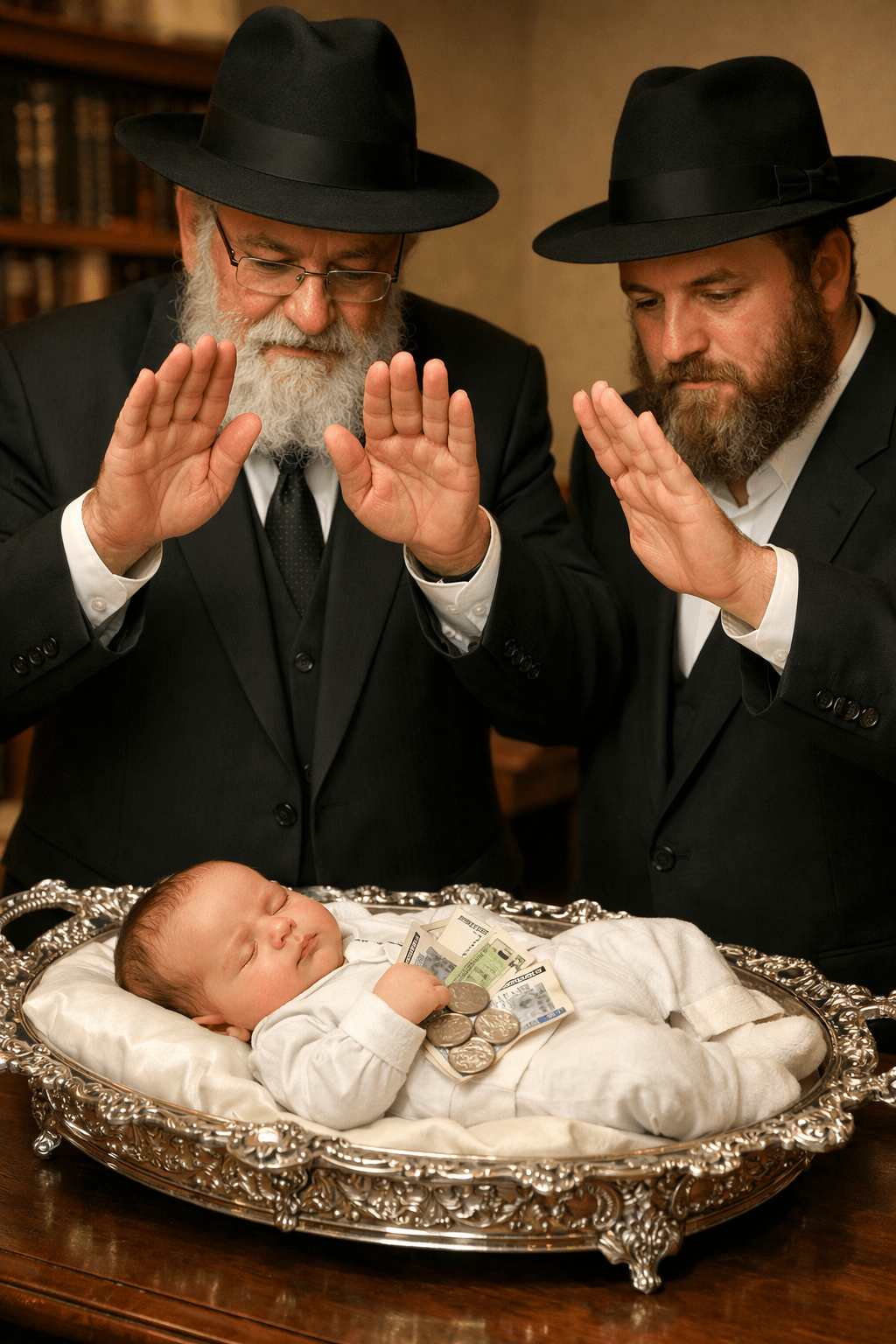
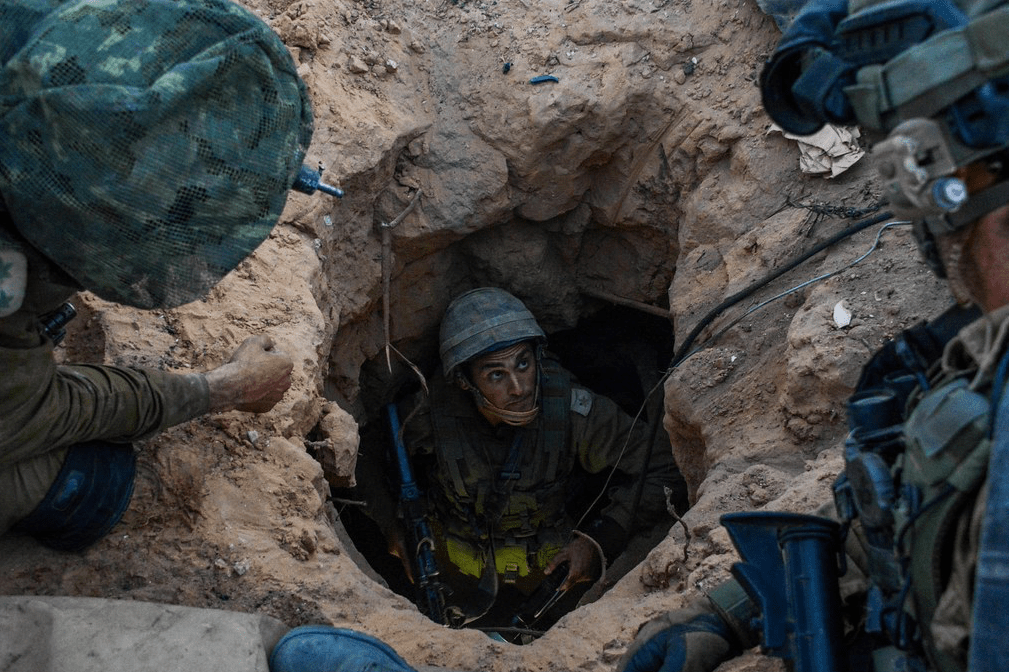



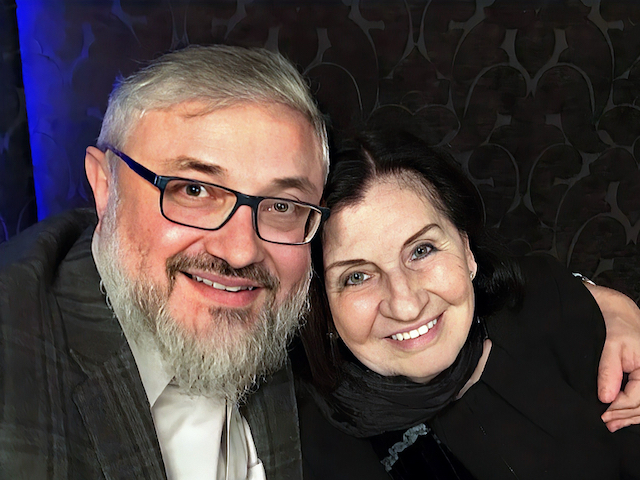



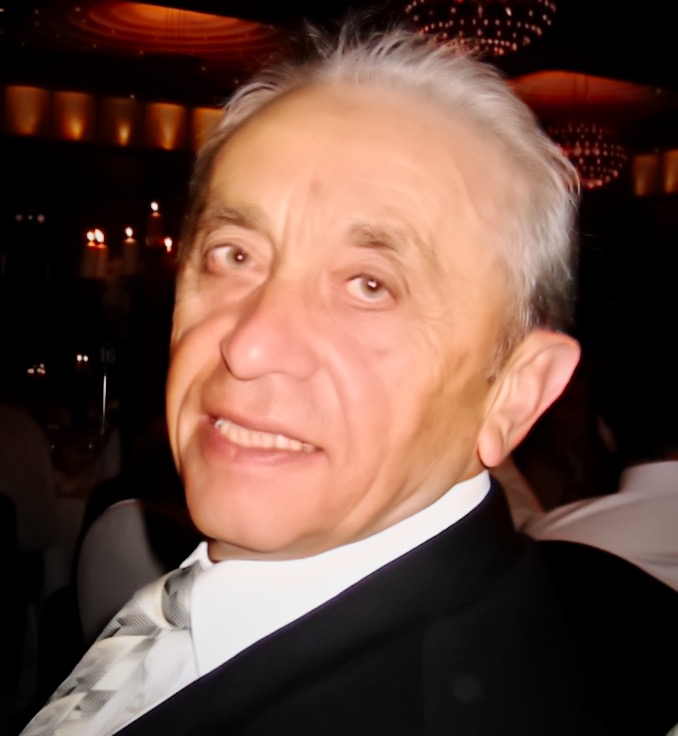






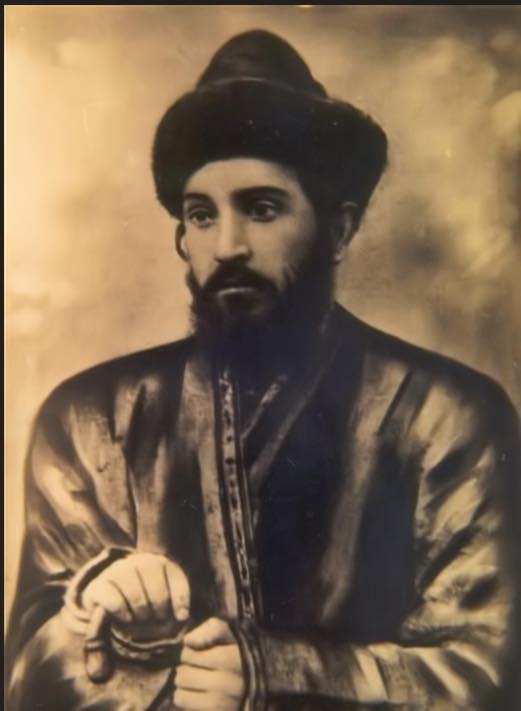

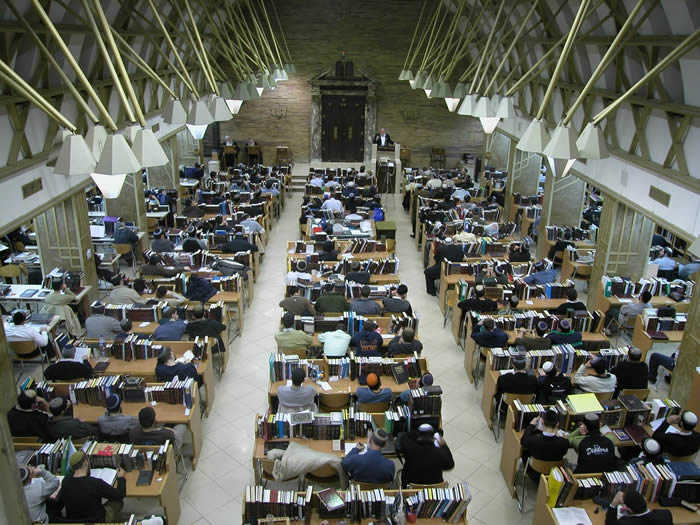
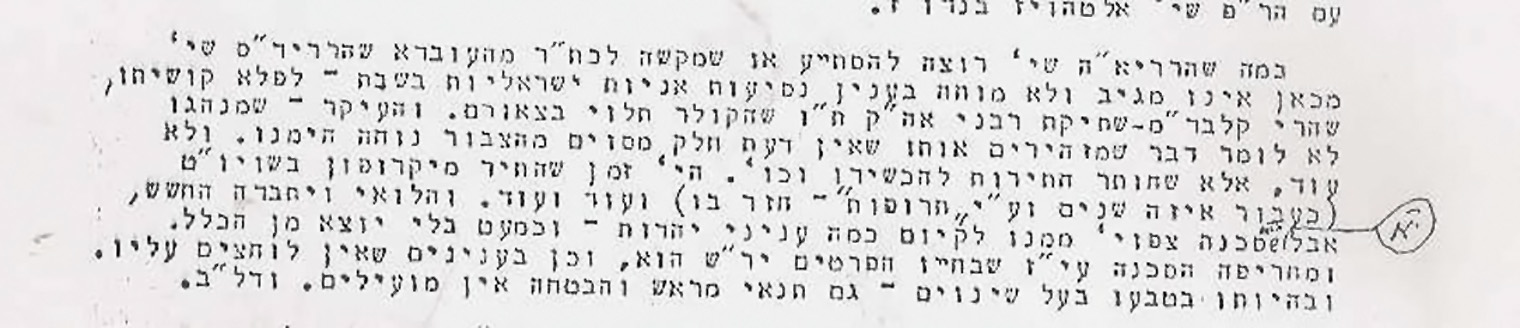
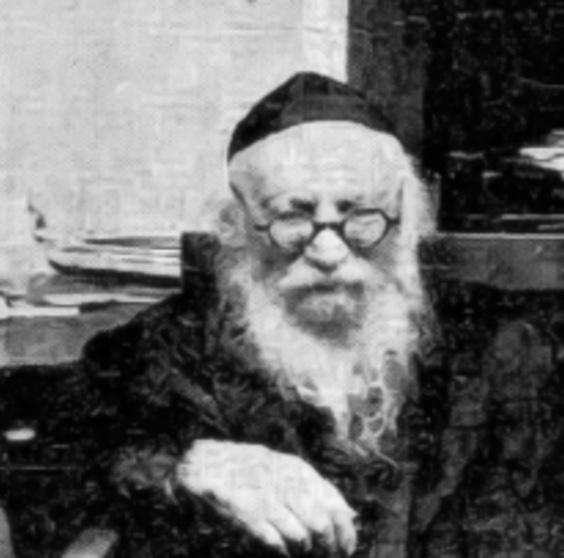


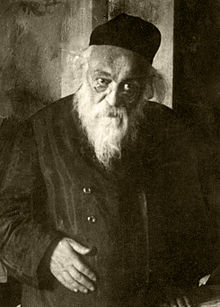
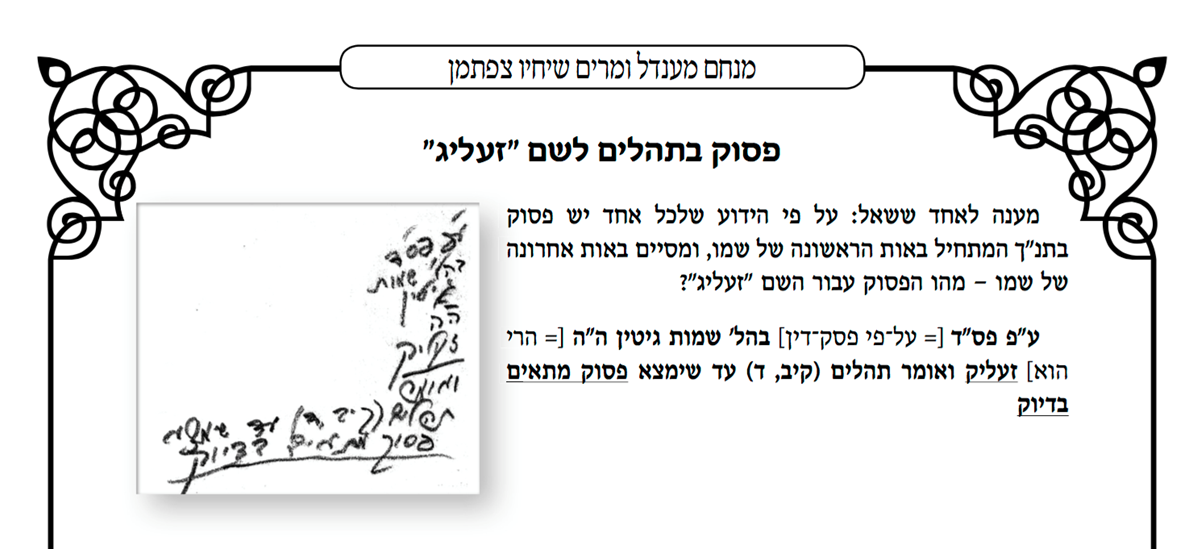 And to add, see

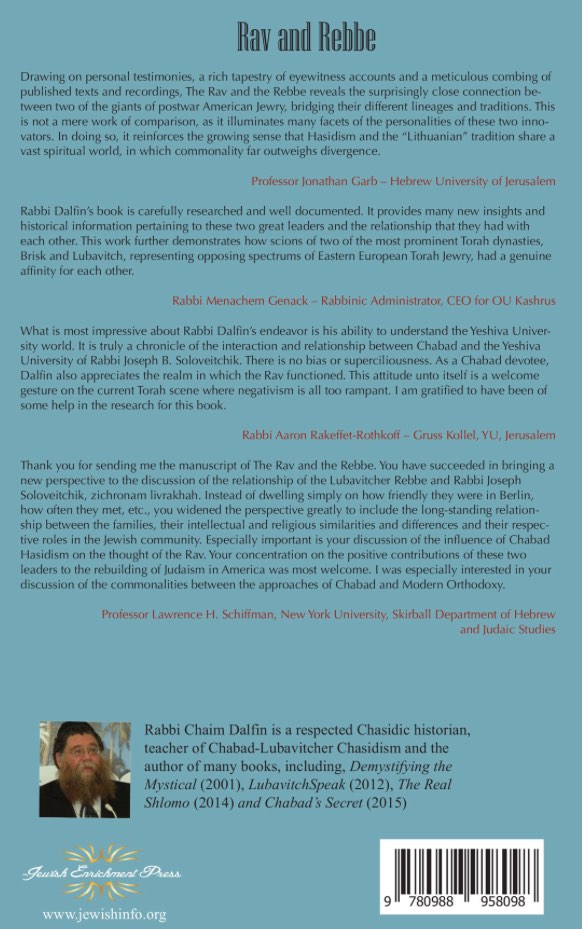
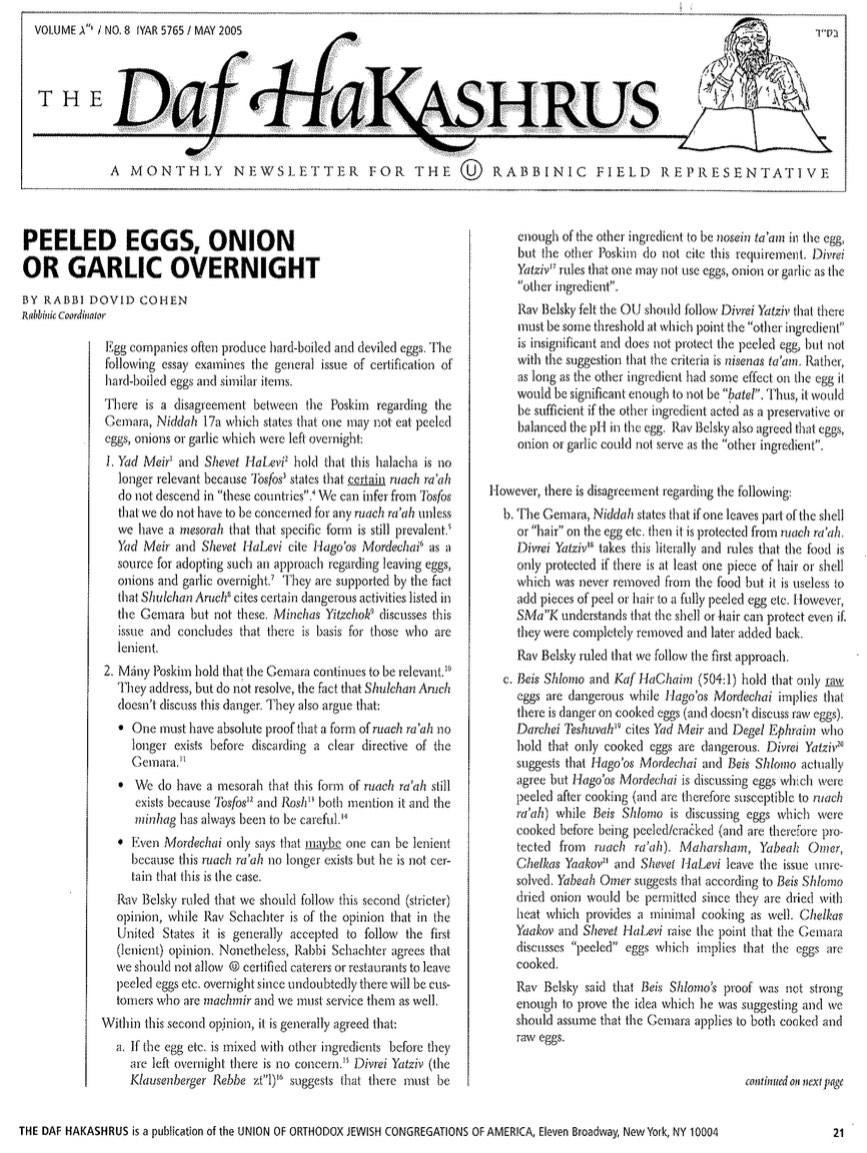


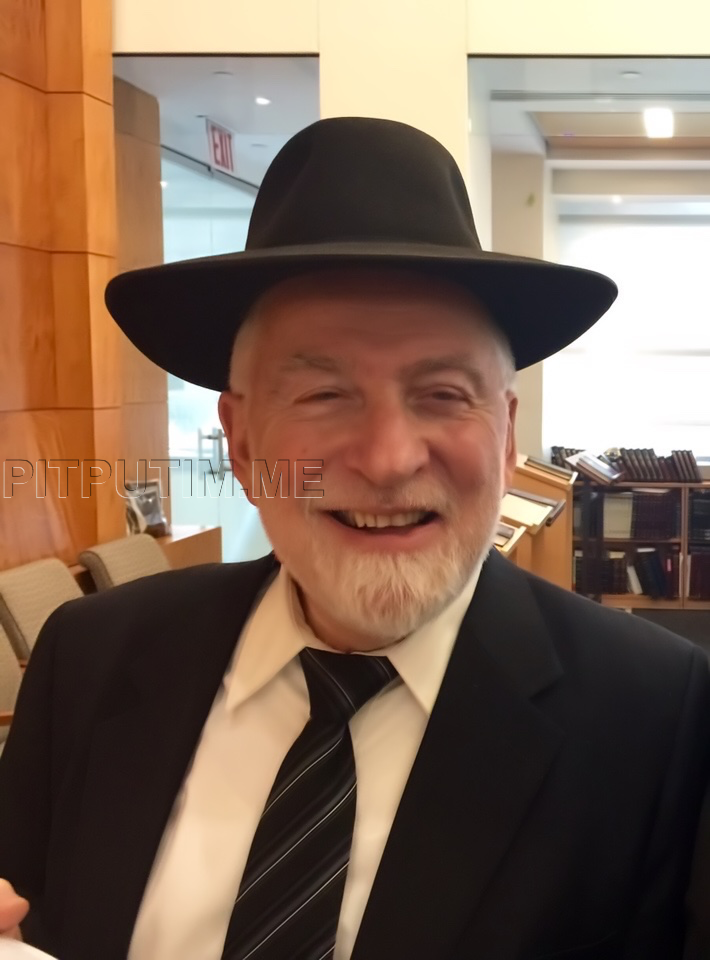
 pitputim
You must be logged in to post a comment.